The economic (non)sense of hunting in Victoria

hunting fool

98 per cent of hunters in Victoria are blokes

This week, among the many silly press releases that arrived in my inbox, was one from the Victorian government, titled: “Hunting’s $439 million boost to Victoria”

It proceeded to explain how much recreational hunting is worth every year to the Victorian economy, how it supports the equivalent of 3,500 full-time jobs and that those who hunt (the 46,000 game licence holders in Victoria) contribute to local economies across the state as they buy “hunting and camping equipment, food, fuel,and other supplies related to their pursuits”.

Reading through the government’s PR spin, it became apparent that this was  really nothing more than a thinly disguised election year publicity stunt, designed to garner a few more votes from would-be rambos running around bushland shooting at things.

“The Victorian Government will invest $17.6 into game management over the next four years and the new Game Management Authority, an election commitment from the Coalition, comes into effect on July 1,” said Agriculture minister Peter Walsh in a pledge to the trigger-happy rifle brigade.

The economic benefits highlighted in the press release were based on a detailed 116 page report commissioned by the Victorian Department of Environment and Primary Industries (DEPI) and undertaken by three private consulting firms. RMCG, EconSearch and DBM Consultants.

The report followed some very bad press for the hunting fraternity and the government after the Box Flat duck massacre at the start of Duck hunting season. This was the illegal slaughter of 800 ducks by hunting louts in the state’s north west, their carcasses left to rot in the water. The victims included 104 freckled ducks, one of the world’s rarest duck species.

What’s really silly about the press release is the implied logic: that hunting is good because it makes economic sense:.

Such reasoning could be used to justify any number of socially abhorrent activities that make money but have virtually no societal benefits such as plundering wildernesss areas for mineral deposits or manufacturing illegal drugs like heroin or ice and selling them to addicts.

That hunting is an absurd blood sport offering little benefit to wider Victorian society (except allow the 46,000 licensed hunters to ruin the natural calm of he bush with gunshot and blood) is abundantly clear in the findings of the survey by the consultants in the same government report.

More than 90 per cent of the 1000 hunters surveyed said they “strongly agreed” with the statements that hunting “let them enjoy nature” and helped them “connect with nature”.

Perhaps they interpreted “connect” to mean the moment a bullet connects with deer or duck brain matter?

Even the economic benefits of hunting are minimal.

Hunting is in fact a tiny part of the Victorian economy and represents well under 5% of the $9 billion of revenue derived from tourism activities every year.

The $17.6 million set aside for game management could easily be directed to encourage economic and socially beneficial outdoor programs that support nature conservation and eco-tourism.

And hunting is not popular among the wider electorate: In a 2012 survey, more than three-quarters of Victorians opposed the shooting of native water birds, an activity which is being banned in NSW, Queensland and Western Australia.

In the UK, the cruel but traditional sport of fox hunting with hounds – favoured by rich landowners and Tories – has been banned since 2004. A survey this year found that more than 8 out 10 Britons supported the ban, after British prime minister David Cameron considered removing it.

The Australian (and Australia’s) propaganda war against boat people

boat peopleI was dismayed – no gutted – to read a story in The Australian newspaper last week.

The story ran under the headline “Lowy Institute poll shows strong support for asylum-seeker policies”.

It’s first paragraph said: “More than 70 per cent of Australians support the Abbott government’s Sovereign Borders Policy, including the idea that boats should be turned back when safe to do so.”

This information was correctly reported and seemed to confirm that, depressingly, most Australians have bought the propaganda – dished out regularly from both sides of politics about asylum seekers.

This is, that asylum seekers are queue jumpers, possibly terrorists and that if they want to come to this country, they should get in line and wait their turn – regardless of the circumstances in their home country. If they arrive by boat, they should be sent back to where they came from.

This sentiment was spelled out 13 years ago when former prime minister John Howard said in his election victory speech: “We will decide who comes here and the circumstances under which they come.”

He was referencing the Tampa affair, where a Norwegian freighter carrying rescued asylum seekers was denied access to Australia. This hard line attitude has been stamped into the heads of the voting public ever since.

But The Australian article conveniently forgot to mention another finding of the same Lowy Institute survey.

This was that the majority of Australians (57%) polled disagreed with the former Rudd government and current Liberal Party government policy that ‘no asylum seeker coming to Australia by boat should be allowed to settle in Australia’.

This statistic is nowhere to be found in Rowan Callick’s article – and which, if it were included, might have led to a different headline or at least told the full story.

Now, the margin of error in the poll was 3% so it could be that as many as 60% of Australians believe that asylum seekers who arrive by boat should be allowed to come and live in Australia, should there claims be genuine.

At worst 54% of Australians are opposed to the policy which is seeking to settle asylum seekers who arrive by boat on Papa New Guinea, Nauru or possibly even Cambodia in grubby cash-for-people deals.

So the end result is that I feel a little bit better about my country (of adoption) and my fellow countrymen.

But then again, reading numerous other articles and following the social media conversations, it is clear there are many Australians who feel like I do – that we are behaving abominably to the most desperate and needy in society.

For more balanced views, try:

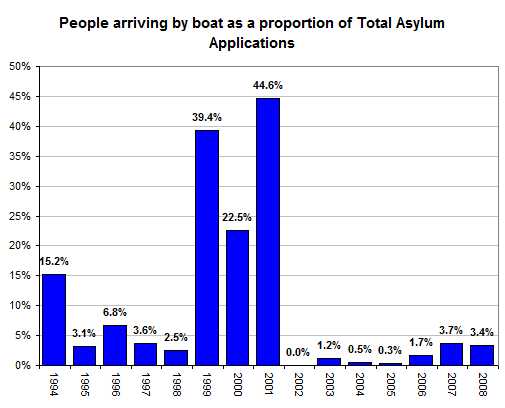
Sadly though too many people appear to have been brainwashed following years of propaganda and believe – against all factual evidence – that asylum seekers arriving by boat are the first wave of potential invading hoards.

boatproportion

Source: Crikey.com.au

This is in no part due to the aforementioned article in The Australian, but also do to News Corp popular columnists like Andrew Bolt who regularly rounds of his tirades against Labor, the ABC, Fairfax, the Greens etc with thoughts like: “it is grossly irresponsible to allow thousands of illegal immigrants from countries very different from our own to crash our borders when we know it exposes Australians to extra risks they don’t want and never accepted.”

Or comments like this: ” Tens of thousands of ‘refugees’ would swarm each year through the Greens’ open door, more than we could safely accept, and the thousands rejected as refugees would not just go home.

All designed to stir up fear and hysteria of invading hoards and keeping John Howard’s 2001 message alive and well.

Reject the propaganda and form you own, educated view. Don’t be an ignorant fool.

(For more of my articles on this topic, go here.)

All the news that’s fit (and not fit) to print: new buzzwords in journalism

read all about it“It’s not change. It’s a f*cking revolution,” said a media analyst in the brilliant New York Times documentary Page One.

He was referring of course to how the online world has ripped up the traditional business model of newspapers replacing highly profitable print advertising and classifieds ads (the so-called “rivers of gold”) with cheap, interactive and intuitive online offerings.

Fairfax journalist Pam Williams did a brilliant job telling this story in her book “Killing Fairfax” – reviewed here – but is by no means the whole story.

The wheels of change continue to spin and at an even faster rate.

Two of the hottest and most provocative concepts becoming entrenched in the new age of publishing are “native advertising” and “corporate journalism”.

‘Native advertising’ – where paid-for, sponsored or branded content is produced and published on news sites to have the look and feel of a genuine article  – was the focus of a recent episode of the ABC’s Media Watch 

“Corporate journalism” – content produced by an in-house editorial team focusing on issues that matter to the corporation and its stakeholders – was in the spotlight following the launch of ANZ Bank’s new website BlueNotes in April, billed as “the first corporate digital publication for news, opinion and insight of its type in the Asia-Pacific region”.

The launch of BlueNotes sparked healthy debate on Twitter kicked off by Australian Financial Review columnist Christopher Joye who wrote that the ANZ site was likely to be “part bank brand-building, marketing and spin, opening up a new channel through which to project ANZ’s voice; and part bona-fide research and insight that will be of value to ANZ’s constituencies”.

What BlueNotes was unlikely to be, Joye wrote, was independent journalism of the sort produced by Fairfax and other traditional independent media. Nor would it be an “intellectual free-for-all that interrogates issues and disseminates opinion on topics germane to ANZ’s customers, but which can also conflict with ANZ’s profit motive”.

I tweeted Joye’s article and said that I agreed with him that BlueNotes is “not really journalism” to which former AFR senior journalist Andrew Cornell, the managing editor of BlueNotes, responded that it then begged the question: “What really is journalism?” and…was it restricted to “no-for-profits?” (A cheeky remark surely alluding to the fact that once-powerful media empires can’t seem to make a buck out of journalism anymore).

Cornell is a firm believer that corporate journalism – of the kind produced by his team – is the future of business journalism. It was a remark he repeated often in his last few weeks at the AFR.

twitter conversation1Amanda Gome, a former colleague of mine at Private Media and Fairfax, and now head of strategic content & digital media at ANZ, tweeted that BlueNotes was “new journalism” or “corporate publishing” – (and in another tweet, that it was definitely not native advertising).

twitter conversation2

Paul Edwards head of corporate communications at ANZ said if the site “started doing ads” then it would “fail”. Rather, he said, it aims to “engage thought leaders not sell stuff”.

twitter conversation3

On reflection, I agree with Christopher Joye that there is merit in what ANZ is doing with BlueNotes.

The views of its experienced executives, economists and commentators while slanted towards the bank’s view of the world,  are insightful and important (though I would argue they are better served as part of a balanced article in the mainstream media drawing on the views of others as well).

Only time will tell how many people find value in its offering, but it should find a niche among the myriad of online news and commentary sites finding an audience in Australia ranging from academic sites like The Conversation to mummy blogger uber-site Mamamia.

In its defence, corporate journalism like BlueNotes does not attempt to hide the fact that is an ANZ-produced publication, focusing on issues that are of important to the bank, its shareholders and clients.

But native advertising is less honest, muddying the waters between news and commercial interests and breaking down the traditional editorial division between church (editorial) and state (advertising).

Farhad Manjoo, a journalist with the Washington Post wrote of the deceptive quality of native ads that while they “usually carry a tag identifying them as ‘sponsored,’ they appear alongside and share the look and feel of the search results, tweets, status updates, blog posts and other content that you don’t immediately suspect of containing paid messages”.

He makes the point that there is a place for native advertising provided that it is clearly branded as sponsored content (he mentioned a story paid for by Toyota about 20 coolest hybrid animals to promote its hybrid cars that ran on BuzzFeed as a good example) but is sceptical of how this will play out over time.

buzfeed

The Buzz Feed ad/content created for Toyota

Native ads he says, “create incentives for misbehavior by advertisers, publishers and services like Facebook—and, over the long run, the incentive structure is sure to translate into looser disclosure standards and generally trickier content”.

The agenda of BlueNotes on the other hand is all in the name – unless of course you’re looking for a Miles Davis record.

Of trains, trams and tiny apartments: Melbourne’s collapsing public transport network

Could this be a Melbourne train in a couple of year's time?

Could this be a Melbourne train in a couple of year’s time? Source: http://sachinkhosla.com/fun/pakistan-train-bizarre

Those, like me, who suffer the daily train commute into Melbourne will know of the train driver who enjoys performing his stand-up comedy material.

One of his favourite lines, when the train is overcrowded, is to remind squashed passengers that “a packed train is better than no train at all”.

This, I suspect, may reflect more the prevailing Metro Trains’ attitude towards its service, than an attempt at lightening the mood.

The truth is that Melbourne’s transport network is no joke, unless you like your humour black and enjoyed from underneath a stranger’s armpit.

The city seems to be grinding towards eventual standstill and gridlock: train and tram cancellations and delays are daily occurrences; timetables have become objects of hope and derision rather than of any practical use.

Train stations have become places of confusion and chaos; on board, commuters endure sardine-like conditions, the sighs and grunts of frustrated fellow commuters, and worst of all, bad jokes from train drivers. None of this is helped by the disinterested, robot-like announcements of platform announcers, who deliver the unwelcome news with the indifference of someone reading the daily shipping report.

About the only good thing about a packed train is the lack of room for authorised officers (transport police) to patrol the carriages sniffing out fare evaders, though I wouldn’t put it past them to try.

But these problems are only the tip of the iceberg.  Rapid urbanisation and a desire to embrace Manhattan-style apartment living is bringing more and more people streaming into inner-ring suburbs of Melbourne, Sydney and Brisbane. In just one example, Melbourne’s Yarra City Council says it expects half a dozen new apartment developments to spring up along the Victorian-era streetscape of Smith Street, each adding dozens (sometimes hundreds) of new residents who will need to catch the train, tram or bus to the city.

The Victorian facades of Smith Street, Melbourne

The Victorian facades of Smith Street, Melbourne

The council claims there are no “glaring deficiencies” in transport services on Smith Street but that it is monitoring the situation and “understands” there are improved tram services planned. Hardly reassuring, when local residents claim you can’t get on a tram that runs up and down the street as it is. This scenario is being replicated in dozens of inner-city suburbs in Melbourne and Sydney, where transport infrastructure is at breaking point.

RMIT professor Michael Buxton, a renowned authority on urbanisation and planning, expects a proliferation of six-to-nine-storey apartment blocks along all Melbourne’s Victorian retailing streetscapes in the next few years with little restriction on height, the number of apartments or their sizes, allowing developers to chase maximum profits. Last year, a developer called Sixth Lieutenant received approval for 28 apartments, some as small as 33 square metres (about four Toyota minivans lined up side by side), on a tiny 142-square-metre site on Smith Street, Fitzroy.

Plan Melbourne, the Victorian government’s so-called blueprint for development of the city to 2050 when the population is forecast to reach 6.5 million, acknowledges the increased congestion on roads and public transport and talks loftily about a long-term plan of developing a more efficient, faster “metro train service” that does not share train lines with regional services.

It’s an admirable vision, but many, many years away, if it happens at all.

The truth is that the Victorian government’s transport plans are lagging far behind huge demographic changes favouring inner-city living, when they should be leading them or at the very least, keeping pace.

In Mexico City, the best functioning megacity I’ve yet visited, a subway train comes every two or three minutes, and end-to end-journeys cost three pesos – about 25 Australian cents. In New York, an extensive, efficient and usually reliable subway network removes the need for cars.

The Mexico City Metro is the second biggest in the Americas after New York's subway system

The Mexico City Metro is the second biggest in the Americas after New York’s subway system

But in supposedly the world’s most liveable city, we find ourselves cursing as the train announcer drones on about another delayed or cancelled service. I wonder just how long it will be until those scenes of Japanese passengers being prodded and shoved into trains by uniformed platform officials become part of the daily commute here. It can surely only be a matter of time.

(This article first appeared in the Australian Financial Review.)

L. Ron Hubbard, Scientology founder, apartheid supporter and “neighbour”

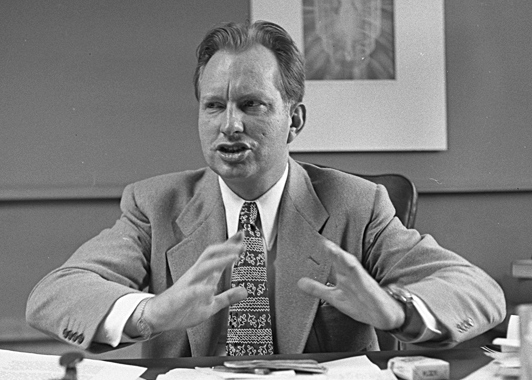
L Ron Hubbard in 1950

L Ron Hubbard in 1950

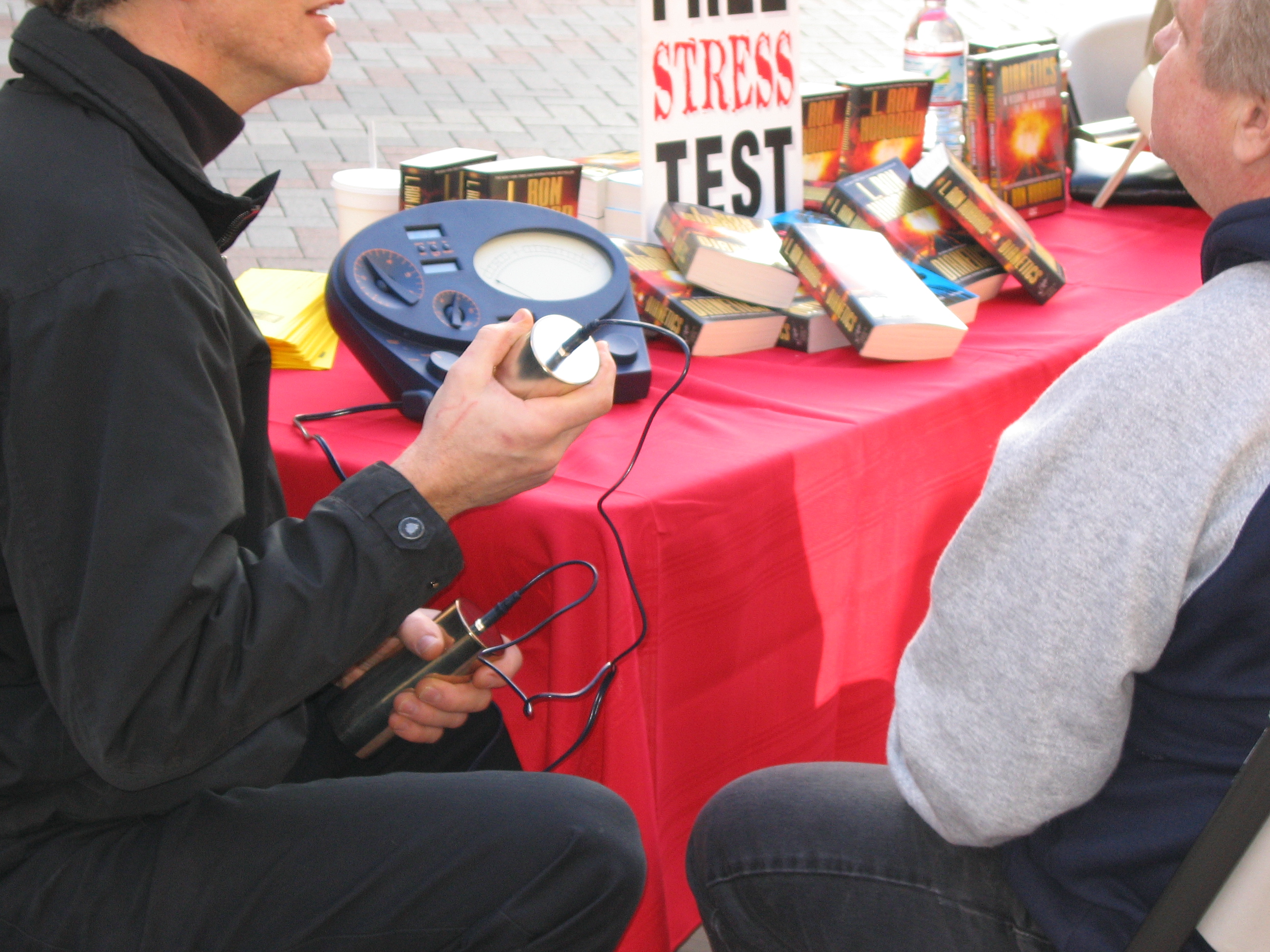
I’ve always found Scientology, the “religion” founded by science-fiction writer L. Ron Hubbard creepy. For one thing, there’s those people standing outside train stations and shopping centres offering free “stress” tests via a device called an “e-meter”.

Then there’s the wacko celebrity endorsement from devotees like Tom Cruise (who infamously claimed in 2005 in a television interview that neither psychology nor psychiatry “worked”) and the claim at the core of Scientology that through elimination of the “reactive mind” (the unconscious mind) devotees can increase intelligence, eliminate unwanted emotions and alleviate a wide range of illnesses (including asthma, arthritis and sexual deviance, which is deemed to include homosexuality).

Scientology_Recruiter

A Scientologist carries out a stress test using an e-meter

But did you also know that L. Ron Hubbard was a supporter of South Africa’s white supremest apartheid government during its darkest days?

I came across this little-known fact while reading a book about alleged ponzi scheme mastermind Barry Tannenbaum called “The Grand Scam” by investigative journalist Rob Rose.

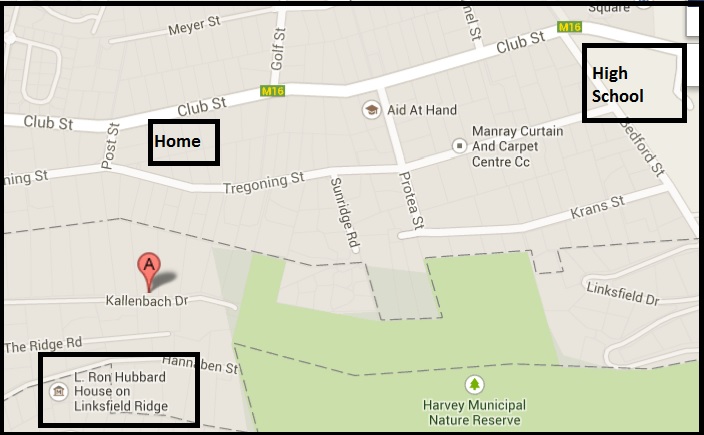
I also discovered that in 1960, L. Ron Hubbard lived in a house on Linksfield Ridge, Johannesburg just a few minutes drive from where our family once lived, though of course, separated in time by more than three decades. In a sense, we were neighbours, and I never knew it.

L Ron Hubbard came to South Africa in September 1960 and made his home on Linksfield Ridge, an outcrop of grass and rock. rising up over Johannesburg’s northern suburbs, dotted with gated townhouse complexes and multi-storey mansions.

(During rugby practice, I remember having to run up a windy, steep road to the top of the ridge, all the blokes complaining as our calves and thighs burned.)

map hubbard

Map showing L Ron Hubbard House, our family home at 50 Club Street and location of my high school, King David High School, Linksfield Ridge

The L Ron Hubbard House, Linksfield Ridge

The L Ron Hubbard House, Linksfield Ridge

The Scientology house on Hannaben Street, which has impressive views over the tree-lined northern suburbs towards upmarket Rosebank and Sandton, has been restored as a museum. Had I known I would surely have visited.

Of course the L. Ron Hubbard website, which has a special section devoted to Johannesburg, makes no mention of his admiration for former South African prime minister Dr Hendrik Verwoed, the architect of apartheid’s harshest laws.

A polished, sycophantic video confirms Hubbard arrived in Johannesburg in September 1960, but that the home was a place for him and others to discuss and send off letters to the South African government detailing “his plans for equality in South Africa”.

Quite, how he planned to do just that, cocooned in his luxurious castle in the heart of white Johannesburg is not explained though it does include the highly duplicitous claim that while there he delivered “Scientology spiritual counselling to the improve the lives of his African domestic staff”.

Clearly then, L Ron Hubbard, was content to not just to live in luxurious surroundings, far, far away from the liberation struggle, but he was also happy to enforce the master-servant relationship that existed between white South Africans and black domestic workers, in his own home. This irony is not noted on the website either.

Rob Rose writes: “What Scientologists don’t want you to know is exactly what was in those letters to the South African ministers. He continues:

They’ve gone out of their way to airbrush Hubbard’s craven fawning over the apartheid government, specifically, his gushing praise for the father of the racist ideology, Dr Hendrik Verwoerd.

Rose goes on to quote from a letter written by Hubbard to the Verwoerd government:

May I state that you have conceived and created in the Johannesburg townships what is probably the most impressive and adequate resettlement in existence. Any criticism of it could only be engaged upon by scoundrels or madmen, and I know now your enemies to be both.

For those wishing to verify this quote, you can find it here in a digital version of the Kotze Commission.  This was set up in 1970 to investigate Scientology, and which then banned it for two decades (one of the few intelligent things the government at the time did).

Of course, even if you dispute this transcript, it would take some distorted logic to understand why someone who claimed to believe in racial equality would choose to move to South Africa during the height of apartheid and live in an affluent white neighbourhood with black servants tending him hand and foot, rather than choose to live amongst African people in Soweto.

Sadly, many South Africans are unaware of this fawning over the apartheid regime or choose to ignore it.

According Rob Rose, since its unbanning in the 1990s, Scientology has gained 150,000 devotees in South Africa and earns about $10 million a year for L. Ron Hubbard’s church and estate.

Missed opportunities: a review of “Killing Fairfax” by Pamela Williams

killing-fairfaxI read Pamela Williams’ book Killing Fairfax about four months after joining Fairfax Media as a property reporter on the Australian Financial Review (AFR).

The book about the online maelstrom that sucked the life out of Fairfax and the part James Packer and Lachlan Murdoch played in facilitating this was published to great acclaim at just the time I was in discussions about a role on the AFR.

It certainly caught my attention as I contemplated moving from an online venture, Property Observer, to a newspaper group; so I made a mental note to read it once I’d settled in.

On the cover pose Packer and Murdoch with a distinctly smug expressions, the apparent victors in a battle against the old foe, Fairfax.

By backing three websites – seek.com.au, realestate.com.au and carsales.com.au – they helped destroy the “rivers of gold” – the classified advertising revenue that funded Fairfax’s journalism and its newspaper empire.

The distaste both have for Fairfax is apparent in the opening pages. Williams describes a triumphant lunch at famed Sydney dining spot Rockpool in August last year:

“Fairfax just didn’t see any of this coming. They thought it was all beneath them. They thought we were idiots. You know I think we killed Fairfax.” said James Packer.

The two men looked at each other for a moment.

“I think so,” said Lachlan Murdoch.

One lifted his glass in a toast. And then the other

Also sitting at the table though not mentioned in the narrative was Pam Williams. The reference notes at the back of the book state “author present”.

A 26 year veteran of Fairfax, where she had risen through the ranks to become one of its senior journalists, I wonder how Pam Williams felt at this celebratory lunch. It surely must have been an uncomfortable moment.

Hello Pam

I spent my first week at Fairfax in the Sydney office at Darling Point Coincidentally, sitting in the cubicle next to me was Pam Williams. I introduced myself and we spent a few pleasant minutes chatting about common acquaintances. As the day wore on and people paused to chat with her, I formed the view that she was highly respected by her colleagues and a formidable presence in the office.

“Killing Fairfax” is a page turner, a corporate thriller about billionaires with giant egos and the battle for control of Australia’s media industry through buyouts, takeovers, deals, schemes and plain good luck.

In a wider context, its one of many stories about the impact the digital age and social media has had on traditional print journalism – or to steal from a media analyst quoted in the New York Times documentary “Page One” –  “It’s a fucking revolution”.

Large newspaper groups like Fairfax and countless others around the world have struggled to shift their business models in the face of the emergence of online “pure plays” as Williams terms online publishing businesses with a singular focus.

As a Fairfax employee, the narrative grated at my nerves as I thought about what might have been had Fairfax taken the opportunities to invest in the three start-up entities when they were worth nothing. Time and time the opportunities came along to buy controlling stakes in realestate.com.au (now called REA Group), seek.com.au and carsales.com.au, but were lost or spurned.

The great power of Williams is her ability to use her burgeoning contacts book (the back of the book details all her information sources – emails, conversations, meetings she attended) to take you right into the Fairfax boardroom and the very private, wood-panelled meeting rooms where James Packer and Lachlan Murdoch struck their deals.

A dysfunctional boardroom

Certainly, the impression of the Fairfax board that Williams creates from the early 2000s up until recent times is one of complete shambles and dysfunction with rival factions, egos and hidden agendas – think the Labor Party under Rudd and Gillard. It reaches its apex following the merger between Rural Press and Fairfax and the appointment of Rural Press boss Brian McCarthy (a man who apparently refused to use email program outlook to schedule meetings) as chief executive in 2008, replacing the forward-thinking David Kirk.

As Williams writes:

“But it was in the boardroom where the real divide occurred, in ways almost unparalleled in corporate sagas of dirty washing. From the very start, tensions between the directors from Rural Press and everyone else had revolved around power, the company’s debt and whether making acquisitions for future growth had been the right or the wrong strategy.”

The other great aspect of the book is its chronicle of the changing media landscape with every major manoeuver chronicled including James Packer’s decision and the steps he took to sell out of the media empire created by his father and grandfather to get into casinos (disastrously at first), the battle for control of pay television, how the three start-up websites came into being and grew into giants, Lachlan Murdoch’s fight to convince his father that realestate.com.au should remain a key part of News Corp and the unsuccessful attempts by mining magnate Gina Rinehart to gain control of Fairfax.

What becomes clear is that Fairfax certainly was not oblivious to the growing threat of the internet as some have claimed – the company set up a string of its own websites – Domain, Drive, Mycareer  and made online acquisitions (TradeMe being the biggest)- before the nimble start-ups began eating into their revenue.

Fairfax, like so many other newspaper groups, was caught up in the bind of how to invest in new online businesses, which offered advertising ten times cheaper than print, without cannabalising its own earnings.

In hindsight, it may have seemed obvious to invest in independently run start-ups with strong brands, but looking back, most things appear that way. For a company the size of Fairfax, with its proud newspaper history, it was never going to be easy to change so profoundly or at  a speed to capitalise on these opportunities.

Who is James Packer?

But what of Packer and Murdoch? Should they really be so smug?

One of the most interesting aspects of the book is the portrait of James Packer that Williams paints: a sensitive, highly emotional and physically aggressive character struggling to emerge from the shadow of Kerry Packer, it’s certainly neither a sycophantic nor a sympathetic portrait of one of Australia’s richest and most powerful business leaders.

One particular incidence sticks in my mind – when Packer confronted former Fairfax chairman Ron Walker at the opening ceremony of the Commonwealth Games in 2006. Walker, chairman of the games organising committee, saw Packer – an old friend – and invited him and his girlfriend Erica Baxter into the enclosed VIP area with the possibility of meeting the Queen:

[Walker] lifted the red tape to beckon them in.

But Packer had something else on his mind: he purposefully took the long way around the tape to Walker; and then put an arm around his neck, pulling him tight and close in anger. Packer was completely furious…

The anger was the result of Walker welching on a deal to buy Packer’s ACP’s magazine group in New Zealand, which he considered an act of bad faith while conveniently forgetting that he’d tried to gazump Walker on a deal to buy NZ website TradeMe (after saying he had no plans to buy the business).

The irony was not lost on James Packer, he later apologised to Walker for his strong-arm tactics.

Earlier in the book, Williams describes Packers agony at the collapse of One.Tel and his suicidal decline at the shame of this very public failure. It’s hard to feel sorry for some born into privilege, unimaginable wealth and opportunity, but when you consider who his father was, you feel a slight twinge.

While Packer and Murdoch should rightly be lauded for having the vision to invest in the “pure play” businesses that cost Fairfax so dearly, Williams reminds readers that James Packer lost around $1.7 billion through disastrous US casino investments on top of the One.Tel fiasco.

Less is divulged of Lachlan Murdoch apart from shrewdness and an eye for a good opportunity – but the impression one gets is of men playing with the billions inherited from their fathers (It reminds me of one of Ghandi’s seven deadly sins: “Wealth without work.”)

For both James Packer and Lachlan Murdoch, it seems their ambition is to make more money with money rather than producing anything of value for the greater good of society (They are true capitalists).

Fairfax, despite its depleted ranks, decimated earnings and challenges employs some of the hardest working people in Australia. I know because I work with them every day. Journalists on Fairfax publications recently took home a clutch of Walkley Awards – testimony to the quality of the work they do.

Among the Walkey Award winners was Pam Williams, who deservedly took home the Book of the Year award for this very entertaining and thought-provoking corporate saga.

In her acceptance speech she declared that Fairfax had in fact not been killed – I wonder what James Packer made of that comment?

What Mandela gave me: one glorious day and hope for the future

The voting line: a sculpture depicting Mandela and the 1994 election in Port Elizabeth

The voting line: a sculpture depicting Mandela and the 1994 election (stands in Port Elizabeth)

This post first appeared on crikey.com.au,

It is also my 100th post on this blog. I dedicate 95 of those posts to Nelson Mandela, for each of the 95 years of his life:

I will always remember voting in South Africa’s first democratic elections on April 27, 1994. It was a miracle they took place at all; far-right-wing organisations threatened civil war, and only last-minute negotiations and concessions ensured all key political parties took part in the historic vote.

Such was the fear that some people took to draining their swimming pools and stocking them with cans of baked beans, mineral water and tinned tuna in case all hell broke loose — or so the urban legend went. But certainly there were empty shelves in the supermarket and a tremendous sense of tension in the air.

In the lead-up there had been bomb blasts at Johannesburg airport instigated by the paramilitary AWB (Afrikaner Resistance Movement) and, a year before, the terrible slaying of Communist Party leader Chris Hani carried out by a white Polish immigrant named Janusz Walus as part of a right-wing plot that had pushed the country to the brink of anarchy.

But the doomsayers were all proved wrong.

On April 27 the front-page headline in Johannesburg’s The Star newspaper proclaimed boldly “Vote the beloved country”, a play on Alan Paton’s famous novel Cry, The Beloved Country about apartheid’s injustices, which we all read at school. Underneath the headline was a photo taken from a helicopter showing a snaking line of people stretching beyond the confines of the photograph waiting patiently to vote for the first time in their lives.

A mural in Cape Town depicting voting in South Africa in 1994

A mural in Cape Town depicting voting in South Africa in 1994

People queued for hours. In the big cities. In country towns. In townships. In rural villages. On hillsides.

Apart from getting married and the birth of my daughter, it was the single greatest day in my life. It was a privilege to be alive and still young (I was 21 at the time), but old enough to play my small part in such a defining moment in our troubled country’s history.

I remember it as a glorious crisp, early autumn day. Blue skies. Electricity in the air.

I voted at the nearby primary school just a short drive from home. I am not someone who shows his emotions, but as I drove past the line of people waiting on the pavement, there were tears in my eyes, and my heart felt like it was ballooning out of my chest.

In that queue was Nelson Mandela’s vision, why he had spent 27 years of his life imprisoned on Robben Island and why he had emerged not to proclaim war against those who oppressed him but to suggest a vision of the “rainbow nation” where everyone, no matter the colour of their skin, could feel proud to call themselves South African.

That queue outside the primary school in leafy suburban Jo’burg, in queues all over the country from Cape Town at the bottom of the country to Messina on the Zimbabwean border, the rainbow nation was brought to life for the world to see.

“… white middle-aged Jewish women in designer outfits, who for years had kept domestics (or “maids” as we called them) to raise and feed their children, stood quietly behind those they employed.”

Having parked my car some distance away, I took my place in the line. Ahead of me white middle-aged Jewish women in designer outfits, who for years had kept domestics (or “maids” as we called them) to raise and feed their children, stood quietly behind those they employed. Dapperly dressed old African men, once forced to carry “passbooks” regulating their movements in white areas under apartheid, stood beside Portuguese-born restaurateurs, Italian hairdressers and sun-loving British immigrants. Petrol attendants stood next to lawyers, suburban housewives, next to black mini-cab drivers. Black gardeners stood side-by-side with white doctors and accountants. Petrol attendants in blue overalls stood next to white old ladies with permed hair and tissues tucked under their sleeves, who stood behind Indian shopkeepers and coloured fruit sellers.

There was something in the air that day. Yes the tension remained, but there was the sense the dream could be real, that we could all learn to get along and in doing so rebuild and repair centuries of inequality, injustice and brutality. It would not be easy, but it was possible.

Soon after, the votes tallied, Nelson Mandela was sworn in as our first president.

The following year, South Africa won the Rugby World Cup; Mandela famously wore his No.7 jersey alongside Francois Pienaar (I retreated to my bedroom, head under my pillow, too anxious to watch the dying seconds of the match before Joel Stransky’s wondrous drop goal) and we all danced together in the streets, waving our new and strange-looking flag with gusto. The following year our soccer team, Bafana Bafana (“the boys”), won the African Cup of Nations in front of 120,000 screaming fans in Soweto.

Of course the euphoria over those early days of freedom have faded into reality. There are many challenges still facing the Rainbow Nation: crime, AIDS, inequality, corruption. But the new South Africa, even with these big problems, is a vastly better place than I remember through the rose-tinted glasses of my privileged white upbringing.

I never met Mandela, though I often drove past his imposing Houghton house a few suburbs from my own on my way home from work. With a bit more luck I might have bumped into him as his picked up his medications at the local pharmacy in the cosmopolitan neighbourhood of Norwood, a few kilometres down the  road. Sadly, it never happened.

What would I have said to him? Perhaps, thank you for those glorious days in April. And for giving us hope and a glimpse of what might still be.

Not Wikipedia worthy: The story of Jennifer and Jordan Nash

wikipedia

One Saturday morning in July, I received a call from Jennifer Nash, a single mother living in Logan City, south-east Queensland.

She asked if I would consider writing an article about her son, Jordan Nash, to  be posted on Wikipedia, the free user-sourced internet encyclopedia. She hoped a Wikipedia article would draw attention to his sad story.

jordan nash

Jordan Nash, as a young school kid

I said I thought I could help.

Her story tumbled out over the phone: she was at war with the Queensland government and the Federal Government since Jordan  – who has learning difficulties – was removed from school almost 10 years ago.

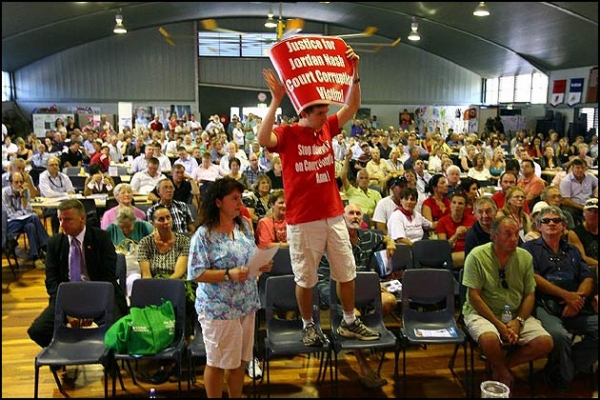
Jennifer claimed she’d been bullied, mistreated, harassed, ignored, hit with a $28,000 court bill and been the victim of judicial corruption because a court transcript – which proved she had been bullied and mistreated – had been “edited”.

Over the next few months I spent many hours on the phone with Jennifer, an exhausted, but determined and sincere woman, as she described what had been done to her.

Much of her and Jordan’s story appeared on unofficial media sites – essentially citizen journalism or blogging sites like Independent Australia  – but some of it did make it into the mainstream media.

In March 2011, WIN Television reported her address to former Queensland state premier Anna Bligh at a community forum at Toowoomba, where she said, quite eloquently, that “this soul crushing travesty of justice cannot be allowed to be covered up any longer”.

Last year she appeared in the  Brisbane Times, which incorrectly reported that she’d called then prime minister Julia Gillard “white trash” at a community cabinet meeting at Redbank Plains outside of Brisbane. The story, later corrected by the online newspaper, was that she had in fact told the prime minister “We are not white trash” as she explained to radio presenter Gary Hardgrave on radio station 4BC

Jennifer and Jordan Nash speaking out at a community cabinet

Jennifer and Jordan Nash speaking out at a community cabinet

Her battle reached the upper echelons of power this year, when both her and Jordan were  banned from attending a federal government community cabinet in Rockhampton by Jamie Fox, a government secretary working within the cabinet of then prime minister, Kevin Rudd, who was due to speak at the event.

Asked why she’d been banned, Jamie Fox responded via email that following checks by “security agencies” the government had been advised by the Attorney-General’s Department and the state police that she had a “history of disrupting public events” at other community cabinets and would not be permitted to attend.

“I am responsible for organising community cabinet meetings and this decision is taken on my authority,” wrote Fox.

Jamie Fox's email to Jennifer Nash

Jamie Fox’s email to Jennifer Nash

Just what had a single mother without any financial or political muscle done for the Australian government to ban her from airing her views in a forum seemingly open to all?

The answer: stand up on a chair and demand justice for her and her son.

Hardly the sought of behaviour I thought to warrant a security crackdown or a sneering email from one of Kevin Rudd’s flacks.

In late August, I submitted the story of Jennifer and Jordan Nash to Wikipedia.

It was rejected by someone called “Sionk” who wrote:

This submission’s references do not adequately evidence the subject’s notability

Sionk also remarked:

Maybe there has been extensive news coverage of Jordan Nash, but there isn’t any presented here. The way this is written is also problematic, Wikipedia isn’t the place to make lengthy, one-sided (and poorly sourced) legal arguments.

Essentially, what Sionk was saying was that Jordan Nash was not worthy of  a Wikipedia article because his case had not been reported in the mainstream press and he was not someone of note.

I explained to Jennifer that no matter how many times I re-wrote it, I did not think her story would make it onto the pages of Wikipedia for the reasons above.

Every now and then I do a search for “Jordan Nash” wondering if Jennifer has managed to convince Wikipedia editors they should publish her story. But there’s still no entry.

Interestingly, many of the people who she accuses of mistreating her do have Wikipedia entries such as Queensland state member for Logan, Michael Pucci, who Jennifer says refused to help her, Supreme Court justice Jean Dalton, who dismissed Jennifer’s initial complaint at the Queensland Anti-Discrimination Tribunal (QADT) and former minister for education, Cameron Dick who dismissed further investigation into claims the court transcripts had been edited.

There’s some consolation for Jennifer. At least Jamie Fox, the government flack who barred her from the forum, doesn’t get a Wikipedia page.

(If you’d like to read more about Jennifer’s case, Independent Australia  provides a fairly comprehensive summary).

Your word is your worth: why journalists shouldn’t write for free

6861197374_17a9d96b5eAbout six years ago, having been made redundant from a role in Brisbane I applied for a number of journalism jobs in Sydney.

One of these was to write for Lawyer’s Weekly. Part of the application process was to write an article for the publication about the implementation of Basel 2 banking reforms on the legal profession (Yes, a very dry topic I know). I spent a great deal of time researching the topic and did a number of interviews before filing a story.

For whatever reason, I never got the job. However the editor at the time – a fidgety Englishman – said Lawyer’s Weekly would publish my article and pay me $100 or thereabouts for my 1,500 word story – or less than 10 cents a word.

I was outraged. I remember I wrote an angry email to the editor, demanding better compensation for my time and effort. He refused to budge. I later received a copy of the edition of the trade mag with my article splashed across two pages and a check for $1o0. It didn’t seem like a fair trade.

I sold the very same article (slightly re-jigged) to an education group I was doing freelance work for at the time, Tribeca Learning (now part of the Kaplan professional training group) for about $1,500 and gave Lawyer’s Weekly the one-fingered salute (figuratively).

It was immensely satisfying.

The issue of journalists, writers and photographers not being paid for their work has come to the boil over the past few weeks in a series of exchanges between my current employer (Fairfax) and former employer (Private Media).

Fairfax’s The Age newspaper had highlighted that Private Media does not pay bloggers for their posts on subscription news and analysis website Crikey and that it had no contributor budget for arts website  offshoot the Daily Review. Instead, it rewards bloggers on a system based on the number of hits the post receives. (I should point out that contributors and those commissioned to write for Crikey are paid, but the rate is to my understanding, pitiful).

The Age’s Ben Butler explained the pay per hits policy for Crikey bloggers:

Blog entries that get 25,000 page views a month earned a ”bonus” of $193.50, those with 50,000 hits $387 and so on, with the system topping out at $4000 for a post ticking past the 500,000 mark.

Critics of the policy included freelance writer Byron Bache who launched an online protest on his blog supported by a number of writers, including former Crikey journalist Amber Jamieson. Bache wrote:

It is ethically reprehensible for a company to expand and actually stop paying the people who produce its product. A company which asks its readers to pay for content doesn’t feel the same obligation when it comes to its writers.

He also pointed out that the Daily Review’s two full-time staff were being paid a reported $100,000+ a year and that it was a distinctly commercial venture i.e. one designed to make a profit and provide a return to shareholders in Private Media.

I should point out that Crikey is a terrific and valuable website with about 18,000 paying subscribers. Blogs are not behind the paywall so readership could in theory be quite high. However, I would argue that few if any stories have ever reached anywhere near 500,000 hits to secure the $4,000 payment and that even reaching 50,000 hits ($387) would mark an article or blog as incredibly successful. So the possibility of getting paid anything meaningful is virtually zero.

The feud between The Age and Crikey/The Daily Review played out over a number of days in The Age’s gossipy CBD column with headings like “Putting the free back into freelance”,  and “Crikey! Writers want to get paid”.

In response, Crikey decided it should publish an explanation of its editorial policies under the rather mushy heading “three cheers for our writers” with an “unreserved apology” for not being open about it’s payment policy plus a link to this policy.

A few days later, Bethanie Blanchard, a Crikey literary blogger, wrote what was clearly a difficult column for her  in the Sunday Age (but for which she was paid for) criticising the Daily Review for not paying freelance writers for what is a commercial venture.

Blanchard admitted that it was “deeply troubling personally to criticise a company we [freelancers] have been incredibly proud to write for” but that there were places were writers could and should write for free to test themselves and fail, such as student newspapers, street press and emerging journals, but not the Daily Review, a “commercial venture”.

I should at this point own up.  I have in fact written for Crikey for free on a number of occasions and happily did so. I never thought to ask for payment since I was a fairly well-paid full-time member of Private Media’s staff and nor did I expect it. I was just pleased to appear in a publication I highly respect (I should also mention that I was paid very fairly for a series of ebooks I wrote for Property Observer outside of work hours).

But writing for Crikey for free was my choice. I certainly wasn’t asked to do so.

It’s a different story if writer’s are approached to contribute to a publication and expected to work for nothing beyond the euphemistic “exposure” or for the possibility of payment if they reach an impossible readership target.

The ABC’s Media Watch highlighted the offer of ‘exposure rather than payment’ recently in an excellent expose on Tennis Australia inviting freelance photographers to take photos of tennis players ahead of the Australian Open without payment in what is a $200 million revenue generating enterprise, paying $33 million in prize money at the Grand Slam event.

Another publication under fire is ‘mommy blogging’ website Mamamia which does not pay bloggers or anyone apart from a handful of its staff, but which appears to be a highly successful commercial venture given the high media profile of founder Mia Freedman.

mamamia

Let’s be clear. Offering ‘exposure’ is fine for people who are marketing themselves and for whom journalism is not their bread and butter. There are many people who will happily write for free such as mortgage brokers, investment gurus, entreprenuers and real estate agents with their columns serving as a free advertisements.

But if you’re a journalist, photographer or artist who values their craft, you should expect to be compensated fairly for your efforts.

It is also understandable that as the newspaper and publishing industry undergoes its biggest upheaval since the invention of the printing press that new ventures should look to cut costs where possible and stay lean and nimble.

But it is unacceptable to expect people who spend many hours researching, interviewing and crafting stories and who have families to support and mortgages to pay to expect nothing in return but a pat on the back.

Prize-winning author Anna Funder has also weighed into the debate, likening wealthy media companies expecting her to work for nothing but “exposure ” as to suggest she is “running some sort of porn site”.

“That’s a very quick race to the bottom,” she told the first national writers’ congress.

Like everybody else in society, we are doing something useful, something that has value. It has a kind of political value of speaking truth to power, it has an aesthetic value of giving pleasure and delight. And we deserve to be paid. We also deserve to be able to function in the world as human beings with children and mortgages – and they cost money.

Here, here! I say.

What reading ‘All the President’s Men’ can teach journalists

all the presidents men“All the President’s Men” – Carl Bernstein and Bob Woodward’s account of how they uncovered and reported the Watergate Scandal in 1972 and 1973 in the Washington Post and brought down President Nixon and his goons – should be compulsory reading for any journalist wanting tips on how to break a big story. It’s practically a ‘how to’ manual on investigative journalism.

I don’t know if they still make journalists like Bernstein and Woodward, but even in the digital age, where research and information is just a search term away, the techniques, tricks and cunning they employed still apply. Truly great stories don’t come from Google.

I should be upfront and say, that I did not find ‘All the President’s Men’ an easy book to read.

Firstly there are the sheer number of characters and the very convoluted plot. In the inside introductory pages of my paperback edition there is a list of 51 people – presidential staff, advisers, aids, campaign directors, lawyers, editors and prosecutors – who were the main players in the scandal. I found I had to constantly turn back to the beginning of the book to remind myself of who each person was as the plot diverged into a myriad different strands.

This may sound harsh, given Bernstein and Woodward’s reporting (and others on the paper) helped the Washington Post win the Pulitzer Prize for Public Service in 1973, but it’s also not incredibly well written. Perhaps writing a 300 page book gave crack newspaper reporters – accustomed to writing 500 – 1000 word articles – too much leeway to tell their story. There’s too much information crammed into paragraphs and too many minor incidents that get in the way of the overall plot – a good, tight edit would have done marvels to the finished work.

That being said, it does provide some incredible insights into how these two brave, foolhardy, and belligerent reporters dug down the deepest of rabbit holes to uncover the truth.

Married journos need not apply

The first thing that’s apparent is the long and strange hours Bernstein and Woodward put in to crack the story. Neither of them were married at the time or in relationships, nor did they have children. This made it easier for them to work late into the night in the offices of the Washington Post, or drive out to the outlying suburbs of Washington or jet off to Miami or Los Angeles to track down and interview people and give up their weekends in pursuit of a story.

Anyone journalist today married or in a relationship would find it impossible to put in the hours they did – they would either end up divorced or entirely burnt out, or both.

Woodward famously would head out well after midnight to meet up with “Deep Throat” (later revealed to be the FBI’ no.2 man Mark Felt) in deserted car basements to verify information or seek help with stories.

Both journalists also had no qualms about ringing up legendary Washington Post executive editor Ben Bradlee at 2am and asking if they could come over to discuss an idea or situation.

Hit the phones relentlessly. Put in the hard yards.

In the book, Woodward and Bernstein recount countless hours spent calling people on long lists, hoping to come across someone in the White House, Justice Department or some friend of a friend willing to share confidential information with them.

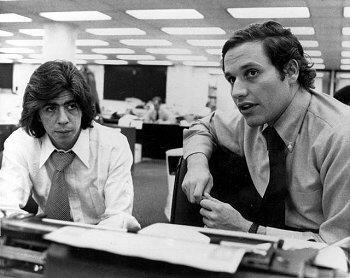
bernstein and woodward

Carl Bernstein and Bob Woodward at the offices of the Washington Post in 1972

By beginning at the top of a list and working their way through it, Woodward Bernstein would eventually find someone willing to speak to them. Sometimes they’d spend the whole day just telephoning people in the hope of finding a useful contact. In this way, they built up an incredible network of insiders. This is how they worked:

Each kept a separate master list of telephone numbers. The numbers were called at least twice a week. Eventually, the combined totals of names on their lists swelled to several hundred, yet fewer than 50 were duplicated.

Think laterally, be creative

Bernstein and Woodward were very savvy and had to be because the might of President Nixon, his ‘men’ and the CIA were out to prevent the ties between Watergate and the White House cover-up ever being revealed.

Sometimes they crossed the line and veered into the murky borders of the unethical or illegal – for instance, when they contacted members of the grand jury investigating Watergate who weren’t supposed to talk to the press or on one occasion, Bernstein not identifying himself as Washington Post reporter.

oct10_72

One of Woodward and Bernstein’s scoops on Watergate

(Read the actual newspaper article here.)

On another occasion, they met with chief prosecutor Earl Silbert in his fastidiously tidy office. Bernstein noticed a piece of paper on his desk that had as its letterhead the name of the company where bugging equipment for Watergate had been purchased. He used this information to write a story and was severely admonished by Silbert who called his methods “sneaky, outrageous and dishonest”. Bernstein apologised, but saw it differently:

Bernstein had learnt years before that the ability to read upside down could be a useful reportorial skill…

The point is that no opportunity was passed up. Every lead, idea or suggestion was followed up.

Get people to talk

Bernstein were masters at getting people to talk. One way, was to get themselves inside the house of a person they knew had good information, but was reluctant or too scared to speak and then find ways of staying and chatting. In one rather comical episode, they kept on ordering cup after cup of coffee in an attempt to prolong a conversation with the wife of an important person caught up in the conspiracy.

They write:

The trick was getting inside somebody’s apartment or house. There, a conversation could be pursued, consciences could be appealed to, there the reporters could try to establish themselves as human beings

Be daring out and outrageous

Bernstein and Woodward pulled some outrageous stunts and came close to going to jail.

My  favourite one is towards the end of the book.

Following a day in court where the Watergate defendants are being tried, Bernstein and Woodward along with a couple of other reporters notice three of the defendants and their lawyer trying to hail a cab. Bernstein races down as they file into the cab and

…uninvited got in anyway, piling in on top of them as the door slammed.

But it doesn’t end here:

Bernstein arrived back in the office late Saturday (he had gotten into the cab on a Friday afternoon). He had gone to the airport with Rothblatt and his clients, bought a ticket on a flight one of them was taking, edged his way in by offering to carry a suitcase and engaging in friendly banter, and slipped into the adjoining seat. Bernstein did not have to press the man too hard to turn the conversation to the trial. The story came out in a restful flow of conversation as the jet engines surged peacefully in the background.

Talk about outrageous, but this was the way Bernstein and Woodward operated.

Not all their ideas paid of – and a couple almost sunk them.

They misread what they thought were confirmations from sources on at least two occasions (one involved a source agreeing to hang up after 10 seconds if the story read out to them was entirely true. The source hung up but misunderstood the instructions) with spectacular results. But most of the time they got the story.

Every word matters

Every word mattered to Bernstein and Woodward and to their editors. The lead (opening paragraph) had to be perfect and they would fight over words and phrases and re-write and re-write as deadlines approached. This, of course, would be a problem in today’s 24 hour news cycle, where posting stories quickly as well as accurately is the challenge.

However, the digital age has not dampened the importance of writing well and being able to tell an engrossing story in a few hundred perfectly chosen words, as Bernstein and Woodward did back then. The importance of ‘words’ is revealed in this revelation:

The two fought openly. Sometimes they battled for fifteen minutes over a single word or sentence. Nuances were critically important, the emphasis had to be just right…sooner or later however, (usually later) the story was hammered out.

And let’s not forget the end result of their endeavours, the resignation of President Richard Nixon