Title: Highway 61 Revisited (1965)
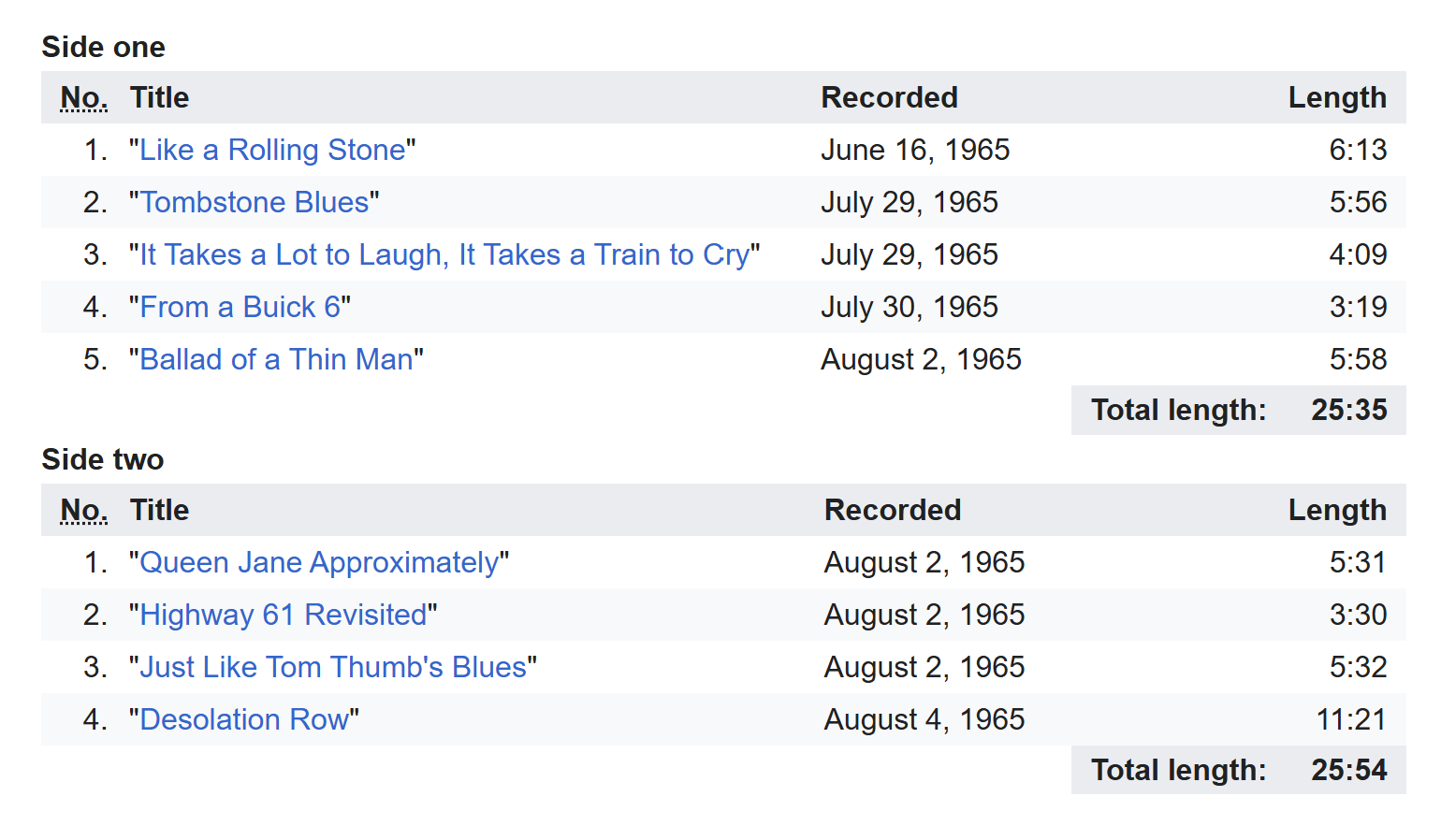
Length: 51min 26sec
Number of songs: 9
Best tracks: Like a Rolling Stone, Tombstone Blues, Ballad of a Thin Man, Queen Jane Approximately, Highway 61 Revisited, Desolation Row
If I could choose just one track: Ballad of a Thin Man
Freshlyworded rating: 9.5/10
If Album 5, Bringing it all Back Home, stunned and outraged Dylan’s traditional folk, acoustic fan base with his foray into the electric guitar, his next album, released the same year was his great full throttle embrace of not just the electric guitar, but a much bigger, bolder sound.
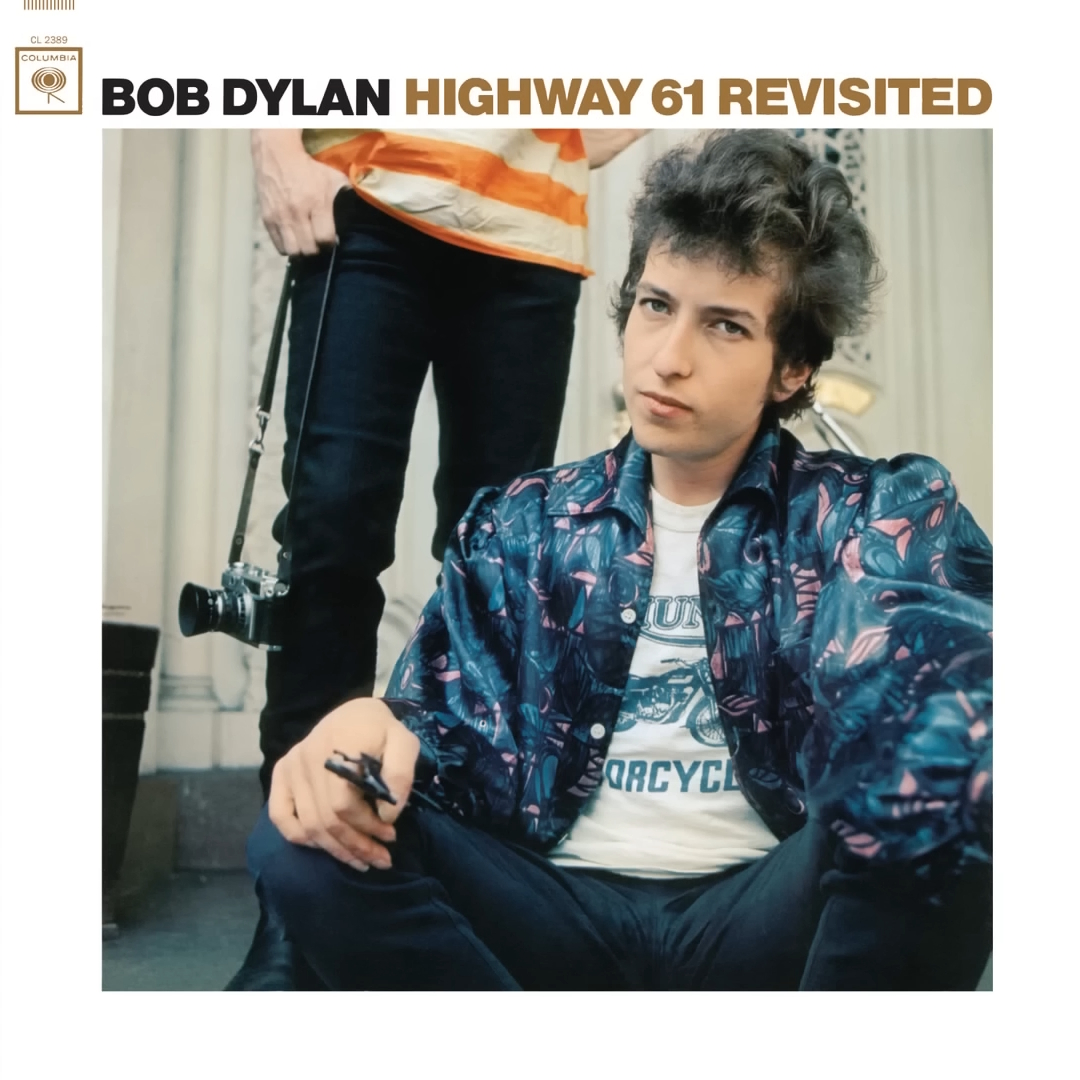
Highway 61 Revised showcased Bob Dylan the rockstar, a transformation that he appears to be communicating in the iconic album cover featuring Dylan siting on the steps of an apartment building in a white Triumph motorcycle t-shirt under a shiny, patterned dress shirt, his head cocked to the side looking directly at the camera. Behind him, the cut-off figure of a photographer, a symbol of Dylan’s growing celebrity status.
The album itself is an absolutely knockout, a powerhouse of rock and blues, sprinkled with elements of pop and even surf sounds. The album is Dylan’s great reinvention of himself and further evidence -if any was needed – of his status, even then at just 24 years of age as of one of the greatest artists of the 20th century.
I think I listened to this album more times than any of the previous five – I never seem to grow tired of it. Every one of the nine songs are great.
It begins with two absolute classics. “Like a Rolling Stone” and “Tombstone Blues”.
The former is one Dylan’s most famous and brilliant songs, a romping, rollicking song about arrogant people being cut down to size and then being lost and aimless “with no direction home/like a complete unknown/like a rolling stone”. This sentiment may have also expressed Dylan’s feelings about himself, perhaps being tossed about by the forces of celebrity and fame. “Like a Rolling Stone”.
You used to laugh about
Everybody that was hangin’ out
Now you don’t talk so loud
Now you don’t seem so proud
About having to be scrounging for your next meal
‘Like a Rolling Stone’ just powers up the album from the very moment the melody of sound hits your ears. Despite its subject matter, it creates this real joyful feeling as you listen.
The second track, ‘Tombstone Blues’ is a fast-paced rock ‘n roll song filled with vivid imagery, black humour and references to famous historical figures like Jack the Ripper “who sits at the head of the chamber of commerce”, John the Baptist, Ma Rainey and Beethoven. Each verse ends with the catchy chorus (slightly altered each time):
Mama’s in the fact’ry
She ain’t got no shoes
Daddy’s in the alley
He’s lookin’ for the fuse
I’m in the streets
With the tombstone blues
I have to confess, that until I read the lyrics, I thought Dylan was singing “Daddy’s in the Alley, He’s looking for food” and that it was a reference to falling onto hard times.
After the opening two powerhouse tracks, Dylan slows it all down with the very bluesy “It Takes a Lot to Laugh, It Takes a Train to Cry”, another example of the sheer range of Dylan’s musical repertoire. There’s more blues sounds to come, but at a faster lick with “From a Buick 6” which has a real raucous quality to it. There’s a lot going on musically including an organ, which made me think of the music by The Doors.
The next track, “Ballad of a Thin Man”, is one of my favourite Dylan songs. Even though the album has classic tracks such as “Like a Rolling Stone” and “Tombstone Blues”, for me this is the standout song, and another hidden gem I have discovered whilst making my way through Dylan’s studio albums in chronological order.
It’s a brooding, melancholic and haunting song which features Dylan on piano (do his talents ever end?) accompanied by a spooky organ. Each verse seems to taunt someone (perhaps the establishment or the mainstream media?) trying to understand the emerging counter-cultural movement, and ends with the refrain: “Because something is happening here, but you don’t know what it is Do you, Mr. Jones?
Mr Jones think he is very smart because he has read “every one of F. Scott Fitzgerald’s book” and understands the working class because “He has many contacts among the lumberjacks” but remains confused and alone.
The song has so many great lines and verses, but my favourite has to be:
But nobody has any respect, anyway they already expect you to all give a check
To tax-deductible charity organizations
The title track “Highway 61 Revisited” begins with a sharp whistle that sets up the high tempo song. It’s a great rock ‘n roll track with heaps of energy and vivid imagery. Each verse is a little problem that’s solved on Highway 61, the 1400 km legendary highway running from Minnesota to New Orleans with strong connections to Blues music culture.
Dylan slows down the pace and strikes a darker tone with the bluesy “Just like Tom Thumb’s Blues” and the album ends with a return to his acoustic, folksy roots with the 11-minute epic “Desolation Row”.
This a great song to listen to whilst strolling down a county road (as I did on many occasions). It’s gloomy and melancholic. It’s draws in all sorts of references, from fairy tales (Cinderella “sweeping up”), Hollywood (Better Davis), the bible (Cain & Abel), classic literature (The Hunchback of Notre Dame), famous poets (Ezra Pound and T. S. Eliot “Fighting in the captain’s tower”) and science (the electric violin-playing Albert Einstein). I haven’t thought long and hard about the meaning of the surreal lyrics (that’s another project entirely) but just enjoyed the vivid imagery, poetic lyricism and moodiness of the song.
The last verse is particularly poignant and hints Dylan’s mistrust of insincere people and his ability to cut right down to the bone:
Yes, I received your letter yesterday
(About the time the doorknob broke)
When you asked how I was doing
Was that some kind of joke?
All these people that you mention
Yes, I know them, they’re quite lame
I had to rearrange their faces
And give them all another name
Right now I can’t read too good
Don’t send me no more letters no
Not unless you mail them
From Desolation Row
It’s a great end to an absolute knockout of an album. One of the all-time greats.