There is no place in Judaism for intolerance

As far as being Jewish goes, I am no great role model: I don’t keep  kosher, I don’t observe the Sabbath, I don’t fast on Yom Kippur and I have married outside my religion.

But I consider myself Jewish in my upbringing, cultural connections, appreciation of Jewish food, jokes and more deeply a sense simply of always, no matter what, being a Jew.

Then of course there is just being a decent human being: fair, just, kind, compassionate, empathetic. These too I consider very Jewish values (and ones that I try to uphold), though they are also the values of good and decent Christians, Muslims, Buddhists, Hindus and atheists.

For me they have always been more important than going to synagogue, observing the high holy days, not mixing milk and meat or wearing a kippah on my head.

Which is why I have always believed so strongly that intolerance has no place in Judaism or Jewish life and why I reacted so strongly when I read a letter, published  recently in the Australian Financial Review, written by a fellow Jew, Michael Burd of Toorak, Melbourne.

Written soon after the Australian government had agreed to take in an additional 12,000 Syrian refugees and amidst the biggest refugee crisis since the Second World War, Mr Burd’s contribution to the debate was not to naturally as a Jew, identify with the persecuted, tortured, and frightened people fleeing genocide, but argue against compassion and call for the protection of the Jewish community in Australia – one of the most privileged minorities in one of the world’s most prosperous countries.

In his letter, Mr Burd wrote of the threats to Jewish schools from Muslim extremists (never mind that the greatest threat to Jewish kids comes from the paedophiles that work in these schools) and other Jewish institutions, ending his indignant letter by saying:

With 12,000 Syrian asylum seekers  coming to Australia our government is playing Russian roulette with Jewish community safety.

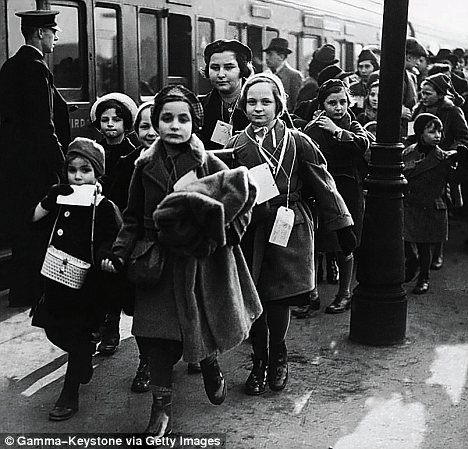
Jewish refugee children arriving in London from Nazi Germany in 1939

Jewish refugee children arriving in London from Nazi Germany in 1939

It appalls me that an educated Jewish man, who probably lost relatives in Europe during the Holocaust, and would well know the long history of Jewish flight from persecution to set up new lives as refugees in countries like South Africa and Australia, should hold such intolerant beliefs and paint modern day refugees in such a negative light, particularly given current events in Europe, and around the world.

But it does not surprise me at all.

So many of the memories of my very Jewish upbringing (I had a Bar Mitzvah, attended a Jewish Day School, went to synagogue on the Sabbath) in South Africa are darkened by intolerance.

Here’s a phrase I remember well: ” Shiksas are good for sleeping with, just so long as you don’t marry them.”

A Shiksa, for those who don’t know is a non-Jewish woman.  Another word used constantly for non-Jew was ‘Yok’.

Then there were the constant references to the ‘schvartze‘ – a derogatory Yiddish word referring to a black person.

When I was growing up in South Africa, the schvartze was the black domestic worker toiling silently in the kitchen or the garden ‘boy’ (in fact a grown man) raking up the leaves from the swimming pool.

Words like shiksa and schvartze was said all the time by the very people who should have been my role models: my peers, older relatives and even those observant, ultra-religous Jews with their disapproving judgements of non-religous Jewish life.

Of course there have been many heroic Jews around the world who have fought for human rights and justice, who would be equally appalled at Mr Burd’s letter.

In South Africa, people like anti-apartheid heros Joe Slovo and Albie Sachs  and war crimes prosecutor Richard Goldstone spring to mind. Indeed, there is my own cousin Henry Brown,  who represented Nelson Mandela as a young lawyer in the 1960s.

But it is the intolerance within the Jewish community that has seen me drift further and further away from my faith.

Instead, i see my Jewishness, purely through cultural references and reminscences: the comedy and witticism of Woody Allen, Jerry Seinfeld and Larry David’s Curb Your Enthusiasm, the mournful hymns we use to sing in the beautiful old Germiston Synagogue on Saturday mornings, the lavish meals of chopped liver, marrow bones on challah, mock crayfish, matzoh ball soup, roast meats, potato kugel and parve chocolate mousse served for dessert.

In praise of my illustrious alma mater, the University of the Witwatersrand

Most people can’t even pronounce it and few outside of South Africa would have heard of “The University of the Witwatersand” – until recently.

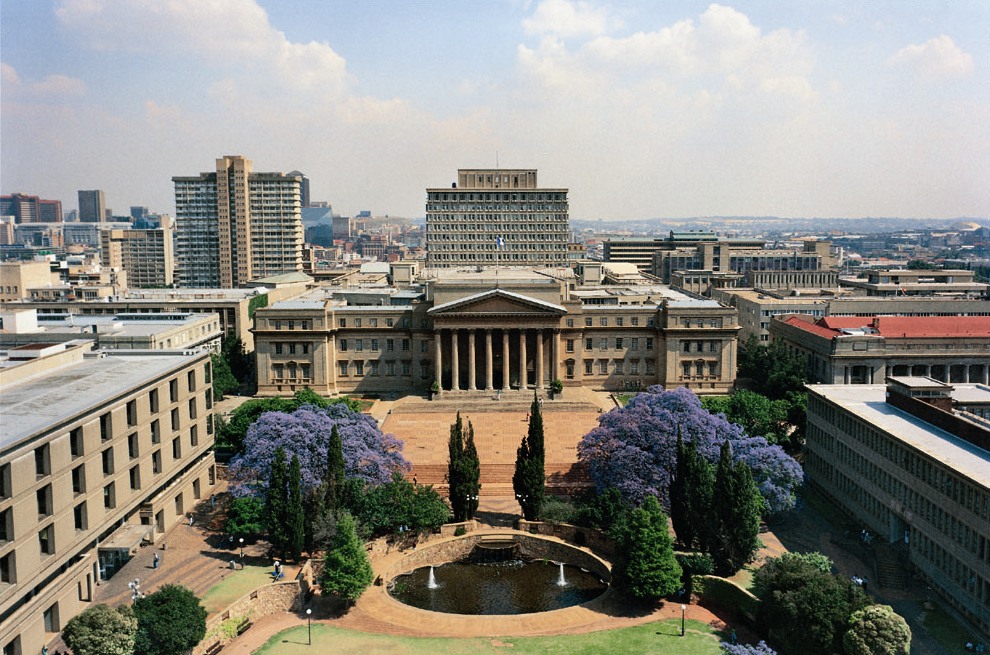
Wits University's east campus with the imposing Great Hall at the centre

The imposing Great Hall at the heart of Wits University

‘Witwatersrand’, an Afrikaans word pronounced gutterally ‘vit-varters-rand’, and meaning “ridge of white waters” (referring to the ridge of ancient white rock running east to west across Johannesburg) appeared in every major news outlet around the world this month when archeologists and paleontologists from the University of the Witwatersrand  revealed that in caves near the Cradle of Mankind world heritage site, outside Johannesburg they had unearthed one of the most significant fossil finds of all time: the remains of a new human-like species. since named Homo Naledi.

Fossil remains of Homo Naledi

Fossil remains of Homo Naledi

Reading all about the Homo Naledi discovery brought back so many vivid memories of my six years spent at Wits University in the 1990s, where I mostly traipsed around its lively, liberal arts East Campus in Braamfontein from lecture to lecture. It’s the oldest part of the university, dominated by the imposing Greek-columned Great Hall with pretty gardens, sports fields and a mix of old and modern architecture.

It was in the Great Hall that I graduated in 1997 with a Bachelor of Arts Degree and in 1999, with a post-graduate business management diploma. Before that, I tried architecture for a year and building science for another, before finally  finding my feet in an English and Psychology degree with a bit of Film and Drama and Economics thrown in, much to the relief of my exasperated parents.

Taking-a-break-on-the-lawns-Wits-University

The lawns on East Campus

While Wits may not have an ounce of the global clout or fame of legendary universities like Harvard, Stanford, Oxford or  Cambridge, in South Africa, its reputation is immense.

It occupies a special place in the country’s psyche, firstly as a centre of learning and research and secondly, as a hotbed of left-wing political activism that helped shake off the shackles of apartheid.

Since its founding in 1922 (originally it was a mining school dating back to 1905), Wits has produced a veritable who’s who of the country’s best writers, lawyers, thinkers, architects, doctors, business leaders and political players.

Graduates include three Nobel prize winners, among them anti-apartheid scribe Nadine Gordimer, who won for Literature in 1991, the lawyer George Bizos who defended Mandela at the Rivonia Trial, Oscar winner, Gavin Hood, who directed the movie Tsotsi, musicians Manfred Mann and Johnny Clegg and political satirist Pieter-Dirk Uys (South Africa’s equivalent of Dame Edna). Former Westpac boss Gail Kelly and Glencore mining boss Ivan Glasenberg are also Wits graduates.

Among my many memories of Wits, is walking into a library one late summer afternoon and noticing a glamorous-looking black lady huddled over her books, surrounded by a posse of body guards. It was Winnie Mandela, then still married to Nelson Mandela, and who was – I believe – enrolled in political science degree. It would only have been a year or two after Winnie and her ‘Mandela Football Club’ thugs had been implicated in the brutal slaying of Stompie Moeketsi, a 14-year-old boy, accused of being a police informer.

Speaking of the police, they were an unwelcome presence on campus from time to time when various left-wing student unions would protest about things like fee hikes and threats to expel students with unpaid and overdue fees.

Not everyone on campus supported the protests: I remember that some students took it upon themselves to print and sell t-shirts with “The Police: Their Greatest Hits” printed on the front, a parody of the rock band’s very popular ‘Best Of’ album  except with a policeman bashing a students head in with a truncheon. On the back, instead of concert dates and venues, was a list of police clashes on campus.

More pleasing are my memories of discussions with novelist and short story writer David Medalie, whose passionate lectures inspired my many re-reading of E.M. Forster’s brilliant novel, A Passage to India. Internationally acclaimed artist William Kentridge was a guest lecturer in my Film and Drama classes in the basement of Senate House, where he showed some of his incredible hand sketched short films, including one I recall vividly for its pathos and utter sadness, Felix in Exile.

It was in those Film and Drama classes that I was also introduced to classic Italian and French movies like the Bicycle Thieves and The 400 Blows, and where we discussed Pulp Fiction, then just released.

Also, I recall vividly going to a university production, where the female drama students from my Film and Drama class disrobed and pranced around the stage in the nude. It was a very pleasant shock.

In my psychology classes I discovered Freud and Jung for the first time and learnt about Maslow’s hieracy of needs. In English lectures I immersed myself in the writings of Margaret Atwood, Thomas Pynchon, Charles Dickens, the Bronte sisters, the poems of Keats, Wordsworth and EE Cummings and the plays of Athol Fugard, Arthur Miller and Eugene O’Neill.

In the canteen, between lectures, I got fat on sugary Chelsea buns and pap and wors, drowned in gravy. Attempts at exercise at the  university’s squash courts did not help much.

There were of course friendships struck in lecture halls and mostly disastrous attempts at romance. For a brief time I wrote heavily parodied (by my friends) film reviews and bits and pieces for the student newspaper and recall enrolling in the photography club for a while.

I wrote my essays out by hand at first before we finally got a computer at home. It was at Wits that I used email for the first time.

I also remember the archeology building, where the Homo Naledi fossils are presumably now stored and catalogued.  It was and is still called the Bernard Price Institute or BPI for short.

I remember its windows lined with jars and specimens and inside, a big airy foyer filled with the strange and interesting exhibits.

A bit like my 41-year-old self: a strange and somewhat interesting ‘exhibit’ and product of that same institution, the University of the Witwatersrand.

Postcard from Australia: Parks, recreation and racism

Major-parks-Hyde-ParkFor me, there is no greater symbol of Australian tolerance and acceptance of multiculturalism than park life.

Not the song by Blur, but what goes in a park in Sydney or Melbourne (or Brisbane or Perth I am sure) on a Saturday or Sunday afternoon.

If you don’t spend much time in parks, I urge you to visit now that spring is in the air and the days are warming up and the skies are a deeper shade of blue.

Here you’ll find people of all colours, creeds and sexual and socio-economic persuasion eating, playing, laughing, drinking and cooking side-by-side in seemingly perfect harmony.

You’ll see Asian families with their massive plastic Tupperware containers of marinated chicken wings and rice eating under gazebos, traditional Muslim families sitting on rugs having picnics and pasty white folk riding their bikes, throwing the frisbee, walking dogs or just enjoying a good book on the lawn. The children’s playground will be a similar multi-coloured, multi denominational kaleidoscope filled with laughing, screaming happy kids having fun without a bother in the world.

I see scenes like this every time we go to the park, without fail. It’s positive reinforcement that Australians are decent at heart, kind, tolerant and accepting, fitting in with the global stereotype: the happy-go-lucky, easy-going laughable larrikin Aussie.

Parks are where I find myself, someone who does not usually engage with strangers, striking up conversations with parents of all backgrounds, while my daughter swings or hurtles down slides. Last week it was a guy, Rudy from Santiago, Chile, who has lived in a Australia for more than a decade, is an Australian citizen, making the move here for a better life. A couple of weeks ago it was a Greek grandfather “pappou” as his grandkids called him, with whom I discussed the economic collapse in the country of his birth.

It’s hard to correlate this multicultural idyll with some of the racist vitriol that is so very present in so many other aspects of Australian life and which reinforces another widely held stereotype, that Australians are racist bastards who call Italians “wogs”, Aborigines “Abos” and who want to send Muslims “back to where they came from”.

But yet, we live in such a dichotomy, one that is particularly pronounced under the most conservative government in the country’s modern history.

Last weekend’s Border Force crackdown Melbourne where there were plans for the new militarised goon squad in their sinister Stasi-like black uniforms to target suspected visa dodgers before a public protest led to its hasty cancellation only rammed home the message of racial vilification because after all, as a colleague of mine highlighted, they were unlikely to ask a pasty white guy like me (a permanent resident, but a foreigner none the less) for proof of my residency.

Adam-Goodes

Adam Goodes being booed

Add to this the thousands of mainly Muslim asylum seekers, deemed “illegal” by the government, locked up, abused and forgotten in offshore detention centres on Manus Island and Nauru, the many Reclaim Australia and even more sinister United Patriotic Front rallies – skinheads disguised as “concerned citizens” and the recent targeted booing of aboriginal AFL player Adam Goodes and its hard not to stereotype Australia as a hotbed of white-trash yobbos parading in those blue Australian flag singlets on Australia Day.

Most recently, a gang of racists disguised as concerned citizens protested at a property auction, because of the prevalence of Asian buyers in the overheated real estate market (even though research shows its local cashed up mum and dad investors that are driving up prices)

As someone who lived in apartheid-era South Africa, I am acutely aware of racism in its many forms, overt and subtle, as a Jew, I have experienced the occasional anti-semitic episode.

But it seems to be as though racism is too easily brushed under the carpet here. Racist remarks by well-known public figures like Dawn Fraser, Eddie Maguire, Darren Lehman and others are quickly forgotten after the most facile of apologies. There are no repercussions for the right-wing columnists like Andrew Bolt who regularly degrade minorities, while the government through its stoking of the paranoia of fear about Muslim extremists (when the greatest dangers appear to be domestic in nature), is doing nothing, but helping prejudice, bigotry and intolerance fester.

The remedy of course, is to forget all about this and take off to the park on a sunny spring day, breath in the air, feed the ducks and enjoy the multi-cultural ambience. Perhaps even strike up a conversation with a Muslim father playing with his kids, an African women walking her poodle or a tanned Spaniard practicing his English.

Think of it as anti-racism therapy 101. It’s good for the soul. It may also renew your faith in Australia.

Why do I delay my citizenship application?

IMG_0072I’ve been eligible for Australian citizenship for over four years and yet I still I haven’t applied. In fact, I haven’t done a thing.

This seems odd. Doesn’t the whole world want to move over here? Aren’t people jumping aboard rickety boats, making perilous journeys across choppy seas for the chance – faint though it now may be – to call themselves ‘Aussies’?

Seven years ago, I got taste for it when I attended my wife’s citizenship ceremony in the Sydney Town Hall. There we were seated in a room packed with would-be Aussies of every denomination, ethnicity, faith and sexual persuasion, all full of joyous anticipation.

My principle memory of that day is not of my wife’s beaming smile as she received her certificate from Lord Mayor Clover Moore, but of  a middle-aged, Middle Eastern-looking man who leaped up weeping with joy as his name was called out, completely overcome with emotion.

There were tears in everyone’s eyes as this humble man-made his way to the stage, embraced the diminutive Lord Mayor, yelping and hooting and proclaiming with joy: I am an Australian.

I can only begin to imagine the journey he had made from a life of struggle, possibly horror and brutality, to sit in a wood panelled room above George Street in the middle of one of the world’s friendliest, safest cities and take his place among the 23 million privileged citizens of this Great Southern Land.

I was jealous. Not even a permanent resident back then, living on a 457 work visa, I longed for the time when I would hear my own name being called.

Time has passed. I am now, through marriage, a permanent resident and have been eligible since about April or May of 2011 for citizenship and an Australian passport.

But apart from printing out the booklet that you’re supposed to read before doing your citizenship test, I’ve done nothing about actually applying.

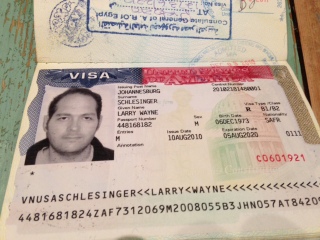
Perhaps, I’m just addicted to those colourful visa stickers that have filled up my South African passport for more than 20 years.

IMG_0068

Indeed, I almost wept with joy when I found by chance after more than two years of looking, an old South African passport of mine that I had given up as lost.

It was the one I used on a round-the-world trip backpacking trip I made with my wife in 2010  (a trip I faithfully recorded in a blog called the BEEG Adventure) The passport with the coat of arms long since faded was buried between the pages of a car manual in the glove compartment of our Ford stationwagon. I found it in February, when we were trading in our car.

IMG_0069

It’s jam-packed with colourful visa stamps from Europe, the USA, Morocco, India, Egypt, Turkey and Thailand, tracing the journey we took over the course of a year, a fine souvenir.

FullSizeRender(1)

It eventually became so full of visa stamps that I ran out of blank pages and I had to get a new one.

My nostalgia aside, becoming an Australian citizen would entitle me to an Australian passport and my visa application days would be a thing of the past.

I would also be proud to be an Australian having put down roots here for more than a decade, gotten married, had Australian kids and forged a career and a good life.

But the paperwork, form-filling and document gathering required (I must also apply to the South African government if i wish to be a dual citizen) put me off time and time again.

Perhaps, also, on some subconscious level I feel uneasy about becoming an Australia . For I feel revulsion at our refugee policies and those poor, desperate asylum seekers locked away in secret and in miserable conditions with little hope to cling to.  Perhaps, they are more deserving then I of that coveted citizenship? Perhaps this is some form of protest?

Maybe this is not the greatest country in the world after all, despite what those liveability surveys may say.

A special thank you to the nursing staff and doctors at Melbourne’s Royal Children’s Hospital

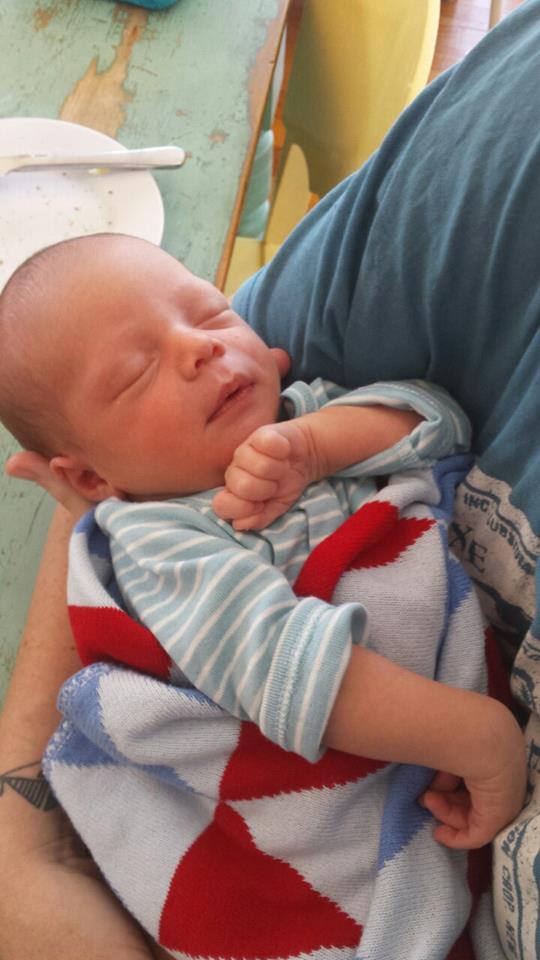
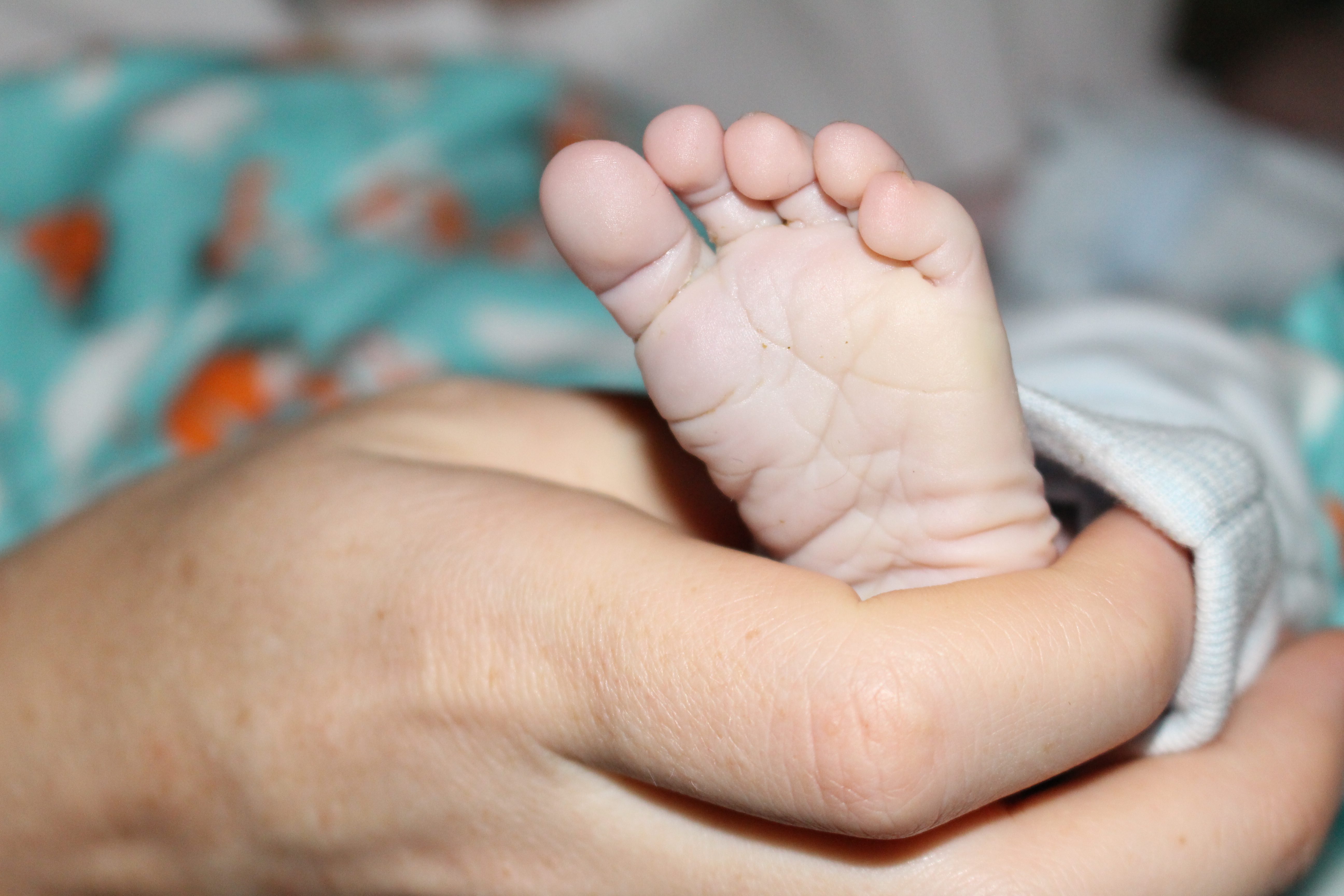
Our darling little boy, Aubin Clarke, was born on June 19, healthy and strong and feeding well.

aubin sleeping

Aubin a few days old

Three weeks later he contracted bronchiolitis from two common cold viruses – something that would just have meant a running nose and a cough for older children –  but because he was so young, he quickly became very ill.

He spent a week in the Butterfly Ward – the neo-natal intensive care unit on level five- at Melbourne’s Royal Children’s Hospital hooked up to machines to help him breath, a nasal feeding tube, a drip,a catheter and all manner of monitoring devices.

While incredibly distressing for us as parents, we were soothed by the brilliant team of nurses and doctors who cared for him and nursed him back to health.

A week after being admitted, he came home, and has made a complete recovery.

I want to especially thank all those wonderful nurses who looked after Aubin 24-hours-a-day and who fed him, changed his nappy, dressed him, soothed him when we were not there (you cannot sleep overnight in ICU), who monitored all his vital signs into the early hours of the morning and who reassured us he would be fine.

Apart from being absolutely brilliant professionals,  you were exceptionally kind and caring and when we had to leave him at night, we knew he was in the best of hands.

For this we will always be very grateful.

Thank you from the bottom of our hearts.

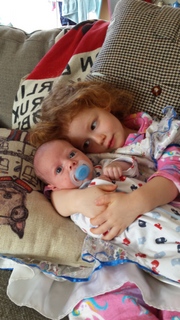
Aubin with her big sister Edie

Aubin, aged five weeks, with his big sister Edie

Why you should drop the fear and visit Johannesburg

2212355983_74be3eec5f_zFor any ex-“Jo-burger” living in Melbourne, one can probably count the number of kind things said about Johannesburg on the palm of one’s hand, including comments from ex-South Africans.

For most it exists in the mind as crime-ridden, lawless place with rolling blackouts and road rage – and for those visiting South Africa, the only memory they may wish to have of Johannesburg will be of the ultra-modern airport and perhaps a short cab ride along the motorway – or via the Gautrain – to the safety of their hotel in the leafy suburbs of Rosebank or Sandton.

Most will no doubt wish to head straight out of “Jozi” or “eGoli” (as it is affectionately known by its six million plus residents) for Cape Town and its nearby wineries, the beaches and warm oceans of Kwazulu-Natal or the world-famous Kruger National Park Game Reserve. Anywhere, but hanging about in Jo’burg…

Not even die-hard Jo’burg fans such as myself would be foolish enough to argue that crime is not so bad – you only have to look at the ridiculously high walls and electrified cables which surround nearly all the homes or read the front page of any newspaper to know this is true.

But there is certainly a lot more to the city than tales drenched in blood.

The Johannesburg CBD skyline

The Johannesburg CBD skyline

The city, like South Africa itself is constantly changing and much is being done to shake off the cobwebs and re-energise Johannesburg in a very positive sense – meaning there is a lot to see for any tourists brave enough to venture beyond their hotel room.

The Apartheid Museum

Symbolic seperate black and white entrances to the Apartheid Musuem

Symbolic seperate black and white entrances to the Apartheid Musuem

First on any tourist itinerary should be a visit to the Apartheid Museum, situated just a short distance from the Gold Reef City Theme Park and Casino – (a gaudy monument to Johannesburg’s modern roots as site of the world’s biggest ever gold rush in 1886).

The museum was completed in 2001 and provides a totally exhaustive and engrossing history of the struggle to end what was a brutal, tyrannical and inhumane regime.

Upon entering the museum visitors are arbitrarily and symbolically classified as either “white” or “non-white”. Once classified, visitors may only enter the through the gates allocated to their race group. Much like the high, windowless concrete walls of Berlin’s holocaust memorial, such devices immediately transport one back into the dark day of Apartheid, setting the tone for the museum, which is designed to be as interactive as possible.

It’s an enormous exhibition full of photographs, video footage and installations detailing apartheid’s genesis, life under the regime, and the resistance struggle which took root in the 1960s and saw Nelson Mandela’s rise to power.

Give yourself at least four or five hours to explore – more if you are one of those people who likes to read every word and watch every video.

Constitutional Hill

Next stop on the political trail should be the Constitutional Hill complex near Hillbrow, seat of the Constitution Court, the highest court in the land, where South Africa’s constitution – considered the most democratic in the world – has its home.
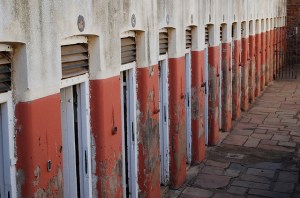
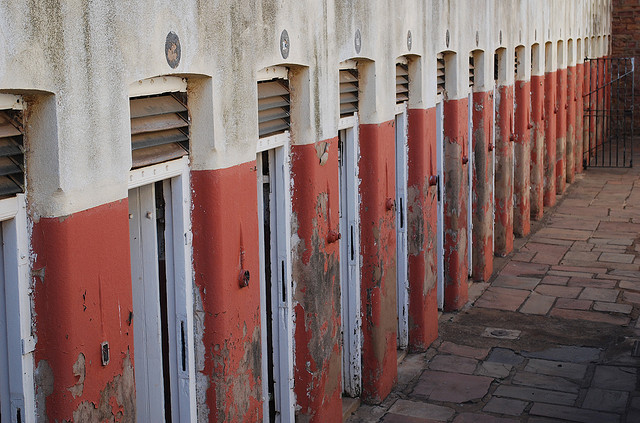
The old prison cells - home to Ghandi and Mandela at one point at Constitution Hill

The old prison cells – home to Ghandi and Mandela at one point at Constitution Hill

The complex is built on the site of the Old Fort, the notorious prison built originally by Boer leader Paul Kruger in a vain attempt to defend Johannesburg from the British.

Visitors to Constitutional Hill should sign up for a guided walking tour to get a real feel for the place. Local guides take visitors through cell blocks which housed every famous political prisoner the country produced including Nelson Mandela and Mahatma Ghandi.

Mandela’s cell has been recreated and besides the video footage on display it contains original letters written by Mandela – a qualified lawyer – written in elegant curved freehand, detailing his numerous requests from prison authorities for access to books, legal counsel and to see his family.

On the way visitors bypass the now empty and incredibly eerie cellblocks – like everything under apartheid, divided into white and black sections.

As the guides explain and visitors can see for themselves, Apartheid’s reach was limitless. The walk takes one passed notice boards which detail meal rations for prisoners (more meat and extra coffee and sugar for white prisoners, less for Indian prisoners and virtually no luxuries for black inmates).

But constitutional hill is also an uplifting experience culminating in a visit to the Constitutional Court itself. Decorated with paintings and sculptures by some of the country’s finest artists (the nearby art gallery is a must) the building has literally taken what was once a symbol of oppression and turned into a symbol of freedom – an entire wall of the court building is made from the bricks of a section of the old prison.

Ancient histories

For history that predates the arrival of the first Dutch settlers who moored at the Cape of Good Hope in 1652, say by a couple of hundred thousand years, another new permanent exhibition has sprung within an hours drive of the city. Called “Maropeng” or “The Cradle of Mankind” it remains one of the world’s great fossil sites and is rightly listed as a “World Heritage Site”.

Looking like a massive ant hill, and surrounded by ominous orange signs telling visitors to “Beware of snakes” (surely not likely to scare off any Australian tourist), the tour main walk way is lined with human and animal fossil finds which lead into the main building. Here a ride through an underground lake takes one to a massive exhibition hall where the “history of mankind” is put on display including some of its most famous fossil finds.

If that’s not enough, there is also an opportunity to visit the nearby cavernous Sterkfontein caves, complete with dripping “stalactites” and “stalagmites”.

Soweto
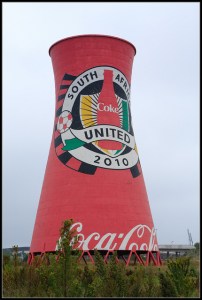
A painted old power silo near Soweto

A painted old power silo near Soweto

No visit to Johannesburg can ever be called complete without a visit to the adjacent township of Soweto. Gone are the days when no one ventured near the township unless they lived there, it’s now a major tourist magnet (and with good reason) with numerous tour companies offering full day tours.

For about $90 you can spend an entire day with a Soweto resident as he takes you in air-conditioned mini-bus on a dazzling tour of the South Western Townships.

Putting aside its significance as the centre of the anti-apartheid struggle, the following tidbit should be enough to pique your interest in paying Soweto a visit.

6268519080_0efa4845fe_zAll tours of the township will take you down Vilikazi Street, a dusty street, lined with mostly small, compact houses and unique in this aspect – it is the only street in the world where two Nobel Peace Prize winners lived – the country’s greatest leader and former president, the late Nelson Mandela, winner of the prize in 1993  and the enigmatic, Desmond Tutu, the much-loved retired archbishop of Cape Town, who won the prize in 1984.

The tours include a walking tour through traditional African markets – complete with an African witch doctor who can give you a remedy for making anyone of the opposite sex swoon at your feet, outdoor butcheries and once illegal drinking taverns called “Shebeens” where you can sample South African curries and semolina pudding, commonly known as “pap”.

Those brave enough can try dried Mopani worms (similar to Wichita grubs) washed down with Amazi, the traditional African “sour” beer.
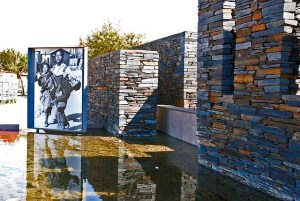
244346804_b2a0a47fea_z

The Hector Pieterson memorial in Soweto

You will also visit the site of the Soweto Uprising of 1976, when students protested against being forced to study in Afrikaans, and where Hector Pieterson a 13-year-old schoolboy was gunned down by police and whose dead body (famously photographed by Sam Nzima) became a symbol of the evils of apartheid.

Multi-cultural shopping and dining

Not all the things touristy in nature in Johannesburg are about history.

Given that one Australian dollar buys you around Nine South African “Rands”, shopping in eGoli can be a real spending spree. The city is littered with mega-malls stocking the latest local and international brands. For those on the hunt for modern finery and expensive African crafts, the ultra-chick Sandton City Mall and Hyde Park Shopping centre in the city’s North are enormous palaces to consumerism, while for sheer ridiculousness, the Monte Casino resort is worth visiting. Besides housing an enormous array of slot machines (pokies) and poker tables, the shopping and eating mall is designed as a fully enclosed Italian village, complete with washing hanging on the line, fake pigeons and a twinkling ceiling, where it’s forever nighttime.

Fake Italian: inside gaudy Monte Casino

Fake Italian: inside gaudy Monte Casino

There are many adventures to be had in the City of Gold, all of which can be done relatively safely, provided you stick to basic rules like not walking down quiet streets alone at night, leaving your expensive jewellery at home and keeping gadgets out of sight.

Most importantly keep in mind that Johannesburg is a friendly, multi-cultural place filled with some of the loveliest, most hospitable and zany people you will ever meet.

So go on, next time you’re flying into Jo’burg – spend a few nights and explore!

I dare you!
In memory of my beautiful son, Rafferty Schlesinger

IMG_1382

Today, February 2, would have been Rafferty’s first birthday.

A happy little boy, perhaps with curls in his hair like mine, taking his first steps around the living room, my arms outstretched, waiting to catch him.

Just a playful image to hold in my mind: our beautiful little boy was stillborn at 38 weeks exactly a year ago.

His passing came without warning. A few days before he died, he was an active little baby, his arms and feet pushing against Larna’s belly. Little shapes bopping out playfully from her round tummy.

The shock of his passing was immense. It was impossible to comprehend when it happened. I remember the phone ringing, and a lady at the hospital telling me I had to come in right away. Larna was too upset to speak.

I asked the woman on the phone: “Is everything OK?” She would not say, but I knew the answer.

A man usually of few emotions, I wept against the side of the bed as I held Larna’s hand in a darkened hospital ward half an hour later.

As Raffie was a fully developed baby, the doctor said it was better if he be born via natural birth and encouraged us to choose this option, even though it felt so ghastly and cruel and would mean Larna would have to go through labour and give birth. But the doctor said it was a safer option, especially if we decided one day to have another child, and so we agreed

We returned in the morning. Larna was inconsolable in the car as we approached the hospitable: “Raffie, why did you leave us?” she repeated over and over.

There were no answers. As a mother, Larna had lovingly carried Raffie for 38 tiring weeks, battled through severe morning sickness and an earlier miscarriage scare. More than anyone in the world, she deserved a healthy baby.

If there was a God, I thought, he was cruel and vindictive.

Through a vail of tears, Raffie was born in the early hours of  Sunday morning at the Royal Women’s Hospital.

Even though I knew there was no hope, I had, up until his birth, prayed for a miracle. That some how the doctors had been wrong, that he would still be alive.

The moment he was born will stay with me for ever: a little boy who did not utter a sound.

We held Raffie’s little body, stroked his soft skin, held his fingers and toes and took photographs. In one of those photos, I can see the sadness etched on my face, it is the saddest I have ever been.

We would have given anything for just a few moments of him warm and breathing against our skin.

Later that day I drove home to shower and get some rest before returning to the hospital in the evening. It was one of those scorching February days. I felt the heat as a crushing, suffocating sadness. I felt empty and deeply depressed. The world seemed completely changed, drained of colour for ever.

At home, I lay down on our bed while the fan whirred, next to an empty crib that should have been Raffie’s: it was the loneliest, saddest empty space in the world.

Two days later, on a Tuesday, we said goodbye to Raffie.

His little white coffin engraved with Rafferty” and my surname ‘Schlesinger” stood at the end of a small chapel hall attached to the funeral parlour.

We  sat together and said our goodbyes.

Behind us, my daughter Edie, nearly two then, provided some ill-timed, but much-needed comedic relief, ransacking purses and bags and running around with the bunches of colourful balloons that decorated the hall.

When it was my turn to speak, I read from something I had prepared. At the end, my emotions got the better of me and I collapsed into tears:

Rafferty.
Raffie.
I never thought hello and goodbye would come so quickly.
You were a beautiful boy with your mom’s long hands and your dad’s frown.
Raffie, I was so looking forward to kicking the ball with you in the park, watching your delighted face discover new things, hearing you say your first words.
I don’t know why you left us, but just know that where ever you are, your mom and dad and big sister Edie love you so much.
Our hearts are broken, but with time they will heal and we know that you will be watching over us.
We will never forget you. You will always be a part  of our family.
You are inside of me, in my heart.
You are my son.
My sweet little Raffie.
My little rascal

After the service, we let go 38 balloons into the air – one for every week Raffie had grown in Larna’s tummy.

The saddest part was watching the car with his coffin drive away, knowing that we were saying goodbye to him for the last time and knowing that we would not watch him grow older, not even for a day.

Later that day we had a picnic in his honour in Queen’s Park in Moonee Ponds under a big shady tree. The pain lifted briefly that afternoon. Perhaps we were just numb or too tired or just relieved to have made it this far.

Twelve months have passed, and I don’t think I have really comes to terms with losing our boy. Do you ever?

Today, we celebrate Raffie’s birthday. It is hard to accept that he is not hear running around, playing with his big sister, saying his first words, being a little rascal.

We speak about Raffie all the time and miss him terribly. He is part of our family. Edie may not yet be three, but she knows all about her baby brother and we encourage her to look at pictures of him and say his name.

Rafferty. Raffie.

Rest in peace my beautiful little man. We love you, always.

IMG_1394

Rafferty Schlesinger

Born, February 2, 2014 – passed away, February 2, 2014
Deeply missed by mom, dad & big sister Edie

Freshlyworded online bites: Five hand-picked yarns to enjoy this week

media bitesJanuary 15 edition (inaugural edition)

The internet is a vast, limitless place and very distracting.The worst thing you can do is waste your time reading drivel like this or this

Every week freshlyworded.com scours the internet for five worthy reads and shares them with you, completely free of charge.

The only criteria are that they be interesting/startling/enlightening (or preferably all three), that I have read them myself, that they are not behind a pay wall and that they can be enjoyed in the time it takes to drink a good cappuccino (sometimes quite slowly).

This week’s five are:

1. A Craigslist ‘Missed Connection’ Lure (New York Times)
“It all felt so sweet, strange and surreal. And impossibly romantic.”

– Finding ‘true love’ on Craiglist isn’t as easy as you think by Rosemary Counter (@RosemaryCounter).

2. Reconciling faith with political power (The Age)
“Others, including myself, are puzzled that the most Catholic Coalition Cabinet in Australia’s history can be so cruel in slashing our aid program – the lowest  in our history.”

– Being Christian at home does not mean being kind in public office writes Tim Costello. (@TimCostello)

3. Laughing at the Establishment in Thailand ( Time Magazine)
“The Bangkok Post dubbed Winyu Wongsurawat’s frenetic style ‘Jon Stewart on crack,'”.

– How a satirist is taking on Thailand’s military junta via a hugely popular YouTube show by Charlie Campbell. (@CharlieCamp6ell)

4. Selma’ Distorts History by Airbrushing Out Jewish Contributions to Civil Rights (The Jewish Daily Forward)
“The black-Jewish relationship is complex, with many changes over time, but the historical record is clear.”

– A new film about the 1965 Civil Rights processes omits the role played by Jewish leaders writes Leida Snow. (@LeidaSnow)

5. RJ Mitte: ‘Nothing I do will ever compare with Breaking Bad’ (The Guardian)
“When Mitte read the character summary for Walt Jr seven years ago, it came as a welcome shock. “The breakdown pretty much described me,” he says, still slightly amazed by his luck. “Dark hair, big eyebrows, cerebral palsy … I was like, ‘I have this covered.’”.

– RJ Mitte, the actor who played Walt Jr in Breaking Bad talks about his acting and how he overcame his disability by Homa Khaleeli. (@homakhaleeli)

If you have a worthy yarn, send a link to freshlyworded@gmail.com and I will review for possible inclusion.

The story of how an apartheid pariah became a $66 billion media Goliath

ecommerceIf you were asked to name the world’s ­fastest-growing e-commerce company behind Alibaba and Amazon, it’s a pretty sure bet that names like eBay and Japanese giant Rakuten would spring to mind.

But the answer – as measured by ­year-on-year growth in monthly average desktop visits – is South African ­company Naspers.

Few Australians would have heard of Naspers, or know of its roots as a publisher founded to provide a voice for nationalistic Afrikaners after the Boer War defeat. But it just might ­provide a ­perfect example of how a ­modern media company can adapt to the digital world.

naspers graph

Source: Naspers 2015 interim results

Before it began re-inventing itself as an internet, e-commerce and pay ­tel­evision business in the early 1990s, Naspers (short for Nasionale Pers, ­Afrikaans for “National Press”) was a strong supporter of white minority rule and cruel ­apartheid policies.

Its first newspaper was Die Burger (The Citizen) and the paper’s first editor, Daniel François Malan, was a clergyman and ultra-conservative politician. In 1948, Malan led the National Party to victory over the more moderate United Party in white-only parliamentary elections, becoming prime minister. Later he would lay the framework for apartheid.

These policies were supported by Naspers until the release of Nelson ­Mandela in 1990.

Koos Bekker

But it was only in 1997 that Naspers sought to publicly sever its ties with the past (though you won’t find any mention of this in the history section of its website). That was also the year it appointed Koos Bekker, a graduate of Columbia University as chief executive.

Bekker, who had pioneered pay ­TV in South Africa (now called DSTV), led the ­company into the digital age.

In 2001, Naspers made its most sig­nificant ­investment when it paid just $US32 million ($39 million) for a 46 per cent stake in China’s Tencent ­Holdings, which was at the time the ­operator of unprofitable instant messaging ­platform QQ.

Today, Naspers has a market ­capitalisation of around $US66 billion, thanks mainly to its 34 per cent stake in Tencent, which has grown into a Hong Kong-listed mass media giant through mobile chatting applications like WeChat, which has more than 470 million subscribers.

Dozens of e-commerce investments

Off the back of this, Naspers has invested in dozens of other e-commerce and internet ventures targeted at ­emerging markets like India, Russia, ­eastern Europe and Latin America, with fast-growing populations and ­rising internet use.

Naspers has a 29 per cent stake in ­Russian online portal mail.ru, and owns global online classifieds business OLX, which receives 11 billion monthly page views, and online payment system PayU.

Of the $US6.5 billion in revenue Naspers raked in for the six months to September 2014, more than half came from its online investments and activities, with pay TV responsible for a third.

The company still prints newspapers, although print accounted for just 10 per cent of total revenue.

Chinese internet censorship

While the story of Naspers’ ­re-invention is the stuff of legend and the envy of struggling media companies the world over, questions have been asked of its role in policing China’s harsh online ­censorship regime on behalf of Tencent.

China was recently ranked third worst country in the world for internet freedom by US independent watchdog Freedom House.

Naspers chief executive Bob Van Dijk , who replaced Koos Bekker in February 2014 when he retired, has responded only by saying that Naspers complies with the laws of the countries in which it operates.

This prompted South African Sunday Times business columnist Rob Rose to note: “When the Chinese government says it fancies trawling through your ­servers, you probably lift your skirt.”

None of this is likely to trouble Naspers’ biggest shareholder, the South African government – through the Public ­Investment Corporation – which recently inked a free trade agreement with China.

As for Bekker, he elected to receive Naspers stock options rather draw a ­salary, leaving him with a $US2.5 billion fortune (the Naspers share price has risen more than fifty-fold since 2001).

No wonder the expression “You never lose with Koos” has become popular in South African business circles.

A version of this article first appeared on afr.com

Black people with cockney accents and London flatshares: A tribute of sorts to Clive James

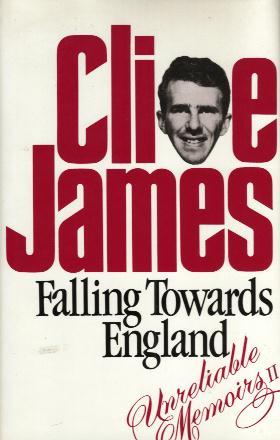
clive james bookI’ve started re-reading Clive James‘ second wonderful memoir “Falling Towards England” which recounts ‘our hero’s’ migration from Sydney to London in 1962.

I loved reading all of James’s hilarious, witty and erudite memoirs and it is a real treat to dip back in to the early year’s of one of Australia’s finest literary exports.

It is an endeavour tinged with sadness and nostalgia: sadness because Clive James has a terminal illness and because reading his memoir stirs up so many London memories for me.

I am only 40 or so pages into “Falling Towards England” where we find ‘our hero’ virtually penniless, rejected for numerous writing jobs, ill-prepared for the English winter and frequently surrounded by ill-mannered boorish South Africans, or ‘voortrekkers’ as he calls them who don’t like it when the ‘bleks’ talk back to white policemen on television.

James captures perfectly the harsh Afrikaner accent and the mentality of the neanderthals he was living with at the time:

“That’s what’s rewning Efrika,” said a voice from a winged chintz chair, ‘litting a keffir talk to them like thet.” Another chintz chair agreed. “Thet’s right,” it said. “They mist not be allowed to enswer beck.”

I remember with great clarity on my very first trip to London with my mother, aged 13 in 1987, when there was still an anti-apartheid protest moored permanently outside South Africa house on Trafalgar Square, walking into McDonald’s for the first time (that too a novelty) and hearing the black man in dreads behind the counter ask me what I wanted in a thick cockney English accent. I got the shock of my life.

“The bleks are not supposed to talk like thet,” is probably what raced through my naive South African head at the time.

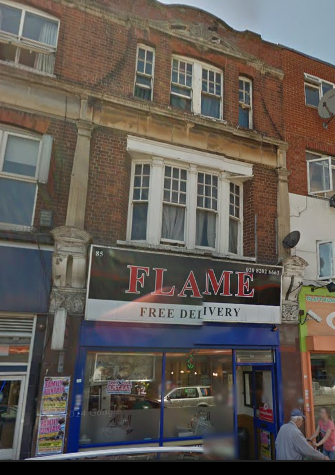
Beyond that funny re-collection, Clive James’s depiction of flat sharing in the 196os  reminded me of my own early years in London (I was there from 2000 to 2004), when I lived above a kebab shop on Brent Road, Hendon.

The top floor flat above "Flame" kebab shop was my home for three years

The top floor flat above “Flame” kebab shop was my home for three years

Of course, I didn’t have to feed money into a heater to generate some warmth as James did and my finances were not quite as dire as his – my first full time salary was £16,000 a year working as a ‘content developer’ for Accountancy Age on Broadwick Street, Soho.

I do though remember the barrenness of my little room with its pigeon-shit encrusted window that overlooked some miserable discount shops, a ‘caf’ where you could get breakfast for a few pounds and my local Tesco, where I witnessed numerous disputes between the staff and local yobbos, attempting their daily ritual of shoplifting bottle’s of Winkleigh’s White Lightning cider.

My landlord was a kindly, jovial Jewish man called Harold Schogger who ran the local bridge club on the floor below our third-floor flat. Coming home from work, I’d have to make my way past a posse of bride club players filling the air with a dense cloud of tobacco smoke (One later had a heart attack and died on the landing).

My first flatmates were as follows:

  • Andy and Dave, who both hailed from Rochdale, near Manchester in the North of England. Andy, a chubby, bearded fellow, fond of eating but not washing up and Dave, a quieter, intellectual type with the eyes of kindly badger, whose chief pre-occupation was smoking marijuana on a fairly continuous basis
  • Sagey, a lanky, pony-tailed Israeli, who spent large parts of the day and night in his lair (the biggest room in the flat) smoking dope, and shagging women (the moans reverberated through the passage walls). Sagey would sometimes invite me into his darkened den for a smoke and to watch a movie.  I would sit on a large poof in the cozy lounge area he had created next to his bed, getting deeply stoned, watching something or other on Sagey’s television.
Brent Street Hendon, where I Lived above the kebab shop

Brent Street Hendon,

My evening activities home from work via the Northern Line began with concocting some kind of meal in our narrow little kitchen usually piled up to the ceiling with dirty plates, or grabbing a kebab from the Afghanistani  who ran the shop below our flat. Then I would sit with Andy or Dave watching something or other on television (the Frank Skinner show was a favourite) as they passed joint after joint around the pungent room.

I must confess here to mild theft – having asked Dave, for a bit of weed one evening, I discovered that he kept it in a drawer by his bed. Later, when my own stash ran low, I’d help myself to some of his when he’d left work for the day – never too much to arouse suspicion, but enough to get me “nicely toasted”. For this act of treachery, I do apologise to Dave, where-ever he may be these days (probably stoned somewhere).

My old landlord and bridge club mafioso, Harold Schogger

My old landlord and bridge club mafioso, Harold Schogger

Thus I spent much of my first two years in London in a weed-induced trance, often finding myself up past midnight flicking through the endless channels of Sky TV. Or else, taking the bus up Finchley Road to visit my friends in a share house in Golders Green.

Over three years, a whole stream of eclectic and eccentric characters came and went from the three bedroom flat above the kebab shop. There was:

  • Debbie,  curly-haired aspiring singer from Cape Town, who aroused the passions of the local drunks in the nearby pub, when she sang show tunes for them (and who rejected my advances on the living room couch)
  • Jacqui,  a lovely ‘older’ woman (she was in her 40s to my late-2os) with a high-pitched voice, red-cheeked face, who took up the violin with great passion
  • Joe, a googly-eyed school assistant, drug fiend and cyclist, fond of opium-dealing in our living room, whilst quietly building a North London property portfolio
  • A good-looking Spanish guy (his name has disappeared from memory) who received phone calls on our landline from Europe at all hours of the night and whom I distinctly remember hating.
  • Two Israeli girls, one fond of loud bonking (though not with me), the other…sleeping (she worked the 11pm to 7am shift at John Lewis)
  • and many others whom have disappeared in the marijuana haze.

I remember those flat-sharing days in much the same way as  Clive James recalls his formative months in London with poignancy, hilarity, shocking embarrasment and a great deal of nostalgia.

There was also plenty of rejection and a fair degree of loneliness too among those years.

I recall being turned down for half a dozen other flat-shares,  inviting places with big open plan lounges, people that dressed well and leafy gardens.

I remember those experiences like Clive James wrote them, where each incumbent resident “wants to interview you personally before okaying you for the shortlist, after which the final selection is by written examination”.

In the end, I think I got the room in the shabby flat above the kebab shop because no one else wanted it, but at the time it was a cause for major celebration: London, I had arrived!

The flat is no longer there, given way to some apartment development, but the bridge club has remained.

And the kebab shop, where I paid frequent late night visits drunk or stoned, is still there, serving its greasy fare.