All the news that’s fit (and not fit) to print: new buzzwords in journalism

read all about it“It’s not change. It’s a f*cking revolution,” said a media analyst in the brilliant New York Times documentary Page One.

He was referring of course to how the online world has ripped up the traditional business model of newspapers replacing highly profitable print advertising and classifieds ads (the so-called “rivers of gold”) with cheap, interactive and intuitive online offerings.

Fairfax journalist Pam Williams did a brilliant job telling this story in her book “Killing Fairfax” – reviewed here – but is by no means the whole story.

The wheels of change continue to spin and at an even faster rate.

Two of the hottest and most provocative concepts becoming entrenched in the new age of publishing are “native advertising” and “corporate journalism”.

‘Native advertising’ – where paid-for, sponsored or branded content is produced and published on news sites to have the look and feel of a genuine article  – was the focus of a recent episode of the ABC’s Media Watch 

“Corporate journalism” – content produced by an in-house editorial team focusing on issues that matter to the corporation and its stakeholders – was in the spotlight following the launch of ANZ Bank’s new website BlueNotes in April, billed as “the first corporate digital publication for news, opinion and insight of its type in the Asia-Pacific region”.

The launch of BlueNotes sparked healthy debate on Twitter kicked off by Australian Financial Review columnist Christopher Joye who wrote that the ANZ site was likely to be “part bank brand-building, marketing and spin, opening up a new channel through which to project ANZ’s voice; and part bona-fide research and insight that will be of value to ANZ’s constituencies”.

What BlueNotes was unlikely to be, Joye wrote, was independent journalism of the sort produced by Fairfax and other traditional independent media. Nor would it be an “intellectual free-for-all that interrogates issues and disseminates opinion on topics germane to ANZ’s customers, but which can also conflict with ANZ’s profit motive”.

I tweeted Joye’s article and said that I agreed with him that BlueNotes is “not really journalism” to which former AFR senior journalist Andrew Cornell, the managing editor of BlueNotes, responded that it then begged the question: “What really is journalism?” and…was it restricted to “no-for-profits?” (A cheeky remark surely alluding to the fact that once-powerful media empires can’t seem to make a buck out of journalism anymore).

Cornell is a firm believer that corporate journalism – of the kind produced by his team – is the future of business journalism. It was a remark he repeated often in his last few weeks at the AFR.

twitter conversation1Amanda Gome, a former colleague of mine at Private Media and Fairfax, and now head of strategic content & digital media at ANZ, tweeted that BlueNotes was “new journalism” or “corporate publishing” – (and in another tweet, that it was definitely not native advertising).

twitter conversation2

Paul Edwards head of corporate communications at ANZ said if the site “started doing ads” then it would “fail”. Rather, he said, it aims to “engage thought leaders not sell stuff”.

twitter conversation3

On reflection, I agree with Christopher Joye that there is merit in what ANZ is doing with BlueNotes.

The views of its experienced executives, economists and commentators while slanted towards the bank’s view of the world,  are insightful and important (though I would argue they are better served as part of a balanced article in the mainstream media drawing on the views of others as well).

Only time will tell how many people find value in its offering, but it should find a niche among the myriad of online news and commentary sites finding an audience in Australia ranging from academic sites like The Conversation to mummy blogger uber-site Mamamia.

In its defence, corporate journalism like BlueNotes does not attempt to hide the fact that is an ANZ-produced publication, focusing on issues that are of important to the bank, its shareholders and clients.

But native advertising is less honest, muddying the waters between news and commercial interests and breaking down the traditional editorial division between church (editorial) and state (advertising).

Farhad Manjoo, a journalist with the Washington Post wrote of the deceptive quality of native ads that while they “usually carry a tag identifying them as ‘sponsored,’ they appear alongside and share the look and feel of the search results, tweets, status updates, blog posts and other content that you don’t immediately suspect of containing paid messages”.

He makes the point that there is a place for native advertising provided that it is clearly branded as sponsored content (he mentioned a story paid for by Toyota about 20 coolest hybrid animals to promote its hybrid cars that ran on BuzzFeed as a good example) but is sceptical of how this will play out over time.

buzfeed

The Buzz Feed ad/content created for Toyota

Native ads he says, “create incentives for misbehavior by advertisers, publishers and services like Facebook—and, over the long run, the incentive structure is sure to translate into looser disclosure standards and generally trickier content”.

The agenda of BlueNotes on the other hand is all in the name – unless of course you’re looking for a Miles Davis record.

Killer sharks on screen: dissecting fact from fiction

shark_hermanus_backpackersIn 2004, soon after arriving in Australia, I took a boat from Cairns out to the Great Barrier Reef with my then girlfriend.

An hour or so later, seemingly in the middle of the ocean, the boat stopped and dropped anchor next to a floating platform.

We donned our wetsuits, flippers and goggles and plunged into the vast, bobbing ocean. In the back of my mind and I am certain in the back of the minds of everyone in the water that day was: Is there a shark out here?

For the next hour or so we snorkled among the reef, enjoying the colourful fish that swam past and the corals waving in the currents. But try as I might,  I could not get the idea out of my head, that somewhere in that enormous expanse of blue water lurked a perfectly designed grey and white torpedo shaped creature with lots of teeth, who might find a recently arrived pasty South African a tasty entree.

Assurances by the tour operator that large sharks stuck to the deeper channels of water did not re-assure me. After all, what was stopping them from doing a bit of exploring out of their comfort zone on this very day? And what if someone in the water was bleeding? Or splashing about madly?

In the end I was relieved when we hauled ourselves back on the boat, removed our wetsuits and tucked into the buffet spread before the engines were revved up and we headed back to Cairns harbour.

Almost 10 years have passed, but I still remember the feeling of complete helplessness, floating about with nightmarish thoughts circling in my head and the constant need to come to the surface to scour the waves for the familiar dorsal fin.

This week, while hunting for something to watch, I came across the movie “The Reef” on the ABC’s iview.

Made in 2010, it’s about five friends who get stranded in the ocean when their boat hits the reef and capsizes. Four of the friends attempt to swim to an island in the hope of being rescued only to be stalked – and for three of them to  be eaten – by an enormous great white shark.

It is, in my opinion, one just three classic movies made about sharks (excluding those amazing documentaries on National Geographic and the Discovery Channel).

The other two are of course  Steven Spielberg’s Jaws, made in 1975 about a rogue great white shark killing swimmers in the beach side town of Amity Island and the three men (brilliantly played by Roy Scheider, Richard Dreyfuss and Richard Shaw) who set off to kill it and Open Water made in 2003  about an American couple abandoned in the middle of the ocean after a diving expedition and who become the prey for hungry sharks.

A still from Open Water

A still from Open Water

Alongside them are litany of terrible, stupid and silly shark movies usually incorporating D grade special effects (the cult film “Sharknado” the pinnacle of silliness), unfathomable plotlines and wooden acting performances that provide stiff competition for the computer-generated sharks.

The Reef  though is one of the scariest and most suspenseful movies I have yet seen, placing the camera in the water as the four suntanned helpless heroes bob about while a huge great white shark circles silently and menacingly, waiting for its moment.

This “in the water” film-making is also employed in Open Water, leaving viewers gasping and shuddering when a fin cuts across the screen.

In both these films, the sharks are all very real compared with “Bruce” the mechanical shark used in Jaws, which famously broke down continuously, forcing Spielberg to use it sparingly, which in the end cleverly added to the suspense.

Jaws is also  pure fiction – based on a best-selling novel by Peter Benchley (he is said to have got the idea from a series of famous shark attacks on the Jersey Shore in 1916) while Open Waters and The Reef purport to be based on or inspired by real events.

Open Waters is based on the true story of Louisiana couple Tom and Eileen Lonergan, who disappeared off the Great Barrier Reef in 1998, after a diving company accidentally left them behind.

Tom and Eileen Lonergan

Tom and Eileen Lonergan

However, that is where “true” part of the story begins and ends.

Investigations of their disappearance found no evidence they were taken by sharks. There were wild, unsubstantiated theories they either committed suicide or had hashed some kind of insurance scam, but the official Queensland police was they perished at sea. Dive equipment believed to have been worn by the couple washed up later, but without any evidence of bite marks.

Grahame Connett, of the Port Douglas Marine Tour Operators Association, who ran the Port Douglas Dive Centre told The Age newspaper in 1998:

“There is no indication at this stage that they have been killed at sea . . . There are no bodies, the equipment found has not been shredded. It is almost impossible for them to be taken by a shark. There are not big sharks in the reef area where they were. There are white tip reef or black tip reef sharks. They are docile two-metre sharks . . .

The Reef stands on more solid ground.

It is based on real shark attacks that occurred off the coast of Townsville in 1983 involving trawlerman and lone survivor Ray Boundy and two others who perished.

395553-ray-boundy

Ray Boundy with a photo of his deceased friend Denis Murphy

Mr Boundy told the Courier Mail in 2010, when the movie The Reef was released, that the prawn trawler he was working on capsized with himself, deckhand Dennis Murphy, 24, and cook Linda Horton, 21 on board. The date was July 25, 1983.

They were left in the ocean a day and a half.

Denis Murphy was the first to go in eerily similar fashion to what happens to the character Matt (played by Gyton Grantley) in the film, who after he is attacked yells out “My leg’s gone.”

Mr Boundy said Denis yelled out: “The bastard has got my leg”

The original 1983 article about the attacks

The original 1983 article about the attacks

The shark or sharks that killed Denis Murphy returned later and killed Linda Horton and also attacked Ray Boundy, who was later rescued by helicopter after swimming to a nearby reef. He  was treated for his shark bites in the Townsville Hospital.

“I knew it was going to be one of us. And then Ms Horton was gone,” he told the paper.

Of course the film is a highly fictionalised and dramatised account of what happened: Pretty girls in bikinis, a romance sub-plot and the wrong species (great white in the film, tiger shark according to Mr Bound). Te film makers also take liberties when purporting to tell the truth, as in final lines at the end of the film

“Kate was rescued the next day by a fishing boat and rushed to hospital…no remains of Warren or the yacht were ever found”

None of which is true. But then again, it hardly matters.

It’s all about primal fear.

Fear, and of course deep respect – something the Western Australian government could learn a thing or two about.

stats

Protests against shark culls in Perth in January this year

 Further suggested reading:

ABC’s Fact File: Protecting people from shark attacks.

The Conversation: Western Australia’s shark culls lack bite (and science)

The making of Jaws (Youtube video)

Have you paid too much for your iPad?

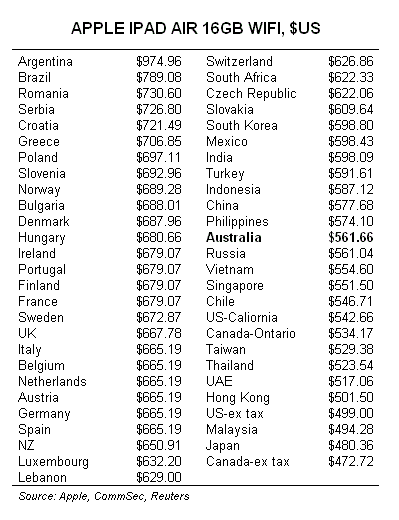
ipadFinancial institution CommSec recently published an interesting global retailing index called the iPad Index.

The index ranks the cost of a buying an Apple Air 16 GB wi-fi iPad in 51 different countries converted into US dollars at prevailing exchange rates, mirroring The Economist’s much more famous Big Mac index.

The latest iPad Index shows Australia slipped from 4th cheapest country to purchase the popular computer tablet in September last year to 13th on the latest list – still (surprisingly) one of the cheapest places in the world to buy the gadget.

The fall down the list reflects a decision by Apple to lift local pricing rather than currency fluctuations – the Australian dollar was around 94 US cents when the index was compiled, hardly changed from an exchange rate of 94.3 US cents in September last year.

Untitled

The Apple iPad Index

Malaysia at $494 is actually the cheapest place for Australians to buy an iPad, saving you around US$68 off the Australian price ($562). Canada and Japan both add sales taxes to their purchases, pushing their iPad prices well above $500.

As the index shows, you certainly wouldn’t want to buy an iPad while visiting  Brazil for this year’s Fifa World Cup while much of Europe is also a no-go zone for cheap iPad purchases, mainly because of high taxes.

Alternatively, if you’re a Kiwi heading over to Australia for the Bledisloe Cup, you could save yourselves around $90 by purchasing an iPad over here.

Even if you’re not planning any overseas trips, the fall in Australia’s iPad Index ranking is interesting for a number of reasons:

Firstly, it could be interpreted to reflect Apple’s gouging of its Australian customers at the same time as its also gouges those who purchase songs and movies on iTunes (ABC show The Checkout highlighted this recently and provided a way around it), whilst gouging the Australian Tax office by shifting all of its taxable profits offshore. If you’re not feeling the Apple love, perhaps a Samsung or Google Nexus device will do instead.

Secondly, in the word’s of CommSec chief economist Craig James the index reflects why “on-line shopping sites and the power of travel are putting pressure on Australia retailers to remain competitive”. “If local pricing isn’t responsive to exchange rate changes then Aussie shoppers will increasingly look overseas to purchase imported items,” James says.

Thirdly, for investors, the current index could be interpreted to mean that the Australian dollar is overvalued if you compare it with the cost of an iPad in California ($543) but undervalued if you compare it with what it costs in China ($578) where all iPads are manufactured.

Fourthly, the higher price may also reflect higher Australian freight costs, tariffs and mark-ups.

So it’s a useful index both for retailers who want to remain competitive and for consumers, if they’re planning a holiday in the coming months and want to upgrade their tablet.

Alternatively, if you’ve got a friend visiting from Argentina or Brazil or Europe, a visit to an Australian Apple store might be a good suggestion.

Cinema ticket prices: the profits in the popcorn

Ticket2This month, for the first time, some cinemas in Australia started charging $20 for movie tickets.

Explaining the need to push up prices, one cinema owner, Benjamin Zeccola of Palace Cinemas – the independent upmarket/arthouse chain – defended this by saying it was primarily because of the rise in the illegal downloading of movies, (plus high wages).

According to research by the Intellectual Property Awareness Foundation (an organisation representing film and television companies campaigning against online content theft), more than a quarter of young Australians illegally download movies or TV shows, among the highest rate in the world.

There is little doubt that illegal downloads are having a massive impact on cinema house revenues. At the same time, the cost of having a night out at the cinema has skyrocketed in recent years (as a kid in South Africa in the 1980s I paid 1 Rand for movies as part of the Ster Kinekor club – about 50 Australian cents), which partly explains why illegal downloads are so high.

The other factor behind the rampant illegal downloading of movies is that the notion that you are “stealing” has never really sunk into the collective consciousness of downloaders, and may never do so. You can say it’s the same thing as riding off on someone elses bike or filling up your car with petrol and driving off without paying for it, but people that download movies illegally, probably don’t visualise it in that way because its free, easy to do and the chances of getting caught are virtually zero.

A $20 movie ticket seems high (and it is), but it’s somewhere in the mid-range of what other comparable countries are charging:

  • In Manhattan, an adult ticket at the AMC Empire cinema is US$13 (A$14) – 35 per cent cheaper than the $20 Australians are now expected to fork out.
  • But in London, a movie at the Odeon on Leceister Square in the heart of the West End, will set you back £15.50 – a whopping $28 in Australian dollars, or 40 per cent more expensive.

But the ticket is only part of the cost. When you factor in the popcorn, drinks and snacks, you’re unlikely to see much change from a $50 note, and nothing from a $100 note if you take a family of four to the movies.

Running a cinema though is an expensive business.

Most cinemas are in shopping centres, which charge among the highest rents in the country. Then there’s the cost of renting the film from the distributors, staff wages, maintenance costs, utility bills and equipment and goods to pay for.

According to a 2013 article in the UK’s Independent newspaper, the cover price of a cinema ticket is consumed by film rights (40-60%), staff salaries (20%), rent (15%), utilities (5%) and other costs (10%). Add that all up and there’s no margin to speak of.

Which is why you pay ludicrous prices for popcorn, drinks and snacks.

According to the same article, “in order to remain competitive, a multiplex’s main source of profit actually comes from the concessions stand, rather than the box office”.

Or to quote from Arrested Development – “the money is in the banana stand”.

Just consider that you can buy a 375 packet of unpopped popcorn kernels – enough to make three or four jumbo sized popcorn boxes – for $1.34 at Coles, but the cheapest box of a popcorn at the cinema will set you back at least $5. Add the choc-top ice-cream and drink to your purchase and even if you use a “combo” offer you’re likely to fork out $10 to $15 more on top of the $20 movie ticket.

No wonder then, that so many people are buying enormous televisions – which get cheaper and cheaper, bumping up their broadband download allowances and illegally downloading movies for the cost of a monthly internet connection.

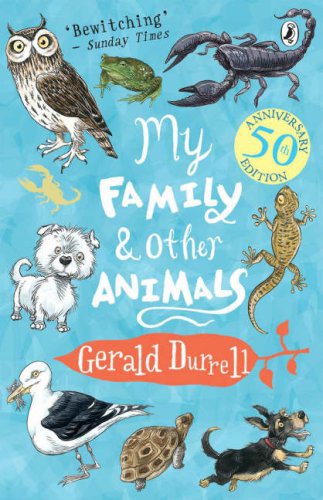
Gerald Durrell’s idyllic Corfu childhood: a review of “My family and other animals”

My_Family_and_Other_Animals_BookI had hardly thought of Gerald Durrell, the author and naturalist until my wife bought me his boyhood memoir “My family and other animals” as a gift.

It tells the story of the four years he spent from 1935 to 1939 as a young boy living with his family on the Greek island of Corfu.

The family left the dampness and cold of London for the fresh air, sunshine and open spaces of the Greek island at the behest of Lawrence Durrell – Gerald’s oldest brother, who himself would go on to be a famous novelist, essayist and travel writer.

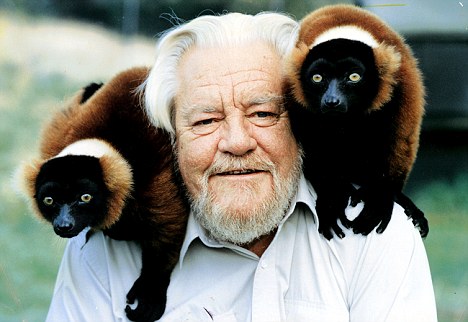
Picking up the book, I recalled a childhood memory of Gerald Durrell from a television show he presented that ran on South African television in the 1980s: a short, plump man with a white beard who appeared on television to tell us fascinating things about exotic animals. I looked at photos of him online and my memory served me well for he was indeed, short, plump and bearded.

gerald durrell older man

Gerald Durrell as I remember him from my childhood

The book is a wonderful account of an idyllic childhood for a young boy fascinating with nature. It’s one of the most entertaining books I have read, full of wonderful anecdotes about Gerry (as the family called him) and the animals he collects and brings into the family home.

These include: an owl, snakes (that end up being kept in the bath tub), frogs, a pigeon called Quasimodo, a tortoise and scorpions (that scatter one day across the floor during dinner) to name just a few.

Gerry Durrell is part Steve Irwin – unafraid to pick up creatures to see them up close – but more so Sir David Attenborough, with a wonderful eye for the details of nature and how it works plus the skills of a gifted novelist to bring it all to life.

In one scene he describes a gecko who has come to live in his room, which he names Geronimo:

He would sit on the window sill gulping to himself, until it got dark and a light was brought in; in the lamp’s golden gleam he seemed to change colour from ash-grey to a pale translucent pinky pearl that made his neat pattern of goose pimples stand out and made his skin look so fine that you felt it should be transparent so that you could see the viscera, coiled neatly as a butterfly’s proboscis, in his fat tummy. His eyes glowing with enthusiasm, he would waddle up the wall to his favourite spot, the left hand outside corner of the ceiling, and hang there upside down, waiting for his evening meal to appear.

This wonderful gift for describing a scene and revealing the wondrous details and idiosyncracies of nature is found throughout the book.

It is a mix of boy’s own adventure (Gerry accompanied by his faithful dog Roger exploring the island with almost unlimited freedom in which “all discoveries” filled him with “tremendous delight”) accompanied by hilarious tales of family life – Larry and his arty friends invading the island, his diet-obsessed sister Margo and the adventurous, gun-mad Leslie.

The other wonderful aspect of the book are the lovable eccentric local characters: There’s Spiro, the Durrell’s taxi driver, “guide, mentor and friend” – a “short, barrel-shaped man” with a unique grasp of the English language and who adored the family, the tremendously fat and cheerful Agathi who taught Gerry peasant songs and the immaculately groomed, sparkly eyed, Dr. Theodore Stephanides, who became Gerry’s guide  to the natural world plus a parade of doctors, housekeepers and tutors.

Gerrald Durrel with 'Spiro' on Corfu

Gerald Durrell with ‘Spiro’ on Corfu

Durrell writes of an afternoon spent with Agathi outside her “tumbledown cottage high on a hill:

Sitting on an old tin in the sun, eating grapes or pomegranates from her garden, I would sing with her and she would break off now and then to correct my pronunciation. We sang (verse by verse) the gay, rousing song of the river, Vangelio and how it dropped from the mountains, making the gardens rich, the fields fertile and the trees heavy with fruit.

By the time I finished reading the book, I yearned for just a few days of Corfu sunshine and a walks among its hills, valleys, gently swaying Cypress trees and olive groves.

I challenge you to find a more charming, magical account of a childhood we should only dream of giving to our children.

Of trains, trams and tiny apartments: Melbourne’s collapsing public transport network

Could this be a Melbourne train in a couple of year's time?

Could this be a Melbourne train in a couple of year’s time? Source: http://sachinkhosla.com/fun/pakistan-train-bizarre

Those, like me, who suffer the daily train commute into Melbourne will know of the train driver who enjoys performing his stand-up comedy material.

One of his favourite lines, when the train is overcrowded, is to remind squashed passengers that “a packed train is better than no train at all”.

This, I suspect, may reflect more the prevailing Metro Trains’ attitude towards its service, than an attempt at lightening the mood.

The truth is that Melbourne’s transport network is no joke, unless you like your humour black and enjoyed from underneath a stranger’s armpit.

The city seems to be grinding towards eventual standstill and gridlock: train and tram cancellations and delays are daily occurrences; timetables have become objects of hope and derision rather than of any practical use.

Train stations have become places of confusion and chaos; on board, commuters endure sardine-like conditions, the sighs and grunts of frustrated fellow commuters, and worst of all, bad jokes from train drivers. None of this is helped by the disinterested, robot-like announcements of platform announcers, who deliver the unwelcome news with the indifference of someone reading the daily shipping report.

About the only good thing about a packed train is the lack of room for authorised officers (transport police) to patrol the carriages sniffing out fare evaders, though I wouldn’t put it past them to try.

But these problems are only the tip of the iceberg.  Rapid urbanisation and a desire to embrace Manhattan-style apartment living is bringing more and more people streaming into inner-ring suburbs of Melbourne, Sydney and Brisbane. In just one example, Melbourne’s Yarra City Council says it expects half a dozen new apartment developments to spring up along the Victorian-era streetscape of Smith Street, each adding dozens (sometimes hundreds) of new residents who will need to catch the train, tram or bus to the city.

The Victorian facades of Smith Street, Melbourne

The Victorian facades of Smith Street, Melbourne

The council claims there are no “glaring deficiencies” in transport services on Smith Street but that it is monitoring the situation and “understands” there are improved tram services planned. Hardly reassuring, when local residents claim you can’t get on a tram that runs up and down the street as it is. This scenario is being replicated in dozens of inner-city suburbs in Melbourne and Sydney, where transport infrastructure is at breaking point.

RMIT professor Michael Buxton, a renowned authority on urbanisation and planning, expects a proliferation of six-to-nine-storey apartment blocks along all Melbourne’s Victorian retailing streetscapes in the next few years with little restriction on height, the number of apartments or their sizes, allowing developers to chase maximum profits. Last year, a developer called Sixth Lieutenant received approval for 28 apartments, some as small as 33 square metres (about four Toyota minivans lined up side by side), on a tiny 142-square-metre site on Smith Street, Fitzroy.

Plan Melbourne, the Victorian government’s so-called blueprint for development of the city to 2050 when the population is forecast to reach 6.5 million, acknowledges the increased congestion on roads and public transport and talks loftily about a long-term plan of developing a more efficient, faster “metro train service” that does not share train lines with regional services.

It’s an admirable vision, but many, many years away, if it happens at all.

The truth is that the Victorian government’s transport plans are lagging far behind huge demographic changes favouring inner-city living, when they should be leading them or at the very least, keeping pace.

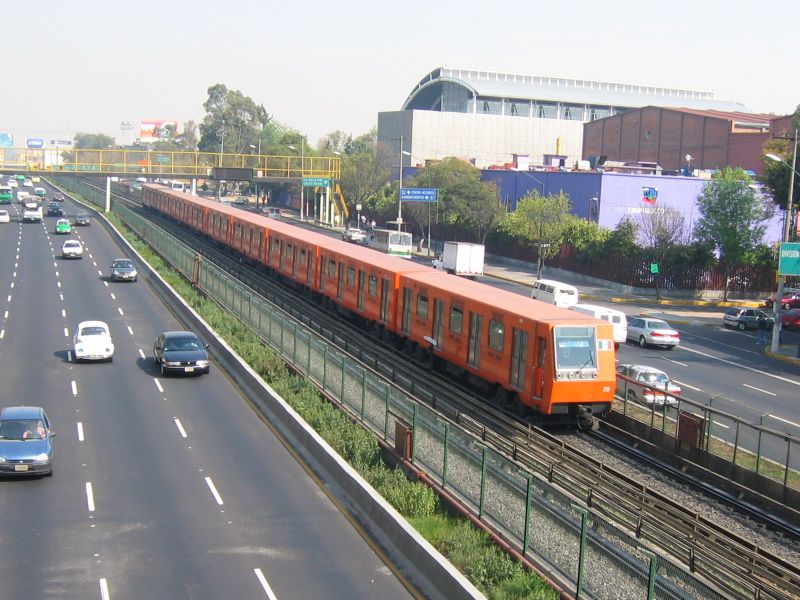
In Mexico City, the best functioning megacity I’ve yet visited, a subway train comes every two or three minutes, and end-to end-journeys cost three pesos – about 25 Australian cents. In New York, an extensive, efficient and usually reliable subway network removes the need for cars.

The Mexico City Metro is the second biggest in the Americas after New York's subway system

The Mexico City Metro is the second biggest in the Americas after New York’s subway system

But in supposedly the world’s most liveable city, we find ourselves cursing as the train announcer drones on about another delayed or cancelled service. I wonder just how long it will be until those scenes of Japanese passengers being prodded and shoved into trains by uniformed platform officials become part of the daily commute here. It can surely only be a matter of time.

(This article first appeared in the Australian Financial Review.)

Mexico is indeed “gentle and fine”, Jack Kerouac

lonesome_travellerIn Lonesome Traveller, he’s poetic, mystical, sometimes incomprehensible account of wanderings and odd jobs in the mid-1950s, the beat writer Jack Kerouac writes of a trip to Mexico:

“There is no violence in Mexico, that was all a lot of bull written up by Hollywood writers or writers who went to Mexico ‘to be violent’.”

Kerouac continues:

“I know of an American who went Mexico for bar brawls because you usually don’t get arrested there for disorderly conduct, my God I have seen people wrestle playfully in the middle of the road blocking traffic, screaming with laughter, as people walk by smiling – Mexico is generally gentle and fine, even when you travel among the dangerous characters as I did – ‘dangerous’ in the sense we mean in America – in fact the further you go away from the border, and deeper down, the finer it is, as though the influence of civilizations hung over the border like a cloud.”

I recall the warnings from well meaning friends and family – There’s still time to change your plans/It’s not safe/It’s a dangerous place/Don’t go – before we boarded a New York flight in Christmas 2010 for a month long Mexican bus sojourn from Cancun all the way west to Guadalajara.

Though the notion of Mexico as a violent place is indeed “a load of bull” but still seemingly engrained in the American psyche more than fifty years after he wrote about it, Kerouac’s description of Mexico as “generally gentle and fine” is wonderfully precise.

There is little violence south of the shady border towns where the stories of gangs, beheadings, shootings and drugs garner garish headlines in American newspapers and stoke the flames of fear.

DSCN1093

A fruit stall, Mexican style

As travellers, we found the biggest danger in Mexico to be from a falling coconut while snoozing under the shade of a palm tree on an unspoilt sandy beaches on Isles Mujeres or Tulum.

Or perhaps from one of those mad windy bus journeys – where brakes are unnecessary accessories – up through the mountains to postcard perfect town like San Cristobel de las Casas, where the only sense of danger are the dolls, paintings and postcards for sale in souvenir shops depicting the Zapatista rebels with guns criss-crossed across their chests (and scary steely stares).

DSCN1082

The colourful, quite streets of San Cristobel de las Casas beneath the mountains

I write in my journal of a day spent in this oasis of bright colours, cobbled quiet streets and lazy wanderings:

“Students and tourists abound.The streets are lined with brightly painted mainly single story houses and shops in shades of yellows, reds, blues and oranges and with slanting roofs of Spanish-style red tiles…the perfect place to wander, sit and sip a coffee or beer and people watch.”

In comparison to the constant pleadings, coercions and tourist tricks and traps in Thailand, India, Morocco and Egypt (all places I nonetheless loved), Mexicans are so laid back they hardly bother when it comes to approaching tourists.

On Isles Mujeres, the little island off Cancun, this lack of savvy was perfectly captured by a man offering boat trips to see whales:

“Wanna go on a whale ride?” he enquired as we strolled by one afternoon.
“No gracias,” we replied.
Silence, then he said sleepily:
“Lotta whales…”

DSCN0833

Ice creams in the park, Valledolid

No one harasses you in Mexico. Not in the small, sleepy afternoon siesta towns like Valledolid (where we visited the ruins of Chichen Itza and swam in the underground Cenotes) and not in sprawling, bustling Mexico City, the world’s best functioning mega-sized city.

Are there dangers in Mexico? Of course. I would not be so naive as to suggest otherwise. But the risks are small unless you’re smuggling drugs, heading for the seedy border towns or in the words of Kerouac going there “to be violent”

The Mexico I remember is that of little black haired men with moustaches; their plump wives pulling chihuahuas on leads, climbing steps to find churches painted in brightest pink and orange, wandering streets in shades of yellow and red, the little taco stands sizzling away by the side of the road, poodles sleeping in hammocks, glorious, colonial Spanish architecture, the boulevards of Mexico City, the murals of Diego Rivero, Frida Kahlo’s sad paintings in the blue house in Coyoacán, ancient Mayan ruins overlooking beaches and azure oceans.

Alive in colour, light and smiles. A sentiment Jack Kerouac would have agreed with, I think.

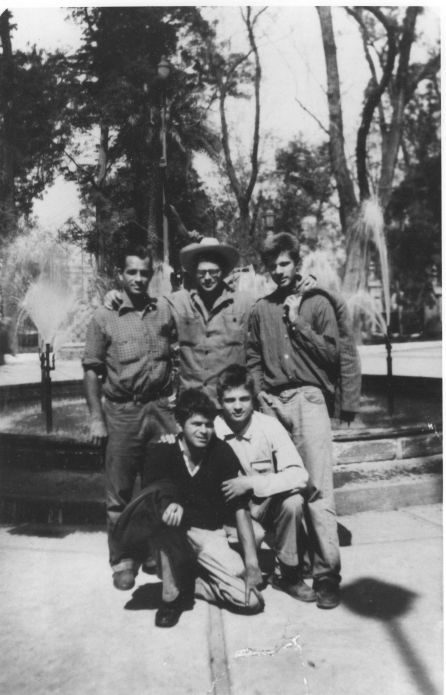
Jack Keroauc top left next to the poet Allen Ginsberg and firends in Mexico City

Jack Keroauc top left next to the poet Allen Ginsberg and firends in Mexico City

Snake oil: Door-to-door salesmen and other scams

snakeoilIf an alien crash landed on earth, probably the first thing that would happen to him is he’d get scammed and he’d have to fly back to his faraway planet in just his space undies. That’s if someone hadn’t stolen his identity and sold his space-craft already.

My wife and I were the proverbial ‘aliens’ a couple of years, when we flew into Cairo for a week’s visit as part of a round-the-world trip in 2010.We figured since it was so short a visit and all we wanted to do was see the Pyramids of Giza, the Egyptian Museum, take a cruise on the Nile and wander around the ancient streets that we’d not bother to buy a guide-book and just wing it.

Big mistake!

We got conned on our way to the pyramids.We got conned wandering the ancient streets. I got conned on an evening stroll when looking for a place to eat. Conned. Conned Conned. By old kindly looking men. By young boys. By exuberant fathers with stories about their children. It was incredible.

camel ride

Riding a very expensive camel in Cairo, October 2010

The scams were not sophisticated in the way they are in Australia and other westernised cities and “harmless” in the sense that all you lost was a bit of dosh. Looking back they were somewhat endearing (or perhaps pitiful) and assumingly thought-up as a means of getting by in a very tough city.

Back in Australia, it’s a far more dangerous proposition with greed the primary motive. There are scam-artists waiting on the telephone, in the letter box and at the front door. It’s so bad that the government has a dedicated website called Scamwatch to warn you about each of them with real-life stories and advice.

Our home phone, which we hardly ever use except for our internet service is a constant source of dodgy phone calls. We hardly ever answer it now, figuring that if it’s an important call, people will try our mobiles or Skype.

The other day I picked up the phone and  a woman proceeded to tell me she was from Microsoft support and that I had downloaded a virus on to my computer. She implored me to go on to my computer and search for a certain file to verify this. I could hear she was talking from a faraway place, and with a strange manner of speaking English, so I just hung up the phone. Sure enough this was a scam as described on this UK website with the end result that you download a real virus that steals all your personal information.

Then’s there’s the door-to-door energy salesmen trying to get you to switch energy accounts.

Twice this has happened to us in Melbourne. The first time the salesman identified himself as from an energy company, the second time was more sinister.

Last week, just before dinner, a guy appeared at our door with a clipboard. He pulled out a spreadsheet, told me he was from Jemena and said he needed to see my last energy bill to compare what I was currently paying.

Jemena is an energy infrastructure company which provides electricity and gas to homes. This electricity and gas is then on sold to consumers from retail suppliers like Origin Energy, who are our gas and electricity supplier.

The salesman gave me the impressions this was all very official and pressing so I rifled through a cupboard full of documents and on my iPad until I found an online bill. The man stood there quietly, smiling with his clipboard. I showed him the bill and he studied it. Then he said something like “Oh my god” and went on tell me I was paying 20 per cent more each month then  I needed to. He said he would sign me up and that I would save money from next month.It was then I realised this wall all a deceptive little scam.

He wasn’t from Jemena, but from a retail energy supplier called “Simply Energy”. I told him I wasn’t going to sign up to anything on my doorstep and he left with a piece of paper on which he had scribbled his mobile phone number in pencil in case I changed my mind.

I googled Simply Energy. The reviews were scandalous. It got an average rating of 1.4 out of 5 from 235 reviews on productreview.com.au with stories of customers being overcharged, having their gas and electricity supply cut and even contacting a customer’s current supplier to say they had switched to Simply Energy even when they never agreed to.

They use to call these people snake oil salesmen, referring to travelling charlatans selling miracle cures and quack medicines. Now the scams have become far more sophisticated and devious.

Have a look at the Scamwatch website, there are dozens of scams preying on the naive, weak-minded, plain unlucky or vulnerable from online auctions, to pharmaceutical products to real estate scams.

One of my most popular blog posts was about a letter I received in the post over a year ago covered with Spanish stamps and postmarks. It was addressed to me in person, offering me the chance to share in an inheritance of an oil magnate called “Albert Schlesinger” who had apparently died in a car crash in 2004.

Seems ridiculous right? Who would fall for that? But every year thousands of Australians do.

A program on the ABC’s 7.30 Report reported that every month, Australians lose $7 million just through internet scams.

They’re impossible to avoid unless you choose to live like a hermit, never answering the phone, turning on your computer or answering the doorbell.

Confessions of a cricket tragic

This article first appeared in the Australian Financial Review

Retired skipper Graeme Smith with the Test mace, signifying South Africa's number one ranking

Retired skipper Graeme Smith with the Test mace, signifying South Africa’s number one ranking

To be a South African cricket supporter residing in Australia is to be a true cricket tragic.

As we slid to another home series defeat against Australia in Cape Town, I dashed off a tweet about the last Test side to beat the Baggy Greens at home, a team know as the “Invincibles” which white-washed Bill Lawry’s tourists 4-0 way back in 1970. A colleague replied: “Oh come on, Larry, nostalgia is the last refuge.”

Perhaps he was right. Perhaps it was a foolhardy attempt to prop up my spirits after yet another home series failure against the old foe; the only blight on an exceptional record that has seen South Africa rank as the No. 1 Test side in world cricket for many years and unbeaten in 14 Test series dating back to 2009.

No defeat hurts more than to lose against Australia (the 1999 World Cup semi-final still haunts me), no victory is more sweetly savoured.

When we finally did win a Test series against Australia in 2009, away from home, and then again 2012, also away from home, it was indeed a sweet moment for a biltong-eating expat like myself.

But a home Test series win against Australia has eluded us in seven attempts since we returned to world cricket in 1992 with just two draws and five defeats.

Back in 1970, just prior to being cast into the sporting wildness, South Africa was a dominant side with a host of superstars in the making. Top of the pile was Graeme Pollock, considered by many to be the finest left-handed batsman the game has produced. In a career of just 23 Tests, Pollock scored 2256 runs at an average of almost 61. I was lucky enough to see Graeme Pollock bat in the early 1980s, when he was approaching 40 and in the twilight of his career. It was at the “Bull ring” – the Wanderers Stadium in Johannesburg, where Pollock would come into bat at number 4 for provincial side Transvaal, known then as the “Mean Machine” and packed with star players including West Indians Alvin Kallichirran and Sylvester Clarke (relics of earlier “rebel” tours). The side was captained by the handlebar-moustached all rounder Clive Rice, whose rich talents sadly coincided with our period of isolation, meaning he never played a single official Test. I’d sit there with my dad in the wooden seats, long before they knocked down the old grandstand, eating a chicken mayo sandwich, binoculars trained on the pitch, watching the bowlers run in.

When it was his turn to bat, Pollock would lazily stroll to the wicket Viv Richards-style and take his guard nonchalantly. When in form, he was a sight to behold, able to clip a fast bowler off his toes for six with just a flick of his bat. I still have his signature in a little green autograph book I kept as a lad. Others in that 1970 Test side that never got the opportunity to fulfil their burgeoning talents included opening batsman Barry Richards, who scored 508 runs against Australia at an average of 72 (in what was to be his only Test series), all rounder Mike Procter, who picked up an incredible 26 wickets at 14 a piece and captain Ali Bacher, whose record against Australia was seven wins from eight matches (he was also part of the team  that beat Australia 3-1 in a home series in 1966-67, captained by Peter van der Merwe).

Softly spoken, calm and diplomatic Ali Bacher was a constantly on television. As our leading cricket administrator, he organised the rebel tours in the 1980s that kept cricket alive during isolation and in 1992 led the country back into world cricket. Of course,  I remember everything back then – the smell of boerewors wafting up from braais (barbeques) around the stadium; the colourful match programs packed with statistics about my heroes; walking across the field to inspect the pitch with my dad during the lunch break – from the viewpoint of a privileged white upbringing.

I was too young and naive to understand the country’s cruel reality: that apartheid robbed generations of black, Indian and mixed-race South Africans of participating in the game.

Thankfully, that’s all changed and our team is a now a better reflection of the ‘‘rainbow nation”, with players of colour like Hashim Amla, Vernon Philander and Alviro Peterson all households names. Just last month, a junior South African side packed with players of all colours beat Pakistan to win the under 19 World Cup. Perhaps they will one day guide us to a home series win against Australia. A World Cup win would be nice too.

L. Ron Hubbard, Scientology founder, apartheid supporter and “neighbour”

L Ron Hubbard in 1950

L Ron Hubbard in 1950

I’ve always found Scientology, the “religion” founded by science-fiction writer L. Ron Hubbard creepy. For one thing, there’s those people standing outside train stations and shopping centres offering free “stress” tests via a device called an “e-meter”.

Then there’s the wacko celebrity endorsement from devotees like Tom Cruise (who infamously claimed in 2005 in a television interview that neither psychology nor psychiatry “worked”) and the claim at the core of Scientology that through elimination of the “reactive mind” (the unconscious mind) devotees can increase intelligence, eliminate unwanted emotions and alleviate a wide range of illnesses (including asthma, arthritis and sexual deviance, which is deemed to include homosexuality).

Scientology_Recruiter

A Scientologist carries out a stress test using an e-meter

But did you also know that L. Ron Hubbard was a supporter of South Africa’s white supremest apartheid government during its darkest days?

I came across this little-known fact while reading a book about alleged ponzi scheme mastermind Barry Tannenbaum called “The Grand Scam” by investigative journalist Rob Rose.

I also discovered that in 1960, L. Ron Hubbard lived in a house on Linksfield Ridge, Johannesburg just a few minutes drive from where our family once lived, though of course, separated in time by more than three decades. In a sense, we were neighbours, and I never knew it.

L Ron Hubbard came to South Africa in September 1960 and made his home on Linksfield Ridge, an outcrop of grass and rock. rising up over Johannesburg’s northern suburbs, dotted with gated townhouse complexes and multi-storey mansions.

(During rugby practice, I remember having to run up a windy, steep road to the top of the ridge, all the blokes complaining as our calves and thighs burned.)

map hubbard

Map showing L Ron Hubbard House, our family home at 50 Club Street and location of my high school, King David High School, Linksfield Ridge

The L Ron Hubbard House, Linksfield Ridge

The L Ron Hubbard House, Linksfield Ridge

The Scientology house on Hannaben Street, which has impressive views over the tree-lined northern suburbs towards upmarket Rosebank and Sandton, has been restored as a museum. Had I known I would surely have visited.

Of course the L. Ron Hubbard website, which has a special section devoted to Johannesburg, makes no mention of his admiration for former South African prime minister Dr Hendrik Verwoed, the architect of apartheid’s harshest laws.

A polished, sycophantic video confirms Hubbard arrived in Johannesburg in September 1960, but that the home was a place for him and others to discuss and send off letters to the South African government detailing “his plans for equality in South Africa”.

Quite, how he planned to do just that, cocooned in his luxurious castle in the heart of white Johannesburg is not explained though it does include the highly duplicitous claim that while there he delivered “Scientology spiritual counselling to the improve the lives of his African domestic staff”.

Clearly then, L Ron Hubbard, was content to not just to live in luxurious surroundings, far, far away from the liberation struggle, but he was also happy to enforce the master-servant relationship that existed between white South Africans and black domestic workers, in his own home. This irony is not noted on the website either.

Rob Rose writes: “What Scientologists don’t want you to know is exactly what was in those letters to the South African ministers. He continues:

They’ve gone out of their way to airbrush Hubbard’s craven fawning over the apartheid government, specifically, his gushing praise for the father of the racist ideology, Dr Hendrik Verwoerd.

Rose goes on to quote from a letter written by Hubbard to the Verwoerd government:

May I state that you have conceived and created in the Johannesburg townships what is probably the most impressive and adequate resettlement in existence. Any criticism of it could only be engaged upon by scoundrels or madmen, and I know now your enemies to be both.

For those wishing to verify this quote, you can find it here in a digital version of the Kotze Commission.  This was set up in 1970 to investigate Scientology, and which then banned it for two decades (one of the few intelligent things the government at the time did).

Of course, even if you dispute this transcript, it would take some distorted logic to understand why someone who claimed to believe in racial equality would choose to move to South Africa during the height of apartheid and live in an affluent white neighbourhood with black servants tending him hand and foot, rather than choose to live amongst African people in Soweto.

Sadly, many South Africans are unaware of this fawning over the apartheid regime or choose to ignore it.

According Rob Rose, since its unbanning in the 1990s, Scientology has gained 150,000 devotees in South Africa and earns about $10 million a year for L. Ron Hubbard’s church and estate.