A decade of newspaper writing: a look back over the years

When I was unexpectedly offered a job at The Australian Financial Review in July 2013 I jumped at the opportunity to write for the country’s top business newspaper.
Alongside this excitement, I also remember having this unsettling feeling that perhaps I was joining a national publication near the very end of the newspaper industry, certainly the print one.

Might I be one of the last print journalists hired by the AFR before everything went digital?

Nonetheless, I was thrilled to have an opportunity to join the workforce at Fairfax Media, one of Australia’s great publishing dynasties and to forge out a career in print media for as long as I could.

At the time I was approached by the AFR, I was working for an online publication called Property Observer (now part of urban.com.au), which had been launched two years prior by the former long serving Sydney Morning Herald property editor Jonathan Chancellor. It was part of an umbrella of brands owned by Eric Beecher’s Private Media (Others in the PM stable include well known news and opinion website Crikey).

Somehow my name had made its way to the decision-makers at the AFR – I am grateful to whom ever suggested me as a replacement for departing property writer Ben Wilmot (now commercial property editor at The Australian and whom I had the pleasure to meet for the first time in September).

I had an informal interview with Matthew Dunckley (then the AFR’s Melbourne bureau chief, now deputy editor of The Age) at a café on Degraves Street, and after signing an employment contract a week or so later, and after seeing out my last few weeks at Property Observer, I flew up to Sydney for a week of training and induction, and to meet my new Sydney-based property colleagues on the newspaper.

I remember the chatter in the industry and in rival newspaper media columns at the time was all about when the Fairfax printing presses would stop rolling seven days a week while the company, helmed then by former AFR journalist and editor Greg Hywood, was in the throws of a massive and at times painful digital transformation that would result in a number of voluntary redundancy rounds in the immediate years after I joined.

(There was also talk at the time that mining billionaire Gina Rinehart – as she climbed up the share register – might buy Fairfax. But following a long battle with the Fairfax board and management, her interest in the company eventually petered out and she sold out of Fairfax in 2015).

Incredibly, on my very first day in the Sydney office (at the time Fairfax was based at Pyrmont) I sat next to veteran journalist and multi Walkley Award winner Pam Williams.

Pam’s blockbuster business book Killing Fairfax, which detailed how Fairfax Media had missed out on opportunities to invest in dotcom businesses like realestate.com.au and SEEK that would go on to be worth billions more than the 170-year-old media company had just been published complete with grinning photos of billionaires Lachlan Murdoch and James Packer on the cover.

I remember introducing myself to Pam and having a short conversation with her, whilst trying to get my head around the idea that she’d returned to the company she’d written so scathingly about in her book (which I read a few months later and reviewed on this blog). Later I would come to understand that this was part of what made Fairfax great; it’s unswerving belief in quality journalism, and Pam is certainly one of the best.

My first week in Sydney was spent learning how to use the antiquated publishing system known as Methode, meeting my boss Rob Harley, who was the paper’s long-serving and highly influential property editor, as well as many other journalists who would become friends and colleagues. I also wrote my very first article for the paper – a story about First Home Buyers – before flying back home to Victoria to join the paper’s Melbourne bureau and meet the journalists whom I would work alongside for many years.

The AFR occupied the Eastern corner of the third floor at 664 Collins Street opposite Southern Cross Station. On the other side of the floor was The Age, while upstairs were Fairfax’s radio stations including 3AW.

My first few weeks were spent meeting people in the property industry – agents, developers, investors – as I tried to build up a contact base and generate exclusive stories for the paper. There was back then and still is today a competitive, but highly collegiate mindset at the AFR, an attitude which helped me find my feet and carve out a niche of my own.

I’m somewhat embarrassed to say that for a little while after I joined the AFR I cut out and kept a folder of all my articles that appeared in the paper. It’s a practice I abandoned many years ago though I confess that I still get a kick out of seeing my name in print.

Initially it was quite hard getting scoops – we were a big property team in the early days – and being the newest member of a crew of crack reporters meant I had to find beats and niches that I could make my own.

At the same time as I was finding my feet and trying to show my value as part of the property team, Fairfax Media was trying to write the wrongs identified so glaringly in Pam Williams’ book and find new revenue opportunities in the digital world whilst print revenue continued to fall.

In 2014, Fairfax Media returned to profit and announced its move into video streaming on demand (to take on the likes of Netflix) via a joint venture with Nine Entertainment that would result in the launch of Stan.

The old Fairfax printing press (shaped like a rolled up newspaper) near Melbourne Airport. Now the HQ of Zagame luxury cars.

That year was particularly tough one for me personally as we lost our second child Raffy to stillbirth in February, but I was heartened by the outpouring of support from my colleagues at the AFR when I returned to work after a few weeks of compassionate leave.

“Everyone from the top of the newspaper down is thinking of you,” I distinctly remember Rob Harley telling me.

Later that year I went on my first and to date only junket (or famil as they prefer to call it) to Bali, where I flew business class for the first time and sat next to The Australian‘s legendary restaurant critic John Lethlean. John was great company on the flight, but I recall was distinctly unimpressed with the food, while I thought everything was fantastic.

I spent two nights at the new Double Six Hotel (the reason for the trip) with a gang of Aussie journos, eating out at a plethora of fancy restaurants, trying out spa treatments and being chauffeured around amid the chaos and congestion that was Seminyak.

In 2015, I was lucky enough to be accepted into a mentoring program offered at Fairfax, and was given great guidance by senior Age journalist Michelle Griffin, (now Federal Bureau chief at the Sydney Morning Herald). We’d catch up for coffee in the café downstairs and focus on feature writing, which I always found challenging. Michelle was full of great tips and encouragement. These included suggesting I reading The Wall Street Journal’s The Art & Craft of Feature Writing by William Blundell.

Michelle is one of a number of highly experienced writers and editors who have provided advice, tips and encouragement over the years.

In August 2016 I interviewed the founder of British real estate disruptor Purplebricks, Michael Bruce when he came to Melbourne to launch the Australian business with a promise to revolutionise the way property is bought and sold through its fixed-fee model and online platform.

Over the next three years I reported in dozens of articles on the rise and fall of Purplebricks, which left Australian shores in 2019.

Covering the Purplebricks roller coaster journey Down Under was one of the highlights of my AFR journalism career (rumour has it my face was on a dart board at Purplebricks HQ in Sydney)

I should point out that soon after Purplebricks landed in Australia, our editor Rob Harley surprised everyone by announcing his decision to retire from the paper after an incredible 29 years. One of the most knowledgeable people in the industry and also one of its most influential and well-respected, Rob was a mentor to everyone on the team, and a generous sharer of his time and insights. (He continues to write for the Financial Review, penning a regular property column).

Upon Rob’s departure Matt Cranston took over as property editor for a couple of years before Nick Lenaghan took on the role when Matt took up a position as first economics editor in Canberra and then as the paper’s Washington correspondent. Both have been fine people to work alongside and like Rob, have been incredibly generous with sharing their knowledge and insight. (So too has been my property colleague Michael Bleby, whom I have worked alongside for most of the last 10 years. Michael lived for many years in South Africa, so we have that in common, plus a few words in Afrikaans.).

During those years of Purplebricks reporting, journalists at Fairfax and the AFR were undergoing their own rollercoaster ride as private equity firm TPG and a Canadian pension fund investor struck up talks to acquire the company.

Soon after, San Francisco-based private equity player Hellman & Friedman entered the takeover ring with a rival offer and it looked like we would all soon be working for new masters (noting with trepidation that private equity firms are notorious for cost cutting).

I remember also there was talk of the AFR being carved out of the company as a separate entity, perhaps through some sort of management buyout.

Thankfully (in my view), none of the takeover talks proceeded to binding offers and Fairfax moved on in July 2017 instead with plans to spin-off and float its online real estate listings business Domain.

Around this time I’d clocked up four years at the AFR, built up a solid contacts list and a half-decent reputation in the property sector for writing fair, balanced and interesting articles, occasionally with a bit of flair.

In June 2018, as traditional media companies fought back against the advertising power of Facebook and Google, Fairfax Media and Nine Entertainment revealed plans to merge their two businesses.

It turned out to be less of a merger and more of a takeover as the great Fairfax name was retired and we became, on December 7 of that year, Nine newspapers. On that same day Fairfax Media was delisted from the ASX, bringing about the end of one of the world’s great media dynasties stretching back 182 years to when John Fairfax purchased the Sydney Morning Herald in 1841.

While a lot of my colleagues were skeptical about the Nine merger/takeover and a potential loss of independence, I was excited about being part of a much larger media company that had not only newspapers, websites and radio stations, but also a clutch of commercial television channels.

In fact under the Nine banner very little has changed in how The Australian Financial Review has functioned. We remain fiercely independent, and most importantly the most-read business publication in the country. There is also (for me) a sense of security in being part of a true media giant. Indeed, those Fairfax redundancy rounds that were part of my first few years at the AFR have all disappeared replaced by expansion of our newsrooms.

In April 2019, we moved from the Collins Street end of Southern Cross Station to the Bourke Street end, occupying level 7 of the Nine building (a shiny glass-facaded Rubix cube-like structure) at 717 Bourke Street.

That I year I wrote my first “Lunch with the AFR” – a popular weekend paper feature where you sit down with an interesting subject and discuss their career. My subject was the property developer and adventurer Paul Hameister, conqueror of Everest, the Antarctic and the Amazon.

Our new office at 717 Bourke Street.

We had lunch at a trendy café in upmarket Brighton and Paul entertained me with his daring mountaineering feats, savvy business dealings and sage advice. Spending quality time with people as successful and interesting as Paul has been a part of the job I’ve enjoyed immensely.

(It would be another four years before I did another “Lunch with the AFR” when I sat down with another industry titan pub baron and reality TV star Stuart Laundy. We had lunch at his family’s Woolloomoo Bay Hotel at Wolloomooloo Wharf in August. It turned into a very entertaining chat with a dealmaker and storyteller extraordinaire).

Also in 2019, I penned a long feature article about myself that ran in the long weekend Australia Day edition. It was the entertaining story of how the least likely Aussie of all time became an Australian citizen. The article originally ran on this blog, and got a spit and polish (with a great photo below) for the version that ran in the paper.

The pandemic hit in March 2020 and as the national lockdown took hold we all vacated the office, laptops under our arms.

The great work-from-home era had begun.

It was chaotic working from home, whilst dealing with two children requiring home schooling – sometimes I wonder how I managed.

Without a closed off home office, I just had to work among the chaos. I remember on one occasion I was interviewing the CEO of a major listed company and right in the middle of the interview two of my kids started yelling and going mental. I tried to dash to a quieter spot but the noise just followed me.

“Larry, what the heck is going on at your house?” the CEO asked.

Embarrassed, I apologised profusely, hang up the phone and called him back later. As time went on though, people became more accepting of the challenges of working from home whilst also home schooling. I also just adapted, became used to the constant disruption and soon it became the norm.

When things began opening up again and we trickled back into the office, it was almost exciting heading onto to the train for the 1 hour commute from our home in Gisborne in the Macedon Ranges to Melbourne. Seeing people face to face was a thrill for a while, so was a visit to a café.

The pandemic and post pandemic years seemed to roll into each other – 2021, 2022 and finally 2023. It all seems a blur, probably because it was such a crazy, muddled time, when there seemed no clear division between work and home life.

Journalism is an industry well suited to remote working (I remember one colleague quietly relocated for a time to Noosa on the Sunshine Coast, but continued to write stories as though he were in Melbourne), and it can, in my opinion be an aid to productivity depending on the circumstances. Let’s not forget their are journalists who file in war zones and amid natural disasters.

The post pandemic years also brought a new skill to my repertoire – hosting interviews and discussions on stage at our annual property summit. This was at times nerve-wracking but also exhilarating speaking before an audience in the many hundreds, including many titans of the property industry.

Then in August this year, I suddenly found myself at the 10 year milestone. The years had flown by, and so much had happened both personally and professionally.

I’ve worked hard, but also been incredibly lucky to forge a career as a newspaper journalist amid all the seismic ructions that have reshaped how the industry functions.

Despite the minority who distrust the “mainstream media” and prefer their information from those shouting the loudest on social media, newspapers in Australia are still a very important part of the nation’s progressive democracy and a vital institution in holding those in power to account.

Long may the ride continue!
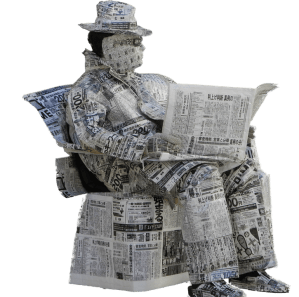
Avoiding PR fails: How to win friends and influence journalists

human-652827_960_720I recently sat down over an informal lunch with a large real estate group in their high-rise office.
It was an opportunity to meet some of their new team members at the start of the new year and make new contacts.

But it was also an opportunity for them to ask me questions about the how the newspaper business works and essentially explain how stories  – perhaps their own property deals – might end up in the paper I write for, the Australian Financial Review.

As we chatted over sandwiches, it occurred to me that I was answering many of the same questions I’d answered a number of times before at similar “meet the press’ type meetings and that it might be useful to others to summarise some of the things we discussed.

So here it goes, from the horse’s mouth: A journalist’s top tips for dealing with…journalists:

1. A short email or phone call is often better than sending a press release.

Every journalist is bombarded with media releases. Dozens appear in our email inboxes everyday and throughout the day. It’s impossible to carefully read every one and find the time to work on stories at the same time. A much better option is a short email outlining the story idea in a few dot points and a contact number for the journalist to ring to get more information.  If you are going to send a press release, keep it short and to the point. No journalist has the time to read an 8 page press release. Alternatively, pick up the phone and call, but not before you have read point 2 below.

2. Don’t ring a journalist when they are on deadline.

It’s incredible how many experienced PR consultants still ring journalists at my newspaper at 4 or 5 pm in the afternoon as we are frantically filing stories for the next day’s paper to pitch ideas or just to “chat”. There’s nothing more frustrating than having a conversion, even if for a few minutes about something that’s either irrelevant or can wait while you are trying to finish a story. Incredibly some people go on pitching stories even after you say you are on deadline .If you’re going to ring a journalist find out when the best time to call is. For those writing for newspapers, the morning is usually the best time to ring.  If you are going to ring on deadline, make sure it’s a REALLY, REALLY BIG story.

3. Think before you speak

Once you tell a journalist something, it cannot be untold or unremembered. (Think of us as bottomless receptacles of information rather than sieves). Before you call, think about what you are going to say and write down some key points. It’s amazing how many people ring journalists, provide all kinds of great insider information, slag off their competitors and then are amazed when these quotes appear in the newspaper the next day. The same goes for facts. If they are true and you tell us them, we will report them. (Of course journalists also love salacious people like this and…there are equally some people who love dishing it out, but just be prepared to see it in print the next day as a direct quote).

4. Exclusives are what we want

Exclusives are the life blood of journalists and newspapers. If you can offer a journalist an exclusive and it’s a worthy story, you are almost assured of getting a good run in the paper. However, there is nothing more annoying for a journalist to read the exact same story they have been pitched and are writing appear in another publication. Of course you are perfectly entitled to pitch your story at multiple publications but you should be upfront about that and let the journalist know that they don’t have the story to themselves.

5. Be patient

Even a good story may take a few days, even a few weeks to get a run. This may be because of space (in the case of a print publication) or resources (journalists are generally working on a number of stories and have to prioritize based on what their editor wants) or the type of story: for example rural stories may run on a certain day of the week.  A good story will always get a run. By all means follow-up on the story – NOT ON DEADLINE! – but don’t bombard journalists with multiple daily emails. If the story needs to run by a certain date, then let the journalist know. If they can’t meet that date, then you are perfectly entitled to take the story elsewhere, but tell them first if you want to keep a good relationship.

6. Expect journos to quote you accurately but don’t expect a certain type of story

Journalists that deliberately misquote or take remarks out of context are to be avoided. Mistakes do happen. However, good writers don’t simply regurgitate press releases verbatim. Remember we are story tellers and are writing for our readers – not for you or your clients. Often those two audiences will overlap, but not always. Sometimes a passing comment or a small point may have greater and wider resonance – in the eyes of the journalist or their editor – then the main subject of a press release or briefing. Have an open mind about what you might read in the paper or online.

7. Don’t pester a journalist’s colleagues with the same story

Most journalists work in a team, whether it’s a specific beat like politics or property or the arts. We often sit together and discuss story ideas. It’s amazing how often a PR firm will contact a journalist with a story idea that doesn’t get traction and then ring all their colleagues with the same idea. This is not a great strategy. It smacks of desperation. If you really think a journalist is missing a good story my suggestion is to ring them and ask them why they won’t cover it. If you still think it has legs tell them you will contact their editor to pitch the story or a colleague, but don’t just send it out – scatter-gun style – to all and sundry.

8. Don’t give misleading information

This may seem an obvious one, but it’s quite common for someone to embellish a story idea or even a formal press release with inaccurate information, half-truths or outdated information to generate interest. Good journalists will verify facts, but we expect to be given accurate information in the first instance especially if its in a formal media release. If you are not sure, then say so. Being deliberately misleading is the quickest way to get you on a journalist’s blacklist.

9. Share market intelligence to build rapport

A great way to build a relationship with a journalist is to share information you have about the market and what your competitors are doing “off-the record” (see point 10). This may not get your name in the paper, but will help when you pitch your own story idea. Journalists treasure market tip-offs as much as they do exclusives.

10. Understand what “off-the-record” means

A lot of people I think have misconceptions about what it means when you tell a journalist: “This is off-the-record”. This does not mean that a fact or tidbit won’t be reported. All it means that if it is reported, it will not be attributed to you. Either it will be stated as a fact or something along the lines of “market sources said” or “people close to the deal said”. One thing I would stress is be wary of sharing information off-the-record that could only conceivably come from you. (See point 3 again). That always ends badly – for you, not the journalist.

11. Don’t pick fights with journalists

Of all the idiotic things President Donald Trump has done, one of the silliest has been to pick fights with the main stream media. It’s incredible that he has gone to war with some of the most respected global publications like The New York Times, Washington Post and CNN which have huge audiences. Pick up the phone if you are unhappy with a story, don’t send a ranting email or abusive text message – we have thick skins and long memories.

Reading newspapers, video store browsing, cinema without distraction, film processing anticipation and other pleasures killed off by the digital revolution

I still get immense pleasure from reading the newspaper, accompanied by a cup of coffee.

It's not the same reading an iPad on the toilet

It’s not the same reading an iPad on the toilet

It’s not that I don’t get most of my news from other sources (I am a Twitter addict, and the most used apps on my iPad are those for ABC News, The Guardian Australia, The Age, the BBC, CNN and of course the AFR), it’s just there is a certain pleasure that I get from reading the newspaper that cannot be replicated digitally, even with e-ink.

In a digital world of endless distractions and diversions – a newspaper is a finite sum of its parts and that’s something to cherish.

And so it seems to me utterly unfathomable – even though the boffins say its inevitable – that there may one day be a world without this compendium of daily stories, facts and figures, photographs, commentary, weather reports,  obituaries and trivialities.

For me it’s still one of life’s great pleasures – reading the paper, but it seems a dying one too, or on life-support at best.

And it got me thinking about other things I took for granted while growing up that have all but disappeared thanks to the digital revolution.

Like…

14196995087_160e0fed5b_zThe uninterrupted movie

– the ability to sit through a 90 minute movie in a darkened room, transfixed by the screen, without any distraction, appears lost for ever. It seems every time I go to the movies, I must also sit through a second viewing via a giant screen lighting up in front of me the size of a human head as someone in the audience gets bored and scrolls through their Facebook account on their smartphone. Cinema etiquette – that you sit quietly and focus on the film you are watching (and forked out a small fortune to watch) – has long disappeared. I don’t even bother complaining anymore, sometimes I check my own phone.

Remember these?

Remember these?

Developing your camera film

Remember those bygone, halcyon days when you put film in your camera, took 24 or 36 what you thought were well-considered shots and then handed the film into a man behind a desk in a little shop. The next day you would return with knots in your stomach in anticipation of your artistic genius as you received an envelope of glossy pics (Remember the little sleeve for the developed negatives?). Now I can’t remember the last time I bought a roll of film. Do they even sell film anymore? Didn’t Kodak go bankrupt? Now its all instant gratification, you can take thousands of shots and see the results immediately. You don’t even need a camera, just a good quality smartphone. And does anyone print out their photos anymore? Or create albums of their holiday? It’s all just digital folders marked “Holiday, August 2012” on your computer.

16571720284_4de9e13b6e_z-1The writing and receiving of letters

I used to love getting hand-written letters, but I can’t remember the last one I received, or, the last one I wrote one myself, affixed a stamp and dropped in the letter box. Emails, texts, Viber messages, are instantaneous  – and brilliant in many ways – but what happened to the anticipation of receiving a hand written letter from a far off country covered in stamps and post office markings?

4165217347_ec1dabe345_zChoosing a movie in a video store

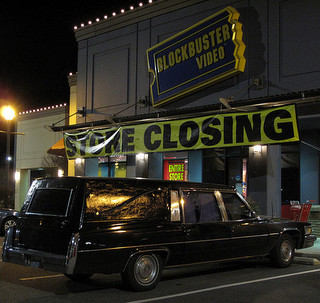
I have previously blogged about the demise of the suburban video or DVD store – we have none left in our suburb – killed off by video streaming services, video kiosks and – dare I say it – online piracy. Once a part of the Saturday night ritual for many lonely hearts, kid-weary families and movie geeks, prowling the aisles, the local video store is disappearing fast.

751707089_c25111d1c8_zPsychiatrists & psychologists

Ah, lying on the couch and talking about your problems. I have no hard evidence for this but surely demand for the services of shrinks is plummeting when you have Facebook. This seems to have become the place where everyone pours out their problems. And while I groan at every “oh woe is me” post, I can see the appeal: There’s instant feedback ( you can count the ‘likes’) and advice from your pop psychology Facebook friends via the inane comments they write.

There’s plenty more things killed of by the internet, or dying slowly – here’s a list of 40 compiled by the UK’s Daily Telegraph newspaper.

I wonder how many of these things my five-week old son, Aubin, will know of when he is older?

Will there still be newspapers around when he is old enough to read them? Will he laugh in disbelief when I tell him of the time I forgot to put ‘film’ in my camera on my first visit to London? (Yes that did happen).

Perhaps like the skateboard and vinyl records, some will make a comeback…

hoverboard_shoes

Perhaps a hover board instead of a skate board?

Back to print: Is the Saturday Paper any good?

The_Saturday_Paper_-_Front_Cover_1_241_338_85_sThere were more than a few raised eyebrows (and conservative commentators choking on their muesli) when property developer and left-wing publisher Morry Schwartz launched The Saturday Paper roughly six months ago.

Schwartz, who also publishes features magazine The Monthly and long-form politics bible The Quarterly Essay (and in his spare time runs developer Pan Urban) said in March he saw an opportunity to enter the newspaper space with Fairfax and News Corp Australia “at their weakest”.

He said The Saturday Paper would target “readers like me”  meaning presumably forward thinking, inner city liberals with good jobs and good educations and that its launch fulfilled a 40 year ambition to have his own newspaper.

But is it any good?

Last week, I picked up a copy in Readings bookshop on Lygon Street, Carlton and ready it cover to cover.

Schwartz has hired an impressive stable of former ABC and Fairfax journalists including Mike Seccombe, who is the paper’s Sydney editor, Richard Ackland, its diarist and legal affairs editor and Helen Razor (Crikey among others) who is the paper’s television and gardening critic.

There’s also a whole bunch of “star” freelance writers including David Marr, Guy Rundle and ‘The Slap’ author Chris Tsiolkas.

As for the content, there was a lot to admire about the package of stories in the issue I read. Even if you’re political persuasions are right leaning, you’d find a number of articles of interest.

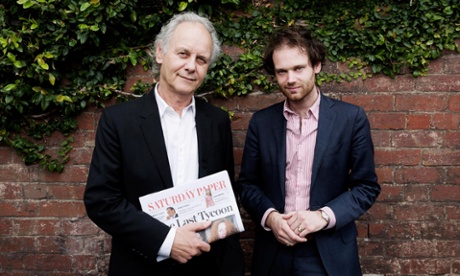
morry schwartz with erik jensen
The two front page articles were knock-outs.

The lead story was about the Essendon drugs saga and ensuing court room battle as told by chief correspondent  Martin Mckenzie-Murray. Schwartz has talked about “narrative” journalism and this was the first article I had read on the subject that actually told the story of how James Hird became the Essendon golden boy and his dramatic fall from grace. Having only come to Australia in 2004, I finally understood the hero-worship.

The second cover story was about the battle to usurp power from Sydney Lord Mayor Clover Moore. Written by Mike Seccombe, it’s the classic ‘People’ versus “Big Business’ tale with Moore pitched against right-wing adversaries including shock jock Alan Jones and ultra-conservative homophobe the Reverend Fred Niles. It’s a ripping yarn about power, influence and revenge.

Canberra journalist Chris Wallace provided thought-provoking analysis of the recent troubles of Federal Treasurer Joe Hockey, arguing convincingly that Hockey is part of a new breed of privileged Liberal politician, who unlike John Howard, are out of touch with the Australian public because they’ve never had a non-political job in their lives or ever known what its like to be a battler.

David Marr’s comment piece on asylum seeker rights – centred around a Pakistani shopkeeper thrown into detention following a negative ASIO assessment – was as expected, eloquent and powerful. Guy Rundle did a good job savaging the recent gaffs by government ministers.

Another standout was Chris Tsiolkas’s tribute to Robin Williams, which dispensed with the gushing praise, highlighting instead the many bad films Williams made and pointing the finger at Hollywood  for lacking the courage to give him roles that showcased his prodigious talent. It’s the kind of observation that alone justifies the $3.50 cover price.

Just to prove that The Saturday Paper is not just full of the “usual mawkish left-wing pieties” as The Australian’s editor, Chris Mitchell suggested it would be when it launched, there  was also a very interesting profile of Anthony Cappello, Australia’s most successful publisher of ultra conservative books.

Thankfully, not everything had a serious tone. Helen Razor wrote hilariously about the challenges and obsessions of those that grow their own tasty tomatoes  while basketball star Liz Campage made a good Q&A subject. There was a recipe for shakshouka and observations about the dish from chef Andrew McConnell plus book reviews and other bits and pieces. The cryptic crossword by Mungo MacCallum was beyond my abilities.

There are disappointments too.

Romy Ash’s on-set interview with actress Sigrid Thornton was pretentious, dull, waffly and full of self-important actorly observations that made you wince while Richard Ackland’s diary piece was too insidery and obscure to be of any interest to this humble reader.

Overall though, I’d say The Saturday Paper is definitely worth picking up on a Saturday morning to dip in and out of over coffee over the weekend. It was quite harshly judged when it launched in March, but editor Erik Jensen said it would take time to find its feet, and it appears to have done so (with plenty of high-end advertising thrown in too.)

Overall, I give The Saturday Paper 8/10 for the quality of the writing, choice and range of subjects and knowledge imparted  – or 6.5/10 if you’re a conservative reader.

Getting it right: Is the internet killing good journalism?

A story appeared on the front page of The Age (Melbourne’s only broadsheet newspaper) last week written by one of Australia’s most respected and well-known journalists, Adele Ferguson.

The story was about the death of the former chairman of a collapsed mortgage lender called Banksia, which has left thousands of small investors (families and pensioners) out of pocket with $660 million owed.

Ferguson reported that the Banksia chairman – Ian Hankin – had died in a head-on collision with a truck just three months before Banksia went bust.

“Ian Hankin, 59, died on August 8 when his BMW and a truck collided on the Western Highway at Burrumbeet, about 25 kilometres west of Ballarat.”

The story then went on to say that three weeks earlier, “on July 18, Hankin drove his Mercedes-Benz into the path of an oncoming truck on the Midland Highway near Scotsburn, 18 kilometres south of Ballarat”.

In the first crash Hanking escaped with minor injuries though the car was written-off.

Clearly, what was being implied was that Hankin had taken his own life after learning that Banksia was heading into financial failure and having failed the first time, he did a better job of it the second time.

Except, as was later pointed out by rival Melbourne newspaper the Herald Sun (owned by Rupert Murdoch) Hankin had stepped down from his role as chairman of Banksia three years ago and had no association with the company, making it highly unlikely his death and the previous collision was in anyway related to the mortgage lender’s sudden collapse on 25 October this year.

The chairman of Banksia is Peter Keating, who is very much alive.

The Age did print an update to the story, but only to add the word “former”  in front Ian Hankin’s title of ‘chairman’. (I have since discovered that The Age apologised to Ian Hankin’s family, but the story remains unchanged except for the addition of the extra word)

The error was reported in the media section of The Australian (another Murdoch-owned paper, but a broadsheet, with more gravitas than the Herald Sun) under the heading “Page one howler”

The Australian pointed out that “The Age ran a correction on Saturday on page two, one strangely lacking any apology to Hankin’s family who are understandably distraught.

“Journalists are not infallible. But the correction does appear buried and insubstantial given the size of the error,” The Australian went on to say.

Hankin’s colleagues at the law firm where he worked until his sudden death have spoken out against the insinuations in the article, though this hasn’t stopped controversial radio DJ Derryn Hinch (famous for naming convicted sex offenders on air against court orders) from labelling Hankin’s death a “coward’s exit” on his own website.

The Age’s error was indeed a bad one  (made worse by the lack of an apology)  and should have been avoided by some simple fact checking, something you would have thought would have been given extra priority, since the story was destined for the front page of the newspaper.

But this should all be put into the context of the challenges facing Fairfax – publisher of The Age and rival newspaper publisher Rupert Murdoch’s News Limited as well as other newspaper groups all round the world.

Fairfax is currently in the process of getting rid of 1,900 employees, many of them journalists, in an effort to cut costs and deal with a loss of print advertising revenue as readers shift to getting their knews online and via mobile devices (where advertising revenues are much smaller).

Fewer journalists mean fewer sub-editors checking articles before they go to print and less time spent by journalists themselves reasearching their articles.

Making things worse is the fact that Fairfax has outsourced most of its sub-editing to an external company called Pagemasters.

A sub-editor is not just a spelling and grammar checker. A good sub-editor understands the subject matter they are reading and the context and history behind the article.

A good sub-editor would have asked the question: Was Ian Hankin the chairman of Banksia at the time of his death?

These sorts of mistakes are likely to become more frequent as publishers scramble to find a way to scrape a profit.

In the online age of the 24 hour news cycle, smaller teams of journalists must produce more content at a faster rate with less time for research and few pairs of eyes to check facts and ask important questions.

Out of curiosity, I took a look at the jobs currently advertised on the New York Times media group website, publisher of the venerated New York Times, International Herald Tribune and Boston Globe.

There are currently 54 jobs advertised.

Not one of them is a journalism role.