Reading a literary legal classic: Scott Turow’s Presumed Innocent

presumed-innocent_lI recently read Presumed Innocent the New York Times best-selling legal thriller written by Chicago lawyer-turned crime novelist Scott Turow.

It was published to both critical and commercial success in 1987 and then, three years later, made into a hugely successful Hollywood movie starring Harrison Ford and directed by Alan J. Pakula, after Sydney Pollack (the film’s producer) bought the movie rights for US$1 million.

Turow, who taught creative writing at Stanford University before obtaining a law degree from Harvard Law School, prosecuted high-profile corruption cases as a Chicago assistant US attorney before penning the tale of Rusty Sabich, a deputy chief prosecutor accused of murdering his co-worker, Carolyn Polhemus, with whom he had a brief, but intense affair.

For some reason I vividly recall watching a CNN profile of Scott Turow after Presumed Innocent became a major Hollywood film, and being fascinated by the fact that he penned most of the book in longhand in a spiral notebook while on the morning train into work.

I also recall seeing the movie at the cinema and enjoying the tale of murder, corruption and court-room battles in what was an above-average thriller elevated by the typically edgy and intense performance of Harrison Ford as the accused Rusty Sabich,  the cool cat-like performance of the late Raul Julia as Sabich’s suave legal defender Sandy Stern and the very spicy sex scenes involving Ford and the utterly gorgeous Greta Sacchi who played the fateful bombshell attorney Carolyn Polhemus.

And so, almost three decades after seeing the movie as a pimply 17- year old, I picked up Scott Turow’s novel on the recommendation of my wife, who had just read and raved about it.

It is a superbly crafted literary novel, certainly heads and shoulders above anything the likes of John Grisham might have penned and has not surprisingly drawn comparisons with the grand masters of crime writing like PD James and Ruth Rendell. In summary: Scott Turow can write!

As the author Anne Rice (Interview with a Vampire) puts it so elegantly in her 1987 review of the book for the New York Times , Turow “transcends the murder-mystery genre, combining whodunit suspense with an elegant style and philosophical voice”.

She also remarks of his “immense writing talent” and “impressive legal experience”. These are both of in evidence from the very first page when readers are introduced to Rusty Sabich,  the chief deputy prosecuting attorney of fictional Kindle County, who is also – in a stroke of genius by Turow – the narrator of the story.

Opening statement
This how I always start: “I am the prosecutor. I represent the state. I am here to represent to you the evidence of a crime. Together you will weigh this evidence. You will deliberate upon it. You will decide if it proves the defendant’s guilt…”

The novel begins with Sabich brooding over his affair with the beautiful Polhemus, who jilted him just before she was founded raped and murdered in her apartment.

The violent crime is the talk of Kindle County, casting a dark cloud over the re-election campaign of Sabich’s boss, the veteran chief prosecutor Raymond Horgan.

Sabich, who has kept his affair with Polhemus mostly a secret (he has tearfully confessed to his wife Barbara) is then put in charge of leading the investigation into her violent death, a task he attempts to carry out despite the obvious personal conflict.

MSDPRIN EC015

Close encounter: Greta Sacchi as Carolyn Polhemus, Harrison Ford as Rusty Sabich

But events take a shocking turn for Sabich (who up until this point has been the reader’s insightful guide into the world of politics, big city crime, police investigations and legal procedure) when he is accused of Polhemus’s murder on the basis of circumstantial evidence and the suspicion of his affair, which gives him a motive.

Sabich hires top defence lawyer Sandy Stern to represent him, while his loyal cop pal, Dan “Lip” Liprazaner helps hunt down information on a secret case file that Polhemus handled and which might explain who killed her and why.

But can we trust Sabich? Yes, he has prosecuted child molesters and violent criminals, but he is also an adulterer and who seems both vulnerable and resentful of women. Did he murder Polhemus in a fit of uncontrollable, jealous rage?

 And then, when I’m by myself, I feel desperate and ashamed. This raging, mad obsession! Where is my world? I am departing. I am gone already.”

This clever plotline – faithfully replicated in the movie – is brought to life on the page by Turow’s carefully delineated characters – from the eloquent and morally ambiguous Sabich to his wounded and bittery resentful wife Barbara to the slippery prosecutor of his case, Nico Della Guardia – and pitch-perfect language to create the sinister undertones at play within the court and district attorney’s offices of Kindle County.

Turow takes his time delving into the biographies of his characters  – Sabich is the son of an unloving and cruel father who escaped the war in Europe – exploring their motivations, so they become living, breathing creations.

At the same time he manages to keep the story and plot moving along so you never feel you’re just turning pages hoping to get to the next important courtroom battle or clue, but immersing yourself in the drama. Everything said and done by Sabich and the cast of lawyers, police officers and members of the court has meaning and relevance to the story.

Turow also makes full-use of his legal experience to create terrifically authentic courtroom exchanges between the defence and prosecuting teams as the scales of justice tip for and against Sabich’s ‘presumed innocence’.

In summary, it’s not hard to understand why Presumed Innocent became a publishing phenomenon in 1987 and why it launched Turow’s writing career (more than 30 million copies of his books have been sold).

time cover turowIn 1990, when the movie of Presumed Innocent came out Time magazine featured Scott Turow on its June 11 cover calling him  ‘the bard of the litigious age’. (It’s also become a popular crossword clue!)

He was then the 92nd writer to make it onto the cover,  joined the ranks of Ernest Hemingway, J.D. Salinger and Alex Haley.

The great thing about Presumed Innocent is that it never descends to the status of an “airport paperback thriller.

While its undoubtedly a page-turner, it is squarely a work of literary fiction, spiced up with a film-noir plot, a femme fatale straight out of a 1930s Raymond Chandler crime novel and writing that some have called “Dickensian”

Even if you have seen the movie (or remember the controversial twist at the end), I highly recommend reading the book, which has rightly retained its much-revered status in the crime fiction genre.

Interviewed by CBS News in 2010 after publishing a sequel called Innocence, Turow said:

“‘Presumed Innocent’ changed my life and I went from being a guy writing on the morning commuter train – and I finished the book in an unfinished basement in my house in Wilmette – I went from that to somebody who was a best-selling author around the world.”

Macedon House: the old and new history of a Gisborne ruin

IMG-1230Drive down the steep and winding Melbourne Road into Gisborne, the pretty rural town north of Melbourne, and you will see the old faded orange wreck emerging over the rise, behind the tall trees.
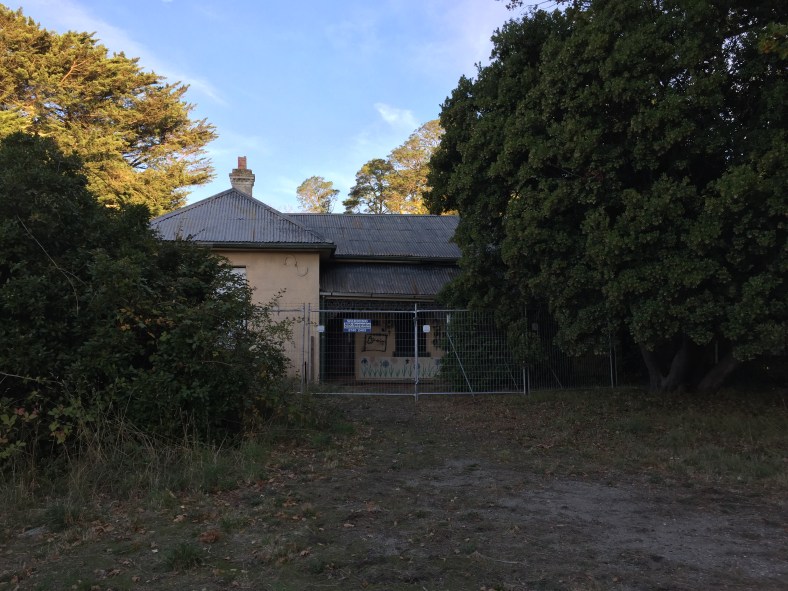
Standing empty and neglected, covered in graffiti and surrounded by ugly temporary fencing, its terracotta chimneys cracked like teeth, the single story building still retains an aura of once being a grand Victorian home.

I drive past this crumbling old wreck almost every day, but only recently discovered its fascinating history after reading an article in The Age newspaper.

It’s called Macedon House and has stood at the entrance to Gisborne for more than 170 years, just 13 years after Gisborne was established as a sheep grazing town.

The article in The Age described how Macedon House was one of two heritage buildings in Victoria (the other Valetta House in East Melbourne) where the owners have been ordered to carry out urgent repairs or face heavy fines.

“Those lucky enough to own heritage assets have a responsibility to maintain them — and we’ll ensure they do,” said Victorian planning minister Richard Wynne.

Built in 1847, the single storey, rendered, bluestone building with a hardwood-framed roof covered by original shingles (now beneath a corrugated iron roof) was originally called Mount Macedon Hotel. It is according to the Victorian Heritage Council “a rare surviving example of an early Victorian hotel”.

The hotel was built by Thomas and Elizabeth Gordon to “service the needs of district squatters”, those pioneering farmers in the early days of the colony of Victoria. The hotel served them mutton, salted fish and damper (a type of crudely made white bread) plus of course, brandy and beer, according to the Gisborne Gazette.

However, when gold was discovered on the Victorian goldfields in 1851, the hotel lost much of its trade as thousands rushed past it in search of their fortune.

By 1867 (after Thomas Gordon had died suddenly in 1855) Mount Macedon Hotel was no longer licensed. It was then known as Macedon House and became a family home for the Gardiners until 1878, when Elizabeth Gordon returned to live there, caring for her six children, and orphaned niece and nephew.

From 1887 onwards it was a boarding house for many decades, as well as serving as consulting rooms for a dentist and as a school where one of Elizabeth’s daughters taught.

It was a family home again from 1960, before being classified by the National Trust in 1974. Later it served as a reception centre, various restaurants, rooms for the neighbouring Gisborne Bowling Club (who bought it for $190,000 in 1995) and as a Montessori school.

A cash cow

Various media reports suggest Macedon House has been vacant since 2004, with its condition gradually worsening due to vandalism and neglect.

The reason for this appears to relate to long-held but never realised plans to develop the large property into a retirement village.

Instead progressive owners have elected to sell and take the profits, as its land value has soared (along with all property in Gisborne), and leave the development risk to someone else.

Having bought Macedon House for $190,000 in 1995, the Gisborne Bowling Club made a tidy profit when they sold it for $250,000 in 1998 to Mainpoint, the family company of Eduard “Ted” Sent.

Dutch-born Sent was in 1998 chief executive of Primelife Corporation, a publicly listed company that at its height controlled $1.6 billion portfolio of retirement villages and aged care facilities.

IMG-1231

Presumable Ted Sent planned to turn Macedon House into another retirement asset of Primelife Corporation, before he departed as CEO in 2002. (Primelife collapsed in 2006).

In 2014,  Melbourne developer Brian Forshaw – a long time friend and business partner of Ted Sent – acquired Macedon House for $770,000.

In 2015, plans were drawn up for “Macedon House Retirement Village” with about 40 homes spread out across the 2.1 hectare site.

Then, last year, two caveats were placed on the title which suggest that Brian Forshaw had struck deals to sell Macedon House.

The first in January was with a company called Nuline Consulting, ultimately owned by Grace Sent (Ted Sent’s wife) and then later in September with wealthy Melbourne doctor and developer Gary Braude for a reputed $1.21 million.

IMG-1234

However neither of these deals appear to have been completed , and with the state government demanding urgent repairs to Macedon House, approved plans for a retirement village have been abandoned.

Brian Forshaw recently put the old wreck back on the market asking $1.39 million with real estate advertising describes Macedon House as a “dilapidated heritage hotel”.

More recently its been listed as a mortgagee sale through Kennedy & Hunt Real Estate with an auction date set for August 4.

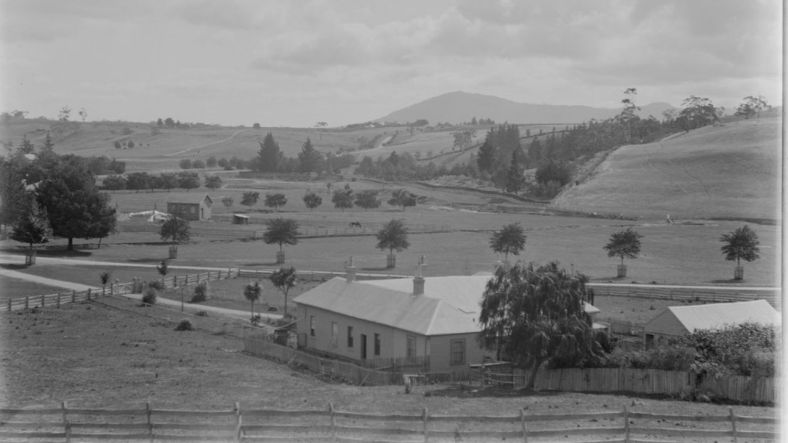
In their description, Kennedy & Hunt Real Estate, who are local Gisborne agents, highlight Macedon House’s rich history and importance and include a few beautiful old photos dating back to 1899 of the building in its prime, against the backdrop of farmland and the pointy top of Mt Macedon.

Let’s hope who ever buys it this time round will restore it to its former glory and pay homage to 170-plus years of Macedon House’s colourful history.

macedon house in its prime

The lucky lives of Judy and Alex Resofsky

Throughout her life Judy Resofsky considered herself lucky.  No doubt, her husband Alex did too.

Judy and Alex arrived in Australia in 1949 when they were in their early twenties, having both survived the horrors of Hungarian ghetto life and the notorious Auschwitz Concentration camp in Poland, to which many Hungarian Jews were deported in 1944.

At her funeral last month in Melbourne, Judy and Alex’s daughter Kathy Janovic told mourners the incredible story of how her mother had escaped the gas chambers.

On the day, she and others were to be murdered, the gas chambers had miraculously malfunctioned and she was spared.

Later, when the concentration camps were being evacuated and demolished, as the Russians advanced across Europe, Judy was one of thousands of emaciated Jews sent on a death march from Praust (Pruszcz Gdański) in North Western Poland.

At one stage during this horrendous ordeal, she and other women were resting in a barn when Russian soldiers entered and started to rape the women. Judy jumped out of a window and landed close to a Jewish Russian soldier, who saved her.

This was just another example of her mother’s good luck, her daughter Kathy said in a loving tribute to her warm, kind and generous parents.

One of eight children, born in Nyirbator in Hungary on July 5, 1926 to Adolph and Berta Winkler, and their first born, Judy was the only of her family to survive the mass extermination of European Jews by the Nazis.

Her husband Alex Resofsky, who also recently passed away, was born in the Hungarian town of Myrathasa two years before Judy in 1924.

The second child of Moritz and Leake Resofksy, Alex and his eldest sister Margaret were the only ones in their family to survive the holocaust.

After the family had been rounded up in the Sirna Pusata Ghetto, they were deported to Auschwitz. Alex’s mother and siblings did not survive the selection process and were murdered by the Nazis.

Alex passed through three more concentration camps – including the notorious Gross-Rosen and Buchenwald camp networks – before being liberated at Bergen-Belsen in April 1945.

He was part of the Bricha underground movement that helped smuggle Jewish holocaust survivors out of Eastern Europe into what is today Israel.

In 1949 he sailed to Australia with his sister and future wife, Judy.

Here they lived for the next 69 years, making a life for themselves in Melbourne’s flourishing Jewish immigrant garment trade (supplying David Jones with mens knitwear) and where they had three children and many grandchildren and great-grandchildren.

By all accounts – I sadly never met them – Alex and Judy were much-loved and treasured members of Melbourne’s close-knit Jewish community,and were actively involved in the important work of the Jewish Holocaust Centre.

A report from the JHC in September 2017 includes a picture of Judy and Alex along with their children, grandchildren and great-grandchildren. There are 24 people in the photo.

resofsky family

Alex and Judy with their family, taken in September 2017 (Credit: Jewish Holocaust Centre)

The JHC report notes that through the generosity of the Resofsky’s, the centre was able to put its vast and important collection online, and that they did so in loving memory of their parents, Mor and Lenke Resofsky; Jeno and Berta Frisch; Adolf and Berta Winkler and all their siblings.

I only recently came across the incredible survival of the Resofskys while researching a story I was writing for The Australian Financial Review. It was about a shopping mall they owned near Geelong, and which their children recently sold.

It would have been a great privilege to have met Alex and Judy and heard their story of survival against the odds, and about their successful and happy lives in Melbourne.

Deepest sympathies to their family and friends.

Unbearable and uplifting: The illogical pleasure of reading A Little Life By Hanya Yanagihara

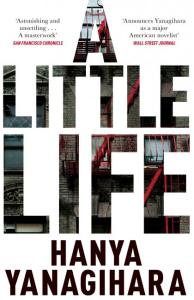
hanya-yanagihara-a-little-lifeIt must say something about the impact Hanya Yanagihara’s novel “A Little Life” has on its readers, that random strangers came up to me, while I was reading it, to offer their praise.

“You should persevere with it, it’s an amazing book,” said one bloke as he got off the train, when I was only about fifty pages in.

Then, a few weeks later: “It’s so good. I’ve only got 20 minutes left to read on my Kindle and I don’t want it to end,” enthused a mother with two children as our train pulled into Melbourne.

After finishing it myself, and being equally affected by its power, I perused the internet for reviews and comments.

Quickly I realised  those random strangers and I were not alone.

Almost anyone who has read Yanagihara’s 720 page epic, about four close male friends – one of whom is a survivor of horrific sexual abuse – making their way in  New York after college has been similarly jolted.

Jon Michaud’s review in the New Yorker gave a succinct summary of its principal effect: “Yanagihara’s novel can drive you mad, consume you and take over your life.”

“I will genuinely never recover from reading A Little Life,” wrote another fan on Twitter.

When I finished reading A Little Life, I felt that sense of nostalgia, sadness and loss that comes with experiencing all great works of art be it a book, movie or piece of music.

It was as if I had been taken on an exhilarating ride – one of pain and suffering, but also of great joy and love – and then it had all come to an end and the characters had exited the stage, leave me and my world view irrevocably altered.

To summarise briefly the plot , four close college friends Jude St Francis, JB, Willem and Malcolm find themselves living in New York and trying to make their way as lawyer, artist, actor and architect respectively. All are bright and brilliant in their own way.

The book chronicles their steps up the professional ladder, the shifting dynamics of their friendship, their on and off romantic relationships, their shifting social circles and the changes they undergo from unsure twenty something’s to fifty-year-old successful men. All set against the backdrop of a modern, but timeless New York.

While this may hardly sound like the plot for a the “Great American Novel” what sets the book apart is Yanagihara’s ability to get inside the head of someone who has survived appalling sexual abuse in their childhood and how they learn to cope with its scars as adults.

This she does through the devastating brilliant character of Jude St Francis, whose childhood as an orphan raised by monks is so unimaginable cruel and painful that it is something of a miracle he survived at all.

Not only that but Jude suffers from a chronic pain and debilitating back spasms – due to an automobile attack he endured aged 15 – that leave him writhing on the floor in agony.

But he has learnt to cope, both with the sense of shame he feels about the past, the memories of these events which haunt him and his pain. This coping mechanism is to cut himself with razors, behaviour which shocks his friends and family, but which he is unable to stop even as he runs out of space on his arms, and finds himself cutting through “tough, webby scar tissue”.

Despite his tragic upbringing (which Yanagihara reveals in long flashbacks) Jude does more than just survive, he becomes a success.

Blessed with a brilliant legal and mathematical mind, he ends up becoming a top litigator at a major Manhattan corporate law firm even as his physical pain worsens and the mental scars refuse to heal.

Whilst those closest to him – his best friend and later lover Willem and his adopted parents Harold and Julia – try to heal his deep emotional wounds, and his faithful doctor Andy, treats his weeping sores, failing legs and other bodily injuries, it is only Jude himself  who can keep the demons and ghosts of his past a bay, or give in and let them consume him.

And this almost biblical journey of Jude’s-  into and out of the light – is what drives the narrative of Yanagihara’s opus, and gives it is remarkable power.

Ultimately, the message of Yanagihara’s devastating book, I think, is our inability to escape the events that shaped us as children, but also that we can as adults transcend those events, even if those moments remain fleeting.

Blocked on Twitter: A few thoughts on the “Anonymous host” of Casefile

casey This week I discovered I had been blocked on Twitter from accessing any tweets from @case_file and @casefilehost – the handles for popular crime podcast Casefile.
Fans of this blog may recall I wrote a now deleted post a few months back revealing the identity of the show’s anonymous host.

What followed was frantic messaging via Twitter from the “anonymous host” asking me to remove the post as revealing his identity would comprise the show and could bring about its early end.

This I agreed to do in modest exchange for an interview (anonymously) with “Brad” (He revealed his name in a 2016 interview with Rolling Stone magazine).

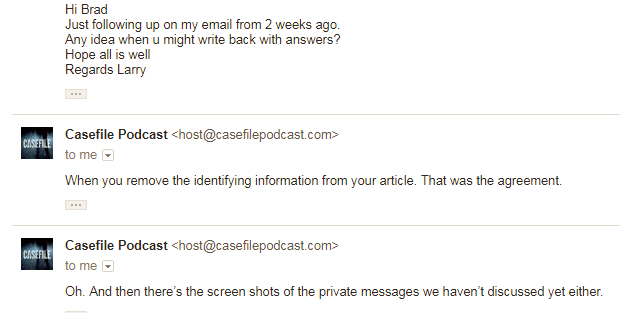
I took down my original post as he had asked, emailed him some interesting questions – but no responses were forthcoming.

Instead a rather blunt email followed over a week later suggesting that my follow-up post (which did not reveal his identity) was also not to his liking and when I declined to acquiesce to his demands to change it, our correspondence ended.

email-casefile

A short while later, he blocked me on Twitter, meaning I cannot view any Casefile tweets or interact with him – though I can still download his show.

I have also discovered that ‘Brad’ had removed all photos on social media of himself and other bits of identifiable information scattered on the internet in clear efforts to protect his anonymity.(That said, he can still be easily found if you know where to look).

(For top tips on how to work out his identity for yourself, read my follow-up blog here).

Clearly, ‘Brad’ is very keen to remain anonymous and – for reasons that no one appears to know, but many are curious about ( I get emails every week) – shuns the quasi celebrity status that other successful podcasters have enjoyed.

It of course begs the question, why? What does he have to hide?

With no responses to my questions from Brad, all I can do for now (until the mystery is inevitably solved) is speculate on plausible explanation for his overt shyness.

Perhaps the host of Casefile is a former or current police or law enforcement officer? Or perhaps he has served in the army or worked for one of those secretive government agencies?

Is it too fanciful to suggest that maybe he has some dark and dastardly secrets of his own?

The other possibility I think is that being anonymous protects him to a degree from being sued or attacked personally.

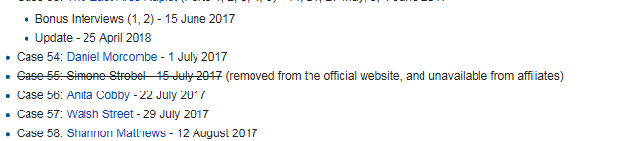
This I pondered after finding out that one Casefile episode, case 55 – the unsolved 2005 murder of Perth backpacker Simone Strobel – is no longer downloadable anywhere.

strobel

So why has it disappeared? Has someone complained?

In our exchanges the Casefile host said there was nothing “sinister” about his anonymity, but equally his other explanations (told in many online interviews) that he wants to stay out of the way of the story do not ring true.

I also wonder how ‘Brad’ feels at retelling these crimes in all their graphic detail, where the victims (some of whom are still alive) are not afforded the luxury of anonymity…while he so jealously guards his.

If you want to be happier: close your Facebook account

facebook_like_logo_1The global furore created by the data mining of 50 million Facebook users by controversial UK political consultants Cambridge Analytica (reportedly to help Donald Trump win the US election) spawned the Twitter hashtag #DeleteFacebook and a campaign calling for users to abandon the social media giant in droves.

In truth, it just one of a number of reasons for shutting down your Facebook account – if you were looking for one.

Other reasons include the constant stream of fake news flowing down your Facebook feed, the trolls, scumbags and hate speech mongerers who freely ply their trade on Facebook or just the incredible and unfettered power Facebook  and founder Mark Zuckerberg now wields with its 1.2 billion users and rivers of advertising revenue that has crippled the free press.

But there is a far more obvious reason why you should seriously consider doing as the hashtag says and #DeleteFacebook.

Simply put, the latest research shows that frequent use of Facebook is likely to make you a less happier, less well-adjusted and less healthier person.

“Researchers are finding that the curated versions that we post on Facebook and Instagram have real consequences in our actual lives,” said Shankar Vedantam the host of NPR’s Hidden Brain, a popular science and psychology podcast which looks at how people interact with the world.

“As you watch the seemingly idyllic lives of friends on social media, you may find a little voice pointing out that your vacations are dull by contrast, that your kid never scores the winning goal, that your relationships seem to be painted in grey while everyone else’s seem to be in Technicolor,” the eloquent Vedantam went on to say.

Social comparison risk

The podcast episode called “SchadenFacebook” (which you can download here), looked at a 2017 study carried out by academics at Tel Aviv University’s Coller School of Management, which was the first study aimed at separating out correlation (Do lonelier people tend to use Facebook?) from causation (Does Facebook use make you unhappier?) in relation to social media use.

It examined the “natural” experiences of 144 workers at a security firm who initially were not allowed to use Facebook at all and had to delete their accounts. Later, the company allowed some employees to re-open their accounts.

In this unique situation, none of the people got to choose which group they were in, so it couldn’t be that people who were unhappy were choosing to use Facebook, ruling out a correlation bias.

The researchers  collected data from the time no one was allowed to use Facebook to the time some were allowed to have access.

Surprisingly, the study found that users are not generally fooled into accepting that the experiences posted on Facebook by their friends are the true picture.

But did find conclusively that “Facebook usage increases users’ engagement in social comparison and consequently decreases their happiness”.


“Using Facebook makes you more comparative. You need to prove yourself to yourself over and over again,”  one of the researchers, Ohad Barzilay, told Hidden Brain.

“You compare yourself to others more often, you judge yourself, am I better or worse than my friends?  Am I happier or are they happier?”

“This [constant] social comparison engagement makes you less happy,” Barzilay said.

Harvard Business Review study

On top of that study,  I tracked down another recent and more comprehensive study on the impact of Facebook use on wellbeing, that was published in the esteemed Harvard Business Review.

Conducted by Holly B. Shakya an assistant professor of global public health at UC San Diego and Nicholas A. Christakis, director of the Human Nature Lab at Yale University, it tracked the wellbeing of 5208 regular Facebook users over a two-year period.

It measured life satisfaction, self-reported mental health, self-reported physical health, and body-mass index.

The findings were: “Overall, our results showed that, while real-world social networks were positively associated with overall well-being, the use of Facebook was negatively associated with overall well-being.

The report went on to say: “These results were particularly strong for mental health; most measures of Facebook use in one year predicted a decrease in mental health in a later year. We found consistently that both liking others’ content and clicking links significantly predicted a subsequent reduction in self-reported physical health, mental health, and life satisfaction.”

Neither of these findings really surprised me – nor do I suspect would they many other people.

Unfortunately, we often accept at face value what we read and see on Facebook and as the academic studies show use this as a disingenuous point of self-comparison: “There’s so and so having a better holiday then me…or with a nicer house or car…or with a better job…or with happy kids…or a nicer figure….”

But if we weren’t on Facebook voyeuristically trawling through the lives of others, and instead spent time on building our relationship in the real world, the latest research strongly suggests we’d be a lot less envious, a lot less depressed and a lot less self-judging.

Quitting is hard

The problem is thought that quitting Facebook – like any other addiction (and it is an addition!) is not easy.

The world’s most famous online brand (alongside Google) is completely entangled in our lives. It’s on our phones, our iPads and computers and it crops up in everything we see and do: from food packaging, to newspaper articles to everyday conversations.

The brilliance or insidiousness of Facebook, and other social network platforms like Instagram is that it takes advantage of natural human curiosity. Quite simply put: we want to know.

But if you’re feeling depressed or dispirited about your life and feel others are having more fun then you (when in fact their lives are not so shit hot) maybe its time to take the plunge and press the delete button.

“What, you’re not on Facebook?” your friends might ask in shock and horror.

To which you can simply smile and say: “Yes”.

More fool me: Stephen Fry’s “coke years”

22662908One of the most interesting and surprising things you will learn about Stephen Fry, if you read his third autobiography “More Fool Me” is the extent of his cocaine addiction.

Or perhaps you’d wonder how he managed to snort so much marching powder up his snoz, given how crooked it is.

As you read through the book, which traces some of his most successful and creative years in the late 1980s and early 1990s – working with Hugh Laurie on Jeeves & Wooster, starring in Blackadder,  hosting royal variety shows and writing the novel The Hippopotamus and countless essays, reviews and speeches – you realise that cocaine is Fry’s special friend.

On page 69 of my soft-back edition, Fry lists all the places he has snorted cocaine during his 15 years of addiction. They include Buckingham Palace, Windsor Castle, The House of Lords,  The House of Commons, Fortnum & Masons and of course, the BBC Television Centre in London.

Fry is forever heading off to the exclusive, members-only Groucho Club in Soho in London’s West End (often on foot as he lived nearby) to meet up with his dealer “Jethro” for a cocaine top-up. He is incredibly candid about some of the stupid and embarrassing stuff he has done whilst consuming or after partaking of the drug.

In one episode, he gets involved in a competition to snort a massive line of coke on a table in a restaurant. He gets to the end and promptly vomits furiously. In other episode, having drunk too much and snorted too much he lurches out the window of the Groucho Club and spews down onto the pavement outside.

It’s not the kind of thing you’d expect from Fry, one of England’s great literary and artistic treasures – more the behaviour of a bad boy rock ‘n roll star. But as you read you realise that Fry is quite the contradiction – a mix of erudite, literary brilliance mixed with too much alcohol, aforementioned cocaine and a fondness for wearing leather and riding motorbikes.

In one amusing episode set in the Groucho Club, Fry bumps into an angry, swearing Manchurian who turns up to be Oasis’s Liam Gallagher,  in another he befriends Damon Albarn from Blur at the Club bar, whom he finds most charming.  He seems to know, bump into or meet every single interesting person living in England at the time.

Fry writes about his cocaine use,  with both embarrassment – part of a habit of his of forever apologising for being rich and successful – and with an undercurrent (I am sorry to say) of boastfulness.

And while he professes that the details of his cocaine habit should not be seen as an encouragement to others, when you throw in all the celebrity parties, dinners, film premiers in Leicester Square, hobnobbing with the rich and famous amid all the endless line snorting (and prodigious sums of money spend on it) its hard to see his habit as anything other than part and parcel of being rich, famous and successful. Which no doubt it was back then, and still, I assume is for many in the “it” crowd.

The fascinating thing about this memoir, as with The Fry Chronicles (a lesser work which I reviewed on this blog covering his university years) is the warts-and-all account of a period of his life that despite his wild behaviour, was incredibly creative, productive and successful. Might he have achieved more if sober more often?

More Fool Me book has a strange, uneveness to it – the first part being rambling memoir that spends too much time recapping what happened in the previous book, while the second half is merely a republishing of his diary during a hectic few months when he was finishing his novel, The Hippopotamus – it really gives the reader an over-the-shoulder view of what it was like to be Stephen Fry as he soared towards becoming an English icon.

Indeed his status as a true English national treasure is sealed by a scene in the book where Prince Charles and the late Princess Diana casually pop in for tea at Fry’s country home one autumn evening.

In his customary self-effacing manner, Fry does not believe the visit will actually happen, until the royal carriage is on its way.

Then its a mad scramble to prepare tea, cakes, toast and crumpets, followed by a cozy afternoon chat with the royals which only ends when Lady Di explain that she has to get home to watch the latest episode of her favourite soap opera.

Its in scenes like this and throughout the book that Fry comes across as warm, funny, sincere and  kind – a cuddly bear of a man also capable of ingesting large amounts of coke and alcohol whilst still being able to write a word-perfect article for a major newspaper the following day.

Most impressively, he can look at himself in the mirror and be honest about what he sees.

But among all the excitement of the West End life he led then, there is also a profound sense of loneliness as he returns, home, alone – often drunk.

In that respect, it is reassuring to know that he has found a life partner – his husband Elliott – especially with the latest news that he is battling prostate cancer.

Thankfully too – as he reminds readers often in the book – he no longer has a cocaine habit.


The identity of the Casefile host: why I deleted his dark secret

caseyOne of the most stunning podcast success stories in recent years, is Casefile, a true crime podcast started just over two years ago by a mystery Australian bloke “from a spare room in his house”.

(For a follow up on this post click here).

Narrated anonymously, his distinctive Australian drawl has added an element of creepiness to tales drenched in blood. Every week hundreds of thousands of listeners, indeed sometimes many millions, download or stream the latest Casefile podcast.

With this viral success, the podcast has quickly become a slick, commercial venture with advertising, a creepy soundtrack and professional production qualities.

A team of engineers, producers, composers and researchers have sprung up around the Casefile creator and host.

But his identity – like the perpetrators of the unsolved crimes retold on the podcast – remains a closely guarded secret.

In an interview with Vice.com in October 2016, the Casefile host said he wanted to remain anonymous so that he could “stay out of the story and “let the facts speak for themselves”.

“I’m just a random Aussie guy, in my spare bedroom, running a podcast,” he said modestly.

As a naturally curious journalist, I decided to take up the challenge and try to found out who the Casefile host was.

It wasn’t really hard – if you know where to look.

(For top tips on how to work out his identity, read my follow-up blog here).(For top tips on how to work out his identity, read my follow-up blog here).

Indeed, for someone who wanted to remain anonymous, he didn’t seem to be making much of an effort to hide his identity.

And so last week, I ran a story, briefly, on this blog revealing his identity.

If you were one of the 100 or so people who read the post, you would know who he is and would have seen his photograph.

Soon after it was published and Tweeted and Facebooked, the Casefile host contacted me and asked me not to reveal his identity and to remove the post and all my social media about it.

casefile tweet

I was bemused by his reaction, as I thought his anonymity was a “marketing gimmick” and that it if a blogger like me revealed it would not make any difference to the show or how it is presented.  Indeed many of his fans crave to know who he is.

But no, he told me, it had nothing to do with marketing but affected his “real world life”  and his “ability to do the show”.

casefile tweet 2

In the end I took it down.

He told me that if no damage had been done to his anonymity and the show could continue, he would consider doing an interview with me.

I’ve sent over a few thought-provoking questions…let’s see what happens.

Of course, I remain intrigued as to why his anonymity is so vital to the show’s viability. No other podcasts I know of has anonymous narrators.

In fact, most successful podcast creators, like the hosts of the ground breaking Serial have become famous in their own right.

And so while the Casefile host insists on not making his identity part of the murderous stories he tells,  for me, his identity has, ironically, become the story.

As, I think it always has been for many of his faithful listeners.

(For a follow up on this post click here).

Good, bad or just bizarre: some thoughts on social media

1217linkedinSocial media can be a force for good – think the #metoo campaign by women who have been victims of sexual harassment and abuse in the entertainment industry and how that has exposed decades of predatory behaviour by actors, directors, writers and entertainers.

Think too of someone like Behrouz Boochani, the Iranian journalist trapped on Manus Island who has been able to tell the real story of what has gone on in that Australian-made hell hole using Twitter and his smart phone.

Social media can also make us laugh, inform us, warn us and of course foster connections with people from all around the world.

But think also of its insidousness, how false information can be spread through Twitter and Facebook (the Russian influence on the 2016 US presidential election campaign is but one recent example) and other platforms, how people can be bullied, trolled and harassed. Social shaming can ruin lives, (read Jon Ronson’s excellent book, ‘So you have been publicly shamed’) and lead to suicide or violence towards others. A Tweet or Facebook post can be deleted but everything lives on in the archives of the internet – just ask Justine Sacco.

And think of all that Donald Trump tweeting! That surely can’t be a good thing for the progress of mankind.


Social media can also be…well just bizarre.

Take my birthday for example. I turned 44 just over a week ago. I didn’t make a fuss about it as that is my preference and expected only a small, but intimate celebration with my wife and kids (accompanied by pizza, beer and cake!) and a few phone calls from family and close friends. I didn’t tell people at work and nobody said anything. I was perfectly happy with that arrangement

But of course, we enter our birth dates into our social media profiles and so the almost 2000 people I am connected with on business social media platform LinkedIn (I used it a lot) got an alert to say it was my birthday.

And the greetings came flooding in from people I have never met or interacted with except to accept their connection request (I have trouble saying no), and from all corners of the globe.

Mostly it was just a generic “Happy Birthday” greeting, occasionally it was personalised with “Have a great day!” but it made me wonder why these people, who basically did not know me, felt they needed to wish me a happy birthday. I certainly don’t wish strangers on happy birthday, even when they pop up on my LinkedIn page.

But it got even more bizarre, because I felt this irrational obligation to thank every single person who had wished me a Happy Birthday, regardless of who they were (of course among the greetings were people I do know and interact with), where they lived or what they did.

And so I spent a good part of my day constantly replying to Happy Birthday messages on LinkedIn as they came in thanking Surya in Delhi, India, Siergiej in London, Orit on the NSW Far North Coast and Rui in Southport, Queensland. By the end of the day I’d received 40 or more birthday greetings. I’d never been more “popular”.

But why were these people sending me birthday greetings? Do you they send them to everyone they are connected with on LinkedIn, Twitter and Facebook? Or was I considered special in some way?

(Ironically, some friends and family who I expected to hear from never contacted me, not even through social media.)

It makes me wonder just how much of our lives we spend on social media thumbing through our Twitter and LinkedIn accounts, checking up on people on Facebook or Instagram? Surely it can now be measured – like sleep – in years lost from our lives.

But while sleep is necessary to function properly – we would literally go crazy and die if we did not sleep for a long period of time, I doubt whether endlessly checking our myriad social media accounts really adds much to the human experience, one that is becoming increasingly disconnected from the real world.

Podcasts for train journeys: 10 to get you started

Vlocity_train_at_little_river_victoriaA new, hour–long, daily commute by train into work (Gisborne to Southern Cross) has suprisingly quelled my reading habits and instead created a new obsession: Podcasts.

Where I thought I would have my head buried in a book as the rugged Victorian countryside rolled by,  I have instead been listening to a variety of audio tales spanning  true crime, politics, everyday life, pyschology and science, celebrity lives, music and comedy.

I’ve been using the Stitcher app which is great because its very user-friendly and you can download podcast espisodes onto your phone to listen offline so I don’t have to use any of my data or rely on mobile connections (this is particurlarly handy for country train rides where mobile signal disappear into black holes).

Much has been written about how Netflix, Stan, Amazon Prime and others have changed television forever with all their brilliantly original shows and on-demand binge viewing, I reckon Podcasts are changing radio broadcasting in the same way.

In fact I hardly listen to live radio any more and haven’t watched live television in months.

I have listened to Podcasts before – namely the groundbreaking Guardian Unlimited Ricky Gervais Show and the first brilliant season of crime investigation Serial – but this is the first time I have truly binged on the podcast medium.

Given there are literally thousands of podcasts (and many are downright mediocre or terrible), here are 10 I reckon are worth giving a try, mostly based on recommendations from my podcast-addicted friend Jonny L.

Casefile

My first introduction to the Australian true crime podcast ‘Casefile was the story,  told in three parts, of the notorious ‘Jonestown’ massacre involving the narcissistic Reverend Jim Jones. I followed this up with the infamous ‘bodies in the barrels serial murders in Snowtown, South Australia in the late 1990s which revealed human behaviour at its most depraved.

Each grizzly story is told in graphic detail by an unnamed (and yet to be identified) Australian narrator with a chilling, deadpan voice. Each episode is brilliantly researched, taking you right inside the criminal mind. The podcast, which according to a Vice interview came about when the anonymous creator was stuck in hospital and bored, has become an international sensation with something like 200,000+ downloads per episode.

Sword and Scale

I followed up a couple of Casefile stories with another true crime American podcast ‘Sword and Scale’ with a disturbing episode about childhood sexual abuse and then an episode about Donna Scrivo who killed and dismembered her own son, Ramsay.

Narrated by the disquieting Mike Boudet, Sword and Scale has more of an investigative feel blending a retelling of events with exclusive interviews, courtroom recording and radio and television broadcasts. The podcasts keep listeners guessing, only revealing certains bits of crucial information towards the end.

Desert Island Discs

In need of some light relief, I tuned into the BBC’s famous music series Desert Island Discs (Tom Hanks, Bruce Springsteen, John McEnroe, Hugh Bonneville and Mark Rylance to date) where celebrities talk to Kirsty Young about their lives and the eight songs they would take with them if they were stranded on a desert island. This is actually a radio show that has been condensed into podcast format. Each are about 40 minutes long.

Here’s The Thing

Next on the menu was Alec Baldwin’s New York podcast “Here’s The Thing'” where the 30 Rock star interviews actors, musicians, politicians and other people he admires (Edie Falco, John Turturro, Dustin Hoffma, William Friedkin, Bernie Sanders, Sandra Bernhardt, Anthony Weiner and Mickey Rourke) about what inspires them, the turning points in their lives and the people and events that shaped them. It’s great because Baldwin loves and admires his interview subjects and is genuinely interested in their lives. Plus he has the perfect voice for radio: smooth and mellow, and he doesn’t take himself to seriously. (My personal favourite so far, the director William Friedkin who made The Exorcist and The French Connection).

The Moth Radio Hour

I confess I have only listened to one episode so far, but it was brilliant. The format of the show, which has been around for years, is to have a theme and then to feature real stories told live in front of an audience. The theme I listened to was Me, Myself, and I: Stories of Questioned Identity which included a great story by the writer and journalist Jon Ronson about a Twitter spambot that stole his identity. The three other stories in the podcast, including the dating adventures of a Manhattan Mormon comic, were all wonderfully engaging, funny, charming and thought-provoking.

On Point

On Point is podcast by the always reliably good National Public Radio (NPR) syndication network examining major issues dominating the American news cycle. Hosted by Tom Ashbrook, the former foreign editor of the Boston Globe, the show invites top journalists and bloggers who are experts on the chosen topic – be it the Harvey Weinstein scandal or the #Takeaknee NFL protest – to present their view-point and debate among each other. Generally panelists include people across the political spectrum which adds to its appeal.

Phoebe’s Fall (On iTunes not Stitcher)

Phoebe’s Fall is a special investigation by The Age newspaper into the bizarre, tragic and unexplained death of 24-year-old Phoebe Handsjunk, whose body was found at the bottom of a garbage shoot in one of Melbourne’s most exclusive apartment towers.  Presented over six episodes by investigative journalists Michael Bachalard and Richard Baker, it looks at all the key aspects of the baffling case, which seems to defy the ruling of the Coronial Inquest; that Phoebe died by misadventure. It includes interviews with Phoebe’s family, retired detectives and legal experts pulled together with an enjoyable discussion and debate between the two journalists about the key aspects of the case. It’s unmissable for podcast addicts.

This American Life

Presented by one of American radio’s most distinctive voices, Ira Glass, This American Life is one of the most listened to radio shows and podcasts in America. Each weekly episode (broadcast across 500 radio stations) exploring a different theme or topic with great nuance and insight whether it be “The Perils of Intimacy” (about relationships), or “Expect Delays” (about the banal perils of travel and journeys) or more serious topics like the rise of the Alt-Right and White Nationalism. The show is legendary and deserves its status.

Hidden Brain

Also an NPR broadcast, Hidden Brain is a science-based podcast about how we experience the world. Episodes that I have listen to look at the phenomenon of Nostalgia and Regret. The latest episode is on unpredictable behaviour. It’s presented by the highly articulate Shankar Vedantam, a former Washington Post reporter and columnist.

These are just a few suggestions from a novice Podcast listener. If you have any suggestions of your own, send me an email (freshlyworded@gmail.com).

In particular I am keen on finding a good comedy podcast. I’ve not had much luck so far.