A very Scottish evening with Trainspotting author Irvine Welsh

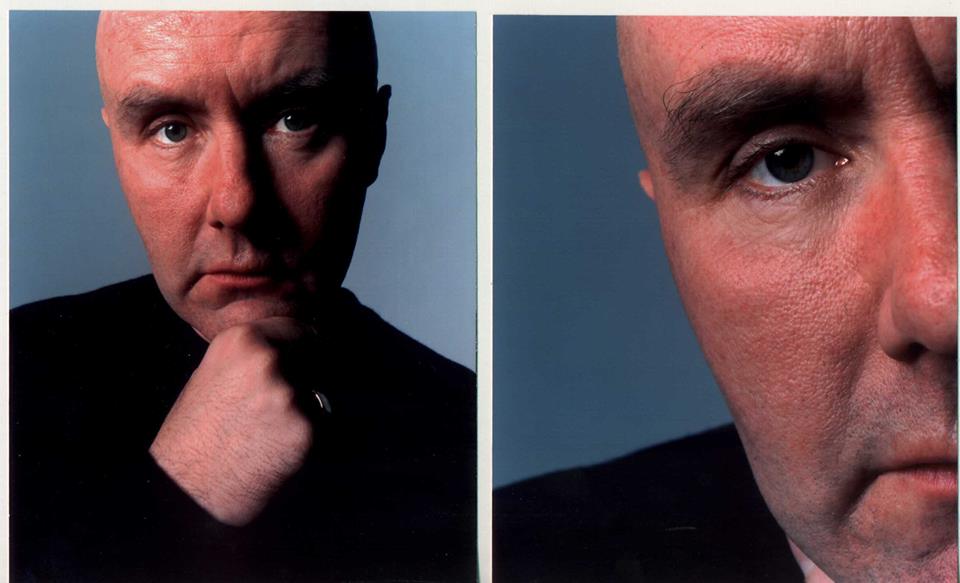
irvine welsh2I went to hear legendary Scottish author Irvine Welsh speak last week.

My friend Jonny, who has read all his books, invited me along to a talk hosted by the Wheeler Centre.

I have read just one of Welsh’s books, “Trainspotting”, but it was enough for me to say “yes” immediately.

Trainspotting – a brilliant, excruciating, haunting and often hilarious story about a group of doomed Scottish junkies set in the impoverished council estates of Edinburgh in the late 1980s/early 1990s – was published in 1993 and has sold more than 1 million copies in the UK alone.

It’s listed in my literary reference bible: “1001 Books You Should Read before Die” alongside contemporary literary masterpieces by Salman Rushdie, Ian McEwan, Donna Tartt and J.M. Coetzee.

welsh

Irvine Welsh with a fan in Melbourne

Welsh, a bald, tallish man sat down on stage  at the Athenaeum Theatre on Collins Street dressed casually in a black t-shirt, jeans and leather jacket looking like the kind of guy you’d strike up a conversation with about football at the pub. The only sign of possible eccentricity: bright red socks.

He was there ostensibly to promote his latest book which has the intriguing title of ‘The Sex Lives of Siamese Twins’. It’s his first novel set entirely in the US – Welsh lives in Chicago and wrote and set the novel amongst Miami’s gym, fitness and dieting culture.

(“If people want to lose weight, they should just eat less. Instead, in America, they consume diets.” he says.)

It’s his first novel without a Scottish character with only the vaguest references to Scotland.

Putting on a bad American accent, Welsh recalled a line in the book spoken by one of the aggressive female characters to Wheeler Centre director Michael Williams:

“I don’t wanna go to a fillum set in Scotland or Bosnia speaking a language no one can understand.”

Williams reminded Welsh that he is had pronounced “film” in the Scottish dialect of “fillum”.

Welsh throws back his head and roars with laughter.

Miami agree with Welsh. He goes to gym, eats well, walks around in shorts and t-shirts taking in the good weather.

But his heart – thankfully – remains firmly rooted in Scotland, where he created his most iconic characters – Renton, Begbie, Sickboy and Spud.

It’s not just his heavy Scottish brogue that makes it hard to imagine he’s become an American in any way, he still clearly loves his homeland, telling the audience that he has enjoyed “discovering Scotland from the US”.

Moving to somewhere “exotic” like Miami, he says, made him realise that Scotland is “one of the f-cking weirdest places I have ever been to in my life.”

And he’s also kept up with local politics, noting that the country is “re-inventing itself from the inside out” and that it is an “exciting time” with the Scottish independence referendum vote on September 18 – a remark which draws a large cheer from fellow countrymen in the packed audience of devoted fans.

Welsh has also maintained that famous, sardonic, playful Scottish sense of humour, that made Trainspotting such a huge success.

He quips: “Scottish people are always wonderful to outsiders – they like people coming to visit, but they f-cking hate each other.”

He then jokes that the last time he visited Edinburgh everyone was so nice to each other, which meant he had nothing to write about.

This is thankfully an exaggeration with Welsh telling the audience that his next book – coming out next year – will be about a taxi driver in Edinburgh.

More than likely it will be about one of those failed characters, who he writes so well about – whether its Renton, Spud or Begbie in Trainspotting or the vicious Detective Seargeant Bruce Robertson in the recently filmed “Filfth” (a novel I’ve already picked up from the library).

Failure, is something which inspires Welsh and the characters he creates on the page: Trainspotting is not just about failed characters whose lives have been blown off course by heroin addiction but is set within a landscape of failure  created by Margaret Thatcher and her Tory cronies, and one experienced by Welsh himself.

“Failure is much more interesting to me than success,” he says. “I write about people who are going through a bad time, when things are falling apart.

“I try to show these characters grasping for the light switch,” a beautiful phrase, which encapsulates the sadness behind doomed characters like Tommy Laurence, a football-mad childhood friend of Renton in Trainspotting who turns to heroin after his girlfriend dumps him and ends up contracting AIDS.

“These are people who were not always like what they are now,” Welsh says.

Welsh himself knows a lot about failure. He couldn’t play football or cut it as a musician (his two other passions) – but he was good at storytelling.

“Most writers are serial failures,” he says.

Speaking about his own success – he notes humbly that many celebrated Scottish writers blazed a path for him but did not achieve the international recognition he did.

He says he is inspired by bad fiction, rather than by what other great authors have written (one of his favourite books is Ulysses by Irishman James Joyce):

“When I read a shite book, I tell myself, I am going to take that c-nt down.”

Renton, couldn’t have said it better.


Drugs, sex and boredom: A review of “Scar Tissue” by Anthony Keidis

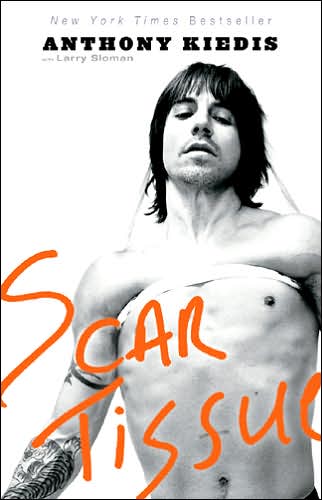
ScartissuebookAbout the most interesting revelation in the 460 odd pages of “Scar Tissue”, the autobiography of Red Hot Chilli Peppers frontman Anthony Kiedis,  occurs about 330 pages into this tedious, self-centered tale.

It’s when Keidis talks about the Chilli Peppers playing as the opening act for the Rolling Stones in the late 1990s.

He writes that opening for the Rolling Stones is a “shite job” despite the opportunity to play with the second greatest band after The Beatles:

“I can’t recommend it to anybody…the fact is the Rolling Stones audience today is lawyers and doctors and CPAs and contractors and real estate development people. This is a conservative wealthy group. No one is rocking out.”

He goes on to describe it as “like going to the Rolling Stones mall”, a “horrible” experience where you play as “85,000 wealthy, bored-out-of-their-minds fans are slowly finding their seats”.

Keidis talks in the same candid, straight-forward style to describe his journey from reckless teenager to petty thief, confirmed junkie and lead singer of one of the biggest rock-funk bands in the world.

It’s an honest, seemingly truthful recollection (as truthful as possible given the amount of drugs consumed along the way) but the problem is its repetitious nature, built on a cycle of drug binges, failed attempts to get clean, and more drug-taking, interspersed with accounts of chaotic relationships, typical rock ‘n roll sexual encounters and tour bus stories.

It’s the complete cliché: Sex, drugs and rock ‘n roll.

Sadly, there is very little revealed of the creative process – this mainly involves Keidis disappearing into a room by himself to write songs about his drug-fuelled personal experiences.

As a book about drug use and addiction it offers very little in the way of insight into the problem – apart from the obvious of it being very hard to give up. Many of the observations glamorize drug use, while others sound like the speech bubbles of a true stoner-idiot:

After fifty days of being sober, I thought, ‘That’s a nice number. I think I should honor that number’. I decided it was a good time to do drugs.

On a visit to New Zealand, he bemoans the fact that the country is too small to satifsy his drug requirements. Countless times he smuggles drugs onto planes undetected.

The only things to truly marvel is that Keidis somehow emerges out of his heroin/cocaine/crack/speed addiction and reckless to the point of almost suicidal lifestyle, not only alive, but rich and famous too (and still with that famous six-pack stomach).

Keidis, it seems, is the classic narcissistic celebrity who believes that if you throw in anecdotes about meeting the Dalai Lama, some syrupy thoughts about spirituality and the occasional bouts of healthy living and yoga exercise that you’re actually a decent guy.

Instead, he appears to lack basic humility even after surviving countless week-long drug binges in seedy motels, crossing paths with drug lords and avoiding arrest by police officers.

It got so bad that half-way through the book, I had to stop reading and put on a couple of Red Hot Chilli Peppers CDs to remind myself that they really are – as musicians – an incredibly original blend of funk, rap, rock and have produced countless great songs over the past  almost 30 years.

(For worthwhile, insightful accounts of heroin addiction read: Junkie by William S. Burroughs, Monkey Wrench by Helen Garner, In My Skin by Kate Holden or Trainspotting by Irvine Welsh – you can find reviews of all of these books here.)


Re-reading classic plays: ‘Look Back in Anger’ vs ‘Death of a Salesman’

Look-Back-in-Anger-12944_2

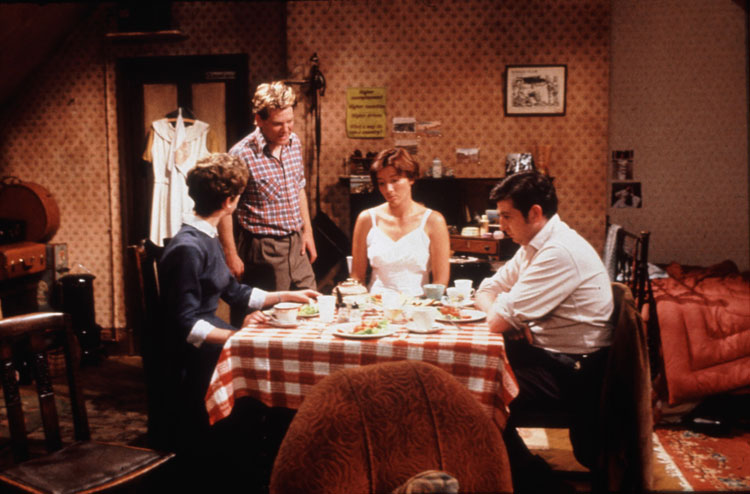
Kenneth Branaugh and Emma Thompson in “Look Back in Anger” directed by Judi Dench

I recently re-read two celebrated plays of American and British theatre, respectively – Arthur Miller’s ‘Death of a Salesman’ and John Osborne’s ‘Look Back in Anger’.

I enjoy reading plays – though some people find it curious. You can pick them up for a few bucks in book shops, they come in thin, handy-sized paper-backs perfect for reading on the train and you can finish them in a day or two.

The directness of the dialogue – spoken by interesting, intense, quirky characters – can, I find, be very pleasing to the intellect, and an escape from the drab, bored faces of fellow commuters with their fingers stabbing at smartphones.

The last time I read these ground-breaking plays was at university 20 years ago, where I was profoundly affected by both of them.

So I was curious to see what effect they might have on me two decades later.

Look Back in Anger by John Osborne (1956)

The Faber and Faber edition I read featured a red tie draped over an ironing board on the cover symbolising the play’s domestic setting (it was one of the first plays to be  coined a “kitchen sink drama”)  and its exploration of the lives of the working classes after the Second World War.

The action takes place in a flat in the English Midlands in the 1950s. The chief protagonist is Jimmy Porter – the quintessential “angry young man” who feels he has no place in English society. Without a war or a cause to fight for, he takes his existential frustrations out on his sweet-natured flat mate Cliff and timid, anxious girlfriend Alison. His principal aim is to spark some kind of fight or reaction from Cliff or Alison and later Helena – a posh actor friend of Alison – who comes to visit (and replaces Alison as Jimmy’s girlfriend in a weird love triangle).

JIMMY (on a rant): Oh heavens, how I long for a little ordinary enthusiasm. Just enthusiasm – that’s all. I want to hear a warm, thrilling voice cry out Hallelujah! (He beats his breast theatrically) Hallelujah! I am alive. I’ve got an idea. Why don’t we have a game? Let’s pretend we’re actually alive….look back in anger

And so he goes on – ranting and rallying against the boring weekend papers full of the same vacuous people and meaningless stories; trying to stir some kind of emotional response from his wife ironing away like some kind of Lady Macbeth trying to remove every bit of dirt or discomfort from her life. Alison at first won’t respond to Jimmy’s taunts about her stuck-up brother Nigel or her parents that hated him or how he is sick of being cooped up in a flat on another dreary Sunday. Only through accidental violence (play fighting with Cliff), can he draw a howl of pain and a reaction from her.

There are plot twists – a pregnancy, the death of a friend, family revelations – but it all feels quite artificial and staged. Jimmy is just an angry man crying out for attention or looking for a fight, using what ever horrible means to spark a reaction:

JIMMY (to Alison): If you could have a child, and watch it die. Let it grow, let a recognisable human face emerge from that little mass from indiarubber and wrinkles. Please – if only I could watch you face that.

In the end, I just wanted Jimmy to shut-up – even when he was played by the fantastic Kenneth Branaugh alongside Emma Thomson as Alison in a TV adaptation directed by Judi Dench (You can watch the whole play in full on YouTube).

It just didn’t ring true. It felt like a silly, dated soap opera – though with the occasional memorable bits of dialogue thrown in the mix.

Verdict: 3 out 5

(At university, we watched a version of this play with the great Welsh actor Richard Burton in the lead role – so perhaps I should track it down and give it another chance.)

Death of a Salesman by Arthur Miller (1949)

Kate Reid and Dustin Hoffman in "Death of a Salesman"

Kate Reid and Dustin Hoffman in “Death of a Salesman”

The story of 60-year old Brooklyn travelling salesman Willy Loman who can no longer sell and who cannot face the reality of his own past mistakes and self-deception. It’s also a play about what it means to become worthless in society and how the great American Dream (your own home, family, prosperity) can turn to dust.

WILLY: The street is lined with cars. There’s not a breath of fresh air in the neighbourhood. The grass don’t grow any more, you can’t raise a carrot in the backyard. They should have a law against apartment houses.

Willy Loman carries some of the anger of John Osborne’s Jimmy Porter – but whereas Jimmy is young and can change, Willy Loman is a broken man, a classic study of failure and of redundancy, with little hope of redemption.

While set in a different era, Death of a Salesman is a timeless classic and has lost none of its power.

David Mamet’s 1984 Pulitzer Prize-winning play Glengarry Glen Ross – about real estate salesman fighting for their jobs (made into a superb movie with Al Pacino, Jack Lemmon, Kevin Spacey, Alan Arkin and Alec Baldwin) owes its central theme – meaning through work – to Arthur Miller’s ground-breaking play.

As journalist working in an industry with an uncertain, constantly-evolving future – the fear expressed by Willy Loman of “still feeling – kind of temporary about myself” rings true.

Indeed for many working people, the fear of becoming redundant because of technology or of being replaced by cheaper labour in far-off countries is very real as is the sense for older people of waking up 30 years after a career and wondering where all the years went and why you’re still struggling to make ends meet.

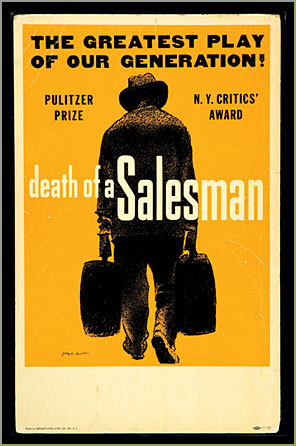
death of a salesmanThis fear is brutally expressed in one of the great and awful moments in modern theatre when Willy finds himself begging his boss, Howard –  the son of the man who first hired him – for his job:

WILLY: You mustn’t tell me you’ve got people to see – I put 34 years into this firm, Howard,  and now I can’t pay my insurance. You can’t eat the orange and throw  the peel away – a man is not a piece of fruit.

Earlier in this scene, as Willy arrives at Howard’s office determined to get a desk job in the city, he finds his boss demonstrating a primitive dictaphone that records his son’s voice.

Replace this device with a smartphone or an iPad and you have a modern day fable.

Verdict: Five out five

(Make sure you watchthe 1985 TV adaptation starring Dustin Hoffman as Willy Loman and John Malkovich as his son Biff.

Edward Snowden vs the NSA: who do you believe?

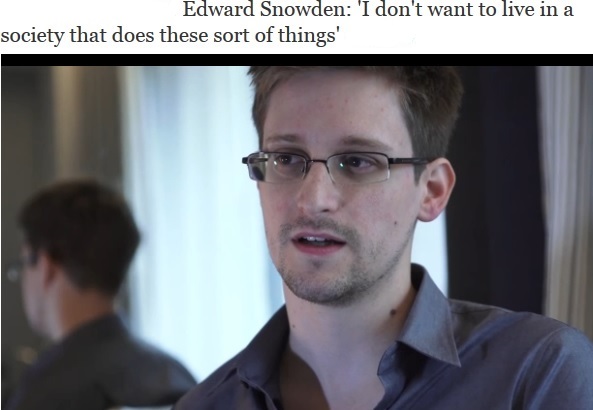
edward snowden2Conservatives, spy chiefs, President Obama, right-wing administrations, the Abbott government: they were all choking on their corn flakes when the Pulitzer Prize, the most prestigious award in journalism, was handed to the UK’s The Guardian  and the Washington Post for their articles about the surveillance activities of the National Security Agency (NSA) based on the leaks of Edward Snowden.

Even more galling for them would have been that the Pulitzer Prize was awarded in the category of “public service” for the newspapers’ “aggressive reporting to spark a debate about the relationship between the government and the public over issues of security and privacy” – since they consider Snowden to have done a great disservice to the public, even putting unnamed lives at risk.

It is hard to think of a figure that divides public opinion  more than Edward Snowden: “hero”, “whistleblower”, “traitor”, “treasonist”. These are the words used to describe the 30-year-old former Central Intelligence Agency (CIA) and NSA contractor, now in hiding in Russia.

The US government has charged him with espionage and revoked his passport, at the same time Norwegian parliamentarians Snorre Valen and Baard Vegar Solhjell have nominated Snowden for the Nobel Peace Prize.

Australia’s attorney general George Brandis called Snowden “criminally dishonest, treacherous and having put Australian lives at risk” in a speech in parliament. In response to Brandis, Greens Senator Scott Ludlam called Snowden a “whistleblower who I hold in highest regard”.

Where you stand on Edward Snowden defines your views on things like individual freedom, the right to privacy, the role and responsibility of government, access to information and democracy itself.

The Snowden leaks uncovered a hidden world of secret government activities in the US, UK and Australia including:

  • the bulk collection of phone records of US citizens by telecom Verizon including calls made to other countries, regardless of whether they are suspected of wrong-doing.
  • that the UK and US governments had access to user data held by Google, Facebook, Intel and others, including audio and video chats, photographs, e-mails, documents, and connection logs.
  • that the NSA monitored the phone conversations of 35 world leaders including German chancellor  Angela Merkel, – a supposed Western ally
  • That the Australian government listened in on the phone conversations of Indonesian president Susilo Bambang Yudhoyono’s and his wife.
  • that the NSA “spied on the staff of prominent human rights organisations” including Amnesty International and Human Rights Watch;
  • that there were programs like Prism or  XKeyscore, clandestine mass electronic surveillance data mining programs, which use sophisticated techniques to screen “trillions” of private communications.

These leaks highlighted the secret activities of the NSA, depicting it as a shadowy government organisation resembling “Big Brother” as described in George Orwell’s hugely influential 1949 novel “1984”. It was this book which coined the adjective “Orwellian” to mean official deception, secret surveillance, and manipulation.

It is not that surprising then that in the wake of the revelations about the NSA, sales of Orwell’s prophetic dystopian novel skyrocketed.

I regard Edward Snowden as a hero, an incredibly brave man who has sacrificed his own personal freedom to expose a government organisation obsessed with power, secrecy, data and control. Were it not for Snowden, the full extent of NSA activities and those of its UK and Australian counterparts would never been known.

But what of the other argument – the one that beats its fists against its chest proclaiming Snowden  a thief, traitor and criminal?

My own newspaper, the Australian Financial Review published an interview with General Keith Alexander, a spy and former head of the NSA, who not surprisingly slammed the Edward Snowden leaks.

This of course is the equivalent of asking the CEO of McDonald’s if he agreed that hamburgers were healthy.

According to General Alexander, the NSA is a “noble organisation that is “protecting our civil liberties and privacy” and that saves lives.

He says the very reports that won The Guardian and Washington Post the Pulitzer Prize are wrong and that it is a “fabrication” and “misperception” that the NSA is “listening into everyone’s calls, and reading everyone’s emails”.

General Alexander says the NSA has been “demonized” and painted as a “villain” by these very articles. when in fact the NSA is full of “honest, well-intentioned, hard-working, and patriotic people”.

The actions of Edward Snowden and the subsequent reports by The Guardian and the Washington Post, General Alexander says “have put so many lives at risk”.

The job of the NSA, General Alexander says, is to “stand watch” over our safety, which he says it does within legal means.

Of course he cannot actually tell us  the details of what the NSA is doing because that would compromise its role. In essence, we just have to trust him and the NSA.

Or if not him, then perhaps UK foreign minister William Hague who said in an interview that reports British intelligence agency Government Communications Headquarters (GCHQ) was gathering intelligence from phones and online sites “should not concern people who have nothing to hide” – a phrase that could have come straight out of an Orwell novel or perhaps the East German Stasi or KGB.

So do you believe General Alexander that the NSA is acting responsibly that the “overwhelming evidence falls in favour of the legality and legitimacy of what NSA has done”?

Or do you believe Edward Snowden, when he says the NSA is intent on “gathering intelligence where ever it can, by whatever means possible”?

There is of course a third view  – that you accept that the NSA  and other secretive government agencies are – as Snowden says – acting way beyond their remit, but in the name of protecting its citizens, that the end justifies the means.

But if you do, then you must also accept that your right to individual privacy is gone and that you are comfortable with the idea of a “Big Brother” watching over you as you type your email or make a phone call.

Perhaps it’s worth remember these chilling words of O’Brien, a member of the inner party who attempts to trick Winston Smith, the doomed hero of Orwell’s 1984:

There will be no loyalty, except loyalty towards the Party. There will be no love, except the love of Big Brother. There will be no laughter, except the laugh of triumph over a defeated enemy. There will be no art, no literature, no science. When we are omnipotent we shall have no more need of science. There will be no distinction between beauty and ugliness. There will be no curiosity, no enjoyment of the process of life. All competing pleasures will be destroyed. But always — do not forget this, Winston — always there will be the intoxication of power, constantly increasing and constantly growing subtler. Always, at every moment, there will be the thrill of victory, the sensation of trampling on an enemy who is helpless. If you want a picture of the future, imagine a boot stamping on a human face — for ever.’


A very grainy Penfolds grange confession

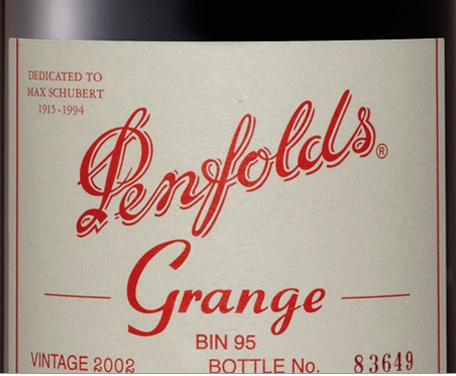
grangeI confess, I once accepted a bottle of Penfold’s Grange at a business lunch.

Unlike former NSW premier Barry O’Farrell I do distinctly remember the occasion and the circumstances of receiving the Grange.

It was in the winter of 2007, a year or so before the collapse of investment bank Lehman Brothers that ignited the US sub-prime mortgage crisis and the Global Financial Crisis (GFC), when money was still flowing like…err…fine wine.

The venue was La Grillade, an upmarket restaurant in Crow’s Nest on Sydney’s North Shore famous as much for its succulent steaks and extensive wine list as for being a favourite venue for the big wigs media execs from nearby Channel Nine.

“Let’s get a bottle of Grange” I remember the already sloshed media man proclaiming as he flashed an intoxicated grin around the room and his gold-plated corporate credit card.

There were four of us at the table at the back of the restaurant and large amounts of alcohol had already been consumed.

This was back in the days when the long, boozy lunch was still part of a journalist’s weekly repertoire, before concepts like “the 24 hour news cycle” and “social media’ ruined all that.

The group consisted of myself  (very drunk), my colleague at the same North Shore publishing company where we edited our respective mortgage broking titles (also drunk) and our hosts, the very cheery media man (pissed, loud and notoriously bad at holding his alcohol) and his client, a gold-watch-and-necklace-wearing businessmen of Eastern European extraction, a classic self-made Aussie battler, riding the wave of easy money.

It was one of those gray, Sydney winter’s days when the thought of spending the afternoon carving into a perfectly cooked steak in a cozy expensive restaurant with someone else footing the bill sounded like a good idea.

Our host’s line of work? He ran a mortgage broking outfit targeting credit-impaired borrowers via ads which ran on the horse racing channel – classy!

The point of it all? A big boozy lunch hopefully in return for a favourable article about our host’s mortgage business, a modus operandi not uncommon in the ethically challenged world of trade publishing.

The bottle of grange made its star appearance late in the proceedings. Plied with countless beers beforehand, it was wasteful gesture in the extreme. More so because not only was I unable to appreciate the expensive drop, but I distinctly recall leaving the table without finishing my glass or helping our hosts polish off the bottle (surely a worse crime than denying ever receiving the bottle in the first place, Barry?).

Even more bizarrely, the last thing we drank was Sambuca, a licorice-flavoured liquor, which would have washed out what little my taste buds remembered of the dark red Grange nectar.

So I have no recollection of how good it tasted. For all I know, it could have come out of a cask. Still relatively new to the excesses of corporate lunches (I would soon learn) I also knew nothing about this so-called mystical Grange. All I comprehended at the time was the price – about $1200.

As the sun sunk from view, the cheque was ordered and duly paid. We said our goodbyes amid back-slapping, laugher and nudges and winks from our hosts.

My colleague and I made our way grimly back in the cold to our St Leonard’s office, an uphill walk after an over-indulgent meal with expensive steaks sloshing uneasily amidst the alcohol in our stomachs. I confess I felt out of it.

The irony: neither of us wrote a word about our host and his mortgage broking company that advertised on the racing channel. Or about his office lined with sporting memorabilia. Or his desire to be a larger-than-life mortgage lender in the mould of Aussie John Symond.

Later in that same year I bumped into our host at another function, the Melbourne Cup. It was another boozy affair. Bob Downe was the host and did his “Kevin 07” impression. It was a different era.

Two years later with the financial crisis in full swing, I read on the NSW Fair Trading website of a mortgage broker that had narrowly avoided going to jail after being found guilty of taking advantage of his clients and pocketing huge commissions for each home loan he granted. His business was placed in the hands of administrators and was eventually wound-up.

It was our host and Penfolds Grange purveyor.

The latest edition of Penfolds Grange, the 2009 vintage, was recently released for sale.  According to Penfolds chief marketing officer Simon Marton the Barry O’Farrell fiasco increased its luxury cache. Wine experts say it’s still a good drop (you’d hope so at $785 a bottle) – but not of the quality of previous vintages.

Clearly, it’s also not in the same league ast the 1959 bottle that brought down a NSW Premier.

But is it any better than the 2003 vintage I drank six years ago at a long lunch in Crow’s Nest. I wish I could tell you.

(A further note to this sordid tale – the restaurant La Grillade didn’t fare so well either. It shut it’s doors in December 2011 after apparently losing the patronage of its media clientele. It re-opened under new management and still bears the same name. A marbled wagyu steak sets you back $55).

All the news that’s fit (and not fit) to print: new buzzwords in journalism

read all about it“It’s not change. It’s a f*cking revolution,” said a media analyst in the brilliant New York Times documentary Page One.

He was referring of course to how the online world has ripped up the traditional business model of newspapers replacing highly profitable print advertising and classifieds ads (the so-called “rivers of gold”) with cheap, interactive and intuitive online offerings.

Fairfax journalist Pam Williams did a brilliant job telling this story in her book “Killing Fairfax” – reviewed here – but is by no means the whole story.

The wheels of change continue to spin and at an even faster rate.

Two of the hottest and most provocative concepts becoming entrenched in the new age of publishing are “native advertising” and “corporate journalism”.

‘Native advertising’ – where paid-for, sponsored or branded content is produced and published on news sites to have the look and feel of a genuine article  – was the focus of a recent episode of the ABC’s Media Watch 

“Corporate journalism” – content produced by an in-house editorial team focusing on issues that matter to the corporation and its stakeholders – was in the spotlight following the launch of ANZ Bank’s new website BlueNotes in April, billed as “the first corporate digital publication for news, opinion and insight of its type in the Asia-Pacific region”.

The launch of BlueNotes sparked healthy debate on Twitter kicked off by Australian Financial Review columnist Christopher Joye who wrote that the ANZ site was likely to be “part bank brand-building, marketing and spin, opening up a new channel through which to project ANZ’s voice; and part bona-fide research and insight that will be of value to ANZ’s constituencies”.

What BlueNotes was unlikely to be, Joye wrote, was independent journalism of the sort produced by Fairfax and other traditional independent media. Nor would it be an “intellectual free-for-all that interrogates issues and disseminates opinion on topics germane to ANZ’s customers, but which can also conflict with ANZ’s profit motive”.

I tweeted Joye’s article and said that I agreed with him that BlueNotes is “not really journalism” to which former AFR senior journalist Andrew Cornell, the managing editor of BlueNotes, responded that it then begged the question: “What really is journalism?” and…was it restricted to “no-for-profits?” (A cheeky remark surely alluding to the fact that once-powerful media empires can’t seem to make a buck out of journalism anymore).

Cornell is a firm believer that corporate journalism – of the kind produced by his team – is the future of business journalism. It was a remark he repeated often in his last few weeks at the AFR.

twitter conversation1Amanda Gome, a former colleague of mine at Private Media and Fairfax, and now head of strategic content & digital media at ANZ, tweeted that BlueNotes was “new journalism” or “corporate publishing” – (and in another tweet, that it was definitely not native advertising).

twitter conversation2

Paul Edwards head of corporate communications at ANZ said if the site “started doing ads” then it would “fail”. Rather, he said, it aims to “engage thought leaders not sell stuff”.

twitter conversation3

On reflection, I agree with Christopher Joye that there is merit in what ANZ is doing with BlueNotes.

The views of its experienced executives, economists and commentators while slanted towards the bank’s view of the world,  are insightful and important (though I would argue they are better served as part of a balanced article in the mainstream media drawing on the views of others as well).

Only time will tell how many people find value in its offering, but it should find a niche among the myriad of online news and commentary sites finding an audience in Australia ranging from academic sites like The Conversation to mummy blogger uber-site Mamamia.

In its defence, corporate journalism like BlueNotes does not attempt to hide the fact that is an ANZ-produced publication, focusing on issues that are of important to the bank, its shareholders and clients.

But native advertising is less honest, muddying the waters between news and commercial interests and breaking down the traditional editorial division between church (editorial) and state (advertising).

Farhad Manjoo, a journalist with the Washington Post wrote of the deceptive quality of native ads that while they “usually carry a tag identifying them as ‘sponsored,’ they appear alongside and share the look and feel of the search results, tweets, status updates, blog posts and other content that you don’t immediately suspect of containing paid messages”.

He makes the point that there is a place for native advertising provided that it is clearly branded as sponsored content (he mentioned a story paid for by Toyota about 20 coolest hybrid animals to promote its hybrid cars that ran on BuzzFeed as a good example) but is sceptical of how this will play out over time.

buzfeed

The Buzz Feed ad/content created for Toyota

Native ads he says, “create incentives for misbehavior by advertisers, publishers and services like Facebook—and, over the long run, the incentive structure is sure to translate into looser disclosure standards and generally trickier content”.

The agenda of BlueNotes on the other hand is all in the name – unless of course you’re looking for a Miles Davis record.

Killer sharks on screen: dissecting fact from fiction

shark_hermanus_backpackersIn 2004, soon after arriving in Australia, I took a boat from Cairns out to the Great Barrier Reef with my then girlfriend.

An hour or so later, seemingly in the middle of the ocean, the boat stopped and dropped anchor next to a floating platform.

We donned our wetsuits, flippers and goggles and plunged into the vast, bobbing ocean. In the back of my mind and I am certain in the back of the minds of everyone in the water that day was: Is there a shark out here?

For the next hour or so we snorkled among the reef, enjoying the colourful fish that swam past and the corals waving in the currents. But try as I might,  I could not get the idea out of my head, that somewhere in that enormous expanse of blue water lurked a perfectly designed grey and white torpedo shaped creature with lots of teeth, who might find a recently arrived pasty South African a tasty entree.

Assurances by the tour operator that large sharks stuck to the deeper channels of water did not re-assure me. After all, what was stopping them from doing a bit of exploring out of their comfort zone on this very day? And what if someone in the water was bleeding? Or splashing about madly?

In the end I was relieved when we hauled ourselves back on the boat, removed our wetsuits and tucked into the buffet spread before the engines were revved up and we headed back to Cairns harbour.

Almost 10 years have passed, but I still remember the feeling of complete helplessness, floating about with nightmarish thoughts circling in my head and the constant need to come to the surface to scour the waves for the familiar dorsal fin.

This week, while hunting for something to watch, I came across the movie “The Reef” on the ABC’s iview.

Made in 2010, it’s about five friends who get stranded in the ocean when their boat hits the reef and capsizes. Four of the friends attempt to swim to an island in the hope of being rescued only to be stalked – and for three of them to  be eaten – by an enormous great white shark.

It is, in my opinion, one just three classic movies made about sharks (excluding those amazing documentaries on National Geographic and the Discovery Channel).

The other two are of course  Steven Spielberg’s Jaws, made in 1975 about a rogue great white shark killing swimmers in the beach side town of Amity Island and the three men (brilliantly played by Roy Scheider, Richard Dreyfuss and Richard Shaw) who set off to kill it and Open Water made in 2003  about an American couple abandoned in the middle of the ocean after a diving expedition and who become the prey for hungry sharks.

A still from Open Water

A still from Open Water

Alongside them are litany of terrible, stupid and silly shark movies usually incorporating D grade special effects (the cult film “Sharknado” the pinnacle of silliness), unfathomable plotlines and wooden acting performances that provide stiff competition for the computer-generated sharks.

The Reef  though is one of the scariest and most suspenseful movies I have yet seen, placing the camera in the water as the four suntanned helpless heroes bob about while a huge great white shark circles silently and menacingly, waiting for its moment.

This “in the water” film-making is also employed in Open Water, leaving viewers gasping and shuddering when a fin cuts across the screen.

In both these films, the sharks are all very real compared with “Bruce” the mechanical shark used in Jaws, which famously broke down continuously, forcing Spielberg to use it sparingly, which in the end cleverly added to the suspense.

Jaws is also  pure fiction – based on a best-selling novel by Peter Benchley (he is said to have got the idea from a series of famous shark attacks on the Jersey Shore in 1916) while Open Waters and The Reef purport to be based on or inspired by real events.

Open Waters is based on the true story of Louisiana couple Tom and Eileen Lonergan, who disappeared off the Great Barrier Reef in 1998, after a diving company accidentally left them behind.

Tom and Eileen Lonergan

Tom and Eileen Lonergan

However, that is where “true” part of the story begins and ends.

Investigations of their disappearance found no evidence they were taken by sharks. There were wild, unsubstantiated theories they either committed suicide or had hashed some kind of insurance scam, but the official Queensland police was they perished at sea. Dive equipment believed to have been worn by the couple washed up later, but without any evidence of bite marks.

Grahame Connett, of the Port Douglas Marine Tour Operators Association, who ran the Port Douglas Dive Centre told The Age newspaper in 1998:

“There is no indication at this stage that they have been killed at sea . . . There are no bodies, the equipment found has not been shredded. It is almost impossible for them to be taken by a shark. There are not big sharks in the reef area where they were. There are white tip reef or black tip reef sharks. They are docile two-metre sharks . . .

The Reef stands on more solid ground.

It is based on real shark attacks that occurred off the coast of Townsville in 1983 involving trawlerman and lone survivor Ray Boundy and two others who perished.

395553-ray-boundy

Ray Boundy with a photo of his deceased friend Denis Murphy

Mr Boundy told the Courier Mail in 2010, when the movie The Reef was released, that the prawn trawler he was working on capsized with himself, deckhand Dennis Murphy, 24, and cook Linda Horton, 21 on board. The date was July 25, 1983.

They were left in the ocean a day and a half.

Denis Murphy was the first to go in eerily similar fashion to what happens to the character Matt (played by Gyton Grantley) in the film, who after he is attacked yells out “My leg’s gone.”

Mr Boundy said Denis yelled out: “The bastard has got my leg”

The original 1983 article about the attacks

The original 1983 article about the attacks

The shark or sharks that killed Denis Murphy returned later and killed Linda Horton and also attacked Ray Boundy, who was later rescued by helicopter after swimming to a nearby reef. He  was treated for his shark bites in the Townsville Hospital.

“I knew it was going to be one of us. And then Ms Horton was gone,” he told the paper.

Of course the film is a highly fictionalised and dramatised account of what happened: Pretty girls in bikinis, a romance sub-plot and the wrong species (great white in the film, tiger shark according to Mr Bound). Te film makers also take liberties when purporting to tell the truth, as in final lines at the end of the film

“Kate was rescued the next day by a fishing boat and rushed to hospital…no remains of Warren or the yacht were ever found”

None of which is true. But then again, it hardly matters.

It’s all about primal fear.

Fear, and of course deep respect – something the Western Australian government could learn a thing or two about.

stats

Protests against shark culls in Perth in January this year

 Further suggested reading:

ABC’s Fact File: Protecting people from shark attacks.

The Conversation: Western Australia’s shark culls lack bite (and science)

The making of Jaws (Youtube video)

Have you paid too much for your iPad?

ipadFinancial institution CommSec recently published an interesting global retailing index called the iPad Index.

The index ranks the cost of a buying an Apple Air 16 GB wi-fi iPad in 51 different countries converted into US dollars at prevailing exchange rates, mirroring The Economist’s much more famous Big Mac index.

The latest iPad Index shows Australia slipped from 4th cheapest country to purchase the popular computer tablet in September last year to 13th on the latest list – still (surprisingly) one of the cheapest places in the world to buy the gadget.

The fall down the list reflects a decision by Apple to lift local pricing rather than currency fluctuations – the Australian dollar was around 94 US cents when the index was compiled, hardly changed from an exchange rate of 94.3 US cents in September last year.

Untitled

The Apple iPad Index

Malaysia at $494 is actually the cheapest place for Australians to buy an iPad, saving you around US$68 off the Australian price ($562). Canada and Japan both add sales taxes to their purchases, pushing their iPad prices well above $500.

As the index shows, you certainly wouldn’t want to buy an iPad while visiting  Brazil for this year’s Fifa World Cup while much of Europe is also a no-go zone for cheap iPad purchases, mainly because of high taxes.

Alternatively, if you’re a Kiwi heading over to Australia for the Bledisloe Cup, you could save yourselves around $90 by purchasing an iPad over here.

Even if you’re not planning any overseas trips, the fall in Australia’s iPad Index ranking is interesting for a number of reasons:

Firstly, it could be interpreted to reflect Apple’s gouging of its Australian customers at the same time as its also gouges those who purchase songs and movies on iTunes (ABC show The Checkout highlighted this recently and provided a way around it), whilst gouging the Australian Tax office by shifting all of its taxable profits offshore. If you’re not feeling the Apple love, perhaps a Samsung or Google Nexus device will do instead.

Secondly, in the word’s of CommSec chief economist Craig James the index reflects why “on-line shopping sites and the power of travel are putting pressure on Australia retailers to remain competitive”. “If local pricing isn’t responsive to exchange rate changes then Aussie shoppers will increasingly look overseas to purchase imported items,” James says.

Thirdly, for investors, the current index could be interpreted to mean that the Australian dollar is overvalued if you compare it with the cost of an iPad in California ($543) but undervalued if you compare it with what it costs in China ($578) where all iPads are manufactured.

Fourthly, the higher price may also reflect higher Australian freight costs, tariffs and mark-ups.

So it’s a useful index both for retailers who want to remain competitive and for consumers, if they’re planning a holiday in the coming months and want to upgrade their tablet.

Alternatively, if you’ve got a friend visiting from Argentina or Brazil or Europe, a visit to an Australian Apple store might be a good suggestion.

Cinema ticket prices: the profits in the popcorn

Ticket2This month, for the first time, some cinemas in Australia started charging $20 for movie tickets.

Explaining the need to push up prices, one cinema owner, Benjamin Zeccola of Palace Cinemas – the independent upmarket/arthouse chain – defended this by saying it was primarily because of the rise in the illegal downloading of movies, (plus high wages).

According to research by the Intellectual Property Awareness Foundation (an organisation representing film and television companies campaigning against online content theft), more than a quarter of young Australians illegally download movies or TV shows, among the highest rate in the world.

There is little doubt that illegal downloads are having a massive impact on cinema house revenues. At the same time, the cost of having a night out at the cinema has skyrocketed in recent years (as a kid in South Africa in the 1980s I paid 1 Rand for movies as part of the Ster Kinekor club – about 50 Australian cents), which partly explains why illegal downloads are so high.

The other factor behind the rampant illegal downloading of movies is that the notion that you are “stealing” has never really sunk into the collective consciousness of downloaders, and may never do so. You can say it’s the same thing as riding off on someone elses bike or filling up your car with petrol and driving off without paying for it, but people that download movies illegally, probably don’t visualise it in that way because its free, easy to do and the chances of getting caught are virtually zero.

A $20 movie ticket seems high (and it is), but it’s somewhere in the mid-range of what other comparable countries are charging:

  • In Manhattan, an adult ticket at the AMC Empire cinema is US$13 (A$14) – 35 per cent cheaper than the $20 Australians are now expected to fork out.
  • But in London, a movie at the Odeon on Leceister Square in the heart of the West End, will set you back £15.50 – a whopping $28 in Australian dollars, or 40 per cent more expensive.

But the ticket is only part of the cost. When you factor in the popcorn, drinks and snacks, you’re unlikely to see much change from a $50 note, and nothing from a $100 note if you take a family of four to the movies.

Running a cinema though is an expensive business.

Most cinemas are in shopping centres, which charge among the highest rents in the country. Then there’s the cost of renting the film from the distributors, staff wages, maintenance costs, utility bills and equipment and goods to pay for.

According to a 2013 article in the UK’s Independent newspaper, the cover price of a cinema ticket is consumed by film rights (40-60%), staff salaries (20%), rent (15%), utilities (5%) and other costs (10%). Add that all up and there’s no margin to speak of.

Which is why you pay ludicrous prices for popcorn, drinks and snacks.

According to the same article, “in order to remain competitive, a multiplex’s main source of profit actually comes from the concessions stand, rather than the box office”.

Or to quote from Arrested Development – “the money is in the banana stand”.

Just consider that you can buy a 375 packet of unpopped popcorn kernels – enough to make three or four jumbo sized popcorn boxes – for $1.34 at Coles, but the cheapest box of a popcorn at the cinema will set you back at least $5. Add the choc-top ice-cream and drink to your purchase and even if you use a “combo” offer you’re likely to fork out $10 to $15 more on top of the $20 movie ticket.

No wonder then, that so many people are buying enormous televisions – which get cheaper and cheaper, bumping up their broadband download allowances and illegally downloading movies for the cost of a monthly internet connection.

Gerald Durrell’s idyllic Corfu childhood: a review of “My family and other animals”

My_Family_and_Other_Animals_BookI had hardly thought of Gerald Durrell, the author and naturalist until my wife bought me his boyhood memoir “My family and other animals” as a gift.

It tells the story of the four years he spent from 1935 to 1939 as a young boy living with his family on the Greek island of Corfu.

The family left the dampness and cold of London for the fresh air, sunshine and open spaces of the Greek island at the behest of Lawrence Durrell – Gerald’s oldest brother, who himself would go on to be a famous novelist, essayist and travel writer.

Picking up the book, I recalled a childhood memory of Gerald Durrell from a television show he presented that ran on South African television in the 1980s: a short, plump man with a white beard who appeared on television to tell us fascinating things about exotic animals. I looked at photos of him online and my memory served me well for he was indeed, short, plump and bearded.

gerald durrell older man

Gerald Durrell as I remember him from my childhood

The book is a wonderful account of an idyllic childhood for a young boy fascinating with nature. It’s one of the most entertaining books I have read, full of wonderful anecdotes about Gerry (as the family called him) and the animals he collects and brings into the family home.

These include: an owl, snakes (that end up being kept in the bath tub), frogs, a pigeon called Quasimodo, a tortoise and scorpions (that scatter one day across the floor during dinner) to name just a few.

Gerry Durrell is part Steve Irwin – unafraid to pick up creatures to see them up close – but more so Sir David Attenborough, with a wonderful eye for the details of nature and how it works plus the skills of a gifted novelist to bring it all to life.

In one scene he describes a gecko who has come to live in his room, which he names Geronimo:

He would sit on the window sill gulping to himself, until it got dark and a light was brought in; in the lamp’s golden gleam he seemed to change colour from ash-grey to a pale translucent pinky pearl that made his neat pattern of goose pimples stand out and made his skin look so fine that you felt it should be transparent so that you could see the viscera, coiled neatly as a butterfly’s proboscis, in his fat tummy. His eyes glowing with enthusiasm, he would waddle up the wall to his favourite spot, the left hand outside corner of the ceiling, and hang there upside down, waiting for his evening meal to appear.

This wonderful gift for describing a scene and revealing the wondrous details and idiosyncracies of nature is found throughout the book.

It is a mix of boy’s own adventure (Gerry accompanied by his faithful dog Roger exploring the island with almost unlimited freedom in which “all discoveries” filled him with “tremendous delight”) accompanied by hilarious tales of family life – Larry and his arty friends invading the island, his diet-obsessed sister Margo and the adventurous, gun-mad Leslie.

The other wonderful aspect of the book are the lovable eccentric local characters: There’s Spiro, the Durrell’s taxi driver, “guide, mentor and friend” – a “short, barrel-shaped man” with a unique grasp of the English language and who adored the family, the tremendously fat and cheerful Agathi who taught Gerry peasant songs and the immaculately groomed, sparkly eyed, Dr. Theodore Stephanides, who became Gerry’s guide  to the natural world plus a parade of doctors, housekeepers and tutors.

Gerrald Durrel with 'Spiro' on Corfu

Gerald Durrell with ‘Spiro’ on Corfu

Durrell writes of an afternoon spent with Agathi outside her “tumbledown cottage high on a hill:

Sitting on an old tin in the sun, eating grapes or pomegranates from her garden, I would sing with her and she would break off now and then to correct my pronunciation. We sang (verse by verse) the gay, rousing song of the river, Vangelio and how it dropped from the mountains, making the gardens rich, the fields fertile and the trees heavy with fruit.

By the time I finished reading the book, I yearned for just a few days of Corfu sunshine and a walks among its hills, valleys, gently swaying Cypress trees and olive groves.

I challenge you to find a more charming, magical account of a childhood we should only dream of giving to our children.