Deep inside Jo’burg: a review of ‘Lost and Found in Johannesburg’ by Mark Gevisser

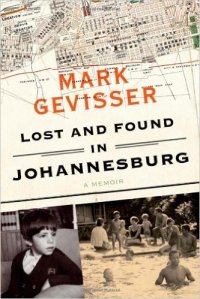
lost and found in johannesburgLost and Found in Johannesburg: a Memoir‘ by South African journalist and political writer Mark Gevisser is one of the most engrossing and exciting books I have read about my home town, Johannesburg.

It is a vivid memoir of growing up in Johannesburg as a white, Jewish, gay man during the very darkest days of apartheid.

The memoir begins with Gevisser’s remembrance of his childhood in Sandton, one of Johannesburg’s elite northern suburbs and his obsession with maps.

Sitting in his father’s Mercedes Benz, he would play a game called ‘dispatcher’ where he would randomly look up someone in the Johannesburg phone directory and then using the Holmden’s Street Map of Greater Johannesburg, the map book of the time,  navigate an imaginary courier to their address.

On one occasion, he tries to navigate to Alexandra, the impoverished, densely populated black township neighbouring Sandton and finds that using the Holmden “there was simply no way through”:

Even now, I can recall my frustration at trying to get my courier to his destination in Alexandra: there was no way of steering him from page 77 across into page 75. Sandton simply ended at its eastern boundary, the Sandspruit stream, with no indication of how one might cross it, or even that page 75 was just on the other side.

This illogical and deliberate attempt by the map makers to separate white Johannesburg from its enslaved black population becomes the starting point for Gevisser to explore the artificial boundaries, restrictions and cruelties created by apartheid – and also how they were broken down.

One of the great pleasures of reading Lost and Found in Johannesburg is Gevisser’s inclusion of dozens of fascinating photographs, some from family albums, but also images of a lesser known side of Johannesburg (for people like me anyway, who had such sheltered childhoods).

A photo that stands out strongly is that taken in the 1960s of the suburban backyard swimming pool of Bram Fisher, the Afrikaner lawyer who would represent Nelson Mandela at his Treason Trial.

In it, we see a group of kids, both black and white “splashing about the pool, as one does in the suburbs on a summer’s afternoon”. This was of course during a time when the races were strictly segregated and yet Fischer and other liberal types flagrantly flouted these rules. Gevisser writes:

Through this poignant idealism, [Bram Fischer] seemed to be trying to reconcile being a white pool-owning South African with the egalitarian ideology to which he had given his life.

Other images depict that familiar, yet never-quite-understood relationship between white people and their black domestic workers. Gevisser includes a photo of himself as a boy in the arms of a black lady who stares back serenely as white children play around her. In another, taken on his parent’s wedding day, he describes the black man in the photograph, the chauffeur who stands to attention, only his cap and uniform visible among the celebrations.

These pictures depict the everyday divisions between master and servant we accepted as children, but hardly thought to question.

Who were these black people who took care of us as children, drove us around town and cooked our meals? What were their lives like? In his memoir, Gevisser seeks answers.

Reading the book and studying the photographs, I remember well, the  pungent smells of meat and mieliepap and the exotic aromas of balms and lotions that came from the rooms of our own domestic workers across the yard when I would visit occasionaly.

It’s one of many vivid memories Gevisser’s memoir stirred up.

Indeed, I spent much of the book, enveloped in a warm, but painful feeling of deep nostalgia, a credit to the quality of Gevisser’s prose, which flows mostly effortlessly throughout the book mixing memoir with history and geography and storytelling with journalism.

braamfonteing cemetery

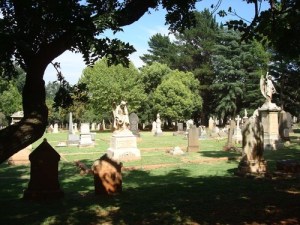
The Old Cemetery at Braamfontein

But, Gevisser also describes places I never knew existed like the eerie underground archives at the Johannesburg Library, where Gevisser writes about the old underground mining maps that crumble in his hands, or the Old Cemetery at Braamfontein, where he is “seduced by the voluptuous beauty” of its paved pathways, low stone walls and mossy tombstones reminiscent of famous cemeteries like Highgate in London or Pere Lachaise in Paris.

It came as shock to me when I realised the Old Cemetery was across the road from where I parked my car almost every day, whilst attending Wits University in the 1990s.

the wilds

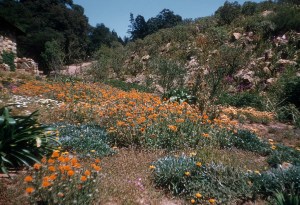
The Wilds, in the heart of Jo’burg

The other important place Gevisser explores (which I have never set foot in) is ‘The Wilds’ a 40 acre indigenous botanical gardens  wonderland plonked in the middle of the city that sadly became a no-go zone because of its reputation as the hideout of criminal gangs.

For Gevisser  it takes on a deeply personal and terrifying meaning, because it is from The Wilds that three men climb a fence on a summer’s evening in January 2012, and enter a fourth-floor apartment building where he is watching  television with his friends. Then a brutal, but all too familar attack unfolds at gunpoint.

He writes of the ordeal:

Something seemingly irrevocable changed that night in my relationship to Johannesburg, my home town, the place I lived for four decades, the place of this book.

It could easily have turned Gevisser, as such incidents have done to many other white and black South Africans who have been victims of its appalling crime rate, into a hater, and his memoir, a journey into bitterness.

But, it does not. In fact it does the opposite.

Gevisser’s journey to understand the elusive city of his birth – from its earliest foundations as a gold mining bonanza, through its decades of segregation, cruelty and political activism to its status as place of economic opportunity  – is a deeply compassionate one.

————————————————————-

For more on what’s interesting about Jo’burg, read my blog post: Why you should drop the fear and visit Johannesburg


99 Homes (and the devil): an interview with director Ramin Bahrani

still_241851Hollywood director Ramin Bahrani describes his acclaimed film, 99 Homes, about the post-GFC housing crisis and the millions of people forced out of their homes, as a ‘Faustian – deal with the devil’ – tale.

But it’s not Faustian in the sense that many movie-goers might interpret the central plot, that of evicted homeowner Dennis Nash (Andrew Garfield) who goes to work for the man who foreclosed his home, corrupt, gun-toting real estate broker Rick Carver (played by the enigmatic character actor Michael Shannon).

Rather, according to Bahrani, it’s the housing system itself which is Faustian, creating unscrupulous characters like Carver, who we see in the film manipulating government and banking rules at the expense of struggling home owners to make himself rich.

“[Carver] is not such a horrible person, he is just doing what he needs to do to survive,” Bahrani told me.

“The devil is the system. It is a corrupt system.”

Andrew Garfield and Michael Shannon playing opposing characters in 99 Homes.

The are of course parallels to Australia with its unscrupulous property spruikers and their get-rich-quick schemes, a housing and tax system that seemingly favours the cashed-up older generation of owners and investors at the expense of young buyers, and where tales of windowless apartments in high-rise towers and students living in tents or on bathroom floors abound.

According to Bahrani, this corruption extends beyond housing and into the wider financial and banking system, noting that both Australia (Malcolm Turnbull) and New Zealand  (John Key) have prime ministers who were former investment bankers.

“The banks were fined millions [in the wake of the financial crisis], but nobody went to jail. But if you stole a carton of orange juice, you would go to jail.

 still_241845.jpg

“The people who are responsible for bankrupting the world got away with it. Nothing has changed”.

To research the film, which opened in Australia this week (November 19), Bahrani spent many hours in foreclosure courts watching the corrupt system at work as families lost their homes in snap judgements that took less than a minute

“It’s not called the rocket docket for nothing,” he said.

One day in court he observed a Hispanic family that needed an interpreter. “The judge said he had no time for an interpreter and dismissed their case – they lost their home.”

But Bahrani says the film is not about picking sides.

Researching material for the film in 2012 and 2013, Bahrani witnessed both side of the brutal US foreclosure system: the middle-cass families living in motels and the school buses that would pick up their kids from these motels as part of their morning routes, but also the sheriffs and real estate brokers “terrified about who would be on the other side of the door, when they evicted them”.

He says he did not set out to deliver a sermon or pass judgement about the real estate industry or real estate brokers but instead wanted to explore both sides of home ownership – the home as a place of “safety, community and memory” or in the case of real estate agent Rick Carver just a commodity to be “bought and sold”.

For those in Australia fruitlessly or frustratingly pursuing the housing dream or, alternatively, enjoying the riches that housing investment can bring, the parallels in Bahrani’s movie are obvious.

This article first appeared on afr.com

How to be young and rich in Australia: be a man

How do you become young and filthy rich in Australia?

The short answer is: be a man.

Yes, be a tech whizz, a property tycoon, a retail visionary, a sports star, but most importantly, to steal a line from Canadian stand-up comedian Russell Peters, BE A MAN!

How do I know? The latest BRW Young Rich 2015, a compilation of the 100 richest Australians under 40, which came out in October, had just eight woman on it.

The all-male Top 10

2015-brw-young-rich1Source: BRW.com.au

Of those woman on the list, just four – singer Sia Furler, founder of financial counselling service My Budget, Tammy May, super model Miranda Kerr and golfing star Karrie Webb – have made their fortune entirely on their own.

The other women on the list have made their fortunes in partnerships with men: Erica Baxter through her marriage to billionaire James Packer, Erin Deering, through online bikini company Triangl founded with her husband Craig Ellis; Melanie Perkins, who set up online graphics software company Canva with Cliff Obrecht, and Michelle Strode, who co-founded technology company Invoice2go with her husband Chris.

So, making it on your own as a woman is even tougher. Having a bloke by your side helps.

I remarked about the lack of woman on the BRW list to a number of people and got pretty much the stock standard answer: woman don’t become ultra-wealthy because they are off having babies etc etc.

The truth is for all the talk in Australia about gender equality in the work place; not penalising women who want a career AND a family; lifting the proportion of women in senior position; and equal pay for men and women who do the same jobs – we still live in a very unequal business environment, where men earn the big dollars and women are expected to give it all up when they have children.

There are of course exceptions, the likes of former Westpac boss Gail Kelly, Mirvac CEO Susan Lloyd Hurwitz, and in government, deputy prime minister Julie Bishop.

But, mostly there remains the old-world misogynist view of women not rising too high in society, displayed most strikingly and distastefully in the 1423545120130attacks on Australia’s first female prime minister, Julia Gillard called a ‘bitch’, and  ‘witch’ by mostly middle-aged men in politics and the mainstream media. Julia Gillard was also judged by society – both men and women – for not having children, as if that was some kind of heinous crime, not merely a valid life choice for any woman.

This unequal belief system – that men should be the big earners, the stereotypical ‘providers’ – extends into all realms of Australian working life: I was flabbergasted to read recently that the basic contract for an Australian woman representing the national soccer team, the Matildas, is just $21,000 a year, two-thirds of the minimum wage.

This is a team, ranked 9th in the world, who beat Brazil at the World Cup this year and reached the knockout stages.

By contrast, regular members of the mens soccer team, the Socceroos, have each earn more than $200,000 so far this year, despite losing every game at the last World Cup and being ranked a lowly 65th in the world.

It’s does not surprise me at all that the Matildas have gone on strike, demanding fairer pay.

In the property industry, the sector I cover as a journalist, gender is a big, emotive issue.

Property has traditionally been a very blokey, boy’s club industry, though it’s true that efforts are being made to encourage more women into the industry, and also that there have been some notable successes in this endevour.

But still, the property industry remains dominated by outrageously wealthy men as can be seen by the number of young male property tycoons on the BRW Young Rich List  (I counted five) and the complete absence of any women property tycoons.

Supermodel Miranda Kerr

Supermodel Miranda Kerr

The other point about the type of women who make it onto the BRW Young Rich List needs to be made delicately.

In short, looks definitely matter.

This to me, only reinforces the “Crocodile Dundee” image of Australia as the land of “Bruces” and “Sheilas”, that was circulated around the world in the 1980s and later reinforced by cringeworthy iconic Australians like the late animal entertainer Steve Irwin famous for jumping on to the backs of wild animals in true Aussie macho style

While it is true that there is much that is progressive, modern fresh and exciting about Australia, it still retains a distinct air of male chauvinism and a strong underlying current of conservatism (gay marriage is another area of distinct inequality).

Real wealth and power in this country, remains in the hands of blokes, now, and, given the make-up of latest BRW Young Rich List with its tiny female representation, will remain in their hands in the future too.

My Orwellian odyssey: a descent into the fiction of George Orwell

George_Orwell_press_photoAs it happened, I was in the midst of reading “Burmese Days”, George Orwell’s very fine first novel about imperialism and prejudice set within a rural Burmese village during British rule, when the plans for “Operation Fortitude” were made public.

The press release, issued by Australian Border Force on the morning of Friday, August 28 detailed a sinister operation planned in Melbourne over the coming weekend when ABF officers would be patrolling the streets, scrutinizing everyone coming into the city centre and targeting “everything from anti-social behaviour to outstanding warrants”.

coming up for airMost ominously and invoking the dystopian world of Orwell’s 1984 with its constant surveillance and suspicion, the press release said that “ABF officers will be positioned at various locations around the CBD speaking with any individual we cross paths with.”

As the outrage at this trampling of individual rights (and suspicions of racial profiling) grew louder and louder, it seemed  everyone from Booker prize-winning novelist Richard Flanagan to protestors at hastily arranged gatherings were referencing Orwell or using the adjective ‘Orwellian’ to describe the planned paramilitary-style operation.

burmese daysGripped by it all, I finished reading Burmese Days and proceeded to re-read my tattered copy of Orwell’s Coming up for Air (1939) featuring my favourite Orwell anti-hero, the rotund, bald, bowler-hatted insurance salesman George Bowling who as the bomber planes fly overhead, casting shadows over London and bringing with them portents of the approaching descent into worldwide destruction and death, reminisces about his carefree youth and plans a return his countryside home town of Lower Binfield to seek out a legendary fishing spot.

keep the aspidstraNext up, I re-read Keep the Aspidistra Flying (1936) – also a tattered paperback on my bookshelf – about the idealistic London poet Gordon Comstock (brilliantly played by Richard E. Grant in the film version, A Merry War), who has forsaken a promising career as a copywriter in an advertising firm in order to escape the moneying world and all its artistic-destroying influences to write something that matters. We find Comstock virtually starving in his bleak bed sit in a men’s lodging house scrawling away at an epic poem he can’t seem to finish while bemoaning his poverty, which has ironically become an even greater destructive force to his writing than a well paid job as well as to his relationships and his sanity.

animal farmAfter that, I dived straight into Animal Farm (1945), Orwell’s political fairy tale about the failings of socialism set among the world of animals who overthrow their human masters only to become slaves under the control of the intelligent, cunning pigs who are “more equal than others”.

Finally, I ended my Orwellian odyssey with 1984 (written in 1949), Orwell’s dystopian masterpiece set in a futuristic London of enormous windowless government buildings, squalid tenements, always watching’ telescreens’ and posters of ‘Big Brother’, where timid revolutionary Winston Smith, an employee in the Ministry of Truth and his lover, Julie, battle the belligerent totalitarian state, its thought police, doublespeak ideology and hunger for eternal power.

1984_by_alcook-d4z39dhSo what was my Orwellian journey like?

Melancholic and depressing give the current state of the world.

As described in 1984 and Animal Farm, the loss of individual freedoms has occurred even in democratic countries like Australia, the USA and the UK, with their gag orders against speaking out against refugee abuse, surveillance and collection of meta-data and secret actions of spy agencies like the NSA and ASIO.

Imperialism and prejudice is alive and well

As in Burmese Days, which sets its modernistic central character,  35-year-old teak merchant John Flory against the bigotry within the walls of European Club, we find ourselves in an quasi-imperialist world where the richest, most powerful countries continue to oppress minority populations, invade sovereign countries at will and turn a blind eye to the consequences: thousands of displaced refugees.

“After all, natives were natives – interesting, no doubt, but finally only a ‘subject’ people, an inferior people, an inferior people with black faces” – from Burmese Days

Secondly, invigorating and wondrous. Orwell’s writing sparkles, glows and comes alive as you read it and follow the adventures and exploits of his characters. His manages to address weighty and universal themes by creating engaging characters, brilliantly plotted storylines and living, breathing places. He is a master craftsman, who true to his famous rules for writing knows that a few, carefully chosen words, expertly put together, can create vivid scenes that leaps out of the page:

In the deadly glare of the neon lights the pavements were densely crowded. Gordon threaded his way, a small shabby figure, with a pale face and unkempt hair – From Keep the Aspidistra Flying

Then there are his characters. I found myself happily inside the head of all of them, even the ones that are on the surface, unlovable like fat, unhappy George Bowling whom we find on the very first page of Coming Up for Air, locked in the bathroom of his home on a dreary London housing estate, plotting his escape from his wife and kids on a “beastly January morning”. After all, who doesn’t yearn – now and then – for a return to their youth, to a time when they were carefree and without adult responsibilities?

Similarly, I identified with the idealism of malnourished and unwashed poet Gordon Comstock in Keep the Aspidistra Flying, with his rallying against “money, money, always money” encapsulated in his distaste for the catchy slogans that hang from windswept, tattered advertising boards outside the secondhand bookshop he works in.

No doubt Gordon would find our advertising-saturated world with its sponsored content and brand placement even more nauseating as he would the greedy capitalism and worship of money that defines success today.

And then there is John Flory, the lonely, lost colonialist searching for companionship in Burmese Days who sees skin colour as a mystery to be explored and celebrated, but set against a world of cunning corruption and prejudice. One of the most tragic of Orwell’s characters, he is also one of his most loveable and most admirable.

Orwellian, as we understand it.

And then there is the sheer devastating power of 1984 and Animal Farm, whose much-discussed and debated themes of tyranny, oppression and the crushing of individualism find their reflection in the darker  actions of governments with their ‘Operation Fortitudes’, metadata laws and secrecy and in mega-corporations like Facebook and Google, now the most powerful players in the world of news, information and personal data.

Indeed, it is no surprise, that as I finished reading these five novels, I read also a review of anew theatrical version of 1984 running in Melbourne and the seemingly never ending articles about Orwell and the Orwellian – though I confess that Coming Up for Air and Keep the Aspidistra Flying are my two favourites.

Read them all!

play about 1984

How to fix Woolworths: what the overpaid executives won’t find in their spreadsheets

wooliesAustralia’s biggest retailer, supermarket group Woolworths, is floundering.

It’s share price and market value is down almost 30 per cent since April last year, sales are stagnating and profits are forecast to fall 35 per cent over the six months to December.

The Woolworths business is in a mess, while its competitors Coles and Aldi continue to perform strongly and steal market share.

No doubt, Woolworths is spending millions on expensive reviews and turning to its overpaid executives for answers. But I think – judging by their latest announcement – they have probably missed the point entirely.

Scouring the seven page ASX release, I found plenty of the usual management jargon like “customer metrics” and “change programs” but not a single mention of the word “quality”.

As a regular Woolworths shopper, this says a lot, but is hardly surprising.

We buy most of our groceries at Woolworths, not out of any sense of loyalty or because we like shopping there, but simply because its convenient – there is a grocery store literally up the road from our house.

When we have the time, we prefer shopping at a nearby supermarket extravaganza called La Manna, with its funky cafe, ice-cream and dessert bars and amazing selection of fresh and exotic produce.

Indeed, the demise of Woolworths is a perfect example of having too much market power and becoming utterley complacent.

  1. The real problem is quality.

My biggest gripe is with the many crappy products sold in my local Woolworths. Often they are dressed up as bargains, but what they really are, are over-priced duds.

Many people may have laughed at the story about the Woolworths scissors that needed a pair of scissors to open the packet but  that’s just the top of the iceberg I reckon.

There were a lot of mandarin pips. A lot!

There were a lot of mandarin pips. A lot!

From the packet of mandarins I bought recently infested with so many pips they were inedible to the book-reading light I returned three times because it didn’t work, my general feeling is that finding savings, rather than providing quality products is the overriding motto at Woolies.

Not surprising “value perception” rather than “real quality” is considered a key customer metric in the latest bit of corporate spin.

  1. Stop confusing customers

labels

I have been caught out on many occasions thinking I have bought a discounted item only to pay more at the till. This is because price labels often don’t relate to the items above them. I am certain this is a deliberate strategy. Another one is promoting items with bright labels, when there is no discount. This is highly annoying. And cutting the price by 10 or 20 cents on an item is just an insult to shoppers.

3. Keep stores properly stocked

Perhaps I am being pedantic, but I am always a bit gob smacked when I stroll up and down the aisles only to find the store has run out of such staples as skim milk and brown rice. How is this possible for a company with access to the best supply chain technology and automated ordering software in the world?

4. Make shopping a bit more interesting.

If only Woolies were a bit more like Aldi...

If only Woolies were a bit more like Aldi…

Woolworths could learn a thing or two from German supermarket giant Aldi, which mixes up the standard grocery items with strange and exotic products that change from week to week. You never know what you will find in an Aldi, but in Woolworths its the same boring stuff, week in and week out.

5. The new rewards program sucks

Woolworths new rewards program is a badly thought out idea and feels like a bit of a fraud. The newly introduced scheme does not pay out loyalty discounts on items immediately as it did in the past. Instead you accumulate them on your rewards card until they reach a certain value.

So instead of immediately getting a bit of reduction in your bill, you have to make multiple visits to the store to get anything back. Whichever marketing genius came up with this idea, should be sacked or at least forced to eat some of those pip-infested mandarins.

So, those are just a couple of ideas for whoever replaces Grant O’Brien as Woolworths CEO.

And here’s another tip for those overpaid Woolies executives. Forget the high-powered meetings, power point presentations and slick marketing campaigns. Get out of your wood-panelled boardrooms and take a stroll instead down some of the aisles of your supermarkets to get the real picture.

And stop and have a word with some of your shoppers, you might learn a thing or two.

Note: I have made changes to this story. The original version made comments about my local Woolworths supermarket staff. This was wrong and I apologise. The problem is with its management.

How to survive a horror movie marathon this Halloween

Halloween-Pumpkin-BG-1

“There are certain rules that one must abide by in order to successfully survive a horror movie” – so says Randy, the geeky virgin played by Jamie Kennedy in the original Scream movie.

But can you survive a Drew Barrymore movie?

Randy’s rules are a) you never have sex b) you never drink or do drugs and c) you never say “I’ll be right back” – because you won’t!

Sound advice, although doesn’t Randy end up dead too at some point? Perhaps its in one of the rubbishy sequels. I can’t remember.

Never mind. Halloween is coming up soon (October 31) which means it’s the perfect time to re-acquaint myself with Scream and other horror classics, both good and bad.

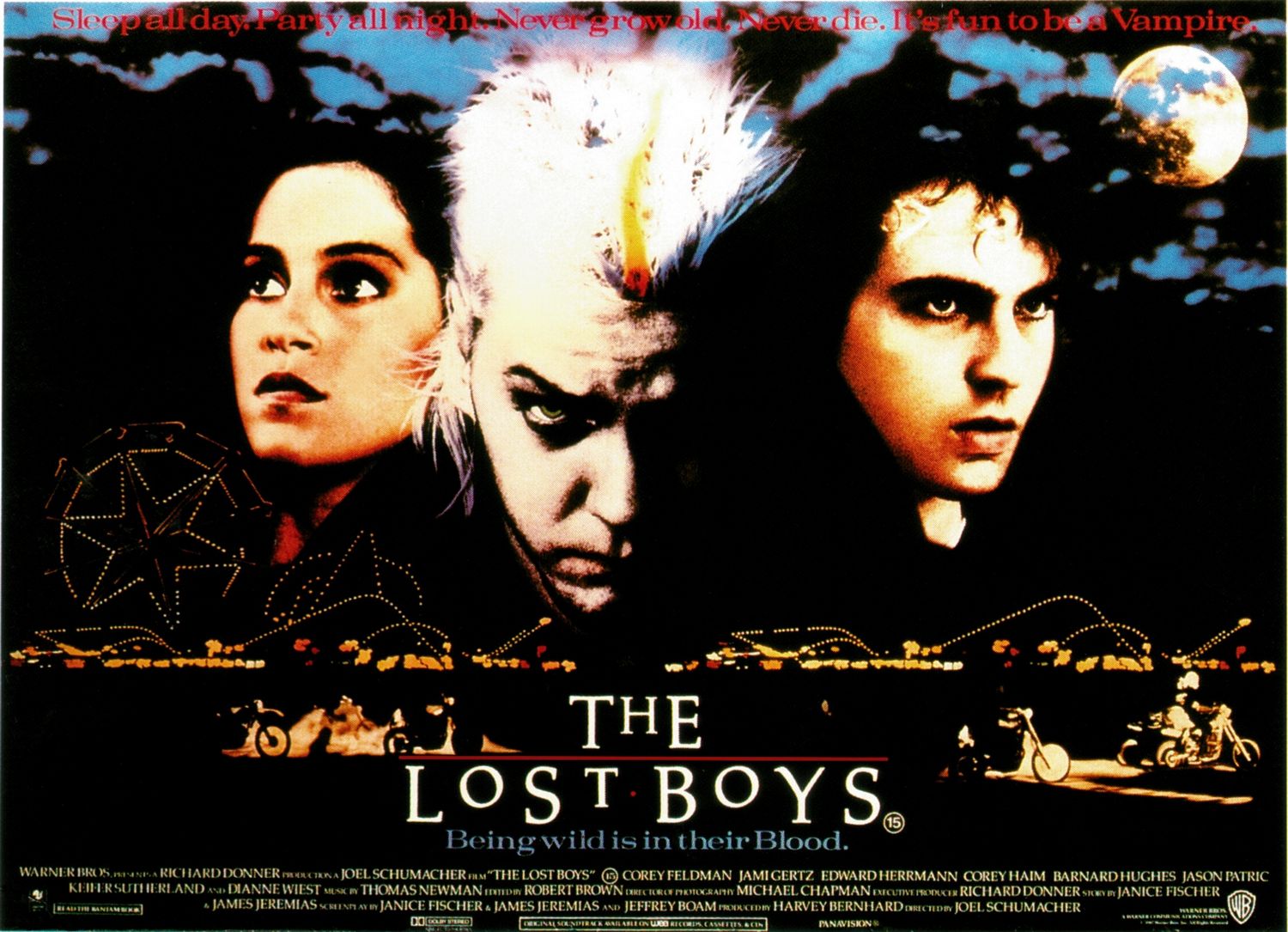
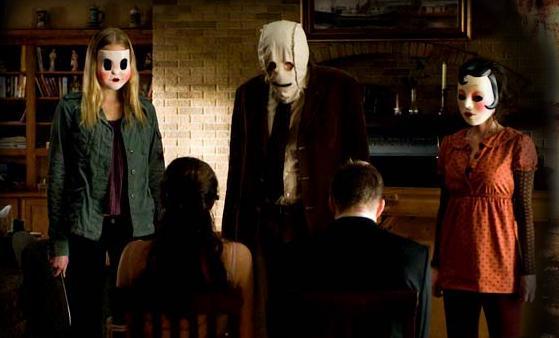
lost_boys_ver2_xlgI should warn you. I am a terrible horror movie watcher, always in a state of perpetual terror, heart racing. Once in the cinema, when I was a teenager, I threw my popcorn straight up in the air when a vampire awoke in The Lost Boys (Kiefer Sutherland with fangs) and did the same, unfortunately with a glass of red wine this time (on someone else’s couch) when one of the masked intruders in the very creepy (and underrated) The Strangers made a sudden appearance.

2008-The-Strangers-Screenshot-1

I have also been known to bury my head behind a pillow, hide behind the couch, hide behind the curtains, block my ears and close my eyes – much to the amusement, but also annoyance of my fellow film watchers.

But if you had to ask me what I would need to survive a movie marathon of my favourite horror movies, these are things I’d pack in my man crate*:

gloves

Extra thick gloves so I don’t get touched up by evil psychiatrist Dr Hannibal Lector, and night vision goggles for later so I can shoot transvestite serial killer Buffalo bill squarely between the eyeballs before he gets me in the dark basement of his creepy old house (For The Silence of the Lambs).

earthmate-pn-40-handheld-gps-device
A good local map or perhaps a decent GPS device so I don’t get lost while inexplicably taking a walk on a moonlit night in the barren Yorkshire Moors, plus a little note-book to write down handy hints like “Stay on the road. Keep clear of the moors” and “Beware the moon, lads”. Also, a gun loaded with silver bullets in case a deranged hairy monster leaps out at me (For An American Werewolf in London).

I’d need a beach bag, with towel, but no bathing suit so I would have a damn good excuse for not getting into the water and a scary book about sharks to convince me I really don’t need to go in for a swim in my undies. (For Jaws, the original, where the shark actually looked real).

For later in the evening, three books, “A guide to old Manhattan apartment and their ghoulish histories“, “How to know if your partner is a Satanist” (pocket size) and “New York’s most reputable obstetricians: the Definitive List“. (For Rosemary’s Baby)

61QuGlo9kZL._SY355_

A few more odds and ends: Extra strong coffee so I don’t fall asleep while having a bath (A Nightmare on Elm Street) and my anti-psychotic medication to keep the subway demons at bay (Jacob’s Ladder)

And of course, a decent recipe for pea soup! (The Exorcist).

GreenGarlicSoup

*I was invited to write this post for mancrates.com, an American gift company that makes up collections of nostalgic gifts and then ships them out in actual wooden crates, complete with an Indiana Jones, Raiders of the Lost Ark-style crowbar, to open them.

I haven’t been paid to write it, nor did I get a free man crate (I did ask) but I loved the concept when I checked out their website. Pity they don’t ship to Australia.

I especially liked the crate filled with exotic meats crate (including biltong), the coffee crate with genuine NATO ammo case and one I am sure would be sought after by many blokes, the retro gamer man crate.

There is no place in Judaism for intolerance

As far as being Jewish goes, I am no great role model: I don’t keep  kosher, I don’t observe the Sabbath, I don’t fast on Yom Kippur and I have married outside my religion.

But I consider myself Jewish in my upbringing, cultural connections, appreciation of Jewish food, jokes and more deeply a sense simply of always, no matter what, being a Jew.

Then of course there is just being a decent human being: fair, just, kind, compassionate, empathetic. These too I consider very Jewish values (and ones that I try to uphold), though they are also the values of good and decent Christians, Muslims, Buddhists, Hindus and atheists.

For me they have always been more important than going to synagogue, observing the high holy days, not mixing milk and meat or wearing a kippah on my head.

Which is why I have always believed so strongly that intolerance has no place in Judaism or Jewish life and why I reacted so strongly when I read a letter, published  recently in the Australian Financial Review, written by a fellow Jew, Michael Burd of Toorak, Melbourne.

Written soon after the Australian government had agreed to take in an additional 12,000 Syrian refugees and amidst the biggest refugee crisis since the Second World War, Mr Burd’s contribution to the debate was not to naturally as a Jew, identify with the persecuted, tortured, and frightened people fleeing genocide, but argue against compassion and call for the protection of the Jewish community in Australia – one of the most privileged minorities in one of the world’s most prosperous countries.

In his letter, Mr Burd wrote of the threats to Jewish schools from Muslim extremists (never mind that the greatest threat to Jewish kids comes from the paedophiles that work in these schools) and other Jewish institutions, ending his indignant letter by saying:

With 12,000 Syrian asylum seekers  coming to Australia our government is playing Russian roulette with Jewish community safety.

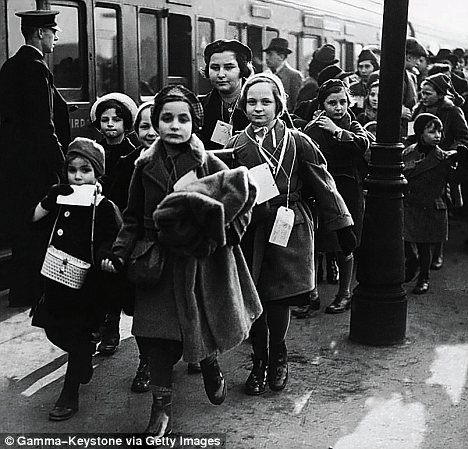
Jewish refugee children arriving in London from Nazi Germany in 1939

Jewish refugee children arriving in London from Nazi Germany in 1939

It appalls me that an educated Jewish man, who probably lost relatives in Europe during the Holocaust, and would well know the long history of Jewish flight from persecution to set up new lives as refugees in countries like South Africa and Australia, should hold such intolerant beliefs and paint modern day refugees in such a negative light, particularly given current events in Europe, and around the world.

But it does not surprise me at all.

So many of the memories of my very Jewish upbringing (I had a Bar Mitzvah, attended a Jewish Day School, went to synagogue on the Sabbath) in South Africa are darkened by intolerance.

Here’s a phrase I remember well: ” Shiksas are good for sleeping with, just so long as you don’t marry them.”

A Shiksa, for those who don’t know is a non-Jewish woman.  Another word used constantly for non-Jew was ‘Yok’.

Then there were the constant references to the ‘schvartze‘ – a derogatory Yiddish word referring to a black person.

When I was growing up in South Africa, the schvartze was the black domestic worker toiling silently in the kitchen or the garden ‘boy’ (in fact a grown man) raking up the leaves from the swimming pool.

Words like shiksa and schvartze was said all the time by the very people who should have been my role models: my peers, older relatives and even those observant, ultra-religous Jews with their disapproving judgements of non-religous Jewish life.

Of course there have been many heroic Jews around the world who have fought for human rights and justice, who would be equally appalled at Mr Burd’s letter.

In South Africa, people like anti-apartheid heros Joe Slovo and Albie Sachs  and war crimes prosecutor Richard Goldstone spring to mind. Indeed, there is my own cousin Henry Brown,  who represented Nelson Mandela as a young lawyer in the 1960s.

But it is the intolerance within the Jewish community that has seen me drift further and further away from my faith.

Instead, i see my Jewishness, purely through cultural references and reminscences: the comedy and witticism of Woody Allen, Jerry Seinfeld and Larry David’s Curb Your Enthusiasm, the mournful hymns we use to sing in the beautiful old Germiston Synagogue on Saturday mornings, the lavish meals of chopped liver, marrow bones on challah, mock crayfish, matzoh ball soup, roast meats, potato kugel and parve chocolate mousse served for dessert.

Sad to report, another rich relative in Spain has died, leaving me a small fortune

IMG_0318Mr Thomas Schlesinger, a distant relative of mine and his poor wife died in 2010 on the Barcelona Motorway, writes his personal attorney, the barrister Alejandro Gomez (Esq) of Lanx & Associates, (located at 42 Arc del Teatra, Barcelona) in a letter that arrived by post last week, dated September 14.

Before his death, Mr Gomez writes, Thomas deposited $8.5m in the Spanish Finance Bank, but tragically did not make a will.

All efforts to trace Thomas’s relatives have been ‘abortive and a mystery”.

Rather than risk having the funds confiscated, “as according to Spanish Inheritance Law on article 101-102 amendment”, Mr Gomez has kindly offered to present me (L Schlesinger) as the next of kin of Thomas Schlesinger, who I am told was a “formal contractor/engineer” at mining giant BHP Billiton” to share the $8.5m with him, minus 10 per cent to go to “some charity organisations”.

Because of his personalities (of which I assume there are multiple) Barrister Gomez writes and says that I should keep the matter “secrete and confidentiality as our primary working conditions” but that I should email him at his private address, or phone or fax as soon as possible “to ensure the success of the project”.

As I pondered the words of Mr Gomez, I reflected on a double tragedy: almost three years ago I received another letter from Barrister Mateo Pinto from Madrid to inform me that another distant relative of mine ‘Albert Schlesinger’, an oil magnate who lived in Spain for 28 years died with his immediate family in an “auto car accident on the Damascus Highway in Syria in December 2004”.

SCAN0009

The 2012 letter informing me of Albert Schlesinger’s passing

Sadly, he too had not left a will (it must run in the Schlesinger family on our Spanish side: car accidents and not writing wills) leaving US$9.6 million unclaimed in a vault at the Madrid Central office.

So much death, yet so much unclaimed money…

I have now received two letters from Spain at two different home addresses (I moved house in 2013).

The only thing genuine thing about them are of course the charming Spanish stamps and postmarks on the envelopes.

The latest letter has a lovely one euro stamp depicting Felipe the Sixth, the current Spanish monarch, in a red-brown tint.

The first letter had two stamps: a 35 cent stamp depicting the back seat of a car with a teddy bear and a 50 cent stamp of a red ship of some kind.

SCAN0010
So the scammers have spent 1.85 euros (A$2.92) of their own money, trying to get me to give them thousands of mine.

I haven’t given them a penny and it seems hard to believe that anyone else would fall for this scam. But they do, and in droves.

IMG_0313

The September 2015 letter

According to the Australian government’s Scamwatch website, losses for the first seven months of the year from ‘inheritance scams’ – as these are known – total $4.43m from 2500 reported cases, making up roughly 10 per cent of the $45m lost to scams of one sort or another.

“Scammers are becoming increasingly sophisticated in their attempts to get your money or personal details. Scams succeed because they look like the real thing and catch you off guard when you’re not expecting it,” writes Delia Rickard from the Australian Consumer and Competition Commission

But surely only greed, naievety or stupidity – perhaps a combination of all three – can be driving people to divulge their personal information and lose tens of thousands of dollars to people like “Alejandro Gomez” (For an explanation of how this scam works, click here.)

While the posted letter, stamps and postmark adds an air of authenticity and the letterhead has an actual address (Arc del Teatre in Barcelona does exist) there is no firm called Lanx & Associates.

BHP Billiton, is of course a real company, but never employed a Thomas Schlesinger, who never deposited money into the Spanish Finance Bank, because no such bank exists.

As for Alejandro Gomez, no such barrister is currently practicing in Barcelona according to Google, though there is an Argentinan football player and a Columbian tennis player with the same name, so maybe the letter writer is a sports fan.

And type the name of his “law firm” Lanx & Associates into Google and you come up with consumer forums (like this one) packed with people telling identical stories about letters from lawyers in Spain.

Greetings from Germany. My new best friend Barrister Mark Torres Esq. (Spanish Lawyer and Doctor in Law) located at Calle Velázquez 53, 28001 Madrid Tel.: 00-34-692-838-947 barristermark.torres@lawyer.com, wants to share 7.5 million euros with me, left by a person with the same surname who died in a car crash in 2004.
Anyone want to take up the offer?
I am glad I wasn’t in Spain in 2004. It seems to have been a catastrophic year for accidents!

In praise of my illustrious alma mater, the University of the Witwatersrand

Most people can’t even pronounce it and few outside of South Africa would have heard of “The University of the Witwatersand” – until recently.

Wits University's east campus with the imposing Great Hall at the centre

The imposing Great Hall at the heart of Wits University

‘Witwatersrand’, an Afrikaans word pronounced gutterally ‘vit-varters-rand’, and meaning “ridge of white waters” (referring to the ridge of ancient white rock running east to west across Johannesburg) appeared in every major news outlet around the world this month when archeologists and paleontologists from the University of the Witwatersrand  revealed that in caves near the Cradle of Mankind world heritage site, outside Johannesburg they had unearthed one of the most significant fossil finds of all time: the remains of a new human-like species. since named Homo Naledi.

Fossil remains of Homo Naledi

Fossil remains of Homo Naledi

Reading all about the Homo Naledi discovery brought back so many vivid memories of my six years spent at Wits University in the 1990s, where I mostly traipsed around its lively, liberal arts East Campus in Braamfontein from lecture to lecture. It’s the oldest part of the university, dominated by the imposing Greek-columned Great Hall with pretty gardens, sports fields and a mix of old and modern architecture.

It was in the Great Hall that I graduated in 1997 with a Bachelor of Arts Degree and in 1999, with a post-graduate business management diploma. Before that, I tried architecture for a year and building science for another, before finally  finding my feet in an English and Psychology degree with a bit of Film and Drama and Economics thrown in, much to the relief of my exasperated parents.

Taking-a-break-on-the-lawns-Wits-University

The lawns on East Campus

While Wits may not have an ounce of the global clout or fame of legendary universities like Harvard, Stanford, Oxford or  Cambridge, in South Africa, its reputation is immense.

It occupies a special place in the country’s psyche, firstly as a centre of learning and research and secondly, as a hotbed of left-wing political activism that helped shake off the shackles of apartheid.

Since its founding in 1922 (originally it was a mining school dating back to 1905), Wits has produced a veritable who’s who of the country’s best writers, lawyers, thinkers, architects, doctors, business leaders and political players.

Graduates include three Nobel prize winners, among them anti-apartheid scribe Nadine Gordimer, who won for Literature in 1991, the lawyer George Bizos who defended Mandela at the Rivonia Trial, Oscar winner, Gavin Hood, who directed the movie Tsotsi, musicians Manfred Mann and Johnny Clegg and political satirist Pieter-Dirk Uys (South Africa’s equivalent of Dame Edna). Former Westpac boss Gail Kelly and Glencore mining boss Ivan Glasenberg are also Wits graduates.

Among my many memories of Wits, is walking into a library one late summer afternoon and noticing a glamorous-looking black lady huddled over her books, surrounded by a posse of body guards. It was Winnie Mandela, then still married to Nelson Mandela, and who was – I believe – enrolled in political science degree. It would only have been a year or two after Winnie and her ‘Mandela Football Club’ thugs had been implicated in the brutal slaying of Stompie Moeketsi, a 14-year-old boy, accused of being a police informer.

Speaking of the police, they were an unwelcome presence on campus from time to time when various left-wing student unions would protest about things like fee hikes and threats to expel students with unpaid and overdue fees.

Not everyone on campus supported the protests: I remember that some students took it upon themselves to print and sell t-shirts with “The Police: Their Greatest Hits” printed on the front, a parody of the rock band’s very popular ‘Best Of’ album  except with a policeman bashing a students head in with a truncheon. On the back, instead of concert dates and venues, was a list of police clashes on campus.

More pleasing are my memories of discussions with novelist and short story writer David Medalie, whose passionate lectures inspired my many re-reading of E.M. Forster’s brilliant novel, A Passage to India. Internationally acclaimed artist William Kentridge was a guest lecturer in my Film and Drama classes in the basement of Senate House, where he showed some of his incredible hand sketched short films, including one I recall vividly for its pathos and utter sadness, Felix in Exile.

It was in those Film and Drama classes that I was also introduced to classic Italian and French movies like the Bicycle Thieves and The 400 Blows, and where we discussed Pulp Fiction, then just released.

Also, I recall vividly going to a university production, where the female drama students from my Film and Drama class disrobed and pranced around the stage in the nude. It was a very pleasant shock.

In my psychology classes I discovered Freud and Jung for the first time and learnt about Maslow’s hieracy of needs. In English lectures I immersed myself in the writings of Margaret Atwood, Thomas Pynchon, Charles Dickens, the Bronte sisters, the poems of Keats, Wordsworth and EE Cummings and the plays of Athol Fugard, Arthur Miller and Eugene O’Neill.

In the canteen, between lectures, I got fat on sugary Chelsea buns and pap and wors, drowned in gravy. Attempts at exercise at the  university’s squash courts did not help much.

There were of course friendships struck in lecture halls and mostly disastrous attempts at romance. For a brief time I wrote heavily parodied (by my friends) film reviews and bits and pieces for the student newspaper and recall enrolling in the photography club for a while.

I wrote my essays out by hand at first before we finally got a computer at home. It was at Wits that I used email for the first time.

I also remember the archeology building, where the Homo Naledi fossils are presumably now stored and catalogued.  It was and is still called the Bernard Price Institute or BPI for short.

I remember its windows lined with jars and specimens and inside, a big airy foyer filled with the strange and interesting exhibits.

A bit like my 41-year-old self: a strange and somewhat interesting ‘exhibit’ and product of that same institution, the University of the Witwatersrand.

Postcard from Australia: Parks, recreation and racism

Major-parks-Hyde-ParkFor me, there is no greater symbol of Australian tolerance and acceptance of multiculturalism than park life.

Not the song by Blur, but what goes in a park in Sydney or Melbourne (or Brisbane or Perth I am sure) on a Saturday or Sunday afternoon.

If you don’t spend much time in parks, I urge you to visit now that spring is in the air and the days are warming up and the skies are a deeper shade of blue.

Here you’ll find people of all colours, creeds and sexual and socio-economic persuasion eating, playing, laughing, drinking and cooking side-by-side in seemingly perfect harmony.

You’ll see Asian families with their massive plastic Tupperware containers of marinated chicken wings and rice eating under gazebos, traditional Muslim families sitting on rugs having picnics and pasty white folk riding their bikes, throwing the frisbee, walking dogs or just enjoying a good book on the lawn. The children’s playground will be a similar multi-coloured, multi denominational kaleidoscope filled with laughing, screaming happy kids having fun without a bother in the world.

I see scenes like this every time we go to the park, without fail. It’s positive reinforcement that Australians are decent at heart, kind, tolerant and accepting, fitting in with the global stereotype: the happy-go-lucky, easy-going laughable larrikin Aussie.

Parks are where I find myself, someone who does not usually engage with strangers, striking up conversations with parents of all backgrounds, while my daughter swings or hurtles down slides. Last week it was a guy, Rudy from Santiago, Chile, who has lived in a Australia for more than a decade, is an Australian citizen, making the move here for a better life. A couple of weeks ago it was a Greek grandfather “pappou” as his grandkids called him, with whom I discussed the economic collapse in the country of his birth.

It’s hard to correlate this multicultural idyll with some of the racist vitriol that is so very present in so many other aspects of Australian life and which reinforces another widely held stereotype, that Australians are racist bastards who call Italians “wogs”, Aborigines “Abos” and who want to send Muslims “back to where they came from”.

But yet, we live in such a dichotomy, one that is particularly pronounced under the most conservative government in the country’s modern history.

Last weekend’s Border Force crackdown Melbourne where there were plans for the new militarised goon squad in their sinister Stasi-like black uniforms to target suspected visa dodgers before a public protest led to its hasty cancellation only rammed home the message of racial vilification because after all, as a colleague of mine highlighted, they were unlikely to ask a pasty white guy like me (a permanent resident, but a foreigner none the less) for proof of my residency.

Adam-Goodes

Adam Goodes being booed

Add to this the thousands of mainly Muslim asylum seekers, deemed “illegal” by the government, locked up, abused and forgotten in offshore detention centres on Manus Island and Nauru, the many Reclaim Australia and even more sinister United Patriotic Front rallies – skinheads disguised as “concerned citizens” and the recent targeted booing of aboriginal AFL player Adam Goodes and its hard not to stereotype Australia as a hotbed of white-trash yobbos parading in those blue Australian flag singlets on Australia Day.

Most recently, a gang of racists disguised as concerned citizens protested at a property auction, because of the prevalence of Asian buyers in the overheated real estate market (even though research shows its local cashed up mum and dad investors that are driving up prices)

As someone who lived in apartheid-era South Africa, I am acutely aware of racism in its many forms, overt and subtle, as a Jew, I have experienced the occasional anti-semitic episode.

But it seems to be as though racism is too easily brushed under the carpet here. Racist remarks by well-known public figures like Dawn Fraser, Eddie Maguire, Darren Lehman and others are quickly forgotten after the most facile of apologies. There are no repercussions for the right-wing columnists like Andrew Bolt who regularly degrade minorities, while the government through its stoking of the paranoia of fear about Muslim extremists (when the greatest dangers appear to be domestic in nature), is doing nothing, but helping prejudice, bigotry and intolerance fester.

The remedy of course, is to forget all about this and take off to the park on a sunny spring day, breath in the air, feed the ducks and enjoy the multi-cultural ambience. Perhaps even strike up a conversation with a Muslim father playing with his kids, an African women walking her poodle or a tanned Spaniard practicing his English.

Think of it as anti-racism therapy 101. It’s good for the soul. It may also renew your faith in Australia.