 I had a dream the other night about my close friend Darren Serebro, who passed away on July 27, 1997 from leukemia. We were both 23.
I was working as a camp counselor in Mid-west America near Milwaukee when he died in a Johannesburg hospital after an incredibly brave two year battle with the horrendous disease. At the time, he was awaiting a bone marrow transplant that might have saved his life.
Incredibly, just over a week before he died, on July 19, I received a long, letter from Darren via fax. Hand written in his neat, compact style, it ran to eight beautiful pages.
I still have the letter. It has survived numerous overseas trips and relocations to London, Sydney, Brisbane and now Melbourne, and miraculously, a water spillage, that turned the pages brown. (I have since scanned it and saved a digital copy.)
I thought, after all these years, I might share some of what Darren wrote and pay tribute to a lionhearted friend whom I have never forgotten.
From the confines of his isolation ward, because his cancer was no longer in remission, Darren began by apologising for the delay in writing back to me:
Dear La
I do apologise for not writing sooner. I am aware that this is an extremely cliched expression with which to start a piece of correspondence and can comprehend that while time is pretty much the same for us, you life has been altered radically for the moment and more regular correspondence from S.A. would be re-assuring.
Of course this was the kind of man Darren was. Even gravely ill, he could put himself in someone else’s shoes. (Studying law at the time, he would have made a brilliant lawyer in the Atticus Finch mold).
As for my life being “altered radically” it was nothing in comparison to the challenges he had faced everyday since learning of his cruel diagnosis, about two years prior.
Darren was softly-spoken (except after a few glasses of good whiskey), but also someone who laughed easily. He was extremely polite but equally capable of being cheeky, hilarious and crude.
He was quite brilliant, a straight A student. I remember he had an amazing ability to absorb and retain information , was intensely curious and interested in other people and places, loved travelling and eating out at good restaurants and was generous to the point of always putting others’ needs before himself. He was a true “Mensch“.
In the first few pages of the letter, Darren describes his current medical situation, the two treatment options available to him and his decision to undergo a bone marrow transplant.
The other option, he writes, of receiving small doses of chemotherapy would “inevitably result in my death within approximately two years”.
His candidness about his own mortality is painful to read now.
I try to picture him back then, in his isolation ward, no doubt feeling awful and yet writing in a concentrated manner. Perhaps from time to time he looks out the window, at the leafy northern suburbs of Jo’burg or pauses to think about how best to describe things to me.
Darren had a brilliant mind and intellect. This he put to full use to explain complex medical terms and procedures in relation to his illness he had sadly become an expert on. He goes into great detail explaining the procedure for undergoing a bone marrow transplant, enumerating the risks like ‘Graft versus Host’ disease and the treatments that would follow. He ends this part of the letter by saying:
Hopefully, a realistic and hopeful outlook on my part, combined with God’s will, will see me survive and will carry me through this trying time, into a long, healthy, happy and successful future.
The rest of the letter is full of wit, charm and lashings of wicked humour as he describes the ‘goings on’ among the Jo’burg scene and his limited interactions with hospital visitors.
A hilarious part of the letter is when Darren dutifully lists all the experiences, he believed I was going through, thousands of miles away at Summer Camp in Wisconsin.
These he believed included meeting some international students of similar age, some of of whom are “extremely attractive”. He adds, in brackets a succinct description: “6 foot tall, 34 inch bust, great legs, pretty face”.
He also reminds me:
“You have seen more of the state of Wisconsin than any Jewish Jo’burger knew exists. The average kugel or bagel tour through the States never comprehended ‘such far off places’
(For those not of Joburg Jewish descent, a ‘kugel’ refers to a Jewish princess, while a ‘bagel’ is the male equivalent.)
Later, he talks about how some of our friends are making a long weekend of the following weekend and going to the Game Reserve. Some of the guys have girlfriends, other not. Darren writes:
Paul says he has told Craig to dress up in drag because neither of them is going steady with a girl at the moment. HA HA. Join the club!
These jokes take me back to the numerous cups of coffee we – Darren, myself and our third musketeer, Jason – would share at ‘Carlos’, the Italian cafe on Grant Avenue, Norwood (also the preferred place for first dates) where we would talk about our lack of girlfriends, the latest arty movie we had seen in Rosebank, discuss politics, art and music interspersed with lashing of local Jo’burg gossip, personal slights and other social faux pas.
Some of the humour in the letter is decidedly black, but who could blame Darren, given his situation.
Talking about a girl he liked and who had visited him a number of times he remarks that wearing a mask is “not conducive to long, wet kisses. HA! HA!”.
Also, he remarks after not hearing from her for a few days: “She knows where to find me.Unfortunately, I have more critical life issues to deal with at the moment.”
I had no idea this letter would be the last I would here from him – or maybe being so far away I pushed the idea to the furthest corner of my mind. It was certainly difficult to comprehend Darren’s passing, thousands of miles a way among people who did not know him.
Many months later, when I returned to South Africa and visited Darren’s family, it came as a profound shock that he did not come down the stairs to greet me.
The saddest part of his letter, is that I missed his last birthday on May 25th by a single day. I wish I had been there. Darren writes:
About 30 people came over for coffee – it was the day after your left. (Thank you for the present by the way).
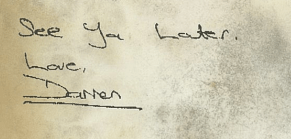
He ends the letter:
Rest in peace my friend. You remind me never to take life for granted and to actually count my blessings, of which there have been many.
I only wish you had had that “long, healthy, happy and successful future” you hoped for and deserved.

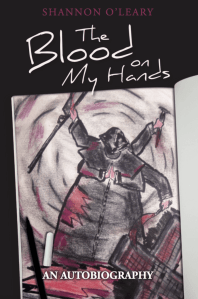 The Blood on My Hands is a self-published account of how Shannon O’Leary survived a horrific childhood on a rural holding in
 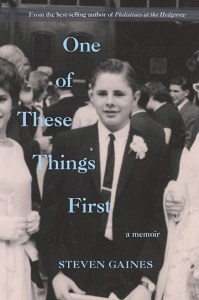 My introduction to the New York writer and journalist
 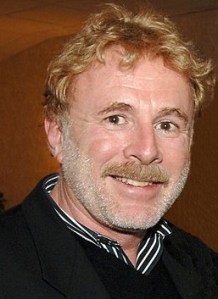 After finishing the book, I had a peak around Gaines personal website. He is a prolific writer, the
 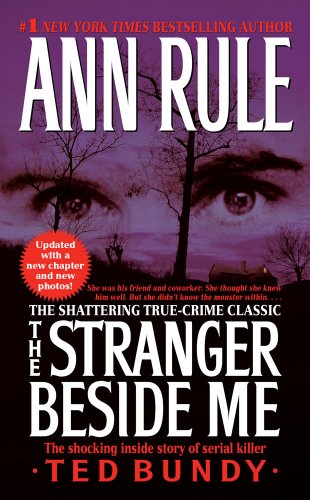 Among the best books ever written about true crime and serial murder must surely be Ann Rule’s The Stranger Beside Me, about the
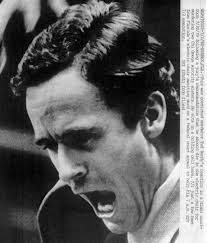
 An unremarkable thing occurred on the train last week. A young Asian lady nearly fainted in the crowded, airless rush hour carriage.
 The front cover of my edition of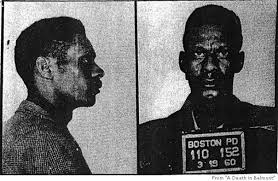

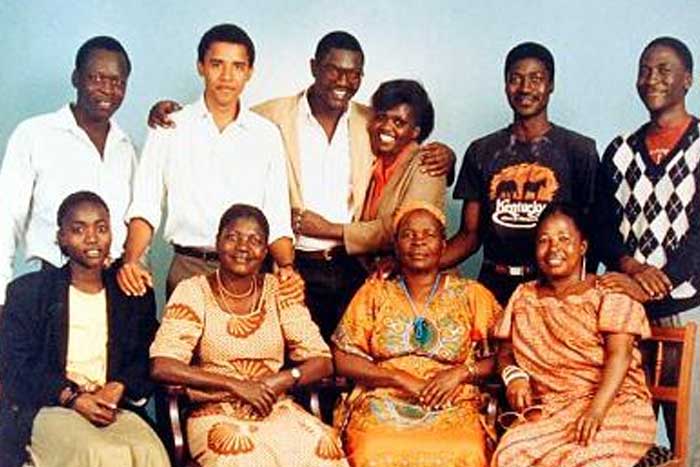
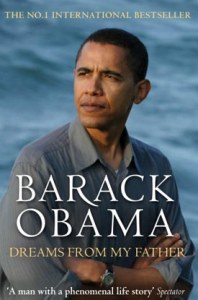 Even if Barack Obama had not gone on to become the first African-American president of the United States, he would have lived a remarkable life.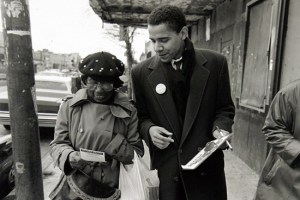
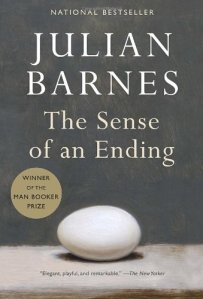 Disappearing into Julian Barnes’s 2011 Booker prize-winning novel,
  Freshlyworded