
The Devil visits Moscow: reading Bulgakov’s The Master and Margarita

master-and-margaritaOn the lookout for something bold and exciting to read, I browsed through my well-thumbed copy of 1001 Books You Must Read Before You Die and came across The Master and Margarita by the Russian writer Mikhail Bulgakov.
Published almost 30 years after the author’s death in 1936 and having circulated underground for many years during the dark days of Stalin’s Soviet Union totalitarianism, its described as “one of the finest achievements in 20th century Russian fiction” and “pulsating with mischievous energy and invention”.

It’s also highly influential with its fantastical story of the devil and his otherworldly cohorts descending on Moscow of the 1930s providing the template for the magic realism of authors like Salman Rushdie and Thomas Pynchon, songs like “Sympathy for the Devil” by the Rolling Stones, Franz Ferdinand’s “Love & Destroy” and Pearl Jame’s “Pilate” and inspiring countless theatrical plays, TV movies, films, graphic novels, artworks and radio plays.

I found it to be fully deserving of its reputation: it’s a devastatingly brilliant book, highly original, way ahead of its time, very dark and very funny. In film terms think Witches of Eastwick mixed up with a dash of Angel Heart, Jacob’s Ladder and The Exorcist and you would have a good approximation of the mood and feel of the book.

I was entranced from the very first scene, set one Wednesday summer evening in every day Moscow where we meet the mysterious and dapperly dressed foreigner, Professor Woland, who appears to materialise out of thin air at Patriarch Ponds.

“Just then the sultry air coagulated and wove itself into the shape of a man – a transparent man of the strangest appearance. The man was seven feet tall but narrow in the shoulders, incredibly thin with a face made for derision.”

Woland, who is the devil, gets into conversation with two poets, Ivan and Berlioz arguing with them that God does exist. Egged on by the revolted and indignant Berlioz to demonstrate his magical powers, Woland predicts that Berlioz will die soon by having his “head cut off”. To the astonishment of Ivan, this event occurs a short while later, when Berlioz on leaving the park is decapitated after slipping and falling under a tram with his head seen “bobbing down the street”.

master-3This combination of cunningness and gentlemanly charm pervades the whole novel as Woland and his companions – the grotesque valet Koroviev; an enormous talking black cat called Behemoth (one of the best creations in fiction in my view), fanged hitman Azazello and an assortment of witches and other demons wreak all manner of chaos on Moscow’s disbelieving middle-classes.

Profesor Woland, with his Hannibal Lector-like manner, and his devilish companions all have incredible supernatural powers. They can bend the will of all those they encounter, turn paper into money and back again, and they have great fun playing on the greed and vanity of the middle classes – to the delight of the reader!

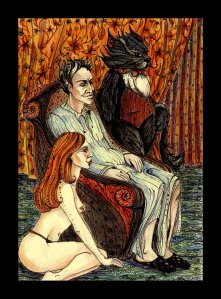
One of my favourite scene in the book – replicated in art – takes places at the Variety Theatre, where Woland has “convinced” the theatre management to sign him on for a series of acts of black magic.

Things turn decidedly ghoulish when it is suggested to Koroviev, the host of the show, that they cut off the head of Bengalsky, the master of ceremonies for “sticking his nose in everywhere without being asked”.

“Cut of his head? That’s an idea! Behemoth!,” he shouted at the cat. “Do your stuff! Eins, zwei, drei!”.

Then the most incredible thing happened. The cat’s fur stood on end and it uttered a harrowing ‘miaaow’. It crouched, then leaped like a panther straight for Bengalsky’s chest and from there to his head…with a wild screech it twisted the head clean off the neck in two turns.

master-and-margarita-catThe horror is ratcheted up a notch as Bengalsky’s head is picked up and showed to the audience.  “Fetch a doctor” the head moans. After promising to stop talking “so much rubbish” the head is plopped back on its shoulders as if it had never been parted.

The compere was weeping, snatching at something in the air and mumbling: “Give me back my head, my head…”

This is just a taste of the horror and magic of the book: a later fantastical scene involves the beautiful Margherita, who attends a sumptuous Satanic ball that could easily have been a scene out of The Great Gatsby:

Fountains played between the walls of floors and champagne bubbled in three ornamental basins, the first of which was a translucent violet in colour, the second ruby, the third crystal…negroes in scarlet turbans were busy with silver scoops…in a gap in a wall a man bounced up and down on a stage in a red swallow-tailed coat conducting an unbearably loud jazz band.

Here Margarita, who longs to be re-united with her Master, witnesses damned souls climb through an immense fireplace with a pitch black mouth and transform  themselves  back into the living:.

Then there was a crash from below in the enormous fireplace and out of it sprang a gallows with a half-decaying corpse bouncing on its arm. The corpse jerked itself lose from  the rope, fell to the ground and stood up as a dark handsome man in tailcoat and lacquered pumps. A small rotting coffin then slithered out of the fireplace, its lid flew off and another corpse jumped out.

In between there are floating ghouls, witches that swoop through the air on brooms and events that can only be explained by the darkest magic.

The greedy are duly punished – and deserving of it – while he devil of course is by far the most charming (and likeable) character of all.

Avoiding PR fails: How to win friends and influence journalists

human-652827_960_720I recently sat down over an informal lunch with a large real estate group in their high-rise office.

It was an opportunity to meet some of their new team members at the start of the new year and make new contacts.

But it was also an opportunity for them to ask me questions about the how the newspaper business works and essentially explain how stories  – perhaps their own property deals – might end up in the paper I write for, the Australian Financial Review.

As we chatted over sandwiches, it occurred to me that I was answering many of the same questions I’d answered a number of times before at similar “meet the press’ type meetings and that it might be useful to others to summarise some of the things we discussed.

So here it goes, from the horse’s mouth: A journalist’s top tips for dealing with…journalists:

1. A short email or phone call is often better than sending a press release.

Every journalist is bombarded with media releases. Dozens appear in our email inboxes everyday and throughout the day. It’s impossible to carefully read every one and find the time to work on stories at the same time. A much better option is a short email outlining the story idea in a few dot points and a contact number for the journalist to ring to get more information.  If you are going to send a press release, keep it short and to the point. No journalist has the time to read an 8 page press release. Alternatively, pick up the phone and call, but not before you have read point 2 below.

2. Don’t ring a journalist when they are on deadline.

It’s incredible how many experienced PR consultants still ring journalists at my newspaper at 4 or 5 pm in the afternoon as we are frantically filing stories for the next day’s paper to pitch ideas or just to “chat”. There’s nothing more frustrating than having a conversion, even if for a few minutes about something that’s either irrelevant or can wait while you are trying to finish a story. Incredibly some people go on pitching stories even after you say you are on deadline .If you’re going to ring a journalist find out when the best time to call is. For those writing for newspapers, the morning is usually the best time to ring.  If you are going to ring on deadline, make sure it’s a REALLY, REALLY BIG story.

3. Think before you speak

Once you tell a journalist something, it cannot be untold or unremembered. (Think of us as bottomless receptacles of information rather than sieves). Before you call, think about what you are going to say and write down some key points. It’s amazing how many people ring journalists, provide all kinds of great insider information, slag off their competitors and then are amazed when these quotes appear in the newspaper the next day. The same goes for facts. If they are true and you tell us them, we will report them. (Of course journalists also love salacious people like this and…there are equally some people who love dishing it out, but just be prepared to see it in print the next day as a direct quote).

4. Exclusives are what we want

Exclusives are the life blood of journalists and newspapers. If you can offer a journalist an exclusive and it’s a worthy story, you are almost assured of getting a good run in the paper. However, there is nothing more annoying for a journalist to read the exact same story they have been pitched and are writing appear in another publication. Of course you are perfectly entitled to pitch your story at multiple publications but you should be upfront about that and let the journalist know that they don’t have the story to themselves.

5. Be patient

Even a good story may take a few days, even a few weeks to get a run. This may be because of space (in the case of a print publication) or resources (journalists are generally working on a number of stories and have to prioritize based on what their editor wants) or the type of story: for example rural stories may run on a certain day of the week.  A good story will always get a run. By all means follow-up on the story – NOT ON DEADLINE! – but don’t bombard journalists with multiple daily emails. If the story needs to run by a certain date, then let the journalist know. If they can’t meet that date, then you are perfectly entitled to take the story elsewhere, but tell them first if you want to keep a good relationship.

6. Expect journos to quote you accurately but don’t expect a certain type of story

Journalists that deliberately misquote or take remarks out of context are to be avoided. Mistakes do happen. However, good writers don’t simply regurgitate press releases verbatim. Remember we are story tellers and are writing for our readers – not for you or your clients. Often those two audiences will overlap, but not always. Sometimes a passing comment or a small point may have greater and wider resonance – in the eyes of the journalist or their editor – then the main subject of a press release or briefing. Have an open mind about what you might read in the paper or online.

7. Don’t pester a journalist’s colleagues with the same story

Most journalists work in a team, whether it’s a specific beat like politics or property or the arts. We often sit together and discuss story ideas. It’s amazing how often a PR firm will contact a journalist with a story idea that doesn’t get traction and then ring all their colleagues with the same idea. This is not a great strategy. It smacks of desperation. If you really think a journalist is missing a good story my suggestion is to ring them and ask them why they won’t cover it. If you still think it has legs tell them you will contact their editor to pitch the story or a colleague, but don’t just send it out – scatter-gun style – to all and sundry.

8. Don’t give misleading information

This may seem an obvious one, but it’s quite common for someone to embellish a story idea or even a formal press release with inaccurate information, half-truths or outdated information to generate interest. Good journalists will verify facts, but we expect to be given accurate information in the first instance especially if its in a formal media release. If you are not sure, then say so. Being deliberately misleading is the quickest way to get you on a journalist’s blacklist.

9. Share market intelligence to build rapport

A great way to build a relationship with a journalist is to share information you have about the market and what your competitors are doing “off-the record” (see point 10). This may not get your name in the paper, but will help when you pitch your own story idea. Journalists treasure market tip-offs as much as they do exclusives.

10. Understand what “off-the-record” means

A lot of people I think have misconceptions about what it means when you tell a journalist: “This is off-the-record”. This does not mean that a fact or tidbit won’t be reported. All it means that if it is reported, it will not be attributed to you. Either it will be stated as a fact or something along the lines of “market sources said” or “people close to the deal said”. One thing I would stress is be wary of sharing information off-the-record that could only conceivably come from you. (See point 3 again). That always ends badly – for you, not the journalist.

11. Don’t pick fights with journalists

Of all the idiotic things President Donald Trump has done, one of the silliest has been to pick fights with the main stream media. It’s incredible that he has gone to war with some of the most respected global publications like The New York Times, Washington Post and CNN which have huge audiences. Pick up the phone if you are unhappy with a story, don’t send a ranting email or abusive text message – we have thick skins and long memories.

The end of reading: Zoo Time by Howard Jacobson

zoo-time-coverZoo Time is another very funny, novel by Howard Jacobson, the writer of the Booker Prize-winning The Finkler Question (read my review here) and The Making of Henry (reviewed here)

It’s the story of Guy Abelman, a once successful satirical writer, whose last book, Who Gives a Monkey? was loosely based on his relationship with a chimpanzee-masturbating zoologist at Chester Zoo.

Since then, he hasn’t written a bestseller in years. His books are out of print (available as ‘print on demand’ his new publisher tells him) and worst of all, making their way into the second-hand section of charity book stores.

Indeed this is where we first meet the middle-aged Jewish satirist: outside an Oxfam bookstore in the Cotswolds where he has just stolen a copy of his novel and been apprehended by the police.

Asked why he stole it, Abelman replies that he did not steal it but “released it”.

“The book as prestigious object and source of wisdom is dying,” he tells the constable.

Resuscitation is probably futile, but the last rites can at least be given with dignity. It matters where and with whom we end our days. Officer

In the Cotswolds to speak – or rather be heckled – at another writer’s festival (“The only character I identified with in your book is the one who died,” retorts one reader) Abelman believes the book is all but, dead, because no one reads books anymore, certainly not the clever literary stuff which once won him minor awards.

To confirm this depressing state of affairs, his old publisher, the terminally depressed Merton has just committed suicide, his final words being “Mmm” while his agent, Francis, does not even bother to restock his office bookcase with his old novels when Guy comes to visit.

The party’s over [Francis] wanted me to know. The age of sparing a writer’s feelings was past

To top it all off, Abelman desires to bed his sixty-something mother-in-law, Poppy while his frustrated wife, Vanessa wants him out the house so she can finally finish her own novel.

So badly has Guy run out of ideas, that the best he can do is tell Francis about his idea for a new novel: a plot based around his unrequited passion for Poppy.

If he’s sounding a bit like a neurotic, over-sexed Jewish character dreamt up by Woody Allen or Curb Your Enthusiasm’s Larry David – albeit a very British one – that’s probably a fair assessment.  And if you delight in that type of Freudian black humour and cynicism you will enjoy reading Zoo Time.

If not, I would suggest giving it a wide berth.

Indeed we spend the entire novel inside the head of the sentimental, lamenting and self-important  Guy, who when he is not railing against the loss of his own cherished self-worth (even the Soho hobos are writing novels), is indulging in fantasies about where, when and how to seduce his mother-in-law.

For Australian fans of Howard Jacobson, who spent three years lecturing at the University of Sydney, there is the added pleasure of numerous trips Down Under,  as Guy interrogates the collapse of his literary career.

Reminiscing about a trip to a writer’s festival in Adelaide (where a fat Nobel prize-winning Dutch author who wrote “slim novellas’ got a standing ovation despite not uttering a word on stage) Guy remembers his brief affair with Philippa,  a young Kiwi lecturer and teacher of ‘Unglush Lut” who performed oral sex on him among the vines of the Barossa Valley.

“You novelists tell the story of the human heart,” Philippa said. You see what no one else can see.” She was holding my pruck as she was saying this.

He also recalls a West Australian outback road trip, where he travelled with his wife and mother-in-law from Perth to the tourist town of Broome, stopping on the way for them to swim with the dolphins at Monkey Mia and where he thinks about an alternative career as a stand-up comedian, he’s opening line being: “Take my mother-in-law – I just have.”

It’s a darkly funny book. Guy is a pompous, snobbish, egotistical ass, but I liked him a lot, not just because of his cynical, very Jewish view of the world, but because of his lament against the decline of book reading in the age of smartphones, ipads, Facebook and Twitter.

You only have to sit on a train and see how many people have their heads buried in their mobile phones compared with the few who are actually reading a book to understand the truth behind the black comedy.

Interviewed about the book, Jacobson said it was primarily a book about reading, not literary failure.

“We don’t read well anymore. It’s a bit risky, because you’re insulting your own readers. But you hope they will feel they are exempted from that general charge,” he said.

howard2_1878348b

Howard Jacobson

This charge is best personified in the character of Sandy Ferber, the new head of Guy’s publisher who tells him at their first meeting that there is a “historic opportunity to “rescue reading from the word” by creating ” a thousand story apps for the mobile phone market”

Bus-stop reading he called it. Unbooks that could be started and finished while phone users were waiting to call them back, or for the traffic lights to change, or for the waiter to arrive with the bill. In short, to plug those small social hiatuses of life on the run.


Inside a mental breakdown: Re-reading ‘The Bell Jar’ by Sylvia Plath

the-bell-jarThe Bell Jar is the only novel written by the late, great American poet, Sylvia Plath, who committed suicide aged 30 in 1963, a month after it was published.

I had read the book, which chronicles a young woman’s mental breakdown,  a long time ago, whilst living in London. Battling my own mental health issues at the time, I found it a balm against my own inner torments.

Then, recently, whilst browsing a pile of books offered for free at the local library, I came across a copy of The Bell Jar. Curious to see what kind of effect it had on me 15 years later, in a much better frame of mind, I snapped it up and re-read it – twice.

Set in the summer of 1953, it tells the story of Esther Greenwood, an attractive young writer and aspiring poet (the fictional version of Sylvia Plath) from the quiet suburbs of Boston who finds herself – for the first time – in the Big Apple. Esther is there because she, along with a host of other bright, young girls, has won a writing competition to spend a month working for New York fashion magazine,  Ladies Day.

Written in the first person, in the confessional style of a diarist, Esther begins:

It was a queer, sultry summer, the summer they electrocuted the Rosenbergs, and I didn’t know what I was doing in New York

Esther knows something is wrong, because instead of having the “time of her life’ amid the glamorous lifestyle of lavish lunches, movie premiers and photo shoots with her new, excitable friends, she’s thinking about  Julius and Ethel Rosenberg, the American couple accused of spying for the Soviet Union and who were executed for treason in June 1953.

Esther’s already fragile state of mind grows increasingly more cynical and gloomier during her stay in Manhattan as she encounters situations and people that frighten, disappoint and disorientate her: a wild night out with her rebellious friend Doreen ends up with Esther feeling like the “only extra person in the room”, a lunch where she deliberately over indulges on caviar ends with Esther suffering an awful bout of food poisoning while her plan to seduce the kindly United Nations simultaneous interpreter Constantin, ends in failure.  Then, on her last night in the city, she is viciously attacked at a country club by her date and narrowly avoids being raped.

Staring out the window of her hotel room at the “weird, green, Martian Honeycomb” shaped United Nations building on her last night, Esther muses:

The silence depressed me. It wasn’t the silence of silence. It was my own silence.

She goes on to say…

The city hung in my window, flat as a poster, glittering and blinking, but it might just as well not been there at all, for all the good it did me.

Esther’s poetic narration reminded me of Holden Caufield, the rebellious anti-hero of JD Salinger’s The Catcher in the Rye, who wandered around Manhattan calling out all the ‘phoneys’ in the world. Esther, like Holden Caufield, can spot a phoney a mile away and she finds nothing inspiring in the glitz and glamour of Manhattan life.

The day after Esther is nearly raped at the country club, she takes the train home, her face covered in claw marks. This marks the start of second part of the book: Esther’s return to the outer suburbs of Boston and her mother’s house.

Here the ‘Bell Jar’ starts to descend over her after she hears she has not been accepted into a summer creative writing program.

I sank back in the grey, plush seat and closed my eyes. The air of the bell jar wadded around me and I couldn’t stir.

The Bell Jar – a vessel used in scientific laboratories to form and contain a vacuum – is the way Esther visualizes her suffocating depression as a physical barrier that traps and holds her swirling, darkening cloud of suicidal thought, with no means of escape.

The shape of the Bell Jar is also mirrored in Esther’s aborted suicide attempt, when she tries to sink under the ocean whilst swimming to a rock far out to sea ,and then later  when she hides herself in an alcove underneath her mother’s house and takes an overdose of slipping pills.

Miraculously Esther survives, but ends up in successive psychiatric hospitals,where she undergoes electroshock therapy, a treatment she describes in all its clinical detail, evoking through her poetic imagery, the horror of the experience:

There was a brief silence, like an indrawn breath.

Then something bent down and took hold of me and shook me like the end of the world. Whe-ee-ee-ee-ee, it shrilled through an air crackling with blue light, and with each flash a great jolt drubbed me till I thought my bones would break and the sap fly out of me like a split plant.

I wondered what terrible thing it was that I had done.

While this may seem like a demoralising book to wade through from start to finish, it has the strange, reverse effect of being life- affirming.

11_splat_150

Sylvia Plath

This I put down to the brilliance of Plath’s writing, which is full of the powerful imagery that made her poetry so magnetic and Plath’s ability to draw deeply from the well of her own personal experiences of dealing with severe depression to bring Esther’s mental state so vividly to life.

Few writers have given us such access to the inner workings of the young, intellectual mind, brilliant and yet so vulnerable to collapse as through the character of Esther Greenwood.

The truth is that just about everyone is susceptible to losing their mental footing, to slipping into despair, to doubting their own cognitive faculties.

It is of course a profound tragedy though that writing the book did not provide enough of a cathartic experience for Sylvia Plath to sustain her own will to live.

Suburban secrets: why men should read Liane Moriarty too

big-lies-little-liesI suppose I consider myself something of a pioneer for reading two novels – Big Little Lies and The Husband’s Secret – by the best-selling Australian writer Liane Moriarty.

Expecting chic-lit drivel, I found them surprisingly engrossing, entertaining and thought-provoking as they delved into dark secrets and lies in modern-day Australian suburbia.

The nearest book I could think by way of comparison was Chris Tsiolkas’s celebrated novel The Slap, with a central plot revolving around a suburban Sydney barbecue where someone slaps another person’s misbehaving child and the ramifications and ripples that flow out as a result.

Moriarty delves into similar territory, but is in my mind the better of the two writers. She’s a more expert crafter of believable characters and more revealing of the psychological landscape of  life in the suburbs.

Both of Liane Moriarty’s books were passed on to me by my wife with recommendations from my mother-in-law and sister-in-law. All three raved about them and encouraged me to broaden my reading habits beyond the  serious-minded Booker Prize winning stuff I tend to get lost in.

Also spurring me on was Liane Moriarty’s inclusion in the Australian Financial Review‘s (the newspaper I write for) Cultural Power List alongside the more well-known provocateurs like broadcaster and journalist Waleed Aly and football great and aboriginal activist Adam Goodes.

The Power List judges noted that Moriarty has sold a staggering six million books and has become a Hollywood player with HBO turning Big Little Lies into a mini-series starring Reece Witherspoon and Nicole Kidman.

Big Little Lies begins with a murder at a High School parents social night at Pirriwee Primary, a fictional coastal town near Sydney.

We don’t know who has died or who the killer is. We only know the suspects  – a motley crew of kindergarten parents – which Moriarty introduces us to as she traces the events over the proceeding months that led up to the fateful night.

Here we meet inspiring women like Jane, a battling  24-year-old single mother, who must defend her son Ziggy from accusations he is a kindergarten bully. There’s also the gorgeous trophy wife Celeste, sickenly abused by her ultra-wealthy husband and Madeline, the do-good mother on her second marriage, struggling to maintain a relationship with her strong-willed, idealistic daughter.

husbands-secretThe Husband’s Secret  is a modern-day take on the fable of Pandora and her box. A much darker book, it explores how the lives of three young woman are impacted by the murder a young girl that happened 30 years ago and a letter – found by accident – that reveals a terrible truth.

Here we find Cecilia, the Tupperware selling super-mom whose idyllic suburban life (a bevy of bright and healthy kids, nice house and loving husband) is about to crumble; Rachel Crowley, the still-grieving mother of the murder victim, her daughter Janie, who becomes convinced she has identified her daughter’s killer; and advertising exec Tess, whose husband has just confessed to being in love with her cousin and best friend.

Moriarty creates these intricate little suburban universes set against the familiar backdrop of school playgrounds, teacher-parent meetings and breakfasts in sunlit kitchens populated by characters straight out of our own everyday lives, who must, with great bravery, deal with unexpected events that threaten to destroy their domestic idyll.

As Nicola Wakefield Evans, one of the Power List judges put it: “[Liane Moriarty] talks about everyday life and marries it to a theme that we’re all grappling with – same-sex marriage, multiple-parented children, domestic violence. And she’s a beautiful writer.”

As a man, I think reading these books can only add to the often blinkered macho Australian male view of the world, which still casts women in the role of submissive or victim or emotional weakling. It’s also offers great insights into how women see men.

For women dealing with similar difficult situations as characters in the book, be they single parents, abused partners or just someone who does not understand their husband or their kids, I imagine these books provide a great deal of comfort and validation, perhaps even ways to cope and move forward.

In an interview she gave the Guardian in 2014, Moriarty (who recently turned 50 and has two kids) explained how she drew inspiration from real life stories told to her from other writers and friends. She also revealed herself as someone who has thought deeply about the issues in her books:

“Often I think bullying –especially in its adult, verbal forms – is the sort of thing you don’t realize till the end of the day, and it’s a horrible feeling to realize something wasn’t just a bland statement, but was actually cruel. But then we’re all capable of things that are breathtakingly cruel,” she told the website.

In her fiction, Moriarty has tapped right into the psychology of suburban life: how men and women view each other, how we bury big and small secrets from each other, how we think about our children and other people’s children, how we cling to the past or try to shake it off and how we can sometimes find ways to make peace and move on.

A messy world: inside the zany comic mind of Tom Ballard (@TomCBallard)

tom-ballard-1-copy-e1403330225340The joke that sticks doggedly in my mind from stand-up comic Tom Ballard’s Saturday Night gig, ‘The World Keeps Happening’ is the one he made about 9/11.

Ballard, young, blonde, dressed in a t-shirt and black jeans asks: “Would 9/11 have been so bad… if they’d flown into the Trump Towers instead?”

(Queue: a low rumble of shock across the packed old theatre).

He qualifies this by saying the planes would be empty and so would be the Manhattan tower, except for Donald Trump, now president-elect Trump “alone, on the toilet, masturbating over a picture of his daughter.”

(Queue even more shock. But Ballard loves it). “Ooh a few Trump fans in tonight,” he muses.

Later, as his high-octane 90 minute set, which left no taboo unturned, drew to its close, he asked cheekily of his audience: ‘Have I managed to lose you all of you tonight?’

He hadn’t of course: almost everyone cheered loudly at the end including me. Perhaps they would have lynched him in Queensland or Ohio.

A night with Tom Ballard, as I found out, is not for the faint-hearted or easily offended. Certainly his stand-up material would set the right-wing old fogges in Western Sydney into a frenzy were he to perform it on the ABC, where he first cut his teeth as a Radio host on Triple J.

Ballard’s act swerves from embarrasing personal experiences mostly of a sexual nature (like the time an ex-lover texted him to say he had “gonorrhoea of the mouth and anus” and he replied to say he was all fine now after getting treatment, instead he replied to a youth worker with the same name, instead) to discussing how technology is ruining our lives (“I’m addicted to my iPhone, I even auto-correct myself when I speak”) to ticking off on racism, sexism and homophobia. (Ballard has hosted two episodes of popular ABC political talk show Q&A).

“No one assassinates politicians in Australia,” he says. “I’m not saying we should be doing that, but a bit of passion would be nice.”

He goes on to relate the disappearance of Harold Holt, the only Australian leader to die in office who disappeared while out for an ocean swim.

“We looked for him a bit and then said, uh, he’s gone. And that was that,” Ballard says with a playful shrug.

Back to the cringeworthy, Ballard related the story of a friend, who for some unknown, unfathomable reason thought it a good idea to eat two 24-slice packets of cheese in one sitting. The result: “He felt a bit unwell and had to go to the doctor”.

Here his friend was told that all the cheese had congealed into a solid mass – “He had a cheese baby” Ballard declares with unbridled joy at the audience’s revulsion,  “and he would have it removed by caesarian.”

I confess I knew very little about Tom Ballard before the show though I recognised the face and name. (We – my wife and I – were lucky to pick up two complimentary tickets).

I quick read of his Wikipedia profile reveals that he grew up in Warnambool in country Victoria, is extremely smart (named Dux of the South West Region) and is passionate about a number of issues: vegetarianism, homophobia and cyber-bulling. He also once dated another of the country’s top comics, Josh Thomas the star of sitcom Please Like Me.

As with all really good stand-up comics he both mines his own personal experiences for comic material and uses comedy to make a point about the issues he cares about. (Not just that, he organised for volunteers from Refugee Legal to stand outside after the show with buckets to collect donations to support the work the centre does for refugees).

On inequality, he tells the story about a visit to Grill’d, the burger joint which allows customers to donate money to local charities through tokens they receive after ordering meals.

In this instance, he was in Warringah, on Sydney’s upper crust Northern Beaches where onion eating ex-PM Tony Abbott is the local federal member.

One of the ridiculous charity choices was to donate to the local school’s rowing club so that they could buy new kit.

“Sorry starving people of Africa…” Ballard bursts out with indignation, “the rowing club needs a hand” followed by an impersonation of spoilt, rich parents and their “desperate” kids.

“People rowing boats, these are the boats we should be turning back!” Ballard retorts with maniacal glee, delivering a scathing rebuke of the government’s tough approach to asylum seekers who come by boat.

His other suggestion, which I really liked was that we should ban all drugs, except for one day every four years – preferably on election day – when it should be a free-for-all.

“When I am on ecstacy, I just want to hug everyone,” he says.

His point being of course that we’re making some pretty bad choices sober, so why not try the other way.

Not a bad idea.

(A quick note: the show was recorded and will appear on streaming video service Stan at some point as part of its “One Stan Series”. So look out for it.)


Inconvenience: honouring a self-imposed 7-Eleven ban

seven-elevenWhen the Four Corners/Fairfax Media story broke in August last year that franchisees of convenience store giant 7-Eleven were underpaying their workers – mostly young migrants and students – on a massive scale amid a head office cover up, I vowed to boycott the chain in a show of solidarity with those caught out.

Not only was I angry at the treatment of vulnerable people at the bottom of the social ladder, but I also knew a fair bit about the owners of the Australian business: Russell Withers and his sister Beverley Barlow, who had become billionaires on the back of a business model “built on something not much different from slavery” according to one insider interviewed by Four Corners.

Of course, by its very nature, boycotting the country’s biggest convenience store chain with more than 600 stores is incredibly hard to do: their stores are literally everywhere and…convenient.

On my way to catch the tram every morning, there’s a 7-Eleven across the road which sells myki tickets (very handy when my monthly pass runs out) and another at the train station for doughnuts if I come home late from a night out. In town there’s a 7-Eleven across the road from work with a Bankwest cash machine (my bank), cheap coffee and snacks.

So I have continued to patronise these 7-Elevens even as I wonder what kind of wage the man serving me behind the counter is earning or the guy who fills the coffee machine with beans.

But, I also thought I would give the company the opportunity to turn itself around and become a respectable and fair employer.

But now I am taking a firm stand. I won’t patronise a 7-Eleven store again: the latest evidence suggests that not much has changed at the beleaguered and yet incredibly arrogant company.

In May, 7-Eleven sacked the respected former Competition Commissioner Allan Fels who was heading up its wages panel. Fels told the ABC his sacking was part of plans to minimise the payout to underpaid workers.

More recently, covert footage obtained by the ABC showed an employee being forced to pay back part of their wage to a franchise owner at a Brisbane 7-Eleven.

To top it all off I have had my own minor dealings with 7-Eleven following a story I wrote in the Australian Financial Review in August about the sale of two 7-Eleven service stations to Chinese investors.

I wrote, in a short article, that despite the wages scandal at 7-Eleven, this did not discourage the buyers who paid record prices for the two stores.

A couple of days later, a letter sent to the paper’s editor from the chairman of 7-Eleven, Michael Smith claimed that the following statement in my story was “untrue”:

Last year a joint Fairfax Media and ABC Four Corners investigation unveiled a massive wages scandal at 7-Eleven stores, involving systematic underpayment of staff by franchisees and a cover up by its corporate head office.

Mr Smith demanded that the statement made by Fairfax in this context “be rectified and withdrawn” – a request I am happy to say the AFR did not oblige. In the context of all the in-depth coverage about the wages scandal at 7-Eleven (in all the major newspapers and on the ABC) amid a huge public outcry, it was a most ridiculous request.

7-Eleven is not the only retail company found to have underpaid its workers. Supermarket giant Coles was recently found to have underpaid its employees and cut penalty rates in a union deal that cost low paid workers as much as $70 million a year, while petrol giant United Petroleum also underpaid some of its workers, an audit in August found.

In short, the exploitation of lowly workers in the retail sector appears to be a common practice.

The only way to stop is to shop with your feet, even if its highly inconvenient.

Meeting Colin Dexter’s Inspector Morse

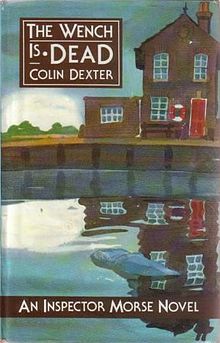
dexter_-_the_wench_is_deadIt’s impossible for me to think of Inspector Morse, Colin Dexter‘s fictional middle-aged Oxford detective, with a penchant for booze, attractive but dangerous women and classical music, and not think of the late, great John Thaw, who played him so brilliantly in the acclaimed BBC television series.
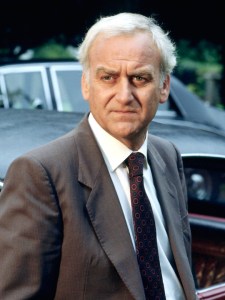
And so it was John Thaw’s face – penetrating stare, roman nose and white mop of hair – that became Morse in my head as I sat down to read The Wench is Dead.

It’s an unusual introduction to the literary  Morse – nearly all of the detective action takes place from Morse’s hospital bed, where he lies recuperating from a burst ulcer.

The case too is unusual, to say the least, involving the murder in 1859 of a married woman called Joanna Franks who is found drowned in the Oxford Canal whilst travelling to meet her husband in London. Two of the drunken and lustful boatmen are found guilt of killing her and executed, while a third is shipped off to Australia following a last-minute pardon.

But something does not gel for Morse, who reads about the case in a small booklet given to him in hospital. Bored and harassed by the nursing staff, he sets his great mind to work to solve the ancient crime, aided by his dutiful sidekick, Detective Lewis.

It’s wonderful writing full of Morse’s wit, humour and great intellect with Dexter skillfully shifting the story between the murky waters of the Oxford Canal in 1859, as the boat carrying Joanna Frank takes her to her doom and Morse propped up in his hospital bed pondering the possibilities:

The thought of drink had begun to concentrate Morse’s mind powerfully, and with great circumspection and care, Morse poured a finger of Scotch into his bedside glass, with the same amount of plain water. Wonderful!. Pity that no one would ever believe his protestations that Scotch was a necessary stimulant to his brain cells! For after a few minutes his mind was flooding with ideas – exciting ideas! – and furthermore he realised that he could begin to test one or two of his hypotheses that very evening.

The Wench is Dead, published in 1986 was the eighth out of 13 Inspector Morse books that Colin Dexter, a former grammar school teacher, wrote over a period of more than 25 years.

john-thaw

The late John Thaw as Inspector Morse

Dexter came up with idea of Morse in 1972 while sitting at the kitchen one rainy day on a family holiday in Wales with nothing to do. He recounted this is in an interview with strandmag.com:

I went in the kitchen and locked the door and I started writing. There’d been two crime books in the guest house and I’d read one of them; I can’t remember what it was. I didn’t think I could do any better but I thought I could do almost as well. I don’t know if it was the first page or the first paragraph, but gradually a few ideas materialized.

Later on, in the same interview he talks about the traits he shared with Inspector Morse, these being: a love of classical music, especially Wagner, sensitivity to the arts, music and literature, the enjoyment of alcohol, particularly single malt Scotch and real ale, “a bit too much” and a confession to being a bit of pessimist “with not much faith in the future of the planet”.

Of those traits Dexter says he did not share with Morse were Morse’s incredible mental capacity for crime solving, Morse’s fondness for attractive but deadly women and his perennial bachelor status  (Dexter was married and had children) and Morse’s meanness with money.

All of these traits make up the wonderfully complex character of Inspector Morse, who is surely one of the finest fictional detectives in modern literature ranking right up their with Sherlock Holmes, Jane Tennyson and modern greats like Luther.

Morse’s great powers of problem solving are in full display in the The Wench is Dead, a brilliant ‘whoddunnit’ cold case  that is short enough to be enjoyed on a rainy afternoon, perhaps with a decent glass of Scotch and classical music – possibly Wagner – playing in the background.

Publicly shaming: how Jon Ronson changed my mind about Justine Sacco

jon-ronsonI remember when the whole universe seemingly exploded over Justine Sacco, the PR executive who Tweeted:
“Going to Africa. Hope I don’t get AIDS. Just kidding. I’m white!!”

I was quick to jump on the worldwide bandwagon to publicly shame someone I did not know. “She got what she deserved” I remember telling myself as the young lady got off a flight in Cape Town to find her life in ruins: her job in New York gone, her reputation destroyed, her prospects in life shattered all because she’d made a silly joke.

At the time I joined the millions of people who shared in the pleasure of Justine Sacco’s public evisceration by everyone and their dog. I retweeted. I told my friends. I shamed her.

And yet, as British journalist Jon Ronson points out in his highly entertaining and thought-provoking book, So You’ve Been Publicly Shamed the only real victim in this fiasco was Justine Sacco herself.

Apart from being offended by her Tweet, which via some quirk of fate, became a world-wide infamous sensation, no one at all was hurt or damaged by it.

Instead,  Justine Sacco suffered humiliation, depression and anxiety that went on for months and months. And worse, her tiny “moment of madness” lives on online. Just type in her name into Google and see for yourself.

Ronson’s entertaining and engrossing book (which reminded me of Louis Theroux) delves into many instances of public shaming – not all of them related to social media – as he explores what has become a re surging global phenomenon not seen for centuries.

Not only does he interview the victims of public shameings including Justine Sacco, but he also delves into the psychology of this mob-like behaviour, explores how Google’s search tools have created reputations that refuse to go away and speaks to people who have made a fortune out of resuscitating the personal reputations of those who have become infamous online. (Yes, there are companies that can get your name off page 1 of Google searches).

Justine Sacco

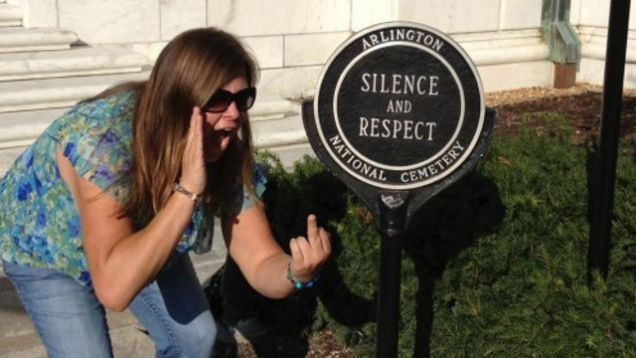
Among Ronson’s  “case studies” is the story of the down fall of the writer Jonah Lehrer, who was caught out making up a Bob Dylan quote in a best-selling book  (in this case his public shaming felt quite deserving as Lehrer comes across as arrogant, privileged and above all…lazy) and that of Lindsey Stone who posted an irreverent (and frankly quite funny) photo on Facebook of herself flipping the bird at Arlington National Cemetery, which destroyed her life in much the same way that it ruined Justine Sacco’s.

c_fitfl_progressiveq_80w_636

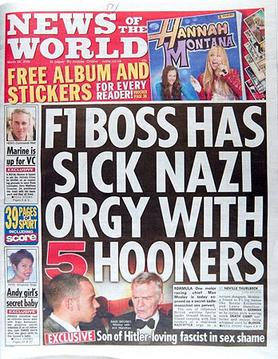
Then there’s the story of former Formula One racing boss Max Mosley, whose alleged S&M Nazi-style orgy was splashed all across the British tabloids in all its photographic detail.

news_of_the_world_newspaper_cover

Mosley’s case is perhaps the most fascinating (not least because he was the son of notorious British fascists Oswald Mosley and Diana Mitford) because he sued the Murdoch press for invasion of privacy and won in court.

The broader point Ronson makes is that Mosley – unlike other victims of publish shaming – was not embarrassed by his behaviour and instead became something of an anti-tabloid hero when took on the now defunct News of the World.

In the end I quite liked the feisty Max Mosley.

However, the greatest compliment I can pay Ronson is to say that reading his book changed my feelings about Justine Sacco tremendously.

Apart from revealing many mistruths about Sacco’s life (she was not the heiress to some rich businessmen or a spoilt white woman who didn’t care about others) it seemed awful that someone should be punished in vast disproportion to her crime, which at worse was that of making a silly, misinterpreted joke.

For as Ronson pointed out, within her Tweet, was the kernel of truth: AIDS is an epidemic in Africa that mainly affects black people not privileged white people. And that he says is the point Sacco was trying – albeit clumsily – to make.

As I read about Justine Sacco, the real Justine, I felt genuinely sorry for her and felt she deserved a lot of public sympathy and a chance at putting her lie back together. I also felt embarrassed at my glee at her public humiliation.

So I’d like to publicly apologise to Justine Sacco  for the part I played in ruining her life and thank Jon Ronson for writing his book.

And the next time I’m about to smugly retweet someone being torn to shreds on Twitter or mocked on Facebook for something silly or inadvertently in bad taste, I’ll think again before I click “Send” or “Post”.

Because the next time, it could be me on the receiving end.

Remembering a lionhearted friend

13626405_160511671019245_6888735082524876778_nI had a dream the other night about my close friend Darren Serebro, who passed away on July 27, 1997 from leukemia. We were both 23.

I was working as a camp counselor in Mid-west America near Milwaukee when he died in a Johannesburg hospital after an incredibly brave two year battle with the horrendous disease. At the time, he was awaiting a bone marrow transplant that might have saved his life.

Incredibly, just over a week before he died, on July 19, I received a long, letter from Darren via fax. Hand written in his neat, compact style, it ran to eight beautiful pages.

I still have the letter. It has survived numerous overseas trips and relocations to London, Sydney, Brisbane and now Melbourne, and miraculously, a water spillage, that turned the pages brown. (I have since scanned it and saved a digital copy.)

I thought, after all these years, I might share some of what Darren wrote and pay tribute to a lionhearted friend whom I have never forgotten.

From the confines of his isolation ward, because his cancer was no longer in remission, Darren began by apologising for the delay in writing back to me:

Dear La

I do apologise for not writing sooner. I am aware that this is an extremely cliched expression with which to start a piece of correspondence and can comprehend that while time is pretty much the same for us, you life has been altered radically for the moment and more regular correspondence from S.A. would be re-assuring.

Of course this was the kind of man Darren was. Even gravely ill, he could put himself in someone else’s shoes. (Studying law at the time, he would have made a brilliant lawyer in the Atticus Finch mold).

As for my life being “altered radically” it was nothing in comparison to the challenges he had faced everyday since learning of his cruel diagnosis, about two years prior.

Darren was softly-spoken (except after a few glasses of good whiskey), but also someone who laughed easily. He was extremely polite but equally capable of being cheeky, hilarious and crude.

He was quite brilliant, a straight A student. I remember he had an amazing ability to absorb and retain information , was intensely curious and interested in other people and places, loved travelling and eating out at good restaurants and was generous to the point of always putting others’ needs before himself. He was a true “Mensch“.

In the first few pages of the letter, Darren describes his current medical situation, the two treatment options available to him and his decision to undergo a bone marrow transplant.

The other option, he writes, of receiving small doses of chemotherapy would “inevitably result in my death within approximately two years”.

His candidness about his own mortality is painful to read now.

I try to picture him back then, in his isolation ward, no doubt feeling awful and yet writing in a concentrated manner. Perhaps from time to time he looks out the window, at the leafy northern suburbs of Jo’burg or pauses to think about how best to describe things to me.

Darren had a brilliant mind and intellect. This he put to full use to explain complex medical terms and procedures in relation to his illness he had sadly become an expert on. He goes into great detail explaining the procedure for undergoing a bone marrow transplant, enumerating the risks like ‘Graft versus Host’ disease and the treatments that would follow. He ends this part of the letter by saying:

Hopefully, a realistic and hopeful outlook on my part, combined with God’s will, will see me survive and will carry me through this trying time, into a long, healthy, happy and successful future.

The rest of the letter is full of wit, charm and lashings of wicked humour as he describes the ‘goings on’ among the Jo’burg scene and his limited interactions with hospital visitors.

A hilarious part of the letter is when Darren dutifully lists all the experiences, he believed I was going through, thousands of miles away at Summer Camp in Wisconsin.

These he believed included meeting some international students of similar age, some of of whom are “extremely attractive”. He adds, in brackets a succinct description: “6 foot tall, 34 inch bust, great legs, pretty face”.

He also reminds me:

“You have seen more of the state of Wisconsin than any Jewish Jo’burger knew exists. The average kugel or bagel tour through the States never comprehended ‘such far off places’

(For those not of Joburg Jewish descent, a ‘kugel’ refers to a Jewish princess, while a ‘bagel’ is the male equivalent.)

Later, he talks about how some of our friends are making a long weekend of the following weekend and going to the Game Reserve. Some of the guys have girlfriends, other not. Darren writes:

Paul says he has told Craig to dress up in drag because neither of them is going steady with a girl at the moment. HA HA. Join the club!

These jokes take me back to the numerous cups of coffee we – Darren, myself and our third musketeer, Jason – would share at ‘Carlos’, the Italian cafe on Grant Avenue, Norwood (also the preferred place for first dates) where we would talk about our lack of girlfriends, the latest arty movie we had seen in Rosebank, discuss politics, art and music interspersed with lashing of local Jo’burg gossip, personal slights and other social faux pas.

Some of the humour in the letter is decidedly black, but who could blame Darren, given his situation.

Talking about a girl he liked and who had visited him a number of times he remarks that wearing a mask is “not conducive to long, wet kisses. HA! HA!”.

Also, he remarks after not hearing from her for a few days: “She knows where to find me.Unfortunately, I have more critical life issues to deal with at the moment.”

I had no idea this letter would be the last I would here from him – or maybe being so far away I pushed the idea to the furthest corner of my mind. It was certainly difficult to comprehend Darren’s passing, thousands of miles a way among people who did not know him.

Many months later, when I returned to South Africa and visited Darren’s family, it came as a profound shock that he did not come down the stairs to greet me.

The saddest part of his letter, is that I missed his last birthday on May 25th by a single day. I wish I had been there. Darren writes:

About 30 people came over for coffee – it was the day after your left. (Thank you for the present by the way).

He ends the letter:

darren-letter

Rest in peace my friend. You remind me never to take life for granted and to actually count my blessings, of which there have been many.

I only wish you had had that “long, healthy, happy and successful future” you hoped for and deserved.