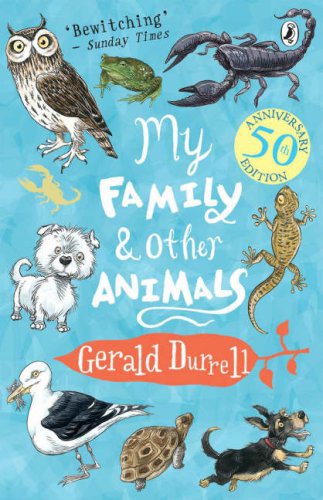
Gerald Durrell’s idyllic Corfu childhood: a review of “My family and other animals”

My_Family_and_Other_Animals_BookI had hardly thought of Gerald Durrell, the author and naturalist until my wife bought me his boyhood memoir “My family and other animals” as a gift.

It tells the story of the four years he spent from 1935 to 1939 as a young boy living with his family on the Greek island of Corfu.

The family left the dampness and cold of London for the fresh air, sunshine and open spaces of the Greek island at the behest of Lawrence Durrell – Gerald’s oldest brother, who himself would go on to be a famous novelist, essayist and travel writer.

Picking up the book, I recalled a childhood memory of Gerald Durrell from a television show he presented that ran on South African television in the 1980s: a short, plump man with a white beard who appeared on television to tell us fascinating things about exotic animals. I looked at photos of him online and my memory served me well for he was indeed, short, plump and bearded.
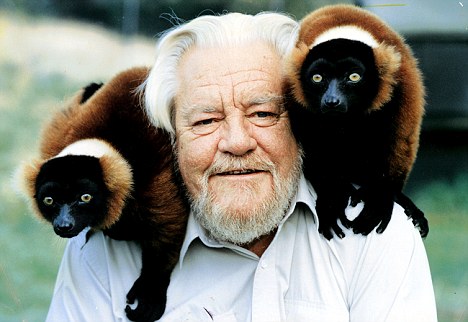
gerald durrell older man

Gerald Durrell as I remember him from my childhood

The book is a wonderful account of an idyllic childhood for a young boy fascinating with nature. It’s one of the most entertaining books I have read, full of wonderful anecdotes about Gerry (as the family called him) and the animals he collects and brings into the family home.

These include: an owl, snakes (that end up being kept in the bath tub), frogs, a pigeon called Quasimodo, a tortoise and scorpions (that scatter one day across the floor during dinner) to name just a few.

Gerry Durrell is part Steve Irwin – unafraid to pick up creatures to see them up close – but more so Sir David Attenborough, with a wonderful eye for the details of nature and how it works plus the skills of a gifted novelist to bring it all to life.

In one scene he describes a gecko who has come to live in his room, which he names Geronimo:

He would sit on the window sill gulping to himself, until it got dark and a light was brought in; in the lamp’s golden gleam he seemed to change colour from ash-grey to a pale translucent pinky pearl that made his neat pattern of goose pimples stand out and made his skin look so fine that you felt it should be transparent so that you could see the viscera, coiled neatly as a butterfly’s proboscis, in his fat tummy. His eyes glowing with enthusiasm, he would waddle up the wall to his favourite spot, the left hand outside corner of the ceiling, and hang there upside down, waiting for his evening meal to appear.

This wonderful gift for describing a scene and revealing the wondrous details and idiosyncracies of nature is found throughout the book.

It is a mix of boy’s own adventure (Gerry accompanied by his faithful dog Roger exploring the island with almost unlimited freedom in which “all discoveries” filled him with “tremendous delight”) accompanied by hilarious tales of family life – Larry and his arty friends invading the island, his diet-obsessed sister Margo and the adventurous, gun-mad Leslie.

The other wonderful aspect of the book are the lovable eccentric local characters: There’s Spiro, the Durrell’s taxi driver, “guide, mentor and friend” – a “short, barrel-shaped man” with a unique grasp of the English language and who adored the family, the tremendously fat and cheerful Agathi who taught Gerry peasant songs and the immaculately groomed, sparkly eyed, Dr. Theodore Stephanides, who became Gerry’s guideΒ  to the natural world plus a parade of doctors, housekeepers and tutors.

Gerrald Durrel with 'Spiro' on Corfu

Gerald Durrell with ‘Spiro’ on Corfu

Durrell writes of an afternoon spent with Agathi outside her “tumbledown cottage high on a hill:

Sitting on an old tin in the sun, eating grapes or pomegranates from her garden, I would sing with her and she would break off now and then to correct my pronunciation. We sang (verse by verse) the gay, rousing song of the river, Vangelio and how it dropped from the mountains, making the gardens rich, the fields fertile and the trees heavy with fruit.

By the time I finished reading the book, I yearned for just a few days of Corfu sunshine and a walks among its hills, valleys, gently swaying Cypress trees and olive groves.

I challenge you to find a more charming, magical account of a childhood we should only dream of giving to our children.

Mexico is indeed “gentle and fine”, Jack Kerouac

lonesome_travellerIn Lonesome Traveller, he’s poetic, mystical, sometimes incomprehensible account of wanderings and odd jobs in the mid-1950s, the beat writer Jack Kerouac writes of a trip to Mexico:

“There is no violence in Mexico, that was all a lot of bull written up by Hollywood writers or writers who went to Mexico ‘to be violent’.”

Kerouac continues:

“I know of an American who went Mexico for bar brawls because you usually don’t get arrested there for disorderly conduct, my God I have seen people wrestle playfully in the middle of the road blocking traffic, screaming with laughter, as people walk by smiling – Mexico is generally gentle and fine, even when you travel among the dangerous characters as I did – ‘dangerous’ in the sense we mean in America – in fact the further you go away from the border, and deeper down, the finer it is, as though the influence of civilizations hung over the border like a cloud.”

I recall the warnings from well meaning friends and family – There’s still time to change your plans/It’s not safe/It’s a dangerous place/Don’t go – before we boarded a New York flight in Christmas 2010 for a month long Mexican bus sojourn from Cancun all the way west to Guadalajara.

Though the notion of Mexico as a violent place is indeed “a load of bull” but still seemingly engrained in the American psyche more than fifty years after he wrote about it, Kerouac’s description of Mexico as “generally gentle and fine” is wonderfully precise.

There is little violence south of the shady border towns where the stories of gangs, beheadings, shootings and drugs garner garish headlines in American newspapers and stoke the flames of fear.

DSCN1093

A fruit stall, Mexican style

As travellers, we found the biggest danger in Mexico to be from a falling coconut while snoozing under the shade of a palm tree on an unspoilt sandy beaches on Isles Mujeres or Tulum.

Or perhaps from one of those mad windy bus journeys – where brakes are unnecessary accessories – up through the mountains to postcard perfect town like San Cristobel de las Casas, where the only sense of danger are the dolls, paintings and postcards for sale in souvenir shops depicting the Zapatista rebels with guns criss-crossed across their chests (and scary steely stares).

DSCN1082

The colourful, quite streets of San Cristobel de las Casas beneath the mountains

I write in my journal of a day spent in this oasis of bright colours, cobbled quiet streets and lazy wanderings:

“Students and tourists abound.The streets are lined with brightly painted mainly single story houses and shops in shades of yellows, reds, blues and oranges and with slanting roofs of Spanish-style red tiles…the perfect place to wander, sit and sip a coffee or beer and people watch.”

In comparison to the constant pleadings, coercions and tourist tricks and traps in Thailand, India, Morocco and Egypt (all places I nonetheless loved), Mexicans are so laid back they hardly bother when it comes to approaching tourists.

On Isles Mujeres, the little island off Cancun, this lack of savvy was perfectly captured by a man offering boat trips to see whales:

“Wanna go on a whale ride?” he enquired as we strolled by one afternoon.
“No gracias,” we replied.
Silence, then he said sleepily:
“Lotta whales…”

DSCN0833

Ice creams in the park, Valledolid

No one harasses you in Mexico. Not in the small, sleepy afternoon siesta towns like Valledolid (where we visited the ruins of Chichen Itza and swam in the underground Cenotes) and not in sprawling, bustling Mexico City, the world’s best functioning mega-sized city.

Are there dangers in Mexico? Of course. I would not be so naive as to suggest otherwise. But the risks are small unless you’re smuggling drugs, heading for the seedy border towns or in the words of Kerouac going there “to be violent”

The Mexico I remember is that of little black haired men with moustaches; their plump wives pulling chihuahuas on leads, climbing steps to find churches painted in brightest pink and orange, wandering streets in shades of yellow and red, the little taco stands sizzling away by the side of the road, poodles sleeping in hammocks, glorious, colonial Spanish architecture, the boulevards of Mexico City, the murals of Diego Rivero, Frida Kahlo’s sad paintings in the blue house in CoyoacΓ‘n, ancient Mayan ruins overlooking beaches and azure oceans.

Alive in colour, light and smiles. A sentiment Jack Kerouac would have agreed with, I think.

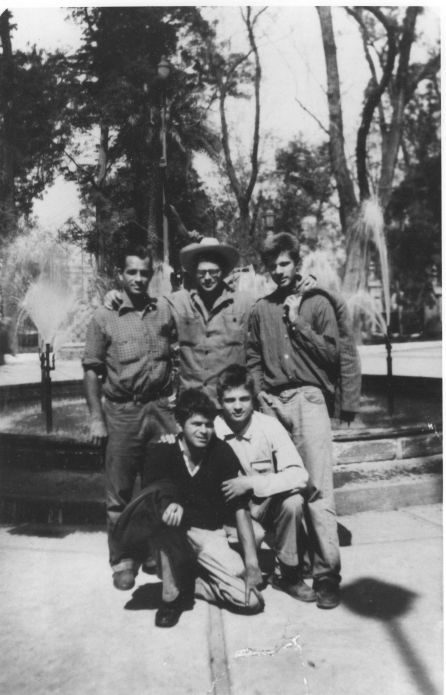
Jack Keroauc top left next to the poet Allen Ginsberg and firends in Mexico City

Jack Keroauc top left next to the poet Allen Ginsberg and firends in Mexico City

Confessions of a cricket tragic

This article first appeared in the Australian Financial Review

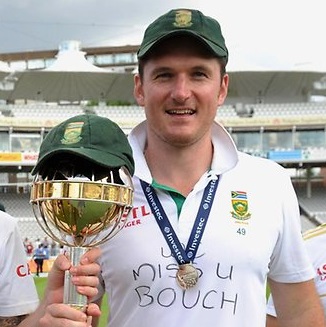
Retired skipper Graeme Smith with the Test mace, signifying South Africa's number one ranking

Retired skipper Graeme Smith with the Test mace, signifying South Africa’s number one ranking

To be a South African cricket supporter residing in Australia is to be a true cricket tragic.

As we slid to another home series defeat against Australia in Cape Town, I dashed off a tweet about the last Test side to beat the Baggy Greens at home, a team know as the β€œInvincibles” which white-washed Bill Lawry’s tourists 4-0 way back in 1970. A colleague replied: β€œOh come on, Larry, nostalgia is the last refuge.”

Perhaps he was right. Perhaps it was a foolhardy attempt to prop up my spirits after yet another home series failure against the old foe; the only blight on an exceptional record that has seen South Africa rank as the No.β€Š1 Test side in world cricket for many years and unbeaten in 14 Test series dating back to 2009.

No defeat hurts more than to lose against Australia (the 1999 World Cup semi-final still haunts me), no victory is more sweetly savoured.

When we finally did win a Test series against Australia in 2009, away from home, and then again 2012, also away from home, it was indeed a sweet moment for a biltong-eating expat like myself.

But a home Test series win against Australia has eluded us in seven attempts since we returned to world cricket in 1992 with just two draws and five defeats.

Back in 1970, just prior to being cast into the sporting wildness, South Africa was a dominant side with a host of superstars in the making. Top of the pile was Graeme Pollock, considered by many to be the finest left-handed batsman the game has produced. In a career of just 23 Tests, Pollock scored 2256 runs at an average of almost 61. I was lucky enough to see Graeme Pollock bat in the early 1980s, when he was approaching 40 and in the twilight of his career. It was at the β€œBull ring” – the Wanderers Stadium in Johannesburg, where Pollock would come into bat at number 4 for provincial side Transvaal, known then as the β€œMean Machine” and packed with star players including West Indians Alvin Kallichirran and Sylvester Clarke (relics of earlier β€œrebel” tours). The side was captained by the handlebar-moustached all rounder Clive Rice, whose rich talents sadly coincided with our period of isolation, meaning he never played a single official Test. I’dΒ sit there with my dad in the wooden seats, long before they knocked down the old grandstand, eating a chicken mayo sandwich, binoculars trained onΒ the pitch, watching the bowlers run in.

When it was his turn to bat, Pollock would lazily stroll to the wicket Viv Richards-style and take his guard nonchalantly. When in form, he was a sight to behold, able to clip a fast bowler off his toes for six with just a flick of his bat. I still have his signature in a little green autograph book I kept as a lad. Others in that 1970 Test side that never got the opportunity to fulfil their burgeoning talents included opening batsman Barry Richards, who scored 508 runs against Australia at an average of 72 (in what was to be his only Test series), all rounder Mike Procter, who picked up an incredible 26 wickets at 14 a piece and captain Ali Bacher, whose record against Australia was seven wins from eight matches (he was also part of the teamΒ  that beat Australia 3-1 in a home series in 1966-67, captained by Peter van der Merwe).

Softly spoken, calm and diplomatic Ali Bacher was a constantly on television. As our leading cricket administrator, he organised the rebel tours in the 1980s that kept cricket alive during isolation and in 1992 led the country back into world cricket. Of course, Β I remember everything back then – the smell of boerewors wafting up from braais (barbeques) around the stadium; the colourful match programs packed with statistics about my heroes; walking across the field to inspect the pitch with my dad during the lunch break – from the viewpoint of a privileged white upbringing.

I was too young and naive to understand the country’s cruel reality: that apartheid robbed generations of black, Indian and mixed-race South Africans of participating in the game.

Thankfully, that’s all changed and our team is a now a better reflection of the β€˜β€˜rainbow nation”, with players of colour like Hashim Amla, Vernon Philander and Alviro Peterson all households names. Just last month, a junior South African side packed with players of all colours beat Pakistan to win the under 19 World Cup. Perhaps they will one day guide us to a home series win against Australia. A World Cup win would be nice too.

Federer, Nadal, Becker and Curren: remembering my tennis moments

tennis-ballsIt wasn’t the classic match I’d been hoping for, but it was still a thrill to sit under the lights at Rod Laver arena and watch two of the modern-day greats, Roger Federer and Raphael Nadal, duel it out for a place in the Australian Open final.

Nadal was too aggressive , Federer made too many errors at the net with only the occasional glimpses of his sublime ground strokes, and it was all over in straight sets.

As I sat in the arena with Danni Minogue behind me, Pete Sampras chatting away in the distance (and never applauding a single point) and the great man, Rod Laver himself, watching intently with his distinctive mop of red hair and pointy nose, I thought about my own relationship with tennis and the role it’s played in my life.

Growing up in Germiston, a mining town about 30 minutes east of Johannesburg, we lived across the road from a Catholic convent and next door to the school’s tennis court. The nuns graciously gave us a set of keys and it was quite a novelty to have friends over and then head down to the courts to hit the ball around.Β  The court’s were cracked and the nets frayed and we frequently lost balls into the neighbouring homes, but it was our own private tennis club.

I was never much of a player, occasionally I’d string a couple of good shots together and fluke a serve down the line, but I’d have been a lower grade club player at best if I’d had lessons and practiced. Still, there probably wasn’t a family holiday, where we didn’t take our rackets and have a game. I recall being rather competitive and not averse to smashing my racket against the ground and not always the best loser.

More so though, my relationship with tennis revolved around the four majors – the Australian Open, the French Open, Wimbledon and the US Open, which seemed to define the calendar year and the seasons.

South Africa might have been isolated from the world in the mid-1980s, but every game was shown on SABC (the South African Broadcasting Corporation)Β with our legendary doubles champion Bob Hewitt waxing on in English about this shot and that and someone else providing the alternate Afrikaans commentary.

The French Open and Wimbledon were always my favourites – the former played on those bright red clay courts, with smartly dressed men and sexy, haughty European women in sunglasses watching from the stands (expertly picked out by the cameramen) while the umpire called the points in French.

They was probably the only words in French I knew:

“Zero – quarante” (Love – 40)

“Jeu” (Game”)

“Quarante – trente” (40-30)

And my favourite, the oh so very sophisticated:

“Egalite” (Deuce)

I loved all the sliding across the red clay, the ability to see exactly where the ball landed in the court when a dispute was called and the long baseline rallies by the likes of Mats Wilander, Sergi Bruguera, Thomas Muster and the tiny, plucky Michael Chang and his famous win over Stefan Edberg in 1989 (where I seem to remember a point he served underhand).

But Wimbledon holds the strongest memories for me.

It was always played in the middle of winter in South Africa, crisp, days when the afternoon sun streamed in through the sliding doors of the living room and always while I was studying for mid-year exams. I remember I’d structure my study timeΒ  – 40 minutes at my desk, then 20 minutes of tennis, which soon turned into 30 minutes and sometimes until my mother called the family over for dinner.

The men’s final evokes strong memories of family gatherings. Uncles and aunts and cousins would arrive for tea, cake and biscuits and then we’d all retire to the family room to watch the final. My father would invariably fall asleep (I have photographic evidence somewhere) but wake up in time for the trophy presentation by Duke of Edinburgh.

One year was particularly special – 1985. I was 12 years old and a South African had made it all the way to the final. His name was Kevin Curren. He was tall, awkward looking, softly spoken guy who blitzed the likes of McEnroe and Connors with an endless stream of aces and unplayable serves to power his way into the final against an unknown, unseeded 17-year-old German “wunderkid” called Boris Becker.

This was in the deep, dark days of apartheid isolation with only the likes of Gary Player and a few other individual sportsman able to still represent our country on the global stage.

The nation held its breath that day as we prayed that our new sporting idol, Kevin Curren, would play one more storming match and give us our first Grand Slam champ since Johan Kriek won the Australian Open in the late 1970s.

Sadly it was not to be. The fresh-faced, precious talent that was Boris Becker leaped onto the world stage on the hallowed grass of Wimbledon and tennis was changed for ever. It was upsetting to see our hero lose, but the truth is I became an enormous fan of Boris Becker with all his theatrical dives at the net and that powerful, trigger serve of his.

http://youtu.be/hzlOQx4dQFM

In the subsequent years, I remember the three Wimbledon Finals between the raging, tear away Boom Boom Becker and the cool elegant Swede, Stephen Edberg between 1988 and 1990 as among the most thrilling of my young adult life.

Later, while living in London, I was lucky enough to attend Wimbledon a couple of times, taking the train after work, queueing up for five-pound tickets and wander around the famous courts, indulging in some rather disappointing strawberries and cream and sitting on what was then called “Henman Hill” (now called Murray Mound) in the long summer days.

In 2004, I slept over at a mate’s house in CroydonΒ  and we awoke at 4am to queue early for tickets for one of the show courts.

We got to watch a young very attractive talent by the name of Maria Sharapova on her way to her first Grand Slam, but the highlight was watching the panther like Roger Federer on his way to his second of seven Wimbledon Crowns.

And this week I got to see him againΒ  in the twilight of perhaps the greatest of tennis careers.

To inappropriately quote Eric Clapton and Cream: Anyone for tennis, wouldn’t that be nice?

The jew at the table: reflections on racism and growing up Jewish in South Africa

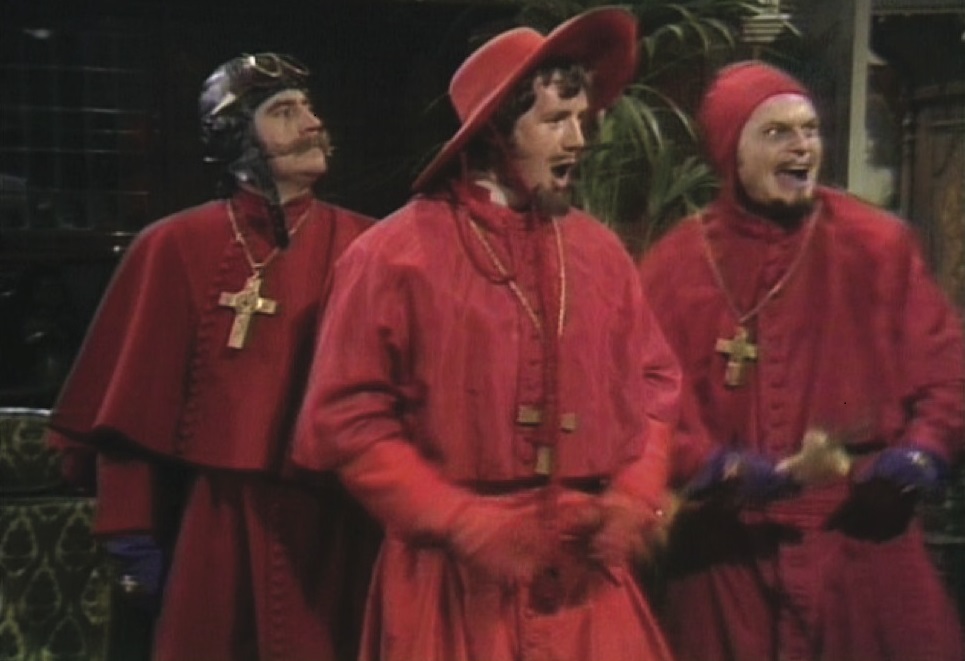
“Nobody expects the Spanish inquisition…our chief weapon is…surprise.”

So begins the famous Monty Python sketch heralded by the arrival of evil clergy in red robes.

nobodyexpects

Well I wasn’t wearing a red robe or any identifying markings at a recent business lunch when as discussion turned to who would pay the bill, someone remarked:

“I’ll be the Jew and leave” – or words to that effect, before they got up to go.

A general snickering followed. Someone remarked flippantly that you should be careful what you say – you never know who may be around – and it was quickly forgotten.

No one knew there was a Jew at the table.

Me.

I never said anything, nor did I regard the person who said it with any particular malice. But I was a bit taken aback. It made me feel uncomfortable; I felt inclined to say something but also reluctant to make a fuss.

Others I know would have had no indecision. They would be proclaiming their Jewishness loudly and demanding an apology accompanied by accusations of anti-Semitism.

Did the person who made this remark hold some deeply felt hatred towards the jewish race or religion, or was it just like the time I remarked, flippantly, to an ex-girlfriend of mine who was half Asian that the kitchen of the digs I shared with friends in London “resembled a Chinese laundry”.

(I also recall that she distinctly did not like the South African colloquialism “china” used in the same way Australians say “mate”).

Anyway, as the words came out my mouth, I realised what I’d said, but it was too late. An uncomfortable moment followed as I apologised profusely.

And wouldn’t this person sitting across from me at lunch, who suggested “he be the Jew” have acted similarly had he known I was Jewish.

My gut feel, is yes.

And does he harbour some ill-will towards Jews. Probably…

Would he suddenly dislike me if he found out I was Jewish – probably not.

The truth is everyone has made a remark like this at some point in their lives -and it’s hard to think of anyone I know who does not hold some kind of prejudice or quasi-prejudice against some other race, religion, sexual orientation or political belief system.

At the same time, it strikes me that my Jewish brethren appear the most sensitive of all races, colours and creeds to offensive remarks, no matter how harmless or slip of the tongue they may be.

Years of persecution – the pogroms, the holocaust, indeed the Spanish Inquisition – will often be the explanation for such an acute sensitivity.

My own experience growing up in South Africa is of a deeply racist Jewish community, with the racism passed down through the generations as it is every where else.

Words learnt and bandied around Jewish social gatherings (white people only apart from the black domestics serving food or minding the children) included the horrible sounding “schvarzte” and “shoch” meaning a “black” person and “chatis” for an Afrikaner.

These words were used regularly at dinners, family gatherings, teas and barbeques – often in earshot of the African domestic clearing away plates or bringing food to the table.

Sadly they were often spoken by those who had fled pogroms or persecution or were the children of those who had. We as kids would play cricket in the garden, while the adults (BMW or Mercedes parked down the driveway) would chat away about their privileged lives: trips overseas, new restaurants opening, community gossip. As you got older, you’d join the adults and hear the conversations, where “shochs, schvartzes and chatises” were mentioned all too frequently.

Paradoxically, these same people would often stick their heads into the kitchen to say hi to the African domestic washing the dishes, to ask about their children or their health.

But it was always in the realm of the ‘master and servant relationship’:

“How are you today Sophie?”

“I am well thank-you master.”

“How are your children?”

“They are well thank you master.”

So what’s happened to these people who I remember with their expensive cars, who would sit around discussing the cricket or rugby with the odd racist remark thrown in from time to time?

Many of them have packed up and moved to Australia. They’re living on the best streets of Bondi, Vaucluse, St Ives, Toorak, Caufield, Bentleigh and Dianella. Some – would you believe it – have even brought their domestics along to do the dishes.

Few have dropped their prejudices and most will happily tell you South Africa has “gone to the dogs since the blacks took over”.

It reminds me of something someone very dear to me (but with horribly dated ideas) once said to me a long time ago:

“I don’t believe in apartheid. But really, you can’t put the blacks in charge.”

What Mandela gave me: one glorious day and hope for the future

The voting line: a sculpture depicting Mandela and the 1994 election in Port Elizabeth

The voting line: a sculpture depicting Mandela and the 1994 election (stands in Port Elizabeth)

This post first appeared on crikey.com.au,

It is also my 100th post on this blog. I dedicate 95 of those posts to Nelson Mandela, for each of the 95 years of his life:

I will always remember voting in South Africa’s first democratic elections on April 27, 1994. It was a miracle they took place at all; far-right-wing organisations threatened civil war, and only last-minute negotiations and concessions ensured all key political parties took part in the historic vote.

Such was the fear that some people took to draining their swimming pools and stocking them with cans of baked beans, mineral water and tinned tuna in case all hell broke loose — or so the urban legend went. But certainly there were empty shelves in the supermarket and a tremendous sense of tension in the air.

In the lead-up there had been bomb blasts at Johannesburg airport instigated by the paramilitary AWB (Afrikaner Resistance Movement) and, a year before, the terrible slaying of Communist Party leader Chris Hani carried out by a white Polish immigrant named Janusz Walus as part of a right-wing plotΒ that had pushed the country to the brink of anarchy.

But the doomsayers were all proved wrong.

On April 27 the front-page headline in Johannesburg’s The Star newspaper proclaimed boldly β€œVote the beloved country”, a play on Alan Paton’s famous novel Cry, The Beloved Country about apartheid’s injustices, which we all read at school. Underneath the headline was a photo taken from a helicopter showing a snaking line of people stretching beyond the confines of the photograph waiting patiently to vote for the first time in their lives.

A mural in Cape Town depicting voting in South Africa in 1994

A mural in Cape Town depicting voting in South Africa in 1994

People queued for hours. In the big cities. In country towns. In townships. In rural villages. On hillsides.

Apart from getting married and the birth of my daughter, it was the single greatest day in my life. It was a privilege to be alive and still young (I was 21 at the time), but old enough to play my small part in such a defining moment in our troubled country’s history.

I remember it as a glorious crisp, early autumn day. Blue skies. Electricity in the air.

I voted at the nearby primary school just a short drive from home. I am not someone who shows his emotions, but as I drove past the line of people waiting on the pavement, there were tears in my eyes, and my heart felt like it was ballooning out of my chest.

In that queue was Nelson Mandela’s vision, why he had spent 27 years of his life imprisoned on Robben Island and why he had emerged not to proclaim war against those who oppressed him but to suggest a vision of the β€œrainbow nation” where everyone, no matter the colour of their skin, could feel proud to call themselves South African.

That queue outside the primary school in leafy suburban Jo’burg, in queues all over the country from Cape Town at the bottom of the country to Messina on the Zimbabwean border, the rainbow nation was brought to life for the world to see.

β€œβ€¦ white middle-aged Jewish women in designer outfits, who for years had kept domestics (or β€œmaids” as we called them) to raise and feed their children, stood quietly behind those they employed.”

Having parked my car some distance away, I took my place in the line. Ahead of me white middle-aged Jewish women in designer outfits, who for years had kept domestics (or β€œmaids” as we called them) to raise and feed their children, stood quietly behind those they employed. Dapperly dressed old African men, once forced to carry β€œpassbooks” regulating their movements in white areas under apartheid, stood beside Portuguese-born restaurateurs, Italian hairdressers and sun-loving British immigrants. Petrol attendants stood next to lawyers, suburban housewives, next to black mini-cab drivers. Black gardeners stood side-by-side with white doctors and accountants. Petrol attendants in blue overalls stood next to white old ladies with permed hair and tissues tucked under their sleeves, who stood behind Indian shopkeepers and coloured fruit sellers.

There was something in the air that day. Yes the tension remained, but there was the sense the dream could be real, that we could all learn to get along and in doing so rebuild and repair centuries of inequality, injustice and brutality. It would not be easy, but it was possible.

Soon after, the votes tallied, Nelson Mandela was sworn in as our first president.

The following year, South Africa won the Rugby World Cup; Mandela famously wore his No.7 jersey alongside Francois Pienaar (I retreated to my bedroom, head under my pillow, too anxious to watch the dying seconds of the match before Joel Stransky’s wondrous drop goal) and we all danced together in the streets, waving our new and strange-looking flag with gusto. The following year our soccer team, Bafana Bafana (β€œthe boys”), won the African Cup of Nations in front of 120,000 screaming fans in Soweto.

Of course the euphoria over those early days of freedom have faded into reality. There are many challenges still facing the Rainbow Nation: crime, AIDS, inequality, corruption. But the new South Africa, even with these big problems, is a vastly better place than I remember through the rose-tinted glasses of my privileged white upbringing.

I never met Mandela, though I often drove past his imposing Houghton house a few suburbs from my own on my way home from work. With a bit more luck I might have bumped into him as his picked up his medications at the local pharmacy in the cosmopolitan neighbourhood of Norwood, a few kilometres down theΒ  road. Sadly, it never happened.

What would I have said to him?Β Perhaps, thank you for those glorious days in April. And for giving us hope and a glimpse of what might still be.

Yes darling, even Stephen Fry can be boring

stephen fryIf there’s a game show, a documentary, a movie or television series featuring Stephen Fry I’m likely to watch it. He’s always immensely interesting, devilishly charming and gives off the aura of an incredibly knowledgeable and worldly man.

Which is why his autobiography “The Fry Chronicles” was such a disappointment and dare I say it, thoroughly boring in large parts.

Perhaps all the very best bits were either in his first chronicle “Moab was my washpot” and covering the first 20 years of his life, which I have not yet read (but have read good things about) – or in his yet to come third volume, likely to begin with his addiction to cocaine.

“The Fry Chronicles” ostensibly covers the years from his time at Cambridge to the success of the musical “Me and my girl” on Broadway, for which he revised the story and dialogue (otherwise known as ‘the book’).

I was expecting to learn something of the inner workings of Stephen Fry’s mind (what makes him tick), his battle with manic depression and various addictions, and where he gets his ideas from – all the elements that make up a good biography – but none of them get any fair treatment. His depression is considered not worthy of his readers, while his addictions to sugar, cigarettes and gadgets are only glossed over. The very last few section of the book – just a paragraph – come under the heading “C” – for cocaine. And then it ends.

It’s not just that he leaves out the juicy bits, but that much of the book is plodding and dull, especially as he narrates the steps he took to achieve success: writing and performing sketches for various Cambridge shows and revues, getting hired to write for Granada TV (now called ITV Granada), the BBC, his friendships with Emma Thomson, Ben Elton, Rowan Atkinson and of course, Hugh Laurie. It’s all either too gushing – or worse, apologetic (he’s especially sorry for having money and spending it on frivolous, expensive gadgets).

Now to be fair, there are some brilliant anecdotes, recollections and insights thrown in amongst “I did this….then I did that…then I met him…then the money starting rolling in” narration that goes on page after page.

One of the most intriguing is Fry’s recount of a visit by Alistair Cooke, the famous journalist and broadcaster and founder of the Cambridge Mummers, the university’s first theatre group open to both sexes. Fry invited Cooke as guest of honour to the 50th anniversary celebration of the Mummers.

Cooke (as remembered by Fry) tells of being on a walking tour through Germany in the 1930s with a friend and coming to a “perfect beer garden”. Later, while they enjoy their beverages, a stage is set up, chairs are laid out and soon the garden is full. An ambulance arrives, then a procession of open top Mercedes limousines. A small man gets out to address the crowd. He speaks. Women duly faint. After he finishes speaking, the little man walks down the aisle and his elbow barges against Cooke’s shoulder, who has leant out to see the intriguing man depart.

“Entschuldigen Sie, meine Herr” (Excuse me, sir”)Β the little man says to Cooke.

Cooke says in his speech:

“For some years afterwards, whenever he came on in the cinema newsreels as his fame spread, I would say to the girl next to me: “Hitler once apologised to me and called me sir.”

There are many other gems scattered throughout the book and some very funny lines my favourite beingΒ  when Fry meets the actress Miriam Margoyles (now an Australian citizen) who introduced herself by saying:

“How do you do? I’m Mir…” She stopped and plucked at her tongue with her thumb and forefinger, “Miriam Margoyles. Sorry about that. I was licking my girlfriend out last night and I’ve still got some c-nt hairs in my mouth.”

Unless you’re a prude you’d have to agree that’s hilarious.

Sadly there is not enough of this in the book and too much apologising from Fry: for getting gigs when he thought he did not have the talent, when the money came rolling in and he spent, spent, spent; and for all the good fortune that came his way.

He’s either flattered by offers of work from famous people (Ben Elton, Rowan Atkinson etc) or flattering others and defending their reputations for brilliance, particularly Ben Elton for some reason.

He spends too much time gushing over the obviously incredibly talented Rowan Atkinson and Emma Thompson and not enough revealing his inner workings, his thoughts on the new wave of comedy that swept over Britain from the likes of Rick Mayall, Adrian Edmondsen and Alexei Sayle and too much timed worrying that no one will find his form of “sketch” comedy funny anymore.

Fry highlights all his privilege and wealth, continually apologizes for having it, and then goes on to describe scenes such as when he and Ben Elton visit some swanky private conservative club called “The Carlton” where the joke is on the old crusty Tory members (there’s a bust of Margaret Thatcher there) because they don’t know who they have let in. The thing is Fry appears more Tory than Labour.

Sadly, an utterly boring account of what has been a remarkable life.

Perhaps Stephen Fry should plead: General ignorance and have another go.

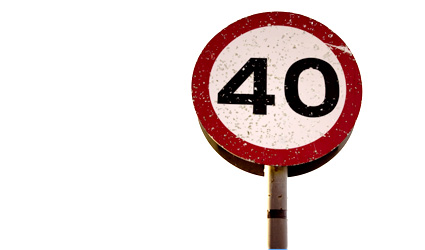
Approaching 40: Thoughts, reflections and some tips

40

In less than two months I’ll be 40.

Gosh! (asΒ  Napolean Dynamite would exclaim) where has the time gone?

One minute I’m finishing high school in Johannesburg, South Africa is stepping gingerly into a brave new era of democracy, Freddie Mercury had just died from AIDS and I’d decided to become an architect.

Flash forward nearly 22 years: I’m a newspaper journalist in Melbourne, (apparently the world’s most livable city, if you believe those sorts of surveys) with a bald patch, a blog and a family with three different passports (South African, Kiwi and Aussie) plus a few other bits and pieces.

It feels like a time to reflect, but not morbidly so, as I feel 40 is still an age of possibility (I’ll wait till at least 50 for melancholic reflections) plus I’ve been lucky, life has treated me more or less “pretty, pretty, pretty good” as my self-appointed mentor Larry David would say.

Of course I’ve just about given up hope of making it on the BRW Young Rich list (a list of the richest Aussies 40 and under), unless I do something drastic in the next couple of months – like rob a bank or win the lottery, but I think I can live with that.

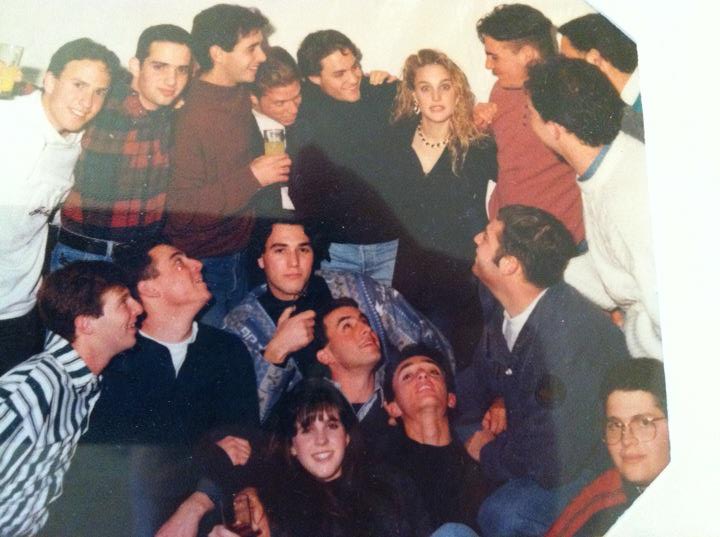
Anyway, for nostalgia sake (and to poke fun at me relentlessly) here I am 22 odd years ago in the bottom right hand corner of this photo taken some time in the mid-1990s.

larry schol

That’s me. The geeky, chubby face with glasses looking a tad sheepish on the periphery of things. Something of an outsider.

Hardly any of the people in this people are still living in South Africa; certainly I thought I’d be one of those who stayed behind (or at least left and came back). Instead I’ve joined the expat South African community that used to be called when I was in school, the PFP (not the Progressive Federal Party, but an acronym at the time for those ‘Packing for Perth’).

But have I succeeded? I have no idea.

Success of course is a personal thing and can be fleeting. You can accumulate vast sums of money and lose it very quickly, or build up your reputation on your achievements and status only for it to be smashed to smithereens by a rash decision or revelation about some horrible character flaw: think of the careers of Lance Armstrong or Rolf Harris and what they will be ultimately remembered for.

In many ways I feel I have succeeded – I’ve gotten married, have a beautiful wife and daughter and a son on the way, I overcame a seriously debilitating period of panic attacks that threatened my sanity about ten years ago while living in London (there is no greater fear in life than losing your mind I can tell you), I’veΒ  been lucky enough to see many interesting parts of the world (I think I am up to about 30 countries or so), had a to date fulfilling career in five different cities (Jo’burg, London, Sydney, Brisbane and Melbourne) and for the most part have been healthy, happy and well-fed.

But in other facets of my life I feel I’ve not: for one thing I have not built up any great wealth, nor do I own property or shares.

I don’t feel or act my age (both a good and a bad thing). I don’t pay enough attention in conversations. I’m often in my own world.

Of less concern I’ve also not yet published a book (or really written one either), I’ve haven’t yet been invited onto Q&A, had tea with Stephen Fry or discussed my anxieties with Woody Allen and I’ve still not bought a BMW (Everyone’s allowed one flashy, material craving right?)

But enough of that. Perhaps the Gods of fame and fortune will smile favourably on me yet.

I’m healthy and relatively sane and life is for the most part very good. I have time to read books, watch movies, listen to music, drink and occasionally be merry. Many people would be content with that.

So what have I learnt? Is there any wisdom I can impart as the big ‘Four Zero’ approaches?

Perhaps this?

  • Try to worry less? Things rarely happen as you think they will so its a pointless exercise. Good and bad awaits you in ways you could never imagine.
  • Avoid trashy books and reality television. Spend your time doing something else.
  • Think less about what you eat. Obsessing over food is a waste of time.
  • Get a bike or start jogging. Avoid gyms (too many mirrors).
  • Hug your kids, your wife, your pets, your friends, your family when the mood strikes, without any particular reason.
  • Worry less about what others think of you.
  • You can’t cook a Jamie Oliver meal in 15 minutes

And if every in doubt about life, watch Annie Hall for the opening monologue at least (the rest of the movie is pretty terrific too):

ALVY         
		There's an old joke.  Uh, two elderly 
		women are at a Catskills mountain 
		resort, and one of 'em says: "Boy, the 
		food at this place is really terrible." 
		The other one says, "Yeah, I know, and 
		such ... small portions." Well, that's 
		essentially how I feel about life.  Full 
		of loneliness and misery and suffering 
		and unhappiness, and it's all over much 
		too quickly

A homage to the humble boerewors

Image

I’m all for globalisation, the mixing of cultures, the idea of the city as ‘melting pot’. After all, who wants to eat fish and chips every day? Or meat and two veg?

But sometimes globalisation gives me the shits.

Shopping in Woolworths last weekend. Grand final weekend. I’m picking up something to take to the barbecue.

As if it’s bred into my genes, my old South African eyes lock in on a coil of sausage behind clingwrap.

Boerewors” it says. No, it proclaims proudly!

“Yes please!” (I chant to myself).

Anyone who has spent anytime in South Africa, will know that you can’t have a barbecue (or ‘braai‘) in the homeland without this humble sausage sizzling away alongside a few giant steaks, chicken kebabs, pap and Castle Lager.

For Australian natives, think this combination: football, beer and meat pie.

The word ‘boerewors’ is Afrikaans, the language spoken by Afrikaners (the descendents of the original Dutch settlers to the Cape in 1652) famous for lots of great things (rugby, Francois Pienaar, Charlize Theron, Ernie Else, the first heart transplant) and some not so “lekker” things (apartheid, Oscar Pistorius, PW Botha).

But the boerewors is certainly one of their finest inventions and one that all South Africans, black, white, expat, coloured, indian have incorporated into their cultures and exported to far flung places. It’s uniquely South African, as the Lamington is to Australia and pavlova is to New Zealand.

The word actually translates as: boere (farmer’s) wors (sausage), which now that I think about it throws up some rather silly jokes and images I’ve not thought of up until now.

But, no, no, no and no! The boerewors is sacred. It is delectable a mix of delicious fatty meats and spices. It’s heaven in a sausage.

But, back to the boerewors on the shelf at Woolies and my temporary annoyance with globalisation.

IMG_20131006_215941

Just look at the packaging! Made by the British Sausage Company. But even worse: Uniquely Australian!

WHAT???

Not a mention of South Africa or farmers or apartheid. Not a boer insight.

I shake my fists in the supermarket. I consider stealing all the boerewors packets on the shelf, justified in my mind by the lack of respect that has been shown.

But, I calm down. Gather myself. And think about boerewors.

My stomach and taste buds win in the end. I buy the damn thing, take it to the barbeque, cook it, eat it and…

It’s simply sensational. At least those boerewors-loving Brits/Aussies got the recipe right.

I eat almost the entire coil and with heaving gut, think to myself: if it wasn’t for this bloody globalisation, I’d never get to eat the damn thing in the first place.

Throw another boerewors on the barbie, Shane!

(Turns out the ‘British Sausage Company’ is a butchery in Perth, no doubt of South African heritage).

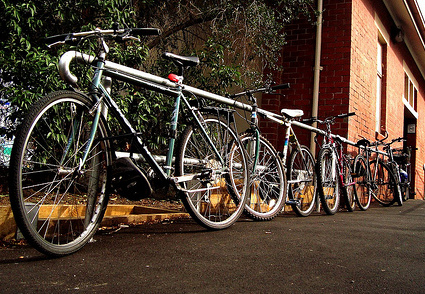
Back on my bike: Of Essendon Station bicycle vandals and London memories

3645939622_505a2122f2A quick post to faithful readers of my blog, of which I hope there are a few.

I’ve been off air for a while moving house and getting set up with a new internet provider.

Moving has necessitated me buying a bicycle and cycling to the train station at Essendon, about 5 kilometres away, a 10 to 15 minute bike ride depending on how fast I’m pedaling.

It’s been a long time since I’ve cycled regularly and it’s not been the best of experiences to date.

Last Friday night I came back to Essendon Station late after going to the rugby and as I was wheeling my bicycle down the platform, a police officer asked me if I had a lock on my bike as they were on the lookout for thieves – they had set up an unlocked, previously stolen bicycle as a trap.

The news was somewhat unsettling.

Returning to pick up my bike on Monday after work, I found the plastic cover on my lock had been ripped off, apparently, I figure, so that someone could try and manipulate the lock.

On Tuesday evening I returned to the station to find one of the brackets that keep my front wheel on lifted up and the front brake cable pulled out of position, rendering the brakes useless.

These incidents angered me and I could just about imagine a couple of young punks in hoodies, messing with my bike out of boredom or frustration at not being able to steal it. I hope they fall on the train tracks!

Tonight I parked it across the road from the station in the Rose Street shopping strip and it seems to have been left untouched.

Hopefully this new spot – under the gaze of shopkeepers and with constant passing foot traffic – will ensure my bike remains the state in which I leave it in the morning.

I’ve been tempted to put a note on it saying:

“Dear bicycle thieves. This bike cost only $200. Please try steal a more expensive one!”

It’s not quite the London experience I recall, the last time I cycled regularly.

I bought a cheap bike at this enormous French sports store called Decathalon somewhere near Docklands and pedaled it back all the way to Golders Green in north London.

I remember the first time a double-decker bus loomed up behind me, it was terrifying.

But I soon grew used to the buses and London cabs, the traffic build-up on Finchley Road and the other mad cyclists, weaving in and out of the traffic and thundering down the road at crazy speeds.

Cycling was best in the summer, those long London days when it was light till 10pm and I would head out through Soho, up through the cobbled streets towards Goodge Street, sometimes detouring through Regents Park to read a book on the grass for an hour or two or just to people watch. Sometimes I’d cycle past Lords cricket ground with its UFO-like media centre hovering above the stands and then up through Finchley, whizzing past the O2 Centre and then into the thigh-burning upwards climb towards Cricklewood and down into Golders Green.

On other occasions I’d chose a route through grimey Camden Town, but then up the steep climb through the wealthy, leafier, cafe-lined suburbs of Chalk Farm, Belsize Park and Hampstead, zooming down North End way (where once I lost my back and front lights over a bump, the gadgets smashing into pieces on the road) and passed Golders Tube Station.

Sometimes on a Sunday’s I’d hop on my bike and explore the East End with no definite destination in mind (though always with my A-Z guide just in case) exploring the quiet streets, stopping for a pint in a pub and taking detours on a whim.

Other times I’d cycle along the Thames, stopping to eat a sandwich in a park near the river.

Great memories.

My ride now is not quite historic, passed largely uninspiring suburbia, but dotted with a few appealing, squat California bungalows and Victorian-era relics, slowing down at traffic circles, freewheeling where I can and mostly alert to the rushing early morning traffic.

It’s good to finally be doing some regular exercise and feeling the wind rushing past my face.

Let’s hope the bicycle vandals don’t spoil my fun.