Is it OK, now, to like Lance Armstrong, even just a bit?

430px-Lance_Armstrong_(Tour_Down_Under_2009)

In 2009, at the Tour Down Under

There are almost endless reasons to dislike Lance Armstrong, the former king of the Tour de France, once the greatest endurance sportsman in the world.

There’s the cheating, the lying (for years) about cheating, and the suing of those people like journalist David Walsh who (for years) rightly accused the Texan of cheating.

There’s also the manner of Armstrong’s cheating – an elaborate, carefully planned scam – and the damage he did to the reputation and integrity of cycling and the hurt he caused to his friends, family, co-workers and fans.

If that’s not enough, there is the fact that despite having to pay back millions in fines and penalties, he remains by all accounts exceedingly wealthy courtesy of his investments (funded from his cycling pay cheques) in funds that backed the likes of Uber.

Perhaps – most galling for some – is the fact that he appears to have put all the doping and cheating behind him, forgiven himself and moved on with his life. He has embarked on new business ventures and hosts podcasts, like The Move, about the Tour de France. In short he appears pretty content for someone whose fall from grace has in its Icarus-like plummeting – had no equal in the world of sport.

An unexpected reaction

But  a strange and unexpected thing happened to me when I listened to an interview Armstrong gave on the popular podcast, Freakonomics Radio: I found myself liking (just a little bit) the Lance Armstrong I heard during the course of his conversation with host Stephen Dubner.

I mentioned this to a friend, who was appalled.

For him there was no forgiveness. In essence, he said repeatedly, I had been duped by Armstrong who according to my friend had fooled me and others with his seemingly sincere words.

226230649_b0e666fa65_o-300x214

Armstrong during his racing days

But I wasn’t the only one. The podcast host himself, Stephen Dubner (author of the best selling book Freakonomics) had an even stronger positive response that bordered – dare I say it – on admiration for the world’s most famous sports cheat.

Finishing his hour-long interview with Armstrong, Dubner said, without any trace of irony or sarcasm:  “Lance Armstrong, you’ve come a long way. It’s impressive.”

I emailed Dubner, told him how similarly I felt and my friend’s angry reaction. He replied:

“Yes, I heard quite a lot of the responses that you described. I tell people that I love living in a world where people are free to rabidly disagree about who/what they like, as long as they can stop short of violence.

No doubt many people (including my friend) “rabidly disagree” with my softened position on the disgraced cyclist.

In many people’s eyes what Lance Armstrong did is unforgivable and some would even go so far as to say he has not been punished enough.

Charismatic, candid and interesting

So what softened my opinion?

Well for one thing I found Armstrong to be a charismatic, candid and interesting interview subject.

I guess I was also charmed by the way he spoke; Armstrong has a propensity to include cycling metaphors into his speech:

“Life adjusts, the burn rate is taken down,” he says referring to the end of his sporting days, and with reference to the cycling union he says “it has no power, no stroke”.

Asked about the infamous Oprah Winfrey interview, Armstrong admits “it did not go well”.

“For cycling fans it was not enough and for the general public, it was too much,” he says quite eloquently.

He also admits that “he sued people and treated them badly” but that he has “travelled the world to sit down with people, to talk and to apologise”.

“I have tried to make amends and move forward,” Armstrong says.

How to fix cycling

I also thought he had a lot of good things to say, like how to fix the sport of professional cycling.

According to Armstrong there needs to be a strong cyclists union so that riders earn a fair cut from television revenues.

I was amazed to learn – I’m assuming its true – that the organiser of the Tour De France, ASO (Amaury Sport Organisation) takes all the television rights revenue that come from the race, sharing nothing with those that compete.

Or to put in Armstrong’s vernacular: “[For riders] it starts with a zero, and ends with a zero.”

Armstrong believes a strong union could push for a fair cut of the Tour’s revenues, starting small and then negotiating a bigger amount over time.

Under the current system, he explained, a cycling team that loses its sponsor has nothing (apart from some bikes, gear and vehicles) at the end of the season, and this “creates the incentive to do what ever you can to succeed”.

But, if everyone is making money off TV revenue – regardless of if they come first or 20th – “then you would think and I truly believe athletes would self-police” Armstrong says.

Throughout the interview it seemed clear to me that Armstrong had changed a lot.

Nothing encapsulated this more than an incident Armstrong recounted to Dubner where he was heckled by former fans. It was in Denver the previous summer and Armstrong was about to catch an Uber taxi to a cycling event.

A guy at the bar got up and in Armstrong’s words: Started yelling “Fuck you” over and over again and would not stop. Soon the whole patio was chanting it and Armstrong was shaking.

“I thought to myself. I am Lance Armstrong. I have to do something,” he tells Dubner.

But rather than storm back into the bar and pick a fight, he phones the restaurant, gives the manager his credit card details and tells him to use it to pay for everyone’s meals and drinks.

It’s the only thing he could think of doing at the time, he says. “I get it,” Armstrong tells Dubner referring to the anger people still feel about him and how he let them down.

It’s anecdotes like this, that paint a picture of a guy who is not all bad.

Dubner also reminds us that for all his faults, Armstrong the cheat is also the guy who encouraged a generation of Americans – a country with a massive obesity problem – to get on a bike and do a bit of exercise.

He was also the guy, who founded the Lance Armstrong Foundation, now called Livestrong, a charity which has raised tens of millions of dollars to support cancer sufferers.  Armstrong resigned as chairman in 2012 after the doping scandal, but the charity continues and has helped over 100,000 people battle the disease.

Let’s also not forget Lance Armstrong  defied the odds and beat an advanced stage of testicular cancer in a truly inspirational story

The truth is Lance Armstrong is a complex character, with shades of light and dark, good and bad.

Even the great racing commentator Phil Liggett, who knew Armstrong better than many of his fiercest armchair critics, admitted in an interview he gave to Brisbane’s Courier Mail in 2016 that he still had some affection for him:

 “…I find it extremely difficult to hate him because of the way I had seen him help cancer victims. And he was still the best rider of his era. I have always said drugs don’t turn a donkey into a thoroughbred.”


The anonymous Casefile host: the mystery solved?

casey

Incredibly, a year has passed since I first blogged about the identity of the Casefile host, after which he blocked me on Twitter.

During that time I have also blogged on the topic of doxxing, written about my favourite true crime podcasts (republished in the Financial Review) and most recently I provided those curious Casefile fans with a guide to solving the identity of the Casefile host for themselves.

Of course the reason WHY he chooses to remain the anonymous host of a hit podcast is an entirely different and perplexing mystery – but I think I might have finally solved it.

The reason I hadn’t worked it out earlier (it was staring me in the face a year ago) was that I did not realise the host (Brad) has a different surname to his father.

The host’s late father was a chief inspector in the NSW police.

I think the anonymous host may be sensitive about this connection given the content of his show, or perhaps his family is.

In addition it also explains his interest in true crime and why he chose to make a podcast about it.

The police connection could actually run a lot deeper – the host himself might have been a policeman at one time.

How do I know this?

At the funeral for his late dad, the host’s mother said Brad intended to follow in his father’s footsteps and become a police officer.

Whether he actually went on to become a policeman, I don’t know – but if it were the case, it would be another reason for his anonymity.

The police connection is certainly a more plausible explanation then the host just wanting to β€œstay out of the story and β€œlet the facts speak for themselves”.

Case solved?

PS. An interesting aside, someone told me there’s a rather amusing Facebook post floating around about the Casefile host. To find it, simply log on to Facebook and search for “Casefile host”. 

‘100 Hundred Years of Dirt’: a classic Aussie memoir

NEWOne-Hundred-Years-of-Dirt-CoverWhen I picked up journalist Rick Morton’s memoir One Hundred Years of Dirt I had a sense it would be a great read.
This was partly due, I think,Β to the evocativeΒ photograph on the front coverΒ  – aΒ lonesome tin-roofed shack set against the contrasting colours of the deep blue sky and that distinctive red earth – and the title, which suggested this would be a gritty tale embedded deep within the Australian landscape.

I wasn’t disappointed.

Morton, a journalist with The Australian newspaper,Β has written a fine book which draws comparison in itsΒ storytellingΒ toΒ the works of Helen Garner, Clive JamesΒ and Robert Drewe’s The Shark Net.

I mention Robert Drewe as I just finished reading The Shark NetΒ for the second time, a rareΒ effort on my part.

The Shark Net chronicles Robert Drewe’s childhood and early adult life as cadet reporter in Perth during the time crazed serial killer Eric Edgar Cooke was on the loose. It is also an evocative depiction of suburban amid Perth’s sand dune suburbs in the 1950s and 60s.

Rick Morton also chronicles a young journalist-to-be’sΒ life in the makingΒ (he is only in his early 30s). But whereas there is an overall lightness to Drewe’s middle-class Perth tale (his father was aΒ Dunlop executive whoΒ hosted tennis great Rod Laver in his living room),Β  Morton presents a modern ‘Heart of Darkness’ that beginsΒ near theΒ very bottom of the socio-economic sphere.

First our young hero (to steal from Clive James) has toΒ navigate theΒ brutality of a remote outback station, then theΒ oppressive poverty ofΒ a hand-to-mouth existenceΒ in aΒ conservative Queensland country town and then later – as a young gay man –Β battle anxietyΒ and depression amid the neon lights of the Gold Coast.

It’s certainly not light reading, nor its it easy reading at times, but thankfully Morton adds dollops of wry humour,Β fascinating family anecdotes and insightful academic research to his tale of tragedy and woe.

It’s of course something of a miracle he survived it all, let alone emerged triumphantly as one of the country’s top journalist writingΒ about social issues – though after you read his memoir, you realise howΒ well-qualified Morton is for that particular journalistic beat.

The ‘dirt’ in the title refers to the origins of the Morton family – in remote outbackΒ Queensland – who at one time owned five enormousΒ cattle stations near the Birdsville Track in an area known as ‘Channel Country’ that collectively were the size of Belgium.

“It’s that red earth…,”Β Morton reminisced in a radio interview. “I’ve always been disappointed with regular dirt.”

It is here that we hear about his grandfather, the legendary cattlemanΒ George Morton, whoΒ ruled the family’sΒ vast pastoral lands with great cruelty and vengeance.Β  It was his grandfather –Β Morton informs us – who discovered theΒ bodies of theΒ Paige family whoΒ succumbed to this mostΒ “vicious” and inhospitableΒ of landscapes when theyΒ got lostΒ in Christmas 1963.

It is in this inhospitable terrain, where deadly Brown snakesΒ invade theΒ homestead, kitchen, that tragedy unfolds whenΒ Morton’s brother Toby is horribly burnt in a terrible accident.

It’s also where he learns that his father, Rodney, is having an affair with the teenage governess. When his father abandons the family and takes off with the governess, Rick, his mum, his badly burnt brother and two-month old sister ends up inΒ Charlesville in emergency public housing with no money. Later they move to Boonah, south of Brisbane, where the struggle to survive continues.

In many ways the book is a tribute toΒ the stoicism ofΒ his mother Deb, who made up for a lack of money with unconditional devotion and loveΒ for her children (including her self-destructive son Toby,Β an ice addict)Β and who realised her younger son Rick,Β was cut fromΒ a different cloth (she lovingly referred to him as an “alien”Β to explain his more sensitive and intelligent nature) and potential to make something of his life.

It’s also a meditation onΒ social inequality and its inherent unfairness (the family’s finances were so tight they did not have enough money to take advantage of ‘two for one’ offers in the supermarket) and how hard it is to break out of that cycle, with Morton drawing on his own experience trying to make it in a profession dominated by the private school-educated middle classes.

“There’s thisΒ creeping sense, this argumentΒ that poor people are morally inferior, which I think is repugnant for a start,”Β Morton said in the same radio interview – his poignant memoir is a powerfual antidote to that snobbish view.

It’s also about what can emerge from the dirt and grit of a tough upbringing.


First and final warning: The time I nearly got fired for doing my job

Recently,Β whilst browsing an old folder on an external hard drive, I came across a copy of a warning letterΒ IΒ received – my first and only one to dateΒ – almost 10 years ago.

I had completely forgotten about it, even though at the timeΒ it set off a boiling and bubbling rage inside me.

I received the warning three years into a stintΒ at aΒ publishing companyΒ in Sydney where I was then theΒ managing editor of two mortgage broking titles.

first snippet

Up until then it had been a largely enjoyable job (and I still have mostly fond memories).

I ran a smallΒ team of reporters and there was a good collegiate atmosphere among fellow editors and journalists.

I did a fair bit of the writing and also penned a popularΒ industry gossip column called Insider thatΒ put a satirical slant on some of the more colourful aspects of what was thenΒ a largely unregulatedΒ and livelyΒ industry.

Then one winter’s morning in early JuneΒ it came as a great shock to be called into a meeting without any prior warning to be hauled over the coals and threatened with the sack.

Perhaps because I was so shocked and angry,Β  I don’t rememberΒ what was specifically said at theΒ meeting.

The letter, which I had scanned and saved for some reason,Β filled in the blanks.

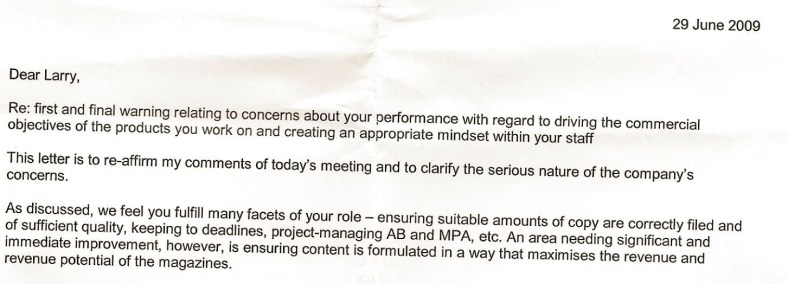
BeginningΒ with aΒ “first and final warning” management expressed its disappointment at my “editorial approach” on a “few recent occasions”.

In particular, there were concerns about two stories IΒ had written in the Insider sectionΒ “that explicitly criticised Westpac for poor customer service. These had beenΒ withdrawn at the last-minute”.

Similarly a reader’s letter which criticised St. George Bank “an advertiser” was pulled whilst another article which was critical of the Commonwealth Bank was altered lest it upset an “advertiser/sponsor”.

The lastΒ example related to PLAN Australia, a mortgage aggregator now part of National Australia Bank that advertised heavily inΒ both publications.

The then CEOΒ (with whom I’d had a good relationshipΒ with till then) complained to management afterΒ his companyΒ ranked poorly in a survey of them and their competitors.

Such was the outrage of this particular CEO that both the managing director and sales director had to fly to Melbourne to “smooth things over”.

snippet 3

I suspect that it was after this trip, which I was entirely unaware of, that it was decided that I be set straight. Up untl then, no issues had been raised about how I put together the publications, or my management style.

The warningΒ letter made the point a number of times that it was part of my role to “drive” or “fulfil” the “commercial objectives” of the publications.

As an editor and not a publisher or salesman,Β I understood this to mean to put together aΒ quality publication that everyone in the industry read – not just dollop out flattering articles about advertisers.

In the past, there had been some tension between my somewhat idealistic notion that editorial and sales remain independent and the company view that advertising in the papers gave you a kind ofΒ protected status in its publications.

MyΒ view was that the publications attracted advertisers if they wereΒ well read and influential, not just by publishingΒ fluff and drivel.

Perhaps there was some middle ground I didn’t see, but it was stillΒ greatly disappointing to me thatΒ the company had chosen not to defend a long-standing editor, but instead take the side of pricklyΒ banks and mortgage firms with their bulging cheque books.

In light of the Royal Commission finding into the financial services industry and the conduct of the banks, perhaps it is not that surprising that these financial institutions believed a bulging cheque book washed away all sins, an attitude that wasΒ seemingly not discouraged by my employer.

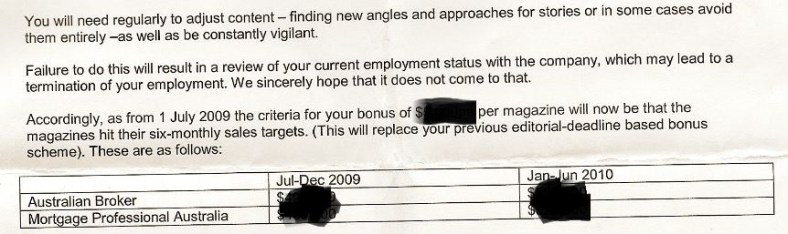
The outcome of both the verbal and written warning was that I was told to find “new angles and approaches” to stories or in some cases “avoid them entirely” (if presumably they were of a negative nature and involved an advertiser).

snippet 4

To add insult to injury, my end of year bonus scheme which in the past had been based on meeting all my deadlines, something entirely within my control, was changed to one based onΒ both publication’sΒ hitting their “six monthly sales targets’ – a metric over which I had absolutely no control.

Surprisingly (well maybe not, I needed a pay cheque) I stuck around until March the following year,Β  whenΒ I left the company to go traveling with my wife, after we got married in January.

It’s interesting looking back on that day almost 10 years later in light of how my career has progressed, especially theΒ last five-and-a half years, writing for a national newspaper (The Australian Financial Review), where editorial independence is taken for grantedΒ  – where journalists write stories and sales people sell ads. I believe that is the way it should be, in all cases. Publications that break that golden rule should disclose it to their readers, and not claim to be independent and objective reporters and observers..

TheΒ warning letterΒ also triggered another memory.

In early 2011, back from a year travelling around the world and almost broke, IΒ  was earnestly looking for full-time employment.

I put in a myriad of job applications for journalism roles, and was lucky enough to secure a few interviews including one with the publisher of an adventure magazine.

The interview was inΒ one of those trendyΒ converted warehouse in South Melbourne with the magazine’s publishers – an equally trendyΒ man and woman duo.

I didn’t get the job – perhapsΒ the publishers sensed I wasn’t reallyΒ thatΒ enthusiastic about reporting on cross-country skiingΒ  – but what I remember most vividly was a question I was asked.

It went something like this: Was I comfortable with the fact that the cover of the magazine was chosen, not by the editor or publisher, butΒ by anΒ advertiser?

Desperate for a job, I said I was, but my insides twisted into knots at the thought that this consumer magazine was essentially glorified advertorial, without of course telling paying readers that.

Looking back I am grateful I was never offered the role. I am also glad I stuck to my guns at my earlier role and tried to always report accurately and independently.

Hopefully readers appreciated it too.


Serial, The Teacher’s Pet, Dirty John and Phoebe’s Fall: reviewing the best True Crime podcasts

The recent arrest of Chris DawsonΒ charged with theΒ murder of his former wife LynΒ in 1982, not only re-opened Australia’s most famous cold case, but shone the spotlight on arguably the most successful of the podcast genres: true crime.

Indeed were it not for the investigative podcast The Teacher’s Pet, written and narrated by The Australian journalist Hedley Thomas, the arrest of the former rugby league star nearly 38 years after his wife vanished from Sydney’s Northern Beaches, might never have happened.

Not only did the podcast re-open public interest in the case, but it also unearthed fresh evidence that helped the NSW Director of Public Prosecutions finally lay murder charges and pave the way for what may very well be the trial of the century, at least in Australia anyway, when it kicks off sometime in 2020.

Podcasts have certainly subverted the true crime genre, whichΒ had been dominated for decades byΒ journalistic books, documentaries and movies.

For me, from my early twenties, it was true crime books that provided a way into the darkly fascinating minds of the criminally deranged.

I think thisΒ interest started with London’s Jack The Ripper (I read The Complete Jack The Ripper by Donald RumbelowΒ in about 1994 after going onΒ Rumbelow’s grisly Whitechapel Tour), andΒ then expanded into literary crime classics likeΒ 10 Rillington Place by Ludovic Kennedy (about the London serial killer John Christie), Killing for Company by Brian Masters (about London necrophile Dennis Nilsen), The Stranger Beside Me by Anne Rule (about her formerΒ friend, the American serial killer Ted Bundy) and of course, In Cold Blood by Truman Capote, plus many, manyΒ more.

(This interest was supported by my reading of Detective Crime fiction including many Ian Rankin novels featuring his beer loving Edinburgh detective John Rebus.)

ThisΒ is undoubtedly aΒ gross generalisation, but I still think a well-written true crime book stands head and shoulders above any podcast.

But I have also found myself drawn to this new form of true crime storytelling, which when done well offers a potent and highly addictive mix ofΒ entertainment, storytelling, investigation and information.

Having recently finished listening to The Teacher’s Pet (I enjoyed a pleasing email exchange with Hedley Thomas), and having listened to a whole bunch of them, this is how I would rank them from best to least favourite:

  1. Dirty John

dirty-john-crime-podcastProduced by the LA Times and written and narrated by Pulitzer Prize-nominated journalist Christopher Goffard, Dirty John is the most polished, thrilling, insightful and entertaining true crime podcast (actually any genre) I have listened to so far.Β  To briefly summarise the plot, it investigates a charming, but violentΒ con-artist called John Neeham who wormed himself into the life of a wealthy but lonelyΒ Los Angeles interior designer, Debra Newell posing as a successful surgeon. The script is punchy, the story of love, deception,Β denial and cunningΒ beautifully told,Β the cast of characters fascinating and the ending shockingΒ . Best of all, Dirty John runs to just six intense episodes of between 36 and 47 minutes so there’s no unnecessary waffling. Every minute is filled with intrigue.Β  Such has been the success of Dirty John that it was made into a TV series starring Hollywood star Eric BanaΒ while Christopher Goffard has gone on a world tour about the podcast. I cannot recommend this podcast more highly.

Rating: 5 stars

2. Serial (Season 1)

serial podcastMuch of theΒ foundations for the success of True Crime podcasts is owed to the first season of Serial, which aired in 2014.Β The first blockbuster true crimeΒ podcast, SerialΒ examined the 1999 Baltimore murder of high school student Hae Min Lee and the conviction of her football jock boyfriend Adnan Syed. The podcast was created and hosted by Sarah Koenig and Julie Snyder of This American Life, one of the most syndicated radio shows in the world.Β The Serial hostsΒ interviewed the key people associated with the case (friends, witnesses, dodgy characters)Β and created plausible doubt regarding Syed’s conviction and helped win himΒ a retrial. Koenig and SnyderΒ are consummate story tellers and their passion for the case made it a hit. Season 2 of Serial was dreadfully boring (I didn’t even last one fullΒ episode) and the third season is apparently even worse. But the first season is among the best of the genre.
Rating: 4.5 stars

3. Phoebe’s Fall

phoebe-s-fallWritten and narrated by The Age journalists Richard Baker andΒ Michael Bachelard,Β Phoebe’s Fall investigated the perplexing 2010 death of 24-year-old Melbourne woman Phoebe Handsjuk, whose body was found at the bottom of a garbage chute of a luxury apartment tower. Both Baker and Bachelard are renowned investigative journalists and they drew on all their experience to examine the circumstances of this bizarre and tragic case including whether it was even possible for someone to lower themselves into a narrow chute (the coroner ruled death by accident)Β and whether it was more likely Handsjuk was pushed. Apart from uncovering new evidence, Phoebe’s Fall is also extremely polished, yet also has a gonzo-style journalism feel to it as the hosts head out into the field to test out their theories. Each episode is as long as it needs to be and there’s no waffling on by the hosts.

Rating: 4 stars

4. The Teacher’s Pet

whooshkaa-podcast-imageReaders of this post may be surprised that I ranked The Teacher’s Pet below the other three given its huge globalΒ success (27 million or so downloads), the fact that it won the Gold Walkley, the most prestigious prize in Australian journalism and the heaps of new evidence it uncovered that led to the arrest recently of Chris Dawson, charged with the murder of his wife. Taken in its entirety, it is a brilliant investigation and deserves all the accolades it has received and I highly recommend it. But my biggest issue isΒ its rambling nature and the lengthy episodes (some over 2 hours). There is far too much unnecessaryΒ stuff (pointless telephone conversations etc.)Β and I believe the podcast would have been even better withΒ some severe editing. It felt like a bit of a marathon getting through it all especially the final few episodes, which for me took away some of its gloss and power.
Rating: 3.5 stars

5. Sword & Scale

sword and scaleThis bi-weeklyΒ American podcast is hugely popular, but suffers from a bombasticΒ host (Mike Boudet) who hasΒ a tendency to sensationalize everything in an overly obvious attempt to keep listeners in suspense and who makes himself the star of the podcast rather than the cases themselves. The episodes are also overly long and unlike the aforementioned podcasts is notΒ really anΒ investigative show, but retells macabre and interesting cases. These criticism aside, it’s still a pretty entertaining podcast and well produced.

Rating: 3 stars

6. Casefile

casefileReaders of this blog will know my history with the anonymous (or not so anonymous) host of this Australian podcast, which has become a huge international hit.Β  Setting aside my own personal squabble, I’ve ranked Casefile at the bottom because it is not an investigative podcast in any realΒ sense, but merely retells famous as well as more obscure true crime cases with a creepy voiced narratorΒ and eerie ambient music. In my opinion the success of this podcastΒ outweighs its content, which at times feels like nothing more than a reading out loud of a Wikipedia entry. No doubt millions of fans will disagree. Readers are better off reading a true crime book.

Rating: 2.5 stars

A note to readers: I would love to know of other true crime podcasts to listen to. Please send me your suggestions.


Doxxing, Journalism and the anonymous Casefile host

So it’s true. I doxxingbriefly “doxxed” the anonymousΒ host of popular crime recital podcast Casefile.

I’d actually never heard of the curious word – ‘doxx ‘or ‘dox’ – until I wrote an article on this humble blog a few months ago revealing a few personal detailsΒ about theΒ mysterious “Brad” whose spooky Wikipedia-inspired retelling of famous crimes has turned him into a surprising, and apparently extremely reluctantΒ podcast superstar.

Doxxing, according to the Merriam Webster online dictionary is:

slang : to publicly identify or publish private information about (someone) especially as a form of punishment or revengeΒ Β 

My now deleted article includedΒ the host’sΒ full name, age, the town where he lived and a few other bits of trivia about him. I also included a smiling photo sourced from social media.

It only took a couple of hours of digging to work out who he was –Β my motivation was neither malicious nor vengeful,Β Β only pure curiosity.Β Anybody using a bit of lateral thinking could have found as much, if not more.

After removing the article as a favour,Β I wroteΒ a fresh post about my interactions with the Casefile host and then another about his subsequent blocking of me on Twitter.

Among the many responses, came this from Laura: “I was also curious about who this fellow Aussie was, now after seeing his response to you doxxing him I agree his identity should remain completely anonymous”.

Digging around online I found that theΒ fan-run Casefile Reddit pageΒ has aΒ strict “zero tolerance Doxxing Rule” which it says appliesΒ “to victims” (strange, as Casefile podcasts are full of personal details of the victims of crimes) “but also to the host”.

“We will remove immediately any posts regarding the identity of the host unless they come from the Casefile Official Website. Period,” the Reddit page says.

It’s a curious kind of inverse vigilantismΒ since unlike many infamous doxxing cases (like that ofΒ Brennan Gilmore, who tweeted theΒ video of the car driven by a white supremacistΒ madman that ploughed into anti-racism protestors in Charlottesville last year and was then doxxed byΒ far right activists who posted the home address of hisΒ parents on online message boards) there appears to be no genuine reason for the host’s anonymity, apart from himΒ not wanting anyone to know who he is.

Bear in mind,Β  I didn’t hack any databases or emails to find out who he was, nor did I post his homeΒ address or phone number.Β Every bit of information was publicly available at the timeΒ to anyone who cared to investigate.

IΒ think it’s also worth considering the issue of doxxing from a journalistic point of view.

JournalistsΒ doxx all the time: we write about people who wish to remain anonymous in the interests of a good story.

As a property writer, it isΒ part ofΒ myΒ job to reveal who is buying and who is selling real estate even if those doing the buying or selling wish to remain anonymous.

InΒ almost all cases the doxxing is justified in the interests of a transparent property market where millions of dollars are involved. Plus ourΒ readers want toΒ know who is buying and who is selling. It’s that simple.

This is not to say that sometimes anonymity must be respected and protected, butΒ the reason have to be compelling; no journalist wants to tell only half a story.

Even more important, often a supposed case ofΒ “doxxing” can reveal what isΒ hiding in the shadows.

As a Melbourne judge recently remarked ofΒ a once anonymous property developer who illegally demolished a historic Melbourne pub and then dumped asbestos waste from the pub near homes and a childcare centre: “I hope everyone knows your name.”

A new owner for Gisborne’s Macedon House

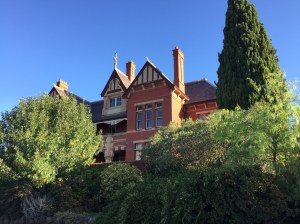
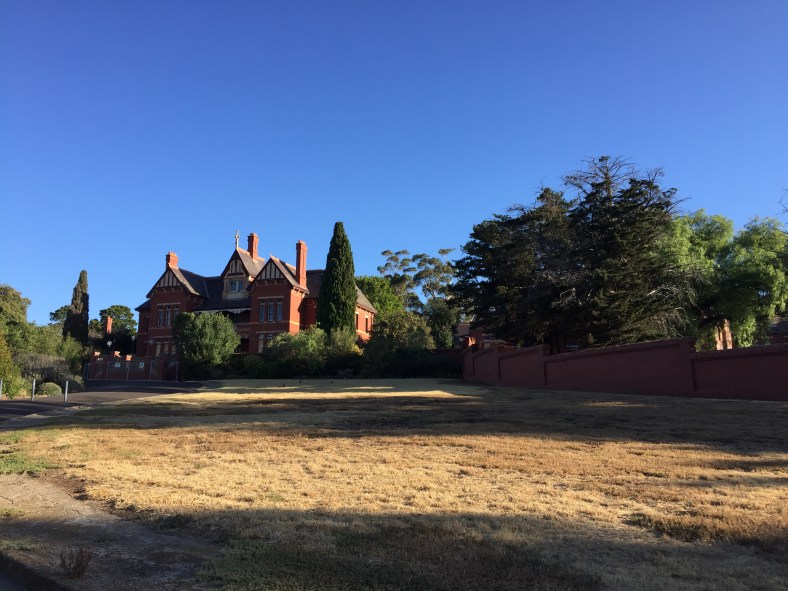
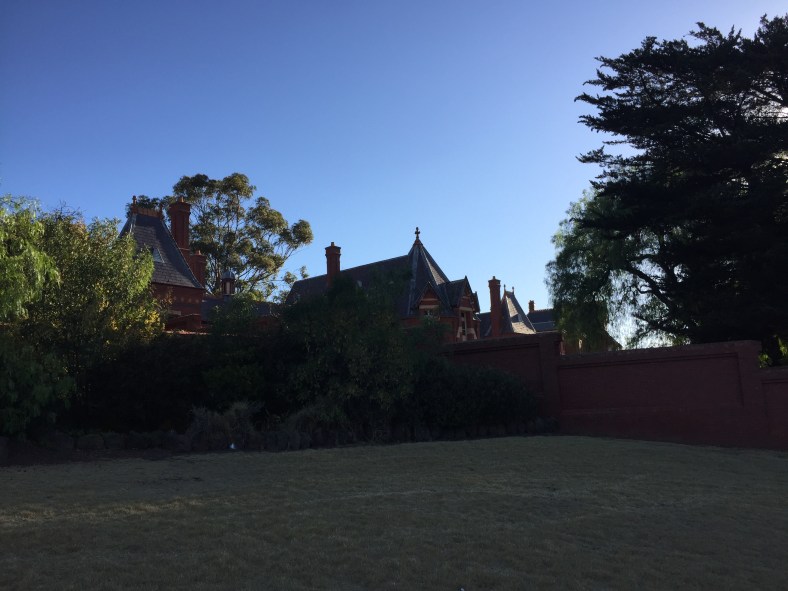
IMG-1231In June, I blogged about Macedon House, the 170-year-old crumbling wreck in Gisborne (where I live)Β north of MelbourneΒ that had stood vacant for more than a decade.

TheΒ once grand property which theΒ Β Victorian Heritage CouncilΒ calledΒ β€œa rare surviving example of an earlyΒ Victorian hotel” and with a rich and colourful history had passed through successive ownerships in recent years, with plans includingΒ to turn it into a retirement village – none of which came to fruition.

Then on August 4 it went to auction as a mortgagee sale, with the hope that the buyer would restore it to its former glory.

For the new owner, Macedon House came with the caveat that whoever bought it would have to carry out urgent repairs under a Victorian State Government order aimed at protecting historically significant properties.

I can report, the August 4 auction through Kennedy & Hunt Real Estate was a success – Macedon House has a new owner after selling under the hammer for $1.36 million in front of about 60 people.

According to our local community paper, the Gisborne Gazette, the buyer is formerΒ Gisborne resident Troy Daffy, whoΒ owns and runsΒ Brisbane-based developer Silverstone Developments.

Encouragingly for locals, Mr Daffy told the Gisborne Gazette he would carry out repairs to Macedon House as ordered by the State Government to bring it back to its former glory,Β but has no plans yet for the land surrounding the homestead.

“I may live in Brisbane, but at heart I am still a Gisborne boy,” he told the paper.

Silverstone has undertaken apartment developments in Brisbane, as well as commercial and retail projects

In June it paid $7.15 million for a 1.3 hectare site in Rochedale in Brisbane’s outer southern suburbs with plans for a medical and retail centre plus townhouses. Silverstone also owns property in the Brisbane CBD, Fortitude Valley and a retail subdivision in Upper Coomera.

As to what Mr Daffy’s plans are for the large Gisborne property – only time will tell. But a restoration of what has become a sad Gisborne eyesore, will be welcomed by locals.

Blocked on Twitter: A few thoughts on the β€œAnonymous host” of Casefile

casey This week I discovered I had been blocked on Twitter from accessing any tweets from @case_file and @casefilehost – the handles for popular crime podcast Casefile.

Fans of this blog may recall I wrote a now deleted post a few months back revealing the identityΒ of the show’s anonymous host.

What followed was frantic messaging via Twitter from the β€œanonymous host” asking me to remove the post as revealing his identity would comprise the show and could bring about its early end.

This I agreed to do in modest exchange for an interview (anonymously) with β€œBrad” (He revealed his name in a 2016 interview with Rolling Stone magazine).

I took down my original post as he had asked, emailed him some interesting questions – but no responses were forthcoming.

Instead a rather blunt email followed over a week later suggesting that my follow-up post (which did not reveal his identity) was also not to his liking and when I declined to acquiesce to his demands to change it, our correspondence ended.

email-casefile

A short while later, he blocked me on Twitter, meaning I cannot view any Casefile tweets or interact with him – though I can still download his show.

I have also discovered that ‘Brad’ had removed all photos on social media of himself and other bits of identifiable information scattered on the internet in clear efforts to protect his anonymity.(That said, he can still be easily found if you know where to look).

(For top tips on how to work out his identity for yourself, read my follow-up blog here).

Clearly,Β ‘Brad’Β is very keen to remain anonymous and – for reasons that no one appears to know, but many are curious about ( I get emails every week) – shuns the quasi celebrity status that other successful podcasters have enjoyed.

It of course begs the question, why? What does he have to hide?

With no responses to my questions from Brad, all I can do for now (until the mystery is inevitably solved) is speculate on plausible explanation for his overt shyness.

Perhaps the host of Casefile is a former or current police or law enforcement officer? Or perhaps he has served in the army or worked for one of those secretive government agencies?

Is it too fanciful to suggest that maybe heΒ has some dark and dastardly secrets of his own?

The other possibility I think is that being anonymous protects him to a degree from being sued or attacked personally.

This I pondered after finding out thatΒ one Casefile episode,Β caseΒ 55 – the unsolved 2005 murder of Perth backpacker Simone Strobel – is no longer downloadable anywhere.

strobel

So why has it disappeared? Has someone complained?

In our exchangesΒ theΒ Casefile hostΒ said there was nothing β€œsinister” about his anonymity, but equally his other explanations (told in many online interviews) that he wants to stay out of the way of the story do not ring true.

I also wonder how ‘Brad’ feels at retelling these crimes in all their graphic detail, where the victims (some of whom are still alive) are not afforded the luxury of anonymity…while he so jealously guards his.

If you want to be happier: close your Facebook account

facebook_like_logo_1The global furore created by the data mining of 50 million Facebook usersΒ by controversial UK political consultants Cambridge Analytica (reportedly to help Donald Trump win the US election) spawned the Twitter hashtag #DeleteFacebook and a campaign calling for users to abandon the social media giant in droves.

In truth, it just one of a number of reasons for shutting down your Facebook account – if you were looking for one.

Other reasons includeΒ the constant stream of fake news flowing down your Facebook feed, the trolls, scumbags and hate speech mongerersΒ who freely ply their trade on Facebook or just theΒ incredible and unfetteredΒ power FacebookΒ  and founder Mark Zuckerberg now wields with its 1.2 billion users and rivers of advertising revenue that has crippled the free press.

But there is a far more obvious reason why you should seriously consider doing as the hashtag says and #DeleteFacebook.

Simply put, the latest research shows that frequent use of Facebook is likely to make you a less happier, less well-adjusted and less healthier person.

“Researchers are finding that the curated versions that we post on Facebook and Instagram have real consequences in our actual lives,” said Shankar Vedantam the host of NPR’s Hidden Brain, a popular science and psychologyΒ podcast which looks at how people interact with the world.

“As you watch theΒ seemingly idyllicΒ lives ofΒ friends on social media, you may find a little voiceΒ pointing out thatΒ your vacations are dull by contrast, that your kid never scores the winning goal, that your relationships seem to be painted in grey while everyone else’s seem to be in Technicolor,” the eloquent Vedantam went on to say.

Social comparison risk

The podcast episode called “SchadenFacebook” (which you can download here), looked at a 2017 study carried out by academics at Tel Aviv University’s Coller School of Management, which was the first study aimed at separating out correlation (Do lonelier people tend to use Facebook?) from causation (Does Facebook use make you unhappier?) in relation to social media use.

It examined the “natural” experiences of 144 workers at a security firm who initiallyΒ were not allowed to useΒ Facebook at all and had to delete their accounts. Later, the companyΒ allowed some employees to re-open their accounts.

In this unique situation, none of the people got to choose which group they were in, so it couldn’t be that people who were unhappy were choosing to use Facebook, ruling out a correlation bias.

The researchersΒ  collected data from the time no one was allowed to use Facebook to the time some were allowed to have access.

Surprisingly, the study found that users are not generally fooled into accepting that the experiences posted on Facebook by their friends are the true picture.

But did find conclusively thatΒ β€œFacebook usage increases users’ engagement in social comparison and consequently decreases their happiness”.


“Using Facebook makes you more comparative. You need to prove yourself to yourself over and over again,”Β  one of the researchers, Ohad Barzilay,Β told Hidden Brain.

“You compare yourself to others more often, you judge yourself, am I better or worse than my friends? Β Am I happier or are they happier?”

“This [constant] social comparison engagement makes you less happy,” Barzilay said.

Harvard Business Review study

On top of that study,Β  I tracked down another recent and more comprehensive study on the impact of Facebook use on wellbeing, that was published in the esteemed Harvard Business Review.

Conducted by Holly B. Shakya an assistant professor of global public health at UC San Diego and Nicholas A. Christakis, director of the Human Nature Lab at Yale University, it tracked the wellbeing of 5208 regular Facebook users over a two-year period.

It measured life satisfaction, self-reported mental health, self-reported physical health, and body-mass index.

The findings were: β€œOverall, our results showed that, while real-world social networks were positively associated with overall well-being, the use of Facebook was negatively associated with overall well-being.

The report went on to say: β€œThese results were particularly strong for mental health; most measures of Facebook use in one year predicted a decrease in mental health in a later year. We found consistently that both liking others’ content and clicking links significantly predicted a subsequent reduction in self-reported physical health, mental health, and life satisfaction.”

Neither of these findings really surprised me – nor do I suspect would they many other people.

Unfortunately, we often accept at face value what we read and see on Facebook and as the academic studies show use this as aΒ disingenuous point of self-comparison: “There’s so and soΒ having a better holiday then me…or with a nicer house or car…or with a betterΒ job…or with happy kids…or a nicer figure….”

But if we weren’t on Facebook voyeuristically trawling through the lives of others, and instead spent time on building our relationship in the real world, the latest research strongly suggests we’d be a lot less envious, a lot less depressed and a lot less self-judging.

Quitting is hard

The problem is thought that quitting Facebook – like any otherΒ addiction (and it isΒ an addition!)Β is not easy.

The world’s most famous online brand (alongside Google) is completely entangled in our lives. It’s on our phones, our iPads and computers and it crops up in everything we see and do: from food packaging, to newspaper articles to everyday conversations.

The brilliance or insidiousness of Facebook, and other social network platforms like Instagram is that it takes advantage of natural human curiosity. Quite simply put: we want to know.

But if you’re feeling depressed or dispirited about your life and feel others are having more fun then you (when in fact their lives are not so shit hot) maybe its time to take the plunge and press the delete button.

β€œWhat, you’re not on Facebook?” your friends might ask in shock and horror.

To which you can simply smile and say: “Yes”.

The identity of the Casefile host: why I deleted his dark secret

caseyOne of the most stunning podcast success stories in recent years, is Casefile, a true crime podcast started just over two years ago by a mystery Australian bloke “from a spare room in his house”.

(For a follow up on this post click here).

Narrated anonymously, his distinctive Australian drawl has added an element of creepiness to tales drenched in blood. Every week hundreds of thousands of listeners, indeed sometimes manyΒ millions,Β download or stream the latestΒ Casefile podcast.

With this viral success, the podcast has quickly become a slick, commercial venture with advertising, a creepy soundtrackΒ and professional production qualities.

AΒ team of engineers, producers, composers and researchers have sprung up around the Casefile creator and host.

But hisΒ identity – like the perpetrators of the unsolved crimesΒ retold on the podcast – remains a closely guarded secret.

In an interview with Vice.com in October 2016,Β the Casefile hostΒ said he wanted to remain anonymous so that he could “stay out of the story and “let the facts speak for themselves”.

“I’m just a random Aussie guy, in my spare bedroom, running a podcast,” he said modestly.

As a naturally curiousΒ journalist, I decided to take up the challenge and try to found out who the Casefile host was.

It wasn’t really hardΒ – if you know where to look.

(For top tips on how to work out his identity, read my follow-up blog here).(For top tips on how to work out his identity, read my follow-up blog here).

Indeed, for someone who wanted toΒ remain anonymous, he didn’t seem to be making much of an effort to hide his identity.

And so last week, IΒ ran a story, briefly,Β on this blog revealing his identity.

If you were one of the 100 or so people who read the post, you would know who he is and would have seen his photograph.

Soon after it was published and Tweeted and Facebooked, the Casefile hostΒ contacted me and asked me not to reveal his identity and to remove the post and all my social media about it.

casefile tweet

I was bemusedΒ by his reaction, as I thought his anonymity was a “marketing gimmick” and that it if aΒ blogger like me revealed it would not make any difference to the show or how it is presented.Β  Indeed many of his fans crave to know who he is.

But no, he told me, it had nothing to do with marketing but affected his “real world life”Β  and his “ability to do the show”.

casefile tweet 2

In the end I took it down.

He told me that if no damage had been done to his anonymity and the show could continue, he would consider doing an interview with me.

I’ve sent over a few thought-provoking questions…let’s see what happens.

Of course, I remain intrigued as to why his anonymity is so vital to the show’s viability. No other podcasts I know of has anonymous narrators.

In fact, most successful podcast creators, like the hosts ofΒ the ground breaking SerialΒ have become famous in their own right.

And so while the Casefile host insists on not making his identity part of the murderousΒ stories he tells,Β  for me, his identity has, ironically, becomeΒ the story.

As, I think itΒ always has been for many of hisΒ faithful listeners.

(For a follow up on this post click here).