An opinionated journalist's thoughts on media, film, books, sport, politics and the occasional rant. Or as William Burroughs put it: "A writer must write"
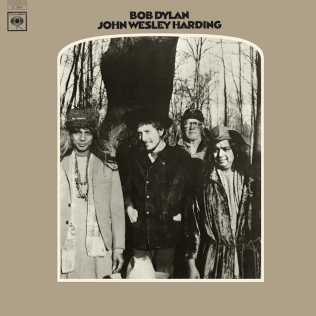
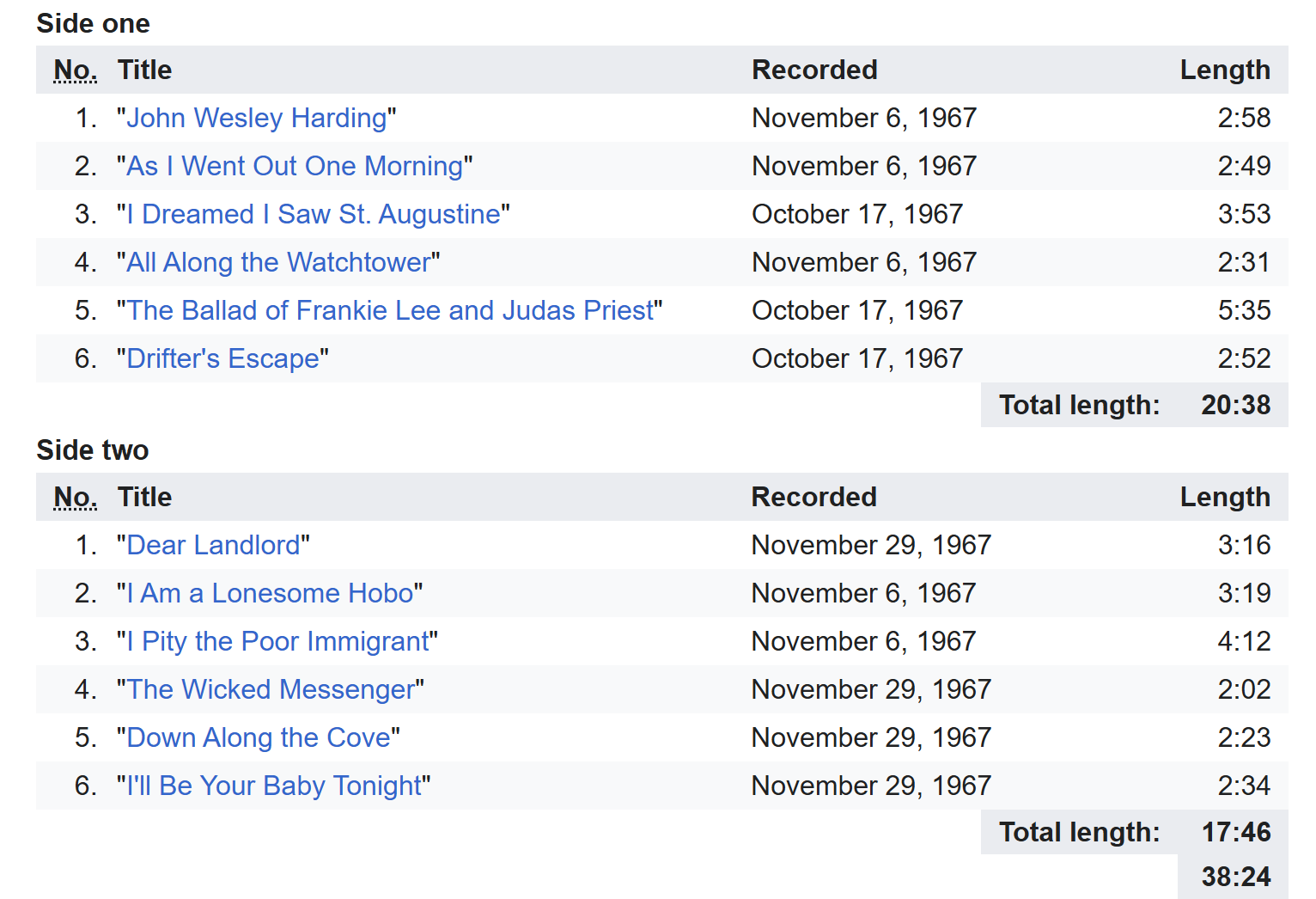
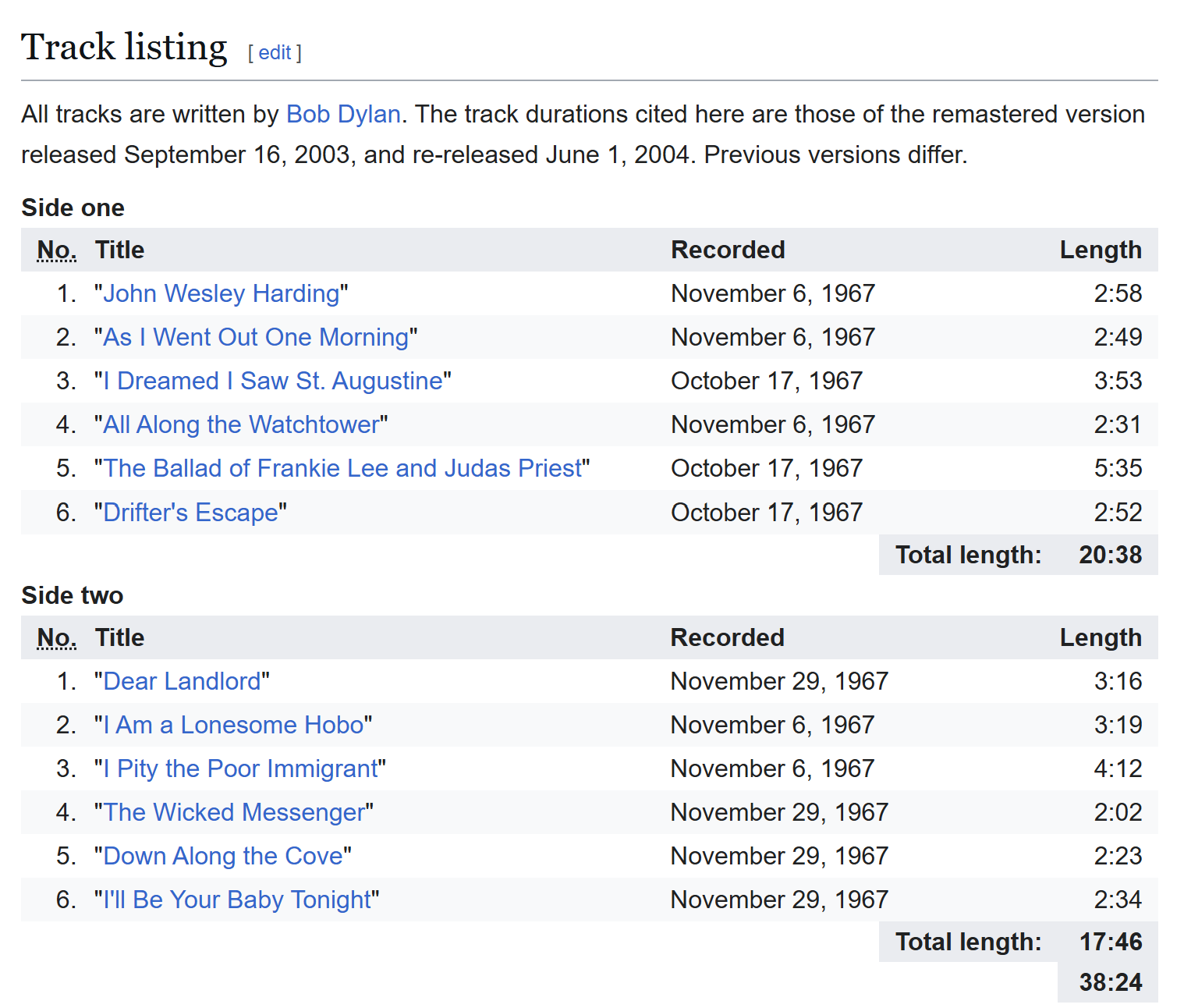
Best tracks: John Wesley Harding, As I Went Out One Morning, All Along the Watchtower, Dear Landlord, I’ll be Your Baby Tonight
If I could choose just one track: Dear Landlord
Freshlyworded rating: 8.5/10
Copyright: Columbia Records or the artist. Low-res version used for review purposes only
Bob Dylan’s 8th studio album runs for less than 40 minutes – the shortest of the albums he had recorded by then – but is full of great storytelling songs.
After a number of albums full of blues, rock and even pop, this album marks a return to Dylan’s folky, semi-acoustic roots. It also includes some exceptional harmonica playing that brings a poignant tone to many of the songs.
The album, which has a gentle, rambling feel to it, draws out tales of eccentric and colourful characters that seem rooted in the old West like the gunfighter and lawyer, John Wesley Harding, whose story kicks off the album and gives it it’s name.
A kind of Robin Hood figure, Dylan sings that Harding is a “friend to the poor” but who “traveled with a gun in every hand”. Sticking with the theme of quintessential American characters, Dylans sings about the “Lonesome Hobo” who was once prosperous, but who was brought down by “petty jealousies”.
One of my favourite songs on the album is ‘As I Went Out One Morning” where the narrator falls for “fairest damsel that ever did walk in chains”. It evokes the cotton fields and slavery of the Deep South
The album also features three songs widely regarded as Dylan classics: the medieval-themed “All Along the Watchtower” featuring the Joker and Thief. It’s a song famously covered by Jimi Hendrix and featured in the opening scenes of one of my favourite movie Withnail & I. U2 also did a rather forgettable version. For me, Dylan’s original version is the best and I just love the mysterious and poetic lyrics including lines like:
Businessmen, they drink my wine, plowmen dig my earth None of them along the line know what any of it is worthβ
The other famous tracks are the wonderfully pleading “Dear Landlord” which though I have struggled to make sense of its meaning is my favourite song out of the 16. The other classic is the very sweet, love song “I’ll be Your Baby Tonight” which has a bluesy undertone and great lines like:
Kick your shoes off, do not fear Bring that bottle over here Iβll be your baby tonight
I also loved the slow and moving “I Dreamed I Saw St Augustine”. Perhaps the most interesting song on the album (also the longest) is “The Ballad of Frankie Lee and Judas Priest” which has no chorus but presents as a kind of moral fable with biblical undertones about a simple man (Frankie Lee) led astray and to his doom by the cunning Judas (and by Lee’s own moral failings). It’s sung in Dylan’s distinctive manner of over-emphasising certain words.
Overall, I really loved this album. The songwriting is superb, the harmonica adds depth, resonance and poignancy and the simpler, semi-acoustic sound makes it a perfect backdrop to a country stroll or whilst staring into a crackling fire.
John Wesley Harding is another classic album you should definitely listen to a couple of times!
Album cover reproduced for review purposes. Copyright: Columbia Records or the graphic artist.
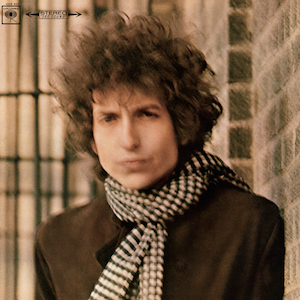
Title: Blonde on Blonde (1966)
Length: 1hr 12 min and 37sec
Number of songs: 14
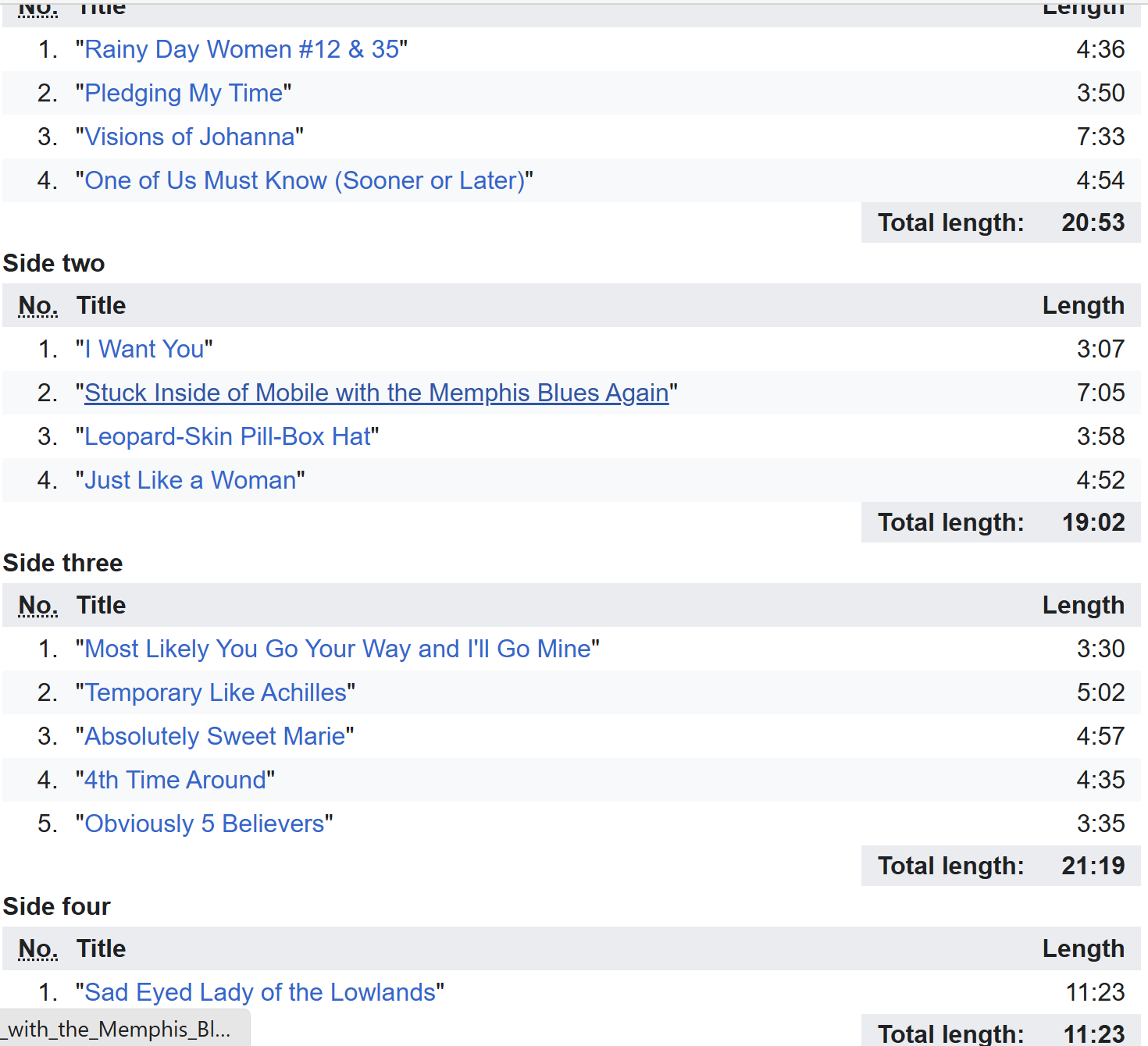
Best tracks: Visions of Johanna, One of Us Must Know, Stuck Inside of Mobile with the Memphis Blues Again, I Want You, Mostly You Go Your Way and I’ll Go Mine, Absolutely Sweet Marie, Temporary Like Achilles, 4th Time Around, Obviously 5 Believers, Sad Eyed Lady of the Lowlands
If I could choose just one track:Β Visions of Johanna
Freshlyworded rating: 9/10
By the sheer number of songs I have chosen as my “Best tracks”, it must be fairly obvious that I think Blonde on Blonde is another great album by the maestro. It’s also Dylan’s longest to date running for nearly 73 min with 14 tracks.
Blonde on Blonde was his seventh studio album, and it’s incredible to think that he was still just 25 years old when he recorded it. Saying that, when you listen to a lot of his songs, including my favourite track on the album, the haunting and beautiful “Visions of Johanna” it’s hard to believe you are listing to such a young man. I seem to always picture Dylan more as he looks now (he turned 85 last month). He sings from a place of wisdom and experience decades beyond his years.
The album begins with a raucous-sounding, honky-tonk track that bears absolutely no resemblance to its title “Rainy Day Women #12 & 35.” It’s a song I would expect to hear walking into a noisy saloon. There is hooting and laughter in the background with the lyrics returning to the theme of “getting stoned” perhaps an allusion to smoking pot and the emerging hippie movement. Dylan seems to have fun singing this song and it’s certainly a lot of fun to listen to as well.
There’s a lot of blues on this album, and Dylan really kicks into Blues-mode with the slow and soulful “Pledging My Time”. There’s some fantastic harmonica playing on this song as there is throughout the album. He is one of the best on the harmonica.
Then comes one of his masterpiece tracks, ‘Visions of Johanna”. I just love this song and have listened to it multiple times including out of sequence and on its own. It kicks off with Dylan on the harmonica and is filled with stunning and complex poetry, with verses like
In the empty lot where the ladies play blindmanβs bluff with the key chain And the all-night girls they whisper of escapades out on the βDβ train We can hear the night watchman click his flashlight Ask himself if itβs him or them thatβs really insane
I also love the lines: But Mona Lisa musta had the highway blues/ You can tell by the way she smiles
This is constant feature of Dylan’s songs, especially the long poetic ones, him drawing in elements from art, fiction, popular culture, current affairs. He has this ability to absorb and process so much going on around him and then translate it into song.
I can’t claim to know exactly what is going on in this song, it just works on so many levels, the words and the music are paired perfectly.
I also really loved “One of Us must Know which looks back at a relationship, and has an uplifting feel courtesy of the melody and backing band as well as being very moving with lines like:
When I saw you say βgoodbyeβ to your friend and smile I thought that it was well understood That youβd be cominβ back in a little while I didnβt know that you were sayinβ βgoodbyeβ for good
‘I Want You” is a pretty famous Dylan track. It has a lighter, almost pop-like sound and some absolutely terrific lyrics. As with all Dylan songs, there’s a lot of dense imagery and deeper meaning buried behind the lustful lyrics.
I love the way the song starts, the writing has an effortless, flowing quality
The guilty undertaker sighs The lonesome organ grinder cries The silver saxophones say I should refuse you The cracked bells and washed-out horns Blow into my face with scorn, but it’s Not that way, I wasn’t born to lose you
The undiscovered gem for me on this album is “Stuck Inside of Mobile with the Memphis Blues Again”. It’s a long track, running over nine verses, but is sung at a rollicking pace before slowing down with the plaintiff refrain:
Oh, Mama, can this really be the end To be stuck inside of Mobile With the Memphis blues again
Whilst trapped in Mobile (a town in Alabama in the American South), Dylan recounts strange and disturbing encounters with a cast of eclectic characters including a ragman who won’t talk, a senator showing off his guns, a preacher “with twenty pounds of headlines stapled to his chest” and Shakespeare “in the alley with his pointed shoes and his bells”
The one song I have a slight problem with on the album is “Just Like a Woman”. It’s a pretty famous track, but lines like:
She takes just like a woman, yes, she does She makes love just like a woman, yes, she does And she aches just like a woman But she breaks just like a little girl
are difficult to listen to and no doubt drew allegations of sexism and misogyny. Funnily enough, despite finding this song somewhat unpleasant and distasteful, I found myself humming it on a few occasions. It does have an underlying beauty to it, just a pity about the words (or am I reading too much into it?)
The album then switches direction entirely with “Most Likely You Go Your Way and I’ll Go Mine”, a real stomping bluesy track despite it being another tale of the end of a relationship. He certainly does mine his romantic relationships for musical and poetic inspiration. At the same time, he never resorts to cheesy line or is overly sentimental.
“Temporary Like Achilles” is a really great, slow-moving blues track about love spurned by a hard woman who Dylan questions may have a heart “made out of stone, or is it lime, or is it just solid rock?”
Dylan picks up the tempo with the almost pop-like “Absolutely Sweet Marie” which has some rather obvious sexual connotations with the singer “beating on his trumpet” and having “the fever down in his pockets”
My God, “4th Time Around” is a beautiful song that brings Dylan back to his folksy roots. The song is about the narrator’s twisted, sparring relationship with a tough, no-nonsense woman who tells him, “Don’t get cute” “, The song follows the duelling nature of their relationship The harmonic playing towards the end is sensational.
The penultimate song, “Obviously Five Believers” is a fast-paced roadhouse blues track about a lonely guy yearning for his lover to return, whilst trying to make it on his own.
Then the album slows way down “for Sad Eyed Lady of the Lowlands”, another undiscovered gem. Dylan’s voice takes on a more gravely tone and the song is fill of highly poetic imagery relaying how he feels about the subject of the song, understood to be Dylan’s wife of the time, Sara Lownds. Running to over 11 minutes, it’s one of those Dylan tracks that just sucks you right in – in an almost hypnotic way.
With your holy medallion which your fingertips fold And your saintlike face and your ghostlike soul Oh, who among them do you think could destroy you?
It’s a great end to a fantastic album, that really shows the depth of Dylan’s musical range (blues, pop, folk, honky tonk, fast and slow paced) and his songwriting abilities
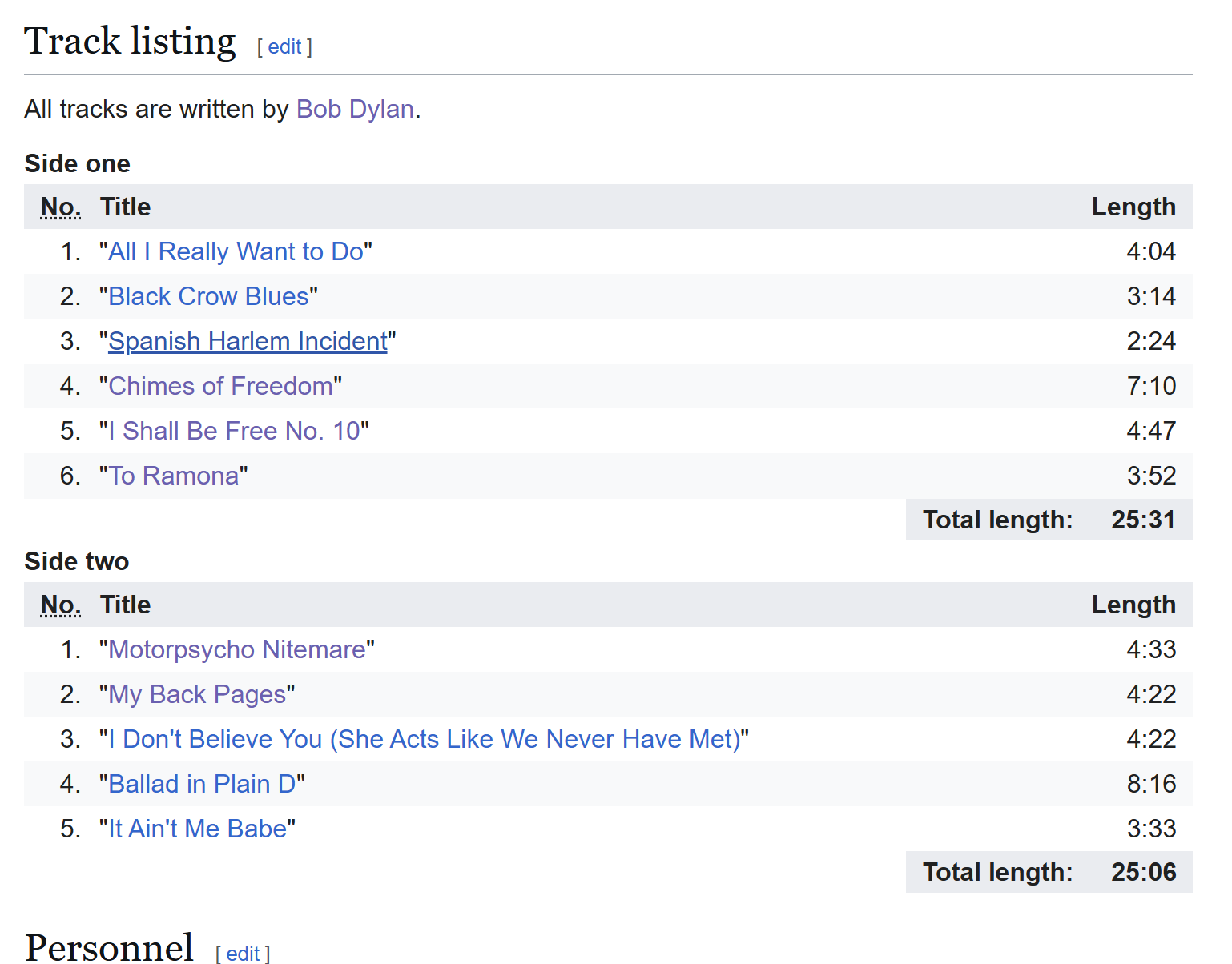
Best tracks: All I Really Want to Do, Chimes of Freedom, To Ramona, My Back Pages, It Aint Me Babe
If I could choose just one track: My Back Pages
Freshlyworded rating: 8/10
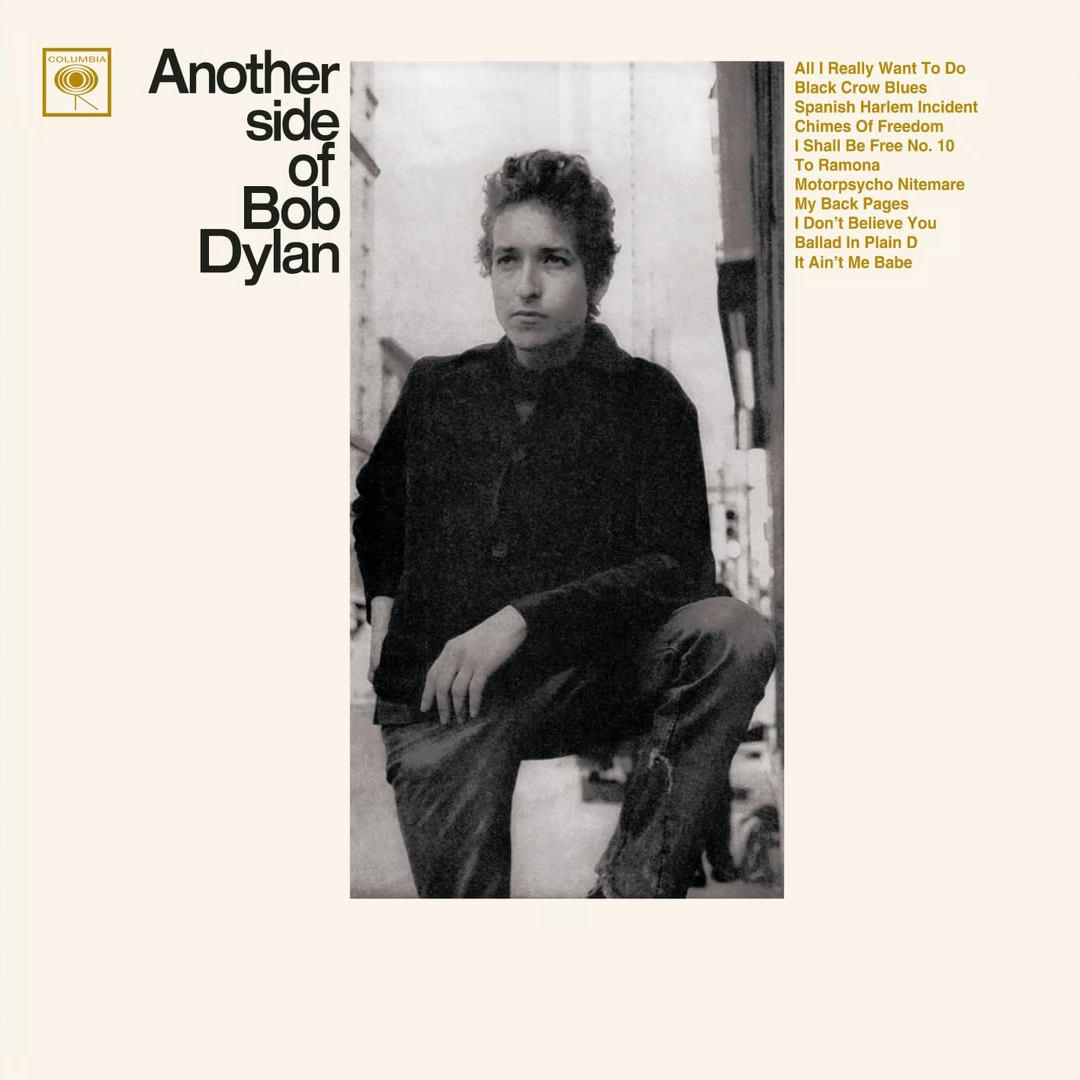
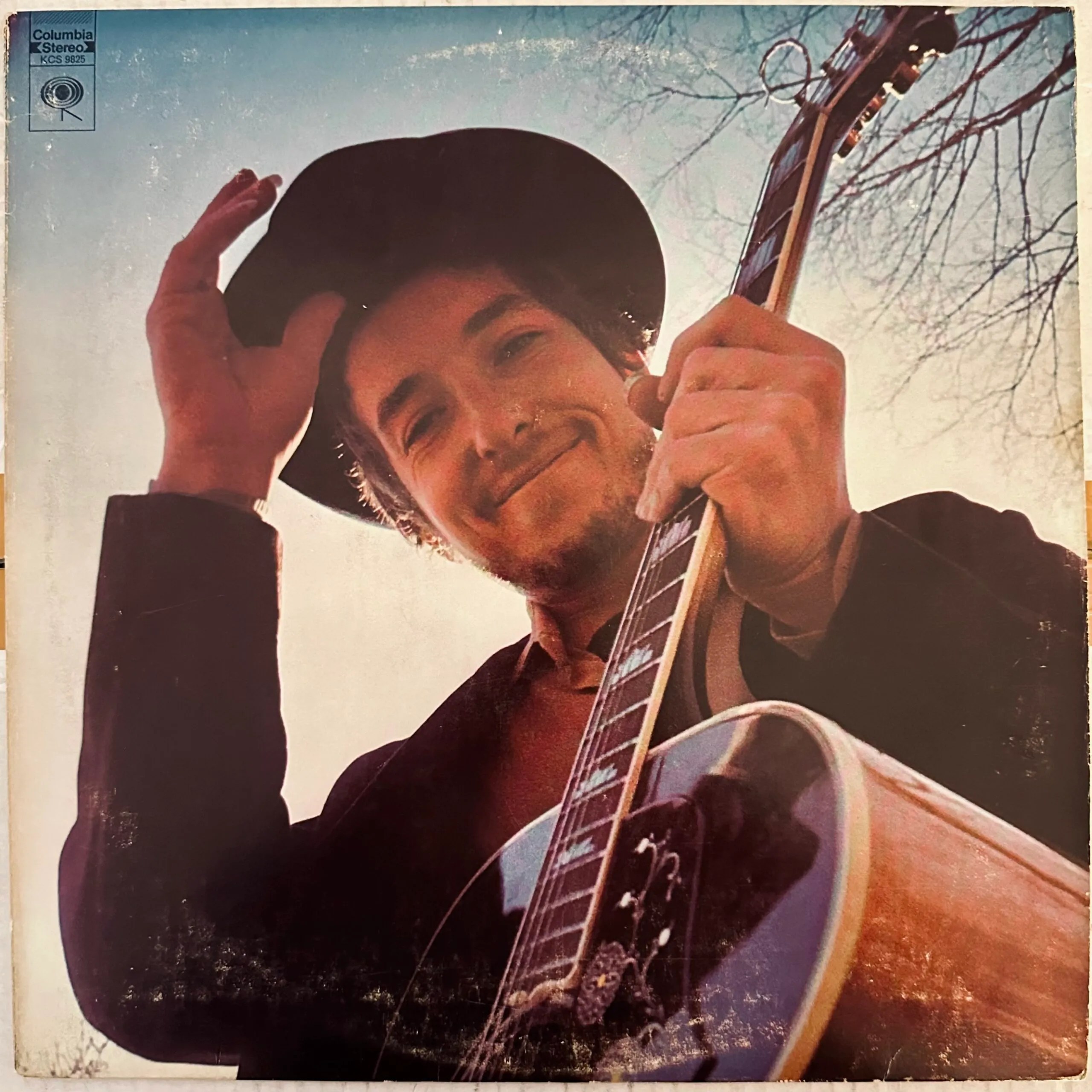
Album cover, copyright Columbia Records. Low-res version used for review purposes under fair use
One of the great pleasures of listening to the Dylan albums in the order they were recorded is discovering new musical gems by the maestro, and seeing his talents and skills evolve.
On “Another Side of Bob Dylan”, there are a bunch of hidden gems, in addition to a number of classics I already knew well.
Among the new tracks I discovered on this great album and which I have listened to many times is the intriguing “My Back Pages” and its thought-provoking refrain: “Ah, but I was so much older then/I’m younger than that now.”
I’ve pondered a fair bit on that phrase, which seems to go against the conventional idea that we acquire knowledge and wisdom as we get older. For Dylan it may have meant he was reassessing his idealism and “ideas that life is black and white” and his naivety of “fearing not that I had become my enemy” It’s a beautiful song, the lyrics are full of dense poetic imagery.
This reminds of another pleasure I’ve discovered, that of taking the time to listen to each album and get to know the songs and lyrics. I am really delving into Dylan’s poetry and figuring out what he is saying. It reminds of reading poetry when I was studying English at university. “My Back Pages” may not appear on compilations or greatest hits, but it’s a song every Dylan fan should listen to.
Among the other well-known classics on this album are “Chimes of Freedom” in which lightning bolts on a stormy night are transformed into these pulsating symbols of freedom, an image that carries through the powerful song where Dylan praises the “warriors whose strength is not to fight”, the “refugees on the unarmed road of flight” and “evβry underdog soldier in the night”
“To Ramona” is an exquisite, melancholy love song which shows the depth and breadth of Dylan’s songwriting and the softness and emotional tone of his voice when he was at the start of his career.
In keeping with the title of the album, the collection of songs has a more eclectic feel by virtue of the very bluesy, “Black Crow Blues”, the humorous talking blues track “I Shall be Free No. 10″ where he takes on Cassius Clay (Muhammed Ali) and has some fun with rhyming phrases like: 14, 15, 16, 17, 18, 19, gonna knock him clean right outinof his spleen”
I also loved the humorous “Motopsyscho Nitemare” in which Dylan finds himself at a farmhouse seeking a bed for the night and convincing the farmer that he is not a travelling salesman with designs on his daughter “who looked like she stepped out of La Dolce Vita”. There is also references to Anthony Perkins/Norman Bates and the shower scene showing Dylan was hip to the cultural scene at the time. As with most Dylan songs, there is a deeper resonance beyond the humour: the undercurrent of fear amid the Cold War at the time about communist and distrust in rural America.
The album ends with the plaintiff ‘It Aint Me Babe”, a song which has been covered many, many times and has become a folk rock standard.
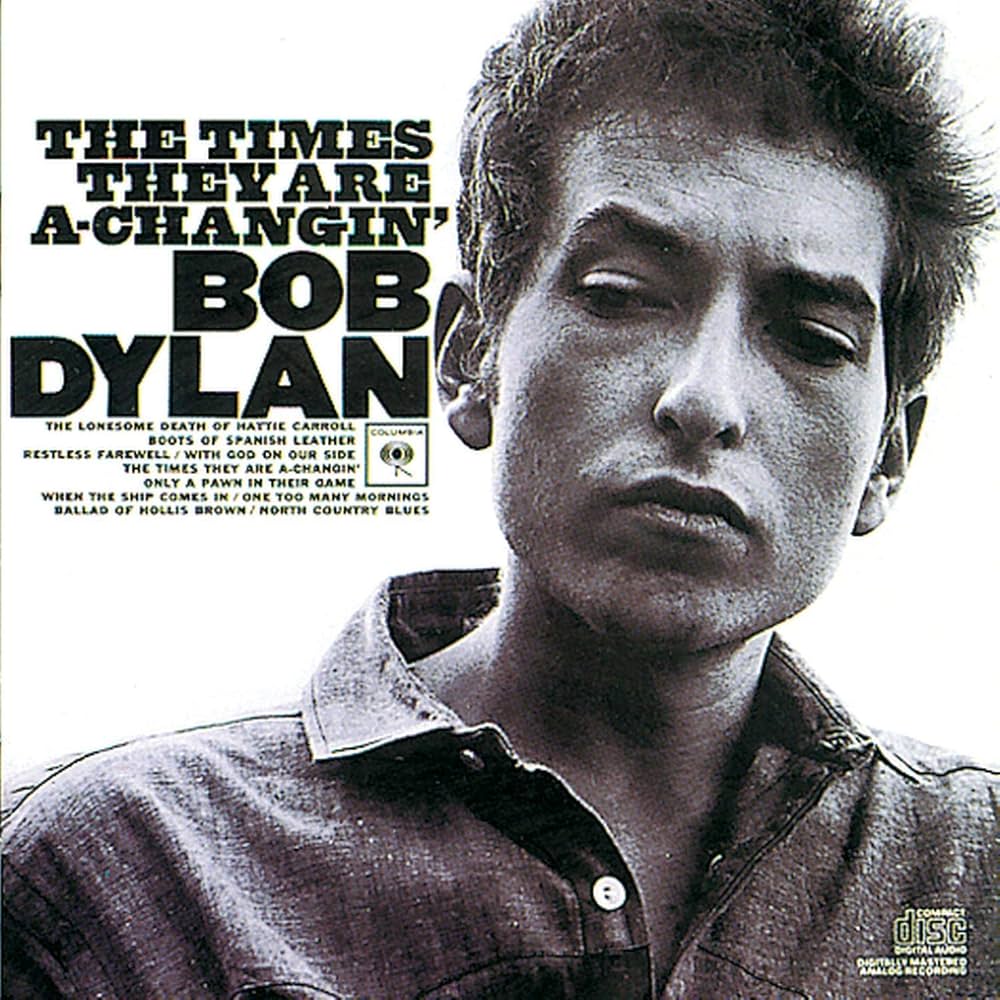
Album cover, copyright Columbia Records. Low-res version reproduced under Fair Use for review purposes
Title: The Times They are a-Changin’
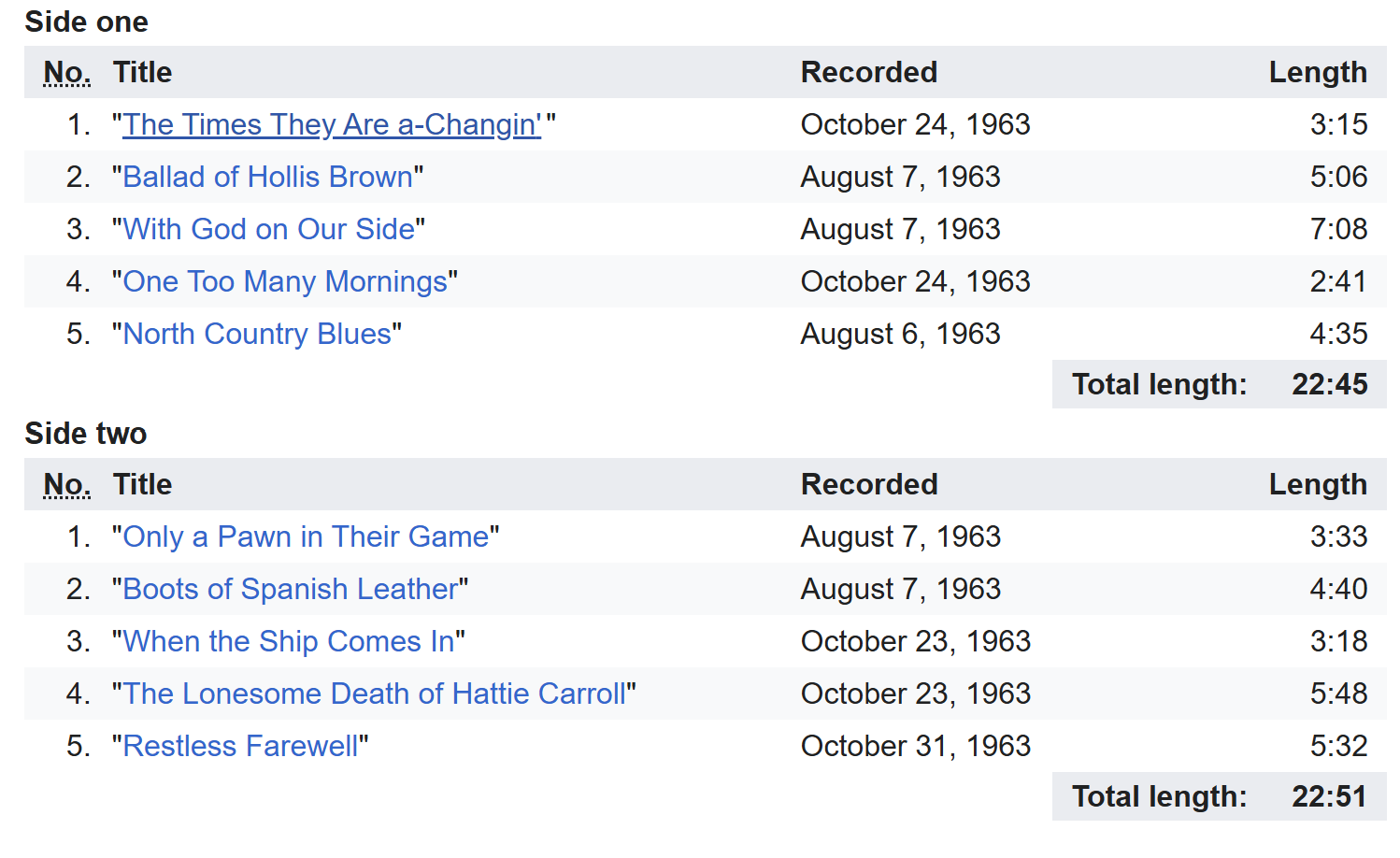
Length: 45min, 36s
Number of songs: 10
Best tracks: The Times They are a-Changin’, Ballad of Hollis Brown, With God on our Side, North Country Blues, Boots of Spanish Leather, When the Ship Comes in, The Lonesome Death of Hattie Carroll
If I had to choose just one track: The Lonesome Death of Hattie Carroll
Freshlyworded rating: 9/10
Thoughts:
While the title track from this album is rightfully one of Bob Dylan’s most famous and revered songs, for me the hero track and an absolute masterpiece on this album (and surely among his best songs ever) is “The Lonesome Death of Hattie Carroll”.
Running just under six minutes, Dylan tells the story of the murder of Hattie Carroll, an African American barmaid, killed in a drunken rage in a Baltimore Hotel in February 1963 by 24-year-old Wiliam Zatzinger, a wealthy, white tobacco grower – and the injustice fuelled by racism that followed.
The song is a perfect combination of vivid poetry, acoustic guitar and Dylan’s plaintive, soulful voice.
Dylan wrote the song just six months after Carroll was murdered and it no doubt struck a chord among the civil rights movement at the time. Every sentence of the song is wonderful.
Zantzinger killed Hattie Carroll, Dylan sings: “With a cane that he twirled around his diamond ring finger” and after his arrest “Reacted to his deed with a shrug of his shoulders”.
He contrasts the Zantzinger’s wealth and high society connections with Carroll’s role as a servant “Who carried the dishes and took out the garbage”.
A few months later, “in the courtroom of honor” Dylans sings of the judge who “Stared at the person who killed for no reason” and then in a devastating line “handed out strongly for penalty and repentance William Zantzinger with a six-month sentence”.
As he tells the story of Hattie Carroll’s murder Dylan sings the repeated refrain: “But you who philosophize, disgrace and criticize all fears Take the rag away from your face, now ain’t the time for your tears.”
After singing how Zantzinger literally got away with murder, Dylan ends the song with: Oh, but you who philosophize, disgrace and criticize all fears. Bury the rag deep in your face for now’s the time for your tears“.
Just brilliant!
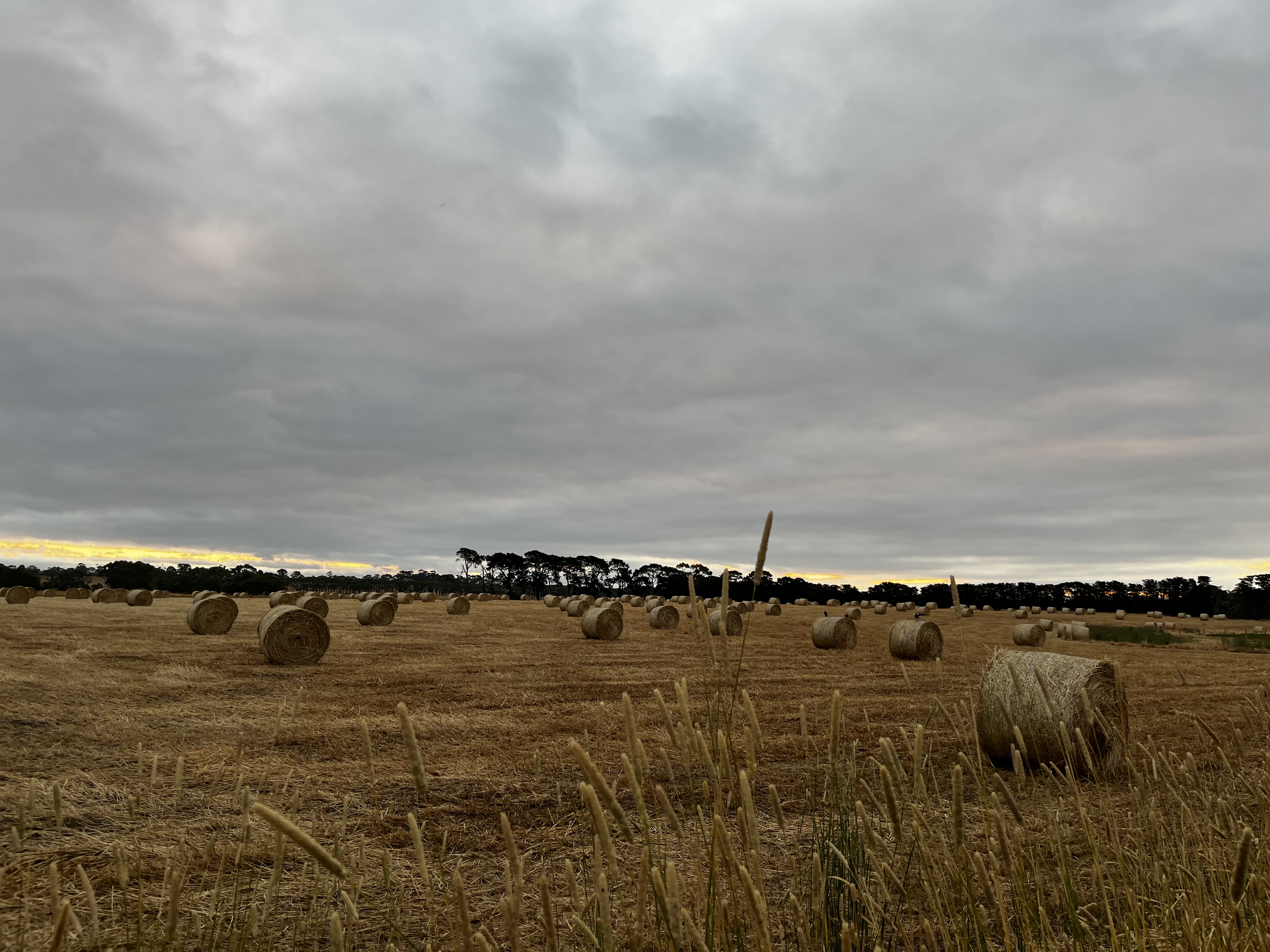
I listened to this song and all the other nine tracks of this album whilst walking my dog along quiet country roads and sleepy suburban streets in Lancefield north of Melbourne (where I live) and on holiday in Birregurra, a small town in the Otways region of Victoria. Both were the perfect backdrop for letting the wonderful storytelling songs of this album seep deep into my bones.
Hay bales in a field in Birregurra, Victoria
Alongside the Lonesome Death of Hattie Carroll, I of course loved The Times They Are-a-Changing, a universal anthem about profound change that’s coming to society. At the time it was recorded, this change was the civil rights and anti-war movement but it’s wonderful lyrics still inspire people today who are pushing for change amid the punishing regimes governing the world:
Come mothers and fathers Throughout the land And don’t criticize What you can’t understand Your sons and your daughters Are beyond your command Your old road is rapidly agin’ Please get out of the new one If you can’t lend your hand For the times they are a-changin’
I also loved another haunting, narrative song, “Ballad of Hollis Brown” which tells the story of a poverty-stricken South Dakota farmer and the events leading up to a desperate act.
“With God on Our Side’ is a song that like “The Times They are a-Changing” reverberates loudly today, with its mockery of how believing in God justifies acts of war and America’s superior moral position.
“North Country Blues” is a wonderfully melodic, yet dark song sung in the first person about growing up in an iron ore mining town, where the work eventually dries up and the mine is closed
“Only a Pawn in their Game” is another powerful political song about the murder of a civil rights activist Medgar Evars, while another favourite track of mine on the album is the very catchy “When the Ship Comes in” which has a happy and triumphant feel to it.
The slow and contemplative “Restless Farewell” is a fitting end to a brilliant album, and also a great way to end an evening country stroll.
For me, this is Dylan’s best album of the three I have listened to and reviewed so far. Incredible that he was only 22 and 23 when he wrote and recorded all these amazing tracks.
I came up with the idea to listen and review every single Bob Dylan studio album out of the blue, on New Year’s Eve, 2025. (I guess you could call it a kind of New Year’s resolution).
It seemed like a cool and interesting project, and one that I could do easily with that great modern invention: Spotify.
Imagine having to buy or borrow the 40 albums that the prolific Dylan recorded over the past 63-odd years. It would be quite the task and bloody expensive too.
Why Bob Dylan? I, like millions of other people, have long admired his incredible songwriting, guitar playing and unique singing style.
As a child and then as a teenager I’d heard of Bob Dylan and some of his most famous signature tracks (“Like a Rolling Stone”, “Blowin’ in the Wind”) but I only really got into his music when I purchased a three-CD boxed collection called “Biograph” which had 53 tracks recorded between 1961 and 1981. It introduced me to a much wider collection of Dylan songs, many of which became some of my favourites: “The Groom’s Still Waiting at the Altar“, “Tangled Up in Blue“, “Senor“, “Solid Rock” and “Blind Willie McTell“.
I have since listened to a lot of Dylan albums (at least a dozen) and some of my favourites are “Blood on the Tracks“, “Desire” and “Street Legal“.
But there are so many albums and songs of his I have never heard, so why not take a deep dive into his enormous catalogue and see what other gems I can discover.
A couple of important things to mention. I’ve deliberately not read other reviews of the albums I have listened to before writing my own. I didn’t want to be swayed by the opinions of others. These are purely my opinions and impressions after hearing the album.
However, I have looked up the songs to see if Dylan wrote them himself, to read the lyrics and to do a bit of research about some of them.
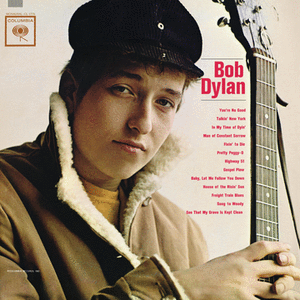
Album cover, Copyright Columbia Records. Low-res version used under Fair Use for review purposes.
So here it goes. Number 1 of 40, Bob Dylan’s first album.
Bob Dylan (1962)
Length: 36min, 54 sec
Number of songs: 13
Best tracks: All of them, but top picks: The House of the Rising Sun, Baby Let me Follow You Down, In My Time of Dying, Talkin New York
If I had to choose choose just one track: Baby Let me Follow You Down
Freshlyworded rating: 9/10
Thoughts:
Released after Dylan had begun to make his name as a folk singer in New York’s Greenwich Village art, music and poetry scene; his unbelievable debut album was simply titled Bob Dylan. He was 20 or 21 when he recorded it.
The album cover features a fresh-faced (one could almost say baby-faced) Dylan his fingers clasping the neck of his acoustic guitar. He’s wearing a winter jacket with the collar turned up, yellow sweatshirt underneath and a black cap. He stares at the camera in a rather contemplative, serene pose.
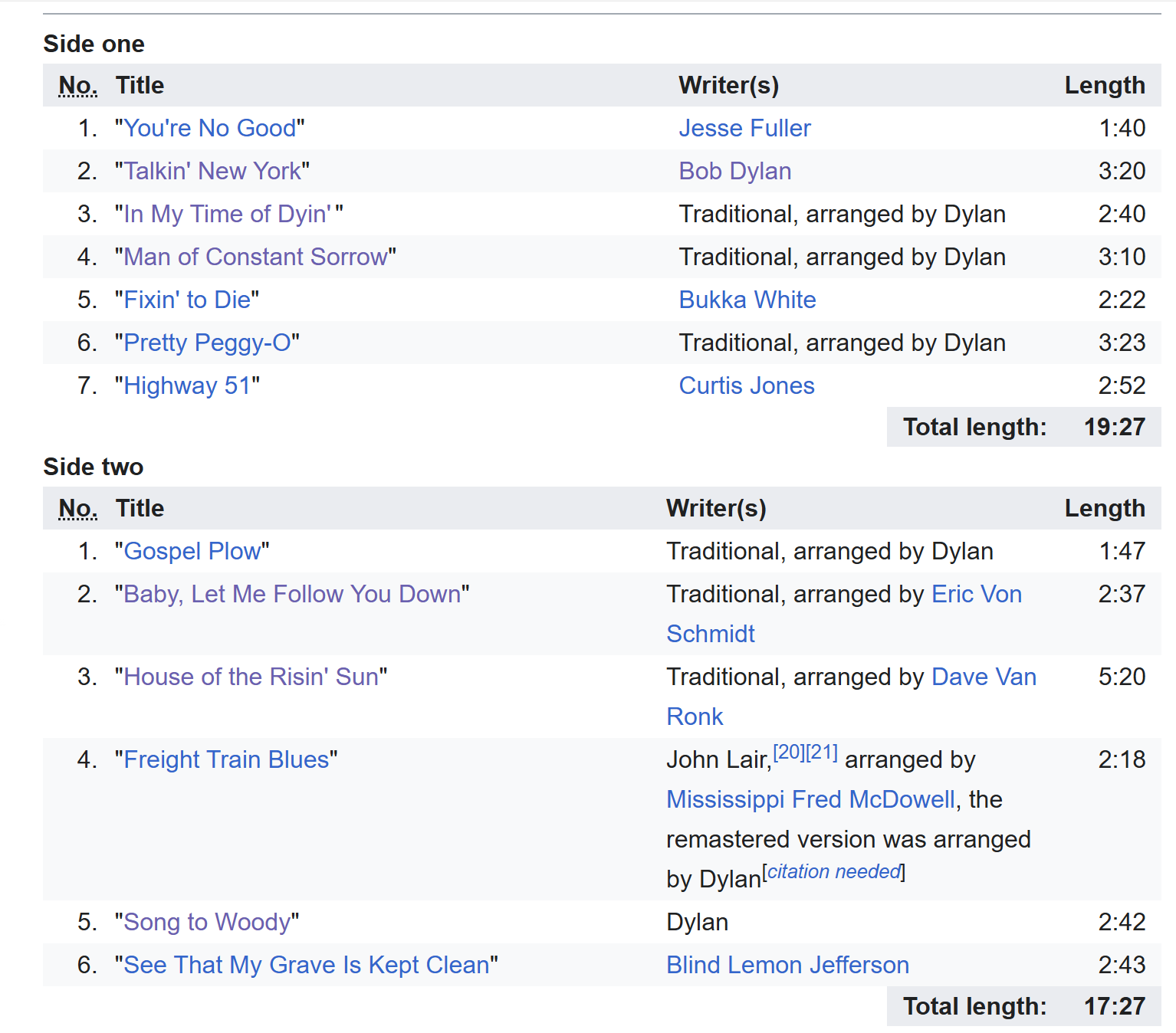
I’d give this album 10/10 but have stuck with 9/10 because nothing in life is perfect. Also, to my surprise, Dylan only wrote two of the songs on the album. They are “Talking New York” about his arrival in New York from Minnesota and trying to make it in Greenwich Village. It was the first song Dylan ever wrote and recorded and showcases his songwriting and storytelling abilities. It really takes the listener back to that time, when Bob Dylan was just a young kid with a guitar and (excuse the corniness) ” a dream”.
I walked down there and ended up In one of them coffee-houses on the block I get on the stage to sing and play Man there said, “Come back some other day You sound like a hillbilly We want folksingers here”
The other song he wrote for the album was a “Song to Woody” which was a tribute to his idol, folk singer Woody Guthrie.
It includes Dylan’s amazing version of the classic American folk song “Man of Constant Sorrow” (a great version also made its way into the Coen Brother’s movie O Brother, Where Art Thou?) and an American gospel song written by Blind Willie Johnson “In My Time of Dying”.
Other standouts are Dylan’s soulful and foreboding version of “The House of the Rising Sun” and one of my favourite Dylan songs, his rendition of traditional folk song, “Baby, Let Me Follow You Down” where he begins the recording telling listeners that he first heard sung by blues guitarist Eric Von Schmidt in the “green pastures of Harvard University”.
Listening to this album, it make sense why many fans were outraged when Dylan started playing the electric guitar, given how deeply he was initially embedded in folk music.
If you’re looking to get into Dylan, there is not better place to start then his sensational debut album.