It has been my custom, on this humble blog, to write reviews (often quite badly, but perhaps sometimes entertainingly) of the books I have read.
I’ve gathered them in one spot on the Freshlyworded virtual bookshelf, mostly for my own nostalgic pleasure, to peruse from time to time and to remind me of what I have read over the years. At worst, its fantastically eclectic mix of genres, themes and styles.
I hope it might also provide some recommendations for friends and strangers who may be looking for a tome to entertain them, and perhaps an escape from Netflix etc.
As, I have fallen far behind on the books I have read and not yet reviewed, I’ve decided to gather mini reviews of the last four books I have read – Oscar Wilde’s The Picture of Dorian Gray, David Sedaris’s The Best of Me, Paul Auster’s Moon Palace and Esther Freud’s Hideous Kinky in one handy blog post, sparing my dear reader the lengthy, waffling and rambling diatribes I tend to succumb to when writing reviews.
While it’s hard to find too many commonalities across the four books – Wilde and Auster’s are novels of exquisite imagination set in big cities (London and New York), while Sedaris and Freud’s works are highly autobiographical and deeply observational stories – I can confidently say that all are the product of wonderfully entertaining storytellers that bring characters to life on the page through their precise and elegant writing.
The Picture of Dorian Gray by Oscar Wilde
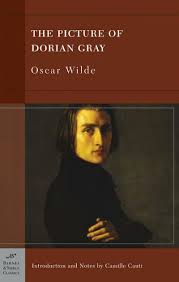
Oscar Wilde, who famously said “Books are well written, or badly written. That is all” penned one of the best works of Victorian Gothic fiction, The Picture of Dorian Gray, in 1890.
An absolutely wicked and very dark tale about how vanity and the pursuit of pleasure can destroy the soul, it was an absolute pleasure to read it for the second or maybe third time. From the very first page, where we meet the artist Basil Hallward painting the portrait of young, beautiful Dorian Gray in a stately London home, Wilde transports you to upper class world of Victorian England.
Wilde depicts the inner moral decline of Gray, who succumbs to the “new hedonism” promoted by the aristocratic Lord Henry, and goes from a innocent “young Adonis” to a cruel, murderer frightened of his own shadow. While Gray retains his youthful looks, the painting hidden up in the attic of his Mayfair townhouse grows hideous, depicting the corruption of his soul.
An aspect I loved about Wilde’s book is that the “monster” of the gothic tale is handsome young man, with evil growing inside him, rather than the real monsters that inhabit Bram Stoker’s Dracula or Mary Shelley’s Frankenstein. Forget the numerous film adaptions of the book, and read’s Wilde’s brilliant, dark novel.
Rating: 9/10
The Best of Me by David Sedaris

I was pretty late discovering the wonderful writing of David Sedaris, whose celebrated short stories, fables and accounts of his own life have turned him into one of America’s most celebrated humorist and best selling authors.
A friend lent me a copy of a collection of his stores, Holidays on Ice, published in 1997, that included a retelling of his experiences working as a Christmas Elf in Macy’s Department store in New York
Then I came across Sedaris via the great Radio Show/Podcast This American Life. In one episode he read aloud his story about the death of his sister Tiffany, who committed suicide after a troubled life (Now we are five). In another episode, host Ira Glass meets with Sedaris in Paris, where the writer had lived for two years with his boyfriend Hugh. Sedaris takes Glass on an eventful tour of Paris sharing anecdotes of misadventures with the French language and the dangers of buying the wrong butter
Sedaris narrates his own stories with a delightful weariness in his mid-Western voice. He has an almost magical ability to write as if he is confiding only to his reader.
The Best of Me is an anthology of favourite works hand-picked by Sedaris. It begins with a delightfully wicked tale entitled “Glen’s Homophobia Newsletter Vol. 3 No. 2” where Glen (perhaps Sedaris’s alter-ego) describes his brief and doomed friendship with the attractive male cashier at Dave’s Kwik shop. It’s both very funny and unsettling, descriptions which apply to a lot of the stories contained in The Best of Me.
While I enjoyed some of his fable-like fictional stories like Christmas Means Giving, where rivaling super-rich neighbours try to outdo each other’s charitable acts in the most hideous fashion, my favourite stories are the one Sedaris tells about seminal moments in his own life particularly those about his family. Sedaris grew up with five siblings, including the actress and comedian Amy Sedaris.
Sedaris combines both tenderness and great humour in his writing, which is never overly sentimental or lecturing, but always insightful whether it be about relationships, politics, culture or identity.
Many of his stories explore the relationship with his father, who treated him with disdain and unkindly in his youth, but who softened into someone almost likeable as he aged.
To get a taste of Sedaris’s unique voice, you can listen to him narrate the story of his father’s final days in the achingly poignant Unbuttoned via the New Yorker magazine website. Unbuttoned is one of the stories contained in the anthology.
You can also read online – Dentists without Borders – which was first published in The New Yorker in 2012.
You can also listen to him read Now we are five and Americans in Paris on This American Life and dozens of other episodes featuring his stories and essays.
While his writing is a platform to explore his own upbringing, identity, phobias and personality, Sedaris has this amazing ability to make the reader feel good about being alive in a world of contradictions and craziness.
Rating: 8/10
Moon Palace by Paul Auster

I hadn’t realised how many Paul Auster books I had read until I browsed my bookshelf at home, after reading his work of magical realism Moon Palace.
Here I found Mr Vertigo (1994), The Book of Illusions (2002) and Oracle Night (2003).
I also know of Auster through two screenplays he wrote for the movies Smoke, and its follow-up Blue in the Face, both starring Harvey Keitel, who plays the owner of a Brooklyn cigar shop.
Though I don’t remember all the plots in detail, I have a clear memory of the sheer pleasure in reading those books and the sweetness of the movies, especially Smoke.
Auster, is one of the modern greats of American Literature, and has been touted as a potential recipient of the Nobel Prize of Literature. Were he to win it, he would be one of the most accessible and worthy recipients (the prize is often in my opinion given to writers no one has heard of (Abdulrazak Gurnah in 2021?) apart from university professors of English literature.
Auster is a wonderful storyteller and masterful creator of characters, that often draw on his own personal history. Many of characters reappear in his books, at different ages and stages of their lives.
Moon Palace is narrated in Holden Caufield-like fashion by the introverted, intense and tortured orphan Marco Stanley Fogg. It begins with Fogg nearly starving to death in his sparse New York apartment after deciding to “live dangerously” and simply live off the proceeds of the mountain of books he has inherited from his late Uncle Victor. Later he finds love in the arms of the beautiful and kind Kitty Wu and then a live-in job reading and carrying out chores for a blind old, wheel chair-bound man called Thomas Effing in his large Manhattan apartment.
Along the way, all sorts of strange and seemingly unlikely (but believable in the hands of Auster) coincidences take place throughout Marco’s epic, modern odyssey that take him from streets of New York to the sparse wilderness of the American Mid-West and that bring him closer to knowing his back story and finding his identity.
As with other Auster books, there are “stories within stories” as the reader is swept down portals of time and memory. If you’re looking to make a start on the oeuvre (yep, fancy word – look it up!) of Auster, magical and mystical Moon Palace is a good place to start.
Rating: 8/10
Hideous Kinky by Esther Freud

I thought I’d be a bit more enthralled by Esther Freud’s autobiographical tale about her stint living in Morocco with her aimless mother Julia and older sister Bella. (Freud is the daughter of the legendary portrait painter Lucian Freud and the great granddaughter of the founder of psychoanalysis Sigmund Freud).
I picked the book at random from my gigantic 1001 Books You should Read Before You Die and was looking forward to reading it as I’d travelled through Morocco with my wife when we backpacked in 2010 and been entranced by its ancient and bustling cities with their overflowing markets, maze-like laneways and lively squares like the incredible Jemaa el-Fnaa, the main square and marketplace in Marrakesh.
Indeed we stayed in just the kind of cheap hotel Lucy, the six-year-old narrator stays in with her mother and sister (the wonderfully named Hotel Moulay Idriss) close to the Jemma el-Fnaa.
Lucy precociously narrates the family’s adventures across the country, the curious sights she sees in the markets, squares and festivals, the relationships forged with local characters like Bilal (her mother’s Moroccan lover and a father figure for her kids) and the eccentric expats they meet, like the wealthy “prince” Luigi Mancini. The children seem to have a supernatural power to to know which adults to trust, a fortunate quality given their mother is often absent, in spirit if not sometimes physically.
The family are constantly having to find ways to make ends meet as they wait for money to arrive, making dolls to sell in the market, or a few pieces of fruit they have gathered. One “holiday” has them sleeping outdoors on a beach for days.
Esther Freud’s beautiful descriptions transported me back to my time in Morocco, especially Marrakesh, which was wonderful. The novel is magical in parts, but I was also quite bored at times by all the wondering about and waiting around. Perhaps I need to read it again (It’s only 186 pages). I’d also like to watch the movie starring Kate Winslet.
Rating: 7/10
 It must say something about the impact
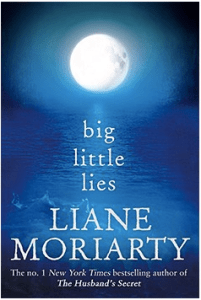 I suppose I consider myself something of a pioneer for reading two novels – Big Little Lies and The Husband’s Secret – by the best-selling Australian writer Liane Moriarty.
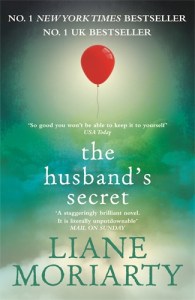 The Husband’s Secret is a modern-day take on the fable of Pandora and her box. A much darker book, it explores how the lives of three young woman are impacted by the murder a young girl that happened 30 years ago and a letter – found by accident – that reveals a terrible truth.

