Exquisite prose: reading ‘A Single Man’ and ‘Mr Norris Changes Trains’ by Christopher Isherwood

If there was a poll of the finest writers of the 20th Century, surely Christopher Isherwood would be near the very top of that list.

Over the last few months I’ve had the pleasure of reading three of his novels, starting with the highly autobiographical Goodbye to Berlin, which inspired the hit movie Cabaret and which I have already reviewed on this blog,

After that I read Isherwood’s short novel ‘A Single Man’ (made into a successful 2009 movie by fashion designer Tom Ford) and another set in Berlin, ‘Mr Norris Changes Trains’.

It’s been a delight to read such a lyrical and psychological writer, who with a few beautifully formed sentences can bring a scene to life in the reader’s mind and recreate the inner mental workings of his protagonists.

This ability to penetrate deep into the psyche of his characters is evident in A Single Man, a short novel that chronicles the final day in the life of George, a severely depressed gay college professor mourning the loss of his lover Jim.

It’s set in suburban Los Angeles in 1964. Isherwood, who was also gay, emigrated to the US and moved to California in 1939, to escape the more repressive society in his native England.

The extremely compact timeline for the book allows Isherwood to really focus on the inner workings of George’s depressed, but also buzzing mind as he navigates the challenges of the day and deals with his grief and the people and places that trigger memories of Jim.

The opening of the book is quite startling, and reveals another strength of Isherwood’s writing: his creativity. It begins with George waking up in a discombobulated state – an “it” trying to identify the “I” – as he looks at his tired and sad self in the mirror.

“What it sees there isn’t so much a face, as the expression of a predicament. Here’s what it has done to itself, here’s the mess it has somehow got itself into during its fifty-eight years, expressed in terms of a dull, harassed state, a coarsening nose, a mouth dragged down by the corners into a grimace as if at the sourness of its own toxins, cheeks sagging from their anchors of muscle, a throat hanging limp in tiny wrinkly folds.”

It’s just one example of Isherwood’s marvelous descriptive powers and the poetry of his writing.

By the the time the “it” has gotten dressed, spent some time on the toilet from where he observes the quiet suburban streets and some of his neighbours below and eaten some breakfast, George is himself again and ready to set off on the first challenge of the day: the commute to the work.

Throughout the novel, there is a sense that George is trying to swim back to the surface of the here and now, to reconnect with people and the world, even as memories of the past and what he has lost drag him back down.

On his way to teach an English class at a community college, George’s thoughts drift elsewhere as he drives along Los Angeles’s busy highways on auto-pilot.

“And now as he drives, it is as if some autohypnosis exerts itself. We see the face relax, the shoulders unhunch themselves, the body ease itself back into the seat. The reflexes are taking over…”

As he is now free to direct his attention elsewhere, George engages in a fantasy that involves unleashing a virus against homophobes, and then going on a killing spree. Then his vengeful daydream is ended by his arrival at the campus as he “rapidly puts on the psychological make-up for this role [of well-liked, suave English professor] he must play”.

Amid all the despair, and the sense of hopelessness, there is also fleeting pleasure and the meaningfulness it means to George.

There is the homo-erotic pleasure of watching two young men playing tennis in the heat, the “exhilarating” pleasure of watching the students in his class smile back at him with those “bright young eyes”, the pleasure of conversation with a young, male student called Kenny (with whom he is infatuated), the pleasure of revenge, when visits the dying Doris, with whom the late Jim had an affair, and the simple pleasure of companionship and getting drunk when George changes his mind and decides to accept a dinner invitation from his friend Charley, a single mother and fellow Brit.

In a sense then, George’s story is life-affirming: through the veil of immense grief we can still find space to enjoy those moments that give life a quite rich meaning.

“I am alive” George says to himself as he drives back from visiting Doris to a workout at the gym.

“And life-energy surges hotly through him, and delight and appetite. How good to be in a body – even this old beat-up carcass – that still has warm blood and live semen and rich marrow and wholesome flesh.”

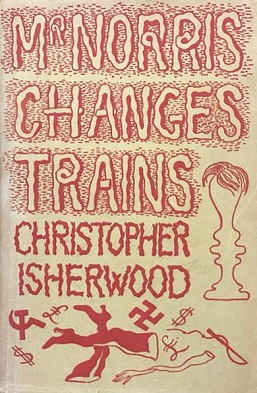
Mr Norris Changes Trains is a more traditional plot-driven suspense novel, but still showcases Isherwood’s ability to create fascinating characters that intrigue and beguile the reader.

Set mainly in Berlin, it tells story of the friendship between a young English tutor called William Bradshaw (the story’s narrator, and a kind of fictional alter ego for Isherwood whose full name was Christopher William Bradshaw Isherwood) and Arthur Norris, a charming and rather posh older gent fond of using phrases like “My dear old boy”.

The pair meet on a train travelling from the Netherlands to Berlin when William encounters Arthur in a highly agitated state as they await the arrival of immigration officials and surmises that Arthur is mostly like a smuggler.

William soon learns that Arthur is entangled in all sorts of shady and clandestine activities amid the backdrop of a looming war in Europe

Like Isherwood’s ‘Goodbye to Berlin’ much of the action unfolds as Berlin finds itself at the crossroads of two great epochs: the end of its famous decadent, free-spirited and Golden era of music, art and cinema and the rise of brutal fascism under dictator Adolf Hitler’s Nazi movement.
Bradshaw, who earns his living as a tutor, is drawn into Arthur’s exciting and dangerous world attending rowdy communist party gatherings, bearing witness to his strange business dealings (where Arthur is threatening by his evil business associate Schmidt) and joining Arthur’s bohemian entourage at Berlin’s rowdy bars and night clubs.

On one occasion Norris disappears from the party, and Bradshaw, goes in search for him only to find him engaged in a sado-masochist ritual, which he at first mistakes for Arthur (whom he can hear crying out “Nein, Nein! Mercy!”) being robbed.

“The first person I saw was Anni. She was standing in the middle of the room. Arthur cringed on the floor at her feet. He had removed several more of his garments, and was now dressed lightly, but with perfect decency, in a suite of mauve silk underwear, a rubber abdominal belt, and a pair of socks. In one hand he held a brush, and in the other a yellow shoe rag.

Olga towered behind him brandishing a leather whip. ‘You call that that clean, you swine,’ she called in a terrible voice. ‘Do them again this minute. And if I find a speck of dirt I’ll thrash you till you can’t sit down for a week. As she spoke she gave Arthur a smart cut across the buttocks. He uttered a squeal of pain and pleasure and began to brush and polish Anni’s boots with feverish haste.

Both comical and shocking, it’s one of the many delightfully entertaining episodes in the book that Bradshaw describes without judgement as he drawn deeper into Arthur’s intrigues, plots and plans.

Arthur Norris as I have since found out is based on Gerald Bernard Francis Hamilton, whose friends included Winston Churchill, the American actress Tallulah Bankhead and the notorious occultist Aleister Crowley, who was his landlord in London in the 1930s. Hamilton, who became known as “the wickedest man in Europe” – was a “fixer” for notorious communist Willi Munzenburg and someone who sold secrets for a living.

Hamilton was also imprisoned for bankruptcy and indecency. According to an article in The Spectator magazine, Hamilton lived a “long and disgraceful life” where everything he did was for money, rather than for political reasons.

Regardless of the nature of his clandestine activities, Hamilton clearly cast a spell over Isherwood who turned him into the more genial, but still Machiavellian wig-wearing conman Arthur Norris.

The novel was a critical and commercial success, but Isherwood later condemned it at making light of the suffering of the people he depicted in it.

Whether or not this is fair critique, is largely irrelevant in my mind as you can, like me, read ‘Mr Norris Changes Trains’ as if it were purely historical fiction and revel in the curiously fascinating character of Mr Norris and his affect on a young, naïve English tutor.

It reminded me of the British noir classic, The Third Man by Orson Welles. ‘No doubt Mr Norris Changes Trains’ would make a brilliant movie in the right hands.
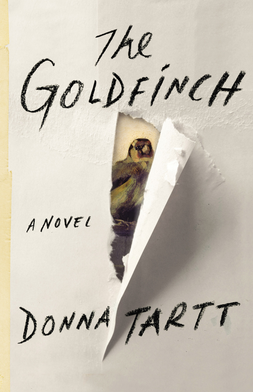
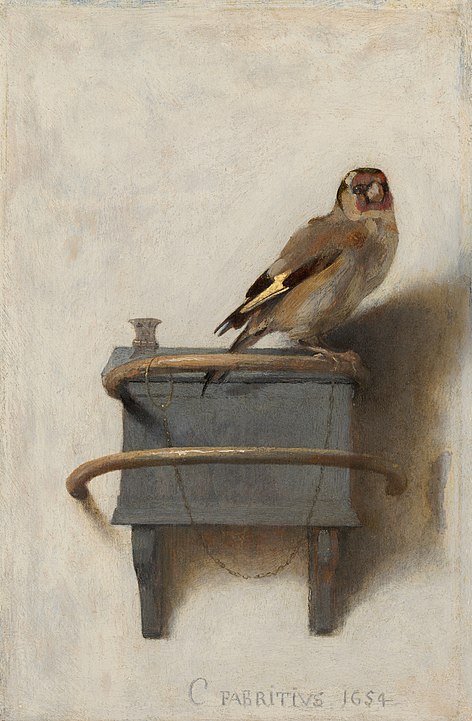
The Goldfinch by Donna Tart: a very long, but engrossing book about a lost boy and a small painting

The Goldfinch is the third novel by American writer Donna Tartt, considered by many to be a literary genius.

Tartt’s two other books are The Secret History, an “inverted detective story” about a college murder, which was published to huge acclaim in 1992 when she was just 29.

This was followed by The Little Friend a mystery adventure novel set in Mississippi in the early 1970s that appeared in book stores in 2002.

The Goldfinch – an epic novel spanning 864 pages – was published in 2013.

By that you can tell that Tartt, who is now 58, painstakingly completed a book about once every 10 years (and we should expect no.4 soon!).

It also suggests an astonishing level of self-confidence and cerebral stamina – you really have to believe in what you are doing to keep going on with the same story and characters for a decade!

However, each monumental effort has paid off. Not only are Tartt’s books best sellers and generally admired by critics, but they have won numerous prizes: The Little Friend won the WH Smith Literary Award while The Goldfinch won the 2014 Pulitzer Prize for Fiction.

“A beautifully written coming-of-age novel with exquisitely drawn characters that follows a grieving boy’s entanglement with a small famous painting that has eluded destruction, a book that stimulates the mind and touches the heart,” said the Pulitzer Prize judges of The Goldfinch.

It’s a pretty good summary of the novel, which begins in a hotel room in Amsterdam as 27-year-old Theodore Decker’s fever-ridden thoughts return to a fateful stormy morning in Manhattan 14 years ago and the last few hours he spent with is beloved mother.

When a storm descends on them, they seek shelter in the Metropolitan Museum of Art, where a terrorist bomb kills his mother a short while later.

Tartt’s description of the violent explosion and its aftermath are exquisite as she brings the terrible chaos and destruction to life on the page as if the reader is also there. Buried in the rubble, Theo finds himself in a “ragged white cave” with “swags and tatters dangling from the ceiling” and as the ground “tumbled and bucked up with heaps of a gray substance like moon rock”. It is descriptive writing at its finest.

Just as powerful and heart-wrenching are the scenes where Theo makes his way back to their empty, darkened apartment, to wait in vain for his mother, “her coffee cup, green glass from the flea market, with lipstick print on the rim” a reminder of her terrible absence.

Also a reminder of his mother, and a vital connection to his last moments with her is the The Goldfinch, a small painting by the 17th century Dutch painter Carel Fabritius that Theo has carried out of the wreckage with him.

The painting is of a “yellow finch, against a plain, pale ground, chained to a perch by its twig of an ankle”. Just before they were separated, Theo’s mother told him this little painting was “just about the first painting” she ever loved. There is also another parallel: Fabritius also died tragically young, caught in an explosion at the gunpowder magazine in Delft in Southern Holland.

I stepped back, to get a better look. It was a direct and matter-of-fact little creature, with nothing sentimental about it; and something about the neat, compact way it tucked down inside itself – its brightness, its alert watchful expression -made me think of pictures I’d seen of my mother when she was small: a dark-capped finch with steady eyes.

The Gold Finch

The intriguing little painting, which uses an art technique called “Trompe l’oeil” (French for ‘deceive the eye’) to create the illusion that depicted objects exist in three dimensions, becomes a kind of living and breathing character in the life of Theodore Decker as he navigates his way as a lost young boy through adolescence into adulthood.

The painting connects him to the last conversation he had with his mother, and so he holds onto it tight over the next 14 years, keeping it hidden as first he lives with the Barbours, the wealthy, dysfunctional family of his bullied school friend Andy, before his absent father – a failed actor who mistreated his mother – appears on the scene with his girlfriend Xanadu and whisks Theo away to a housing estate on the outskirts of Las Vegas.

Here he experiences the vast desert skies and becomes best friends with another of Tartt’s marvelous creations. a delinquent, enigmatic Ukrainian boy called Boris who entertains Theo with tales of his time in Humpty Doo in Australia’s Northern Territory and introduces him to alcohol and drugs.

The Goldfinch by Fabritius

Written in the first person, Tartt’s ability to get inside the head of a guilt-ridden 14-year-old boy dealing with the monumental loss of his mother and his bumpy journey towards adulthood is truly remarkable.

Thankfully though at 864 pages The Goldfinch is not just the story about a boy and his obsession with a painting that reminds him of his mother.

It also focuses in on relationships, and how we need people to get us through trauma, be it the muddled advice of Boris, or Hobbie, the quiet and patient Greenwich Village antique furniture dealer and restorer who becomes a pseudo father figure and mentor to Theo, when he makes it back to New York, after yet more traumatic events.

The Goldfinch may be long, but like Hanya Yanagihara’s epic, “A Little Life” it’s never dull. Each adventure is part of Theo’s journey towards lifting himself out of despair and to the realisation that “maybe even if we are not always glad to be here, it’s our task to immerse ourselves anyway”.

Oscar Wilde, David Sedaris, Paul Auster and Esther Freud: Four short reviews of books by masterful storytellers

It has been my custom, on this humble blog, to write reviews (often quite badly, but perhaps sometimes entertainingly) of the books I have read.

I’ve gathered them in one spot on the Freshlyworded virtual bookshelf, mostly for my own nostalgic pleasure, to peruse from time to time and to remind me of what I have read over the years. At worst, its fantastically eclectic mix of genres, themes and styles.

I hope it might also provide some recommendations for friends and strangers who may be looking for a tome to entertain them, and perhaps an escape from Netflix etc.

As, I have fallen far behind on the books I have read and not yet reviewed, I’ve decided to gather mini reviews of the last four books I have read – Oscar Wilde’s The Picture of Dorian Gray, David Sedaris’s The Best of Me, Paul Auster’s Moon Palace and Esther Freud’s Hideous Kinky in one handy blog post, sparing my dear reader the lengthy, waffling and rambling diatribes I tend to succumb to when writing reviews.

While it’s hard to find too many commonalities across the four books – Wilde and Auster’s are novels of exquisite imagination set in big cities (London and New York), while Sedaris and Freud’s works are highly autobiographical and deeply observational stories – I can confidently say that all are the product of wonderfully entertaining storytellers that bring characters to life on the page through their precise and elegant writing.

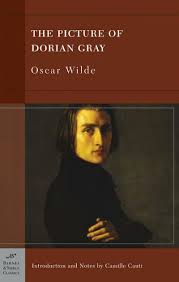
The Picture of Dorian Gray by Oscar Wilde

Oscar Wilde, who famously said “Books are well written, or badly written. That is all” penned one of the best works of Victorian Gothic fiction, The Picture of Dorian Gray, in 1890.

An absolutely wicked and very dark tale about how vanity and the pursuit of pleasure can destroy the soul, it was an absolute pleasure to read it for the second or maybe third time. From the very first page, where we meet the artist Basil Hallward painting the portrait of young, beautiful Dorian Gray in a stately London home, Wilde transports you to upper class world of Victorian England.

Wilde depicts the inner moral decline of Gray, who succumbs to the “new hedonism” promoted by the aristocratic Lord Henry, and goes from a innocent “young Adonis” to a cruel, murderer frightened of his own shadow. While Gray retains his youthful looks, the painting hidden up in the attic of his Mayfair townhouse grows hideous, depicting the corruption of his soul.

An aspect I loved about Wilde’s book is that the “monster” of the gothic tale is handsome young man, with evil growing inside him, rather than the real monsters that inhabit Bram Stoker’s Dracula or Mary Shelley’s Frankenstein. Forget the numerous film adaptions of the book, and read’s Wilde’s brilliant, dark novel.

Rating: 9/10

The Best of Me by David Sedaris

I was pretty late discovering the wonderful writing of David Sedaris, whose celebrated short stories, fables and accounts of his own life have turned him into one of America’s most celebrated humorist and best selling authors.

A friend lent me a copy of a collection of his stores, Holidays on Ice, published in 1997, that included a retelling of his experiences working as a Christmas Elf in Macy’s Department store in New York

Then I came across Sedaris via the great Radio Show/Podcast This American Life. In one episode he read aloud his story about the death of his sister Tiffany, who committed suicide after a troubled life (Now we are five). In another episode, host Ira Glass meets with Sedaris in Paris, where the writer had lived for two years with his boyfriend Hugh. Sedaris takes Glass on an eventful tour of Paris sharing anecdotes of misadventures with the French language and the dangers of buying the wrong butter

Sedaris narrates his own stories with a delightful weariness in his mid-Western voice. He has an almost magical ability to write as if he is confiding only to his reader.

The Best of Me is an anthology of favourite works hand-picked by Sedaris. It begins with a delightfully wicked tale entitled “Glen’s Homophobia Newsletter Vol. 3 No. 2” where Glen (perhaps Sedaris’s alter-ego) describes his brief and doomed friendship with the attractive male cashier at Dave’s Kwik shop. It’s both very funny and unsettling, descriptions which apply to a lot of the stories contained in The Best of Me.

While I enjoyed some of his fable-like fictional stories like Christmas Means Giving, where rivaling super-rich neighbours try to outdo each other’s charitable acts in the most hideous fashion, my favourite stories are the one Sedaris tells about seminal moments in his own life particularly those about his family. Sedaris grew up with five siblings, including the actress and comedian Amy Sedaris.

Sedaris combines both tenderness and great humour in his writing, which is never overly sentimental or lecturing, but always insightful whether it be about relationships, politics, culture or identity.

Many of his stories explore the relationship with his father, who treated him with disdain and unkindly in his youth, but who softened into someone almost likeable as he aged.

To get a taste of Sedaris’s unique voice, you can listen to him narrate the story of his father’s final days in the achingly poignant Unbuttoned via the New Yorker magazine website. Unbuttoned is one of the stories contained in the anthology.

You can also read online – Dentists without Borders – which was first published in The New Yorker in 2012.

You can also listen to him read Now we are five and Americans in Paris on This American Life and dozens of other episodes featuring his stories and essays.

While his writing is a platform to explore his own upbringing, identity, phobias and personality, Sedaris has this amazing ability to make the reader feel good about being alive in a world of contradictions and craziness.

Rating: 8/10

Moon Palace by Paul Auster

I hadn’t realised how many Paul Auster books I had read until I browsed my bookshelf at home, after reading his work of magical realism Moon Palace.

Here I found Mr Vertigo (1994), The Book of Illusions (2002) and Oracle Night (2003).

I also know of Auster through two screenplays he wrote for the movies Smoke, and its follow-up Blue in the Face, both starring Harvey Keitel, who plays the owner of a Brooklyn cigar shop.

Though I don’t remember all the plots in detail, I have a clear memory of the sheer pleasure in reading those books and the sweetness of the movies, especially Smoke.

Auster, is one of the modern greats of American Literature, and has been touted as a potential recipient of the Nobel Prize of Literature. Were he to win it, he would be one of the most accessible and worthy recipients (the prize is often in my opinion given to writers no one has heard of (Abdulrazak Gurnah in 2021?) apart from university professors of English literature.

Auster is a wonderful storyteller and masterful creator of characters, that often draw on his own personal history. Many of characters reappear in his books, at different ages and stages of their lives.

Moon Palace is narrated in Holden Caufield-like fashion by the introverted, intense and tortured orphan Marco Stanley Fogg. It begins with Fogg nearly starving to death in his sparse New York apartment after deciding to “live dangerously” and simply live off the proceeds of the mountain of books he has inherited from his late Uncle Victor. Later he finds love in the arms of the beautiful and kind Kitty Wu and then a live-in job reading and carrying out chores for a blind old, wheel chair-bound man called Thomas Effing in his large Manhattan apartment.

Along the way, all sorts of strange and seemingly unlikely (but believable in the hands of Auster) coincidences take place throughout Marco’s epic, modern odyssey that take him from streets of New York to the sparse wilderness of the American Mid-West and that bring him closer to knowing his back story and finding his identity.

As with other Auster books, there are “stories within stories” as the reader is swept down portals of time and memory. If you’re looking to make a start on the oeuvre (yep, fancy word – look it up!) of Auster, magical and mystical Moon Palace is a good place to start.

Rating: 8/10

Hideous Kinky by Esther Freud

I thought I’d be a bit more enthralled by Esther Freud’s autobiographical tale about her stint living in Morocco with her aimless mother Julia and older sister Bella. (Freud is the daughter of the legendary portrait painter Lucian Freud and the great granddaughter of the founder of psychoanalysis Sigmund Freud).

I picked the book at random from my gigantic 1001 Books You should Read Before You Die and was looking forward to reading it as I’d travelled through Morocco with my wife when we backpacked in 2010 and been entranced by its ancient and bustling cities with their overflowing markets, maze-like laneways and lively squares like the incredible Jemaa el-Fnaa, the main square and marketplace in Marrakesh.

Indeed we stayed in just the kind of cheap hotel Lucy, the six-year-old narrator stays in with her mother and sister (the wonderfully named Hotel Moulay Idriss) close to the Jemma el-Fnaa.

Lucy precociously narrates the family’s adventures across the country, the curious sights she sees in the markets, squares and festivals, the relationships forged with local characters like Bilal (her mother’s Moroccan lover and a father figure for her kids) and the eccentric expats they meet, like the wealthy “prince” Luigi Mancini. The children seem to have a supernatural power to to know which adults to trust, a fortunate quality given their mother is often absent, in spirit if not sometimes physically.

The family are constantly having to find ways to make ends meet as they wait for money to arrive, making dolls to sell in the market, or a few pieces of fruit they have gathered. One “holiday” has them sleeping outdoors on a beach for days.

Esther Freud’s beautiful descriptions transported me back to my time in Morocco, especially Marrakesh, which was wonderful. The novel is magical in parts, but I was also quite bored at times by all the wondering about and waiting around. Perhaps I need to read it again (It’s only 186 pages). I’d also like to watch the movie starring Kate Winslet.

Rating: 7/10

The end of reading: Zoo Time by Howard Jacobson

zoo-time-coverZoo Time is another very funny, novel by Howard Jacobson, the writer of the Booker Prize-winning The Finkler Question (read my review here) and The Making of Henry (reviewed here)

It’s the story of Guy Abelman, a once successful satirical writer, whose last book, Who Gives a Monkey? was loosely based on his relationship with a chimpanzee-masturbating zoologist at Chester Zoo.

Since then, he hasn’t written a bestseller in years. His books are out of print (available as ‘print on demand’ his new publisher tells him) and worst of all, making their way into the second-hand section of charity book stores.

Indeed this is where we first meet the middle-aged Jewish satirist: outside an Oxfam bookstore in the Cotswolds where he has just stolen a copy of his novel and been apprehended by the police.

Asked why he stole it, Abelman replies that he did not steal it but “released it”.

“The book as prestigious object and source of wisdom is dying,” he tells the constable.

Resuscitation is probably futile, but the last rites can at least be given with dignity. It matters where and with whom we end our days. Officer

In the Cotswolds to speak – or rather be heckled – at another writer’s festival (“The only character I identified with in your book is the one who died,” retorts one reader) Abelman believes the book is all but, dead, because no one reads books anymore, certainly not the clever literary stuff which once won him minor awards.

To confirm this depressing state of affairs, his old publisher, the terminally depressed Merton has just committed suicide, his final words being “Mmm” while his agent, Francis, does not even bother to restock his office bookcase with his old novels when Guy comes to visit.

The party’s over [Francis] wanted me to know. The age of sparing a writer’s feelings was past

To top it all off, Abelman desires to bed his sixty-something mother-in-law, Poppy while his frustrated wife, Vanessa wants him out the house so she can finally finish her own novel.

So badly has Guy run out of ideas, that the best he can do is tell Francis about his idea for a new novel: a plot based around his unrequited passion for Poppy.

If he’s sounding a bit like a neurotic, over-sexed Jewish character dreamt up by Woody Allen or Curb Your Enthusiasm’s Larry David – albeit a very British one – that’s probably a fair assessment.  And if you delight in that type of Freudian black humour and cynicism you will enjoy reading Zoo Time.

If not, I would suggest giving it a wide berth.

Indeed we spend the entire novel inside the head of the sentimental, lamenting and self-important  Guy, who when he is not railing against the loss of his own cherished self-worth (even the Soho hobos are writing novels), is indulging in fantasies about where, when and how to seduce his mother-in-law.

For Australian fans of Howard Jacobson, who spent three years lecturing at the University of Sydney, there is the added pleasure of numerous trips Down Under,  as Guy interrogates the collapse of his literary career.

Reminiscing about a trip to a writer’s festival in Adelaide (where a fat Nobel prize-winning Dutch author who wrote “slim novellas’ got a standing ovation despite not uttering a word on stage) Guy remembers his brief affair with Philippa,  a young Kiwi lecturer and teacher of ‘Unglush Lut” who performed oral sex on him among the vines of the Barossa Valley.

“You novelists tell the story of the human heart,” Philippa said. You see what no one else can see.” She was holding my pruck as she was saying this.

He also recalls a West Australian outback road trip, where he travelled with his wife and mother-in-law from Perth to the tourist town of Broome, stopping on the way for them to swim with the dolphins at Monkey Mia and where he thinks about an alternative career as a stand-up comedian, he’s opening line being: “Take my mother-in-law – I just have.”

It’s a darkly funny book. Guy is a pompous, snobbish, egotistical ass, but I liked him a lot, not just because of his cynical, very Jewish view of the world, but because of his lament against the decline of book reading in the age of smartphones, ipads, Facebook and Twitter.

You only have to sit on a train and see how many people have their heads buried in their mobile phones compared with the few who are actually reading a book to understand the truth behind the black comedy.

Interviewed about the book, Jacobson said it was primarily a book about reading, not literary failure.

“We don’t read well anymore. It’s a bit risky, because you’re insulting your own readers. But you hope they will feel they are exempted from that general charge,” he said.

howard2_1878348b

Howard Jacobson

This charge is best personified in the character of Sandy Ferber, the new head of Guy’s publisher who tells him at their first meeting that there is a “historic opportunity to “rescue reading from the word” by creating ” a thousand story apps for the mobile phone market”

Bus-stop reading he called it. Unbooks that could be started and finished while phone users were waiting to call them back, or for the traffic lights to change, or for the waiter to arrive with the bill. In short, to plug those small social hiatuses of life on the run.


The kindness of strangers

customer complaintsThey say the retailing environment is tough at the moment.

The online world with its free shipping, discounts and gimmicks is really biting into “bricks and mortar” shops selling books, CDs, DVD and just about anything else you don’t have to eat or drink.

Even clothes.

Who would have thought that so many Australian consumers – men and women- would be buying entire wardrobes online?

But they are. Companies like UK-based fashion house ASOS are selling so much merchandise to Australians they’re having to fly in two jumbo jets a week just to fit everything in.

Anyway, I digress.

This week, amid this tough retailing environment, a complete stranger did me a favour.

I was in an ‘All Books 4 Less’, one of those discount stores that sells books for $5 and $10.

I picked out a book for my wife as a present. It was a nice book on crafts.

It cost $1o.

I walked up to the register and nice young woman scanned the book and told me it was $10.

I took out my wallet and handed her my debit card.

She pointed to the sign behind her and shook her head:

“Minimum EFTPOS transaction is $15” it read.

I shook my head and scrounged around in my wallet for a $5 note. Then I emptied out my front pockets and my back pockets and came up with a few dollars more.

She stared at me, smiling awkwardly, as I scrounged around in my bag for coins.

I laid everything out on the table and counted.

It came to $9.95.

Surely she would not begrudge me 5 cents?

“Oh I am sorry” she told me. “It is $10.”

“But surely…”

“No, sorry.”

I glared back at her. Indignant. Then I searched again in my bag and then in all the pockets of my jeans and then in my wallet.

Nothing.

“You’re being ridiculous,” I told her, the anger rising.

“I am sorry, the manager will see there is money missing.”

“But it’s five cents”

“I am sorry”

“You’re being ridiculous”

“I am sorry”

She suggested I walk to the nearest bank.

I searched through my bag, my pockets, my wallet again, refusing to move.

She watched me.

“Perhaps you can buy another book so you spend $15?” she suggested.

“I don’t want another book,” I replied.

Then a woman came up behind me to pay for some books.

I told her why I was standing at the counter with the contents of my bag spread out before me.

She frowned.

‘You wouldn’t have 5 cents would you?” I asked her.

She smiled, opened her purse and took out a 5 cent piece and gave it to me.

I thanked her.

I gave it to the woman behind the counter.

I left with my book.

I calmed down.

Reflecting back now on this, I have to ask: Has the retailing world gone mad?

Is this how you treat customers when you’re competitors are selling the same products at half the price?

But it seems it has.

There’s the story about the health food store in Brisbane charging customers $5 “to browse”  because the owner was apparently unhappy with giving customers advice, without the guarantee they would buy anything.

This is not an isolated innocent. In Newcastle (NSW), a shoe shop is charging customers $10 to try on shoes.

In both cases, the money is deducted if the customer makes a purchase, but who would bother putting up with this kind of attitude? Half the fun of shopping is the ability to browse.

And is this the best solution these two businesses can come up with to arrest revenue lost to online stores or cheaper competitors? Smacks of desperation. These businesses won’t last very long.

Such contempt for customers is happening at the top of the retail food chain as well.  Recently Myer managing director Bernie Brooks, suggested it would not be a good idea for taxpayers to fund the national disability insurance scheme (NDIS) because it would cut into the money people may spend in his department stores.

The social media backlash was brutal.

And let’s not forget another grumpy old retailer, Gerry Harvey, founder of Harvey Norman, worth close to a billion dollars, who loves to complain about online retailers stealing his business, Then he launched his own own online store.  Of course he is still loves running those “23 month no interest, no deposit, no repayment” dodgy offers that cost unwary customers hundreds of dollars in extra fees and other costs.

The fact is there are plenty of traditional retailers making good money because they know how to sell their products, sell the right kind of products and because they treat the customer as king.

This is just as true in the de-personalised online world, where for example the Book Depository charges no shipping fees at all even for international purchases.

So here’s a suggestion for the people at All Books 4 Less and every other retailer grumbling and looking to gouge their customers, even for a measly 5 cents.

Don’t argue with us. Don’t try and wrestle our money from us.

Treat us like old friends. Make us smile and we’ll keep coming back.

And remember that old saying: the customer is always right.

Even when he’s wrong.