
Q+A: Jonathan Tepper on writing his beautiful Madrid memoir, ‘Shooting Up’

Many Australians in business and property will remember fund manager Jonathan Tepper for his provocative report in 2016 warning of a bubble in the local housing market and forecasts of a massive fall in house prices – up to 50% in Sydney and Melbourne.

Not many though would know that he spent much of his youth on the mean streets of San Blas, an impoverished, heroin-riddled suburb of Madrid whilst his missionary parents set up a church dedicated to helping junkies get clean and live productive meaningful lives.

Jonathan and his three brothers – David, Peter and Timothy – were just young boys when the family moved to Spain from the US in 1983 and his and their experiences are chronicled in an honest and unflinching memoir he published this year called “Shooting Up”.

The book is subtitled “A Memoir of Love, Loss, and Addiction”, which is a good summary of the main themes eloquently and painfully described by Tepper: love for his family, the people of San Blas, the rehabilitated addicts that became his “brothers and sisters”; loss for all the lives destroyed by drugs and AIDS, and addiction for the steely grip of heroin on the local community and those who chose to free themselves of it.

In keeping with the last of these themes, Tepper’s memoir begins with he and his brothers out looking for “yonkis” (junkies) to had leaflets to as their parents sought out those in the community in need of care.

“Give them to anyone who looks like a heroin addict. Come back empty handed,” [my father] told us, “You’ll get an ice-cream of whatever flavour you want if you do.”

While these initial efforts to find “yonkis” ready to be healed resulted mostly in failure, and even the threat of violence, over time, the Tepper family won over the trust of many in the local addict community. With their support, Elliott and Mary created Betel, a free rehabilitation program that has since grown into a global movement (100 cities in 19 countries) that’s saved and transformed the lives of hundreds of thousands of people battling addiction and homelessness. (There’s even a Betel branch on the outskirts of Melbourne, Betel Shalom in Lilydale in the Yarra Valley).

To supplement the limited financial support they received from donations, the Teppers can up with an ingenious plan to open a store selling restored furniture. The derelict furniture would be repaired by recovering addicts, providing a rewarding and meaningful activity to direct their attention away from their cravings.

Tepper spent many hours in the crowded shop and on the football field, forming life-changing bonds with recovering addicts like Raul Casto, who is one of the central characters in the memoir. Once a streetwise, tough guy, Raul became like a brother to young Jonathan, and who would preach to the local community from the church pulpit.

The love Tepper has for Betel’s inspirational leaders become deep grief when the AIDs epidemic ravages the local community. Because of needle sharing, the virus was passed on to almost every addict that mad their way into the Betel program, and each loss was devastating to Jonathan and his family.

Tepper describes visiting the sick and dying at the imposing and foreboding Ramon y Cajal Hospital, and there are so many painful farewells. Tepper also writes about another intensely personal tragedy, the death of his younger brother Timothy in an automobile accident whilst the brothers and their father were on a road trip back in the US.

It’s a devastating moment which also produces some of Tepper’s best writing as he describes the inner turmoil, suicidal grief and immense sadness that engulfed him upon returning to Madrid without Timothy.

Despite chronicling so much grief and loss, Tepper’s elegantly written memoir is also a celebration of people who lived live full of purpose and meaning, even they were cruelly cut short. It’s also a tribute to the determination and devotion of his parents, and the deep bond of four brothers who forged new identities in a strange place and time. I highly recommend it.

Jonathan Tepper kindly sent me a copy of his book, and after I finished it, agreed to a short interview:
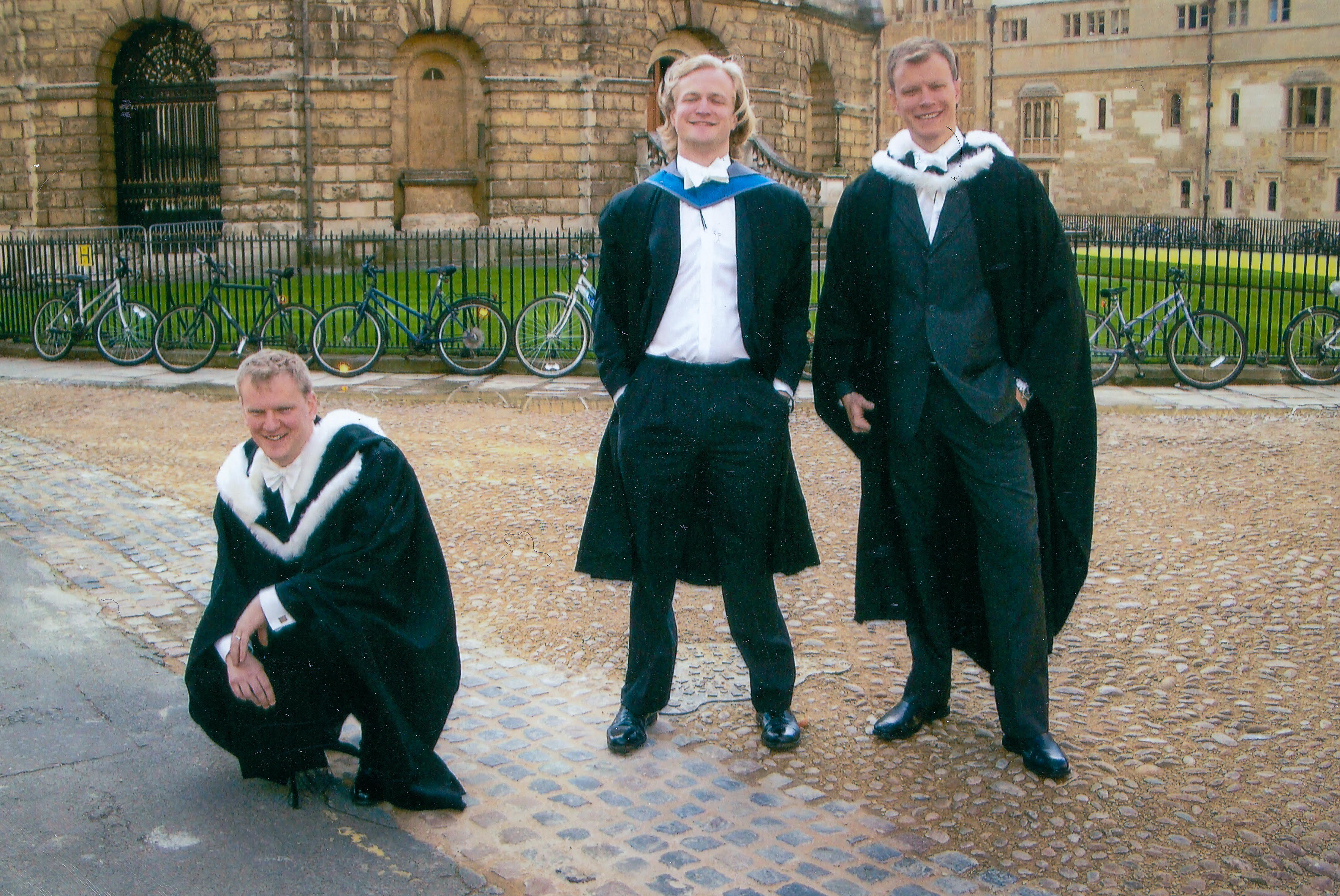
Jonathan (centre) with his brothers Peter (left) and David (right) taken at their Oxford University graduation.

You wrote the memoir between 2005 and 2008 but only published it this year, how challenging was it to get it edited and finished and what kept you going?

I started writing this, believe it or not, about 20 years ago. At the time I was working as analyst at SAC Capital and living on the Upper West Side. One weekend I went to Barnes and Noble on 82nd Street and saw this book with a beautiful cover by Bruce Davidson titled Flying Over 96th Street, Memoir of an East Harlem White Boy. I picked it up and the prose was beautiful. It was a story of a blond-haired, blue-eyed boy. His parents had moved him to East Harlem in the 1950s, and he grew up in the 50s and 60s during the Civil Rights era. 

I wrote the manuscript but put it away when it got a few rejections. At the same time, I was very busy starting two companies and then my own investment fund and felt I did not have time to edit it further or get it published.  

In 2022 a, great mentor of mine in London who’s a retired fund manager, was talking about his parents and I mentioned Shooting Up. And he said I should really get this published before my father dies. My father’s now 79. He had a minor stroke last year, but he’s still working, helping people, running the drug rehab center.  Fortunately, by 2022 I had already written three books, and my literary agent was able to get a contract with Little Brown [for Shooting Up]. I’m glad it is finally out.

What did you enjoy most about writing the memoir and what were the hardest aspects?

The most enjoyable part was interviewing family and friends and reconnecting with people I had lost touch with.  I had my own memories, but I wanted to double check them. I reconnected with the head doctor of the infectious diseases ward at Ramon y Cajal hospital.  We both felt we had lived through something unique and extraordinary.  

Raul Casto is one of Shooting Up’s main characters and was like an older brother to me.   In fact I’m still very close to his wife Jenny and his daughters. In 1995 when Raul died his daughters were aged three and five and I had gone off to college.  However, I didn’t realise that because they were so young they didn’t have many memories of him.   So when I gave them the final draft of the book, his daughters sent me beautiful notes telling me that they felt the book had brought their father closer to them. Without a doubt that was the best part of the entire project. 

The hardest aspect was writing chapters about the lives and deaths of family and friends who were so dear. Readers tell me they have had to put the book down at times. I certainly did when I was writing it.
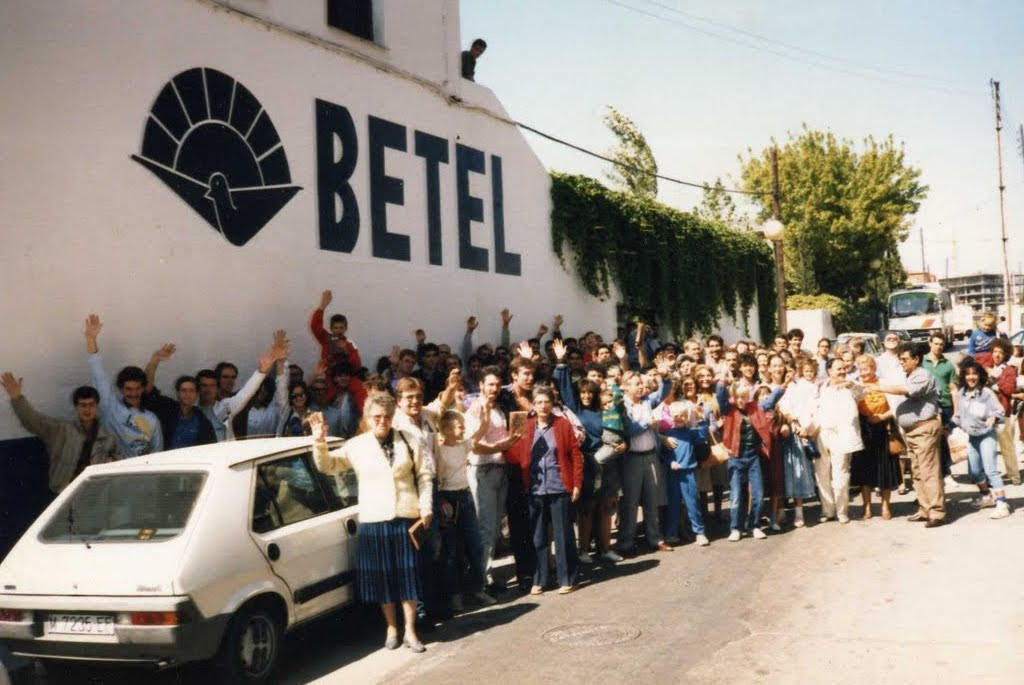
Betel Church after it was repaired in 1988

What feedback have you received from your family, friends and people within Betel who have read the book?

My brothers, mother and father read an early draft of Shooting Up, which was not as good as the final draft, and said they liked it. My mother loved it and thought it was full of hope, which captured the spirit of Betel through my eyes. Also, my father liked it too. Certainly, there’s quite a lot of painful and honest things about the whole family, about each brother and myself included. However, my brother David told me it was very sad yet very beautiful and thanked me for writing it. 

Meanwhile, my father half jokingly said he thought I was too hard on him because he comes across as a bit of a charismatic visionary figure but also a disciplinarian. For example, I call him the autocrat of the breakfast table. But he said he thought I told the story as it was and from the inside.

Jonathan explained of this photo: “This isn’t a great photo, but it is the last photo of Timothy, I believe. It was a few days before the accident in July 1991. He’s with my father and some people from a church that supported my family. He was such a great kid.”

What about people in the business, finance and property community? Were they surprised to learn about your upbringing on the tough streets of San Blas and the work of your parents?

Now that the book is out, I have received many emails from people who only know me through investing. They’re surprised by my background or maybe they knew I grew up in Madrid but had no idea what an odd childhood I had. I think it has been a surprise [to them]. Most of my close friends knew, and a few have even come to Madrid to visit Betel, the drug rehab center. 

In the book, you describe your parents’ unflinching faith in God and the missionary work they did whilst you had your own doubts and frustrations. What is your relationship with religion these days?

I’m not a pastor, preacher or theologian.  I’ve followed my own route and gone into entrepreneurial activities and investing. However, at Oxford I attended St Aldate’s and in London I attended Holy Trinity Brompton.  I think the faith my parent had was beautiful, and they did an extraordinary thing showing love and compassion to those in need for decades. I admire them. 

A lot of the book deals with death and grief. How do you think being exposed to so much of both influenced how you view the world as an adult?

In the book I have a quote from my father. He wrote in his newsletter back to supporters in the US that, “AIDS breaks your heart. It makes you compassionate and softens you.” One thing Raúl said was that with AIDS you had to live a life of quality and not quantity. The virus made me realize that every day counted and we had to love people as much as possible. We really didn’t know how long they would survive, and we went to the hospitals as often as we could so they would know they were not alone. Death was never far, and it made life more vivid and more precious. I grew up very quickly and was mature beyond my years in some ways, and still immature in others.

While AIDS is a major part of the book, we didn’t obsess about the virus or AIDS, and almost everyone got on with life and helping others. The leaders in Betel didn’t want AIDS to define them. When the “cocktail” of drugs that stopped AIDS in its tracks appeared in 1995, everyone got on with their lives. What we had lived through only hit me years later at the 20th anniversary of Betel when they had a slideshow as a memorial of all the friends we had lost. Everyone was in tears as we remembered our friends, and I realized we had lived through something extraordinary we didn’t talk about enough. I wanted the book to be a memorial to all the friends we lost. I hope readers get to the end of the book and feel they know them and traveled with them on a journey.

Raul, a recovered addict who became one of the leaders at Betel and close personal friend of Jonathan and his family. He sadly died in 1995, aged just 37

When did you last return to Madrid and what is it like going back now?

When I lived in London I went to Madrid once a month, but now that I live in The Bahamas, I probably go every three or four months. I last went a few months ago, and I’ll go next month. My father lives in an apartment in the headquarters of Betel, and it is his life. When I’m back, I’m surrounded by people I grew up with who spend their lives helping others.  The city has changed enormously and is much wealthier, cleaner, and more developed than what I grew up with as a child in the 1980s and 1990s. But you can still find shantytowns and drug dealing in the periphery of Madrid. 

What advice would you give to anyone thinking about writing a memoir?

Firstly, I think in order to be a good writer, you have to be a good reader.  Read great literature but also read classic memoirs or autobiographical sketches that have stood the test of time.  Some of the books I most enjoyed most were The Diving Bell and the ButterflyA Moveable FeastBorrowed TimeEmpire of the SunJust Kids, and The First Man.  

Secondly, read books on writing and storytelling like Story by Robert McKee, Nobody Wants to Read Your Sh*t by Steven Pressfield and others.  The Art of Memoir by Mary Karr is very good. 

Do you have plans to write another book? If so, what would it be about?

Shooting Up was a labor of love and a memorial to friends and family. It was unique, and I don’t have another memoir in me. My day job is running an investment fund named Prevatt Capital, which is my mother’s maiden name. I spend my time with my two-year-old son and wife and visiting friends. I occasionally write investing books because some topics are of particular interest, and writing is a way of researching them and thinking about them deeply. In 2018 I wrote The Myth of Capitalism: Monopolies and the Death of Competition. That came from my research on the rise of industrial concentration and monopolies in the American economy.

One book I’m working on with a friend who is a humanities professor and avid investor is an introduction to personal investing. We hope it will be useful for laymen and professionals. We both agreed that there was no one book we’d give to someone wanting to learn about how they should start investing. There were half a dozen books, each one with its own angle. But we wanted to write a great book that could be of use to a sophisticated wealthy person and a young college person starting their personal journey. Wiley will publish it.
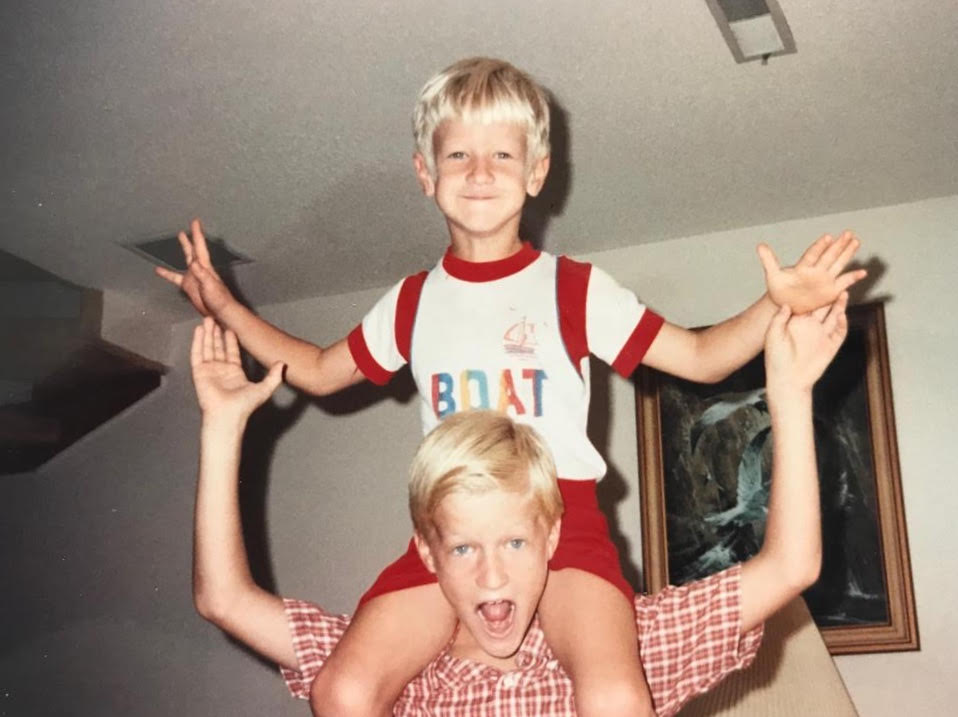
Jonathan Tepper with his late brother Timothy

Playing football and going to the Santiago Bernabeu stadium to watch Real Madrid play was a big part of your childhood in Madrid. Do you still enjoy the game and who will you be supporting at the World Cup, USA or Spain?

I am not religious about following Real Madrid, but I have watched most of their Champions League games when they played in recent years. I do watch some league games.  It is a much more commercial world than the Real Madrid I grew up with. Before much of the team was Spanish and came up through the junior teams like Emilio Butragueño, Michel, Martin Vazquez, etc. Now they’re all imported big signings and superstars.  

I’m a cultural mutt, a mongrel.  I’ll support Spain and the US. I lived in London for 20 years and became British, so I’ll support England too. I hope they don’t play each other. I hope they all do well. 

Reflecting back on your Aussie property price collapse predictions, which did not eventuate (Sydney house prices have nearly doubled since 2016, while Melbourne values are up nearly 50%, official data shows) what do you think you got wrong?

[Report co-author John Hempton and I] have been amazed that [Australian house] prices have never corrected. My guess is that is because of negative gearing. Even when it is uneconomical to own speculative housing stock, there are tax benefits that help out or even overcome the losses. As that changes, I’m sure it will change the calculus. The other thing that I didn’t get right is that the government has had very high net migration, so it has increased demand while supply hasn’t kept pace, so it has helped with high property prices. But Aussie price/income ratios are crazy compared to most countries.

*All photo supplied and reproduced with the permission of Jonathan Tepper.
More fool me: Stephen Fry’s “coke years”

22662908One of the most interesting and surprising things you will learn about Stephen Fry, if you read his third autobiography “More Fool Me” is the extent of his cocaine addiction.

Or perhaps you’d wonder how he managed to snort so much marching powder up his snoz, given how crooked it is.

As you read through the book, which traces some of his most successful and creative years in the late 1980s and early 1990s – working with Hugh Laurie on Jeeves & Wooster, starring in Blackadder,  hosting royal variety shows and writing the novel The Hippopotamus and countless essays, reviews and speeches – you realise that cocaine is Fry’s special friend.

On page 69 of my soft-back edition, Fry lists all the places he has snorted cocaine during his 15 years of addiction. They include Buckingham Palace, Windsor Castle, The House of Lords,  The House of Commons, Fortnum & Masons and of course, the BBC Television Centre in London.

Fry is forever heading off to the exclusive, members-only Groucho Club in Soho in London’s West End (often on foot as he lived nearby) to meet up with his dealer “Jethro” for a cocaine top-up. He is incredibly candid about some of the stupid and embarrassing stuff he has done whilst consuming or after partaking of the drug.

In one episode, he gets involved in a competition to snort a massive line of coke on a table in a restaurant. He gets to the end and promptly vomits furiously. In other episode, having drunk too much and snorted too much he lurches out the window of the Groucho Club and spews down onto the pavement outside.

It’s not the kind of thing you’d expect from Fry, one of England’s great literary and artistic treasures – more the behaviour of a bad boy rock ‘n roll star. But as you read you realise that Fry is quite the contradiction – a mix of erudite, literary brilliance mixed with too much alcohol, aforementioned cocaine and a fondness for wearing leather and riding motorbikes.

In one amusing episode set in the Groucho Club, Fry bumps into an angry, swearing Manchurian who turns up to be Oasis’s Liam Gallagher,  in another he befriends Damon Albarn from Blur at the Club bar, whom he finds most charming.  He seems to know, bump into or meet every single interesting person living in England at the time.

Fry writes about his cocaine use,  with both embarrassment – part of a habit of his of forever apologising for being rich and successful – and with an undercurrent (I am sorry to say) of boastfulness.

And while he professes that the details of his cocaine habit should not be seen as an encouragement to others, when you throw in all the celebrity parties, dinners, film premiers in Leicester Square, hobnobbing with the rich and famous amid all the endless line snorting (and prodigious sums of money spend on it) its hard to see his habit as anything other than part and parcel of being rich, famous and successful. Which no doubt it was back then, and still, I assume is for many in the “it” crowd.

The fascinating thing about this memoir, as with The Fry Chronicles (a lesser work which I reviewed on this blog covering his university years) is the warts-and-all account of a period of his life that despite his wild behaviour, was incredibly creative, productive and successful. Might he have achieved more if sober more often?

More Fool Me book has a strange, uneveness to it – the first part being rambling memoir that spends too much time recapping what happened in the previous book, while the second half is merely a republishing of his diary during a hectic few months when he was finishing his novel, The Hippopotamus – it really gives the reader an over-the-shoulder view of what it was like to be Stephen Fry as he soared towards becoming an English icon.

Indeed his status as a true English national treasure is sealed by a scene in the book where Prince Charles and the late Princess Diana casually pop in for tea at Fry’s country home one autumn evening.

In his customary self-effacing manner, Fry does not believe the visit will actually happen, until the royal carriage is on its way.

Then its a mad scramble to prepare tea, cakes, toast and crumpets, followed by a cozy afternoon chat with the royals which only ends when Lady Di explain that she has to get home to watch the latest episode of her favourite soap opera.

Its in scenes like this and throughout the book that Fry comes across as warm, funny, sincere and  kind – a cuddly bear of a man also capable of ingesting large amounts of coke and alcohol whilst still being able to write a word-perfect article for a major newspaper the following day.

Most impressively, he can look at himself in the mirror and be honest about what he sees.

But among all the excitement of the West End life he led then, there is also a profound sense of loneliness as he returns, home, alone – often drunk.

In that respect, it is reassuring to know that he has found a life partner – his husband Elliott – especially with the latest news that he is battling prostate cancer.

Thankfully too – as he reminds readers often in the book – he no longer has a cocaine habit.


The Junkie in literature: A review of ‘The Lotus Crew’ by Stewart Meyer

lotus crew cover

Cover of the original novel The Lotus Crew

Of all the junkie authors I have read and reviewed on this blog – Burroughs, Welsh, De Quincey, Garner etc – for my mini-project “The Junkie in Literature” Stewart Meyer would undoubtedly be the least well-known.

Meyer, a protegé, friend and chauffeur of William S. Burroughs and a regular at Burrough’s Bowery apartment writer hangout known as ‘The Bunker’  published The Lotus Crew in 1984.

Lauded to a degree at the time of its publication – no doubt helped by Meyer’s association with Burroughs and his Beat Generation entourage – The Lotus Crew has been largely forgotten by the literary establishment, but has been given a fresh audience with its recent re-publication in e-book format by Open Road Media.

The Lotus Crew is a gritty, moment-in-time novel about the hectic drug scene in Alphabet City on Manhattan’s Lower East Side in the early years of the Reagan era.

Meyer throws you into the junkie cesspool – at street level – amidst the “blanco” junkies full of sickness and the Hispanic drug lords and their “crew” who peddle dope bags from abandoned tenement flats and underground parking lots and where the threat of a police bust is ever-present.

A misleading calm prevailed as they descended on Alphabet City. The biggest smack emporium on the East Coast stretched before them as they drove through narrow bombed-out streets. Blacks, Latins, blancos, shadows in somber colors; lips tight and drawn down, eyes dead but active with the scuffle. Waiting, watching, copping, splitting.

You only have to look at photos taken of Alphabet City and other parts of the Lower East side around the time the novel is set – 1982 – to see the appalling, run-down state of the streets and the desperate characters that walked them looking for a soothing fix to cure junk sickness.

A photo of the Lower East Side of NY in 1980s

A photo of the Lower East Side of NY in the 1980s

There’s a lyrical street poetry to Stewart Meyer’s prose reinforced by him assembling a collection of half a dozen quintessential “junkie” characters who tell the story of what it was like back then to be immersed in that type of desperate society of the powerful, cruel, sick and tortured.

There’s thoughtful, introspective and loyal Alvira, who tried to get clean in LA but who returns to New York having relapsed and who “felt like the proverbial incongruity when not opiated”.

There’s Tommy (or T) who dreams of becoming the emperor of Alphabet City selling the best heroin in town. We meet 16-year-old heroin scholar and drug pusher John Jacob (JJ), eager for a slice of the action and his weak-minded, doomed sidekick Furman.

And there’s the ‘blancos’, the white guys with big heroin habits who are easy pickings for knife-wielding gangs, like Jewish taxi driver Eric Shomberg who cannot “resist the sweet ambiguity of opium, the way it softened the real world without negating it altogether like booze did” or Bronx bartender Dave Skully “a few hours away from severe withdrawal”.

Like Irvine Welsh’s Trainspotting (read my review here) which is written in the Glaswegian Scottish dialect, much of the dialogue in The Lotus Crew is written in the broken down, sing-song Hispanic English and street slang of the time.

This street authenticity combined with Meyer’s snappy writing style and short, punchy, action-filled chapters that describe episodes in the lives of junkie players gives it a vivid, documentary quality and a engrossing depiction of the heroin game.

And while perhaps not as powerful a text about heroin addiction  as his great mentor’s “Junkie” (perhaps because Meyer was an observer, not – it seems – a user) he knows his subject well and has the narrative skills and poetry to give it life:

Desperation was part of the game, and no matter how long you did bizz with someone, if you caught them at the wrong time you’d be chumped and scumbagged for every cent you had. Just a rule of the road, a piece of the code.

Stewart Meyer cooking a meal for Burroughs (from his Facebook page)

Stewart Meyer cooking a meal for Burroughs (from his Facebook page)

Travels through literature, alcohol and America: A review of ‘The Trip to Echo Spring’ by Olivia Laing

The trip to echo springErnst Hemingway, F. Scott Fitzgerald, Tennessee Williams, John Cheever, John Berryman and Raymond Carver had at least two things in common: they are all giants of 20th Century American literature and…they were all confirmed, raging alcoholics.

These two commonalities are the basis for ‘The Trip to Echo Spring’ by English author Olivia Laing, a writer and book reviewer for The Guardian and The Observer newspapers.

The title of the book refers a line said by the sexually conflicted character Brick in Tennessee Williams’ great Southern play ‘Cat on a Hat Tin Roof‘.  He says it to indicate he is going to get a drink of whiskey: to numb the pain of his “mendacity”.

Laing sets out to explore how these six writers – whom she admired greatly and who shaped the course of American fiction – experienced, thought about, wrote about and dealt with their addiction to alcohol.

She does so by undertaking a physical trip across America in the Spring of 2011 starting in New York and staying in the Elysee, a hotel in Manhattan’s theatre district where Tennessee Williams spent his last days, and finishing in Port Angeles on the Strait of Juan de Fuca in the upper north corner of Washington State, where Raymond Carver lived the last years of his life  and wrote some of his best short stories while living with the poet Tess Gallagher.

In between, Laing heads down to New Orleans to sit at the hotel bar where Tennessee Williams came in for a drink and to pick up young men and to attend the annual Tennessee Williams Literary Festival, flies south-east to balmy Key West, Florida to visit Hemingway haunts, takes a train west to Baltimore and North Carolina to follow Fitzgerald’s own journey and then chugs out west to Illinois and Minneapolis, tracing the fatal path of the poet, John Berryman.

Amongst all this travel, are Laing’s reflections and contemplations of the alcoholic lives of these writers interwoven with meditative observations of the vast, constantly changing American landscape, mostly from her train window. She writes:

“In Alabama the earth was red and their was Wisteria in the trees. Somewhere deep in the country the train stopped in a pine forest. It was very quiet. A needle dropped lazily through the warm air. The woman beside me was on the phone…”

“Between Tuscaloosa [Alabama] and Meridian [Mississippi] we ran through uninterrupted miles of forest. The hills were covered in bone-grey timber, split and weather-worn into fantastic shapes. Then open country with cows grazing…

I awoke again at dawn. This time the world outside was white. North Dakota, flat as an ironed sheet.

The constant travel not only gives the book it’s part travel-guide feel, but also it’s momentum. Laing is not only on a journey to discover more about her literary heroes and their afflictions, but is also on a journey of self-discovery; making sense of a disjointed, dysfunctional upbringing and one washed through with alcohol. Her mother’s partner was a violent alcoholic.

One of the great strength of ‘The Trip to Echo Spring” and a sign of its success is that makes you want to go out and read (or re-read) the works of Williams, Hemingway, Cheever, Fitzgerald, Berryman and Carver, reminded as you are of their massive contribution to the world of literature despite the booze, blackouts, collapses, rehabilitations and relapses.

Raymond Carver

Raymond Carver

Just off the top of my head I could reel off a dozen books, plays and poetry collections I’ve now added to my “must read” list:

– The Glass Menagerie (Williams)
– Sweet Bird of Youth (Williams)
– For Whom the Bell Tolls (Hemingway)
Death in the Afternoon (Hemingway)
– Tender is the Night (Fitzgerald)
– The Great Gatsby (Fitzgerald – AGAIN!)
– Cathedral (Carver)
– Dream Songs (Berryman)
– Recovery (Berrryman)

Already, a copy of Cheever’s novel “Falconer” about a jailed heroin addict is waiting beside my bed and I’ve begun to read the opening scene of “A Streetcar Named Desire” from an old paperback that was tucked into the book shelf. And I am waiting for the opportunity to watch Cat on a Hot Tin Roof” starring Elizabeth Taylor and Paul Newman as Maggie and Brick.

Laing has great empathy for her heroes because of the writing they produced,  but she does not sentamentalise them, brush aside their faults or criticise their weaker efforts. Nor is their any glamorization of alcoholism:

[On Cheever’s drinking in 1966]: “…his drinking had passed well beyond normal measures now, even bearing in mind the norms of the time. When he wasn’t on location [filming his short story ‘The Swimmer’] he wrote in the early hours of the morning and by half past ten could be found twitching in the kitchen waiting for his family to disperse so he could administer the first self-soothing scoop of scotch or gin. If they didn’t leave quick enough he’d drive himself to the liquor store, where he’d buy a bottle, motor on to some pretty back street and sit there suckling, inevitably spilling a good slug down his chin.

All six writers were at times monstrous personalities, capable of inflicting great cruelty on their wives, children, lovers, friends and families: Raymond Carver almost killed his wife and was resentful of his own children, Tennessee Williams once defecated in a university hallway, John Cheever projected his closeted homosexuality into rage against his wife.

The book is rich with analysis of the works of fiction these writers produced as well as their non-fiction articles and memoirs. But she is no literary snob, relishing the opportunity to join a tour group visiting Hemingway’s home and museum in Key West or do a Tennessee Williams walk in New Orleans or enjoy meals with retired farmers on her train journeys.

The conclusions she reaches about these writers are not surprising – that they drank to deaden the pain of their childhood, their parents, their sexuality, their broken-ness, their perceived and real failures, while writing was a way to try to become whole again.

None,  apart from John Cheever, managed to stop drinking though they all tried. None lived into old age and two – Berryman and Hemingway –  died at their own hand.

But ultimately it is the journey that Laing takes you on through the minds and immense body of work of these giants of fiction that is the real joy

Not the destination.

Links:
An interview with the author, Olivia Laing  (Buzzfeed)
A review of The Trip to Echo Springs by The Times Literary Supplement
Olivia Laing’s personal website

The junkie in literature: a review of William S. Burrough’s “Junkie”

“Junkie” by influential Beat Generation writer William S. Burroughs is the second book I’ve read as part of a mini-project of mine to examine the place of the heroin junky in literature.

The first book I read was “Monkey Grip by Australian author Helen Garner about a single mother’s tortuous relationship with a junkie set in Melbourne in the 1970s. You can read my review of this novel here.

Whereas “Monkey Grip” is very much from the point of view of someone observing a junky’s addiction to heroin, “Junkie” throws you right into what it is like to be an addict and the world that exists around them.

Burroughs presents an incredibly honest account of his life as a junky revealed in a concise, perfectly-worded tale.

After a brief introduction about himself (where we learn that he had a good, healthy upbringing in a “large mid West town”) we find Burroughs dismissed from the army as unfit and living in New York City in the 1940s, addicted to junk and peddling it as well.

Burroughs has a nack of describing the essence of an experience. For example when talking of New York junky and pusher Bill Gains “whose veins had mostly gone, retreated back to the bone to escape the needle”, he writes:

“For a while he used arteries, which are deeper than veins and harder to hit and for this procedure he bought special long needles…he had to shoot in the skin about half the time. But he only gave up and ‘skinned’ a shot after an agonizing half hour of probing and poking and cleaning out the needle, which would clot up with blood”

In New York, Burroughs mingles with peddlars, low-lifes and average joes (waiters and bar tenders) that are hooked on heroin. Burroughs becomes a “lush worker” with his junkie pal Roy. They ride the subway train and look for drunks that have passed out and steal their wallets.

It’s all told in this sparse, lay-it-down-straight style that hides nothing.

Burroughs has an exceptional ability to convey the sense a character in just a few simple sentences:

“Lonny was pure pimp. He was skinny and nervous. He couldn’t sit still and he couldn’ shut up. As he talked he moved his thin hands, which were covered on the backs with long, greasy, black hairs.

“Gains had a malicious, childlike smile that formed a shocking contrast to his eyes, which were pale blue, lifeless and old.”

And not just when it comes to junkies. While in a hospital getting “the cure’, he writes of one patient:

“There was a thin, pale, little man with bloodless, almost transparent, flesh. He looked like a cold and enfeebled lizard…he did not have the concentration of energy necessary to hold himself together and his organism was always on the point of disintegrating into its component parts.”

According to Burroughs, contrary to what people might believe, developing a habit takes time. You don’t get hooked on the first or second shot. It can take months, but one day you wake up, look up in the mirror, and something has changed about you.

Once you get hooked, even if you manage to get off, heroin is always a part of you, because it caused “permanent cellular alteration”.

The story transfers to the seedy backstreets of New Orleans, where Burroughs is busted. He is locked in a cell, while the cops try to get him to rat on his suppliers, and the junk sickness kicks-in.

Throughout the book, Junk sickness is described in a way that you understand it’s malevolence:

“Doolie sick was an unnerving sight. The envelope of personality was gone, dissolved by his junk-hungry cells. Viscera and cells, galvanised into a loathsome, insect-like activity, seemed on the point of breaking through the surface. His face was blurred and unrecognisable, at the same time shrunken and tumescent.

Writing of his own junk sickness, the awfulness of it can be imagined:

“In my case, the worst thing is lowering of blood pressure with consequent loss of body liquid, and extreme weakness, as in shock. It is a feeling as if the life energy has been shut off so that all the cells in the body are suffocating. As I lay there on the bench I felt like I was subsiding into a pile of bones.”

Burroughs also reveals other aspects of the junky life from the “croakers” – the doctors who write  fake prescriptions to “taking the cure” – going into rehab, and the medicine you get and what works and what does not.

And he manages to incorporate social commentary (his contention that marijuana is a not an addictive drug) and political observations of the time (Louisana passing a law making it illegal to be  drug addict), while describing his own hellish plight.

It’s a book about his adventures as a junky, the pimps, low-lifes, artists, con-artists, cops and doctors he meets on his travels.

In the end it’s also a warning against heroin addiction:

“Junk takes everything and gives nothing but insurance against junk sickness. Everyone now and then I took a good look at the deal I was giving myself and decided to take the cure.”

William S Burroughs at his typewriter, circa 1960.

The back of the book contains a glossary of terms, which is worth reading to pick up the lingo while my edition included an introduction by Allen Ginsberg, fellow Beat poet and Burroughs admirer who was instrumental in getting the controversial book published in 1953.

Truly a book ahead of its time.

The junkie in literature: a reading list starting with ‘Monkey Grip’ by Helen Garner

monkey-gripFor whatever reason people do things, I’ve become hooked (pardon the pun) on the idea of reading a wide range of books about heroin addicts and their place in literature.

The heroin junky seems an enigmatic and romanticised character, living by their wits on the edges of society and always in the grip of their addiction.

There is a fascination with them in literature, at odds, in a way, with how one sees the junky in the real world – usually the beggar in unwashed rags sleeping in an alleyway.

The junky in fictionalised accounts is often the artist, or the poet, or at the very least someone who has lived an interesting life.

My interest in this subject was sparked after reading “Monkey Grip”, a celebrated Australian novel by Helen Garner.

Monkey Grip tells the story of Nora, a single-mum living in Melbourne in the mid-1970s who falls in love with a blue-eyed junkie called Javo. The title of the book refers to their relationship, which despite Nora’s attempts to pull away is as tight as a monkey grip.

(A REVIEW OF MONKEY GRIP IS AT THE END OF THIS POST)

I’ve compiled a reading list with the aim of writing an essay of sorts on the topic of “The Junky’s place in literature”.

Currently I am reading “Junky” by William S. Burroughs (1953), an autobiographical account of the writer’s life as an addict in the 1930 and 1940, which begins with Burroughs as user, pusher and petty thief in New York.

The other books on my list are:

“Confessions of an English Opium Eater” by Thomas De Quincey (1821)

“Candy” by Luke Davis (1997)

“In My Skin” by Kate Holden (2005)

Trainspotting by Irvine Welsh (1993)

If any fellow bloggers or bookworms out there can recommend any other books that are about drug addiction or where one of the principal characters is a junkie, please drop me a line with the title and author – freshlyworded@gmail.com

Monkey Grip by Helen Garner

Set in the inner city suburbs of Melbourne in the mid-1970s, Monkey Grip tells the story of single-mum Nora’s relationship with heroin addict and writer/actor Javo set against the back drop of house-sharing, addiction, loose parenting and easy sex.

Nora does not appear to have a job (Wikipedia says she does but not the novel I read) but lives a comfortable existence punctuated by bike rides to visit friends in other share houses, lots drinking and dope (marijuana) smoking, road trips, days spend lounging at the public swimming baths with her friends, afternoon naps, cups of tea in suburban kitchens, sitting on verandahs and musing, the retelling of dreams, and helping her friends through their different relationship and personal crises.

Critics of the novel have said it reads like the author’s personal diary entries and I can see what they’re getting at (Garner lived in Melbourne during this period of time and was most famously sacked as a teacher in 1972 for teaching sex education to her class of 13-year-olds, something that Nora would undoubtedly be comfortable doing).

Written as a first person narrative, Nora’s thoughts could be mistaken as those from her private  diary, as she tells of her daily comings and goings, what her friends might think of her relationships, describes dreams in vivid details and writes of Javo’s unannounced, but expected arrivals at her door at all hours of the day and night in various states of stoned-ness:

“Javo the monster. I don’t know him when he’s like this. I wish he would go away. He barely gives me the time of day. He blunders into my room at night, drops his great boots from waist height and crawls into bed beside me. This is not Javo. I know he doesn’t care and somehow neither do I. But I want him back, the way we used to be, when we loved each other with open hearts.”

Nora portrays Javo as charming and gentle and at other times, when the drugs have their grip on him as an uncaring, selfish bastard.

But this book is not so much about the nature of drug addiction but about what is like to be in love with a junkie.

Nora is both Javo’s lover as much as his anxious mother – nursing him when he suffers the sickness of withdrawal, allowing him to have his dole money paid into her bank account and worrying about where he may be and if he is safe. At the same time she is jealous and hurt when he confesses to sleeping with another woman.

At his worst he steals money, never keeps appointments and tells her about his relationship with other women. He is frequently unwashed, his skin breaking out into sores and scabs, his hair dishevelled – and yet she can never break free.

She constantly accuses him of being selfish, of only caring about his own needs and not noticing and caring about hers.

She says to him after he slips into his bed one night “very, very stoned”:

“When you came in here tonight I was right off my brick with the kids, and you didn’t even notice. You didn’t give a shit about what I have to do in my life.”

But she forgives him time and time again, pulled in by his piercing blue eyes, his charm and some sense of his kindness and generosity beneath the layers of his addiction.

But Nora is by no means an innocent. Despite having a young child (Gracie), she finds time to do a lot of drugs her self (weed), sleep through many afternoons, disappear to parties and on road trips (depositing Gracie with her friends) and invite men into her bed.

She is for ever questioning and undergoing a great deal of angst about her relationship to Javo.

Monkey Grip is considered a classic of Australian fiction. Indeed the front cover of the old copy I picked up at Basement Books in the city calls it “the best Australian novel of the year” for 1978.

But I have to say that I found the tale dragging at times and Nora annoying and not the most likeable of characters (a carefree, careless single mother who puts her own needs before those of her daughter).

She constantly agonises over Javo, resorting at numerous times to asking the ‘I Ching’ for relationship advise. The I Ching gives her sage advise, but she ignores it. The addiction to Javo is as strong as his to heroin.

Definitely worth reading. But in my opinion, Garner’s best works are her non-fiction books – Joe Cinque’s Consolation and the First Stone, which I highly recommend.