Doth my toes offend thee?

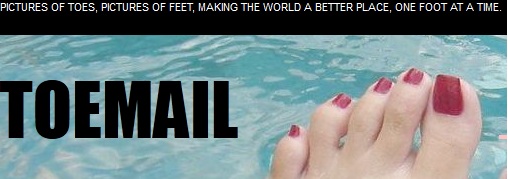
There’s this terrific blog called ‘toemail’. It’s a pretty simple concept. People send in photos that include their feet, taken in different parts of the world, and write a story about the picture, and they’re published on the blog.

In some cases people just send in the picture and let it do the talking, without any words of explanation.

The theme of the blog is: “Pictures of toes, pictures of feet, making the world a better place one foot at a time.”

There’s photos of people’s toes on deserted country roads in Canada, toes onΒ trains travelling across the US, toes next to a coconut on a deserted tropical beach in Fiji.

People send in photos of works of art featuring toes and statues with toes and backpackers with toes walking down a street in Ljubljana, Slovenia.

In some pictures the foot is the centre piece of the photo such as this one taken with a gnarly tree in the background in Macedonia and in others the toe is just incidental to the photo or part of the story such as this wonderful photo of a man in sandles carrying a huge load on his head down the streets of Dhaka, Bangladesh.

And people get inventive and creative too, such as this photo of child’s school lunchbox with the sandwich shaped as feet.

So I thought I would get inventive too, sending in this photo (below) taken of my feet after a day spent walking the streets of Mumbai about two years ago:

I received a reply from the publishers of Toemail, to tell me that this picture would not be posted on the blog because: “close ups of dirty or injured feet we cannot post because it can be visually disturbing to someone who is opening the blog”.

So I’ve published it on my blog instead.

I agree it’s not the prettiest picture, but “visually disturbing” seemed a bit of a harsh description for a bit of mud and an uneven suntan.

Is anyone reading this now disturbed by this image?
Are you reaching for the sick bag?
Are your eyes offended?
Is it all too much?

If you’re not, here’s my little story about these feet:

On these muddy, sun-stained feet, the bearer walked along the bustling, congested, lively streets of Mumbai, passed old, grand crumbling colonial architecture from the days of British rule, through arcades lined with bookshops and restaurants where he ate delicious vegetarian thalis with the rice piled on a silver tray for about a dollar. These feet passed beggars and hustlers and lawyers with their wigs and briefcases and children dressed in clothes that looked straight out of the 1970s disco era.

These feet took respite in an air-conditioned department store with security guards glaring and later waited dutifully while his wife shopped for clothes along ‘fashion street’ a never-ending line of clothing stalls, each crammed with shorts and skirts and jeans and a man who could sell ice to eskimos.

These were the feet cut off in photographs taken by locals who wanted a picture of a pasty “white man” and his even pasiter white wife on their mantelpiece. These were the feet that walked along the famous Chowpati Beach, that rested on the sand as we looked out at the boats and the families talking and eating in little groups as the sun sank below the horizon, listening to the cries of the chai wallah and the ice-cream wallah and the man selling nuts in a cone.

These are the feet that climbed steep streets for a view of the bay of Mumbai with her fishing boats and bobbing litter and behind, the endless skyline of high-rises defining India’s richest city. These are the feet that walked through tropical gardens with plants sculptured into elephants and giraffes. That supported the bearer as he stopped to watch a school boy cricket match in the middle of the city, that rested in the cinema while locals danced in the aisles to a Bollywood movie.

And so I ask you again, doth my toes offend thee?

India’s sacred and spoiled cows

They say cows are sacred in India, but you only realise this when you go over there and see how these huge animals wander the streets, with an air of complete nonchalance. They walk at their own pace. They do as they please.

(In contrast, dogs do it tough in India. Many roam in packs and live like scavengers and by their wits, but the strays are skinny and frightened. It’s survival of the fittest – children often throw stones at them.)

My wife and I spent some time in the holy city of Pushkar with its lake, bathing ghats and troops of monkeys.

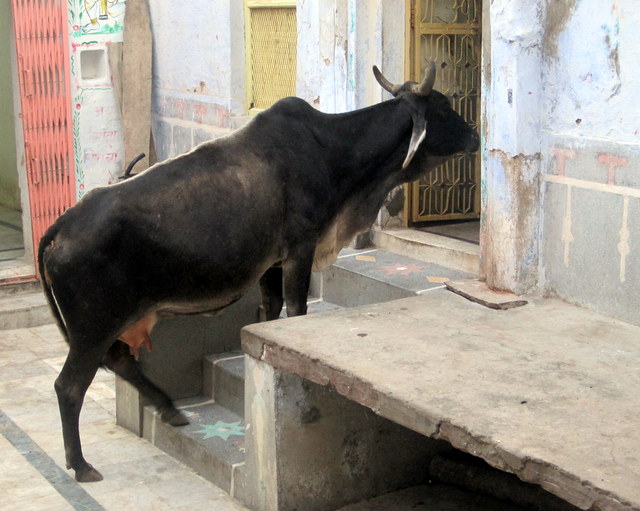
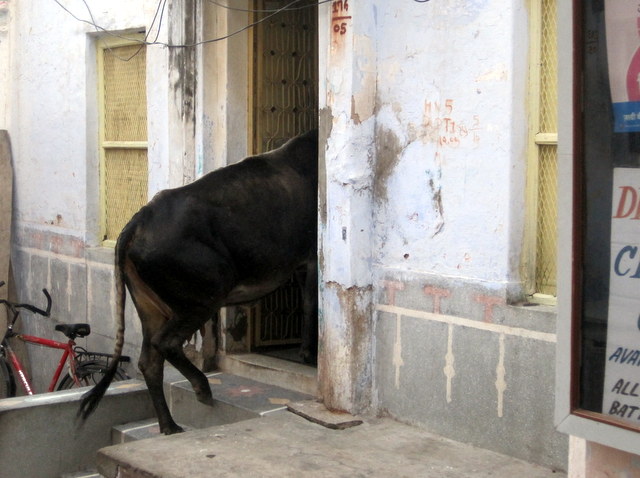
One afternoon, while strolling down a bumpy, narrow street lined with shops and homes, we came across this cow presumably looking for something to eat.

The locals feed them stale chipati (flat breads) and just about anything else they have lying around and the cows appear not too fussy. This is after all India, not the green fields of the English countryside.

I recall that this cow was “escorted” out the building.

But this is by no means an isolated occurance.

Cows amble down laneways, sit on bridges, block traffic and head down the highway.

We saw one cow stroll down a packed traffic-congested road in chaotic Mumbai, changing lanes without indicating (not that motorists indicate in India for that matter!)

In Goa, there were more cows than people on some of the beaches,finding the soft sand and cool ocean breezes to their liking no doubt:

Ghandi had this to say about these animals:

“Cow protection is the gift of Hinduism to the world. And Hinduism will live so long as there are Hindus to protect the cow…… Hindus will be judged not by their tilaks (the religious mark on the forehead), not by the correct chanting of mantras, not by their pilgrimages, not by their most punctilious observances of caste rules, but their ability to protect the cow.”

An unexpected letter arrives from Spain

A letter arrived in the mail this week affixed with two colourful β€˜Espana’ stamps and an two ink marks baring the words β€œBarcelona” and β€œCorreos La Campania de Todos” (The Spanish post office).

The stamps cost 35 euro cents and 50 euro cents each.

The letter was addressed to β€œL Schlesinger” with my home address printed on top and began with an apology for this β€œunsolicited” correspondence.

β€œMy name is Barrister Mateo Pinto of St. Mary of the Head 15, 28045, Madrid Spain. I got your contact information through the Australian public records while searching for the last name similar to my late client.”

His client, now deceased, was β€˜Albert Schlesinger’, an oil magnate who lived in Spain for 28 years and who died along with his immediate family in an β€œauto car accident on the Damascus Highway in Syria in December 2004”.

The letter went on to detail how there was US$9.6 million unclaimed in a vault at the Madrid Central office and that he was seeking out a relative that shared the same last name as his client.

Having found me, he was willing to share the spoils – though 60:40 in his favour.

Still, I’d come out with a cool $5.76 million.

All I had to do to get the ball rolling was send him a fax or email, but he also provided a phone number though he suggested the first two means of correspondence for β€œtime difference and confidentiality reasons”.

But I better hurry because, according to Barrister Mateo Pinto there is only β€œthree months final notice from the safe keeping firm to present a beneficiary to the vault” or the money would be β€œforfeited to the Spanish authorities” – something that he “forbid happening”.

The letter was signed with an indecipherable signature and clearly a photocopy.

Obviously, this is a scam and not a very convincing one despite the effort to create authenticity with the posted letter and stamps (and perhaps also playing the part of the greedy lawyer by demanding a 60: 40 split in his favour).

I did some Google searches anyway to placate my curiosity.

The street address on the letter does not exist.

The only Albert Schlesinger of note I could locate died in San Francisco in 1993. His New York Times obituary says he was a civic leader and β€œfounder of one of the largest automobile dealerships on the West Coast”.

There is no Damascus Road, in Syria, though there is one mentioned in the Bible.

And as for Barrister Mateo Pinto of St. Mary of the Head, there is an architect of that name residing in New York and a legal case in the Philippines involving a β€˜Mateo Pinto’ who leased a fish pond, but that’s it.

Of course even without the help of Google, there are holes in the story as wide as the Grand Canyon.

For instance: why does he say he comes from Madrid, but posts the letter in Barcelona, on the other side of the country?

And what lawyer would look to give 40% of $9.6 million to someone he’d never met just because they shared the surname of their client?

I found many similar examples with almost the identical plot structure, including one on the Australian government’s SCAM watch website from a Spanish lawyer, whose client had died in a car accident with the recipient offered the Β chance to share in $22 million, (though in this letter, the lawyer is more generous willing to share the spoils 50:50).

Does anyone actually fall for these silly scams?

Still, it got me thinking about the person who gone to the trouble of buying the stamps and posting this letter half way around the world in the hope that I’d reply and presumably end up handing over my bank details so that he can steal from me.

Somewhere, in Spain, probably Barcelona, there is a guy posting letters to all the Schlesingers he can locate in overseas phone directories.

Why did he pick Schlesinger? Well there are some very wealthy Schlesingers I believe, sadly I am not one of them, so perhaps that’s why he picked the name. Perhaps he’d also considered the more famous Oppenheimer, Getty or Rothschild surnames for the name of his fictitious client.

I imagine the scam artist hunched over a computer in some darkened flat in a non-descript suburb on the outskirts of Barcelona. The printer whirrs and buzzes as it prints out letter after letter. He bends down, picks up each letter and has a cursory look over it to check it’s printed correctly, folds it neatly and slips it into an envelope. He licks the stamps and presses them onto the envelope firmly. Later, when he has a big enough pile, he heads off late at night, walking along quiet streets, a cigarette dangling from his lips (don’t all villains smoke?) and drops the letters into the nearest mail box, looking around suspiciously as he does so in case someone has finally tracked him down. Then he disappears down a narrow lane, finds a cheap bar that stays open late, orders a beer, finds a seat in the corner, where he sips his cerveza, lights up another cigarette, puffs out a cloud of smoke and dreams up his next scam.

Or perhaps he’s some 16 year old nerd with pimples and a computer.

A tribute to Melbourne’s marvellous multiculturalism

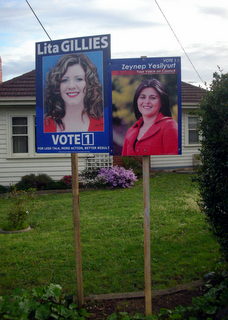
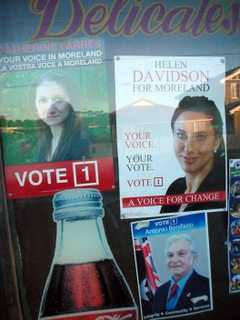
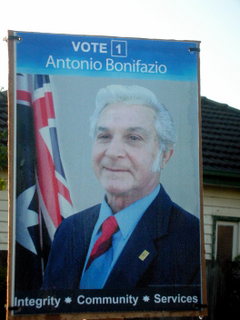
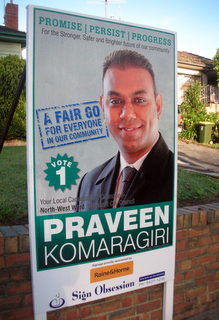
Spring in Oak Park, has been heralded, not just by the emergence of colourful blossoms on the trees, but by faces bearing even more colourful names like Bonafazio, Komaragiri, Yesilyurt, El-Halabi and Yildiz.

They’re all on posters stuck into front yards, on shop windows, along busy streets, in front of schools and businesses in preparation for Moreland Local Council elections on October 27.

Some are huge portraits printed professionally on glossy metal signs, with enormous faces smiling back at you and catchy slogans, while others are barely larger than a coffee table book.

“Your voice, your vote.”
“Promise, persist, progress.”
“A voice for change.”

Olive skins, shades of brown. And white. They are the sons and daughters of immigrants from Italy, Turkey, Lebanon and India. Some are immigrants themselves.

Like Antonio Bonifazio (pronounced Bo-ne-fa-zee-o), who I met for coffee at the McDonalds on Pascoe Vale Road.

He’s a 68-year-old retiree, with a full head of silver hair, silver side burns, a twinkle in his eye and a mischievous smile, which lights up his face when ever he tells me about the victories he has had over dodgy builders, lax council officials, car yard dealers and Essendon airport.

He arrived on a boat from Sicily in 1954 with his mother, just eight-years old.

β€œI was called a dago at school and was getting into fights because of it,” he tells me.

But he gave as good as he got, though it’s hard to believe, looking at this genial father of five and with grandchildren in the double-digits.

Though his early life in Australia was not easy -he left school at 14 and worked as trimmer at suitmaker John Sackvill to support his family and once, nearly cut his thumb off –Β  he later went to night school and became a motor mechanic and ran his own workshop, before retiring 10 years ago.

But rather than slow down, retirement has energised Bonifazio, who apart from gaining a degree of fame when he took on and won against electricity firm Jemena, over a $200 charge to remove a disconnected meter he never used. He has also become something of a local hero, acting on behalf of neighbours and friends in Oak Park, representing them at VCAT disputes with builders who he says are β€œout of control”.

To date he has been successful in forcing them to lower garages, re-locate drainage pipes and lower the heights of buildings so they don’t peer over neighbours properties.

He says the Moreland Council not enforcing VCAT rulings and letting builders β€œget away with things” is one of the reasons he standing for council – to make them accountable.

Another candidate for north-west ward is Oscar Yildiz who has been mayor of Moreland City since 2008.

He is of Turkish descent. His father migrated to Australia in the late 1960s; he was born and raised in Moreland.

β€œThe Word Yildiz means β€œstar”,” he tells me, “as in galaxy or pop”.

An educator by profession and a father of two girls, he says that multiculturalism means β€œsharing, embracing and living harmoniously with the many cultures, traditions, rand nationalities in this beautiful country of ours”.

In his incoming 2011 mayoral speech Yildiz said: β€œAlmost half of the Moreland residents speak a language other than English at home. There are 132 different community languages spoken in this city.”

He is campaigning on a platform of delivering the best return for rate payers in terms of infrastructure, sport and recreation, better elderly and youth services, better maternal health care and an efficient and effective waste service.

I also caught up (over email) with Zeynep Yesilyurt, who arrived from Turkey with her parents and siblings in December of 1977, as a 6 Β½ year old.

β€œThe origins of my first name are Arabic – apparently it means precious jewel.Β  My surname Yesilyurt translates to Greenland,” she says.

She is married to an Italian-Australian and says they have blended all three cultures into their lives.

β€œHowever, one thing that I will always maintain is the importance of family and of course the love of Turkish music.”

She says multiculturalism means being able to maintain aspects of your culture, traditions and beliefs and live in harmony with other cultures.

β€œIt is also about respecting people’s differences and not imposing your own values and beliefs on others,” she adds.

Her campaign for a council seat is based on getting rates reduced.

β€œI have had street stalls, visited senior citizens groups and door-knocked and the burning issue for many residents has been the excessive rate rises over the last few years.

β€œWith the rise of cost of living, pensioners and families are struggling to keep up.Β  Rates are now a big chunk of people’s incomes.”

According to the 2011 census, 35% 0f Moreland residents were born outside of Australia.

Common languages spoken in Moreland homes include Greek, Italian, Mandarin, a variety of Indian dialects, Maltese, Croation,Β  French, Dutch, German, Japanese and Macedonian.

Other Moreland Council candidates include Praveen Komaragiri, who hails from Secunderabad, located in the Indian state of Andhra Pradesh north of Hyderabad.

Another is Catherine Farres, whose poster reads β€œLa Vostra Voce a Moreland” in Italian – β€œYour voice in Moreland”.

Halil Kaya has Turkish ancestory. Milad El-Halabi hails from Lebanon.

Alesio Mulipola is from Samoa.

All these interesting faces smiling back at me. The cynics would say they’re just politicians, and who can trust pollies these days?

But I see a tribute to the best of Australia’s multi-cultural heritage, about what it means to have a β€œfair go” or a β€œfair shake of the sauce bottle” to quote former prime minister Kevin Rudd.

I wonder, what kind of dull, bland, boring country Australia would be if we’d not open our doors to these people standing at the coal face of Australian politics.

Why Alan Jones is talking to himself

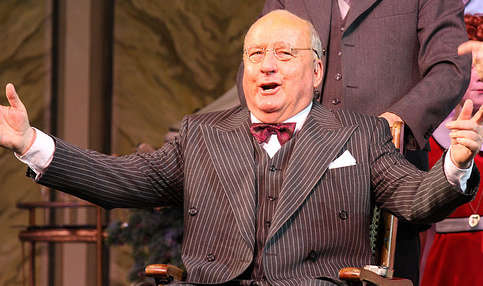
Alan Jones playing Franklin Roosevelt in AnnieThe first time I heard radio shock jock Alan Jones, I saw him as well.

It was soon after I arrived in Australia and was living in Sydney. It was September 2004.

This bald man with a round, red face and bulging eyes would appear on breakfast TV and rant on about something or other in a condescending tone, hardly seeming to take a breath. It would all be over in a couple minutes.

I found it vaguely amusing – knowing nothing at the time about who Alan Jones was or his place in Australian media and politics.

Over the years, I’ve gotten to know more about him, usually in relation to something disparaging he has said about women, the Labor party, minority groups, aborigines orΒ  when he has bullied or and taunted someone on his show or in public (as was the case when he attempted to turn a rabid crowd outside parliament against Fairfax journalist Jacqueline Maley).

But I was also surprised to learn that he coached a successful Wallabies team in the mid 1980s to a famous Grand Slam in Europe and Bledisloe Cup win in New Zealand.

He spoke last year to Leigh Sales on the ABC 7.30 report about his opposition to Coal Seam Gas drilling and its impact on fertile farmland, a stance I support, but also defended his comments about throwing women like Prime Minister Julia Gillard into chaff bags and tossing them out to sea.

Asked how he picked his β€œissues” Jones explained:

“My listeners are my best researchers, so a lot of my issues are taken from the correspondence. I answer over 100 letters a day and I gain information from them.”

And who are these people who write into Jones’s show and inspire his campaigns?

I contacted 2GB and asked them to send me the media kit they send out to advertisers, which would, I thought, give information about the demographics of his listener audience.

But I never got a reply.

Then I came across a 2006 webpaper by Clive Hamilton of the Australian Institute titled β€œWho listens to Alan Jones?”

I emailed Clive Hamilton and asked him, if perhaps he had updated his study.

He replied: β€œI am not aware of any update of the information in the report, but I
doubt the analysis would have changed much. In fact, with the greater polarisation of politics what I said about Jones’s listeners is probably more true.”

With that in mind, I delved into Hamilton’s study, which is based on a range of sources and surveys including Roy Morgan research.

So who does listen to Alan Jones?

Firstly, they’re old.

β€œThe typical Jones listener is an older Australian – 68% per cent are over 50,” says Hamilton in his report.

Secondly, they’re retiree-battlers.

According to Hamilton his listeners tend to be concentrated into two groups: β€œpensioners and others with incomes around the average”.

Thirdly, they are god-fearing.

β€œOnly 10% of Jones listeners say they have no religious affiliation compared to 26% of other Australians”.

Fourthly, they vote for the Coalition.

75% of his listeners supported the ruling Coalition government at the time.

Fifthly, they’re disgruntled.

More than three quarters (77%) of his listeners believe that the fundamental values of Australian society are under threat compared to 66% of all Australians” and they believe that crime is getting worse.

As for the racist element, according to Hamilton’s report Alan Jones listeners are β€œless likely to believe that Aboriginal culture is an essential component of Australian society”.

Those with long memories may recall that in 1993 Alan Jones described the choice of aboriginal musician Mandawuy Yunupingu, the lead singer of Yothu Yindi as Australian of the Year as an β€˜insult’ and claimed that Yunupingu only received the award because he is black.

And who can forget his comments that many claim incited the Cronulla riots including remarks like: β€œWe don’t have Anglo-Saxon kids out there raping women in western Sydney”.

Delve further into the research and more conservative streaks emerge.

Only 13% of his listeners believe that gay couples should be allowed to adopt children (the national average in 2006 was 37%) and nearly 50% believe that homosexuality is immoral – findings that must surely sit uncomfortably with Jones, given questions over his own sexuality.

The research also finds that Alan Jones shows incredible favourable bias towards the Liberal and National Parties, while criticising almost every policy from Labor.

A bias that has clearly not shifted one iota between 2006 and October 2012, given the parade of Coalition politicians who appear regularly on his show.

Despite his audience representing a small, polarised section of Australian society, Alan Jones still seems to think that his audience represents the views of all Australians.

And that’s because they’re so much like him – just with smaller egos and a lot less money.

Perhaps one day he will acknowledge that who actually listens to his show are grumpy old white men living on the Western outskirts of Sydney, who ring in to his show to tell him the country is going to the dogs every time someone with a darker shade of skin colour or foreign accent moves into their neighbourhood.

But I doubt it.

Just recently he ran a poll on 2GB asking whether the massive irrigation farm, Cubbie Station in Queensland, should be sold to Chinese interests.

Not surprisingly, the vote was 99% against the sale.

I listened to a bit of the commentary that followed:

β€œJulia Gillard, Wayne Swan…they couldn’t care less,” said Jones.

β€œYou’ve got dopes running Canberra,” he added.

And so thinking of an image that best sums up the Alan Jones listener audience, I thought of the poster for the movie β€œBeing John Malkovich”.

You know the one with all the people holding up a cut-out of John Malkovich in front of their own faces.

Instead in this case it’s Alan Jones.

Charles Bukowski and the real Hollywood

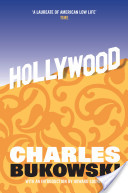
In 1986, the writer Charles Bukowski, chronicler of American low-life, drunks, bums, dead-beats, post office workers and Los Angeles was asked to write a screenplay about himself.

Bukowski, by then in his late sixties and with a degree of success and fame, and having reached a sort of peace with the world and his drinking (red wine instead of hard liquor) was at first reluctant but ultimately agreed.

Bukowski dashed off the screenplay on his typewriter, in the upstairs room of his East Hollywood home, and this became the movie β€˜Barfly’ starring Mickey Rourke and Faye Dunaway, directed by Iranian-born director Barbet Schroeder.

The film is about a drunk – Henry β€œHank” Chinaski, Bukowski’s alter ego and narrator of all of his novels – who spends most of his time drinking in dingy bars and hotels, getting into fights and into a mad, crazy relationship with β€˜Wanda” – an earlier love of Bukowski, who inspired some of his best poems and who drank herself to death.

The movie was a minor arthouse hit and got a few Golden Globe nominations and mixed reviews. It’s worth watching though and there’s even a brief cameo of Bukowski himself, who died in 1993, aged 73 (an impressive achievement given his love of the bottle).

After the film came out, Bukowski wrote what would be his final novel β€œHollywood” which chronicles his experiences of writing the ‘Barfly’ screenplay and mingling with a long list of Hollywood stars including Mickey Rourke, Faye Dunaway, Sean Penn, Dennis Hopper, Isabella Rosellini, directors Francis Ford Coppola, Jean-Luc Goddard and David Lynch and a host of producers.

In the novel some of the actors are thinly disguised (Francis Ford Coppola is Francis Ford Lopalla) while others have entirely different names – Mickey Rourke is Jack Bledsoe, whose “beautiful smile” Bukowski mentions often.

Bukowski is Hank Chinaski, as always.

And it’s a brilliant, hilarious chronicle of the process by which the screenplay turned into a Hollywood movie, with all the twist and turns, threats, parties, meetings and booze-ups.

It’s also biting indictment of the way Hollywood operated back then, and probably still does today, with the enormous egos of the stars and players and their demands – Rourke demands a special type of Rolls Royce convertible be made available for him and then, later on, proceeds to stand on the bonnet with his friends for a photo shoot, causing thousands of dollars of damage.

The movie follows Chinaski as he traverses Los Angeles from his home in East Hollywood, accompanied byΒ  his endearing wife Sarah, to meetings atΒ  the homes of Hollywood stars and directors, studios, bars and hotels transformed into film sets and the race track.

Of his love/hate relationship with horse-racing he writes:

β€œMy day out there was pleasant enough but as always I resented that 30 minute wait between races. It was too long. You can feel your life being pounded to a pulp by the useless waste of time.

β€œEach of the jerk-offs thinks he knows more than the other jerk-offs and there they were all together in one place. And there I was, sitting with them.”

And the description of his attitude to the races is almost exactly how he feels about Hollywood and its actors and the world they inhabit- plenty of waiting around and plenty of jerk-offs.

In the course of making Barfly, there is endless waiting around (or waiting for the phone to ring) as decisions are made, then unmade. The movie’s backers agree to fund the film. Then change their mind. Then they agree again. Then no one gets paid. Then they get paid, but the cheques bounce.

In one hilarious scene, the director, Jon Pinchot (Barbet Schroeder) takes a chainsaw to the offices of Firepower (Cannon Group), asks where he can plug it in and threatens to cut off body parts unless they agree to release the film so that someone else can make it.

This is how Bukowski describes it:

β€œWhere’s your plug?” Jon asked

β€œPlug?”

β€œFor this…” Jon pulled the towel away revealing the Black and Decker.

β€œPlease, Mr Pinchot…”

β€œWhere’s the plug? Never mind, I see it…”

Jon walked over and plugged the Black and Decker into the wall.

Later as the secretary enters with coffee…Pinchot presses the button on the chainsaw.

β€œThe blade sprung into action and began to hum.”

Apparently everything in the book is accurate and no one featured in it has ever claimed Bukowski made any of it up.

During the course of making the film, Hank (Bukowski) visits Pinchot and his friend/partner Francois (endlessly playing roulette) who have decided to live in a dangerous part of LA, populated by gangsters. There are always hands coming through the fence grabbing at things, there are bullet holes through the front door one day and later Pinchot is forced to buy back the tyres stolen from his car – and pay extra to ensure they’re not stolen again.

β€œCan you sleep at night,” Hank asks Pinchot.

β€œWe have to drink to sleep. And then you can never be sure.”

In another episode, Jon tells Hank that Francine (Faye Dunaway) wants him to write a scene so she can show off her legs.

β€œShe has great legs you know,” Jon says.

β€œAlright. I’ll right in a leg scene,” replies Hank.

The entire book, all his books in fact, are written in his deadpan, matter-of-fact style, straight-talking but with a certain kind of poetry. Its simplicity is hard to replicate.

In between all this there is drinking. Lots of drinking. Bukowski and Sarah are constantly seeking out a bottle of wine, drinking and refilling their glasses. They drink on set, before takes, at parties, at the cinema, in the limo on the way to premier, on the way home. At home.

And then there are the acutely brilliant observations about the Hollywood system.

At a party full of actors and Hollywood bigshots which Hank attends in the company of Victor Norman (the writer Norman Mailer), he remarks after the flashbulbs go off at Francine’s arrival:

β€œGod I thought. What about the writer? The writer was the blood and bones and brains of these creatures…and where was the writer? Who ever photographed the writer? Who applauded?”

Then he gains some perspective.

β€œBut just as well and damn sure just as well: the writer was where he belonged. In some dark corner watching.”

Later, when the film is finished he remarks of actors that they were β€œdifferent then we were”.

β€œYou know when you spend many hours, many years pretending to be a person who you aren’t, well that can do something to you.”

But he also realises the movie-making is a β€œdeliberate jack-off, a salary for this and a salary for that”.

β€œAnd there’s only one man allowed to put a plug in the wall, and the sound man was pissed off at the assistant director and then the actorsΒ weren’tΒ feeling good…

β€œIt was all waste, waste, waste…”

But the book is certainly not a waste. It’s a brilliant send up and spotlight on Hollywood, written by the β€œlaureate of American low life” in his unique pared-down , dry style.

It’s very, very funny and moving and touching.

Go see Barfly and then read β€œHollywood” by Bukowski.

Satisfaction guaranteed.

(Here’s a short extract from the movie Barfly)

(Here’s a video of Bukowski reading one of his poems in the late 1970s)

Evil intent is in the eyes

A few weekends ago, I went to the supermarket to buy groceries. I parked the car in the covered parking and walked up the ramp that leads up to the collection of shops and Woolies.

A group of young Indian guys in boardies and t-shirts, Australian to the core in their attire and manner, walked up the ramp ahead of me.

A balding middle-aged guy in his casual Sunday clothes – jeans, tracksuit top, I forget the details – was walking down the ramp.

As he passed them, his eyes narrowed and he gave the group of Indians one of the nastiest looks I have ever seen. A look of utter revoltion.

I don’t think the Indians even noticed.

I did.

I am not talking about a disapproving look, like the kind a teacher gives a pupil, I am talking about a look with murderous, hateful, extremist intention.

Given the right set of circumstances – a dark alley, a couple of his buddies – and opportunity – daytime instead of daylight, no one else around – and I shudder at what might have happened.

I wrote recently about the man accused of raping and murdering Irishwomen Jill Meagher in Melbourne.

What has really shocked people is that he was a stranger, not an acquaintance of Jill’s or a member of her family as most victims of violent crimes are in Australia or in other countries where the rule of law applies.

What has really jolted people and shaken their faith in society is the Jill Meagher was most likely murdered by a complete stranger, an opportunist.

The man who stands accused of this crime was a reclusive character, but by all accounts a polite man, who lived in a granny flat at the bottom of the garden and kept to himself. He had few friends, had fallen on hard times and was a loner.

Nothing to suggest he was capable of a crime of which he stands accused.

But perhaps, when his eyes are shown – his head was buried in his hands when caught on camera in a police car – they will give him away.

I am not talking about eyes as the clichΓ©d windows of the soul, I am just talking about a kind of look full to the brim with evil intent.

I am sure you know what I mean, and maybe you have witnessed it yourself.

The encounter with the middle-aged guy on a Sunday at the supermarket is just one such episode.

I’ve experienced that look on the train a couple of times, usually late at night. The last train home.

Once I saw a bloke looking at another passenger with utter disgust and violence boiling under surface. He did not say anything, just stared. If it were a horror movie the camera would zoom and crop his eyes and you’d see the menace and the rage.

Other times, I’ve seen the way some men looking at pretty women. Usually the man is older, the woman much younger.

Men do look at women.

There is the appreciative look, the glance upwards at an attractive woman.

And there’s the stereotypical backwards look that construction site workers in the city can’t help but do, when a pretty woman walks passed. Hey, even blokes in suits do it. But there’s no malice in it.

But there is another look beyond lust, way, way beyond that. A snarling look, as though the eyes were salivating. A penetrating, black stare.

I have seen a couple of men give a woman this look and I fear, that as with the Indian guys at the shopping centre, all that’s needed is time, place and opportunity.

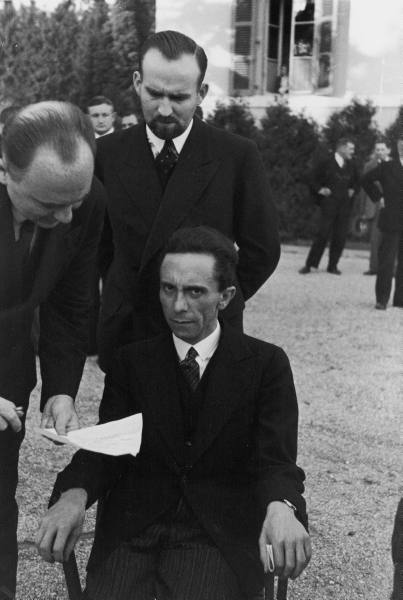
If you think I have an overactive imagination, take a look at the eyes of these two infamous characters: Nazi propaganda chief Joseph Goebbels and serial killer Richard – the Night Stalker – Ramirez:

This is in my opinion the most chilling picture of Goebbels, taken by one of the world’s greatest documentary photographers, Albert Eisenstaedt for LIFE magazine in 1933, before the Nazis began their campaign of genocide.

What’s terrifying about it is that Goebbels is not doing anything particulary menacing, in fact’s its a banal photo, except for the way he looks at the camera.

Eisenstaedt says of this photo: β€œHe looked at me with hateful eyes and waited for me to wither. But I didn’t wither. If I have a camera in my hand, I don’t know fear.”

Richard Ramirez killed 13 people around Los Angeles in the mid-1980s. This photo was taken at his trial.

Better, faster: Has the modern age spoiled the romance of travel?

Have you ever pondered what it must have been like travelling across the world more than a century ago?

Β When there were no aeroplanes, let alone long-distance flights or high-speed trains or even the ability to experience a faraway place through cinema, television or Google Streetview?

Take for instance a trip from London to Mandalay, Burma.

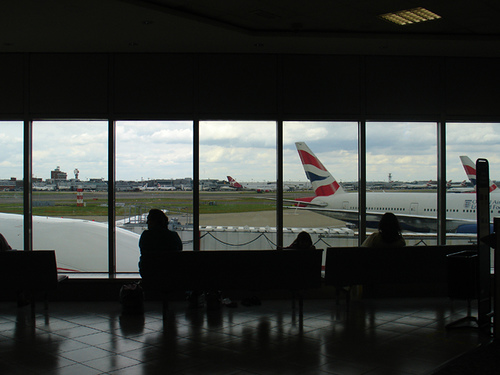
If you lived in Central London you’d take a cab, or catch the tube or take the Heathrow express to the airport. Β Maybe it would take you 40 minutes. You’d check in, spend an hour or two perusing duty free, stocking up on magazines, flight remedies and sweets and then you’d be off.

Your Thai Airways flight departs just after midday on a Wednesday. After a stopover in Bangkok, where you have time for an overpriced green curry and a Chang beer, you board the plane again and touch down in Rangoon (Yangon) on Thursday around 9am.

Β Its 700 kilometres north on the expressway to Mandalay.

You feel brave and a bit adventurous so you hire a car. En route you stop to visit an ancient pagoda and to take in the Shan hills in the distance. You arrive at your hotel in Mandalay just before 7pm.

It’s taken you a little more than a day and half to travel 11,000kms. You kick off your shoes, order a meal from room service, jet lag sets in and you drift off to sleep dreaming of pagodas, the London tube and football.

Rewind 126 years.

Β It’s 1886.

A London piano tuner named Edgar Drake sets out from London to a remote town in the Shan Hills of Eastern Burma to repair a piano belonging to surgeon-major and rogue British officer Anthony Carroll.

Β The British empire is fighting for control of Burma.

Drake’s journey from London to the wilds of Burma begins on the 26 November.

A horse-drawn carriage picks him up in the early hours of the morning from his elegant terraced home in Fitzroy Square, Central London, a home he shares with his dutiful wife Katherine, not far from Regents Park.

The carriage drives him east to Royal Albert Dock (now London’s Docklands) on the Thames, a journey of about 11 kilometres.

Here he boards a waiting steam ship, belching smoke from its stack, which sets off up the Thames at about 17 knots (30 km/hr).

It travels all the way along the Thames until it reaches the Thames Estuary – a journey of about 60kms with Essex to the North and Kent to the South and then enters the cold North Sea.

It heads south through the English Channel and arrives in Calais, France a few hours later.

From here Drake takes a train 292 kilometres south to Paris, but he has no time to stroll the famous boulevards of the French capital as he boards another train for a 770 kilometre journey further south to the port city of Marseille on the Mediterranean coast of France.

It’s 1886 so the train travels around 100 km/hr at top speed reaching Marseille eight hours later.

In Marseille he boards another ship and heads across the Mediterranean telling Katherine in a letter: β€œHow I wish you could see the beauty of these waters! They are a blue like none that I have seen before.”

The ship passes through the Strait of Bonifacio, which runs between the islands of Sardinia and Corsica, where Drake gets his first view of the Italian coastline. He passes Palermo and then Malta and arrives in Alexandria, Egypt five days after he left London. A blind Arab man called “the man with one story” tells a fantastical tale of being ship-wrecked in the desert, of tribes and tents and feasts.

The ship docks for a few hours and then heads east along the Egyptian coast to Port Said, where it enters the Suez Canal and travels south to the Red Sea

Β Edgar Drake’s ship passes what is now the western shore of Saudi Arabia, crosses the straits of Bab al Mandab and drops anchor at Aden, a harbour β€œfull of steamers destined for all over the world, in whose shadows tin Arab dhows darted beneath lateen sails”.

Β Two days later, he passes the island of Elephanta, where the Hindu worship an β€œElephant with Many Arms” and into the teeming harbour of Bombay (now Mumbai) where vessels of every size and description bob about. A carriage takes him to the railways station and to platforms full of people, β€œcrowds such as he has never seen in London”.

The train takes him north east into the Indian interior. He passes Nashik, Bhusawal and Jabalpur – the names growing β€œstranger and more melodic”

When the train stops vendors descend at β€œwind-beaten, lonely stations” and thrust β€œpungent plates of curried meats, the sour smell of lime and betel, jewellery, fans, picture postcards of castles…”

Vendors hang onto the train as leaves until prised off by a policeman’s baton.

The train passes the holy city of Varanasi and they arrive in Calcutta, in West Bengal after three days, a journey of 2,200 kilometres.

Here he boards a ship for Rangoon (Yangon), travelling along the β€œmuddly outflow of the Ganges and into the Bay of Bengal.

Β Three days later the ship gets its first sighting of Burma, via a β€œlighthouse perched on a tall red stone tower” which guards against the reef, a graveyard for many passing ships; they pass buoys and head up the Rangoon River.

The ship winds its way around sandbanks and sharp bends, where Edgar gets his first sighting of the gold-painted Schwedagon pagoda capping a distant hill. Rising 99 metres into the air, it is the epicentre of Rangoon.

Β He is a delayed in Rangoon for four days by British military bureaucracy – he goes hunting in the jungle with officers. There is an incident. A young Burmese villager is shot by mistake.

A few days later Edgar boards a teak ship to Prome (Pyay), and travels up the Rangoon River, a journey of around 350 kilometres passing the Pegu Hills –Β  a range of low mountains before the dense foliage changes to β€œthorny trees and toddy palms”

Here he goes sightseeing to the ruins of Pagan, the ancient capital of a kingdom that had ruled Burma for years.

Β Up a dusty path he walks until he gets the β€œfinest view in all Pagan”:

Β β€œβ€¦a vast field of pagodas that stretch away from the river to the distant mountains, floating in the dust and smoke of burning rice fields”

Β β€œWhat are those mountains?” Edgar asks a soldier

Β β€œThe Shan Hills, Mr Drake. Finally we can see them.”

Β The next morning they arrive in Mandalay.

Delayed for many days in Mandalay because the town of Mae Lwin – his final destination – is under attack, he writes to Katherine:

Β β€œI spend hours looking out at the Shan hills, trying to decide how to describe them for you…I wander the markets, following the flow of ox-carts and parasols along the rutted roads, or I sit by the river watching the fishermen, waiting for the steamer for Rangoon that would bring news of my departure or bring me home.”

Β And here we leave piano tuner Edgar Drake, who will eventually journey through the jungle and hinterland of Burma to an uncertain fate, travelling first by elephant and then on foot.

You see Mae Lwin, does not really exist, nor does Edgar Drake.

Β Both are a creation of Daniel Mason in his novel β€œThe Piano Tuner”.

Β But the journey itself is accurate.

Β It is taken Drake and any other English gentlemen of that time many weeks from closing the front door of a London terrace to waking up in the pungent air of Mandalay, where woman have painted faces, called Thanaka that runs down their cheeks.

Β It has been a journey of horse-drawn coaches, steamships, trains and river boats.

Β He has seen many strange and wondrous things, watched the world change in front of his eyes.

And today, we hop on a plane, watch a movie, close our eyes, order another wine if we can’t sleep and wake up in a new world with all that isΒ  it in between the start and the finish missed out.

To experience the world, we must slow ourselves down. Choose a slower mode of transport. Allow ourselves time.

But who has time to spare these days – even if we hold the latest iphone in our hand?

Should we ban the hoodie instead of the burka?

Is there a modern piece of attire with the potential to be more sinister than the ordinary hoodie?

I’ve been asking myself this question since reading about the tragic abduction, rape and murder of Irishwomen Jill Meagher.

CCTV footage showed a man – the same man now accused of her murder – wearing a blue hoodie as he talked (more likely bothered) Meagher as she tried to stumble home on drunken high-heels, her last fateful journey

The footage shows he does not actually have the hoodie over his face when he was captured on camera talking to Jill Meagher but, no doubt he wore it before or after his heinous deed.

Ironically, if he had worn the hoodie at the time he was captured on CCTV, he might not have been caught so swiftly.

People go on about the need to ban the burka (as it already is in France), fuelling a lot of religious anger and questions about freedom of expression, but I personally have never felt intimidated by someone wearing a burka.

Don’t get me wrong I don’t like the burka. I find them repressive and unpleasant, but not menacing.

Consider this scenario.

You’re walking home at night. It’s after midnight. There’s no one out on the streets. Houses are dead and quiet. Then you hear footsteps and notice someone is now walking behind you…they’re wearing a hoodie and there is face is hidden in shadow.

How would you feel? Safe? Would you pick up the pace? Maybe phone someone on your mobile phone? Your heart-beat would certainly be racing.

Since the murder of Β Jill Meagher, well-known writer, comic and blogger, Catherine Deveney has come out and said that she was too attacked by a man wearing a blue hoodie on Sydney Road, possibly by the same person.

It seems the hoodie is often linked with criminal activity.

You put it over your head before you rob the convenience store; before you king hit someone; before you throw a rock at the police in a riot; to hide your face as you spray graffiti on a public space, or as you flee the scene of a crime.

The hoodie shields the face, the eyes and the intentions of the wearer.

Interestingly, I have discovered that hoodies have been banned in the past, though the move was controversial with libertarians screaming out about human rights, freedom of expression and unfairly targeting young people.

It happened in Belmont, a suburb in the Hunter region of NSW, about 20 kilometres out from Newcastle, where a ban on hoodies was introduced in 2010 in the shopping district to β€œcombat young teenage boys defacing the property”.

β€œThe ban was introduced because young teenagers were using jackets with hoods to hide their identity while doing graffiti,” reported the Newcastle Herald.

According to the report, during the first three weeks of the ban, there was no graffiti.

It’s not the only example.

In June last year Brisbane police launched a ‘Hoodie Free Zone’ initiative in the bayside suburb of Wynnum following a series of armed robberies, where the criminals wore hoodies to disguise their identities.

Shopkeepers were encouraged to ask hoodie-wearers to leave.

More recently hoodies were worn by many London rioters last year as they smashed shop windows and looted goods. They also wore hoodies as they threw rocks at police.

Interestingly hoodies have a religious origin (I keep thinking of creepy cultish ceremonies out in the woods somewhere), dating back to medieval Europe when they were worn by monks.

Hoodies entered popular culture in the US in the 1930s when clothes maker Champion started making them for workers as protection from the cold. They became an iconic piece of clothing following the release of the movie Rocky in the 1970s, where Sylvester Stallone wears them in his training scenes.

And of course they’ve been embraced by hip-hop stars and fake Burberry-wearing β€œchavs” in the UK.

Which is all very interesting, but it does not get away from the fact that wearing a hoodie, especially at night, has the potential to make even the most well-intentioned person appear to be a suspicious, sinister character.

So I maintain if we’re going to ban or put limits on any kind of clothing, perhaps it should be the hoodie, not the burka.

(Author confession: I own a couple of jerseys with hoods. In my defence, I never really wear the hood, certainly never at night and never with any criminal intention. Hey, I’d give them up if asked.)

The pared-down writing genius of Ernest Hemingway still makes me hungry

I just finished reading β€œA Moveable Feast”, Ernest Hemingway’s memoirs of livingΒ  in Paris in the 1920s as little-known writer.

The book is a recollection of his time as a struggling writer, living very basically at 74 rue du Cardinal-Lemoine and then later, above a sawmill, at 113 rue Notre Dame des Champs with his wife, Hadley, and spending his day writing in cafes, and sharing ideas with the likes of Gertrude Stein, the poet Ezra Pound, F. Scott Fitzgerald and James Joyce.

Hemingway is noted for his pared-down writing style, where there is sparing use of words – only necessary ones – to describe scenes, feelings and emotions.

Other writers to embrace this idea include George Orwell with his famous rules for writing including β€œNever use a long word where a short one will do.” and other more recent masters of the art, Charles Bukowski and Raymond Carver.

Writing simply and well may sound easy, but it’s deceptively difficult I imagine.

This point is highlighted by Hemingway himself when he writes in β€œA Moveable Feast” that sometimes he would spend an entire afternoon writing just one paragraph.

Every word must be carefully considered. Every word must have its place and purpose.

But done well there is an immediacy and potency that no other literary artist can capture.

Take, as an example, Hemingway’s description of a meal, eaten alone, in a Paris cafΓ©:

β€œIt was a quick walk to Lipp’s and every place I passed that my stomach noticed as quickly as my eyes or my nose made the walk an added pleasure. β€œThere were few people in the brasserie and when I sat down on the bench against the wall with the mirror in back and a table in front and the waiter asked if I wanted a beer I asked for a distinguΓ©, the big glass mug that held a litre, and for potato salad.β€œThe beer was very cold and wonderful to drink. The pommes Γ‘ l’huile were firm and marinated and the olive oil delicious.
β€œI ground black pepper over the potatoes and moistened the bread in the olive oil.

After the first heavy draft of beer I drank and ate very slowly. β€œWhen the pommes Γ‘ l’huile were gone I ordered another serving and cervelas. This was a sausage like a heavy, wide frankfurter split in two and covered with a special mustard sauce.
β€œI mopped up all the oil and all the sauce with bread and drank the beer slowly until it began to lose its coldness and then I finished it and ordered a demi and watched it drawn.It seemed colder than the distinguΓ© and I drank half of it.(Ernst Hemingway with friends in a Paris cafe in the 1920s.)