A day in the life: a review of “In Every Face I Meet” by Justin Cartwright

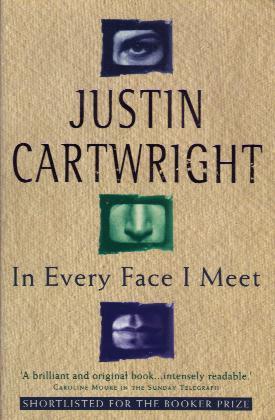
evryface“In Every Face I Meet” is a 1995 Booker Prize-shortlisted novel by Justin Cartwright that takes place over the course of a single, pivotal London day in February 1990 in the life of melancholic forty-something business executive Anthony Northleach.

Northleach, a former talented rugby player (he once trialed for England ‘B’), works for a failing company (what it does is never quite revealed), convinced that the imminent release of Nelson Mandela will fundamentally shift the trajectory of the world, Britain and his own sense of existentialism.

Much of the novel is the inner monologue of Northleach – he recalls, with detailed wonder and awe, a brilliant try scored by English rugby captain Will Carling in a weekend drubbing of the French, he remembers pivotal moments from his childhood in the kingdom of Swaziland, he ponders his marriage, a passionate affair he once had, and his friendship with his best mate and fellow former rugby player Mike, whose life is spinning out of control.

The secondary storyline is that of Chanelle, a crack-addict and prostitute living in a council estate and her black boyfriend/pimp Jason – sporting a medallion of Nelson Mandela around his neck – living on the outer fringes of London society in the final vestiges of Thatcherism.

Without giving too much away, the two worlds – Northleach’s and Chanelle and Jason’s – are on course for a horrifying collision, but what the novel is really about is Northleach’s longing for the past and his disappointment with the present.

It seems that Cartwright has honed in on the second difficult period in an adult male’s life, (the first being adolescence with all its clumsy fumblings and urges) that period from about 40 onwards when there is cause to reflect and ask the question: “Have I lived a purposeful life?”

And if not, “Is there still time to find some meaning?”

Indeed, the character of Northleach must contain parts of Cartwright himself – who was born and schooled in South Africa, the son of a left-wing newspaper editor, and who wrote the book in London, when he was in his late forties.

I have read “In Every Face I Meet” twice – once while travelling overseas in 2010 and now again, when it turned up in a crate of goods shipped over from South Africa.

What’s so enjoyable about reading the book is being inside Anthony Northleach’s head for one day of his life, following him from the office, where he muses about whether his dowdy secretary will ever make it to Thailand, then on the Tube into Soho for lunch in an Italian restaurant with Mike (bumping into Will Carling along the way) where he invites Mike to come with him on his odyssey to Cape Town and finally on his fateful drive home where he encounters Chanelle and Jason.

Northleach, despite his many failings, is immensely likeable with his sardonic political and philosophical commentary, and his honest reflectiveness.

He (and the novel itself) will particularly appeal to white South African-expats (be they in Britain, Australia or entrenched in any other “safe” country),  nearing or past forty that still have a strong sense nostalgia for the old country, especially if you were there at the time Mandela was freed and the inkling of a utopian “Rainbow nation” first emerged.

Indeed, the book was a gift from a South African expat colleague and friend who raved about it and was right when he said I would find it immensely enjoyable to read.

Looking back to February 1990 when Mandela took his first steps to freedom, they do feel like halcyon days, filled with hope and the prospect of something new and fresh, but also scary and uncertain. We certainly lived through history in the making.

Reflecting back on my own life as I fast approach forty – there is much about Northleach’s longings and existential angst that resonates with me.

The enigma, the ego, the cult and the noble idealism of Julian Assange

julian assangeI finished reading “The Most Dangerous Man in the World” just as the trial of US soldier Bradley Manning began in Maryland.

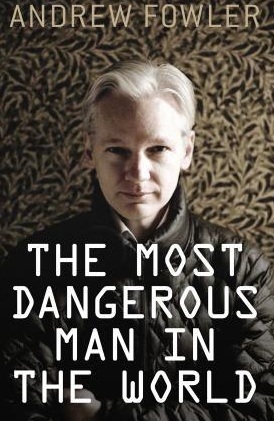
The Most Dangerous Man in the World” is a biography of Wikileaks founder Julian Assange written by ABC journalist Andrew Fowler.

It tells the story of how Assange went from being a teenage hacker in Melbourne to one the most influential and controversial figures in the world.

You could certainly not get too more different characters than Manning and Assange and yet both are now inextricably linked together by their idealism and bravery.

Bradley Manning is by all accounts, a shy, introverted, ultimately decent gay man, who somehow found himself thrust into the intelligence operations of the war in Iraq, and who is responsible for the biggest leak of classified military and diplomatic documents in history.

Assange, portrayed in Fowler’s book as an almost Robin Hood like character – stealing the secrets from the richest most powerful nation on earth to give to the world – but also with the touch of Keyser Soyze about him, able to manipulate politicians and journalists, a seducer of women and at times as secretive as the secret organisations he seeks to expose.

While Fowler clearly admires Assange for what he has achieved, he is no sycophant and leaves the reader to make up their own minds about the enigma and cult of Julian Assange.

How you view Assange and Manning depends on whether you believe governments have the right to keep secrets or whether you believe in the idea of a more transparent and open society.

I am one of those people who believe Julian Assange and Bradley Manning are heroes for revealing the many thousands of innocent civilian deaths at the hands of the US government and its allies, most graphically and famously revealed in the “Collateral Murder” leaked Apache helicopter video showing innocent Iraqis, including children, being killed by 30mm gunfire.

Fowler reveals how the actions of WikiLeaks have shifted events on the world stage. For example, tweets of a WikiLeaks story about the corrupt dictatorship of Tunisian leader Zine el Abidine Ben Ali lead to his overthrow and political exile.

“WikiLeaks was a brilliant example of what has been known for some time: the power of information from a legitimate source, disseminated via social networking systems, to threaten the power of a state and its institutions,” Fowler writes.

Similarly the overthrow of Egyptian dictator Hosni Mubarak as part of the Arab Spring after 30 years of an abusive reign (and with the support of the US government), was also spurred on by WikiLeaks documents showing his brutal methods of silencing opposition.

Still, there are those who call Julian Assange and Bradley Manning traitors and guilty of the highest form of treason for revealing highly classified military documents.

Indeed if Manning is found guilty of high treason (aiding the enemy) he faces spending the rest of life in jail while Assange – now under the protection of the Equadorian embassy in London – faces an uncertain future depending on what steps the US government and its intelligence agencies, supported by other countries including Australia, take to prosecute and silence him.

While the US Constitution’s first amendment enshrines free speech and freedom of the press, the US government has argued that 260,000 or so leaked documents WikiLeaks has on its servers, compromises its national security, puts its operatives at personal risk as well as endangers its relationships with other countries. In short they say it is high treason.

Equally, in the eyes of the current Labor Australian government, Assange is a criminal, despite having the support (according to Fowler’s book) of a large portion of the Australian public and which will be tested if Assange is able to run for a seat in the Australian Senate in September.

Assange is now firmly back in the spotlight with the Manning trial underway.

In a post on WikiLeaks, he says Manning is simply on trial for “telling the truth” and that the US has violated its own laws in its treatment of Manning, including that he has been locked up in a “cage” for 23 out of 24 hours, “deprived of his glasses, sleep, blankets and clothes, and prevented from exercising” and held since May 2010 while awaiting trial.

Assange appears to have won favour again with the New York Times, a newspaper that according to Fowler’s book both supported the work of WikiLeaks and Assange, but also despised him for his manner, his ego and his ability to play one media organisation against another to achieve his own aims and outcomes.

Assange has penned for the New York Times a savage review of a book called “The New Digital Age” written by Google executive chairman and former CEO Eric Schmidt and head of Google Ideas, Jared Cohen in which he accuses Google of going from “an expression of independent Californian graduate student culture” to having “thrown its lot in with traditional Washington power elements, from the State Department to the National Security Agency”.

The article reveals Assange to be a gifted writer, highly articulate and persuasive. He would make an excellent analytical journalist.

Assange accuses Google of acting like an imperialist power, enforcing its digital views on life and business on the world, whether they want it or not. Google, according to Assange, has become a political animal with sinister overtones.

Google’s world vision, he says “heralds the death of privacy for most people and shifts the world toward authoritarianism” – the antithesis of the goals of WikiLeaks, which are a more transparent government but with the privacy of its citizens safeguarded.

It is hard to distinguish between WikiLeaks and Julian Assange.

Though there is a team of people behind WikiLeaks from donors to programmers to activists, Assange is its driving force, its voice and spokesperson.

Fowler’s book reveals Assange to be a difficult person to work with; starting out as a charmer and drawing like-minded people to his noble pursuit of truth like German technology activist Daniel Domscheit Berg and Icelandic politician and activist Birgitta Jónsdóttir and then putting them offsides by unpredictable and secretive behaviour, a hidden agenda and making decisions without consulting with them.

WikiLeaks is the Julian Assange show.

Holed up in the Ecuadorian embassy in London , Assange recently gave an interview to Sydney University politics professor John Keane for The Conversation academic website.

Keane’s interview is more sycophantic then Fowler’s book, but we do get a glimpse of a man who while complaining of the boredom of his “cell” clearly revels in his role as spokesperson for “truth” and appears likeable, still idealistic, but also in the end a realist when it comes to his present situation.

“True democracy is the resistance of people armed with truth against lies,” Assange tells Keane.

In an editorial ahead of the Bradley Manning trial on WikiLeaks, Assange asserts that the dice are already loaded against the soldier, describing it as a “show trial” where “24 prosecution witnesses will give secret testimony in closed session”.

“This is not justice; never could this be justice.” Assange writes.

“Bradley Manning is accused of being a whistleblower, a good man, who cared for others and who followed higher orders. Bradley Manning is effectively accused of conspiracy to commit journalism.”

In the end its does not matter whether you like Julian Assange or not – Fowler’s book lets readers make up their own mind.

What is important are his ideals, which are decidedly noble and good.

“In the end it is not Bradley Manning who is on trial. His trial ended long ago. The defendant now, and for the next 12 weeks, is the United States. A runaway military, whose misdeeds have been laid bare, and a secretive government at war with the public. They sit in the docks. We are called to serve as jurists. We must not turn away,” writes Assange with masterful elegance.

Does speaking out against Israel by default equate to anti-semitism?

Israeli-flagDoes speaking out against the Israeli government mean you are by default an anti-semite?

I have been asking myself that question for more than two decades since finishing five years at a Jewish high school in 1991 where the idea of Israel’s saintliness was drummed into mine and my classmates’ heads with the force of an animal stun gun.

The question resurfaces every time someone of generally high standing is accused of being anti-semitic.

The latest in the firing line is Sydney University professor, Jake Lynch.

Professor Lynch is director of Sydney University’s Centre for Peace and Conflict Studies, and author of a number of academic works on “peace journalism”.

By his association with the Boycott, Divestment and Sanctions (BDS) campaign, professor Lynch has been accused of being “against jewish people” by shadow foreign affairs spokeswoman Julie Bishop, who has promised that should the Coalition win government, it would cut funding from  the Centre for Peace and Conflict Studies.

“Mr Lynch is free to raise funds from non-government sources if he requires money to fund his campaign against the state of Israel and Jewish people,” Julie Bishop told The Australian.

“A Coalition government would seek to withdraw funding to any academic institution that used taxpayer funds for an anti-semitic campaign,” she adds.

Bishop, who is not Jewish, makes the familiar leap from it being “a campaign against “Israel” to “against the Jewish people”.

Now, I for one do not support the boycott being promoted by the BDS campaign.

But it seems highly questionable that professor Lynch is “against the Jews” given his CV, academic credentials, published works and experience.

He has written for the respected independent online journal New Matilda and appeared on the ABC opinion program The Drum.

In addition, three Jewish academics have come out in support of professor Lynch’s and other people’s or organisations’ democratic rights to be critical of Israeli policies and actions without the threat of losing their funding.

“Andrew Benjamin, Michele Grossman and David Goodman variously described the policy outlined last week by Liberal deputy leader Julie Bishop as ‘outrageous’, ‘counter-productive’, ‘populist’, and as ‘an anti-democratic gesture par excellence,” reported The Australian.

(For professor Lynch’s own explanation for why he supports the BDS campaign, read his view on New Matilda  – interestingly, the word “Jew” or “Jewish” is not said once).

A look back through the archives reveals other similar examples where left-wing leaning people and organisations have been labelled ‘anti-semitic” for speaking their minds on Israeli politics.

In September 2010, Fairfax journalist and broadcaster Mike Carlton came under fire for an article he had written highly critical of the actions of Israeli forces in Gaza in May 2010.

In a follow up column a week later, he wrote of  the hundreds of angry emails he had received in response from the Jewish lobby, which he called a “ferocious beast”.

“Write just one sentence even mildly critical of Israel and it lunges from its lair, fangs bared, ” said Carlton.

Emails received apparently included:

‘How dare you insult Israel you over priviledged [sic] racist white moron, f— you and your stupid article. I wish I could smash your dumb face in.”

Carlton wrote in his follow up article a week later:

“I replied to Robert Goot (president of the Executive Council of Australian Jewry) ,that I am perfectly content with the existence of Israel as an independent Jewish homeland, and that I have no more regard for Hamas than I had for the psychopaths of my own ethnic background, the IRA.

“But nor, I said, would I be silenced about Israel’s cruel and unconscionable oppression of the people of Gaza. Enough. Shalom.”

A complaint of anti-semitism made against Carlton was dismissed by the Australian Press Council.

Last year Nobel prize-winning author Gunter Grass was labelled an anti-semite for a poem he wrote arguing against Germany delivering nuclear submarines to Israel.

For someone who grew up being told not to buy German cars or German appliances (though every parent of every kid I new at school drove a BMW or Mercedes), the ironies are too huge to even try to put in words.

And also last year, the Executive Council of Australian Jewry sought to halt promotion and DVD sales of the SBS series ‘The Promise’ about a young British woman retracing the footsteps of her grandfather, a soldier in the final years of the British Mandate in Palestine, labelling it Nazi propaganda and anti-semitic.

The truth, it seems, is that criticism of Israeli government policies inevitably leads to the cries that there is an underlying anti-Jewish agenda.

And it doesn’t even matter if you’re a Jew.

If you’re a Jew and you criticise Israel, then you are a “Jew-hating Jew”.

The most high-profile example of this was South African Judge Richard Goldstone,  who chaired the Goldstone Commission in The Hague prosecuting war crimes in Yugoslavia and Rwanda and released the controversial Goldstone Report.

He felt the full wrath of the small, but highly influential South African Jewish community, when the Goldstone report into the Gaza war of December 2008 and January 2009 was published, accusing the Israeli government, but also Hamas, of deliberately targeting civilians.

The backlash in South Africa was brutal and vindictive, aimed at inflicting maximum personal hurt and pain.

Leading the charge was the South African Zionist Federation, who threatened to picket the synagogue if Goldstone attended his own grandson’s bar mitzvah in Johannesburg.

As someone who remembers the importance of his own bar mitzvah (when you symbolically enter adulthood at age 13), it was the cruellest of threats.

In April 2011, Richard Goldstone wrote in the Washington Post that subsequent findings were that the Israeli government had not intentionally targeted civilians but also that “the purpose of the Goldstone Report was never to prove a foregone conclusion against Israel”.

To any sane individual, Richard Goldstone is not anti-semite.

But not to the South African Zionist lobby – a lobby I might point out is content to live outside of Israel – rather than join in those who actually live there day in and day out.

I can understand though where such views germinate from.

I spent five years at a Jewish day school in South Africa where the idea of Israel’s importance was heavily and relentlessly drummed into our heads, while at the same time no mention was made of our own privileged positions as white school kids in a private school in apartheid South Africa.

We had one particular history teacher, a very severe woman, who instructed us to learn to draw the Israeli map from memory.

I am not joking – Heaven forbid you could not manage the task!

Later, in adult life, I have found myself at dinner parties and where I have been told that institutions like the BBC and The Guardian newspaper – among the most respected media organisations in the world – are anti-semitic.

Instead, I was told to watch CNN for an unbiased (read: pro-Israeli) point of view.

So am I suggesting the BDS campaign is an entirely kosher operation with no bad elements tagged on to it.

Certainly not, that would be naive.

But equally, is it fair to tar anyone who forms a negative view on Israeli government policies as an anti-semite?

Like every government, the Israeli government is far from perfect.

Anyone who has followed the story of Mossad’s use of fake Australian and British passports to carry out a Hamas hit in January 2010 will know that there are some very sinister elements operating within the darker recesses of the Israeli government.

As there are in every government.

The funny thing is that within Israel, Jews protest openly against Israeli policies such as when 250,000 Israelis joined rallies against their government’s economic policies in September 2011 – and no one accuses them of being jew-hating jews.

As Stephen Pollard, editor of The Jewish Chronicle wrote in The Sunday Age a couple of years ago: “It shouldn’t need saying that protesting against the actions of the Israeli government is not the same as being anti-semitic.”

Surely the time has come to separate legitimate criticism of Israel with claims of anti-semitism.

Yes there are many anti-semitic agendas behind Israeli protests and anti-Israeli comments and these should be pointed out when the evidence overwhelmingly says so.

But jumping up hysterically  and shouting “anti-semite” every time a word is uttered in anger serves no purpose but to give more ammunition to the real bigots and jew-haters.

Israel holds itself up as an example of a democracy surrounding by states that are not.

Surely it’s time its defenders in the diaspora became a little more tolerant of free speech.

Between the two Ireland’s of McCourt and McCartney, my own proud ‘Oirish’ roots

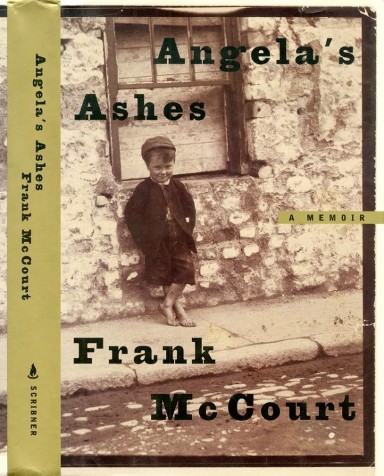
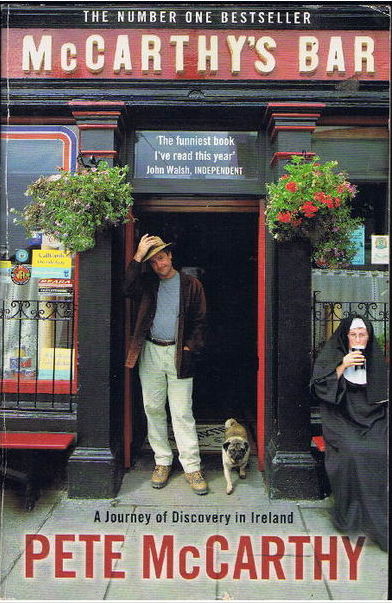
AngelasAshesThere can surely be two no more disparate accounts of Ireland than Pete McCarthy’s meandering travelogue ‘McCarthy’s Bar’ and Frank McCourt’s classic memoir of a miserable childhood, ‘Angela’s Ashes’.

I read both books one after the other.

‘Angela’s Ashes’ won Frank McCourt the Pulitzer Prize while ‘McCarthy’s Bar’ won Peter McCarthy – already a successful television host of travel programs – a legion of new fans.

mccarthys barBoth made me laugh out loud as I read them on the train into work (as well as feel cringeful, sad and nostalgic).

They made me want to undertake my own Irish adventure, a place I have visited only once.

It was in 1990, when I was just 16 and Germany had won the World Cup (I remember a hand-written sign at Heathrow as we disembarked: Germany 1 – Argentina 0) when my family went there as part of a three-week UK and Ireland holiday.

We visited my Great Aunt Bertha and her husband, my Great Uncle Jack Weingreen, the only relative I know who gets a mention on Wikipedia.

It’s a short entry, but I am proud of it nonetheless:

Professor Jacob Weingreen (c. 1907 – April 11, 1995) was a professor of Hebrew in Trinity College, Dublin – School of religion and theology between 1939 and 1979. He excavated in Samaria and maintained contact with archaeologists who donated pieces to the Weingreen museum which was named after him. Professor Weingreen was the author of the Hebrew grammar textbook that is still recognized as the standard teaching work on the subject.

His wife Bertha, doesn’t get a mention in Wikipedia, but you’ll find information about her to if you look online:

The Holocaust Education Trust of Ireland writes:

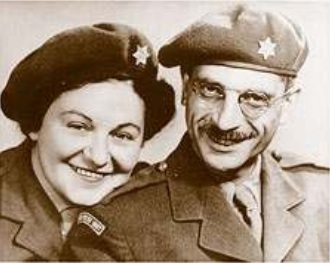
Bertha came from South Africa where she taught English and Drama at a training college for ‘coloured’ teachers. In 1945, Jack and Bertha joined the Jewish Relief Unit which cared for the remnants of European Jewry who had survived the Nazi concentration camps. Bertha was Chief Welfare Officer responsible for all Jewish DPs (Displaced Persons) in the British Zone, and was stationed at the former military barracks at Bergen-Belsen.

This is a picture of them taken presumably just after the war. (They returned to Dublin in 1947)

jack and bertha

Reading Angela’s Ashes and McCarthy’s Bar, stirred up memories of our family visit to Ireland to see Jack and Bertha, when both were in their eighties and in the twilight years of their lives.

Ireland felt poor in 1990, but not as poor as it did for Frank McCourt.

Most of Angela’s Ashes (published 1996) is set in the poorest backwater lanes of Limerick, where the McCourt family lived in a squalid two-storey hovel in the 1940s. In winter, the ground floor would flood, so the family lived upstairs, which they called ‘Italy’ with a fireplace that kept them warm, surviving on fried bread and tea.

In ‘McCarthy’s Bar’ (published in 2000) Pete McCarthy journeys around Ireland in a beat-up  blue Volvo he nicknames ‘The Tank’ observing the eighth rule of travel: ‘Never pass a bar that has your name on it’ while he ponders his identity (over a Guinness). With an Irish mother but an English father and memories of family holidays in Drimoleague, in county Cork, he tries to understand his strong sense of Irishness and whether he claim membership of the Irish race.

I also felt, growing up, that I could claim some part of Ireland for myself and recall often wearing a T-shirt with words emblazoned in emerald-green on the front: “I have Irish roots”, the letters decorated with leaves and roots and somewhere, I imagine, a four-leaf clover.

I loved telling anyone who would listen, that my Great Uncle Jack Weingreen wrote the definitive text-book on Hebrew Grammar. In fact, we had a copy of the textbook at home, should anyone question the legitimacy of my claims. Ironically, I was terrible at Hebrew at school, despite five years of conjugations and the implorings of my Israeli hebrew teachers, I can only remember a phrase or two.

In 1946, while Bertha and Jack were helping holocaust survivors rebuild their lives after the horrors of the war, Frank McCourt, aged just 16, was working as a delivery boy at Easons, delivering newspapers and magazines around Limerick. He’d survived a bout of diphtheria that almost claimed his life, an extreme case of conjunctivitis that almost took his eye sight, an alcoholic father who drank what little money they had before disappearing to England, the loss of three siblings and the shame of watching his mother beg for food to keep her children from starving. A few years later he would set sail for America and begin a new life, before writing his memoirs many years later.

When we visited Jack and Bertha at their home in Dublin, they were old, but charming and kind. Jack I remember as an older version of the army photo: a stooped, small, man with a moustache and glasses, always in a tie and tweed jacket who made us soup with kneidelach (dumplings). He smoked a pipe and snorted a lot, which made all of us laugh uncontrollably.

My memories of Bertha are less clear, though I remember large kind eyes.

We slept on the floor of their cluttered house, filled with the things they had accumulated from lives lived to the full. They had a long, rambling garden, grown wild and unruly. It had once, according to my grandmother Nella (Bertha’s sister) been a stunning, colourful garden that had won prizes and been featured in magazines.

We visited Trinity college with Uncle Jack, who proudly showed us round his alma mater and I remember eating a distinctly awful and drap lunch in a gloomy cafeteria.

In 1990 Ireland felt poor. The emergence of the “Celtic” tiger economy of Pete McCarthy’s travelogue (where Singapore noodles cost more than “in a Chinese shop off Leicester Square”) was five years away. I remember we visiting a friend of my mother’s, who lived in a very rundown house with bicycles and other things scattered in an overgrown backyard.

There are, it turns out, a lot of bars in Ireland called ‘McCarthy’s Bar’ and Pete McCarthy duly spends much of the book in pubs all across Ireland drinking Guinness and whiskey with the locals (some of whom are German and English expats) often accompanied by a toasted ham and cheese sandwich, reading excerpts from a 19th century travel journal – Irish Sketches – by William Makepeace Thackeray and pondering his identity with long-lost friends and relatives, drunks, bar tenders and tourists.

He travels through Ireland describing mountains of “biblical ruggedness” where bearded men “play harps”, remote islands reached by rickety cable cars, fields of green divided by stone walls where farm animals graze. He visits ancient standing stones and ruined medieval churches and abbeys, uncovers the tourist trappings in overpriced Killarney bed and breakfasts, shares a pint with Jimi Hendrix’s semi-retired bass guitarist Noel Redding, but doesn’t run into U2 guitarist ‘The Edge in Cong.

Finally he finds himself after countless adventures and misadventures in Lough Dergh in County Donegal, where he undertakes the 1,000 year old Christian pilgrimage, a three-day marathon of praying, walking, fasting and circling.

My own family Irish adventure culminated in an “Oirish” castle, where we stayed for a few days courtesy of a ‘Timeshare’ swap and which would have amused Pete McCarthy. It had an indoor swimming pool and the towers and crenallations of a castle, but that is all I remember.

It is the kind of holiday Frank McCourt could only have dreamed of. For the McCourt’s Christmas meant Frank going out with his brother Malachy in their threadbare clothes in the freezing Irish winter to hunt for coal discarded on the road so they could have enough fuel to start a fire and enjoy a Christmas dinner of boiled pig’s head and floury potatoes and tea.

My Great Uncle Jack and Aunt Bertha played an active role in Irish academic life and Dublin’s small jewish community for almost fifty years. Jack died in 1995 and Berth in 1999.

Our family holiday is my only memories of them.

Frank McCourt and Pete McCarthy have also both departed, both sadly from cancer. Peter McCarthy died in 2004, aged just 53 and Frank McCourt at 78 in 2008.

Their paths crossed briefly in 1998, while Frank McCourt was touring the world to promote Angela’s Ashes and while Pete McCarthy was travelling around Ireland in his blue Volvo on his own personal pilgrimage of identity.

It was a chance meeting.

McCarthy gave a ride to a Canadian hitch-hiker who said she was going to Castlebar in County Mayo to a “library to listen to a writer”. It turned out to be Frank McCourt.

McCarthy describes Frank McCourt as wearing s a blue jacket, red shirt and looking much younger than his sixty-nine years. He plucks up the courage to ask McCourt a question.

“Where do you feel you belong?” McCarthy asks.

“New York” Frank McCourt replies.

But before McCarthy can ask him if its possible to “truly belong in a land where you’ve never actually live” the talk is over.

Later, while Peter McCarthy is eating a very good and cheap meal of Singaporean noodles (the bill comes to a reasonable £12), Frank McCourt walks past the window.

The kindness of strangers

customer complaintsThey say the retailing environment is tough at the moment.

The online world with its free shipping, discounts and gimmicks is really biting into “bricks and mortar” shops selling books, CDs, DVD and just about anything else you don’t have to eat or drink.

Even clothes.

Who would have thought that so many Australian consumers – men and women- would be buying entire wardrobes online?

But they are. Companies like UK-based fashion house ASOS are selling so much merchandise to Australians they’re having to fly in two jumbo jets a week just to fit everything in.

Anyway, I digress.

This week, amid this tough retailing environment, a complete stranger did me a favour.

I was in an ‘All Books 4 Less’, one of those discount stores that sells books for $5 and $10.

I picked out a book for my wife as a present. It was a nice book on crafts.

It cost $1o.

I walked up to the register and nice young woman scanned the book and told me it was $10.

I took out my wallet and handed her my debit card.

She pointed to the sign behind her and shook her head:

“Minimum EFTPOS transaction is $15” it read.

I shook my head and scrounged around in my wallet for a $5 note. Then I emptied out my front pockets and my back pockets and came up with a few dollars more.

She stared at me, smiling awkwardly, as I scrounged around in my bag for coins.

I laid everything out on the table and counted.

It came to $9.95.

Surely she would not begrudge me 5 cents?

“Oh I am sorry” she told me. “It is $10.”

“But surely…”

“No, sorry.”

I glared back at her. Indignant. Then I searched again in my bag and then in all the pockets of my jeans and then in my wallet.

Nothing.

“You’re being ridiculous,” I told her, the anger rising.

“I am sorry, the manager will see there is money missing.”

“But it’s five cents”

“I am sorry”

“You’re being ridiculous”

“I am sorry”

She suggested I walk to the nearest bank.

I searched through my bag, my pockets, my wallet again, refusing to move.

She watched me.

“Perhaps you can buy another book so you spend $15?” she suggested.

“I don’t want another book,” I replied.

Then a woman came up behind me to pay for some books.

I told her why I was standing at the counter with the contents of my bag spread out before me.

She frowned.

‘You wouldn’t have 5 cents would you?” I asked her.

She smiled, opened her purse and took out a 5 cent piece and gave it to me.

I thanked her.

I gave it to the woman behind the counter.

I left with my book.

I calmed down.

Reflecting back now on this, I have to ask: Has the retailing world gone mad?

Is this how you treat customers when you’re competitors are selling the same products at half the price?

But it seems it has.

There’s the story about the health food store in Brisbane charging customers $5 “to browse”  because the owner was apparently unhappy with giving customers advice, without the guarantee they would buy anything.

This is not an isolated innocent. In Newcastle (NSW), a shoe shop is charging customers $10 to try on shoes.

In both cases, the money is deducted if the customer makes a purchase, but who would bother putting up with this kind of attitude? Half the fun of shopping is the ability to browse.

And is this the best solution these two businesses can come up with to arrest revenue lost to online stores or cheaper competitors? Smacks of desperation. These businesses won’t last very long.

Such contempt for customers is happening at the top of the retail food chain as well.  Recently Myer managing director Bernie Brooks, suggested it would not be a good idea for taxpayers to fund the national disability insurance scheme (NDIS) because it would cut into the money people may spend in his department stores.

The social media backlash was brutal.

And let’s not forget another grumpy old retailer, Gerry Harvey, founder of Harvey Norman, worth close to a billion dollars, who loves to complain about online retailers stealing his business, Then he launched his own own online store.  Of course he is still loves running those “23 month no interest, no deposit, no repayment” dodgy offers that cost unwary customers hundreds of dollars in extra fees and other costs.

The fact is there are plenty of traditional retailers making good money because they know how to sell their products, sell the right kind of products and because they treat the customer as king.

This is just as true in the de-personalised online world, where for example the Book Depository charges no shipping fees at all even for international purchases.

So here’s a suggestion for the people at All Books 4 Less and every other retailer grumbling and looking to gouge their customers, even for a measly 5 cents.

Don’t argue with us. Don’t try and wrestle our money from us.

Treat us like old friends. Make us smile and we’ll keep coming back.

And remember that old saying: the customer is always right.

Even when he’s wrong.

The cabinet of horrors in every convenience store

It’s been six months since the government hit big tobacco companies where it really hurt them – their brands.

So here’s a little weekend tale, if anyone needed reminding:

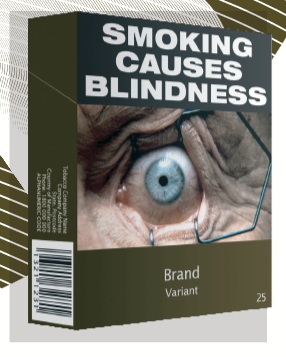
A little while ago, needing a few groceries, I drove up to the local store, parked the car, dashed in from the rain, grabbed a few items from the shelves and headed for the counter to find myself staring inside a veritable cabinet of horrors.plain packaging

It was the kind of scene that would, were it broadcast on the news, come with a warning: “The following graphic imagery may disturb sensitive viewers. Viewer discretion advised”.

But what choice did I have other than to look?

Behind the head of the little Asian man serving me were images of diseased and blackened limbs, a cancerous, dissected lung, an eye socket prized open like a scene from the movie ‘A Clockwork Orange’, and an emaciated man dying in a bed.

All of these images were on the covers of cigarette packs stacked up in what looked like a white medicine cabinet, the doors flung open.

Instead of medicine though, it’s death that’s up for sale.

plain packaging2These graphic, nausea-inducing images are to be found everywhere on billboards, in bus shelters, in print and online advertising,on the government’s department of health and ageing website, and in discarded cigarette packs on suburban streets.

As I paid for my eggs, milk and bread, I was thinking, “Do I have to see all of this?”

All of this is courtesy of the government’s much trumpeted ‘plain packaging’ requirements for all tobacco products, introduced on December 1 last year, which state that:

“All tobacco products sold, offered for sale or otherwise supplied in Australia must be in plain packaging and be labelled with the new and expanded health warnings”.

Just why the government has called its legislation “plain packaging” when it’s quite the opposite is probably the reason I’m a journalist and not a politician.

The idea behind plain packaging is to prevent the misleading advertising of tobacco products with images and words aimed at discouraging new smokers from taking up the habit and convincing those who currently smoke to quit.

According to the government, an estimated 15,000 Australians die every year from smoking-related disease, costing the Australian economy and society approximately $31.5 billion a year.

It’s the government’s key strategy in a very bitter battle against the tobacco industry alongside a raft of other measures that include a 25% tobacco excise increase in April 2010, more than $85 million spent on anti-smoking social marketing campaigns and legislation to restrict internet advertising of tobacco products.

That’s fair enough and commendable.

But what about those of us who don’t smoke?

What about our rights to enjoy a pleasant afternoon in the convenience store without being visually assaulted by images of a blackened, gangrenous foot or a spliced open, diseased pair of lungs?

Has the government gone too far?

More importantly are these graphic images really necessary and do they actually work?

The government says “branding and packaging designs on tobacco products can mislead consumers” (who can forget the Marlboro Man?) but is there any evidence that these images are discouraging anyone from giving up or starting to smoke?

That answer won’t be known for a number of years since Australia is the first country to implement this policy, though according to anti-smoking campaigner Anne Jones, chief executive of Action on Smoking and Health, there are “130 published research studies showing that young people perceive tobacco in plain packs to be less appealing, less palatable and of lower quality”.

And what about the advertising of two other major social ills: alcohol and gambling? Why have they gotten off so easily?

Clearly there is a difference between alcohol and gambling…and smoking.

Smoking is bad, period, but having a flutter on the horses or a glass or two of vino is not going to do any major damage.

But when either drinking or gambling are done excessively, the effects are just as damaging as smoking; indeed while smoking is usually a gradual decent into ill-health, a night of heavy drinking or one spent in front of a pokie machine can ruin a life in a very short time.

And while the proportion of people who drink excessively has hardly fallen in recent year – around one in five according to the most Australian Bureau of Statistics figures – smoking rates are going in the opposite direction, before plain packaging rules were enforced.

An article in The Age published in November last year reported that about 16.3% of adults smoked daily in 2011-12, well down from 2001 rates of 22.4%.

Indeed, smoking rates have fallen been for decades, with figures from Quit Australia showing that the smoking rate was 72% in males in 1945, 40% in 1980 and 25% in 2001.

And yet what do we get: a grotesque anti-tobacco campaign on the one hand, but on the other, ad after ad on the television, radio, print and online promoting beer, wine and spirits, while the pubs and clubs are stacked full with pokie machines and hundreds of millions of dollars are spent on new 24 hour casinos.

There’s even giant ads courtesy of TAB extolling the virtues of winning at gambling (the one below in Southern Cross train station) and a smug Tom Waterhouse in his suits saying its cool to have bet after bet after bet.

"The joy of gambling" - one of three giant TAB ads at Southern Cross station

“The joy of gambling” – one of three giant TAB ads at Southern Cross station

In contrast, cigarette advertising has been banned on Australian television since 1974 and in sports since 1992 (with a stay of execution granted to Formula One racing until 2006).

The government trumps its victory over big tobacco, but alcoholic beverage makers and the casino operators and bookies get a virtual free ride.

Perhaps they’re funding election campaigns, who knows?

But non-smokers like me, the vast majority of the population, not only have to put up with beer gardens and outdoor cafes packed with smokers, but the graphic images that assault the senses.

And let me ask you this question: have you ever actually heard of anyone quitting smoking because of the images and warnings on the packs?

All I see is smokers happily taking cigarettes from their “plain” packs, lighting up and puffing away while I get to ‘enjoy’ the image of a foot gone black with gangrene while I do my shopping.

But perhaps, I’ve got it all wrong.

Maybe, the real reason behind plain packaging campaign is not about smoking at all, but aimed at tackling another chronic issue in Australia: obesity.

In that regard, it will probably work a treat!

The Guardian Australia: you won’t find it @ www.theguardian.com.au

For the four-and-a-half years I lived in London, The Guardian was the newspaper to read for quality investigative journalism as well as for its famous spelling mistake howlers.

the guardian

Writing for Accountancy Age magazine in Soho, I’d read the business sections of The Guardian, alongside the other broadsheets (the Financial Times, The Independent and Daily Telegraph) for possible story ideas in the morning and then, like everyone else, would seek out The Sun and The Mirror in the afternoon for the salacious gossip, page 3 girls and Premier League football stories.

Lately there has been extensive coverage of the launch of a digital Australian edition of The Guardian (announced in January) with news of top Fairfax journalists like David Marr and Lenore Taylor jumping on board with the site to be edited by The Guardian’s deputy editor Katharine Viner.

A colleague of mine at Private Media, Oliver Milman, will be joining the Guardian Australia as a Melbourne-based environment reporter alongside other new signings of journalistic talent announced this week.

They’ve already leased offices for journalists and other staff in Surry Hills, Sydney, so it’s clearly a serious venture for a publication, which is the fourth biggest newspaper website in the world with a monthly audience of 30.8 million users behind Mail Online (45.3m monthly readers), the NY Times‘s (44.8m) and USA Today (34.6m) according to National Readership Surveys September 2012 figures.

So, eager to find out more, I searched for ‘The Guardian Australia‘ on Google.

The first result was this page (below), with picture of a koala bear and a billabong and a host of stories, videos and commentary about Australian issues:

guardian australia

This, I know, is not the new Guardian Australia edition, but the long-running Australia page of The Guardian UK with the giveaway being The Guardian store offers in pounds while the Guardian jobs section are all British roles:

guardian jobs

So I clicked on the third link  on my Google search –  www.theguardian.com.au which sounded like the most likely address for the new digital Guardian Australia edition.

google search

And bingo, I came across a  newspaper website full of Australian stories with a masthead in similar font to that used by The Guardian.

guardian fairfax

So was this The Guardian Australia edition?

Clearly not, since it says its owned by Fairfax.

When I clicked on the “About Us” page, the confusion abated. It reads: “The Guardian provides the latest news from the Swan Hill region, northern Victoria and NSW Riverina.”

This is another Guardian Australia – a regional newspaper dating back to 1888.

Perhaps its only coincidence the fonts are so similar, but it surely must have caught the attention of those in corridors of power at Fairfax, and not just because they’ve got the URL, but also the Facebook address: www.facebook.com/GuardianAU.

As luck would have it, Twitter suggested I follow Lenore Taylor, the recently appointed political editor of The Guardian Australia edition and so I did and duly asked her what form the new publication would take:

lenore tayler

“Frontage” – is a new term I’d never heard before, but I assumed it meant something on The Guardian‘s front page, so that’s where I went.

After a little bit of a look around, I came across this button at the top of the website, which allows you to choose between the UK and Guardian US version:

us version

So presumably, at some point when it all goes live, there will be an extra item added to this menu bar with the word “Australia” and when you click on it there will be an Australian version, similar in format to the current American edition:

guardian US

Website address issues aside, it’s going to be interesting to see how The Guardian performs in Australia.

As someone pointed out  to me, it’s going to go from being a UK publication writing about Australia for British readers to one written by Australians for Australian readers, with a UK editor.

This it has done somewhat successfully with its US edition, which now has around 8 million viewers a month.

But it’s been a bumpy ride for The Guardian US, which first launched in 2007 as  GuardianAmerica.com, then folded back into the UK edition in 2009, with staff laid off, before launching its US edition (or ‘frontage’ to use Lenore Taylor’s term) in September last year, also accessible via the URL: http://www.guardiannews.com.

While no doubt the journalism produced  by The Guardian Australia will be of the highest calibre, it will face challenges from a host of established left-wing publications like Crikey.com.au, The Global Mail (founded no less than by BRW Rich Lister Graeme Wood, the primary investor in The Guardian Australia), the ABC’s online presence and Fairfax’s own stable of publications, to name just a few.

Which means making money from The Guardian Australia will be an even bigger challenge.

The Guardian Media group has been the exact opposite of a cash cow of late  reporting huge losses in recent years (£75 million loss in the  12 months to August 2012) as it tries to transition its business model to one that taps into its huge online audience, a difficult task that neither Fairfax nor News Limited nor any media organisation have yet fully realised.

And it has another challenge.

As Crikey writer Guy Rundle pointed out, The Guardian has a reputation for being the worst of the UK newspapers when it comes to writing stores with an anti-Australia slant.

It’s reporting on the Ashes and British Lions tours later this year will be fascinating to say the least – if you can find the website!

Naming Rolf Harris and Sunil Tripathi: mainstream media’s troubled relationship with social media

Last weekend, The Saturday Age splashed this Facebook photo of Sunil Tripathi (below) a missing university student incorrectly identified by bloggers as a possible suspect in the Boston Marathon bombings across its front cover.

The story has been removed from The Age website, but can be read here in its online archives.

MissingStudentUpdate_Sangeeta-Tripathi

The photo of a smiling Tripathi was splashed on the front page of The Saturday Age below a now notorious grainy photo of the two suspects at the marathon just before the bombs went off:

0419-motives-Boston-bombing-suspects_full_600

The caption below Tripathi’s photo read: “Sunil Tripathi was reported missing by his family. He is pictured in a Facebook page set up to find the Brown University student. Sunil is reported to have been named on a police scanner as one of the suspects.”

At the very top of the same page, above the masthead, was another headline in large font and in bold:

Rolf Harris linked to UK sex abuse inquiry

The Australian entertainer’s arrest over sex crime allegations was a poorly guarded secret since November last year, with his name revealed by many bloggers.

The story that mentioned Sunil Tripathi, written by respected journalist Paul McGeough, a former editor of the Sydney Morning Herald now based in Washington D.C., detailed the events leading up to the capture and death of one of the suspects, while the other was still at large at the time.

McGeough wrote: “Police did not confirm the names being ascribed to the two men in the blogosphere – Suspect One as Mike Mulugeta and Suspect Two as Sunil Tripathi.” – contradicting what was said in the photo caption.

Tripathi had been named as a suspect on blogging aggregator news website, Reddit, after users said they thought they recognised him as the suspect wearing a white baseball cap.

That man turned out to be Dzhokhar Tsarnaev, now an alleged Chechen terrorist, who along with brother Tamerlan Tsarnaev, killed in a police gun fight after the bombing, are believed to be the sole perpetrators of the attack.

Sunil Tripahti and “Mike Mulugeta” (even less has been reported of him) had nothing to do with the Boston bombings.

Tragically, the body of Sunil Tripathi, missing since last month, was found in the Providence River on Friday (April 20), much to the anguish of his grief-stricken family.

A day after the Saturday Age story appeared, the following day’s Sunday Age ran with the correct story about the Tsarnaev brothers as the Boston bombers.

There was no mention at all of the misidentification of Sunil Tripathi.

At first I thought I’d mis-read the Saturday Age story, but pulling out the paper from the recycling bin, proved that I wasn’t going crazy.

So I emailed The Age‘s editor Andrew Holden to ask him if he could clear up the confusion.

I received a response from Steve Foley, The Age‘s news director, who confirmed that the newspaper did publish the two names (Tripathi and Mulugeta) “that were circulating on Friday evening (Saturday morning Australian time) in our first edition”.

“As we went to press the story was still unfolding at rapid speed. The updated story for our second edition of the Saturday paper did not mention them. By then it was being reported that two Chechens were the Boston bombing suspects,” said Foley

“On Saturday morning, by which time our coverage was all online, we acknowledged our error – stating that we had published incorrect information on Friday night.

“We aim to get it right, every time, and despite all precautions, lapses do occur,” he added.

As I mentioned earlier, the Fairfax print archives only references the first, erroneous story about Tripathi being a suspect.

Online, there is no mention of  Tripathi being incorrectly identified by the newspaper.

However, The Age and other Fairfax websites have since published two follow-up stories about Tripathi: one under the headline “Student wrongly named as Boston bomber found dead” and another is about Reddit apologising for the grief it caused the Tripathi family for naming their son as a suspect” “Reddit apologises for Boston online witch hunts”.

(This is the official Reddit apology)

Incredibly, neither of these stories acknowledge the fact that The Saturday Age, which has a readership of 227,000, splashed Tripathi’s name and photo across its front page in error, nor has an apology been issued either publicly or privately to the family of Sunil Tripathi for suggesting their son might be a terrorist.

Is this just arrogance on the part of Fairfax or does the media giant really believe it’s entirely the fault of Reddit users for suggesting Tripathi may have been Dzhokhar Tsarnaev?

I should point out that Fairfax was not the only mainstream media organisation to get this wrong.

According to The Australian‘s media writer Nick Leys, both Channel Nine and Channel Seven named Tripathi in their 6pm news bulletins, relying on the “blogosphere” as a reliable source.

“Journalists here and in the US threw the rule books out the window on Friday night choosing to use social media as a reliable source…journalists were blindly repeating those names with no reliable source….” wrote Leys in his Media Diary wrap last week.

This of course brings me back to the other heading on the front page of that ill-fated Saturday Age edition.

The story about Rolf Harris.

Why is that The Saturday Age found it acceptable to print Sunil Tripathi’s name and photograph based on entirely unverified accusations almost the moment they became known but waited six months to print Rolf Harris’s name, when it had been splashed across countless blogs?

Steve Foley did not respond to my questions about this issue so all I  can do is speculate.

Was it to give Rolf Harris the benefit of the doubt because he’s one of Australia’s most famous and much-loved entertainers? Was it because they feared a costly and embarrassing lawsuit if the arrest proved untrue?

Possibly both explanation are true.

So why wasn’t a young US student afforded the same duty of care?

And why has The Age not deemed it necessary to apologise to his family?

A dream within a dream: a return to an appreciation of poetry

I’ve rediscovered the pleasure of poetry.penguin book of american verse

So this is how it happened.

A couple of nights ago, I was in bed. My wife was perusing a book on child rearing and I was lying back with my head on my pillow.

There’s a stack of books on my side of the bed – from a shipment I had in storage in South Africa and only recently unpacked.

I picked up a handful of books from the floor and rummaged through them.

I came across: “The Penguin Book of American Verse” edited by Geoffrey Moore, a book from my days studying English literature at the University of the Witwatersrand (or ‘Wits’ as it more commonly known back home).

And I found myself skimming through, reading a few lines from poems here and there.

Some  I remembered from my uni poetry courses: the wonderfully cynical “Mending Wall” by Robert Frost and the inventive and disturbing poem about war “My sweet old etcetera” by E.E. Cummings.

And then I come across a poem by Edgar Allen Poe ( who is best known for his short stories of horror and the macabre) called “A Dream within a Dream” and I found myself reading it and re-reading it and later reading it to my wife aloud.

In my mind, the poem is about the loss of memory as we grow old so that we question what is real and what is not, what we actually experienced and what perhaps we only imagined or dreamed so that our past may feel very much like “a dream within a dream”.

It made me think about those things we forgot as time passes and our faculties decline – people, places, things that happened to us in childhood or adolescence.

It also made me think of those moments when a memory, buried deep in our subconsciousness awakens, triggered by some random present day event and we find ourselves saying things like:

“I complete forgot about him or her. What happened to them?”

Given that this poem was published in the year of Poe’s death (1849) when he may have been contemplating the days forgotten from his past, it has for me added poignancy.

Enjoy this haunting 24 line poem – it’s short, so give it a try.

(I have reproduced without the kind permission of the long-deceased Mr Poe. I hope he does not mind.)

A Dream Within A Dream

Take this kiss upon the brow!
And, in parting from you now,
Thus much let me avow-
You are not wrong, who deem
That my days have been a dream;
Yet if hope has flown away
In a night, or in a day,
In a vision, or in none,
Is it therefore the less gone?
All that we see or seem
Is but a dream within a dream.

I stand amid the roar
Of a surf-tormented shore,
And I hold within my hand
Grains of the golden sand-
How few! yet how they creep
Through my fingers to the deep,
While I weep- while I weep!
O God! can I not grasp
Them with a tighter clasp?
O God! can I not save
One from the pitiless wave?
Is all that we see or seem
But a dream within a dream?

Edgar Allan Poe (1809 to 1849)

“Innocent Blood” by P.D. James: a perfectly-told tale of revenge and redemption

innocent blood“Innocent Blood” is a London crime novel by the grand dame of British detective fiction Phyllis Dorothy James, or as she is better known, P.D. James.

The words on the back cover of my paperback edition (picked up in a second-hand bookshop in Alexandra, New Zealand) says it could be read “as a mainstream novel and a considerable one”.

“As a crime novel it is a peak of the art,” the back cover goes on to say, a little awkwardly.

This is high praise, but it is richly deserved, because this is a fine book, demonstrating P.D. James’s complete command of the English language and why she has rightly been called the ‘Charles Dickens’ of crime fiction.

The plot of “Innocent Blood” is quite simple, yet unconventional for a crime novel since both the murderer and the ‘murderer-to-be’ are known to the reader early on and instead of being mysteries that must be solved, are devices to explore the lives and motivations of the two key characters.

And yet there are still some very surprising twists and an unexpected ending.

The rape and murder of a child 10 years ago brings the two lead characters together.

First there is Philippa Palfry, adopted at a young age by upper class academic Maurice Palfry, who finds out, after she turns 18, who her real mother is – a child murderer called Mary Ducton

Mary Ducton is soon to be released from prison after serving a 10 year sentence for the murder.

Philippa is an intelligent, somewhat cunning and striking looking young woman with golden hair and high cheek bones, who has aspirations to be a writer.

She is determined to know her real mother – her only true family – even after she finds out the truth of her awful past.

Rather than have a holiday in Europe before beginning her studies at Cambridge, as had been her original plan, she finds a short-let flat in London to live with her mother for a few months so they can get acquainted.

Then there is the story of Norman Scase, father of the child murdered by Mary Ducton. He is a plain, small. methodical man, who has lived an unremarkable life as a bookkeeper. He quits his job once he knows that Mary Ducton is to be released from prison in order to fulfil a promise made to his dying wife that he will kill the woman who murdered their daughter.

The novel explores Philippa’s relationship with her mother as well as her ties to her adopted father and his unhappy second wife. It follows Norman Scase as he carefully and with a steely resolve, plans the murder of Mary Ducton, while also delving into his unhappy childhood as an “ugly” child in Brighton.

The action takes place over about two months in London in the summer.

P.D. James is an unusual crime writer in the sense that while the plot-lines are very strong, she takes detours in the storytelling to focus on small details such as a minor character’s motivation and past history and rich descriptions of buildings and places: the London underground clogged with people, a bad meal eaten by Philippa in a restaurant on Edgeware Road.

In this way she creates a living, breathing world that the reader can disappear into.

The writing is meticulous, beautifully crafted and rich in detail.

A short extract demonstrates P.D. James ability to describe a scene and unsettle the reader.

One day, by accident, before Norman Scase has exacted his revenge on Mary Ducton, he comes across Philippa and her mother, “the murderess” while taking a blind woman he has met to the park:

“It was then that Philippa saw the man. He had come up the sloping path from the lake, a small, spectacled, grey-haired man… His glance fell on her, their eyes met and instinctively, and out of the lazy pleasure of the moment, she smiled at him. The result was extraordinary. He stood transfixed, eyes widened, in what seemed a second of incredulous terror. Then he turned abruptly away…Philippa laughed aloud. He was a plain, ordinary man, not repulsive and surely not so plain that no woman before had ever spontaneously smiled at him.

The novel is awash with these beautifully observed moments. Journeys on the London Underground. The tourist crowds at Oxford Circus. The stalls at a London market opening in the morning.

I have read a number of interviews with P.D. James, and in them she emphasises the importance of a good plot and story. Often, she says, working out the plot of her novels will take longer than writing them. She also says that she always writes with the reader in mind and so does not wish to disappoint.

And she certainly does not with “Innocent Blood”.

The book, published in 1980 was a huge commercial success and made her a wealthy woman.

She later received a peerage in the House of Lords and became known by the imposing title of the Baroness James of Holland Park.

She has won over a dozen literary awards for her crime fiction, most of which is in the traditional style of the detective novel (her protagonist is an unorthodox detective called Adam Dagleish) and many of her books have been adapted for television – though not Innocent Blood – it would make an exceptional movie.

Despite the success, wealth and title she has obtained, P.D. James reveal herself to be a delightfully down-to-earth women who in one newspaper interview professed her love of discovering things and learning new facts.

She once told a journalist she re-read a book of hers before a lecture (she does not normally re-read her books) only to discover, to her amusement, the murderer wasn’t whom she thought it would be.

If you are looking for an unconventional, exceptionally good crime novel, then “Innocent Blood” should be top of your pile.