The demise of Australian sporting prowess…or how they went from champs to chumps

france v australiaJust what has happened to Australia’s sporting prowess?

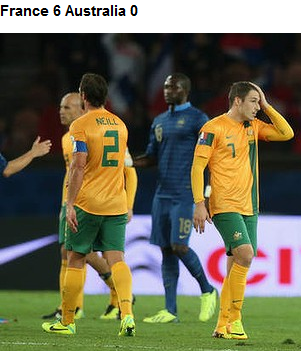
Over the weekend, the Soccerros lost 6-0 to France to accumulate a 12-0 scoreline when you tally the previous result against Brazil.

It’s been 11 years since the Wallabies last won the Bledisloe Cup and 14 years since they last won the World Cup.

The cricket team has lost three Ashes series in a row, it lost 4-0 to India earlier this year and before that lost a test series at home to South Africa.

The Olympic team won just 8 gold medals in London, its worst haul since 1988 and half the number of golds they won at Beijing.

Once a tennis powerhouse, Australia has only just returned to the David Cup world group after a six year hiatus.

Blimey, even the last two horses to win the Melbourne Cup were trained in France.

Compare this two twenty years ago.

As a once-mad South African cricket and rugby supporter, a sense of dread would come over me every time our national team played the Wallabies or the Baggy Greens throughout the 1990s and 2000s. Let’s play anyone but the Australians was my motto.

Because Australia was so damn good at cricket and rugby and just about any other sport you could think of.

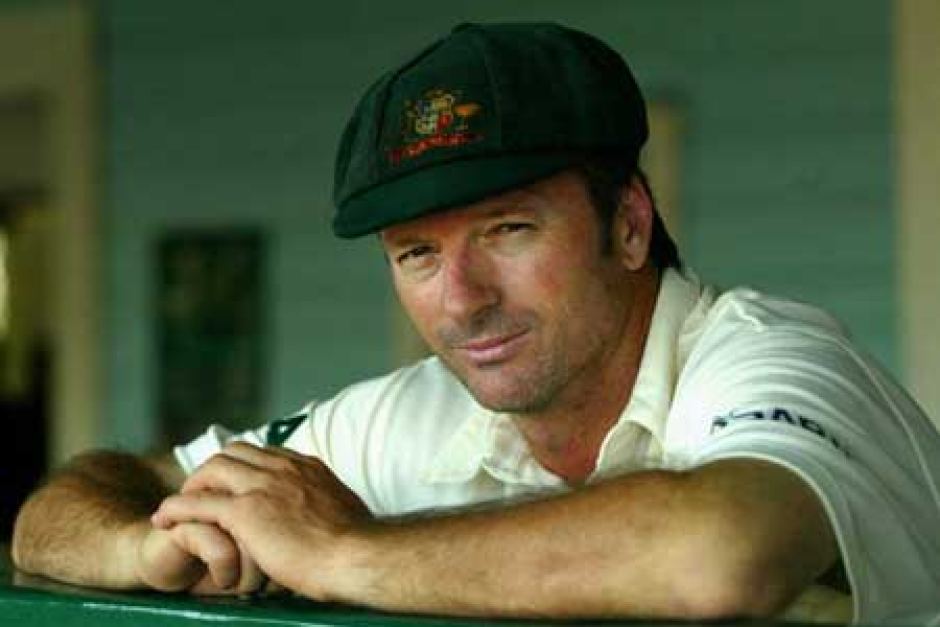
It was not just they’re sporting skill and dexterity, it was a mental toughness they possessed (typified none more so than by the likes of Steve Waugh or John Eales), a do-or-die attitude that left one of the most painful of sporting moments indelibly tattooed on my brain: tieing the 1999 Cricket World Cup semi-final, a game we could not, it seemed, lose, yet somehow managed to do so (I recall celebrating victory only for it to be snatched away so cruelly by lunacy).

Tough as nails, the fiercest of competitors: Steve waugh

Tough as nails, the fiercest of competitors: Steve waugh

Beating Australia meant you had to play at your very best and when you did beat them, it almost always felt like a remarkable achievement, one where you matched both their physical abilities and were stronger mentally.

Now you can do it hardly even trying it seems.

What exactly has happened to this once proud sporting nation? Is it just going through a very bad downward patch or has their being a seismic shift in the world order?

Certainly the Socceroos were not expected to win their games against football powerhouses like France and Brazil, but they were expected to at least put up a good fight.What happened to the team that eight years ago pushed Italy all the way for a quarter-final spot at the 2006 World Cup?

The slide in rugby and cricket has been even worse, these being sports where Australia dominated on the world stage. Yes, teams go up and down, but the fall from grace has been spectacular to the say the least.

But it goes beyond results.

Just how many major sporting scandals have made the front pages of newspapers recently? I’ve lost count. It seems there’s hardly a national sport that has not been tainted lately by something or other.

There’s been the AFL and NRL doping scandals, the numerous punch-ups and bust ups in the cricket team, the bad behaviour among rugby players (James O’Connor, Kurtley Beale). Christ, even sports you’d never associate with anything remotely scurrilous have had their share of public image failures most notably the men’s swimming team, and the sleeping pill scandal. (Not to mention their complete failure to win a gold medal at the Olympics) and the recent admissions by cycling great, Stuart O’Grady that he was a drug’s cheat.

Of course I should mention there have been some exceptions: Australian golf is very strong led by Master’s champion Adam Scott and regular major challenger Jason Day plus a string of other players capable of winning big tournaments. Sam Stosur won the US Open a few years back and Australia continues to dominate at surfing and ahem…netball.

Apart from netball though, these are all individual sports and, they seem to be more the exception then the rule.

It appears that Australian sports teams have been out-psyched or perhaps they’ve out-psyched themselves, believing they’re better at losing than winning. Perhaps the endless succession of scandals can be read as a desperate attempt for them to get back to winning ways.

This is also typified in the apparent necessity to spend millions of dollars appointing overseas coaches to national teams. We’ve had a New Zealander (Robbie Deans) coach the Wallabies, a succession of foreign nationals coach the Socceroos, and a South African (Mickey Arthur) coach the cricket team with varying degrees of success. This speaks volumes about confidence and a lack of belief in the talent of local coaches and managers.

And once again, having sacked German coach Holger Osieck, the Socceroos have considered trying to literally turn back the clock and re-appoint Gus Hiddink, the Dutchman who guided them to the fourth round at the World Cup in 2006. It seems some sensibility has returned with Melbourne Victory coach Ange Postercoglou (Australian despite the exotic sounding name) set to take on the role.

All these teams will no doubt bounce back.

But the days of Australia as a sporting powerhouse, punching way above its weight and utterly dominating their rivals, appear to be over.

A homage to the humble boerewors

Image

I’m all for globalisation, the mixing of cultures, the idea of the city as ‘melting pot’. After all, who wants to eat fish and chips every day? Or meat and two veg?

But sometimes globalisation gives me the shits.

Shopping in Woolworths last weekend. Grand final weekend. I’m picking up something to take to the barbecue.

As if it’s bred into my genes, my old South African eyes lock in on a coil of sausage behind clingwrap.

Boerewors” it says. No, it proclaims proudly!

“Yes please!” (I chant to myself).

Anyone who has spent anytime in South Africa, will know that you can’t have a barbecue (or ‘braai‘) in the homeland without this humble sausage sizzling away alongside a few giant steaks, chicken kebabs, pap and Castle Lager.

For Australian natives, think this combination: football, beer and meat pie.

The word ‘boerewors’ is Afrikaans, the language spoken by Afrikaners (the descendents of the original Dutch settlers to the Cape in 1652) famous for lots of great things (rugby, Francois Pienaar, Charlize Theron, Ernie Else, the first heart transplant) and some not so “lekker” things (apartheid, Oscar Pistorius, PW Botha).

But the boerewors is certainly one of their finest inventions and one that all South Africans, black, white, expat, coloured, indian have incorporated into their cultures and exported to far flung places. It’s uniquely South African, as the Lamington is to Australia and pavlova is to New Zealand.

The word actually translates as: boere (farmer’s) wors (sausage), which now that I think about it throws up some rather silly jokes and images I’ve not thought of up until now.

But, no, no, no and no! The boerewors is sacred. It is delectable a mix of delicious fatty meats and spices. It’s heaven in a sausage.

But, back to the boerewors on the shelf at Woolies and my temporary annoyance with globalisation.

IMG_20131006_215941

Just look at the packaging! Made by the British Sausage Company. But even worse: Uniquely Australian!

WHAT???

Not a mention of South Africa or farmers or apartheid. Not a boer insight.

I shake my fists in the supermarket. I consider stealing all the boerewors packets on the shelf, justified in my mind by the lack of respect that has been shown.

But, I calm down. Gather myself. And think about boerewors.

My stomach and taste buds win in the end. I buy the damn thing, take it to the barbeque, cook it, eat it and…

It’s simply sensational. At least those boerewors-loving Brits/Aussies got the recipe right.

I eat almost the entire coil and with heaving gut, think to myself: if it wasn’t for this bloody globalisation, I’d never get to eat the damn thing in the first place.

Throw another boerewors on the barbie, Shane!

(Turns out the ‘British Sausage Company’ is a butchery in Perth, no doubt of South African heritage).

Child abduction and obsession: reviewing Ian McEwan’s “The Child in Time”

the child in timeIan McEwan’s 1987 novel “The Child in Time” has as its central theme, the abduction of a three-year old child in broad daylight in a supermarket in suburban London in the 1980s.

Having a small child of my own, I picked up the book, read the back cover, and bought it, intrigued.

I think the premise in my mind was similar to what makes people slow down past traffic accidents – a glimpse of something horrifying and the reassurance that, it’s OK, it’s not happening to me. It’s why sadistic horror movies like Saw and Wolf Creek are so successful.

Quickly on in McEwan’s novel, we meet the central character, Steven Lewis, a successful children’s novelist living in a flat with his wife Julie, and their daughter Kate. One morning Steven lets Julie sleep in, while he and Kate dress warmly and walk to the supermarket to pick up groceries.

At the checkout, there is this ominous forbearer of disaster:

Stephen lifted the first items onto the belt. When he straightened he might have been conscious of a figure in a dark coat behind Kate.

And then, a little later:

The man with the dogfood was leaving. The checkout girl was already at work, the fingers of one hand flickering over the keypad while the other drew Stephen’s items towards her. As he took the salmon from his cart he looked down and winked at Kate. She copied him, but clumsily, wrinkling her nose and closing both eyes. He set the fish down and asked the girl for a shopping bag. She reached under a shelf and pulled one out. He took it and turned. Kate was gone.

Then follows the frantic searching down aisles. Calling out his daughter’s name. The police arrive. Stephen returns to his flat, alone, without his daughter, to tell his wife the terrible news.

At first it seemed a little far-fetched

Was is possible for a child to be abducted in such a manner, so swiftly, in a busy supermarket?

I had plans to write to Ian McEwan (or his publisher at least) to ask if this aspect of the novel was based in any way on real events.

But then, serendipitously, I came across a story about an experiment in London, where, under controlled circumstances, parents turn their attention away from their children in park for a just a few seconds, only for them to fall prey to a would-be paedophile.

There were nine children aged between five and 11 who were approached by a “stranger” who asked them to help him find his dog.

Seven, without hesitation and despite being warned about strangers, agreed to go with him, disappearing while their mothers’ attention was diverted by a telephone call.

Certainly the everyday, banal menace created in those supermarket scenes by McEwan – something he does so brilliantly – sends a cold shiver down your spine.

I expected the rest of the novel to be about a father trying to come to terms with the loss of his daughter and subsequent breakdown of his marriage. This is part of it, but McEwan turns the novel into a meditation on the idea of childhood, memory and parenthood.

Steven Lewis spends his days in stifling government-sponsored committees who are tasked with compiling a report on childcare and child-rearing. In the evenings, he sits alone in his flat drinking Scotch, thinking about Kate or his estranged wife, now living alone somewhere in the countryside.

There are strange dream-like sequences in a country pub, where he becomes the lost child looking in on his parents, many years in the past, as they come to terms with his own unplanned for conception.

His friend, Charles Darke, a junior minister in Thatcher’s government and the man who made him into a successful children’s author, gives up his plush home in London, the minor celebrity of political life and moves with his wife Thelma to a country estate, where he retreats into a child-like state, building a tree-house and making the woods his home.

There are the elements you expect in such a novel, such as Stephen going to a toy shop to buy a birthday present for his daughter, while he tries to convince himself that this is a healthy act. There is his constant fear of being away from his flat should Kate return and a disturbing episode where he decides that a child he sees in a school playground is his daughter, now much older.

Overall, I found it a strange, disjointed, stumbling and yet also bewitching novel, delving in and out of other people’s lives before returning to the story of Stephen Lewis and his quest to rejoin the world of the consciously living.

Christopher Hitchens, a close friend of Ian McEwan, called this book his “masterpiece”. I am not sure I agree.

I found I plodded along at times, not quite sure of the direction and the need for some of the diversions. But reflecting back, perhaps it deserves a second reading.

As with all McEwan’s books there are little gems here and there that touch on universal truths:

These lines struck me particularly poignantly. They are the thoughts of Stephen when visits his own parents and realises he only knows “outlines and details from stories” about their lives, but “nothing of how his parents met or what attracted them”:

Only when you are grown up, perhaps only when you have children yourself, do you fully understand that your own parents had a full an intricate existence before you were born.

Welcome to Australia: please turn your watches back 30 years

ilove80sMy cousin Maureen loves telling the story of how she flew to New Zealand in the 1980s and upon landing in Auckland, the pilot announced over the intercom:

“Welcome to New Zealand, please turn your watches back 30 years.”

It was a great line and always made me laugh.

But now it’s no so funny as I suspect Qantas may be forced to play the same message to new arrivals to our shores given the changes that are afoot since the new Abbott government placed Australia “under new management”.

It’s a man’s world

Our new prime minister surrounded himself with his attractive daughters, his wife and other powerful women in an attempt to appeal to female voters during the election campaign, but now that he’s won office its men in grey suits who are running the country. The feisty Julie Bishop is the only woman in cabinet, the rest are all grumpy old men, intent on returning Australia to the conservative values of the king of grumpy old men, John Howard.

Of course the corridors of female power are not assisted by the like of dowdy old Bronwyn Bishop, the Liberal member for Mackellar and someone with the fashion sense of Margaret Thatcher, who said it wasn’t Mr Abbott’s fault he could choose only one women in his cabinet (and just six out of 42 in his ministry), because he had to choose on merit, meaning no other women were good enough to be placed in senior leadership roles.

Give the environment a good kicking

Another swift act the new government was to kick out former Chief Climate Commissioner, Professor Tim Flannery and disband the Climate Commission, an organisation set up as an “independent and reliable source of information about the science of climate change”. Click on any link on the Climate Commission home page and you get this short message:

The Climate Commission ceased operation in September 2013.

With this single act, the new government broadcast its message loud and clear:

We don’t believe in climate change. We’re not interested in the environment.

What it means is that a lot more of Australia’s natural vegetation and eco-systems will fall by the way side to assist the mining industry. Prime minister Abbott is taking his cues from the ultra-conservative Queensland government, demanding that more farmland be given over to coal seam gas exploration. This at a time when even the rapidly industrialising Chinese economy is looking to reduce its carbon footprint alongside that of the US.

The new age of secrecy

Perhaps, most shocking in an age when government’s are being urged to be more transparent and open, that the new government should seek the pull the wool over its own citizen’s eyes. This was most evident in new “go back to where you came from” immigration minister Scott Morrison’s pledge that “there will be no information about whether [asylum seeker] boats are turned around”

scott morrison

Scott Morrison, a “Pik Botha” of his era

“That goes to operational matters that, whether they affect current or future operational activity, you will not be getting commentary from this podium or that podium either way on those matters,” said Mr Morrison in garbled politco-speak that could have come straight out of the mouth of apartheid-era South African foreign minister Pik Botha.

But let’s not kid ourselves – Mr Morrison is no lovable rogue. Old Pik at least had some dour charisma and was happy to give something back under Nelson Mandela.

Mr Morrison has gone to war with asylum seekers and “lefties” who seek to give them a fair go.

These are but three examples in just a few weeks of government, and no doubt more will come (One more example: The Abbott government is attempting to block the ACT government from legalising gay marriage).

Yes, we have a government that’s united. But in what common cause?

To set us on a course for barren shores?

Are we, in the words of Withnail as a nation: “drifting into the arena of the unwell, making an enemy of our own future”?

Withnail, drifting into the arena of the unwell

Withnail, drifting into the arena of the unwell

“What we need is harmony, fresh air, stuff like that,” Withnail goes on to say.

But I fear the air will become clogged with the foulest of fumes.

True “bargains” are only found online

trolleys

It’s hard to see how some “bricks and mortar” retailers will survive the relentless growth of online sales.

And sometimes its hard to argue against it.

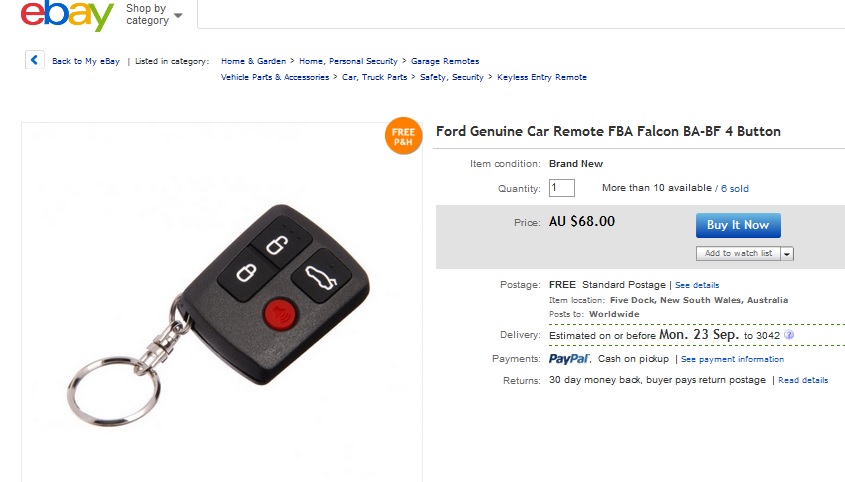
A couple of weeks ago my car remote died. No amount of tinkering, application of blue tack or fidgeting with batteries and tiny metal gadgetry could get the thing to work.

So I headed off to Highpoint Shopping Centre in search of a new one – they sell them at those kiosks, where they also repair watches and cut keys.

The affable guy behind the counter quoted me about $110 for a brand new remote and said the best price he could do was about a $95 if he included a 10% discount voucher, which he placed in my hands.

It seemed quite a lot for a little gadget so I said I’d think about it and left, thinking I might get a couple of other quotes.

In the Moonee Ponds arcade, the guy behind the key cutting counter quoted me  $130 and I thought, “Yeah right mate” and left.

Of course it always pays to look online – specifically eBay.

Typing in a few key words into the search bar, I came across an online store selling a brand new remote for $68 in one of those “this is not really an auction – “Buy it Now” deals, including free shipping.

car remoteSo I did some checking as you should always do when shopping online and discovered that they’re a “bricks and mortar” locksmith in Five Dock, Sydney – with an address, phone number and very high seller rating – and so I bought it.

It came in the post four days later and works like a charm.

I walked around basking in that strange warm, enveloping glow that happens when your research has paid off and there’s a couple of extra bucks in your bank account as a result.

It also got me thinking about retailing, specifically – are consumers being taken for a ride every time they buy something in a mall?

After all, I got the gadget for roughly half the price of what it would have cost me to buy it in Moonee Ponds and about 30% less what I was offered in Highpoint, even with discounts thrown in.

Of course, bricks and mortar retailers have to factor in things like rent – which can be very high – the cost of holding stock, staff wages, insurance and many other things which is partly why they charge more.

I say “partly” for good reason.

Recently I came across an article about the float of the Dick Smith electronic stores by the Australian Financial Review’s retail writer, Sue Mitchell.

She writes that Dick Smith chief executive and turnaround specialist Nick Abboud has established a “new sourcing office in Hong Kong and is now sourcing direct products for Dick Smith’s growing private label range”.

“The private label products are cheaper than international brands but gross margins are around 80%,” writes Mitchell.

What this means is that a Dick Smith $396 television is only costing the company $79 before factoring all those other costs I’ve mentioned above.

Even when you tally up those costs, Dick Smith is making a healthy profit on each item they sell under their own brand and continue to do so even after offering as much as a 50% discount.

Clearly not all retailers operate on such wide margins, but still food for thought the  next time you see the words “sale” and “discount” pasted across every shop in your favourite mall.

Breaking bad: father figures in the ‘Golden Age’ of television

It could be argued that the Golden Age of television (that is television far superior to the movies) began when New Jersey mob boss-elect Tony Soprano (James Gandolfini) waded into his swimming pool in his bathroom robe, to feed a family of wild ducks that had arrived to live in his backyard.

James-Gandolfini-Tony-Soprano-ducks-550x314

Tony Soprano (James Gandolfini) and those ducks

It was the pilot episode of what was to become arguably the greatest television series of all time,  introducing one of the most terrifying, complex but also most loved characters in modern pop culture – and also a father.

In the next few weeks, two other great shows of the golden television era – Dexter and Breaking Bad – will come to an end with climatic, thrilling episodes.

And both have as their central characters – fathers.

There’s Dexter Morgan, the blood splatter expert working in Miami homicide, efficiently disposing of serial killers in plastic covered rooms for eight seasons, who is also the father of blonde-haired Harrison and stepfather to the hardly ever seen Cody and Astor.

dexter and harrison

Dexter Morgan (Michael C. Hall) and Harrison

And there’s Walter White, a poorly paid school chemistry teacher diagnosed with lung cancer turned arch-druglord and master crystal meth cooker, who is also the father to handicapped teenager Walter White Jr and infant Holly. He is also very much the “father figure” to his drug lab partner Jesse Pinkman (Aaron Paul) but rather than guide him away from drugs and crime (as most fathers would do) he leads him deeper into the spider’s web.

walter white

Walter White (Bryan Cranston) isolated from his family

Both are loving fathers and yet dreadful role models.

Walter White starts off as a meek, dying father, deeply attached to his wife and children, who by degrees becomes more ruthless as he becomes powerful, who resorts to murder – including the poisoning of a child – to build his financial fortune.

Dexter Morgan has little time for traditional fatherly duties, palming off his son to a carer or who ever it seems will take him, while he pursues and butchers serial killers, keeping their blood samples on glass slides behind the air conditioning unit.

They are liars, deceivers, criminals and terrible fathers by any standard or measure and yet we love them. Through eight lumpy seasons of Dexter and five faultless seasons of Breaking Bad, my wife and I have taken comfort in “Darkly Dreaming” Dexter and cunning Walter White (though not so much when he’s in his white underpants).

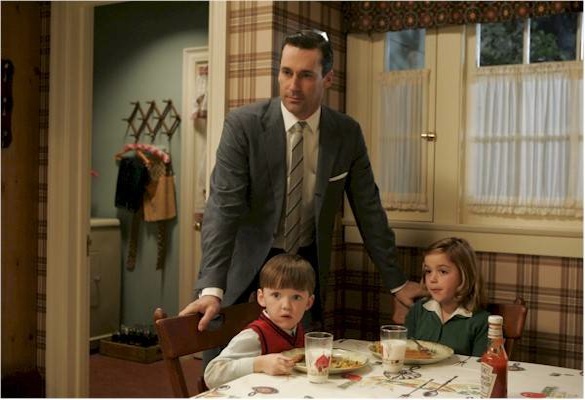
Similarly, Mad Men’s Don Draper hides his true identity from his family. He may be the best dressed, smoothest man ever to appear on television (and most frequent user of brylcreem), but he’s also a serial womanizer who makes Michael Douglas look virginal. He loves his three children, but frequently greets their visits with a frown and can only relate to them as he does to adults. His chief role as father – when he’s involved – is to tell them off.

Don-Draper-Family-2

Don Draper (Jon Hamm) with his two children

And let’s not forget Jimmy McNulty (Dominic West) the drunkard, bent cop of that othere groundbreaking television show, The Wire, who also happened to be a father.

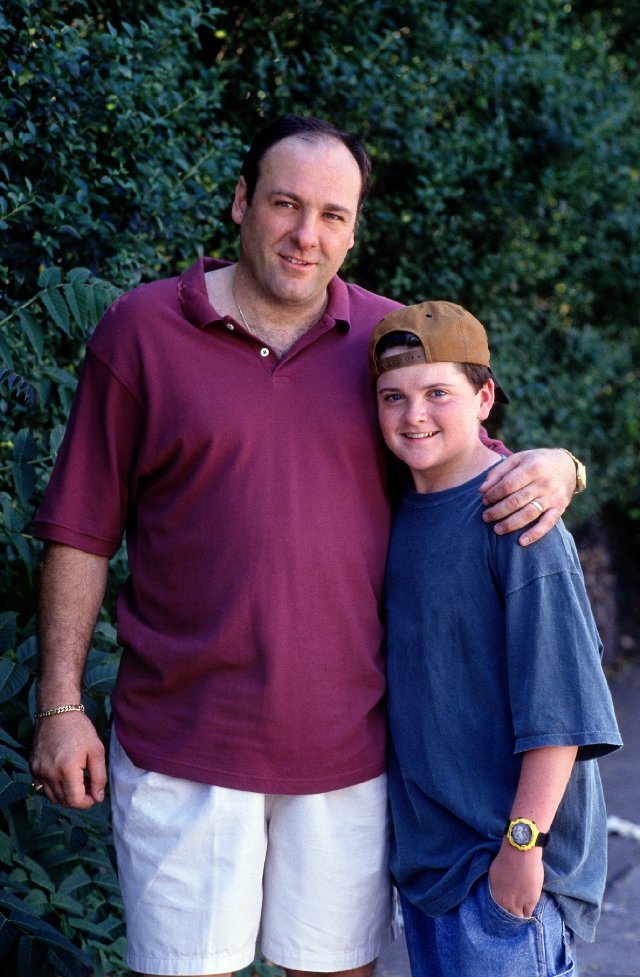
But back to Tony Soprano. The late James Gandolfini played him with Shakespearian range as both a terrifying tiger and a soft, cuddly teddy bear – fond of his cigars, two colour bowling shirts, tracksuits, whores, extortion rackets and murder when necessary.

But also a man who loves his children deeply and who is a great protector of his family.

tony soprano and AJ

Tony Soprano (James Gandolfini) with his son Anthony Soprano Jr (Rober Iler)

This dichotomy of loving father/ruthless mob boss is partly what made the show so watchable.

An episode that stands out is when Tony accompanies his daughter Meadow to visit a prospective college, and in between strangles Fabian Petrulio, a former mobster turned FBI informant. Tony savagely murders him, despite Petrulio pleading for his life. The job done, he takes Meadow to another college interview. Here he stops to ponder a quotation from the writer: Nathaniel Hawthorne :

“No man… can wear one face to himself and another to the multitude, without finally getting bewildered as to which one may be true.”

This could apply equally to Walter White, Dexter Morgan or Don Draper, fathers whose sense of identity disappears behind the masks they wear, the lies they tell.

It is interesting to note (and Freud would certainly have found it telling) that both Walter White and Tony Soprano’s sons bear their own names – the sins of the father passed on to their children in name and deed.

Perhaps some of the power of these shows, what makes them so compelling and addictive, is the fact that their main characters are so deeply flawed as fathers and family men.

And its interesting to note, that David Chase, the creator of The Sopranos, claims his father was “an angry man who belittled him constantly as a child” while Jeff Lindsay, who wrote the Dexter novels on which the series is based, penned a column for the newspapers called “Fatherhood” while raising two daughters, before he struck the big time.

Why I won’t be voting on September 7

Electoral-Commission-Pic

I won’t be voting next weekend because I can’t. I’m not yet an Australian citizen.

When I found out in March, to my surprise, that I was eligible  to apply for citizenship, I was thrilled. Nine years of waiting. Four visas. Enough paperwork to fill a jumbo jet and the moment had finally arrived.

So I printed out the 84 page booklet Australian Citizenship: Our Common Bond” that tells you all you need to know about this great land to prepare for your citizenship test and read it cover to cover.

Then I downloaded all the forms that I would have to fill in.

I had this great idea that I’d write to all the different political parties asking why I should give them my valuable vote and then turn that into a story for this blog or maybe Crikey (the editor was keen, “a new citizen’s guide to Australian politics” or something like that was how I pitched it).

But then there came the complicated instructions that are standard with anything that has to do with the Department of Immigration. You read them, read them again, ponder them, but still you’re left scratching your head and perhaps heading for the liquor cabinet.

Once again there’s the obligatory police clearance? I must have gained police clearance half a dozen times now for my various visas, surely they know me better than my own mother? Then’s there’s finding people to sign statutory declarations and certifying documents and photocopying.

And remembering!

Once again, I must account for my movements over the past nine years into and out of Australia. Honestly, its all become a blur: who can remember every trip they’ve taken? To make matters worse I lost my previous passport and the one before that is in a box somewhere in my parent’s home in Johannesburg, which means there’s yet another form I have to fill in.

Further dampening my enthusiasm was news that I would have to send off two forms and $43 to the South African Department of Home Affairs if I wanted to have dual citizenship. Approval has to be gained first from South Africa before taking the oath in Australia or you lose your South African citizenship. And the time to process these two forms – three to six months!

So the end result is that the paperwork lies in yellow plastic folder on the big desk in the spare room waiting for me to summon up a degree of enthusiasm to fill in all the details and painstakingly try to sort out what documents I need and who needs to sign what.

It’s hardly the response I’d expected of myself  because the truth is I’ve always wanted to vote in this country. Becoming a permanent resident was a big deal (I even cherished my pale green Medicare card) and gaining citizenship is even more of a badge of honour.

Perhaps it has something to do with my arrival in Australia almost a decade ago, which happened to be just a few weeks before the 2004 election, the last federal poll won by glum John Howard and his cronies. My girlfriend at the time, her sisters, their partners and everyone else lined up to vote, while I milled about the polling station in some backwater country town eating a sausage roll and getting funny looks from the locals (He’s white, he looks Australian so why isn’t he voting?). If that wasn’t enough, we stopped the car to vote on our way to Canberra for the annual flower shower (the Floriade), a trip which included an obligatory visit to Parliament house and a walk past those solemn paintings of past prime ministers.

But now that the opportunity has come – and I probably could have voted in a week’s time if I’d made a big effort on the paperwork front – I could hardly care.

Who the hell would I vote for? There’s very little to inspire me among the neo-conservative Coalition, directionless and clueless Labor and the loopy Greens. There’s the smaller parties with their eccentric candidates so maybe I’d chose them and preference the bigger parties last, but then what would be the point? A protest vote perhaps?

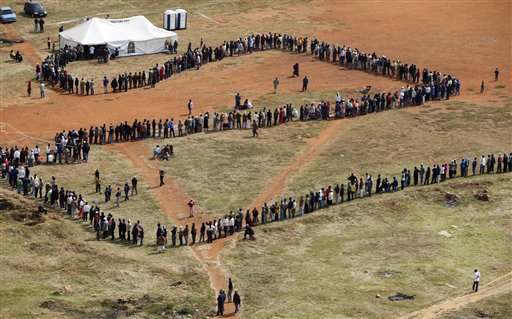
All quite different from when I voted for the first time in South Africa in 1994. That wonderful sunny autumn day when there was hope and belief and joy in the air and as the newspapers rang out “Vote, the beloved country” with photos of lines of people snaking endlessly down city streets, amongst the leafy suburbs and through country side and hilltops.

APTOPIX South Africa Elections

A queue of voters in South Africa, 1994

It was a glorious moment, history in the making, and one of my finest memories.

But there’s nothing to inspire me now, in fact its far more enjoyable watching the circus from the sidelines (so to speak).

The truth is, I’ll eventually find the time and energy to put all the paperwork together and put my application in because to steal from Peter Allen, I also want to call Australia home (in an official capacity).

Indeed, it will be a proud day when they hand me a tree, offer me a lamington and a tiny tub of Vegemite.

But as for voting, I’m happy to wait another three years.

Are thinner politicians more electable?

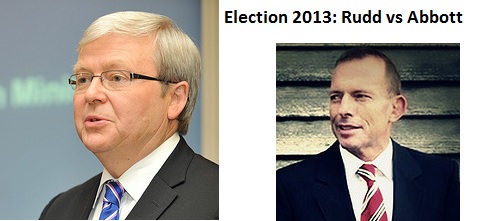
rudd v abbottOf all the guff that has been written about this upcoming election – and there has been a lot – an article from Brisbane’s The Courier Mail caught my attention focusing on the fact that prime minister Kevin Rudd is packing on the pounds apparently under the stress of losing his short-lived grip on power.

The story, written by Hannah Davies, had as its headline: ‘Moon-faced PM ‘comfort eating’ as the stress of the Federal Election campaign takes its toll.

The story quotes a number of nutritionist and dietician who comment on the prime minister’s fuller face and apparent appetite for pizza and beer with the insinuation that he’s becoming less able to govern by virtue of his weight gain.

They even give him free advice such a that he opt for “nuts and a fruit basket”.

Hannah Davies even went so far as to ask the PM’s spokesperson whether he was “comfort eating”. A ridiculous, irrelevant question you’d think given the broader issues being faced – she might as well also have asked if he was spending more time on the couch eating potato chips!

Anyway, it does raise an interesting point about appearances.

Contrast Kevin Rudd’s apparent podginess (It’s easy to find an unflattering photo of someone constantly be photographed, hence my use of the word “apparent”) with the superfit appearance of Tony Abbott and its easy for a conservative Rupert Murdoch-owned paper like the Courier Mail to suggest, subtely that gaining weight is a sign perhaps of bad personal management, bad habits and an inability to lead.

It’s interesting that the two other high-profile politicians to lose a lot of weight are both on the conservative side of politics: shadow treasurer Joe Hockey, whose is a shadow of the huggable bear of a man he once was and NSW premier Barry O’Farrell, whose weight has bounced up and down like a yo-yo over the last 15 years, but is now almost unhealthily gaunt.

O’Farrell explained in an interview to the Daily Telegraph in December last year that he lost the weight by challenging himself after the 2003 election to go to the gym every day for a week, a pledge he has stuck to for nine years.

Joe Hockey admits to having some help via gastric bypass surgery over the Christmas break followed up by with dieting and exercise.

He says its because he wants to be around to see his grandchildren grow up and was also tired of being called “Sloppy Joe” by former Treasurer Wayne Swan.

It’s surely no coincidence though that Joe Hockey has lost his weight in an election year.

Slimmer and fitter apparently makes you a better leader, thinker and decision maker in the eyes of many while adding a few pounds is a sign that you’ve lost your mojo.

This, of course, is baloney.

Yes, losing weight is good for your health and overall sense of wellbeing and people who lose weight are to be commended.

But fat people that suddenly become thin do not suddenly develop more brain cells, a better moral and ethical belief system and a greater sense of what’s right and wrong.

Being fat never bothered Winston Churchill, nor did it stop him defeating a far skinnier Adolf Hitler.

And there’s no indication that billionaire mining magnate Clive Palmer intends to shed any pounds as he seeks a political role.

Yes you may live longer and feel better about yourself, but let’s not confuse this with character, decency and moral strength.

After all Vladimir Putin and George W. Bush – two leaders who both puffed out their chests in front of the camera – are hardly the model of political astuteness.

On with the circus!

The not so subtle art of charity mugging

charity muggerHas a random stranger ever jumped out at you on the street like a slightly demented baboon, wanting to shake your hand and ask you how your day is going?

Did it feel nice? Did it feel genuine? Did you stop for a chat only to find out they’re actually some backpacker on a working holiday visa trying to convince you to sign up for a monthly donation to a charitable organisation?

Chances are, if you take a regular lunch break in just about any major capital city, you’ll encounter someone in a brightly coloured shirt – red, yellow or blue – with a lanyard around their neck, clipboard in their hand and a cheesy grin on their mug.

Welcome to the world of face-to-face fundraising or depending on your level of cynicism – charity mugging or “chugging” for short.

It’s hard not to be cynical when running into this mob.

For a start there’s all that silly chit-chat and superficial interest in your life which is only designed to get you to stop long enough for them to deliver their sales pitch.

If you’re foolish enough to stop, you’ll then most likely be told a little about the charity they represent, what it’s doing around the world and then there will come a line that goes something like:

“Would $10 a week mean a lot to you?”

“Could you spare it?”

And that’s the beginning of the guilt trip and coercion to get you to sign a direct debit form and ring up another sale and commission for the backpacker/fundraiser.

Perhaps you don’t feel all the guilty – after all it’s your money and yours to spend as you like.

Perhaps you’re potentially interested (after all, charity is in essence a good and noble thing), but want more information.

Is there, per chance, a brochure you can take away so you can think about it?

“No,” will come the swift reply. “We don’t have any brochures. But I’d be happy to answer any questions you have.”

“Can I find more information on the internet?” you may respond by saying.

“Yes, there is a website” the chugger will tell you. But why bother, when “I can answer all your questions” and again, you’ll be urged to sign up then and there.

Now let’s be honest. Charity mugging is certainly not the hard sell.

If you want a hard sell, try walking into a shop in the Marrakesh market or a stall on the heaving streets of Mumbai – if you’re weak-willed or easily swayed you’ll soon find yourself heading down to the post office to freight carpets, perfume bottles, trinkets and garments all the way home.

But that’s different.

Charity for me has always been a voluntary thing.

On the same day that I deliberately stopped to chat to two chuggers from Amnesty International on the corner of Elizabeth and Collins Streets in Melbourne, there was also a Salvation Army volunteer standing diagonally across on the other corner of the intersection with a red bucket and a sign, quietly and graciously accepting coins from passers-by.

No silly attempts at banal conversation. No facile compliments, no direct debit forms. Just happy to accept whatever people can spare.

The same can be said for those who sell The Big Issue. A greeting to passers-by, a polite request to possibly purchase a copy of the magazine and a smile and thanks if he answer is no.

Nevertheless, I was curious. Does the “in your face” method of chugging actually work? How much are these people being paid and who is hiring them?

So I send off some questions to Amnesty International’s media office and received responses shortly afterwards.

Their spokesperson confirmed that Amnesty International Australia engages “face to face fundraising suppliers” to raise support for its regular giving program and says it’s a “great return on  investment”.

The people who do the chugging aren’t employed by Amnesty International but by specialist business organisations.

One such organisation is Cornucopia, who works with a number of charity such as the Red Cross, the Fred Hollows Foundation and Amnesty International.

There’s a group of cheerful people, arms raised as if they’ve just won the lottery pictured on the website, which spells out its modus operandi, that is:

“…by engaging members of the public in conversation in the street, at shopping centres, at their place of work and at home” [with the purpose to] “recruit…long-term regular givers for leading not-for-profit organisations”.

So just how much of every dollar you donate to Amnesty International via direct debit goes to the charity and how much into the pockets of Cornucopia and its sellers?

According to the Amnesty International spokesperson, its fee arrangement varies slightly from supplier to supplier and is detailed on the pledge form completed by the donor upon sign up.

“All donations are paid directly to us and we pay the supply a one-off fee from our fundraising budget for the year,” says the charity’s spokesperson.

I was directed to the following webpage on the Amnesty International website where there’s this chart:

How-your-donation-is-used

As can be seen, a hefty chunk – 42 cents of every dollar raised – does not go towards charity work at all.

Presumably the 22% dedicated to “building activist base” is the proportion of funds raised that goes to paying those annoying people who stand on the street with their smiles and one-liners.

But apparently it works, despite the negative press this selling method has attracted.

I’ve found dozens of articles critical of “chugging” including this incisive piece from The Guardian, which has as its heading a perfect encapsulation of how I feel: “Charity muggers can take the enjoyment out of giving”.

The article, written by Richard Coles, a vicar (a generally a charitable bunch by nature) makes some good points.

“I like the object of the exercise; I hate the method,” writes Coles, as he describes chuggers at work and how “they accosted people with arms outstretched, a friendly gesture that is actually designed to funnel you in to their proposal; how they chastised those who wouldn’t stop; how they muttered insults at their retreating backs”.

I submit my objection is exactly the same.

It’s the manipulation, the guilty admonishment, the trickery that really pisses me off.

It seems to go against the whole ethos of fundraising – a carefully crafted psychological assault taught to backpackers in need of a buck, who then seek to torment the public to get to their wallets.

Apparently it works.

“We have been fundraising via face to face for 12 years. In this time we have found that this method is successful and provides a great return on investment,” says the Amnesty International spokesperson.

She says it accounts for around 72% of funds raised from regular donors, which in turn account for three-quarters of their total income.

That maybe so, but Amnesty International won’t be getting a penny from me until they drop the charade.

I might buy a copy of the Big Issue instead!

Reading Christopher Hitchens: A spanking from Margaret Thatcher and more profundity

398303-christopher-hitchensI’ve just finished reading “Hitch-22” – the memoirs of the late, great Christopher Hitchens.

Some (a fair portion) of his narrative, I found difficult to grasp fully or to follow the argument to its conclusion, with sentences and paragraphs full of literary and political allusions and references which would require, if I had the time, plenty of background reading on my part.

But yet still it is engrossing, filled with wonderful little moments such as when he tells the story of how Margaret Thatcher (he swears this actually happened) made him bend over and smacked him on the backside with a rolled up pamphlet after he dared to disagree with her at a gathering in Westminster, before she became prime minister.

Not one to ever concede an argument, most notably with a women he admired awfully (not the other way round), I think Hitchens took the spanking just so that he could recount this remarkable anecdote.

There’s plenty of wit, charm, irreverence and cheekinesss in his writing (I wrote about his tips for drinking in an earlier post), but also a great deal of solemnity and painful personal recollections.

There’s bittersweet recounts of his mother, Yvonne, who never revealed her Jewish roots to her husband, Hitch’s distant, but proud father – “the commander” – and who died in a suicide pact with her lover in a bare hotel room in Athens.

Hitchens writes about his need to spend time each year in unstable countries, how he accidentally wandered into a dangerous part of Afghanistan, how he nearly got shot in Northern Ireland, his student protests, his philosophical and literary bouts with Martin Amis, Salman Rushdie, Ian McEwan, Susan Sontag and Edward Said to name just a few.

He also has the humility and flexibility of mind (a trait which he says separates the open-minded from the “totalitarian principle”) to admit that he held a wrong view about a situation – most notably, his opposition to the first Gulf War – and armed with better information, he has changed it.

There’s also a wonderful, incredibly poignant story retold from a Vanity Fair article about a man Hitch never got to meet – Mark Daily, a young American soldier who volunteered to fight in Iraq after being inspired by the articles he read written by Hitchens arguing there was a moral case for war (to remove the psychopathic tyrant Saddam Hussein) and who was killed in combat.

He writes of Daily:

“This is the boy who would not let others be bullied in school, who stuck up for his younger siblings, who was briefly a vegetarian and Green Party member because he couldn’t stand cruelty to animals or to the environment, a student who loudly defended Native American rights and who challenged a MySpace neo-Nazi in an online debate in which the swastika-displaying antagonist finally admitted that he needed to rethink things. If I give the impression of a slight nerd here I do an injustice. Everything that Mark wrote was imbued with a great spirit of humor and tough-mindedness.

Hitchens also writes lovingly that the country “lost an exceptional young citizen, whom I shall always wish I had had the chance to meet” who seemed to have “passed every test of young manhood, and to have been admired and loved and respected by old and young, male and female, family and friends”.

In this way, he shifts from strongly held ideological positions on religion, politics, war, the Middle East to tales of the people who shaped his life and gave him his richest experiences.

I came across a beautiful passage that made the hairs on the back of my neck bristle and really, really made me think and ponder the horror of it all.

Hitch writes about a survivor of the Rwandan genocide and the dangers of those who wish to wipe the slate clean – for a “tabula rasa” for their lives.

“I once spoke to someone who had survived the genocide in Rwanda; and she said to me there was nobody left on the face of the earth, either friend or relative who knew who she was.

“No one who remembered her girlhood and her early mischief and family lore; no simbling or boon companion who could tease her about that first romance; no lover or pal with whom to reminisce.

“All her birthdays, her exam results, illnesses, friendships, kinships – gone.

“She went on living but with a tabula rasa as her diary and calendar and notebook.

“I think of this every time I think of the callow ambition to ‘make a new start’ or to be ‘born again’.

“Do those who talk this way truly wished for the slate to be wiped?

“Genocide means not just mass killing, to the level of extermination, but mass obliteration to the verge of extinction.

“You wish to have one more reflection on what it is to have been made the object of a ‘clean sweep’?