An opinionated journalist's thoughts on media, film, books, sport, politics and the occasional rant. Or as William Burroughs put it: "A writer must write"
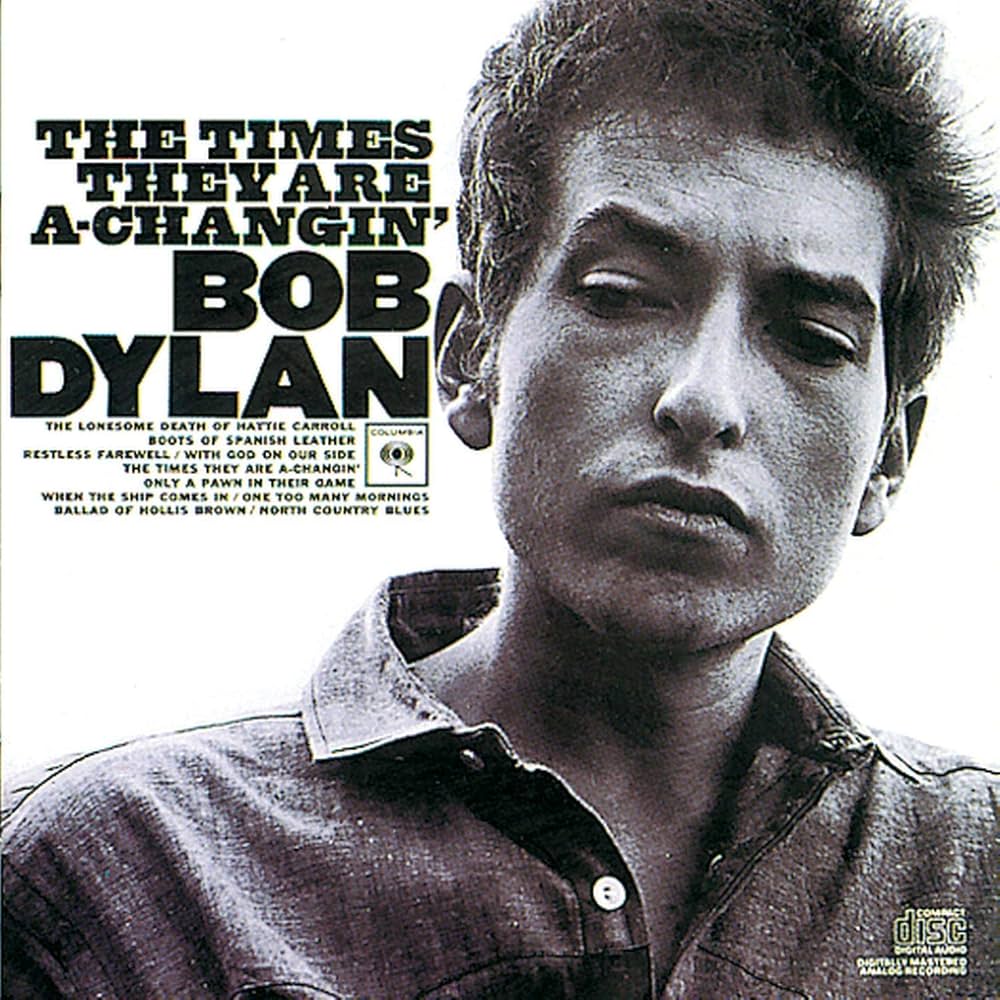
Album cover, copyright Columbia Records. Low-res version reproduced under Fair Use for review purposes
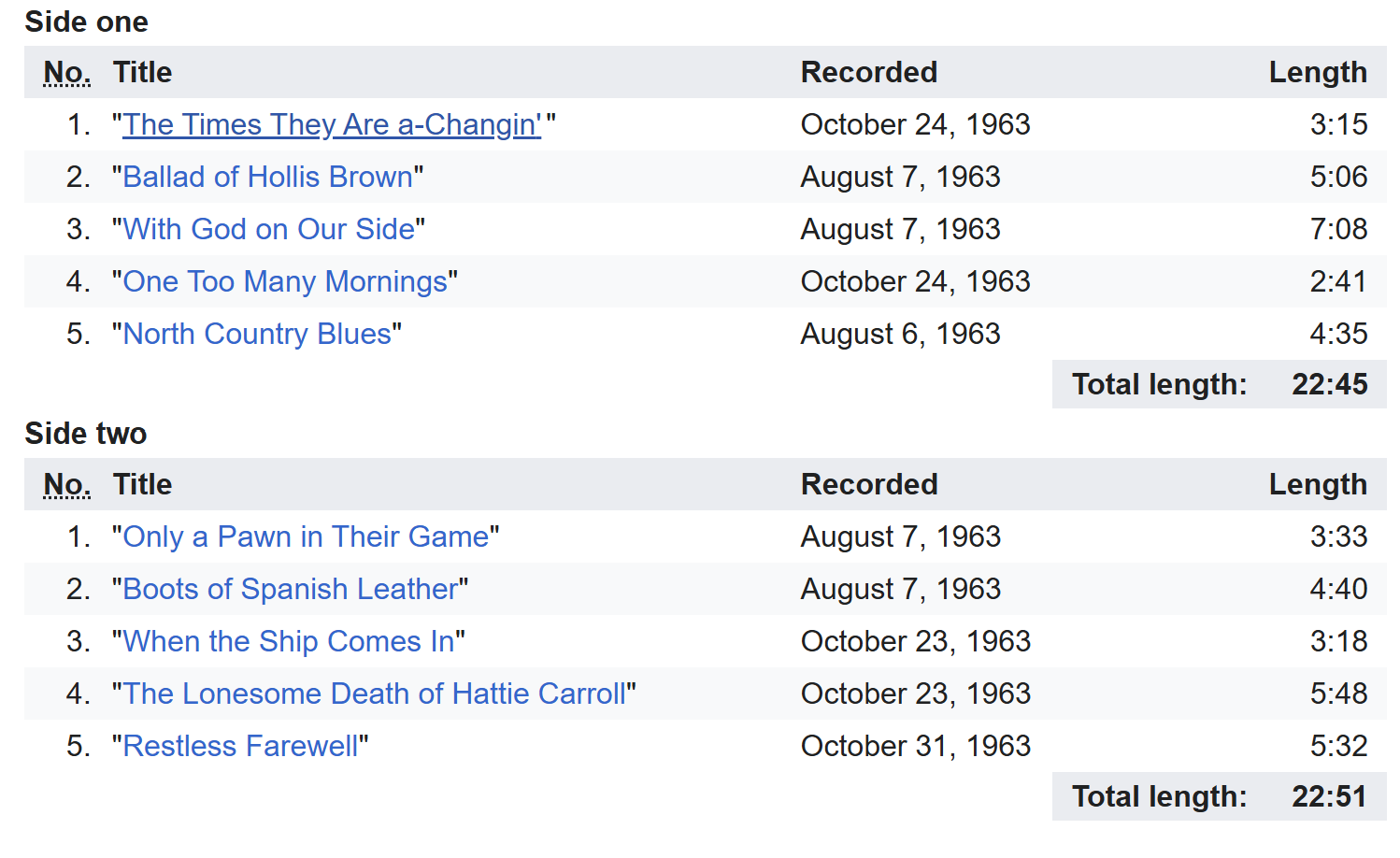
Title: The Times They are a-Changin’
Length: 45min, 36s
Number of songs: 10
Best tracks: The Times They are a-Changin’, Ballad of Hollis Brown, With God on our Side, North Country Blues, Boots of Spanish Leather, When the Ship Comes in, The Lonesome Death of Hattie Carroll
If I had to choose just one track: The Lonesome Death of Hattie Carroll
Freshlyworded rating: 9/10
Thoughts:
While the title track from this album is rightfully one of Bob Dylan’s most famous and revered songs, for me the hero track and an absolute masterpiece on this album (and surely among his best songs ever) is “The Lonesome Death of Hattie Carroll”.
Running just under six minutes, Dylan tells the story of the murder of Hattie Carroll, an African American barmaid, killed in a drunken rage in a Baltimore Hotel in February 1963 by 24-year-old Wiliam Zatzinger, a wealthy, white tobacco grower – and the injustice fuelled by racism that followed.
The song is a perfect combination of vivid poetry, acoustic guitar and Dylan’s plaintive, soulful voice.
Dylan wrote the song just six months after Carroll was murdered and it no doubt struck a chord among the civil rights movement at the time. Every sentence of the song is wonderful.
Zantzinger killed Hattie Carroll, Dylan sings: “With a cane that he twirled around his diamond ring finger” and after his arrest “Reacted to his deed with a shrug of his shoulders”.
He contrasts the Zantzinger’s wealth and high society connections with Carroll’s role as a servant “Who carried the dishes and took out the garbage”.
A few months later, “in the courtroom of honor” Dylans sings of the judge who “Stared at the person who killed for no reason” and then in a devastating line “handed out strongly for penalty and repentance William Zantzinger with a six-month sentence”.
As he tells the story of Hattie Carroll’s murder Dylan sings the repeated refrain: “But you who philosophize, disgrace and criticize all fears Take the rag away from your face, now ain’t the time for your tears.”
After singing how Zantzinger literally got away with murder, Dylan ends the song with: Oh, but you who philosophize, disgrace and criticize all fears. Bury the rag deep in your face for now’s the time for your tears“.
Just brilliant!
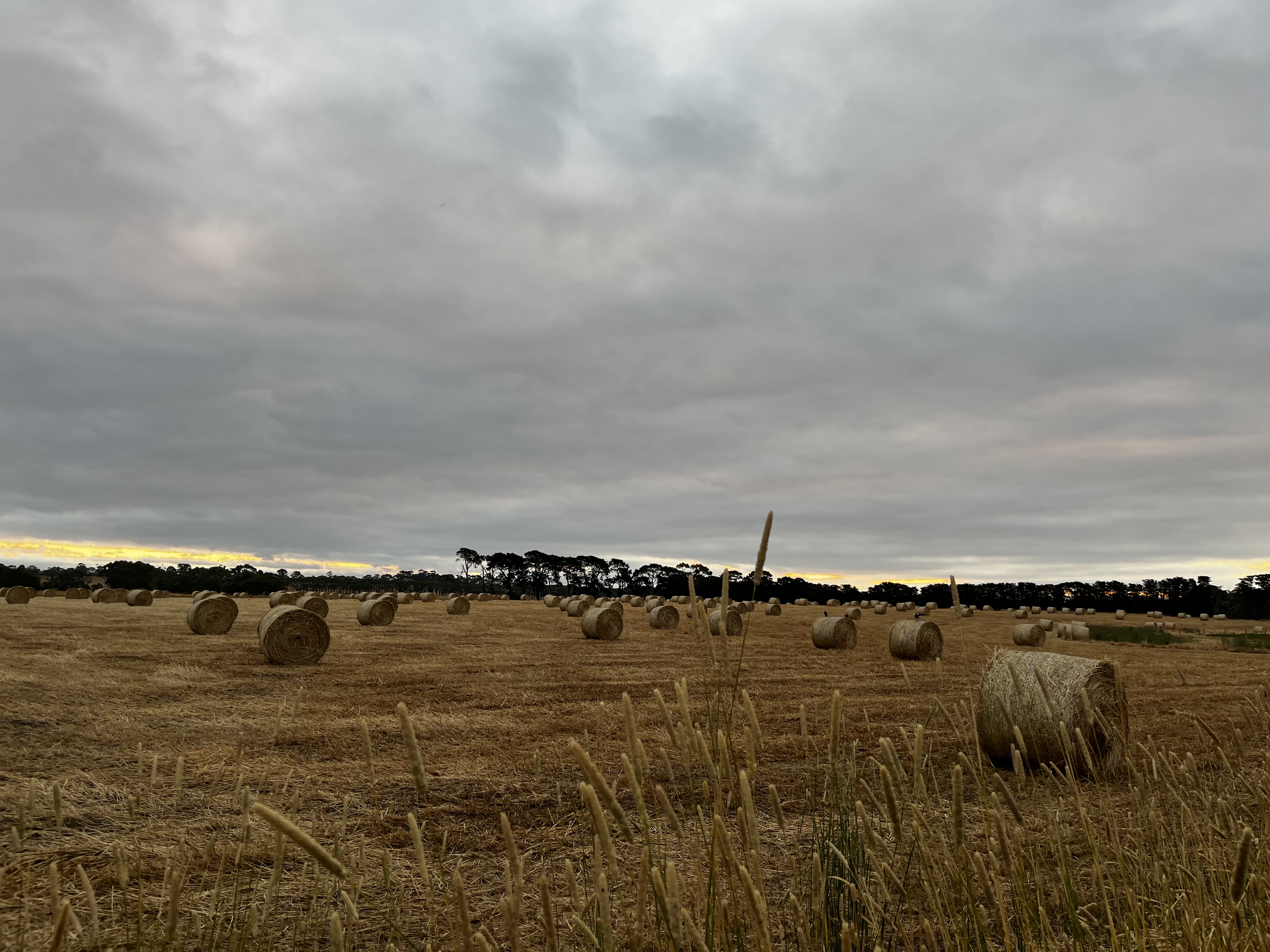
I listened to this song and all the other nine tracks of this album whilst walking my dog along quiet country roads and sleepy suburban streets in Lancefield north of Melbourne (where I live) and on holiday in Birregurra, a small town in the Otways region of Victoria. Both were the perfect backdrop for letting the wonderful storytelling songs of this album seep deep into my bones.
Hay bales in a field in Birregurra, Victoria
Alongside the Lonesome Death of Hattie Carroll, I of course loved The Times They Are-a-Changing, a universal anthem about profound change that’s coming to society. At the time it was recorded, this change was the civil rights and anti-war movement but it’s wonderful lyrics still inspire people today who are pushing for change amid the punishing regimes governing the world:
Come mothers and fathers Throughout the land And don’t criticize What you can’t understand Your sons and your daughters Are beyond your command Your old road is rapidly agin’ Please get out of the new one If you can’t lend your hand For the times they are a-changin’
I also loved another haunting, narrative song, “Ballad of Hollis Brown” which tells the story of a poverty-stricken South Dakota farmer and the events leading up to a desperate act.
“With God on Our Side’ is a song that like “The Times They are a-Changing” reverberates loudly today, with its mockery of how believing in God justifies acts of war and America’s superior moral position.
“North Country Blues” is a wonderfully melodic, yet dark song sung in the first person about growing up in an iron ore mining town, where the work eventually dries up and the mine is closed
“Only a Pawn in their Game” is another powerful political song about the murder of a civil rights activist Medgar Evars, while another favourite track of mine on the album is the very catchy “When the Ship Comes in” which has a happy and triumphant feel to it.
The slow and contemplative “Restless Farewell” is a fitting end to a brilliant album, and also a great way to end an evening country stroll.
For me, this is Dylan’s best album of the three I have listened to and reviewed so far. Incredible that he was only 22 and 23 when he wrote and recorded all these amazing tracks.
Like the hero of his novel in ‘A Dry White Season’, Ben Du Toit, the late South African novelist Andre Brink was considered a “veraaier” (traitor) by his own Afrikaaner people by taking the side of those fighting against the National Party’s evil apartheid regime.
The novel, which jolted me back in time with a dose of dark nostalgia, tells the story of Du Toit, a middle-class suburban school teacher who finds himself pitted against the apartheid machine, and its “special branch” or “security branch police, when he begins investigating the deaths of Gordon NcGubene, a gardener at the school where he teaches, and Gordon’s young activist son Jonathan.
Prior to his fateful decision to pay a visit to John Vorster Square, the notorious Johannesburg police headquarters, to politely inquire about what happened to Gordon on the initial naïve belief that it was all a “mistake”, Du Toit was comfortably ensconced in his suburban home and the routines of white Afrikaaner family life.
His desire to “help” Black South Africans is well-meaning, but cast within the “master-servant” apartheid dynamic – the Du Toits have been paying Jonathan’s school fees provided he stays out of trouble and does well academically. This rids them of their guilt at being part of the oppressive system, without ever really taking a stand or getting involved in the struggle for equality.
This is a position I knew well from my own experiences growing up in South Africa in the 1980s, where I was surrounded by quasi-liberal adults doing “well meaning” gestures for the Blacks that cleaned their houses or bathed their children, but who were happy not to rock the boat and enjoy luxuries that came with being white and privileged.
Ben’s apolitical but good-hearted position starts to shift when first Jonathan dies in police custody in the cells of John Vorster Square, and then later his father Gordon, when Gordon persists in trying to find out what happened to his son and where he was buried, marking him as a troublemaker in the eyes of Special Branch.
Ben’s change into becoming a veraaier is fueled by an inquest which shows the judges to be in cahoots with the police after they find Gordon to have committed suicide. Soon after the trial he meets young, liberal journalist Melanie Brewer, who through stories of her own terrible experiences, encourages him into the light.
“And now it was inside of him, it was happening, the sudden loosening like a flock of pigeons freed from a cage…he allowed it to flow from him spontaneously, all the years he’d cooped up inside of him. His childhood on the Free State farm, and the terrible drought, after which they had lost everything…He told her about Gordon, about Jonathan…and his visit to John Vorster Square.”
While Melanie becomes his confidant and ally, Ben’s growing activism does not resonate with his more conservative wife Susan, who as the novel progresses grows more and more agitated and fearful as her husband becomes obsessed with proving Gordon was murdered by Special Branch, and did not as they claim – and the court found – kill himself.
These subtle, but inexorable shifts in character, which Brink writes so well, plays out in an early scene when Susan implores Ben, lost in troubled thoughts in his study, to come to bed. According to Susan, all Ben needs is a good night’s rest to rid him of his worries.
But Ben resists, even at the “subtle promise of her breasts and belly” seen between the loose folds of her house coat.
“After she had gone out he could hear the gentle dripping of the gutters again. The small and intimate wet sounds of the departed rain.
“Tomorrow he would go to John Vorster Square himself, he thought. He would talk to them personally. In a way he owed it to Gordon. It was little enough. A brief conversation to correct a misunderstanding. For what else could it be but a regrettable, reparable mistake.”
The visit to John Vorster Square takes Ben into the belly of the apartheid beast, and under the radar of cruel Afrikaner men like Captain Stolz, a gleeful torturer of black men considered “terrorists” in the eyes of the Apartheid state.
Ben’s obsession with discovering the truth takes him to the “other” Johannesburg: the impoverished sprawling township of Soweto, a world he scarcely thought about until his political conversion.
Ben becomes acquainted with the larger-than-life township character, Stanley, who moonlights as a taxi driver whilst arranging clandestine resistance meetings in the townships and on trips across the border. As Stanley educates him on the terrible things being done to Black South Africans and as Ben grows closer to the journalist Emily Bruwer, he starts to drift away from his wife and family and the comfortable middle-class life he once enjoyed.
Similarly, Andre Brink, through his writing, pitted himself against his birthright that of a descendent of 18th Century Dutch settlers, who became the Afrikaaner boers (farmers) and later the National Party that developed the inhumane policies of segregation.
The 1960 Sharpeville massacre, when more than 50 black people protesting peacefully against Apartheid laws were murdered by the South African police, opened Brink’s eyes to the monstrous policies of his “people” and set in motion novels like ‘A Dry White Season’ which pitted good against evil and those who seek and tell the truth versus those who lie and distort.
“No Afrikaans writer has yet tried to offer a serious political challenge to the system … We have no one with enough guts, it seems, to say ‘no’,” said Brink in 1970, nine years before he finished “A Dry White Season”, his most famous book.
“All I know is that I must do something,” Ben Du Toit tells the young Reverend Bester in the novel, echoing Brink’s belief that as a writer he must tell the truth.
By comparison to the other South African literary heavyweights – J.M. Coetzee, Damon Galgut (read my reviews of his novels here) and Nadine Gordimer among them who were more allegorical in their novels, Brink writes in a far more journalistic style and employs the techniques of reportage. In his retelling of the life of Ben Du Toit, his re-birth as a seeker of the truth is mostly told through diary entries handed down to someone else.
It’s a powerful book about the price one must pay for taking a stand, but also the liberation of the soul that comes with doing it. Brink’s message is universal and just as potent today amid the dark forces shaping the world.
(Make sure you read the book before you watch the Hollywood movie, which in my opinion is a vastly inferior interpretation of Brink’s work. This is despite an impressive cast including Donald Sutherland, Susan Sarandon, Marlon Brando and Zakes Mokae)
Galgut said it was an “abstract allusion” to the family’s youngest daughter Amor Swart, whose affection for their long-suffering black domestic servant Salome is a central theme of the book.
“But,” says Galgut, “I wanted to tie it in with a parallel sense that if one loves South Africa it has to be a dark kind of love”.
This “dark love” is apparent in the two Galgut novels I read back-to-back, The Good Doctor and The Promise, and is something I can relate too deeply, even though I left South Africa 22 years ago.
Dr Waters: trying to “make a difference”
A beautiful, but troubled land, South Africa gets under your skin and in your bones: if you’ve grown up there, you never really leave – even if you do physically.
Galgut’s gift is to draw from that dark well of South African history, culture and experience, and build an engrossing story with deeply South African characters, and to unsettle and enthrall the reader.
“Damon Galgut has written a lovely, lethal, disturbing novel,”
The story of The Good Doctor takes place in a crumbling, ill-equipped rural hospital next to a backwater town in what was once a Black “homeland” – one of a series of puppet states created by the white nationalist apartheid regime to separate blacks from whites – but is now forgotten, left to decay in the new South Africa.
The title of the book refers to Dr. Laurence Waters, an idealistic medical school graduate who comes to the dysfunctional hospital hoping to “make a difference” as part of his year of compulsory, post-graduate community work.
His arrival and subsequent stay at the hospital is narrated by Dr. Frank Eloff a disillusioned and bitter veteran physician, one of just a handful of staff that keep the medical facility barely functioning under the management of its administrator and head surgeon Dr Ngema.
So ill-equipped is the hospital, that patients with more serious injuries have to be transported to the big city hospital, a long drive through the veld.
The hospital’s small band of staff include the Satanders – a doctor couple from Cuba who quarrel a lot about staying in South Africa – and a troubled black orderly called Tehogo, who is symbolic of that “lost generation” of unskilled Black South Africans, left on the margins of society after the fall of apartheid.
In some kind of precarious and delicate balancing act, the hospital has maintained it place in the natural order of things, keeping its distance from the chaos beyond its boundaries, until idealistic Dr Waters arrives and shatters its island status.
“It’s like something terrible happened here,” Laurence said. “That’s how it feels.
“Ja, but the opposite is true. Nothing has ever happened here. Nothing ever will, that’s the problem.”
Race relations, the juxtaposition of wealth and extreme poverty, the battle for power in the new South Africa and the naivety of those who think they can change things are all meshed together in Galgut’s novel with devastating and mesmerising effect.
Galgut also has a way of conjuring up a strange kind of nostalgia (though that may be the wrong word) among those readers who lived through those historical times.
Hanging on the wall in the hotel foyer (I remember this so well) was a portrait of stern-faced Lucas Mangope in all his official puppet-state pomp and regalia, staring down on us wealthy whites, as we arrived for our luxury holidays and a roll of the dice at the roulette table.
It was of course absurd that we (well-off white South Africans) should enjoy our luxurious buffet breakfasts, sip cola-tonics and lemonades poolside and pull the handles of slot machines, all whilst being waited on hand and foot by an army of underpaid black servants.
Equally, it is absurd that young white graduate doctor – Galgut’s Dr Laurence Waters – working in a backwater hospital should think that he can “make a difference”; that he should be so naïve, reflects perhaps that unrealistic feeling we all had, standing to vote in the first elections in 1994, that the past could simply be swept under the rug.
While The Good Doctor confines itself to a relatively short period of narrative time, as well as a specific era in South Africa – the birth of the new democratic country – Galgut’s The Promise starts in 1986, during the State of Emergency, and spans 30 years. Over that time, and set against the backdrop of famous historical events in the evolution of the country towards democratic rule, it tells the tragic story of the Swart family and their haunting farm set amongst the stony koppies and veldt outside Pretoria.
The story is told through eyes and deaths of four members of the Swart family: Rachel Swart or “Ma”, her husband Herman “Manie” Swart (whose post-funeral gathering occurs during the momentous 1995 Rugby World Cup Final), Anton, their first child and only son, and Astrid, the middle daughter.
Connecting them all together is Amor, the youngest child, who carries the family’s guilt – a white person’s guilt for the things done to black South Africans under the apartheid system – and who is determined to fulfil her mother’s dying wishes that their faithful and long-suffering black servant Salome, be granted the deed to the crumbling house, that has been her home all the years she has served the family.
Galgut has a real gift for capturing the feeling of a place and time: for example that deep-seated resentment old Afrikaaners felt about the ending of apartheid and having to share the country with black people, but also their supreme and undying love of rugby.
At the farmhouse, following Manie’s funeral (he died from a poisonous snakebite at the reptile park he ran) the television is switched on in the build up to the World Cup Final.
While some family members are unhappy that the television is playing during what is meant to be a solemn gathering, Ockie, the unloved husband of Manie’s sister Marina has a “warm glow only partly due to Klipdrift” (a famous South African brandy enjoyed with Coke).
“…and God knows he took the new South Africa hard. But he has to admit, it’s nice to be able to play international sport again. Gives us a chance to donner people from faraway lands, and man we really fucked up those Samoan floppies a couple of weeks ago”.
The Promise
In another episode, Galgut writes how Anton, a white child, suckled on the nipple of Salome, such was the motherly bond despite the rules of apartheid forbidding such behaviour. While this may sound extreme to some readers, it was common, even when I was growing up, for black domestic workers (who we called “maids” or “nannies”) to care for white children as if they were their own, to bathe, clothe, feed and nurture them.
“My first nanny was a kind of substitute mother for me when I was really little…I’m talking the age of 2,3,4. Her name was Salome and I named the character after her, partly in tribute to her.”
“As you can imagine,” Galgut says later, “quite meaningful and intimate bonds can spring up in an artificial relationship like that”.
Drawing on the greats that have come before him – Athol Fugard, JM Coetzee, Nadine Gordimer and others – Galgut is the latest gifted writer to explore the complexities of South Africa’s dark history, its often paradoxical race relations, and its troubled democratic rebirth.
He does so, in my opinion, with less literary pretention than those who have come before him. His writing style is more direct and accessible (you could say “modern”) but still poetic. That’s even the case when he’s writing about Joel Stransky kicking that magical drop goal, while an Afrikaaner family cheers him on, but refuses to embrace the New South Africa that allowed that moment to happen.
“But why did you go,” my mother asked him, “when it was bound to upset you like this?”
“I went,” he told her, “because every day I ask myself the same question: How can this be happening in America? How can people like these be in charge of our country. If I didn’t see it with my own eyes, I’d think I was having a hallucination.”
The people “in charge” are the famed aviator Charles Lindbergh and his far-right cronies in the Republican party, who in Roth’s re-imagining of American history, have swept to power in 1940 (defeating FDR) on a promise of keeping the country out of the War in Europe (“Vote for Lindbergh or vote for war” is their slogan) and maintaining cordial relations with Adolf Hitler and the Nazis.
Roth tells the story of a Jewish family living in Newark, New Jersey as they adjust – with increasing fear – to life under the anti-semitic policies of a populist leader amid the darkening perceptions of Jews in mainstream American life.
As with many of his books, Roth used his own family as the model for the fictional one in the novel.
He tells the story from the remembered perspective of his seven-year-old self living in a tidy second-floor flat in the “southwest corner of New Jersey’s largest city” which he shares with his father Herman, a hardworking insurance salesman, his loving mother Bess and his willful 12-year-old brother Stanley.
“Our homeland was America.
“Then the Republicans nominated Lindbergh and everything changed,” narrates Philip.
Soon after newly inaugurated President Lindbergh has flown to Iceland to meet Adolf Hitler and sign an agreement of peaceful relations between America and Germany, the Roth family take a long-planned holiday to Washington DC to prove to their children that America is not a fascist country, despite who is in office.
But things soon turns sinister when after returning to their hotel from a day’s sightseeing, the Roth’s find their bags packed and lined up in the hotel foyer, because the room they have booked is no longer available.
“Dear, let’s just go,” she (Philip’s mother) beseeched my father. “Mr Taylor [the Roth’s tour guide] found us a room nearby.”
‘No!” my father cried and he threw off the hand with which she tried to snatch his arm. “This policeman knows why we were evicted. He knows, the manager knows, everybody in this lobby knows.”
Later on in the trip there is an ugly incident in a Washington café involving another diner, who refers to Walter Winchell, the famed New York columnist and radio journalist – a central character in the novel who uses his public platform to denounce Lindbergh – as a “loudmouth Jew with too much power”
“Loudmouth Jew. And for the second time in less than forty-eight hours,” Roth’s young narrator remarks.
Philip Roth, an American literary giant
Philip Roth says he got the inspiration for the book from a line he read in historian Arthur J Schlesinger’s (no relation) book ‘A Life in the 20th Century’ about the isolationist wing of the Republican Party who wanted to nominate Charles Lindbergh as the 1940 presidential candidate.
“It made me think, ‘What if they had?’ and I wrote the question in the margin. Between writing down that question and the fully evolved book there were three years of work, but that’s how the idea came to me,” Roth said in a September 2004 essay he wrote in the New York Times.
He said in a separate NYT interview in 2004 that Lindbergh’s name was “loaded” because he was a hero to the entire world for his record-breaking solo flight across the Atlantic from Long Island to Paris.
“Then in the late 1930s he ceased being a hero in our household because he began to seem like an anti-semite. His diaries….show that he was essentially a white supremecist. Jews were distatestful to him. They were inferior to him,” Roth said.
After the family returns from Washington, Lindbergh’s newly created sinister Office of American Absorption (OAA) creates a program called “Just Folks” designed to get young Jews to work in rural farming areas. The Roth’s elder son Sandy, a gifted artist, signs up and goes to work in Kentucky where he can “live on a farm…draw all the things there. Tractors. Barns. Animals. All kinds of animals”.
To Sandy, who hides a sketch of Charles Lindbergh in his portfolio under his bed, the farm experience is idyllic. But to Herman Roth, Just Folks is merely an anti-Semitic plot to separate Jewish boys from their families.
Herman sees everything the Lindbergh administration does in its true light. This puts him at war with his eldest son and his naive sister-in-law Evelyn, who is engaged to be married to Newark’s conservative Jewish leader, Rabbi Lionel Bengelsdorf.
It is Bengelsdorf, who endorsed Lindbergh at campaign rallies, that helped legitimise the aviator’s anti-war and anti-semitic rhetoric that swept him to power in a landslide. Bengelsdorf is then appointed as executive director of the OAA.
Like Sandy, Evelyn refuses to believe Lindbergh has evil intentions against the Jews because her husband-to-be is part of his administration. She calls her brother-in-law Herman “another Jew afraid of his shadow”.
Telling the story of America’s rapid decline under Lindbegh, Roth brilliantly weaves in reimagined historical events and real political figures of the times into the story including, most chillingly, a state visit to the White House by Nazi Germany’s foreign minister Joachim von Ribbentrop (executed in 1946).
Evelyn attends as the partner of Rabbi Bengelsdorf where she dances with Von Ribbentrop, appearing in news reel footage that Philip watches when he sneaks into the neighbourhood cinema.
“I found him a very charming gentleman and highly intelligent….” says Evelyn of her Nazi dancing companion.
While reading the novel, amid the November presidential election and all its craziness, I could not help think about Donald Trump, a populist and far right sympathiser who unlike Lindbergh did become US president and whose four years in office were marked by chaos and a rapid disintegration of American democratic values. Many have called Trump a dictator.
It also made think of all my fellow Jews around the world, especially in America, who supported President Trump because he is a so-called friend of Israel (that is the most common explanation I hear). However, they conveniently brush aside or willfully forget that Trump has been a strong supporter of the far right white supremacist movement, which is no friend of the Jews.
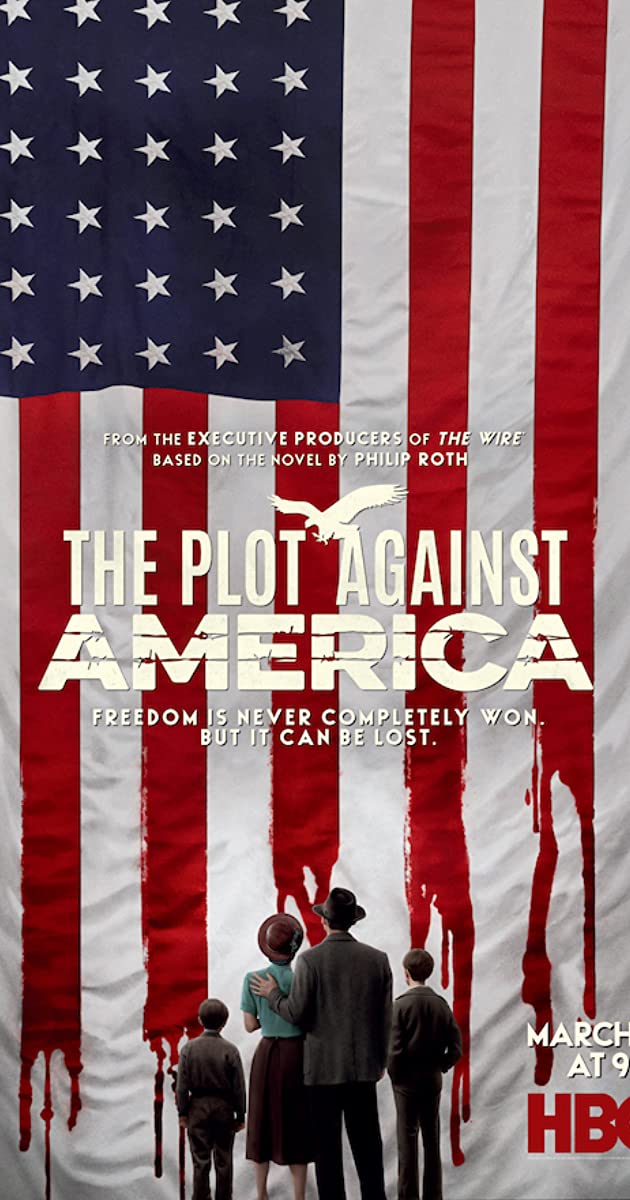
Poster for the HBO miniseries.
Perhaps they would identify with Roth’s brilliant creation Rabbi Bengelsdorf, who in his pursuit of power, stoops so low as to dine with Lindbergh’s Nazi friends.
In an interview with the New York Times in January 2018 – a few months before he passed away aged 85 – Roth said that while Charles Lindbergh may have been a genuine racist and anti-semite, he was also because of his flying feats a “genuine American hero”
“Trump, by comparison, is a massive fraud, the evil sum of his deficiencies, devoid of everything but the hollow ideology of a megalomaniac, “ says Roth.
I couldn’t agree more.
The Plot Against America is a riveting historical novel that will surely resonate with readers in the post-Trump age as we ponder who might be the next popular figure to make a claim for the White House on a platform of lies and disinformation.
Philip Roth said in the same 2004 NYT essay that because the events he depicted in his novel did not happen in America despite many seeds for them occurring being present (other virulent and influential anti-semites at the time of Lindbergh included carmaker Henry Ford and Father Charles Coughlin, a Catholic priest whose Jew-hating radio show was broadcast to tens of millions), it shows how “how lucky we Americans are”.
While Joe Biden has promised to restore America’s democratic values, that luck may have run out.
President Donald Trump, who has railed endlessly against the mainstream media’s criticisms of him through the popular mantra of FAKE NEWS recently turned to his attention to fellow Australian journalist Jonathan Swan, a former Fairfax Media colleague.
President Trump responded in characteristic fashion to a story that did not paint him in a very good light:
The story by Axios that President Trump wanted to blow up large hurricanes with nuclear weapons prior to reaching shore is ridiculous. I never said this. Just more FAKE NEWS!
I stand by every word in the story. He said this in at least two meetings during the first year and a bit of the presidency, and one of the conversations was memorialized. https://t.co/5qs8o1k4QS
This of course is the personal manifesto of any good journalist working today (including myself) and has been so since Gutenberg invented the printing press.
But its especially true now as ‘serious journalism (for want of a better word) is upended by the ability for anyone to set up a website and claim to be an authority and respected source of ‘real’ news.
However, all journalists, even brilliant ones, make mistakes from time to time, perhaps more frequently now in the age of 24/7 news and social media.
I don’t know of any journalist, including myself, who has not made an error in a story, big or small. It’s part of the job.
President Trump
However, a genuine mistake should never been confused with FAKE NEWS which has been around long before Donald Trump set foot in the Oval Office and made it his mantra.
The tag FAKE NEWS should only be applied to news stories that are not only plainly wrong, but deliberately written so by either including untruths, half-truths, fabricated information or made-up quotes, or by deliberately excluding important information.
A story can be plainly wrong, but not be FAKE NEWS. These stories are easy to spot because a correction, clarification, retraction and/or apology will follow.
However, in the era of Trump, the boundaries have been deliberately blurred.
I recently had a stark reminder of the potentially costly dangers lurking on social media.
It wasn’t even something I’d posted myself on Twitter, but just a simple and stupid retweet which brought the threat of legal action rushing into my inbox the next morning.
“RETWEETING A FALSE AND DEFAMATORY TWEET” the headline of the email read.
It was then explained to me, by the subject of the tweet, that the person who posted the original information – an anonymous person – had made an allegedly “fabricated allegation”.
Having been identified as one of the handful of people who had retweeted the provocative tweet, I was then invited to “provide proof” of the material I had in effect republished through the simple click of a mouse.
“I look forward to your apology and immediate removal of such retweet” – the email ended by saying.
Of course I had no proof and nor did I wish to be sued so I hastily undid my retweet and wrote an apology to the person who had contacted me.
It was the obvious and sensible thing to do.
I have always been aware that you can be sued – and many have – for what you say on social media, and because of that I am quite careful not to put myself in the firing line.
But on this occasion my good sense deserted me, though I do recall a mental warning bell tinkling in the background at the moment I hovered over the retweet icon.
Thankfully, the aggrieved party was satisfied with my sincere apology and removal of the offending retweet, much to my relief and chagrin.
Now that the shock has worn off, I am now deeply cognisant of what I tweet and retweet, post and share online. (What a strange world we live in!) and of course what I write on this blog.
In that regard, it still amazes me what people say about, and to one another on social media , often without hiding their identity at all.
It’s very brazen and defamatory stuff (most of which would never be uttered face-to-face in the ‘real world’) and carries with it the very real threat of a costly lawsuit should the subject of derision be upset enough to take action.
Indeed, there are many examples of people who have been sued, sacked or had their reputations damaged or destroyed by the things they have tweeted, posted and retweeted on the plethora of social media platforms that now dominate daily life.
Just type in “defamation + social media” into Google and you will find plenty of good reading material.
There is of course a very obvious reason why people sue others for what they say on social media and the word is ‘viral’. (Just ask this poor woman).
Information posted on these platforms can spread like wildfire via retweets, shares and likes. This phenomenon occurs everyday when unlikely tweets and posts start ‘trending’.
This point was highlighted by a judge in the first social media defamation case in Australia to proceed to full trial in 2013. In this case, the plaintiff – a high school music teacher – was awarded $105,000 in damages and costs after a former student at the school made false allegations about her on Twitter and Facebook.
District Court Judge Michael Elkaim remarked in his March 2014 judgement of Mickle v Farley that ” when defamatory publications are made on social media it is common knowledge that they spread”
“They are spread easily by the simple manipulation of mobile phones and computers. Their evil lies in the grapevine effect that stems from the use of this type of communication. I have taken that into account in the assessment of damages that I previously made,” the judge said.
This case, and many others around the world, should serve as a warning to anyone about the care one should take in how we represent ourselves online. Certainly tweeting or posting while drunk or mad with rage is not a good idea!
Even if you are rich and can afford a costly legal battle, there is also the potential damage to your reputation – just ask this famous billionaire.
Having blogged – to mild interest – about my 14-year ‘odyssey’ to becoming an Aussie, I thought a few words on the by-product of my newly established dual citizenship status – VOTING – should follow.
Funnily enough, shortly after I arrived in Australia in September 2004 at the start of my odyssey, a Federal Election was called, (won comfortably by John Howard’s Liberals) and which I still recall through the imagery of opposition leader Mark Latham’s very vigorous up close and personal concessionary handshake with his diminutive opponent.
I also distinctly remember sitting outside a school somewhere nearby Canberra like an unwelcome outcast (still on a tourist visa), whilst my then girlfriend went inside to cast her ballot. No doubt it was for John Howard (she was quite the fan I later discovered); and not surprisingly we parted ways soon after.
I’ve actually voted twice since taking the pledge at Kyneton Town Hall in October and receiving the customary native pot plant ( a wattle still surviving in the garden).
First there was the Victorian state election in November, where I apparently made the fundamental novice error of voting “above the line” for candidates in the state’s upper house, and then more recently at last weekend’s Federal Election.
For those non-Australian readers out there, it is customary to chomp on the simple pleasure of a barbequed sausage in white bread whilst waiting to fill out your ballot.
While I defend my decision to vote early as prudent (no queues, less hassling from party zealots) perhaps I did miss out on some of the circus-like atmosphere of election day, not least of all the sounds and smells of fatty sausages grilling away and the banter and chatter of this very Aussie ritual.
I did though correct my other ‘error’ – voting above the line – by going ‘below the line’ and giving all 12 of my required preferences to Labor and Greens candidates in the Federal election, six each in the pattern of Labor, Green, Labor, Green etc etc.
(Yes, I am a progressive voter, no mystery there. You’d probably have to hold a gun to my head to make me vote for a Conservative party.)
Of the experience of voting itself, it was quite odd.
While I found the process of casting my ballot about as thrilling as mailing a letter at the Post Office, I closely followed, with some excitement, the results as they flowed in, and was surprisingly elated when Labor won the state election in a landslide.
Similarly voting federally in a vacant shop in a mall in Sunbury was rather uninspiring (I dealt with the zealots and their pamphlet waving with a firm “I’ve already made up my mind’ and purposeful stride into the voting room).
But again, my emotions took hold as the results came in and it became clear the Liberals had surged to a Trump-style victory against the odds. As such a mild depression set in on Sunday at the realisation that another three more years of conservative policies, further neglect of the environment and inaction on climate change would follow.
By Monday, I was thankfully back to my cheerfully cynical self, joining in the banter about ‘ScoMo and Albo’ with my work colleagues and coming to terms with our ‘miraculously’ re-elected PM, the so-called #messiahfromtheshire ( Or if you prefer, the #liarfromtheshire,)
Both Aussie voting experiences were quite a contrast to the last time I voted in a national election, 25 years ago, when the emotion of simply casting one’s ballot that day was overwhelmingly wonderful and I cared very little for the outcome, knowing it was basically a fait accompli.
Of course, back then there were true political leaders to admire, most notably the global statesman and freedom warrior Nelson Mandela, who went on to become the Rainbow Nation’s first democratically elected leader when his African National Congress (ANC) swept to power.
Compare the stature of the great ‘Madiba’ and all that he stood for with the mendacious, spiteful and dishonest grab for power that categorised this Federal Election, on both sides of the political divide, and it’s surprising I cared at all about the final outcome.
In 1945, Maraquita Sargeant, a young teacher and concert pianist living in rural Victoria was admitted to a notorious lunatic asylum north of Melbourne.
Here she would remain for the next 22 years, incarcerated against her will and tragically, completely sane.
Years after her release in a more enlightened and less cruel age, psychiatrists would describe Maraquita as being nothing more then “mildly eccentric”.
Her ‘lunacy’ in 1945: not wanting to have any more children.
Her youngest child, Tony, who was only 18 months old when his mother was taken away, calls the now empty lunatic asylum “black territory”.
This “black territory” is a place I have only recently discovered for myself.
It’s only a 20 minutes drive from where I live and somewhere I pass almost every day on my train ride into work.
Maraquita Sargeant (from the Smithsonian video)
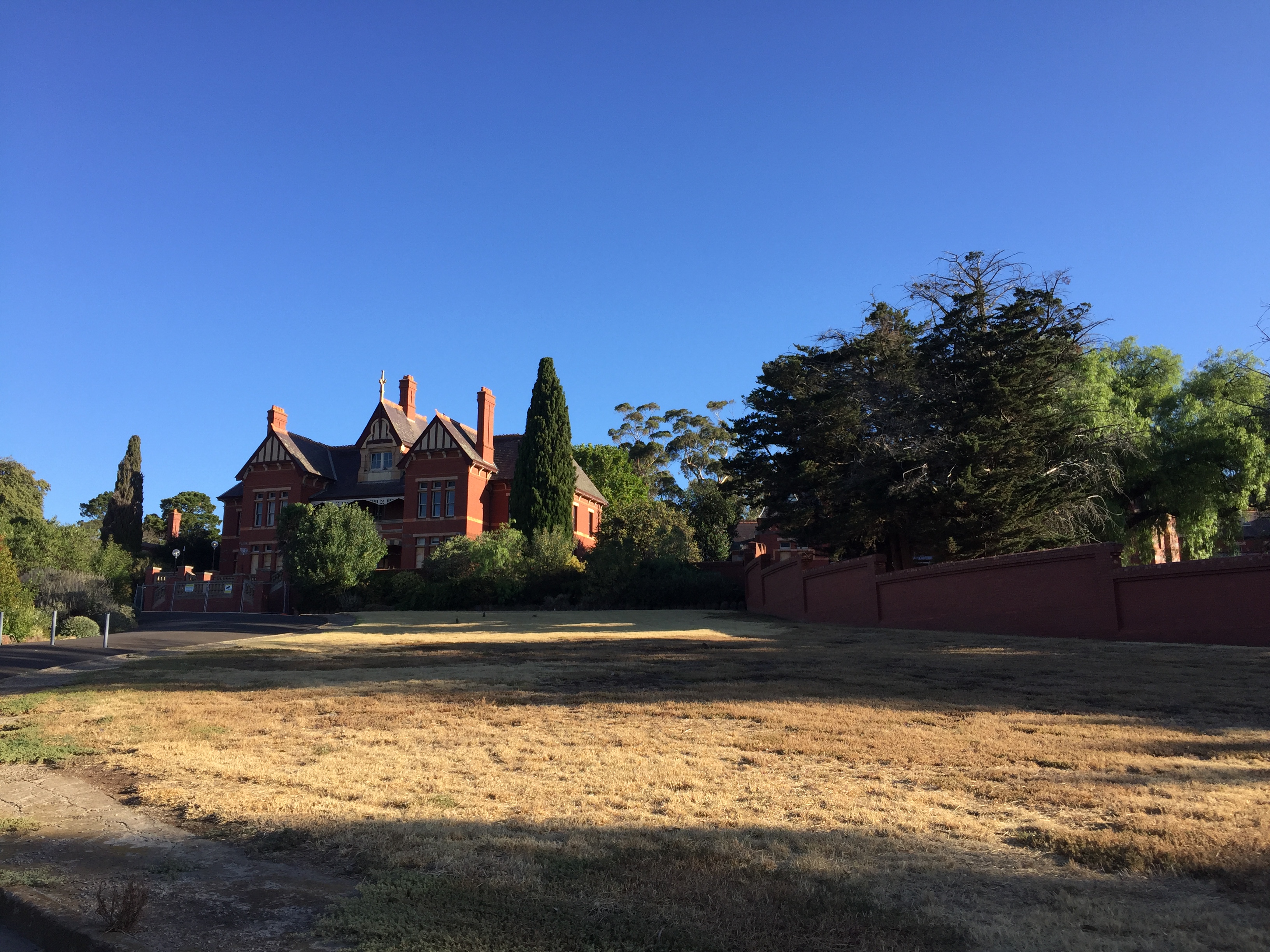
For months I’d thought the majestic looking red-brick mansion rising above trees on a distant hillside was a country estate, perhaps built long ago for a Melbourne land baron.
It was only when I found myself standing outside its locked-up gates, staring up at the classically proportioned Victorian structure with its steep black roof, long-tall chimneys and large empty windows that its real purpose came into focus.
Known originally as the Sunbury Industrial School, the vast complex of mostly abandoned and decaying buildings was for over 100 years a lunatics asylum. It occupies almost the entire hillside of housing estate called Jacksons Hill.
More recently known as Caloola, the site’s history goes back over 150 years to 1864, when it became the site for one of Victoria’s twelve ‘Industrial schools – institutionalised homes for delinquent or neglected children, that were a horror of diseases, death and discomfort in their own right.
The ‘Hospital for the Insane’ or ‘Sunbury Asylum’ was built in 1879 and then expanded over the next 40-odd years into a complex of 20 separate buildings, including a psychiatric hospital.
While the building of a modern highway has made Sunbury an outlying suburb of Melbourne today, back in the 1870s, Caloola asylum inmates would have felt very isolated from the wealth and power of boom town Melbourne, then one of the richest cities in the world thanks to the Victorian Gold Rush.
This separation was of course deliberate – people considered ‘mad’ in those days like Maraquita Sargeant were locked up far away from the chattering middle-classes, often to be forgotten about or no longer mentioned (except in whispers) by their own families.
According to the VHD, the purpose built Sunbury asylum with its “pavilion wards in brick with terra cotta roofing tiles conformed to international standards of asylum and hospital planning adopted in the later nineteenth century”.
“Caloola is of historical significance for its physical fabric and spaces which demonstrate nineteenth century attitudes to the treatment of mental illness, including the padded cells, ripple iron cells and dormitory accommodation.”
An inmate of Sunbury asylum, in what appears to be a strait jacket
In the Smithsonian video, Tony Sargeant enters one of the claustrophobic former padded cells, the cushion lining peeling back from the wall like dead skin adding to the sense of horror. In another, he finds the large empty former linen room, where his mother spent her days monotonously patching up sheets and pillow cases.
“That was her big job in life. Even though she was a concert pianist,” Tony says.
Caloola remained a mental institution and training hospital until 1985 when it housed intellectually handicapped people.
From 1992 to 2011 it was a campus of Victorian University. Some of the building are still in use as a primary school, radio station, art gallery and theatre company.
Ms Mills told the Sunbury Leader in November 2015 she wanted to shine a light on the mental health system in those days, and how it has changed, and tell the stories of some of the people treated, often harshly, within its walls.
“A lot of the Sunbury asylum history is about stigma and it is something that was buried in family histories,” she said.
Often people – many of them women – were placed into the asylum for conditions that today would be compassionately treated like post-natal depression, or for just being drunk and disorderly.
In the case of Marquita Sargeant, she was denied her freedom – and later sent for a failed lobotomy at the Royal Melbourne Hospital – because a director at the asylum deemed her “a threat to certain prominent people’s reputations”.
I found countless other example of the cruelty, deviancy and filthy conditions that were part of asylum life for inmates, right up until the 1990s when the asylum housed mental patients, many of whom were abused or over-medicated.
“The patient was alone with Mr Baldwin in his officer for some time,: testified William Walker, the asylum storekeeper and clear.
“Eventually she left with the attendant. Baldwin then called me in, and I found him in a flurried state. He pulled up the blind of his window, washed his hands and face and brushed his hair. The patient Simmonds left on the 5th September and I believe has gone to New South Wales.”
A feature article on Sunbury Asylum that appeared in The Age newspaper in 1999 talks of Elizabeth Kennedy, 31, a suicidal dressmaker, who spent 7200 hours “in seclusion”, from 1894 to 1896 which meant she was forced to wear a camisole – the notorious straitjacket – and webbed trousers daily.
“A woman in seclusion also wore canvas gloves shaped like oven mitts. Many of the inmates died of pneumonia and, in the early years, they were given cold baths. Difficult patients were deprived of dinner,” the article says.
Last May, Jackson’s Hill and asylum complex was acquired by the State Government’s Development Victoria. However, plans to turn it into a community, arts and cultural precinct appear to have stalled.
Instead, it stands still and empty, a decaying and ghoulish Dickensian shrine to those who suffered unjustly and often terribly behind its walls.
As for my mistaken belief that this hillside of horrors was a majestic country estate, I can take some solace from a 1996 article in The Age newspaper, in which the writer described Caloola’s gardens, open-air pavilions, and curved ha-ha walls as having a “beauty that seems at odds with their original purpose”.
Since writing a couple of posts on this humble blog about the identity of the anonymous host of the true crime podcast Casefile, I have been inundated with emails from fans of the show and curiously-minded people asking me to help them work out his identity.
You can read these earlier posts of mine here, here here and here if you wish.
A lot of people have easily worked out his first name is ‘Brad’ (Not much sleuth work required as he told Rolling Stone magazine to call him ‘Brad’ in an interview in 2016) and also his surname, but then struggled to put a face to a name. There are lot of people in Australia and in New South Wales with that same name and surname combination.
Suffice to say, I’ve been sent a lot of links to LinkedIn profiles of ‘Brad’ but they have all – rather amusingly – been the wrong ‘Brad’.
I can confirm our publicity-shy host is not an executive in the financial services industry or a sports administrator, though I suspect he might have worked in the fitness industry prior to starting the podcast. Perhaps that is how he got his famous injury which required the surgery that motivated him to create the podcast while he was at home recovering a few years ago.
“I’d just had surgery, which required a lot of lying around doing nothing. I was listening to a lot of podcasts at the time…” he told Vice magazine in October 2016.
Given all the public interest in finding out the identity of the Casefile host and the endless emails I receive (two or three a week), I have decided to provide a helping hand to those trying to work it out for themselves.
If you’re one of those fans of the podcast who don’t want to know a bit more about the man behind the disembodied voice narrated famous crimes, then STOP READING NOW.
For others as curious as me, here are a few handy tips:
Firstly, it does not require any special skills or access to secret databases.
What you need to do is work out the name of the host’s regional newspaper and carry out the following Google Image search:
‘Host name + newspaper name’
Among the photos, should be one of the Casefile host taken at a social function. (He has deleted most of his photos from social media, but this one he cannot delete for obvious reasons).
This of course only solves part of the mystery – as to why he wants to remain anonymous no one really knows?
Is it just a marketing gimmick to make the show ‘spooky’ or is there a more interesting and intriguing reason?
I’ll leave that – for now – to the conspiracy theorists.
Recently, whilst browsing an old folder on an external hard drive, I came across a copy of a warning letter I received – my first and only one to date – almost 10 years ago.
I had completely forgotten about it, even though at the time it set off a boiling and bubbling rage inside me.
I received the warning three years into a stint at a publishing company in Sydney where I was then the managing editor of two mortgage broking titles.
Up until then it had been a largely enjoyable job (and I still have mostly fond memories).
I ran a small team of reporters and there was a good collegiate atmosphere among fellow editors and journalists.
I did a fair bit of the writing and also penned a popular industry gossip column called Insider that put a satirical slant on some of the more colourful aspects of what was then a largely unregulated and lively industry.
Then one winter’s morning in early June it came as a great shock to be called into a meeting without any prior warning to be hauled over the coals and threatened with the sack.
Perhaps because I was so shocked and angry, I don’t remember what was specifically said at the meeting.
The letter, which I had scanned and saved for some reason, filled in the blanks.
Beginning with a “first and final warning” management expressed its disappointment at my “editorial approach” on a “few recent occasions”.
In particular, there were concerns about two stories I had written in the Insider section “that explicitly criticised Westpac for poor customer service. These had been withdrawn at the last-minute”.
Similarly a reader’s letter which criticised St. George Bank “an advertiser” was pulled whilst another article which was critical of the Commonwealth Bank was altered lest it upset an “advertiser/sponsor”.
The last example related to PLAN Australia, a mortgage aggregator now part of National Australia Bank that advertised heavily in both publications.
The then CEO (with whom I’d had a good relationship with till then) complained to management after his company ranked poorly in a survey of them and their competitors.
Such was the outrage of this particular CEO that both the managing director and sales director had to fly to Melbourne to “smooth things over”.
I suspect that it was after this trip, which I was entirely unaware of, that it was decided that I be set straight. Up untl then, no issues had been raised about how I put together the publications, or my management style.
The warning letter made the point a number of times that it was part of my role to “drive” or “fulfil” the “commercial objectives” of the publications.
As an editor and not a publisher or salesman, I understood this to mean to put together a quality publication that everyone in the industry read – not just dollop out flattering articles about advertisers.
In the past, there had been some tension between my somewhat idealistic notion that editorial and sales remain independent and the company view that advertising in the papers gave you a kind of protected status in its publications.
My view was that the publications attracted advertisers if they were well read and influential, not just by publishing fluff and drivel.
Perhaps there was some middle ground I didn’t see, but it was still greatly disappointing to me that the company had chosen not to defend a long-standing editor, but instead take the side of prickly banks and mortgage firms with their bulging cheque books.
The outcome of both the verbal and written warning was that I was told to find “new angles and approaches” to stories or in some cases “avoid them entirely” (if presumably they were of a negative nature and involved an advertiser).
To add insult to injury, my end of year bonus scheme which in the past had been based on meeting all my deadlines, something entirely within my control, was changed to one based on both publication’s hitting their “six monthly sales targets’ – a metric over which I had absolutely no control.
Surprisingly (well maybe not, I needed a pay cheque) I stuck around until March the following year, when I left the company to go traveling with my wife, after we got married in January.
It’s interesting looking back on that day almost 10 years later in light of how my career has progressed, especially the last five-and-a half years, writing for a national newspaper (The Australian Financial Review), where editorial independence is taken for granted – where journalists write stories and sales people sell ads. I believe that is the way it should be, in all cases. Publications that break that golden rule should disclose it to their readers, and not claim to be independent and objective reporters and observers..
The warning letter also triggered another memory.
In early 2011, back from a year travelling around the world and almost broke, I was earnestly looking for full-time employment.
I put in a myriad of job applications for journalism roles, and was lucky enough to secure a few interviews including one with the publisher of an adventure magazine.
The interview was in one of those trendy converted warehouse in South Melbourne with the magazine’s publishers – an equally trendy man and woman duo.
I didn’t get the job – perhaps the publishers sensed I wasn’t really that enthusiastic about reporting on cross-country skiing – but what I remember most vividly was a question I was asked.
It went something like this: Was I comfortable with the fact that the cover of the magazine was chosen, not by the editor or publisher, but by an advertiser?
Desperate for a job, I said I was, but my insides twisted into knots at the thought that this consumer magazine was essentially glorified advertorial, without of course telling paying readers that.
Looking back I am grateful I was never offered the role. I am also glad I stuck to my guns at my earlier role and tried to always report accurately and independently.


 President Donald Trump, who has railed endlessly against the mainstream media’s criticisms of him through the popular mantra of FAKE NEWS recently turned to his attention to fellow Australian journalist Jonathan Swan, a former

 I recently had a stark reminder of the potentially costly dangers lurking on social media.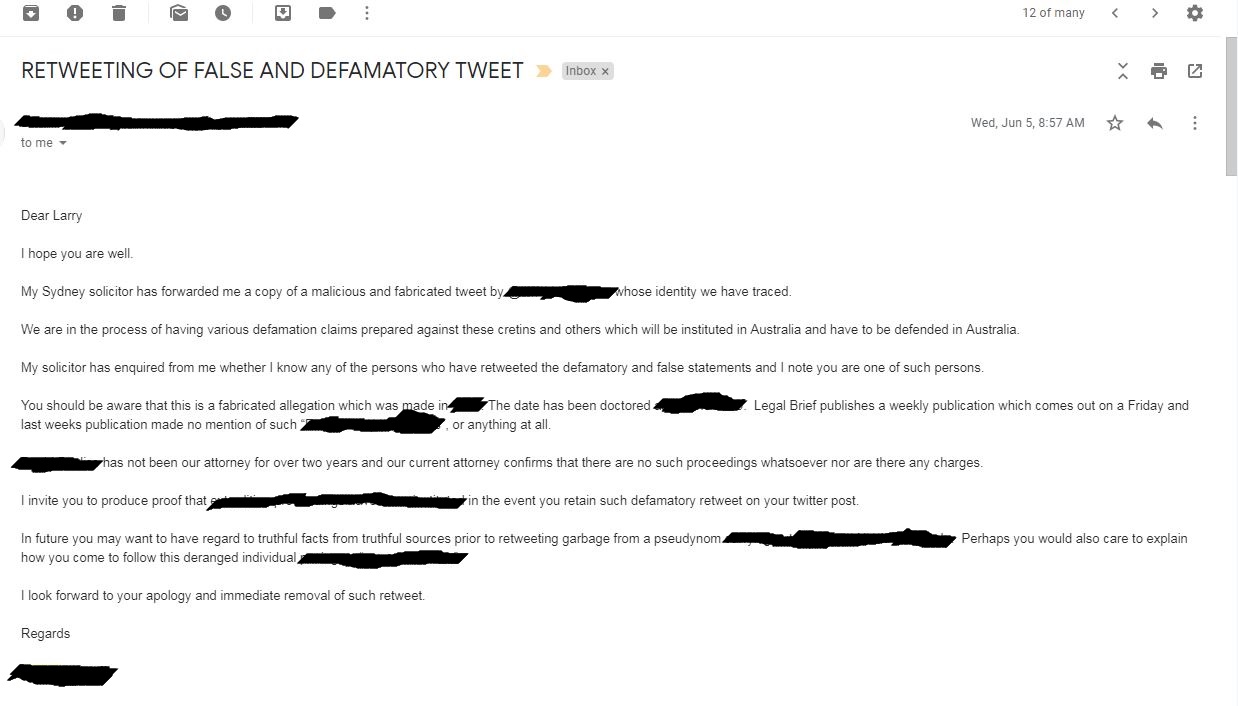
 Having blogged – to mild interest – about my
  In 1945, Maraquita Sargeant, a young teacher and concert pianist living in rural Victoria was admitted to a notorious lunatic asylum north of Melbourne.


 Freshlyworded