A very Scottish evening with Trainspotting author Irvine Welsh

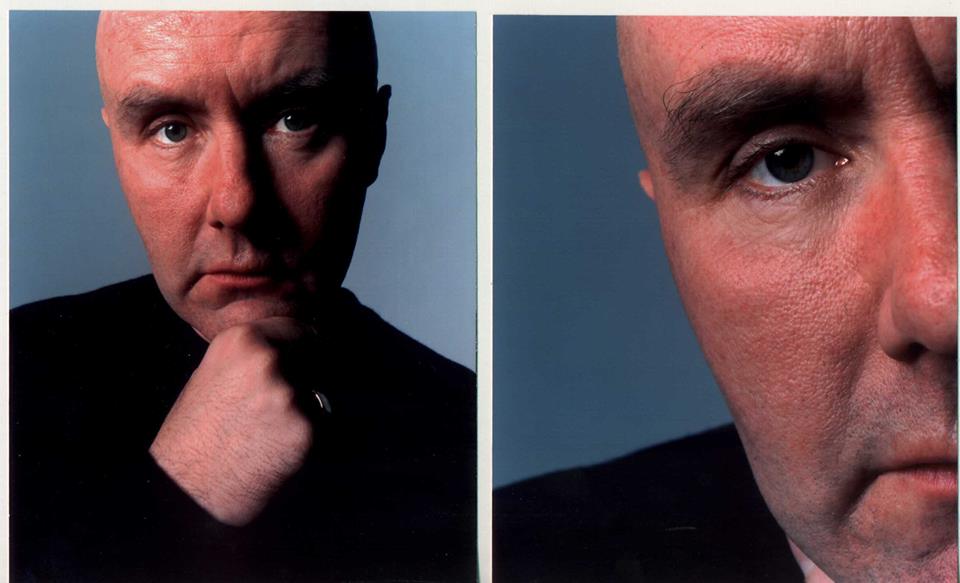
irvine welsh2I went to hear legendary Scottish author Irvine Welsh speak last week.

My friend Jonny, who has read all his books, invited me along to a talk hosted by the Wheeler Centre.

I have read just one of Welsh’s books, “Trainspotting”, but it was enough for me to say “yes” immediately.

Trainspotting – a brilliant, excruciating, haunting and often hilarious story about a group of doomed Scottish junkies set in the impoverished council estates of Edinburgh in the late 1980s/early 1990s – was published in 1993 and has sold more than 1 million copies in the UK alone.

It’s listed in my literary reference bible: “1001 Books You Should Read before Die” alongside contemporary literary masterpieces by Salman Rushdie, Ian McEwan, Donna Tartt and J.M. Coetzee.

welsh

Irvine Welsh with a fan in Melbourne

Welsh, a bald, tallish man sat down on stage  at the Athenaeum Theatre on Collins Street dressed casually in a black t-shirt, jeans and leather jacket looking like the kind of guy you’d strike up a conversation with about football at the pub. The only sign of possible eccentricity: bright red socks.

He was there ostensibly to promote his latest book which has the intriguing title of ‘The Sex Lives of Siamese Twins’. It’s his first novel set entirely in the US – Welsh lives in Chicago and wrote and set the novel amongst Miami’s gym, fitness and dieting culture.

(“If people want to lose weight, they should just eat less. Instead, in America, they consume diets.” he says.)

It’s his first novel without a Scottish character with only the vaguest references to Scotland.

Putting on a bad American accent, Welsh recalled a line in the book spoken by one of the aggressive female characters to Wheeler Centre director Michael Williams:

“I don’t wanna go to a fillum set in Scotland or Bosnia speaking a language no one can understand.”

Williams reminded Welsh that he is had pronounced “film” in the Scottish dialect of “fillum”.

Welsh throws back his head and roars with laughter.

Miami agree with Welsh. He goes to gym, eats well, walks around in shorts and t-shirts taking in the good weather.

But his heart – thankfully – remains firmly rooted in Scotland, where he created his most iconic characters – Renton, Begbie, Sickboy and Spud.

It’s not just his heavy Scottish brogue that makes it hard to imagine he’s become an American in any way, he still clearly loves his homeland, telling the audience that he has enjoyed “discovering Scotland from the US”.

Moving to somewhere “exotic” like Miami, he says, made him realise that Scotland is “one of the f-cking weirdest places I have ever been to in my life.”

And he’s also kept up with local politics, noting that the country is “re-inventing itself from the inside out” and that it is an “exciting time” with the Scottish independence referendum vote on September 18 – a remark which draws a large cheer from fellow countrymen in the packed audience of devoted fans.

Welsh has also maintained that famous, sardonic, playful Scottish sense of humour, that made Trainspotting such a huge success.

He quips: “Scottish people are always wonderful to outsiders – they like people coming to visit, but they f-cking hate each other.”

He then jokes that the last time he visited Edinburgh everyone was so nice to each other, which meant he had nothing to write about.

This is thankfully an exaggeration with Welsh telling the audience that his next book – coming out next year – will be about a taxi driver in Edinburgh.

More than likely it will be about one of those failed characters, who he writes so well about – whether its Renton, Spud or Begbie in Trainspotting or the vicious Detective Seargeant Bruce Robertson in the recently filmed “Filfth” (a novel I’ve already picked up from the library).

Failure, is something which inspires Welsh and the characters he creates on the page: Trainspotting is not just about failed characters whose lives have been blown off course by heroin addiction but is set within a landscape of failure  created by Margaret Thatcher and her Tory cronies, and one experienced by Welsh himself.

“Failure is much more interesting to me than success,” he says. “I write about people who are going through a bad time, when things are falling apart.

“I try to show these characters grasping for the light switch,” a beautiful phrase, which encapsulates the sadness behind doomed characters like Tommy Laurence, a football-mad childhood friend of Renton in Trainspotting who turns to heroin after his girlfriend dumps him and ends up contracting AIDS.

“These are people who were not always like what they are now,” Welsh says.

Welsh himself knows a lot about failure. He couldn’t play football or cut it as a musician (his two other passions) – but he was good at storytelling.

“Most writers are serial failures,” he says.

Speaking about his own success – he notes humbly that many celebrated Scottish writers blazed a path for him but did not achieve the international recognition he did.

He says he is inspired by bad fiction, rather than by what other great authors have written (one of his favourite books is Ulysses by Irishman James Joyce):

“When I read a shite book, I tell myself, I am going to take that c-nt down.”

Renton, couldn’t have said it better.


Drugs, sex and boredom: A review of “Scar Tissue” by Anthony Keidis

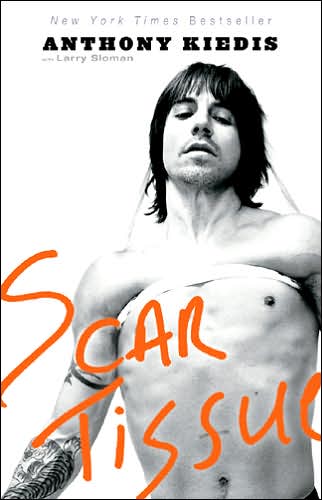
ScartissuebookAbout the most interesting revelation in the 460 odd pages of “Scar Tissue”, the autobiography of Red Hot Chilli Peppers frontman Anthony Kiedis,  occurs about 330 pages into this tedious, self-centered tale.

It’s when Keidis talks about the Chilli Peppers playing as the opening act for the Rolling Stones in the late 1990s.

He writes that opening for the Rolling Stones is a “shite job” despite the opportunity to play with the second greatest band after The Beatles:

“I can’t recommend it to anybody…the fact is the Rolling Stones audience today is lawyers and doctors and CPAs and contractors and real estate development people. This is a conservative wealthy group. No one is rocking out.”

He goes on to describe it as “like going to the Rolling Stones mall”, a “horrible” experience where you play as “85,000 wealthy, bored-out-of-their-minds fans are slowly finding their seats”.

Keidis talks in the same candid, straight-forward style to describe his journey from reckless teenager to petty thief, confirmed junkie and lead singer of one of the biggest rock-funk bands in the world.

It’s an honest, seemingly truthful recollection (as truthful as possible given the amount of drugs consumed along the way) but the problem is its repetitious nature, built on a cycle of drug binges, failed attempts to get clean, and more drug-taking, interspersed with accounts of chaotic relationships, typical rock ‘n roll sexual encounters and tour bus stories.

It’s the complete cliché: Sex, drugs and rock ‘n roll.

Sadly, there is very little revealed of the creative process – this mainly involves Keidis disappearing into a room by himself to write songs about his drug-fuelled personal experiences.

As a book about drug use and addiction it offers very little in the way of insight into the problem – apart from the obvious of it being very hard to give up. Many of the observations glamorize drug use, while others sound like the speech bubbles of a true stoner-idiot:

After fifty days of being sober, I thought, ‘That’s a nice number. I think I should honor that number’. I decided it was a good time to do drugs.

On a visit to New Zealand, he bemoans the fact that the country is too small to satifsy his drug requirements. Countless times he smuggles drugs onto planes undetected.

The only things to truly marvel is that Keidis somehow emerges out of his heroin/cocaine/crack/speed addiction and reckless to the point of almost suicidal lifestyle, not only alive, but rich and famous too (and still with that famous six-pack stomach).

Keidis, it seems, is the classic narcissistic celebrity who believes that if you throw in anecdotes about meeting the Dalai Lama, some syrupy thoughts about spirituality and the occasional bouts of healthy living and yoga exercise that you’re actually a decent guy.

Instead, he appears to lack basic humility even after surviving countless week-long drug binges in seedy motels, crossing paths with drug lords and avoiding arrest by police officers.

It got so bad that half-way through the book, I had to stop reading and put on a couple of Red Hot Chilli Peppers CDs to remind myself that they really are – as musicians – an incredibly original blend of funk, rap, rock and have produced countless great songs over the past  almost 30 years.

(For worthwhile, insightful accounts of heroin addiction read: Junkie by William S. Burroughs, Monkey Wrench by Helen Garner, In My Skin by Kate Holden or Trainspotting by Irvine Welsh – you can find reviews of all of these books here.)


Re-reading classic plays: ‘Look Back in Anger’ vs ‘Death of a Salesman’

Look-Back-in-Anger-12944_2

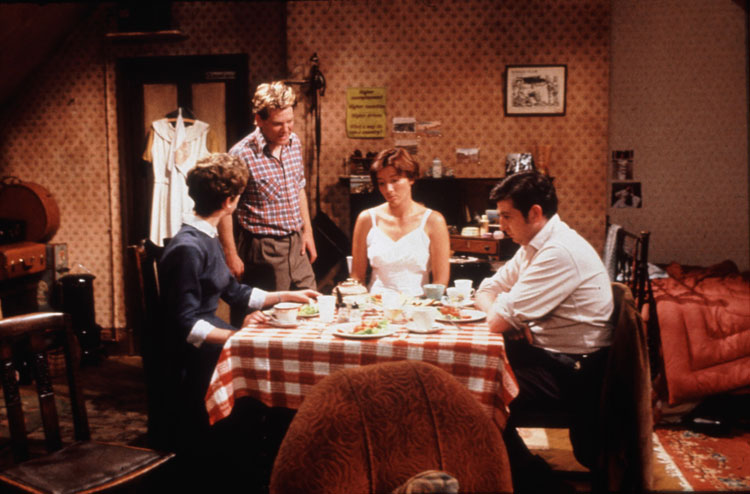
Kenneth Branaugh and Emma Thompson in “Look Back in Anger” directed by Judi Dench

I recently re-read two celebrated plays of American and British theatre, respectively – Arthur Miller’s ‘Death of a Salesman’ and John Osborne’s ‘Look Back in Anger’.

I enjoy reading plays – though some people find it curious. You can pick them up for a few bucks in book shops, they come in thin, handy-sized paper-backs perfect for reading on the train and you can finish them in a day or two.

The directness of the dialogue – spoken by interesting, intense, quirky characters – can, I find, be very pleasing to the intellect, and an escape from the drab, bored faces of fellow commuters with their fingers stabbing at smartphones.

The last time I read these ground-breaking plays was at university 20 years ago, where I was profoundly affected by both of them.

So I was curious to see what effect they might have on me two decades later.

Look Back in Anger by John Osborne (1956)

The Faber and Faber edition I read featured a red tie draped over an ironing board on the cover symbolising the play’s domestic setting (it was one of the first plays to be  coined a “kitchen sink drama”)  and its exploration of the lives of the working classes after the Second World War.

The action takes place in a flat in the English Midlands in the 1950s. The chief protagonist is Jimmy Porter – the quintessential “angry young man” who feels he has no place in English society. Without a war or a cause to fight for, he takes his existential frustrations out on his sweet-natured flat mate Cliff and timid, anxious girlfriend Alison. His principal aim is to spark some kind of fight or reaction from Cliff or Alison and later Helena – a posh actor friend of Alison – who comes to visit (and replaces Alison as Jimmy’s girlfriend in a weird love triangle).

JIMMY (on a rant): Oh heavens, how I long for a little ordinary enthusiasm. Just enthusiasm – that’s all. I want to hear a warm, thrilling voice cry out Hallelujah! (He beats his breast theatrically) Hallelujah! I am alive. I’ve got an idea. Why don’t we have a game? Let’s pretend we’re actually alive….look back in anger

And so he goes on – ranting and rallying against the boring weekend papers full of the same vacuous people and meaningless stories; trying to stir some kind of emotional response from his wife ironing away like some kind of Lady Macbeth trying to remove every bit of dirt or discomfort from her life. Alison at first won’t respond to Jimmy’s taunts about her stuck-up brother Nigel or her parents that hated him or how he is sick of being cooped up in a flat on another dreary Sunday. Only through accidental violence (play fighting with Cliff), can he draw a howl of pain and a reaction from her.

There are plot twists – a pregnancy, the death of a friend, family revelations – but it all feels quite artificial and staged. Jimmy is just an angry man crying out for attention or looking for a fight, using what ever horrible means to spark a reaction:

JIMMY (to Alison): If you could have a child, and watch it die. Let it grow, let a recognisable human face emerge from that little mass from indiarubber and wrinkles. Please – if only I could watch you face that.

In the end, I just wanted Jimmy to shut-up – even when he was played by the fantastic Kenneth Branaugh alongside Emma Thomson as Alison in a TV adaptation directed by Judi Dench (You can watch the whole play in full on YouTube).

It just didn’t ring true. It felt like a silly, dated soap opera – though with the occasional memorable bits of dialogue thrown in the mix.

Verdict: 3 out 5

(At university, we watched a version of this play with the great Welsh actor Richard Burton in the lead role – so perhaps I should track it down and give it another chance.)

Death of a Salesman by Arthur Miller (1949)

Kate Reid and Dustin Hoffman in "Death of a Salesman"

Kate Reid and Dustin Hoffman in “Death of a Salesman”

The story of 60-year old Brooklyn travelling salesman Willy Loman who can no longer sell and who cannot face the reality of his own past mistakes and self-deception. It’s also a play about what it means to become worthless in society and how the great American Dream (your own home, family, prosperity) can turn to dust.

WILLY: The street is lined with cars. There’s not a breath of fresh air in the neighbourhood. The grass don’t grow any more, you can’t raise a carrot in the backyard. They should have a law against apartment houses.

Willy Loman carries some of the anger of John Osborne’s Jimmy Porter – but whereas Jimmy is young and can change, Willy Loman is a broken man, a classic study of failure and of redundancy, with little hope of redemption.

While set in a different era, Death of a Salesman is a timeless classic and has lost none of its power.

David Mamet’s 1984 Pulitzer Prize-winning play Glengarry Glen Ross – about real estate salesman fighting for their jobs (made into a superb movie with Al Pacino, Jack Lemmon, Kevin Spacey, Alan Arkin and Alec Baldwin) owes its central theme – meaning through work – to Arthur Miller’s ground-breaking play.

As journalist working in an industry with an uncertain, constantly-evolving future – the fear expressed by Willy Loman of “still feeling – kind of temporary about myself” rings true.

Indeed for many working people, the fear of becoming redundant because of technology or of being replaced by cheaper labour in far-off countries is very real as is the sense for older people of waking up 30 years after a career and wondering where all the years went and why you’re still struggling to make ends meet.

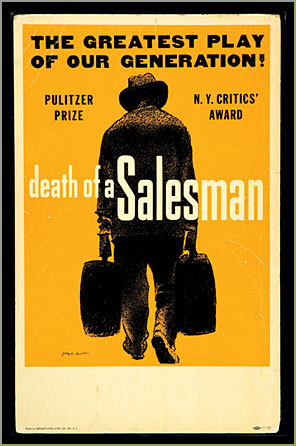
death of a salesmanThis fear is brutally expressed in one of the great and awful moments in modern theatre when Willy finds himself begging his boss, Howard –  the son of the man who first hired him – for his job:

WILLY: You mustn’t tell me you’ve got people to see – I put 34 years into this firm, Howard,  and now I can’t pay my insurance. You can’t eat the orange and throw  the peel away – a man is not a piece of fruit.

Earlier in this scene, as Willy arrives at Howard’s office determined to get a desk job in the city, he finds his boss demonstrating a primitive dictaphone that records his son’s voice.

Replace this device with a smartphone or an iPad and you have a modern day fable.

Verdict: Five out five

(Make sure you watchthe 1985 TV adaptation starring Dustin Hoffman as Willy Loman and John Malkovich as his son Biff.

Cinema ticket prices: the profits in the popcorn

Ticket2This month, for the first time, some cinemas in Australia started charging $20 for movie tickets.

Explaining the need to push up prices, one cinema owner, Benjamin Zeccola of Palace Cinemas – the independent upmarket/arthouse chain – defended this by saying it was primarily because of the rise in the illegal downloading of movies, (plus high wages).

According to research by the Intellectual Property Awareness Foundation (an organisation representing film and television companies campaigning against online content theft), more than a quarter of young Australians illegally download movies or TV shows, among the highest rate in the world.

There is little doubt that illegal downloads are having a massive impact on cinema house revenues. At the same time, the cost of having a night out at the cinema has skyrocketed in recent years (as a kid in South Africa in the 1980s I paid 1 Rand for movies as part of the Ster Kinekor club – about 50 Australian cents), which partly explains why illegal downloads are so high.

The other factor behind the rampant illegal downloading of movies is that the notion that you are “stealing” has never really sunk into the collective consciousness of downloaders, and may never do so. You can say it’s the same thing as riding off on someone elses bike or filling up your car with petrol and driving off without paying for it, but people that download movies illegally, probably don’t visualise it in that way because its free, easy to do and the chances of getting caught are virtually zero.

A $20 movie ticket seems high (and it is), but it’s somewhere in the mid-range of what other comparable countries are charging:

  • In Manhattan, an adult ticket at the AMC Empire cinema is US$13 (A$14) – 35 per cent cheaper than the $20 Australians are now expected to fork out.
  • But in London, a movie at the Odeon on Leceister Square in the heart of the West End, will set you back £15.50 – a whopping $28 in Australian dollars, or 40 per cent more expensive.

But the ticket is only part of the cost. When you factor in the popcorn, drinks and snacks, you’re unlikely to see much change from a $50 note, and nothing from a $100 note if you take a family of four to the movies.

Running a cinema though is an expensive business.

Most cinemas are in shopping centres, which charge among the highest rents in the country. Then there’s the cost of renting the film from the distributors, staff wages, maintenance costs, utility bills and equipment and goods to pay for.

According to a 2013 article in the UK’s Independent newspaper, the cover price of a cinema ticket is consumed by film rights (40-60%), staff salaries (20%), rent (15%), utilities (5%) and other costs (10%). Add that all up and there’s no margin to speak of.

Which is why you pay ludicrous prices for popcorn, drinks and snacks.

According to the same article, “in order to remain competitive, a multiplex’s main source of profit actually comes from the concessions stand, rather than the box office”.

Or to quote from Arrested Development – “the money is in the banana stand”.

Just consider that you can buy a 375 packet of unpopped popcorn kernels – enough to make three or four jumbo sized popcorn boxes – for $1.34 at Coles, but the cheapest box of a popcorn at the cinema will set you back at least $5. Add the choc-top ice-cream and drink to your purchase and even if you use a “combo” offer you’re likely to fork out $10 to $15 more on top of the $20 movie ticket.

No wonder then, that so many people are buying enormous televisions – which get cheaper and cheaper, bumping up their broadband download allowances and illegally downloading movies for the cost of a monthly internet connection.

Gerald Durrell’s idyllic Corfu childhood: a review of “My family and other animals”

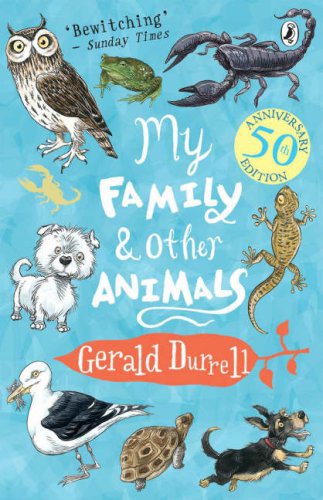
My_Family_and_Other_Animals_BookI had hardly thought of Gerald Durrell, the author and naturalist until my wife bought me his boyhood memoir “My family and other animals” as a gift.

It tells the story of the four years he spent from 1935 to 1939 as a young boy living with his family on the Greek island of Corfu.

The family left the dampness and cold of London for the fresh air, sunshine and open spaces of the Greek island at the behest of Lawrence Durrell – Gerald’s oldest brother, who himself would go on to be a famous novelist, essayist and travel writer.

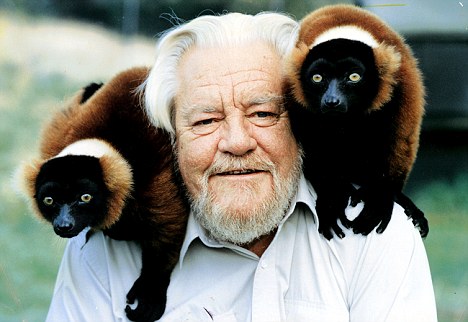
Picking up the book, I recalled a childhood memory of Gerald Durrell from a television show he presented that ran on South African television in the 1980s: a short, plump man with a white beard who appeared on television to tell us fascinating things about exotic animals. I looked at photos of him online and my memory served me well for he was indeed, short, plump and bearded.

gerald durrell older man

Gerald Durrell as I remember him from my childhood

The book is a wonderful account of an idyllic childhood for a young boy fascinating with nature. It’s one of the most entertaining books I have read, full of wonderful anecdotes about Gerry (as the family called him) and the animals he collects and brings into the family home.

These include: an owl, snakes (that end up being kept in the bath tub), frogs, a pigeon called Quasimodo, a tortoise and scorpions (that scatter one day across the floor during dinner) to name just a few.

Gerry Durrell is part Steve Irwin – unafraid to pick up creatures to see them up close – but more so Sir David Attenborough, with a wonderful eye for the details of nature and how it works plus the skills of a gifted novelist to bring it all to life.

In one scene he describes a gecko who has come to live in his room, which he names Geronimo:

He would sit on the window sill gulping to himself, until it got dark and a light was brought in; in the lamp’s golden gleam he seemed to change colour from ash-grey to a pale translucent pinky pearl that made his neat pattern of goose pimples stand out and made his skin look so fine that you felt it should be transparent so that you could see the viscera, coiled neatly as a butterfly’s proboscis, in his fat tummy. His eyes glowing with enthusiasm, he would waddle up the wall to his favourite spot, the left hand outside corner of the ceiling, and hang there upside down, waiting for his evening meal to appear.

This wonderful gift for describing a scene and revealing the wondrous details and idiosyncracies of nature is found throughout the book.

It is a mix of boy’s own adventure (Gerry accompanied by his faithful dog Roger exploring the island with almost unlimited freedom in which “all discoveries” filled him with “tremendous delight”) accompanied by hilarious tales of family life – Larry and his arty friends invading the island, his diet-obsessed sister Margo and the adventurous, gun-mad Leslie.

The other wonderful aspect of the book are the lovable eccentric local characters: There’s Spiro, the Durrell’s taxi driver, “guide, mentor and friend” – a “short, barrel-shaped man” with a unique grasp of the English language and who adored the family, the tremendously fat and cheerful Agathi who taught Gerry peasant songs and the immaculately groomed, sparkly eyed, Dr. Theodore Stephanides, who became Gerry’s guide  to the natural world plus a parade of doctors, housekeepers and tutors.

Gerrald Durrel with 'Spiro' on Corfu

Gerald Durrell with ‘Spiro’ on Corfu

Durrell writes of an afternoon spent with Agathi outside her “tumbledown cottage high on a hill:

Sitting on an old tin in the sun, eating grapes or pomegranates from her garden, I would sing with her and she would break off now and then to correct my pronunciation. We sang (verse by verse) the gay, rousing song of the river, Vangelio and how it dropped from the mountains, making the gardens rich, the fields fertile and the trees heavy with fruit.

By the time I finished reading the book, I yearned for just a few days of Corfu sunshine and a walks among its hills, valleys, gently swaying Cypress trees and olive groves.

I challenge you to find a more charming, magical account of a childhood we should only dream of giving to our children.

Mexico is indeed “gentle and fine”, Jack Kerouac

lonesome_travellerIn Lonesome Traveller, he’s poetic, mystical, sometimes incomprehensible account of wanderings and odd jobs in the mid-1950s, the beat writer Jack Kerouac writes of a trip to Mexico:

“There is no violence in Mexico, that was all a lot of bull written up by Hollywood writers or writers who went to Mexico ‘to be violent’.”

Kerouac continues:

“I know of an American who went Mexico for bar brawls because you usually don’t get arrested there for disorderly conduct, my God I have seen people wrestle playfully in the middle of the road blocking traffic, screaming with laughter, as people walk by smiling – Mexico is generally gentle and fine, even when you travel among the dangerous characters as I did – ‘dangerous’ in the sense we mean in America – in fact the further you go away from the border, and deeper down, the finer it is, as though the influence of civilizations hung over the border like a cloud.”

I recall the warnings from well meaning friends and family – There’s still time to change your plans/It’s not safe/It’s a dangerous place/Don’t go – before we boarded a New York flight in Christmas 2010 for a month long Mexican bus sojourn from Cancun all the way west to Guadalajara.

Though the notion of Mexico as a violent place is indeed “a load of bull” but still seemingly engrained in the American psyche more than fifty years after he wrote about it, Kerouac’s description of Mexico as “generally gentle and fine” is wonderfully precise.

There is little violence south of the shady border towns where the stories of gangs, beheadings, shootings and drugs garner garish headlines in American newspapers and stoke the flames of fear.

DSCN1093

A fruit stall, Mexican style

As travellers, we found the biggest danger in Mexico to be from a falling coconut while snoozing under the shade of a palm tree on an unspoilt sandy beaches on Isles Mujeres or Tulum.

Or perhaps from one of those mad windy bus journeys – where brakes are unnecessary accessories – up through the mountains to postcard perfect town like San Cristobel de las Casas, where the only sense of danger are the dolls, paintings and postcards for sale in souvenir shops depicting the Zapatista rebels with guns criss-crossed across their chests (and scary steely stares).

DSCN1082

The colourful, quite streets of San Cristobel de las Casas beneath the mountains

I write in my journal of a day spent in this oasis of bright colours, cobbled quiet streets and lazy wanderings:

“Students and tourists abound.The streets are lined with brightly painted mainly single story houses and shops in shades of yellows, reds, blues and oranges and with slanting roofs of Spanish-style red tiles…the perfect place to wander, sit and sip a coffee or beer and people watch.”

In comparison to the constant pleadings, coercions and tourist tricks and traps in Thailand, India, Morocco and Egypt (all places I nonetheless loved), Mexicans are so laid back they hardly bother when it comes to approaching tourists.

On Isles Mujeres, the little island off Cancun, this lack of savvy was perfectly captured by a man offering boat trips to see whales:

“Wanna go on a whale ride?” he enquired as we strolled by one afternoon.
“No gracias,” we replied.
Silence, then he said sleepily:
“Lotta whales…”

DSCN0833

Ice creams in the park, Valledolid

No one harasses you in Mexico. Not in the small, sleepy afternoon siesta towns like Valledolid (where we visited the ruins of Chichen Itza and swam in the underground Cenotes) and not in sprawling, bustling Mexico City, the world’s best functioning mega-sized city.

Are there dangers in Mexico? Of course. I would not be so naive as to suggest otherwise. But the risks are small unless you’re smuggling drugs, heading for the seedy border towns or in the words of Kerouac going there “to be violent”

The Mexico I remember is that of little black haired men with moustaches; their plump wives pulling chihuahuas on leads, climbing steps to find churches painted in brightest pink and orange, wandering streets in shades of yellow and red, the little taco stands sizzling away by the side of the road, poodles sleeping in hammocks, glorious, colonial Spanish architecture, the boulevards of Mexico City, the murals of Diego Rivero, Frida Kahlo’s sad paintings in the blue house in Coyoacán, ancient Mayan ruins overlooking beaches and azure oceans.

Alive in colour, light and smiles. A sentiment Jack Kerouac would have agreed with, I think.

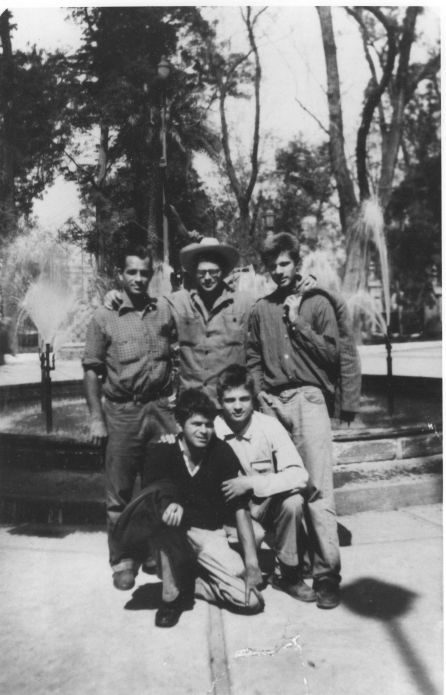
Jack Keroauc top left next to the poet Allen Ginsberg and firends in Mexico City

Jack Keroauc top left next to the poet Allen Ginsberg and firends in Mexico City

Revisiting Oliver Stone’s “The Doors” and my Jim Morrison fascination

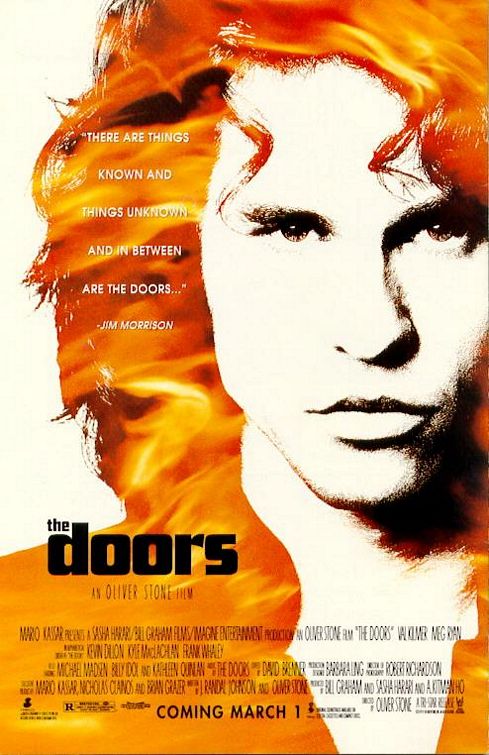
doorsHad he lived, Jim Morrison would have turned 70 this year.  He was born on December 8, 1943 – 2 days and 30 years before me.

As I remembered it, I hardly knew who Jim Morrison was before I saw the movie “The Doors” directed by Oliver Stone.

It came out in March 1991 so I would have been 17, in my final year of high school.

I remember, such was my musical naivety at the time, that I kept on confusing “Van Morrison“, the Irish folk singer with “Jim Morrison“, the hard-drinking, poetry-spouting Dionysian rock-god.

I wince now, thinking about it.

When the movie came out, I was instantly hooked by the chanting crowds,  frenzied stage performances, the imagery – shamans, American indians, acid trips in the desert, the wild women  and the enigma of Jim Morrison (as played by Val Kilmer) the American poet who burned so brightly and briefly.

Against this backdrop was the music, songs like “Light my fire”, “Touch me”, “Riders on the Storm” and the hypnotic, transcendental and surrealist masterpieces “The End” and “When the Music’s Over”.

This is the end. Beautiful friend.
This is the end. My only friend, the end.
Of all elaborate plans, the end.
No safety, or surprise, the end.
I’ll never look into your eyes…again.

The very first Doors album I bought was the double CD ‘The Best of the Doors’ featuring the famous “Young Lion” photo of Jim Morrison on the cover, taken by Joel Brodsky.

I am pretty sure I bought it while on Contiki in Europe, along with The Commitments soundtrack, which came out the same year.

brodsky americanpoet

Jim Morrison photographed by Joel Brodsky

After, that I bought the six studio albums The Doors recorded between 1967 and 1971 starting with the self-titled ‘The Doors’ and ending with ‘L.A. Woman’. They were all in the discount rack (39 rand back then) at a legendary CD joint called CD Wherehouse in Rosebank, Johannesburg, an enormous shop heaving with CDs in every available space – think JB Hi Fi on steroids.

(Side note: during a particularly confused/directionless period in my life – perhaps inspired by Jim Morrison – I dropped out of university to write a book. I got a job at CD Warehouse. The  first day I packed away CDs. The second day I quit. It was my first and only brief dalliance with the world of retailing. The book never happened either).

In these studio albums were gems that hardly get any radio play, songs like the mournful “End of the Night, the melodic, whispery “Yes, The River Knows”, “Wishful, Sinful” and unsettling “The Spy”.

I’m a spy in the house of love
I know the dream, that you’re dreamin’ of
I know the word that you long to hear
I know your deepest, secret fear

Then I bought the double CD ‘In Concert’, rented every live concert video I could find (this was long before there was YouTube), and read the classic best sellling biography of Jim Morrison by Jerry Hopkins and now deceased band manager Danny Sugerman: ‘No one here gets out alive.’

jim morrison

One of the last things I purchased was “Jim Morrison: An American Prayer” a haunting collection of Jim Morrison’s poetry with music by The Doors, released after his death in 1978. I was mesmerised by it with lines like:

A vast radiant beach in a cool jeweled moon
Couples naked race down by its quiet side
And we laugh like soft, mad children
Smug in the wooly cotton brains of infancy

Re-watching the movie

I recently watched the movie again.

I love the beginning: Jim Morrison, alone in a recording studio towards the end of his life recording poetry for ‘An American Prayer’. Morrison is overweight, sports a thick-beard and is unrecognisable from the skinny ‘Young Lion’ of a few years prior.  He drinks from a bottle of whiskey and recites:

Is everybody in?
Is everybody in?…(softly and slowly)…
Is everybody in? (Pause) The ceremony is about to begin.

Then the film cuts to a sweeping panoramic shot over the desert in hues of red and dust as the words “The Doors” float up from the bottom of the screen accompanied by the opening piano trinklings of “Riders of the Storm”.

It’s a brilliant introduction.

Then follows the scene of the Morrison family driving past a car crash where a young Jim Morrison sees (as in the song Peace Frog):

Indians scattered on dawn’s highway bleeding [and]
Ghosts crowd the young child’s fragile eggshell mind

Then, its 1965. We find 22-year-old Jim Morrison strolling along Venice Beach, a book of poetry in hand. Later he meets  and seduces Pamela Courson (a ditzy Meg Ryan) who will be his muse and lover.

Later, we find him back on the beach, hanging out with Ray Manzarek (Kyle MacLachlan) talking about Bob Dylan, the Vietnam War (“People want to either fuck or fight”) and making music.

Jim Morrison tells Manzarek he’s been writing songs and poems and then he sings a verse of “Moonlight Drive”:

Let’s swim to the moon, uh huh
Let’s climb through the tide
Penetrate the evenin’ that the
City sleeps to hide

Let’s swim out tonight, love
It’s our turn to try
Parked beside the ocean
On our moonlight drive

The rest of the film tracks the rise of Jim Morrison and The Doors through the legendary live music clubs of Hollywood like the ‘Whiskey a Go Go‘ on Sunset Boulevard, their appearance on the Ed Sullivan show to larger and larger venues as ‘Mr Mojo Risin’  sinks deeper into drugs, alcohol and his eventual death in a Paris bath tub in 1973, aged just 27.

A shallow, vacuous film

When I saw the film in 1991, I thought it was a work of genius, but watching it again, almost 23 years later, I found it a shallow, vacuous film, despite excellent use of the music of The Doors and fine acting from Val Kilmer.

There is very little attempt to explain or explore who Jim Morrison really was. His motivations are all reduced to the impact of a witnessing a car crash when he was a small boy and a subsequent obsession with Indian shamans, Dionysus, acid trips and “breaking through to the other side” of regulated, orderly society.

It’s second great sin is that this really just a film about Jim Morrison with little interest in the other members of The Doors: Ray Manzarek, who created the band’s distinctive sound through his organ play, guitarist Robbie Krieger who wrote many of the songs including “Light my fire” (the band’s first No.1 single) and Roadhouse Blues and ranked 76th on Rolling Stone magazine’s list of the 100 greatest guitarists and John Densmore, who ranked 95th on the magazine’s list of greatest-ever drummers.

How did the Doors come to be? What were they trying to create? What inspired Jim Morrison’s poetry? What happened to his family? What shaped his view? None of these questions are answered.

“It’s a bloated, pompous, unbalanced film, which looks great but has nothing going on beneath the surface,” wrote the Guardian’s Alex von Tunzelmann in 2011 retrospective review.

What did other reviewers make at the time of its release?

The late great Roger Ebert wrote of the film that it was “not always very pleasant”.

“There are the songs, of course, and some electrifying concert moments, but mostly there is the mournful self-pitying descent of this young man into selfish and boring stupor,” wrote Ebert.

The Washington Post’s Hal Hinson wrote that what was most peculiar about the film was “Stone’s attitude toward his hero”.

“He’s indulging in hagiography (creating an idolised version of someone’s life), but of a very weird sort. A good part of the film is dedicated to demonstrating what a drunken, boring lout Morrison was…while on the one hand Stone…keeps implying that it’s all part of the creative process,” Hinson wrote.

But there was a softer, sensitive, almost childlike side to Jim Morrison.

Trawl through the countless Doors and Jim Morrison videos on YouTube and you’ll come across this short take of Jim Morrison playing cards with the other band members. It reveals a shy, sweet guy, not the monster who consumed everything put in front of him:

And there’s this video of Jim Morrison in thoughtful discussion with a priest about his music:

If Stone’s portrayal of Morrison is accurate, then the critics are right to damn him (Morrison) as a selfish, boring attention-seeker that must have been hell to work with.

The second part of Alex von Tunzelmann’s summation of the film is harsh: “This is the biopic Jim Morrison deserved,” she wrote.

Roger Ebert wrote: “Having seen this movie, I am not sad to have missed the opportunity to meet Jim Morrison, and I can think of few fates more painful than being part of his support system.”

Whether these remarks reflect Oliver Stone’s lack of balance and the film’s shortcomings or are more criticisms of the life Morrison led, is an interesting one to ponder.

For me, my fascination with both him and The Doors remains untainted. Rather I consider the film to be too dark, with not enough shades of light and colour.

Unlike Ebert, I would certainly have loved to have met ‘Mr Mojo Risin’ and shared a beer with him.

13 tales of seperation: a review of “Scission” by Tim Winton

scission‘Scission’ mean the act of  division, separation, cutting or severing and is the theme that overrides 13 exquisite short stories in a Tim Winton‘s book that bears this title.

Arguably, Tim Winton is Australia’s greatest living writer, a masterful story-teller whose skills have been recognised both in Australia and overseas. Reading his long form novels is an intense experience with quirky, awkward and archetypal Australian characters that live and breathe beyond the page.

He achieves the same effect with these 13 stories, which will appeal to anyone who likes plot-driven character studies and what drives human action.

In the first story, titled ‘Secrets’, a young girl called Kylie is left to play on her own while her mother and her mother’s boyfriend Philip, disappear into the bedroom. Kylie spends her days down the well – a place she is forbidden by Philip to explore – with a photo album, trying to find a picture of her father. An act of banal, childish brutality shocks the reader at the end.

In another story ‘A blow, A kiss’, Albie and his father are on their way back from fishing for salmon. They come across a motorbike rider who has crashed by the roadside. The night turns into a rite of passage for Albie as they deliver the injured man to his father, a brutal, unforgiving bastard who rages at his drunken son, bashing his head against the metal tray of his pick-up.

“Would you do that to me” Albie asks.

The truck slowed and stopped.

“Lord no. God A’mighty, no!” replies his father.

Albie’s father, in act of tenderness, places his knuckles on Albie’s cheek and says he’s sorry about the salmon they lost earlier in the evening (they buried them but could not find them later).

“The truck moved forward again. Albie felt those knuckles on his cheek still and knew, full to bursting, that that was how God would touch someone. He neither moved nor spoke, and the truck trundled on.

In ‘Getting ahead’ a recently widowed mother gets an idea to rent out her state government home and move the family into cramped flat in some crazy attempt to make money. The tenant, an elderly lady named “Mrs Marsdale” moves in and brings with her many cats. She never pays the rent. The floor becomes covered in “kitty litter, wet newspapers, and wads of phlegmy cotton” – it’s the great Australian dream of property investing gone horribly wrong.

In probably the most uplifting story, ‘Thomas Awkner Floats’ a seemingly simple-minded man is asked to fly across the country to meet his uncle and deliver a parcel for his criminal family outside the National Gallery of Victoria in Melbourne. His response is an act of rebellion, a liberating moment.

A third of the book is taken up by the short story and title of the book. “Scission” and is the best of the bunch. In a series of present day scenes and flashbacks, Winton tells the story of Rosemary McCollough, an attractive wife in a repressed marriage.

They move to a new housing commission in Perth popular with young couples. Her husband,  a signwriter, likes to tune his motor car while his friends gawk at his wife. Rosemary becomes friends with June, her neighbour. Then one day a smartly dressed man and a woman come to their door selling subscriptions to “Pure Metaphysical Knowledge” – a journal tied to a cultish religious movement. Copies begin arriving in the  McCollough’s mailbox:

The McColloughs begin to behave differently. They were never seen outdoors from Friday night until Sunday morning. No lights were seen in the house. The children appeared sullen.

This is the catalyst for great change, upheaval and scission in the McCollough family – an act of seperation and also one of liberation.

At its heart, the 13 stories in Scission are about people searching for the basic human desires – love, pride, companionship, respect, revenge, financial success and joy.

The stories should be read slowly and the characters savoured.

Adultery, consciousness and qualia: a review of “Thinks…” by David Lodge

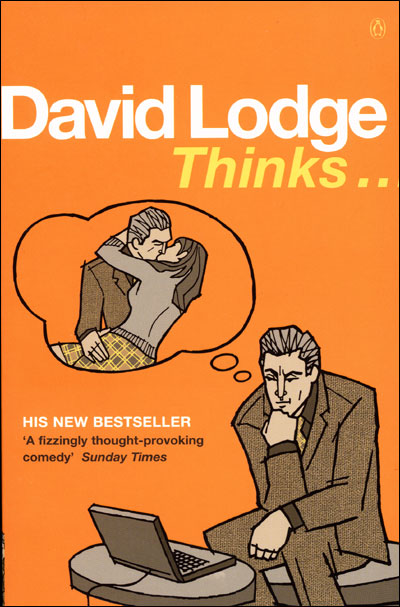
thinksAdultery, consciousness, mortality, artificial intelligence and grief are just some of the themes explored in David Lodge‘s entertaining novel “Thinks…” set in the fictitious University of Gloucestershire – somewhere near Cheltenham.

It’s principally a story about two people: philandering cognitive scientist Ralph Messenger and recently widowed and still grieving visiting creative writing lecturer Helen Reed.

Most of the action plays out across the grounds of the university campus with its vast fields and austere faculty buildings – a world all of its own. Adding some modern period piece fun, the book is set at the dawn of the internet and email age with dial-up modems and floppy disks.

David Lodge is a gifted writer: able to write a well-paced, plot-driven story in the style of popular fiction but delving into weighty issues about human experience.

I’ve read a number of David Lodge’s novels, which though set against fictitious backdrops are always about believable, never extraordinary, but very interesting characters.

It reminded me of his novel – “Nice Work” (later made into a BBC television series) about a feminist university lecturer Robyn Penrose assigned to shadow unfulfilled factory boss Vic Wilcox as part of a government program to bring industry and academia closer together. Both can’t stand each other, but eventually end up having an affair.

In “Thinks…” you could almost simplify the plotline into: a story about sex-addicted Ralph Messenger trying to get repressed Helen Reed into bed and if you re-read the description above of “Nice Work” you could be forgiven for thinking David Lodge writes racy situational sex comedies.

That would be a shallow reading of his work. Lodge is a serious writer with many literary awards and nominations to his credit. His writing style though is not aloof and impenetrable as some serious fiction can be, but instead, highly accessible.

As for his obsession with university life (Lodge was a University english lecturer for 27 years) he said of this, in an interview with the Book Depository in 2008:

The academic institution is a small world, a microcosm of society as a whole, in which themes like the operation of power, ambition, and sexual desire, can be studied in a comic and satiric rather than tragic manner. The fact that university staff are theoretically committed to the preservation of high culture, and the pursuit of truth, but are fallible human beings with ordinary human weaknesses and perhaps more than usual eccentricities, makes a good setting for comic and satirical writing.

In ‘Thinks…’ Lodge’s chief male protagonist, Ralph Messenger has the sex drive and narcissism of a teenager, but is also a highly intelligent, engaging, cognitive scientist and an expert on artificial intelligence.

Ralph Messenger sees the world through the rational order of science and computer programs and attempts to explain everything in this context – “You need an algorithm for self-preservation,” he tells one of his post-graduate students.

Ralph views life as a science experiment and also as a way of satisfying his sexual urges. As part of his courtship of Helen Reed, he suggests they swap journals (both record their thoughts). In his own mind, he sees it as a way “to find out if she fancies me and what her principles are” whereas in his email to Helen he suggests it would be:

a kind of opportunity…if we swap we would each have unique insight into the workings of another persons mind. We could compare our responses to the same event. I could literally read your mind, and you mine.

Much of the romance between Ralph Messenger and Helen Reed stems from their arguments and debates about the limits of science and human consciousness –  Are humans just highly sophisticated robots or is there a “mind” separate from the brain that cannot be explained or located by science?

The novel introduced me to the concept of “qualia” – essentially the subjective, conscious experience of things.

There is a debate among scientists and philosophers about whether everything can be explained by brain waves or if qualia are inherent, irreducible human qualities.

Early on in the novel, Ralph Messenger shows Helen a mural that runs along a curved wall in his research lab. It depicts a series of famous though experiments such as Schrödinger’s cat, Thomas Nagel’s What is it like to be a bat?, the prisoner’s dilemma and Searle’s Chinese Room.

In this way he draws Helen into his world of science and atheism, but also challenges her to express her views on consciousness and the human soul, which derive from the psychological realism of writers like Henry James.

The novel’s sub-plot is all about thinking and thought processes and how one processes experiences.

Ralph Messenger’s often debauched (or just plain honest) thoughts are delivered via “train of thought” monologues into a dictaphone, later directly onto his computer via speech recognition software. In one recording he tries an experiment to recover a long-term memory to see how the mind reconstructs the past:

My first fuck, how about that, yes no problem, her nickers over her hips…looking at me slyly from under her hair  falling forward across her face. I was transfixed, I’d never seen a woman undress before…except in films of course.

Helen Reed thoughts are revealed in her journal:

FRIDAY, 11th APRIL: A very extraordinary thing happened today. Just when I thought my life had settled back into a humdrum unexciting routing, an event occurred that throws everything into question again and makes me wonder whether anything in human behaviour is ever what it seems.Not the least remarkable aspect of the experience is that what began as a kind of [Henry] Jamesian pilgrimage turned into a scene that might have come from one of his own novels…

Thrown into the mix are adulterous relationships, revelations about past lovers, a child pornography scandal, a life-threatening health scare and a consciousness conference.

‘Thinks…’ is a richly rewarding reading experience by the master of the academic novel that will indeed make you…think.

What reading ‘All the President’s Men’ can teach journalists

all the presidents men“All the President’s Men” – Carl Bernstein and Bob Woodward’s account of how they uncovered and reported the Watergate Scandal in 1972 and 1973 in the Washington Post and brought down President Nixon and his goons – should be compulsory reading for any journalist wanting tips on how to break a big story. It’s practically a ‘how to’ manual on investigative journalism.

I don’t know if they still make journalists like Bernstein and Woodward, but even in the digital age, where research and information is just a search term away, the techniques, tricks and cunning they employed still apply. Truly great stories don’t come from Google.

I should be upfront and say, that I did not find ‘All the President’s Men’ an easy book to read.

Firstly there are the sheer number of characters and the very convoluted plot. In the inside introductory pages of my paperback edition there is a list of 51 people – presidential staff, advisers, aids, campaign directors, lawyers, editors and prosecutors – who were the main players in the scandal. I found I had to constantly turn back to the beginning of the book to remind myself of who each person was as the plot diverged into a myriad different strands.

This may sound harsh, given Bernstein and Woodward’s reporting (and others on the paper) helped the Washington Post win the Pulitzer Prize for Public Service in 1973, but it’s also not incredibly well written. Perhaps writing a 300 page book gave crack newspaper reporters – accustomed to writing 500 – 1000 word articles – too much leeway to tell their story. There’s too much information crammed into paragraphs and too many minor incidents that get in the way of the overall plot – a good, tight edit would have done marvels to the finished work.

That being said, it does provide some incredible insights into how these two brave, foolhardy, and belligerent reporters dug down the deepest of rabbit holes to uncover the truth.

Married journos need not apply

The first thing that’s apparent is the long and strange hours Bernstein and Woodward put in to crack the story. Neither of them were married at the time or in relationships, nor did they have children. This made it easier for them to work late into the night in the offices of the Washington Post, or drive out to the outlying suburbs of Washington or jet off to Miami or Los Angeles to track down and interview people and give up their weekends in pursuit of a story.

Anyone journalist today married or in a relationship would find it impossible to put in the hours they did – they would either end up divorced or entirely burnt out, or both.

Woodward famously would head out well after midnight to meet up with “Deep Throat” (later revealed to be the FBI’ no.2 man Mark Felt) in deserted car basements to verify information or seek help with stories.

Both journalists also had no qualms about ringing up legendary Washington Post executive editor Ben Bradlee at 2am and asking if they could come over to discuss an idea or situation.

Hit the phones relentlessly. Put in the hard yards.

In the book, Woodward and Bernstein recount countless hours spent calling people on long lists, hoping to come across someone in the White House, Justice Department or some friend of a friend willing to share confidential information with them.

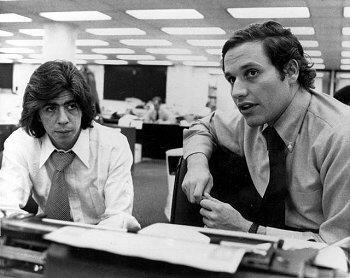
bernstein and woodward

Carl Bernstein and Bob Woodward at the offices of the Washington Post in 1972

By beginning at the top of a list and working their way through it, Woodward Bernstein would eventually find someone willing to speak to them. Sometimes they’d spend the whole day just telephoning people in the hope of finding a useful contact. In this way, they built up an incredible network of insiders. This is how they worked:

Each kept a separate master list of telephone numbers. The numbers were called at least twice a week. Eventually, the combined totals of names on their lists swelled to several hundred, yet fewer than 50 were duplicated.

Think laterally, be creative

Bernstein and Woodward were very savvy and had to be because the might of President Nixon, his ‘men’ and the CIA were out to prevent the ties between Watergate and the White House cover-up ever being revealed.

Sometimes they crossed the line and veered into the murky borders of the unethical or illegal – for instance, when they contacted members of the grand jury investigating Watergate who weren’t supposed to talk to the press or on one occasion, Bernstein not identifying himself as Washington Post reporter.

oct10_72

One of Woodward and Bernstein’s scoops on Watergate

(Read the actual newspaper article here.)

On another occasion, they met with chief prosecutor Earl Silbert in his fastidiously tidy office. Bernstein noticed a piece of paper on his desk that had as its letterhead the name of the company where bugging equipment for Watergate had been purchased. He used this information to write a story and was severely admonished by Silbert who called his methods “sneaky, outrageous and dishonest”. Bernstein apologised, but saw it differently:

Bernstein had learnt years before that the ability to read upside down could be a useful reportorial skill…

The point is that no opportunity was passed up. Every lead, idea or suggestion was followed up.

Get people to talk

Bernstein were masters at getting people to talk. One way, was to get themselves inside the house of a person they knew had good information, but was reluctant or too scared to speak and then find ways of staying and chatting. In one rather comical episode, they kept on ordering cup after cup of coffee in an attempt to prolong a conversation with the wife of an important person caught up in the conspiracy.

They write:

The trick was getting inside somebody’s apartment or house. There, a conversation could be pursued, consciences could be appealed to, there the reporters could try to establish themselves as human beings

Be daring out and outrageous

Bernstein and Woodward pulled some outrageous stunts and came close to going to jail.

My  favourite one is towards the end of the book.

Following a day in court where the Watergate defendants are being tried, Bernstein and Woodward along with a couple of other reporters notice three of the defendants and their lawyer trying to hail a cab. Bernstein races down as they file into the cab and

…uninvited got in anyway, piling in on top of them as the door slammed.

But it doesn’t end here:

Bernstein arrived back in the office late Saturday (he had gotten into the cab on a Friday afternoon). He had gone to the airport with Rothblatt and his clients, bought a ticket on a flight one of them was taking, edged his way in by offering to carry a suitcase and engaging in friendly banter, and slipped into the adjoining seat. Bernstein did not have to press the man too hard to turn the conversation to the trial. The story came out in a restful flow of conversation as the jet engines surged peacefully in the background.

Talk about outrageous, but this was the way Bernstein and Woodward operated.

Not all their ideas paid of – and a couple almost sunk them.

They misread what they thought were confirmations from sources on at least two occasions (one involved a source agreeing to hang up after 10 seconds if the story read out to them was entirely true. The source hung up but misunderstood the instructions) with spectacular results. But most of the time they got the story.

Every word matters

Every word mattered to Bernstein and Woodward and to their editors. The lead (opening paragraph) had to be perfect and they would fight over words and phrases and re-write and re-write as deadlines approached. This, of course, would be a problem in today’s 24 hour news cycle, where posting stories quickly as well as accurately is the challenge.

However, the digital age has not dampened the importance of writing well and being able to tell an engrossing story in a few hundred perfectly chosen words, as Bernstein and Woodward did back then. The importance of ‘words’ is revealed in this revelation:

The two fought openly. Sometimes they battled for fifteen minutes over a single word or sentence. Nuances were critically important, the emphasis had to be just right…sooner or later however, (usually later) the story was hammered out.

And let’s not forget the end result of their endeavours, the resignation of President Richard Nixon