Book review: The little Welshman who made Sigmund Freud a giant

freuds wizard“Freud’s Wizard” by Brenda Maddox is a biography tracing the life of one Ernest Jones, a Welsh doctor and psychologist who almost single-handedly promoting Sigmund Freud’s ideas of psychoanalysis to Britain and the world.

He also orchestrated the rescuing of Freud, his family and many other prominent Jewish Viennese psychoanalysts when Hitler invaded Austria in 1938. Jones secured the difficult-to-get visas and flew into Nazi-occupied Austria to bring Freud to London.

Maddox’s book could easily have been subtitled: “The man who made Sigmund Freud”.

And given the Jones was a short Welshman and Freud a behemoth of modern psychology, it might have been more elaborately sub-titled: “The little Welshman who made Sigmund Freud a giant”.

Ernest Jones was Freud’s champion and close confidant for 30 years and wrote what is considered the definitive (three-volume) biography of the father of psychoanalysis – ‘The Life and Work of Sigmund Freud’ – considered to be among the greatest biographies ever written.

Maddox, an anglophile American resident in the UK, who has written a number of noted biographies (including those about DH Lawrence, WB Yeats and Rosalind Franklin) has certainly picked an interesting and influential figure to write about in Ernest Jones, one of those figures in history who stand in the shadows of greatness, but were great in their own right.

The book begins with Jones’s birth in a small town a few miles from Swansea in Wales and follows his progress through school, medical school and the start of a very chequered medical career in London and then Toronto, before meeting Freud in 1906 and beginning his life’s work.

I have read some of the reviews of “Freud’s Wizard” which remark that Jones comes across as not a very likeable man – he was controlling, manipulative and devious, someone who tells his own son that he has a “hell of a superego”.

However, these character flaws pale into insignificance compared with disturbing accusations made against Jones alleging indecent behaviour against children while he was a young doctor in London (similar accusations were made later in his career).

Jones was found not guilty, but his innocence – as explained by Maddox – may have more to do with the epoch in which the incident allegedly occurred – that children were considered “mentally unreliable” while there also did not yet exist the technology to test DNA, which may have been conclusive in proving Jones’s guilt or innocence.

Maddox does not overlook this behaviour – she finds it perplexing and disturbing – nor does she overlook Jones’s infidelities or his womanising, but she clearly admires Jones too much to let them get in the way of portraying him as a hero of Freud and of psychoanalysis, which undoubtedly he was.
freud460

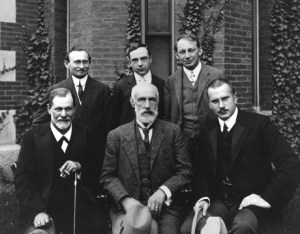
Taken in 1909: Sigmund Freud front left next to Carl Jung (on his right) with Ernest Jones in the middle of the back row.

The axis of the book is Ernest Jones’s relationship with Freud and his efforts to establish psychoanalysis as a recognised medical treatment rather than a quack, devious treatment with its emphasis on unconscious sexual motives (the Oedipus Complex) and other controversial theories such as penis envy.

The book catalogues the different psychoanalytic societies and journals that Jones founded, his insatiable appetite for writing essays on different psychoanalytic themes (he even wrote a book on figure-skating) and his tireless devotion to the cause of psychoanalysis.

While he fails as a doctor – no London hospital will take him on after his record is blackened – but he ultimately thrives as a psychoanalyst, liasing with all the great psychoanalytic minds (apart from Freud) as well as the famous Bloomsbury Group, a collection of English writers, some of whom helped translate Freud’s ideas into English.

The book also chronicles Jones very important role in keeping the American psychoanalytic movement onside when it threatened to split from the Freudians – Americans believed only medical doctors should be allowed to practice psychoanalysis while British and European psychoanalytic societies believed non-medically trained people could become practitioners provided they were properly trained and underwent psychoanalysis themselves.

The passion of Ernest Jones in this endeavour and others is probably one of the key reasons why so many Americans (especially in places like New York ) undergo psychoanalysis today.

And consider this, without Ernst Jones there might never have been neurotic, anxiety-written comics like Woody Allen and his many jokes and references to psychoanalysis.

As Allen’s character Alvy Singer remarks in “Annie Hall”:

“I was depressed…I would have killed myself but I was in analysis with a strict Freudian and if you kill yourself … they make you pay for the sessions you miss.”

Ernest Jones, who considered himself something of an honorary jew given his close friendship with Freud and other Jewish pyschoanalysts (cemented by his marriage to Kitty Jokl, a jewess) and fond of using yiddish words, would no doubt have found this joke amusing.

Ironically, it was Ernest Jones’s non-Jewishness which helped give Freud’s theories legitimacy in an age when anti-semitism was rife.

My eight months without cinema: recollections and reflections of movie-going

Cinema watchingSo this weekend past I went to the cinema for the first time in eight months.

The last time I went to the movies was on Sunday, April 15. My wife was heavily pregnant at the time and about five days past her due date.

We went to the Nova on Lygon Street in Carlton and saw an exceptionally good French movie called “Le Havre” about an African refugee who is taken in by an old shoe-shine man, who helps him escape across the English channel.

In the cinema my wife started having light labour pains and a couple of days later – in the early hours of a Wednesday morning – Edith (Edie) was born.

She turned eight months old on Tuesday.

Fittingly, I broke my cinematic drought with another movie at the Nova.

11110702_logoI went to see “The Master” starring Joaquin Phoenix and Philip Seymour Hoffman, set just after the second world war and about a ex-navy man drifter called Freddy Quell (Phoenix) who falls under the spell of the charismatic Lancaster Dodd (Hoffman), an incarnation of Church of Scientology founder L Ron Hubbard. The film, directed by the much revered PT Anderson (Magnolia, Boogie Nights) is intense and interesting, brilliantly acted, but kind of leaves you wondering what the point was in the end. If you liked PT Anderson’s other agonising effort “There Will Be Blood” starring Daniel Day-Lewis as a brutal turn-of-the-century oil prospector, you will love “The Master”.

Still, it was something of an experience undertaking the ritual of going to the movies for the first time in so long.

Coke and popcorn purchased, I wandered into the cinema and found a seat. It was a small cinema – for some reason I had been given one of the double “love seats – and I stretched out, munching on my popcorn and sucking the fizzy ‘solo’ through a straw.

The cinema darkened, and just before the film began, a couple walked in and the guy next to me began tapping away on his iPhone.  Clearly he was ignoring the message that had just flashed on the screen: “Please turn off your phone?”

I whispered in his ear: “Can you turn your phone off?”
His reply: “It’s on silent.”

No shit, douche bag!

“Can you turn it off? The screen is bothering me.”
“OK, OK,” he muttered, as he slid the phone into his pocket.

Of course  I spent the first 10 minutes of the movie, wondering when next he was going to pull it out again and start tapping away. Thankfully, he never did, though I got the feeling he resented the crunchy sound I made as I munched my way through my jumbo-sized popcorn.

I kept munching anyway.

And half way through the movie, I stopped watching and looked around at all the people staring up, mesmerised by the screen. Have you ever done that? It’s like watching people who have been hypnotised.

Since then, I’ve been reflecting on childhood memories of movie going.

One of my first memories of the cinema, was going to see ‘The Wizard of Oz’. I remember it was somewhere in town (Johannesburg) and must have been the late 1970s – I would have been six or so.

It terrified me. I have memories of the strawman being set on fire (this I’ve checked does happen in the movie) and the tin man being stuck inside a giant sandwich-maker – but maybe I imagined that bit, because I can’t find any reference to it – I’ll have to watch the film again.

My best friend growing up was Jonathan. We were friends since babies and lived on the same street in Germiston – a city about 20 minutes from Johannesburg and site of the world’s biggest gold refinery (and not much else).

The 20th Century Cinema in Germiston

The 20th Century Cinema in Germiston

After synagogue on a Saturday, we used to walk into town and like good jewish boys, go to the movies. It was a large imposing building on Main Street, now I believe knocked down, called the 20th Century Cinema, with an art-deco sign and built in 1939. It had an old-fashioned ticket booth at the entrance and an imposing, cavernous lobby. The cinema could hold over 1,400 people (though it was never full when we went) with an upstairs section and a space for an orchestra to play in the pit in front of the screen. There was always a Bugs Bunny cartoon before the film started.

They don’t make cinemas like that anymore – at least not in the Western world.

The art deco Eros in Mumbai

The art deco Eros in Mumbai

In India we saw a movie in an enormous art-deco cinema called the Eros in Mumbai, where people got up to dance alongside the characters on screen, mobile phones rang, the ticket cost a few dollars and popcorn about 50 cents. Ironically it was a musical about Indians who move to Melbourne and then find themselves being racially abused along with songs and dancing and bad Australian accents.

But back to Germiston and the 20th Century cinema. I recall the great excitement Jonathan and I experienced going to see our first movie on our own.

It was ‘Indiana Jones and the Temple of Doom’, which came out in 1984 when we would have been 11.Temple-of-Doom1

I distinctly remember being terrified at the scenes where the evil sorcerer tears out the heart of his victims amidst the chanting and the lava, and of course the banquet with its monkey brain soup and enormous snake, which is cut open and all the baby snakes slither out.

What I also remember through the haze of time was the Ster Kinekor movie club, where you joined, got a special card and paid only one rand a movie. That would have been about 50 Australian cents in those days.

One rand for a movie. One large silver coin for two hours of escape, excitement and adventure.

My other distinct movie-going memory is heading into town (the centre of Jo’burg) when we were teenagers with Jonathan’s mom and some other friends and going to the cinema, while she went to work. It was very quiet (must have been the school holidays) and we’d buy one movie ticket and as the cinemas were all upstairs, we’d watch one movie and then sneak into another cinema and watch another movie for free and sometimes one more.  We thought we were pretty rebellious!

Apart from those early memories, I confess (with much embarrassment) that I recall crying bitterly in my seat when I went to watch E.T. at the Bedfordview Nu-Metro in 1982. I would have been nine years-old. I think it was when they had found E.T. and had him in the quarantined zone and everyone was walking around in plastic suits.

So what did it cost me to go the cinema this weekend?

One admission to The Master at Cinema Nova, Lygon Street: $18
Coke and popcorn combo: $10.50
Parking: $6.60
Hamburger at Gr’lled for dinner: $12
One Corona: $7

Total cost (excluding petrol, toll road): $54.10

Or around 481 Rand at current exchange rate – that would have bought a lot of movies back when I was a kid!

The junkie in literature: A review of “Confessions of an English Opium-Eater” by Thomas De Quincey

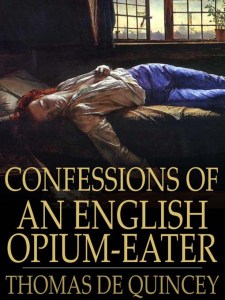
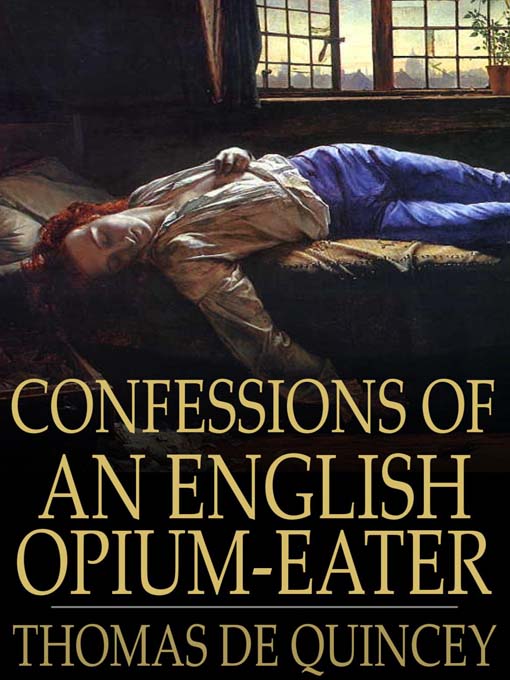
confessons of an english opium eaterConfessions of an English Opium-Eater” written by Thomas De Quincey in 1821 is the third book I have read as part of my mini-project examining the portrayal of the junky in literature.

The first book I read was “Monkey Grip” by Australian writer Helen Garner, about a single mother in love with a heroin junkie and writer/artist set in Melbourne in the 1970s.

The second was “Junky” by William S. Burroughs, an autobiographical tale of his life as a heroin addict in New York, New Orleans and Mexico City in the 1940s.

“Confessions of an English Opium Eater” takes place in London, Manchester and the remote English countryside of the early 19th century.

It’s a remarkable novella – only about a 100 pages in length – not the least because it gives a glimpse into the life of a drug addict nearly 200 years ago in a very prudish age, at a time when the idea of an English gentlemen meant that you never speak of such abhorrent things.

The book is not just an investigation and illustration of opium use and its effects on the mind and body, but also social commentary on what it means to be a bright, sensitive outsider in an English society of order, privilege and class.

In fact a lot of the book is not about opium at all, but about the events leading up to De Quincey’s addiction including a period of eight years when he took opium in controlled amounts and which enriches his experience of the world:

“Here was the secret of happiness, about which philosophers had disputed; happiness might now be bought for a penny, and carried in the waistcoat pocket; portable ecstasies might be had corked up in a pint bottle and piece of mind could be sent down in gallons by the mail coach.”

The book also serves as a 19th century guide about what opium is, what it does to you and also to dispel some of the myths and there is the familiar warning that comes with all tales of addiction.

Apart from affirming that opium is a “dusky brown in colour”, De Quincey says:

“If you eat a good deal of it, most probably you must do what is particularly disagreeable to any man of regular habits, viz., die.”

Throughout the book, De Quincey comes across as a man both ahead of his time and out-of-place.

Ahead of his time, because he is willing to take the reader on his journey into opium addiction and out-of-place, because though an intelligent, educated man, with a seemingly bright future, he shuns his place in society and chooses to tramp around England and Wales. He is as comfortable speaking in Greek as he is in the company of a prostitute.

De Quincey is sometimes an infuriating storyteller – he constantly apologises for what is about to tell and frequently tells the reader that he must spare the full details of his pain and suffering because it would not be proper (one must constantly bear in mind the epoch the book was written in).

As for the true pain of opium, you have to wait until you’re about three-quarters of the way through the book to reach the part where a stomach ailment forces him into “eating” high dosages of opium.

At first though his opium use is controlled giving him a sense of “halcyon calm, a tranquility that seemed no product of inertia”.

He later remarks:

“I ought to be ill, I never was better in my life than in the spring of 1812; and I hope sincerely that the quantity of claret, port…which in all probability you, good reader, have taken…may as little disorder your health as mine was disorded by the opium I had taken for eight years between 1804 and 1812.”

But then in a state of “unutterable irritation of the stomach” he becomes a heavy and daily user of opium, when it starts having a “palsying (paralysing) effect” on his intellectual faculties.

This the most fascinating part of the book, because De Quincey experiences an unusual form of suffering though his dreams and nightmares, which take on a surreal and bizarre quality that would not be out-of-place in painting by Salvador Dali.

This is where does his best writing, describing his dreams with their strange juxtapositions:

“I wa buried for a thousand years in stone coffins, with mummies and sphinxes, in narrow chambers at the hear of eternal pyramids. I was kissed by crocodiles; and laid, confounded with all unutterable slimy things, amongst reeds and Nilotic mud.”

His “oriental dreams” (the oriental man is one feared at the time for his strangeness) are “monstrous” and fill him with “hatred and abomination” with the main agents being “ugly birds, or snakes or crocodiles”.

The crocodile is a recurring image in his dreams:

“The cursed crocodile became to me the object of more horror than almost all the rest. I was compelled to live with him for centuries.”

The dream imagery is astonishing given we are a hundred years before Freud’s theories about dreams and the unconscious, and no doubt Freud would have enjoyed analysing De Quincey’s dreams and his state of mind.

The horror and terror of nightly visions culminates in his declaration:

And I awoke in struggles, and cried aloud – “I will sleep no more.”

As with the moment in “Junky” when William S. Burroughs looks in the mirror and realises he is hooked on heroin, De Quincey reaches a point where he cannot give up, though he wishes to and knows that the drug will kill him.

Somehow he devises a way to succeed – he comes up with a method of reducing his usage of opium (the dosages are recorded in the appendix) though he also suffers relapses.

Outside of the book, I read that De Quincey, having overcome his addictions, got married and fathering eight children, though only three daughters survived him.

He is remembered principally for this book, but also as an essayist and social commentator.

“Confessions of an English Opium Eater” beautifully and horribly conveys the journey into addiction and suffering at a time when such things were not discussed in a very prudish, conservative age.

But many modern-day junkies I suspect would wholly identify with his nightmares and sufferings.

A review of “The Finkler Question” or how I contemplated a return to the synagogue

I cannot recall a book I have read that has moved me more to contemplate a return visit to the synagogue (I have not been back for many years), but I have an urge to do just that after reading “The Finkler Question”.

And not for religious reasons, though that may sound odd. But for nostalgia’s sake, to hear the old tunes and sing along.

“The Finkler Question” is a tragic-comedic novel written by English writer Howard Jacobson that won the prestigious Booker Prize in 2010.

“Finkler” refers to one of the characters – a popular jewish philosopher, writer and television personality called Sam Finkler – and also is the word used by Julian Treslove, the main protaganist of the novel, to describe all jews – he calls them “finklers”.

Julian Treslove, 49, is educated, intelligent and middle class, living in the part of Hampstead (a wealthy, predominantly Jewish suburb of North London) “that is not in Hampstead” – an often-repeated joke in the novel.

He regards himself, with a degree of complacency, as a failure of a man, as someone who never achieved much. He has two sons by different women, who left him before they gave birth (all women leave Treslove once they get to know him) and he has played no part in raising his children, and even dislikes them.

Once a radio producer of late-night music shows no one listened to on the BBC, he now earns his living impersonating celebrities like Brad Pitt, not because he looks so much like them, but because he does bear some passing resemblance to a lot of famous people, though no one in particular. An older American women who picks him up at a party, confuses him for Colin Firth.

The other principle character is Libor Sevcik, an 80-year-old Czech-born jew, former biographer of Hollywood stars who managed to resist the charms of Marilyn Monroe (she would ring him at odd hours because she could never figure out timezones), Jane Russell and other glamourous icons who confided and tempted him, and yet he remained faithful to his beloved, but very needy wife Malkie.

Both Sam Finkler and  Libor Sevcik are recently widowed. Finkler misses his wife Tyler, though not desperately (he regards having an affairs as an acceptable male compulsion) while Libor is deeply sad at the loss of his wife and companion.

The friendship between the three men is the central plot of the novel  as indeed is the notion of friendship, loss, guilt and loyalty.

But, at it’s heart ‘The Finkler Question’ is about Julian Treslove’s obssession with all things Jewish and his desire to penetrate, understand and become accepted into the mysterious but always scrutinised Jewish race.

He suffers the ignomy of being mugged by a woman in central London who he believes utters the words: ‘You Ju?” and comes to the conclusion that she mistook him for a jew or for his friend Finkler. But he can’t be sure.

The book really is about the “jewish question”. There are a number of anti-semitic incidents, which bring the idea of Jewish identity into sharp focus.

Jacobsen through his characters, is questioning what it means to be a jew in the modern age and all those things that bind one jew to another – the “jew-dar” as Treslove asks of his Jewish girlfriend Hephzibah.

And there’s all the other contemporary Jewish themes – Zionism, family, tradition and history explored in the stories of the three men.

And there is the food of course, which brings them all together, whether it’s the seder meal or the lunch prepared by Hephzhibah:

“‘What’s good,’ said Finkler “is this…” He reached for more of everything. Herring in red wine. Herring in white wine, herring in cream, sour cream, vinegar, herring curled around an olive with toothpics through them, herring chopped in what was said to be a new way and of course chopped still in the old…and then the pickled meat, the pastrami, the smoked salmon, the egg and onion, the chopped liver, the cheese that had no taste, the blintses, the tsimmes, the cholent.”

Treslove wants to be a part of this community.  But always feels excluded. No matter how many words of yiddish he learns.

He is forever the non-Jewish outsider – the goy, the gentile – trying to get in, marvelling at it all, such as when he falls in love with Libor’s grand-niece Hephzibabh:

“He thought his heart would break with love for her. She was so Jewish…For his part he was ready to jump right in. Then and There. Marry me. I’ll do whatever has to be done. I’ll study. I’ll be circumcised. Just marry me and make Finkler jokes.”

Alongside the humour, there’s the anxiety, the worry, and the guilt all beautfiully written by Howard Jacobsen in his wonderful prose.

And it is all these elements that make me think about being a jew, though I don’t keep kosher or go to synagogue or even fast on Yom Kippur, I feel part of the community, like all Finklers.

The Finkler Question poses so many questions, it is about the mystery of being a jew and it’s that mystery that makes people want to be jews and to be rid of them in equal measure.

If there is one telling paragraph that sums up the book and what Jacobsen is trying to convey it’s this, as pondered by Julian Treslove:

“You could divide the world into those who wanted to kill Jews and those who wanted to be Jews. The bad times were simply those in which the former outnumbered the latter.”

And sometimes, you want to feel connected again by singing the Shabbat songs in synagogue on a Saturday morning, or attend the Passover seder and swap stories of the exodus from Egypt and ask the Four Questions – whether you believe in God or not.

The junkie in literature: a review of William S. Burrough’s “Junkie”

“Junkie” by influential Beat Generation writer William S. Burroughs is the second book I’ve read as part of a mini-project of mine to examine the place of the heroin junky in literature.

The first book I read was “Monkey Grip by Australian author Helen Garner about a single mother’s tortuous relationship with a junkie set in Melbourne in the 1970s. You can read my review of this novel here.

Whereas “Monkey Grip” is very much from the point of view of someone observing a junky’s addiction to heroin, “Junkie” throws you right into what it is like to be an addict and the world that exists around them.

Burroughs presents an incredibly honest account of his life as a junky revealed in a concise, perfectly-worded tale.

After a brief introduction about himself (where we learn that he had a good, healthy upbringing in a “large mid West town”) we find Burroughs dismissed from the army as unfit and living in New York City in the 1940s, addicted to junk and peddling it as well.

Burroughs has a nack of describing the essence of an experience. For example when talking of New York junky and pusher Bill Gains “whose veins had mostly gone, retreated back to the bone to escape the needle”, he writes:

“For a while he used arteries, which are deeper than veins and harder to hit and for this procedure he bought special long needles…he had to shoot in the skin about half the time. But he only gave up and ‘skinned’ a shot after an agonizing half hour of probing and poking and cleaning out the needle, which would clot up with blood”

In New York, Burroughs mingles with peddlars, low-lifes and average joes (waiters and bar tenders) that are hooked on heroin. Burroughs becomes a “lush worker” with his junkie pal Roy. They ride the subway train and look for drunks that have passed out and steal their wallets.

It’s all told in this sparse, lay-it-down-straight style that hides nothing.

Burroughs has an exceptional ability to convey the sense a character in just a few simple sentences:

“Lonny was pure pimp. He was skinny and nervous. He couldn’t sit still and he couldn’ shut up. As he talked he moved his thin hands, which were covered on the backs with long, greasy, black hairs.

“Gains had a malicious, childlike smile that formed a shocking contrast to his eyes, which were pale blue, lifeless and old.”

And not just when it comes to junkies. While in a hospital getting “the cure’, he writes of one patient:

“There was a thin, pale, little man with bloodless, almost transparent, flesh. He looked like a cold and enfeebled lizard…he did not have the concentration of energy necessary to hold himself together and his organism was always on the point of disintegrating into its component parts.”

According to Burroughs, contrary to what people might believe, developing a habit takes time. You don’t get hooked on the first or second shot. It can take months, but one day you wake up, look up in the mirror, and something has changed about you.

Once you get hooked, even if you manage to get off, heroin is always a part of you, because it caused “permanent cellular alteration”.

The story transfers to the seedy backstreets of New Orleans, where Burroughs is busted. He is locked in a cell, while the cops try to get him to rat on his suppliers, and the junk sickness kicks-in.

Throughout the book, Junk sickness is described in a way that you understand it’s malevolence:

“Doolie sick was an unnerving sight. The envelope of personality was gone, dissolved by his junk-hungry cells. Viscera and cells, galvanised into a loathsome, insect-like activity, seemed on the point of breaking through the surface. His face was blurred and unrecognisable, at the same time shrunken and tumescent.

Writing of his own junk sickness, the awfulness of it can be imagined:

“In my case, the worst thing is lowering of blood pressure with consequent loss of body liquid, and extreme weakness, as in shock. It is a feeling as if the life energy has been shut off so that all the cells in the body are suffocating. As I lay there on the bench I felt like I was subsiding into a pile of bones.”

Burroughs also reveals other aspects of the junky life from the “croakers” – the doctors who write  fake prescriptions to “taking the cure” – going into rehab, and the medicine you get and what works and what does not.

And he manages to incorporate social commentary (his contention that marijuana is a not an addictive drug) and political observations of the time (Louisana passing a law making it illegal to be  drug addict), while describing his own hellish plight.

It’s a book about his adventures as a junky, the pimps, low-lifes, artists, con-artists, cops and doctors he meets on his travels.

In the end it’s also a warning against heroin addiction:

“Junk takes everything and gives nothing but insurance against junk sickness. Everyone now and then I took a good look at the deal I was giving myself and decided to take the cure.”

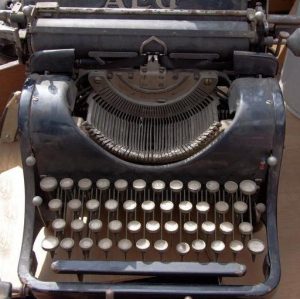
William S Burroughs at his typewriter, circa 1960.

The back of the book contains a glossary of terms, which is worth reading to pick up the lingo while my edition included an introduction by Allen Ginsberg, fellow Beat poet and Burroughs admirer who was instrumental in getting the controversial book published in 1953.

Truly a book ahead of its time.

The junkie in literature: a reading list starting with ‘Monkey Grip’ by Helen Garner

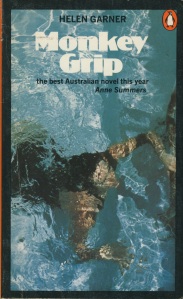
monkey-gripFor whatever reason people do things, I’ve become hooked (pardon the pun) on the idea of reading a wide range of books about heroin addicts and their place in literature.

The heroin junky seems an enigmatic and romanticised character, living by their wits on the edges of society and always in the grip of their addiction.

There is a fascination with them in literature, at odds, in a way, with how one sees the junky in the real world – usually the beggar in unwashed rags sleeping in an alleyway.

The junky in fictionalised accounts is often the artist, or the poet, or at the very least someone who has lived an interesting life.

My interest in this subject was sparked after reading “Monkey Grip”, a celebrated Australian novel by Helen Garner.

Monkey Grip tells the story of Nora, a single-mum living in Melbourne in the mid-1970s who falls in love with a blue-eyed junkie called Javo. The title of the book refers to their relationship, which despite Nora’s attempts to pull away is as tight as a monkey grip.

(A REVIEW OF MONKEY GRIP IS AT THE END OF THIS POST)

I’ve compiled a reading list with the aim of writing an essay of sorts on the topic of “The Junky’s place in literature”.

Currently I am reading “Junky” by William S. Burroughs (1953), an autobiographical account of the writer’s life as an addict in the 1930 and 1940, which begins with Burroughs as user, pusher and petty thief in New York.

The other books on my list are:

“Confessions of an English Opium Eater” by Thomas De Quincey (1821)

“Candy” by Luke Davis (1997)

“In My Skin” by Kate Holden (2005)

Trainspotting by Irvine Welsh (1993)

If any fellow bloggers or bookworms out there can recommend any other books that are about drug addiction or where one of the principal characters is a junkie, please drop me a line with the title and author – freshlyworded@gmail.com

Monkey Grip by Helen Garner

Set in the inner city suburbs of Melbourne in the mid-1970s, Monkey Grip tells the story of single-mum Nora’s relationship with heroin addict and writer/actor Javo set against the back drop of house-sharing, addiction, loose parenting and easy sex.

Nora does not appear to have a job (Wikipedia says she does but not the novel I read) but lives a comfortable existence punctuated by bike rides to visit friends in other share houses, lots drinking and dope (marijuana) smoking, road trips, days spend lounging at the public swimming baths with her friends, afternoon naps, cups of tea in suburban kitchens, sitting on verandahs and musing, the retelling of dreams, and helping her friends through their different relationship and personal crises.

Critics of the novel have said it reads like the author’s personal diary entries and I can see what they’re getting at (Garner lived in Melbourne during this period of time and was most famously sacked as a teacher in 1972 for teaching sex education to her class of 13-year-olds, something that Nora would undoubtedly be comfortable doing).

Written as a first person narrative, Nora’s thoughts could be mistaken as those from her private  diary, as she tells of her daily comings and goings, what her friends might think of her relationships, describes dreams in vivid details and writes of Javo’s unannounced, but expected arrivals at her door at all hours of the day and night in various states of stoned-ness:

“Javo the monster. I don’t know him when he’s like this. I wish he would go away. He barely gives me the time of day. He blunders into my room at night, drops his great boots from waist height and crawls into bed beside me. This is not Javo. I know he doesn’t care and somehow neither do I. But I want him back, the way we used to be, when we loved each other with open hearts.”

Nora portrays Javo as charming and gentle and at other times, when the drugs have their grip on him as an uncaring, selfish bastard.

But this book is not so much about the nature of drug addiction but about what is like to be in love with a junkie.

Nora is both Javo’s lover as much as his anxious mother – nursing him when he suffers the sickness of withdrawal, allowing him to have his dole money paid into her bank account and worrying about where he may be and if he is safe. At the same time she is jealous and hurt when he confesses to sleeping with another woman.

At his worst he steals money, never keeps appointments and tells her about his relationship with other women. He is frequently unwashed, his skin breaking out into sores and scabs, his hair dishevelled – and yet she can never break free.

She constantly accuses him of being selfish, of only caring about his own needs and not noticing and caring about hers.

She says to him after he slips into his bed one night “very, very stoned”:

“When you came in here tonight I was right off my brick with the kids, and you didn’t even notice. You didn’t give a shit about what I have to do in my life.”

But she forgives him time and time again, pulled in by his piercing blue eyes, his charm and some sense of his kindness and generosity beneath the layers of his addiction.

But Nora is by no means an innocent. Despite having a young child (Gracie), she finds time to do a lot of drugs her self (weed), sleep through many afternoons, disappear to parties and on road trips (depositing Gracie with her friends) and invite men into her bed.

She is for ever questioning and undergoing a great deal of angst about her relationship to Javo.

Monkey Grip is considered a classic of Australian fiction. Indeed the front cover of the old copy I picked up at Basement Books in the city calls it “the best Australian novel of the year” for 1978.

But I have to say that I found the tale dragging at times and Nora annoying and not the most likeable of characters (a carefree, careless single mother who puts her own needs before those of her daughter).

She constantly agonises over Javo, resorting at numerous times to asking the ‘I Ching’ for relationship advise. The I Ching gives her sage advise, but she ignores it. The addiction to Javo is as strong as his to heroin.

Definitely worth reading. But in my opinion, Garner’s best works are her non-fiction books – Joe Cinque’s Consolation and the First Stone, which I highly recommend.

Charles Bukowski and the real Hollywood

In 1986, the writer Charles Bukowski, chronicler of American low-life, drunks, bums, dead-beats, post office workers and Los Angeles was asked to write a screenplay about himself.

Bukowski, by then in his late sixties and with a degree of success and fame, and having reached a sort of peace with the world and his drinking (red wine instead of hard liquor) was at first reluctant but ultimately agreed.

Bukowski dashed off the screenplay on his typewriter, in the upstairs room of his East Hollywood home, and this became the movie ‘Barfly’ starring Mickey Rourke and Faye Dunaway, directed by Iranian-born director Barbet Schroeder.

The film is about a drunk – Henry “Hank” Chinaski, Bukowski’s alter ego and narrator of all of his novels – who spends most of his time drinking in dingy bars and hotels, getting into fights and into a mad, crazy relationship with ‘Wanda” – an earlier love of Bukowski, who inspired some of his best poems and who drank herself to death.

The movie was a minor arthouse hit and got a few Golden Globe nominations and mixed reviews. It’s worth watching though and there’s even a brief cameo of Bukowski himself, who died in 1993, aged 73 (an impressive achievement given his love of the bottle).

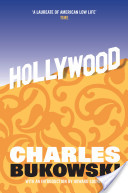
After the film came out, Bukowski wrote what would be his final novel “Hollywood” which chronicles his experiences of writing the ‘Barfly’ screenplay and mingling with a long list of Hollywood stars including Mickey Rourke, Faye Dunaway, Sean Penn, Dennis Hopper, Isabella Rosellini, directors Francis Ford Coppola, Jean-Luc Goddard and David Lynch and a host of producers.

In the novel some of the actors are thinly disguised (Francis Ford Coppola is Francis Ford Lopalla) while others have entirely different names – Mickey Rourke is Jack Bledsoe, whose “beautiful smile” Bukowski mentions often.

Bukowski is Hank Chinaski, as always.

And it’s a brilliant, hilarious chronicle of the process by which the screenplay turned into a Hollywood movie, with all the twist and turns, threats, parties, meetings and booze-ups.

It’s also biting indictment of the way Hollywood operated back then, and probably still does today, with the enormous egos of the stars and players and their demands – Rourke demands a special type of Rolls Royce convertible be made available for him and then, later on, proceeds to stand on the bonnet with his friends for a photo shoot, causing thousands of dollars of damage.

The movie follows Chinaski as he traverses Los Angeles from his home in East Hollywood, accompanied by  his endearing wife Sarah, to meetings at  the homes of Hollywood stars and directors, studios, bars and hotels transformed into film sets and the race track.

Of his love/hate relationship with horse-racing he writes:

“My day out there was pleasant enough but as always I resented that 30 minute wait between races. It was too long. You can feel your life being pounded to a pulp by the useless waste of time.

“Each of the jerk-offs thinks he knows more than the other jerk-offs and there they were all together in one place. And there I was, sitting with them.”

And the description of his attitude to the races is almost exactly how he feels about Hollywood and its actors and the world they inhabit- plenty of waiting around and plenty of jerk-offs.

In the course of making Barfly, there is endless waiting around (or waiting for the phone to ring) as decisions are made, then unmade. The movie’s backers agree to fund the film. Then change their mind. Then they agree again. Then no one gets paid. Then they get paid, but the cheques bounce.

In one hilarious scene, the director, Jon Pinchot (Barbet Schroeder) takes a chainsaw to the offices of Firepower (Cannon Group), asks where he can plug it in and threatens to cut off body parts unless they agree to release the film so that someone else can make it.

This is how Bukowski describes it:

“Where’s your plug?” Jon asked

“Plug?”

“For this…” Jon pulled the towel away revealing the Black and Decker.

“Please, Mr Pinchot…”

“Where’s the plug? Never mind, I see it…”

Jon walked over and plugged the Black and Decker into the wall.

Later as the secretary enters with coffee…Pinchot presses the button on the chainsaw.

“The blade sprung into action and began to hum.”

Apparently everything in the book is accurate and no one featured in it has ever claimed Bukowski made any of it up.

During the course of making the film, Hank (Bukowski) visits Pinchot and his friend/partner Francois (endlessly playing roulette) who have decided to live in a dangerous part of LA, populated by gangsters. There are always hands coming through the fence grabbing at things, there are bullet holes through the front door one day and later Pinchot is forced to buy back the tyres stolen from his car – and pay extra to ensure they’re not stolen again.

“Can you sleep at night,” Hank asks Pinchot.

“We have to drink to sleep. And then you can never be sure.”

In another episode, Jon tells Hank that Francine (Faye Dunaway) wants him to write a scene so she can show off her legs.

“She has great legs you know,” Jon says.

“Alright. I’ll right in a leg scene,” replies Hank.

The entire book, all his books in fact, are written in his deadpan, matter-of-fact style, straight-talking but with a certain kind of poetry. Its simplicity is hard to replicate.

In between all this there is drinking. Lots of drinking. Bukowski and Sarah are constantly seeking out a bottle of wine, drinking and refilling their glasses. They drink on set, before takes, at parties, at the cinema, in the limo on the way to premier, on the way home. At home.

And then there are the acutely brilliant observations about the Hollywood system.

At a party full of actors and Hollywood bigshots which Hank attends in the company of Victor Norman (the writer Norman Mailer), he remarks after the flashbulbs go off at Francine’s arrival:

“God I thought. What about the writer? The writer was the blood and bones and brains of these creatures…and where was the writer? Who ever photographed the writer? Who applauded?”

Then he gains some perspective.

“But just as well and damn sure just as well: the writer was where he belonged. In some dark corner watching.”

Later, when the film is finished he remarks of actors that they were “different then we were”.

“You know when you spend many hours, many years pretending to be a person who you aren’t, well that can do something to you.”

But he also realises the movie-making is a “deliberate jack-off, a salary for this and a salary for that”.

“And there’s only one man allowed to put a plug in the wall, and the sound man was pissed off at the assistant director and then the actors weren’t feeling good…

“It was all waste, waste, waste…”

But the book is certainly not a waste. It’s a brilliant send up and spotlight on Hollywood, written by the “laureate of American low life” in his unique pared-down , dry style.

It’s very, very funny and moving and touching.

Go see Barfly and then read “Hollywood” by Bukowski.

Satisfaction guaranteed.

(Here’s a short extract from the movie Barfly)

(Here’s a video of Bukowski reading one of his poems in the late 1970s)

Better, faster: Has the modern age spoiled the romance of travel?

Have you ever pondered what it must have been like travelling across the world more than a century ago?

 When there were no aeroplanes, let alone long-distance flights or high-speed trains or even the ability to experience a faraway place through cinema, television or Google Streetview?

Take for instance a trip from London to Mandalay, Burma.

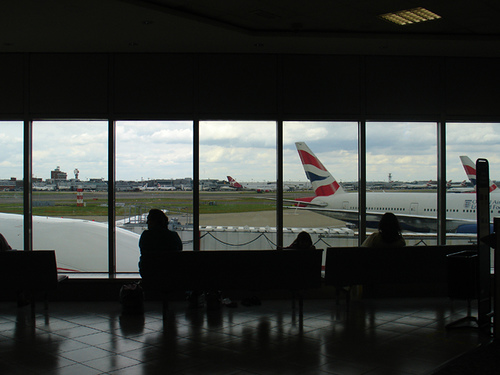
If you lived in Central London you’d take a cab, or catch the tube or take the Heathrow express to the airport.  Maybe it would take you 40 minutes. You’d check in, spend an hour or two perusing duty free, stocking up on magazines, flight remedies and sweets and then you’d be off.

Your Thai Airways flight departs just after midday on a Wednesday. After a stopover in Bangkok, where you have time for an overpriced green curry and a Chang beer, you board the plane again and touch down in Rangoon (Yangon) on Thursday around 9am.

 Its 700 kilometres north on the expressway to Mandalay.

You feel brave and a bit adventurous so you hire a car. En route you stop to visit an ancient pagoda and to take in the Shan hills in the distance. You arrive at your hotel in Mandalay just before 7pm.

It’s taken you a little more than a day and half to travel 11,000kms. You kick off your shoes, order a meal from room service, jet lag sets in and you drift off to sleep dreaming of pagodas, the London tube and football.

Rewind 126 years.

 It’s 1886.

A London piano tuner named Edgar Drake sets out from London to a remote town in the Shan Hills of Eastern Burma to repair a piano belonging to surgeon-major and rogue British officer Anthony Carroll.

 The British empire is fighting for control of Burma.

Drake’s journey from London to the wilds of Burma begins on the 26 November.

A horse-drawn carriage picks him up in the early hours of the morning from his elegant terraced home in Fitzroy Square, Central London, a home he shares with his dutiful wife Katherine, not far from Regents Park.

The carriage drives him east to Royal Albert Dock (now London’s Docklands) on the Thames, a journey of about 11 kilometres.

Here he boards a waiting steam ship, belching smoke from its stack, which sets off up the Thames at about 17 knots (30 km/hr).

It travels all the way along the Thames until it reaches the Thames Estuary – a journey of about 60kms with Essex to the North and Kent to the South and then enters the cold North Sea.

It heads south through the English Channel and arrives in Calais, France a few hours later.

From here Drake takes a train 292 kilometres south to Paris, but he has no time to stroll the famous boulevards of the French capital as he boards another train for a 770 kilometre journey further south to the port city of Marseille on the Mediterranean coast of France.

It’s 1886 so the train travels around 100 km/hr at top speed reaching Marseille eight hours later.

In Marseille he boards another ship and heads across the Mediterranean telling Katherine in a letter: “How I wish you could see the beauty of these waters! They are a blue like none that I have seen before.”

The ship passes through the Strait of Bonifacio, which runs between the islands of Sardinia and Corsica, where Drake gets his first view of the Italian coastline. He passes Palermo and then Malta and arrives in Alexandria, Egypt five days after he left London. A blind Arab man called “the man with one story” tells a fantastical tale of being ship-wrecked in the desert, of tribes and tents and feasts.

The ship docks for a few hours and then heads east along the Egyptian coast to Port Said, where it enters the Suez Canal and travels south to the Red Sea

 Edgar Drake’s ship passes what is now the western shore of Saudi Arabia, crosses the straits of Bab al Mandab and drops anchor at Aden, a harbour “full of steamers destined for all over the world, in whose shadows tin Arab dhows darted beneath lateen sails”.

 Two days later, he passes the island of Elephanta, where the Hindu worship an “Elephant with Many Arms” and into the teeming harbour of Bombay (now Mumbai) where vessels of every size and description bob about. A carriage takes him to the railways station and to platforms full of people, “crowds such as he has never seen in London”.

The train takes him north east into the Indian interior. He passes Nashik, Bhusawal and Jabalpur – the names growing “stranger and more melodic”

When the train stops vendors descend at “wind-beaten, lonely stations” and thrust “pungent plates of curried meats, the sour smell of lime and betel, jewellery, fans, picture postcards of castles…”

Vendors hang onto the train as leaves until prised off by a policeman’s baton.

The train passes the holy city of Varanasi and they arrive in Calcutta, in West Bengal after three days, a journey of 2,200 kilometres.

Here he boards a ship for Rangoon (Yangon), travelling along the “muddly outflow of the Ganges and into the Bay of Bengal.

 Three days later the ship gets its first sighting of Burma, via a “lighthouse perched on a tall red stone tower” which guards against the reef, a graveyard for many passing ships; they pass buoys and head up the Rangoon River.

The ship winds its way around sandbanks and sharp bends, where Edgar gets his first sighting of the gold-painted Schwedagon pagoda capping a distant hill. Rising 99 metres into the air, it is the epicentre of Rangoon.

 He is a delayed in Rangoon for four days by British military bureaucracy – he goes hunting in the jungle with officers. There is an incident. A young Burmese villager is shot by mistake.

A few days later Edgar boards a teak ship to Prome (Pyay), and travels up the Rangoon River, a journey of around 350 kilometres passing the Pegu Hills –  a range of low mountains before the dense foliage changes to “thorny trees and toddy palms”

Here he goes sightseeing to the ruins of Pagan, the ancient capital of a kingdom that had ruled Burma for years.

 Up a dusty path he walks until he gets the “finest view in all Pagan”:

 “…a vast field of pagodas that stretch away from the river to the distant mountains, floating in the dust and smoke of burning rice fields”

 “What are those mountains?” Edgar asks a soldier

 “The Shan Hills, Mr Drake. Finally we can see them.”

 The next morning they arrive in Mandalay.

Delayed for many days in Mandalay because the town of Mae Lwin – his final destination – is under attack, he writes to Katherine:

 “I spend hours looking out at the Shan hills, trying to decide how to describe them for you…I wander the markets, following the flow of ox-carts and parasols along the rutted roads, or I sit by the river watching the fishermen, waiting for the steamer for Rangoon that would bring news of my departure or bring me home.”

 And here we leave piano tuner Edgar Drake, who will eventually journey through the jungle and hinterland of Burma to an uncertain fate, travelling first by elephant and then on foot.

You see Mae Lwin, does not really exist, nor does Edgar Drake.

 Both are a creation of Daniel Mason in his novel “The Piano Tuner”.

 But the journey itself is accurate.

 It is taken Drake and any other English gentlemen of that time many weeks from closing the front door of a London terrace to waking up in the pungent air of Mandalay, where woman have painted faces, called Thanaka that runs down their cheeks.

 It has been a journey of horse-drawn coaches, steamships, trains and river boats.

 He has seen many strange and wondrous things, watched the world change in front of his eyes.

And today, we hop on a plane, watch a movie, close our eyes, order another wine if we can’t sleep and wake up in a new world with all that is  it in between the start and the finish missed out.

To experience the world, we must slow ourselves down. Choose a slower mode of transport. Allow ourselves time.

But who has time to spare these days – even if we hold the latest iphone in our hand?

The pared-down writing genius of Ernest Hemingway still makes me hungry

I just finished reading “A Moveable Feast”, Ernest Hemingway’s memoirs of living  in Paris in the 1920s as little-known writer.

The book is a recollection of his time as a struggling writer, living very basically at 74 rue du Cardinal-Lemoine and then later, above a sawmill, at 113 rue Notre Dame des Champs with his wife, Hadley, and spending his day writing in cafes, and sharing ideas with the likes of Gertrude Stein, the poet Ezra Pound, F. Scott Fitzgerald and James Joyce.

Hemingway is noted for his pared-down writing style, where there is sparing use of words – only necessary ones – to describe scenes, feelings and emotions.

Other writers to embrace this idea include George Orwell with his famous rules for writing including “Never use a long word where a short one will do.” and other more recent masters of the art, Charles Bukowski and Raymond Carver.

Writing simply and well may sound easy, but it’s deceptively difficult I imagine.

This point is highlighted by Hemingway himself when he writes in “A Moveable Feast” that sometimes he would spend an entire afternoon writing just one paragraph.

Every word must be carefully considered. Every word must have its place and purpose.

But done well there is an immediacy and potency that no other literary artist can capture.

Take, as an example, Hemingway’s description of a meal, eaten alone, in a Paris café:

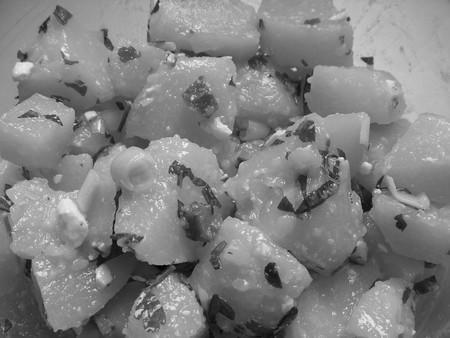
“It was a quick walk to Lipp’s and every place I passed that my stomach noticed as quickly as my eyes or my nose made the walk an added pleasure. “There were few people in the brasserie and when I sat down on the bench against the wall with the mirror in back and a table in front and the waiter asked if I wanted a beer I asked for a distingué, the big glass mug that held a litre, and for potato salad.“The beer was very cold and wonderful to drink. The pommes á l’huile were firm and marinated and the olive oil delicious.
“I ground black pepper over the potatoes and moistened the bread in the olive oil.

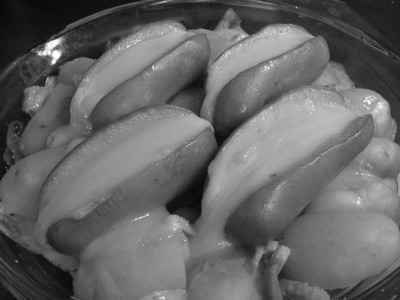
After the first heavy draft of beer I drank and ate very slowly. “When the pommes á l’huile were gone I ordered another serving and cervelas. This was a sausage like a heavy, wide frankfurter split in two and covered with a special mustard sauce.
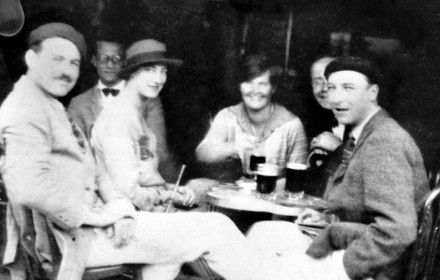
“I mopped up all the oil and all the sauce with bread and drank the beer slowly until it began to lose its coldness and then I finished it and ordered a demi and watched it drawn.It seemed colder than the distingué and I drank half of it.(Ernst Hemingway with friends in a Paris cafe in the 1920s.)