An opinionated journalist's thoughts on media, film, books, sport, politics and the occasional rant. Or as William Burroughs put it: "A writer must write"
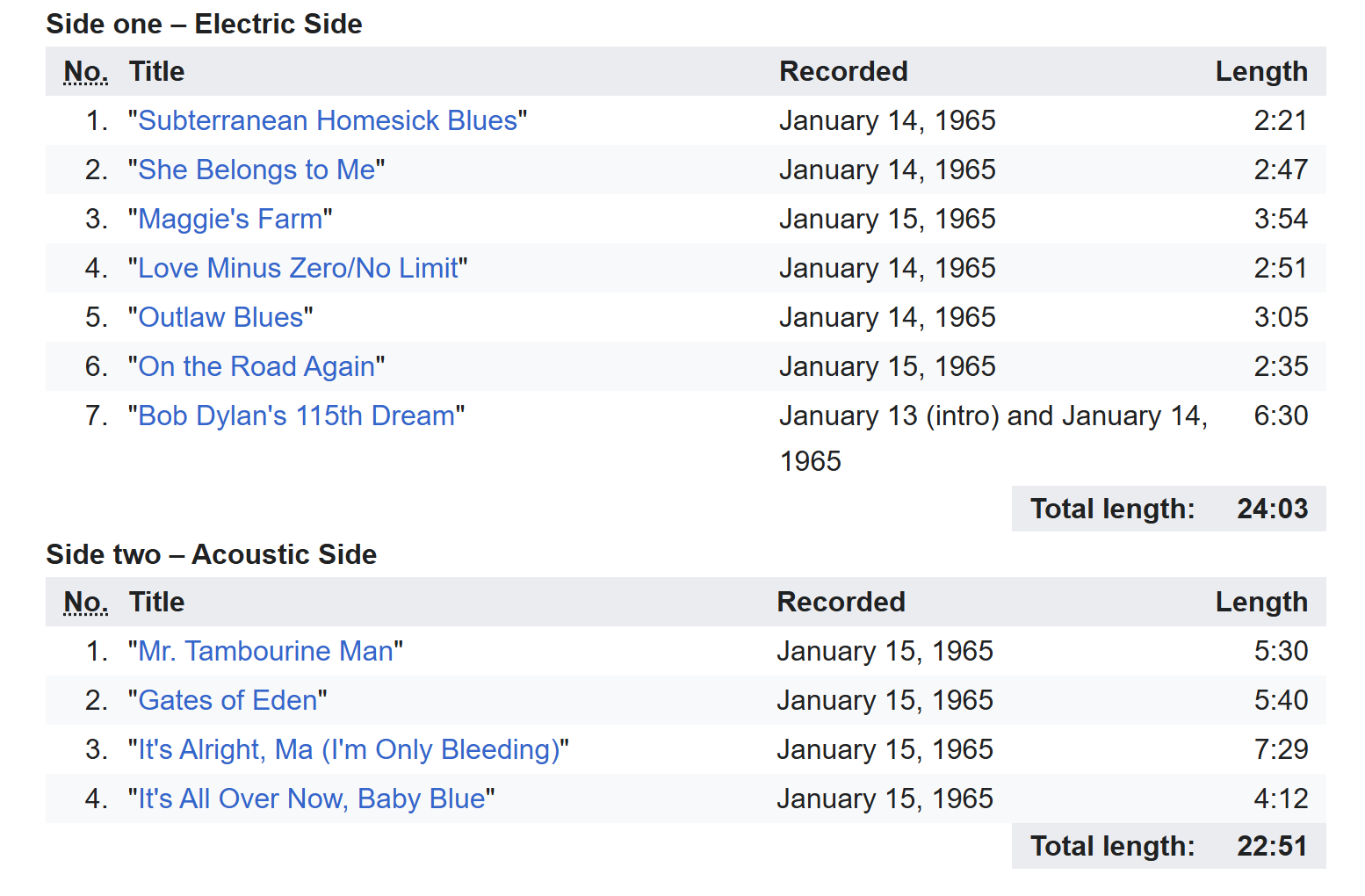
Best tracks: Subterranean Homesick Blues, Maggie’s Farm, Mr Tambourine Man, Gates of Eden, It’s Alright Ma (I’m Only Bleeding), It’s All Over Now Baby Blue, On the Road Again, Bob Dylan’s 115th Dream
If I could choose just one track: Mr Tambourine Man
Freshlyworded rating: 9/10
This album sparked a huge amount of controversy when it was released in March 1965, as it was the first time Dylan incorporated electronic instruments and a host of session musicians.
1965 was also the first time Dylan played an electric guitar at a live gig. This occurred at the Newport Folk Festival in Rhode Island in July of that year where he was both cheered and booed.
No doubt the booing was a result of Dylan being viewed as folk hero firmly embedded in the old ways of storytelling with just an acoustic guitar and his faithful harmonica.
But honestly, this confected outrage pails into insignificance when you listen to what is one of his best albums. And he was still just 24!
The album includes a number of classic Dylan tracks, most notably one of his most covered songs, ‘Mr Tambourine Man’. While The Byrds had a number one hit with their folk-rock/big band recording of the song, which is great in its own way, I prefer the Dylan version. It’s a very moving, poetic song with mesmerising lyrics and surrealist quality to it.
I mean has anyone written lyric as beautiful as this, the final stanza of the song:
And take me disappearing through the smoke rings of my mind Down the foggy ruins of time Far past the frozen leaves The haunted frightened trees Out to the windy beach Far from the twisted reach of crazy sorrow Yes, to dance beneath the diamond sky With one hand waving free Silhouetted by the sea Circled by the circus sands With all memory and fate Driven deep beneath the waves Let me forget about today until tomorrow
I think Dylan’s strained, expressive style of singing is a perfect companion for this song. Funnily enough, I was listening to a radio show recently where the hosts were discussing cover versions of classic songs that were better than the original, and one of the hosts joked: “Every cover of a Bob Dylan song.” I bristled at that as I love all his original versions of songs like ‘Blowin in the Wind’, ‘The Times They are a Changin’ as well as his version of the traditional folk ballad, ‘House of the Rising Sun’ (rather than the more famous version by The Animals).
Anyway, I would put ‘Mr Tambourine Man’ on my list of Top 10 Greatest Dylan songs any day of the week.
The album itself is full of gems. It kicks off with a famous track ‘Subterranean Homesick Blues’, a fast-paced, word-play song that’s unlike any other song he’d recorded at that time. It begins with those famous lines:
Johnny’s in the basement Mixing up the medicine I’m on the pavement Thinking about the government
And ends with one of my favourite Dylan rhymes:
The pump don’t work ’Cause the vandals took the handles
It was also one of the first songs to be promoted via a music video. It shows a very young, almost disinterested looking Dylan flipping through a series of cards featuring words from the song. In the background, you can see beat poet Allen Ginsberg in conversation with folk singer Bob Neuwirth.
The album features a great collection of Blues-style tracks including the classic “Maggie’s Farm” (the song that created all the controversy at the Newport Folk Festival) which is about worker exploitation and has lines like:
Well, he hands you a nickel He hands you a dime He asks you with a grin If you’re havin’ a good time Then he fines you every time you slam the door…
There are two great stomping, rip roaring blues tracks ‘On the Road Again’ and ‘Outlaw Blues’ and then a lengthy track titled ‘Bob Dylan’s 115th Dream’, one of his great, crazy narrative songs that as the title suggests has a very dream-like quality.
Dylan sings in the first person, a shipmate aboard the Mayflower (the ship that brought English pilgrims to America shores) captained by “Captain Arab” (a variation on Captain Ahab from Moby Dick) who gives up the hunt for the white whale when he spots land and “calls it America”. The song follows the narrator on this crazy, surreal adventure to the Bowery slums of New York, where he is “thrown in jail for carrying harpoons”, escapes a restaurant “exploding with boiling flat” and ends with Dylan back on a ship heading out of the bay where…
I saw three ships a-sailin’ they were all heading my way I asked the captain what his name was And how come he didn’t drive a truck He said his name was Columbus I just said, “Good luck”
It really entertaining song in the same vein as ‘Motorpsycho Nitemare’ featured on ‘his fourth album, ‘Another Side of Bob Dylan’.
The final three tracks are all classics. ‘Gates of Eden’ is one of those undiscovered gems I have unearthed in making my way through the albums in order. It’s a brooding and surreal song that showcases Dylan’s genius as a mystical poet. The rhythm and ebb and flow of the song combine powerfully with the lyrics, which create a sense of foreboding and gloom.
‘It’s Alright Ma (I’m only Bleeding)’ is an epic, depressing masterpiece about the corruption and materialism of society, and the many other things wrong with the world. Again, the word play turned into song is brilliantly executed with the emotional refrain of a son to his mother: “It’s alright ma”. It reminded me a fair bit of the songs of Rodriguez in the way the lyrics are almost read before the refrain (perhaps Rodriguez was influenced by this very song). It also shows Dylan’s nack for the eye-catching, though-provoking phrases such as “That he not busy being born is busy dying” and…
Although the masters make the rules For the wise men and the fools I got nothing, Ma, to live up to
The album ends with the beautiful, melancholy song “It’s all over now, Baby Blue”, a song about the inevitability of having to move on. It’s filled with so many great lines. Not surprisingly, it’s been covered by many other artists.
It’s a song which like so many on this album showcases Dylan’s never properly acknowledged great, emotive and quite beautiful singing voice. It is also an album where his skills as a poet come to the fore.
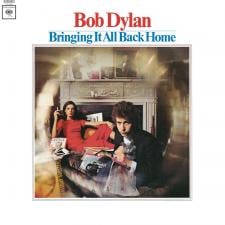
Album cover, copyright Columbia Records. Low-res version reproduced under Fair Use for review purposes
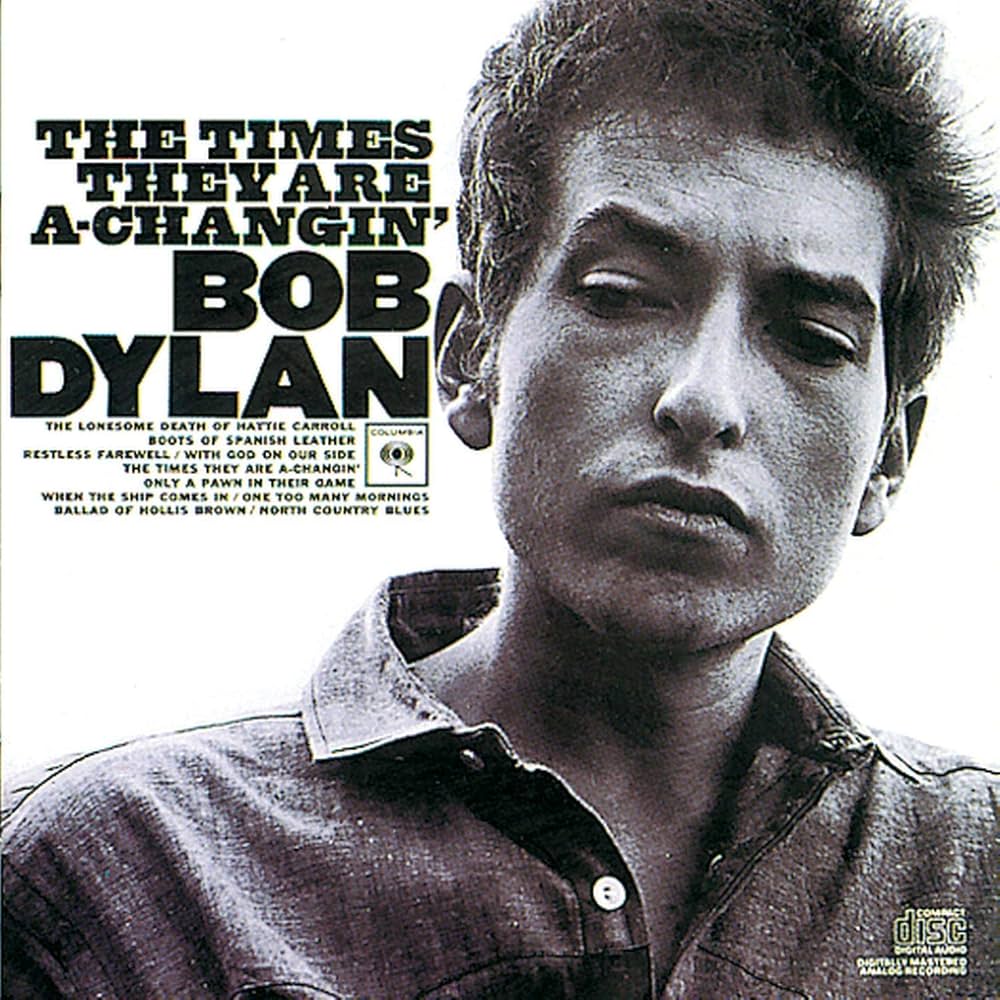
Title: The Times They are a-Changin’
Length: 45min, 36s
Number of songs: 10
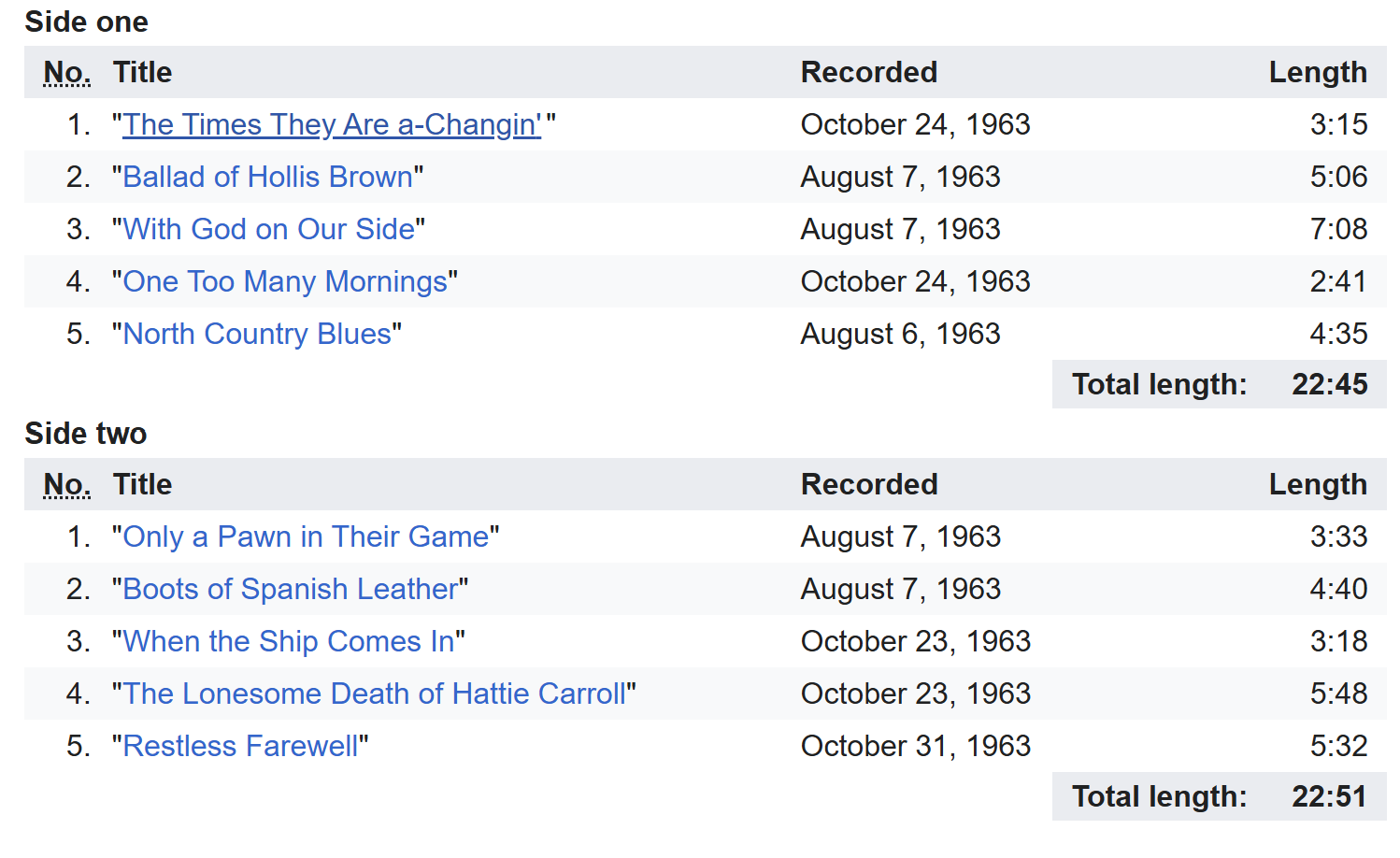
Best tracks: The Times They are a-Changin’, Ballad of Hollis Brown, With God on our Side, North Country Blues, Boots of Spanish Leather, When the Ship Comes in, The Lonesome Death of Hattie Carroll
If I had to choose just one track: The Lonesome Death of Hattie Carroll
Freshlyworded rating: 9/10
Thoughts:
While the title track from this album is rightfully one of Bob Dylan’s most famous and revered songs, for me the hero track and an absolute masterpiece on this album (and surely among his best songs ever) is “The Lonesome Death of Hattie Carroll”.
Running just under six minutes, Dylan tells the story of the murder of Hattie Carroll, an African American barmaid, killed in a drunken rage in a Baltimore Hotel in February 1963 by 24-year-old Wiliam Zatzinger, a wealthy, white tobacco grower – and the injustice fuelled by racism that followed.
The song is a perfect combination of vivid poetry, acoustic guitar and Dylan’s plaintive, soulful voice.
Dylan wrote the song just six months after Carroll was murdered and it no doubt struck a chord among the civil rights movement at the time. Every sentence of the song is wonderful.
Zantzinger killed Hattie Carroll, Dylan sings: “With a cane that he twirled around his diamond ring finger” and after his arrest “Reacted to his deed with a shrug of his shoulders”.
He contrasts the Zantzinger’s wealth and high society connections with Carroll’s role as a servant “Who carried the dishes and took out the garbage”.
A few months later, “in the courtroom of honor” Dylans sings of the judge who “Stared at the person who killed for no reason” and then in a devastating line “handed out strongly for penalty and repentance William Zantzinger with a six-month sentence”.
As he tells the story of Hattie Carroll’s murder Dylan sings the repeated refrain: “But you who philosophize, disgrace and criticize all fears Take the rag away from your face, now ain’t the time for your tears.”
After singing how Zantzinger literally got away with murder, Dylan ends the song with: Oh, but you who philosophize, disgrace and criticize all fears. Bury the rag deep in your face for now’s the time for your tears“.
Just brilliant!
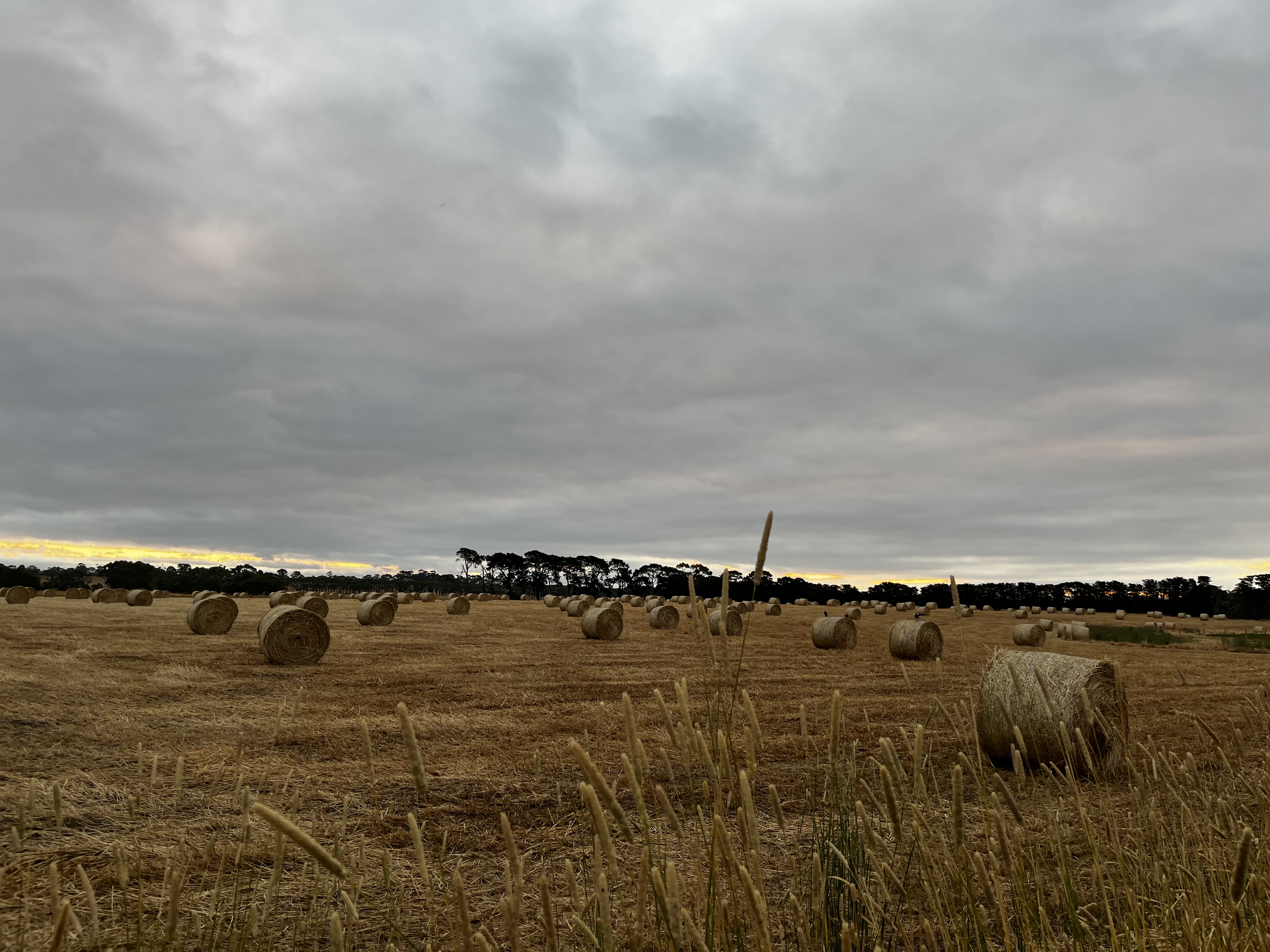
I listened to this song and all the other nine tracks of this album whilst walking my dog along quiet country roads and sleepy suburban streets in Lancefield north of Melbourne (where I live) and on holiday in Birregurra, a small town in the Otways region of Victoria. Both were the perfect backdrop for letting the wonderful storytelling songs of this album seep deep into my bones.
Hay bales in a field in Birregurra, Victoria
Alongside the Lonesome Death of Hattie Carroll, I of course loved The Times They Are-a-Changing, a universal anthem about profound change that’s coming to society. At the time it was recorded, this change was the civil rights and anti-war movement but it’s wonderful lyrics still inspire people today who are pushing for change amid the punishing regimes governing the world:
Come mothers and fathers Throughout the land And don’t criticize What you can’t understand Your sons and your daughters Are beyond your command Your old road is rapidly agin’ Please get out of the new one If you can’t lend your hand For the times they are a-changin’
I also loved another haunting, narrative song, “Ballad of Hollis Brown” which tells the story of a poverty-stricken South Dakota farmer and the events leading up to a desperate act.
“With God on Our Side’ is a song that like “The Times They are a-Changing” reverberates loudly today, with its mockery of how believing in God justifies acts of war and America’s superior moral position.
“North Country Blues” is a wonderfully melodic, yet dark song sung in the first person about growing up in an iron ore mining town, where the work eventually dries up and the mine is closed
“Only a Pawn in their Game” is another powerful political song about the murder of a civil rights activist Medgar Evars, while another favourite track of mine on the album is the very catchy “When the Ship Comes in” which has a happy and triumphant feel to it.
The slow and contemplative “Restless Farewell” is a fitting end to a brilliant album, and also a great way to end an evening country stroll.
For me, this is Dylan’s best album of the three I have listened to and reviewed so far. Incredible that he was only 22 and 23 when he wrote and recorded all these amazing tracks.
There have been dozens of books written about the history of modern Australia since the arrival of the first fleet of English convicts to Sydney Cove in 1788.
The latest book hot off the shelves is Australia A History by former Prime Minister Tony Abbott.
I haven’t read it yet but have been delving into the story of European settlement via a much older book, which I bought for $2 at a book sale at the Athenaeum Library on Collins Street in the Melbourne CBD.
Seeped in history (the Athenaeum Library is one of Melbourne oldest cultural institutions), it seemed an appropriate place to pick up a copy of The Penguin Bicentennial History of Australia by the late historian John Molony.
Published in 1987, it traces the 200 years (199 to be exact) since the arrival of the first fleet and finishes with the prime ministership of Bob Hawke and the success of Paul Hogan‘s Crocodile Dundee.
While it obviously misses out on everything that happened in Australia from 1988 onwards, I found it to be a really good summary – in less than 400 pages – of the key events that shaped the fledgling nation since those first majestic-looking e ships, laden with convicts, sailed through the Sydney Heads towards what is now Circular Quay.
Molony, who wrote many history books, was Emeritus Professor of History at the Australian National University. He died in 2018 at the ripe old age of 91, meaning he was alive for 61 of the 200 years encapsulated in the book.
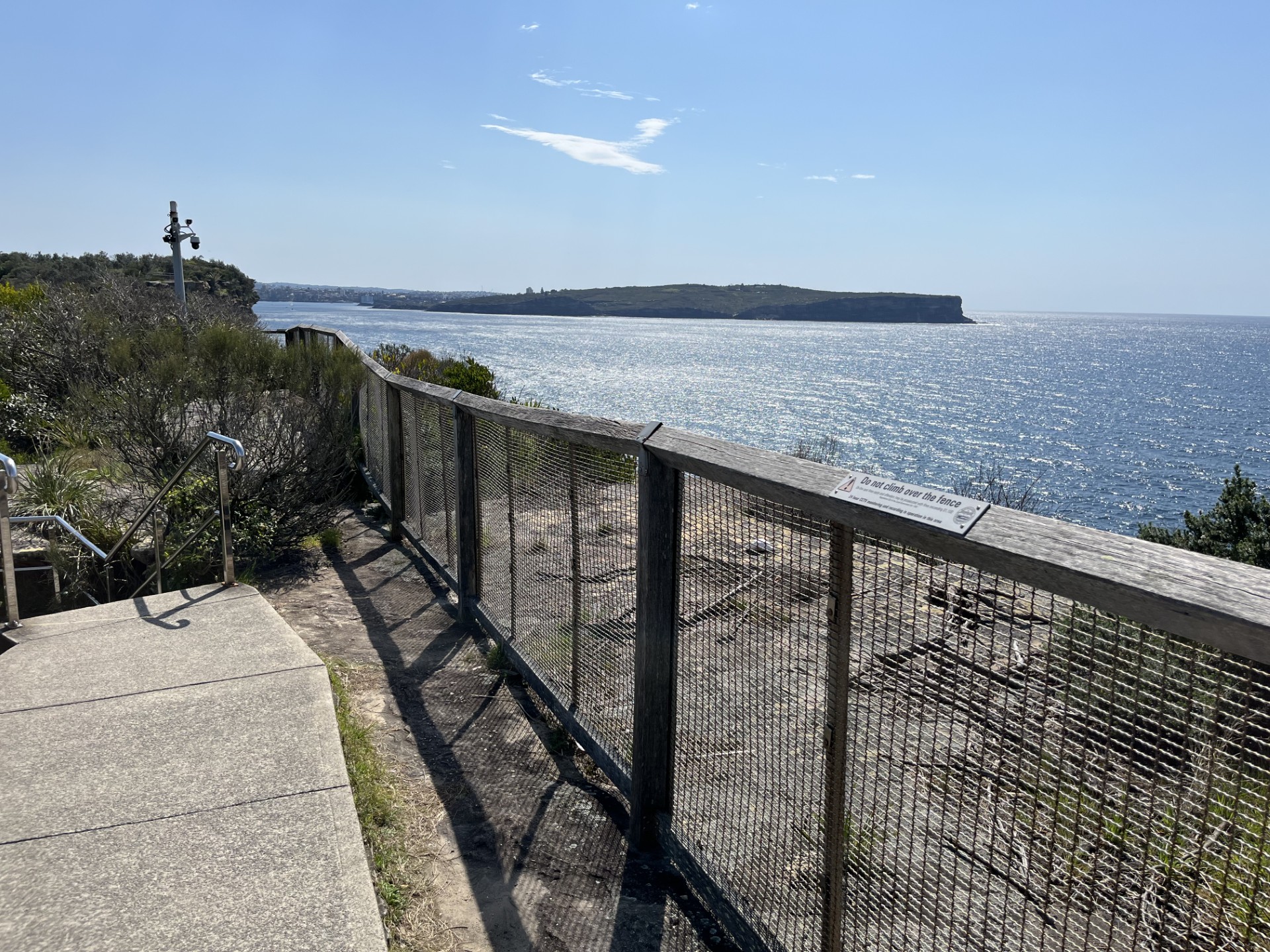
Interestingly, I was midway through the book, when I happened to be in Sydney and visiting Gap Park in Watson’s Bay. Here you can stand at the edge of a cliff face that plunges into the turbulent Tasman Sea below (an infamous Sydney suicide spot) and look out over the Sydney Heads, the series of headlands that market the entrance to Sydney Harbour.
It is through this 2km wide entrance that the 11 ships carrying 732 convicts sailed through and made anchor at Sydney Cove, now known as Circular Quay.
As Molony describes it rather movingly in the opening chapter of his book:
High summer saw a fleet of eleven ships take up moorings at a small cove in a noble and extensive harbour on the eastern coastline of the southern continent. A few dark-skinned people of the Cadigal band, whose ancestral home that place had been for age upon age, watched closely from nearby scrub. The date was 26 January 1788 and the newcomers called the cove after an English public servant named Sydney…The modern history of the world’s oldest continent had commenced with the coming of a new people.
(In fact, as Molony’s book explains, the fleet first made shore first at what is now Botany Bay (where Sydney Airport is) but due to the “infertility of the soil” and a lack of fresh water, it was quickly discarded, and the weary travellers travelled a few miles to the north to the “finest harbour in the world”
237 years later, as I looked out over the Heads towards the sparkling Sydney skyline, I was filled with a sense of awe imagining these wooden ships, laden with their weary human cargo, making their way into a vast and primitive land, with not a single structure in sight.
And what did the weary English convicts, after a gruelling eight-month voyage from the docks of Portsmouth, make of what would be for most their permanent home?
No doubt they were filled with dread and fear (as were their aboriginal onlookers) and a longing to return the urban environment of England; the busy streets filled with people and buildings.
Gap Park, with a spectacular view over the Sydney Heads
Over the next 406 pages, Molony tells the story of the birth of modern, mostly white Australia. There’s a lot to get through, but he does a good job describing in an entertaining, easy-to-read manner the key events and colonial personalities that shaped what became the Australia we are familiar with today.
Looking out over the ocean towards a city of some 5.5 million people, with the Manhattan skyline of its Central Business District, the modern wonders of the Harbour Bridge and Opera House and the densely populated suburbs around the harbour, it is a stunning visual reminder of the pace of development that occurred over a relatively short period of time.
And to think that nothing was here, not a single building was standing 237 years ago, whilst Europe and the colonial parent (the British empire) were full of teeming metropolises.
In many respects it’s a miracle that Australia thrived at all. As Molony describes it, the early years of the colony of New South Wales was full of great hardship and suffering: starvation loomed as crops failed and desperate convicts dreamt of escape. In one instance, a group of convicts headed off into the bush, believing they could walk to China. For nearly all Australia would be a life sentence.
At first it was a primitive existence, with public hangings becoming a common occurrence. The first person hanged in the colony was a 17-year-old boy named Thomas Barrett, for stealing.
But slowly, as Molony describes it, an agricultural-based economy is established, centred around the production of fine wool and wheat (a sector which still thrives to this day). Amid the search for arable farmland, the colony expanded into Parramatta and then other regions of the country. Tasmania developed a whaling industry, Melbourne, Brisbane and Adelaide were founded and settlers travelled west to establish Perth.
Then came a momentous event: the Victorian Gold rush, which turned Melbourne into “Marvelous Melbourne” and brought settlers from all over the colony, and abroad to make their fortune. This included the Chinese, who were the subject of a well-entrenched colonial racism. At its height- as I learnt – Victoria accounted for 40% of the world’s gold production.
Another defining moment, and one where Australia lost its innocence, was the Great War in which thousands of young Australian men lost their lives or came back injured and shell shock. The horrific, but courageous battle of Gallipoli that left nearly 9,000 diggers dead.
Molony writes of the end of the war:
It was Anzac Day, 25 April, the day of the landing at Gallipoli, that overshadowed memory and made all new and vital in significance for it was seen as the day on which the nation had shaken off the bonds of subservience and Australians had come to know themselves. [Prime minister] Billy Hughes saw it a little differently. To him victory in the war meant national safety, liberty and the safeguarding of the White Australia policy. Despite some signs to the contrary, Hughes was still convinced that Australians were ‘more British than the people of Great Britain’.
This long adherence to the White Australia policy, one borne out of British racism and fear of invasion from the East, is remarkable given how Australia changed into a successful, and vibrant multi-cultural society (notwithstanding the recent re-emergence of a wave of anti-immigrant feeling fuelled by a cost of living and housing crisis).
For so long Australia had been a land only for Europeans, and it took visionaries like Gough Whitlam to dismantle its final elements and welcome Asian and people of colour to our shores. Even so, by the 1980s, after nearly 200 years of European settlement, “the new nation [of about 16 million] was still predominantly white, spoke mainly English of the Australian variety, owed allegiance to the English Queen and observed laws derived from British sources”.
What I wanted to get out of the book, was a well-rounded understanding of the making of Australia, and Molony’s did a good job of that.
While it impossible to include in detail everything that happened over 200 years, I felt the story he told captured all the important elements without too much politicising, and with some sympathy for the plight of the aboriginal people, whose suffering was immense.
Most striking is his portrayal of the pace of development, how Australia so quickly build up its cities and towns, established a civil and well-functioning society that very early on and to this day, is among the greatest places to live in a troubled world.
It may be an old book, but the Penguin Bicentennial History of Australia is a great place to start for anyone wanting to learn the history of the country of their birth or – as in my case – of their adopted homeland.
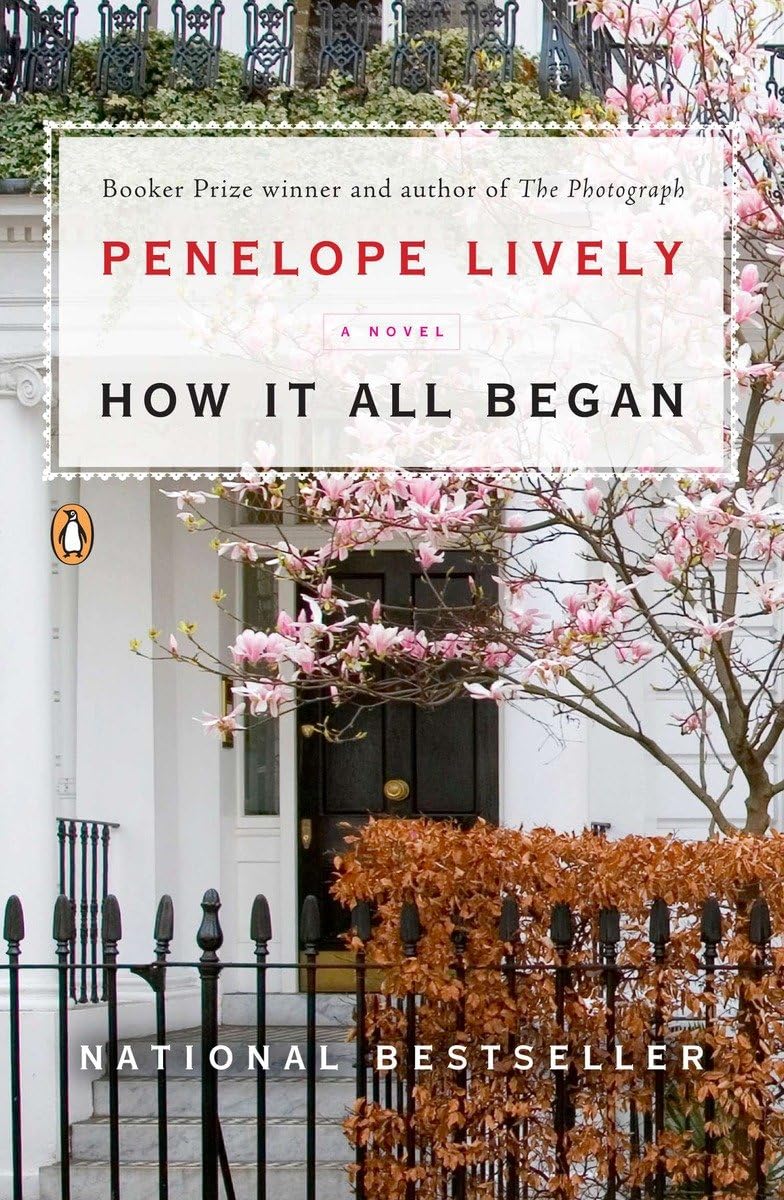
How it All Began by Penelope Lively begins violently with the mugging of retired and widowed schoolteacher Charlotte Rainford on a London street and then follows the lives of the people impacted by this random event: those both close to Charlotte like her adult daughter Rose and people she has never met like Marion, an interior designer and Jeremy, an antiques dealer.
Forced to recuperate at her daughter’s house, Charlotte introduces Anton, an Eastern European migrant into Rose’s life when she agrees to tutor him at her temporary home. Caught in a loveless marriage to dull Gerry, Rose develops strong feelings for Anton, who is funny, charming and sincere.
Meanwhile, in another part of London, the lives of retired diplomat and historian Lord Peters and his niece, Marion, are set on different courses by the mugging of Charlotte.
Rose works as the personal secretary to Lord Henry Peters. When she is unable to accompany him to give a lecture in Manchester because she has to take her mother to a doctor’s appoint, he asks his niece Marion to accompany him instead.
Without Rose by his side, Lord Peters forgets his lecture notes, and he gives an embarrassing performance that has him questioning his own relevance and embarking on a bizarre television project. Marion finds herself seated next to a charming, wealthy businessman, who at first seems to be the saviour of her struggling interior design business, but who turns out to be a conman.
Charlotte’s mugging also exposes an affair Marion is having with Jeremy, a self-centred married man who runs his own failing antiques business. Marion sends Jeremy at text message to say she cannot make a rendezvous, but it ends up being read by Jeremy’s wife, Stella. Stella engages a lawyer and files for divorce.
While this may sound like the makings of a rather gimmicky work of fiction, Lively, who is now well into her nineties and is a Booker Prize winner (1987 for Moon Tiger), does a great job of elegantly orchestrating events and drawing the reader into the heads of the characters as they navigate the unexpected challenges they must now navigate. The novel moves almost cinematically from one storyline to the next added by Lively’s beautiful prose and well-rounded characters.
Reading the book made me think of my own life and how random events that seemed inconsequential at the time, have had a profound impact on the trajectory of my life. An unexpected conversation, a chance encounter, a phone call missed or answered, an opportunity taken or not taken. All these things have set our lives on unplanned pathways. But more so, they have impacted the lives of others, people we know and those we will never know.
While I have not read any of her other books, I have read that the role of chance and “haphazard what-might-have-beens” (to quote a New York Times review) is a theme explored in other novels by Penelope Lively.
“Thus have various lives collided,” Lively writes in How it all Began, “the human version of a motorway shunt, and the rogue white van that slammed on the brakes is miles away now, impervious, offstage, enjoying a fry-up at the next service station. Just as our mugger does not come into this story, not now, anyway — job done, damage complete, he (or she) is now superfluous.”
The butterfly effect, the notion that seemingly trivial events can set off chain reactions and generate unexpected consequences is a powerful concept and explored to great effect in How it All Began.
(It would also make a rather excellent television series, if well adapted.)
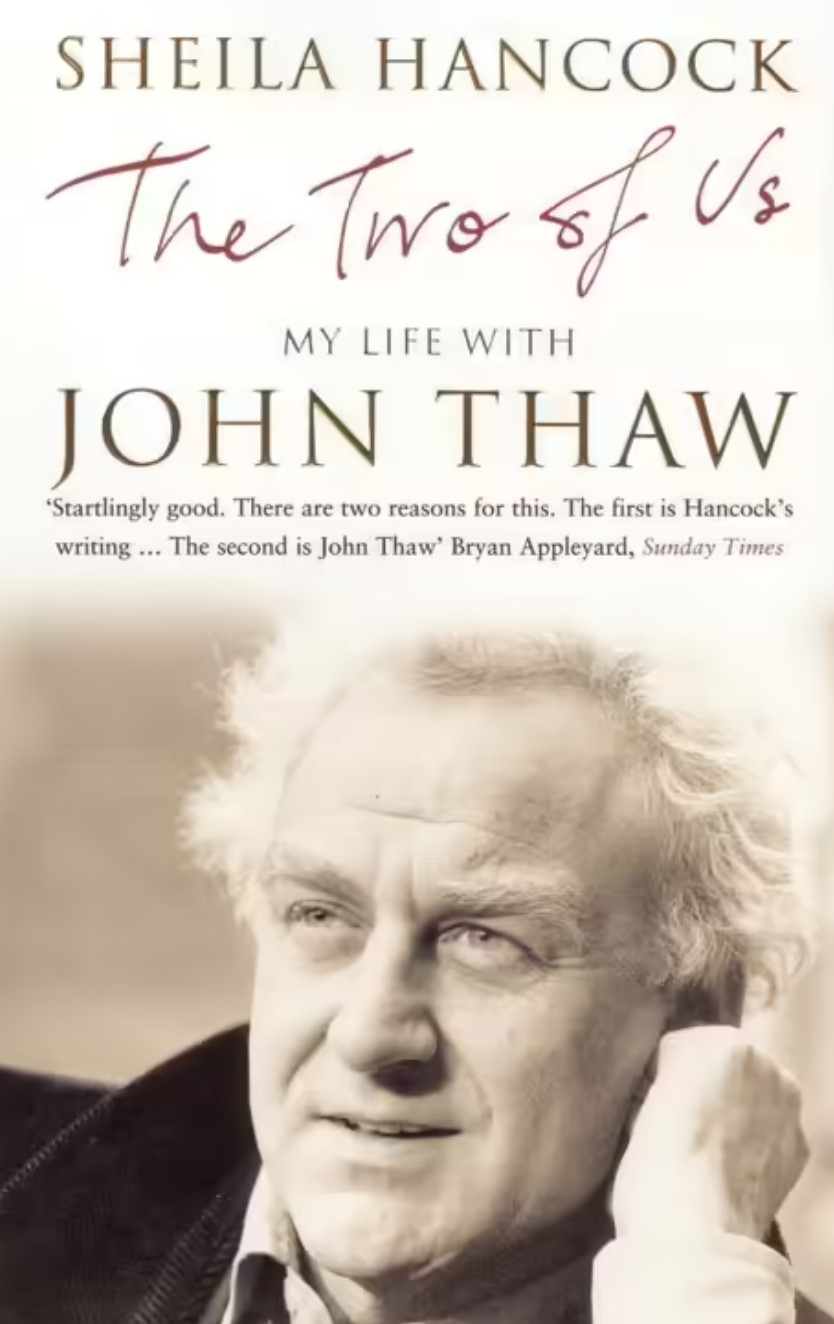
Sheila Hancock’s wonderful memoir The Two of Us gives excellent insights into the personality and demons of the brilliant late actor John Thaw, who famously played Inspector Morse in one my favourite television series of all time.
The event that had such a devastating impact on Thaw’s life, as told by Hancock, was the day his mother Dorothy (or Dolly as everyone called her) walked out on the family, leaving the seven-year-old John and his younger brother Jack deprived of a maternal figure they adored.
This profound loss was the underlying force behind the intensity of his acting (he was utterly dedicated to the craft, though never comfortable with being a celebrity). But his mother’s disappearance from his life also fuelled a great anger and rage that turned Thaw into a heavy drinker and a verbally and emotionally abusive husband.
Hancock is incredibly honest about the challenges of her marriage to Thaw, which was unbearable at times. But she also writes of the later years of their marriage when Thaw stopped drinking and their relationship found an even, and very loving and devoted keel.
However, the great tragedy of it all was that after all the years of heartache, the splits and re-unitings, Thaw should fall very ill with cancer just as they were truly happy together.
Hancock, herself a celebrated actor of the stage and screen (now 92, I last saw her in a small role in the excellent cold case series Unforgotten) was married to John Thaw for nearly 30 tumultuous years and was with him the day he died in 2002 after battling cancer.
Hancock, was left utterly devastated by John Thaw’s death, despite their very volatile marriage.
It’s quite an unusual book because it’s both an autobiography of Hancock’s life – who was made a Dame in 2011 for services to drama and charity work – and a biography of John Thaw, who shunned the celebrity life, and would probably never have written an autobiography.
It retells their family histories – Hancock was born on the Isle of Wight in 1933 and grew up living above pubs including in the rough and tumble of King’s Cross, London, while Thaw, nine years younger than her, spent his youth in the working-class suburbs of Manchester.
She writes about their first marriages, the trajectories of their acting careers (her close friends include the Carry On actor Kenneth Williams) and how intimidated she was when she first met Thaw when they began acting together on the West End play, “So What About Love?” in 1969.
John Thaw with Sheila Hancock
“The first week of rehearsal of So What about Love? was an unmitigated disaster. I always approach a new role convinced that I cannot play it and on the few occasions that John Thaw looked up from his script, his expression of contempt implied that he agreed,” Hancock writes of their first encounter.
But Thaw quickly warmed to Hancock, and she to him, as he – like his great detective character Inspector Morse – revealed his love for classical music, art and fine wine.
They married in a registry office in 1974. While initially things went well, Thaw’s drinking and depression worsened, and their marriage deteriorated. Hancock paints a quite different picture of their marriage to the one described by Thaw on an episode of the famous BBC series (now a podcast) Desert Island Discs recorded in 1990. On it, he suggests that they had sorted out their problems (mostly to do with his acting commitments), whereas the truth of the situation was a lot darker – as recounted by Hancock in her book.
“By 1990, both Morse and Home to Roost [a sitcom Thaw starred in] were in the Top 10 of the ratings. John was at the height of his popularity but off-screen he was fighting profound depression.”
It would take another five years for Thaw to seek professional help, quit drinking and reunite permanently with Hancock. From then on, they lived blissfully.
John Thaw with his mother, Dolly
After his death – her recounting of Thaw’s final days in diary entries is so very moving – she took a keen interest in learning more about her late husband’s mother, to understand why she had made such a devastating decision to leave her children.
To her great credit, Hancock does not demonise Dolly even though she caused Thaw so much pain, and in turn herself through their turbulent marriage.
“I will attempt to get inside Dolly’s skin, as if I was going to play her and try to understand what John never could or would.”
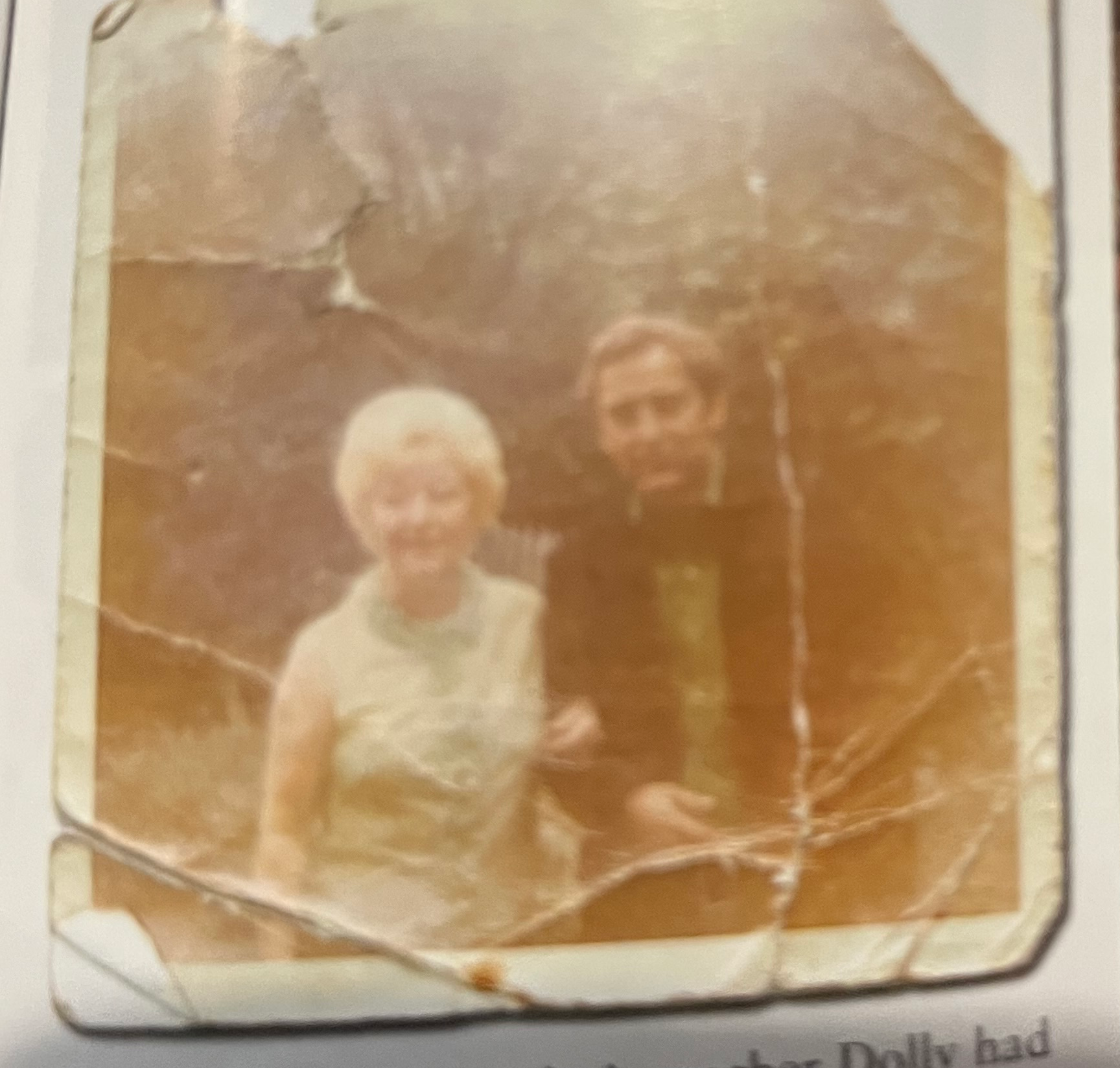
Alongside Hancock’s wonderful writing, The Two of Us is full of many great photographs, both professional and personal. Perhaps the most interesting and saddest of all is a faded and crumpled picture of Thaw taken with his mum on a rare union.
Hancock captioned it by saying: “It was found in her (Dolly’s) bag when she died.”
Her interest in the forces that moulded her husband – both good and terrible – make this a marvellous memoir. Any fan of John Thaw and Hancock (who is far too self-deprecating in her writing) will enjoy reading it, as I did.
It’s been a couple of months since – aged 50 – I finished reading the Harry Potter series, and I have been meaning to jot down some thoughts ever since.
Credit: By Daniel Ogren – Flickr
The reminder to put pen to paper, if you can forgive that rather useless and inappropriate cliché, came from an unlikely source: the columnist and writer, Clementine Ford.
Scrolling through my Instagram feed, I came across a three-year-old post from Ford in which she attempted to tear JK Rowling to shreds. Ford labelled her books “badly written” fiction and attacked “Joanne” for making her hero a boy wizard, where a girl (Hermione) does mostly all his homework for him, but gets no credit for it. Even more outrageous, Ford says, Hermione has no female friends, is overshadowed by all the boy characters and that all the female characters are “parodies of womanhood”.
Ford then gets stuck into her real issue with JK Rowling, the author’s controversial views on transgender people. Ford calls Rowling a “fucking scumbug” for harassing transwoman and suggests “Joanne” open up her “stupid fucking” castle and invite all her transphobic friends to live with her inside.
Ford’s disgust builds to a crescendo where she wonders how in the space of 25 years Rowling went from charming children’s worldwide to become one of her most sinister fictional character’s the cruel, toad-like Minister for Magic Dolores Umbridge who torments and tortures Harry Potter at Hogwarts.
This reference to one of JK Rowling’s most famous characters (and in my opinion one of the best written and fiendish across the series) made me wonder if Ford, who had just turned 40 at the time of the post, had not secretly enjoyed reading the books when she was younger, before finding herself disgusted by the controversy over Rowling’s views on womanhood and her alleged attacks against the transgender community.
Did JK Rowling become a bad writer and the Harry Potter story an unworthy cultural phenomenon because the author launched herself into the culture wars via posts on social media?
The answer is obviously no. JK Rowling is not a bad writer and her holding abhorrent views (to some) does not make her one.
Of course you may decide to boycott her books because of the things she says online, but it would be hard to argue that Harry Potter is not a great deal of fun to read. These are books that have entertained and delighted readers of all ages since the first in the series,Harry Potter and the Philosopher’s Stone came out in 1997.
Reading all seven books as I approached turning 50 and really enjoying them was something I had not expected.
I started reading the series because my daughter, Edie (12) was huge fan of all things Harry Potter and I thought it would be a great way for us to bond. After I finished each book, we’d watch the corresponding movie and discuss our thoughts of the big screen adaptation, the actors chosen to play the fictional characters, the bits in the books the films left out but that should have been kept in, the way the filmmakers had created the magical scenes and if the movies were any good. Mostly I enjoyed the films, but they were not a patch on the books (And there is now a HBO TV series in the works that we are told will be a more faithful rendition of the novels, with a full season devoted to each book).
For someone who reads “serious fiction’ and hardly anything in the fantasy genre, I was surprised at how much I enjoyed the novels. Whatever you think of Rowling’s views on gender, only a cynic would argue that Rowling is not a fabulous storyteller with the ability conjure up a complete magical world with a huge cast of living and breathing characters that have become cultural icons in their own right: Harry, Hermione, Ron, Hagrid, Malfoy, Professors Dumbledore, McGonagall and Snape (to name just few).
I also loved how the novels shifted between the fabulous wizarding world with its potions, ancient books and magic spells and the mundane “muggle” (human/non-magic) world inhabited by the wonderfully awful Dursleys (Harry’s relatives and tormentors).
But rather than write a lengthy review of each Harry Potter book – who needs another one of those? – my thoughts turned to the author and the culture wars she has sparked with her views on transgender issues and her strident defense of womanhood.
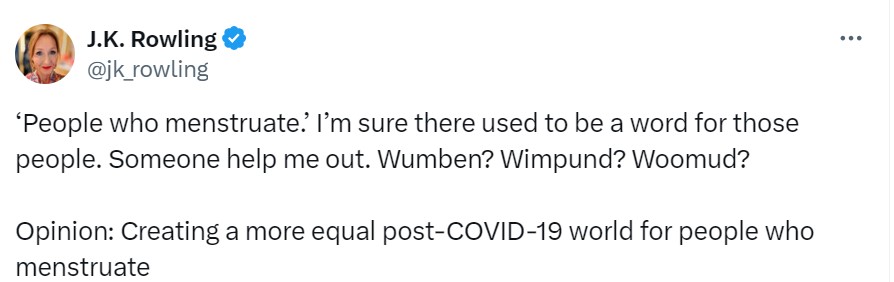
The controversy started back in 2020, when Rowling (rather petulantly in my view) took issue with an online article on Devex (a news organisation covering global development) about menstruation that did not in its opening pars mention woman, but instead used the gender neutral “people”. Later it refers to the 1.8 billion people who menstruate as “girls, women, and gender non-binary persons”.
Rowling responded to the controversy by saying: “If sex isn’t real, there’s no same-sex attraction. If sex isn’t real, the lived reality of women globally is erased. I know and love trans people, but erasing the concept of sex removes the ability of many to meaningfully discuss their lives. It isn’t hate to speak the truth,” she tweeted.
Rowling argues that she has been empathetic to trans people “for decades” and that feeling kinship for woman and believing that sex (or gender) is real, does not translate into hate for the transgender community.
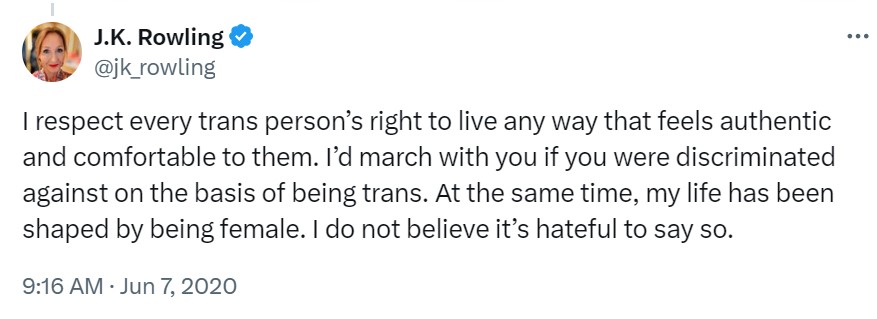
She goes on to say: “I respect every trans person’s right to live any way that feels authentic and comfortable to them. I’d march with you if you were discriminated against on the basis of being trans. At the same time, my life has been shaped by being female. I do not believe it’s hateful to say so.”
Following the avalanche of abuse she suffered because of her social media posts, Rowling penned an article on her website explaining in great detail her position, her concerns for young people who may regret transitioning, her affection and acceptance of transgender people and her views on trans activists. whom she says are “doing demonstrable harm in seeking to erode ‘woman’ as a political and biological class”.
“I stand alongside the brave women and men, gay, straight and trans, who’re standing up for freedom of speech and thought, and for the rights and safety of some of the most vulnerable in our society: young gay kids, fragile teenagers, and women who’re reliant on and wish to retain their single sex spaces,” she writes.
As a survivor of domestic abuse and sexual assault, Rowling ask that the empathy for trans people “be extended to the many millions of women whose sole crime is wanting their concerns to be heard without receiving threats and abuse”.
However, she has received the harshest condemnation from some in the trans community for suggesting that some people, especially younger people may be “persuaded” to transition to “escape womanhood” or to find a more caring community, rather than because they suffer from gender dysphoria, a medical condition referring to the distress a person feels at one’s biological or assigned gender at birth.
“The more of their accounts of gender dysphoria I’ve read, with their insightful descriptions of anxiety, dissociation, eating disorders, self-harm and self-hatred, the more I’ve wondered whether, if I’d been born 30 years later, I too might have tried to transition,” Rowling writes. “The allure of escaping womanhood would have been huge. I struggled with severe OCD as a teenager. If I’d found community and sympathy online that I couldn’t find in my immediate environment, I believe I could have been persuaded to turn myself into the son my father had openly said he’d have preferred.”
Any position that questions the validity of a trans person’s existence will be condemned by many in that community, regardless of the reasons or concerns of those stating that opinion. It is, for many, a cardinal, unforgivable sin.
“I want to be very clear here: I know transition will be a solution for some gender dysphoric people, although I’m also aware through extensive research that studies have consistently shown that between 60-90% of gender dysphoric teens will grow out of their dysphoria.” she writes.
“I spoke up about the importance of sex and have been paying the price ever since. I was transphobic, I was a cunt, a bitch, a TERF, I deserved cancelling, punching and death. You are Voldemort said one person, clearly feeling this was the only language I’d understand,” Rowling says.
Despite, these attacks, she has refused to back down, donating money to campaigns opposed to the stalled Scottish gender recognition Bill. She’s also dared authorities in Scotland to arrest her after calling a number of transgender women “men” – in apparent defiance of a new Scottish Hate Crime law which came into effect in April this year and which creates a “new crime of stirring up hatred against someone based on their disability, race, religion, sexual orientation transgender identity. (No action was taken against Rowling).
Has Rowling been treated harshly? Or has she deserved the condemnation she has endured by many?
Weighing things up in my mind, I would argue that she is not transphobic (as she has publicly stated) but certainly opposed to some forms of trans-activism where, in Rowling’s view it erases the idea of womanhood.
I feel she is entitled to this view and don’t feel there is as any legitimate reason to cancel Rowling or to stop encouraging young and old people to read her books.
You may feel the need to analyse the characters in her novels and their motives in light of her views on gender, and come to all sorts of conclusions about the author’s motivations or alleged prejudices, but let’s be honest, Harry Potter is not high-brow fiction. I don’t actually think its worthy of deep analysis. These are not books that need to be studying at University in the way that I studied the novels of Margaret Atwood or JM Coetzee or EM Forster.
JK Rowling’s Harry Potter books are simply brilliant adventure and fantasy stories and can be enjoyed as such without the need to read the subtext.
Reflecting on the all the controversy reminded me think of another famous children’s author, who has been vilified, partially re-written but thankfully never cancelled for their controversial views.
I’m referring Roald Dahl, who sold 300 million books and wrote some of the most beloved stories of all time: Charlie and the Chocolate Factory, James and the Giant Peach, The Witches, Matilda and Fantastic Mr Fox to name just a few.
These books entertained and delighted me as a child and have been enjoyed with glee by my kids, both in the original written form and as movie and TV adaptations.
On the scale of unpalatable views, Dahl certainly trumps Rowling by some distance.
He was a well known and unapologetic anti-Semite who in an interview in 1983 said there is a “trait in the Jewish character that does provoke animosity, maybe it’s a kind of lack of generosity towards non-Jews”.
We do not have to love the artist to love and admire their art.
Rowling and Dahl inspire the imagination. They delight their readers. They celebrate bravery in the face of evil. They encourage adventure. And yes, you can take great offence in some of the characters in their books, or the motivations for creating them, but that should always be a personal choice, not a movement.
When I was unexpectedly offered a job at The Australian Financial Review in July 2013 I jumped at the opportunity to write for the country’s top business newspaper.
Alongside this excitement, I also remember having this unsettling feeling that perhaps I was joining a national publication near the very end of the newspaper industry, certainly the print one.
Might I be one of the last print journalists hired by the AFR before everything went digital?
Nonetheless, I was thrilled to have an opportunity to join the workforce at Fairfax Media, one of Australia’s great publishing dynasties and to forge out a career in print media for as long as I could.
Somehow my name had made its way to the decision-makers at the AFR – I am grateful to whom ever suggested me as a replacement for departing property writer Ben Wilmot (now commercial property editor at The Australian and whom I had the pleasure to meet for the first time in September).
I had an informal interview with Matthew Dunckley (then the AFR’s Melbourne bureau chief, now deputy editor of The Age) at a café on Degraves Street, and after signing an employment contract a week or so later, and after seeing out my last few weeks at Property Observer, I flew up to Sydney for a week of training and induction, and to meet my new Sydney-based property colleagues on the newspaper.
I remember the chatter in the industry and in rival newspaper media columns at the time was all about when the Fairfax printing presses would stop rolling seven days a week while the company, helmed then by former AFR journalist and editor Greg Hywood, was in the throws of a massive and at times painful digital transformation that would result in a number of voluntary redundancy rounds in the immediate years after I joined.
(There was also talk at the time that mining billionaire Gina Rinehart – as she climbed up the share register – might buy Fairfax. But following a long battle with the Fairfax board and management, her interest in the company eventually petered out and she sold out of Fairfax in 2015).
Incredibly, on my very first day in the Sydney office (at the time Fairfax was based at Pyrmont) I sat next to veteran journalist and multi Walkley Award winner Pam Williams.
Pam’s blockbuster business book Killing Fairfax,which detailed how Fairfax Media had missed out on opportunities to invest in dotcom businesses like realestate.com.au and SEEK that would go on to be worth billions more than the 170-year-old media company had just been published complete with grinning photos of billionaires Lachlan Murdoch and James Packer on the cover.
I remember introducing myself to Pam and having a short conversation with her, whilst trying to get my head around the idea that she’d returned to the company she’d written so scathingly about in her book (which I read a few months later and reviewed on this blog). Later I would come to understand that this was part of what made Fairfax great; it’s unswerving belief in quality journalism, and Pam is certainly one of the best.
My first week in Sydney was spent learning how to use the antiquated publishing system known as Methode, meeting my boss Rob Harley, who was the paper’s long-serving and highly influential property editor, as well as many other journalists who would become friends and colleagues. I also wrote my very first article for the paper – a story about First Home Buyers – before flying back home to Victoria to join the paper’s Melbourne bureau and meet the journalists whom I would work alongside for many years.
The AFR occupied the Eastern corner of the third floor at 664 Collins Street opposite Southern Cross Station. On the other side of the floor was The Age, while upstairs were Fairfax’s radio stations including 3AW.
My first few weeks were spent meeting people in the property industry – agents, developers, investors – as I tried to build up a contact base and generate exclusive stories for the paper. There was back then and still is today a competitive, but highly collegiate mindset at the AFR, an attitude which helped me find my feet and carve out a niche of my own.
I’m somewhat embarrassed to say that for a little while after I joined the AFR I cut out and kept a folder of all my articles that appeared in the paper. It’s a practice I abandoned many years ago though I confess that I still get a kick out of seeing my name in print.
Initially it was quite hard getting scoops – we were a big property team in the early days – and being the newest member of a crew of crack reporters meant I had to find beats and niches that I could make my own.
At the same time as I was finding my feet and trying to show my value as part of the property team, Fairfax Media was trying to write the wrongs identified so glaringly in Pam Williams’ book and find new revenue opportunities in the digital world whilst print revenue continued to fall.
In 2014, Fairfax Media returned to profit and announced its move into video streaming on demand (to take on the likes of Netflix) via a joint venture with Nine Entertainment that would result in the launch of Stan.
The old Fairfax printing press (shaped like a rolled up newspaper) near Melbourne Airport. Now the HQ of Zagame luxury cars.
That year was particularly tough one for me personally as we lost our second child Raffy to stillbirth in February, but I was heartened by the outpouring of support from my colleagues at the AFR when I returned to work after a few weeks of compassionate leave.
“Everyone from the top of the newspaper down is thinking of you,” I distinctly remember Rob Harley telling me.
I spent two nights at the new Double Six Hotel (the reason for the trip) with a gang of Aussie journos, eating out at a plethora of fancy restaurants, trying out spa treatments and being chauffeured around amid the chaos and congestion that was Seminyak.
In 2015, I was lucky enough to be accepted into a mentoring program offered at Fairfax, and was given great guidance by senior Age journalist Michelle Griffin, (now Federal Bureau chief at the Sydney Morning Herald). We’d catch up for coffee in the café downstairs and focus on feature writing, which I always found challenging. Michelle was full of great tips and encouragement. These included suggesting I reading The Wall Street Journal’s The Art & Craft of Feature Writing by William Blundell.
Michelle is one of a number of highly experienced writers and editors who have provided advice, tips and encouragement over the years.
Over the next three years I reported in dozens of articles on the rise and fall of Purplebricks, which left Australian shores in 2019.
Covering the Purplebricks roller coaster journey Down Under was one of the highlights of my AFR journalism career (rumour has it my face was on a dart board at Purplebricks HQ in Sydney)
I should point out that soon after Purplebricks landed in Australia, our editor Rob Harley surprised everyone by announcing his decision to retire from the paper after an incredible 29 years. One of the most knowledgeable people in the industry and also one of its most influential and well-respected, Rob was a mentor to everyone on the team, and a generous sharer of his time and insights. (He continues to write for the Financial Review, penning a regular property column).
Upon Rob’s departure Matt Cranston took over as property editor for a couple of years before Nick Lenaghan took on the role when Matt took up a position as first economics editor in Canberra and then as the paper’s Washington correspondent. Both have been fine people to work alongside and like Rob, have been incredibly generous with sharing their knowledge and insight. (So too has been my property colleague Michael Bleby, whom I have worked alongside for most of the last 10 years. Michael lived for many years in South Africa, so we have that in common, plus a few words in Afrikaans.).
Around this time I’d clocked up four years at the AFR, built up a solid contacts list and a half-decent reputation in the property sector for writing fair, balanced and interesting articles, occasionally with a bit of flair.
In June 2018, as traditional media companies fought back against the advertising power of Facebook and Google, Fairfax Media and Nine Entertainment revealed plans to merge their two businesses.
It turned out to be less of a merger and more of a takeover as the great Fairfax name was retired and we became, on December 7 of that year, Nine newspapers. On that same day Fairfax Media was delisted from the ASX, bringing about the end of one of the world’s great media dynasties stretching back 182 years to when John Fairfax purchased the Sydney Morning Herald in 1841.
While a lot of my colleagues were skeptical about the Nine merger/takeover and a potential loss of independence, I was excited about being part of a much larger media company that had not only newspapers, websites and radio stations, but also a clutch of commercial television channels.
In fact under the Nine banner very little has changed in how The Australian Financial Review has functioned. We remain fiercely independent, and most importantly the most-read business publication in the country. There is also (for me) a sense of security in being part of a true media giant. Indeed, those Fairfax redundancy rounds that were part of my first few years at the AFR have all disappeared replaced by expansion of our newsrooms.
In April 2019, we moved from the Collins Street end of Southern Cross Station to the Bourke Street end, occupying level 7 of the Nine building (a shiny glass-facaded Rubix cube-like structure) at 717 Bourke Street.
That I year I wrote my first “Lunch with the AFR” – a popular weekend paper feature where you sit down with an interesting subject and discuss their career. My subject was the property developer and adventurer Paul Hameister, conqueror of Everest, the Antarctic and the Amazon.
Our new office at 717 Bourke Street.
We had lunch at a trendy café in upmarket Brighton and Paul entertained me with his daring mountaineering feats, savvy business dealings and sage advice. Spending quality time with people as successful and interesting as Paul has been a part of the job I’ve enjoyed immensely.
Also in 2019, I penned a long feature article about myself that ran in the long weekend Australia Day edition. It was the entertaining story of how the least likely Aussie of all time became an Australian citizen. The article originally ran on this blog, and got a spit and polish (with a great photo below) for the version that ran in the paper.
The pandemic hit in March 2020 and as the national lockdown took hold we all vacated the office, laptops under our arms.
The great work-from-home era had begun.
It was chaotic working from home, whilst dealing with two children requiring home schooling – sometimes I wonder how I managed.
Without a closed off home office, I just had to work among the chaos. I remember on one occasion I was interviewing the CEO of a major listed company and right in the middle of the interview two of my kids started yelling and going mental. I tried to dash to a quieter spot but the noise just followed me.
“Larry, what the heck is going on at your house?” the CEO asked.
Embarrassed, I apologised profusely, hang up the phone and called him back later. As time went on though, people became more accepting of the challenges of working from home whilst also home schooling. I also just adapted, became used to the constant disruption and soon it became the norm.
When things began opening up again and we trickled back into the office, it was almost exciting heading onto to the train for the 1 hour commute from our home in Gisborne in the Macedon Ranges to Melbourne. Seeing people face to face was a thrill for a while, so was a visit to a café.
The pandemic and post pandemic years seemed to roll into each other – 2021, 2022 and finally 2023. It all seems a blur, probably because it was such a crazy, muddled time, when there seemed no clear division between work and home life.
Journalism is an industry well suited to remote working (I remember one colleague quietly relocated for a time to Noosa on the Sunshine Coast, but continued to write stories as though he were in Melbourne), and it can, in my opinion be an aid to productivity depending on the circumstances. Let’s not forget their are journalists who file in war zones and amid natural disasters.
The post pandemic years also brought a new skill to my repertoire – hosting interviews and discussions on stage at our annual property summit. This was at times nerve-wracking but also exhilarating speaking before an audience in the many hundreds, including many titans of the property industry.
Then in August this year, I suddenly found myself at the 10 year milestone. The years had flown by, and so much had happened both personally and professionally.
I’ve worked hard, but also been incredibly lucky to forge a career as a newspaper journalist amid all the seismic ructions that have reshaped how the industry functions.
Despite the minority who distrust the “mainstream media” and prefer their information from those shouting the loudest on social media, newspapers in Australia are still a very important part of the nation’s progressive democracy and a vital institution in holding those in power to account.
A couple of months ago, a colleague, pressing me to get started on a feature for the Australian Financial Review, the newspaper I write for, suggested:
“Have a big glass of red wine and then just start writing.”
I should put some context around this. I don’t drink wine at work as a rule. I was going to function, where wine would be served. Then I would come back to the office.
My colleague’s rationale: it would free up my creativity.
I took his advice, and the end result was good, but the story certainly did not flow out of me like….fine red wine (perhaps the quality of wine ingested matters!)
Feature writing is challenging. There are many different things to pull together – people, events, themes, counter-arguments – and to do so well is as much technique as it is flair, talent or creativity.
My technique, until recently, was a stop-start approach of firstly trying to come up with the lead (the opening paragraphs) which usually involved numerous attempts, re-writes, teeth grinding, coffee break, chat with colleagues etc before finally making a start. Then I’ll write to the length required and then arduously work back, trying to create some kind of flow and rhythm and to give a point to it all.
But there are better, more structured ways to go about writing features (not that writing should be easy, good writing requires effort, sweat and toil).
I recently came across a useful book recommended to me by Michelle Griffin a very experienced journalist at The Age, who has also been my mentor the past 8 months.
It’s an old book, first printed in 1988, but you can get a newish reprint online. I bought a copy from the Book Depository and read it cover to cover, slowly, underlining parts on the way into work, trying to ingest some of Blundell’s tips, tools and techniques for telling better stories; after all isn’t that what feature writing really is?
As Blundell puts it: “We can learn a great deal from fiction and this book makes at least a modest start to connecting some techniques of fiction to the work we do.
The book is helpful on many levels, for example the opening chapters are about generating ideas and coming up with the raw materials for a good feature and I suggest reading it cover to cover.
What I found most useful where the practical tips for the writing process itself. These are 10 to keep in mind:
1. Write out your main theme statement
In a couple of simple, tightly written sentences express the story: its main developments, likely effects and reactions to them.
If writing a profile, the theme statement should be the facets of the person, company or organisation you plans to focus on.
“Tack this main theme statement up where you can see it. Let it guide your work. Let it reproach you, question you, when you stray too far,” Blundell writes, adding; “I consider the main theme statement the single most important bit of writing I do on any story.”
2. Have a plan
“The only important thing is that you have a plan, however loose and informal and use it to good effect”, says Blundell. Good writers, plan before they report and again before they write.
3. Readers love action
“The story that does not move, that just sits there stalled while people declaim, explain, elaborate and suck their thumbs is justly labeled by some editors as a MEGO – “My Eyes Glaze Over”,” writes Blundell.”The most desirable kind of movement is the unfurling of natural story progression.” To do this stories must shift the reader’s attention from “the abstract to the concrete, from the general to the particular, from the mural to the minature.”
Feature writers are storytellers. “We are in the drama business,” Blundell declares.
4. People with direct experience are better than ‘experts’
I think this is particularly useful as many journalists quote too easily from “certified somebodies” rather than “little people with direct experience”.
I heavily circled this paragraph: “The story is happening on streets where there are no PR men strewing palms in the reporter’s path, no computers disgorging blocks of seductive statistics and a lot of people who have nothing to gain from doing pirouettes for the press…we have to gather details and direct experiences that show the reader what we are talking about, that convince him of the truth of the sweeping assertions made by us and our desk people. Most of all we go there to convince ourselves.”
5. Skim read through all your material beforehand
Often, I don’t do this. I go back and forth looking for what to include in various documents. It’s an exhausting process and sucks up vast amounts of time.
Blundell’s advice: Skim through all interviews and documents. Read rapidly, not for mastery of detail, but for the sense of things. Put aside material that is irrelevant or weakly repetitive.
This will help refine and define your main theme statement and story plan.Blundell also suggests creating an indexing system where you group things in a logical manner. This may be vital for very long stories, but I find it overly complex. A couple of theme sub-heading and a few notes about what to include under each theme should do the job on shortish features.
6. Keep digressions short, return quickly to the action
Anything that is not action is digression: observations, quotes, explanations and descriptions. Blundell’s advice: Keep it short and sharp, or as he says it: “Hustle the reader over the lakes as rapidly as you can to get his vessel back into white water – story action.”
7. The lead is key, but can be left till later
The lead is what draws a reader in, gets him to make an investment of his time in your story right away. Blundell says a good lead intrigues, teases, gives you a reason for reading on. Many of the best leads he says have one quality: mystery.
The book is full of numerous examples of good and bad writing. I’ll just transpose one example he gives of a good lead:
“Crowded with 346 passengers and crew members, the Turkish Airlines DC-10 rose smoothly from Orly Airport in Paris bound for London. Terror came at 12,000 feet.”
Mystery is good, but not confusion or riddles. If mystery does not work for your story focus on urgency or telling the reader that something compelling is happening.
An anecdote or quote is a popular way to start a feature, but Blundell says it should be simple to understand and have relevance for the main theme of the story.
Often, the lead can be a retooling of the main theme statement, especially if you are struggling to come up with one.
However, don’t spend hours at the beginning of the writing process coming up with the lead, unless one comes naturally to mind. Write the main body of the story and come back to it later.
8. Don’t overuse numbers and statistics
Blundell’s advice – don’t overload readers with too many numbers. Also, he says express them in their most simplest form, rounded-off, expressed pictorially (something “doubled” or “trebled”) or as ratios. Very large (or very small) numbers are better expressed in a way that can be visualised. E.g. “It was three times the size of New York City’s Central Park”
9. Choose your quotes carefully and sparingly
Too many people quoted in a story, not saying anything that is particularly interesting will drown out those who do have something worthwhile to say.
Blundell advises avoiding quotes that state the obvious (the writer should be brave enough to state these points themselves). He says good writers are merciless about who they include and exclude. A good quote should have: credibility, draw an emotional response, be trenchant (sharp, incisive, authentic) and add variety to your story.
10. Endings are important
Blundell suggests that good endings drive home the established theme and help readers remember all they have been told. He says there are three that seem to work well:
– Circling back: reminding the reader of the central message through “symbols, emotional responses, observations, even snippets of poetry”. It should be full of echoes and overtones of the body of the story.
– Looking ahead: “What might be useless speculation clogging up the middle of a piece can become evocative material at its end,” Blundell says.
-Spreading out: You end by giving the reader something new to think about. The ending makes the story bigger than it was before, something worth remembering.
These are just some of the tips I picked up from the book and have found useful.
Of course none of this matters if your idea is weak, ill-conceived, poorly researched, of little gravitas or just plain boring.






 Freshlyworded