A haunting monument to Nelson Mandela’s struggle and sacrifice

Driving through the green and rolling Natal Midlands and trying to find a roadside sculpture, we got lost and ended up in a small rural village.

There were goats and chickens about and small brick houses that lined the bumpy country road.

An African man was mowing the lawn outside his house in the overcast, misty morning.

This image – of a black man mowing his own garden – struck me with some force. As a child I’d only known black men that mowed the lawn of white folks. We called them “garden boys” even though they were grown men.

It was a small reminder of how much has changed in South Africa in the last 20 years and also a reminder of my sheltered, privileged upbringing in a white, Jewish home.

We eventually found the right road and reached the ‘Capture Site’ marked by a poster with the words “Mandela” imprinted alongside photos of the great man depicting him during various stages of his life, from young tribesman to elderly world’s statesman.

OLYMPUS DIGITAL CAMERA

It was on this ordinary piece of road, three kilometres outside the town of Howick, on August 5, 1962 that Nelson Mandela, posing as a chauffeur for the impeccably dressed Cecil Williams, (a freedom fighter and theatre director), and on the run for 17 months, was finally captured by the apartheid police.

For the next 27 years, following his trial and conviction, he would disappear from public view.

The actual monument to this pivotal moment in the democratic struggle can be seen from the roadside, but not really seen at all.

All you see is a seemingly abstract arrangement of 50 steel columns designed by South African artist Marco Cianfanelli.
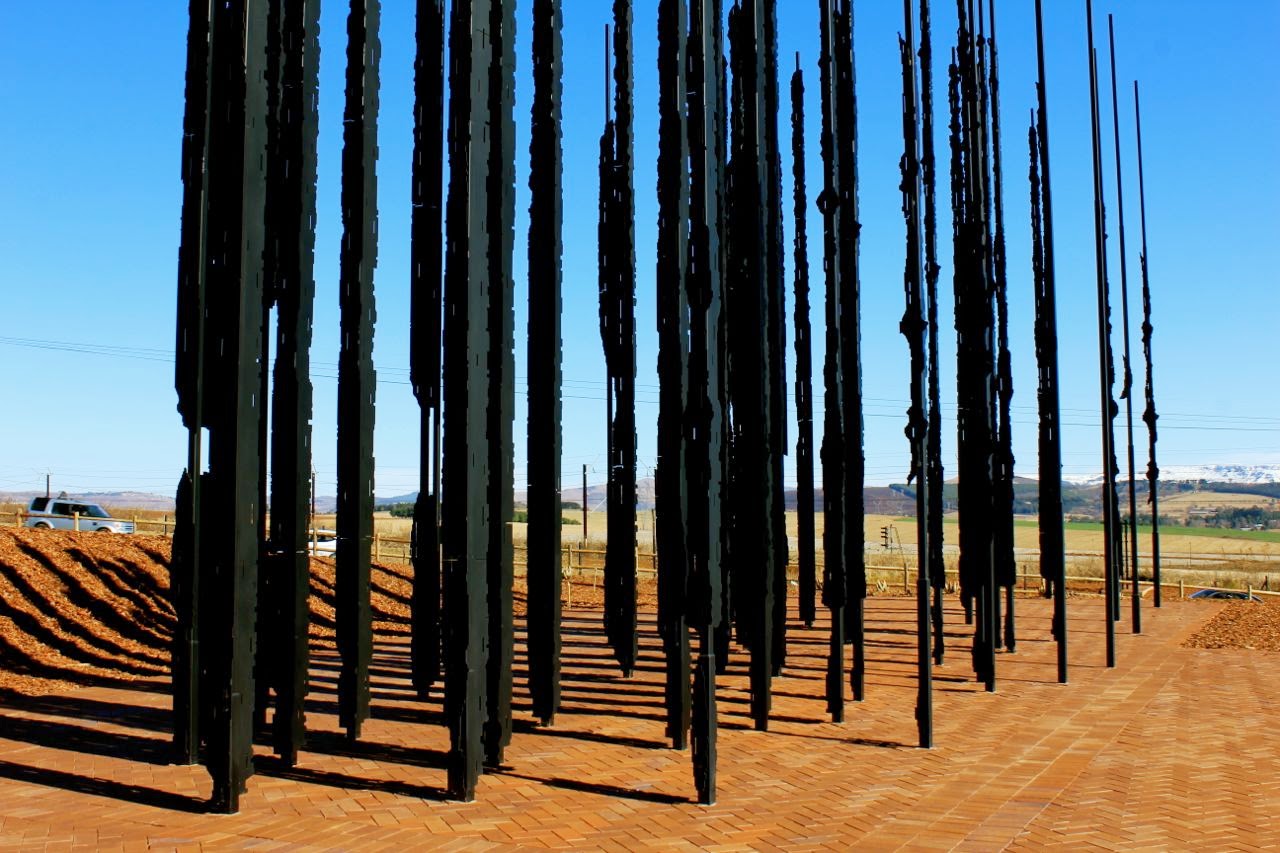
Marco-Cianfanelli-Nelson-Mandela-Capture-Monument

We park the car and walk down the red-brick walkway towards the steel columns, the rolling hills a backdrop. A car passes behind every now and then, a reminder of events 52 years ago.

On that fateful day in August 1962, the Austin Westminster Mandela was driving was stopped and he was asked by the police if he was indeed Nelson Mandela.

“I am David Motsamayi,” Mandela replied, using the alias he acquired on his travels to Morocco and Ethiopia.

Later, after some questioning, Sergeant Vorster of the Pietermaritzburg police said:”Ag. You’re Nelson Mandela and this is Cecil Williams  and you are under arrest!

Mandela would recall that earlier he had seen a Ford V-8 filled with white people shoot past and that “in that instant I knew that my life on the run was over; my seventeen months of ‘freedom’ were about to end.”

About 35 metres from the steel columns, an optical illusion occurs, the distinctive profile of an elderly Nelson Mandela emerges, looking out contemplatively towards the green hills.

Behind him, you can see the spot where he was captured.
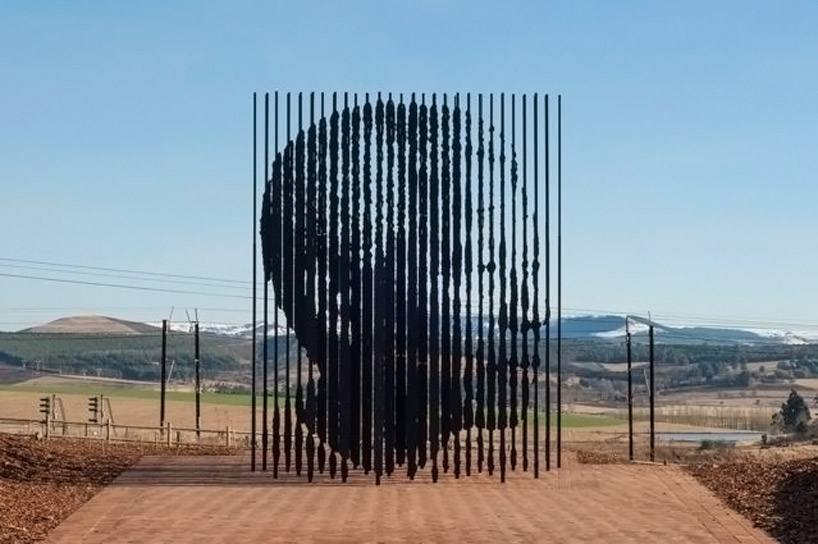
mandela21

While the 50 steel columns mark the 50 years from the time of Mandela’s capture to the sculpture’s completion in 2012, Marco Cianfanelli says they represent much more:

[They] suggest the idea of many making the whole; of solidarity. it points to an irony as the political act of Mandela’s incarceration cemented his status as an icon of struggle, which helped ferment the groundswell of resistance, solidarity and uprising, bringing about political change and democracy.

It is a wonderful tribute to the moment of Mandela’s capture and its significance in the struggle to free the country from the shackles of apartheid.

OLYMPUS DIGITAL CAMERA
It’s one of many beautiful and powerful reminders: museums, monuments, institutions that have sprung up since 1994 to keep the story alive of the struggle, of what was sacrificed, what was painfully endured and why.

Having spent some time gazing at the face of Mandela, we returned to the car park and had lunch in the tea rooms. An old friend, who lives nearby, joined us for lunch.

She told us that on the day Mandela died – just over a year ago on December 5, 2013 – she went with a young friend to place flowers at the monument. Many others who live nearby, had done the same.

“A few years back, when it was under construction,” she said, “locals were up in arms. The government was spending all this money and all you saw were these steel poles.”

The visit to the Capture Site was one of the last things we did in South Africa. We flew back to Melbourne a few days later after a wonderful holiday.

Of all the things we saw and did over almost four weeks – some inspiring, some depressing – the Capture Site memorial reminded me of the country’s incredible ability to tell stories, to make the past come alive for future generations and of its creativity and spirit.

Footnote, travels through apartheid history

I recommend the following for anyone visiting South Africa who is interested in exploring its history and democratic evolution:

the Apartheid Museum, which tells the story of inhumane racial policy of separation and degradation and the freedom that was eventually won,

– the Hector Peterson Museum and Memorial in Soweto which pays tribute to the students who died in the 1976 riots against forced education in Afrikaans,

Constitution Hill in Hillbrow, a former fort and jail where Mandela and Ghandi were imprisoned and now the home of South Africa’s highest court, the Constitutional Court and

Liliesleaf Farm in leafy Rivonia, the secret headquarters for the resistance movement in the 1960s.
 

Confessions of a cricket tragic

This article first appeared in the Australian Financial Review

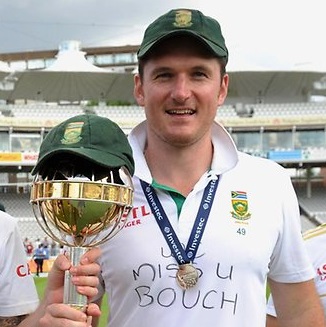
Retired skipper Graeme Smith with the Test mace, signifying South Africa's number one ranking

Retired skipper Graeme Smith with the Test mace, signifying South Africa’s number one ranking

To be a South African cricket supporter residing in Australia is to be a true cricket tragic.

As we slid to another home series defeat against Australia in Cape Town, I dashed off a tweet about the last Test side to beat the Baggy Greens at home, a team know as the “Invincibles” which white-washed Bill Lawry’s tourists 4-0 way back in 1970. A colleague replied: “Oh come on, Larry, nostalgia is the last refuge.”

Perhaps he was right. Perhaps it was a foolhardy attempt to prop up my spirits after yet another home series failure against the old foe; the only blight on an exceptional record that has seen South Africa rank as the No. 1 Test side in world cricket for many years and unbeaten in 14 Test series dating back to 2009.

No defeat hurts more than to lose against Australia (the 1999 World Cup semi-final still haunts me), no victory is more sweetly savoured.

When we finally did win a Test series against Australia in 2009, away from home, and then again 2012, also away from home, it was indeed a sweet moment for a biltong-eating expat like myself.

But a home Test series win against Australia has eluded us in seven attempts since we returned to world cricket in 1992 with just two draws and five defeats.

Back in 1970, just prior to being cast into the sporting wildness, South Africa was a dominant side with a host of superstars in the making. Top of the pile was Graeme Pollock, considered by many to be the finest left-handed batsman the game has produced. In a career of just 23 Tests, Pollock scored 2256 runs at an average of almost 61. I was lucky enough to see Graeme Pollock bat in the early 1980s, when he was approaching 40 and in the twilight of his career. It was at the “Bull ring” – the Wanderers Stadium in Johannesburg, where Pollock would come into bat at number 4 for provincial side Transvaal, known then as the “Mean Machine” and packed with star players including West Indians Alvin Kallichirran and Sylvester Clarke (relics of earlier “rebel” tours). The side was captained by the handlebar-moustached all rounder Clive Rice, whose rich talents sadly coincided with our period of isolation, meaning he never played a single official Test. I’d sit there with my dad in the wooden seats, long before they knocked down the old grandstand, eating a chicken mayo sandwich, binoculars trained on the pitch, watching the bowlers run in.

When it was his turn to bat, Pollock would lazily stroll to the wicket Viv Richards-style and take his guard nonchalantly. When in form, he was a sight to behold, able to clip a fast bowler off his toes for six with just a flick of his bat. I still have his signature in a little green autograph book I kept as a lad. Others in that 1970 Test side that never got the opportunity to fulfil their burgeoning talents included opening batsman Barry Richards, who scored 508 runs against Australia at an average of 72 (in what was to be his only Test series), all rounder Mike Procter, who picked up an incredible 26 wickets at 14 a piece and captain Ali Bacher, whose record against Australia was seven wins from eight matches (he was also part of the team  that beat Australia 3-1 in a home series in 1966-67, captained by Peter van der Merwe).

Softly spoken, calm and diplomatic Ali Bacher was a constantly on television. As our leading cricket administrator, he organised the rebel tours in the 1980s that kept cricket alive during isolation and in 1992 led the country back into world cricket. Of course,  I remember everything back then – the smell of boerewors wafting up from braais (barbeques) around the stadium; the colourful match programs packed with statistics about my heroes; walking across the field to inspect the pitch with my dad during the lunch break – from the viewpoint of a privileged white upbringing.

I was too young and naive to understand the country’s cruel reality: that apartheid robbed generations of black, Indian and mixed-race South Africans of participating in the game.

Thankfully, that’s all changed and our team is a now a better reflection of the ‘‘rainbow nation”, with players of colour like Hashim Amla, Vernon Philander and Alviro Peterson all households names. Just last month, a junior South African side packed with players of all colours beat Pakistan to win the under 19 World Cup. Perhaps they will one day guide us to a home series win against Australia. A World Cup win would be nice too.

L. Ron Hubbard, Scientology founder, apartheid supporter and “neighbour”

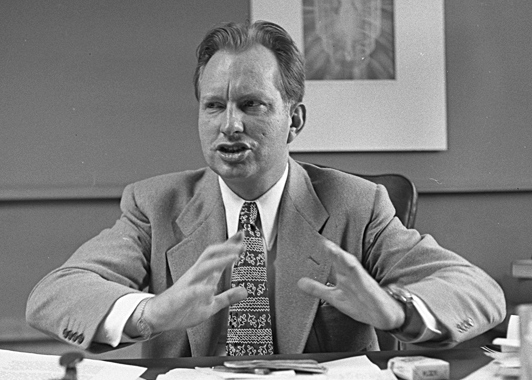
L Ron Hubbard in 1950

L Ron Hubbard in 1950

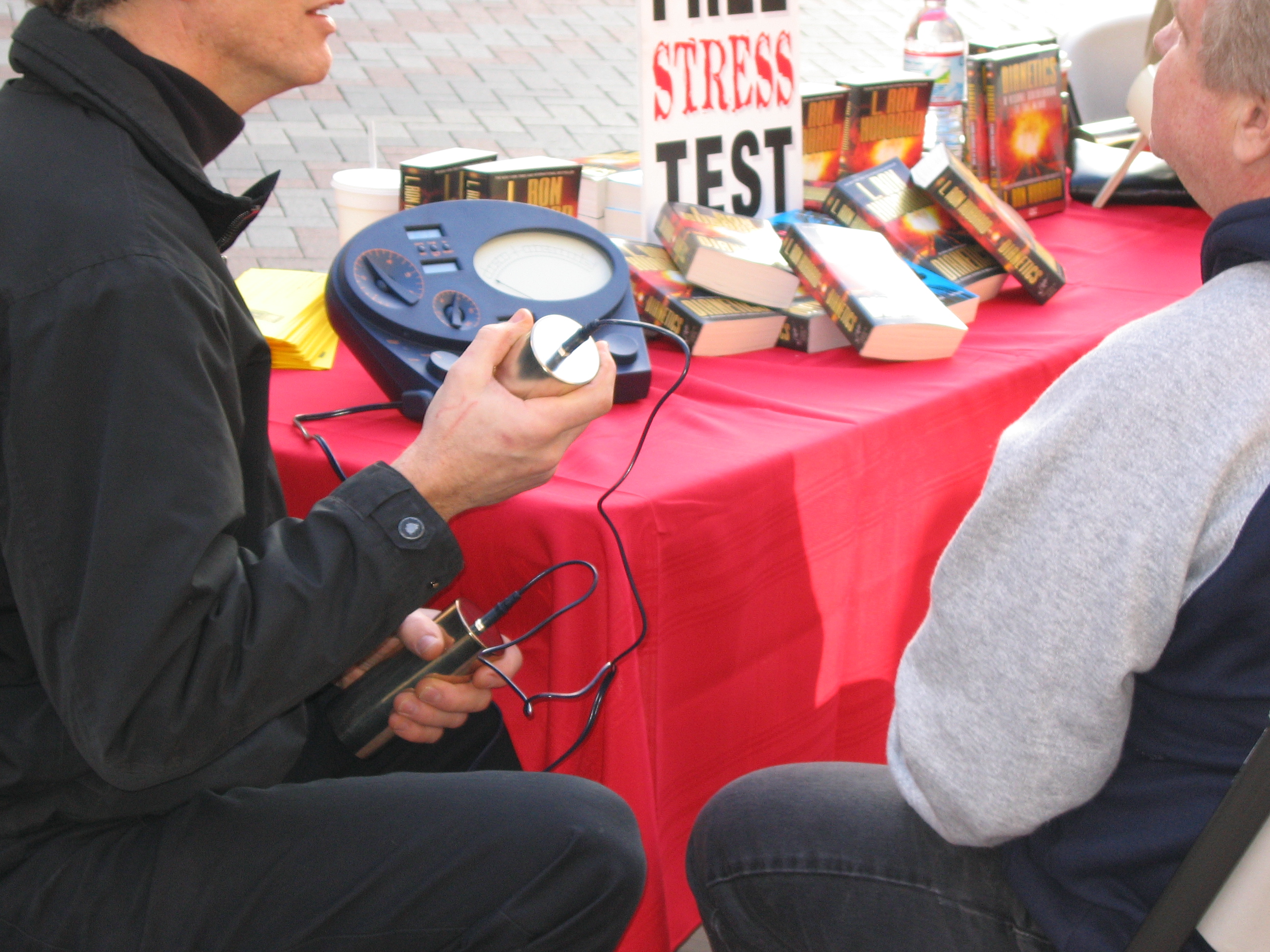
I’ve always found Scientology, the “religion” founded by science-fiction writer L. Ron Hubbard creepy. For one thing, there’s those people standing outside train stations and shopping centres offering free “stress” tests via a device called an “e-meter”.

Then there’s the wacko celebrity endorsement from devotees like Tom Cruise (who infamously claimed in 2005 in a television interview that neither psychology nor psychiatry “worked”) and the claim at the core of Scientology that through elimination of the “reactive mind” (the unconscious mind) devotees can increase intelligence, eliminate unwanted emotions and alleviate a wide range of illnesses (including asthma, arthritis and sexual deviance, which is deemed to include homosexuality).

Scientology_Recruiter

A Scientologist carries out a stress test using an e-meter

But did you also know that L. Ron Hubbard was a supporter of South Africa’s white supremest apartheid government during its darkest days?

I came across this little-known fact while reading a book about alleged ponzi scheme mastermind Barry Tannenbaum called “The Grand Scam” by investigative journalist Rob Rose.

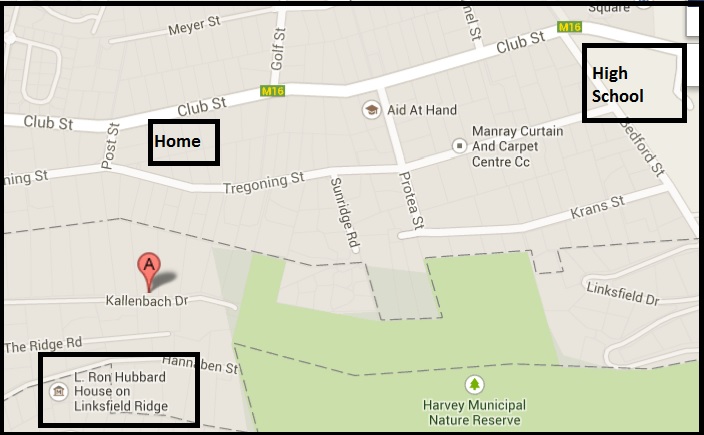
I also discovered that in 1960, L. Ron Hubbard lived in a house on Linksfield Ridge, Johannesburg just a few minutes drive from where our family once lived, though of course, separated in time by more than three decades. In a sense, we were neighbours, and I never knew it.

L Ron Hubbard came to South Africa in September 1960 and made his home on Linksfield Ridge, an outcrop of grass and rock. rising up over Johannesburg’s northern suburbs, dotted with gated townhouse complexes and multi-storey mansions.

(During rugby practice, I remember having to run up a windy, steep road to the top of the ridge, all the blokes complaining as our calves and thighs burned.)

map hubbard

Map showing L Ron Hubbard House, our family home at 50 Club Street and location of my high school, King David High School, Linksfield Ridge

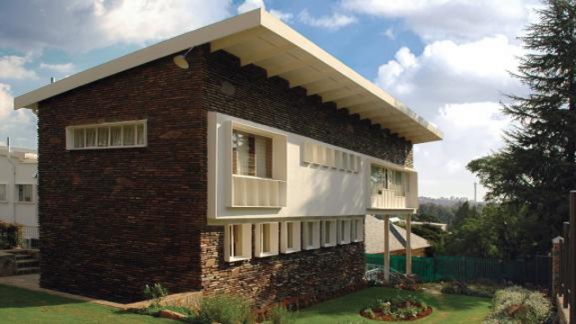
The L Ron Hubbard House, Linksfield Ridge

The L Ron Hubbard House, Linksfield Ridge

The Scientology house on Hannaben Street, which has impressive views over the tree-lined northern suburbs towards upmarket Rosebank and Sandton, has been restored as a museum. Had I known I would surely have visited.

Of course the L. Ron Hubbard website, which has a special section devoted to Johannesburg, makes no mention of his admiration for former South African prime minister Dr Hendrik Verwoed, the architect of apartheid’s harshest laws.

A polished, sycophantic video confirms Hubbard arrived in Johannesburg in September 1960, but that the home was a place for him and others to discuss and send off letters to the South African government detailing “his plans for equality in South Africa”.

Quite, how he planned to do just that, cocooned in his luxurious castle in the heart of white Johannesburg is not explained though it does include the highly duplicitous claim that while there he delivered “Scientology spiritual counselling to the improve the lives of his African domestic staff”.

Clearly then, L Ron Hubbard, was content to not just to live in luxurious surroundings, far, far away from the liberation struggle, but he was also happy to enforce the master-servant relationship that existed between white South Africans and black domestic workers, in his own home. This irony is not noted on the website either.

Rob Rose writes: “What Scientologists don’t want you to know is exactly what was in those letters to the South African ministers. He continues:

They’ve gone out of their way to airbrush Hubbard’s craven fawning over the apartheid government, specifically, his gushing praise for the father of the racist ideology, Dr Hendrik Verwoerd.

Rose goes on to quote from a letter written by Hubbard to the Verwoerd government:

May I state that you have conceived and created in the Johannesburg townships what is probably the most impressive and adequate resettlement in existence. Any criticism of it could only be engaged upon by scoundrels or madmen, and I know now your enemies to be both.

For those wishing to verify this quote, you can find it here in a digital version of the Kotze Commission.  This was set up in 1970 to investigate Scientology, and which then banned it for two decades (one of the few intelligent things the government at the time did).

Of course, even if you dispute this transcript, it would take some distorted logic to understand why someone who claimed to believe in racial equality would choose to move to South Africa during the height of apartheid and live in an affluent white neighbourhood with black servants tending him hand and foot, rather than choose to live amongst African people in Soweto.

Sadly, many South Africans are unaware of this fawning over the apartheid regime or choose to ignore it.

According Rob Rose, since its unbanning in the 1990s, Scientology has gained 150,000 devotees in South Africa and earns about $10 million a year for L. Ron Hubbard’s church and estate.

The jew at the table: reflections on racism and growing up Jewish in South Africa

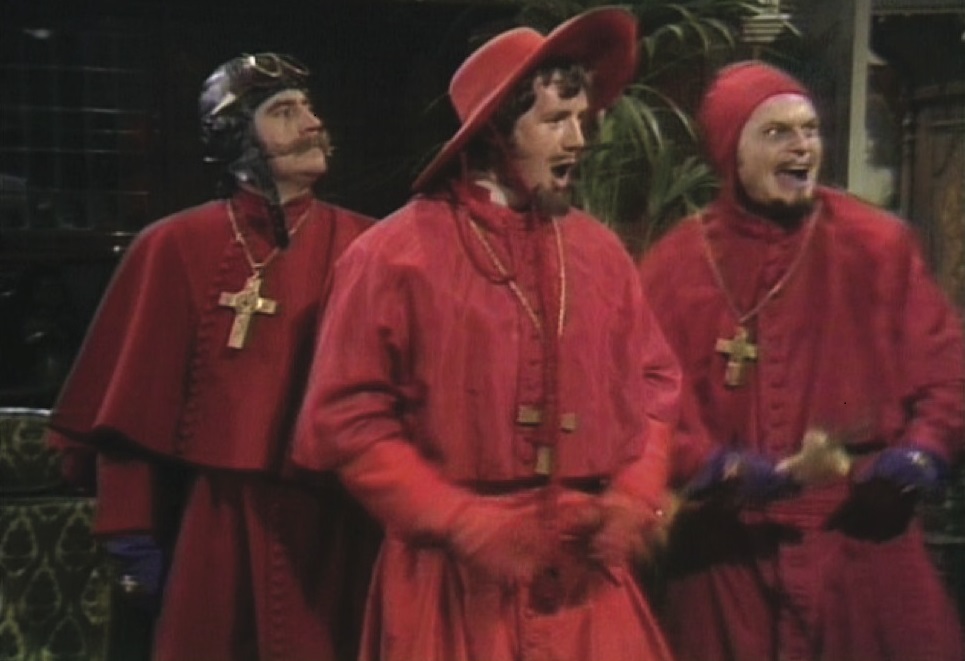
“Nobody expects the Spanish inquisition…our chief weapon is…surprise.”

So begins the famous Monty Python sketch heralded by the arrival of evil clergy in red robes.

nobodyexpects

Well I wasn’t wearing a red robe or any identifying markings at a recent business lunch when as discussion turned to who would pay the bill, someone remarked:

“I’ll be the Jew and leave” – or words to that effect, before they got up to go.

A general snickering followed. Someone remarked flippantly that you should be careful what you say – you never know who may be around – and it was quickly forgotten.

No one knew there was a Jew at the table.

Me.

I never said anything, nor did I regard the person who said it with any particular malice. But I was a bit taken aback. It made me feel uncomfortable; I felt inclined to say something but also reluctant to make a fuss.

Others I know would have had no indecision. They would be proclaiming their Jewishness loudly and demanding an apology accompanied by accusations of anti-Semitism.

Did the person who made this remark hold some deeply felt hatred towards the jewish race or religion, or was it just like the time I remarked, flippantly, to an ex-girlfriend of mine who was half Asian that the kitchen of the digs I shared with friends in London “resembled a Chinese laundry”.

(I also recall that she distinctly did not like the South African colloquialism “china” used in the same way Australians say “mate”).

Anyway, as the words came out my mouth, I realised what I’d said, but it was too late. An uncomfortable moment followed as I apologised profusely.

And wouldn’t this person sitting across from me at lunch, who suggested “he be the Jew” have acted similarly had he known I was Jewish.

My gut feel, is yes.

And does he harbour some ill-will towards Jews. Probably…

Would he suddenly dislike me if he found out I was Jewish – probably not.

The truth is everyone has made a remark like this at some point in their lives -and it’s hard to think of anyone I know who does not hold some kind of prejudice or quasi-prejudice against some other race, religion, sexual orientation or political belief system.

At the same time, it strikes me that my Jewish brethren appear the most sensitive of all races, colours and creeds to offensive remarks, no matter how harmless or slip of the tongue they may be.

Years of persecution – the pogroms, the holocaust, indeed the Spanish Inquisition – will often be the explanation for such an acute sensitivity.

My own experience growing up in South Africa is of a deeply racist Jewish community, with the racism passed down through the generations as it is every where else.

Words learnt and bandied around Jewish social gatherings (white people only apart from the black domestics serving food or minding the children) included the horrible sounding “schvarzte” and “shoch” meaning a “black” person and “chatis” for an Afrikaner.

These words were used regularly at dinners, family gatherings, teas and barbeques – often in earshot of the African domestic clearing away plates or bringing food to the table.

Sadly they were often spoken by those who had fled pogroms or persecution or were the children of those who had. We as kids would play cricket in the garden, while the adults (BMW or Mercedes parked down the driveway) would chat away about their privileged lives: trips overseas, new restaurants opening, community gossip. As you got older, you’d join the adults and hear the conversations, where “shochs, schvartzes and chatises” were mentioned all too frequently.

Paradoxically, these same people would often stick their heads into the kitchen to say hi to the African domestic washing the dishes, to ask about their children or their health.

But it was always in the realm of the ‘master and servant relationship’:

“How are you today Sophie?”

“I am well thank-you master.”

“How are your children?”

“They are well thank you master.”

So what’s happened to these people who I remember with their expensive cars, who would sit around discussing the cricket or rugby with the odd racist remark thrown in from time to time?

Many of them have packed up and moved to Australia. They’re living on the best streets of Bondi, Vaucluse, St Ives, Toorak, Caufield, Bentleigh and Dianella. Some – would you believe it – have even brought their domestics along to do the dishes.

Few have dropped their prejudices and most will happily tell you South Africa has “gone to the dogs since the blacks took over”.

It reminds me of something someone very dear to me (but with horribly dated ideas) once said to me a long time ago:

“I don’t believe in apartheid. But really, you can’t put the blacks in charge.”

What Mandela gave me: one glorious day and hope for the future

The voting line: a sculpture depicting Mandela and the 1994 election in Port Elizabeth

The voting line: a sculpture depicting Mandela and the 1994 election (stands in Port Elizabeth)

This post first appeared on crikey.com.au,

It is also my 100th post on this blog. I dedicate 95 of those posts to Nelson Mandela, for each of the 95 years of his life:

I will always remember voting in South Africa’s first democratic elections on April 27, 1994. It was a miracle they took place at all; far-right-wing organisations threatened civil war, and only last-minute negotiations and concessions ensured all key political parties took part in the historic vote.

Such was the fear that some people took to draining their swimming pools and stocking them with cans of baked beans, mineral water and tinned tuna in case all hell broke loose — or so the urban legend went. But certainly there were empty shelves in the supermarket and a tremendous sense of tension in the air.

In the lead-up there had been bomb blasts at Johannesburg airport instigated by the paramilitary AWB (Afrikaner Resistance Movement) and, a year before, the terrible slaying of Communist Party leader Chris Hani carried out by a white Polish immigrant named Janusz Walus as part of a right-wing plot that had pushed the country to the brink of anarchy.

But the doomsayers were all proved wrong.

On April 27 the front-page headline in Johannesburg’s The Star newspaper proclaimed boldly “Vote the beloved country”, a play on Alan Paton’s famous novel Cry, The Beloved Country about apartheid’s injustices, which we all read at school. Underneath the headline was a photo taken from a helicopter showing a snaking line of people stretching beyond the confines of the photograph waiting patiently to vote for the first time in their lives.

A mural in Cape Town depicting voting in South Africa in 1994

A mural in Cape Town depicting voting in South Africa in 1994

People queued for hours. In the big cities. In country towns. In townships. In rural villages. On hillsides.

Apart from getting married and the birth of my daughter, it was the single greatest day in my life. It was a privilege to be alive and still young (I was 21 at the time), but old enough to play my small part in such a defining moment in our troubled country’s history.

I remember it as a glorious crisp, early autumn day. Blue skies. Electricity in the air.

I voted at the nearby primary school just a short drive from home. I am not someone who shows his emotions, but as I drove past the line of people waiting on the pavement, there were tears in my eyes, and my heart felt like it was ballooning out of my chest.

In that queue was Nelson Mandela’s vision, why he had spent 27 years of his life imprisoned on Robben Island and why he had emerged not to proclaim war against those who oppressed him but to suggest a vision of the “rainbow nation” where everyone, no matter the colour of their skin, could feel proud to call themselves South African.

That queue outside the primary school in leafy suburban Jo’burg, in queues all over the country from Cape Town at the bottom of the country to Messina on the Zimbabwean border, the rainbow nation was brought to life for the world to see.

“… white middle-aged Jewish women in designer outfits, who for years had kept domestics (or “maids” as we called them) to raise and feed their children, stood quietly behind those they employed.”

Having parked my car some distance away, I took my place in the line. Ahead of me white middle-aged Jewish women in designer outfits, who for years had kept domestics (or “maids” as we called them) to raise and feed their children, stood quietly behind those they employed. Dapperly dressed old African men, once forced to carry “passbooks” regulating their movements in white areas under apartheid, stood beside Portuguese-born restaurateurs, Italian hairdressers and sun-loving British immigrants. Petrol attendants stood next to lawyers, suburban housewives, next to black mini-cab drivers. Black gardeners stood side-by-side with white doctors and accountants. Petrol attendants in blue overalls stood next to white old ladies with permed hair and tissues tucked under their sleeves, who stood behind Indian shopkeepers and coloured fruit sellers.

There was something in the air that day. Yes the tension remained, but there was the sense the dream could be real, that we could all learn to get along and in doing so rebuild and repair centuries of inequality, injustice and brutality. It would not be easy, but it was possible.

Soon after, the votes tallied, Nelson Mandela was sworn in as our first president.

The following year, South Africa won the Rugby World Cup; Mandela famously wore his No.7 jersey alongside Francois Pienaar (I retreated to my bedroom, head under my pillow, too anxious to watch the dying seconds of the match before Joel Stransky’s wondrous drop goal) and we all danced together in the streets, waving our new and strange-looking flag with gusto. The following year our soccer team, Bafana Bafana (“the boys”), won the African Cup of Nations in front of 120,000 screaming fans in Soweto.

Of course the euphoria over those early days of freedom have faded into reality. There are many challenges still facing the Rainbow Nation: crime, AIDS, inequality, corruption. But the new South Africa, even with these big problems, is a vastly better place than I remember through the rose-tinted glasses of my privileged white upbringing.

I never met Mandela, though I often drove past his imposing Houghton house a few suburbs from my own on my way home from work. With a bit more luck I might have bumped into him as his picked up his medications at the local pharmacy in the cosmopolitan neighbourhood of Norwood, a few kilometres down the  road. Sadly, it never happened.

What would I have said to him? Perhaps, thank you for those glorious days in April. And for giving us hope and a glimpse of what might still be.

A homage to the humble boerewors

Image

I’m all for globalisation, the mixing of cultures, the idea of the city as ‘melting pot’. After all, who wants to eat fish and chips every day? Or meat and two veg?

But sometimes globalisation gives me the shits.

Shopping in Woolworths last weekend. Grand final weekend. I’m picking up something to take to the barbecue.

As if it’s bred into my genes, my old South African eyes lock in on a coil of sausage behind clingwrap.

Boerewors” it says. No, it proclaims proudly!

“Yes please!” (I chant to myself).

Anyone who has spent anytime in South Africa, will know that you can’t have a barbecue (or ‘braai‘) in the homeland without this humble sausage sizzling away alongside a few giant steaks, chicken kebabs, pap and Castle Lager.

For Australian natives, think this combination: football, beer and meat pie.

The word ‘boerewors’ is Afrikaans, the language spoken by Afrikaners (the descendents of the original Dutch settlers to the Cape in 1652) famous for lots of great things (rugby, Francois Pienaar, Charlize Theron, Ernie Else, the first heart transplant) and some not so “lekker” things (apartheid, Oscar Pistorius, PW Botha).

But the boerewors is certainly one of their finest inventions and one that all South Africans, black, white, expat, coloured, indian have incorporated into their cultures and exported to far flung places. It’s uniquely South African, as the Lamington is to Australia and pavlova is to New Zealand.

The word actually translates as: boere (farmer’s) wors (sausage), which now that I think about it throws up some rather silly jokes and images I’ve not thought of up until now.

But, no, no, no and no! The boerewors is sacred. It is delectable a mix of delicious fatty meats and spices. It’s heaven in a sausage.

But, back to the boerewors on the shelf at Woolies and my temporary annoyance with globalisation.

IMG_20131006_215941

Just look at the packaging! Made by the British Sausage Company. But even worse: Uniquely Australian!

WHAT???

Not a mention of South Africa or farmers or apartheid. Not a boer insight.

I shake my fists in the supermarket. I consider stealing all the boerewors packets on the shelf, justified in my mind by the lack of respect that has been shown.

But, I calm down. Gather myself. And think about boerewors.

My stomach and taste buds win in the end. I buy the damn thing, take it to the barbeque, cook it, eat it and…

It’s simply sensational. At least those boerewors-loving Brits/Aussies got the recipe right.

I eat almost the entire coil and with heaving gut, think to myself: if it wasn’t for this bloody globalisation, I’d never get to eat the damn thing in the first place.

Throw another boerewors on the barbie, Shane!

(Turns out the ‘British Sausage Company’ is a butchery in Perth, no doubt of South African heritage).

A day in the life: a review of “In Every Face I Meet” by Justin Cartwright

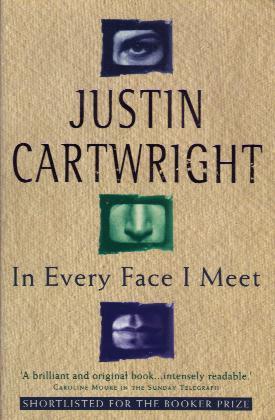
evryface“In Every Face I Meet” is a 1995 Booker Prize-shortlisted novel by Justin Cartwright that takes place over the course of a single, pivotal London day in February 1990 in the life of melancholic forty-something business executive Anthony Northleach.

Northleach, a former talented rugby player (he once trialed for England ‘B’), works for a failing company (what it does is never quite revealed), convinced that the imminent release of Nelson Mandela will fundamentally shift the trajectory of the world, Britain and his own sense of existentialism.

Much of the novel is the inner monologue of Northleach – he recalls, with detailed wonder and awe, a brilliant try scored by English rugby captain Will Carling in a weekend drubbing of the French, he remembers pivotal moments from his childhood in the kingdom of Swaziland, he ponders his marriage, a passionate affair he once had, and his friendship with his best mate and fellow former rugby player Mike, whose life is spinning out of control.

The secondary storyline is that of Chanelle, a crack-addict and prostitute living in a council estate and her black boyfriend/pimp Jason – sporting a medallion of Nelson Mandela around his neck – living on the outer fringes of London society in the final vestiges of Thatcherism.

Without giving too much away, the two worlds – Northleach’s and Chanelle and Jason’s – are on course for a horrifying collision, but what the novel is really about is Northleach’s longing for the past and his disappointment with the present.

It seems that Cartwright has honed in on the second difficult period in an adult male’s life, (the first being adolescence with all its clumsy fumblings and urges) that period from about 40 onwards when there is cause to reflect and ask the question: “Have I lived a purposeful life?”

And if not, “Is there still time to find some meaning?”

Indeed, the character of Northleach must contain parts of Cartwright himself – who was born and schooled in South Africa, the son of a left-wing newspaper editor, and who wrote the book in London, when he was in his late forties.

I have read “In Every Face I Meet” twice – once while travelling overseas in 2010 and now again, when it turned up in a crate of goods shipped over from South Africa.

What’s so enjoyable about reading the book is being inside Anthony Northleach’s head for one day of his life, following him from the office, where he muses about whether his dowdy secretary will ever make it to Thailand, then on the Tube into Soho for lunch in an Italian restaurant with Mike (bumping into Will Carling along the way) where he invites Mike to come with him on his odyssey to Cape Town and finally on his fateful drive home where he encounters Chanelle and Jason.

Northleach, despite his many failings, is immensely likeable with his sardonic political and philosophical commentary, and his honest reflectiveness.

He (and the novel itself) will particularly appeal to white South African-expats (be they in Britain, Australia or entrenched in any other “safe” country),  nearing or past forty that still have a strong sense nostalgia for the old country, especially if you were there at the time Mandela was freed and the inkling of a utopian “Rainbow nation” first emerged.

Indeed, the book was a gift from a South African expat colleague and friend who raved about it and was right when he said I would find it immensely enjoyable to read.

Looking back to February 1990 when Mandela took his first steps to freedom, they do feel like halcyon days, filled with hope and the prospect of something new and fresh, but also scary and uncertain. We certainly lived through history in the making.

Reflecting back on my own life as I fast approach forty – there is much about Northleach’s longings and existential angst that resonates with me.

Mixed emotions surely for Mickey Arthur as Australia lose to South Africa

Mickey Arthur with JP Duminy

Mickey Arthur, photographed when coach of South Africa in 2009.

I cannot help but wonder how Australian coach Mickey Arthur felt after South Africa beat Australia in the final test match to lose the series and their shot at toppling the South Africans as the No. 1 ranked test side in world cricket.

Arthur of course is a South African and about as South African as they come. He’s a ‘Vaalie’ – born on the highlands of the old Transvaal – and played all his provincial cricket in South Africa for the Free State and Griqualand West.

He was appointed coach of the South African team in 2005 and the last time he visited Australia (in a professional sense) just four years ago he coached them to arguably their greatest ever test series win – and their first ever series victory against Australia – since being re-admitted into world cricket in 1991.

Having fallen out with the South African cricket authorities in 2010, he coached Western Australia for a season and was then appointed Australia’s first foreign-born coach in November last year.

Now I am not for one moment suggesting that Arthur is not a thorough professional and has not given it his all as Australian coach – and let’s be honest they  outplayed South Africa in the first two tests and could easily have been No.1 in the world at the end of this series had it not been for FaF Du Plessis’s heroics in the second test – but I find it hard to imagine that Mickey Arthur did not take some pleasure in watching his old team and the players he coached just a few season ago win against the odds against the country of his birth’s greatest sporting rivals.

I have lived in Australia for over eight years, my daughter is Australian and my wife holds and Australian passport and yet I cannot bring myself to support the Australian cricket team or the Wallabies.

In fact I am sure they will put on my grave one day – “He died a Bok fan.”

You see the thing is this, when you grow up in South Africa, beating Australia in any sport (even lawn bowls and darts) is considered the ultimate victory.

Rivalries run very deep between the two sporting nations, and not least because there is a great deal of respect for Australia’s sporting prowess.

South Africans consider Australia one of the great sporting nations – especially when it comes to cricket – and while we have managed to beat all the other teams on a regular basis, beating the Baggy Greens has been tough – this win is only our second ever Test series triumph since re-admission.11187061_24c0790592

I found these two comments on the Supersport website (the equivalent of Fox Sports in South Africa) at the bottom of a story about the latest series win:

“South Africa clobbered Australia. It was so easy, it was scary!”

“Amazing always good to thrash the ozzies.”

Personally, I remember waking up in the early hours of the morning or watching through the night games played against Australia through the 1990s – mostly on the losing side, occasionally a much-savoured win.

The truth is being a South African cricket fan is being the ultimate sporting tragic.

A lot of times it’s been an exercise in heartache – primarily when it comes to World Cups, when we have conjured up defeats from the jaws of victory, and must live with the scars of the 1999 World Cup semi-final tie that will go down as the greatest choke in our rich sporting history, plus the sad saga of Hansie Cronje.

There are many South African expats living in Perth, Sydney and Melbourne who say they support the Australian cricket team and the Wallabies, but I have yet to meet any that I believed with any conviction.

Equally there are South Africans who have lived here many decades who still support the Proteas and Springboks and that I suspect will be me too.

It’s not that I have some deep-seated animosity to the Baggy Greens or the Wallabies, it’s just in my blood.

And it’s also surely in the blood of Mickey Arthur – who is more South African than me.

And though he will surely deny it, I am sure he did take some pleasure out of watching the team he coached to their greatest win four years ago win again this week.

After all, he’s only human!

(And the same I am sure can be said for Robbie Deans, New Zealand-born and raised coach of the Wallabies).