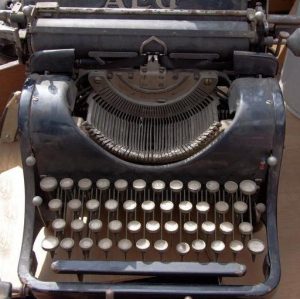
 Ernst Hemingway, F. Scott Fitzgerald, Tennessee Williams, John Cheever, John Berryman and Raymond Carver had at least two things in common: they are all giants of 20th Century American literature and…they were all confirmed, raging alcoholics.
These two commonalities are the basis for ‘The Trip to Echo Spring’ by English author Olivia Laing, a writer and book reviewer for The Guardian and The Observer newspapers.
The title of the book refers a line said by the sexually conflicted character Brick in Tennessee Williams’ great Southern play ‘Cat on a Hat Tin Roof‘. He says it to indicate he is going to get a drink of whiskey: to numb the pain of his “mendacity”.
Laing sets out to explore how these six writers – whom she admired greatly and who shaped the course of American fiction – experienced, thought about, wrote about and dealt with their addiction to alcohol.
She does so by undertaking a physical trip across America in the Spring of 2011 starting in New York and staying in the Elysee, a hotel in Manhattan’s theatre district where Tennessee Williams spent his last days, and finishing in Port Angeles on the Strait of Juan de Fuca in the upper north corner of Washington State, where Raymond Carver lived the last years of his life and wrote some of his best short stories while living with the poet Tess Gallagher.
In between, Laing heads down to New Orleans to sit at the hotel bar where Tennessee Williams came in for a drink and to pick up young men and to attend the annual Tennessee Williams Literary Festival, flies south-east to balmy Key West, Florida to visit Hemingway haunts, takes a train west to Baltimore and North Carolina to follow Fitzgerald’s own journey and then chugs out west to Illinois and Minneapolis, tracing the fatal path of the poet, John Berryman.
Amongst all this travel, are Laing’s reflections and contemplations of the alcoholic lives of these writers interwoven with meditative observations of the vast, constantly changing American landscape, mostly from her train window. She writes:
“In Alabama the earth was red and their was Wisteria in the trees. Somewhere deep in the country the train stopped in a pine forest. It was very quiet. A needle dropped lazily through the warm air. The woman beside me was on the phone…”
“Between Tuscaloosa [Alabama] and Meridian [Mississippi] we ran through uninterrupted miles of forest. The hills were covered in bone-grey timber, split and weather-worn into fantastic shapes. Then open country with cows grazing…
I awoke again at dawn. This time the world outside was white. North Dakota, flat as an ironed sheet.
The constant travel not only gives the book it’s part travel-guide feel, but also it’s momentum. Laing is not only on a journey to discover more about her literary heroes and their afflictions, but is also on a journey of self-discovery; making sense of a disjointed, dysfunctional upbringing and one washed through with alcohol. Her mother’s partner was a violent alcoholic.
One of the great strength of ‘The Trip to Echo Spring” and a sign of its success is that makes you want to go out and read (or re-read) the works of Williams, Hemingway, Cheever, Fitzgerald, Berryman and Carver, reminded as you are of their massive contribution to the world of literature despite the booze, blackouts, collapses, rehabilitations and relapses.

Raymond Carver
Just off the top of my head I could reel off a dozen books, plays and poetry collections I’ve now added to my “must read” list:
– The Glass Menagerie (Williams)
– Sweet Bird of Youth (Williams)
– For Whom the Bell Tolls (Hemingway)
– Death in the Afternoon (Hemingway)
– Tender is the Night (Fitzgerald)
– The Great Gatsby (Fitzgerald – AGAIN!)
– Cathedral (Carver)
– Dream Songs (Berryman)
– Recovery (Berrryman)
Already, a copy of Cheever’s novel “Falconer” about a jailed heroin addict is waiting beside my bed and I’ve begun to read the opening scene of “A Streetcar Named Desire” from an old paperback that was tucked into the book shelf. And I am waiting for the opportunity to watch Cat on a Hot Tin Roof” starring Elizabeth Taylor and Paul Newman as Maggie and Brick.
Laing has great empathy for her heroes because of the writing they produced, but she does not sentamentalise them, brush aside their faults or criticise their weaker efforts. Nor is their any glamorization of alcoholism:
[On Cheever’s drinking in 1966]: “…his drinking had passed well beyond normal measures now, even bearing in mind the norms of the time. When he wasn’t on location [filming his short story ‘The Swimmer’] he wrote in the early hours of the morning and by half past ten could be found twitching in the kitchen waiting for his family to disperse so he could administer the first self-soothing scoop of scotch or gin. If they didn’t leave quick enough he’d drive himself to the liquor store, where he’d buy a bottle, motor on to some pretty back street and sit there suckling, inevitably spilling a good slug down his chin.
All six writers were at times monstrous personalities, capable of inflicting great cruelty on their wives, children, lovers, friends and families: Raymond Carver almost killed his wife and was resentful of his own children, Tennessee Williams once defecated in a university hallway, John Cheever projected his closeted homosexuality into rage against his wife.
The book is rich with analysis of the works of fiction these writers produced as well as their non-fiction articles and memoirs. But she is no literary snob, relishing the opportunity to join a tour group visiting Hemingway’s home and museum in Key West or do a Tennessee Williams walk in New Orleans or enjoy meals with retired farmers on her train journeys.
The conclusions she reaches about these writers are not surprising – that they drank to deaden the pain of their childhood, their parents, their sexuality, their broken-ness, their perceived and real failures, while writing was a way to try to become whole again.
None, apart from John Cheever, managed to stop drinking though they all tried. None lived into old age and two – Berryman and Hemingway – died at their own hand.
But ultimately it is the journey that Laing takes you on through the minds and immense body of work of these giants of fiction that is the real joy
Not the destination.
Links:
An interview with the author, Olivia Laing (Buzzfeed)
A review of The Trip to Echo Springs by The Times Literary Supplement
Olivia Laing’s personal website

 Freshlyworded