The horror and futility of war: Reading ‘All Quiet on the Western Front’

Before watching the award-winning Netflix movie ‘All Quiet on the Western Front‘ I decided to first read the famous book by the German writer Erich Maria Remarque, which was published in 1929.

There’d been some criticism of the film – German critics had panned it for turning a beloved literary classic into an Oscars spectacle, while historians had slammed its apparent historical inaccuracy – but beside that, I wanted to take in the story in its original form (and use my own imagination), before watching the latest on screen adaptation.

Interestingly, the book’s famous and oft-used title (usually quoted without the irony) was coined by an Australian soldier and Oxford scholar Arthur ‘AW’ Wheen who fought in the Great War and who was awarded three military medals for bravery.

The original German title ‘Im Westen nichts Neues’ translates as ‘Nothing New on the Western Front’. But Wheen, who went on to translate a number of Remarque’s novels, was so profoundly moved by the story that he coined the more poetic English title. This along with his well-received translation of the book played a key role in its enduring success and hallowed status nearly 100 years after being published as one of the great First World War novels.

An often times mentally grueling read, Remarque condenses all the horror, tragedy and futility of the Great War into just over 200 pages of terse, diary-style entries narrated by the brave and philosophical young German soldier Paul Baumer.

Paul, just 19-years-old but already a veteran of the conflict, is part of a close-knit group of five school friends – Tjaden, Muller, Kropp and Leer – and their 40-year-old leader, “shrewd, cunning, and hard-bitten” Stanislaus ‘Kat’ Katczinsky who are stationed a few miles from the front, where the sounds of gunfire and bombs never stops rumbling.

It is 1918, and the soldiers pray that the war will end soon, that the rumours of Germany’s surrender will come true, and that they shall survive.

One of the great strengths of the novel is the way Remarque combines both the horrors of the trenches with the more mundane, but also poignant experiences of a soldier’s life to give a fully rendered impression of those times.

Away from the battlefield, we join Paul and his friends as they enjoy the simple pleasure of receiving mail, sharing extra rations or stretching out in a grassy meadow where they find joy in “wonderfully care-free hours” as bumble bees drown out the ominous rumbles from the front.

These are the quiet moments when their youthfulness resurfaces and these battle-hardened soldiers can be, hopeful men again. Not knowing when they shall meet their end, they immerse themselves in the brief respite and try to forget about the return to front where they will once again become part of the terrifying war machine.

Remarque, who was a war veteran himself, was able to draw on the horrific scenes he witnessed whilst fighting in the trenches to put the reader right there among the mud, rats, mustard gas and wounded, dead and dying.

Remarque’s novel takes you right into the horror of the trenches.

We see men living with their skulls blown open; we see soldiers run with their two feet cut off, they stagger on their splintered stumps into the next shell-hole… we see men without mouths, without jaws, without faces; we find one man who has held the artery of his arm in his teeth for two hours in order not to bleed to death. The sun goes down, night comes, the shells whine, life is at an end.

In another horrific scene, Baumer writes of the terrible screams of horses injured by bombs and gunfire, the belly of one “ripped open the guts trail out” as it rises to its feet but then falls over, tripping on its own intestines.

“Torches light up the confusion. Everyone yells and curses and slaughters. The madness and despair of many hours unloads itself in this outburst. Faces are distorted, arms strike out, the beasts scream; we just stop in time to avoid attacking one another.”

If the horror of the book was not enough, midway through reading descriptions like this, I felt compelled to look on YouTube for archived footage of the viscous battles Remarque was writing about.

One video segment depicted the total chaos on the battlefield, as mortar bombs exploded, bodies crumbled and soldiers fired at one another, then charged with bayonets that sliced into bellies. Because of the jerky motions, the scene felt almost cartoonish.

I also came across a scene of soldiers making their way through the nightmare landscape of barren hills and deep craters. Shot from behind them, it showed one soldier advancing on foot, with another behind him who appeared to be crawling. Only he wasn’t crawling I soon realised, most of his lower body had been blown away and he was dragging himself along the ground by what remained of his torso. (The video is titled “Verdun is a human slaughterhouse“).

It was utterly horrific, and just so incredibly sad. I wished I’d never seen it. But it did highlight that there was no hyperbole in the descriptions of Remarque’s young narrator, Paul. While All Quiet on the Western Front is a fictional story, the experiences endured by Paul and his comrades are accurate and true.

The power of Remarque’s storytelling is that he not only manages to capture these unimaginably awful things that happen in the trenches and among the craters and barbed wire entwined battlefields, but the mental anguish of those caught up in the fighting and the futility of it all.

This is brought most horribly to life in a devastating episode where Paul is forced to kill a French soldier who falls into a pit he is hiding in after taking cover from the incessant shelling and relentless machine gun fire.

Paul watches as the soldier’s young life slowly seeps away in front of his eyes.

Paul starts to question why this young man, whom he discovers had a wife and child, had to die. They are a similar age and in another time might have been friends.

He ends up making a futile vow to write to the dead soldier’s wife after finding a picture of her and their daughter in his wallet.

“Comrade,” I say to the dead man, but I say it calmly, “to-day you, to-morrow me. But if I come out of it, comrade, I will fight
against this, that has struck us both down; from you, taken life–and from me–? Life also. I promise you, comrade. It shall never happen again.”

Paul is the philosophical voice and conscience of the millions of young men, who if not killed, were traumatised beyond hope from the things they did in the fight for survival.

For me the most moving and tragic episode, and which illuminates the mental devastation of the war on young soldiers are the scenes when Paul is given a 17 day leave pass and journeys back to his home village, to see his family.

Remarque captures so perfectly the feeling of both being at home among your loved ones, but also that terrible realisation of having left everything you once knew far behind, of being utterly and irrevocably changed and of never ever being able to make that journey back to what life once was.

I imagined leave would be different from this. Indeed, it was different a year ago. It is I of course that have changed in the interval. There lies a gulf between that time and to-day. At that time I still knew nothing about the war, we had only been in quiet sectors. But now I see that I have been crushed without knowing it. I find I do not belong here any more, it is a foreign world.

Finishing the book, I realised I knew so little about the First World War, especially when compared with Second one that broke out just 20 years later.

The reasons for the Great War, as I have since read are so much more complicated.The famous assassination of Archduke Franz Ferdinand in Sarajevo merely the spark that lit the fuse.

Industrialisation, power struggles, inequality between nations and inbred racial hatred all played apart in the greatest ever mobilisation of millions of young men to fight and die in the trenches.

This was a war where armies were so large and so easily replenished that no one could ever really win, resulting in loss of life so huge and horrors so terrible they are hard to fathom, even as new atrocities emerge in the Ukraine war, fueled by similar forces: power, greed and hatred.

All Quiet on the Western Front is Erich Maria Remarque’s poetic and visceral reminder that there are no real victors in war, only victims.

Will the new movie do justice to that message? (I’ll report back).

Murdering the ratings: Why Jeffery Dahmer got two hit TV shows

“The only way I’ll ever get a television series made about me is if I become a serial killer,” I told my wife sarcastically, as we started watching a new Netflix show “Dahmer – Monster: The Jeffery Dahmer Story” a dramatised retelling of the crimes of one of the world’s most infamous (and revolting) mass murderers.

“Do I need to be worried?” she replied.

“Maybe….”

We’d watched about 40 minutes of the first of 10 episodes, when we both decided we’d had enough.

An African American man had been lured to Dahmer’s dingy Milwaukee flat, where he’d been partially drugged, threatened with an enormous knife and forced to sit on a blood-stained bed, while awaiting his hideous fate. A huge blue, industrial vat sat ominously in the corner of the room and the atmosphere was oppressive, almost unbearable.

“I don’t think I am in the mood to sit through 10 episodes of this,” I remarked, at which point my wife nodded in agreement and we stopped watching and found something distinctly lighter to enjoy with our cups of tea and biscuits. (For the record it was “Julia” about the life of the famous American television chef Julia Child, an excellent show).

And then what did I do a couple of weeks later?

Undecided about what to watch while my wife gobbled up episodes of the Walking Dead – I can’t handle the tension of that show, nor the constant gargling sounds of zombies – I started watched the other Dahmer show, the documentary series “Conversations with a Killer: The Jeffrey Dahmer Tapes”.

Based around previously unheard taped interviews with Dahmer and Wendy Patrickus, who was his defense attorney, the three part series travelled back and forward in time, cutting from grainy, homemade videos of Dahmer as a sweet, fair-headed child to those grisly scenes at the notorious Milwaukee apartment block as the barrels of human remains were carried down the stairs by crime scene investigators. In between we heard excerpts from the tapes in which Dahmer confesses his crimes and tries, unsuccessfully to explain his actions, and interviews with detectives, psychologists and former friends and neighbours.

There have been plenty more of these shows that have kept me mesmerised. I’ve watched dramatisation of the life of Ted Bundy (starring Zac Efron), a BBC series about London asphyxiator John Christie (played by Tim Roth) and another London killer Denis Nilsen (played to perfection by David Tennant) plus numerous documentary series about Richard Ramirez AKA The Night Stalker, David Berkowitz AKA The Son of Sam and. Peter Sutcliffe AKA The Yorkshire Ripper.

I’ve also watched another Netflix documentary series about Ted Bundy (Conversations with a Killer: The Ted Bundy Tapes), while there’s another documentary series on my “must watch list” about the American serial killer Wayne Gacy ( who terrifyingly dressed up as a clown at children’s parties).

I don’t there is anything particular wrong or unusual about this viewing behaviour – I’m certainly, to calm my family and friends, not trying to pick up any tips. The truth of the matter is that everyone is part fascinating, revolted and intrigued by the “evil that men do” particularly of the psycopathic kind and especially when the monster looks like Dahmer: a normal, even somewhat handsome young man.

With 856 million hours of combined viewing and counting, The Jeffery Dahmer Story has been watched more than 95 million times from start to finish. Only Squid Game (1.65 billion hours) and Stranger Things Season 4 (1.35 billion) have been watched more.

Alongside the success of the dramatised series, the Jeffery Dahmer documentary series has also been a minor hit for Netflix, racking up millions of hours of viewing time.

No doubt Netflix executives must be delighted, though that might be tempered with the disappointment that there can be no second season. However, you can be certain someone at Netflix HQ is working on the next series and accompanying documentary about another sadistic mass murder.

While The Jeffery Dahmer Story has been lauded for its superb acting, disturbing and compelling storyline, and gritty realism, it seems to have emerged for no real purpose except gaudy entertainment. Dahmer was captured in 1992 and murdered in jail by a fellow inmate in 1994. Many would wish his name never be mentioned again.

But rather than forget about him and his reign of terror, Netflix has brought Dahmer’s vicious killing, dismembering and cannibalism spree back to live in vivid colour. In the process, their huge success has created fresh torment for the families of the 17 boys and young men who would have been alive today were it not for his unfathomable compulsions.

The same could be said for the documentary series though at least this provides fresh insights – these tapes have never been heard before – and gives the viewer a sense of the terrible impact his killing spree had on the Milwaukee community and the families of his victims.

(Incredibly, Dahmer could have been stopped after his very first killing – that of hitchhiker Stephen Hicks in 1978 when Dahmer was just 18 – had the police officer who stopped him to perform a drink driving test taken the time to look at what was in the garbage bags on the backseat, instead of believing Dahmer’s story that they contained animal remains).

Not surprisingly, the release of “Dahmer – Monster” has been met with rage, anger and disbelief by the family’s of his victims who were apparently not consulted about the making of the show, and which has reignited the grief they have had to live with for more than 30 years.

“It hurts. I shed tears. They’re not tears of sorrow, and it’s not disbelief in the Lord. The tears [are] tears of hurt because it hurts. It hurts real bad. But you have to trust and pray and just keep going day by day,” said Shirley Hughes, the mother of Tony Hughes, an aspiring male model, who was just 31 when Dahmer killed him.

The show’s writer Ian Brennan (who also wrote the hit musical series Glee) has defended his work as an “objective” portrayal, though professes amazement at its success:

“I think we show a human being. He’s monstrously human and he’s monstrously monstrous and that’s what we wanted to sort of unpack,” Brennan told news website Page Six at its premier

Also coming to its defense has been journalist Nancy Glass, the last person to interview Dahmer.

She perhaps gave the most telling and obvious reasons for the show’s success and many other similar shows”

“I know that that may seem bizarre, but I think it’s more about morbid curiosity than romanticism,” she told the New York Post.

One wonders what Dahmer himself would thought of a 10-episode dramatisation of his life and a three-part documentary series more than 30 years after his capture. Given his manifest inability to control his urges, it would be entirely plausible to think that he’d have “gotten off” on watching it all happen again. One can only but shudder at the thought.

“It was a compulsion. It became a compulsion,” he said in his last interview (watched 35 million times on YouTube).

In these interviews, Dahmer is softly spoken, articulate and appears highly intelligent. He also had a by all accounts happy childhood, and is described by his parents as a loving child, though one who took an interest at an early age in dead things.

Somehow this morphed into an obsession with the male human body, though why he then went on to murder, dismember, eat and preserve parts of his victims, even Dahmer cannot fathom.

Perhaps it this potential in everyone, to come apart at the seams, that drives our own fascination with true crime and violent killers.

No doubt Netflix and the other streaming platforms are well aware of this and have plenty more similar shows up their sleeves.

Reasons to watch ’13 Reason Why’

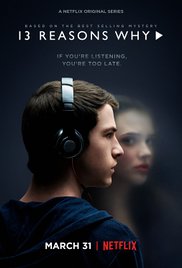
13 reasons whyLike many people, I watched the Netflix teen suicide drama ‘13 Reasons Why’.

For those who have not seen it, its the story about attractive high school student Hannah Baker who decides to kill herself after series of horrendous personal events convinces her that her life is not worth living.

But before she kills herself, Hannah makes a series of audio tapes detailing all the reasons for her forthcoming suicide and, implicating all the people in her life that drove her there.

The series has garnered a huge amount of controversy and outrage – mostly from parents and teachers – because of its subject matter and graphic depiction of Hannah’s suicide, as well as two brutal and graphic rape scenes.

Among the claims made often about the show is that it is a virtual manual for how to top yourself and that it depicts suicide as some kind of triumphant payback.

Television critics though have hailed the show as groundbreaking and one of the best shows yet to come from the Netflix production stable.

But the uproar has seen the TV series banned in some schools in the US and Canada, the book upon which the movie is based also banned, while some schools have banned kids from talking about it with their classmates (as if that is ever going to work).

In Australia, there has also been criticism of the show from mostly older people, including Daily Telegraph write Louise Roberts who thought it was a missed opportunity and should have been a show called ’13 Reasons Why Not’ where Hannah Baker chooses not to die.

“The series feeds kids a one-dimensional view: kindness can fix anyone but there was no kindness for Baker so she “got her own back” from ­­beyond the grave,” Roberts wrote.

Another critic, MammaMia’s Jessie Stephens called it at best “misguided and naive, and at worst, dangerous and irresponsible” with these types of angry responses repeated by others.

Frankly, its all a little bit ridiculous. It reminds me of those conservative people who claim listening to Rock ‘n Roll would warp young minds in the 1950s and 1960s or that violent movies inspired people to commit horrendous acts. Or that watching pornography turned you into a sexual pervert.

If anything, all the adult outrage is only going to encourage more teens to want to watch the show  – and I think they should.

Why?

Well firstly, it’s a show that honestly examines life from the point of view of a modern teenager. Bullying via social media. Drug and alcohol use. Sexual promiscuity. Abusive parents. Homosexuality. And yes suicidal thoughts and depression. If anything watching 13 Reasons Why should be compulsory viewing at high schools and then used as a way to start conversations and explore these difficult, but crucial topics.

“All that drama and craziness we went through during high school seems a lot less important now, but watching 13 Reasons Why, I’m reminded of how enormous every little problem seemed at the time,” wrote Erik Kain, a contributor to Forbes.com

Secondly, 13 Reasons Why does not, in my opinion glorify suicide in any way. In fact, the graphic nature of Hannah’s demise in the final episode is so awful – and so final – it acts more as a deterrent to someone contemplating something so drastic.  Personally, I cannot imagine how anyone could watch that horrible scene and be inspired to copy it. 

Thirdly, the show does not resort to one-dimensional charactors that you might find in other lightweight shows that deal with teenagers (a prime example being the over the top Netflix show Riverdale, based on the Archie comics). The main characters in 13 Reasons Why are complex, emotional people, trying to fathom their identities and make sense of the adult world. Take for instance the sage-like Tony Padilla, the Latino guy in his leather jacket and red Ford Mustang who despite the faux machismo is actually gay.

“In Tony, I saw a familiar struggle to reconcile gayness, machismo, and the Catholicism that is so prevalent in our culture,” wrote writer John Paul Brammer in TeenVogue.

Tony I would suggest is a strong role model. He is insightful, intelligent, kind and nurturing. He is also comfortable with his sexuality. He offers compassion in the often cruel and callous lives of emerging adults.

A fourth good reason to watch 13 Reasons Why is its depiction of adults as flawed and fallible human beings. Adults make mistakes.  They don’t understand young people or misinterpret their behaviour. They miss all the seemingly obvious signs. One of the most unfuriating characters in the show is the school counsellor Kevin Porter, a man completely out of his depth who when Hannah Baker comes to him for help, can’t seem to stop being distracted by his mobile phone.

Fifthly, it is compelling, brilliant television. Difficult to watch at times for sure but also with some sublime and beautiful moments amid all the angst. It’s also superbly acted by its young cast of future Hollywood stars. 13 Reasons Why embraces and explores big themes like friendship, trust, betrayal, and importantly, forgiveness of oneself for mistakes we make in life.

We need more shows that depict life from the point of view of the teenage mind. Growing up is complex, painful and bewildering.