The Bob Dylan Project: Album 5 – Bringing it all Back Home

Title: Bringing it all Back Home (1965)

Length: 47min 21sec

Number of songs: 11

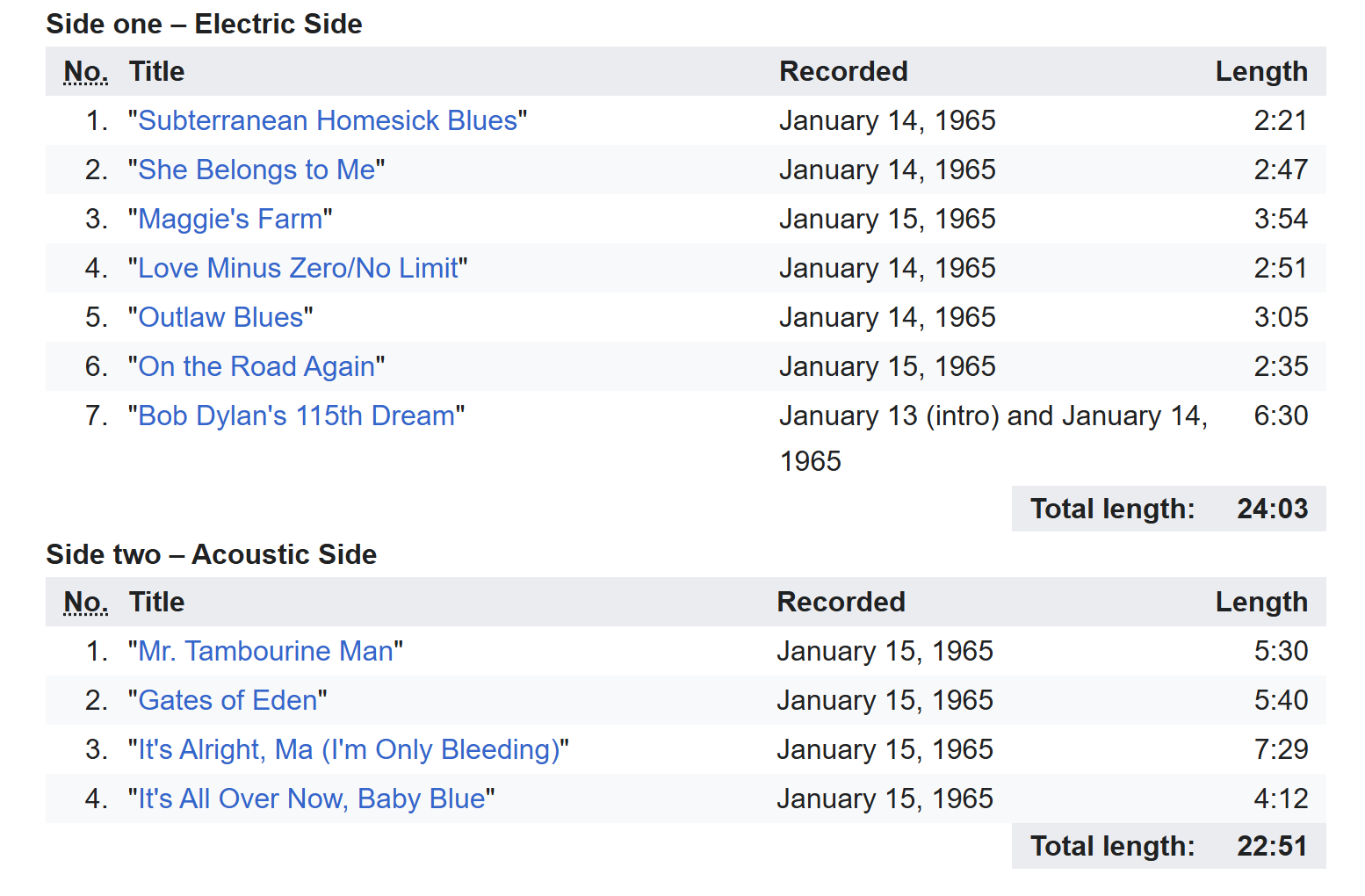
Best tracks: Subterranean Homesick Blues, Maggie’s Farm, Mr Tambourine Man, Gates of Eden, It’s Alright Ma (I’m Only Bleeding), It’s All Over Now Baby Blue, On the Road Again, Bob Dylan’s 115th Dream

If I could choose just one track: Mr Tambourine Man

Freshlyworded rating: 9/10

This album sparked a huge amount of controversy when it was released in March 1965, as it was the first time Dylan incorporated electronic instruments and a host of session musicians.

1965 was also the first time Dylan played an electric guitar at a live gig. This occurred at the Newport Folk Festival in Rhode Island in July of that year where he was both cheered and booed.

No doubt the booing was a result of Dylan being viewed as folk hero firmly embedded in the old ways of storytelling with just an acoustic guitar and his faithful harmonica.

But honestly, this confected outrage pails into insignificance when you listen to what is one of his best albums. And he was still just 24!

The album includes a number of classic Dylan tracks, most notably one of his most covered songs, ‘Mr Tambourine Man’. While The Byrds had a number one hit with their folk-rock/big band recording of the song, which is great in its own way, I prefer the Dylan version. It’s a very moving, poetic song with mesmerising lyrics and surrealist quality to it.

I mean has anyone written lyric as beautiful as this, the final stanza of the song:

And take me disappearing through the smoke rings of my mind
Down the foggy ruins of time
Far past the frozen leaves
The haunted frightened trees
Out to the windy beach
Far from the twisted reach of crazy sorrow
Yes, to dance beneath the diamond sky
With one hand waving free
Silhouetted by the sea
Circled by the circus sands
With all memory and fate
Driven deep beneath the waves
Let me forget about today until tomorrow

I think Dylan’s strained, expressive style of singing is a perfect companion for this song. Funnily enough, I was listening to a radio show recently where the hosts were discussing cover versions of classic songs that were better than the original, and one of the hosts joked: “Every cover of a Bob Dylan song.” I bristled at that as I love all his original versions of songs like ‘Blowin in the Wind’, ‘The Times They are a Changin’ as well as his version of the traditional folk ballad, ‘House of the Rising Sun’ (rather than the more famous version by The Animals).

Anyway, I would put ‘Mr Tambourine Man’ on my list of Top 10 Greatest Dylan songs any day of the week.

The album itself is full of gems. It kicks off with a famous track ‘Subterranean Homesick Blues’, a fast-paced, word-play song that’s unlike any other song he’d recorded at that time. It begins with those famous lines:

Johnny’s in the basement
Mixing up the medicine
I’m on the pavement
Thinking about the government

And ends with one of my favourite Dylan rhymes:

The pump don’t work
’Cause the vandals took the handles

It was also one of the first songs to be promoted via a music video. It shows a very young, almost disinterested looking Dylan flipping through a series of cards featuring words from the song. In the background, you can see beat poet Allen Ginsberg in conversation with folk singer Bob Neuwirth.

The album features a great collection of Blues-style tracks including the classic “Maggie’s Farm” (the song that created all the controversy at the Newport Folk Festival) which is about worker exploitation and has lines like:

Well, he hands you a nickel
He hands you a dime
He asks you with a grin
If you’re havin’ a good time
Then he fines you every time you slam the door

There are two great stomping, rip roaring blues tracks ‘On the Road Again’ and ‘Outlaw Blues’ and then a lengthy track titled ‘Bob Dylan’s 115th Dream’, one of his great, crazy narrative songs that as the title suggests has a very dream-like quality.

Dylan sings in the first person, a shipmate aboard the Mayflower (the ship that brought English pilgrims to America shores) captained by “Captain Arab” (a variation on Captain Ahab from Moby Dick) who gives up the hunt for the white whale when he spots land and “calls it America”. The song follows the narrator on this crazy, surreal adventure to the Bowery slums of New York, where he is “thrown in jail for carrying harpoons”, escapes a restaurant “exploding with boiling flat” and ends with Dylan back on a ship heading out of the bay where…

I saw three ships a-sailin’
they were all heading my way
I asked the captain what his name was
And how come he didn’t drive a truck
He said his name was Columbus
I just said, “Good luck”

It really entertaining song in the same vein as ‘Motorpsycho Nitemare’ featured on ‘his fourth album, ‘Another Side of Bob Dylan’.

The final three tracks are all classics. ‘Gates of Eden’ is one of those undiscovered gems I have unearthed in making my way through the albums in order. It’s a brooding and surreal song that showcases Dylan’s genius as a mystical poet. The rhythm and ebb and flow of the song combine powerfully with the lyrics, which create a sense of foreboding and gloom.

‘It’s Alright Ma (I’m only Bleeding)’ is an epic, depressing masterpiece about the corruption and materialism of society, and the many other things wrong with the world. Again, the word play turned into song is brilliantly executed with the emotional refrain of a son to his mother: “It’s alright ma”. It reminded me a fair bit of the songs of Rodriguez in the way the lyrics are almost read before the refrain (perhaps Rodriguez was influenced by this very song). It also shows Dylan’s nack for the eye-catching, though-provoking phrases such as “That he not busy being born is busy dying” and…

Although the masters make the rules
For the wise men and the fools

I got nothing, Ma, to live up to

The album ends with the beautiful, melancholy song “It’s all over now, Baby Blue”, a song about the inevitability of having to move on. It’s filled with so many great lines. Not surprisingly, it’s been covered by many other artists.

It’s a song which like so many on this album showcases Dylan’s never properly acknowledged great, emotive and quite beautiful singing voice. It is also an album where his skills as a poet come to the fore.

It’s a real masterpiece.

The Bob Dylan project: Album 4: Another Side of Bob Dylan

Title: Another Side of Bob Dylan (Augst 1964)

Length: 50min 37s

Number of songs: 11

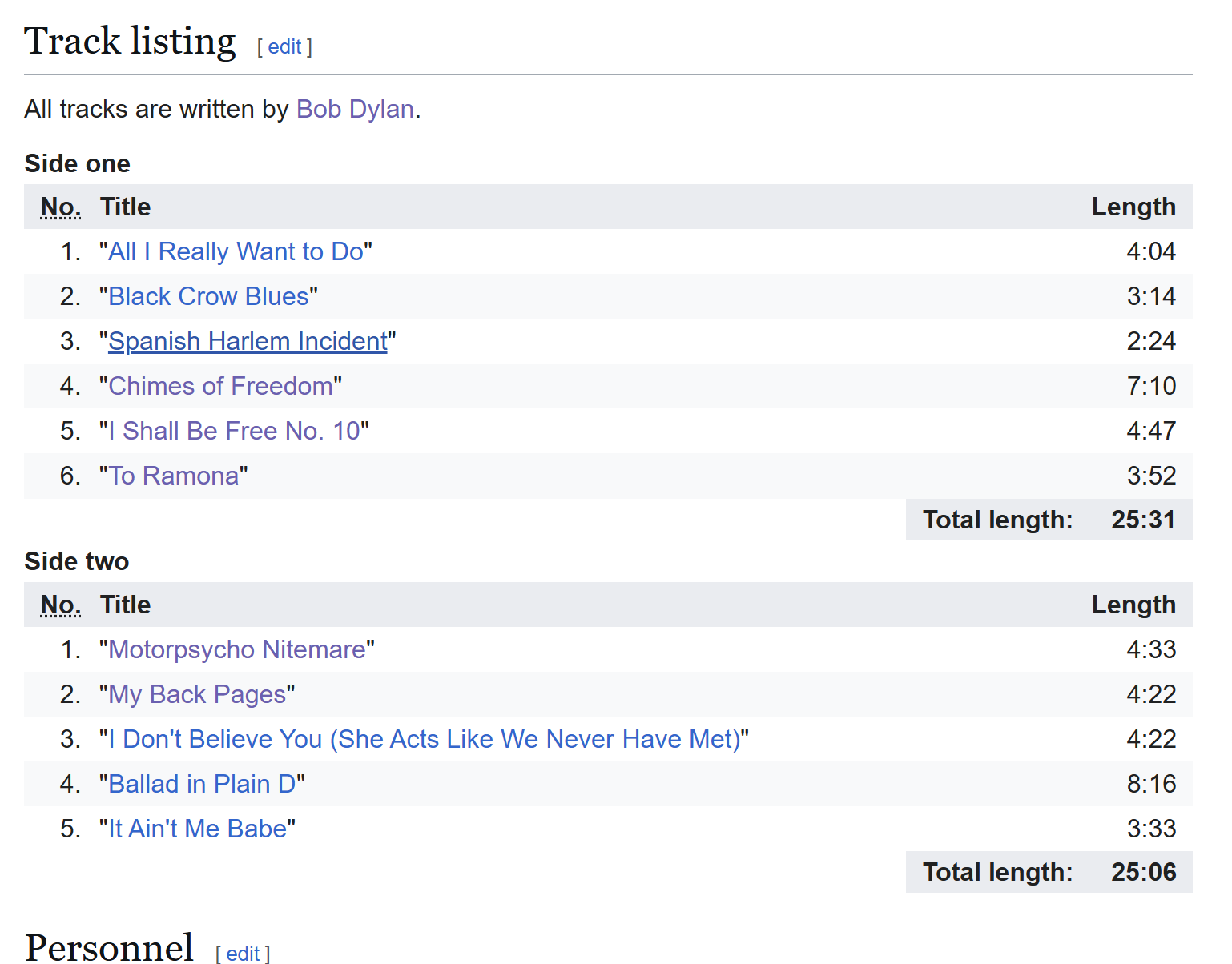
Best tracks: All I Really Want to Do, Chimes of Freedom, To Ramona, My Back Pages, It Aint Me Babe

If I could choose just one track: My Back Pages

Freshlyworded rating: 8/10

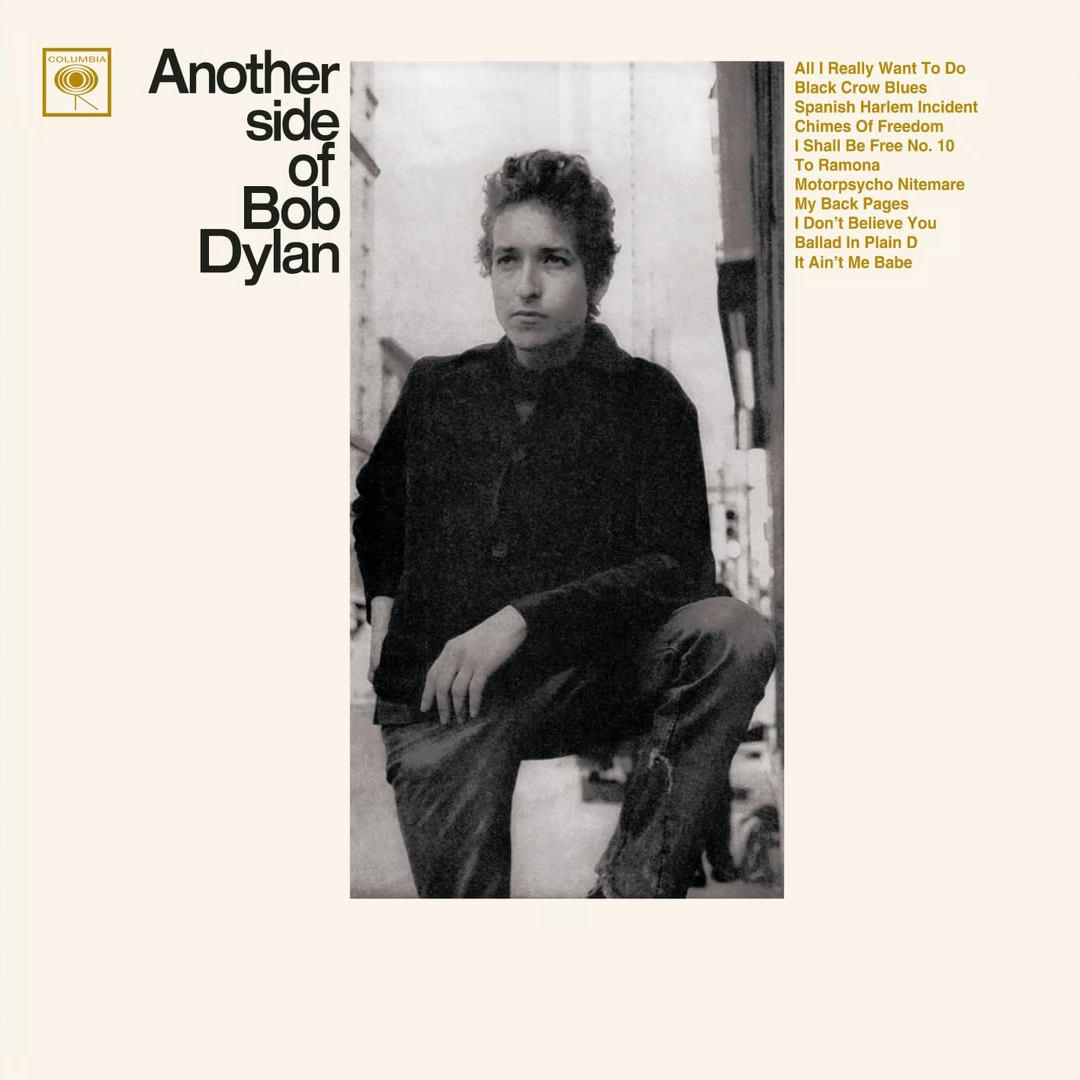
Album cover, copyright Columbia Records. Low-res version used for review purposes under fair use

One of the great pleasures of listening to the Dylan albums in the order they were recorded is discovering new musical gems by the maestro, and seeing his talents and skills evolve.

On “Another Side of Bob Dylan”, there are a bunch of hidden gems, in addition to a number of classics I already knew well.

Among the new tracks I discovered on this great album and which I have listened to many times is the intriguing “My Back Pages” and its thought-provoking refrain: “Ah, but I was so much older then/I’m younger than that now.”

I’ve pondered a fair bit on that phrase, which seems to go against the conventional idea that we acquire knowledge and wisdom as we get older. For Dylan it may have meant he was reassessing his idealism and “ideas that life is black and white” and his naivety of “fearing not that I had become my enemy” It’s a beautiful song, the lyrics are full of dense poetic imagery.

This reminds of another pleasure I’ve discovered, that of taking the time to listen to each album and get to know the songs and lyrics. I am really delving into Dylan’s poetry and figuring out what he is saying. It reminds of reading poetry when I was studying English at university. “My Back Pages” may not appear on compilations or greatest hits, but it’s a song every Dylan fan should listen to.

Among the other well-known classics on this album are “Chimes of Freedom” in which lightning bolts on a stormy night are transformed into these pulsating symbols of freedom, an image that carries through the powerful song where Dylan praises the “warriors whose strength is not to fight”, the “refugees on the unarmed road of flight” and “ev’ry underdog soldier in the night”

“To Ramona” is an exquisite, melancholy love song which shows the depth and breadth of Dylan’s songwriting and the softness and emotional tone of his voice when he was at the start of his career.

In keeping with the title of the album, the collection of songs has a more eclectic feel by virtue of the very bluesy, “Black Crow Blues”, the humorous talking blues track “I Shall be Free No. 10″ where he takes on Cassius Clay (Muhammed Ali) and has some fun with rhyming phrases like: 14, 15, 16, 17, 18, 19, gonna knock him clean right outinof his spleen”

I also loved the humorous “Motopsyscho Nitemare” in which Dylan finds himself at a farmhouse seeking a bed for the night and convincing the farmer that he is not a travelling salesman with designs on his daughter “who looked like she stepped out of La Dolce Vita”. There is also references to Anthony Perkins/Norman Bates and the shower scene showing Dylan was hip to the cultural scene at the time. As with most Dylan songs, there is a deeper resonance beyond the humour: the undercurrent of fear amid the Cold War at the time about communist and distrust in rural America.

The album ends with the plaintiff ‘It Aint Me Babe”, a song which has been covered many, many times and has become a folk rock standard.

The Bob Dylan project: Album 3: The Times They are a-Changin’

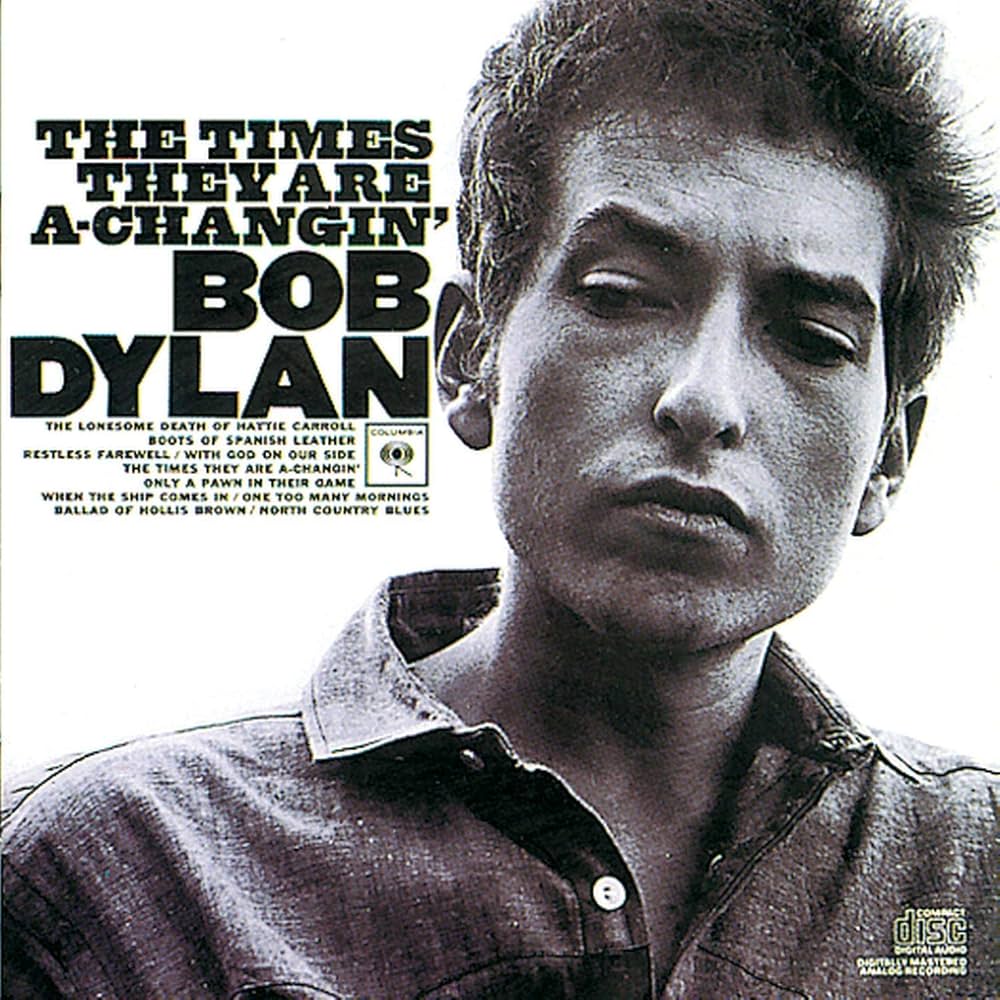
Album cover, copyright Columbia Records. Low-res version reproduced under Fair Use for review purposes

Title: The Times They are a-Changin’

Length: 45min, 36s

Number of songs: 10

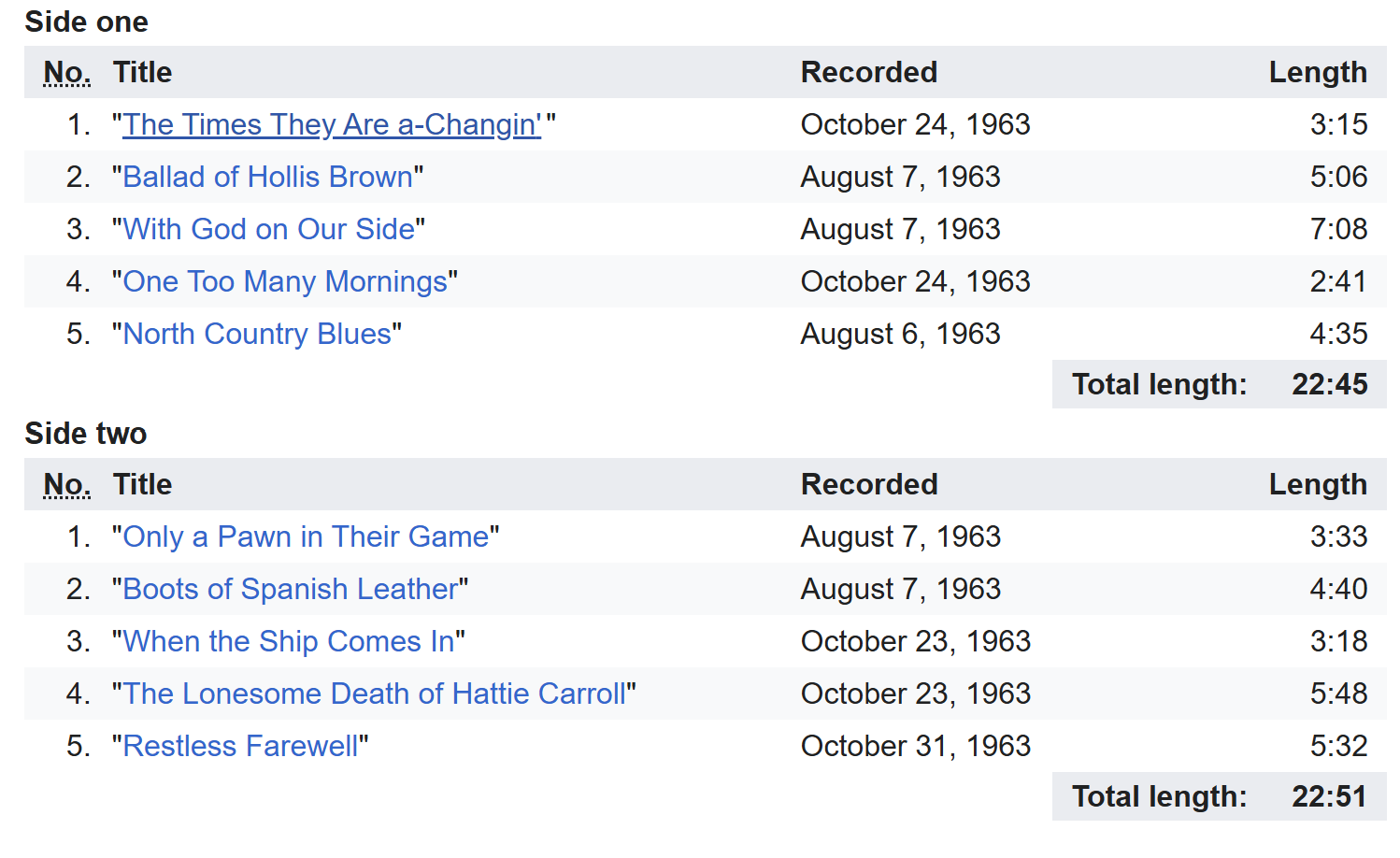
Best tracks: The Times They are a-Changin’, Ballad of Hollis Brown, With God on our Side, North Country Blues, Boots of Spanish Leather, When the Ship Comes in, The Lonesome Death of Hattie Carroll

If I had to choose just one track: The Lonesome Death of Hattie Carroll

Freshlyworded rating: 9/10

Thoughts:

While the title track from this album is rightfully one of Bob Dylan’s most famous and revered songs, for me the hero track and an absolute masterpiece on this album (and surely among his best songs ever) is “The Lonesome Death of Hattie Carroll”.

Running just under six minutes, Dylan tells the story of the murder of Hattie Carroll, an African American barmaid, killed in a drunken rage in a Baltimore Hotel in February 1963 by 24-year-old Wiliam Zatzinger, a wealthy, white tobacco grower – and the injustice fuelled by racism that followed.

The song is a perfect combination of vivid poetry, acoustic guitar and Dylan’s plaintive, soulful voice.

Dylan wrote the song just six months after Carroll was murdered and it no doubt struck a chord among the civil rights movement at the time. Every sentence of the song is wonderful.

Zantzinger killed Hattie Carroll, Dylan sings: “With a cane that he twirled around his diamond ring finger” and after his arrest “Reacted to his deed with a shrug of his shoulders”.

He contrasts the Zantzinger’s wealth and high society connections with Carroll’s role as a servant “Who carried the dishes and took out the garbage”.

A few months later, “in the courtroom of honor” Dylans sings of the judge who “Stared at the person who killed for no reason” and then in a devastating line “handed out strongly for penalty and repentance William Zantzinger with a six-month sentence”.

As he tells the story of Hattie Carroll’s murder Dylan sings the repeated refrain: “But you who philosophize, disgrace and criticize all fears Take the rag away from your face, now ain’t the time for your tears.”

After singing how Zantzinger literally got away with murder, Dylan ends the song with: Oh, but you who philosophize, disgrace and criticize all fears. Bury the rag deep in your face for now’s the time for your tears“.

Just brilliant!

I listened to this song and all the other nine tracks of this album whilst walking my dog along quiet country roads and sleepy suburban streets in Lancefield north of Melbourne (where I live) and on holiday in Birregurra, a small town in the Otways region of Victoria. Both were the perfect backdrop for letting the wonderful storytelling songs of this album seep deep into my bones.

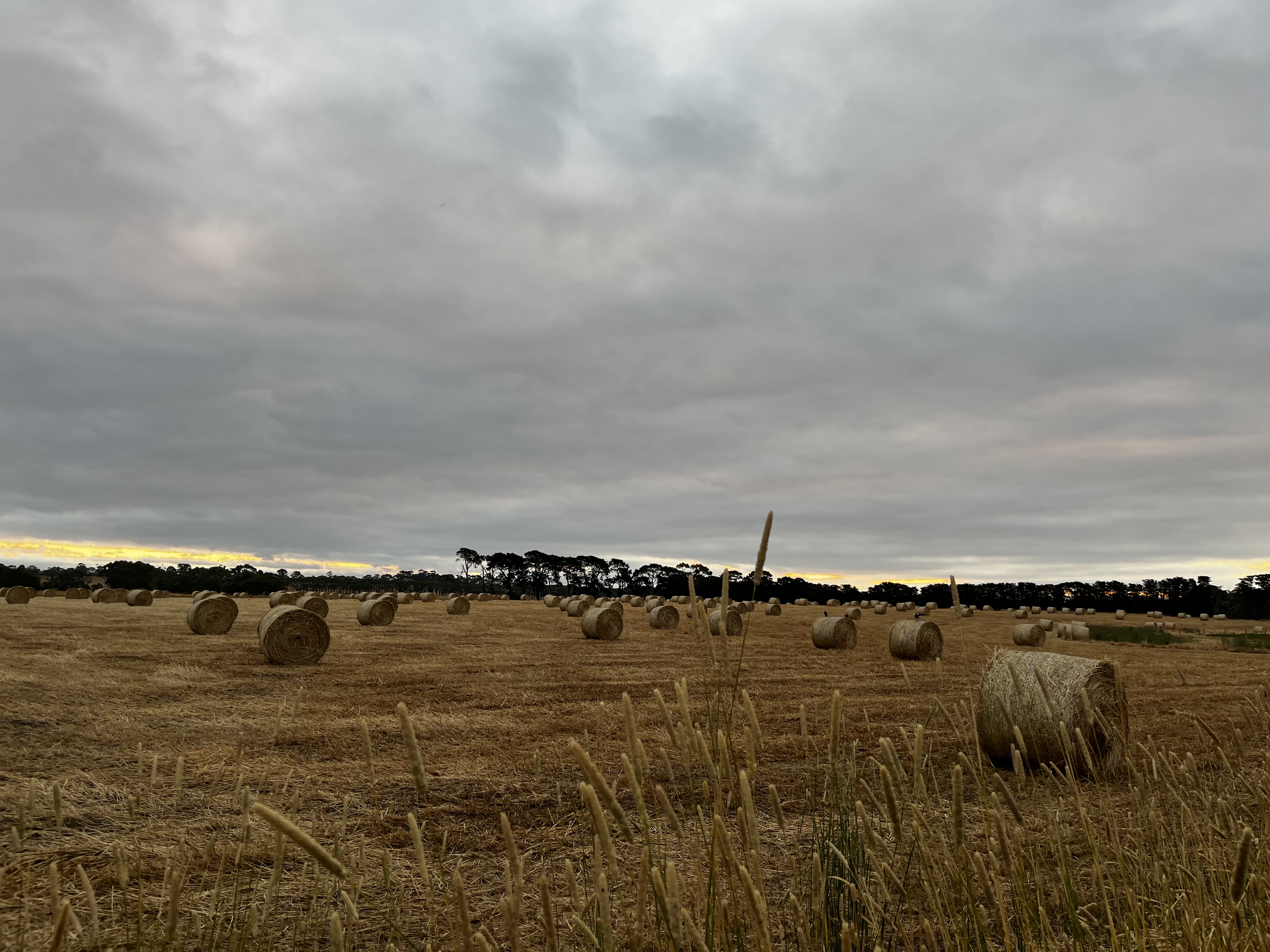
Hay bales in a field in Birregurra, Victoria

Alongside the Lonesome Death of Hattie Carroll, I of course loved The Times They Are-a-Changing, a universal anthem about profound change that’s coming to society. At the time it was recorded, this change was the civil rights and anti-war movement but it’s wonderful lyrics still inspire people today who are pushing for change amid the punishing regimes governing the world:

Come mothers and fathers
Throughout the land
And don’t criticize
What you can’t understand
Your sons and your daughters
Are beyond your command
Your old road is rapidly agin’
Please get out of the new one
If you can’t lend your hand
For the times they are a-changin’

I also loved another haunting, narrative song, “Ballad of Hollis Brown” which tells the story of a poverty-stricken South Dakota farmer and the events leading up to a desperate act.

“With God on Our Side’ is a song that like “The Times They are a-Changing” reverberates loudly today, with its mockery of how believing in God justifies acts of war and America’s superior moral position.

“North Country Blues” is a wonderfully melodic, yet dark song sung in the first person about growing up in an iron ore mining town, where the work eventually dries up and the mine is closed

“Only a Pawn in their Game” is another powerful political song about the murder of a civil rights activist Medgar Evars, while another favourite track of mine on the album is the very catchy “When the Ship Comes in” which has a happy and triumphant feel to it.

The slow and contemplative “Restless Farewell” is a fitting end to a brilliant album, and also a great way to end an evening country stroll.

For me, this is Dylan’s best album of the three I have listened to and reviewed so far. Incredible that he was only 22 and 23 when he wrote and recorded all these amazing tracks.


The Bob Dylan project: Album 2, The Freewheelin’ Bob Dylan (1963)

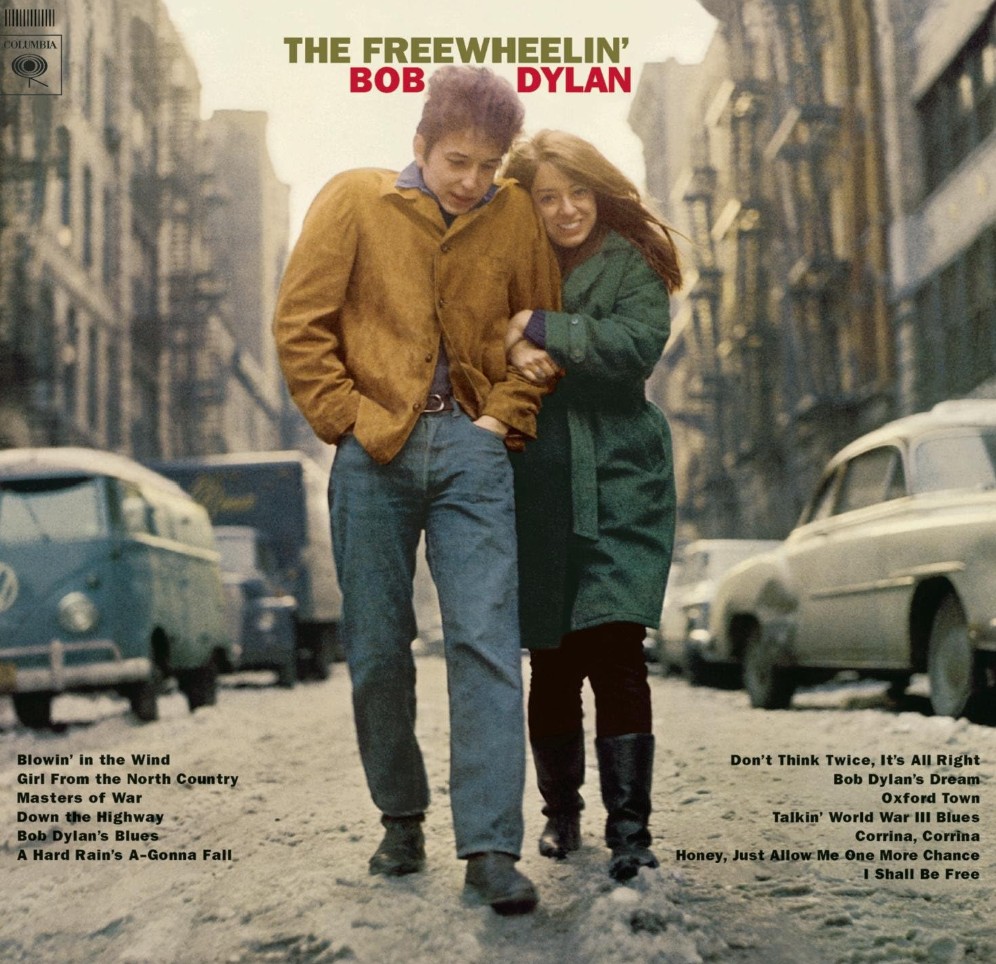
Album cover, copyright Columbia Records. Low-res image reproduced under Fair Use for review purposes

Title: The Freewheelin’ Bob Dylan

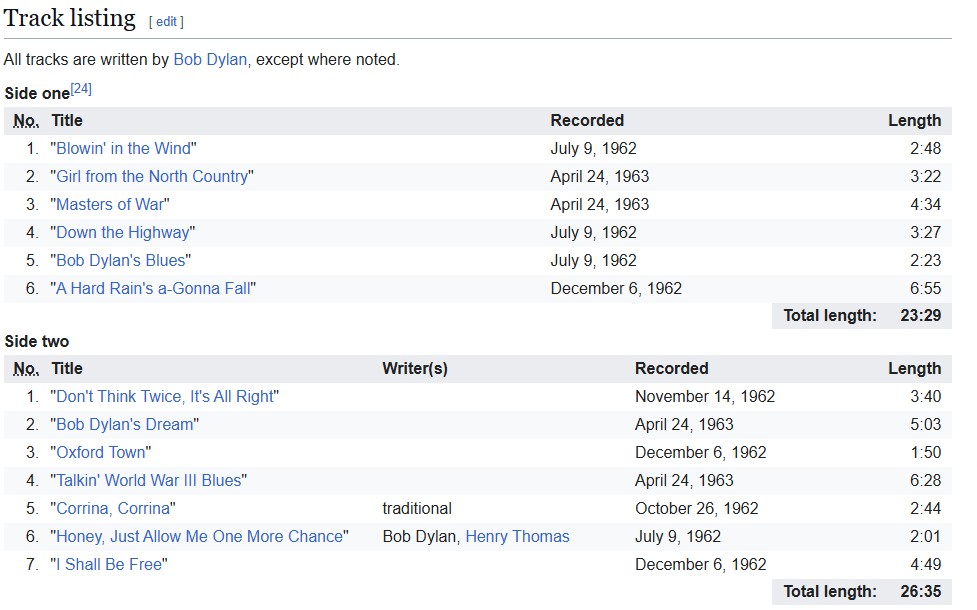
Length: 50 min 4 sec

Freshlyworded rating: 8.5/10

Number of songs: 13

Best tracks: Blowin’ in the Wind, Masters of War, Hard Rain’s a Gonna Fall, Don’t Think Twice It’s Alright

If I had to choose just one track: Don’t Think Twice It’s Alright

Thoughts: From the iconic cover – a hunched-up Bob Dylan walking the cold, snow-covered streets of Greenwich Village, New York with his then girlfriend Suze Rotolo – to the iconic opening song, Blowin’ in the Wind, Dylan’s second album is a superb follow-up to his debut of the previous year that announced his immense talent to the world.

Firmly embedded in the storytelling folk genre, it showcases Dylan’s incredible acoustic guitar and harmonica playing and his songwriting – all but one of the tracks are original compositions.

As mentioned already, the album kicks off with one of Dylan’s most famous protest anthems, ‘Blowin’ in the Wind’. He was just 23 or thereabouts when he wrote one of the all-time classics, a song about injustice, about callousness, about indifference to suffering (and a song that’s been covered by many other artists).

Another classic protest song – a scathing attack on the people and institutions that create the machinery of mass destruction – is Dylan’s ‘Masters of War’. It contains some brilliant lyrics my favourite being the final two stanzas, delivered with great loathing and power:

Let me ask you one question
Is your money that good?
Will it buy you forgiveness
Do you think that it could?
I think you will find
When your death takes its toll
All the money you made
Will never buy back your soul

And I hope that you die
And your death will come soon
I’ll follow your casket
By the pale afternoon
And I’ll watch while you’re lowered
Down to your deathbed
And I’ll stand over your grave
‘Til I’m sure that you’re dead

Another classic track, and one of Dylan’s first long songs is A Hard Rain’s a Gonna Fall, which also made me listen to the great rock version by Roxy Music. It’s a song filled with complex, dreamlike and nightmarish imagery and is rightly regarded as one of his masterpieces. I am still trying to figure out what it all means, but it’s a real cracker.

My favourite track on the album though, and across the first two albums is “Don’t Think Twice, It’s All Right”. I was listening to this beautiful ballad about Dylan’s anger and regret at a broken relationship as I walked down a quiet country road, and it just blew me away. Its power is the way its sung, almost without malice. I immediately listened to it again and have played it many times since getting into this album. It’s one of my favourite songs of all time. Ironically, given the album cover, the song relates to the woman depicted on it, Suze Rotolo, who was leaving him at the time to stay in Italy.

But I wish there was somethin’ you would do or say
To try and make me change my mind and stay
But we never did too much talking anyway
But don’t think twice, it’s all right

The heaviness of the album ends with a light-hearted song “I Shall be Free” which has some very funny and unusual lyrics.

The Bob Dylan project: Album 1, Bob Dylan (1962)

I came up with the idea to listen and review every single Bob Dylan studio album out of the blue, on New Year’s Eve, 2025. (I guess you could call it a kind of New Year’s resolution).

It seemed like a cool and interesting project, and one that I could do easily with that great modern invention: Spotify.

Imagine having to buy or borrow the 40 albums that the prolific Dylan recorded over the past 63-odd years. It would be quite the task and bloody expensive too.

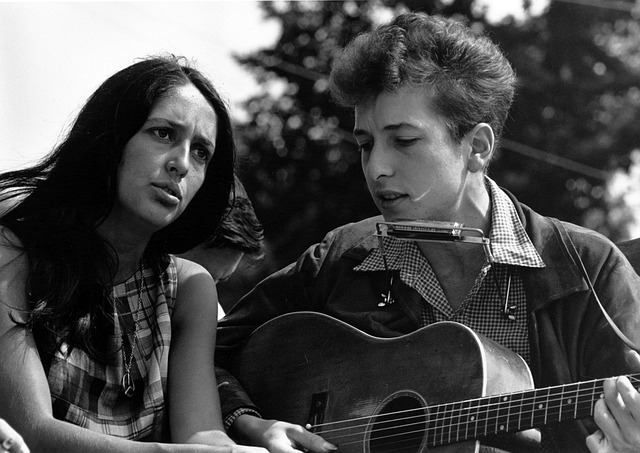
A young Bob Dylan with Joan Baez. Copyright-free image via Pixabay

Why Bob Dylan? I, like millions of other people, have long admired his incredible songwriting, guitar playing and unique singing style.

As a child and then as a teenager I’d heard of Bob Dylan and some of his most famous signature tracks (“Like a Rolling Stone”, “Blowin’ in the Wind”) but I only really got into his music when I purchased a three-CD boxed collection called “Biograph” which had 53 tracks recorded between 1961 and 1981. It introduced me to a much wider collection of Dylan songs, many of which became some of my favourites: “The Groom’s Still Waiting at the Altar“, “Tangled Up in Blue“, “Senor“, “Solid Rock” and “Blind Willie McTell“.

I have since listened to a lot of Dylan albums (at least a dozen) and some of my favourites are “Blood on the Tracks“, “Desire” and “Street Legal“.

But there are so many albums and songs of his I have never heard, so why not take a deep dive into his enormous catalogue and see what other gems I can discover.

A couple of important things to mention. I’ve deliberately not read other reviews of the albums I have listened to before writing my own. I didn’t want to be swayed by the opinions of others. These are purely my opinions and impressions after hearing the album.

However, I have looked up the songs to see if Dylan wrote them himself, to read the lyrics and to do a bit of research about some of them.

Album cover, Copyright Columbia Records. Low-res version used under Fair Use for review purposes.

So here it goes. Number 1 of 40, Bob Dylan’s first album.

Bob Dylan (1962)

Length: 36min, 54 sec

Number of songs: 13

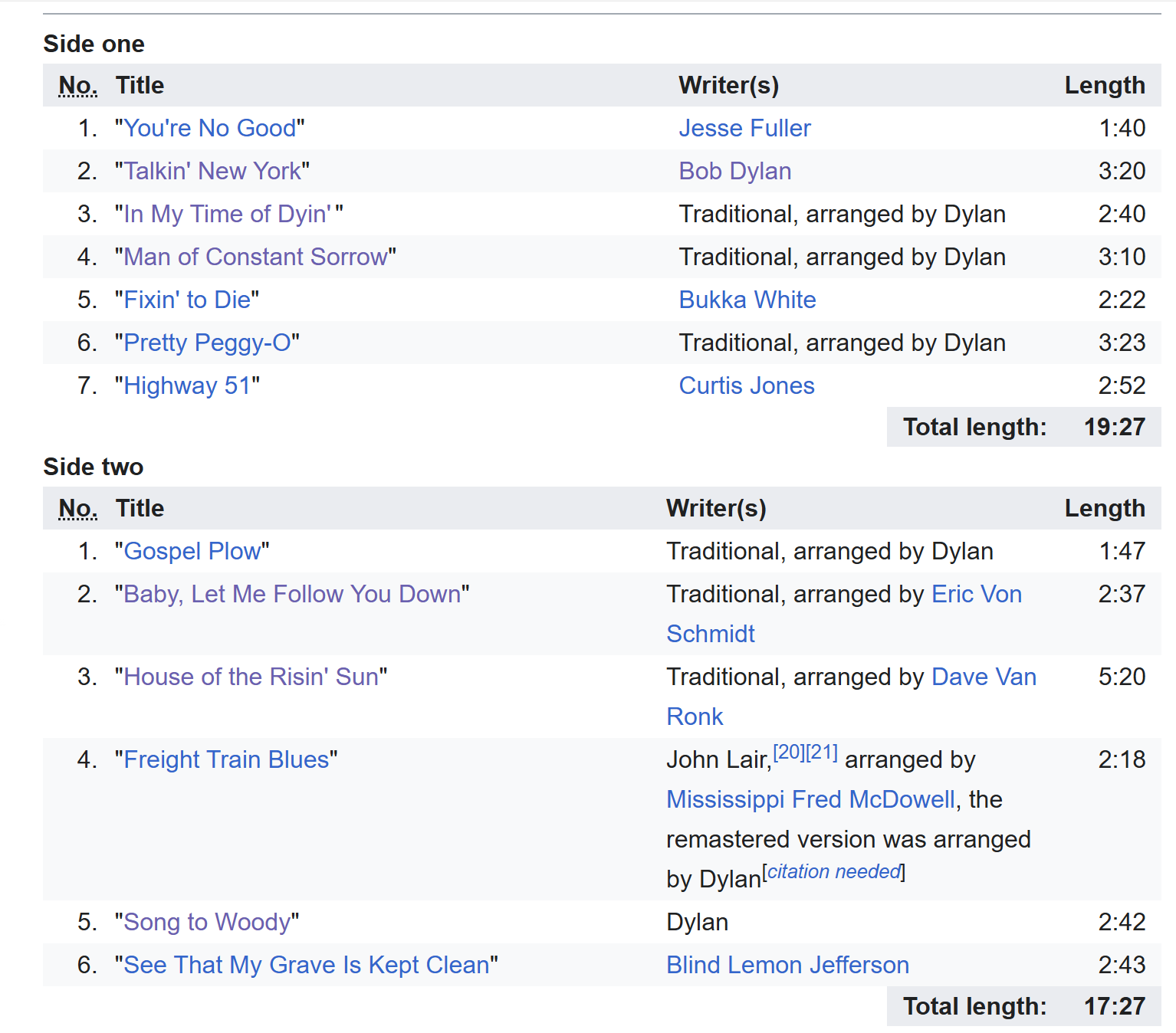
Best tracks: All of them, but top picks: The House of the Rising Sun, Baby Let me Follow You Down, In My Time of Dying, Talkin New York

If I had to choose choose just one track: Baby Let me Follow You Down

Freshlyworded rating: 9/10

Thoughts:

Released after Dylan had begun to make his name as a folk singer in New York’s Greenwich Village art, music and poetry scene; his unbelievable debut album was simply titled Bob Dylan. He was 20 or 21 when he recorded it.

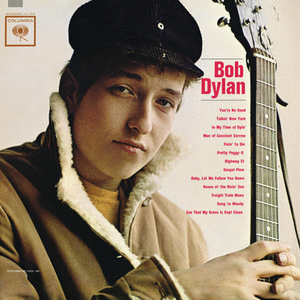
The album cover features a fresh-faced (one could almost say baby-faced) Dylan his fingers clasping the neck of his acoustic guitar. He’s wearing a winter jacket with the collar turned up, yellow sweatshirt underneath and a black cap. He stares at the camera in a rather contemplative, serene pose.

I’d give this album 10/10 but have stuck with 9/10 because nothing in life is perfect. Also, to my surprise, Dylan only wrote two of the songs on the album. They are “Talking New York” about his arrival in New York from Minnesota and trying to make it in Greenwich Village. It was the first song Dylan ever wrote and recorded and showcases his songwriting and storytelling abilities. It really takes the listener back to that time, when Bob Dylan was just a young kid with a guitar and (excuse the corniness) ” a dream”.

I walked down there and ended up
In one of them coffee-houses on the block
I get on the stage to sing and play
Man there said, “Come back some other day
You sound like a hillbilly
We want folksingers here”

The other song he wrote for the album was a “Song to Woody” which was a tribute to his idol, folk singer Woody Guthrie.

It includes Dylan’s amazing version of the classic American folk song “Man of Constant Sorrow” (a great version also made its way into the Coen Brother’s movie O Brother, Where Art Thou?) and an American gospel song written by Blind Willie Johnson “In My Time of Dying”.

Other standouts are Dylan’s soulful and foreboding version of “The House of the Rising Sun” and one of my favourite Dylan songs, his rendition of traditional folk song, “Baby, Let Me Follow You Down” where he begins the recording telling listeners that he first heard sung by blues guitarist Eric Von Schmidt in the “green pastures of Harvard University”.

Listening to this album, it make sense why many fans were outraged when Dylan started playing the electric guitar, given how deeply he was initially embedded in folk music.

If you’re looking to get into Dylan, there is not better place to start then his sensational debut album.