John Thaw: the story of the angry, brilliant actor behind Inspector Morse

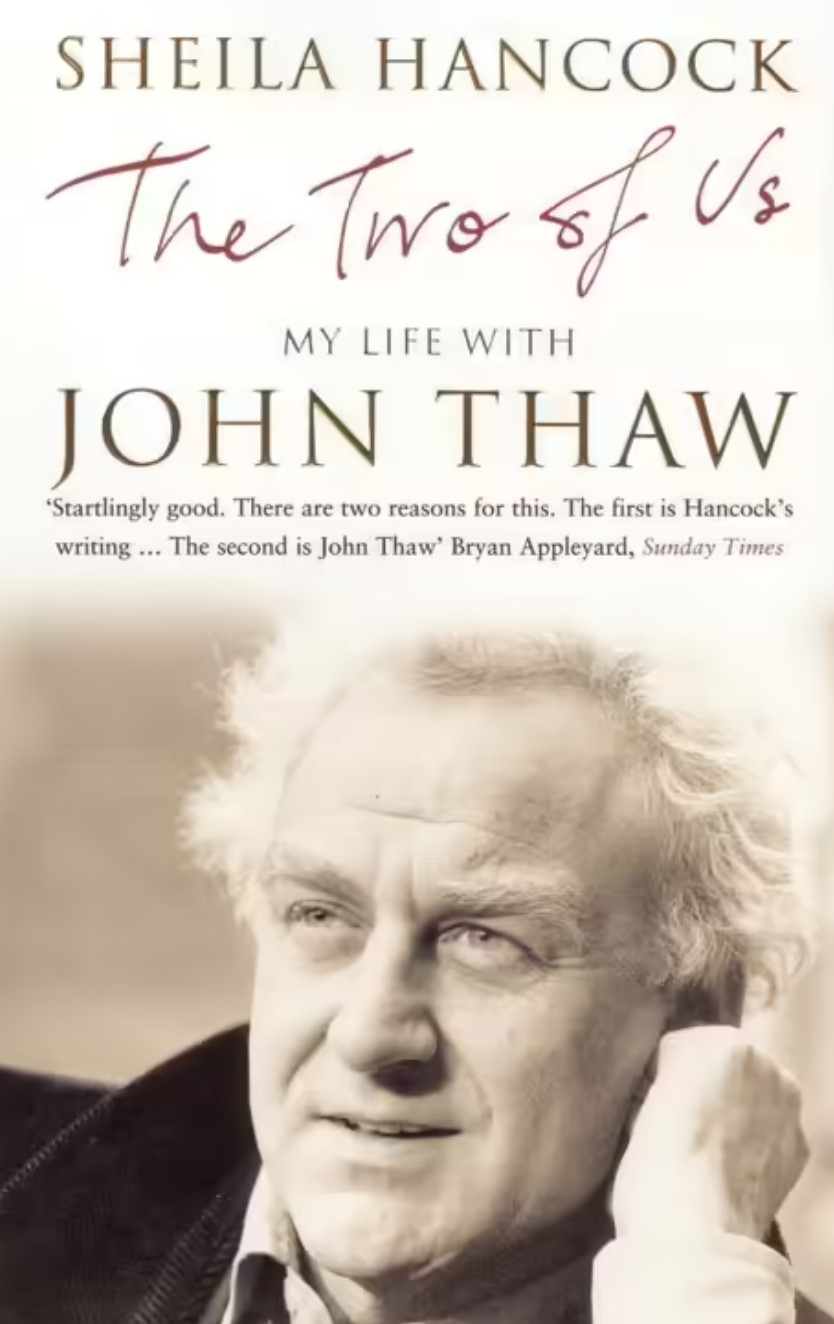
Sheila Hancock’s wonderful memoir The Two of Us gives excellent insights into the personality and demons of the brilliant late actor John Thaw, who famously played Inspector Morse in one my favourite television series of all time.

The event that had such a devastating impact on Thaw’s life, as told by Hancock, was the day his mother Dorothy (or Dolly as everyone called her) walked out on the family, leaving the seven-year-old John and his younger brother Jack deprived of a maternal figure they adored.
This profound loss was the underlying force behind the intensity of his acting (he was utterly dedicated to the craft, though never comfortable with being a celebrity). But his mother’s disappearance from his life also fuelled a great anger and rage that turned Thaw into a heavy drinker and a verbally and emotionally abusive husband.

Hancock is incredibly honest about the challenges of her marriage to Thaw, which was unbearable at times. But she also writes of the later years of their marriage when Thaw stopped drinking and their relationship found an even, and very loving and devoted keel.

However, the great tragedy of it all was that after all the years of heartache, the splits and re-unitings, Thaw should fall very ill with cancer just as they were truly happy together.

Hancock, herself a celebrated actor of the stage and screen (now 92, I last saw her in a small role in the excellent cold case series Unforgotten) was married to John Thaw for nearly 30 tumultuous years and was with him the day he died in 2002 after battling cancer.

Hancock, was left utterly devastated by John Thaw’s death, despite their very volatile marriage.

No doubt a cathartic experience, she published the memoir in 2004 – just two years after he passed away from cancer and just four years after the final episode of Inspector Morse, The Remorseful Day, aired.

It’s quite an unusual book because it’s both an autobiography of Hancock’s life – who was made a Dame in 2011 for services to drama and charity work – and a biography of John Thaw, who shunned the celebrity life, and would probably never have written an autobiography.

It retells their family histories – Hancock was born on the Isle of Wight in 1933 and grew up living above pubs including in the rough and tumble of King’s Cross, London, while Thaw, nine years younger than her, spent his youth in the working-class suburbs of Manchester.

She writes about their first marriages, the trajectories of their acting careers (her close friends include the Carry On actor Kenneth Williams) and how intimidated she was when she first met Thaw when they began acting together on the West End play, “So What About Love?” in 1969.

John Thaw with Sheila Hancock

“The first week of rehearsal of So What about Love? was an unmitigated disaster. I always approach a new role convinced that I cannot play it and on the few occasions that John Thaw looked up from his script, his expression of contempt implied that he agreed,” Hancock writes of their first encounter.

But Thaw quickly warmed to Hancock, and she to him, as he – like his great detective character Inspector Morse – revealed his love for classical music, art and fine wine.

They married in a registry office in 1974. While initially things went well, Thaw’s drinking and depression worsened, and their marriage deteriorated. Hancock paints a quite different picture of their marriage to the one described by Thaw on an episode of the famous BBC series (now a podcast) Desert Island Discs recorded in 1990. On it, he suggests that they had sorted out their problems (mostly to do with his acting commitments), whereas the truth of the situation was a lot darker – as recounted by Hancock in her book.

“By 1990, both Morse and Home to Roost [a sitcom Thaw starred in] were in the Top 10 of the ratings. John was at the height of his popularity but off-screen he was fighting profound depression.”

It would take another five years for Thaw to seek professional help, quit drinking and reunite permanently with Hancock. From then on, they lived blissfully.
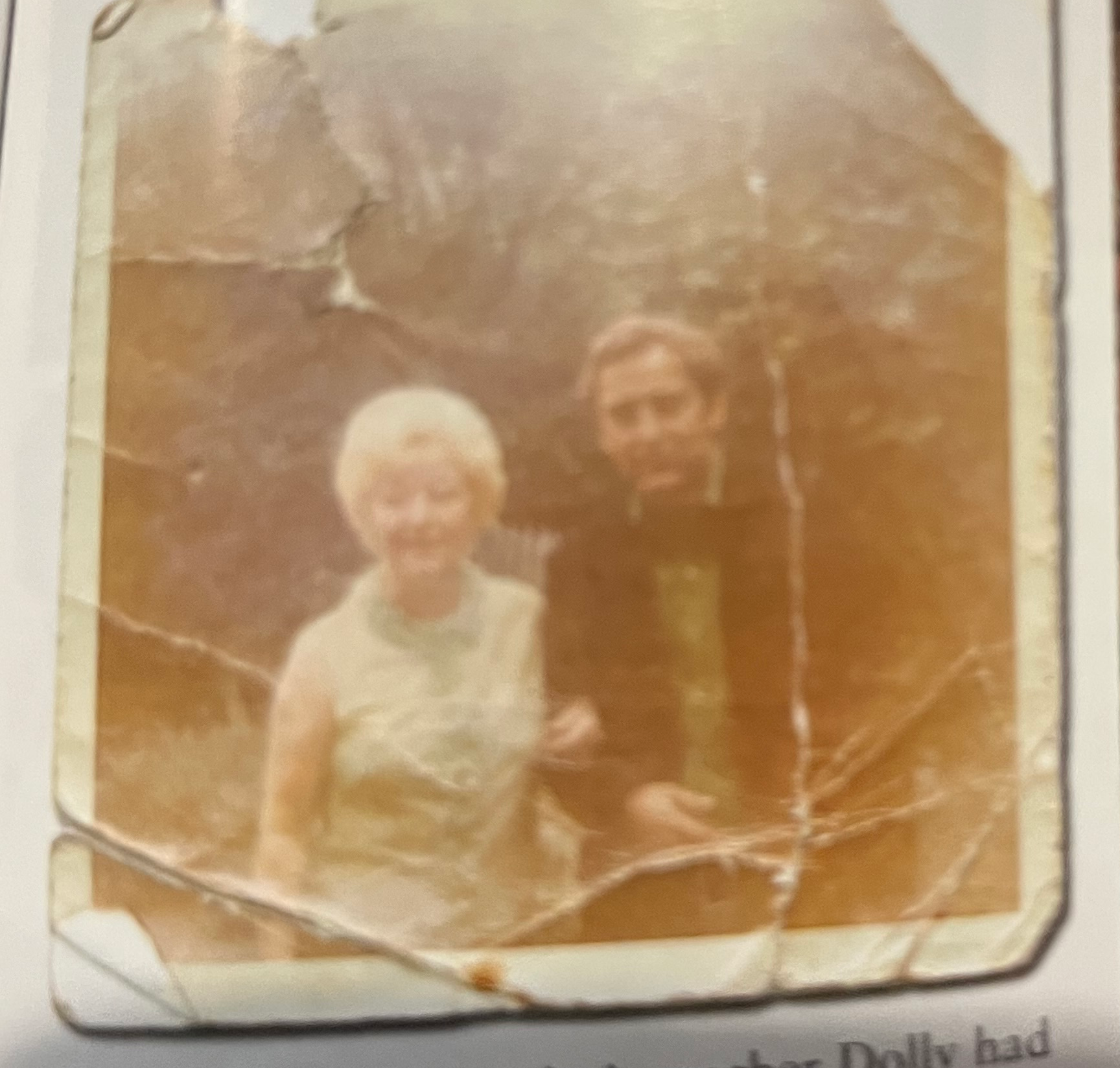
John Thaw with his mother, Dolly

After his death – her recounting of Thaw’s final days in diary entries is so very moving – she took a keen interest in learning more about her late husband’s mother, to understand why she had made such a devastating decision to leave her children.

To her great credit, Hancock does not demonise Dolly even though she caused Thaw so much pain, and in turn herself through their turbulent marriage.

“I will attempt to get inside Dolly’s skin, as if I was going to play her and try to understand what John never could or would.”

Alongside Hancock’s wonderful writing, The Two of Us is full of many great photographs, both professional and personal. Perhaps the most interesting and saddest of all is a faded and crumpled picture of Thaw taken with his mum on a rare union.

Hancock captioned it by saying: “It was found in her (Dolly’s) bag when she died.”

Her interest in the forces that moulded her husband – both good and terrible – make this a marvellous memoir. Any fan of John Thaw and Hancock (who is far too self-deprecating in her writing) will enjoy reading it, as I did.
Name dropper extraordinaire: Richard E Grant’s daft obsession with celebrities

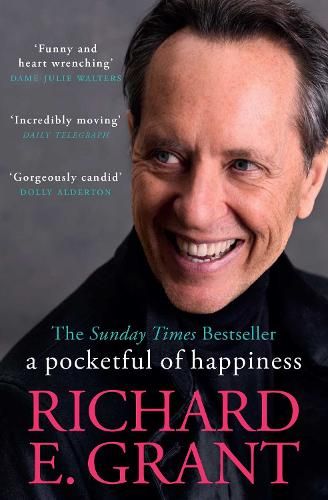
Without a doubt one of the most ludicrous episodes in Richard E. Grant’s entertaining, sometimes very moving but ultimately disappointing memoir “A Pocketful of Happiness” occurs when the author is having lunch with the legendary actress Sally Field at a brasserie in Philadelphia, in 2019.

His phone pings, and whilst at first he is reluctant to answer it – “I can’t, Sally, it’s rude to look at your phone when eating” – he eventually does on the insistence of his dining companion.

After reading the text message, Grant slaps a $100 bill on the table, tells Sally (whom he invited to lunch) that he has to go (“Will call and explain’). Then he sprints to the nearest Amtrak train station a dozen blocks away to catch a train back to New York. A phone call to Trudie Styler (Sting’s wife) and he’s soon in a helicopter on his way to Donna Karan’s estate in the Hamptons for the screening of a new Julianne Moore movie.

And why all this madness (and rudeness): “…because Barbra Streisand is the guest of honour”.

A little while later, he’s unashamedly attached himself to Streisand and her husband, the actor James Brolin, bringing food to the former diva and chatting to her for 90 minutes straight (apart from a brief interruption from Brooke Shields who declares: “This man [Richard E. Grant] is brilliant.”)

This scene in a nutshell encapsulates three of the great themes in Grant’s life and this memoir: his obsession with singer and actress Barbra Streisand (he has a bust of her in his garden), his endless fascination with celebrities (despite becoming one himself) and his incessant and unrepentant name dropping.

Incredibly, the book is not really about anything of these things. It is an ode to his wife.

It’s title, “A pocketful of happiness” refers to the instructions his wife Joan Washington, a celebrated dialects coach, gave him shortly before she passed away from cancer.

“You’re going to be all right,” Joan told her husband, “Try to find a pocketful of happiness in every single day.” (In this mission he appears to have succeeded judging by the relentless posting of his daily exploits on Instagram, in which Grant is always grinning broadly and his blue eyes twinkling madly).

While the book shift back in time to scenes from Grant’s penniless days waiting tables at Covent Garden and even further back to his childhood in Swaziland, the nine months from Joan’s diagnosis with stage 4 cancer in January 2021 to her death in September of that year is the central arch of the memoir.

In this respect, Grant does a wonderful, but sad job documenting the very sharp decline in Joan’s life as their universe shrinks to their London home and holiday cottage in the countryside, then just to their home and finally to Joan’s bedroom as she succumbs to her illness.

“Lie next to Joan as she sleeps. Listening to every breath she takes. Overwhelmed with longing. Longing that she won’t have to suffer. Longing that none of this is actually happening to us. L o n g i n g….” he writes in an entry from June 2021.

The pain he feels at the prospect of losing his lifelong companion and best friend is evoked tenderly across many of his diary entries, as he ferries Joan to her hospital appointments, has Zoom calls with Joan’s doctors, nurses and carers and keeps wishing it was all a terrible nightmare he would just wake up from.

Sunday, 14 February 2021
Valentine’s Day – could it be our final one after thirty-eight years together? Hard to compute. Impossible to imagine. Not being a unit, pair, partnership, union, marriage. None of which we discuss out loud and, on the evidence of her ebullience today, clearly not something she is dwelling on, or even thinking about.

But the name dropping in this book is on another level and suggests Grant lives in a cocoon of celebrity love and adoration from people notorious for their fickleness and fakery.

I’m not the only one whose taken issue with the appearance of a celebrity on every second page. Guardian’s Rachel Cooke felt similarly uncomfortable about it.

“Even as I admired Grant for his obvious devotion to, and care for, his wife at the end, I was uneasy: suspicious, you might say. Is it unfair to call a man with so many well-known friends a name-dropper? Isn’t he only describing his world? This is a question I’m still unable to answer,” Cooke wrote in her review in 2022.

As a reader, one is left with the strong impression that Grant is still completed intoxicated with fame and celebrity, and that he has never quite gotten over the fact that a gangly lad from Swaziland (now called Eswatini) made it onto the big stage.

During the course of the memoir Rupert Everett, Emma Thompson, Gabriel Byrne, Prince (now King) Charles and the Duchess of Cornwall (now Queen Camilla) all drop by for tea or lunch (His majestys brings mangoes). Grant’s diary entries are also peppered with anecdotes about meetings with Owen Wilson, Nigella Lawson, Tom Hiddleston, Martin Short and on and on.

“Meet Owen Wilson, who speaks in his signature wow voice, all convoluted vowels and ‘hehehe’ charm, like someone dope-dropped in from another planet…Instantly bonded.

All of these celebs – without exception – are delightful, warm, funny and charming and they invariably feel the same way about Grant. It’s all a bit much.

By stark contrast, Grant’s late wife found his obsession with famous people insufferable and avoided celebrity events with as much fervour as her husband rushed to them with open arms. This was no doubt one of the disappointing aspects – for Grant – of an otherwise happy marriage. You can almost here Grant groan aloud when Joan decided not to accompany him to award ceremonies after he received Bafta, Oscar, Golden Globe and numerous other nominations for his role as Jack Hock in the 2018 comedy-drama Can You Ever Forgive Me? alongside Melissa McCarthy (who is also given supreme name-dropping treatment in the memoir).

I have been a huge fan of Richard E. Grant since I saw him in Withnail & I at the National Arts Festival in Grahamstown, South Africa in about 1992. I also had the pleasure of seeing him live onstage at Sydney’s Orpheum Picture Palace in about 2006 where he was in conversation with the film critic Margaret Pomeranz after releasing his autobiographical directorial debut: Wah Wah (which I thought was great).

I also enjoyed his first memoir: “With Nails: the Film Diaries of Richard E. Grant” which as the title suggests is a collection of his diary entries written while making Withnail & I, the cult film that gave him his start in showbiz and subsequent films such as LA Story, The Player and Bram Stoker’s Dracula.

Yes, there is a lot of name dropping too in this book, but these are film diaries after all!

Making peace with the past: Reading Alan Cumming’s memoir ‘Not my Father’s Son’

I have enjoyed Alan Cumming’s acting for years, most notably the pushy campaign manager Eli Gold he played to perfection in the television drama ‘The Good Wife‘ and his small, yet memorable role in the James Bond hit Goldeneye, where he portrayed geeky Russian computer progammer Boris Grishenko.

Also a Thespian with a huge range, Cummings has appeared in major dramas and musicals including a one-man adaption of Macbeth on Broadway and as the master of ceremonies in Sam Mendes’s West End adaptation of Cabaret. His trophy cabinet includes two Tony Awards, theatre’s equivalent of the Oscars.

Against this backdrop, I decided to listen to his interview on Desert Island Discs, the legendary radio show and now podcast where guests talk about their lives and musical tastes via the selection of seven favourite recordings, a book and a luxury item that they would take with them if they were marooned on a fabled desert island.

It was only while listening to the podcast that I learnt about Cumming’s tragic childhood, where he felt the almost daily wrath of his abusive and vindictive father, Alex at their home on a 14,000 acre forestry estate near Carnoustie on the Scottish north east coast in the 1970s.

 “I could tell by the clack of his boots, I could tell by the way he opened the door… often it would be to do with my appearance or my hair,” Cumming told Desert Island Discs’ host Laura Laverne of the impending humiliation or beating to come.

Cumming talked a lot about the book he had written about his childhood ‘Not my Father’s Son’ and when I saw it in the local library, felt compelled to read it.

The title refers to his father’s long-held belief that his wife and Cumming’s mother, Mary Darling, had had a brief affair whilst the couple were on holiday and that Alan was not in fact his child, but a product of this betrayal. Choosing to believe this, Alex Cumming used it to justify his abhorrent behaviour (though he was equally cruel to his older brother Tom whose fathering he did not dispute).

So it’s not that every second of my childhood was filled with doom. But every second was filled with the possibility that in an instant my father’s mood would plunge into irrationality, rage and ultimately violence.

Alan Cumming, Not My Father’s Son

Divided into short, snappy chapters, Cummings’ carefully observed memoir moves back and forth between tales of his abusive and fearful childhood in Scotland in the 1970s and a tumultuous time 40 years later when was the subject of the BBC documentary series “Who Do You Think You are?” whilst also filming a movie in Cape Town.

The documentary series sought to solve a great family mystery: what happened to Cumming’s grandfather Tommy Darling, a decorated war hero, who survived the brutal 1944 battle of Kohima in northern India against the invading Japanese, but who later died in strange and sad circumstances in a village in Malaysia aged just 35 where he was serving after the Second World War.

There’s also another personal mystery to be solved: was Cumming’s really his father’s son?

Alan Cumming’s parents on their wedding day

This waiting for the results of a DNA test is played out with great tension and emotion, as Cumming deals with the possibility that he may have entirely different father and a family he has never met.

A major celebrity figure, Cummings’ memoir is remarkable for being refreshingly devoid of ego. It is a book about survival, love (especially for his mother and brother), forgiveness and finding a way to move on.

It’s also part travel journal as Cumming and the BBC crew filming the documentary head off to different parts of England as well as Malaysia to talk to war veterans and historians in an attempt to unravel the mystery around his grandfather’s “shooting accident”.

Cumming is heartbreakingly honest throughout the book, happy to confide in his reader when making many startling discoveries about his grandfather and his family. His successful acting career helped him escape his father’s wrath, but money and fame cannot solve childhood torment.

Like the podcast interview on Desert Island Discs, the memoir exudes warmth and it is not surprising that so many people have praised it.

I finished reading it with a great deal more affection for Cumming. Despite being obscenely multi-talented (who else can act, sing, dance and write?) he remains a down-to-earth person and most importantly values his family, friends, partner and fans above all us.

(You can watch excerpts of the Who do you think you are? episode featuring Alan Cumming on YouTube, though I advice to finish the book first, to avoid “spoilers”.)

‘100 Hundred Years of Dirt’: a classic Aussie memoir

NEWOne-Hundred-Years-of-Dirt-CoverWhen I picked up journalist Rick Morton’s memoir One Hundred Years of Dirt I had a sense it would be a great read.
This was partly due, I think, to the evocative photograph on the front cover  – a lonesome tin-roofed shack set against the contrasting colours of the deep blue sky and that distinctive red earth – and the title, which suggested this would be a gritty tale embedded deep within the Australian landscape.

I wasn’t disappointed.

Morton, a journalist with The Australian newspaper, has written a fine book which draws comparison in its storytelling to the works of Helen Garner, Clive James and Robert Drewe’s The Shark Net.

I mention Robert Drewe as I just finished reading The Shark Net for the second time, a rare effort on my part.

The Shark Net chronicles Robert Drewe’s childhood and early adult life as cadet reporter in Perth during the time crazed serial killer Eric Edgar Cooke was on the loose. It is also an evocative depiction of suburban amid Perth’s sand dune suburbs in the 1950s and 60s.

Rick Morton also chronicles a young journalist-to-be’s life in the making (he is only in his early 30s). But whereas there is an overall lightness to Drewe’s middle-class Perth tale (his father was a Dunlop executive who hosted tennis great Rod Laver in his living room),  Morton presents a modern ‘Heart of Darkness’ that begins near the very bottom of the socio-economic sphere.

First our young hero (to steal from Clive James) has to navigate the brutality of a remote outback station, then the oppressive poverty of a hand-to-mouth existence in a conservative Queensland country town and then later – as a young gay man – battle anxiety and depression amid the neon lights of the Gold Coast.

It’s certainly not light reading, nor its it easy reading at times, but thankfully Morton adds dollops of wry humour, fascinating family anecdotes and insightful academic research to his tale of tragedy and woe.

It’s of course something of a miracle he survived it all, let alone emerged triumphantly as one of the country’s top journalist writing about social issues – though after you read his memoir, you realise how well-qualified Morton is for that particular journalistic beat.

The ‘dirt’ in the title refers to the origins of the Morton family – in remote outback Queensland – who at one time owned five enormous cattle stations near the Birdsville Track in an area known as ‘Channel Country’ that collectively were the size of Belgium.

“It’s that red earth…,” Morton reminisced in a radio interview. “I’ve always been disappointed with regular dirt.”

It is here that we hear about his grandfather, the legendary cattleman George Morton, who ruled the family’s vast pastoral lands with great cruelty and vengeance.  It was his grandfather – Morton informs us – who discovered the bodies of the Paige family who succumbed to this most “vicious” and inhospitable of landscapes when they got lost in Christmas 1963.

It is in this inhospitable terrain, where deadly Brown snakes invade the homestead, kitchen, that tragedy unfolds when Morton’s brother Toby is horribly burnt in a terrible accident.

It’s also where he learns that his father, Rodney, is having an affair with the teenage governess. When his father abandons the family and takes off with the governess, Rick, his mum, his badly burnt brother and two-month old sister ends up in Charlesville in emergency public housing with no money. Later they move to Boonah, south of Brisbane, where the struggle to survive continues.

In many ways the book is a tribute to the stoicism of his mother Deb, who made up for a lack of money with unconditional devotion and love for her children (including her self-destructive son Toby, an ice addict) and who realised her younger son Rick, was cut from a different cloth (she lovingly referred to him as an “alien” to explain his more sensitive and intelligent nature) and potential to make something of his life.

It’s also a meditation on social inequality and its inherent unfairness (the family’s finances were so tight they did not have enough money to take advantage of ‘two for one’ offers in the supermarket) and how hard it is to break out of that cycle, with Morton drawing on his own experience trying to make it in a profession dominated by the private school-educated middle classes.

“There’s this creeping sense, this argument that poor people are morally inferior, which I think is repugnant for a start,” Morton said in the same radio interview – his poignant memoir is a powerfual antidote to that snobbish view.

It’s also about what can emerge from the dirt and grit of a tough upbringing.


Sins of the father: reviewing “The Blood on My Hands” by Shannon O’Leary

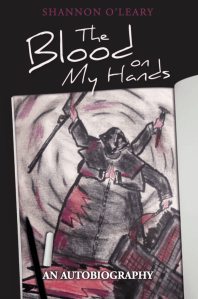
front-cover-676x1024The Blood on My Hands is a self-published account of how Shannon O’Leary survived a horrific childhood on a rural holding in Hornsby on the outskirts of Sydney and later Port Macquarie in the 1960s and 1970s.

It recounts the abuse – mental, physical and sexual – O’Leary and her family suffered at the hands of their father, Patrick, a psychopath with multiple personalities (The Devil, The Baby, The Games Man and others) who she witnessed murder numerous people.

O’Leary describes one horrific scene after the other (in one her father hacks a woman’s head off in full view of the author and kicks it like a soccer ball, in another he leads the author and a young woman to an isolated spot near a train station and strangles her with guitar string and then drives a rail spike through her mouth) with only brief moments of domestic normality when her father was either away or not psychotic. It’s hard to imagine how anyone could have survived even a fraction of what the author and her family endured year after year.

Dad said he “knew the devil and God” and I realised that they had somehow gotten inside him and they popped out when no one else was around. I didn’t know how they had gotten inside him; I wondered if my father had eaten them at church.

But survive it she did raising a family of five children, obtaining numerous degrees and post-graduate degrees according to her Facebook profile, which notes also that she is an “author of several books of poetry and children’s stories, and has won many awards for song-writing.

It goes on to say: “O’Leary has acted and directed on the stage and on Australian national TV, and she runs her own production company. …and lives with her longtime partner in Sydney, Australia.”

Shannon O’Leary is not her real name. She told me in an email that she adopted a pseudonym at her family’s request.

She adds: “I self published because I was afraid of rejection and wanted to protect myself from criticism. It was psychologically easier for me to press the publish button than wait for some one to say they liked or disliked the book.”

As for her murderous serial killer father, Patrick died on May 16, 2009 a free man, never charged for a single crime.

Of his death when it finally came she writes: “It was as if the bell jar shattered and the clawing, scrambling mouse was free.”

The Blood on My Hands is well written, particularly for a self-published work which has not been professionally edited. It’s a raw, extremely brave memoir with the author sharing in graphic details all the horrendous ordeals, many of them in the creepy, rickety house built by their father. As a reader, I was glad to get to the end which ends at least with the author able to live without fear.

I lived for about six months on a farm near Hornsby, so I can well imagine the rugged wilderness she brings to life with its long grass, deep valleys, caves and venomous snakes.

Even when I lived there, in 2010, it was semi-rural – peppered with small hobby farms and without street lights – so I can well imagine it being almost deserted bushland when the O’Leary family lived there in the Sixties and Seventies, providing the isolation necessary for the evil acts of Patrick O’Leary to go undetected.

Just how much of it is actually true is hard to say. Because of the use of pseudonyms its impossible to research the story in any way while its hard to ignore the fact that the author was a small child, as young as four or five when some of these horrific events occurred.

Based on the memoir, Patrick O’Leary would have killed at least a dozen people all of whom disappeared without a trace.

A note at the end of the book by a “C. MacKenzie” who accompanied O’Leary in 2007 to one of the murder sites she remembered from her childhood and attempted to find evidence of some of the crimes she recalled remarks: “All my efforts to identify possible victims to support the author’s story have so far been fruitless”.

But MacKenzie also highlights the poor record keeping of the police during those times and notes a page one headline in the Sun newspaper from November 1974 that between 1968 and 1972, “299 girls under the age of 16 were missing and never found”.

While memory is never perfect, especially what we remember as children, if even 20 per cent of this book were true (and I believe that figure to be much higher) it would be a truly incredible feat of bravery, courage and triumph of the human spirit to survive it and live as productive a life as O’Leary has.

And so I salute Shannon O’Leary, whoever she may be.

(And many thanks to Kelsey Butts from Book Publicity Services for sending me a review copy)

The Christopher Hitchens guide to drinking (for the young) and artistically minded

christopher-hitchens-drinkingTowards the end of the marvellous memoirs of the late journalist, thinker, philosopher and humanist Christopher Hitchens – Hitch-22 – there’s a little gem of a section where he dispenses some advice “for the young” on drinking.

Hitchens loved a drop or two and could by all accounts – including his own – handle his booze pretty well.  He claimed to never miss a deadline or an appointment or class due to booze, though admits to being mildy tipsy once on the BBC (though no one, he says, noticed).

When writing at home he maintained a certain discipline when it came to drink.

He was partial to whiskey – “a decent slug of Mr Walker’s” – at about half-past midday cut with Perrier water and no ice, then at luncheon (not quite sure how soon this was after midday) “perhaps a bottle of red wine, not always more but never less”, no after dinner drinks but maybe a nightcap “depending on how the day went – though never brandy.

“Alcohol makes other people less tedious, and food less bland and can help provide…the slight buzz of inspiration when reading or writing,” says Hitchens with his brilliant wit, charm and self-deprecation.

But he maintains “he was never a piss artist”.

Here then, faithfully transcribed by yours truly are his “simple pieces of advice for the young” (and the artist I think) when it comes to drinking:

1. Don’t drink on empty stomach: the main point of the refreshment is the enhancement of food.

2. Don’t drink if you have the blues: it’s a junk cure. Drink when you are in a good mood.

3. Cheap booze is a false economy.

4. It’s not true that you shouldn’t drink alone: these can be the happiest glasses you ever drain.

5. Hangovers are another bad sign (as is watching the clock for the start-time to your next drink) and you should not expect to be believed if you take refuge in saying you can’t properly remember last night (If you really don’t remember, says Hitch, that’s an even worse sign).

6. Avoid all narcotics: these make you more boring rather than less and are not designed – as are the grape and the grain – to enliven company.

7. Be careful about up-grading too far to single malt Scotch: when you are voyaging in rough countries it won’t be easily available.

8. Never ever think about driving if you have taken a drop.

9. It’s much worse to see a woman drunk than a man. I don’t know quite know why this is true but it is.

10. Don’t ever be responsible for it.