John Thaw: the story of the angry, brilliant actor behind Inspector Morse

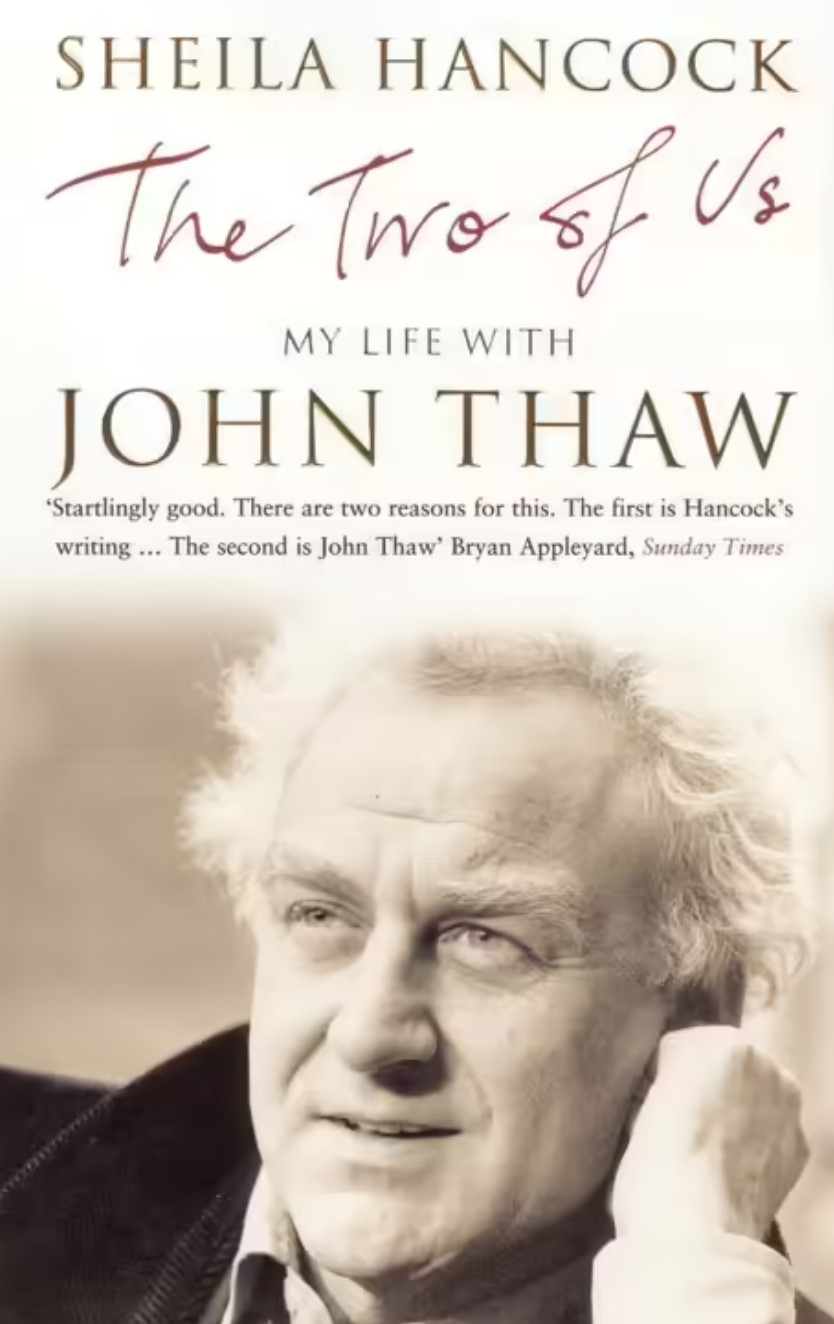
Sheila Hancock’s wonderful memoir The Two of Us gives excellent insights into the personality and demons of the brilliant late actor John Thaw, who famously played Inspector Morse in one my favourite television series of all time.

The event that had such a devastating impact on Thaw’s life, as told by Hancock, was the day his mother Dorothy (or Dolly as everyone called her) walked out on the family, leaving the seven-year-old John and his younger brother Jack deprived of a maternal figure they adored.
This profound loss was the underlying force behind the intensity of his acting (he was utterly dedicated to the craft, though never comfortable with being a celebrity). But his mother’s disappearance from his life also fuelled a great anger and rage that turned Thaw into a heavy drinker and a verbally and emotionally abusive husband.

Hancock is incredibly honest about the challenges of her marriage to Thaw, which was unbearable at times. But she also writes of the later years of their marriage when Thaw stopped drinking and their relationship found an even, and very loving and devoted keel.

However, the great tragedy of it all was that after all the years of heartache, the splits and re-unitings, Thaw should fall very ill with cancer just as they were truly happy together.

Hancock, herself a celebrated actor of the stage and screen (now 92, I last saw her in a small role in the excellent cold case series Unforgotten) was married to John Thaw for nearly 30 tumultuous years and was with him the day he died in 2002 after battling cancer.

Hancock, was left utterly devastated by John Thaw’s death, despite their very volatile marriage.

No doubt a cathartic experience, she published the memoir in 2004 – just two years after he passed away from cancer and just four years after the final episode of Inspector Morse, The Remorseful Day, aired.

It’s quite an unusual book because it’s both an autobiography of Hancock’s life – who was made a Dame in 2011 for services to drama and charity work – and a biography of John Thaw, who shunned the celebrity life, and would probably never have written an autobiography.

It retells their family histories – Hancock was born on the Isle of Wight in 1933 and grew up living above pubs including in the rough and tumble of King’s Cross, London, while Thaw, nine years younger than her, spent his youth in the working-class suburbs of Manchester.

She writes about their first marriages, the trajectories of their acting careers (her close friends include the Carry On actor Kenneth Williams) and how intimidated she was when she first met Thaw when they began acting together on the West End play, “So What About Love?” in 1969.

John Thaw with Sheila Hancock

“The first week of rehearsal of So What about Love? was an unmitigated disaster. I always approach a new role convinced that I cannot play it and on the few occasions that John Thaw looked up from his script, his expression of contempt implied that he agreed,” Hancock writes of their first encounter.

But Thaw quickly warmed to Hancock, and she to him, as he – like his great detective character Inspector Morse – revealed his love for classical music, art and fine wine.

They married in a registry office in 1974. While initially things went well, Thaw’s drinking and depression worsened, and their marriage deteriorated. Hancock paints a quite different picture of their marriage to the one described by Thaw on an episode of the famous BBC series (now a podcast) Desert Island Discs recorded in 1990. On it, he suggests that they had sorted out their problems (mostly to do with his acting commitments), whereas the truth of the situation was a lot darker – as recounted by Hancock in her book.

“By 1990, both Morse and Home to Roost [a sitcom Thaw starred in] were in the Top 10 of the ratings. John was at the height of his popularity but off-screen he was fighting profound depression.”

It would take another five years for Thaw to seek professional help, quit drinking and reunite permanently with Hancock. From then on, they lived blissfully.
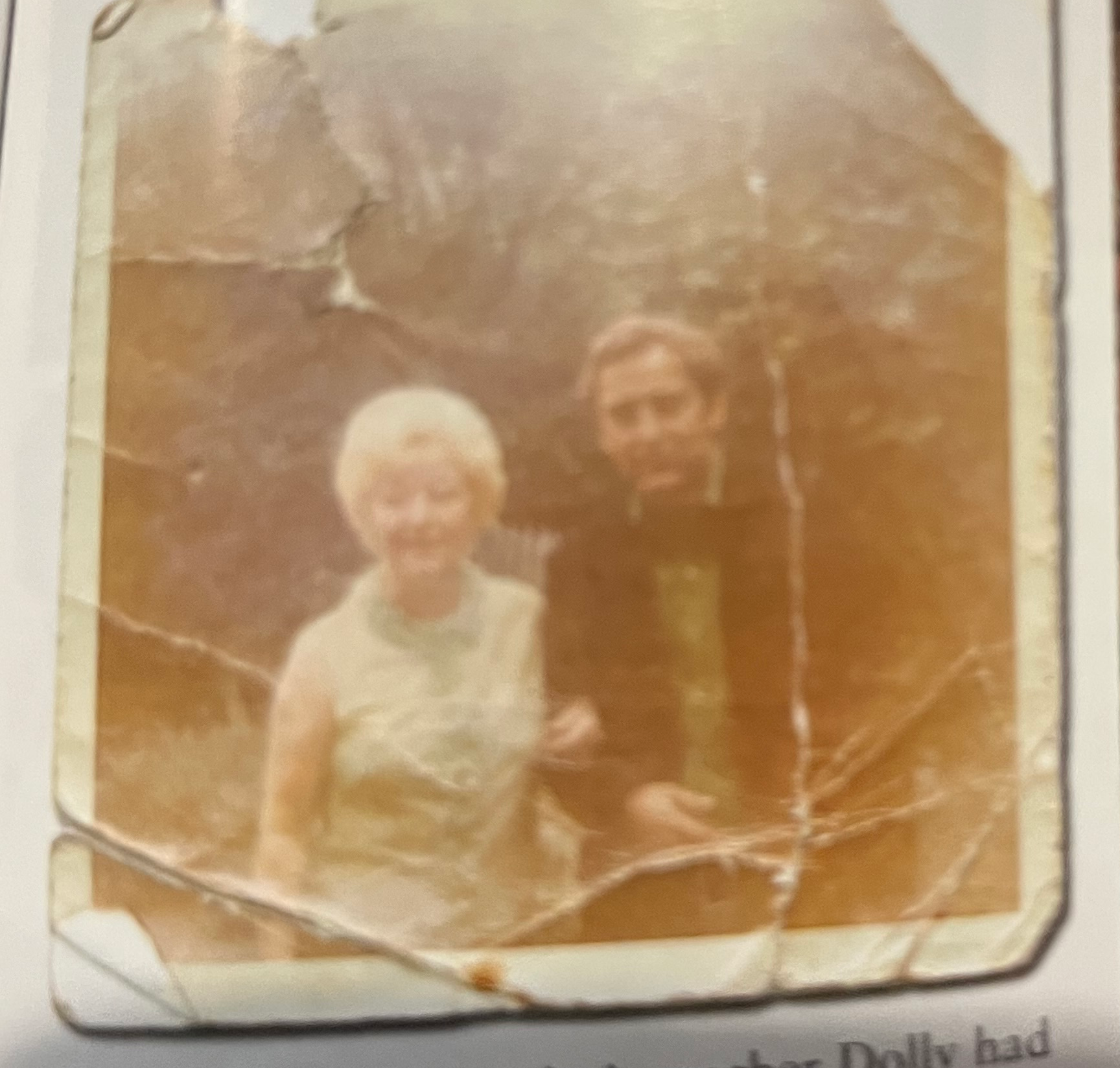
John Thaw with his mother, Dolly

After his death – her recounting of Thaw’s final days in diary entries is so very moving – she took a keen interest in learning more about her late husband’s mother, to understand why she had made such a devastating decision to leave her children.

To her great credit, Hancock does not demonise Dolly even though she caused Thaw so much pain, and in turn herself through their turbulent marriage.

“I will attempt to get inside Dolly’s skin, as if I was going to play her and try to understand what John never could or would.”

Alongside Hancock’s wonderful writing, The Two of Us is full of many great photographs, both professional and personal. Perhaps the most interesting and saddest of all is a faded and crumpled picture of Thaw taken with his mum on a rare union.

Hancock captioned it by saying: “It was found in her (Dolly’s) bag when she died.”

Her interest in the forces that moulded her husband – both good and terrible – make this a marvellous memoir. Any fan of John Thaw and Hancock (who is far too self-deprecating in her writing) will enjoy reading it, as I did.

The Joy of ‘reading’ Inspector Morse

What an absolute joy and pleasure it is to read the Inspector Morse novels written by the late, great Colin Dexter.

I absolutely adored the television series and the wonderful portrayal of the curmudgeonly chief inspector by the imperial John Thaw, but the novels are marvelous in their own right.

I read three in quick succession starting with The Daughters of Cain (1994) followed by The Jewel That Was Ours (first published in 1989) and Last Bus to Woodstock, the very first of the Inspector Morse novels, published in 1975.

(In 2016, I read my first Inspector Morse novel The Wench is Dead (the eighth book in the series), a rather unusual book as Morse is recovering in hospital and spends his time solving a Victorian murder mystery dating back to 1859. You can read my review here).

Having first watched the TV series and then delved into the books (it really should have been the other way round), it’s impossible not to imagine John Thaw as Morse and Kevin Whateley as his lanky, Geordie crime-solving sidekick Seargeant Robbie Lewis.

In the Daughters of Cain, Morse and Lewis investigate the murder of Oxford academic Dr Felix McClure, found stabbed to death in his North Oxford flat, the murder weapon nowhere to be found. Suspicion falls on three woman – his wife, his stepdaughter and his wife’s friend (all with motive) – and it’s up to Morse and Lewis to correctly identify the killer.

In the Jewel that Was Ours, American tourist Lauran Stratton is found dead of an apparent heart attack in her unlocked room at the Randolph Hotel. Later a precious jewel that she was to donate to an Oxford museum is found missing from her handbag. Stratton is part of a tour group of American retirees visiting historic cities of England. It falls to Morse and Lewis to unearth who among the group of unmerry travellers committed the robbery and why.

Interestingly, The Jewel that Was Ours is the only one of 13 Morse novels, which was first a Colin Dexter screenplay (filmed with the title The Wolvercote Tongue) and then later novelised.

In Last Bus to Woodstock a young woman is found murdered in the parking lot of the Black Prince, a pub on the outskirts of Oxford, after accepting a ride from a stranger. Suspicion falls on the young, devious man who discovered the body and a philandering Oxford don. Amid his investigations, Morse falls in love with a young nurse and gets to know, admire and berate Seargeant Lewis.

I loved the slowly unravelling pace of the feature length TV episodes – a much more realistic depiction of how crimes are solved in real life I suspect – and this kind of meticulous unravelling of characters and motives occurs in a similar fashion in the books.

Of course, Dexter throws in plenty of red herrings – and even the great Inspector Morse comes to the wrong conclusions from time to time. In The Jewel that was Ours, Morse is convinced he has identified the killer, who he arrests at a train station and drags into an interrogation room, only to realise that he has made a blunder.

I love the fact that he is both a brilliant man, but also far from perfect. He is easily seduced by a beautiful woman, frequently drinks too much, can fly into a rage with little provocation, but is also compassionate, kind and empathetic. He is also very funny, in a mostly cynical way:

In this comic scene from The Daughters of Cain, Morse is talking to Ellie, a young woman he has become infatuated with).

“Don’t you ever eat?” demanded Ellie, wiping her mouth on the sleeve of her blouse, and draining her third glass of red wine.
“Not very often, at meal-times no.”
“A fella needs his calories, though. Got to keep his strength up – if you know what I mean.”
“I usually take my calories in liquid form at lunchtime.”
“Funny, isn’t it? You bein’ a copper and all that – and then drinking all the beer you do.”
“Don’t worry I am the only person in Oxford who gets more sober the more he drinks.”
“How do you manage that?”
“Years of practice. I don’t recommend it though.”

All three novels were adapted into episodes for the television series, but I could only vaguely remember the plot twists, and so the identity murderer came as a complete surprise in each book.

But even if I had remembered the plots, the great thing about the Morse novels is the wonderful writing of Dexter. He really is a joy to read.

Dexter is master of delving into the personalities of his main suspects and of taking us into the mind of the brilliant Morse and the not-to-be-underestimated Lewis. He is also brilliant at his meticulous descriptions of crime scenes, painting vivid pictures in the mind of the reader.

“The body had been found in a hunched-up, foetal posture, with both hands clutching the lower abdomen and the eyes screwed tightly closed as if McClure had died in the throes of some excruciating pain,” is how Dexter describes the deceased murder victim in The Daughters of Cain.

Interestingly, there is very little physical description of Morse in the first novel. Instead, he comes to light through his personality and mannerisms.

Morse makes his first ever appearance on page 15 of Last Bus to Woodstock after he arrives at the crime scene in the courtyard of the pub.

“Five minutes later, a second police car arrived, and eyes turned to the lightly built, dark-haired man who alighted.”

The hard-working Lewis is already there, having arrived with “commendable promptitude”,

“[Morse] knew Sergeant Lewis only slightly but soon found himself pleasurably impressed by the man’s level-headed competence.”

“‘Lewis, I want you to work with me on this case,’ the Seargeant looked straight at Morse and into the hard, grey eyes. He heard himself say he would be delighted.”

And so, begins one of the great fictional crime-solving partnerships, one that would spawn another 12 novels (published from 1975 to 1999), a television series of 33 feature length episodes (from 1987 to 2000) and two TV spin-offs, Lewis (42 feature-length episodes from 2006 to 2015) and Endeavour, featuring the young Inspector Morse (36 feature-length episodes from 2012 to 2023).

(I have watched every episode of Lewis and thought it an excellent sequel to Inspector Morse, but I have not watched any Endeavour, though I hear it is possibly the best of the three.)

That’s an incredible amount of television viewing created out of a rather old-fashioned, curmudgeonly, middle-aged detective,

Colin Dexter, who makes a Hitchcockian cameo in almost every episode of Morse (he died in 2017) began writing mystery novels during a family holiday in 1972 after a career as a classics teacher was cut short by the onset of deafness

He claims that when he first started writing the crime novels, he had little idea of what Morse was actually like. “I’ve never had a very good visual imagination. I never had anyone in mind,” he said in an interview with The Strand Magazine in 2013.

“The only thing that was really important to me about Morse was that he was very sensitive and rather vulnerable,”

Dexter also revealed that much of the things that bring pleasure to his otherwise grumpy detective hero, are things that Dexter himself enjoyed: classic English literature, classical music, cryptic crossword puzzles and real ale.

“People don’t realise this. The greatest things in [Morse’s] life were [A.E] Houseman and Wagner. These were the things he would go home and listen to and talk about and that was me I suppose, but that’s about as far as it went. I never even wrote plots for my books. I always made sure that before I started writing a story I knew exactly how it was going to end. I never had any idea about what was going to happen in the middle but I knew where it was heading,” Dexter said.

While each of the four novels I have read so far are classics of British crime fiction, with meticulously clever plots and sub-plots and wonderfully engaging characters, it is Morse himself who is central to everything. Brilliant, sad, hilarious and tragic, he is a marvel.

Now to find and read the remaining Morse novels (they are devilishly hard to find!)

Meeting Colin Dexter’s Inspector Morse

dexter_-_the_wench_is_deadIt’s impossible for me to think of Inspector Morse, Colin Dexter‘s fictional middle-aged Oxford detective, with a penchant for booze, attractive but dangerous women and classical music, and not think of the late, great John Thaw, who played him so brilliantly in the acclaimed BBC television series.

And so it was John Thaw’s face – penetrating stare, roman nose and white mop of hair – that became Morse in my head as I sat down to read The Wench is Dead.

It’s an unusual introduction to the literary  Morse – nearly all of the detective action takes place from Morse’s hospital bed, where he lies recuperating from a burst ulcer.

The case too is unusual, to say the least, involving the murder in 1859 of a married woman called Joanna Franks who is found drowned in the Oxford Canal whilst travelling to meet her husband in London. Two of the drunken and lustful boatmen are found guilt of killing her and executed, while a third is shipped off to Australia following a last-minute pardon.

But something does not gel for Morse, who reads about the case in a small booklet given to him in hospital. Bored and harassed by the nursing staff, he sets his great mind to work to solve the ancient crime, aided by his dutiful sidekick, Detective Lewis.

It’s wonderful writing full of Morse’s wit, humour and great intellect with Dexter skillfully shifting the story between the murky waters of the Oxford Canal in 1859, as the boat carrying Joanna Frank takes her to her doom and Morse propped up in his hospital bed pondering the possibilities:

The thought of drink had begun to concentrate Morse’s mind powerfully, and with great circumspection and care, Morse poured a finger of Scotch into his bedside glass, with the same amount of plain water. Wonderful!. Pity that no one would ever believe his protestations that Scotch was a necessary stimulant to his brain cells! For after a few minutes his mind was flooding with ideas – exciting ideas! – and furthermore he realised that he could begin to test one or two of his hypotheses that very evening.

The Wench is Dead, published in 1986 was the eighth out of 13 Inspector Morse books that Colin Dexter, a former grammar school teacher, wrote over a period of more than 25 years.

john-thaw

The late John Thaw as Inspector Morse

Dexter came up with idea of Morse in 1972 while sitting at the kitchen one rainy day on a family holiday in Wales with nothing to do. He recounted this is in an interview with strandmag.com:

I went in the kitchen and locked the door and I started writing. There’d been two crime books in the guest house and I’d read one of them; I can’t remember what it was. I didn’t think I could do any better but I thought I could do almost as well. I don’t know if it was the first page or the first paragraph, but gradually a few ideas materialized.

Later on, in the same interview he talks about the traits he shared with Inspector Morse, these being: a love of classical music, especially Wagner, sensitivity to the arts, music and literature, the enjoyment of alcohol, particularly single malt Scotch and real ale, “a bit too much” and a confession to being a bit of pessimist “with not much faith in the future of the planet”.

Of those traits Dexter says he did not share with Morse were Morse’s incredible mental capacity for crime solving, Morse’s fondness for attractive but deadly women and his perennial bachelor status  (Dexter was married and had children) and Morse’s meanness with money.

All of these traits make up the wonderfully complex character of Inspector Morse, who is surely one of the finest fictional detectives in modern literature ranking right up their with Sherlock Holmes, Jane Tennyson and modern greats like Luther.

Morse’s great powers of problem solving are in full display in the The Wench is Dead, a brilliant ‘whoddunnit’ cold case  that is short enough to be enjoyed on a rainy afternoon, perhaps with a decent glass of Scotch and classical music – possibly Wagner – playing in the background.