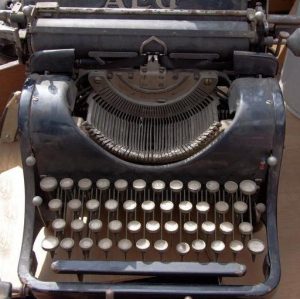
Before watching the award-winning Netflix movie ‘All Quiet on the Western Front‘ I decided to first read the famous book by the German writer Erich Maria Remarque, which was published in 1929.

There’d been some criticism of the film – German critics had panned it for turning a beloved literary classic into an Oscars spectacle, while historians had slammed its apparent historical inaccuracy – but beside that, I wanted to take in the story in its original form (and use my own imagination), before watching the latest on screen adaptation.
Interestingly, the book’s famous and oft-used title (usually quoted without the irony) was coined by an Australian soldier and Oxford scholar Arthur ‘AW’ Wheen who fought in the Great War and who was awarded three military medals for bravery.
The original German title ‘Im Westen nichts Neues’ translates as ‘Nothing New on the Western Front’. But Wheen, who went on to translate a number of Remarque’s novels, was so profoundly moved by the story that he coined the more poetic English title. This along with his well-received translation of the book played a key role in its enduring success and hallowed status nearly 100 years after being published as one of the great First World War novels.
An often times mentally grueling read, Remarque condenses all the horror, tragedy and futility of the Great War into just over 200 pages of terse, diary-style entries narrated by the brave and philosophical young German soldier Paul Baumer.
Paul, just 19-years-old but already a veteran of the conflict, is part of a close-knit group of five school friends – Tjaden, Muller, Kropp and Leer – and their 40-year-old leader, “shrewd, cunning, and hard-bitten” Stanislaus ‘Kat’ Katczinsky who are stationed a few miles from the front, where the sounds of gunfire and bombs never stops rumbling.
It is 1918, and the soldiers pray that the war will end soon, that the rumours of Germany’s surrender will come true, and that they shall survive.
One of the great strengths of the novel is the way Remarque combines both the horrors of the trenches with the more mundane, but also poignant experiences of a soldier’s life to give a fully rendered impression of those times.
Away from the battlefield, we join Paul and his friends as they enjoy the simple pleasure of receiving mail, sharing extra rations or stretching out in a grassy meadow where they find joy in “wonderfully care-free hours” as bumble bees drown out the ominous rumbles from the front.
These are the quiet moments when their youthfulness resurfaces and these battle-hardened soldiers can be, hopeful men again. Not knowing when they shall meet their end, they immerse themselves in the brief respite and try to forget about the return to front where they will once again become part of the terrifying war machine.
Remarque, who was a war veteran himself, was able to draw on the horrific scenes he witnessed whilst fighting in the trenches to put the reader right there among the mud, rats, mustard gas and wounded, dead and dying.

“We see men living with their skulls blown open; we see soldiers run with their two feet cut off, they stagger on their splintered stumps into the next shell-hole… we see men without mouths, without jaws, without faces; we find one man who has held the artery of his arm in his teeth for two hours in order not to bleed to death. The sun goes down, night comes, the shells whine, life is at an end.“
In another horrific scene, Baumer writes of the terrible screams of horses injured by bombs and gunfire, the belly of one “ripped open the guts trail out” as it rises to its feet but then falls over, tripping on its own intestines.
“Torches light up the confusion. Everyone yells and curses and slaughters. The madness and despair of many hours unloads itself in this outburst. Faces are distorted, arms strike out, the beasts scream; we just stop in time to avoid attacking one another.”
If the horror of the book was not enough, midway through reading descriptions like this, I felt compelled to look on YouTube for archived footage of the viscous battles Remarque was writing about.
One video segment depicted the total chaos on the battlefield, as mortar bombs exploded, bodies crumbled and soldiers fired at one another, then charged with bayonets that sliced into bellies. Because of the jerky motions, the scene felt almost cartoonish.
I also came across a scene of soldiers making their way through the nightmare landscape of barren hills and deep craters. Shot from behind them, it showed one soldier advancing on foot, with another behind him who appeared to be crawling. Only he wasn’t crawling I soon realised, most of his lower body had been blown away and he was dragging himself along the ground by what remained of his torso. (The video is titled “Verdun is a human slaughterhouse“).
It was utterly horrific, and just so incredibly sad. I wished I’d never seen it. But it did highlight that there was no hyperbole in the descriptions of Remarque’s young narrator, Paul. While All Quiet on the Western Front is a fictional story, the experiences endured by Paul and his comrades are accurate and true.
The power of Remarque’s storytelling is that he not only manages to capture these unimaginably awful things that happen in the trenches and among the craters and barbed wire entwined battlefields, but the mental anguish of those caught up in the fighting and the futility of it all.
This is brought most horribly to life in a devastating episode where Paul is forced to kill a French soldier who falls into a pit he is hiding in after taking cover from the incessant shelling and relentless machine gun fire.
Paul watches as the soldier’s young life slowly seeps away in front of his eyes.
Paul starts to question why this young man, whom he discovers had a wife and child, had to die. They are a similar age and in another time might have been friends.
He ends up making a futile vow to write to the dead soldier’s wife after finding a picture of her and their daughter in his wallet.
“Comrade,” I say to the dead man, but I say it calmly, “to-day you, to-morrow me. But if I come out of it, comrade, I will fight
against this, that has struck us both down; from you, taken life–and from me–? Life also. I promise you, comrade. It shall never happen again.”
Paul is the philosophical voice and conscience of the millions of young men, who if not killed, were traumatised beyond hope from the things they did in the fight for survival.
For me the most moving and tragic episode, and which illuminates the mental devastation of the war on young soldiers are the scenes when Paul is given a 17 day leave pass and journeys back to his home village, to see his family.
Remarque captures so perfectly the feeling of both being at home among your loved ones, but also that terrible realisation of having left everything you once knew far behind, of being utterly and irrevocably changed and of never ever being able to make that journey back to what life once was.
I imagined leave would be different from this. Indeed, it was different a year ago. It is I of course that have changed in the interval. There lies a gulf between that time and to-day. At that time I still knew nothing about the war, we had only been in quiet sectors. But now I see that I have been crushed without knowing it. I find I do not belong here any more, it is a foreign world.
Finishing the book, I realised I knew so little about the First World War, especially when compared with Second one that broke out just 20 years later.
The reasons for the Great War, as I have since read are so much more complicated.The famous assassination of Archduke Franz Ferdinand in Sarajevo merely the spark that lit the fuse.
Industrialisation, power struggles, inequality between nations and inbred racial hatred all played apart in the greatest ever mobilisation of millions of young men to fight and die in the trenches.
This was a war where armies were so large and so easily replenished that no one could ever really win, resulting in loss of life so huge and horrors so terrible they are hard to fathom, even as new atrocities emerge in the Ukraine war, fueled by similar forces: power, greed and hatred.
All Quiet on the Western Front is Erich Maria Remarque’s poetic and visceral reminder that there are no real victors in war, only victims.
Will the new movie do justice to that message? (I’ll report back).

 Freshlyworded