Booze, sex and philosophy from the gutter: Reading Charles Bukowski’s ‘Women’

“I never pump up my vulgarity. I wait for it to arrive on its own terms,” says Henry ‘Hank’ Chinaski the fictional alter-ego of legendary boozehound writer and  “laureate of American lowlife” (as Time magazine dubbed him) Charles Bukowski in his 1978 novel “Women”.

I’ve read many of Bukowski’s brilliantly irreverent novels – written in a parsed down, forthright and highly entertaining style – and Women is by far the most graphic, indeed almost pornographic in its depiction of Chinaski’s innumerable sexual encounters.

(“I got down there and began licking…the cl*t came out but it wasn’t exactly pink, it was a purplish pink,” is how he describes one of these episodes.)

The semi-autobiographical novel (one can only assume some of his sexual exploits are exaggerated, though perhaps not the prodigious drinking) begins with Chinaski, 50, telling the reader that he has not had sex for four years.

“I had no women friends. I looked at them as I passed them on the street or wherever I saw them, but I looked without yearning, with a sense of futility.”

This drought is then broken by a period of romping that would have made Don Juan proud. It begins with half-crazed divorced mother of two Lydia Vance (the fictional version of Bukowski’s real-life girlfriend, the sculptor and playwright Linda King), whom Chinaski meets at a poetry reading:

She put both hands on the edge of the table, bent over and looked at me. She had long brown hair, quite long, a prominent nose and one eye didn’t quite match the other. But she projected vitality – you knew that she was there. I could feel vibrations running between us.

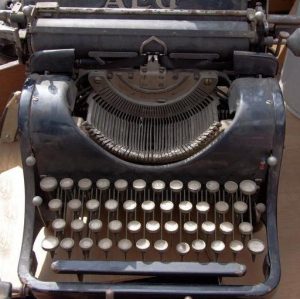
Woman, Charles Bukowski

Their relationship is full of wild sex, described in intimate detail by Chinaski – “I heard her breathing heavily, then she moaned” – and violent breakups due to his excessive drinking, visits to the racetrack, and infidelities, none of which he apologises for. Chinaski is who he is and the world can go to hell if they don’t like it.

“I walked into the bedroom with just my shorts on. I was conscious of my white belly lolling out over the shorts. But I made no effort to suck in my gut…”

At face value, Women is simply a recollection of Chinaski’s (or Bukowski’s) various relationships with women. These include Lydia, but also brief encounters with star struck fans who are seemingly served up on a platter to the horniest 50-year-old in LA.

It’s also a daily tally of his prodigious alcohol consumption of mostly cheap wine and beer. In between all the boozing and bonking – “Fucking was the best cure for hangovers. It got all the parts ticking again” – we accompany Chinaski on his often hilarious trips to college campuses around the country where he gives readings.

But as with all his writing, Bukowski manages to convey something more profound and meaningful than the sum of his adventures across bedrooms, bars and college campuses.

It is to champion the other side of Los Angeles in the words of his biographer Barry Miles: “Not the LA of ranch homes in the Hollywood Hills with the breathtaking views…” but the LA of tarnished dreams, of dead end jobs, of hookers and workers in the sex industry, of beaten down, damaged and dysfunctional people”.

Miles adds: “Bukowski loved the corner bars, the tawdry fast-food outlets, the sex shops and brothels, the graffiti on the walls…”

Sure Chinaski is the hero of the story, but he is no superman in a cape. He is very much the Bukoswki you see in those grainy black and white poetry readings on YouTube. a disheveled anti-hero with a pockmarked face who says what he thinks, never holds back and for whom nothing is ever taboo.

Chinaski in Women is very much a mirror – if perhaps a distorted and exaggerated one – of Bukowski at the height of his powers and fame: when after decades of struggle, eking out a living and working dead end jobs, he had finally established himself as a figurehead in American literature: the dirty old man of American letters.

Chinaski is not searching for some deeper meaning to life, or for the woman of his dreams. Life is simply about the experiences that happen to him – whether its winning big at the track or walking away broke, having a raging hardon or being unable to perform in the sack because he drank too much, talking to prostitutes or college professors – everything finds its way, uncensored into the book.

And while Chinaski is vulgar, and driven by his baser urges, he can also be sweet and loving. He is not a manipulator, nor does he pretend to be anyone else. And he despises pretentious, fake people.

Most importantly – and perhaps a key reason why I enjoy his books so much – is the poetic nature of his writing: short, descriptive sentences that hit their mark without ever saying too little or too much (a style that would have impressed George Orwell).

If you are a fan of Bukowski other books, or a writer like Raymond Carver who though not as vulgar, employed a similar parsed down style of storytelling, you should definitely give Women a read. (Just don’t leave the book anywhere near young children!)
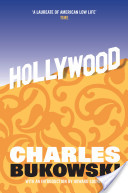
Charles Bukowski and the real Hollywood

In 1986, the writer Charles Bukowski, chronicler of American low-life, drunks, bums, dead-beats, post office workers and Los Angeles was asked to write a screenplay about himself.

Bukowski, by then in his late sixties and with a degree of success and fame, and having reached a sort of peace with the world and his drinking (red wine instead of hard liquor) was at first reluctant but ultimately agreed.

Bukowski dashed off the screenplay on his typewriter, in the upstairs room of his East Hollywood home, and this became the movie ‘Barfly’ starring Mickey Rourke and Faye Dunaway, directed by Iranian-born director Barbet Schroeder.

The film is about a drunk – Henry “Hank” Chinaski, Bukowski’s alter ego and narrator of all of his novels – who spends most of his time drinking in dingy bars and hotels, getting into fights and into a mad, crazy relationship with ‘Wanda” – an earlier love of Bukowski, who inspired some of his best poems and who drank herself to death.

The movie was a minor arthouse hit and got a few Golden Globe nominations and mixed reviews. It’s worth watching though and there’s even a brief cameo of Bukowski himself, who died in 1993, aged 73 (an impressive achievement given his love of the bottle).

After the film came out, Bukowski wrote what would be his final novel “Hollywood” which chronicles his experiences of writing the ‘Barfly’ screenplay and mingling with a long list of Hollywood stars including Mickey Rourke, Faye Dunaway, Sean Penn, Dennis Hopper, Isabella Rosellini, directors Francis Ford Coppola, Jean-Luc Goddard and David Lynch and a host of producers.

In the novel some of the actors are thinly disguised (Francis Ford Coppola is Francis Ford Lopalla) while others have entirely different names – Mickey Rourke is Jack Bledsoe, whose “beautiful smile” Bukowski mentions often.

Bukowski is Hank Chinaski, as always.

And it’s a brilliant, hilarious chronicle of the process by which the screenplay turned into a Hollywood movie, with all the twist and turns, threats, parties, meetings and booze-ups.

It’s also biting indictment of the way Hollywood operated back then, and probably still does today, with the enormous egos of the stars and players and their demands – Rourke demands a special type of Rolls Royce convertible be made available for him and then, later on, proceeds to stand on the bonnet with his friends for a photo shoot, causing thousands of dollars of damage.

The movie follows Chinaski as he traverses Los Angeles from his home in East Hollywood, accompanied by  his endearing wife Sarah, to meetings at  the homes of Hollywood stars and directors, studios, bars and hotels transformed into film sets and the race track.

Of his love/hate relationship with horse-racing he writes:

“My day out there was pleasant enough but as always I resented that 30 minute wait between races. It was too long. You can feel your life being pounded to a pulp by the useless waste of time.

“Each of the jerk-offs thinks he knows more than the other jerk-offs and there they were all together in one place. And there I was, sitting with them.”

And the description of his attitude to the races is almost exactly how he feels about Hollywood and its actors and the world they inhabit- plenty of waiting around and plenty of jerk-offs.

In the course of making Barfly, there is endless waiting around (or waiting for the phone to ring) as decisions are made, then unmade. The movie’s backers agree to fund the film. Then change their mind. Then they agree again. Then no one gets paid. Then they get paid, but the cheques bounce.

In one hilarious scene, the director, Jon Pinchot (Barbet Schroeder) takes a chainsaw to the offices of Firepower (Cannon Group), asks where he can plug it in and threatens to cut off body parts unless they agree to release the film so that someone else can make it.

This is how Bukowski describes it:

“Where’s your plug?” Jon asked

“Plug?”

“For this…” Jon pulled the towel away revealing the Black and Decker.

“Please, Mr Pinchot…”

“Where’s the plug? Never mind, I see it…”

Jon walked over and plugged the Black and Decker into the wall.

Later as the secretary enters with coffee…Pinchot presses the button on the chainsaw.

“The blade sprung into action and began to hum.”

Apparently everything in the book is accurate and no one featured in it has ever claimed Bukowski made any of it up.

During the course of making the film, Hank (Bukowski) visits Pinchot and his friend/partner Francois (endlessly playing roulette) who have decided to live in a dangerous part of LA, populated by gangsters. There are always hands coming through the fence grabbing at things, there are bullet holes through the front door one day and later Pinchot is forced to buy back the tyres stolen from his car – and pay extra to ensure they’re not stolen again.

“Can you sleep at night,” Hank asks Pinchot.

“We have to drink to sleep. And then you can never be sure.”

In another episode, Jon tells Hank that Francine (Faye Dunaway) wants him to write a scene so she can show off her legs.

“She has great legs you know,” Jon says.

“Alright. I’ll right in a leg scene,” replies Hank.

The entire book, all his books in fact, are written in his deadpan, matter-of-fact style, straight-talking but with a certain kind of poetry. Its simplicity is hard to replicate.

In between all this there is drinking. Lots of drinking. Bukowski and Sarah are constantly seeking out a bottle of wine, drinking and refilling their glasses. They drink on set, before takes, at parties, at the cinema, in the limo on the way to premier, on the way home. At home.

And then there are the acutely brilliant observations about the Hollywood system.

At a party full of actors and Hollywood bigshots which Hank attends in the company of Victor Norman (the writer Norman Mailer), he remarks after the flashbulbs go off at Francine’s arrival:

“God I thought. What about the writer? The writer was the blood and bones and brains of these creatures…and where was the writer? Who ever photographed the writer? Who applauded?”

Then he gains some perspective.

“But just as well and damn sure just as well: the writer was where he belonged. In some dark corner watching.”

Later, when the film is finished he remarks of actors that they were “different then we were”.

“You know when you spend many hours, many years pretending to be a person who you aren’t, well that can do something to you.”

But he also realises the movie-making is a “deliberate jack-off, a salary for this and a salary for that”.

“And there’s only one man allowed to put a plug in the wall, and the sound man was pissed off at the assistant director and then the actors weren’t feeling good…

“It was all waste, waste, waste…”

But the book is certainly not a waste. It’s a brilliant send up and spotlight on Hollywood, written by the “laureate of American low life” in his unique pared-down , dry style.

It’s very, very funny and moving and touching.

Go see Barfly and then read “Hollywood” by Bukowski.

Satisfaction guaranteed.

(Here’s a short extract from the movie Barfly)

(Here’s a video of Bukowski reading one of his poems in the late 1970s)