John Thaw: the story of the angry, brilliant actor behind Inspector Morse

Sheila Hancock’s wonderful memoir The Two of Us gives excellent insights into the personality and demons of the brilliant late actor John Thaw, who famously played Inspector Morse in one my favourite television series of all time.

The event that had such a devastating impact on Thaw’s life, as told by Hancock, was the day his mother Dorothy (or Dolly as everyone called her) walked out on the family, leaving the seven-year-old John and his younger brother Jack deprived of a maternal figure they adored.
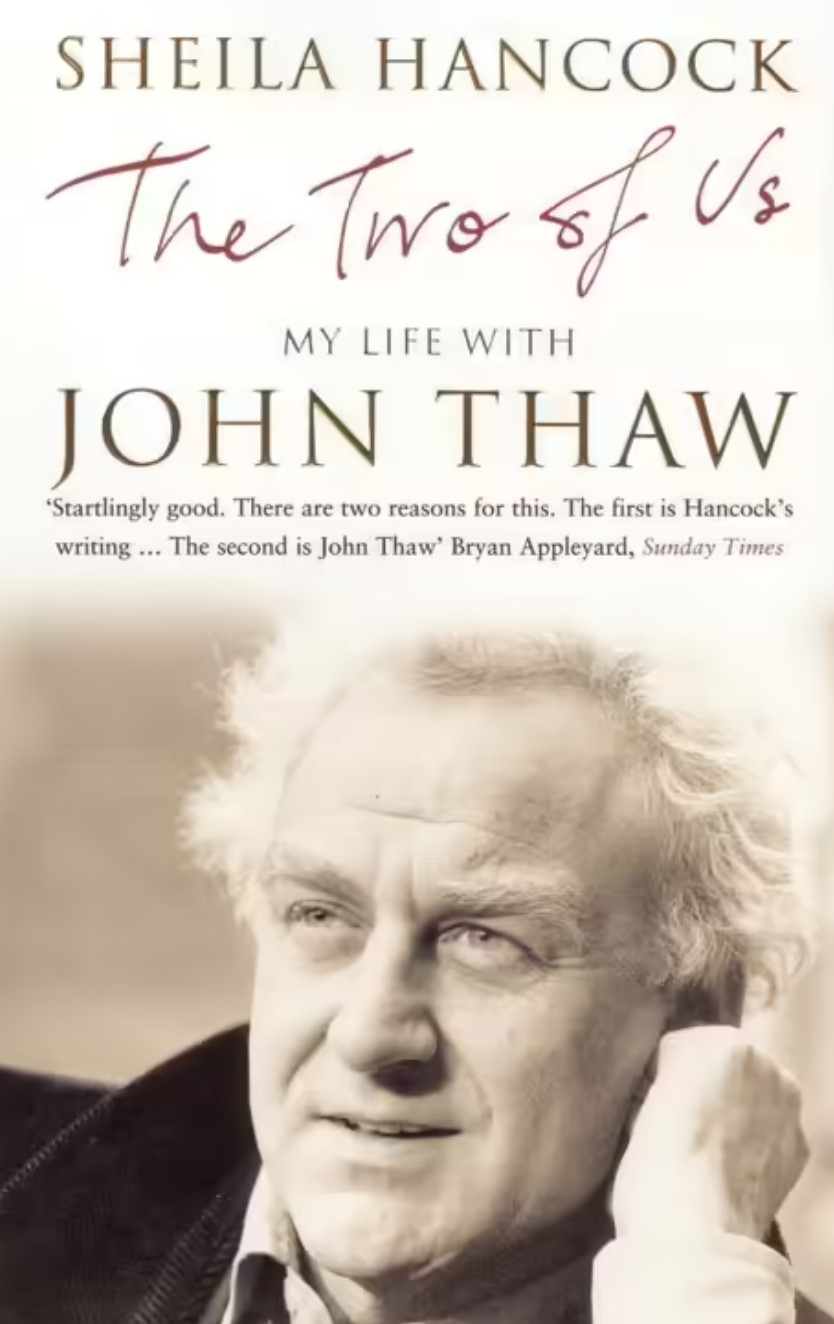
This profound loss was the underlying force behind the intensity of his acting (he was utterly dedicated to the craft, though never comfortable with being a celebrity). But his mother’s disappearance from his life also fuelled a great anger and rage that turned Thaw into a heavy drinker and a verbally and emotionally abusive husband.

Hancock is incredibly honest about the challenges of her marriage to Thaw, which was unbearable at times. But she also writes of the later years of their marriage when Thaw stopped drinking and their relationship found an even, and very loving and devoted keel.

However, the great tragedy of it all was that after all the years of heartache, the splits and re-unitings, Thaw should fall very ill with cancer just as they were truly happy together.

Hancock, herself a celebrated actor of the stage and screen (now 92, I last saw her in a small role in the excellent cold case series Unforgotten) was married to John Thaw for nearly 30 tumultuous years and was with him the day he died in 2002 after battling cancer.

Hancock, was left utterly devastated by John Thaw’s death, despite their very volatile marriage.

No doubt a cathartic experience, she published the memoir in 2004 – just two years after he passed away from cancer and just four years after the final episode of Inspector Morse, The Remorseful Day, aired.

It’s quite an unusual book because it’s both an autobiography of Hancock’s life – who was made a Dame in 2011 for services to drama and charity work – and a biography of John Thaw, who shunned the celebrity life, and would probably never have written an autobiography.

It retells their family histories – Hancock was born on the Isle of Wight in 1933 and grew up living above pubs including in the rough and tumble of King’s Cross, London, while Thaw, nine years younger than her, spent his youth in the working-class suburbs of Manchester.

She writes about their first marriages, the trajectories of their acting careers (her close friends include the Carry On actor Kenneth Williams) and how intimidated she was when she first met Thaw when they began acting together on the West End play, “So What About Love?” in 1969.

John Thaw with Sheila Hancock

“The first week of rehearsal of So What about Love? was an unmitigated disaster. I always approach a new role convinced that I cannot play it and on the few occasions that John Thaw looked up from his script, his expression of contempt implied that he agreed,” Hancock writes of their first encounter.

But Thaw quickly warmed to Hancock, and she to him, as he – like his great detective character Inspector Morse – revealed his love for classical music, art and fine wine.

They married in a registry office in 1974. While initially things went well, Thaw’s drinking and depression worsened, and their marriage deteriorated. Hancock paints a quite different picture of their marriage to the one described by Thaw on an episode of the famous BBC series (now a podcast) Desert Island Discs recorded in 1990. On it, he suggests that they had sorted out their problems (mostly to do with his acting commitments), whereas the truth of the situation was a lot darker – as recounted by Hancock in her book.

“By 1990, both Morse and Home to Roost [a sitcom Thaw starred in] were in the Top 10 of the ratings. John was at the height of his popularity but off-screen he was fighting profound depression.”

It would take another five years for Thaw to seek professional help, quit drinking and reunite permanently with Hancock. From then on, they lived blissfully.
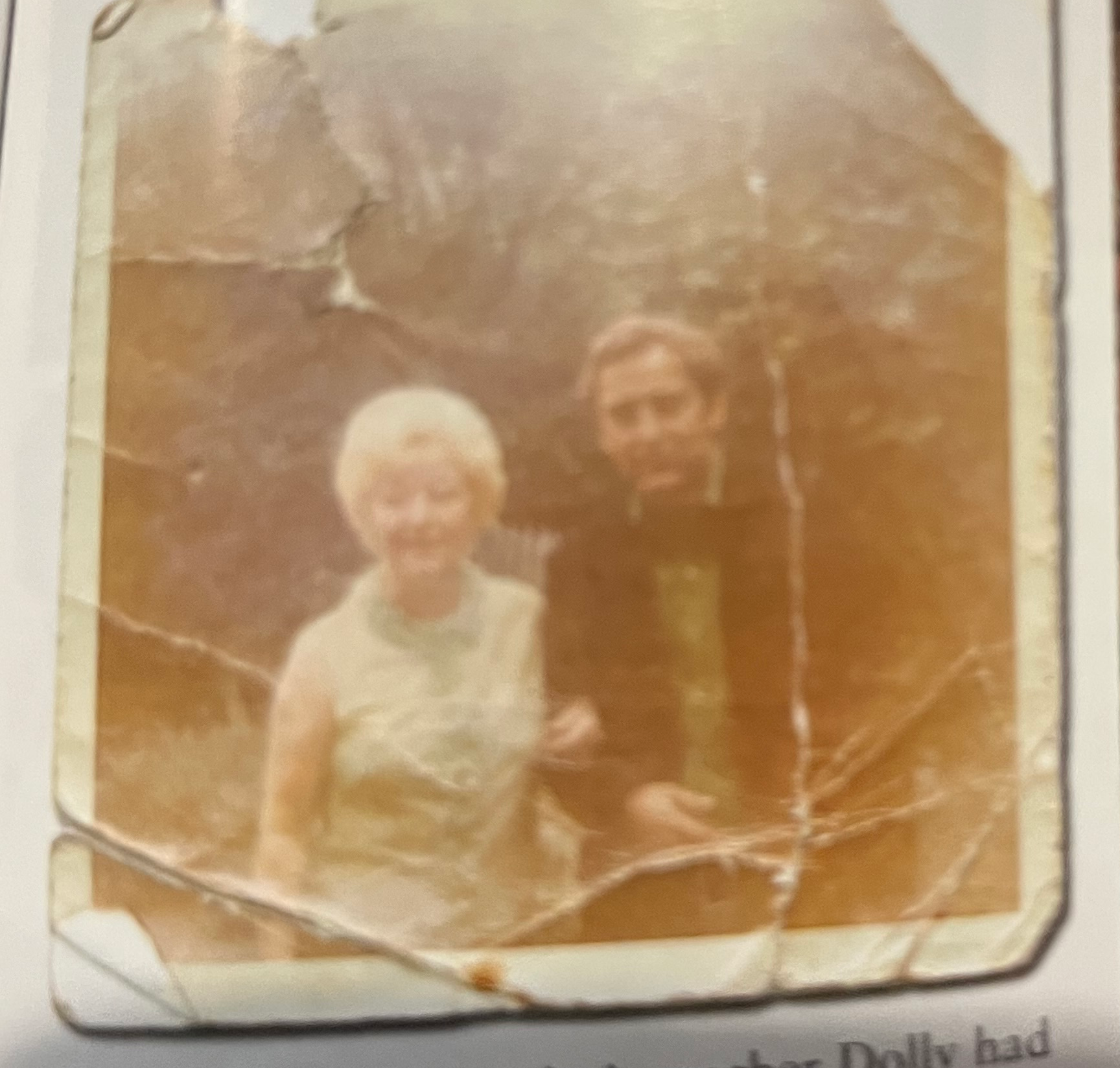
John Thaw with his mother, Dolly

After his death – her recounting of Thaw’s final days in diary entries is so very moving – she took a keen interest in learning more about her late husband’s mother, to understand why she had made such a devastating decision to leave her children.

To her great credit, Hancock does not demonise Dolly even though she caused Thaw so much pain, and in turn herself through their turbulent marriage.

“I will attempt to get inside Dolly’s skin, as if I was going to play her and try to understand what John never could or would.”

Alongside Hancock’s wonderful writing, The Two of Us is full of many great photographs, both professional and personal. Perhaps the most interesting and saddest of all is a faded and crumpled picture of Thaw taken with his mum on a rare union.

Hancock captioned it by saying: “It was found in her (Dolly’s) bag when she died.”

Her interest in the forces that moulded her husband – both good and terrible – make this a marvellous memoir. Any fan of John Thaw and Hancock (who is far too self-deprecating in her writing) will enjoy reading it, as I did.
Name dropper extraordinaire: Richard E Grant’s daft obsession with celebrities

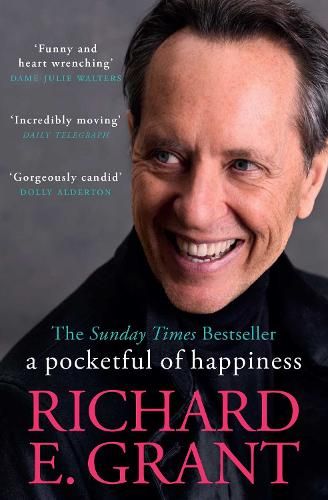
Without a doubt one of the most ludicrous episodes in Richard E. Grant’s entertaining, sometimes very moving but ultimately disappointing memoir “A Pocketful of Happiness” occurs when the author is having lunch with the legendary actress Sally Field at a brasserie in Philadelphia, in 2019.

His phone pings, and whilst at first he is reluctant to answer it – “I can’t, Sally, it’s rude to look at your phone when eating” – he eventually does on the insistence of his dining companion.

After reading the text message, Grant slaps a $100 bill on the table, tells Sally (whom he invited to lunch) that he has to go (“Will call and explain’). Then he sprints to the nearest Amtrak train station a dozen blocks away to catch a train back to New York. A phone call to Trudie Styler (Sting’s wife) and he’s soon in a helicopter on his way to Donna Karan’s estate in the Hamptons for the screening of a new Julianne Moore movie.

And why all this madness (and rudeness): “…because Barbra Streisand is the guest of honour”.

A little while later, he’s unashamedly attached himself to Streisand and her husband, the actor James Brolin, bringing food to the former diva and chatting to her for 90 minutes straight (apart from a brief interruption from Brooke Shields who declares: “This man [Richard E. Grant] is brilliant.”)

This scene in a nutshell encapsulates three of the great themes in Grant’s life and this memoir: his obsession with singer and actress Barbra Streisand (he has a bust of her in his garden), his endless fascination with celebrities (despite becoming one himself) and his incessant and unrepentant name dropping.

Incredibly, the book is not really about anything of these things. It is an ode to his wife.

It’s title, “A pocketful of happiness” refers to the instructions his wife Joan Washington, a celebrated dialects coach, gave him shortly before she passed away from cancer.

“You’re going to be all right,” Joan told her husband, “Try to find a pocketful of happiness in every single day.” (In this mission he appears to have succeeded judging by the relentless posting of his daily exploits on Instagram, in which Grant is always grinning broadly and his blue eyes twinkling madly).

While the book shift back in time to scenes from Grant’s penniless days waiting tables at Covent Garden and even further back to his childhood in Swaziland, the nine months from Joan’s diagnosis with stage 4 cancer in January 2021 to her death in September of that year is the central arch of the memoir.

In this respect, Grant does a wonderful, but sad job documenting the very sharp decline in Joan’s life as their universe shrinks to their London home and holiday cottage in the countryside, then just to their home and finally to Joan’s bedroom as she succumbs to her illness.

“Lie next to Joan as she sleeps. Listening to every breath she takes. Overwhelmed with longing. Longing that she won’t have to suffer. Longing that none of this is actually happening to us. L o n g i n g….” he writes in an entry from June 2021.

The pain he feels at the prospect of losing his lifelong companion and best friend is evoked tenderly across many of his diary entries, as he ferries Joan to her hospital appointments, has Zoom calls with Joan’s doctors, nurses and carers and keeps wishing it was all a terrible nightmare he would just wake up from.

Sunday, 14 February 2021
Valentine’s Day – could it be our final one after thirty-eight years together? Hard to compute. Impossible to imagine. Not being a unit, pair, partnership, union, marriage. None of which we discuss out loud and, on the evidence of her ebullience today, clearly not something she is dwelling on, or even thinking about.

But the name dropping in this book is on another level and suggests Grant lives in a cocoon of celebrity love and adoration from people notorious for their fickleness and fakery.

I’m not the only one whose taken issue with the appearance of a celebrity on every second page. Guardian’s Rachel Cooke felt similarly uncomfortable about it.

“Even as I admired Grant for his obvious devotion to, and care for, his wife at the end, I was uneasy: suspicious, you might say. Is it unfair to call a man with so many well-known friends a name-dropper? Isn’t he only describing his world? This is a question I’m still unable to answer,” Cooke wrote in her review in 2022.

As a reader, one is left with the strong impression that Grant is still completed intoxicated with fame and celebrity, and that he has never quite gotten over the fact that a gangly lad from Swaziland (now called Eswatini) made it onto the big stage.

During the course of the memoir Rupert Everett, Emma Thompson, Gabriel Byrne, Prince (now King) Charles and the Duchess of Cornwall (now Queen Camilla) all drop by for tea or lunch (His majestys brings mangoes). Grant’s diary entries are also peppered with anecdotes about meetings with Owen Wilson, Nigella Lawson, Tom Hiddleston, Martin Short and on and on.

“Meet Owen Wilson, who speaks in his signature wow voice, all convoluted vowels and ‘hehehe’ charm, like someone dope-dropped in from another planet…Instantly bonded.

All of these celebs – without exception – are delightful, warm, funny and charming and they invariably feel the same way about Grant. It’s all a bit much.

By stark contrast, Grant’s late wife found his obsession with famous people insufferable and avoided celebrity events with as much fervour as her husband rushed to them with open arms. This was no doubt one of the disappointing aspects – for Grant – of an otherwise happy marriage. You can almost here Grant groan aloud when Joan decided not to accompany him to award ceremonies after he received Bafta, Oscar, Golden Globe and numerous other nominations for his role as Jack Hock in the 2018 comedy-drama Can You Ever Forgive Me? alongside Melissa McCarthy (who is also given supreme name-dropping treatment in the memoir).

I have been a huge fan of Richard E. Grant since I saw him in Withnail & I at the National Arts Festival in Grahamstown, South Africa in about 1992. I also had the pleasure of seeing him live onstage at Sydney’s Orpheum Picture Palace in about 2006 where he was in conversation with the film critic Margaret Pomeranz after releasing his autobiographical directorial debut: Wah Wah (which I thought was great).

I also enjoyed his first memoir: “With Nails: the Film Diaries of Richard E. Grant” which as the title suggests is a collection of his diary entries written while making Withnail & I, the cult film that gave him his start in showbiz and subsequent films such as LA Story, The Player and Bram Stoker’s Dracula.

Yes, there is a lot of name dropping too in this book, but these are film diaries after all!