The intriguing error in an Australia history book and the true story of an all-female convict ship sent to Tasmania

In one of the early chapters of respected historian John Molony‘s The Penguin Bicentennial History of Australia (which I reviewed here), a seemingly incredible story is reduced to just a few sentences.

It’s the early days of the colony, 1813 to be exact and Molony writes about the convicts being sent to Tasmania, or as it was then known, “Van Diemen’s Land”.

Molony writes: “The first direct consignment of 200 male convicts arrived in Hobart in 1812, but a vessel carrying female convicts was captured by an American privateer. The women were put down on an island in the Atlantic on 17 January 1813 and never heard of again.”

According to Molony, an entire ship full of female convicts had been taken prisoner and deposited on an unnamed island in the middle of the ocean, their fates an unsolved mystery.

I was utterly intrigued by this strange and disturbing story, and eager to know more.

While Molony did not have the luxury of Google when he wrote his book (published in 1987), he was a renowned historian and academic being the Emeritus Professor of History at the Australian National University. So my immediate instinct was to completely trust his version of events. But still the sentence nagged at me. How could a whole ship of female convicts completely vanish? Didn’t someone try to find out what happened to them?

While Molony may have dismissed it as just a footnote in the history of Australia, I was keen to find out as much as I could about the Emu, the convicts on board and the events that had sealed their mysterious fate.

Entirely untrue

Very quickly, I found a lot of information about what happened to the Emu, and I have to report that Molony’s simple verdict that the convicts onboard “were never heard of again” is entirely untrue.

In a fact, an entire book has been written about the ship and the convicts on board titled: “Journey to a New Life: The Story of the Ships Emu in 1812 and Broxbornebury in 1814, Including Crew, Female Convicts and Free Passengers on Board” by Elizabeth Hook.

Hook (now Elizabeth ‘Beth” Kibblewhite} is a descendent of one of the convicts aboard the Emu, Jane Jones.

Jones, like so many of those sent to Australia, was convicted of a rather petty crime at a time when Britain was a highly unequal society, where the middle and upper classes lived well and the lower classes struggled to survive.

Aged just 17, she was convicted of theft in 1812 after she and a younger accomplice broke into a public house in London and were caught in the act of stealing a large quantity of food and money. Jones was sentenced to death, but because of her young age and being “of good character” (her father was a glassmaker) her sentence was commuted to transportation to the fledgling colony of NSW for life.

(You can read the entire Old Bailey trial transcript here).

She was put on the Emu, a merchant ship built in Liverpool which set sail in October 1812. Jones was one of 49 female convicts. Rather than never being heard of again – as Molony claimed – she did reach Sydney, but only in July 1814 and on a different ship, and after a hellish experience that lasted almost two years.

Molony was correct about the initial fate of the Emu. It was indeed captured by a privateer, the 18-gun Holkar, led Captain J. Rolland. A privateer was a US-government sanctioned ship whose task it was to steal British ships and their cargo.

The taking of the Emu occurred at particularly treacherous time to be sailing the seas as Britain was at war with the United States, a conflict sparked by maritime disputes and known as the War of 1812.

Journey to Cape Verde

As to that unnamed island in the Atlantic Ocean Molony says the crew and convicts aboard the Emu were dumped on, it was St Vincent (now Sao Vicente) in the Cape Verde islands, about 840 km west of Dhaka, Senegal. According to numerous trustworthy online accounts, the 22 crew of the Emu and the 49 female convicts were put ashore on January 17,1813 at Porte Grande.

View of downtown Mindelo, Bay of Porte Grande (Photo credit: ElsondeMadrid, Wikipedia)

Porte Grande is a bay on the North Coast of Sao Vicente, and is where the island’s main city of Mindelo is situated today. Discovered by the Portuguese in the 1460s, the Cape Verdes were populated by Portugese settlers who were allowed to keep slaves.

At the time the female convicts were put down at Porte Grande, the Portuguese-owned island was recovering as settlers returned following a devastating drought.

Final journey to Sydney

The female convicts and crew spent 12 months on St Vincent before being picked up by the Isabella and returned to Britain. Here they were put on a hulk (a floating prison) in Portsmouth Harbour for four months and then put on another ship, the Broxbornebury and transported to Port Jackson in the colony of NSW, departing in February 1814.

Elizabeth Kibblewhite, in her post on Convictrecords.com.au about her “3X great-grandmother” Jane Jones, notes that while there was no official record of what happened to the women convicts, their children and the crew during their stay on St Vincent, “an unverified report states that they were looked after by Catholic nuns. One of the women, Elizabeth King, died on the island on the 29th of January 1813”.
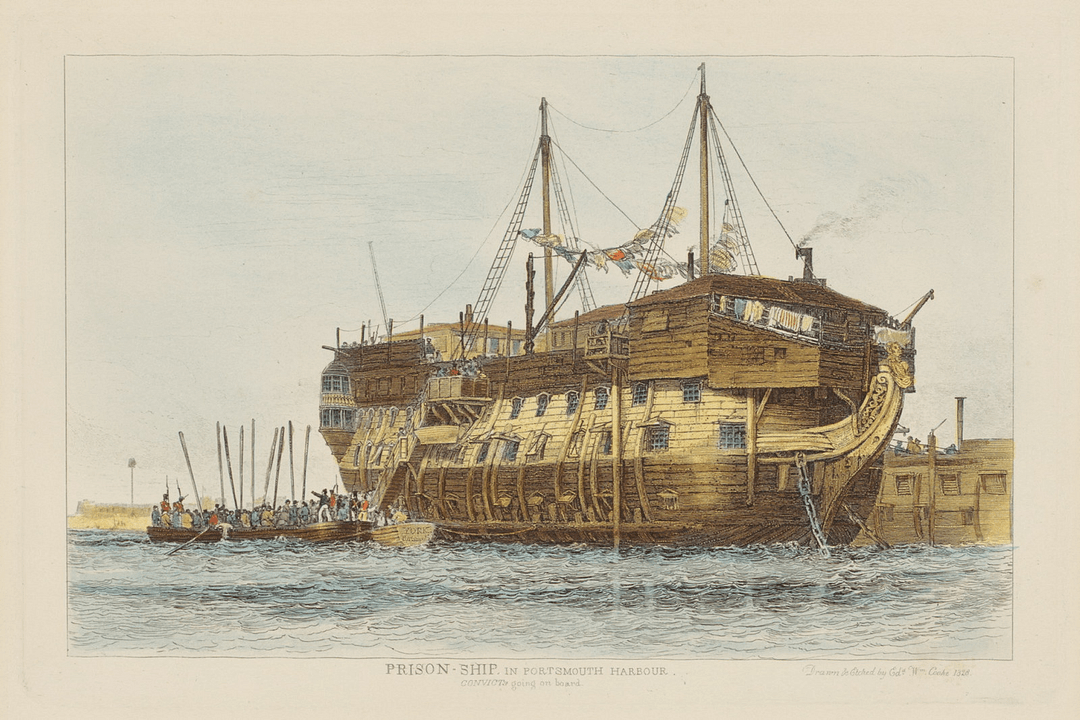
Illustration of a hulk or prison ship (Credit/source: The Museum of History NSW)

Kebblewhite writes: “They arrived back at Portsmouth England (via a journey to Bear Haven, Ireland), about the 12th of October 1813, only for the authorities to be told the women were “….in a state of nakedness and inadvisable of their being landed…” They were kept on board in the harbour for a total of four months until another ship was made ready for a voyage to the Colony, which was the Broxbornebury in February 1814, along with an extra eighty-five female convicts.

Kebblewhite continues: “Not all the thirty-nine remaining women from the Emu made the journey to New South Wales. Five convicts were transferred to the Captivity prison hulk ship in Portsmouth Harbour. Four of these women were granted Full Pardons and one died on the hulk ship. For the other thirty-four it had been a long voyage when they finally arrived in Sydney in July 1814, twenty months after first embarking on the Emu!”

After a long, exhausting and terrifying ordeal that lasted nearly two years. Jane Jones would have been just 19 when she arrived in the fledgling city of Sydney. She did, however, live long life in NSW, dying on the 24th of April 1868, aged 73. Her occupation is listed on convictrecords.com.au as “servant”.

The story of Jane Jones

I contacted Beth Kebblewhite to ask if she knew of Molony’s book and his error about the Emu.

She replied a few days later that she had never heard of the book I’d read “so did not know about the mistake regarding the ship Emu“.

She went on to say: “I first heard about the Emu in the mid 1980s when I started researching my family tree & found my 3X great-grandmother Jane Jones was a convict onboard. The story had been passed down many generations & about how she had met her husband-to-be, a free passenger, John Stilwell, on the ship Broxbornebury.

“At that time, I did most of my researching at the Mitchell Library [part of the NSW State Library] in Sydney, but it wasn’t until years later when I found I had many other relatives, free & convict, on the Broxbornebury, that I looked into it further & attempted to confirm the story of the Emu.

“This was confirmed in The Convict Ships 1787-1868 by Charles Bateson, page 191. Quite a long story about what happened & it was first published in 1959.”

That’s almost 30 years before Molony researched and wrote his Australian history book.

Beth added that she undertook further research online in 2000, which she incorporated into the third edition of her book, published in 2014.

After corresponding with Beth, I came across another entry about Jane Jones on a website called immigrationplace.com.au, which fills in quite a few blanks about her rather extraordinary life as does a detailed entry on People Australia (a website of the Australian National University).

It seems that Jane’s luck changed when she met John Stilwell on board the Broxbornebury. Stilwell was a steward of the surgeon Sir John Jamison who was also travelling to Sydney aboard the same ship.

It appears Stilwell used his relationship with Sir John to secure her a job as a housekeeper at one of his properties, the Westmoreland Arms Hotel, where Stilwell was installed as publican and manager. The alternative, had she not met Stilwell, was to be sent to another hellish institution, the “Female Factory at Parramatta” where unmarried female convicts lived like slaves and in solitary confinement in an imposing sandstone building on the banks of the Parramatta River.

Jane Jones married Stilwell, had five children with him and received a full pardon from Governor Macquarie in 1820. Rather than leave the colony as she could have done, Jones stayed in NSW, had another six children with another ex-convict John Webster (Stilwell ran into financial problems, abandoned Jane and their children and returned to Britain in 1825) and later moved to Goulburn, where Webster became a butcher.

“John died on 28th February 1842 aged 44 years. Jane died of ‘old age’ in her house in Auburn Street, Goulburn on 24th April 1868 aged 74 years. It is believed they are both buried in the Presbyterian section of the original burial ground, Mortis Road Cemetery,” according to Immigrationplace.com.au.
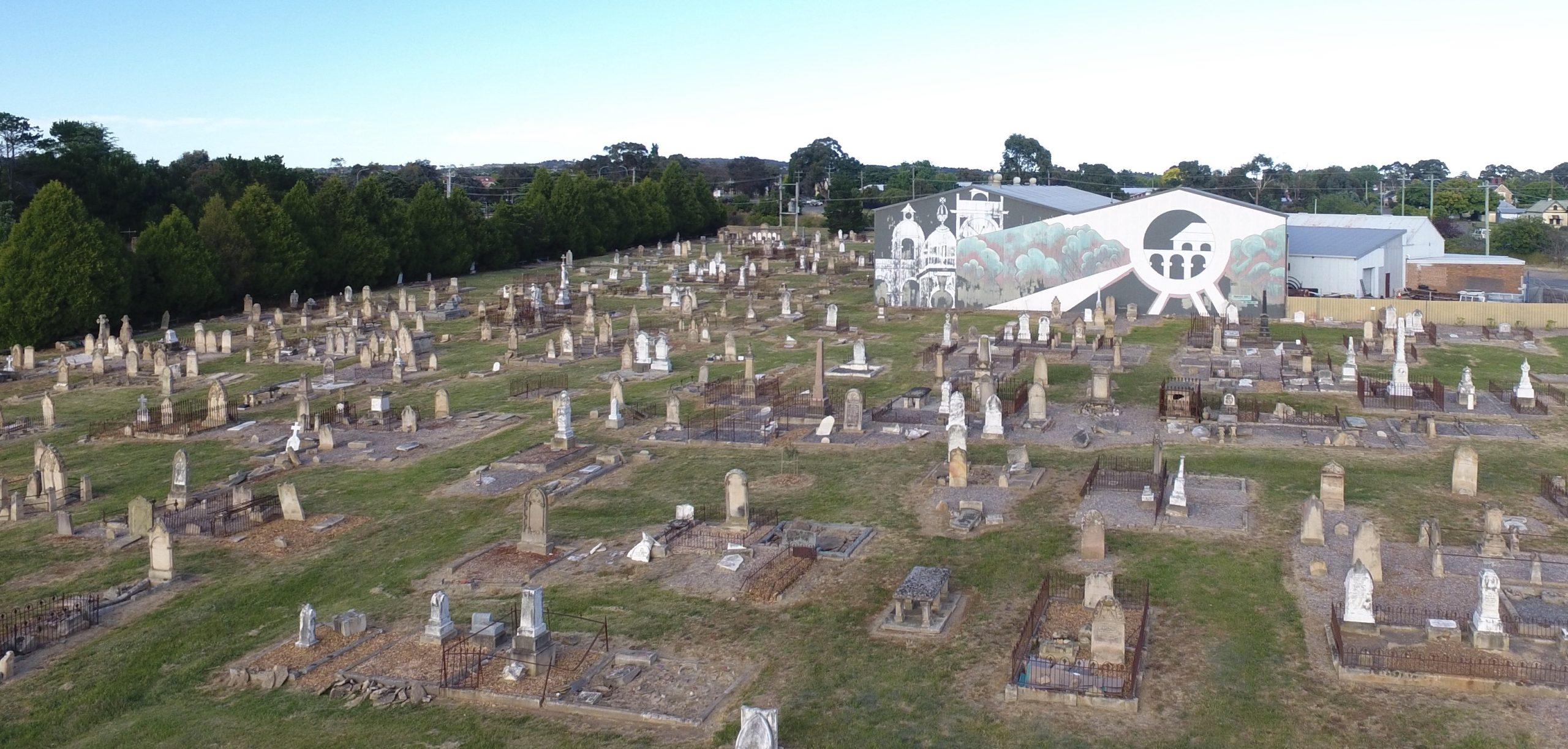
Mortis Road Cemetry, Goulburn, the final resting place of Jane Jones (Pic: https://www.goulburnhistoriccemeteries.org/mortis-street/)

Jones is just one of the 34 original Emu convicts who came to Sydney in 1814. There are fascinating stories of the other women who made it to Sydney aboard the Broxbournebury, some of which you can read here. Today hundreds if not thousands of the descendants of these brave women live in Australia.

Reconsidering Molony’s error

Returning to Molony’s error, I do wonder – given the fact there were texts available, and he was a very experienced historian – how he managed to get the story of the Emu so badly wrong. Charles Bateson’s book about convict ships, which Beth Kibblewhite used as a reference for her own book, was published – as I mentioned earlier in 1959 – and would presumably been available to Molony.

It remains a mystery as to what source material he relied on to come to the conclusion that the Emu and its crew were put down on an island somewhere and never heard from again.

He might be a bit embarrassed about that error were he aware of it, but I am certain he would have been utterly intrigued, as I was, by the story of what actually happened.

I’m currently reading a second, more comprehensive Australian history book, titled Great Southern Land by Frank Welsh (published in 2004) and am intrigued to see if the story of the Emu is given more prominence, and whether Welsh got the facts correct! Stay tuned!
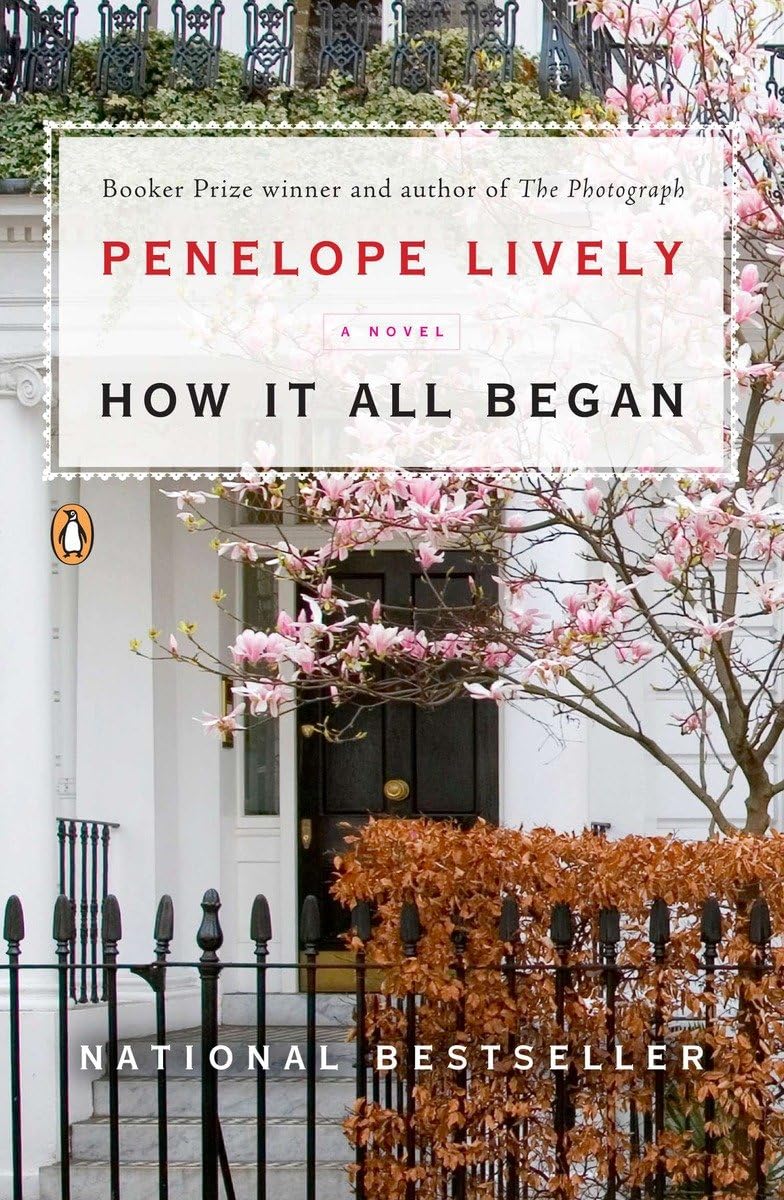
The butterfly effect: Reading Penelope Lively’s ‘How it all Began’

How it All Began by Penelope Lively begins violently with the mugging of retired and widowed schoolteacher Charlotte Rainford on a London street and then follows the lives of the people impacted by this random event: those both close to Charlotte like her adult daughter Rose and people she has never met like Marion, an interior designer and Jeremy, an antiques dealer.

Forced to recuperate at her daughter’s house, Charlotte introduces Anton, an Eastern European migrant into Rose’s life when she agrees to tutor him at her temporary home. Caught in a loveless marriage to dull Gerry, Rose develops strong feelings for Anton, who is funny, charming and sincere.

Meanwhile, in another part of London, the lives of retired diplomat and historian Lord Peters and his niece, Marion, are set on different courses by the mugging of Charlotte.

Rose works as the personal secretary to Lord Henry Peters. When she is unable to accompany him to give a lecture in Manchester because she has to take her mother to a doctor’s appoint, he asks his niece Marion to accompany him instead.

Without Rose by his side, Lord Peters forgets his lecture notes, and he gives an embarrassing performance that has him questioning his own relevance and embarking on a bizarre television project. Marion finds herself seated next to a charming, wealthy businessman, who at first seems to be the saviour of her struggling interior design business, but who turns out to be a conman.

Charlotte’s mugging also exposes an affair Marion is having with Jeremy, a self-centred married man who runs his own failing antiques business. Marion sends Jeremy at text message to say she cannot make a rendezvous, but it ends up being read by Jeremy’s wife, Stella. Stella engages a lawyer and files for divorce.

While this may sound like the makings of a rather gimmicky work of fiction, Lively, who is now well into her nineties and is a Booker Prize winner (1987 for Moon Tiger), does a great job of elegantly orchestrating events and drawing the reader into the heads of the characters as they navigate the unexpected challenges they must now navigate. The novel moves almost cinematically from one storyline to the next added by Lively’s beautiful prose and well-rounded characters.

Reading the book made me think of my own life and how random events that seemed inconsequential at the time, have had a profound impact on the trajectory of my life. An unexpected conversation, a chance encounter, a phone call missed or answered, an opportunity taken or not taken. All these things have set our lives on unplanned pathways. But more so, they have impacted the lives of others, people we know and those we will never know.

While I have not read any of her other books, I have read that the role of chance and “haphazard what-might-have-beens” (to quote a New York Times review) is a theme explored in other novels by Penelope Lively.

“Thus have various lives collided,” Lively writes in How it all Began, “the human version of a motorway shunt, and the rogue white van that slammed on the brakes is miles away now, impervious, offstage, enjoying a fry-up at the next service station. Just as our mugger does not come into this story, not now, anyway — job done, damage complete, he (or she) is now superfluous.”

The butterfly effect, the notion that seemingly trivial events can set off chain reactions and generate unexpected consequences is a powerful concept and explored to great effect in How it All Began.

(It would also make a rather excellent television series, if well adapted.)

The Joy of ‘reading’ Inspector Morse

What an absolute joy and pleasure it is to read the Inspector Morse novels written by the late, great Colin Dexter.

I absolutely adored the television series and the wonderful portrayal of the curmudgeonly chief inspector by the imperial John Thaw, but the novels are marvelous in their own right.

I read three in quick succession starting with The Daughters of Cain (1994) followed by The Jewel That Was Ours (first published in 1989) and Last Bus to Woodstock, the very first of the Inspector Morse novels, published in 1975.

(In 2016, I read my first Inspector Morse novel The Wench is Dead (the eighth book in the series), a rather unusual book as Morse is recovering in hospital and spends his time solving a Victorian murder mystery dating back to 1859. You can read my review here).

Having first watched the TV series and then delved into the books (it really should have been the other way round), it’s impossible not to imagine John Thaw as Morse and Kevin Whateley as his lanky, Geordie crime-solving sidekick Seargeant Robbie Lewis.

In the Daughters of Cain, Morse and Lewis investigate the murder of Oxford academic Dr Felix McClure, found stabbed to death in his North Oxford flat, the murder weapon nowhere to be found. Suspicion falls on three woman – his wife, his stepdaughter and his wife’s friend (all with motive) – and it’s up to Morse and Lewis to correctly identify the killer.

In the Jewel that Was Ours, American tourist Lauran Stratton is found dead of an apparent heart attack in her unlocked room at the Randolph Hotel. Later a precious jewel that she was to donate to an Oxford museum is found missing from her handbag. Stratton is part of a tour group of American retirees visiting historic cities of England. It falls to Morse and Lewis to unearth who among the group of unmerry travellers committed the robbery and why.

Interestingly, The Jewel that Was Ours is the only one of 13 Morse novels, which was first a Colin Dexter screenplay (filmed with the title The Wolvercote Tongue) and then later novelised.

In Last Bus to Woodstock a young woman is found murdered in the parking lot of the Black Prince, a pub on the outskirts of Oxford, after accepting a ride from a stranger. Suspicion falls on the young, devious man who discovered the body and a philandering Oxford don. Amid his investigations, Morse falls in love with a young nurse and gets to know, admire and berate Seargeant Lewis.

I loved the slowly unravelling pace of the feature length TV episodes – a much more realistic depiction of how crimes are solved in real life I suspect – and this kind of meticulous unravelling of characters and motives occurs in a similar fashion in the books.

Of course, Dexter throws in plenty of red herrings – and even the great Inspector Morse comes to the wrong conclusions from time to time. In The Jewel that was Ours, Morse is convinced he has identified the killer, who he arrests at a train station and drags into an interrogation room, only to realise that he has made a blunder.

I love the fact that he is both a brilliant man, but also far from perfect. He is easily seduced by a beautiful woman, frequently drinks too much, can fly into a rage with little provocation, but is also compassionate, kind and empathetic. He is also very funny, in a mostly cynical way:

In this comic scene from The Daughters of Cain, Morse is talking to Ellie, a young woman he has become infatuated with).

“Don’t you ever eat?” demanded Ellie, wiping her mouth on the sleeve of her blouse, and draining her third glass of red wine.
“Not very often, at meal-times no.”
“A fella needs his calories, though. Got to keep his strength up – if you know what I mean.”
“I usually take my calories in liquid form at lunchtime.”
“Funny, isn’t it? You bein’ a copper and all that – and then drinking all the beer you do.”
“Don’t worry I am the only person in Oxford who gets more sober the more he drinks.”
“How do you manage that?”
“Years of practice. I don’t recommend it though.”

All three novels were adapted into episodes for the television series, but I could only vaguely remember the plot twists, and so the identity murderer came as a complete surprise in each book.

But even if I had remembered the plots, the great thing about the Morse novels is the wonderful writing of Dexter. He really is a joy to read.

Dexter is master of delving into the personalities of his main suspects and of taking us into the mind of the brilliant Morse and the not-to-be-underestimated Lewis. He is also brilliant at his meticulous descriptions of crime scenes, painting vivid pictures in the mind of the reader.

“The body had been found in a hunched-up, foetal posture, with both hands clutching the lower abdomen and the eyes screwed tightly closed as if McClure had died in the throes of some excruciating pain,” is how Dexter describes the deceased murder victim in The Daughters of Cain.

Interestingly, there is very little physical description of Morse in the first novel. Instead, he comes to light through his personality and mannerisms.

Morse makes his first ever appearance on page 15 of Last Bus to Woodstock after he arrives at the crime scene in the courtyard of the pub.

“Five minutes later, a second police car arrived, and eyes turned to the lightly built, dark-haired man who alighted.”

The hard-working Lewis is already there, having arrived with “commendable promptitude”,

“[Morse] knew Sergeant Lewis only slightly but soon found himself pleasurably impressed by the man’s level-headed competence.”

“‘Lewis, I want you to work with me on this case,’ the Seargeant looked straight at Morse and into the hard, grey eyes. He heard himself say he would be delighted.”

And so, begins one of the great fictional crime-solving partnerships, one that would spawn another 12 novels (published from 1975 to 1999), a television series of 33 feature length episodes (from 1987 to 2000) and two TV spin-offs, Lewis (42 feature-length episodes from 2006 to 2015) and Endeavour, featuring the young Inspector Morse (36 feature-length episodes from 2012 to 2023).

(I have watched every episode of Lewis and thought it an excellent sequel to Inspector Morse, but I have not watched any Endeavour, though I hear it is possibly the best of the three.)

That’s an incredible amount of television viewing created out of a rather old-fashioned, curmudgeonly, middle-aged detective,

Colin Dexter, who makes a Hitchcockian cameo in almost every episode of Morse (he died in 2017) began writing mystery novels during a family holiday in 1972 after a career as a classics teacher was cut short by the onset of deafness

He claims that when he first started writing the crime novels, he had little idea of what Morse was actually like. “I’ve never had a very good visual imagination. I never had anyone in mind,” he said in an interview with The Strand Magazine in 2013.

“The only thing that was really important to me about Morse was that he was very sensitive and rather vulnerable,”

Dexter also revealed that much of the things that bring pleasure to his otherwise grumpy detective hero, are things that Dexter himself enjoyed: classic English literature, classical music, cryptic crossword puzzles and real ale.

“People don’t realise this. The greatest things in [Morse’s] life were [A.E] Houseman and Wagner. These were the things he would go home and listen to and talk about and that was me I suppose, but that’s about as far as it went. I never even wrote plots for my books. I always made sure that before I started writing a story I knew exactly how it was going to end. I never had any idea about what was going to happen in the middle but I knew where it was heading,” Dexter said.

While each of the four novels I have read so far are classics of British crime fiction, with meticulously clever plots and sub-plots and wonderfully engaging characters, it is Morse himself who is central to everything. Brilliant, sad, hilarious and tragic, he is a marvel.

Now to find and read the remaining Morse novels (they are devilishly hard to find!)

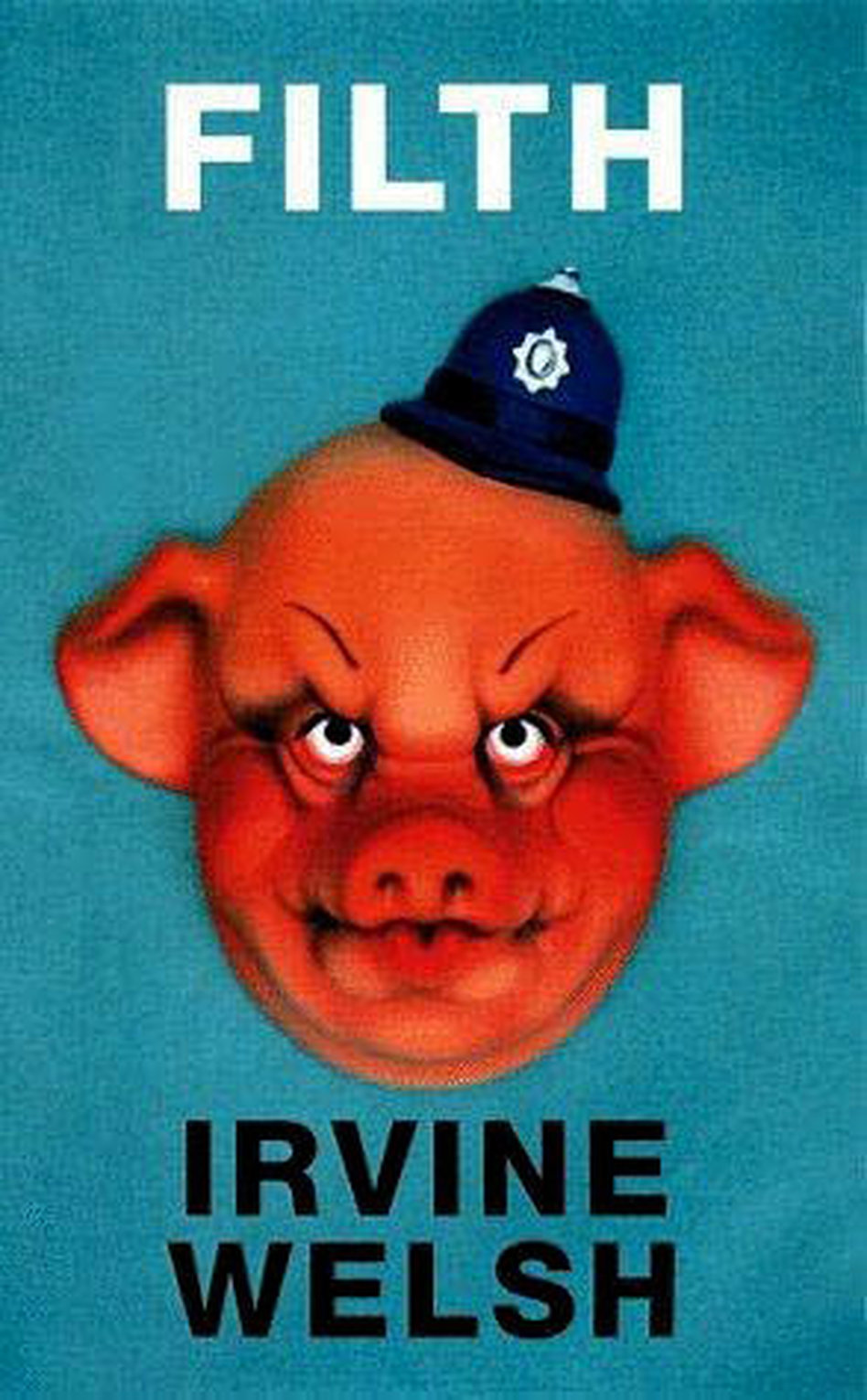
What’s to really like about Irvine Welsh’s Filfth?

filfth“Failure is much more interesting to me than success,” said Trainspotting author Irvine Welsh in a recent talk I attended in Melbourne

“I write about people who are going through a bad time, when things are falling apart. I try to show these characters grasping for the light switch,” he said in an attempt to explain the grim reality of many of his characters.

In the case of Scottish Detective Sergeant Bruce Robertson, the light switch might as well have been in Hawaii, in an abandoned, graffiti stained warehouse where the power has long been turned off.

He is beyond hope of redemption, right from the very first pages:

After two fruitless strikes I feel a surge of euphoria on my third as his head bursts open. His blood fairly skootches out…

Robertson its an utterley despicable character. A murderer, a rapist, a racist, a misogynist, a betrayer of his friends and family, a drug fiend, an alcoholic, a rabid consumer of pies, chips and deep fried food; a man with eczema-encrusted genitals that rise at the slightest whiff of sexual conquest, who retreats to the bathroom to give his itchy anus “a good clawing”.  Into the mix, throw in a distinct lack of interest in personal hygiene, fetishes that include erotic asphyxiation (strangulation sex) and a side interest in bestiality, and you get a pretty good picture of DS Bruce Robertson.

And yet it’s an enjoyable book to read mainly because Robertson is an entertaining, wise-cracking first person narrator who speaks directly to his reader without any sense of remorse, who plots the downfall of his work colleagues, friends and adversaries with Machiavellian cunning. One enjoys his scheming and plotting in the same manner as one enjoy Blackadder and his many “cunning plans”.

At the heart of it all is a man who hates everything but his own shadow, driven by a burning rage that will not cool:

I hate them all, that section of the working class who won’t do as they are told: criminals, spastics, niggers, strikers, thugs, I don’t fucking well care, it all adds up to one thing: something to smash.

Robertson is a voyeuristic release for every bad thought a (male) reader has ever had (and yet there are also female fans of this book).

There’s a guilty pleasure in allowing Robertson to enter your head, knowing that you can close the book and return to the real world where hopefully some sense of morality and decency remains.

Perhaps this is partly why Welsh wrote it, to get all his inner demons on the page to expunge the Bruce Robertson buried in his pysche. Either that, or it’s an opportunity to write about a character who remarks during a bout of sex with an Amsterdam prostitute:

I’ve given the pole a good greasing but she’s pretty tight. Once I get in though, it starts to slide up. I can tell that she’s in a bit of distress cause she’s making hissing noises and her back muscles are tensing, but it’s probably  just cause the fucking hoor’s loving every minute of it.

These type of graphic descriptions dominate the book in between heavy bouts of drinking, drug taking and “hooring”.

The female degradations inflicted by Robertson reminded me of a question a woman asked at the same talk Welsh gave in Melbourne. She asked him about his depiction of woman characters and whether there was something misogynistic about it?

At the time I scoffed at the question, but having read Filth, I’ve reconsidered.

Women are the chief focus of Robertson’s humiliations. They are reduced to play things without feelings or emotions. They are objects for his pleasure and derision most horrifyingly illustrated in a scene I won’t even dare to quote where Robertson drives a prostitute to an isolated farm to have sex with a sheep dog.

It was this scene where – out of sheer revulsion – I considered putting the book down.

Trainspotting was Welsh’s first book and I wager – though I have only read it and now Filth – his finest by a country mile. Trainsportting was  a brilliant depiction of the post-Thatcher generation lost to drugs. A modern classic.

Filth is almost pure literary pornography with an enigmatic villain unlike any created in fiction who engages in every possible depravity. There’s whiffs of Trainspotting in Robertson’s occasional hilarious commentary on Scottish football, tabloid journalism (Robertson is a big reader of The Sun – for the football and the girls on page 3) restaurant food and local politics. But it has little gravitas and nothing meaningful to say about the society that created such a monster as Bruce Robertson.

Yes, we learn something of Robertson’s motivations and inner psyche –  through a tapeworm in his bowels that speaks in Queen’s English. But in the end and upon reflection, I tend to agree with what The Observer book critic Alan Taylor wrote of the novel when he reviewed it in 1998:

“As an archetype, Robertson is over the top. Welsh slips so easily into degradation mode that pages slip by in wodges, a miasma of pornography that is mindnumbing…Welsh lets him sink so low he is not resuscitable. For such a man, the idea of redemption seems risible. His sin goes beyond breaking the law. Guilt, ultimately, is the least of his problems. He has committed the cardinal crime. He is a crushing bore.”