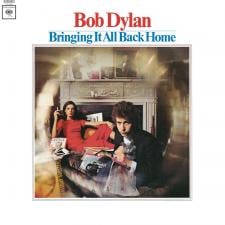
Title: Bringing it all Back Home (1965)
Length: 47min 21sec
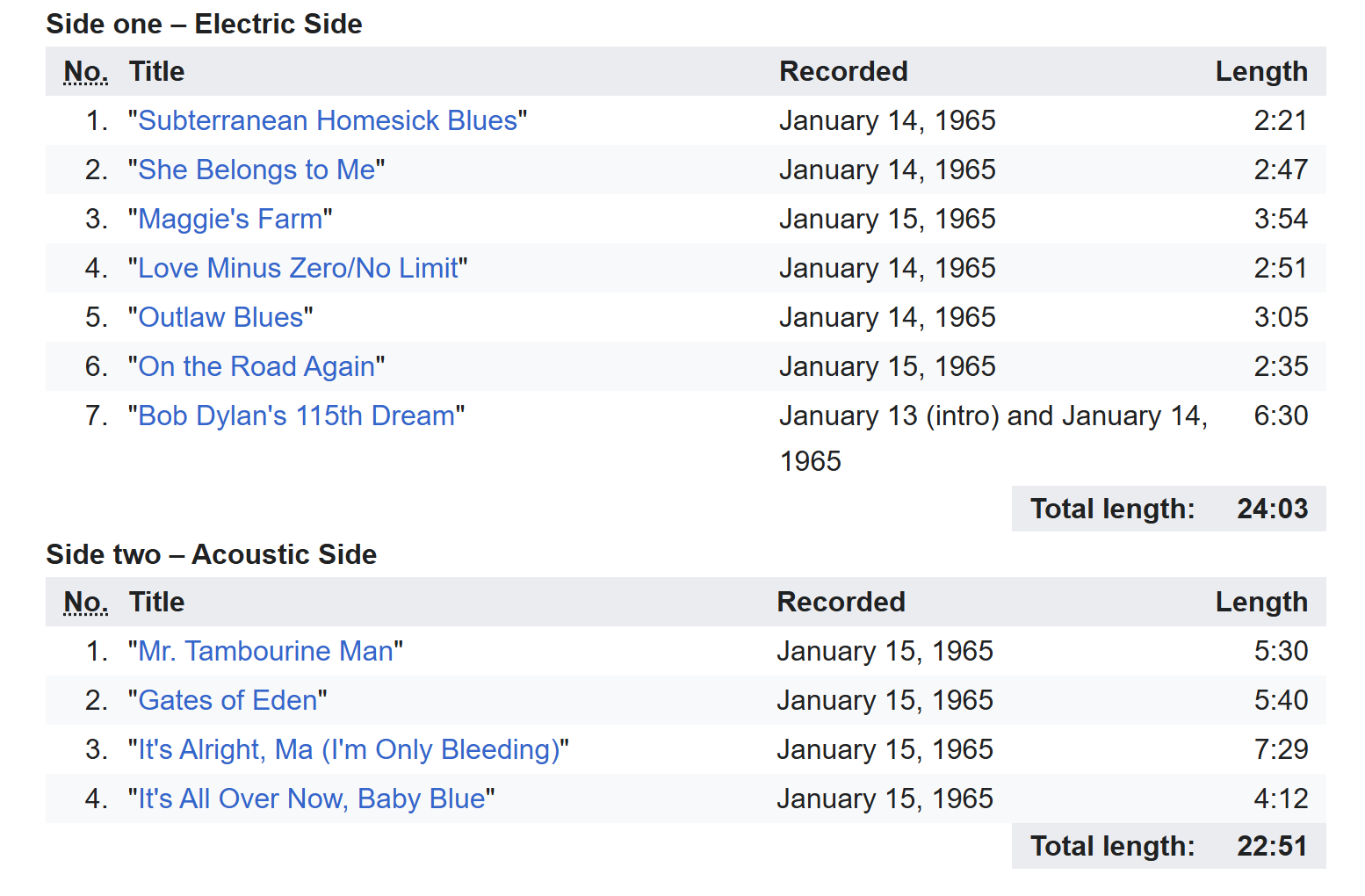
Number of songs: 11
Best tracks: Subterranean Homesick Blues, Maggie’s Farm, Mr Tambourine Man, Gates of Eden, It’s Alright Ma (I’m Only Bleeding), It’s All Over Now Baby Blue, On the Road Again, Bob Dylan’s 115th Dream
If I could choose just one track: Mr Tambourine Man
Freshlyworded rating: 9/10
This album sparked a huge amount of controversy when it was released in March 1965, as it was the first time Dylan incorporated electronic instruments and a host of session musicians.
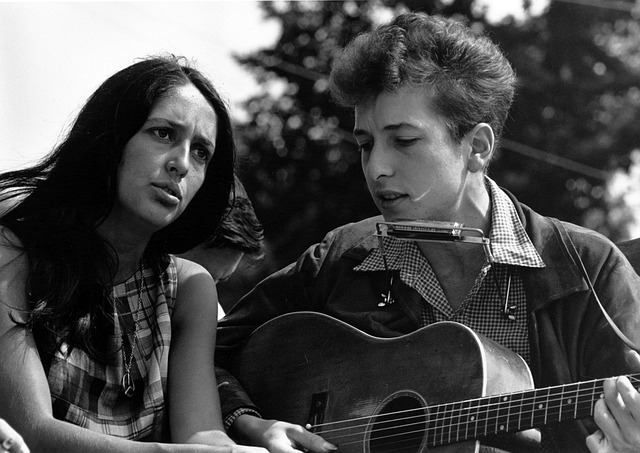
1965 was also the first time Dylan played an electric guitar at a live gig. This occurred at the Newport Folk Festival in Rhode Island in July of that year where he was both cheered and booed.
No doubt the booing was a result of Dylan being viewed as folk hero firmly embedded in the old ways of storytelling with just an acoustic guitar and his faithful harmonica.
But honestly, this confected outrage pails into insignificance when you listen to what is one of his best albums. And he was still just 24!
The album includes a number of classic Dylan tracks, most notably one of his most covered songs, ‘Mr Tambourine Man’. While The Byrds had a number one hit with their folk-rock/big band recording of the song, which is great in its own way, I prefer the Dylan version. It’s a very moving, poetic song with mesmerising lyrics and surrealist quality to it.
I mean has anyone written lyric as beautiful as this, the final stanza of the song:
And take me disappearing through the smoke rings of my mind
Down the foggy ruins of time
Far past the frozen leaves
The haunted frightened trees
Out to the windy beach
Far from the twisted reach of crazy sorrow
Yes, to dance beneath the diamond sky
With one hand waving free
Silhouetted by the sea
Circled by the circus sands
With all memory and fate
Driven deep beneath the waves
Let me forget about today until tomorrow
I think Dylan’s strained, expressive style of singing is a perfect companion for this song. Funnily enough, I was listening to a radio show recently where the hosts were discussing cover versions of classic songs that were better than the original, and one of the hosts joked: “Every cover of a Bob Dylan song.” I bristled at that as I love all his original versions of songs like ‘Blowin in the Wind’, ‘The Times They are a Changin’ as well as his version of the traditional folk ballad, ‘House of the Rising Sun’ (rather than the more famous version by The Animals).
Anyway, I would put ‘Mr Tambourine Man’ on my list of Top 10 Greatest Dylan songs any day of the week.
The album itself is full of gems. It kicks off with a famous track ‘Subterranean Homesick Blues’, a fast-paced, word-play song that’s unlike any other song he’d recorded at that time. It begins with those famous lines:
Johnny’s in the basement
Mixing up the medicine
I’m on the pavement
Thinking about the government
And ends with one of my favourite Dylan rhymes:
The pump don’t work
’Cause the vandals took the handles
It was also one of the first songs to be promoted via a music video. It shows a very young, almost disinterested looking Dylan flipping through a series of cards featuring words from the song. In the background, you can see beat poet Allen Ginsberg in conversation with folk singer Bob Neuwirth.
The album features a great collection of Blues-style tracks including the classic “Maggie’s Farm” (the song that created all the controversy at the Newport Folk Festival) which is about worker exploitation and has lines like:
Well, he hands you a nickel
He hands you a dime
He asks you with a grin
If you’re havin’ a good time
Then he fines you every time you slam the door…
There are two great stomping, rip roaring blues tracks ‘On the Road Again’ and ‘Outlaw Blues’ and then a lengthy track titled ‘Bob Dylan’s 115th Dream’, one of his great, crazy narrative songs that as the title suggests has a very dream-like quality.
Dylan sings in the first person, a shipmate aboard the Mayflower (the ship that brought English pilgrims to America shores) captained by “Captain Arab” (a variation on Captain Ahab from Moby Dick) who gives up the hunt for the white whale when he spots land and “calls it America”. The song follows the narrator on this crazy, surreal adventure to the Bowery slums of New York, where he is “thrown in jail for carrying harpoons”, escapes a restaurant “exploding with boiling flat” and ends with Dylan back on a ship heading out of the bay where…
I saw three ships a-sailin’
they were all heading my way
I asked the captain what his name was
And how come he didn’t drive a truck
He said his name was Columbus
I just said, “Good luck”
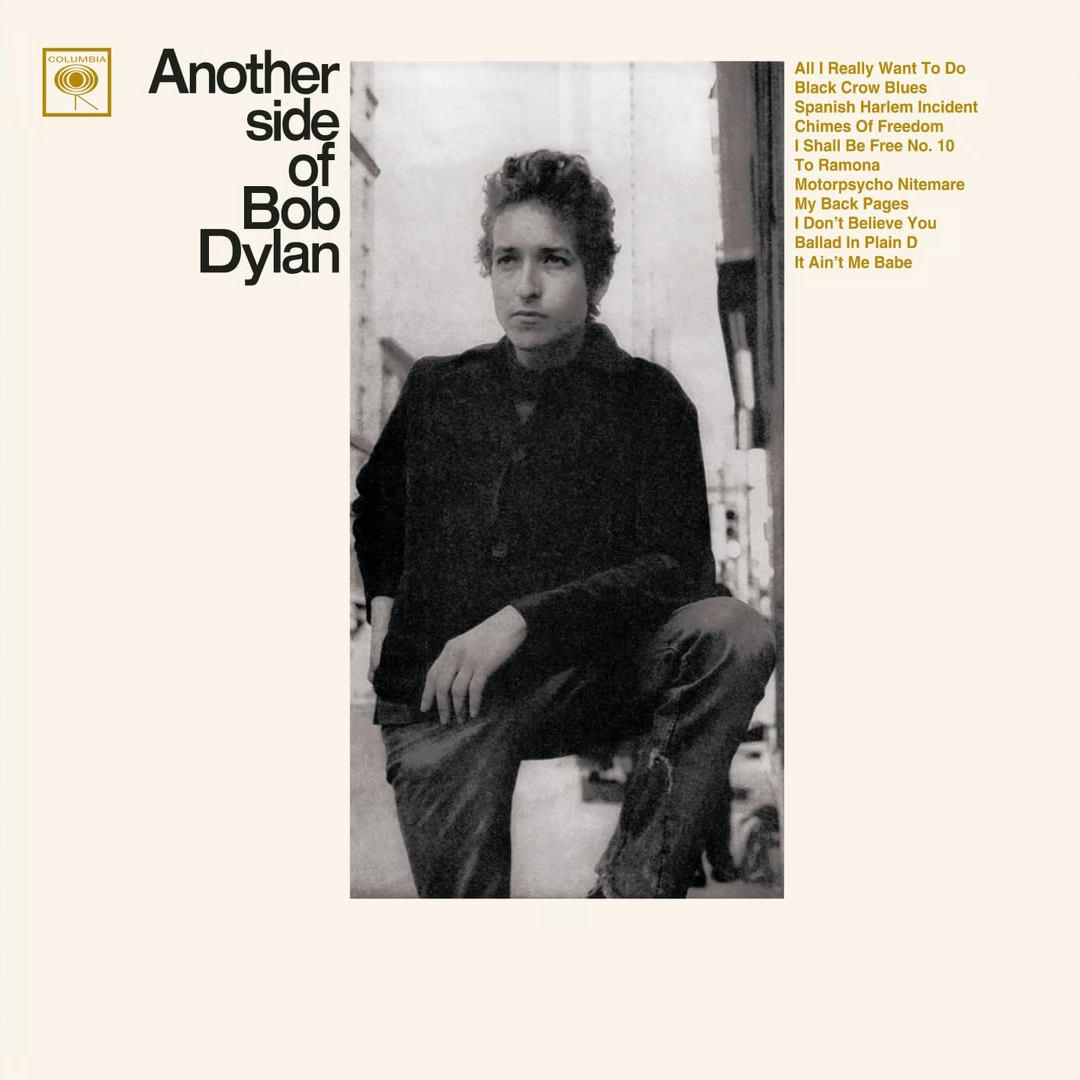
It really entertaining song in the same vein as ‘Motorpsycho Nitemare’ featured on ‘his fourth album, ‘Another Side of Bob Dylan’.
The final three tracks are all classics. ‘Gates of Eden’ is one of those undiscovered gems I have unearthed in making my way through the albums in order. It’s a brooding and surreal song that showcases Dylan’s genius as a mystical poet. The rhythm and ebb and flow of the song combine powerfully with the lyrics, which create a sense of foreboding and gloom.
‘It’s Alright Ma (I’m only Bleeding)’ is an epic, depressing masterpiece about the corruption and materialism of society, and the many other things wrong with the world. Again, the word play turned into song is brilliantly executed with the emotional refrain of a son to his mother: “It’s alright ma”. It reminded me a fair bit of the songs of Rodriguez in the way the lyrics are almost read before the refrain (perhaps Rodriguez was influenced by this very song). It also shows Dylan’s nack for the eye-catching, though-provoking phrases such as “That he not busy being born is busy dying” and…
Although the masters make the rules
For the wise men and the fools
I got nothing, Ma, to live up to
The album ends with the beautiful, melancholy song “It’s all over now, Baby Blue”, a song about the inevitability of having to move on. It’s filled with so many great lines. Not surprisingly, it’s been covered by many other artists.
It’s a song which like so many on this album showcases Dylan’s never properly acknowledged great, emotive and quite beautiful singing voice. It is also an album where his skills as a poet come to the fore.
It’s a real masterpiece.
 Freshlyworded