Name dropper extraordinaire: Richard E Grant’s daft obsession with celebrities

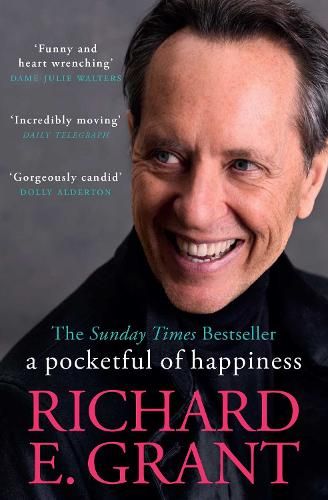
Without a doubt one of the most ludicrous episodes in Richard E. Grant’s entertaining, sometimes very moving but ultimately disappointing memoir “A Pocketful of Happiness” occurs when the author is having lunch with the legendary actress Sally Field at a brasserie in Philadelphia, in 2019.
His phone pings, and whilst at first he is reluctant to answer it – “I can’t, Sally, it’s rude to look at your phone when eating” – he eventually does on the insistence of his dining companion.

After reading the text message, Grant slaps a $100 bill on the table, tells Sally (whom he invited to lunch) that he has to go (“Will call and explain’). Then he sprints to the nearest Amtrak train station a dozen blocks away to catch a train back to New York. A phone call to Trudie Styler (Sting’s wife) and he’s soon in a helicopter on his way to Donna Karan’s estate in the Hamptons for the screening of a new Julianne Moore movie.

And why all this madness (and rudeness): “…because Barbra Streisand is the guest of honour”.

A little while later, he’s unashamedly attached himself to Streisand and her husband, the actor James Brolin, bringing food to the former diva and chatting to her for 90 minutes straight (apart from a brief interruption from Brooke Shields who declares: “This man [Richard E. Grant] is brilliant.”)

This scene in a nutshell encapsulates three of the great themes in Grant’s life and this memoir: his obsession with singer and actress Barbra Streisand (he has a bust of her in his garden), his endless fascination with celebrities (despite becoming one himself) and his incessant and unrepentant name dropping.

Incredibly, the book is not really about anything of these things. It is an ode to his wife.

It’s title, “A pocketful of happiness” refers to the instructions his wife Joan Washington, a celebrated dialects coach, gave him shortly before she passed away from cancer.

“You’re going to be all right,” Joan told her husband, “Try to find a pocketful of happiness in every single day.” (In this mission he appears to have succeeded judging by the relentless posting of his daily exploits on Instagram, in which Grant is always grinning broadly and his blue eyes twinkling madly).

While the book shift back in time to scenes from Grant’s penniless days waiting tables at Covent Garden and even further back to his childhood in Swaziland, the nine months from Joan’s diagnosis with stage 4 cancer in January 2021 to her death in September of that year is the central arch of the memoir.

In this respect, Grant does a wonderful, but sad job documenting the very sharp decline in Joan’s life as their universe shrinks to their London home and holiday cottage in the countryside, then just to their home and finally to Joan’s bedroom as she succumbs to her illness.

“Lie next to Joan as she sleeps. Listening to every breath she takes. Overwhelmed with longing. Longing that she won’t have to suffer. Longing that none of this is actually happening to us. L o n g i n g….” he writes in an entry from June 2021.

The pain he feels at the prospect of losing his lifelong companion and best friend is evoked tenderly across many of his diary entries, as he ferries Joan to her hospital appointments, has Zoom calls with Joan’s doctors, nurses and carers and keeps wishing it was all a terrible nightmare he would just wake up from.

Sunday, 14 February 2021
Valentine’s Day – could it be our final one after thirty-eight years together? Hard to compute. Impossible to imagine. Not being a unit, pair, partnership, union, marriage. None of which we discuss out loud and, on the evidence of her ebullience today, clearly not something she is dwelling on, or even thinking about.

But the name dropping in this book is on another level and suggests Grant lives in a cocoon of celebrity love and adoration from people notorious for their fickleness and fakery.

I’m not the only one whose taken issue with the appearance of a celebrity on every second page. Guardian’s Rachel Cooke felt similarly uncomfortable about it.

“Even as I admired Grant for his obvious devotion to, and care for, his wife at the end, I was uneasy: suspicious, you might say. Is it unfair to call a man with so many well-known friends a name-dropper? Isn’t he only describing his world? This is a question I’m still unable to answer,” Cooke wrote in her review in 2022.

As a reader, one is left with the strong impression that Grant is still completed intoxicated with fame and celebrity, and that he has never quite gotten over the fact that a gangly lad from Swaziland (now called Eswatini) made it onto the big stage.

During the course of the memoir Rupert Everett, Emma Thompson, Gabriel Byrne, Prince (now King) Charles and the Duchess of Cornwall (now Queen Camilla) all drop by for tea or lunch (His majestys brings mangoes). Grant’s diary entries are also peppered with anecdotes about meetings with Owen Wilson, Nigella Lawson, Tom Hiddleston, Martin Short and on and on.

“Meet Owen Wilson, who speaks in his signature wow voice, all convoluted vowels and ‘hehehe’ charm, like someone dope-dropped in from another planet…Instantly bonded.

All of these celebs – without exception – are delightful, warm, funny and charming and they invariably feel the same way about Grant. It’s all a bit much.

By stark contrast, Grant’s late wife found his obsession with famous people insufferable and avoided celebrity events with as much fervour as her husband rushed to them with open arms. This was no doubt one of the disappointing aspects – for Grant – of an otherwise happy marriage. You can almost here Grant groan aloud when Joan decided not to accompany him to award ceremonies after he received Bafta, Oscar, Golden Globe and numerous other nominations for his role as Jack Hock in the 2018 comedy-drama Can You Ever Forgive Me? alongside Melissa McCarthy (who is also given supreme name-dropping treatment in the memoir).

I have been a huge fan of Richard E. Grant since I saw him in Withnail & I at the National Arts Festival in Grahamstown, South Africa in about 1992. I also had the pleasure of seeing him live onstage at Sydney’s Orpheum Picture Palace in about 2006 where he was in conversation with the film critic Margaret Pomeranz after releasing his autobiographical directorial debut: Wah Wah (which I thought was great).

I also enjoyed his first memoir: “With Nails: the Film Diaries of Richard E. Grant” which as the title suggests is a collection of his diary entries written while making Withnail & I, the cult film that gave him his start in showbiz and subsequent films such as LA Story, The Player and Bram Stoker’s Dracula.

Yes, there is a lot of name dropping too in this book, but these are film diaries after all!

Laughter, banality and the elephant in the room: reading Billy Connolly’s autobiography

By strange coincidence, the day I picked up a copy of Billy Connolly’s autobiography “Windswept & Interesting” I saw on social media that the “Big Yin” had just turned 80.

It was quite a milestone for one of Britain’s most famous comics, actors and travel show hosts, and it seemed even more fitting that I should now be reading about his life.

I’ve long been a fan of his, enjoying his his hilarious storytelling stand-up comedy, entertaining travel documentaries as well as his more serious acting in movies like ‘What we did on our Holiday’.

He’s certainly a very talented individual, and from reading his book, comes across as warm-hearted and lovable person in his private life. This is in spite of many difficulties experienced in childhood including physical and sexual abuse and a later problem with drinking (no doubt caused by this trauma).

The title of his autobiography, which he wrote during lockdown, refers to the way his flamboyant appearance was described to him by a friend early on in his entertainment career.

It’s a moniker Connolly revels in and believes is an accurate description of a type of person he identifies with: someone with their own individual style and who doesn’t give a fuck (excuse my language, but I am paraphrasing Billy) what anyone else thinks.

“Being windswept and interesting is not just about what your wear,” writes Billy.

“It’s about your behaviour, speech, your environment and an attitude of mind. It’s perpetually classy – but it’s not of a particular class. It transcends class.”

Later, he says: “Once I’d realised that I was windswept and interesting, it became my new religion. It was such a delightful contrast to the dour and disapproving attitudes I’d grown up with. Instead of cowering under the yoke of ‘Thou shalt NOT!’ , I found a new mantra: ‘Fuck the begrudgers!'”

It’s an attitude of mind that runs throughout the book, fueling his success first as a musician (a career I knew nothing about) and then as often outrageous and daring stand-up comic. Without this psychic armour, Billy might never have made it out of the gloomy Glasgow tenement flat he’d grown up in and which he describes so well in the early chapters of the book.

As with many people of a certain age, the pandemic provided the opportunity for reflection and the time to sit down and think about their lives. He does so in a self-deprecating, warm way, that only sometimes veers off course into somewhat uninteresting (for me anyway) banalities and trivia, such as his favourite TV programs.

To this I am sure Connolly would say: I don’t give a fuck, it’s my story and I’ll choose what I write about. Fair enough, I would not want to be the “fucker that begrudges him”.

Billy Connolly’s story begins in a tenement flat in Anderston on the unloved south western outskirts of Glasgow, where he is raised by his aunts, one of whom is the sadistic Mona, a nasty woman who takes particular delight in physically and verbally assaulting her wee nephew.

Connolly finds himself in this unhealthy domestic situation after his mother runs off with another man, and his father is posted overseas during the war. Later, when his father returns, Connolly is forced to share a bed with him, and his horrifically and inexplicably abused.

It’s a shocking thing to be abused by our own father, but Connolly devotes only a few paragraphs to this incident (one of the surprising aspects of the book), leaving this dark chapter to be dissected by his second wife, the actress turned psychologist Pamela Stephenson, who wrote in more detail about it in her biography, Billy.

Connolly only mentions it again fleetingly, though other memories of his father surface such as family holidays. He only return to the very painful and confusing topic when his father dies.

It is of course a sign of Connolly’s strength of character, his tenacity and warm-heartedness that he does not allow such awful events to dominate his life, though those dark memories do fuel his excessive drinking.

In many respects the book is a chronicle of the people he met along his journey to self-acceptance, those individuals that impacted his life and his career in a positive and creative sense.

Among them were the welders he met while working as an apprentice on the Glasgow shipbuilding docks,

“The shipyards were full of patter merchants. That’s where I first really understood you could be incredibly funny without telling jokes,” recalls Billy.

Billy Connolly with Gerry Rafferty in their days as “The Humblebums”.

He discovers he has a gift for making people laugh through his storytelling, a skill he gets to practice on stage before and in between gigs as a banjo and guitar player.

Of this musical career, I was blissfully unaware and so had no idea that Connolly teemed up with famed pop star Gerry Rafferty of “Baker Street” song fame to write music and tour as the folk band the Humblebums, to a fair degree of success.

While Connolly is keen to point out Gerry Rafferty’s far superior musical talents, there is certainly no doubt that Billy became by far the more famous and successful of the duo.

I also learnt to my surprise and astonishment that Billy does not prepare material for his stand-up shows, but pretty much just gets up on stage and starts talking.

It’s quite a gift, but no doubt gave his stand-up shows a daring, unexpected quality, as well as their freshness and spontaneity.

He writes of his first time of being onstage without Gerry as giving him a “lovely sense of freedom, just talking, singing and being myself”.

It’s the pleasure and enjoyment of storytelling, of being himself, which makes his autobiography so enjoyable for the reader, and especially the fan. There are also plenty of laugh-out-loud moments such as the hilarious “murdered my wife” joke he told on an appearance on the Michael Parkinson show in the 1970s (You can find it on YouTube).

Now an octogenarian living with Parkinson’s Disease and half his hearing gone, it’s good to know that Billy Connolly has turned into less of a grumpy old bastard and more of a opinionated cuddly bear, fond of swearing at the TV, but always eager to learn and discover new things, even in his sunset years.

Throughout it all, he’s remained true to his calling: windswept and interesting.

My father the serial killer: discovering the real Shannon O’Leary?

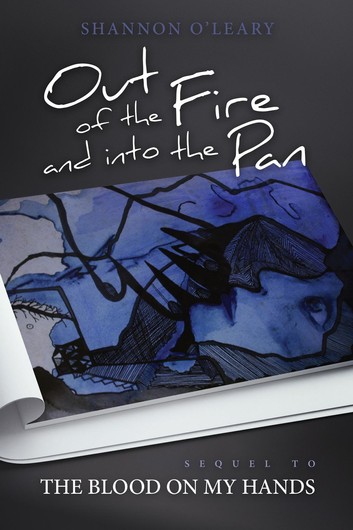
out-of-the-fire-and-into-the-panIt’s hard to write an honest review about ‘Out of the Fire and into the Pan’, the second memoir penned by the Australian actor, performer and songwriter Shannon O’Leary, without confessing that a large part of my motivation for reading it was finding out the identity of the author.

Shannon O’Leary is a pseudonym adopted at the request of her family.

Her first memoir, ‘The Blood on My Hands’ which I read and reviewed almost 3 years ago, dealt with the author’s horrific childhood, where she was sexually, physically and emotionally abused by her father Patrick, a sadistic serial killer (never caught) whom the author witnessed murder young women on the rural outskirts of Sydney in the 1960s and 1970s.

Out of the Fire and into the Pan, which begins with the author’s move from Port Macquarie to the inner suburbs of Sydney aged 15, is the story of O’Leary’s bumpy journey through a string of failed relationships with damaged men to becoming a mother of five kids and entrepreneur. It also charts her eventful and ultimately successful career in the entertainment industry.

While I was curious from the start to know who O’Leary really is (not too many memoirs claim a serial killer for a father) the stimulus to try and solve this mystery actually came from O’Leary herself: her second memoir seemed packed full of clues about her real identity.

For instance, she writes that in 1977:

I was always busy acting. I had a guest spot on a well-known soap opera, appeared in some television commercials and gained some extra work on a few films

A footnote identifies the soap opera as ‘The Restless Years’ and so I spent a great deal of time trawling through the list of actors that appeared on the show, to try and work out which one was Shannon O’Leary.

When that proved fruitless, I tried Googling her work as a ‘reporter’ on popular television show from the early 1980s, and another, a childrens show, she said she appeared on called the Super Flying Fun Show.

Later in the memoir, she mentions a scandalous story about her that appeared in a gossip column when she was dating a much old British-born cinematographer called ‘Henry’ and again I dug around online looking for the article without any luck.

She also writes about her work on a 1980s ABC mini-series  where she agonised about having to appear topless in an embrace with a “young blond Shakespearean actor [who] was already a star in Britain”.

All these clues were enticing, but led me down rabbit holes and towards red herrings.

In the end, it was the return address on the back of the package which contained my review copy of her book which proved the most valuable clue. After a bit of digging and cross-referencing of property records, I discovered who she was and soon came across the concise Wikipedia page of the real Shannon O’Leary. I also found other stories about her and her family online.

While, I do not plan to reveal who Shannon O’Leary really is – that was never my intention – I can say that the information online corroborates the major biographical details shared in her memoirs – though unsurprisingly, there is no mention of her disturbing childhood or who her father was.

It was also nice to see a photo of Shannon O’Leary and learn a bit about her interesting family, in particurlar her kids, which have also been successful in the entertainment sphere.

As for her second memoir, it is worthy sequel to the harrowing story of her childhood, and also an enjoyable chronicle of what life was like in Australia for a young aspiring actor and entertainer in the 1970s and 1980s.

The second memoir, while not nearly as shocking as the first book, still includes graphic flashbacks to the abuse she suffered at the hands of her father, who continues to make sadistic appearances in her life, a hissing shadow of a man that refues to go away, and whose crimes went completely unpunished.

I heard him laugh and opened my eyes to see him pointing the gun at me. The shot cracked out, whizzing over my head making me jump and teeter on the branch.” I think you can stay there for hours,” Dad said, as he walked inside.

Thankfully O’Leary also  takes time, amid the many traumatic and sad episodes, to recount her successes, big and small along the way. Most pleasingly for the reader there is a sense of progress, of building towards something hopeful: a loving relationship, a happy family and a comfortable home in a NSW country town.

Despite her abusive childhood, O’Leary emerges as a victor, as someone who triumphs over the rotten hand dealt to her at the start of her life. That she survived at all is a wonder, even she struggles to fathom:’Why was I spared?’

If I am to make any sort of criticism of her memoir, it would be to say that the author sometimes says too much when less would be better.

But that is a very minor criticism. O’Leary is good story teller, blessed with the gift of objective self-reflection. All of her experiences are retold with a feeling of ardent authenticity. The key moments in her life, both good and bad, become her “stepping stones” towards a place of relative normality.

For O’Leary,  the act of writing and telling her incredible story, as painful as that must have been at times, is way for her to liberate herself from her past and to find healing.

“Letting people know about my childhood was like I’d experienced a coming out – a shedding of skin,” she writes towards the end of her second memoir. “By writing the book and with my father dying (in 2009), I had liberation from my past.”

‘100 Hundred Years of Dirt’: a classic Aussie memoir

NEWOne-Hundred-Years-of-Dirt-CoverWhen I picked up journalist Rick Morton’s memoir One Hundred Years of Dirt I had a sense it would be a great read.
This was partly due, I think,Β to the evocativeΒ photograph on the front coverΒ  – aΒ lonesome tin-roofed shack set against the contrasting colours of the deep blue sky and that distinctive red earth – and the title, which suggested this would be a gritty tale embedded deep within the Australian landscape.

I wasn’t disappointed.

Morton, a journalist with The Australian newspaper,Β has written a fine book which draws comparison in itsΒ storytellingΒ toΒ the works of Helen Garner, Clive JamesΒ and Robert Drewe’s The Shark Net.

I mention Robert Drewe as I just finished reading The Shark NetΒ for the second time, a rareΒ effort on my part.

The Shark Net chronicles Robert Drewe’s childhood and early adult life as cadet reporter in Perth during the time crazed serial killer Eric Edgar Cooke was on the loose. It is also an evocative depiction of suburban amid Perth’s sand dune suburbs in the 1950s and 60s.

Rick Morton also chronicles a young journalist-to-be’sΒ life in the makingΒ (he is only in his early 30s). But whereas there is an overall lightness to Drewe’s middle-class Perth tale (his father was aΒ Dunlop executive whoΒ hosted tennis great Rod Laver in his living room),Β  Morton presents a modern ‘Heart of Darkness’ that beginsΒ near theΒ very bottom of the socio-economic sphere.

First our young hero (to steal from Clive James) has toΒ navigate theΒ brutality of a remote outback station, then theΒ oppressive poverty ofΒ a hand-to-mouth existenceΒ in aΒ conservative Queensland country town and then later – as a young gay man –Β battle anxietyΒ and depression amid the neon lights of the Gold Coast.

It’s certainly not light reading, nor its it easy reading at times, but thankfully Morton adds dollops of wry humour,Β fascinating family anecdotes and insightful academic research to his tale of tragedy and woe.

It’s of course something of a miracle he survived it all, let alone emerged triumphantly as one of the country’s top journalist writingΒ about social issues – though after you read his memoir, you realise howΒ well-qualified Morton is for that particular journalistic beat.

The ‘dirt’ in the title refers to the origins of the Morton family – in remote outbackΒ Queensland – who at one time owned five enormousΒ cattle stations near the Birdsville Track in an area known as ‘Channel Country’ that collectively were the size of Belgium.

“It’s that red earth…,”Β Morton reminisced in a radio interview. “I’ve always been disappointed with regular dirt.”

It is here that we hear about his grandfather, the legendary cattlemanΒ George Morton, whoΒ ruled the family’sΒ vast pastoral lands with great cruelty and vengeance.Β  It was his grandfather –Β Morton informs us – who discovered theΒ bodies of theΒ Paige family whoΒ succumbed to this mostΒ “vicious” and inhospitableΒ of landscapes when theyΒ got lostΒ in Christmas 1963.

It is in this inhospitable terrain, where deadly Brown snakesΒ invade theΒ homestead, kitchen, that tragedy unfolds whenΒ Morton’s brother Toby is horribly burnt in a terrible accident.

It’s also where he learns that his father, Rodney, is having an affair with the teenage governess. When his father abandons the family and takes off with the governess, Rick, his mum, his badly burnt brother and two-month old sister ends up inΒ Charlesville in emergency public housing with no money. Later they move to Boonah, south of Brisbane, where the struggle to survive continues.

In many ways the book is a tribute toΒ the stoicism ofΒ his mother Deb, who made up for a lack of money with unconditional devotion and loveΒ for her children (including her self-destructive son Toby,Β an ice addict)Β and who realised her younger son Rick,Β was cut fromΒ a different cloth (she lovingly referred to him as an “alien”Β to explain his more sensitive and intelligent nature) and potential to make something of his life.

It’s also a meditation onΒ social inequality and its inherent unfairness (the family’s finances were so tight they did not have enough money to take advantage of ‘two for one’ offers in the supermarket) and how hard it is to break out of that cycle, with Morton drawing on his own experience trying to make it in a profession dominated by the private school-educated middle classes.

“There’s thisΒ creeping sense, this argumentΒ that poor people are morally inferior, which I think is repugnant for a start,”Β Morton said in the same radio interview – his poignant memoir is a powerfual antidote to that snobbish view.

It’s also about what can emerge from the dirt and grit of a tough upbringing.


More fool me: Stephen Fry’s “coke years”

22662908One of the most interesting and surprising things you will learn about Stephen Fry, if you read his third autobiography “More Fool Me” is the extent of his cocaine addiction.

Or perhaps you’d wonder how he managed to snort so much marching powder up his snoz, given how crooked it is.

As you read through the book, which traces some of his most successful and creative years in the late 1980s and early 1990s –Β working with Hugh Laurie on Jeeves & Wooster, starring in Blackadder,Β  hosting royal variety shows and writing the novel The Hippopotamus and countless essays, reviews and speeches – you realise that cocaine is Fry’s special friend.

On page 69 of my soft-back edition, Fry lists all the places he has snorted cocaine during his 15 years of addiction. They include Buckingham Palace, Windsor Castle, The House of Lords,Β  The House of Commons, Fortnum & Masons and of course, the BBC Television Centre in London.

Fry is forever heading off to the exclusive, members-onlyΒ Groucho Club in Soho in London’s West End (often on foot as he lived nearby) to meet up with his dealer “Jethro” for a cocaine top-up. He is incredibly candid about some of the stupid and embarrassing stuff he has doneΒ whilst consuming or afterΒ partaking ofΒ the drug.

In one episode, he gets involved in a competition to snort a massive line of coke on a table in a restaurant. He gets to the end and promptly vomits furiously. In other episode, having drunk too much and snorted too much he lurches out the window of the Groucho Club and spews down onto the pavement outside.

It’s not the kind of thing you’d expect from Fry, one of England’s great literary and artistic treasures – more the behaviour of a bad boy rock ‘n roll star. But as you read you realise that Fry is quite the contradiction – a mix of erudite, literary brilliance mixed with too much alcohol, aforementioned cocaine and a fondness for wearing leather and riding motorbikes.

In one amusing episode set in the Groucho Club, Fry bumps into an angry, swearingΒ Manchurian who turns up to be Oasis’sΒ Liam Gallagher,Β  in anotherΒ he befriends Damon AlbarnΒ from Blur at the Club bar, whom he finds most charming.Β  He seems to know, bump into or meet every single interesting person living in England at the time.

FryΒ writes about his cocaine use,Β  with both embarrassment –Β part of a habit of his ofΒ forever apologising for being rich and successful – and with an undercurrent (I am sorry to say) of boastfulness.

And while he professes that the details of his cocaine habit should not be seen as an encouragement to others, when you throw in all the celebrity parties, dinners, film premiers in Leicester Square, hobnobbing with the rich and famous amidΒ all the endless line snorting (and prodigious sums of money spend on it) its hard to seeΒ his habit asΒ anything other than part and parcel of being rich, famous and successful. Which no doubt it was back then, and still, I assume is for many in the “it” crowd.

The fascinating thing about this memoir, as with The Fry ChroniclesΒ (a lesser work which I reviewed on this blog covering his university years) is the warts-and-all account of a period of his life that despite his wild behaviour, was incredibly creative, productive and successful. Might he have achieved more if sober more often?

More Fool Me book has a strange, uneveness to it – the first part being rambling memoir that spends too much time recapping what happened in the previous book, while the second half is merely a republishing of his diary during a hectic few months when he was finishing his novel, The Hippopotamus – itΒ really gives the reader an over-the-shoulder view of what it was like to be Stephen Fry as he soared towards becoming an English icon.

Indeed his status as a trueΒ English national treasure isΒ sealed by a scene in the book where Prince Charles and the late Princess Diana casually pop in for tea at Fry’s country home one autumn evening.

In his customary self-effacing manner, Fry does not believe the visit will actually happen, until the royal carriage is on its way.

Then its a mad scramble to prepare tea, cakes, toast and crumpets, followed by a cozy afternoon chat with the royals which only ends when Lady Di explain that she has to get home to watchΒ the latest episode of her favourite soap opera.

Its in scenes like this and throughout the book that Fry comes across as warm, funny, sincere and Β kind – a cuddly bear of a man also capable of ingesting large amounts of coke and alcohol whilst still being able to write a word-perfect article for a major newspaper the following day.

Most impressively, he can look at himself in the mirror and be honest about what he sees.

But among all the excitement of the West EndΒ life he led then, there is also a profound sense of loneliness as he returns, home, alone – often drunk.

In that respect, it is reassuring to know that he has found a life partner – his husband Elliott – especially with the latest news that he is battling prostate cancer.

Thankfully too – as he reminds readers often in the book – heΒ no longer has a cocaine habit.