An opinionated journalist's thoughts on media, film, books, sport, politics and the occasional rant. Or as William Burroughs put it: "A writer must write"
There have been dozens of books written about the history of modern Australia since the arrival of the first fleet of English convicts to Sydney Cove in 1788.
The latest book hot off the shelves is Australia A History by former Prime Minister Tony Abbott.
I haven’t read it yet but have been delving into the story of European settlement via a much older book, which I bought for $2 at a book sale at the Athenaeum Library on Collins Street in the Melbourne CBD.
Seeped in history (the Athenaeum Library is one of Melbourne oldest cultural institutions), it seemed an appropriate place to pick up a copy of The Penguin Bicentennial History of Australia by the late historian John Molony.
Published in 1987, it traces the 200 years (199 to be exact) since the arrival of the first fleet and finishes with the prime ministership of Bob Hawke and the success of Paul Hogan‘s Crocodile Dundee.
While it obviously misses out on everything that happened in Australia from 1988 onwards, I found it to be a really good summary – in less than 400 pages – of the key events that shaped the fledgling nation since those first majestic-looking e ships, laden with convicts, sailed through the Sydney Heads towards what is now Circular Quay.
Molony, who wrote many history books, was Emeritus Professor of History at the Australian National University. He died in 2018 at the ripe old age of 91, meaning he was alive for 61 of the 200 years encapsulated in the book.
Interestingly, I was midway through the book, when I happened to be in Sydney and visiting Gap Park in Watson’s Bay. Here you can stand at the edge of a cliff face that plunges into the turbulent Tasman Sea below (an infamous Sydney suicide spot) and look out over the Sydney Heads, the series of headlands that market the entrance to Sydney Harbour.
It is through this 2km wide entrance that the 11 ships carrying 732 convicts sailed through and made anchor at Sydney Cove, now known as Circular Quay.
As Molony describes it rather movingly in the opening chapter of his book:
High summer saw a fleet of eleven ships take up moorings at a small cove in a noble and extensive harbour on the eastern coastline of the southern continent. A few dark-skinned people of the Cadigal band, whose ancestral home that place had been for age upon age, watched closely from nearby scrub. The date was 26 January 1788 and the newcomers called the cove after an English public servant named Sydney…The modern history of the world’s oldest continent had commenced with the coming of a new people.
(In fact, as Molony’s book explains, the fleet first made shore first at what is now Botany Bay (where Sydney Airport is) but due to the “infertility of the soil” and a lack of fresh water, it was quickly discarded, and the weary travellers travelled a few miles to the north to the “finest harbour in the world”
237 years later, as I looked out over the Heads towards the sparkling Sydney skyline, I was filled with a sense of awe imagining these wooden ships, laden with their weary human cargo, making their way into a vast and primitive land, with not a single structure in sight.
And what did the weary English convicts, after a gruelling eight-month voyage from the docks of Portsmouth, make of what would be for most their permanent home?
No doubt they were filled with dread and fear (as were their aboriginal onlookers) and a longing to return the urban environment of England; the busy streets filled with people and buildings.
Gap Park, with a spectacular view over the Sydney Heads
Over the next 406 pages, Molony tells the story of the birth of modern, mostly white Australia. There’s a lot to get through, but he does a good job describing in an entertaining, easy-to-read manner the key events and colonial personalities that shaped what became the Australia we are familiar with today.
Looking out over the ocean towards a city of some 5.5 million people, with the Manhattan skyline of its Central Business District, the modern wonders of the Harbour Bridge and Opera House and the densely populated suburbs around the harbour, it is a stunning visual reminder of the pace of development that occurred over a relatively short period of time.
And to think that nothing was here, not a single building was standing 237 years ago, whilst Europe and the colonial parent (the British empire) were full of teeming metropolises.
In many respects it’s a miracle that Australia thrived at all. As Molony describes it, the early years of the colony of New South Wales was full of great hardship and suffering: starvation loomed as crops failed and desperate convicts dreamt of escape. In one instance, a group of convicts headed off into the bush, believing they could walk to China. For nearly all Australia would be a life sentence.
At first it was a primitive existence, with public hangings becoming a common occurrence. The first person hanged in the colony was a 17-year-old boy named Thomas Barrett, for stealing.
But slowly, as Molony describes it, an agricultural-based economy is established, centred around the production of fine wool and wheat (a sector which still thrives to this day). Amid the search for arable farmland, the colony expanded into Parramatta and then other regions of the country. Tasmania developed a whaling industry, Melbourne, Brisbane and Adelaide were founded and settlers travelled west to establish Perth.
Then came a momentous event: the Victorian Gold rush, which turned Melbourne into “Marvelous Melbourne” and brought settlers from all over the colony, and abroad to make their fortune. This included the Chinese, who were the subject of a well-entrenched colonial racism. At its height- as I learnt – Victoria accounted for 40% of the world’s gold production.
Another defining moment, and one where Australia lost its innocence, was the Great War in which thousands of young Australian men lost their lives or came back injured and shell shock. The horrific, but courageous battle of Gallipoli that left nearly 9,000 diggers dead.
Molony writes of the end of the war:
It was Anzac Day, 25 April, the day of the landing at Gallipoli, that overshadowed memory and made all new and vital in significance for it was seen as the day on which the nation had shaken off the bonds of subservience and Australians had come to know themselves. [Prime minister] Billy Hughes saw it a little differently. To him victory in the war meant national safety, liberty and the safeguarding of the White Australia policy. Despite some signs to the contrary, Hughes was still convinced that Australians were ‘more British than the people of Great Britain’.
This long adherence to the White Australia policy, one borne out of British racism and fear of invasion from the East, is remarkable given how Australia changed into a successful, and vibrant multi-cultural society (notwithstanding the recent re-emergence of a wave of anti-immigrant feeling fuelled by a cost of living and housing crisis).
For so long Australia had been a land only for Europeans, and it took visionaries like Gough Whitlam to dismantle its final elements and welcome Asian and people of colour to our shores. Even so, by the 1980s, after nearly 200 years of European settlement, “the new nation [of about 16 million] was still predominantly white, spoke mainly English of the Australian variety, owed allegiance to the English Queen and observed laws derived from British sources”.
What I wanted to get out of the book, was a well-rounded understanding of the making of Australia, and Molony’s did a good job of that.
While it impossible to include in detail everything that happened over 200 years, I felt the story he told captured all the important elements without too much politicising, and with some sympathy for the plight of the aboriginal people, whose suffering was immense.
Most striking is his portrayal of the pace of development, how Australia so quickly build up its cities and towns, established a civil and well-functioning society that very early on and to this day, is among the greatest places to live in a troubled world.
It may be an old book, but the Penguin Bicentennial History of Australia is a great place to start for anyone wanting to learn the history of the country of their birth or – as in my case – of their adopted homeland.
When I was unexpectedly offered a job at The Australian Financial Review in July 2013 I jumped at the opportunity to write for the country’s top business newspaper.
Alongside this excitement, I also remember having this unsettling feeling that perhaps I was joining a national publication near the very end of the newspaper industry, certainly the print one.
Might I be one of the last print journalists hired by the AFR before everything went digital?
Nonetheless, I was thrilled to have an opportunity to join the workforce at Fairfax Media, one of Australia’s great publishing dynasties and to forge out a career in print media for as long as I could.
Somehow my name had made its way to the decision-makers at the AFR – I am grateful to whom ever suggested me as a replacement for departing property writer Ben Wilmot (now commercial property editor at The Australian and whom I had the pleasure to meet for the first time in September).
I had an informal interview with Matthew Dunckley (then the AFR’s Melbourne bureau chief, now deputy editor of The Age) at a café on Degraves Street, and after signing an employment contract a week or so later, and after seeing out my last few weeks at Property Observer, I flew up to Sydney for a week of training and induction, and to meet my new Sydney-based property colleagues on the newspaper.
I remember the chatter in the industry and in rival newspaper media columns at the time was all about when the Fairfax printing presses would stop rolling seven days a week while the company, helmed then by former AFR journalist and editor Greg Hywood, was in the throws of a massive and at times painful digital transformation that would result in a number of voluntary redundancy rounds in the immediate years after I joined.
(There was also talk at the time that mining billionaire Gina Rinehart – as she climbed up the share register – might buy Fairfax. But following a long battle with the Fairfax board and management, her interest in the company eventually petered out and she sold out of Fairfax in 2015).
Incredibly, on my very first day in the Sydney office (at the time Fairfax was based at Pyrmont) I sat next to veteran journalist and multi Walkley Award winner Pam Williams.
Pam’s blockbuster business book Killing Fairfax,which detailed how Fairfax Media had missed out on opportunities to invest in dotcom businesses like realestate.com.au and SEEK that would go on to be worth billions more than the 170-year-old media company had just been published complete with grinning photos of billionaires Lachlan Murdoch and James Packer on the cover.
I remember introducing myself to Pam and having a short conversation with her, whilst trying to get my head around the idea that she’d returned to the company she’d written so scathingly about in her book (which I read a few months later and reviewed on this blog). Later I would come to understand that this was part of what made Fairfax great; it’s unswerving belief in quality journalism, and Pam is certainly one of the best.
My first week in Sydney was spent learning how to use the antiquated publishing system known as Methode, meeting my boss Rob Harley, who was the paper’s long-serving and highly influential property editor, as well as many other journalists who would become friends and colleagues. I also wrote my very first article for the paper – a story about First Home Buyers – before flying back home to Victoria to join the paper’s Melbourne bureau and meet the journalists whom I would work alongside for many years.
The AFR occupied the Eastern corner of the third floor at 664 Collins Street opposite Southern Cross Station. On the other side of the floor was The Age, while upstairs were Fairfax’s radio stations including 3AW.
My first few weeks were spent meeting people in the property industry – agents, developers, investors – as I tried to build up a contact base and generate exclusive stories for the paper. There was back then and still is today a competitive, but highly collegiate mindset at the AFR, an attitude which helped me find my feet and carve out a niche of my own.
I’m somewhat embarrassed to say that for a little while after I joined the AFR I cut out and kept a folder of all my articles that appeared in the paper. It’s a practice I abandoned many years ago though I confess that I still get a kick out of seeing my name in print.
Initially it was quite hard getting scoops – we were a big property team in the early days – and being the newest member of a crew of crack reporters meant I had to find beats and niches that I could make my own.
At the same time as I was finding my feet and trying to show my value as part of the property team, Fairfax Media was trying to write the wrongs identified so glaringly in Pam Williams’ book and find new revenue opportunities in the digital world whilst print revenue continued to fall.
In 2014, Fairfax Media returned to profit and announced its move into video streaming on demand (to take on the likes of Netflix) via a joint venture with Nine Entertainment that would result in the launch of Stan.
The old Fairfax printing press (shaped like a rolled up newspaper) near Melbourne Airport. Now the HQ of Zagame luxury cars.
That year was particularly tough one for me personally as we lost our second child Raffy to stillbirth in February, but I was heartened by the outpouring of support from my colleagues at the AFR when I returned to work after a few weeks of compassionate leave.
“Everyone from the top of the newspaper down is thinking of you,” I distinctly remember Rob Harley telling me.
I spent two nights at the new Double Six Hotel (the reason for the trip) with a gang of Aussie journos, eating out at a plethora of fancy restaurants, trying out spa treatments and being chauffeured around amid the chaos and congestion that was Seminyak.
In 2015, I was lucky enough to be accepted into a mentoring program offered at Fairfax, and was given great guidance by senior Age journalist Michelle Griffin, (now Federal Bureau chief at the Sydney Morning Herald). We’d catch up for coffee in the café downstairs and focus on feature writing, which I always found challenging. Michelle was full of great tips and encouragement. These included suggesting I reading The Wall Street Journal’s The Art & Craft of Feature Writing by William Blundell.
Michelle is one of a number of highly experienced writers and editors who have provided advice, tips and encouragement over the years.
Over the next three years I reported in dozens of articles on the rise and fall of Purplebricks, which left Australian shores in 2019.
Covering the Purplebricks roller coaster journey Down Under was one of the highlights of my AFR journalism career (rumour has it my face was on a dart board at Purplebricks HQ in Sydney)
I should point out that soon after Purplebricks landed in Australia, our editor Rob Harley surprised everyone by announcing his decision to retire from the paper after an incredible 29 years. One of the most knowledgeable people in the industry and also one of its most influential and well-respected, Rob was a mentor to everyone on the team, and a generous sharer of his time and insights. (He continues to write for the Financial Review, penning a regular property column).
Upon Rob’s departure Matt Cranston took over as property editor for a couple of years before Nick Lenaghan took on the role when Matt took up a position as first economics editor in Canberra and then as the paper’s Washington correspondent. Both have been fine people to work alongside and like Rob, have been incredibly generous with sharing their knowledge and insight. (So too has been my property colleague Michael Bleby, whom I have worked alongside for most of the last 10 years. Michael lived for many years in South Africa, so we have that in common, plus a few words in Afrikaans.).
Around this time I’d clocked up four years at the AFR, built up a solid contacts list and a half-decent reputation in the property sector for writing fair, balanced and interesting articles, occasionally with a bit of flair.
In June 2018, as traditional media companies fought back against the advertising power of Facebook and Google, Fairfax Media and Nine Entertainment revealed plans to merge their two businesses.
It turned out to be less of a merger and more of a takeover as the great Fairfax name was retired and we became, on December 7 of that year, Nine newspapers. On that same day Fairfax Media was delisted from the ASX, bringing about the end of one of the world’s great media dynasties stretching back 182 years to when John Fairfax purchased the Sydney Morning Herald in 1841.
While a lot of my colleagues were skeptical about the Nine merger/takeover and a potential loss of independence, I was excited about being part of a much larger media company that had not only newspapers, websites and radio stations, but also a clutch of commercial television channels.
In fact under the Nine banner very little has changed in how The Australian Financial Review has functioned. We remain fiercely independent, and most importantly the most-read business publication in the country. There is also (for me) a sense of security in being part of a true media giant. Indeed, those Fairfax redundancy rounds that were part of my first few years at the AFR have all disappeared replaced by expansion of our newsrooms.
In April 2019, we moved from the Collins Street end of Southern Cross Station to the Bourke Street end, occupying level 7 of the Nine building (a shiny glass-facaded Rubix cube-like structure) at 717 Bourke Street.
That I year I wrote my first “Lunch with the AFR” – a popular weekend paper feature where you sit down with an interesting subject and discuss their career. My subject was the property developer and adventurer Paul Hameister, conqueror of Everest, the Antarctic and the Amazon.
Our new office at 717 Bourke Street.
We had lunch at a trendy café in upmarket Brighton and Paul entertained me with his daring mountaineering feats, savvy business dealings and sage advice. Spending quality time with people as successful and interesting as Paul has been a part of the job I’ve enjoyed immensely.
Also in 2019, I penned a long feature article about myself that ran in the long weekend Australia Day edition. It was the entertaining story of how the least likely Aussie of all time became an Australian citizen. The article originally ran on this blog, and got a spit and polish (with a great photo below) for the version that ran in the paper.
The pandemic hit in March 2020 and as the national lockdown took hold we all vacated the office, laptops under our arms.
The great work-from-home era had begun.
It was chaotic working from home, whilst dealing with two children requiring home schooling – sometimes I wonder how I managed.
Without a closed off home office, I just had to work among the chaos. I remember on one occasion I was interviewing the CEO of a major listed company and right in the middle of the interview two of my kids started yelling and going mental. I tried to dash to a quieter spot but the noise just followed me.
“Larry, what the heck is going on at your house?” the CEO asked.
Embarrassed, I apologised profusely, hang up the phone and called him back later. As time went on though, people became more accepting of the challenges of working from home whilst also home schooling. I also just adapted, became used to the constant disruption and soon it became the norm.
When things began opening up again and we trickled back into the office, it was almost exciting heading onto to the train for the 1 hour commute from our home in Gisborne in the Macedon Ranges to Melbourne. Seeing people face to face was a thrill for a while, so was a visit to a café.
The pandemic and post pandemic years seemed to roll into each other – 2021, 2022 and finally 2023. It all seems a blur, probably because it was such a crazy, muddled time, when there seemed no clear division between work and home life.
Journalism is an industry well suited to remote working (I remember one colleague quietly relocated for a time to Noosa on the Sunshine Coast, but continued to write stories as though he were in Melbourne), and it can, in my opinion be an aid to productivity depending on the circumstances. Let’s not forget their are journalists who file in war zones and amid natural disasters.
The post pandemic years also brought a new skill to my repertoire – hosting interviews and discussions on stage at our annual property summit. This was at times nerve-wracking but also exhilarating speaking before an audience in the many hundreds, including many titans of the property industry.
Then in August this year, I suddenly found myself at the 10 year milestone. The years had flown by, and so much had happened both personally and professionally.
I’ve worked hard, but also been incredibly lucky to forge a career as a newspaper journalist amid all the seismic ructions that have reshaped how the industry functions.
Despite the minority who distrust the “mainstream media” and prefer their information from those shouting the loudest on social media, newspapers in Australia are still a very important part of the nation’s progressive democracy and a vital institution in holding those in power to account.
On April 10, 2021, my parents Ian and Cecile boarded a special repatriation flight from Johannesburg non-stop to Darwin to join two of their children and five grandchildren in the modern diaspora for South African Jews – Australia.
When they stepped on that plane at O.R. Tambo International Airport in preparation for a 17-hour flight to the top of Australia it was a quietly momentous moment in the history of my family, ending 155 years and five generations of physical connection with the beautiful, but troubled country at the bottom of Africa.
My parents’ departure from the Johannesburg Highveld, the place of spectacular summer thunderstorms and crisp, smoky winter days, of giant shopping malls and high-fenced suburbia – that great African metropolis and melting pot – was the final chapter in the Schlesinger’s South African adventure which started all the way back in 1866.
Silesia or Schlesien as it appears in German is the origin of our family name (and a fairly common Jewish surname). It’s the one affixed at the end of the names of my children – first generation Australians living in the tranquil Macedon Ranges north of Melbourne.
My great-great grandfather Isidor Schlesinger with his dog, taken in Klerksdorp (circa early 1900s)
According to a book about my great grandfather Bruno Schlesinger written by his daughter Helga and grandson Keith, Isidor was born on the 10th March, 1842 either in Kempeny, a tiny hamlet 86.3 miles west of Vilnius, the present day capital of Lithuania, or somewhere in the province of Posen, in western Poland.
Travelling by ox-wagon, Isidor made his way across the “veld” to Pilgrim’s Rest in the Eastern Transvaal (now called Mpumalanga) to join a rush of prospectors at what was the region’s second major gold exploration site.
Isidor travelled to Pilgrim’s Rest to seek and make his fortune.
Whether it was in Pilgrim’s Rest (now a preserved museum town I visited as a child) or later at the Kimberley Diamond Mines in the Northern Cape (home to the famous Kimberley mine “Big Hole”) where Isidor made his fortune, it appears undisputed that he returned to Europe seven or eight years later, a rich man. He then married “tall, elegant” Emma Fasal in Bielsko (now called Bielsko-Biala) about 90 kilometres west of Krakow, Poland in 1874. Bielsko at the time had a thriving Jewish community that traced its roots back to the Middle Ages.
Isidor and Emma stayed in Eastern Europe, first in Katowice, Poland and later Troppau – now called Opava – in what is now the Czech Republic, where they set up a saw mill.
My great-great grandmother Emma Schlesinger
They also had three children: my great aunt and uncles Valeria and Feodor and my great grandfather Bruno Schlesinger, who born on the 22nd of March in 1879.
Later in 1889, in Budapest or Vienna, they had a fourth child, a daughter they named Leontine who became quite famous (she has a Wikipedia page) as the actress, writer and filmmaker Leontine Sagan.
Leontine is most famous for directing the ground-breaking 1931 movie Madchen in Uniform (Girls in Uniform) about a girl at an all-girls boarding school who falls in love with her female teacher. It doesn’t sound that risqué now, but imagine making such a film 90 years ago!
Returning to the adventures of Isidore, my great-great grandfather’s Czech sawmill venture was not successful and after moving to Budapest following the birth of Leontine, he dreamed again of the “wide open spaces” of South Africa.
My great grandfather Bruno Schlesinger remained in Europe, at the School of Mines in Leoben, Austria to complete his studies.
“Father never liked Europe, and the wish to get back to his beloved South Africa grew so strong that he decided to return alone,” wrote Leontine in her autobiography, Lights and Shadows
“When he had retrieved his financial losses, he would come back to us, or we could follow him.
Isidor returned to the South African goldfields in 1891 to reclaim his fortune. His family joined him eight years later.
Writes Leontine of her father: “One could not have imagined a man less suited to his job. He was a dreamer by nature, cared little about wealth, and felt happiest when he could sit with his pipe by the open veld-fire or with a book on the stoep. His friends included Afrikaners, Englishmen, and a few Germans, who had lived in the country for many years and who shared both his love for South Africa and his indifference to Europe. Their conversations circled around their business, the share-market in Johannesburg, politics, and that soft, gentle gossip which is a feature of every small town.”
Bruno and Else Schlesinger
My great grandfather Bruno, who had by then joined his family in Klerksdorp, married Else Gimkewitz (born in Berlin in 1882) after a whirlwind courtship in November 1907. He’d also by then secured a position at one of the Witwatersrand gold mines.
Their daughter Helga, my great aunt, was born nine months later in 1908. I had the great pleasure of meeting Helga a few times in the 1980s and 1990s. I remember her as a charming and fiercely intelligent woman with a shock of white hair. (Helga died in 1998).
According to a story narrated by Helga in the book she co-authored about her father titled “Man of Tempered Steel”, Bruno, my great grandfather, stopped a Chinese mine labourer from stabbing him with a knife. “Bruno knocked it out his hand. None of the underground workers ever rebelled again.”
What provoked this attack is unclear, but this vignette of a swashbuckling, fearless figure is matched by photos of my great grandfather, who looks handsome and tough.
A swashbuckling adventurer: my great grandfather Bruno
A few years later, the Schlesinger clan moved to the wilds of Rhodesia (now Zimbabwe) to prospect for gold. Here they lived in primitive thatched round huts or “rondavels” as they were called by the locals.
In another perhaps apocryphal tale told by Helga, Bruno lost his way in the bush on his way home one day and had to sleep tied to a branch in a tree after being stalked by a lion. He awoke in the morning to find the lion resting at the base of the tree. He managed to scare the lion off (or it got bored) and he made it home alive.
In a primary school project I created about my family called “My family roots” I wrote that Bruno “loved the natural life and was not very fond of towns and cities. He used to go for long walks through the countryside and often took his family for picnics in forests and woodlands”.
In September 1909, my grandfather Rolf was born at the Queen Victoria Nursing Home in Johannesburg. Less than a year later, in August 1910, Isidor died of an unknown cause and was buried in the old Braamfontein Jewish Cemetery, not far from where I and my sister Deena attended university at the mighty Wits (University of the Witwatersrand). Had I known my great grandfather was buried nearby, I would have sought his gravestone out.
Three generations of Schlesingers (L – R): My great grandmother Else, great-great grandmother Emma, great grandfather Bruno. Seated: My grandfather Rolf
My great, great grandmother Emma died thirty years after Isidor in August 1940 at the Florence Nightingale Nursing Home in inner city Hillbrow. This is very near to the Florence Nightingale maternity hospital where I was born on the December 6, 1973, my sister Deena on March 19, 1976 and my brother Dan on September 3, 1978.
When World War 1 broke out, my great grandfather Bruno, being Austrian, was sent to an internment camp at Fort Napier in Pietermaritzburg in the Natal province (now KwaZulu-Natal). He was later released on parole after a bout of serious illness.
He then fled to Lourenço Marques (now Maputo, Mozambique) while Helga and my grandfather Rolf, who were still small children, moved in with their grandparents, the Gimkewitzes, who lived in a small house in Hillbrow. A once thriving cosmopolitan suburb on the fringe of the Johannesburg city centre – a kind of Greenwich Village in the 1960s and 1970s I am told – Hillbrow had sadly, by the time I was 12 or 13, deteriorated into melting pot of drugs, violent crime and immigrants living in slum-like conditions after decades of neglect.
There are more Indiana Jones-like tales about my great grandfather Bruno, who during the First World War made his way on foot from Mozambique back to Hillbrow to his family, crossing rivers and swamps, and hiding in bushes to make the scarcely believable journey of 550 kilometres.
My great aunt, the film-maker Leontine Sagan
Despite his skills as a geologist and his toughness and resilience, Bruno was also prone to bouts of depression. While playful with his children, he was also a strict, authoritarian father, easily angered when they did not sit up straight at the dinner table, or did not use their knife and fork correctly.
In contrast, his wife, Else was more gentle with her children, according to Helga and Keith’s memoir.
In that same primary school project I wrote that Else studied literature and various languages at the University of Prague, and that later, when the family were struggling, she gave private French lessons at Kingsmead School, a girls-only school in Melrose in Johannesburg’s affluent inner northern suburbs.
“My great aunt [Helga] said that Elsa was resourceful, courageous and a dynamic lady who stood by her husband during times of need and was a very strong spirited lady.” I wrote.
My uncle Colin (Rolf’s oldest song) remembers that Else spoke with a thick German accent and loved singing German songs to him as a small boy.
“But I would always say: Granny, granny, you must speak English,” recalls Colin.
“He was one of the guys with Hans Merensky who discovered platinum,” says Colin.
After lending money to Merensky, he received nothing in return when Merensky eventually made his fortune after discovering diamond deposits in Namaqualand, and vast platinum and chrome reefs at Lydenburg, Rustenburg and Potgietersrus,
Bruno also became heavily involved in the late 1920s diamond rush centred around Lichtenburg north west of Johannesburg and Grasfontein (near Pretoria) which became one of the biggest in the world. It drew in people like Sir Ernest Oppenheimer who founded mining giant Anglo American and whose family later took control of the world’s biggest diamond company De Beers.
“He made and lost money several times, that was a big part of [Bruno’s] life,” says Colin.
Despite his personal struggles, Bruno was highly respected and rose to the top of his profession. He headed up mining projects, and travelling to Portugal in 1927 to advise its president on silver mine projects in Lisbon. In that same year he appeared in the eminent, annual business publication of the day “Who’s Who South Africa”.
(Of course all this success should be set within the context of white privilege, where poorly paid black labourers dug out the gold and diamonds from the mines to make fortunes for the likes of the Oppenheimers and many others.)
After experiencing heart problems in 1943, my great grandfather died in Muizenberg, Cape Town in January 1945, aged just 65. His wife, my great grandmother Else died 17 years later in Johannesburg.
Rolf and Nella Schlesinger
I have written a lengthy story (which you can read here) about my softly spoken grandfather Rolf and my glamourous grandmother Nella, detailing the breakdown of their marriage, after Rolf had an affair so I won’t repeat it here.
Nella and Rolf got married in Johannesburg in 1938. Nella was 30 at the time, and a year older than my grandfather.
She was one of five children born to Lithuanian’s Joseph and Chana Grevler (originally the family name was Grevleris). The Grevlers like other Eastern European Jewish families came to Johannesburg in search of wealth and prosperity on the mines.
Nella and Rolf: as a young married couple in 1935
Rolf and Nella had two children, my Uncle Colin who was born on the 18th December in 1939 and my father Ian, who was born on the 4th June in 1943 – both in Johannesburg.
Colin recalls that the family first lived in a house in Sandown, now an affluent northern suburb (home to Johannesburg’s shopping extravaganza, Sandton City) but that back in the 1940s was “out in the sticks, way beyond the northern suburbs”.
“Then we moved to a house at 18 Winslow Road, Parkwood. We lived in that house for a while, including when Ian was born.” Colin tells me.
After that, the Schlesingers moved just a few streets down to a house at 14 Rutland Road, just a street away from the sporting fields above Johannesburg’s Zoo Lake (an iconic outdoor leisure spot for most Joburgers).
“It was an old house, with a corrugated iron roof that made tremendous noise when it hailed. I loved lying in bed listening to hail banging on the roof,” says Colin.
Out front was a garden and a tall oak tree, the kind that line many streets of “leafy” Parkwood and neighbouring Saxonwold, two of Johannesburg’s oldest and most desirable suburbs.
When their parents split up in about 1950, my dad and my uncle remained at the Rutland Road house with my grandmother for many years. My grandfather moved into a flat where he had something akin to a nervous breakdown, and later rebirth as kinder, more loving version of himself (again you can read more about this in my earlier blog post).
Rolf with Colin (left) and Ian) – taken in East London, 1947
My dad, who excelled at sports, especially swimming, cricket, soccer and rugby left the Rutland Road house when he went to study veterinary science at the University of Pretoria’s Onderstepoort campus, an hour’s drive to the north. Being an Afrikaans speaking university, my dad became fluent in the language.
After he graduated in 1969, he spent two years in England completing his apprenticeship. My uncle stayed at home with my grandmother while he completed his undergraduate in chemical engineering at Wits University.
Colin left home after completing his masters and marrying Sheila Cobrin in 1962. The young couple lived in a flat in Joubert Park, in the middle of the Johannesburg CBD. After that they headed overseas first to London, where Colin spent two years at Imperial College and then a year at Rice University in Houston obtaining his doctorate in chemical engineering. They then returned to Johannesburg, where Colin worked for African Explosives (AECI).
Having originally intended to stay in South Africa for just three years, Colin and Sheila ended up staying for 17 years in Johannesburg, during which time my cousins Ruth and David were born in 1968 and 1970.
They lived in a house in Parkmore, in the northern suburbs, across from a big, sloping field with enormous grey electricity poles. I remember many family gatherings, including Shabbat dinners at their home and playing in the backyard and swimming in the pool, where a little black poodle named Jet, would bark at us playfully. They are very happy memories.
The first Schlesingers to leave
Eventually, after rising up the ranks at both AECI and in the chemical engineering sector (my uncle was President of the Institute of Chemical Engineers) Colin decided in the early 1980s that it was time to leave South Africa. He was offered a job at petroleum giant Chevron and emigrated in 1983 (when he was 43) to Walnut Creek, a small city in the San Francisco Bay Area.
Nine years old at the time, I remember waving goodbye to my uncle, aunt and my dear cousins at what was then Jan Smuts Airport and saying “last touch” as our fingers touched through the glass partition in the departures corridor.
My dad, Umhlanga bird park, some time in the 1980s
“It was really hard, we basically left our family behind,” says Colin.
“My mom came several times, but my dad never came to visit. I saw him in South Africa. That was the price you paid when you separate yourself from your family.
“Our families have been separated by time, by distance. It’s a big price to pay.”
In December 1987, when my parents were on the cusp of emigrating to Toronto, my mom and I visited Colin at his home in Walnut Creek as part of trip to Canada and London (my first ever overseas jaunt at the ripe old age of 14). There’s a great photo I have somewhere of my cousin David and I sitting opposite each other on the train with big grins on our faces after we’d had a meal in Chinatown in San Francisco. It was quite an adventure for a young lad like me.
Thinking of emigrating: My mom, me and my Uncle Colin on a trip to San Francisco in 1988
Later, in 1994 when I travelled to the US as part of a 21st birthday present I hung out a lot with Ruth at her place in Downtown San Francisco, where she was worked part-time as a bike messenger.
Ruth now has two girls – Lily and Tula – and lives in Sebastopol, a semi-rural town about an hour north of San Francisco, with her husband Ross and a menagerie of farm animals. Ruth has built up a thriving Chinese medicine practice in Sebastopol, a profession well suited to her empathetic and warm nature. In November 2019, before the pandemic, Ruth and Tula came to Australia, and got to know my children, as we explored the local sites of the Macedon Ranges.
We have remained close despite the tyranny of distance and the long gaps between seeing each other.
My cousin David, who I have not seen since I stayed with him in Los Angeles in 1997 (among other things, he took me to Hawthorne Grill, which he featured in the opening and closing scenes of Pulp Fiction and we went to see the movie Con Air) lives in Corona, a suburb of LA near Ontario Airport.
Armed with a business degree from the University of Southern California and an auto-technician’s diploma from Wyoming Tech, David has risen up the ranks at engineering contractor and infrastructure giant Parson and is a project manager in its rail division.
A big grinner: David and I (circa 1994)
He is married to Flor and has four children, a stepson James, David Jr (who I met as a small baby at my Uncle’s wedding to Cecile in 1997), Shaina and Ethan. His eldest son James, has two children of his own, making David a grandfather! While we have lost touch, I have very warm memories of David, especially his big smile and ability to make me laugh and I hope to re-establish our relationship.
Larry joins the emigration train
It would be another 17 years before the next Schlesinger left South Africa, that being me.
But before I get to that I should talk a little about my parents, my family and my childhood, which was a happy and secure one.
Their meeting came about when my dad visited his friend David Berstein, a fellow vet.
Here he was asked if he’d like to meet a gorgeous, young pharmacist from Benoni by the name of Cecile Ann Hyton. My mom was the daughter of Harry (my Zaida) a devoutly religious, and somewhat reserved man who instilled in me (alongside his son, my Uncle Yoel who taught me my Bar Mitzah torah reading), a deep appreciation of my Jewish heritage and its customs. My Zaida was one of 10 children, born in 1903 in Lithuania to cheesemakers, Zuzza and Zippa.
The chubby funster: My mom and I in 1974
I sadly never got to meet his wife, my Bobba Lily who passed away suddenly in 1971, two years before I was born. Lily (her maiden name was Brown) was born in Willowmore in the Eastern Cape, but moved to Benoni when she was young.
Returning to my parent’s matchmaking. Their happy fates were sealed by my mom’s Benoni High School chum Lena Berman and her husband Ron (who now live in Toronto with half the former Benoni Jewry of that era).
“After our first meeting, Ian came to our house to check on our dog, who was sick – I think the dog might have died. I’m not sure,” Cecile recalls.
Despite this early mishap, the dashing couple were soon engaged and married in a joyous celebration at the Benoni Town Hall, where my dad’s good friend and another fellow vet Brian Romberg was his best man.
I arrived on the scene soon on the 6 December 1973. My birth card says it was 7.40am in the morning when I made my first appearance in the nursing ward of the Florence Nightingale Maternity Hospital in Hillbrow.
My favourite story of my birth is the one my mom tells about her cousin Temmy Lipschitz.
“Temmy couldn’t remember if I was now Cecile Schlesinger, Cecile Rothschild or Cecile Oppenheimer, so she guessed and sent a congratulation card to ‘Cecile Oppenheimer”. If only!
My parents who had been living in a flat across from Germiston Lake, in the small mining metropolis of Germiston, bought a small brick house on Doak Street in the suburb of Hazel Park, where I spent my first few years.
Brothers: my Dad and Colin in the 1990s taken at Germiston Veterinary Hospital
The strongest memory I have of those early years, apart from lots of cuddles and kisses, was getting my head stuck in the bars of the small gate put in front of the steps leading up to the living room. Oh, and there was also the minor incident of a fire in my bedroom – caused by the heater setting the curtains alight – that almost brought about my premature demise.
With my cute-as-a-button freckly sister Deena coming on the scene a few years later (March 19, 1976) and my equally adorable baby brother Dan arriving on September 4, 1979, the Schlesingers need a larger pad and so we moved into a much bigger house with a large backyard and swimming pool at 25 Grace Avenue in Parkhill Gardens.
The street was lined with Jewish families. My best friend Jonathan Bennett andhis family lived just a few doors down (my first sleep over at their house was notable for me forgetting, one important item…my pajamas) while at one end of the street were close family friends the Stupels and the Freinkels. In between there were the Friedmans and at the other of the street were the Saffers.
Germiston at the time had a thriving Jewish community and grand old Moorish-style synagogue on the edge of the city centre. I was a regular Saturday morning Shabbat attendee for much of my childhood, where the brunch spread after the prayer service of kichel (a sugar-encrusted large yellow cracker) topped with even sweeter chopped herring was worth the effort of sitting through the synagogue service.
Often Jonathan and I would walk into town after brunch, where we stop to visit his father Dicky who worked on Saturdays in the local hardware store. The store had for some reason an enormous bag of monkey nuts (peanuts in shells) that we would plunder. On a number of occasions we went to see a movie at the 21st Century cinema, a classic old place in town. The first movie we saw on our own was Indiana Jones and the Raiders of the Last Ark.
Back at home on Grace Avenue, we were a close knit family, celebrating our birthdays together (all three of us got presents no matter whose actual birthday it was). My mom would also bake a cake creatively decorated in the theme of our choosing.
All three of us attended Colin Mann primary, a whites-only government school where the Jewish kids were exempt from the Christian Morning Prayer service and instead hung out in the library. All of us were prefects.
I ended my primary school years doing a comedy skit in the school hall with Jonathan Bennett about journalists who were struggling to get a scoop for the local paper (who would have guessed, I’d end up with a newspaper career!).
In the skit, one of the journalists jumped off the building to his death and either I or Jonathan remarked: “Great, now I finally have a story for paper!” What were we thinking?
With Ruth in Umhlanga, mid 1980s.
Our childhood was full of family holidays, mostly to Umhlanga Beach near Durban on the Natal north coast, where most of the Germiston Jews went for their seaside holidays. The Umhlanga Sand hotel was the place to be in the 1980s, whether it was ordering Cola Tonics and Lemonade at the pool, playing ten pin bowling or piling our plates at night at the legendary hotel buffet. I remember that hotel so well as I do the beach, where I would swim for hours in the rough surf, and head to the rock pools to search for fish and crabs. In the afternoon, we’d return to our holiday apartment, me with a bright red sunburnt face. I remember the African ladies selling their traditional beaded jewelry on blankets spread out along the walkway above the beach (black people were of course banned from actually sitting on the beach back then) and the ice cream vendors that walked up and down selling frozen granadilla ice lollies and other delights.
All of us attended King David Linksfield, the main Jewish day school in Johannesburg, where I studied Hebrew and Afrikaans.
In 1991, after I’d finished High School and started out at Wits University, we moved from Germiston to a five-bedroom house on Club Street, below Linksfield Ridge, where we were again surrounded by Jewish families and friends.
I started off studying architecture, but, after a number of false starts, ended up with a Bachelor of Arts degree majoring in English and Psychology and completed in 1996.
In 1997, the year both my grandmother Nella and my close friend Darren Serebro passed away, I abandoned plans to work part time (I lasted a day at CD Warehouse, a legendary music shop opposite the Rosebank Mall), and romantically write a novel, and instead scampered off to the US to work as a camp counsellor. I was employed for two months at Bnai Brith Beber Camp in Mukwonago, Wisconsin as an assistant art teacher, and was frequently hungover from visits to the local tavern. After completing my one and only dalliance with the world of teaching, I bought an Amtrak pass and railed it around the US visiting places like New Orleans and Boca Raton, where I stayed with friends I had made at summer camp.
The Schlesinger family, taken some time in the late 1990s
I returned to Johannesburg in 1998 to study a one-year diploma in business management at Wits Business School, worked for a year for an online media company called I-Net Bridge and then became the second of the Schlesingers to leave the leafy Joburg suburbs for London on a two year UK working holiday visa, that turned into an unexpected permanent migration overseas.
It started with four years in London where I scribbled away for a weekly Accountancy industry magazine on Broadwick Street, Soho in the heart of the West End, drank lots of lager in smoky pubs and made frequent excursions to Europe with my best mate Jason Lurie. I lived for most of that time in Hendon, near the end of the Northern Line, in a flat above a kebab shop.
How I ended up in Australia is a story full of details I won’t bore you with. It suffices to say it was in pursuit of a disastrous relationship forged at an evening creative writing class in Holborn.
That had a fairytale ending though when one evening I met my beautiful and talented wife Larna, in Sydney at the Lord Nelson Hotel at The Rocks, a historic maritime quarter next to the CBD one evening in 2006. We moved in together soon after and were married in 2010 in Clyde, a small town on the South Island of New Zealand about an hour or so from Queenstown. Our red-headed sweetheart Edith (Edie) was born at the Royal Women’s Hospital in Melbourne on April 19, 2012. Our darling son Rafferty was still born at full-term on February 1 2014 (the saddest moment in our lives). Aubin, our handsome little tyke was born in Melbourne on the 19th June 2015 and gorgeous little Gwen made her appearance on July 30, 2018 – at the Sunshine Hospital in suburban Melbourne.
My sister Deena, having obtained her Law degree at Wits University married Larren in Johannesburg in a lavish wedding in 2001 and became a “Sher”. The newlyweds moved to London that same year – a year after me – but stayed in the British capital for decade forging successful careers and had two children there, a cherubic daughter Keira (born on November 29, 2008) and a very sweet son Jamie (March 28, 2011).
The three of us in the 1980s – Deena, Dan and me
The Shers moved to Sydney, Australia in 2011, soon after Larna and I had returned from a round-the-world backpacking trip in 2010 (read all about it here if you’re keen) to settle in Melbourne, and later the “village in the valley” – Gisborne – about an hour to the north.
My brother Dan, who studied Business Science at the University of Cape Town and always beat me soundly at chess, won an unexpected US Green Card in the Green Card lottery. He moved to New York City in October 2006, where he lived on the Upper East Side with his girlfriend Courtney, a Floridian from Boca Raton. They married at a fancy five-star resort in Miami in December 2010 and then two children – a daughter Lexi born in 2014 and a son Ari, born in 2016. They New York Schlesinger clan quit the Big Smoke a few years ago, and bought a house in Rye Brook, a village in Westchester County, about an hour north of Manhattan.
The departure of my brother left my parents Ian and Cecile as the last of the Schlesingers in South Africa. Now empty nesters, they happily carried on with their careers and busy social lives with their huge circle of friends, trading in their big home on Club Street for a compact townhouse with a small garden in nearby Senderwood.
Over the next two decades, my parents were frequent overseas travellers, making annual pilgrimages to London, New York, Sydney and Melbourne to see their children and grandchildren. When not physically there, they kept in regular contact via phone calls, Skype video chats and text messages. Never has a birthday, anniversary or important event in our lives been missed. None of us could have asked for more devoted or unconditionally loving parents, a commitment demonstrated when they temporarily moved to New York for about six months in 2011 when my brother was battling Leukemia, a disease he overcame with great courage and bravery.
As they grew older, and our families larger, Ian and Cecile made the decision about five years ago to apply to become permanent residents of Australia, a costly, exhausting and lengthy process involving lawyers and migration agents, and mountains of paperwork.
When they did eventually become permanent residents, and were beginning the process of selling their home, and making the move to Sydney, the pandemic struck, confining them to their townhouse. To our great relief and theirs, they avoided getting COVID and passed the time happily, it seems, in each other’s exclusive company.
Amid the stress of worrying about their safety, and knowing we would not able to go to them if they fell ill, it was my sister who managed to get them on that special flight from Johannesburg to Darwin. In what seemed like a snap decision, they were on the plane, and heading for a new life in their early and mid-70s, the last of the Schlesingers to leave South Africa.
They touched down in Darwin on the morning of April 11 and after a two week compulsory stay at the Howard Springs quarantine facility, flew down to Sydney to be with my sister and her family.
Never ones to look back, though they miss South Africa and their life-long friends dearly, my parents have made new lives in the Eastern Suburbs of Sydney.
“We moved here to be with our family,” is my mom’s simple, but poignant view on things.
That they have adapted so well to a new country is still remarkable to me. Though they have been here just over a year, it feels in a way as if they have always been here. They have a huge circle of friends and lead busy social lives (a contributing factor no doubt to them both getting COVID a few months ago)
About a month ago, they got in their white Kia hatchback and headed south over two days through the NSW hinterland, passing scenery not entirely dissimilar to the rugged South African countryside, to visit us in Gisborne. My sister and her family also made the journey by car a week a bit later, and all of us – my parents, two of their children and five grandchildren – spent five wonderful days together.
My mom will say that was the whole point of them saying goodbye to South Africa, the country we all still love deep in our hearts, where Isidore Schlesinger sought his fortune all those years ago.
It’s about family: My parents with grandkids Jamie, Aubin, Edie, Gwen and Keira
Having blogged – to mild interest – about my 14-year ‘odyssey’ to becoming an Aussie, I thought a few words on the by-product of my newly established dual citizenship status – VOTING – should follow.
Funnily enough, shortly after I arrived in Australia in September 2004 at the start of my odyssey, a Federal Election was called, (won comfortably by John Howard’s Liberals) and which I still recall through the imagery of opposition leader Mark Latham’s very vigorous up close and personal concessionary handshake with his diminutive opponent.
I also distinctly remember sitting outside a school somewhere nearby Canberra like an unwelcome outcast (still on a tourist visa), whilst my then girlfriend went inside to cast her ballot. No doubt it was for John Howard (she was quite the fan I later discovered); and not surprisingly we parted ways soon after.
I’ve actually voted twice since taking the pledge at Kyneton Town Hall in October and receiving the customary native pot plant ( a wattle still surviving in the garden).
First there was the Victorian state election in November, where I apparently made the fundamental novice error of voting “above the line” for candidates in the state’s upper house, and then more recently at last weekend’s Federal Election.
For those non-Australian readers out there, it is customary to chomp on the simple pleasure of a barbequed sausage in white bread whilst waiting to fill out your ballot.
While I defend my decision to vote early as prudent (no queues, less hassling from party zealots) perhaps I did miss out on some of the circus-like atmosphere of election day, not least of all the sounds and smells of fatty sausages grilling away and the banter and chatter of this very Aussie ritual.
I did though correct my other ‘error’ – voting above the line – by going ‘below the line’ and giving all 12 of my required preferences to Labor and Greens candidates in the Federal election, six each in the pattern of Labor, Green, Labor, Green etc etc.
(Yes, I am a progressive voter, no mystery there. You’d probably have to hold a gun to my head to make me vote for a Conservative party.)
Of the experience of voting itself, it was quite odd.
While I found the process of casting my ballot about as thrilling as mailing a letter at the Post Office, I closely followed, with some excitement, the results as they flowed in, and was surprisingly elated when Labor won the state election in a landslide.
Similarly voting federally in a vacant shop in a mall in Sunbury was rather uninspiring (I dealt with the zealots and their pamphlet waving with a firm “I’ve already made up my mind’ and purposeful stride into the voting room).
But again, my emotions took hold as the results came in and it became clear the Liberals had surged to a Trump-style victory against the odds. As such a mild depression set in on Sunday at the realisation that another three more years of conservative policies, further neglect of the environment and inaction on climate change would follow.
By Monday, I was thankfully back to my cheerfully cynical self, joining in the banter about ‘ScoMo and Albo’ with my work colleagues and coming to terms with our ‘miraculously’ re-elected PM, the so-called #messiahfromtheshire ( Or if you prefer, the #liarfromtheshire,)
Both Aussie voting experiences were quite a contrast to the last time I voted in a national election, 25 years ago, when the emotion of simply casting one’s ballot that day was overwhelmingly wonderful and I cared very little for the outcome, knowing it was basically a fait accompli.
Of course, back then there were true political leaders to admire, most notably the global statesman and freedom warrior Nelson Mandela, who went on to become the Rainbow Nation’s first democratically elected leader when his African National Congress (ANC) swept to power.
Compare the stature of the great ‘Madiba’ and all that he stood for with the mendacious, spiteful and dishonest grab for power that categorised this Federal Election, on both sides of the political divide, and it’s surprising I cared at all about the final outcome.
A few days before I took the pledge and became an Australian citizen, I celebrated my impending ‘Aussie-ness’ in true style by enjoying the spectacle of the AFL Grand Final – Pies v Eagles – in my local pub in country Victoria.
Can there be anything more Aussie then sipping a pot of cold beer, surrounded by dinky-di locals hurling abuse at muscly boofheads on a big screen amid the pungent aroma wafting up from an unwashed carpet?
Perched on a bar stool, holding an ale, there I was offering my limited analysis of the great Australian game (whose rules I still haven’t quite figured out after 14 years of trying), wondering how the hell I ended up here in the first place?
After all, I was the least likely person among my circle of Johannesburg friends to ever contemplate moving Down Under, someone who once famously vowed never to live in the same country as Steve “You’ve dropped the World Cup” Waugh and Shane Whatshisname and all the other Aussies that had, more often than not, thrashed us South Africans on the cricket field and other sporting arenas.
But here I was, a few days out from joining the other 25 million-odd people in this vast and curious land who call themselves ‘Australian’, and feeling rather pleased with myself.
This might have had something to do with the three or four pots of ice-cold beer I’d enjoyed as the game drew to its thrilling climax, creating a warm glow in my belly.
Or perhaps it was the un-expectantly jovial conversation (unexpected, since I’d walked into the pub knowing no one) I’d struck up with Jason, the larrikin bloke sitting next to me at the bar, who it turned out lived on my street and was full of funny tales from his job on the Melbourne docks and his travels with his wife to Nepal and who by the end of the afternoon was slightly rat-arsed and could only make it half way through a story before chuckling to himself, because he’d forgotten the point entirely.
But the feeling was deeper, like maybe, I actually belonged here, that I’d absorbed something of the country’s essence – it’s essential “fair go” good heartiness, it’s fair dinkum spirit and inexplicable cultural oddities and contradictions.
It was as if I’d grown a new layer of ‘Australian identity’, over my South African roots and the other layers of ‘me’ – my traditional Orthodox Jewish upbringing and my adopted Englishness, courtesy of four cherished years living and working in London.
Sydney
As the evening of the citizenship ceremony at Kyneton Town Hall drew nearer, I became gripped by nostalgia for the past 14 years.
My mind danced back to the day I touched down in Sydney in late September 2004 after a long flight, and feeling the muggy heat of a surprisingly humid Spring day as I exited the airport building. From there I was taken to La Perouse, named after the French navigator who landed there before Captain Cook, to enjoy the view across Botany Bay whilst be warned to watch out for snakes.
The bright sun and deep blue waters were a stark change from the grey, Autumn skies of London, where I’d said goodbye to my friends a day earlier, before hopping into a mini cab in Golders Green in the metropolis’s northern suburbs for the motorway out to Heathrow.
In suburban Sydney, newly unemployed and work visa-less, Australian pop culture got its early hooks into me courtesy of morning re-runs of The Secret Life of Us a show about a group of twenty-something friends living and loving at Melbourne’s St Kilda Beach, narrated by the philosophical observer and writer, Evan (played brilliantly by Samuel Johnson). I took daily jogs beneath the fig trees of Centennial Park only a short walk away, went on weekend excursions to the Central Coast, visited Canberra and attended the Floriade (an annual flower shower) and was introduced to the music of Cold Chisel, The Whitlams and Powderfinger.
Brisbane
Sydney soon departed, as did my relationship, in a cloud of self-induced misery, giving way to the humidity of tropical Brisbane where I secured a job in PR (writing media releases that no one read) and a cherished 457 work visa. I vividly remember feeling both exhilarating and melancholic waking up on Australia Day 2005 in a shared townhouse in Stafford in Brisbane’s Northern Suburbs realising I was completely on my own.
I also won’t ever forget that scorching hot day wandering aimlessly around the Brisbane Botanical Gardens, Southbank, and the city, the Triple J Hottest 100 playing on the radio, (the number 1 song that year was Wish You Well by Bernard Fanning) wondering just what the bloody hell I was doing here.
Rather then become a recluse, being alone jolted me into a new and surprising phase of gregariousness and adventure. Within a few months, with the help of websites like the Gumtree, I soon gathered around me a motley crew of new friends, most of them local Brisbanites, who had returning from London work stints. They were all lovely, warm and welcoming people who made me feel at home, and I’m sad to think that I’ve since lost contact with all of them.
We’d catch up after work in the city or in Fortitude Valley (Brisbane lively inner city party suburb), drink ourselves silly and rock out to the local band playing cover versions of the Red Hot Chilli Peppers, Hunters & Collectors, Paul Kelly and the Rolling Stones at the Elephant and Wheelbarrow or Pig & Whistle. By that time I’d relocated to a shared apartment in leafy New Farm on the banks of the Brisbane River (my previous flatmate, Sharon, with a propensity for having loud, moaning intercourse with her boyfriend, having kicked me out for a few harmless indiscretions including using her expensive goat hair winter blanket without asking).
I would often stumble home down Sydney Road after a night of drinking, dancing and canoodling in the Valley, crawling into bed as the sun was just starting to come up.
I remember a wonderful Christmas spent as the pseudo-adopted son of my delightful new flatmate Jane’s Gold Coast family in their swimming pooled home, a holiday which included a Formula One-like ride in her father’s super-charged Holden Commodore to pick up a relative in Murwillumbah across the border.
There were new discoveries: the gaudy neon delights of Surfers Paradise only an hour away, the beaches and markets of Noosa on the Sunshine Coast, the rather depressing hippyness of Nimbin, a weekend away to taste the bohemian air of Byron Bay, a holiday at Rainbow Beach below Fraser Island with its bleached white sandy beaches -and a string of short-lived romances.
The party stopped soon after that Rainbox Beach Christmas holiday, when I got “boned” from my job (they finally figured out I actually did very little all day) and ended back in Sydney, working as a journalist for a trade publishing outfit on the North Shore on another 457 visa.
(As a side note I should add that Brisbane was where I sat enthralled watching the epic 2005 Grand Final between Sydney Swans and West Coast, a game which was instrumental in developing a surprising interest in the sport alongside my established passions of rugby, cricket and the English Premier League.)
Back to Sydney: Coogee Beach and Dural
Coogee Beach
In Sydney, I made my first home in an Art Deco flatshare overlooking Coogee Beach and then later, after I met the gorgeous Kiwi who was to be my wife (we were introduced by mutual friends at the bar at the Lord Nelson Hotel at The Rocks), to a two-storey apartment in Woolloomooloo that we shared, nestled amid the hipsters, drug addicts and down-and-outs of Kings Cross (as well as Russell Crowe) for two funky years.
With the bustle and hustle of rainbow-flagged Oxford Street only a short walk away Betty’s Soup Kitchen (sadly no longer there) and its homemade damper bread and cramped Don Don’s with its enormous bowls of Chicken Katzu became favourites as did drinking holes like the Gaslight Inn, Dolphin and Clock Hotel.
I attended my first Mardi Gras parade, ran my first City to Surf run, and took our dogs, two playful silky terriers for morning walks, heading up to the NSW Art Gallery, as trains rattled below, and to the rocky wilds of the Royal Botanical Gardens and sensational views across the harbour.
Python-esque
When our Woolloomooloo lease ended, inner city Sydney with its buzz, noise and congestion gave way, for a magical six months, to country living as we joined my future wife’s sister and her partner sharing a large house on a couple of acres north of Dural on the rugged and bushy northern outskirts. On the property were half a dozen horses, five dogs, and a couple of Diamond-backed pythons who made a home in the roof above the living room, feasting on rodents. They could often be seen slithering through vines outside our expansive lounge windows. (It was at this time that I bought my now well-thumbed copy of A Guide to Australian Snakes).
A delightful wedding in historic Clyde, below the snow-capped majestic mountains of Central Otago surrounded by 50 of our closest family and friends (followed by a honeymoon road trip around the New Zealand South Island) gave way to a magical year-long backpacking adventure around the world (read about my BEEG Adventure here) and then a new chapter, Melbourne, when we returned to Australia from our travels in February 2011.
There after I got an online writing job in the city, and soon after, we started a family that has most recently grown to five. It was in Melbourne, that I also landed a cherished role writing for The Australian Financial Review in August 2013 where I recently clocked up five years. Where does the time go?
Return to the country
We spent almost six years in the rather bland Northern Suburbs of Melbourne – Oak Park and then Niddrie – before packing up and heading north on the Calder Freeway for leafy Gisborne with its rolling kangaroo-hopping green hills and country fresh feel.
Which of course brings me right back to the country pub, and the big screen telly, and the Grand Final and the pots of beer in the belly, and the locals laughing and yelling and my new friend forgetting the point of his stories and me feeling rather pleased with myself after my unexpected 14 year odyssey.
So here I am. As Aussie apparently as the next bloke, part of this fabulous, swirling multi-cultural melting pot with an uncle called Bruce (truly), father-in-law who barracks for Collingwood (sadly) and three Australian children, wondering…who the bloody hell I am going to vote for at the next federal election?
Drive down the steep and winding Melbourne Road into Gisborne, the pretty rural town north of Melbourne, and you will see the old faded orange wreck emerging over the rise, behind the tall trees.
Standing empty and neglected, covered in graffiti and surrounded by ugly temporary fencing, its terracotta chimneys cracked like teeth, the single story building still retains an aura of once being a grand Victorian home.
I drive past this crumbling old wreck almost every day, but only recently discovered its fascinating history after reading an article in The Age newspaper.
It’s called Macedon House and has stood at the entrance to Gisborne for more than 170 years, just 13 years after Gisborne was established as a sheep grazing town.
The article in The Age described how Macedon House was one of two heritage buildings in Victoria (the other Valetta House in East Melbourne) where the owners have been ordered to carry out urgent repairs or face heavy fines.
“Those lucky enough to own heritage assets have a responsibility to maintain them — and we’ll ensure they do,” said Victorian planning minister Richard Wynne.
Built in 1847, the single storey, rendered, bluestone building with a hardwood-framed roof covered by original shingles (now beneath a corrugated iron roof) was originally called Mount Macedon Hotel. It is according to the Victorian Heritage Council “a rare surviving example of an early Victorian hotel”.
The hotel was built by Thomas and Elizabeth Gordon to “service the needs of district squatters”, those pioneering farmers in the early days of the colony of Victoria. The hotel served them mutton, salted fish and damper (a type of crudely made white bread) plus of course, brandy and beer, according to the Gisborne Gazette.
However, when gold was discovered on the Victorian goldfields in 1851, the hotel lost much of its trade as thousands rushed past it in search of their fortune.
By 1867 (after Thomas Gordon had died suddenly in 1855) Mount Macedon Hotel was no longer licensed. It was then known as Macedon House and became a family home for the Gardiners until 1878, when Elizabeth Gordon returned to live there, caring for her six children, and orphaned niece and nephew.
From 1887 onwards it was a boarding house for many decades, as well as serving as consulting rooms for a dentist and as a school where one of Elizabeth’s daughters taught.
It was a family home again from 1960, before being classified by the National Trust in 1974. Later it served as a reception centre, various restaurants, rooms for the neighbouring Gisborne Bowling Club (who bought it for $190,000 in 1995) and as a Montessori school.
A cash cow
Various media reports suggest Macedon House has been vacant since 2004, with its condition gradually worsening due to vandalism and neglect.
The reason for this appears to relate to long-held but never realised plans to develop the large property into a retirement village.
Instead progressive owners have elected to sell and take the profits, as its land value has soared (along with all property in Gisborne), and leave the development risk to someone else.
Having bought Macedon House for $190,000 in 1995, the Gisborne Bowling Club made a tidy profit when they sold it for $250,000 in 1998 to Mainpoint, the family company of Eduard “Ted” Sent.
Dutch-born Sent was in 1998 chief executive of Primelife Corporation, a publicly listed company that at its height controlled $1.6 billion portfolio of retirement villages and aged care facilities.
Presumable Ted Sent planned to turn Macedon House into another retirement asset of Primelife Corporation, before he departed as CEO in 2002. (Primelife collapsed in 2006).
In 2015, plans were drawn up for “Macedon House Retirement Village” with about 40 homes spread out across the 2.1 hectare site.
Then, last year, two caveats were placed on the title which suggest that Brian Forshaw had struck deals to sell Macedon House.
The first in January was with a company called Nuline Consulting, ultimately owned by Grace Sent (Ted Sent’s wife) and then later in September with wealthy Melbourne doctor and developer Gary Braude for a reputed $1.21 million.
However neither of these deals appear to have been completed , and with the state government demanding urgent repairs to Macedon House, approved plans for a retirement village have been abandoned.
Brian Forshaw recently put the old wreck back on the market asking $1.39 million with real estate advertising describes Macedon House as a “dilapidated heritage hotel”.
In their description, Kennedy & Hunt Real Estate, who are local Gisborne agents, highlight Macedon House’s rich history and importance and include a few beautiful old photos dating back to 1899 of the building in its prime, against the backdrop of farmland and the pointy top of Mt Macedon.
Let’s hope who ever buys it this time round will restore it to its former glory and pay homage to 170-plus years of Macedon House’s colourful history.
Throughout her life Judy Resofsky considered herself lucky. No doubt, her husband Alex did too.
Judy and Alex arrived in Australia in 1949 when they were in their early twenties, having both survived the horrors of Hungarian ghetto life and the notorious Auschwitz Concentration camp in Poland, to which many Hungarian Jews were deported in 1944.
At her funeral last month in Melbourne, Judy and Alex’s daughter Kathy Janovic told mourners the incredible story of how her mother had escaped the gas chambers.
On the day, she and others were to be murdered, the gas chambers had miraculously malfunctioned and she was spared.
Later, when the concentration camps were being evacuated and demolished, as the Russians advanced across Europe, Judy was one of thousands of emaciated Jews sent on a death march from Praust (Pruszcz Gdański) in North Western Poland.
At one stage during this horrendous ordeal, she and other women were resting in a barn when Russian soldiers entered and started to rape the women. Judy jumped out of a window and landed close to a Jewish Russian soldier, who saved her.
This was just another example of her mother’s good luck, her daughter Kathy said in a loving tribute to her warm, kind and generous parents.
One of eight children, born in Nyirbator in Hungary on July 5, 1926 to Adolph and Berta Winkler, and their first born, Judy was the only of her family to survive the mass extermination of European Jews by the Nazis.
Her husband Alex Resofsky, who also recently passed away, was born in the Hungarian town of Myrathasa two years before Judy in 1924.
The second child of Moritz and Leake Resofksy, Alex and his eldest sister Margaret were the only ones in their family to survive the holocaust.
After the family had been rounded up in the Sirna Pusata Ghetto, they were deported to Auschwitz. Alex’s mother and siblings did not survive the selection process and were murdered by the Nazis.
Alex passed through three more concentration camps – including the notorious Gross-Rosen and Buchenwald camp networks – before being liberated at Bergen-Belsen in April 1945.
He was part of the Bricha underground movement that helped smuggle Jewish holocaust survivors out of Eastern Europe into what is today Israel.
In 1949 he sailed to Australia with his sister and future wife, Judy.
Here they lived for the next 69 years, making a life for themselves in Melbourne’s flourishing Jewish immigrant garment trade (supplying David Jones with mens knitwear) and where they had three children and many grandchildren and great-grandchildren.
By all accounts – I sadly never met them – Alex and Judy were much-loved and treasured members of Melbourne’s close-knit Jewish community,and were actively involved in the important work of the Jewish Holocaust Centre.
A report from the JHC in September 2017 includes a picture of Judy and Alex along with their children, grandchildren and great-grandchildren. There are 24 people in the photo.
Alex and Judy with their family, taken in September 2017 (Credit: Jewish Holocaust Centre)
The JHC report notes that through the generosity of the Resofsky’s, the centre was able to put its vast and important collection online, and that they did so in loving memory of their parents, Mor and Lenke Resofsky; Jeno and Berta Frisch; Adolf and Berta Winkler and all their siblings.
I only recently came across the incredible survival of the Resofskys while researching a story I was writing for The Australian Financial Review. It was about a shopping mall they owned near Geelong, and which their children recently sold.
It would have been a great privilege to have met Alex and Judy and heard their story of survival against the odds, and about their successful and happy lives in Melbourne.
The Blood on My Hands is a self-published account of how Shannon O’Leary survived a horrific childhood on a rural holding in Hornsby on the outskirts of Sydney and later Port Macquarie in the 1960s and 1970s.
It recounts the abuse – mental, physical and sexual – O’Leary and her family suffered at the hands of their father, Patrick, a psychopath with multiple personalities (The Devil, The Baby, The Games Man and others) who she witnessed murder numerous people.
O’Leary describes one horrific scene after the other (in one her father hacks a woman’s head off in full view of the author and kicks it like a soccer ball, in another he leads the author and a young woman to an isolated spot near a train station and strangles her with guitar string and then drives a rail spike through her mouth) with only brief moments of domestic normality when her father was either away or not psychotic. It’s hard to imagine how anyone could have survived even a fraction of what the author and her family endured year after year.
Dad said he “knew the devil and God” and I realised that they had somehow gotten inside him and they popped out when no one else was around. I didn’t know how they had gotten inside him; I wondered if my father had eaten them at church.
But survive it she did raising a family of five children, obtaining numerous degrees and post-graduate degrees according to her Facebook profile, which notes also that she is an “author of several books of poetry and children’s stories, and has won many awards for song-writing.
It goes on to say: “O’Leary has acted and directed on the stage and on Australian national TV, and she runs her own production company. …and lives with her longtime partner in Sydney, Australia.”
Shannon O’Leary is not her real name. She told me in an email that she adopted a pseudonym at her family’s request.
She adds: “I self published because I was afraid of rejection and wanted to protect myself from criticism. It was psychologically easier for me to press the publish button than wait for some one to say they liked or disliked the book.”
As for her murderous serial killer father, Patrick died on May 16, 2009 a free man, never charged for a single crime.
Of his death when it finally came she writes: “It was as if the bell jar shattered and the clawing, scrambling mouse was free.”
The Blood on My Hands is well written, particularly for a self-published work which has not been professionally edited. It’s a raw, extremely brave memoir with the author sharing in graphic details all the horrendous ordeals, many of them in the creepy, rickety house built by their father. As a reader, I was glad to get to the end which ends at least with the author able to live without fear.
I lived for about six months on a farm near Hornsby, so I can well imagine the rugged wilderness she brings to life with its long grass, deep valleys, caves and venomous snakes.
Even when I lived there, in 2010, it was semi-rural – peppered with small hobby farms and without street lights – so I can well imagine it being almost deserted bushland when the O’Leary family lived there in the Sixties and Seventies, providing the isolation necessary for the evil acts of Patrick O’Leary to go undetected.
Just how much of it is actually true is hard to say. Because of the use of pseudonyms its impossible to research the story in any way while its hard to ignore the fact that the author was a small child, as young as four or five when some of these horrific events occurred.
Based on the memoir, Patrick O’Leary would have killed at least a dozen people all of whom disappeared without a trace.
A note at the end of the book by a “C. MacKenzie” who accompanied O’Leary in 2007 to one of the murder sites she remembered from her childhood and attempted to find evidence of some of the crimes she recalled remarks: “All my efforts to identify possible victims to support the author’s story have so far been fruitless”.
But MacKenzie also highlights the poor record keeping of the police during those times and notes a page one headline in the Sun newspaper from November 1974 that between 1968 and 1972, “299 girls under the age of 16 were missing and never found”.
While memory is never perfect, especially what we remember as children, if even 20 per cent of this book were true (and I believe that figure to be much higher) it would be a truly incredible feat of bravery, courage and triumph of the human spirit to survive it and live as productive a life as O’Leary has.
And so I salute Shannon O’Leary, whoever she may be.
The coveted but elusive ICC Cricket World Cup trophy
If South Africa beat Sri Lanka on Wednesday in their cricket World Cup quarterfinal, it would be our maiden knock-out victory in the game’s show piece tournament since we first competed in Australia in 1992.
I suppose most fellow South African cricket fanatics know that miserable little fact already.
The closest we have come to winning a knockout game is the heart-breaking semi-final tie with Australia in 1999, a game we should have won but where we lost our heads completely instead.
It’s arguably the worst moment in South African sport since re-admission in the early 1990s, and not in my humble view the greatest one day game of all time (Mine would be the record-breaker in 2006).
In truth, the cricket team has borne the brunt of the nation’s on-field sporting disasters (rugby, soccer, golf, athletics, swimming even rowing have all produced champion teams and athletes). Our World Cup cricket teams have promised so much, but delivering so little.
In fairness, it hasn’t all been about choking in knock-out games, South Africa’s run at World Cups has been ended by a mixture of bad luck and a lack of big match temperament.
Losing in the first of many cruel fashions in 1992 against England
Perhaps if the rain had not intervened in the semi-final loss in 1992 to England (when a possible 22 runs off 13 balls became a silly 22 runs off 1 ball) we might have gone on to win the tournament on our first try. What a fairy tale win that would have been! And who knows how it might have changed our fortunes in later tournaments.
Instead, the ‘choker tag’ has steadily gained weight from the quarter-final loss to the West Indies in 1996 (after we were unbeaten in the group stages), the1999 tie/loss to Australia, the 2003 exit at the pool stages after miscalculating the run chase in our Sri Lankan game affected by rain), the 2007 big choke against Australia in the semi-finals and 2011 loss to a weak New Zealand team.
So here we are again – at the crossroads – ready to wear the choker tag again if we fail against a good but easily beatable Sri Lankan side, who are already playing up their superior psychological mindset through their coach, Marvan Atapattu:
“[Our better records in World Cups] is something that will work in their minds.”
Even if we do pull off a maiden knockout win, there’s still two more games and unbelievable pressure – the kind in which Australia, Sri Lanka and India have thrived but we have succumbed too like a mismatched boxing opponent.
South African captain AB De Villiers – arguably the best one day player in the world – has been boasting of the team’s status as the favourites – despite two bad performances against India and Pakistan in the group stage. He told ESPNCricinfo:
“I 100% believe we are the best team in the tournament here.Those two losses in the group stage did hurt us a bit but we are past that now. We know where we could have won those games and we weren’t that far off. We know we are very close… three games away from taking that World Cup home.”
Does he believe that? And more importantly does the team?
I have my doubts, this is a team peppered with great players (De Villiers, Dale Steyn, Hashim Amla to name three) but it’s not played like a great side…well not yet anyway.
I would love to be proved wrong. Nothing would give me more satisfaction than watching the Proteas lift the coveted trophy – it would make up for a lot of years of hurt.
But my gut says otherwise. I’d be surprised if we beat Sri Lanka on Wednesday and even more surprised if we go all the way.
(My final prediction: Australia v New Zealand, Australia to win)
I never stayed till the end of the India v South Africa game on a steamy night at the MCG.
As the sixth wicket fell and the sea of orange, white and green Indian flags waved triumphantly in the packed arena, and as we (meaning South Africa) began our all familiar world cup capitulation, I got up and left.
India had scored over 300 and we were about 150/6 with 20 overs remaining. It was a hopeless situation, one South African fans are all too familiar with at world cups, particularly at the knock-out stages.
In five world cup knockout games South Africa have played since their debut in 1992, they have lost four and tied one (THAT game against Australia we should have won in 1999 before the greatest choke in the history of sport).
1999: snatching defeat from the jaws of victory
To win world cups is a mixture of skill, luck and nerve: we have plenty of the former and not much of the other two.
But if South Africa do – as expected – make the quarterfinals and then somehow win their way through to the final, this is the surest way to win the competition:
One
Win the toss
Two
Bat first
Three
Score at least 250
(If we lose the toss, bowl them out for under 150 or less)
Winning the toss is important, but only if you take advantage of it by choosing to bat.
In the 10 world cups played to date, seven have been won by the team batting first.
This is not all that surprising. Cricket is a game of nerves, of who blinks first.The pressure is so much greater batting second. Recovery is so much harder if you get off to a poor start, and if it’s a day/night game, conditions are usually tougher batting second under the lights.
That’s unless you’ve got only a small total to chase.
The only time a team has chased down a sizeable total and won the world cup was in 2011, when India chased down 274 set by Sri Lanka, winning with 10 balls to spare thanks to an MS Dhoni special.
The cardinal error though is to win the toss and choose to field. Only one team has done that and ended up on the winning side: Sri Lanka against Australia in 1996.
In the first three world cup finals won by West Indies twice and then Australia, on each occasion, the team that won the toss chose to field and lost the game. It happened again in 2003 when India won the toss, chose to field and Australia amassed 359/2.
So my message to AB De Villiers, if we somehow start playing well enough and make it through to the final is simple:
Make sure you win the bloody toss and for heaven’s sake, BAT FIRST (and then post 300 plus!)

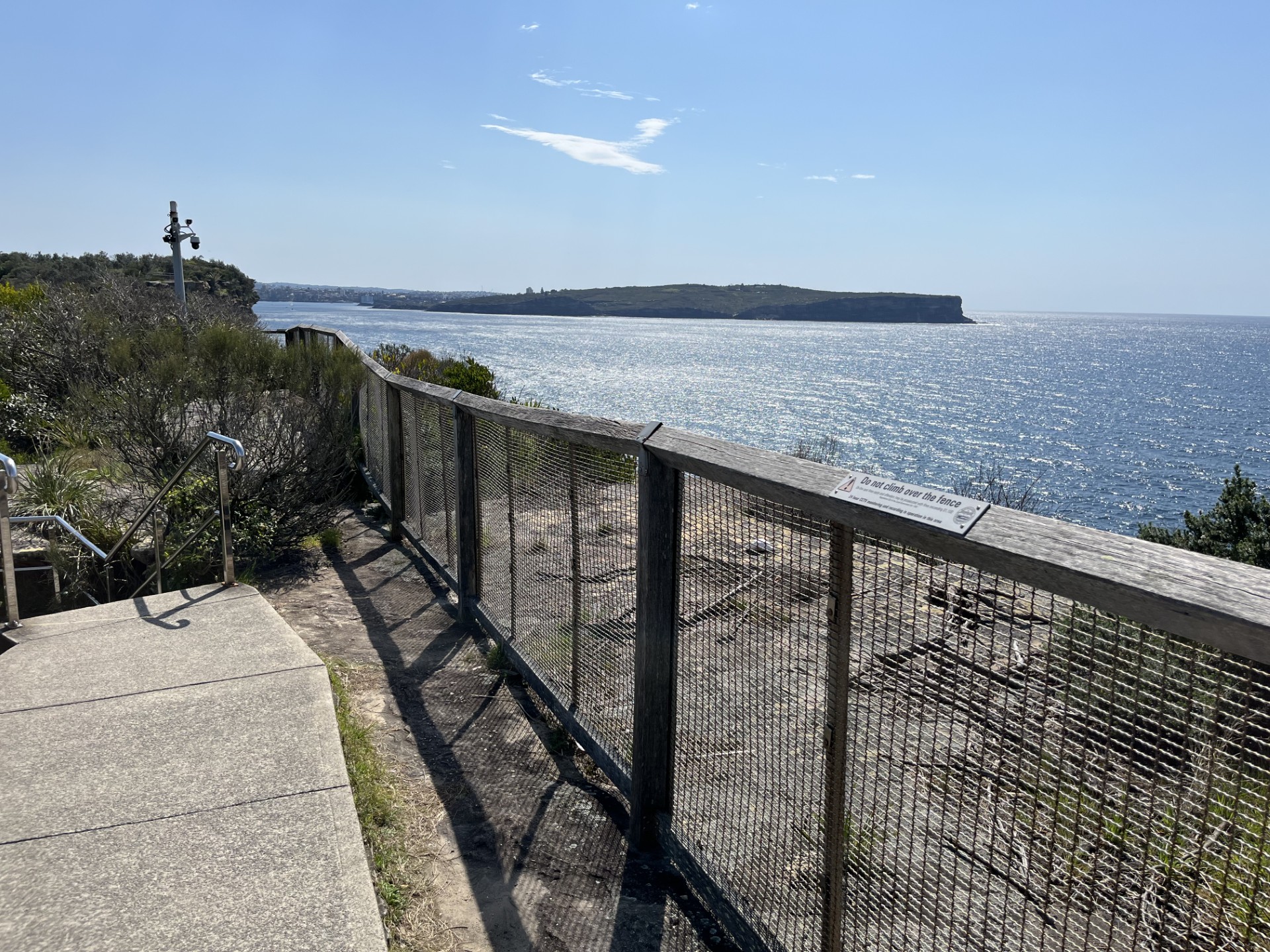



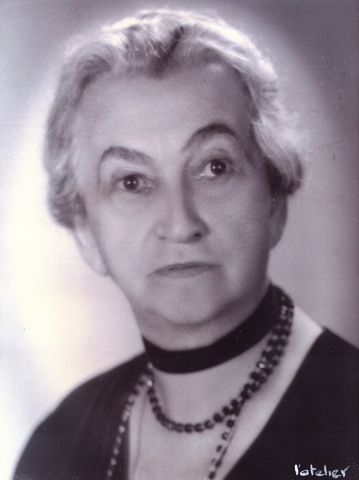
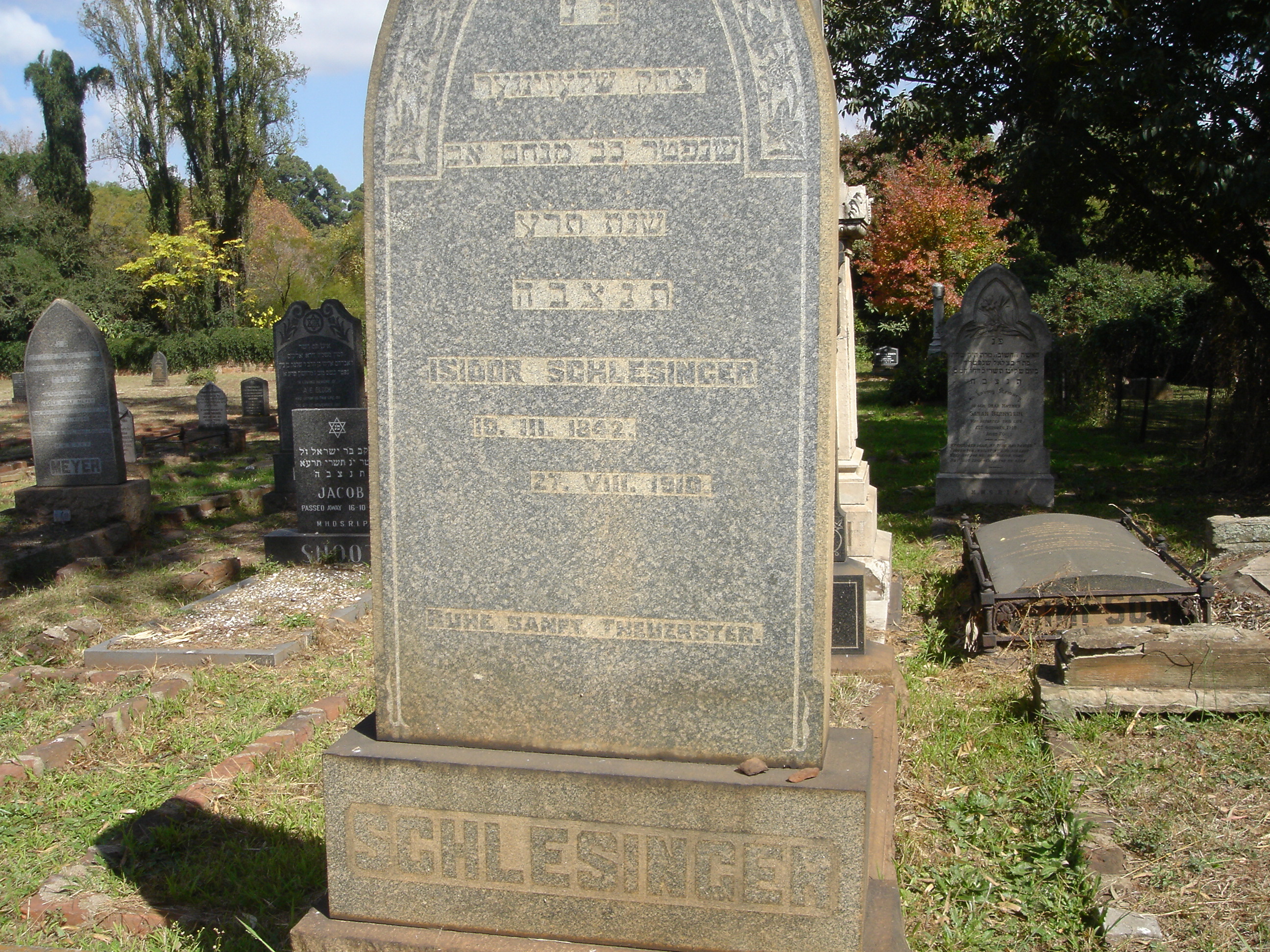


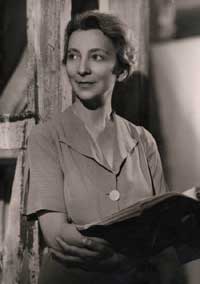

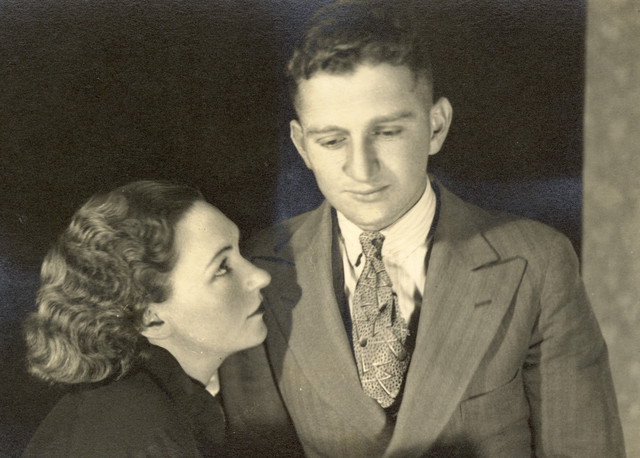


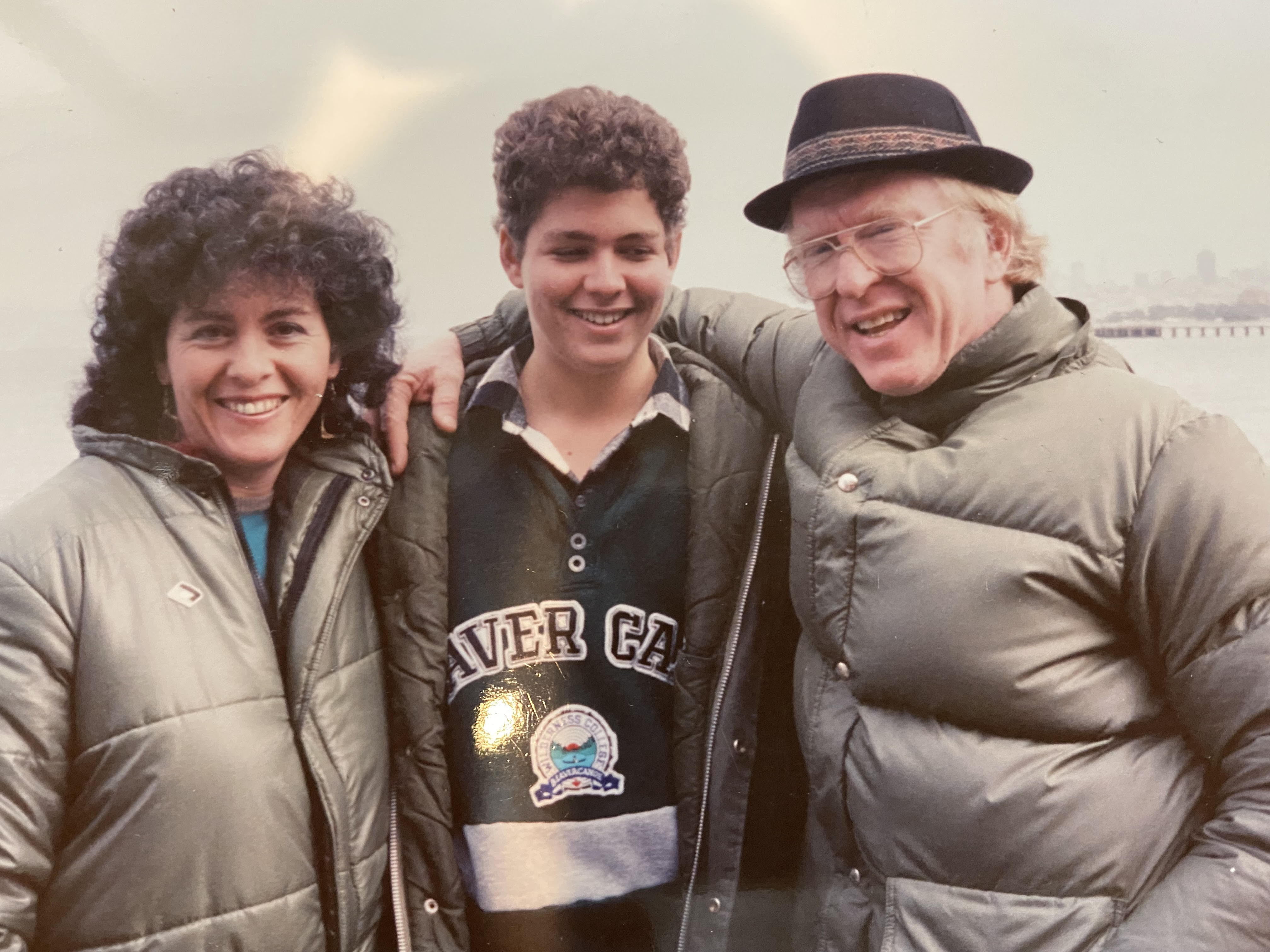
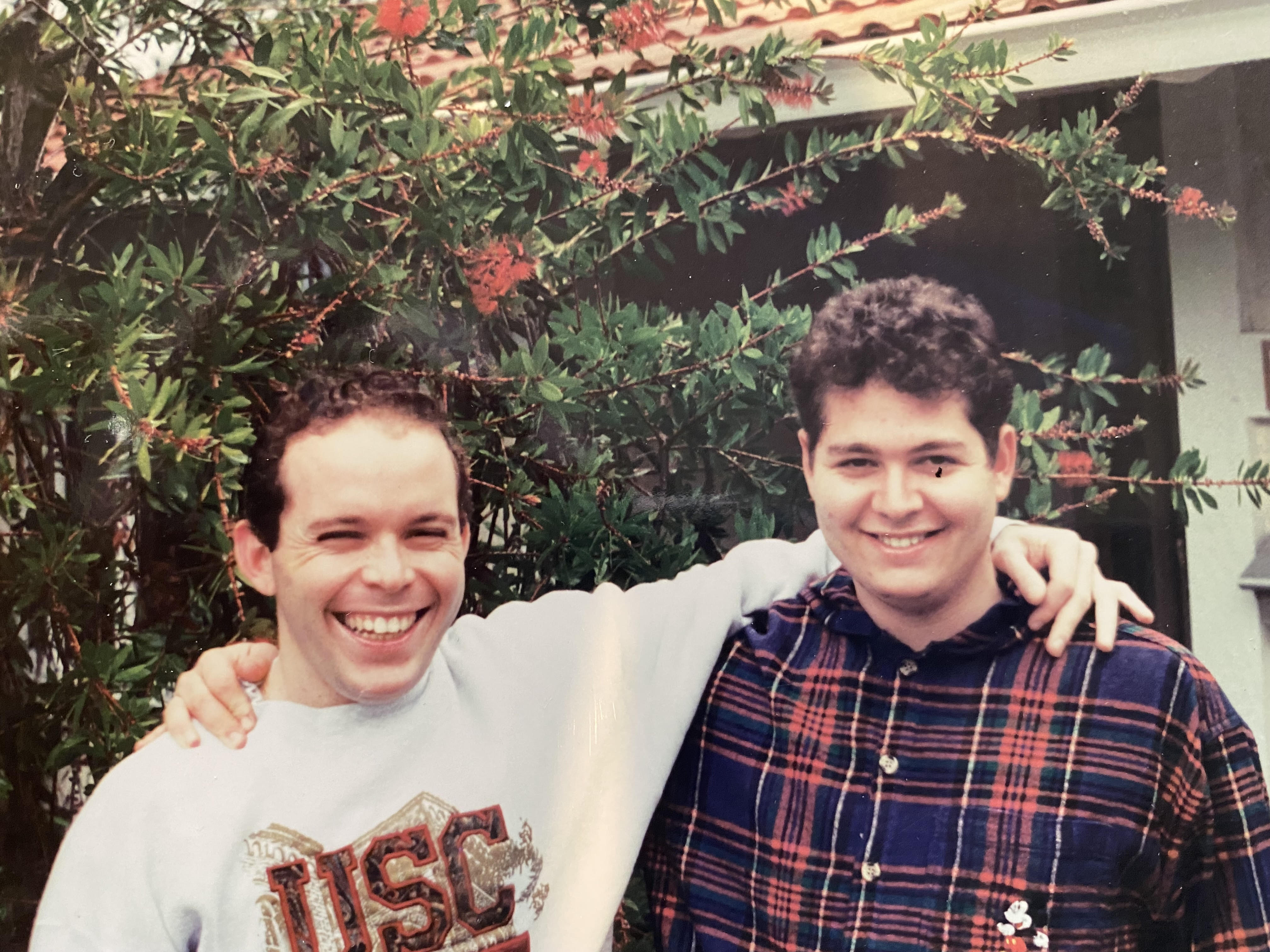


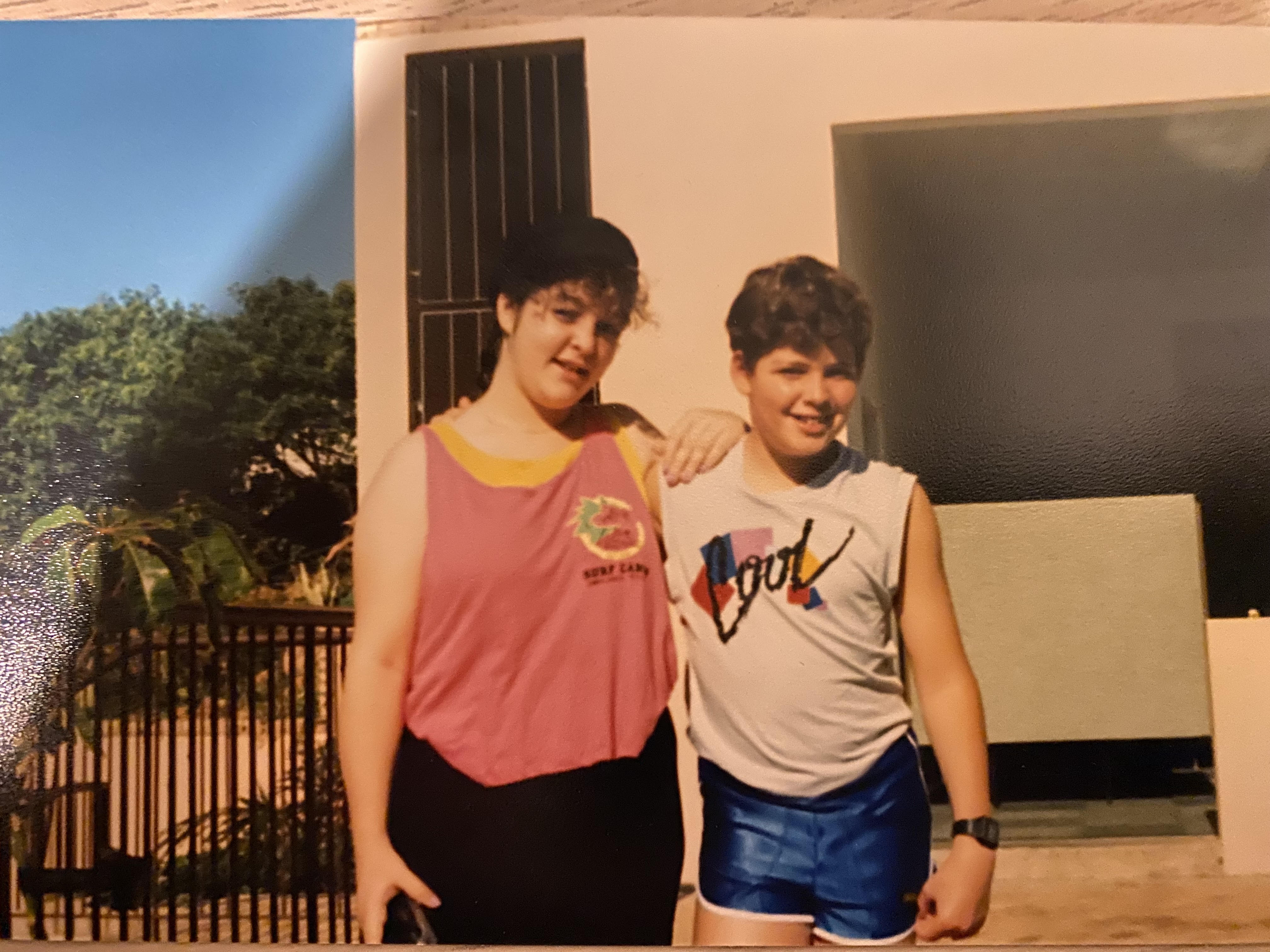


 Having blogged – to mild interest – about my
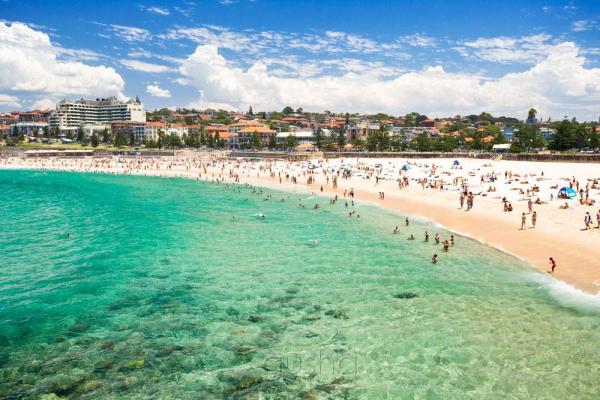


 Drive down the steep and winding Melbourne Road into Gisborne, the pretty rural town north of Melbourne, and you will see the old faded orange wreck emerging over the rise, behind the tall trees.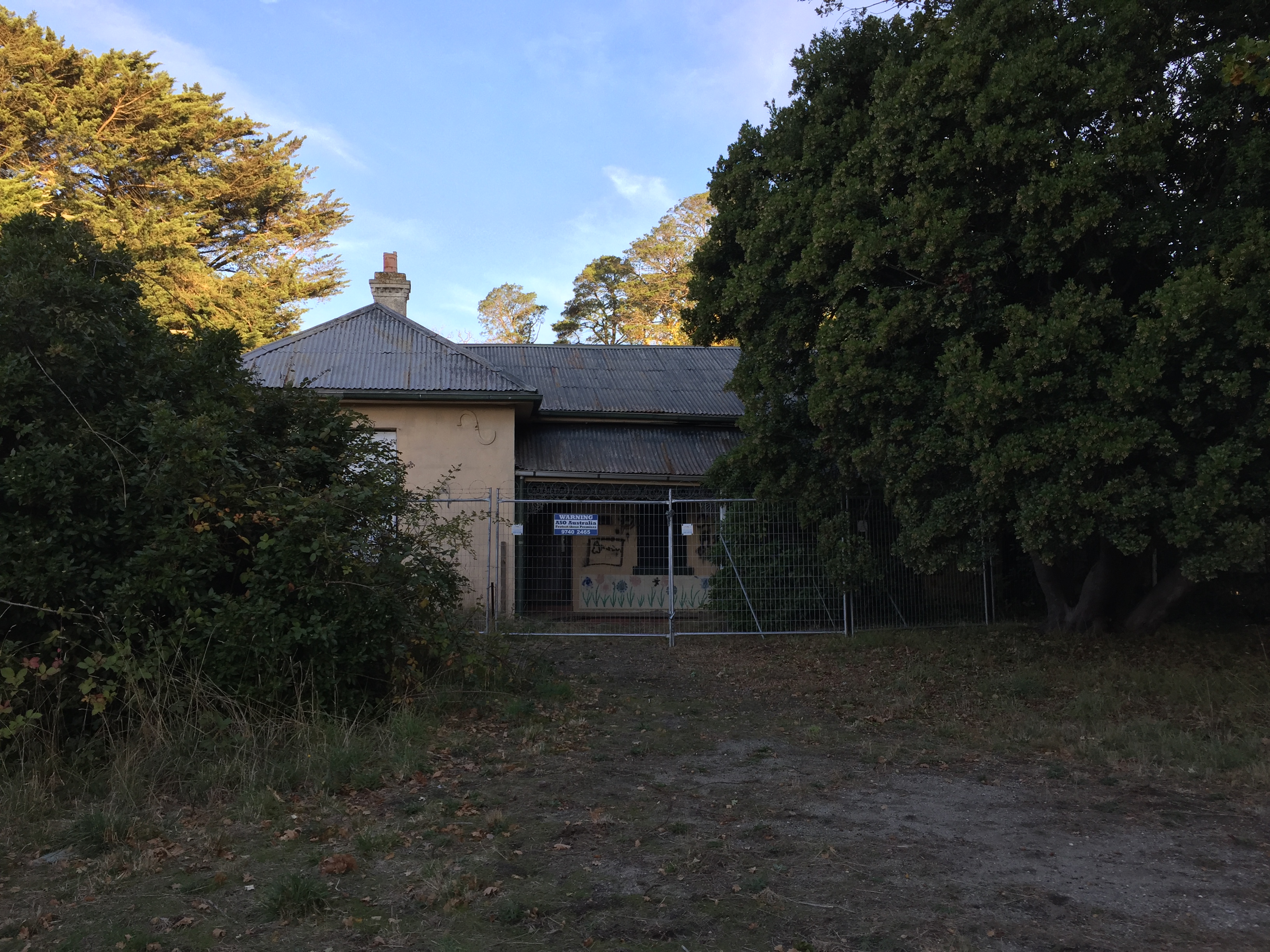

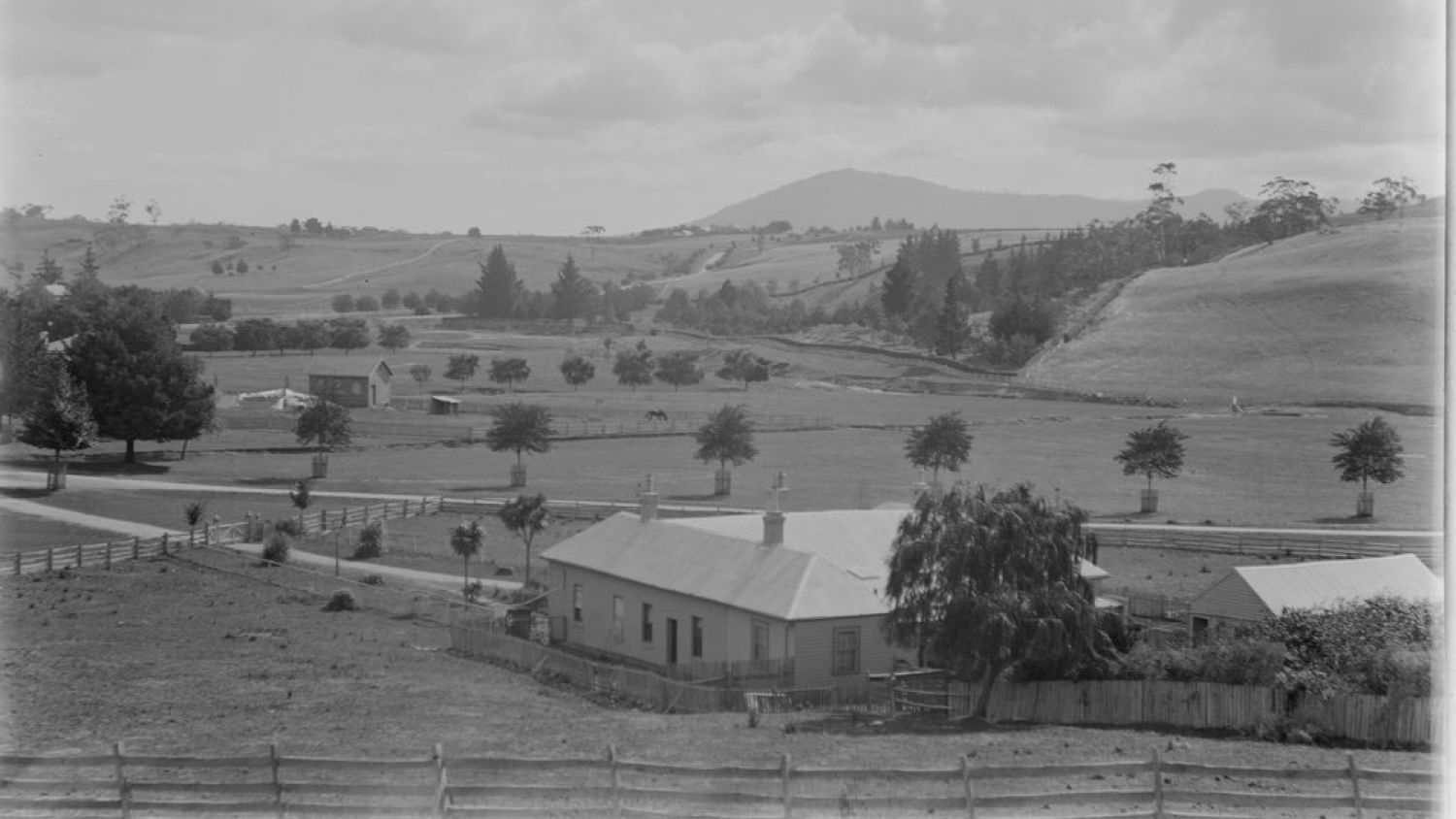

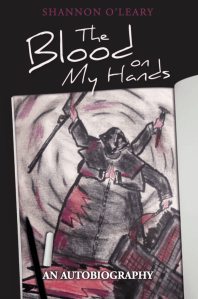 The Blood on My Hands is a self-published account of how Shannon O’Leary survived a horrific childhood on a rural holding in
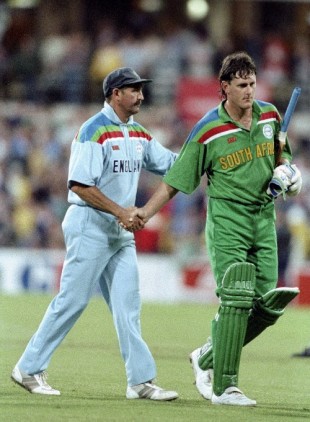

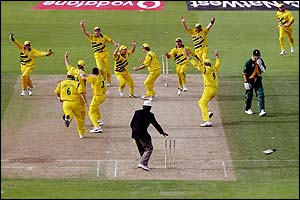
 Freshlyworded