‘Treasure’ vs ‘Too Many Men’: how a mediocre movie butchered Lily Brett’s great novel

It’s incredible just how much of Lily Brett‘s wonderful novel Too Many Men director and co-screenwriter Julia von Heinz changed in her movie adaption. This included changing the title to Treasure, removing a key character and adding unnecessary elements to the story and its main protagonists.

To summarise briefly, the book and movie tell the story of fortysomething Jewess Ruth Rothwax who accompanies her elderly, but sprightly father Edek on a trip around Poland, where he grew up, to learn about his childhood and that of her late mother Rooshka before the war and the terrible events that followed, including being forced into the Lodz ghetto and then sent to Auschwitz.

The pair love each other but spend a large part of their time together in Poland annoyed at their travelling companion’s strange habits and obsessions. Edek complains that Ruth eats “like a bird” and needs to find a husband, while she worries about his unhealthy eating choices and propensity to run everywhere. While Edek has an overarching cheerfulness about his personality, despite everything he has endured, Ruther is frequently anxious and easily upset.
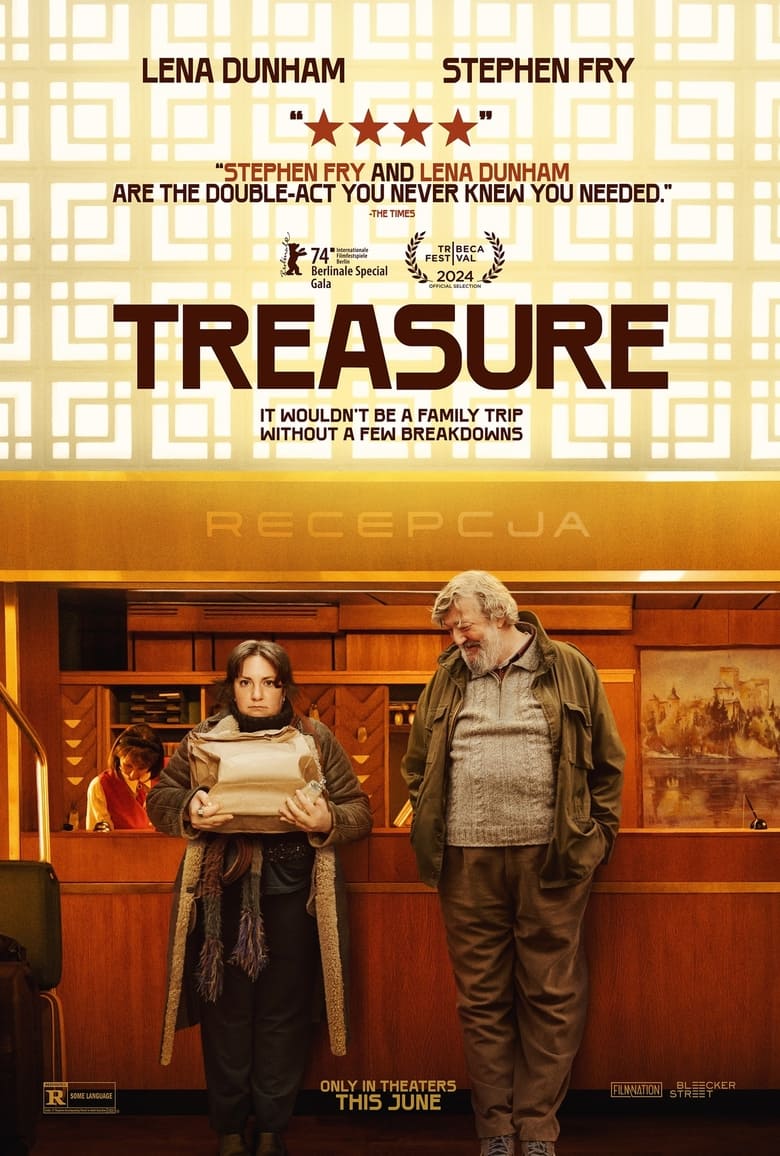
I watched the movie after reading the book and really wished I hadn’t.

Perversely, people who haven’t read the book will probably enjoy the movie more than those that have read it given there is less to be disappointed about.

Strangely, the author, Lily Brett, who based a large part of the novel on her own life, is a fan of the movie, unless she was just being nice or doing her bit to promote it.

β€œI do feel happy with it. I think it’s a beautiful movie,” she told The Australian Jewish News in July 2024

While the basics of the plot have been retained – in both the movie and the book, Ruth and Edek travel around Poland visiting old landmarks and dealing with each other’s eccentricities – so many elements that seem important to me and you would think to Brett (given so much of the novel is autobiographical) have been unnecessarily changed.

The literary Ruth (like the author Brett) is an Australian expat living in New York while her father Edek lives alone in Melbourne. In the book, he travels halfway around the world to meet his daughter to accompany her on her Poland trip.

In the movie, both Ruth and Edek are Americans living in New York. Their Australianness is completely removed despite it being the place where Lily Brett’s parents moved to after the war and where they made a new life.

In the novel, Ruth is a successful businesswoman who runs a professional writing service in Manhattan. This comes up frequently in the novel as she contemplates how she should compose various letters, whilst taking calls from her assistant Max at all hours of the night. In the movie, Ruth is simply a journalist eking out a living. In the book, Ruth has endless amounts of money, in the movie she is not quite so wealthy.

In the novel, food is such an important element: Edek stacks his plate high at breakfast buffets, he eat Perogi and Polish pastries and they dine out an awful “Jewish-themed” restaurant in Krakow. In the movie virtually none of this is retained. Instead, Ruth travels around Poland with a suitcase full of muesli-like ingredients which she brings to every meal. In the book, she merely chooses the healthiest options from the buffet.

Heinz also embellishes Ruth’s character with unnecessary eccentricities: she has a penchant for privately guzzling chocolate, is a secret smoker and has an odd need to self-mutilate. None of these behaviours are in the book.

I realise novels have to be condensed into a relatively short period time, but why change important details like this? It removes a lot of authenticity from the film, which is not assisted by the leaden and plodding acting of Lena Dunham who is sadly badly miscast in the film. Stephen Fry is surprisingly good as Edek.

Another major disappointment was the omissions of a character that appears to Ruth whilst she is in Poland. It’s a brilliant piece of magical realism – Ruth hears the voice of a famous old Nazi stuck in purgatory. She then begins conversing with him (in her head) whilst walking the streets of Warsaw and Lodz. She naturally despises him, whilst he tries to justify his actions as merely following orders. Why this aspect of the novel was left out of the film leaves me gobsmacked.

There are some elements of the book the movie does well mostly visual: the grainy, grey and depressing depiction of Poland in the early 1990s is just as I imagined it in the book as are the gaudy interiors of hotels, apartments and airports.

But pivotal moments in the novel (which depict Brett’s own travels with her father) such as the visit to Auschwitz, which should have been given great prominence in the movie are reduced to a few short scenes with very little emotional power. And there is virtually no explanation given to the great climax of the novel: the dig in the backyard of Edek’s childhood apartment block to find a buried memento.

I was incredibly moved by Brett’s wonderful autobiographical novel, but deeply disappointed by the film adaption. Perhaps it should never have been made.
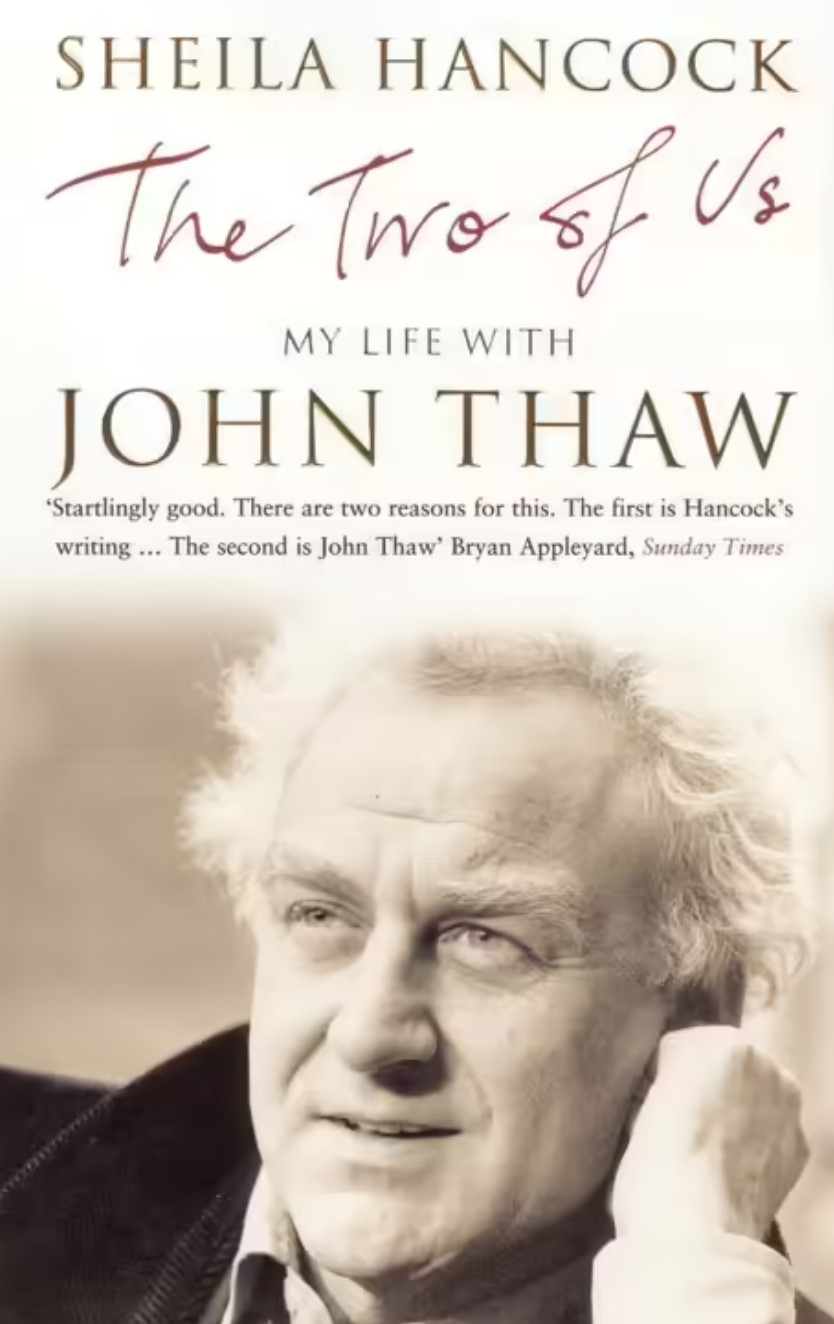
John Thaw: the story of the angry, brilliant actor behind Inspector Morse

Sheila Hancock’s wonderful memoir The Two of Us gives excellent insights into the personality and demons of the brilliant late actor John Thaw, who famously played Inspector Morse in one my favourite television series of all time.

The event that had such a devastating impact on Thaw’s life, as told by Hancock, was the day his mother Dorothy (or Dolly as everyone called her) walked out on the family, leaving the seven-year-old John and his younger brother Jack deprived of a maternal figure they adored.

This profound loss was the underlying force behind the intensity of his acting (he was utterly dedicated to the craft, though never comfortable with being a celebrity). But his mother’s disappearance from his life also fuelled a great anger and rage that turned Thaw into a heavy drinker and a verbally and emotionally abusive husband.

Hancock is incredibly honest about the challenges of her marriage to Thaw, which was unbearable at times. But she also writes of the later years of their marriage when Thaw stopped drinking and their relationship found an even, and very loving and devoted keel.

However, the great tragedy of it all was that after all the years of heartache, the splits and re-unitings, Thaw should fall very ill with cancer just as they were truly happy together.

Hancock, herself a celebrated actor of the stage and screen (now 92, I last saw her in a small role in the excellent cold case series Unforgotten) was married to John Thaw for nearly 30 tumultuous years and was with him the day he died in 2002 after battling cancer.

Hancock, was left utterly devastated by John Thaw’s death, despite their very volatile marriage.

No doubt a cathartic experience, she published the memoir in 2004 – just two years after he passed away from cancer and just four years after the final episode of Inspector Morse, The Remorseful Day, aired.

It’s quite an unusual book because it’s both an autobiography of Hancock’s life – who was made a Dame in 2011 for services to drama and charity work – and a biography of John Thaw, who shunned the celebrity life, and would probably never have written an autobiography.

It retells their family histories – Hancock was born on the Isle of Wight in 1933 and grew up living above pubs including in the rough and tumble of King’s Cross, London, while Thaw, nine years younger than her, spent his youth in the working-class suburbs of Manchester.

She writes about their first marriages, the trajectories of their acting careers (her close friends include the Carry On actor Kenneth Williams) and how intimidated she was when she first met Thaw when they began acting together on the West End play, “So What About Love?” in 1969.

John Thaw with Sheila Hancock

“The first week of rehearsal of So What about Love? was an unmitigated disaster. I always approach a new role convinced that I cannot play it and on the few occasions that John Thaw looked up from his script, his expression of contempt implied that he agreed,” Hancock writes of their first encounter.

But Thaw quickly warmed to Hancock, and she to him, as he – like his great detective character Inspector Morse – revealed his love for classical music, art and fine wine.

They married in a registry office in 1974. While initially things went well, Thaw’s drinking and depression worsened, and their marriage deteriorated. Hancock paints a quite different picture of their marriage to the one described by Thaw on an episode of the famous BBC series (now a podcast) Desert Island Discs recorded in 1990. On it, he suggests that they had sorted out their problems (mostly to do with his acting commitments), whereas the truth of the situation was a lot darker – as recounted by Hancock in her book.

“By 1990, both Morse and Home to Roost [a sitcom Thaw starred in] were in the Top 10 of the ratings. John was at the height of his popularity but off-screen he was fighting profound depression.”

It would take another five years for Thaw to seek professional help, quit drinking and reunite permanently with Hancock. From then on, they lived blissfully.

John Thaw with his mother, Dolly

After his death – her recounting of Thaw’s final days in diary entries is so very moving – she took a keen interest in learning more about her late husband’s mother, to understand why she had made such a devastating decision to leave her children.

To her great credit, Hancock does not demonise Dolly even though she caused Thaw so much pain, and in turn herself through their turbulent marriage.

“I will attempt to get inside Dolly’s skin, as if I was going to play her and try to understand what John never could or would.”

Alongside Hancock’s wonderful writing, The Two of Us is full of many great photographs, both professional and personal. Perhaps the most interesting and saddest of all is a faded and crumpled picture of Thaw taken with his mum on a rare union.

Hancock captioned it by saying: “It was found in her (Dolly’s) bag when she died.”

Her interest in the forces that moulded her husband – both good and terrible – make this a marvellous memoir. Any fan of John Thaw and Hancock (who is far too self-deprecating in her writing) will enjoy reading it, as I did.