Snake-infested Australia: my own encounters with slithering creatures

23046917_a9950a839aAnyone reading news about Australia lately might be forgiven for thinking the country is overrun with snakes, that we are fighting them off on our way onto trains and planes, in hospitals and in our homes.

The stereotypical view of Australia as a dangerous place full of things that sting, bite and maim has been given an added twist recently with some truly bizarre snake-encounters that have made the news.

There was the story about an inquisitive three-year-old boy from North Queensland who found a nest of nine eggs in his backyard, put them in a plastic takeaway container in his cupboard, only for them to hatch as deadly brown snakes – poisonous from birth.

There’s this tale about a Tiger snake found in a hospital bed in Melbourne and most recently, this rather sad story about a scrub python – the largest snake in Australia – which was filmed at thousands of feet above sea-level in a life and death struggle on the wing of a Qantas aeroplane flying from Cairns to Port Moresby.

All these incidents have given me cause to reflect on my own encounters with snakes in Australia, of which I have had a few.

First, I should begin by saying that unless you live in the country or tropical Queensland (which is rather snake-infested), the chances of encountering a snake in the city or even the suburbs is pretty rare.

On a rainy night in the Valley…

That being said, I first crossed paths with what I believed to be a very large python one rainy night.

I was walking home from Fortitude Valley, the entertainment quarter of Brisbane down Brunswick Road, a steeply dipping road lined with shops, houses and apartments and it was pouring with rain.

Now on occasion, after one or two beers too many, I had mistakenly identified, late at night, fallen branches as would-be serpents, only to discover that they were nothing more dangerous than something to trip over.

However, on this night in question, as I walked through a section of shops and cafes – all closed and quiet, an enormous snake slithered a few metres in front of me, across the pavement and under a house converted into a shop – most houses in Brisbane are raised above the ground (they’re called Queenslanders) so they make a nice spot for a snake to find warmth and shelter.

Well I got quite a shock upon realising it really was a very big, very real, very live snake and that if I’d been a bit more drunk and a just a little bit more careless I could well have stood on it!

A snake in the eaves…

The two other encounters with snakes that are worth mentioning both occurred on a farm we were living on in the outskirts of Sydney near Hornsby on the North Shore.

It was a big old house with acres of land where my sister-in-law had horses and there were rabbits and colourful birds.

We spent most of our time in an enormous front room with floor to ceiling windows that looked out over the fields and the horses – it was quite an idyllic place really.

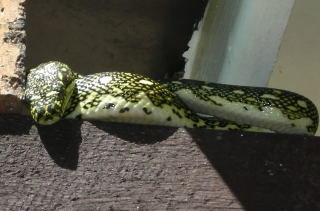
One morning, as we got up to go out for breakfast – it must have been the weekend – I closed the front door of our front room and noticed something green and glistening just underneath the roof.

This is what I saw:
snake

Looking down at us, its head resting just over  a wooden ledge, we all got the shock of our lives.

I remember  we called the wildlife number, who told us to ignore it after I described the appearance of the snake on the phone and then I rushed out and bought a book of  Australian snakes to identify the specifies.

It turned out to be a diamond-backed python, and it became a regular visitor on the farm. I would often see it winding its way through the vine leaves in front of the double doors of the front room.

On one occasion, the snake did so while we had a guest staying over who swore she would drive all the way back to Sydney (about an hour away) if she saw the dreaded snake.

Her back was facing the window and she had absolutely no idea the snake was only a metre or so behind her – though behind the doors.

I actually grew to really like the snake, it had beautiful markings and never ever bothered us, content with its position up in the roof (though later I learned, after we moved out, that it crawled into the house and over the sofa one night).

Snake in the car…

My last snake tale is a bit sad.

I had parked my car on the grass to clean it and then later driven to the supermarket to pick up groceries. I was driving a Toyota at the time, and not once in many years of owning had it not started.

Groceries in the boot of the car, the dogs in the backseat, I stuck the key in the ignition and turned it over.

The car spluttered but refused to start. I tried again. Something was not right.

Then a guy shouted out across the car park; something you’d only ever here in Australia:

“Mate, there’s a snake coming out of your car.”

I flung open the car, the dog ran off, and I saw a badly burned and mangled snake emerging from the bonnet.

It was pretty horrible. I got into a bit of a panic.

As the snake writhed in agony, people shouted at me to drive over it.

I grabbed the dog, threw him into the back of the car and drove off at high speed, wondering what sort of parallel universe I had just entered and hopefully left behind.

It was a weird f@cking day!

So those are my three major snake tales, though not my only encounters with these curious creatures.

I’ve encountered a python on a nature walk, a little green snake on the beach and recently saw an enormous snake on the side of the road as we drove from Sydney north to Taree over Christmas.

Funnily enough, while my friends in the UK warned me about getting bitten by snakes and spiders “on the arse” when I moved to Australia, the only thing that ever attacked me was a bird.

A ferocious magpie dive-bombed me once when I was living in Coogee, near the beach.

No one had thought to warn me about a little black and white bird that turns feral around Spring time.
freshlyworded list of the week: the 10 Woody Allen films you must see before you die

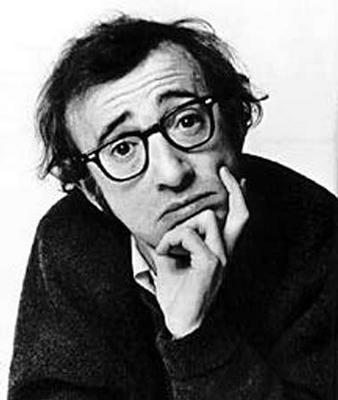
woody-allenWoody Allen, born in the Bronx as Allen Stewart Koningsberg in 1935, has been making movies since 1965, having starting out as a sketch writer and stand-up comedian.

In total he has written and directed (and in many cases starred in) 46 films starting with ‘What’s Up Tiger Lily?‘ and is currently in post-production on a film called “Blue Jasmine” starring Cate Blanchette and Alec Baldwin.

I admire him immensely: starting from his early stand-up comedy records (watch his famous and hilarious “I shot a Moose” sketch from 1965″) to his early relationship comedies to later more dramatic works.

Manhattan has been the canvas for his stories, but he’s also made London, Paris and Barcelona backdrops for his films.

Not all have been classics, some have been mediocre and forgettable and others have been plain awful.

Why do I admire him so much: it’s the stories he tells about love, relationships, anxiety, existentialism, religion all brought together with classic Woody Allen wit and insight.

It’s also his iconic angst-ridden, questioning, self-doubting and fallible jewish male character, portrayed so often in his films that I love so much.

These are 10 of his films that I have loved (I’ve not seen all of his films) and recommend highly:

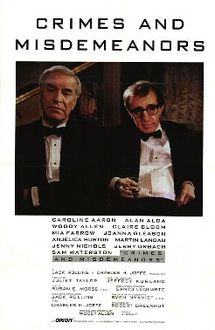
215px-Crimes_and_misdemeanors2Crimes and Misdemeanours (1989) is Woody Allen’s greatest cinematic achievement. It brings together all of his key themes – religion, morality, family, guilt, the meaning and purpose of life – in a seemless way with great writing, a pitch-perfect soundtrack and wonderful performances by its ensemble cast. There are numerous plots and sub-plots, but the film principally revolves around Judah Rosenthal (a brilliant Martin Landau), a successful and wealthy ophthalmologist, who resorts to desperate measures to end an affair with Dolores Paley (equally brilliant Angelica Huston).  Despite the heavy material, it is also extremely funny with the humour provided by Allen himself an idealistic documentary film-maker Clifford Stern, given the opportunity to make a documentary about his brother-in-law Lester (Alan Alda), an obnoxious big-time television producer. He does it so that he can earn enough money to make a documentary about a life-affirming jewish professor, Louis Levy, all the while falling in love with Lester’s associate producer Halley Reed (Mia Farrow).

Annie Hall

Annie Hall (1977) would be top of many people’s lists of favourite Woody Allen films. At its heart it’s a love story between the angst-ridden, neurotic Alvy Singer (Allen) and quirky, lovable, absent-minded Annie Hall (Diane Keaton) with some of his best lines and jokes thrown in and questions about God and the meaning of life. There’s also some great cameos from Paul Simon, Christopher Walken and Sigourney Weaver.

One memorable line comes after Annie Hall parks her VW beetle almost perpendicular to the curb following an exhibtion of some of the worst driving ever seen on film.

Alvy remarks: Don’t worry. We can walk to the curb from here.

ManhattanShot beautifully in black and white, Manhattan (1979) is Woody Allen’s visual homage to the city that he loves. The city is the backdrop  to Isaac’s (Allen) affair with 17-year-old Tracy (Mariel Hemingway), while pursuing the mistress of his best friend, Yale. There are so many iconic shots of Manhattan to drool over and great lines like:

Yale: You are so self-righteous, you know. I mean we’re just people. We’re just human beings, you know? You think you’re God.

Isaac Davis: I… I gotta model myself after someone.

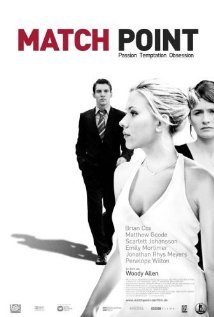
matchpoint

Matchpoint (2005) sees Woody Allen move locations to London with this dark tale about seduction and murder starring Scarlett Johansson and Jonathan Rhys Meyers.

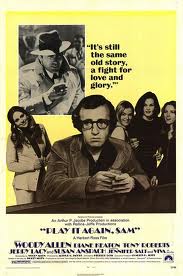
play it again sam

Play it Again Sam (1972) is actually directly by Herbert Ross, but based on Woody Allen’s stage play and stars him in the lead role of a love-sick film critic and schmuck who turns to his alter ego – Humphrey Bogart in his role as smooth talking Rick Blaine from Casablanca – for inspiration as to how to be a lady’s man.

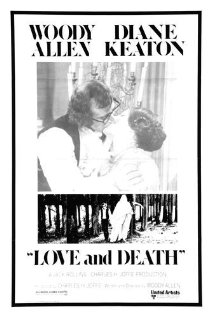
love and death

Love and Death (1975) is a historical comedy set against the backdrop of the Napoleonic invasion of Russia. Woody Allen plays neurotic soldier Boris, in love with his Sonja (Diane Keaton) who gets involved in a plot to assassinate Napoleon, with philosophical musing and some very silly (but hilarious) skits thrown in.

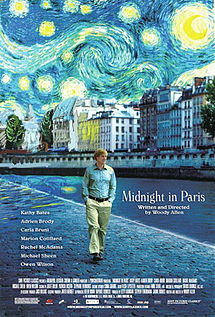
215px-Midnight_in_Paris_Poster

In Midnight in Paris (2011), Owen Wilson plays Gil, an American would-be writer in Paris with his pretentious fiancée who finds himself transported back to the Paris of the 1920s where he meets, drinks and parties with his literary idols including F Scott and Zelda Fitzgerald, Ernest Hemingway, Gertrude Stein and artists like Picasso, Gauguin and Toulouse-Lautrec.

images

Zelig (1983) sees Woody Allen play the title role of the chameleon (literally) like Leonard Zelig who can change his appearance to match the people he is with and becomes a global phenomenon. Told in documentary style, it’s hilarious.

deconstructing harry

In Deconstructing Harry (1997) Woody Allen plays Harry block, a writer suffering from writer’s block, with a penchant for prostitutes and vulgarity. It’s a very funny film as Block recalls events from his past and characters from his books. There’s a memorable scene played by Robin Williams, an actor worried about losing his focus who is shown as actually out of focus in the movie.

broadway-danny-rose-1

Broadway Danny Rose (1984) sees Woody Allen play a talent agent to a string of bizarre performers that no one else will hire. One of them is Lou, a talented lounge singer, making a comeback. Allen goes out of his way to help Lou, but finds himself being pursued by mobsters after trying to bring Lou’s crazy mistress Tina (Mia Farrow) to his concert.

And here’s four to definitely avoid:

The Curse of the Jade Scorpion

Small Time Crooks

Celebrity

Scoop

Time-poor journalists are sitting ducks for press release hoaxes – expect more

5756126865_90a674e31d_mThe hoax ANZ/Whitehaven Coal press release sent out by environmental activist Jonathan Moylan this week not only exposed the fragile mind-sets of nervous investors, but highlighted the challenges facing time-poor journalists in the internet age of the 24 hour news cycle.

As has been pointed out by many different commentators including Eric Johnstone from The Age, a little research, a little consideration, even a little time spent mulling the press release over, should have alerted journalists and editors that it was fake.

“The press release read like the real thing. However there were several red flags. Banks don’t usually go about advertising the fact they have pulled a financing facility. They leave that to the company,” Johnstone writes.

20130107_ANZ_divests_coal_hoax

The fake ANZ press release

Despite these red flags,  respected publications like News Limited’s Business Spectator, Fairfax’s metro papers and the Australian Financial Review all bought it hook, line and sinker.

And yet while everyone has been focusing on the impact a press release written in a forest by a 25-year-old translater with basic Photoshop skills and dodgy internet connection had on investors and share prices and possible breaches of the Corporations Act, the bigger story is one about the challenges facing journalists expected to bash out stories in the time it takes to sip a cup of coffee.

Spend time in any online newsroom (as I have done for the past 10 years) and you’ll instantly understand the pressure journalists are under to file copy.

“I need that copy in 10 minutes

“I need it in five minutes.”

“Just file what you have.”

These are the exclamations that ring in the ears of journalists every day uttered by anxious editors.

In the brave new media world, where commercial success is measured by number of ‘hits’, ‘unique browsers’, ‘tweets’ and ‘likes’, there is hardly any time for journalist to sit back and take a moment to think.

The day begins. You turn on computer, put fingers to your keyboard and write, write, write. The day disappears in a flash.

Government reports running to 300 pages must be digested in a few hours, sometimes less, meaning journalists must resort to reading the executive summary and skimming over huge amounts of information.

Intricate legal judgements, deep economic analysis, complex new government policy – its all about finding the story as you skim the paragraphs (keyword searches are especially useful).

And always there is the pressure of time.

Sure there were (and still are) tight deadlines in the past for those journalists working on daily newspapers (I have not worked on one myself) but more than likely – when lucrative print advertising funded newspapers and magazines – they were manageable and editorial teams were large and well resourced.

Today, if journalists want to wear the mantle of true investigative reporters, they must devote their own time, outside of work hours and sometimes their own money to put a deeply researched story together.

And many do.

Jonathan Moylan may have been surprised at the impact his quickly hashed media statement had – wiping $300 million of value off Whitehaven coal and incensing investors and embarrasing editors – but he shouldn’t be.

As an online journalist myself, I have been all to eager on a few occasions to write the story based on research or a press release, which while not a hoax, was based on incorrect information and if I had taken the time to consider the facts before me, would have realised that it clearly was a load of nonsense.

But, a juicy headline as concocted by Moylan, more likely while he rested against a tree and listened to the birds tweeting, would have been impossible to resist for journalists and editors thinking about readers, hits and revenue.

Certainly, at a glance, it looked convincing enough.

(Here’s a copy  of the scam press release and you can find numerous genuine ANZ press releases on their website if you want to make your own comparisons.)

Make no mistake, there will be others that will attempt similar guerrilla tactics, considering the enormous impact this hoax has had and the success of other stunts in the past (see this hoax involving Dow Chemicals, this one that caught out Harvey Norman and this recent one targeting MacMahon Holdings ).

Yes, journalists and editors will attempt to be more vigilant, but with the passing of time and the pressure to keep churning out story after story, their guards will slip and we will be easy pickings for activists, trouble-makers and those with more time on their hands than we have.

Book review: The little Welshman who made Sigmund Freud a giant

freuds wizard“Freud’s Wizard” by Brenda Maddox is a biography tracing the life of one Ernest Jones, a Welsh doctor and psychologist who almost single-handedly promoting Sigmund Freud’s ideas of psychoanalysis to Britain and the world.

He also orchestrated the rescuing of Freud, his family and many other prominent Jewish Viennese psychoanalysts when Hitler invaded Austria in 1938. Jones secured the difficult-to-get visas and flew into Nazi-occupied Austria to bring Freud to London.

Maddox’s book could easily have been subtitled: “The man who made Sigmund Freud”.

And given the Jones was a short Welshman and Freud a behemoth of modern psychology, it might have been more elaborately sub-titled: “The little Welshman who made Sigmund Freud a giant”.

Ernest Jones was Freud’s champion and close confidant for 30 years and wrote what is considered the definitive (three-volume) biography of the father of psychoanalysis – ‘The Life and Work of Sigmund Freud’ – considered to be among the greatest biographies ever written.

Maddox, an anglophile American resident in the UK, who has written a number of noted biographies (including those about DH Lawrence, WB Yeats and Rosalind Franklin) has certainly picked an interesting and influential figure to write about in Ernest Jones, one of those figures in history who stand in the shadows of greatness, but were great in their own right.

The book begins with Jones’s birth in a small town a few miles from Swansea in Wales and follows his progress through school, medical school and the start of a very chequered medical career in London and then Toronto, before meeting Freud in 1906 and beginning his life’s work.

I have read some of the reviews of “Freud’s Wizard” which remark that Jones comes across as not a very likeable man – he was controlling, manipulative and devious, someone who tells his own son that he has a “hell of a superego”.

However, these character flaws pale into insignificance compared with disturbing accusations made against Jones alleging indecent behaviour against children while he was a young doctor in London (similar accusations were made later in his career).

Jones was found not guilty, but his innocence – as explained by Maddox – may have more to do with the epoch in which the incident allegedly occurred – that children were considered “mentally unreliable” while there also did not yet exist the technology to test DNA, which may have been conclusive in proving Jones’s guilt or innocence.

Maddox does not overlook this behaviour – she finds it perplexing and disturbing – nor does she overlook Jones’s infidelities or his womanising, but she clearly admires Jones too much to let them get in the way of portraying him as a hero of Freud and of psychoanalysis, which undoubtedly he was.

freud460

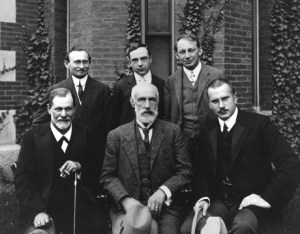
Taken in 1909: Sigmund Freud front left next to Carl Jung (on his right) with Ernest Jones in the middle of the back row.

The axis of the book is Ernest Jones’s relationship with Freud and his efforts to establish psychoanalysis as a recognised medical treatment rather than a quack, devious treatment with its emphasis on unconscious sexual motives (the Oedipus Complex) and other controversial theories such as penis envy.

The book catalogues the different psychoanalytic societies and journals that Jones founded, his insatiable appetite for writing essays on different psychoanalytic themes (he even wrote a book on figure-skating) and his tireless devotion to the cause of psychoanalysis.

While he fails as a doctor – no London hospital will take him on after his record is blackened – but he ultimately thrives as a psychoanalyst, liasing with all the great psychoanalytic minds (apart from Freud) as well as the famous Bloomsbury Group, a collection of English writers, some of whom helped translate Freud’s ideas into English.

The book also chronicles Jones very important role in keeping the American psychoanalytic movement onside when it threatened to split from the Freudians – Americans believed only medical doctors should be allowed to practice psychoanalysis while British and European psychoanalytic societies believed non-medically trained people could become practitioners provided they were properly trained and underwent psychoanalysis themselves.

The passion of Ernest Jones in this endeavour and others is probably one of the key reasons why so many Americans (especially in places like New York ) undergo psychoanalysis today.

And consider this, without Ernst Jones there might never have been neurotic, anxiety-written comics like Woody Allen and his many jokes and references to psychoanalysis.

As Allen’s character Alvy Singer remarks in “Annie Hall”:

“I was depressed…I would have killed myself but I was in analysis with a strict Freudian and if you kill yourself … they make you pay for the sessions you miss.”

Ernest Jones, who considered himself something of an honorary jew given his close friendship with Freud and other Jewish pyschoanalysts (cemented by his marriage to Kitty Jokl, a jewess) and fond of using yiddish words, would no doubt have found this joke amusing.

Ironically, it was Ernest Jones’s non-Jewishness which helped give Freud’s theories legitimacy in an age when anti-semitism was rife.

Christmas on an Australian farm: a tale about long drops and kangaroos

470607_315598985195348_1001070626_o

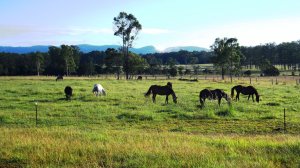
The farm near Taree, the blue-tinged mountains in the distance

We spent this Christmas on  a farm on the mid-north coast of New South Wales, not far from the town of Taree.

It is the farm of my sister-in-law and her husband. It is a beautiful piece of countryside – about 40 hectares – surrounded by lush green meadows and groves of trees with the flat-topped mountains of the Coorabakh National Park a hazy blue in the background.

The farmhouse is not yet finished meaning the toilet and shower facilities are outdoors.

The toilet is a long-drop raised up on a  wooden platform enclosed on three sides with a roof on top, affording the user with an unobstructed view of the meadows and blue-tinged hills in the distance.

The cursed long drop

The cursed long drop

I love the outdoors. The fresh smell in the air, the closeness to nature. Farm animals. Kookaburras and Rozellas in the trees. The general peace and quiet and distance from the mad rush of the city are all pleasing to my constitution.

But taking a crap in a make-shift loo in the great outdoors is not something I particularly enjoy.

Don’t get me wrong. I am a not  a prude and I am not one of those people who can only enjoy nature from the vantage point of a five-star lodge (though that would be nice).

But when it comes to sitting on a raised bucket with my pants down, my bowels go into lock down and the best I can manage is a couple of short blasts of the trumpet (if you’ll allow the metaphor).

Then I pull up my pants and exit stage left.

During my stay on the farm, this fruitless exercise was repeated a number of times, with me marching off to the wooden raised toilet, toilet paper roll in hand, only to return to the farmhouse a few minutes later with the same length of toilet paper in hand.

Well after two days of Christmas eating – and in keeping with tradition I over ate – the bare facts of physics dictated that something had to shift.

So I trundled up towards the ‘gallows’, climbed the wooden steps, dropped my pants and took my seat on the throne.

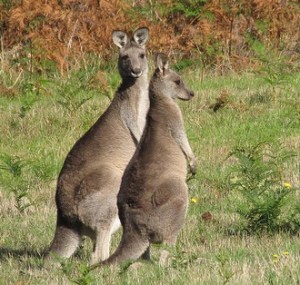
I won’t go into detailed descriptions of facial expressions or sounds, but it was an ultimately successful exercise and as I sat back to enjoy the moment I noticed, off in the distance, two kangaroos facing me at the edge of the meadow.

They appeared to be watching me intently, face on, with their ears perked up and front legs resting on their chests.kangaroos

I looked at the kangaroos.

They looked back at me.

We watched each other for a moment.

And then off they hopped, showing their distinctive body shapes in profile, their long tails curving upwards as they disappeared beyond the meadow, leaving me, pants still down at my ankles to enjoy the view entirely on my own.

Aah…the serenity.

My eight months without cinema: recollections and reflections of movie-going

Cinema watchingSo this weekend past I went to the cinema for the first time in eight months.

The last time I went to the movies was on Sunday, April 15. My wife was heavily pregnant at the time and about five days past her due date.

We went to the Nova on Lygon Street in Carlton and saw an exceptionally good French movie called “Le Havre” about an African refugee who is taken in by an old shoe-shine man, who helps him escape across the English channel.

In the cinema my wife started having light labour pains and a couple of days later – in the early hours of a Wednesday morning – Edith (Edie) was born.

She turned eight months old on Tuesday.

Fittingly, I broke my cinematic drought with another movie at the Nova.

11110702_logoI went to see “The Master” starring Joaquin Phoenix and Philip Seymour Hoffman, set just after the second world war and about a ex-navy man drifter called Freddy Quell (Phoenix) who falls under the spell of the charismatic Lancaster Dodd (Hoffman), an incarnation of Church of Scientology founder L Ron Hubbard. The film, directed by the much revered PT Anderson (Magnolia, Boogie Nights) is intense and interesting, brilliantly acted, but kind of leaves you wondering what the point was in the end. If you liked PT Anderson’s other agonising effort “There Will Be Blood” starring Daniel Day-Lewis as a brutal turn-of-the-century oil prospector, you will love “The Master”.

Still, it was something of an experience undertaking the ritual of going to the movies for the first time in so long.

Coke and popcorn purchased, I wandered into the cinema and found a seat. It was a small cinema – for some reason I had been given one of the double “love seats – and I stretched out, munching on my popcorn and sucking the fizzy ‘solo’ through a straw.

The cinema darkened, and just before the film began, a couple walked in and the guy next to me began tapping away on his iPhone.  Clearly he was ignoring the message that had just flashed on the screen: “Please turn off your phone?”

I whispered in his ear: “Can you turn your phone off?”
His reply: “It’s on silent.”

No shit, douche bag!

“Can you turn it off? The screen is bothering me.”
“OK, OK,” he muttered, as he slid the phone into his pocket.

Of course  I spent the first 10 minutes of the movie, wondering when next he was going to pull it out again and start tapping away. Thankfully, he never did, though I got the feeling he resented the crunchy sound I made as I munched my way through my jumbo-sized popcorn.

I kept munching anyway.

And half way through the movie, I stopped watching and looked around at all the people staring up, mesmerised by the screen. Have you ever done that? It’s like watching people who have been hypnotised.

Since then, I’ve been reflecting on childhood memories of movie going.

One of my first memories of the cinema, was going to see ‘The Wizard of Oz’. I remember it was somewhere in town (Johannesburg) and must have been the late 1970s – I would have been six or so.

It terrified me. I have memories of the strawman being set on fire (this I’ve checked does happen in the movie) and the tin man being stuck inside a giant sandwich-maker – but maybe I imagined that bit, because I can’t find any reference to it – I’ll have to watch the film again.

My best friend growing up was Jonathan. We were friends since babies and lived on the same street in Germiston – a city about 20 minutes from Johannesburg and site of the world’s biggest gold refinery (and not much else).

The 20th Century Cinema in Germiston

The 20th Century Cinema in Germiston

After synagogue on a Saturday, we used to walk into town and like good jewish boys, go to the movies. It was a large imposing building on Main Street, now I believe knocked down, called the 20th Century Cinema, with an art-deco sign and built in 1939. It had an old-fashioned ticket booth at the entrance and an imposing, cavernous lobby. The cinema could hold over 1,400 people (though it was never full when we went) with an upstairs section and a space for an orchestra to play in the pit in front of the screen. There was always a Bugs Bunny cartoon before the film started.

They don’t make cinemas like that anymore – at least not in the Western world.

The art deco Eros in Mumbai

The art deco Eros in Mumbai

In India we saw a movie in an enormous art-deco cinema called the Eros in Mumbai, where people got up to dance alongside the characters on screen, mobile phones rang, the ticket cost a few dollars and popcorn about 50 cents. Ironically it was a musical about Indians who move to Melbourne and then find themselves being racially abused along with songs and dancing and bad Australian accents.

But back to Germiston and the 20th Century cinema. I recall the great excitement Jonathan and I experienced going to see our first movie on our own.

It was ‘Indiana Jones and the Temple of Doom’, which came out in 1984 when we would have been 11.Temple-of-Doom1

I distinctly remember being terrified at the scenes where the evil sorcerer tears out the heart of his victims amidst the chanting and the lava, and of course the banquet with its monkey brain soup and enormous snake, which is cut open and all the baby snakes slither out.

What I also remember through the haze of time was the Ster Kinekor movie club, where you joined, got a special card and paid only one rand a movie. That would have been about 50 Australian cents in those days.

One rand for a movie. One large silver coin for two hours of escape, excitement and adventure.

My other distinct movie-going memory is heading into town (the centre of Jo’burg) when we were teenagers with Jonathan’s mom and some other friends and going to the cinema, while she went to work. It was very quiet (must have been the school holidays) and we’d buy one movie ticket and as the cinemas were all upstairs, we’d watch one movie and then sneak into another cinema and watch another movie for free and sometimes one more.  We thought we were pretty rebellious!

Apart from those early memories, I confess (with much embarrassment) that I recall crying bitterly in my seat when I went to watch E.T. at the Bedfordview Nu-Metro in 1982. I would have been nine years-old. I think it was when they had found E.T. and had him in the quarantined zone and everyone was walking around in plastic suits.

So what did it cost me to go the cinema this weekend?

One admission to The Master at Cinema Nova, Lygon Street: $18
Coke and popcorn combo: $10.50
Parking: $6.60
Hamburger at Gr’lled for dinner: $12
One Corona: $7

Total cost (excluding petrol, toll road): $54.10

Or around 481 Rand at current exchange rate – that would have bought a lot of movies back when I was a kid!

Dodgy operators and scam artists: Seven tips to avoid getting ripped off this Xmas

sam.gifIt’s the festive season, we’re all spending money, buying things, and perhaps – in the spirit of the moment – being a little bit reckless about how we spend it.

As a property and financial journalist I have written about a  fair number of sharks, charlatans and scheisters and come across a few in person too.

It’s amazing what people try to get away with – there’s this story about a mortgage broker who conned clients out a $1.1 million and this story about a former professional rugby league player who allegedly pocketed $60,000 meant for his elderly clients,which he received by mistake.

I’ve written about unscrupulous mortgage brokers, dodgy estate agents, greedy financial advisers, but these sorts of people operate at all levels of business from the guy selling you a TV to the charity mugger on the corner of the street.

So here’s some tips to avoid getting into trouble:

  • If it sounds too good to be true, it is – run!

If someone is offering to double your money in six months or promises a very high rate of return on your investment, chances are they’re up to no good. They’re acting out of greed and playing on your desire for a quick return. If you want  a quick return, buy a lottery ticket (and pray) or go to the casino and put an amount you are happy to lose on black or red – that could double your stake in a flash, but at least you know the odds and the risks.

  • Always get a second opinion

If you think you’re on to a good thing, then present the idea to someone you trust and ask them for their opinion. It can be a professional in the same industry, a help line, a friend, a family member, just so long as its someone who can give you an objective point of view and has nothing to gain by doing so.

  • Do a Google/internet search

You can find out a great deal of information about someone simply by searching online. Type in the name of the person trying to sell you something and/or the company name and see what results come up. Certainly if your broker or adviser has gotten into professional trouble, you should find some mention of it online. But even if they haven’t you can find out a great deal about someone from online recommendations, their Facebook page, what they say on Twitter, from their blog and their previous roles via their LinkedIn profile etc.

  • Don’t rush into any decision

Whether you are buying a car, a house or a new TV, you should never feel pressured into making your purchase. Remember, there is no shortage of most things and even if it’s a house or collectible car you really like, if the person selling it to you is pressuring you, you should be suspicious.

  • Consider at least one or two alternatives products or services

The other day I was shopping for tea (yes just tea) and there must have been about a 100 varieties to choose from. I spent five minutes just locating the type I was after (Rooibos). This is also the case with most things you purchase these days – maybe not a 100 choices but usually a dozen alternatives. Particularly if it’s an expensive item or where the financial commitment is great, you should consider at least one or two alternative products, which may be better and cheaper or have more suitable features. You can do this without even walking into a store, by using a comparison website. Just make sure its a reputable website with a big range of products and full disclosure of how they compare items. ASIC is currently clamping down on dodgy comparison websites.

  • Ask lots of questions of the salesperson

Don’t be afraid to ask questions, including ones you think may sound silly such as questions about basic information. A good salesman should be happy to answer all of them. Also, by asking a lot of questions you will become better acquainted with the product and the person selling it.

  • Consider the personality, appearance and attitude of the salesperson

Think about the person who is selling to you. Are they likeable? Do you trust them? Do they have a pleasant manner? It’s amazing how often, after someone has sold you something, they lose complete interest in you, which is OK if you’re buying a shirt, but not so good if you’re buying a new car and it breaks down after a week. Trust your instincts. Avoid dealing with slick, fast-talking sales people who sound like second-hand car dealers (apologies to all honest second-hand car dealers). Buy from someone you like and trust. Why give business to a dick-head?

Happy shopping and spending over the festive season!

A public service initiative from freshlyworded.

Grovelling 2Day FM radio DJs deserve little sympathy after TV apology stunt

964677-australia-britain-royals-mediaThere seems to be this perception in Australia, that to be truly absolved of anything you regret or are ashamed of in life, all you have to do is make an appearance on Channel 7’s Today Tonight or Channel 9’s A Current Affair – two of the most watched programs on Australian television.

This particularly applies to the sheltered world of Australian celebrities or media personalities, who see grovelling on prime-time TV as the equivalent of Catholic confession (often a paid Catholic confession at that!).

You tell a Current Affair’s Tracey Grimshaw you’re sorry and all is forgiven.

And it’s great because for one thing, you know you’re not going to be asked any real tough questions – all you have to do is shed a tear or two and you can get on with your life.

I am not a fan of right-wing UK tabloid The Daily Mail, but I think their columnist Richard Littlejohn was right on the money when he called Michael Christian and Mel Greig interview’s on these two shows “a self-indulgent, self-justifying sobfest”: that was “utterly nauseating”.

Just consider for a moment how both interviews begin.

Channel 7’s Today Tonight interview begins with the host Clare Brady, asking Mel and Michael if they feel up to doing the interview.

Immediately, we are expected to feel sorry for them (which is fair enough) but what about the poor woman who has killed herself and her family.

In both shows, you can count on one hand the number of times Jacintha Saldanha’s name is mentioned.

Yes Mel and Michael feel terrible about a prank that went horribly wrong, but Brady is happy to let them pass the buck when it comes to accepting some responsibility for their actions.

On both shows they are allowed to get away with claiming that the prank was a “team” decision when clearly it was someone’s idea and also someone’s decision higher up the food chain at radio station owner Austereo to allow the prank to be broadcast.

But no names are mentioned and no further questions are asked.

Tracey Grimshaw begins her expose by telling viewers that this interview is ‘unpaid” which tells you a lot about the credibility of the show before the interview has even begun.

Tracey also begins by telling us of an emotional Mel Greig before she’s even uttered a word.

The message is clear: “Come on Australia, get your tissues ready!”

She begins the interview exactly in the same manner as Clare Brady, asking the pair if they feel up to doing the interview.

And just like rival show Today Tonight, she then asks them whose idea it was to make the prank call –  and so the interview progresses.

In fact the interviews are so similar, you’d think they’d colluded on the questions before-hand.

Both presenters put on their best sympathetic, yet stern motherly faces, but avoids any tough questions.

Everything appears stage-managed, deliberate and designed to tug at the heart-strings.

I am sure both Mel and Michael feel genuine remorse, but even the tears shed on the shows have an air of staged theatricality, with the dramatic pauses and contrived helpless expressions.

And then there’s Mel’s response to Tracey’s question about when she heard the call.

“It was the worse call I ever got” is her reply and you can just hear the show’s producer saying to himself – “that’s the bit we’ll run in the promo”.

But there to comfort them in their time of trauma and need – as she has done with so many others in the past – is the mother figure of Tracey Grimshaw, the high priestess of television absolution.

Because let’s face it, if Mel and Michael really wanted to deliver a heart-felt apology, they would have penned a meaningful apology to Jacintha Saldanha’s family and not sought the prime time TV limelight.

But that would be un-Australian – instead we prefer: “Lights, camera, action…Tracey Grimshaw”.

The junkie in literature: A review of “Confessions of an English Opium-Eater” by Thomas De Quincey

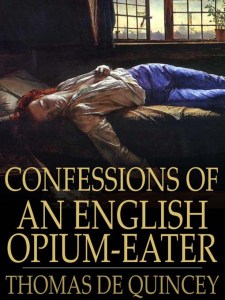
confessons of an english opium eaterConfessions of an English Opium-Eater” written by Thomas De Quincey in 1821 is the third book I have read as part of my mini-project examining the portrayal of the junky in literature.

The first book I read was “Monkey Grip” by Australian writer Helen Garner, about a single mother in love with a heroin junkie and writer/artist set in Melbourne in the 1970s.

The second was “Junky” by William S. Burroughs, an autobiographical tale of his life as a heroin addict in New York, New Orleans and Mexico City in the 1940s.

“Confessions of an English Opium Eater” takes place in London, Manchester and the remote English countryside of the early 19th century.

It’s a remarkable novella – only about a 100 pages in length – not the least because it gives a glimpse into the life of a drug addict nearly 200 years ago in a very prudish age, at a time when the idea of an English gentlemen meant that you never speak of such abhorrent things.

The book is not just an investigation and illustration of opium use and its effects on the mind and body, but also social commentary on what it means to be a bright, sensitive outsider in an English society of order, privilege and class.

In fact a lot of the book is not about opium at all, but about the events leading up to De Quincey’s addiction including a period of eight years when he took opium in controlled amounts and which enriches his experience of the world:

“Here was the secret of happiness, about which philosophers had disputed; happiness might now be bought for a penny, and carried in the waistcoat pocket; portable ecstasies might be had corked up in a pint bottle and piece of mind could be sent down in gallons by the mail coach.”

The book also serves as a 19th century guide about what opium is, what it does to you and also to dispel some of the myths and there is the familiar warning that comes with all tales of addiction.

Apart from affirming that opium is a “dusky brown in colour”, De Quincey says:

“If you eat a good deal of it, most probably you must do what is particularly disagreeable to any man of regular habits, viz., die.”

Throughout the book, De Quincey comes across as a man both ahead of his time and out-of-place.

Ahead of his time, because he is willing to take the reader on his journey into opium addiction and out-of-place, because though an intelligent, educated man, with a seemingly bright future, he shuns his place in society and chooses to tramp around England and Wales. He is as comfortable speaking in Greek as he is in the company of a prostitute.

De Quincey is sometimes an infuriating storyteller – he constantly apologises for what is about to tell and frequently tells the reader that he must spare the full details of his pain and suffering because it would not be proper (one must constantly bear in mind the epoch the book was written in).

As for the true pain of opium, you have to wait until you’re about three-quarters of the way through the book to reach the part where a stomach ailment forces him into “eating” high dosages of opium.

At first though his opium use is controlled giving him a sense of “halcyon calm, a tranquility that seemed no product of inertia”.

He later remarks:

“I ought to be ill, I never was better in my life than in the spring of 1812; and I hope sincerely that the quantity of claret, port…which in all probability you, good reader, have taken…may as little disorder your health as mine was disorded by the opium I had taken for eight years between 1804 and 1812.”

But then in a state of “unutterable irritation of the stomach” he becomes a heavy and daily user of opium, when it starts having a “palsying (paralysing) effect” on his intellectual faculties.

This the most fascinating part of the book, because De Quincey experiences an unusual form of suffering though his dreams and nightmares, which take on a surreal and bizarre quality that would not be out-of-place in painting by Salvador Dali.

This is where does his best writing, describing his dreams with their strange juxtapositions:

“I wa buried for a thousand years in stone coffins, with mummies and sphinxes, in narrow chambers at the hear of eternal pyramids. I was kissed by crocodiles; and laid, confounded with all unutterable slimy things, amongst reeds and Nilotic mud.”

His “oriental dreams” (the oriental man is one feared at the time for his strangeness) are “monstrous” and fill him with “hatred and abomination” with the main agents being “ugly birds, or snakes or crocodiles”.

The crocodile is a recurring image in his dreams:

“The cursed crocodile became to me the object of more horror than almost all the rest. I was compelled to live with him for centuries.”

The dream imagery is astonishing given we are a hundred years before Freud’s theories about dreams and the unconscious, and no doubt Freud would have enjoyed analysing De Quincey’s dreams and his state of mind.

The horror and terror of nightly visions culminates in his declaration:

And I awoke in struggles, and cried aloud – “I will sleep no more.”

As with the moment in “Junky” when William S. Burroughs looks in the mirror and realises he is hooked on heroin, De Quincey reaches a point where he cannot give up, though he wishes to and knows that the drug will kill him.

Somehow he devises a way to succeed – he comes up with a method of reducing his usage of opium (the dosages are recorded in the appendix) though he also suffers relapses.

Outside of the book, I read that De Quincey, having overcome his addictions, got married and fathering eight children, though only three daughters survived him.

He is remembered principally for this book, but also as an essayist and social commentator.

“Confessions of an English Opium Eater” beautifully and horribly conveys the journey into addiction and suffering at a time when such things were not discussed in a very prudish, conservative age.

But many modern-day junkies I suspect would wholly identify with his nightmares and sufferings.

Mixed emotions surely for Mickey Arthur as Australia lose to South Africa

Mickey Arthur with JP Duminy

Mickey Arthur, photographed when coach of South Africa in 2009.

I cannot help but wonder how Australian coach Mickey Arthur felt after South Africa beat Australia in the final test match to lose the series and their shot at toppling the South Africans as the No. 1 ranked test side in world cricket.

Arthur of course is a South African and about as South African as they come. He’s a ‘Vaalie’ – born on the highlands of the old Transvaal – and played all his provincial cricket in South Africa for the Free State and Griqualand West.

He was appointed coach of the South African team in 2005 and the last time he visited Australia (in a professional sense) just four years ago he coached them to arguably their greatest ever test series win – and their first ever series victory against Australia – since being re-admitted into world cricket in 1991.

Having fallen out with the South African cricket authorities in 2010, he coached Western Australia for a season and was then appointed Australia’s first foreign-born coach in November last year.

Now I am not for one moment suggesting that Arthur is not a thorough professional and has not given it his all as Australian coach – and let’s be honest they  outplayed South Africa in the first two tests and could easily have been No.1 in the world at the end of this series had it not been for FaF Du Plessis’s heroics in the second test – but I find it hard to imagine that Mickey Arthur did not take some pleasure in watching his old team and the players he coached just a few season ago win against the odds against the country of his birth’s greatest sporting rivals.

I have lived in Australia for over eight years, my daughter is Australian and my wife holds and Australian passport and yet I cannot bring myself to support the Australian cricket team or the Wallabies.

In fact I am sure they will put on my grave one day – “He died a Bok fan.”

You see the thing is this, when you grow up in South Africa, beating Australia in any sport (even lawn bowls and darts) is considered the ultimate victory.

Rivalries run very deep between the two sporting nations, and not least because there is a great deal of respect for Australia’s sporting prowess.

South Africans consider Australia one of the great sporting nations – especially when it comes to cricket – and while we have managed to beat all the other teams on a regular basis, beating the Baggy Greens has been tough – this win is only our second ever Test series triumph since re-admission.11187061_24c0790592

I found these two comments on the Supersport website (the equivalent of Fox Sports in South Africa) at the bottom of a story about the latest series win:

“South Africa clobbered Australia. It was so easy, it was scary!”

“Amazing always good to thrash the ozzies.”

Personally, I remember waking up in the early hours of the morning or watching through the night games played against Australia through the 1990s – mostly on the losing side, occasionally a much-savoured win.

The truth is being a South African cricket fan is being the ultimate sporting tragic.

A lot of times it’s been an exercise in heartache – primarily when it comes to World Cups, when we have conjured up defeats from the jaws of victory, and must live with the scars of the 1999 World Cup semi-final tie that will go down as the greatest choke in our rich sporting history, plus the sad saga of Hansie Cronje.

There are many South African expats living in Perth, Sydney and Melbourne who say they support the Australian cricket team and the Wallabies, but I have yet to meet any that I believed with any conviction.

Equally there are South Africans who have lived here many decades who still support the Proteas and Springboks and that I suspect will be me too.

It’s not that I have some deep-seated animosity to the Baggy Greens or the Wallabies, it’s just in my blood.

And it’s also surely in the blood of Mickey Arthur – who is more South African than me.

And though he will surely deny it, I am sure he did take some pleasure out of watching the team he coached to their greatest win four years ago win again this week.

After all, he’s only human!

(And the same I am sure can be said for Robbie Deans, New Zealand-born and raised coach of the Wallabies).