Another “magnificent” beet-up from the attention-seeking hypocrite Dick Smith

newbeetrootsizedwebshadow_0For those who missed it, Heinz is threatening to sue Dick Smith after his Magnificent Australian Grown tinned beetroot label included the following:

”When American-owned Heinz decided to move its beetroot processing facility from Australia to New Zealand causing hundreds of lost jobs, we decided enough is enough.

”So we are fighting back against poor quality imported product.”

Since the story “broke” Dick Smith has made headlines in every major newspaper and news website in Australia talking up his products and vowing not to crumble to the whims of the US food-making giant.

Let me tell you something.

Despite what it may say on the label, there’s nothing at all magnificent about any of the products Dick Smith flogs at customers in supermarket stores around Australia.

They all look like cheap imitations of the real thing and that’s exactly how they taste.

The other day on a whim I bought Dick Smith’s ‘Magnificent Australian Grown Raspberry” a spreadable fruit product that masquerades itself as jam.

dick smith

I bought it despite it being more expensive than the French-imported St Dalfour brand, which actually has bits of real fruit in it.

st dalfour

You could almost pick up the Dick Smith brand by mistake (no doubt that’s the intention, it’s surely not flattery) as it is in an almost identical jar, has similar labelling and an almost identical list of ingredients.

(This is ironic of course, given Dick Smith’s public tirade against German-owned Aldi, which makes products that mimic more famous brands)

Except of course there’s Dick Smith face trying to be to jam what Paul Newman was to salad dressing.

Dick Smith’s spread sells for $4.61 and St Dalfour’s for $4.29.

I spread both of them on a half of a bagel and munched away.

OK, I am not going to tell you the Dick Smith brand is inedible – that would be only the kind of media stunt he would pull – but it’s decidedly ordinary.

In fact perhaps he could change the name to Dick Smith’s Decidedly Ordinary Australian Grown raspberry spread? At least he’d be poking fun at himself. Hey, he might even sell more products.

But the question must be asked: why is a product made from ingredients grown in Australia and manufactured in Belrose Sydney more expensive than the better tasting French-made product that is made from imported ingredients and flown in from the other side of the world?

But these sorts of things are, I am sure, just silly details for the man who is no doubt lapping up all the media attention generated by his latest spat with Heinz.

The cold, harsh facts are that Dick Smith is a complete hypocrite.

Dick Smith made his millions flogging cheap Asian electronic products at Australian consumers for years, products most likely made by small children in overcrowded sweatshops.

He was happy to flog them and happy to get rich doing so.

Now that he’s flush, he’s conveniently turned himself into a champion of Australian-made products even if they’re more expensive than those made overseas.

Yes he gives the profits earned on these so-called magnificent products to charity (only ocker Australian charities need apply) but unfortunately, he’s used the moral high ground to spread a subtle message of xenophobia, racism and hypocrisy – disguised as being proudly Australian.

He’s a bit like one of those people who waves the Australian flag on Australia Day and talks about how proud they are to be Australian and then picks a fight with an Asian or Muslim while walking home with his mates.

Just watch his banned commercial, which turns the fate of refugees aboard a sinking boat into joke about buying his products and you’ll get the picture.

And how about this page on his website, with its covert anti-Muslim message.

Count how many times the word China pops on the pages of Dicksmithfoods.com.au in reference to foreign ownership of Australian businesses and then try find mention of how Chinese demand for Australian raw minerals has propped up the economy for the last four or five years.

And while he is happy to list all the Australian brands now in the hands ofย  foreign companies, he conveniently fails to make any mention of the Australian mining companies that own mines in Africa, South America, Eastern Europe and Asia helping to generate mega-profits.

Yes Dick is happy to lend his support to Cate Blanchett when she spoke in favour of the carbon tax (though too gutless to actually appear in an ad in support of the tax), but did he have anything to say when his friend Gina Rinehart suggested Australian miners be paid $2 per day like their African counterparts?

Not a word.

But find a story about an Australian buying an Australian business (Dick Smith was happy to lend his support to Rinehart’s failed bid for control of Fairfax, despite the obvious damage it would do the freedom of the press) and Dick Smith will be there wearing his vegemite hat and waving the Australian flag.

The truth is we don’t need Dick Smith jumping up and down from his mansion on the outskirts of Sydney (reached by helicopter no less) telling everyone what they should be buying at Coles and Woolies and not at Aldi or Costco.

We’re smart enough to make our own choices about what we buy and who we buy it from.

I have my own magnificent gesture for Dick Smith, from now on I promise that even if his product is cheaper, tastier and made from ingredients grown in someone backyard down the road, I’ll choose to buy the imported product.

And I’ll shop at Aldi, and buy a BMW (one day) and fly Emirates instead of Qantas, sipping an ice-cold Heineken while dining on Norwegian smoked salmon and perhaps potatoes grown in Idaho.

Train surfing: the latest (deadly) teen craze?

train surfingHave you ever heard of train surfing in Australia?

I was on the Craigieburn train from the city this week and three kids got on. They were probably around 15 or 16 years old.

As we approached Essendon station, one of the kids, the skinniest one, made his way to the door and then popped out onto the platfom.

“Are you going to surf this train Paco?” his two mates asked as he disappeared from view.

In between remarking on how crazy their mate Paco was, the two mates stuck their heads out the train at each station to check if he was presumably still hanging on to the roof of the train or had fallen off.

This was done with a mixture of admonishment and admiration as if they wished they were as crazy as Paco, but glad they weren’t nearly as brave.

This apparently is “train surfing” – climbing onto the roof of the train and “surfing” it while it moves.

As we headed towards Oak Park, a train coming in the opposite direction whizzed past at what felt like 200 km per hour.

Was Paco still hanging on or was he a bloody, mangled corpse lying on the tracks betwen Glenbervie and Strathmore?

His friends didn’t seem too bothered.

At Pascoe Vale station, one stop before I got off, Paco’s mates got off and wandered off down the platform, without Paco.

I got off the train at Oak Park and as the train left the station I waited for it to pass to see if Paco was still hanging on, no doubt grinning.

Put there was no Paco. Who knows where he was? Had he gotten off earlier? Was he ever surfin the train? Had he fallen off?

In May last year The Age newspaper reported the story of a teen who fell off a train on the Sandringham line, critically injuring himself, while train surfing with his mates.

In January, a teen died after being electrocuted after train-surfing. He was sitting on the roof of the train.

In 2004, a 14 year-old boy had both his legs amputated after falling off a train while train surfing in the UK.

There are a three basic requirements to be a train surfer:

Firstly, you have to be a complete idiot.

Secondly, you have to have friends who are also hopeless idiots as well.

Thirdly, you have to believe you’re invincible.

Searching for Sugar Man: Finding the real Rodriguez is a delight

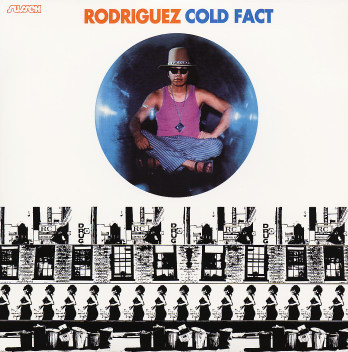
RodriguezcoldfactLike every other person I knew in South Africa, I owned a copy of Rodriguez’s album “Cold Fact”.

All the plaintively sung songs stuck in my head and like everyone else, I knew all the lyrics

“Sugar man. Won’t you hurry.Cause I’m tired of these scenes.For the blue coin, won’t you bring back. All those colours to my dreams. Silver magic ships, you carry, jumpers, coke, sweet mary jane…” I would sing along to the CD in my car or in my bedroom.

You could buy the album in just about any music shop in town. I am sure I bought my copy – now lost – at ‘CD Warehouse’ in Rosebank, in the leafy, northern suburbs of Johannesburg.

It was always on special, alongside the best of Santana, Led Zeppelin IV and Simon Garfunkel’s Bridge over Trouble Waters and something by Van Morrison.

R39 (about $10 Australian) is what you’d pay for a copy in those days.

My friend Doug Cohen, who introduced me to a lot of good bands, told me that Rodriguez was dead. He’d shot himself on stage.

For many years I believed him. Nobody told me otherwise. It’s not the kind of story you make up and at the time I was kind of obssessed with dead rock stars.

I owned and would read and re-read a book called “Rock n’ Roll Heaven” about dead musicians who died in their prime including Jim Morrison of The Doors, Janis Joplin, Bob Marley, Jimi Hendrix and Brian Jones from the Rolling Stones. There were about 30 or so musicians in Rock ‘ Roll Heaven – Buddy Holly, Richie Valens, even ‘dorky’ singers like Karen Carpenter, but no one called Rodriguez.

Then one day I heard he had apparently risen from the dead: he was coming on tour to South Africa.

I never went to the sold out concerts in Cape Town (or the ones in Johannesburg) , but watching the documentary film “Searching for Suger Man” I wish I did.

Not a man who sheds a tear easily, I found my eyes brimful with tears throughout much of film, during which two South African music fans set about finding what happened to this enigmatic singer-songwriter with the haunting voice and lyrics.

The film begins with one of the fansย  a Cape Town vinyl record shop owner – Steven ‘Sugar’ Segerman driving along the windy roads of Camps Bay, listening to the track “Sugar Man” and remarking how he too believed that Rodriguez was dead.

Then a journalist – Craigย Bartholomew-Strydom-ย  joins him in the quest.

In Segerman’s version of the legend, he heard an even more grotesque ending: Rodriguez had set himself alight on stage.

And so the film follows the two fans as they seek out their hero, finding to their astonishment that he is very much alive.

When they do track him down in one of the poorer neighbourhoods of Detroit and convince him to come to South Africa to play for his adoring fans – “You’re bigger than Elvis over here,” Segerman tell him – they find a softly spoken, gentle man but with the same, haunting voice and guitarmanship.

And despite missing out on fame for much of his life, he is not in the least bit bitter; though he has spent his life restoring houses, working in car factories and raising a family in one of the poorest cities in America, rather than live the lifestyle of a rockstar.

“This is the music business. There are no guarantees,” is how contemplates his very late-realised fame.

But better late than never.

Discovering his legions of fans does not change him. He is the same man he was when his songs were unappreciated, but he is pleased to have been given a chance to be a star and play his music.

They describe him – those people who first discovered him and produced his first records – as better than Dylan, as a poet of the streets, a keen observer and teller of tales at the poorest end of town.

He is proud but unchanged. He talks of his music and the path of his life in that same soft, sweet, gentle voice that comes across in his songs.

What happened to the money? Half a million records sold at least in South Africa alone. He never saw any of it. That’s one question the documentary does not answer.

But Rodriguez appears to be a man beyond bitterness and material gain. His life has been hard, honest, but good. He has raised his three daughters to believe in themselves regardless of money, class or privilege. They are strong and proud.

He is Rodriguez.

And now, as I type away in the kitchen or as I walk to the train station in the morning, I find myself singing all those songs from Cold Fact, the album where he floats in a bubble, a contented shaman with his sunglasses, purple shirt and sandles.

‘H’ is for ‘homeopathy’ or ‘hoax’ or ‘healing’

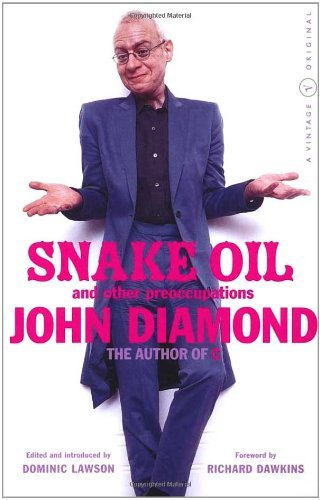
snake skin oilI’ve recently discovered the writings of the late John Diamond.

Many in Britain will know who he is, but many more will know him by association: he was married to the celebrity chef, Nigella Lawson, and they had two children together.

Diamond was a prolific journalist and columnist, writing in a very dry and witty manner about a whole range of subjects that caught his attention from bottled water to second-hand cars to Hasidic jews.

Before he became ill with throat cancer, Diamond tackled the subject of alternative medicine in a number of columns, but as he battled against the ravages of his disease, he dedicated his weekly column in The Times to sharing his struggles – without sentimentality or expecting sympathy – and looked deeper into the billion dollar alternative medicine industry, not least because so many of his readers wrote in to suggest alternative ways of fighting his cancer.

He also starting writing a book that had the working title of “An uncomplimentary look at complimentary medicine”

These six chapters along with a selection of his best columns were compiled into a book called “Snake Skin Oil and Other preoccupations“, which I have just finished reading.

In theย  unfinished book he attacks homeopathy, along with all the other alternative treatments, calling it a sham with no healing powers whatsoever.

His principal attack against homeopathy is that it defies rationality and that furthermore, it has never been tested, nor will the homeopathic establishment submit it to proper, scientific testing.

This is an extract from his book:

It is a fundamental tenet of homeopathic theory that the active ingredient – arnica, bee venom or whatever it is – must be successively diluted some large number of timesย  until – all calculations agree – there is not a single molecule of that ingredient remaining. Indeed homeopaths make the claim that the more dilute the more potent it’s action.

This is not just John Diamond’s interpretation of the basis of homeopathy – the dilution of substances – but can be found on Wikipedia, or on the website of the Australian Homeopathic Association and numerous other places. Last year, there was a damning indictment of homeopathy as having no medical basis to heal in a leaked Australian government report last year.

Of course, as Diamond points out, the idea of diluting something until nothing remains defies science, chemistry and modern medicine.

But homeopaths will argue, he says, that it’s effects are physical, not chemical, with some trace memory left behind, a “physically imprinted template” on the water that cures the patient.

Diamond points out there would be a “brand new principle of physics” perhaps even a “new fundamental force in the universe” if this theory of dilution wasย  proved true.

Excuses made by homeopaths for not having their theories subject to conclusive tests “scrape the bottom of the barrel” including, he says, the homeopathic community’s claim that their theories are “true on a human level and can’t be tested in a laboratory”.

All of this I completely agree with and yet, funny things is, I have my own experience with homeopathy, a treatment I never sought to question at the time (the name sounds so scientific), and which did, by whatever means, make me feel better.

I should give some context.

I was at the time suffering from debilitating panic attacks in London, which were making my life miserable.

I started seeing a cognitive psychologist who suggested I also see a homeopath.

I knew nothing about homeopathy and it was only when I read Diamond’s book that I learned more about it.

Truth be told, when I think back on my consultations with my homeopath, a small, sweet-natured woman, about 50, who worked from a clinic in the East End of London, I remember them very fondly.

She worked from a tiny room up a narrow flight of stairs. I would catch the District Line and get off at Bethnal Green I think to get there.

My first consultation was very much like seeing a psychologist. She asked me to talk about myself and what was troubling me.

I did. I told her my life story.

And she listened.

At the end of it all, she paged through a thick old book with a leather cover and held together with bits of tape.

Then she opened a rectangular wooden box filled with tiny little jars of pills, which all clinked around as she searched for the right one for me.

Each bottle had a little cork stopper on top. She pulled it off and put a few tiny white pillsย into a small brown envelope with instructions for when to take them.

I remember I was told not to eat an hour after taking one, or some kind of similar instruction.

And you know what, over the sessions I saw her (maybe half a dozen times), I did start feeling better.

But who can say if it was those little pills of apparently nothing (trace memory of something), which contained, who knows what, that helped me get better.

It could have been them I suppose.

Or maybe it was just the soothing manner in which she spoke to me and put me at ease, or the ritual itself of talking, getting things out of me, then waiting as she selected the pills from her enormous box of tiny jars and the clinking, reassuring sounds they made.

Ritual+ placebo = healing?

PS. This is the final column John Diamond wrote before he died, very poignant and worth reading.

Django Unchained: an entertaining, overly long disappointment (with a great soundtrack)

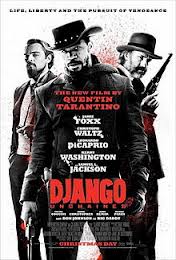
django unchainedI had my misgivings about watching a pirated version of Quentin Tarantino latest “Django Unchained”. It felt almost sacrilegious to watch the great man’s work on the small screen.

Tarantino’s films deserve the expensive big screen treatment, complete with popcorn and coke and maybe even chocolate.

Let me be clear: I didn’t pirate the movie myself, I was given a copy and as I say, I had my misgivings.

But to be honest, I might have felt a tad annoyed if I’d paid top dollar to see this film and popcorn charged at a 5000% mark-up.

It’s not his best.

It’s very long (some judicious editing would have helped and I’ve since read that it was the first film Tarantino has made without regular editor Sally Menke, who died in 2010).

And it’s got some very silly moments, the silliest by far being a ridiculous cameo by Tarantino himself, putting on a very bad Australian accent. What an Australian would be doing in the American wild west in the mid-1800s is the obvious question to ask, but given that it also added nothing to story or film, it made me wonder if Tarantino has got a little too clever for his own good.

But it is an entertaining film, a Western with almost as much violence and gore as Kill Bill (the blood literally explodes off bodies) has a lot of very good scenes and some great songs and atmospheric music; but as the sum of its parts, it does not quite work.

The plot is fairly straightforward:

Eccentric German bounty hunter Dr Schultz (Christoph Waltz) frees slave Django (Jamie Foxx) and invites him to become his partner and fellow outlaw killer and share in the spoils. As a reward for his services, Schultz promises to help Django rescue his wife, Brunhilde (a fellow slave brought up by German speakers, hence the name) from Cotton plantation owner Calvin Candie (Leonardo Di Caprio) and his obsequious slave-hating butler Stephen (Samuel L. Jackson), one of the nastiest characters put on film by Tarantino.

Along the way they kill a lot of people. there’s a lot of blood. A lot violence and gore.

There’s a couple of great cameos from the likes of Jonah Hill as part of a group of bungling Klu Klux Klansmen who complain about how badly their wives have cut the holes into their hoods so they can’t see anything; Don Johnson plays a suave, bigoted plantation owner;ย  and for Australian fans, Wolf Creek’s John Jarrett also pops up as another Australian somehow caught up in the American slave trade.

Christoph Waltz as Dr Schultz is the standout character for me. Jamie Fox as Django is physically impressive and also plays his part with the right amount of style and swagger, but for me Waltz is the star as the happy-go-lucky, but deadly-with-a-pistol bounty hunter, masquerading as a dentist, with a tooth bobbing on the top of his carriage. He plays the role with real panache and is also by far the most likeable character in the film; an enlightened European, he treats Django as an equal, while just about everyone else in the film (including slaves themselves) calls slaves “niggers” (Somewhere, someone has tallied up the number of times the “N” word is used in the film and it must in the 100s.

In his role as the bounty hunter, Waltz is almost the mirror image of Colonel Hans Lander, the smooth, despicably evil Nazi he played with Oscar-winning success in Inglorious Basterds. He is one of those actors that has real magnetism and the film is worth watching just for his performance alone.

Leonardo Di Caprio is good as the wealthy, manipulative plantation boss Calvin Candie, but it did a feel a little as if he was going through the motions in this role, drawing on past characters he’s played.

There’s also the usual snappy Tarantino dialogue through much of the film, especially in the early scenes between Django and Schultz, complimented by some beautiful shots of the American wilderness.

But it’s a disjointed, uneven film that would have been a better film were it shorter, more tightly made.

There’s the sense that Tarantino – the master film-maker and auteur that he is – can do anything and get away with it, hence his own silly Aussie cameo.

In the end he looks a bit foolish and completely out-of-place (and out of his depth I am sorry to say) not quite sure where to place himself on camera.

As for that accent – Strewth mate, you sound like a real drongo!

‘Gadget’ peer pressure or “what’s that piece of cr*p you’re using?”

351571200_1db3e97f22_zI’ll come right out and say it. I don’t yet own a smartphone.

Shock. Gasp. Horror.

I still have one of those Nokia cheapies.

It’s not that bad.

You can search the web if you’re nostalgic and fancy recalling what dial-up internet used to be like… and it has maps that load up just as you reach your destination.

I also don’t own an ipad or any tablet, though I do have a kindle, which my wife bought me for my birthday.

Don’t get me wrong, I like gadgets and if money were no object I’d buy all of them, Stephen Fry-style, in one big splurge (I believe Fry has quite the gadget fetish and likes nothing more than to come home with a crate load of the latest techno gadgets).

I just seem to be making the transition to new technology a lot slower than most and delaying the capital outlay.

It took my wife and I an age to buy a flat screen digital television.

A year ago we were still watching movies on the equivalent of a postage stamp.

It was only when we realised that going to the moviesย  would be hard when our Edie was bornย (read my post: My eight months without cinema for more on this) that we splashed out and got a 42 inch beauty for a bit of the home cinema feel.

Funny thing is, some of the older technology is a better suited to my purposes.

For example, going for a run, the tiny little square ipod shuffle (the one Apple brought out in 2006 and are still selling) that weighs as much as a feather and is smaller than After Eight dinner mint is perfect for the task – why bother strapping a full-size ipod to your arm and running lopsided? (Actually, I’ve seen people wearing full-sized ipods or iphones on both arms to balance themselves out I imagine – no kidding.)06shuffle_earbuds

But I have to say, the pressure is rising and I am starting to feel like I’m living in the dark ages for all my lack of technological accoutrements.

It started with a phone call to a family member, which ended with me being admonished for not having an iphone.

“What? You don’t have an iphone?

“What kind of phone do you have?

“You have what?

“Jaysus.

“Well you better getter one.”

This was followed a few weeks later with this somewhat bitter aside: “You know, if you had an iphone or a Samsung Galaxy I could send you a photo of what I am describing right away?”

“So…when are you getting one?”

Then over dinner with friends a couple of weeks ago “You know you should really get a smartphone. You’re a journalist. You’re a blogger. You really need one.”

And then in the office earlier this week, I was ambushed by my colleagues “You mean, you don’t have an ipad or an iphone?”

Snigger, snigger.

Joke about wife not letting me buy one.

Snigger, snigger.

OK, everyone just calm down. Put away your “Steve Jobs RIP” banners. I get the message.

Yes I know:

  • I’m the only one on the train who doesn’t whip out his smartphone to tap out a message, update their Facebook status or tweet a thought for the day.
  • Yes there are old grannies with perms and tissues tucked under their hand knitted jerseys that can swipe across a smartphone screen faster than flip through a magazine.
  • And yes, the rumours are true, they’ve started giving out an iphone and a book of McDonald’s baby happy meal vouchers (haven’t you heard of the McSlop?) with all new babies born in Australia?

Truth be told I do find myself paging longingly through store catalogues and admiring the phones and tablets on offer, but then when I see the prices or the contracts and the monthly fees I tell myself I can manage another month with my piddling device.

I recall the very first mobile phone my father had.

It was the size 0f a mini rocket launcher and weighed as much as a brick. It could just squeeze into his bedside draw and had a long aerial that you pulled out army style. Boy, was it cool!21581808_45a7b5da91

Flashing forward in time…I’m sitting on court number one at Wimbledon, pork pie in hand, jealously studying a bloke in sunglasses and a tan, snooty girl-friend on his arm, checking his email on a small squarish device called Blackberry.

Whatever happened to those? Apparently even child soldiers in Africa refuse to use them.

But I know it’s only a matter of time before I’m tapping away on a palm-sized gadget, making 1970s-faux images with Instagram and sending witty tweets about advertising slogans while walking around the city during my lunch break.

Hopefully I won’t end up as one of those freakish stories you read about in a little item on page 12 of Mx: man hit by bus while crossing road, laughing at silly photo of monkey wearing underpants on his head on facebook.

Tap tap.

freshlyworded list of the week: 10 television dramas you have to watch before you die

3533683614_7e4b5741efHaving just watched the final episode of Season 5 of Mad Men – and mourning the long wait I must now endure until Season 6 comes out on DVD, I thought I might jot down the 10 television shows I reckon are among the best to ever grace the small screen.

Plus my wife and sister-in-law are watching Season 3 of The Walking Dead, which I have enjoyed, but there’s only so many gurgling, mindless zombies I can watch chasing the living through an American wasteland.

So these are 10 television shows I reckon are as good as just about anything you could watch at the movies, and in most cases, infinitely better.

(I’d welcome suggestions from other bloggers; yet to watch Boardwalk Empire, Primal Suspect and have a couple of seasons of Inspector Morse on my shelf too as well as The Tudors.)

1. The Sopranos

Apart from the bemusing final episode of Season 6, the Sopranos set a new television benchmark when it hit television screens in 1999. It could be set that it sparked the revival in television entertainment and inspired countless other shows. Who would have thought watching New Jersey mob boss Tony Soprano pouring out his family and “business” problems to a sultry psychologist played by Lorraine Bracco would set the stage for the great gangster drama since The Godfather trilogy and Goodfellas. Plus there’s all the other great characters: power-hungry Junior, stupid but scary Paulie and Tony’s drug-addicted nephew Christopher Moltasanti to name just three.

2. The Wire

Many people argue The Wire – the story about Baltimore police officers and the criminals they pursue – is the greatest television show every created. It’s certainly the greatest show never to win any major awards. Each of the five series looks at a different aspect of Baltimore society: the drug scene, the docks, local politics, the school system and the media. It features the first gay gangster-turned-robin-hood (Omar), arguably the finest portrayal of a police-officer on the small screen (Dominic West as Jimmy McNulty) but the real stars are the dialogue, which captures the language of the street perfectly and the carefully woven plot lines. Personally, my favourite character is Bubbles, the heroin addict turned police informer and in many ways the moral compass of the show.

3. Six Feet Under

The story of a dysfunctional Californian family running a funeral home. Each episode begins with a death and the body being prepared for burial by the Fisher Family. There is never a dull episode. It features great performance from Michael C Hall as David a gay man struggling with his sexuality and his virile brother Nate, caught up in a twisted relationship with Brenda, brilliantly played by Australian actress of Muriel’s Wedding fame Rachel Griffiths. And its darkly funny.

4. Breaking Bad

The story of family man Walter White (Bryan Cranston) a poorly paid high school chemistry teacher who upon being diagnosed with lung cancer, turns to cooking crystal meth with former pupil and local low-life Jessie (Aaron Paul) to build a nest egg for his family.ย  The pair get mixed up with organised crime and one of the scariest, suavest villains in the form of Gus Fring, the proprieter of ‘Pollos Hermanos’. Yet to see Season 5, but can’t wait.

5. Mad Men

Was there ever a cooler show on the television? The story of the lives of Manhattan advertising executives in the 1960s. Every shot is a period piece, the dialogue meticulous; you can sit back and just enjoy the decor and clothes, never mind the characters. Don Draper, Roger Sterling, Pete Cambpell and of course Joan Harris – the most voluptuos woman ever to grace the small screen – are creations that would sit comfortably alongside any in the Great Gatsby.

6. Luther

John Luther (Idris Elba) is the toughest and most brilliant police officer you will ever meet. He operates by his own set of rules and code of ethics as he brings down the sickest criminals on the streets of London.ย  I’ve watched the first two seasons, and believe a third season will air this year. Also a chance to see Paul McGann of Withnail and I fame in a great role.

7. Law & Order: SVU

One of the longest running televisions shows of all time, the Special Victims Unit (SVU) spin-off has generated 14 seasons. The episodes featuring Benson and Stabler as the lead detectives are the best. Very well written, with believable characters and stories, all filmed on location in New York. Plus there’s that bad-ass motherf*cker Ice-T and the freaky, sardonic Munch to entertain you as well.

8. Secret Life of Us

An Australian series about the lives, loves and heartaches of twenty-something Melburnians living in St Kilda. Does not sound like much, but lots of great themes explored. Narrated by the philandering writer-in-training Evan (Samuel Johnson) with career-making performances from Joel Edgerton (now a Hollywood star) Deborah Mailmen and Claudia Karvan to name just a few. The first three seasons are the ones to watch. From Season 4, all the good characters have left the show (I’ve not watched it).

9. Midsomer Murders

Each episode in the 15 seasons set in quaint Midsomer county with its hedges, afternoon teas, quiet woods, grand old mansions and quintessential English villages (the deadliest county in England) is a feature-length whoddunit featuring the unshakeable Inspector Barnaby (John Nettles) and a number of different young side-kicks. The corpses pile up faster than freshly baked scones at a fete but you’ll never guess who the murderer is.

10. Downton Abbey

A period drama about masters and servants who live in palatial Downton Abbey in a changing Britain in the years leading up to World War One and beyond. Headed by the sweet-natured but strong-willed Earl of Grantham (Hugh Bonneville) and his somewhat annoying American wife (Elizabeth McGovern, it features a brilliant performance by an ancient-looking Maggie Smith as Grantham’s mother, the towering Dowager Countess of Grantham.ย  And of course there’s the dour Mr Bates and impeachable Mr Carter, the butler of Downton Abbey.

The incredible bravey of forgotten refugees: a review of “All that I am” by Anna Funder

all that i amI read “All that I am” by Australian author Anna Funder purely on word-of-mouth.

I’d been told and heard that this book was very good, but knew nothing at all about the subject matter, plot or characters.

The cover of the version I read shows aย  woman in a red coat walking past what looks like the Reichstag in Berlin, her reflection a red blur on the wet pavement.

The story, as it unfolds inside the cover, is about a group of German refugees (all but oneย  are Jews) who are forced to flee their homeland when Hitler rises to powerย  in Germany in the early 1930s.

Not only are they Jewish intellectuals, but left-wing leaning and socialist – in complete opposition to all that the National Socialists (the Nazis) stand for.

They all manage to obtain refugee visas in London, where despite the constant and very real risk of deportation, they continue to do what they can to plant stories in the British press about Hitler’s plans forย  rearmament and his viscious policies towards the Jews and others he deems undesirable.

The central plot of the novel is what happens to four characters, namely: Ruth Wesseman, a bohemian Jewess and intellectual married to non-jewish journalist Hans, Ruth’s cousin Dora, a firebrand, fearless pursuer of justice and freedom (the heroine of the novel) and Dora’s lover, the celebrated left-wing German playwright and agitator, Ernst Toller

There are two narrators: Ruth, now a frail old women in her nineties, but with all her mental faculties intact, who tells the story of her life in Berlin, London and Shanghai before immigrating to Australia in 1947 while recovering from a fall in a Sydney hospital; and the playwright Ernst Toller, living an agoraphobic, reclusive life in an apartment overlooking Central Park in New York in 1939 who tells of his relationship with Dora Fabian, his one true love.

The novel moves effortlessly back and forth across timelines from the cake shops along Bondi Road to the Bohemian nightclubs of Berlin to an attic apartment in Bloomsbury in Central London and a terrace house in Hampstead.

They are all real people and Funder’s genius is to breathe life into their characters, relationships and pysches and like a detective piece together the story of what happened to them.

One of the most enlightening aspects of the book is its exploration of the lives of German refugees forging an existence in London.

This is the book’s central canvas – the secret, untold stories of people who lived under the very tenuous, conditional protection of the British government, a government not yet aware or perhaps not yet convinced of Hitler’s evil intentions and hopingย  that appeasement might prevent war.

It is the brave acts of these refugees, who risk their own safety to connect with those still trapped in Europe and get their stories into the newspapers and public consciousness, which ultimately convinces Britain that war is the only route to peace.

What’s most shocking is how easily refugees fleeing persecution – despite the horrible fate that awaited them – could be sent back to Germany if British bureaucrats got word of political activities, in some cases colluding with Nazi operatives.

Such a fate befalls one of the colleagues of the four protagonists. A former German policeman, he is expelled from Britain for speaking out at a trade union convention, and his mistake is being heard by the wrong people.

Once the expulsion order is granted, an immigration agent is assigned to watch him until he is deported. His fate, severe beatings and a first-class ticket to the concentration camps, where he gets to clean the toilets.

The book also recounts the fate of Jews aboard the MS St Louis, a refugee boat that sailed from Germany to seek asylum in Canada and the USA in 1939. It’s fate is told through the eyes of Clara, a jewish refugee and secretary to Ernst Toller while in exile in New York. Her brother is aboard the ship as it remains moored just outside Havana.

Clara is transcribing Toller’s life story (and what will become his memoir), while he urges her not to give up hope as the fate of the MS St Louis remains uncertain. Eventually it is sent back to Europe, where a quarter of those onboard would later die in the concentration camps.

The refugee’s tale, as told by Funder, should resonate with readers in Australia or anyone fortunate to be living in a free country.

The debate about refugees, particularly those that arrive by boat, is such a political hot potato here, that most forget that these are real people’s lives we talk so glibly about and discuss as if they were not human at all – objects to be “processed” or “turned back”.

Upon reading ‘All that I am’ I did some background reading about all the characters in the book, especially the central character of Dr Ruth Blatt (Ruth Wesseman).

Funder was a friend of Ruth Blatt and was no doubt inspired to write about her life through the incredible story she told her.

Searching online, I came across Funder’s interview with Ruth Blatt for a radio broadcast on the ABC.

After you’ve read this gripping, moving story about heroism, bravery and what it means to be all that you can be, listen to the radio broadcast to hear Ruth Blatt tell her story in her own words.

An Australia Day contemplation on becoming an Australian

australia dayA week ago, I rang up the Department of Immigration to enquire about a passport matter.

Whilst on the phone, I asked the woman on the end of the line if she could tell me when I would be eligible for Australian citizenship.

To my surprise, she told me it was mid-March…this year.

I’d expected to be told it would be a couple of years off.

Despite having lived here for over 8 years (and qualified enough in my eyes as my tax returns can attest) I know all too well that there are convoluted rules about how long you must be in the country on certain visas before you can, in the words of Peter Allen (or Qantas), “call Australia home”.

Forests in Tasmania have been decimated to supply the paperwork to complete previous visa applications: two for a work permits and one for my spouse visa.

But that of course is the Australian way.

Finding out about my upcoming dual citizenship opportunity has got me thinking a bit more about what it will mean to be an Australian, provided the spooks (ASIO) don’t deem me a security risk, and send me to the Ecuadorian embassy in London to join Julian Assange, or worse, Pretoria.

Should I pledge my allegiance to Dick Smith and only buy Australian-made products, even if they cost more?

Do I now support the Wallabies, the Kangaroos, the Baggy Greens, the Socceroos, the Olyroos, the Hockeyroos, the Boomers, the Diamonds, the Matildas, the Opals and the Koalas?

Do I have to shout for Lleyton Hewitt? Do I? Do I?

And must I call the mayor the “mare”?

So much to ponder!

Finding out about becoming an oke ‘Stralian has also coincided with the run up to Australia Day tomorrow (January 26) with the nation getting the day off on Monday.

I’ve always had mixed feelings about Australia Day.

My mind always seems to conjure up images of drunken yobbos, Australian flags draped over their shoulders like capes, stomping on cars and hurling abuse at anyone not white enough, as happened in Manly a couple of years back.

And I also tend to think of that famous Australian “pride” t-shirt. You know the one that says:

“This Is Australia – We eat meat, we drink beer and we speak f#ckin english!”

Losely translated it means:

“Unless you’re white, kindly f*ck off”

Strangely enough, this Howard-era slogan has not quite disappeared under the slightly left-leaning Labor government.

Instead, it’s morphed into:

“This is Australia: Weย  eat meat, we speak English, but if you have $5 million, we couldn’t give a f*ck”

Not quite as catchy I admit, but true.

The ‘$5 million, no English’ required refers to the new ‘Golden ticket’ visa – or the more official sounding Significant Investor Visa – the government is giving out to anyone who can stump up a wad of cash, no matter if they speak Martian.

At the same time, they’re deporting refugees who arrive by boat to remote island hell-holes or forcing them into poverty on the mainland, by not allowing them to work.

Which of course brings me to the issue of who I am going to vote for, since voting is compulsory (a strange phenomenon I have yet to get my head around) and there is an election coming up towards the end of the year.

I was neverย  a fan John Howard and Mr Speedo (Tony Abbott), Shrek (Joe Hockey) and Condeleeza Rice’s cousin-from-another-mother (Julie Bishop) hardly seem much better.

Perhaps if Malcolm Turnbull took charge I’d consider it. Or maybe I’ll have consider the Greens. I’ll have to do some reading.

On that note, I’ve been reading up about what Australia Day really is all about.

Officially, it serves to commemorate the arrival of the first British fleet of convict ships in 1788 and the laying of the foundations for modern day Australia.

But it seems to mean different things to different people, or nothing at all.

The white bogans in the far outer burbs, rusty cars parked on unkept lawns, pit-bulls at the ready, use the occasion to lament the days when Australian culture was whiter the washing washed in OMO.

The aborigines call it invasion day, and who can blame them.

The government talks about celebrating everything that’s great about Australia, but usually just end up in fisticuffs with the opposition, or as happened last year, with the prime minister being unceremoniously dragged off by her security personnel after Tony Abbott had fanned the flames of aboriginal anger.

As for new citizens-to-be like me?

We’re still trying to figure out the bloody rules to Australian football, ponder why football is called soccer and rugby football, and why that red-faced balding geezer who once coached the Wallabies is still on the radio.

Perhaps on Australia Day this year, I’ll just take inspiration from that marvellous Paul Hogan ad from the 1980s – you know the one where he talks about:

“The landย  of wonder, the land down under“.

And throw a couple of shrimps on the barbie.

The junkie in literature: a review of ‘Trainspotting’ by Irvine Welsh

trainspotting‘Trainspotting’ by Irvine Welsh is the fourth in a series of a books I am reading and reviewing based on the theme “The junkie in literature” with the aim to learn more about this sub-culture.

I’ve so far read and reviewed ‘Monkey Grip’ by Helen Garner, ‘Junky’ by William S. Burroughs and ‘Confessions of an English Opium Eater’ by Thomas De Quincey.

When I think of Trainspotting, my mind immediately conjures up scenes from the movie of the novel: Mark “Rent Boy’ Renton emerging from the bowl of the filthiest toilet in Scotland, the dead baby crawling on the ceiling, Begbie throwing his glass of beer over his head in a crowded pub and the lines:

“Choose us. Choose life. Choose mortgage payments; choose washing machine; choose cars; choose sitting oan a couch watching mind numbing and spirit-crushing game shows, stuffing fuckin junk food intae yir mooth.”

The film was fantastic and horrible.

The book is much, much better.

A brilliant, excruciating, haunting and often hilarious story about a group of Scottish junkies (and one pyschotic lunatic – Francis Begbie) set in the impoverished council estates of Edinburgh circa the late 1980s, early 1990s.

Mark Renton is the axis of the novel, an intelligent, ocassionaly cruel, somewhat bitter and philosophical junky, who in between trying to quit heroin, muses about the meaning of his life, what it means to be Scottish (colonised by English ‘wankers’ is how he puts it), trying to understand women and the pleasures and pain of being a junkie.

Many of the chapters are narrated through his eyes, but also through the eyes of sweet, hopeless romantic ‘Spud’, the psychotic fury of Frank Begbie and a number of other characters that form part of the scene.

In this way, the reader gets a 360 degree view of the world of the junky: binge drinking, shooting up in squalid apartments, random sex, attempts at a normal life.

The first thing that will strike anyway who reads the book is that its written phonetically, in Scottish dialect, meaning as a reader you have to adjust to the language and at times decipher the meaning of words.

Here’s Renton describing injecting himself:

…Ah start tae cook up another shot. As ah shakily haud the spoon over the candle, waitin for the junk tae dissolve, ah think; more short-term sea, more long-term poison. This thought though is naewhere near sufficient tae stop us fae what ah huv tae dae.”

Strangely, this does not distract from the story telling or plot, but really centres you in the time and place and experiences of the characters in the book.

It gives parts of the book a poetic quality as Welsh managed to convey the gruff musicality of the working class Scottish accent.

For this is a distinctly Scottish tale about heroin addiction, friendship, betrayal, love, radges (crazy people), gadges (schemers) and futbal (football).

It’s about people caught up at the bottom end of the Scottish welfare state with little hope or ambition to get out.

Intelligent and worldly, Renton shares the common trait of many junkies.

Like the writer/drifter William S. Burroughs in ‘Junky, artist Javo in ‘Monkey Grip’ and perceptive, strong-headed and proud Thomas De Quincey in ‘Confessions of an English Opium Eater’, Renton searches for something to take life beyond the mundane, to rise above crowd, or just to escape the mind-numbing boredom of existence, of everyday life.

Though being a junky is heaven and hell for Renton, Spud and Sick Boy, it is preferable to the familiar storyline of getting married, getting a mortgage, buying a bigger television, a car and watching “mind-numbing, spirit crushing game shows.

Describing the heroin ‘hit’, Renton says: “Take yir best orgasm, multiply the feeling by twenty, and you’re still fuckin miles off the pace.”

On the effects of heroin: “Julie looked really good when she started oan smack. Maist lassies dae. It seems tae bring oot the best in them. It always seem to gie, before it takes back, wi interest.”

On the appeal of heroin.: “Ma problem is, whenever ah sense the possibility, or realise the actuality ay attaining something that ah thought ah wanted…it just seems so dull n sterlie. Junk’s different though. Ye cannae turn yir back oan it sae easy. It willnae let ye. Trying tae manage a junk problem is the ultimate challenge It’s also a fuckin good kick.”

Trainspotting is a harsh book, unpleasant and horrfying as it is hilarious and insightful, but you get an incredible kick out of reading it, because you become part of the scene.

Required reading I say!