There have been dozens of books written about the history of modern Australia since the arrival of the first fleet of English convicts to Sydney Cove in 1788.

The latest book hot off the shelves is Australia A History by former Prime Minister Tony Abbott.
I haven’t read it yet but have been delving into the story of European settlement via a much older book, which I bought for $2 at a book sale at the Athenaeum Library on Collins Street in the Melbourne CBD.
Seeped in history (the Athenaeum Library is one of Melbourne oldest cultural institutions), it seemed an appropriate place to pick up a copy of The Penguin Bicentennial History of Australia by the late historian John Molony.
Published in 1987, it traces the 200 years (199 to be exact) since the arrival of the first fleet and finishes with the prime ministership of Bob Hawke and the success of Paul Hogan‘s Crocodile Dundee.
While it obviously misses out on everything that happened in Australia from 1988 onwards, I found it to be a really good summary – in less than 400 pages – of the key events that shaped the fledgling nation since those first majestic-looking e ships, laden with convicts, sailed through the Sydney Heads towards what is now Circular Quay.
Molony, who wrote many history books, was Emeritus Professor of History at the Australian National University. He died in 2018 at the ripe old age of 91, meaning he was alive for 61 of the 200 years encapsulated in the book.
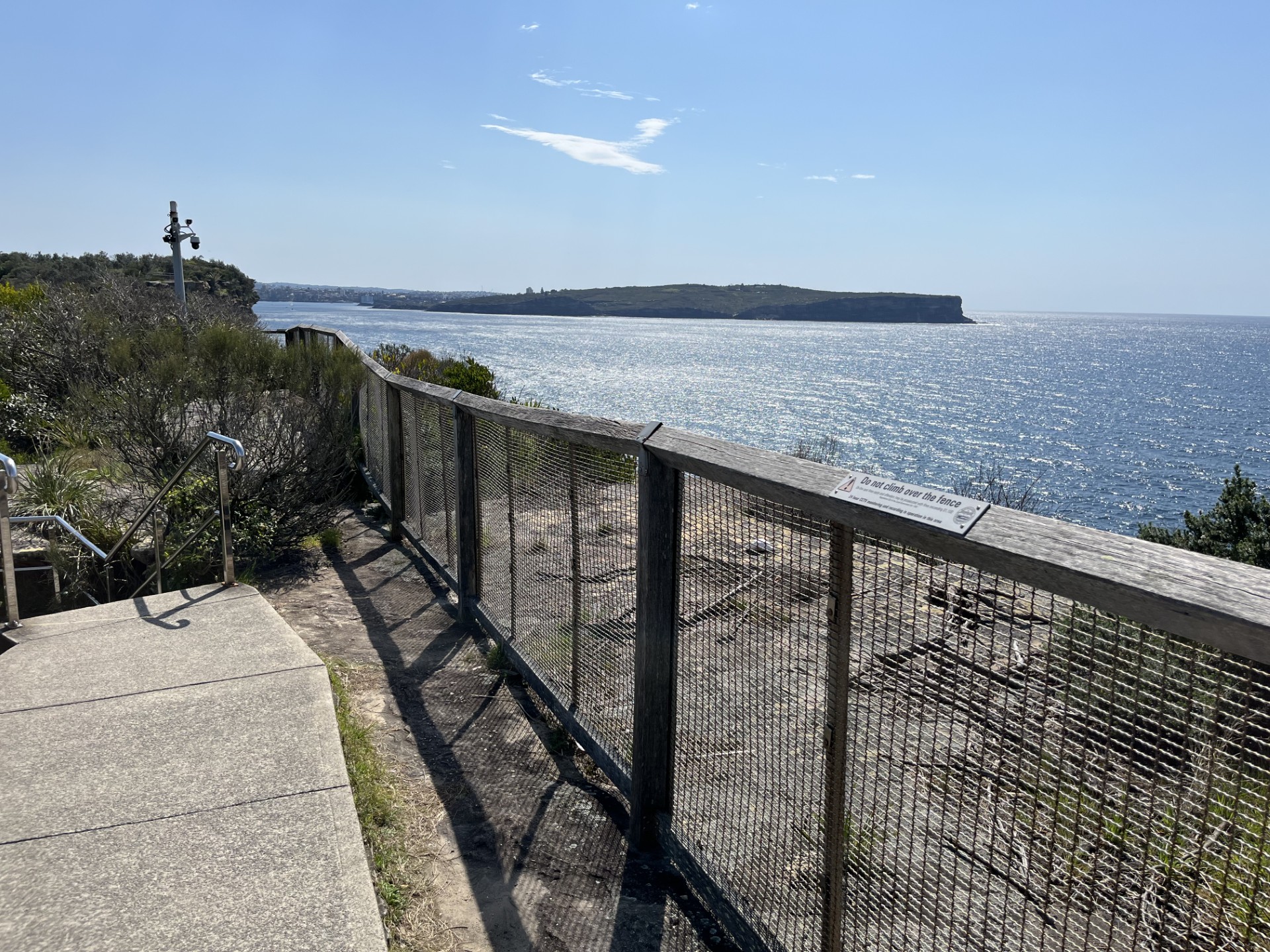
Interestingly, I was midway through the book, when I happened to be in Sydney and visiting Gap Park in Watson’s Bay. Here you can stand at the edge of a cliff face that plunges into the turbulent Tasman Sea below (an infamous Sydney suicide spot) and look out over the Sydney Heads, the series of headlands that market the entrance to Sydney Harbour.
It is through this 2km wide entrance that the 11 ships carrying 732 convicts sailed through and made anchor at Sydney Cove, now known as Circular Quay.
As Molony describes it rather movingly in the opening chapter of his book:
High summer saw a fleet of eleven ships take up moorings at a small cove in a noble and extensive harbour on the eastern coastline of the southern continent. A few dark-skinned people of the Cadigal band, whose ancestral home that place had been for age upon age, watched closely from nearby scrub. The date was 26 January 1788 and the newcomers called the cove after an English public servant named Sydney…The modern history of the world’s oldest continent had commenced with the coming of a new people.
(In fact, as Molony’s book explains, the fleet first made shore first at what is now Botany Bay (where Sydney Airport is) but due to the “infertility of the soil” and a lack of fresh water, it was quickly discarded, and the weary travellers travelled a few miles to the north to the “finest harbour in the world”
237 years later, as I looked out over the Heads towards the sparkling Sydney skyline, I was filled with a sense of awe imagining these wooden ships, laden with their weary human cargo, making their way into a vast and primitive land, with not a single structure in sight.
And what did the weary English convicts, after a gruelling eight-month voyage from the docks of Portsmouth, make of what would be for most their permanent home?
No doubt they were filled with dread and fear (as were their aboriginal onlookers) and a longing to return the urban environment of England; the busy streets filled with people and buildings.
Over the next 406 pages, Molony tells the story of the birth of modern, mostly white Australia. There’s a lot to get through, but he does a good job describing in an entertaining, easy-to-read manner the key events and colonial personalities that shaped what became the Australia we are familiar with today.
Looking out over the ocean towards a city of some 5.5 million people, with the Manhattan skyline of its Central Business District, the modern wonders of the Harbour Bridge and Opera House and the densely populated suburbs around the harbour, it is a stunning visual reminder of the pace of development that occurred over a relatively short period of time.
And to think that nothing was here, not a single building was standing 237 years ago, whilst Europe and the colonial parent (the British empire) were full of teeming metropolises.
In many respects it’s a miracle that Australia thrived at all. As Molony describes it, the early years of the colony of New South Wales was full of great hardship and suffering: starvation loomed as crops failed and desperate convicts dreamt of escape. In one instance, a group of convicts headed off into the bush, believing they could walk to China. For nearly all Australia would be a life sentence.
At first it was a primitive existence, with public hangings becoming a common occurrence. The first person hanged in the colony was a 17-year-old boy named Thomas Barrett, for stealing.
But slowly, as Molony describes it, an agricultural-based economy is established, centred around the production of fine wool and wheat (a sector which still thrives to this day). Amid the search for arable farmland, the colony expanded into Parramatta and then other regions of the country. Tasmania developed a whaling industry, Melbourne, Brisbane and Adelaide were founded and settlers travelled west to establish Perth.
Then came a momentous event: the Victorian Gold rush, which turned Melbourne into “Marvelous Melbourne” and brought settlers from all over the colony, and abroad to make their fortune. This included the Chinese, who were the subject of a well-entrenched colonial racism. At its height- as I learnt – Victoria accounted for 40% of the world’s gold production.
Another defining moment, and one where Australia lost its innocence, was the Great War in which thousands of young Australian men lost their lives or came back injured and shell shock. The horrific, but courageous battle of Gallipoli that left nearly 9,000 diggers dead.
Molony writes of the end of the war:
It was Anzac Day, 25 April, the day of the landing at Gallipoli, that overshadowed memory and made all new and vital in significance for it was seen as the day on which the nation had shaken off the bonds of subservience and Australians had come to know themselves. [Prime minister] Billy Hughes saw it a little differently. To him victory in the war meant national safety, liberty and the safeguarding of the White Australia policy. Despite some signs to the contrary, Hughes was still convinced that Australians were ‘more British than the people of Great Britain’.
This long adherence to the White Australia policy, one borne out of British racism and fear of invasion from the East, is remarkable given how Australia changed into a successful, and vibrant multi-cultural society (notwithstanding the recent re-emergence of a wave of anti-immigrant feeling fuelled by a cost of living and housing crisis).
For so long Australia had been a land only for Europeans, and it took visionaries like Gough Whitlam to dismantle its final elements and welcome Asian and people of colour to our shores. Even so, by the 1980s, after nearly 200 years of European settlement, “the new nation [of about 16 million] was still predominantly white, spoke mainly English of the Australian variety, owed allegiance to the English Queen and observed laws derived from British sources”.
What I wanted to get out of the book, was a well-rounded understanding of the making of Australia, and Molony’s did a good job of that.
While it impossible to include in detail everything that happened over 200 years, I felt the story he told captured all the important elements without too much politicising, and with some sympathy for the plight of the aboriginal people, whose suffering was immense.
Most striking is his portrayal of the pace of development, how Australia so quickly build up its cities and towns, established a civil and well-functioning society that very early on and to this day, is among the greatest places to live in a troubled world.
It may be an old book, but the Penguin Bicentennial History of Australia is a great place to start for anyone wanting to learn the history of the country of their birth or – as in my case – of their adopted homeland.







 More than likely, I was descending into London’s rich literary history, seeking out the
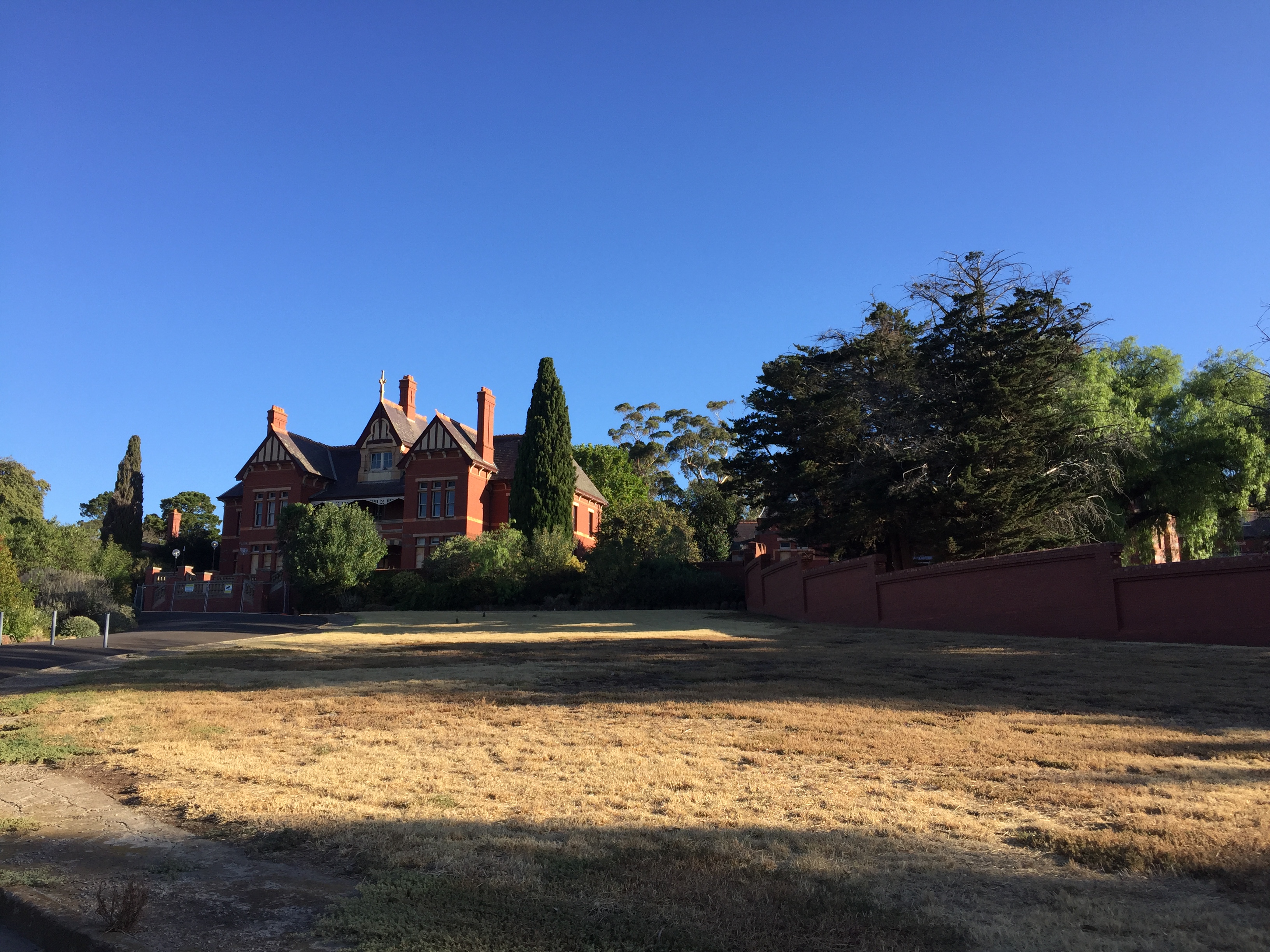
 In 1945, Maraquita Sargeant, a young teacher and concert pianist living in rural Victoria was admitted to a notorious lunatic asylum north of Melbourne.




 “We’ve gone on holiday by mistake,” laments the melodramatic Withnail in the cult film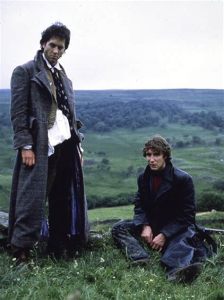

 Freshlyworded
