Culture clash: Reading David Lodge’s wonderful campus novel: ‘Nice Work’

I loved reading David Lodge’s Nice Work, the third of his so-called “University Campus Trilogy” series of novels.

Published in 1988, it was shortlisted for the Booker Prize but lost out to Australian author Peter Carey’s Oscar and Lucinda. Lodge passed away in January this year, less than a month shy of his 90th birthday.

Nice Work is set in the fictional town of Rummidge, a large, industrial town in the north of England modelled somewhat on Birmingham.

The plot of the novel is centred around two characters, attractive and ambitious English lecturer and feminist Dr Robyn Penrose and Vic Wilcox, the grumpy, unhappily married managing director of a struggling steel parts manufacturing company.

The protagonists’ paths cross when Penrose, who is desperately trying to land a permanent job at the University of Rummidge agrees to take part in the “Shadow Scheme” a program devised to bridge the divide between elitisit world of academia and giant cogs of commerce and industry.

Every Wednesday, Penrose must drive to the offices of J.Pringle & Sons and shadow Wilcox as he goes about his day.

The novel is a modern and comic take on Elizabeth Gaskell’s 1854 novel North and South, about a woman who moves from the rural south of England to the industrialised north where she witnesses, in the fictional industrial town of Milton, the clashes between factory owners and workers amidst the industrial revolution.

In Lodge’s novel, Robyn Penrose – who ironically lectures on the industrial novel in English Literature but has never seen the inside of a factory – is appalled by the repetitive, menial work of men working in the cold and soulless J. Pringle & Sons factory she has been shown round.

Later, sitting in on a management meeting where she is only meant to be an observer, she starts arguing with Wilcox and his management team over plans to engineer the firing of a worker who is struggling to do his job.

“Excuse me,” said Robyn.

“Yes, what is it,” said Wilcox, looking up impatiently from his spreadsheet.

“Do I understand correctly that you are proposing to pressure a man into making mistakes so that you can sack him?”

Wilcox stared at Robyn. There was a long silence, such as falls over a saloon bar in a Western at moments of confrontation. Not only did the other men not speak; they did not move. They did not appear to even breathe. Robyn herself was breathing rather fast, in short, shallow pants.

“I don’t think it’s any of your business, Dr Penrose,” said Wilcox at last.

“Oh, but it is,” said Robyn hotly. “It’s the business of anyone who cares about truth and justice.”

David Lodge

And so, Lodge, sets up the ideological battle between his two chief protagonists which plays out amidst the grim shadows of machinery, blue-collar men and cold and soulless sheds and the bustling corridors, hallowed lecture theatres and academic politics of Rummidge University.

It’s a delightfully funny battle full of exasperation and sexual tension as well as education as Wilcox teaches Penrose about the dirty world of industrial dealing and backstabbing, whilst Penrose expands his narrow view of the world and removes his stigma about the world of academia and learning.

And to spice things up, unhappily married Wilcox finds himself growing increasingly attracted to his younger shadow. (An early comic episode in the novel is Wilcox’s confusion when he finds his shadow is a woman and not a man, a fault partly due to the misspelling of Robyn’s name with the more masculine “Robin”).

One of the reasons the novel is so enjoyable is that both protagonists are likeable, basically decent and willing to shift their attitudes. Lodge also has plenty to say about the importance of education and commerce, theoretical points of view versus practical reality and the way one’s behaviours are shaped by the uncertainty of one’s lives: Wilcox’s job security is under threat from strikes, dwindling profit margins and cheaper competitor’s while likewise Penrose has only a temporary position at the university while older, less capable men have the power to deny her a permanent role.

Set against the backdrop of Thatcher’s education cuts and her battle to reduce the power of the trade unions, Nice Work is ultimately an uplifting novel about how people from vastly different backgrounds can come to understand a vastly different point of view – and end up not just friends, but perhaps, even for a time… a bit more than that.

And it’s a real pleasure to read. Lodge is a wonderful comic writer.

(Nice Work was made into a four-episode BBC min-series, which aired in 1989. I found all of the episodes on YouTube. I haven’t yet watched it myself).
John Thaw: the story of the angry, brilliant actor behind Inspector Morse

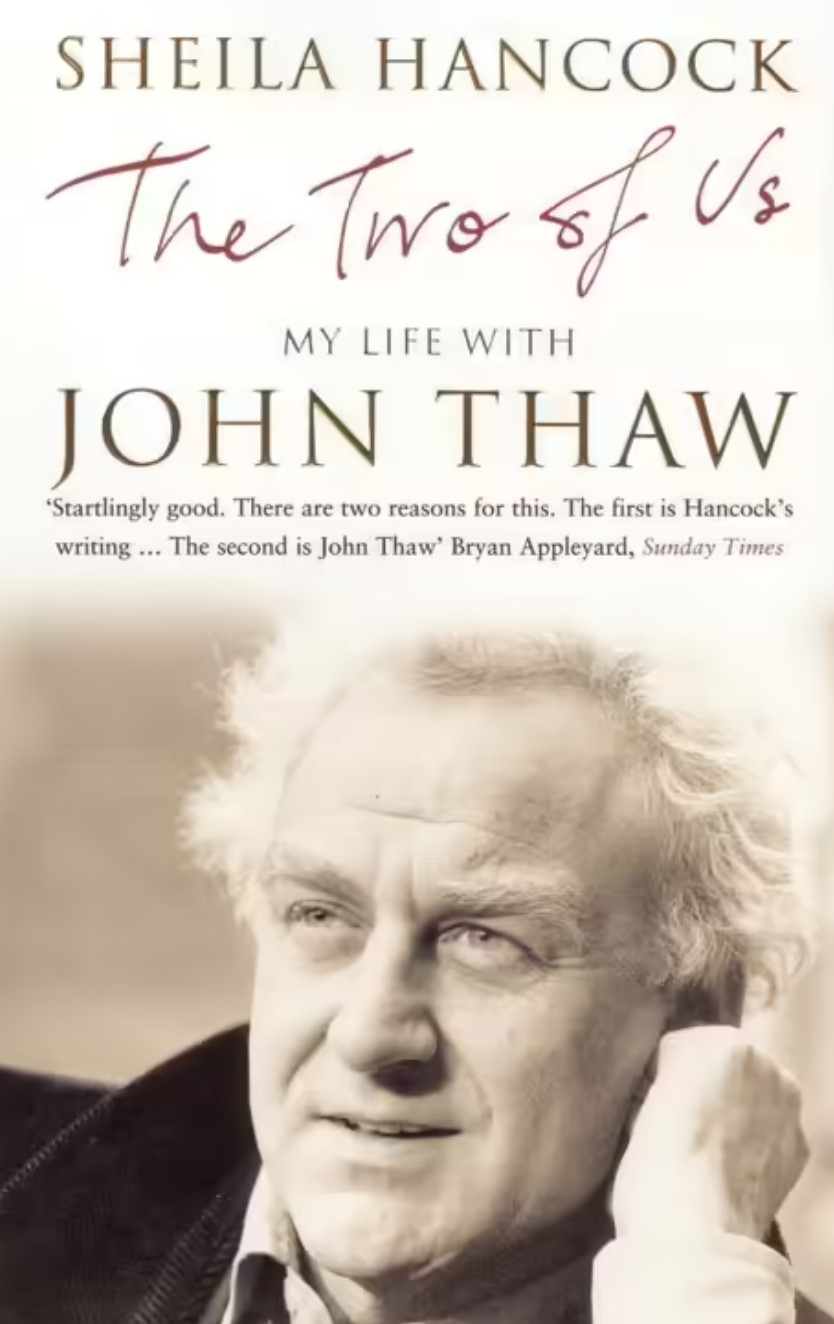
Sheila Hancock’s wonderful memoir The Two of Us gives excellent insights into the personality and demons of the brilliant late actor John Thaw, who famously played Inspector Morse in one my favourite television series of all time.

The event that had such a devastating impact on Thaw’s life, as told by Hancock, was the day his mother Dorothy (or Dolly as everyone called her) walked out on the family, leaving the seven-year-old John and his younger brother Jack deprived of a maternal figure they adored.

This profound loss was the underlying force behind the intensity of his acting (he was utterly dedicated to the craft, though never comfortable with being a celebrity). But his mother’s disappearance from his life also fuelled a great anger and rage that turned Thaw into a heavy drinker and a verbally and emotionally abusive husband.

Hancock is incredibly honest about the challenges of her marriage to Thaw, which was unbearable at times. But she also writes of the later years of their marriage when Thaw stopped drinking and their relationship found an even, and very loving and devoted keel.

However, the great tragedy of it all was that after all the years of heartache, the splits and re-unitings, Thaw should fall very ill with cancer just as they were truly happy together.

Hancock, herself a celebrated actor of the stage and screen (now 92, I last saw her in a small role in the excellent cold case series Unforgotten) was married to John Thaw for nearly 30 tumultuous years and was with him the day he died in 2002 after battling cancer.

Hancock, was left utterly devastated by John Thaw’s death, despite their very volatile marriage.

No doubt a cathartic experience, she published the memoir in 2004 – just two years after he passed away from cancer and just four years after the final episode of Inspector Morse, The Remorseful Day, aired.

It’s quite an unusual book because it’s both an autobiography of Hancock’s life – who was made a Dame in 2011 for services to drama and charity work – and a biography of John Thaw, who shunned the celebrity life, and would probably never have written an autobiography.

It retells their family histories – Hancock was born on the Isle of Wight in 1933 and grew up living above pubs including in the rough and tumble of King’s Cross, London, while Thaw, nine years younger than her, spent his youth in the working-class suburbs of Manchester.

She writes about their first marriages, the trajectories of their acting careers (her close friends include the Carry On actor Kenneth Williams) and how intimidated she was when she first met Thaw when they began acting together on the West End play, “So What About Love?” in 1969.

John Thaw with Sheila Hancock

“The first week of rehearsal of So What about Love? was an unmitigated disaster. I always approach a new role convinced that I cannot play it and on the few occasions that John Thaw looked up from his script, his expression of contempt implied that he agreed,” Hancock writes of their first encounter.

But Thaw quickly warmed to Hancock, and she to him, as he – like his great detective character Inspector Morse – revealed his love for classical music, art and fine wine.

They married in a registry office in 1974. While initially things went well, Thaw’s drinking and depression worsened, and their marriage deteriorated. Hancock paints a quite different picture of their marriage to the one described by Thaw on an episode of the famous BBC series (now a podcast) Desert Island Discs recorded in 1990. On it, he suggests that they had sorted out their problems (mostly to do with his acting commitments), whereas the truth of the situation was a lot darker – as recounted by Hancock in her book.

“By 1990, both Morse and Home to Roost [a sitcom Thaw starred in] were in the Top 10 of the ratings. John was at the height of his popularity but off-screen he was fighting profound depression.”

It would take another five years for Thaw to seek professional help, quit drinking and reunite permanently with Hancock. From then on, they lived blissfully.

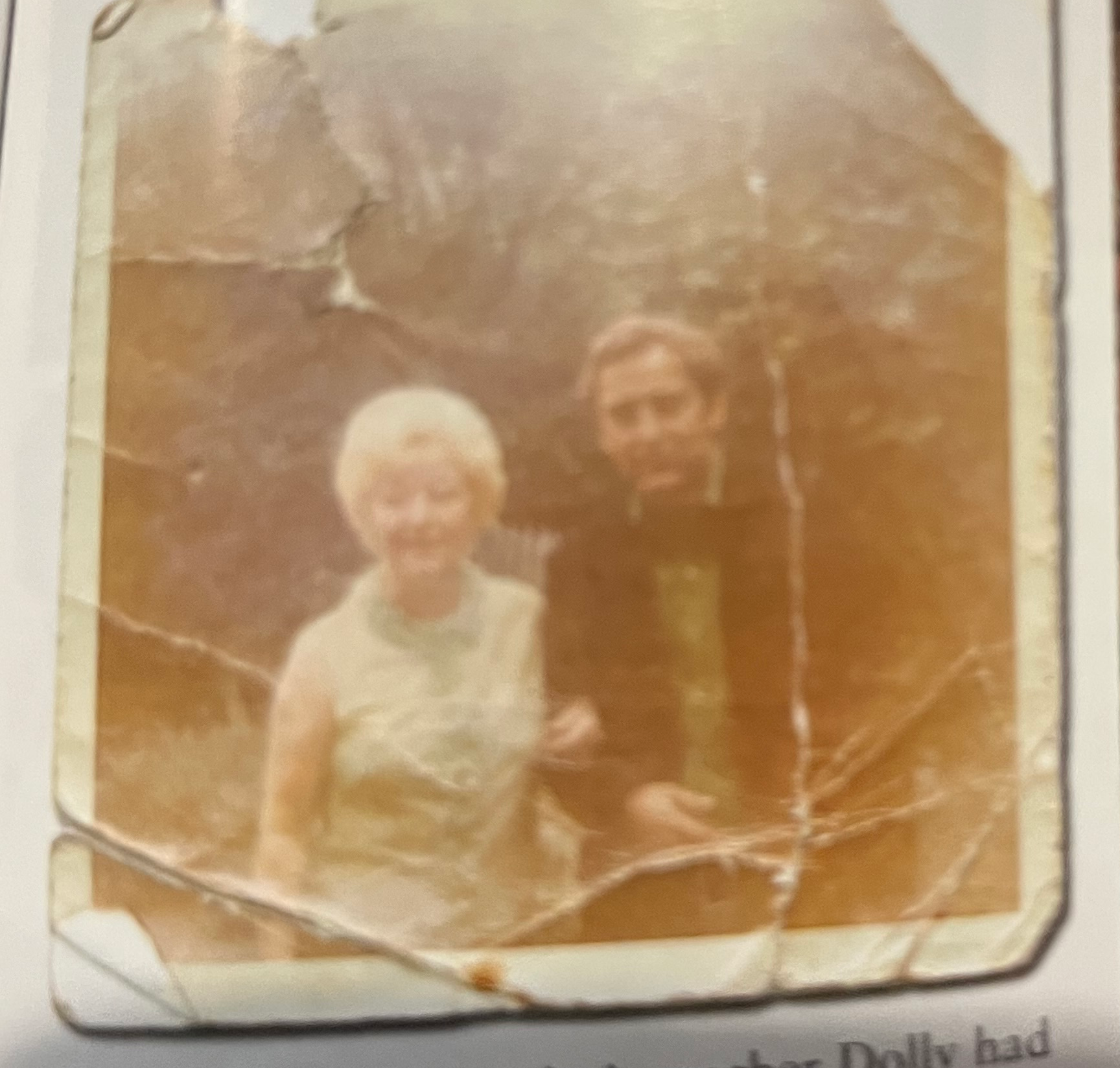
John Thaw with his mother, Dolly

After his death – her recounting of Thaw’s final days in diary entries is so very moving – she took a keen interest in learning more about her late husband’s mother, to understand why she had made such a devastating decision to leave her children.

To her great credit, Hancock does not demonise Dolly even though she caused Thaw so much pain, and in turn herself through their turbulent marriage.

“I will attempt to get inside Dolly’s skin, as if I was going to play her and try to understand what John never could or would.”

Alongside Hancock’s wonderful writing, The Two of Us is full of many great photographs, both professional and personal. Perhaps the most interesting and saddest of all is a faded and crumpled picture of Thaw taken with his mum on a rare union.

Hancock captioned it by saying: “It was found in her (Dolly’s) bag when she died.”

Her interest in the forces that moulded her husband – both good and terrible – make this a marvellous memoir. Any fan of John Thaw and Hancock (who is far too self-deprecating in her writing) will enjoy reading it, as I did.

The Joy of ‘reading’ Inspector Morse

What an absolute joy and pleasure it is to read the Inspector Morse novels written by the late, great Colin Dexter.

I absolutely adored the television series and the wonderful portrayal of the curmudgeonly chief inspector by the imperial John Thaw, but the novels are marvelous in their own right.

I read three in quick succession starting with The Daughters of Cain (1994) followed by The Jewel That Was Ours (first published in 1989) and Last Bus to Woodstock, the very first of the Inspector Morse novels, published in 1975.

(In 2016, I read my first Inspector Morse novel The Wench is Dead (the eighth book in the series), a rather unusual book as Morse is recovering in hospital and spends his time solving a Victorian murder mystery dating back to 1859. You can read my review here).

Having first watched the TV series and then delved into the books (it really should have been the other way round), it’s impossible not to imagine John Thaw as Morse and Kevin Whateley as his lanky, Geordie crime-solving sidekick Seargeant Robbie Lewis.

In the Daughters of Cain, Morse and Lewis investigate the murder of Oxford academic Dr Felix McClure, found stabbed to death in his North Oxford flat, the murder weapon nowhere to be found. Suspicion falls on three woman – his wife, his stepdaughter and his wife’s friend (all with motive) – and it’s up to Morse and Lewis to correctly identify the killer.

In the Jewel that Was Ours, American tourist Lauran Stratton is found dead of an apparent heart attack in her unlocked room at the Randolph Hotel. Later a precious jewel that she was to donate to an Oxford museum is found missing from her handbag. Stratton is part of a tour group of American retirees visiting historic cities of England. It falls to Morse and Lewis to unearth who among the group of unmerry travellers committed the robbery and why.

Interestingly, The Jewel that Was Ours is the only one of 13 Morse novels, which was first a Colin Dexter screenplay (filmed with the title The Wolvercote Tongue) and then later novelised.

In Last Bus to Woodstock a young woman is found murdered in the parking lot of the Black Prince, a pub on the outskirts of Oxford, after accepting a ride from a stranger. Suspicion falls on the young, devious man who discovered the body and a philandering Oxford don. Amid his investigations, Morse falls in love with a young nurse and gets to know, admire and berate Seargeant Lewis.

I loved the slowly unravelling pace of the feature length TV episodes – a much more realistic depiction of how crimes are solved in real life I suspect – and this kind of meticulous unravelling of characters and motives occurs in a similar fashion in the books.

Of course, Dexter throws in plenty of red herrings – and even the great Inspector Morse comes to the wrong conclusions from time to time. In The Jewel that was Ours, Morse is convinced he has identified the killer, who he arrests at a train station and drags into an interrogation room, only to realise that he has made a blunder.

I love the fact that he is both a brilliant man, but also far from perfect. He is easily seduced by a beautiful woman, frequently drinks too much, can fly into a rage with little provocation, but is also compassionate, kind and empathetic. He is also very funny, in a mostly cynical way:

In this comic scene from The Daughters of Cain, Morse is talking to Ellie, a young woman he has become infatuated with).

“Don’t you ever eat?” demanded Ellie, wiping her mouth on the sleeve of her blouse, and draining her third glass of red wine.
“Not very often, at meal-times no.”
“A fella needs his calories, though. Got to keep his strength up – if you know what I mean.”
“I usually take my calories in liquid form at lunchtime.”
“Funny, isn’t it? You bein’ a copper and all that – and then drinking all the beer you do.”
“Don’t worry I am the only person in Oxford who gets more sober the more he drinks.”
“How do you manage that?”
“Years of practice. I don’t recommend it though.”

All three novels were adapted into episodes for the television series, but I could only vaguely remember the plot twists, and so the identity murderer came as a complete surprise in each book.

But even if I had remembered the plots, the great thing about the Morse novels is the wonderful writing of Dexter. He really is a joy to read.

Dexter is master of delving into the personalities of his main suspects and of taking us into the mind of the brilliant Morse and the not-to-be-underestimated Lewis. He is also brilliant at his meticulous descriptions of crime scenes, painting vivid pictures in the mind of the reader.

“The body had been found in a hunched-up, foetal posture, with both hands clutching the lower abdomen and the eyes screwed tightly closed as if McClure had died in the throes of some excruciating pain,” is how Dexter describes the deceased murder victim in The Daughters of Cain.

Interestingly, there is very little physical description of Morse in the first novel. Instead, he comes to light through his personality and mannerisms.

Morse makes his first ever appearance on page 15 of Last Bus to Woodstock after he arrives at the crime scene in the courtyard of the pub.

“Five minutes later, a second police car arrived, and eyes turned to the lightly built, dark-haired man who alighted.”

The hard-working Lewis is already there, having arrived with “commendable promptitude”,

“[Morse] knew Sergeant Lewis only slightly but soon found himself pleasurably impressed by the man’s level-headed competence.”

“‘Lewis, I want you to work with me on this case,’ the Seargeant looked straight at Morse and into the hard, grey eyes. He heard himself say he would be delighted.”

And so, begins one of the great fictional crime-solving partnerships, one that would spawn another 12 novels (published from 1975 to 1999), a television series of 33 feature length episodes (from 1987 to 2000) and two TV spin-offs, Lewis (42 feature-length episodes from 2006 to 2015) and Endeavour, featuring the young Inspector Morse (36 feature-length episodes from 2012 to 2023).

(I have watched every episode of Lewis and thought it an excellent sequel to Inspector Morse, but I have not watched any Endeavour, though I hear it is possibly the best of the three.)

That’s an incredible amount of television viewing created out of a rather old-fashioned, curmudgeonly, middle-aged detective,

Colin Dexter, who makes a Hitchcockian cameo in almost every episode of Morse (he died in 2017) began writing mystery novels during a family holiday in 1972 after a career as a classics teacher was cut short by the onset of deafness

He claims that when he first started writing the crime novels, he had little idea of what Morse was actually like. “I’ve never had a very good visual imagination. I never had anyone in mind,” he said in an interview with The Strand Magazine in 2013.

“The only thing that was really important to me about Morse was that he was very sensitive and rather vulnerable,”

Dexter also revealed that much of the things that bring pleasure to his otherwise grumpy detective hero, are things that Dexter himself enjoyed: classic English literature, classical music, cryptic crossword puzzles and real ale.

“People don’t realise this. The greatest things in [Morse’s] life were [A.E] Houseman and Wagner. These were the things he would go home and listen to and talk about and that was me I suppose, but that’s about as far as it went. I never even wrote plots for my books. I always made sure that before I started writing a story I knew exactly how it was going to end. I never had any idea about what was going to happen in the middle but I knew where it was heading,” Dexter said.

While each of the four novels I have read so far are classics of British crime fiction, with meticulously clever plots and sub-plots and wonderfully engaging characters, it is Morse himself who is central to everything. Brilliant, sad, hilarious and tragic, he is a marvel.

Now to find and read the remaining Morse novels (they are devilishly hard to find!)

The sad hope, but lucky life of Michael J. Fox

Towards the end of his brilliant 2002 memoir Lucky Man, legendary actor Michael J. Fox recounts the testimony he gave to a Senate hearing in Washington in September 1999 as part of efforts to raise money to find a cure for Parkinson’s Disease.

“Scientists testifying after me stressed that a cure could come within 10 years, but only if there is sufficient financial commitment to the effort,” he writes. In footage you can find online, Fox talks about a “winnable war” and finishes by saying that in his 50s, “I will be dancing at my children’s weddings.”.

Twenty five years since that Senate committee appearance and whilst successfully raising tens of millions of dollars to fund research, it appears scientists aren’t any closer to finding a cure to Parkinson’s Disease.

“Parkinson’s disease can’t be cured, but medicines can help control the symptoms,” the revered Mayo Clinic says on its website.

“There’s currently no cure for Parkinson’s disease, but treatments are available to help relieve the symptoms and maintain your quality of life,” says Britain’s National Health Service, with a hint of optimism.

But while Michael J. Fox was unable to dance at any of his children’s weddings, he has remained a defiant, hopeful and inspiring figure to those suffering from Parkinson’s or any other incurable disease – as anyone who has watched his most recent Apple TV documentary ‘Still’ or seen any of his recent interviews will attest.

Indeed he has embraced his “Lucky” life, and made it a truly remarkable one.

He’s also an excellent writer and storyteller, who raises the often tedious celebrity memoir to a much higher plain.

While we often just want celebrities to “get to the bit where they were discovered” or to discuss the making of a certain movie, show or album, for Fox, remembering the key moments in his childhood is not just about nostalgia, but about piecing together the puzzle of his adult persona: how he became the talented actor, performer and later spokesperson for his cruel disease.

Re-watching home movies shot by his father – William Fox, a sergeant in the Royal Canadian Army Signal Corps – Fox at first finds confirmation of the notion that “I became a performer because I craved love and attention” but on closer inspection of him as a young boy taking a garter snake he had captured “on an involuntary bike tour of the backyard” he comes to the realisation that “all these antics were done for nobody’s benefit but my own. First and foremost I am a boy out to entertain myself, completely undisturbed by the presence of the lens”.

This level of self-analysis is not to be found in your standard Hollywood name-dropping memoir, and as reader one feels like we are joining Fox on his journey of self-discovery. It is also evident the deep affection Fox feels towards his family, especially his clairvoyant nana “someone whom I loved, whose voice, touch and laughter were as familiar as my own” and who had a “rock solid belief” in his bright future.

While a naturally gifted performer, the title of the book is a testament to the very real “luck” he enjoyed along the way to fame and fortune. As he tells it, he came very close to packing it all in after ending up flat broke in Hollywood, where he set out to find fame and fortune following some early television success in his native Canada.

His big break came with hit 1980s sitcom Family Ties about a hippy left-wing couple where he played their uptight Ronald Reagan-loving Republican son, Alex P. Keaton. This is a show I vividly remember watching as a kid growing up alongside such staples as Growing Pains and The Cosby Show.

Before landing the part that changed his life, Fox was barely surviving in a tiny, litter-strewn, filthy apartment in Hollywood, where his nutrition came courtesy of Ronald McDonald. He was broke and on the verge of heading back to Canada when the role on the sitcom came up.

He only got the role after a series very fortuitous events, but it turned him into one of the biggest stars in the world, and earned him roles in the iconic Back to the Future series and a huge personal fortune.

Having this wealth, high profile and amazing support network (including the love and devotion of wife Tracey Pollard, an actress he met on the set of Family Ties) helped enormously in his personal battle with Parkinson’s and his efforts to raise money to tackle the disease through the The Michael JFox Foundation.

And while getting early onset Parkinson’s Disease at just 30 years of age was a terrible bit of misfortune, he has – after a long struggle within himself – come to realise just how lucky his life has been.

His gratitude for the live he has lived – and still lives – comes shining through in this exceptionally well-written memoir. I highly recommend it.

Murdering the ratings: Why Jeffery Dahmer got two hit TV shows

“The only way I’ll ever get a television series made about me is if I become a serial killer,” I told my wife sarcastically, as we started watching a new Netflix show “Dahmer – Monster: The Jeffery Dahmer Story” a dramatised retelling of the crimes of one of the world’s most infamous (and revolting) mass murderers.

“Do I need to be worried?” she replied.

“Maybe….”

We’d watched about 40 minutes of the first of 10 episodes, when we both decided we’d had enough.

An African American man had been lured to Dahmer’s dingy Milwaukee flat, where he’d been partially drugged, threatened with an enormous knife and forced to sit on a blood-stained bed, while awaiting his hideous fate. A huge blue, industrial vat sat ominously in the corner of the room and the atmosphere was oppressive, almost unbearable.

“I don’t think I am in the mood to sit through 10 episodes of this,” I remarked, at which point my wife nodded in agreement and we stopped watching and found something distinctly lighter to enjoy with our cups of tea and biscuits. (For the record it was “Julia” about the life of the famous American television chef Julia Child, an excellent show).

And then what did I do a couple of weeks later?

Undecided about what to watch while my wife gobbled up episodes of the Walking Dead – I can’t handle the tension of that show, nor the constant gargling sounds of zombies – I started watched the other Dahmer show, the documentary series “Conversations with a Killer: The Jeffrey Dahmer Tapes”.

Based around previously unheard taped interviews with Dahmer and Wendy Patrickus, who was his defense attorney, the three part series travelled back and forward in time, cutting from grainy, homemade videos of Dahmer as a sweet, fair-headed child to those grisly scenes at the notorious Milwaukee apartment block as the barrels of human remains were carried down the stairs by crime scene investigators. In between we heard excerpts from the tapes in which Dahmer confesses his crimes and tries, unsuccessfully to explain his actions, and interviews with detectives, psychologists and former friends and neighbours.

There have been plenty more of these shows that have kept me mesmerised. I’ve watched dramatisation of the life of Ted Bundy (starring Zac Efron), a BBC series about London asphyxiator John Christie (played by Tim Roth) and another London killer Denis Nilsen (played to perfection by David Tennant) plus numerous documentary series about Richard Ramirez AKA The Night Stalker, David Berkowitz AKA The Son of Sam and. Peter Sutcliffe AKA The Yorkshire Ripper.

I’ve also watched another Netflix documentary series about Ted Bundy (Conversations with a Killer: The Ted Bundy Tapes), while there’s another documentary series on my “must watch list” about the American serial killer Wayne Gacy ( who terrifyingly dressed up as a clown at children’s parties).

I don’t there is anything particular wrong or unusual about this viewing behaviour – I’m certainly, to calm my family and friends, not trying to pick up any tips. The truth of the matter is that everyone is part fascinating, revolted and intrigued by the “evil that men do” particularly of the psycopathic kind and especially when the monster looks like Dahmer: a normal, even somewhat handsome young man.

With 856 million hours of combined viewing and counting, The Jeffery Dahmer Story has been watched more than 95 million times from start to finish. Only Squid Game (1.65 billion hours) and Stranger Things Season 4 (1.35 billion) have been watched more.

Alongside the success of the dramatised series, the Jeffery Dahmer documentary series has also been a minor hit for Netflix, racking up millions of hours of viewing time.

No doubt Netflix executives must be delighted, though that might be tempered with the disappointment that there can be no second season. However, you can be certain someone at Netflix HQ is working on the next series and accompanying documentary about another sadistic mass murder.

While The Jeffery Dahmer Story has been lauded for its superb acting, disturbing and compelling storyline, and gritty realism, it seems to have emerged for no real purpose except gaudy entertainment. Dahmer was captured in 1992 and murdered in jail by a fellow inmate in 1994. Many would wish his name never be mentioned again.

But rather than forget about him and his reign of terror, Netflix has brought Dahmer’s vicious killing, dismembering and cannibalism spree back to live in vivid colour. In the process, their huge success has created fresh torment for the families of the 17 boys and young men who would have been alive today were it not for his unfathomable compulsions.

The same could be said for the documentary series though at least this provides fresh insights – these tapes have never been heard before – and gives the viewer a sense of the terrible impact his killing spree had on the Milwaukee community and the families of his victims.

(Incredibly, Dahmer could have been stopped after his very first killing – that of hitchhiker Stephen Hicks in 1978 when Dahmer was just 18 – had the police officer who stopped him to perform a drink driving test taken the time to look at what was in the garbage bags on the backseat, instead of believing Dahmer’s story that they contained animal remains).

Not surprisingly, the release of “Dahmer – Monster” has been met with rage, anger and disbelief by the family’s of his victims who were apparently not consulted about the making of the show, and which has reignited the grief they have had to live with for more than 30 years.

“It hurts. I shed tears. They’re not tears of sorrow, and it’s not disbelief in the Lord. The tears [are] tears of hurt because it hurts. It hurts real bad. But you have to trust and pray and just keep going day by day,” said Shirley Hughes, the mother of Tony Hughes, an aspiring male model, who was just 31 when Dahmer killed him.

The show’s writer Ian Brennan (who also wrote the hit musical series Glee) has defended his work as an “objective” portrayal, though professes amazement at its success:

“I think we show a human being. He’s monstrously human and he’s monstrously monstrous and that’s what we wanted to sort of unpack,” Brennan told news website Page Six at its premier

Also coming to its defense has been journalist Nancy Glass, the last person to interview Dahmer.

She perhaps gave the most telling and obvious reasons for the show’s success and many other similar shows”

“I know that that may seem bizarre, but I think it’s more about morbid curiosity than romanticism,” she told the New York Post.

One wonders what Dahmer himself would thought of a 10-episode dramatisation of his life and a three-part documentary series more than 30 years after his capture. Given his manifest inability to control his urges, it would be entirely plausible to think that he’d have “gotten off” on watching it all happen again. One can only but shudder at the thought.

“It was a compulsion. It became a compulsion,” he said in his last interview (watched 35 million times on YouTube).

In these interviews, Dahmer is softly spoken, articulate and appears highly intelligent. He also had a by all accounts happy childhood, and is described by his parents as a loving child, though one who took an interest at an early age in dead things.

Somehow this morphed into an obsession with the male human body, though why he then went on to murder, dismember, eat and preserve parts of his victims, even Dahmer cannot fathom.

Perhaps it this potential in everyone, to come apart at the seams, that drives our own fascination with true crime and violent killers.

No doubt Netflix and the other streaming platforms are well aware of this and have plenty more similar shows up their sleeves.

Making peace with the past: Reading Alan Cumming’s memoir ‘Not my Father’s Son’

I have enjoyed Alan Cumming’s acting for years, most notably the pushy campaign manager Eli Gold he played to perfection in the television drama ‘The Good Wife‘ and his small, yet memorable role in the James Bond hit Goldeneye, where he portrayed geeky Russian computer progammer Boris Grishenko.

Also a Thespian with a huge range, Cummings has appeared in major dramas and musicals including a one-man adaption of Macbeth on Broadway and as the master of ceremonies in Sam Mendes’s West End adaptation of Cabaret. His trophy cabinet includes two Tony Awards, theatre’s equivalent of the Oscars.

Against this backdrop, I decided to listen to his interview on Desert Island Discs, the legendary radio show and now podcast where guests talk about their lives and musical tastes via the selection of seven favourite recordings, a book and a luxury item that they would take with them if they were marooned on a fabled desert island.

It was only while listening to the podcast that I learnt about Cumming’s tragic childhood, where he felt the almost daily wrath of his abusive and vindictive father, Alex at their home on a 14,000 acre forestry estate near Carnoustie on the Scottish north east coast in the 1970s.

 “I could tell by the clack of his boots, I could tell by the way he opened the door… often it would be to do with my appearance or my hair,” Cumming told Desert Island Discs’ host Laura Laverne of the impending humiliation or beating to come.

Cumming talked a lot about the book he had written about his childhood ‘Not my Father’s Son’ and when I saw it in the local library, felt compelled to read it.

The title refers to his father’s long-held belief that his wife and Cumming’s mother, Mary Darling, had had a brief affair whilst the couple were on holiday and that Alan was not in fact his child, but a product of this betrayal. Choosing to believe this, Alex Cumming used it to justify his abhorrent behaviour (though he was equally cruel to his older brother Tom whose fathering he did not dispute).

So it’s not that every second of my childhood was filled with doom. But every second was filled with the possibility that in an instant my father’s mood would plunge into irrationality, rage and ultimately violence.

Alan Cumming, Not My Father’s Son

Divided into short, snappy chapters, Cummings’ carefully observed memoir moves back and forth between tales of his abusive and fearful childhood in Scotland in the 1970s and a tumultuous time 40 years later when was the subject of the BBC documentary series “Who Do You Think You are?” whilst also filming a movie in Cape Town.

The documentary series sought to solve a great family mystery: what happened to Cumming’s grandfather Tommy Darling, a decorated war hero, who survived the brutal 1944 battle of Kohima in northern India against the invading Japanese, but who later died in strange and sad circumstances in a village in Malaysia aged just 35 where he was serving after the Second World War.

There’s also another personal mystery to be solved: was Cumming’s really his father’s son?

Alan Cumming’s parents on their wedding day

This waiting for the results of a DNA test is played out with great tension and emotion, as Cumming deals with the possibility that he may have entirely different father and a family he has never met.

A major celebrity figure, Cummings’ memoir is remarkable for being refreshingly devoid of ego. It is a book about survival, love (especially for his mother and brother), forgiveness and finding a way to move on.

It’s also part travel journal as Cumming and the BBC crew filming the documentary head off to different parts of England as well as Malaysia to talk to war veterans and historians in an attempt to unravel the mystery around his grandfather’s “shooting accident”.

Cumming is heartbreakingly honest throughout the book, happy to confide in his reader when making many startling discoveries about his grandfather and his family. His successful acting career helped him escape his father’s wrath, but money and fame cannot solve childhood torment.

Like the podcast interview on Desert Island Discs, the memoir exudes warmth and it is not surprising that so many people have praised it.

I finished reading it with a great deal more affection for Cumming. Despite being obscenely multi-talented (who else can act, sing, dance and write?) he remains a down-to-earth person and most importantly values his family, friends, partner and fans above all us.

(You can watch excerpts of the Who do you think you are? episode featuring Alan Cumming on YouTube, though I advice to finish the book first, to avoid “spoilers”.)

The nine lives of the Yorkshire Ripper

Cats supposedly have nine lives, as the phrase goes, and so too did Peter Sutcliffe, the Yorkshire Ripper, who died in November last year from COVID aged 74, whilst serving  20 life terms at Frankland prison in County Durham.

I’ve just finishing watching the excellent four-part Netflix documentary ‘The Ripper’ which examines the series of horrifying murders committed by Sutcliffe, and the bungled attempts by the West Yorkshire police to capture him.

Incredibly, Sutcliffe, a married lorry driver from Bradford, was interviewed nine times by detectives, after his name came up in various lines of inquiry as a possible suspect. However, he was let go each time, despite some lower-ranking detectives and police officers reporting their suspicions.

A tragedy: many of these women may still be alive today had the police done their jobs properly

So often did police show up at his place of work to question him, that Sutcliffe earned the nickname ‘The Ripper’ among his truck-driving colleagues at Clark Transport – an irony, that would have seemed unbelievable were it included in the plotline of a crime novel.

As explained by Joan Smith, one of the few female journalists to report on the case, the all male senior detectives leading the investigation, blinded by their own sexist attitudes and sucked in by a hoax audio tape, dismissed Sutcliffe because he was recently married, had the wrong accent to the Geordie accent on the hoax tape and did not fit the supposed picture of a modern day Jack The Ripper maniac hunting down and slaying prostitutes.

As a result police also neglected to investigate other attacks on young woman at the time because they were not prostitutes or women of “loose morals”, and who because they survived these assaults, could have provided valuable information about their attacker and led to Sutcliffe’s capture many years earlier, saving the lives of many who later crossed his path.

Recalled retired West Yorkshire detective Andrew Laptew, one of the “stars” of the documentary with quiet fury: “I got the report typed up [about boots belonging to Sutcliffe that appeared to match footprints left at one of the crime scenes] and explained all the things that were bugging me. And the most startling thing was the Marilyn Moore photofit [based on an accurate description by Marilyn Moore who survived an attack by Sutcliffe]. It was a dead ringer for him

“Is he a Georgie,” Laptew was asked by his superior officer. “I said no. He’s from Bradford. But it’s an uncanny resemblance.

“Does he have a Geordie accent [to match the one on the audio tape]? I said no. He started effing and geffing. He said anyone who mentions effing photofits to me again will be doing traffic for the rest of their service.”

In the end it was only by sheer luck – Sutcliffe was arrested in January 1981 because he was driving a car that did not match its number plate – that led to his capture, confession and life imprisonment.

As with so many great true crime documentaries created by the streaming giants – ‘The Ripper’ was commissioned by Netflix – it takes viewers back in time through grainy, archival footage to Leeds, Manchester and Bradford of the mid-1970s where unemployment was rising as the great big factories were shut down, and as Margaret Thatcher became the first female British prime minister.

This footage is contrasted with crisp, present day interviews of families of victims, the now grey haired detectives who were on The Ripper taskforce and journalists like Joan Smith, as they look back on those terrible times, when an unknown killer terrorised the streets.

I found it compulsive viewing, so fascinating, seeing how a serial killer investigation back then relied on thousands of hand written index cards – so many in fact that the floor of the taskforce headquarters had to be reinforced to prevent it from collapsing – to create a database of suspects and evidence.

And yet for all the information gathering, and the many clues that should have pointed the way to a much earlier solving of the mystery, it was the bungling alpha male chief inspectors and their bureaucratic overlords, who made the key wrong assumptions about the case, that had the Ripper laughing in their faces for many years.

John Humble, who sent police the hoax letters claiming to be the Ripper (Humble mimicked phrases used in letters supposedly written to police in the 1880s by Jack the Ripper) and an infamous hoax audio tape was unmasked in 2005 and jailed in 2006 for perverting the course of justice.

“I remember listening to it and being incredibly puzzled because there was nothing on the tape that actually suggested it was genuine,” said Smith in November 2020, when Peter Sutcliffe died.

Julie Bindel, a feminist campaigner who was 18 and living in Leeds when Sutcliffe killed his 13th and final victim- Jacqueline Hill, a 20-year-old student – recalled how police denigrated the victims, some of whom were prostitutes, as being “fair game” despite many of them only doing what they did to support their families.

Bindel told The Guardian last year she remembered George Oldfield, who led the investigation, addressed the murderer on TV in 1979 saying: “There may be more pawns in this war before I catch you, but I will catch you.”

“That’s what women were to these detectives, said Bindel: disposable pawns.

But, says Smith, the Ripper investigation did force woman, who felt unsafe, to realise it was up to them to look after themselves, “because the police weren’t actually going to do it for us”.

“That was the beginning of women pushing back and say, No. Why shouldn’t we walk around at night at 2am without worrying that someone will attack us? So I think it changed women’s perception of how we live in this culture and it had a incredible radicalising effect on a whole generation of women.” Smith says.

The 13 women Sutcliffe was convicted of murdering were:

Wilma McCann, 28, from Chapeltown, Leeds, who was killed in October 1975.

Emily Jackson, 42, from Morley, Leeds. Killed on 20 January 1976.

Irene Richardson, 28, from Chapeltown, Leeds. Killed on 6 February 1977.

Patricia Atkinson, 32, from Manningham, Bradford. Killed on 24 April 1977.

Jayne MacDonald, 16, from Leeds. Killed on 26 June 1977.

Jean Jordan, 21, from Manchester, who died between 30 September and 11 October 1977.

Yvonne Pearson, 22, from Bradford. Killed between 20 January and 26 March 1978.

Helen Rytka, 18, from Huddersfield. Killed on 31 January 1978.

Vera Millward, 40, from Manchester. Killed on 16 May 1978.

Josephine Whitaker, 19, from Halifax. Killed on 4 April 1979.

Barbara Leach, 20. Killed while walking in Bradford on 1 September 1979.

Marguerite Walls, 47, from Leeds. Killed on 20 August 1980.

Jacqueline Hill, 20. Killed at Headingley on 16 November 1980.

What’s so obsessively interesting about the lives of serial killers?

Chances are, if I am at a loss as to what to watch or listen to, I’ll turn to some documentary, dramatised movie or podcast about a serial killer, psychopath or madman.

Just the other day, while my wife tuned out at the end of the day to episodes of The Nanny, I was racing through a new documentary series on Netflix investigating the Son of Sam murders which occurred in New York in the 1976 and 1977.

Narrated by Paul Giamatti, the show called The Sons of Sam (note the plural) focuses on the claim by obsessive investigative journalist Maury Terry who believed that convicted killer David Berkowitz did not act alone but was part of a satanic cult that committed the spree of murders that terrorised the city.

Then before that, I was gripped by an Australian true-crime documentary series on Stan called After the Night which looked into the series of killings that occurred in the affluent and until then quiet and safe suburbs of Perth in the late 1950s and early 1960s. The crimes were perpetrated by deranged family man Eric Edgar Cooke, the last person to be hanged in Western Australia.

David Berkowitz; Did he act alone or was he part of a satanic cult?

After the Night told the story not only of Cooke, but also of two other men who were wrongly convicted of some of his crimes, Darryl Beamish and John Button, and the lengths they and their supporters went to clear their names.  It also captured very well the easy-going, carefree life in the well-to-do suburbs of Cottesloe and Nedlands, and how that sense of security was shattered by a violent string of murders and rapes.

A big motivator to watch this show was reading and re-reading Robert Drewe’s wonderful Perth memoir The Shark Net which had as its backdrop the Cooke serial murders and Drewe’s start in journalism as a cadet reporter for the West Australian newspaper. (Read my review here).

Before that both my wife and I watched The Serpent on Netflix about conman and serial murderer Charles Sobhraj (also known as the Bikini Killer) who lured in hippy backpackers travelling around South East Asia in the 1970s with the promise of a place to stay and a luxurious lifestyle and then poisoned them, held them captive and then murdered them and stole their possessions.

Charming and sadistic: Ted Bundy is a fascinating study in evil

Then there was the documentary series The Night Stalker, about the satanic serial killer Richard Ramirez who broke into homes across Los Angeles in the mid-1980s to rape and murder in a vile spree that terrorised the city. The documentary focused on the detectives who tracked Ramirez down and some of the extraordinary stuff-ups that occurred along the way. It also delved into the cult-like rock star status Ramirez enjoyed and the perhaps even crazier women who threw themselves at him.

Prior to that there was Des about the London serial murderer Denis Nilsen who lured in young men into his shabby Muswell Hill flat. Here he smothered them, slept with their corpses and then dismembered and attempted to flush their remains away. ‘Des’ was played by the brilliant David Tennant (a key attraction for watching the series).

Killing for Company the classic true crime book about Nilsen by Brian Masters (who is played by the great character action Jason Watkins in the television series) that so fascinated me when I read it whilst visiting my London cousin stirred my interest in Nilsen at the time. It also happened that my London cousin lived and still lives in Muswell Hill, a short distance from Nilsen’s flat of horrors, one of the creepy reasons no doubt I chose to read the book at the time.

David Tennant as Dennis Nilsen in Des

I also watched the Netflix documentary series Conversations with a Killer: The Ted Bundy Tapes which re-examined one of America’s most notorious and charismatic serial killers, who also had his own female fan club. There was also the biographical crime drama about Bundy (starring Zac Ephron in the lead role) Extremely Wicked, Shockingly Evil and Vile that I watched maybe a year ago.

My fascination with Bundy began when I read Ann Rule’s classic of the true crime genre The Stranger Beside Me. Rule’s perspective was unlike any other in the history: she was a friend of Bundy.

There’s more for sure. And there are also shows I’ve yet to watch but will no doubt get to at some point. A new Netflix documentary about the Yorkshire Ripper looks intriguing.

Part of the fascination for me is the “how they caught them” aspect, the police and detective work, the clues that emerge and the trail that leads them to identify and capture the villain.

It’s probably then not surprising that my favourite detective shows are not the fast-paced glitzy stuff (I can’t stand shows like NCIS) but the slow-paced procedural dramas featuring believable investigators, my favourites being the dour and eternally grumpy Inspector Morse, Idris Elba’s rugged and damaged Luther and most recently, the renegade LA detective Harry Bosch in the Amazon series Bosch played by Titus Welliver (and based on the novels by Michael Connelly).

All these shows and the ones I have described above I highly recommend if that sort of thing intrigues you.

I do wonder why I am so drawn to these dark and disturbing shows, as are so many other people.

I like to think that I am not a secret psychopath with a penchant for blood and violence. Rather I think there is an innate human fascination with evil people or – if you don’t subscribe to that idea – to people who do evil things, especially those who do them over and over again.

After all these ‘monsters’ were soft, and cuddly babies once, not little devils with horns and a pitch fork.

I also think, that there is penchant in all of us – in the right (or wrong) circumstances to commit crimes of violence and descend into a kind of madness. Just think of all those seemingly ordinary Germans and other Europeans who became Hitler’s willing executioners during the holocaust. Might they have gone on living ordinary lives had a mad dictator not come to power?

Interestingly, on YouTube, a death row interview with serial killer Richard Ramirez has over 6 million views, while Ted Bundy interviews and documentaries online have racked up millions. Ditto Jeffery Dahmer and others.

Just like slowing down when we pass a car crash, it seems we can’t look away.

Why ‘Life Itself’ (about Roger Ebert) is one of my favourite documentary films

One of the most entertaining, moving, inspiring and powerful documentary films I have watched in a long time is ‘Life Itself’, about the life of the famous Chicago film critic Roger Ebert. It’s also the title of Ebert’s own memoir published in 2011.

The film by Steve James (who made the Oscar-nominated Hoop Dreams) unintentionally documented the final months in the life of Ebert, who had long battled thyroid cancer, losing his lower jaw in the process, his ability to speak and eat but never his wit or brilliance.

It’s quite shock seeing Ebert for the first time in his hospital bed, missing a large part of his face. But he has these incredibly sparkling eyes, still full of mischief as he types away on his computer, making jokes through a voice synthesizer, writing film reviews and responding to emails.

Just a few months into filming, Ebert passed away in his hospital bed after another medical setback, surrounded by his devoted wife Chaz (who has continued to run rogerebert.com since his passing), friends and family.

The documentary moves between past and present telling the story of how Ebert started out as a young journalist at the Chicago Sun-Times – one of the city’s two main newspapers – and how by chance he became its film critic after a sudden vacancy emerged, a role he maintained and cherished for over four decades.

In 1975, Ebert whose non-snobbish and direct style of writing made film criticism accessible to all who loved the movies, became the first film critic to win the prestigious Pulitzer Prize for criticism and later a star on the Hollywood Walk of Fame.

But it was his on screen rivalry with fellow Chicago film critic Gene Siskel (of rival paper the Chicago Tribune) on their show ‘At the Movies’ that would make Ebert almost as famous as the actors and directors whose movies he reviewed.

The documentary features interviews with Gene Siskel’s widow Marlene – Siskel died from cancer aged just 53 in 1999 – who wonderfully channels the love/hate relationship between the pair as well as with director Martin Scorcese, who emotionally praises Ebert for helping resurrect his career when it had sunk to a low point in the 1980s due to cocaine addiction and depression.

The documentary also includes interviews with current film critics like the New York Times’s AO Scott, who wrote of Ebert’s passing that he along with Siskel helped to make Chicago “the first city of movie criticism”

“Every medium [Roger Ebert] made use of was, above all, a tool of communication, a way of talking to people — Sun-Times readers, the critic in the other chair, Facebook friends, insomniacs and enthusiasts — about the movies he cared about and, perhaps more important, the human emotions and aspirations those movies represented,” wrote Scott.

Someone who reviewed hundreds of films a year, wrote books and blogs even when battling cancer, he still had time to answer letters, and emails from schoolchildren and college students, said Scott,

In James’ film, Ebert is a larger than life figure with boundless energy. In his earlier years he was always the last person to leave the local bar in the early hours of the morning (his drinking almost killed him) and then later entertained readers with his offbeat and colourful stories from the Cannes Film Festival.

Someone whose well-chosen words could ruin a movie at the Box office (as could the ‘Thumbs up, thumbs down reviews given on television by he and Siskel), Ebert was also one to champion lesser known film makers and smaller independent pictures – among his most ardent admirers is German filmmaker Werner Herzog who dedicated one of his films to him and said, when Ebert passed away that not only was he “the good soldier of cinema” writing about cinema for four decades but that he was also the “wounded soldier who for years in his affliction held out and plowed on”.

A statue of Roger Ebet outside a movie theatre in Champaign, Illinois where he had is first newspaper job.

Never someone who wrote anything  out of malice or spite, Ebert was controversial at times, most notably in his review of David Lynch’s cult classic Blue Velvet, a film Ebert despised, but one praised by many critics as a masterpiece.

Ebert gave it one star noting that the “movie is pulled so violently in opposite directions that it pulls itself apart”.

But even if Ebert criticised movies, he would often find things in them to praise (including in Blue Velvet). Scorcese called Ebert’s review of his movie The Colour of Money starring Paul Newman “condemning and helping”.

Still I wondered why the documentary film moved me so much. I hardly knew much about Roger Ebert, apart from having read some of his film reviews, and had not followed his career closely, or his battle with cancer.

Reflecting on that question, I think it has a great deal to do with the storytelling – James is a master storyteller – which manages to capture the totality of Roger Ebert’s “grand adventure” from his small town roots to becoming arguably the famous film writer in the world, with a love of movies that never died.

It’s also this idea of a man who loved sitting in a darkened cinema for 40 years, watching and writing wonderfully about movies, and the emotions and feelings they conveyed (and it’s a nice break from almost every other documentary film I watch and like, which seems to be about true crime, especially serial killers and maniacs).

James also manages to capture Ebert’s magnetic and warm personality and his mischievous nature seen – when most of his body had failed him – in his sparkling eyes.

I give it two thumbs up!

‘Happiness’ – is Todd Solondz’s masterpiece the most subversive film of all time?

If you want to have your mind blown cinematically, do yourself a favour and track down a copy of Todd Solondz’s 1998 independent classic “Happiness” starring – among others – the late, great Philip Seymour Hoffman, Dylan Baker, Ben Gazzara (also now deceased), Lara Flynn Boyle, Jon Lovitz, Cynthia Stevenson, Louise Lasser and Jane Adams.

Don’t be fooled by the title (which is ironic), this is one of the most disturbing, brilliant and darkly funny films you will ever  see.

In the style of other great ensemble cast films like Paul Thomas Anderson’s Magnolia and Robert Altman’s Short Cuts, Happiness follows the intertwining stories of an eclectic band of misfits, losers, perverts, loners and dreamers set against the backdrop of modern American life with its condos, office cubicles and supposedly “happy” family homes.

I watched it twice in 1998, when it first came out. The second time I dragged some friends along and I recall some of them swore they’d never forgive me – it’s that kind of movie.

Then, after reading about the making of Happiness in Peter Biskind’s Down and Dirty Pictures, which chronicled the independent film era (movies like Sex, Lies and Videotape, The Crying Game and Pulp Fiction), I felt compelled to watch it again.

It was pretty hard to find it online – the film has slipped somewhat into obscurity. But with a bit of perseverance I finally tracked a bootleg version* and watched it again, astounded once again by its originality as I was 22 years ago.

Among the highlights of the film, is the brilliant performance of Philip Seymour Hoffman in a role you will never forget.

He plays the pivotal character of Allen, an overweight and deeply unhappy office worker whose sexual frustrations and inability to talk to women (“I have nothing to talk about. I’m boring,” he tells his therapist) has transformed into a penchant for making obscene phone calls to single woman he finds in the telephone directory.

This is a central and recurring theme of Happiness – the extraordinary/unspeakable things supposedly ordinary people do behind close doors, when nobody is watching.

(Another key character, Allen’s dowdy and desperately lonely neighbour Kristina (Camryn Manheim) confesses to murder and dismemberment over a chocolate fudge sundae with strawberry ice-cream.)

While Allen may be revolting in many aspects, Solondz treats him and other unsavoury and sad characters in the film with great empathy, recognising that people are not just one shade of colour. Allen can also be kind, comforting and understanding – he just needs to find the right woman!

Allen shares his apartment block and often the lift with the glamourous, but vacuous author Helen (Lara Flynn Boyle) one of three sisters whose stories are also told in Happiness.

Allen (Phillip Seymour Hoffman) gets some phone relief

Helen bemoans the inherent phoniness in her writing  -“If only I’d been raped as a child” she moans ridiculously as she longs for some authentically awful experience.

These awful experiences rain down on her younger sister, the naive and sweet guitar-playing Joy (Jane Adams) despite Joy’s best efforts to be a good and useful human being.

The first of these humiliations play out in the brilliant opening scene of the film, where Joy is left devastated by her date Andy (played by the comic Jon Lovitz in a great cameo) after she rejects him as a romantic partner.

Andy gives Joy an expensive gift, but then angrily snatches it back telling her it’s for the girl who loves him for who he is – he just wanted to show her what she is missing out on.

Andy: “…you think I’m shit? Well, you’re wrong, ’cause I’m champagne, and you’re shit. Until the day you die, you, not me, will always be shit.

The third sister is mother hen Trish (Cynthia Stevenson)  who believes she is living the life her unhappily single sister Joy can only dream of.

All dimples and smiles, Trish’s near perfect life is centered around her solid marriage to softly-spoken therapist Dr Bill Maplewood ( Dylan Baker in a devastating brilliant performance) and the home they have made in a big double story house filled with three busy young children.

The illusion of happiness: Bill (Dylan Baker) with his son Billy (Rufus Read)

However, Bill, whose patients include the masturbatory Allen, is not quite the wholesome family man and tender father figure his wife and the world thinks he is. He’s a craven pedophile with an uncontrollable lust for young boys around the age of his eldest son Billy, who just happens to be enduring the trials of puberty and his inability to ejaculate (“Dad, when will I cum?”).

In one of the early scenes in the film, we see Bill drive to a convenience store on the way home, purchase  a teen magazine from the shelf and then vigorously pleasure himself in the backseat of his sedan as he flips through the images.

We also meet Helen, Joy and Trish’s feuding parents, unhappy Lenny (played by the gravely-voiced veteran character actor Ben Gazzara) and his neurotic wife Mona (another movie veteran Louise Lasser) who share a luxurious condo.

Lenny wants out of the marriage, but insists there is no one else. He just wants to be left alone.

Mona’s frustrations boil over into one of the funniest (and tragic) lines of the film:

“It’s OK. I’m not dumb. Things happen. I’ll get over it. I just wish you had done this 20 years ago.  NOW I’LL HAVE TO GET ANOTHER FUCKING FACE LIFT.”

Black humour is a constant throughout the film, often accompanying the most excruciating and humiliating moments.

“If there hadn’t been humour of sorts in the movie, it would be unbearable,” Solondz said in an interview in 1998.

But, he doesn’t use humour just to break the tension, nor does he use it to mock or belittle the character’s painful experiences. For Solondz, humour is the flipside of what is so sad about the characters he depicts.

“It’s often hard for me to separate what I find so sad from what I find so funny. There’s a kind of poignancy for me…things that I am very moved by I find funny.”

I think this is a fundamental truism (as seen in many great Woody Allen movies, especially Crimes & Misdemeanours). If you don’t agree with this premise, you’ll probably hate Happiness.

Solondz goes on to say: “ I didn’t know if people would laugh or if they wouldn’t laugh, but it didn’t matter. I always believe that however  [the audience] felt they would listening to what is going on…that you were seeing something you hadn’t seen before…things that are the most deeply personal are discussed in the most open and devastating way ultimately.

This is especially true of the film’s darkest character, Dr Bill Maplewood, who when confronted by his eldest son Billy  about his terrible crimes, confesses in complete honesty

The scene which occurs on the couch in the family’s living room is one of the most devastating father and son moments ever depicted in a movie. Bill, for all his horrendous faults cannot lie to his son, nor will he harm him, despite his uncontrollable proclivities.

Asked by Billy if he would do to him, what he did to his friends (rape them), Bill replies: “No. I’d jerk off instead”.

As the esteemed film critic Roger Ebert wrote in his review of Happiness: In a film that looks into the abyss of human despair, there is the horrifying suggestion that these characters may not be grotesque exceptions, but may in fact be part of the mainstream of humanity.”

Happiness is ultimately a film about the human condition in all its complexities, perversities, hidden layers and deep dark secrets.

It is in my humble opinion, a masterpiece (but not for everyone).

*To track down a version of Happiness, download the Russian social media app OK (trust me on this one). Login via your Facebook account and then simply search for Happiness on the app.