An opinionated journalist's thoughts on media, film, books, sport, politics and the occasional rant. Or as William Burroughs put it: "A writer must write"
Galgut said it was an “abstract allusion” to the family’s youngest daughter Amor Swart, whose affection for their long-suffering black domestic servant Salome is a central theme of the book.
“But,” says Galgut, “I wanted to tie it in with a parallel sense that if one loves South Africa it has to be a dark kind of love”.
This “dark love” is apparent in the two Galgut novels I read back-to-back, The Good Doctor and The Promise, and is something I can relate too deeply, even though I left South Africa 22 years ago.
Dr Waters: trying to “make a difference”
A beautiful, but troubled land, South Africa gets under your skin and in your bones: if you’ve grown up there, you never really leave – even if you do physically.
Galgut’s gift is to draw from that dark well of South African history, culture and experience, and build an engrossing story with deeply South African characters, and to unsettle and enthrall the reader.
“Damon Galgut has written a lovely, lethal, disturbing novel,”
The story of The Good Doctor takes place in a crumbling, ill-equipped rural hospital next to a backwater town in what was once a Black “homeland” – one of a series of puppet states created by the white nationalist apartheid regime to separate blacks from whites – but is now forgotten, left to decay in the new South Africa.
The title of the book refers to Dr. Laurence Waters, an idealistic medical school graduate who comes to the dysfunctional hospital hoping to “make a difference” as part of his year of compulsory, post-graduate community work.
His arrival and subsequent stay at the hospital is narrated by Dr. Frank Eloff a disillusioned and bitter veteran physician, one of just a handful of staff that keep the medical facility barely functioning under the management of its administrator and head surgeon Dr Ngema.
So ill-equipped is the hospital, that patients with more serious injuries have to be transported to the big city hospital, a long drive through the veld.
The hospital’s small band of staff include the Satanders – a doctor couple from Cuba who quarrel a lot about staying in South Africa – and a troubled black orderly called Tehogo, who is symbolic of that “lost generation” of unskilled Black South Africans, left on the margins of society after the fall of apartheid.
In some kind of precarious and delicate balancing act, the hospital has maintained it place in the natural order of things, keeping its distance from the chaos beyond its boundaries, until idealistic Dr Waters arrives and shatters its island status.
“It’s like something terrible happened here,” Laurence said. “That’s how it feels.
“Ja, but the opposite is true. Nothing has ever happened here. Nothing ever will, that’s the problem.”
Race relations, the juxtaposition of wealth and extreme poverty, the battle for power in the new South Africa and the naivety of those who think they can change things are all meshed together in Galgut’s novel with devastating and mesmerising effect.
Galgut also has a way of conjuring up a strange kind of nostalgia (though that may be the wrong word) among those readers who lived through those historical times.
Hanging on the wall in the hotel foyer (I remember this so well) was a portrait of stern-faced Lucas Mangope in all his official puppet-state pomp and regalia, staring down on us wealthy whites, as we arrived for our luxury holidays and a roll of the dice at the roulette table.
It was of course absurd that we (well-off white South Africans) should enjoy our luxurious buffet breakfasts, sip cola-tonics and lemonades poolside and pull the handles of slot machines, all whilst being waited on hand and foot by an army of underpaid black servants.
Equally, it is absurd that young white graduate doctor – Galgut’s Dr Laurence Waters – working in a backwater hospital should think that he can “make a difference”; that he should be so naïve, reflects perhaps that unrealistic feeling we all had, standing to vote in the first elections in 1994, that the past could simply be swept under the rug.
While The Good Doctor confines itself to a relatively short period of narrative time, as well as a specific era in South Africa – the birth of the new democratic country – Galgut’s The Promise starts in 1986, during the State of Emergency, and spans 30 years. Over that time, and set against the backdrop of famous historical events in the evolution of the country towards democratic rule, it tells the tragic story of the Swart family and their haunting farm set amongst the stony koppies and veldt outside Pretoria.
The story is told through eyes and deaths of four members of the Swart family: Rachel Swart or “Ma”, her husband Herman “Manie” Swart (whose post-funeral gathering occurs during the momentous 1995 Rugby World Cup Final), Anton, their first child and only son, and Astrid, the middle daughter.
Connecting them all together is Amor, the youngest child, who carries the family’s guilt – a white person’s guilt for the things done to black South Africans under the apartheid system – and who is determined to fulfil her mother’s dying wishes that their faithful and long-suffering black servant Salome, be granted the deed to the crumbling house, that has been her home all the years she has served the family.
Galgut has a real gift for capturing the feeling of a place and time: for example that deep-seated resentment old Afrikaaners felt about the ending of apartheid and having to share the country with black people, but also their supreme and undying love of rugby.
At the farmhouse, following Manie’s funeral (he died from a poisonous snakebite at the reptile park he ran) the television is switched on in the build up to the World Cup Final.
While some family members are unhappy that the television is playing during what is meant to be a solemn gathering, Ockie, the unloved husband of Manie’s sister Marina has a “warm glow only partly due to Klipdrift” (a famous South African brandy enjoyed with Coke).
“…and God knows he took the new South Africa hard. But he has to admit, it’s nice to be able to play international sport again. Gives us a chance to donner people from faraway lands, and man we really fucked up those Samoan floppies a couple of weeks ago”.
The Promise
In another episode, Galgut writes how Anton, a white child, suckled on the nipple of Salome, such was the motherly bond despite the rules of apartheid forbidding such behaviour. While this may sound extreme to some readers, it was common, even when I was growing up, for black domestic workers (who we called “maids” or “nannies”) to care for white children as if they were their own, to bathe, clothe, feed and nurture them.
“My first nanny was a kind of substitute mother for me when I was really little…I’m talking the age of 2,3,4. Her name was Salome and I named the character after her, partly in tribute to her.”
“As you can imagine,” Galgut says later, “quite meaningful and intimate bonds can spring up in an artificial relationship like that”.
Drawing on the greats that have come before him – Athol Fugard, JM Coetzee, Nadine Gordimer and others – Galgut is the latest gifted writer to explore the complexities of South Africa’s dark history, its often paradoxical race relations, and its troubled democratic rebirth.
He does so, in my opinion, with less literary pretention than those who have come before him. His writing style is more direct and accessible (you could say “modern”) but still poetic. That’s even the case when he’s writing about Joel Stransky kicking that magical drop goal, while an Afrikaaner family cheers him on, but refuses to embrace the New South Africa that allowed that moment to happen.
On April 10, 2021, my parents Ian and Cecile boarded a special repatriation flight from Johannesburg non-stop to Darwin to join two of their children and five grandchildren in the modern diaspora for South African Jews – Australia.
When they stepped on that plane at O.R. Tambo International Airport in preparation for a 17-hour flight to the top of Australia it was a quietly momentous moment in the history of my family, ending 155 years and five generations of physical connection with the beautiful, but troubled country at the bottom of Africa.
My parents’ departure from the Johannesburg Highveld, the place of spectacular summer thunderstorms and crisp, smoky winter days, of giant shopping malls and high-fenced suburbia – that great African metropolis and melting pot – was the final chapter in the Schlesinger’s South African adventure which started all the way back in 1866.
Silesia or Schlesien as it appears in German is the origin of our family name (and a fairly common Jewish surname). It’s the one affixed at the end of the names of my children – first generation Australians living in the tranquil Macedon Ranges north of Melbourne.
My great-great grandfather Isidor Schlesinger with his dog, taken in Klerksdorp (circa early 1900s)
According to a book about my great grandfather Bruno Schlesinger written by his daughter Helga and grandson Keith, Isidor was born on the 10th March, 1842 either in Kempeny, a tiny hamlet 86.3 miles west of Vilnius, the present day capital of Lithuania, or somewhere in the province of Posen, in western Poland.
Travelling by ox-wagon, Isidor made his way across the “veld” to Pilgrim’s Rest in the Eastern Transvaal (now called Mpumalanga) to join a rush of prospectors at what was the region’s second major gold exploration site.
Isidor travelled to Pilgrim’s Rest to seek and make his fortune.
Whether it was in Pilgrim’s Rest (now a preserved museum town I visited as a child) or later at the Kimberley Diamond Mines in the Northern Cape (home to the famous Kimberley mine “Big Hole”) where Isidor made his fortune, it appears undisputed that he returned to Europe seven or eight years later, a rich man. He then married “tall, elegant” Emma Fasal in Bielsko (now called Bielsko-Biala) about 90 kilometres west of Krakow, Poland in 1874. Bielsko at the time had a thriving Jewish community that traced its roots back to the Middle Ages.
Isidor and Emma stayed in Eastern Europe, first in Katowice, Poland and later Troppau – now called Opava – in what is now the Czech Republic, where they set up a saw mill.
My great-great grandmother Emma Schlesinger
They also had three children: my great aunt and uncles Valeria and Feodor and my great grandfather Bruno Schlesinger, who born on the 22nd of March in 1879.
Later in 1889, in Budapest or Vienna, they had a fourth child, a daughter they named Leontine who became quite famous (she has a Wikipedia page) as the actress, writer and filmmaker Leontine Sagan.
Leontine is most famous for directing the ground-breaking 1931 movie Madchen in Uniform (Girls in Uniform) about a girl at an all-girls boarding school who falls in love with her female teacher. It doesn’t sound that risqué now, but imagine making such a film 90 years ago!
Returning to the adventures of Isidore, my great-great grandfather’s Czech sawmill venture was not successful and after moving to Budapest following the birth of Leontine, he dreamed again of the “wide open spaces” of South Africa.
My great grandfather Bruno Schlesinger remained in Europe, at the School of Mines in Leoben, Austria to complete his studies.
“Father never liked Europe, and the wish to get back to his beloved South Africa grew so strong that he decided to return alone,” wrote Leontine in her autobiography, Lights and Shadows
“When he had retrieved his financial losses, he would come back to us, or we could follow him.
Isidor returned to the South African goldfields in 1891 to reclaim his fortune. His family joined him eight years later.
Writes Leontine of her father: “One could not have imagined a man less suited to his job. He was a dreamer by nature, cared little about wealth, and felt happiest when he could sit with his pipe by the open veld-fire or with a book on the stoep. His friends included Afrikaners, Englishmen, and a few Germans, who had lived in the country for many years and who shared both his love for South Africa and his indifference to Europe. Their conversations circled around their business, the share-market in Johannesburg, politics, and that soft, gentle gossip which is a feature of every small town.”
Bruno and Else Schlesinger
My great grandfather Bruno, who had by then joined his family in Klerksdorp, married Else Gimkewitz (born in Berlin in 1882) after a whirlwind courtship in November 1907. He’d also by then secured a position at one of the Witwatersrand gold mines.
Their daughter Helga, my great aunt, was born nine months later in 1908. I had the great pleasure of meeting Helga a few times in the 1980s and 1990s. I remember her as a charming and fiercely intelligent woman with a shock of white hair. (Helga died in 1998).
According to a story narrated by Helga in the book she co-authored about her father titled “Man of Tempered Steel”, Bruno, my great grandfather, stopped a Chinese mine labourer from stabbing him with a knife. “Bruno knocked it out his hand. None of the underground workers ever rebelled again.”
What provoked this attack is unclear, but this vignette of a swashbuckling, fearless figure is matched by photos of my great grandfather, who looks handsome and tough.
A swashbuckling adventurer: my great grandfather Bruno
A few years later, the Schlesinger clan moved to the wilds of Rhodesia (now Zimbabwe) to prospect for gold. Here they lived in primitive thatched round huts or “rondavels” as they were called by the locals.
In another perhaps apocryphal tale told by Helga, Bruno lost his way in the bush on his way home one day and had to sleep tied to a branch in a tree after being stalked by a lion. He awoke in the morning to find the lion resting at the base of the tree. He managed to scare the lion off (or it got bored) and he made it home alive.
In a primary school project I created about my family called “My family roots” I wrote that Bruno “loved the natural life and was not very fond of towns and cities. He used to go for long walks through the countryside and often took his family for picnics in forests and woodlands”.
In September 1909, my grandfather Rolf was born at the Queen Victoria Nursing Home in Johannesburg. Less than a year later, in August 1910, Isidor died of an unknown cause and was buried in the old Braamfontein Jewish Cemetery, not far from where I and my sister Deena attended university at the mighty Wits (University of the Witwatersrand). Had I known my great grandfather was buried nearby, I would have sought his gravestone out.
Three generations of Schlesingers (L – R): My great grandmother Else, great-great grandmother Emma, great grandfather Bruno. Seated: My grandfather Rolf
My great, great grandmother Emma died thirty years after Isidor in August 1940 at the Florence Nightingale Nursing Home in inner city Hillbrow. This is very near to the Florence Nightingale maternity hospital where I was born on the December 6, 1973, my sister Deena on March 19, 1976 and my brother Dan on September 3, 1978.
When World War 1 broke out, my great grandfather Bruno, being Austrian, was sent to an internment camp at Fort Napier in Pietermaritzburg in the Natal province (now KwaZulu-Natal). He was later released on parole after a bout of serious illness.
He then fled to Lourenço Marques (now Maputo, Mozambique) while Helga and my grandfather Rolf, who were still small children, moved in with their grandparents, the Gimkewitzes, who lived in a small house in Hillbrow. A once thriving cosmopolitan suburb on the fringe of the Johannesburg city centre – a kind of Greenwich Village in the 1960s and 1970s I am told – Hillbrow had sadly, by the time I was 12 or 13, deteriorated into melting pot of drugs, violent crime and immigrants living in slum-like conditions after decades of neglect.
There are more Indiana Jones-like tales about my great grandfather Bruno, who during the First World War made his way on foot from Mozambique back to Hillbrow to his family, crossing rivers and swamps, and hiding in bushes to make the scarcely believable journey of 550 kilometres.
My great aunt, the film-maker Leontine Sagan
Despite his skills as a geologist and his toughness and resilience, Bruno was also prone to bouts of depression. While playful with his children, he was also a strict, authoritarian father, easily angered when they did not sit up straight at the dinner table, or did not use their knife and fork correctly.
In contrast, his wife, Else was more gentle with her children, according to Helga and Keith’s memoir.
In that same primary school project I wrote that Else studied literature and various languages at the University of Prague, and that later, when the family were struggling, she gave private French lessons at Kingsmead School, a girls-only school in Melrose in Johannesburg’s affluent inner northern suburbs.
“My great aunt [Helga] said that Elsa was resourceful, courageous and a dynamic lady who stood by her husband during times of need and was a very strong spirited lady.” I wrote.
My uncle Colin (Rolf’s oldest song) remembers that Else spoke with a thick German accent and loved singing German songs to him as a small boy.
“But I would always say: Granny, granny, you must speak English,” recalls Colin.
“He was one of the guys with Hans Merensky who discovered platinum,” says Colin.
After lending money to Merensky, he received nothing in return when Merensky eventually made his fortune after discovering diamond deposits in Namaqualand, and vast platinum and chrome reefs at Lydenburg, Rustenburg and Potgietersrus,
Bruno also became heavily involved in the late 1920s diamond rush centred around Lichtenburg north west of Johannesburg and Grasfontein (near Pretoria) which became one of the biggest in the world. It drew in people like Sir Ernest Oppenheimer who founded mining giant Anglo American and whose family later took control of the world’s biggest diamond company De Beers.
“He made and lost money several times, that was a big part of [Bruno’s] life,” says Colin.
Despite his personal struggles, Bruno was highly respected and rose to the top of his profession. He headed up mining projects, and travelling to Portugal in 1927 to advise its president on silver mine projects in Lisbon. In that same year he appeared in the eminent, annual business publication of the day “Who’s Who South Africa”.
(Of course all this success should be set within the context of white privilege, where poorly paid black labourers dug out the gold and diamonds from the mines to make fortunes for the likes of the Oppenheimers and many others.)
After experiencing heart problems in 1943, my great grandfather died in Muizenberg, Cape Town in January 1945, aged just 65. His wife, my great grandmother Else died 17 years later in Johannesburg.
Rolf and Nella Schlesinger
I have written a lengthy story (which you can read here) about my softly spoken grandfather Rolf and my glamourous grandmother Nella, detailing the breakdown of their marriage, after Rolf had an affair so I won’t repeat it here.
Nella and Rolf got married in Johannesburg in 1938. Nella was 30 at the time, and a year older than my grandfather.
She was one of five children born to Lithuanian’s Joseph and Chana Grevler (originally the family name was Grevleris). The Grevlers like other Eastern European Jewish families came to Johannesburg in search of wealth and prosperity on the mines.
Nella and Rolf: as a young married couple in 1935
Rolf and Nella had two children, my Uncle Colin who was born on the 18th December in 1939 and my father Ian, who was born on the 4th June in 1943 – both in Johannesburg.
Colin recalls that the family first lived in a house in Sandown, now an affluent northern suburb (home to Johannesburg’s shopping extravaganza, Sandton City) but that back in the 1940s was “out in the sticks, way beyond the northern suburbs”.
“Then we moved to a house at 18 Winslow Road, Parkwood. We lived in that house for a while, including when Ian was born.” Colin tells me.
After that, the Schlesingers moved just a few streets down to a house at 14 Rutland Road, just a street away from the sporting fields above Johannesburg’s Zoo Lake (an iconic outdoor leisure spot for most Joburgers).
“It was an old house, with a corrugated iron roof that made tremendous noise when it hailed. I loved lying in bed listening to hail banging on the roof,” says Colin.
Out front was a garden and a tall oak tree, the kind that line many streets of “leafy” Parkwood and neighbouring Saxonwold, two of Johannesburg’s oldest and most desirable suburbs.
When their parents split up in about 1950, my dad and my uncle remained at the Rutland Road house with my grandmother for many years. My grandfather moved into a flat where he had something akin to a nervous breakdown, and later rebirth as kinder, more loving version of himself (again you can read more about this in my earlier blog post).
Rolf with Colin (left) and Ian) – taken in East London, 1947
My dad, who excelled at sports, especially swimming, cricket, soccer and rugby left the Rutland Road house when he went to study veterinary science at the University of Pretoria’s Onderstepoort campus, an hour’s drive to the north. Being an Afrikaans speaking university, my dad became fluent in the language.
After he graduated in 1969, he spent two years in England completing his apprenticeship. My uncle stayed at home with my grandmother while he completed his undergraduate in chemical engineering at Wits University.
Colin left home after completing his masters and marrying Sheila Cobrin in 1962. The young couple lived in a flat in Joubert Park, in the middle of the Johannesburg CBD. After that they headed overseas first to London, where Colin spent two years at Imperial College and then a year at Rice University in Houston obtaining his doctorate in chemical engineering. They then returned to Johannesburg, where Colin worked for African Explosives (AECI).
Having originally intended to stay in South Africa for just three years, Colin and Sheila ended up staying for 17 years in Johannesburg, during which time my cousins Ruth and David were born in 1968 and 1970.
They lived in a house in Parkmore, in the northern suburbs, across from a big, sloping field with enormous grey electricity poles. I remember many family gatherings, including Shabbat dinners at their home and playing in the backyard and swimming in the pool, where a little black poodle named Jet, would bark at us playfully. They are very happy memories.
The first Schlesingers to leave
Eventually, after rising up the ranks at both AECI and in the chemical engineering sector (my uncle was President of the Institute of Chemical Engineers) Colin decided in the early 1980s that it was time to leave South Africa. He was offered a job at petroleum giant Chevron and emigrated in 1983 (when he was 43) to Walnut Creek, a small city in the San Francisco Bay Area.
Nine years old at the time, I remember waving goodbye to my uncle, aunt and my dear cousins at what was then Jan Smuts Airport and saying “last touch” as our fingers touched through the glass partition in the departures corridor.
My dad, Umhlanga bird park, some time in the 1980s
“It was really hard, we basically left our family behind,” says Colin.
“My mom came several times, but my dad never came to visit. I saw him in South Africa. That was the price you paid when you separate yourself from your family.
“Our families have been separated by time, by distance. It’s a big price to pay.”
In December 1987, when my parents were on the cusp of emigrating to Toronto, my mom and I visited Colin at his home in Walnut Creek as part of trip to Canada and London (my first ever overseas jaunt at the ripe old age of 14). There’s a great photo I have somewhere of my cousin David and I sitting opposite each other on the train with big grins on our faces after we’d had a meal in Chinatown in San Francisco. It was quite an adventure for a young lad like me.
Thinking of emigrating: My mom, me and my Uncle Colin on a trip to San Francisco in 1988
Later, in 1994 when I travelled to the US as part of a 21st birthday present I hung out a lot with Ruth at her place in Downtown San Francisco, where she was worked part-time as a bike messenger.
Ruth now has two girls – Lily and Tula – and lives in Sebastopol, a semi-rural town about an hour north of San Francisco, with her husband Ross and a menagerie of farm animals. Ruth has built up a thriving Chinese medicine practice in Sebastopol, a profession well suited to her empathetic and warm nature. In November 2019, before the pandemic, Ruth and Tula came to Australia, and got to know my children, as we explored the local sites of the Macedon Ranges.
We have remained close despite the tyranny of distance and the long gaps between seeing each other.
My cousin David, who I have not seen since I stayed with him in Los Angeles in 1997 (among other things, he took me to Hawthorne Grill, which he featured in the opening and closing scenes of Pulp Fiction and we went to see the movie Con Air) lives in Corona, a suburb of LA near Ontario Airport.
Armed with a business degree from the University of Southern California and an auto-technician’s diploma from Wyoming Tech, David has risen up the ranks at engineering contractor and infrastructure giant Parson and is a project manager in its rail division.
A big grinner: David and I (circa 1994)
He is married to Flor and has four children, a stepson James, David Jr (who I met as a small baby at my Uncle’s wedding to Cecile in 1997), Shaina and Ethan. His eldest son James, has two children of his own, making David a grandfather! While we have lost touch, I have very warm memories of David, especially his big smile and ability to make me laugh and I hope to re-establish our relationship.
Larry joins the emigration train
It would be another 17 years before the next Schlesinger left South Africa, that being me.
But before I get to that I should talk a little about my parents, my family and my childhood, which was a happy and secure one.
Their meeting came about when my dad visited his friend David Berstein, a fellow vet.
Here he was asked if he’d like to meet a gorgeous, young pharmacist from Benoni by the name of Cecile Ann Hyton. My mom was the daughter of Harry (my Zaida) a devoutly religious, and somewhat reserved man who instilled in me (alongside his son, my Uncle Yoel who taught me my Bar Mitzah torah reading), a deep appreciation of my Jewish heritage and its customs. My Zaida was one of 10 children, born in 1903 in Lithuania to cheesemakers, Zuzza and Zippa.
The chubby funster: My mom and I in 1974
I sadly never got to meet his wife, my Bobba Lily who passed away suddenly in 1971, two years before I was born. Lily (her maiden name was Brown) was born in Willowmore in the Eastern Cape, but moved to Benoni when she was young.
Returning to my parent’s matchmaking. Their happy fates were sealed by my mom’s Benoni High School chum Lena Berman and her husband Ron (who now live in Toronto with half the former Benoni Jewry of that era).
“After our first meeting, Ian came to our house to check on our dog, who was sick – I think the dog might have died. I’m not sure,” Cecile recalls.
Despite this early mishap, the dashing couple were soon engaged and married in a joyous celebration at the Benoni Town Hall, where my dad’s good friend and another fellow vet Brian Romberg was his best man.
I arrived on the scene soon on the 6 December 1973. My birth card says it was 7.40am in the morning when I made my first appearance in the nursing ward of the Florence Nightingale Maternity Hospital in Hillbrow.
My favourite story of my birth is the one my mom tells about her cousin Temmy Lipschitz.
“Temmy couldn’t remember if I was now Cecile Schlesinger, Cecile Rothschild or Cecile Oppenheimer, so she guessed and sent a congratulation card to ‘Cecile Oppenheimer”. If only!
My parents who had been living in a flat across from Germiston Lake, in the small mining metropolis of Germiston, bought a small brick house on Doak Street in the suburb of Hazel Park, where I spent my first few years.
Brothers: my Dad and Colin in the 1990s taken at Germiston Veterinary Hospital
The strongest memory I have of those early years, apart from lots of cuddles and kisses, was getting my head stuck in the bars of the small gate put in front of the steps leading up to the living room. Oh, and there was also the minor incident of a fire in my bedroom – caused by the heater setting the curtains alight – that almost brought about my premature demise.
With my cute-as-a-button freckly sister Deena coming on the scene a few years later (March 19, 1976) and my equally adorable baby brother Dan arriving on September 4, 1979, the Schlesingers need a larger pad and so we moved into a much bigger house with a large backyard and swimming pool at 25 Grace Avenue in Parkhill Gardens.
The street was lined with Jewish families. My best friend Jonathan Bennett andhis family lived just a few doors down (my first sleep over at their house was notable for me forgetting, one important item…my pajamas) while at one end of the street were close family friends the Stupels and the Freinkels. In between there were the Friedmans and at the other of the street were the Saffers.
Germiston at the time had a thriving Jewish community and grand old Moorish-style synagogue on the edge of the city centre. I was a regular Saturday morning Shabbat attendee for much of my childhood, where the brunch spread after the prayer service of kichel (a sugar-encrusted large yellow cracker) topped with even sweeter chopped herring was worth the effort of sitting through the synagogue service.
Often Jonathan and I would walk into town after brunch, where we stop to visit his father Dicky who worked on Saturdays in the local hardware store. The store had for some reason an enormous bag of monkey nuts (peanuts in shells) that we would plunder. On a number of occasions we went to see a movie at the 21st Century cinema, a classic old place in town. The first movie we saw on our own was Indiana Jones and the Raiders of the Last Ark.
Back at home on Grace Avenue, we were a close knit family, celebrating our birthdays together (all three of us got presents no matter whose actual birthday it was). My mom would also bake a cake creatively decorated in the theme of our choosing.
All three of us attended Colin Mann primary, a whites-only government school where the Jewish kids were exempt from the Christian Morning Prayer service and instead hung out in the library. All of us were prefects.
I ended my primary school years doing a comedy skit in the school hall with Jonathan Bennett about journalists who were struggling to get a scoop for the local paper (who would have guessed, I’d end up with a newspaper career!).
In the skit, one of the journalists jumped off the building to his death and either I or Jonathan remarked: “Great, now I finally have a story for paper!” What were we thinking?
With Ruth in Umhlanga, mid 1980s.
Our childhood was full of family holidays, mostly to Umhlanga Beach near Durban on the Natal north coast, where most of the Germiston Jews went for their seaside holidays. The Umhlanga Sand hotel was the place to be in the 1980s, whether it was ordering Cola Tonics and Lemonade at the pool, playing ten pin bowling or piling our plates at night at the legendary hotel buffet. I remember that hotel so well as I do the beach, where I would swim for hours in the rough surf, and head to the rock pools to search for fish and crabs. In the afternoon, we’d return to our holiday apartment, me with a bright red sunburnt face. I remember the African ladies selling their traditional beaded jewelry on blankets spread out along the walkway above the beach (black people were of course banned from actually sitting on the beach back then) and the ice cream vendors that walked up and down selling frozen granadilla ice lollies and other delights.
All of us attended King David Linksfield, the main Jewish day school in Johannesburg, where I studied Hebrew and Afrikaans.
In 1991, after I’d finished High School and started out at Wits University, we moved from Germiston to a five-bedroom house on Club Street, below Linksfield Ridge, where we were again surrounded by Jewish families and friends.
I started off studying architecture, but, after a number of false starts, ended up with a Bachelor of Arts degree majoring in English and Psychology and completed in 1996.
In 1997, the year both my grandmother Nella and my close friend Darren Serebro passed away, I abandoned plans to work part time (I lasted a day at CD Warehouse, a legendary music shop opposite the Rosebank Mall), and romantically write a novel, and instead scampered off to the US to work as a camp counsellor. I was employed for two months at Bnai Brith Beber Camp in Mukwonago, Wisconsin as an assistant art teacher, and was frequently hungover from visits to the local tavern. After completing my one and only dalliance with the world of teaching, I bought an Amtrak pass and railed it around the US visiting places like New Orleans and Boca Raton, where I stayed with friends I had made at summer camp.
The Schlesinger family, taken some time in the late 1990s
I returned to Johannesburg in 1998 to study a one-year diploma in business management at Wits Business School, worked for a year for an online media company called I-Net Bridge and then became the second of the Schlesingers to leave the leafy Joburg suburbs for London on a two year UK working holiday visa, that turned into an unexpected permanent migration overseas.
It started with four years in London where I scribbled away for a weekly Accountancy industry magazine on Broadwick Street, Soho in the heart of the West End, drank lots of lager in smoky pubs and made frequent excursions to Europe with my best mate Jason Lurie. I lived for most of that time in Hendon, near the end of the Northern Line, in a flat above a kebab shop.
How I ended up in Australia is a story full of details I won’t bore you with. It suffices to say it was in pursuit of a disastrous relationship forged at an evening creative writing class in Holborn.
That had a fairytale ending though when one evening I met my beautiful and talented wife Larna, in Sydney at the Lord Nelson Hotel at The Rocks, a historic maritime quarter next to the CBD one evening in 2006. We moved in together soon after and were married in 2010 in Clyde, a small town on the South Island of New Zealand about an hour or so from Queenstown. Our red-headed sweetheart Edith (Edie) was born at the Royal Women’s Hospital in Melbourne on April 19, 2012. Our darling son Rafferty was still born at full-term on February 1 2014 (the saddest moment in our lives). Aubin, our handsome little tyke was born in Melbourne on the 19th June 2015 and gorgeous little Gwen made her appearance on July 30, 2018 – at the Sunshine Hospital in suburban Melbourne.
My sister Deena, having obtained her Law degree at Wits University married Larren in Johannesburg in a lavish wedding in 2001 and became a “Sher”. The newlyweds moved to London that same year – a year after me – but stayed in the British capital for decade forging successful careers and had two children there, a cherubic daughter Keira (born on November 29, 2008) and a very sweet son Jamie (March 28, 2011).
The three of us in the 1980s – Deena, Dan and me
The Shers moved to Sydney, Australia in 2011, soon after Larna and I had returned from a round-the-world backpacking trip in 2010 (read all about it here if you’re keen) to settle in Melbourne, and later the “village in the valley” – Gisborne – about an hour to the north.
My brother Dan, who studied Business Science at the University of Cape Town and always beat me soundly at chess, won an unexpected US Green Card in the Green Card lottery. He moved to New York City in October 2006, where he lived on the Upper East Side with his girlfriend Courtney, a Floridian from Boca Raton. They married at a fancy five-star resort in Miami in December 2010 and then two children – a daughter Lexi born in 2014 and a son Ari, born in 2016. They New York Schlesinger clan quit the Big Smoke a few years ago, and bought a house in Rye Brook, a village in Westchester County, about an hour north of Manhattan.
The departure of my brother left my parents Ian and Cecile as the last of the Schlesingers in South Africa. Now empty nesters, they happily carried on with their careers and busy social lives with their huge circle of friends, trading in their big home on Club Street for a compact townhouse with a small garden in nearby Senderwood.
Over the next two decades, my parents were frequent overseas travellers, making annual pilgrimages to London, New York, Sydney and Melbourne to see their children and grandchildren. When not physically there, they kept in regular contact via phone calls, Skype video chats and text messages. Never has a birthday, anniversary or important event in our lives been missed. None of us could have asked for more devoted or unconditionally loving parents, a commitment demonstrated when they temporarily moved to New York for about six months in 2011 when my brother was battling Leukemia, a disease he overcame with great courage and bravery.
As they grew older, and our families larger, Ian and Cecile made the decision about five years ago to apply to become permanent residents of Australia, a costly, exhausting and lengthy process involving lawyers and migration agents, and mountains of paperwork.
When they did eventually become permanent residents, and were beginning the process of selling their home, and making the move to Sydney, the pandemic struck, confining them to their townhouse. To our great relief and theirs, they avoided getting COVID and passed the time happily, it seems, in each other’s exclusive company.
Amid the stress of worrying about their safety, and knowing we would not able to go to them if they fell ill, it was my sister who managed to get them on that special flight from Johannesburg to Darwin. In what seemed like a snap decision, they were on the plane, and heading for a new life in their early and mid-70s, the last of the Schlesingers to leave South Africa.
They touched down in Darwin on the morning of April 11 and after a two week compulsory stay at the Howard Springs quarantine facility, flew down to Sydney to be with my sister and her family.
Never ones to look back, though they miss South Africa and their life-long friends dearly, my parents have made new lives in the Eastern Suburbs of Sydney.
“We moved here to be with our family,” is my mom’s simple, but poignant view on things.
That they have adapted so well to a new country is still remarkable to me. Though they have been here just over a year, it feels in a way as if they have always been here. They have a huge circle of friends and lead busy social lives (a contributing factor no doubt to them both getting COVID a few months ago)
About a month ago, they got in their white Kia hatchback and headed south over two days through the NSW hinterland, passing scenery not entirely dissimilar to the rugged South African countryside, to visit us in Gisborne. My sister and her family also made the journey by car a week a bit later, and all of us – my parents, two of their children and five grandchildren – spent five wonderful days together.
My mom will say that was the whole point of them saying goodbye to South Africa, the country we all still love deep in our hearts, where Isidore Schlesinger sought his fortune all those years ago.
It’s about family: My parents with grandkids Jamie, Aubin, Edie, Gwen and Keira
My happy Bar Mitzvah photographs, taken in 1987 in the foyer of the once grand Germiston synagogue on the East Rand near Johannesburg, captured a rare moment in time when my grandfather Rolf was in the same room as his ex-wife, my petite, and glamourous grandmother Nella.
I am in the middle, smiling like a cherub, my beaming parents (Ian and Cecile) on either side. On my left, wearing a white suit and a gentle smile is my grandfather, while in between my mother and my Zaida Harry, staring back rather demurely at the camera in a stylish outfit and black beret, is Nella.
I remember the day as a joyous and successful one, me singing my parashah from the Torah on the Bimah, while my family watched on proudly, then later, the sweets, as was tradition then, raining down from the women’s section of the synagogue above to celebrate my symbolic entrance into adulthood. A catered luncheon followed after in the hall at the back of the synagogue with all the South African Jewish delicacies on offer (mock crayfish, chopped herring, gefilte fish, bagels and lox). I made a half decent speech which got a few laughs, then came singing and dancing with my family and friends.
My Bar Mitzvah: From L-R: Rolf Schlesinger, my dad Ian, Me, my mom Cecile, Granny Nella and my Zaida, Harry Hyton
I was at the time, and for many years after, unaware that my grandmother had not spoken to my grandfather in over 30 years, after he divorced her to marry an Afrikaans lady called Elizabeth, with whom he’d had an affair.
There was an obvious clue to this secret – whenever my grandfather, whom we called “Grampie” came to visit us (armed always with a large bag of sweets and chocolates) my grandmother would hastily retreat to her bedroom and not come out until he had left.
This practice continued until my grandfather passed away suddenly in 1988, when I was 15.
He’d fallen in the rain, whilst doing a delivery for the charity Meals on Wheels in Johannesburg, been taken to hospital by my mother and passed away completely unexpectedly from suspected congenital heart failure, though the exact cause of his death remains something of a mystery.
He was cremated and his ashes placed in a wall of remembrance at West Park cemetery in Emmerentia in Johannesburg’s northern suburbs. My grandmother Nella, who passed in 1997, is also buried at West Park.
My grandfather had met Elizabeth at the boiler suit-making factory in downtown Johannesburg that was owned by my grandmother’s wealthy family, the Grevlers. He was a director (courtesy of the largesse shown to him by “Big Uncle” Isaac Grevler) while Elizabeth, whose first name was actually Johanna, worked in the factory.
After he admitted his affair, divorced my grandmother and married Elizabeth, my grandmother never spoke to him again or forgave him for his betrayal. For the rest of her life she held onto that “terrible thing done to her”. A beautiful woman who in her younger days looked like a 1930s movie star, she dated other men after her divorce, but sadly never established a serious romantic relationship again.
My grandmother in her late 20s (circa 1935)
“I don’t blame my mom…she was a woman with very high self-esteem, and [the affair] completely dashed her. Nobody got divorced at that time. I was the only kid in my class whose parents got divorced,” my Uncle Colin (their older son) tells me on a Zoom call from his home in Alamo in California.
Growing up I never knew anything about this family saga; I had no idea my grandfather was married to someone else, and lived a life entirely outside the sphere of our fairly observant Jewish life with its festivals and Shabbat dinners.
I have strong and vivid memories of my grandmother, who lived with us for many years after giving up her flat on the edge of Hillbrow. She was a well-travelled woman of refined taste who loved her grandkids dearly. My memories of my grandfather are more fleeting as we saw him less frequently. Looking through old photos reminds me of his soft and sweet demeanour.
“He was pretty tough as a father. I think he tried to be like his dad (my adventuring great grandfather Bruno) who was a tough bloke,” recalls Colin.
Two of Colin’s strong memories of his father – before his parents got divorced – are of the very pleasant Sunday drives the family took to visit the many tea gardens in Johannesburg and, riding on his father’s back as a small boy when Rolf would get down on all fours.
Less pleasant, were memories of the whippings he received from his father’s cane.
One particular memory of that cane has long remained vivid in Colin’s memory.
“We had a huge oak tree outside our house at14 Rutland Road, Parkwood (a leafy, old inner Joburg suburb) and I used to love climbing trees.
“I don’t know what had happened, but something had happened and I knew that my father was going to punish me. So I climbed up the oak tree, right to the top where the branches were pretty thin. It was a big tree,” says Colin.
Happier days: Nella and Rolf as a married couple.
“My father was down below, and getting really quite agitated, telling me to come down, saying ‘you are going to fall. Don’t be silly’
“And I said to him” ‘I’m not coming down, because if I do, you are going to whip me with that cane.
“He said: ‘No, no, I won’t do that. Please come down.”
“So after saying that for a while, I did come down…and guess what happened?
What? I asked him, but guessing the answer: “He whipped me.” said Colin.
However, Colin says my grandfather’s toughness mellowed later in life, after having some kind of a quasi nervous breakdown, most likely to do with the guilt he felt about his affair and its impact on his family.
After about 16 years of no contact at all, my uncle re-established his relationship with my grandfather after returning from the UK and USA, where he’d completed his PhD in Chemical Engineering.
“When I cam back, I decided that if my mother did not want to talk to her ex-husband that was her business, but he was still my father and I wanted to have a relationship with him.
“I discovered that he had changed completely. I think he had either had a nervous breakdown or got very close to having one. It was caused by guilt. He felt enormously guilty that he had abandoned [my brother] Ian and me because of his behaviour.
“It was very strange, it was like our roles had been reversed, I was actually trying to reassure him.
“He liked to eat hot mielie meal for breakfast (cornmeal) and I would tell him. When you wake up at 4am, do something: make hot mielie meal, listen to the radio, read a book, don’t just lie in bed with all these negative thoughts.”
After a while – with the help of his eldest son – my grandfather pulled out of his depression, turning, according to Colin into “the kindest, sweetest guy you could imagine”.
“He was 180 degrees different from the way he had been growing up, and we became great friends.”
One of the things my grandfather and uncle did together, along with my cousin David (Colin’s son) was build a mirror dinghy, a small sailing boat, that I distinctly remember checking out when we visited our cousins at their home in Parkmore in the 1980s.
Colin and my grandfather Rolf (1987)The inscription on the back of the photo.
“David, my dad and I would work on building this dinghy. And when it was finished, on the weekends, we would take it to various dams like Emmerentia Dam and sail it. It was a very nice bonding experience working on that boat together,” says Colin.
He also showed me a sign, that his dad made for him after he took a job as a salesman for a sign-making company.
“We’ were talking about procrastinating and doing things, and he made this sign for me, which I have on my desk,” says Colin.
Made out of bright yellow plastic with red letters, it says simply: “TODAY”.
The sign my grandfather made for Colin when he was working as a salesman for a sign-making company in Johannesburg (pictured here with Colin’s dog Lola)
My last memory of my grandfather Rolf is him sitting atop a hill watching me play in a school cricket match in Linksfield, Johannesburg, perhaps not long before he passed away. I remember distinctly his small figure in long pants and a dark blazer in the distance, and my sense of surprise and pleasure at seeing him there.
The last time I saw my grandmother was in July 1997, before I headed off to the USA for six months to work at a summer camp in Wisconsin.
By then she was in her late 80s and quite frail.
At the time she lived with us in our Linksfield home. Her bedroom was right next to mine at the back of the house and she would often call out in her quiet, wavering voice: “Larry” to ask a favour. I often drove her to and from visits to her friends in their apartments around Johannesburg. Though I sometimes complained about having to do these errands, I miss those trips and ferrying her around the suburbs. She was always very grateful; we had a close bond.
In her younger and more independent days, my grandmother had a flat in Killarney – an old Johannesburg suburb packed with apartment buildings (hers was a white Art Deco block called Daventry Court) and old Jewish people. I remember her flat filled with dainty trinkets and old, dark wooden furniture and there was a dark green Peugeot 404 (a gift from Colin) parked in her garage.
I distinctly remember riding up the old musty elevator, and walking along the outdoor passageway to her flat door, and her warmth and delight at seeing me and my brother and sister when we came to visit.
She died while I was in the USA in 1997 and like my grandfather’s passing I never attended her funeral.
Always elegant: My grandmother taken in the garden of house in Germiston circa 1985Me (a very chubby baby) and my grandmother
While one should not speak ill of the dead (so “they” say) my reaction to hearing the news that my old King David Linksfield high school headmaster Elliot Wolf had passed away did not generate a great outpouring of grief.
I remember his reproachful face peering over us high school kids at assembly, and sneeringly telling those who did not like some or other dictum of his that they could “Go to that other institution down the road”. By that he meant our Johannesburg sister school, King David High School Victory Park, whose headmaster was by some bizarre coincidence his identical twin brother.
This joke was repeated ad nauseam in a sarcastic fashion as he surveyed his domain, perched behind the lectern on stage.
Well anyway that’s how I remember Mr Wolf, who passed away last month aged 83.
Of course other people have different memories of him. Indeed the tributes have come flowing thick and fast for his contribution to my alma mater, where he was headmaster for an eternity, a feat of longevity if nothing else.
That genuine care it seemed to me was reserved for a very small percentage of high achievers: prefects, the academically gifted and those who did well on the sporting field.
It was certainly not shared with average students such as myself, who never did brilliantly or badly (Four ‘Bs’ marked my matriculation scorecard, the highlight of my high school sporting career, was making the Under-15 B rugby team). I was a non-entity in the eyes of Mr Wolf.
Not once in five years of high school did he offer a friendly comment or greeting. Never did he say anything vaguely encouraging. I found him an intimidating presence, one which did little to shape my personal development in any positive or meaningful fashion.
Instead, he reinforced the notion that academic and sporting success mattered above all else, regardless of how hard you worked or tried or the strength of your character.
When I left school in 1991 I quickly forgot about Elliot Wolf. Only his passing last month reminded me of how much I disliked him.
Perhaps Mr Wolf inspired many people, but he did not inspire me.
It has been my custom, on this humble blog, to write reviews (often quite badly, but perhaps sometimes entertainingly) of the books I have read.
I’ve gathered them in one spot on the Freshlyworded virtual bookshelf, mostly for my own nostalgic pleasure, to peruse from time to time and to remind me of what I have read over the years. At worst, its fantastically eclectic mix of genres, themes and styles.
I hope it might also provide some recommendations for friends and strangers who may be looking for a tome to entertain them, and perhaps an escape from Netflix etc.
As, I have fallen far behind on the books I have read and not yet reviewed, I’ve decided to gather mini reviews of the last four books I have read – Oscar Wilde’s The Picture of Dorian Gray, David Sedaris’s The Best of Me, Paul Auster’s Moon Palace and Esther Freud’s Hideous Kinky in one handy blog post, sparing my dear reader the lengthy, waffling and rambling diatribes I tend to succumb to when writing reviews.
While it’s hard to find too many commonalities across the four books – Wilde and Auster’s are novels of exquisite imagination set in big cities (London and New York), while Sedaris and Freud’s works are highly autobiographical and deeply observational stories – I can confidently say that all are the product of wonderfully entertaining storytellers that bring characters to life on the page through their precise and elegant writing.
The Picture of Dorian Gray by Oscar Wilde
Oscar Wilde, who famously said “Books are well written, or badly written. That is all” penned one of the best works of Victorian Gothic fiction, The Picture of Dorian Gray, in 1890.
An absolutely wicked and very dark tale about how vanity and the pursuit of pleasure can destroy the soul, it was an absolute pleasure to read it for the second or maybe third time. From the very first page, where we meet the artist Basil Hallward painting the portrait of young, beautiful Dorian Gray in a stately London home, Wilde transports you to upper class world of Victorian England.
Wilde depicts the inner moral decline of Gray, who succumbs to the “new hedonism” promoted by the aristocratic Lord Henry, and goes from a innocent “young Adonis” to a cruel, murderer frightened of his own shadow. While Gray retains his youthful looks, the painting hidden up in the attic of his Mayfair townhouse grows hideous, depicting the corruption of his soul.
An aspect I loved about Wilde’s book is that the “monster” of the gothic tale is handsome young man, with evil growing inside him, rather than the real monsters that inhabit Bram Stoker’s Dracula or Mary Shelley’s Frankenstein. Forget the numerous film adaptions of the book, and read’s Wilde’s brilliant, dark novel.
Rating: 9/10
The Best of Me by David Sedaris
I was pretty late discovering the wonderful writing of David Sedaris, whose celebrated short stories, fables and accounts of his own life have turned him into one of America’s most celebrated humorist and best selling authors.
A friend lent me a copy of a collection of his stores, Holidays on Ice, published in 1997, that included a retelling of his experiences working as a Christmas Elf in Macy’s Department store in New York
Then I came across Sedaris via the great Radio Show/Podcast This American Life. In one episode he read aloud his story about the death of his sister Tiffany, who committed suicide after a troubled life (Now we are five). In another episode, host Ira Glass meets with Sedaris in Paris, where the writer had lived for two years with his boyfriend Hugh. Sedaris takes Glass on an eventful tour of Paris sharing anecdotes of misadventures with the French language and the dangers of buying the wrong butter
Sedaris narrates his own stories with a delightful weariness in his mid-Western voice. He has an almost magical ability to write as if he is confiding only to his reader.
The Best of Me is an anthology of favourite works hand-picked by Sedaris. It begins with a delightfully wicked tale entitled “Glen’s Homophobia Newsletter Vol. 3 No. 2” where Glen (perhaps Sedaris’s alter-ego) describes his brief and doomed friendship with the attractive male cashier at Dave’s Kwik shop. It’s both very funny and unsettling, descriptions which apply to a lot of the stories contained in The Best of Me.
While I enjoyed some of his fable-like fictional stories like Christmas Means Giving, where rivaling super-rich neighbours try to outdo each other’s charitable acts in the most hideous fashion, my favourite stories are the one Sedaris tells about seminal moments in his own life particularly those about his family. Sedaris grew up with five siblings, including the actress and comedian Amy Sedaris.
Sedaris combines both tenderness and great humour in his writing, which is never overly sentimental or lecturing, but always insightful whether it be about relationships, politics, culture or identity.
Many of his stories explore the relationship with his father, who treated him with disdain and unkindly in his youth, but who softened into someone almost likeable as he aged.
To get a taste of Sedaris’s unique voice, you can listen to him narrate the story of his father’s final days in the achingly poignant Unbuttoned via the New Yorker magazine website. Unbuttoned is one of the stories contained in the anthology.
You can also read online – Dentists without Borders – which was first published in The New Yorker in 2012.
You can also listen to him read Now we are five and Americans in Paris on This American Life and dozens of other episodes featuring his stories and essays.
While his writing is a platform to explore his own upbringing, identity, phobias and personality, Sedaris has this amazing ability to make the reader feel good about being alive in a world of contradictions and craziness.
Rating: 8/10
Moon Palace by Paul Auster
I hadn’t realised how many Paul Auster books I had read until I browsed my bookshelf at home, after reading his work of magical realism Moon Palace.
Here I found Mr Vertigo (1994), The Book of Illusions (2002) and Oracle Night (2003).
I also know of Auster through two screenplays he wrote for the movies Smoke, and its follow-up Blue in the Face, both starring Harvey Keitel, who plays the owner of a Brooklyn cigar shop.
Though I don’t remember all the plots in detail, I have a clear memory of the sheer pleasure in reading those books and the sweetness of the movies, especially Smoke.
Auster, is one of the modern greats of American Literature, and has been touted as a potential recipient of the Nobel Prize of Literature. Were he to win it, he would be one of the most accessible and worthy recipients (the prize is often in my opinion given to writers no one has heard of (Abdulrazak Gurnah in 2021?) apart from university professors of English literature.
Auster is a wonderful storyteller and masterful creator of characters, that often draw on his own personal history. Many of characters reappear in his books, at different ages and stages of their lives.
Moon Palace is narrated in Holden Caufield-like fashion by the introverted, intense and tortured orphan Marco Stanley Fogg. It begins with Fogg nearly starving to death in his sparse New York apartment after deciding to “live dangerously” and simply live off the proceeds of the mountain of books he has inherited from his late Uncle Victor. Later he finds love in the arms of the beautiful and kind Kitty Wu and then a live-in job reading and carrying out chores for a blind old, wheel chair-bound man called Thomas Effing in his large Manhattan apartment.
Along the way, all sorts of strange and seemingly unlikely (but believable in the hands of Auster) coincidences take place throughout Marco’s epic, modern odyssey that take him from streets of New York to the sparse wilderness of the American Mid-West and that bring him closer to knowing his back story and finding his identity.
As with other Auster books, there are “stories within stories” as the reader is swept down portals of time and memory. If you’re looking to make a start on the oeuvre (yep, fancy word – look it up!) of Auster, magical and mystical Moon Palace is a good place to start.
Rating: 8/10
Hideous Kinky by Esther Freud
I thought I’d be a bit more enthralled by Esther Freud’s autobiographical tale about her stint living in Morocco with her aimless mother Julia and older sister Bella. (Freud is the daughter of the legendary portrait painter Lucian Freud and the great granddaughter of the founder of psychoanalysis Sigmund Freud).
I picked the book at random from my gigantic 1001 Books You should Read Before You Die and was looking forward to reading it as I’d travelled through Morocco with my wife when we backpacked in 2010 and been entranced by its ancient and bustling cities with their overflowing markets, maze-like laneways and lively squares like the incredible Jemaa el-Fnaa, the main square and marketplace in Marrakesh.
Indeed we stayed in just the kind of cheap hotel Lucy, the six-year-old narrator stays in with her mother and sister (the wonderfully named Hotel Moulay Idriss) close to the Jemma el-Fnaa.
Lucy precociously narrates the family’s adventures across the country, the curious sights she sees in the markets, squares and festivals, the relationships forged with local characters like Bilal (her mother’s Moroccan lover and a father figure for her kids) and the eccentric expats they meet, like the wealthy “prince” Luigi Mancini. The children seem to have a supernatural power to to know which adults to trust, a fortunate quality given their mother is often absent, in spirit if not sometimes physically.
The family are constantly having to find ways to make ends meet as they wait for money to arrive, making dolls to sell in the market, or a few pieces of fruit they have gathered. One “holiday” has them sleeping outdoors on a beach for days.
Esther Freud’s beautiful descriptions transported me back to my time in Morocco, especially Marrakesh, which was wonderful. The novel is magical in parts, but I was also quite bored at times by all the wondering about and waiting around. Perhaps I need to read it again (It’s only 186 pages). I’d also like to watch the movie starring Kate Winslet.
In December 1994, after I had just turned 21, I lost my wallet and about US$300 in cold, hard cash somewhere in the departure terminal at OR Tambo International airport (then called ‘Jan Smuts’) just hours before I boarded a flight for New York and a dream solo adventure in the USA.
I remember saying goodbye to my parents, clearing passport control, and then while rummaging through my bulbous, black leather money belt, descending into a mad panic when I couldn’t find my wallet amongst my Thomas Cook travellers cheques and passport.
Heart beating feverishly, my anxiety building, I checked and re-checked my money belt, retraced my steps all the way back to the passport control kiosk I’d just passed through, but found nothing.
I was utterly forlorn. I would have wept, were it in my nature, but instead simply deflated quickly like a popped balloon.
The anticipated thrill of the trip – a birthday present I had chosen instead of having a party – and the excitement of traveling abroad had completely vanished, replaced instead with a dark cloud of guilt (what would I tell my parents?) and deep embarrassment (what a careless fool I was).
All that wasted money.
Later, as I sat dejectedly on the South African Airways jumbo jet waiting for take-off I realised what had most likely happened: I’d gone to a store in the airport to buy something to read on the plane (a South African Sports Illustratedmagazine no doubt) and other nick nacks. After paying, instead of putting my wallet back into my money belt, I had mistakenly and carelessly slipped it between the money belt and my pants, where it had simply fallen to the ground.
Either that or it had been stolen by some brilliant pickpocket whose speciality was money belts. Either way, someone hit the jackpot at Jan Smuts that evening. I hope they spent it well.
After sitting forlornly on the plane for a number of hours, as it sped through the night sky on the long 18-hour journey to the ‘promised land’, I resolved that I couldn’t allow these unfortunate series of events to ruin a four week adventure. After all, they would mean wasting even more money.
Initially, I tried to work out a plan where I would somehow be so spend thrift on my travels that I would recoup the lost funds – this involved a journal of daily entries of savings made, drinking water instead of buying a Coke, that sort of thing- but that ‘brilliant idea’ did not last long.
Instead, I simply chose to forgive myself and went on my more or less merry way exploring the sights of New York, Chicago, San Francisco, Los Angeles and San Diego – minus US$300 in cash.
My carelessness was not though confined to losing my wallet.
Arriving in the US in my jetlagged state, having forgotten about things like time zones, but eager to unburden myself, I’d rung my parents at some ungodly hour to tell them of my misfortune.
My father, fearing the worst when the telephone rang at that time, had sprinted down our passageway, forgetting in the dark there was a security door in the way (a phenomenon of many Johannesburg homes, it separated the bedrooms from the rest of the house) and nearly knocked himself out trying to get to the phone in the entrance hall.
In the confusion of the corridor dash he’d presumably also forgotten that he might disturb a gang of burglars rifling through the display cabinets of my mother hand-me-down antiques and bric-a-brac. (We were, if my memory serves me true, actually burgled once while we slept in our beds snoring safely behind the locked security door).
Despite being on the receiving end of more stupidity on my part, my parents were exceedingly nice about all of their money I had lost and encouraged me to enjoy my holiday.
However, for years later I was reminded by my family, whenever I prepared to go overseas, to try not to lose all my money before even getting on the plane.
This long-running joke, that was never quite a joke, created I think, a kind of Pavlovian reaction in me: whenever I prepared to fly anywhere, an uncomfortable general anxiety surfaced in my gut accompanied by some irrational thoughts and somewhat obsessional behaviour.
Irrational – in that my anxiety about flying has manifested into a palpable fear of missing my flight.
To counter a myriad of possible, but unlikely scenarios that might befall me on the way to the airport – getting a flat tyre, getting stuck in traffic, the taxi I have booked not arriving, forgetting something and having to go back home – I like to leave for the airport many, many hours earlier than is necessary.
As I usually arrive, without incident, many, many hours earlier than necessary, this only feeds another nervous affectation – a need to constantly pat myself down, checking that I still have my wallet, passport, boarding pass and any other important documentation, and that they hadn’t dropped to the floor, been stolen or simply carelessly left behind.
You will at least be pleased to know (dear reader) that I have dispensed with the god-awful money belt. I prefer having my wallet and passport in the front pockets of my pants where I can reassuringly feel their presence.
As I have grown older and a bit more chilled, I have become a lot less anxious about the trip to the airport and departure lounges no longer generate quite as much stomach-churning action as they did in the past.
Somewhat wiser, or at least more experienced at life, I am able to acknowledge the irrational nature of my worries and doubt.
If anxiety does surface, I remind myself that if I miss my flight, the trip simply wasn’t meant to be or that the plane I never boarded will almost surely plummet into the ocean. It seems to work a treat.
We travelled through 26 or 27 countries, took dozens of flights, bus, train, ferry and boat trips and never missed any of them.
We never lost a single piece of luggage – our expensive Kathmandu backpacks always reappeared no matter whether they were thrown on the roofs of dusty buses in Marrakesh, loaded onto a plane in Delhi or squashed onto a boat in Kho Phi Phi – and we never lost a passport or wallet between us.
As for airports, we breezed through all of those without – miraculously – a penny unaccounted for.
One of the most entertaining, moving, inspiring and powerful documentary films I have watched in a long time is ‘Life Itself’, about the life of the famous Chicago film critic Roger Ebert. It’s also the title of Ebert’s own memoir published in 2011.
The film by Steve James (who made the Oscar-nominated Hoop Dreams) unintentionally documented the final months in the life of Ebert, who had long battled thyroid cancer, losing his lower jaw in the process, his ability to speak and eat but never his wit or brilliance.
It’s quite shock seeing Ebert for the first time in his hospital bed, missing a large part of his face. But he has these incredibly sparkling eyes, still full of mischief as he types away on his computer, making jokes through a voice synthesizer, writing film reviews and responding to emails.
Just a few months into filming, Ebert passed away in his hospital bed after another medical setback, surrounded by his devoted wife Chaz (who has continued to run rogerebert.com since his passing), friends and family.
The documentary moves between past and present telling the story of how Ebert started out as a young journalist at the Chicago Sun-Times – one of the city’s two main newspapers – and how by chance he became its film critic after a sudden vacancy emerged, a role he maintained and cherished for over four decades.
The documentary features interviews with Gene Siskel’s widow Marlene – Siskel died from cancer aged just 53 in 1999 – who wonderfully channels the love/hate relationship between the pair as well as with director Martin Scorcese, who emotionally praises Ebert for helping resurrect his career when it had sunk to a low point in the 1980s due to cocaine addiction and depression.
“Every medium [Roger Ebert] made use of was, above all, a tool of communication, a way of talking to people — Sun-Times readers, the critic in the other chair, Facebook friends, insomniacs and enthusiasts — about the movies he cared about and, perhaps more important, the human emotions and aspirations those movies represented,” wrote Scott.
Someone who reviewed hundreds of films a year, wrote books and blogs even when battling cancer, he still had time to answer letters, and emails from schoolchildren and college students, said Scott,
In James’ film, Ebert is a larger than life figure with boundless energy. In his earlier years he was always the last person to leave the local bar in the early hours of the morning (his drinking almost killed him) and then later entertained readers with his offbeat and colourful stories from the Cannes Film Festival.
Someone whose well-chosen words could ruin a movie at the Box office (as could the ‘Thumbs up, thumbs down reviews given on television by he and Siskel), Ebert was also one to champion lesser known film makers and smaller independent pictures – among his most ardent admirers is German filmmaker Werner Herzog who dedicated one of his films to him and said, when Ebert passed away that not only was he “the good soldier of cinema” writing about cinema for four decades but that he was also the “wounded soldier who for years in his affliction held out and plowed on”.
A statue of Roger Ebet outside a movie theatre in Champaign, Illinois where he had is first newspaper job.
Never someone who wrote anything out of malice or spite, Ebert was controversial at times, most notably in his review of David Lynch’s cult classic Blue Velvet, a film Ebert despised, but one praised by many critics as a masterpiece.
Ebert gave it one star noting that the “movie is pulled so violently in opposite directions that it pulls itself apart”.
But even if Ebert criticised movies, he would often find things in them to praise (including in Blue Velvet). Scorcese called Ebert’s review of his movie The Colour of Money starring Paul Newman “condemning and helping”.
Still I wondered why the documentary film moved me so much. I hardly knew much about Roger Ebert, apart from having read some of his film reviews, and had not followed his career closely, or his battle with cancer.
Reflecting on that question, I think it has a great deal to do with the storytelling – James is a master storyteller – which manages to capture the totality of Roger Ebert’s “grand adventure” from his small town roots to becoming arguably the famous film writer in the world, with a love of movies that never died.
It’s also this idea of a man who loved sitting in a darkened cinema for 40 years, watching and writing wonderfully about movies, and the emotions and feelings they conveyed (and it’s a nice break from almost every other documentary film I watch and like, which seems to be about true crime, especially serial killers and maniacs).
James also manages to capture Ebert’s magnetic and warm personality and his mischievous nature seen – when most of his body had failed him – in his sparkling eyes.
“But why did you go,” my mother asked him, “when it was bound to upset you like this?”
“I went,” he told her, “because every day I ask myself the same question: How can this be happening in America? How can people like these be in charge of our country. If I didn’t see it with my own eyes, I’d think I was having a hallucination.”
The people “in charge” are the famed aviator Charles Lindbergh and his far-right cronies in the Republican party, who in Roth’s re-imagining of American history, have swept to power in 1940 (defeating FDR) on a promise of keeping the country out of the War in Europe (“Vote for Lindbergh or vote for war” is their slogan) and maintaining cordial relations with Adolf Hitler and the Nazis.
Roth tells the story of a Jewish family living in Newark, New Jersey as they adjust – with increasing fear – to life under the anti-semitic policies of a populist leader amid the darkening perceptions of Jews in mainstream American life.
As with many of his books, Roth used his own family as the model for the fictional one in the novel.
He tells the story from the remembered perspective of his seven-year-old self living in a tidy second-floor flat in the “southwest corner of New Jersey’s largest city” which he shares with his father Herman, a hardworking insurance salesman, his loving mother Bess and his willful 12-year-old brother Stanley.
“Our homeland was America.
“Then the Republicans nominated Lindbergh and everything changed,” narrates Philip.
Soon after newly inaugurated President Lindbergh has flown to Iceland to meet Adolf Hitler and sign an agreement of peaceful relations between America and Germany, the Roth family take a long-planned holiday to Washington DC to prove to their children that America is not a fascist country, despite who is in office.
But things soon turns sinister when after returning to their hotel from a day’s sightseeing, the Roth’s find their bags packed and lined up in the hotel foyer, because the room they have booked is no longer available.
“Dear, let’s just go,” she (Philip’s mother) beseeched my father. “Mr Taylor [the Roth’s tour guide] found us a room nearby.”
‘No!” my father cried and he threw off the hand with which she tried to snatch his arm. “This policeman knows why we were evicted. He knows, the manager knows, everybody in this lobby knows.”
Later on in the trip there is an ugly incident in a Washington café involving another diner, who refers to Walter Winchell, the famed New York columnist and radio journalist – a central character in the novel who uses his public platform to denounce Lindbergh – as a “loudmouth Jew with too much power”
“Loudmouth Jew. And for the second time in less than forty-eight hours,” Roth’s young narrator remarks.
Philip Roth, an American literary giant
Philip Roth says he got the inspiration for the book from a line he read in historian Arthur J Schlesinger’s (no relation) book ‘A Life in the 20th Century’ about the isolationist wing of the Republican Party who wanted to nominate Charles Lindbergh as the 1940 presidential candidate.
“It made me think, ‘What if they had?’ and I wrote the question in the margin. Between writing down that question and the fully evolved book there were three years of work, but that’s how the idea came to me,” Roth said in a September 2004 essay he wrote in the New York Times.
He said in a separate NYT interview in 2004 that Lindbergh’s name was “loaded” because he was a hero to the entire world for his record-breaking solo flight across the Atlantic from Long Island to Paris.
“Then in the late 1930s he ceased being a hero in our household because he began to seem like an anti-semite. His diaries….show that he was essentially a white supremecist. Jews were distatestful to him. They were inferior to him,” Roth said.
After the family returns from Washington, Lindbergh’s newly created sinister Office of American Absorption (OAA) creates a program called “Just Folks” designed to get young Jews to work in rural farming areas. The Roth’s elder son Sandy, a gifted artist, signs up and goes to work in Kentucky where he can “live on a farm…draw all the things there. Tractors. Barns. Animals. All kinds of animals”.
To Sandy, who hides a sketch of Charles Lindbergh in his portfolio under his bed, the farm experience is idyllic. But to Herman Roth, Just Folks is merely an anti-Semitic plot to separate Jewish boys from their families.
Herman sees everything the Lindbergh administration does in its true light. This puts him at war with his eldest son and his naive sister-in-law Evelyn, who is engaged to be married to Newark’s conservative Jewish leader, Rabbi Lionel Bengelsdorf.
It is Bengelsdorf, who endorsed Lindbergh at campaign rallies, that helped legitimise the aviator’s anti-war and anti-semitic rhetoric that swept him to power in a landslide. Bengelsdorf is then appointed as executive director of the OAA.
Like Sandy, Evelyn refuses to believe Lindbergh has evil intentions against the Jews because her husband-to-be is part of his administration. She calls her brother-in-law Herman “another Jew afraid of his shadow”.
Telling the story of America’s rapid decline under Lindbegh, Roth brilliantly weaves in reimagined historical events and real political figures of the times into the story including, most chillingly, a state visit to the White House by Nazi Germany’s foreign minister Joachim von Ribbentrop (executed in 1946).
Evelyn attends as the partner of Rabbi Bengelsdorf where she dances with Von Ribbentrop, appearing in news reel footage that Philip watches when he sneaks into the neighbourhood cinema.
“I found him a very charming gentleman and highly intelligent….” says Evelyn of her Nazi dancing companion.
While reading the novel, amid the November presidential election and all its craziness, I could not help think about Donald Trump, a populist and far right sympathiser who unlike Lindbergh did become US president and whose four years in office were marked by chaos and a rapid disintegration of American democratic values. Many have called Trump a dictator.
It also made think of all my fellow Jews around the world, especially in America, who supported President Trump because he is a so-called friend of Israel (that is the most common explanation I hear). However, they conveniently brush aside or willfully forget that Trump has been a strong supporter of the far right white supremacist movement, which is no friend of the Jews.
Poster for the HBO miniseries.
Perhaps they would identify with Roth’s brilliant creation Rabbi Bengelsdorf, who in his pursuit of power, stoops so low as to dine with Lindbergh’s Nazi friends.
In an interview with the New York Times in January 2018 – a few months before he passed away aged 85 – Roth said that while Charles Lindbergh may have been a genuine racist and anti-semite, he was also because of his flying feats a “genuine American hero”
“Trump, by comparison, is a massive fraud, the evil sum of his deficiencies, devoid of everything but the hollow ideology of a megalomaniac, “ says Roth.
I couldn’t agree more.
The Plot Against America is a riveting historical novel that will surely resonate with readers in the post-Trump age as we ponder who might be the next popular figure to make a claim for the White House on a platform of lies and disinformation.
Philip Roth said in the same 2004 NYT essay that because the events he depicted in his novel did not happen in America despite many seeds for them occurring being present (other virulent and influential anti-semites at the time of Lindbergh included carmaker Henry Ford and Father Charles Coughlin, a Catholic priest whose Jew-hating radio show was broadcast to tens of millions), it shows how “how lucky we Americans are”.
While Joe Biden has promised to restore America’s democratic values, that luck may have run out.
Replica of the abandoned school bus Chris McCandless lived in during his fateful stay in the Alaskan Wilderness. Photo credit: Madeleine Deaton (Creative Commons Licence)
One of my all-time favourite books is Into the Wild by journalist Jon Krakauer. The film adaptation by Sean Penn was also superb.
I first read Krakauer’s beautifully written investigation of the short, but eventful life of idealistic adventurer Chris McCandless – who died in the Alaskan wilderness in 1992 – whilst travelling around the south and Midwest of America on an Amtrak pass in the late summer of 1997.
Having recently re-read the book whilst on holiday, it occurred to me that back then in 1997, I was the same age – 24 – as Chris McCandless when he died, alone, in a rusting bus, on the Stampede Trail overlooking the Teklinaka River.
People around the world have become fascinated by the story of a well-educated and intense young man from an affluent North Virginia family who gave away all his savings, burnt his money and credit cards and abandoned his car to tramp around America for two years on a rite of passage “to kill the false being within and victoriously conclude the spiritual revolution”.
McCandless wished to follow in the footsteps of his literary heroes Henry Thoreau, Leo Tolstoy and Jack London and test himself with a final adventure in the wilds of Alaska.
Alongside these mainstream retellings, hundreds of videos have appeared on YouTube about McCandless including documentaries, tributes and amateur investigations. There’s also hundreds of articles online discussing the book, film and McCandless’s adventures and final misadventure most of them captured on an excellent website, christophermccandless.info
People have become obsessed with his short, but adventurous life, his unique philosophical view of the world and his tragic death. Not all are hero worshippers indeed Krakauer has received plenty of criticism for – in the view of some harsh critics – glorifying the death of a naïve and arrogant young man who thought he could tame nature, but who ended up succumbing to it in the most terrible way.
I was one of those people who became fascinated about Chris McCandless, in particular his tragic end and the mystery about what actually killed in. That fascination has never died, and I found myself, upon re-reading the book this year, scouring the internet again for clues and answers.
As Jon Krakauer himself wrote in an article for New Yorker magazine in 2013:
The debate over why McCandless perished, and the related question of whether he is worthy of admiration, has been smoldering, and occasionally flaring, for more than two decades now.
What I discovered is that a lot has happened – both in terms of conjecture and scientific research – to try to come to a definitive answer.
It is worth remembering that Jon Krakaeur first came to the conclusion – in the article he wrote for Outside magazine – that Chris McCandless had most likely died when he mistook the supposedly poisonous wild sweet pea (Hedysarum mackenzeii ) for the edible wild potato (Hedysarum alpinum) and ate its seeds.
McCandless next to Bus 142 on the Stampede Trail. The photo was taken by McCandless and found on undeveloped film after he died (Credit: Chris McCandless)
“Wild sweet pea looks so much like wild potato that even expert botanists sometimes have trouble telling the species apart,” wrote Krakauer in the Outside magazine article.
As depicted in the movie, Chris McCandless (played by Emile Hirsch) is seen studying the leaves of the plants he has been eating and discovering his mistake, to his horror.
But in the book Into the Wild, Krakauer said he had got it wrong, and that Chris McCandless did not make the mistake of mis-identification and that he was not as reckless, naive and possibly even suicidal as some claim. (Even, if he had eaten the wrong plant, some food plants experts say wild sweet pea is not in fact very poisonous.)
After McCandless wrote in his cryptic keyword diary on Day 90: “EXTREMELY WEAK. FAULT OF POT[ATO] SEEDS. MUCH TROUBLE JUST TO STAND UP” Krakauer concluded that skinny and desperate for food, McCandless had accidentally poisoned himself by eating wild potato seeds not just the roots. Three weeks later he was dead.
Krakauer hypothesized that wild potato seeds contained a toxic alkaloid that weakened McCandless to “to such a degree that it became impossible for him to hike out to the highway or hunt effectively, leading to starvation”.
“Now I’ve come to believe after researching from journals of veterinary medicine that what killed him wasn’t the seeds themselves, but the fact that they were damp and he stored them in these big Ziploc bags and they had grown moldy. And the mold produces this toxic alkaloid called swainsonine. My theory is essentially the same, but I’ve refined it somewhat. You know, who cares? But I care and his family cares,” Krakauer said.
Six years later, in the 2013 New Yorker article, Krakauer admitted he had made a “rash intuitive leap” by suggesting in the first edition of his book that the alkaloid that killed McCandless was perhaps swainsonine, a toxic agent known to inhibit glycoprotein metabolism in animals, leading to starvation.
But later analysis by Dr. Thomas Clausen, a professor in the biochemistry
department at the University of Alaska, found no trace of swainsonine or any
other alkaloids.
In his 2013 article for New Yorker magazine, Krakauer wrote of how his theories had brought scorn from many, especially Alaskans, but that he had then come across a “brilliant” writer named Ronald Hamilton who had discovered “hitherto unknown evidence that appears to close the book on the cause of McCandless’s death”.
Hamilton’s paper “The Silent Fire: ODAP and the Death of Christopher McCandless,” offered, Krakauer wrote “persuasive new evidence that the wild-potato plant is highly toxic in and of itself, contrary to the assurances of Thomas Clausen and every other expert who has ever weighed in on the subject.
“The toxic agent…turns out not to be an alkaloid but, rather, an amino acid [a neurotoxin called ODAP causing lathyrism, a kind of paralysis], and according to Hamilton it was the chief cause of McCandless’s death. His theory validates my conviction that McCandless wasn’t as clueless and incompetent as his detractors have made him out to be.”
Worryingly though Krakauer notes that Hamilton is “neither a botanist nor a chemist; he’s a writer who until recently worked as a bookbinder at the Indiana University of Pennsylvania library.
But after further scientific testing supported Hamilton’s theory, Krakauer concluded: “considering that potentially crippling levels of ODAP are found in wild-potato seeds, and given the symptoms McCandless described and attributed to the wild-potato seeds he ate, there is ample reason to believe that McCandless contracted lathyrism from eating those seeds”.
Alas, in a 2015 article for New Yorker, titled “An Update: How Chris McCandless Died” Krakauer admitted, following more criticism from a journalist in Alaska, that he needed to do more testing to prove his theory that neurotoxins are present in wild potato seeds and publish the results in a “reputable peer-reviewed journal”.
The paper concluded that L-canavanine (an antimetabolite with demonstrated toxicity in mammals) was a significant component of wild potato seeds and because they made up a significant portion of his meager diet “it is highly likely” they were a “contributing factor to his death”.
Originally published in January 2015 – a month before Krakauer’s second New Yorker article – but updated in September 2016, Medred posited that it wasn’t wild potato seeds that killed McCandless, but toxic mushrooms.
Medred points out that entry 89 of the 113 entries McCandless left in his terse diary states: “Many Mushrooms. DREAM.”
“DREAM is written in the largest, boldest letters of any word in the journal, and there are large, dark arrows connecting mushrooms to the word DREAM.” writes Medred.
He also notes that photos of mushrooms appeared on film found with McCandless’s body and appeared as photos in the McCandless family’s book about their son “Back to the Wild”.
Medred says a noted authority on Alaskan mushrooms – scientist Gary Laursen, from the University of Alaska Fairbanks – had identified mushrooms McCandless had eaten as “Amanita muscaria’ a variety known to make people sick and cause hallucinations. Laursen also identified other varieties of mushrooms in the photos that made people violently ill.
(Medred’s criticism of Jon Krakauer’s book extends way beyond the wild potato seeds theory and claims the chapter he wrote about the time McCandless spent in Alaska has no basis in fact and that some of the books found with McCandless’s body (with underlined passages and notes that gave clues to his view of the world) were not actually his but that of an Alaskan adventurer “who’s now a professor at the University of Alaska Fairbanks”).
I looked up the mushroom Amanita muscaria online: depending on the location/variety it is either bright red, yellow or orange with white warts, similar to those I have seen myself whilst walking in woods near my own home of Gisborne, Victoria.
They are about as toxic looking as any mushroom could look in my opinion, and it seems hard to believe Chris McCandless would have gorged on them, let alone eat one.
Thayer’s main criticism is that any poisoning theory requires one to know how much of wild potato seeds McCandless actually ate.
“While it certainly is true that people can poison themselves with wild vegetation, the fear that we attribute to plants is monstrously out of proportion with the actual danger they pose,” said Thayer.
Medred has another monumental dig at Krakauer, writing:
“Krakauer has never been able to accept the idea that McCandless simply starved to death. To do so, would be to recognize that McCandless was killed by his own incompetence, and that would undermine the whole “Into the Wild” myth of a bright young man on a sensible adventure of self discovery murdered by twists of fate at the hands of nature.”
That is a view held by some – though not by me.
Regardless, we will likely never know with any certainty what caused the death of Chris McCandless. It will remain an unsolved mystery, his death a tragic end to a life full of promise.
What I believe is that Chris McCandless did not intend his Alaskan trip to be a suicide mission, and that he planned to walk out of the bush and re-enter society sometime at end of 1992.
How do we know this? From his photos of course. After all, why document your travels, if not to share them with others.
Half-jokingly, I’d set the wheels of the catch-up in motion, by suggesting we get together for a beer and a burger because it might be the last time we could do it “before the world ended”. It was also Jonny’s birthday later in the week.
The scene was busy, loud and convivial. People sat shoulder to shoulder at tables or stood in small, huddled groups near the bar, drinks in hand, conversing about their lives, telling stories, laughing and smiling.
Jonny and I ordered two large ciders (a craft cider, particularly tasty) and found some seats at an unoccupied table, where we sipped our delicious drinks and held our own conversation talking about our lives: our families, our jobs, gripes, the latest shows we’d watched, books read, podcasts listened to.
Both of us, now past the mid-forties mark, reminisced about the old days back in South Africa as we always tend to do on these catch-ups and wondered, as we always do, where all the time had gone.
Around us the bar was still noisy and buzzing. We enjoyed a second round of drinks and continued our conversation.
Though I was immersed in the scene, part of its social fabric (part of the problem I guess), I couldn’t shake the feeling that this supposed normality was both strange and fleeting. It was as if the terrace of happy people existed on a different planet from the rest of society who were at home, worrying about a disaster about to unfold.
A couple of hours passed and then it was time for us to depart and return to our separate worlds of parental responsibilities.
I headed to the bathroom on the way out, where a bloke standing next to me at the urinal exchanged some sort of half-drunk pleasantry. Then, as I attempted to wash and dry my hands at the basin, I nearly collided with two men who emerged simultaneously from the toilet cubicle looking rather sheepish after a spot of, I imagined, illicit drug-taking.
A minute later, Jonny and I emerged back on Carlisle Street and into the fresh night air. Drunken chatter wafted across the road from another pub a few shops down. Cars whizzed past and a couple waited, in intimate embrace, for the traffic lights to change.
We walked past a half-lit dessert cafe with a display window full of eclairs, pastries and cream-filled cakes. Driving back along Carlisle Street to drop Jonny off first in a nearby Melbourne suburb we passed another busy bar full of banter, booze and music.
It was only on the long drive home along the Calder Freeway under the endless expanse of stars and black night sky, that it dawned on me that perhaps I should not have been so cavalier as all those social beings on the rooftop of The Local Taphouse, sipping their drinks, grinning, laughing and carefree. Then again, the party was only hours from ending. For everyone. The music was about to stop.
The next day, Sunday March 15, brought with it the first of the restrictions: all overseas arrivals must self-isolate for 14 days, all cruise ships banned from Australia, gatherings of over 500 people no longer allowed.
And so the world as I knew it ended for us in Australia as it had already for many others in New York, Rome, Los Angeles and London – and almost certain to never to return in the form it once was.
The Local Taphouse on Carlisle Street is now shuttered. The cider and beer taps are turned off, chairs are stacked on tables, the roof terrace empty and deathly quiet.
Just the ghosts of good times past remain as I try to conjure back the taste of that fruity cider.


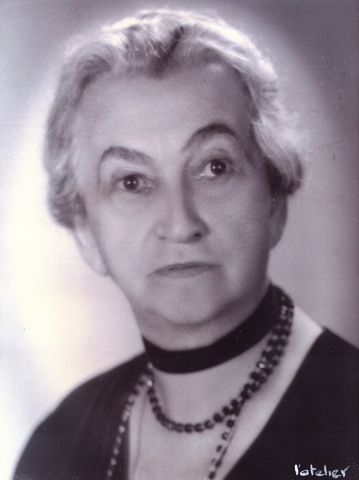
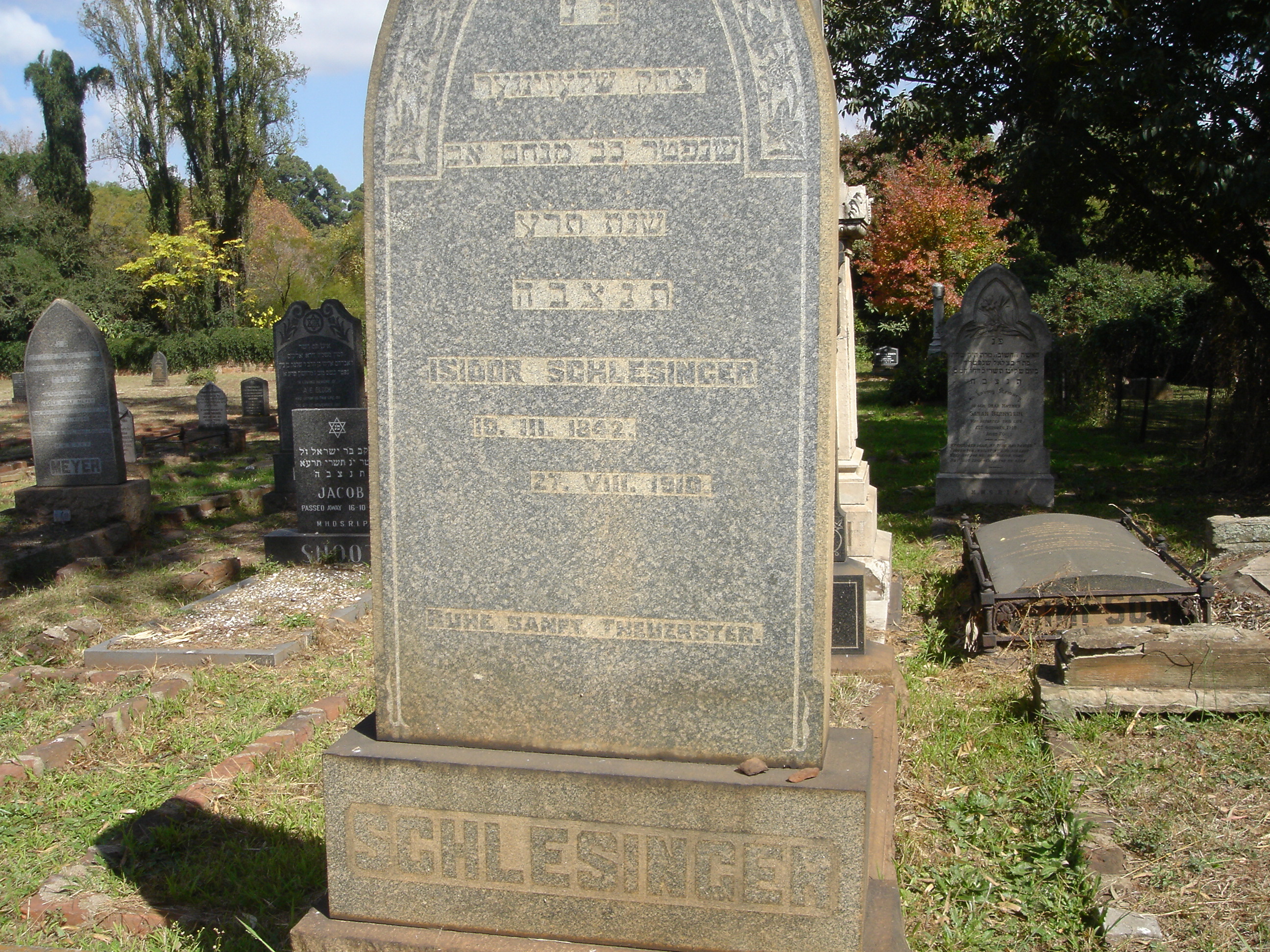


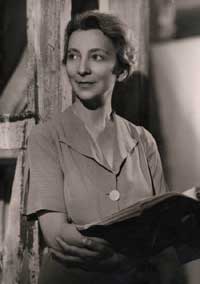

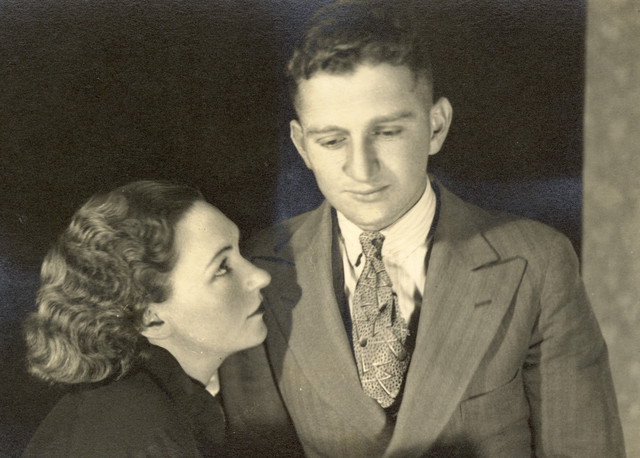


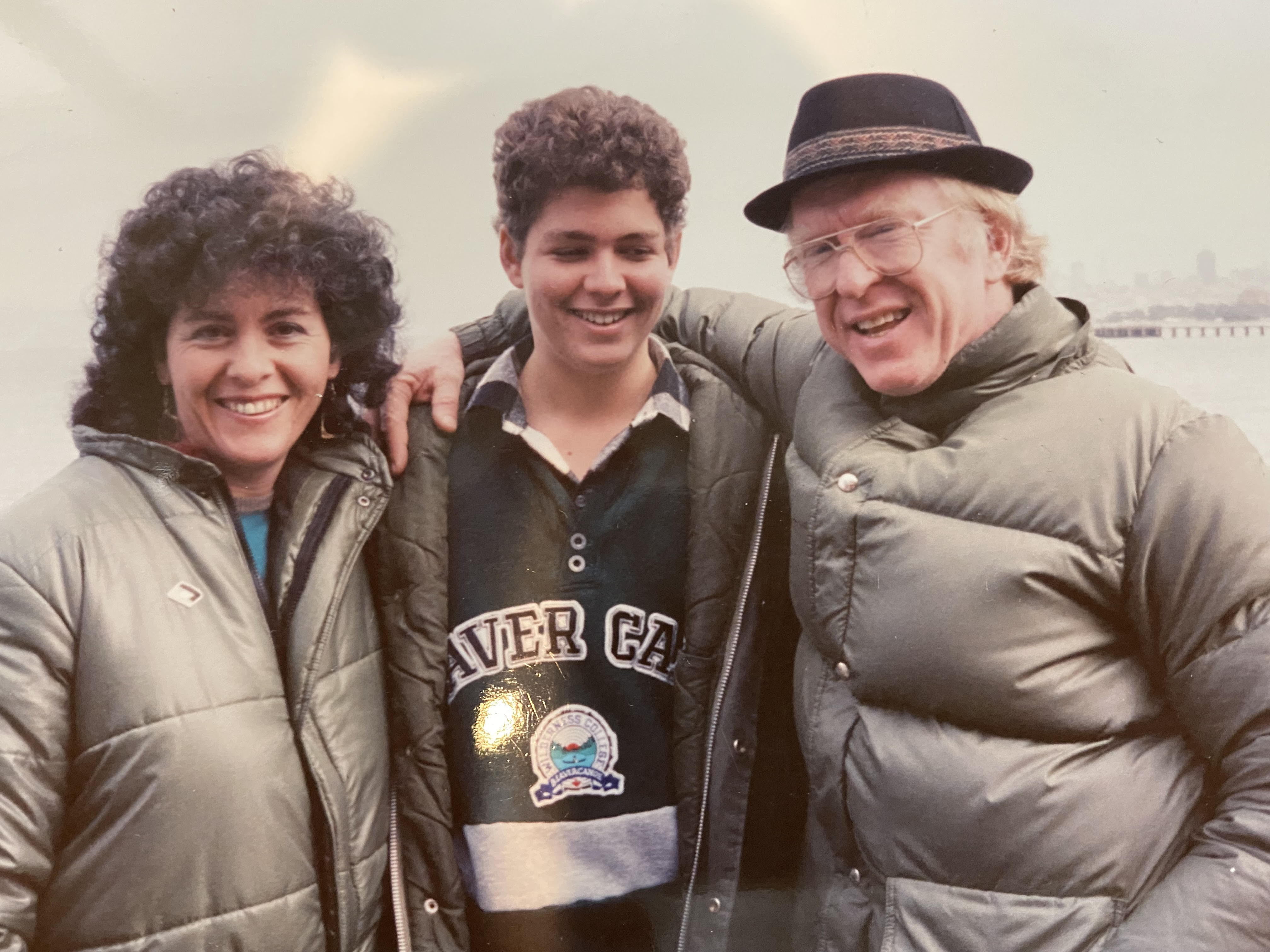
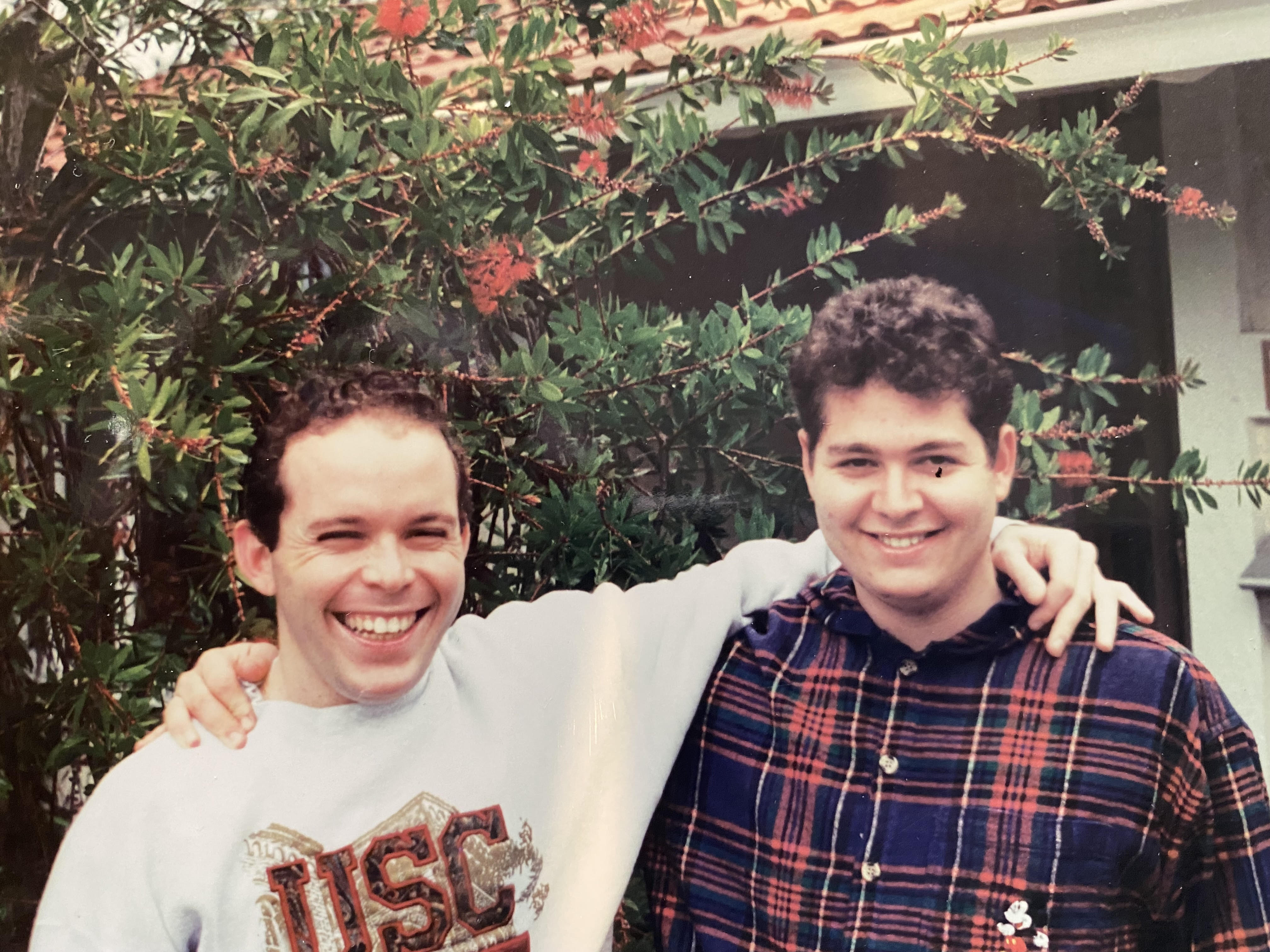


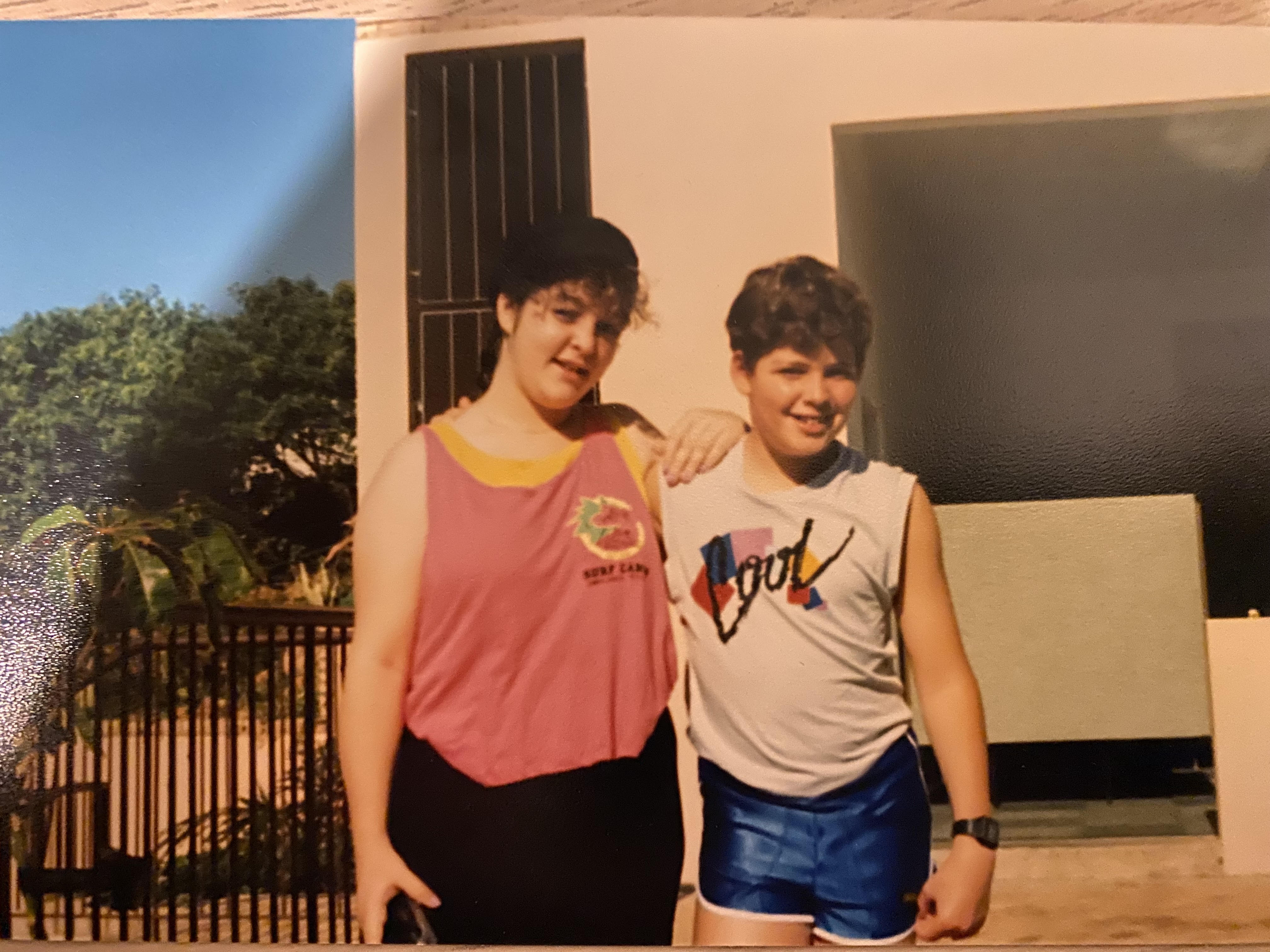


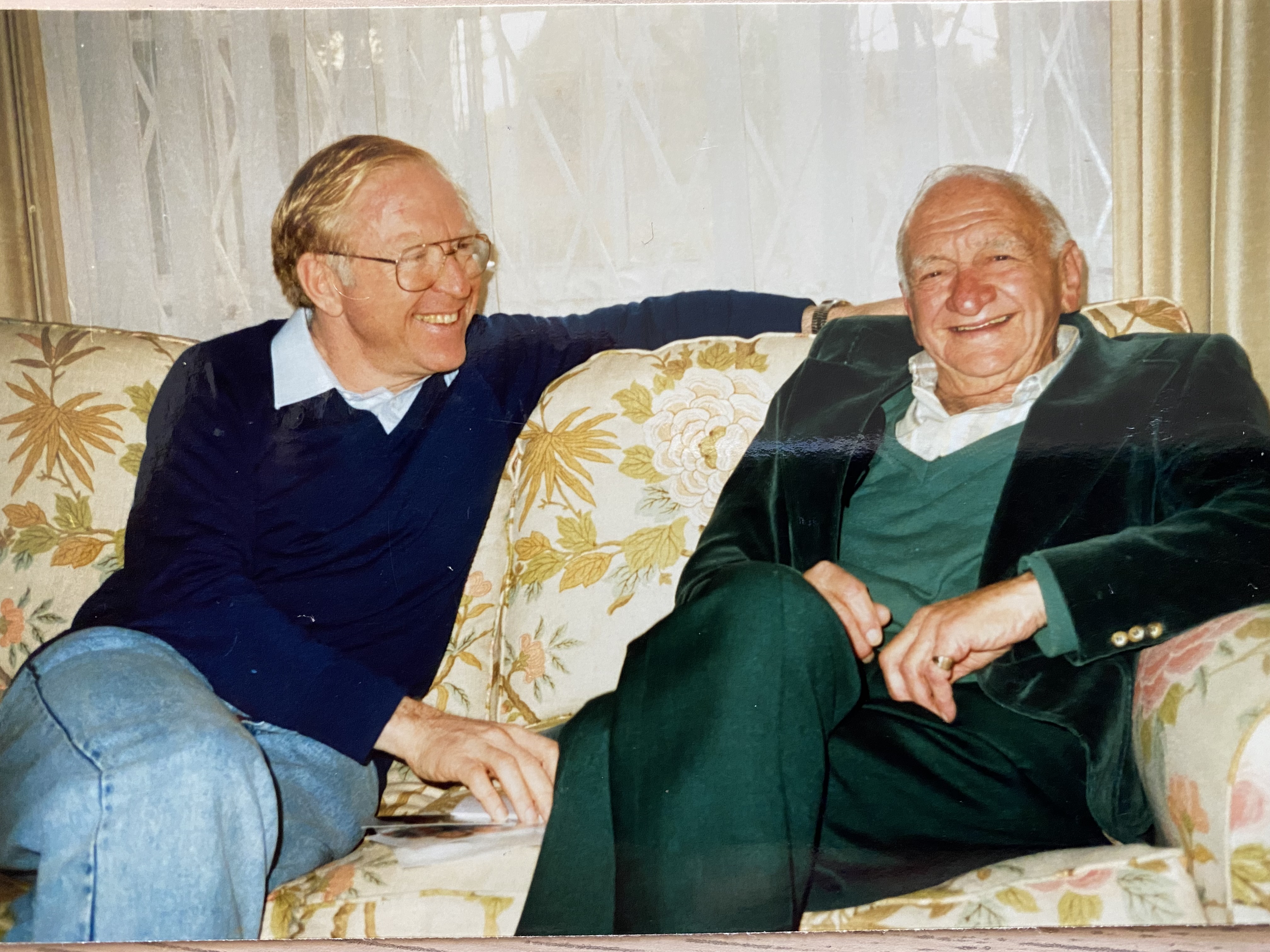


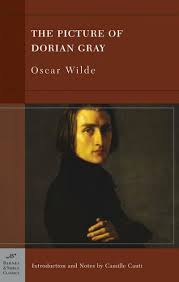


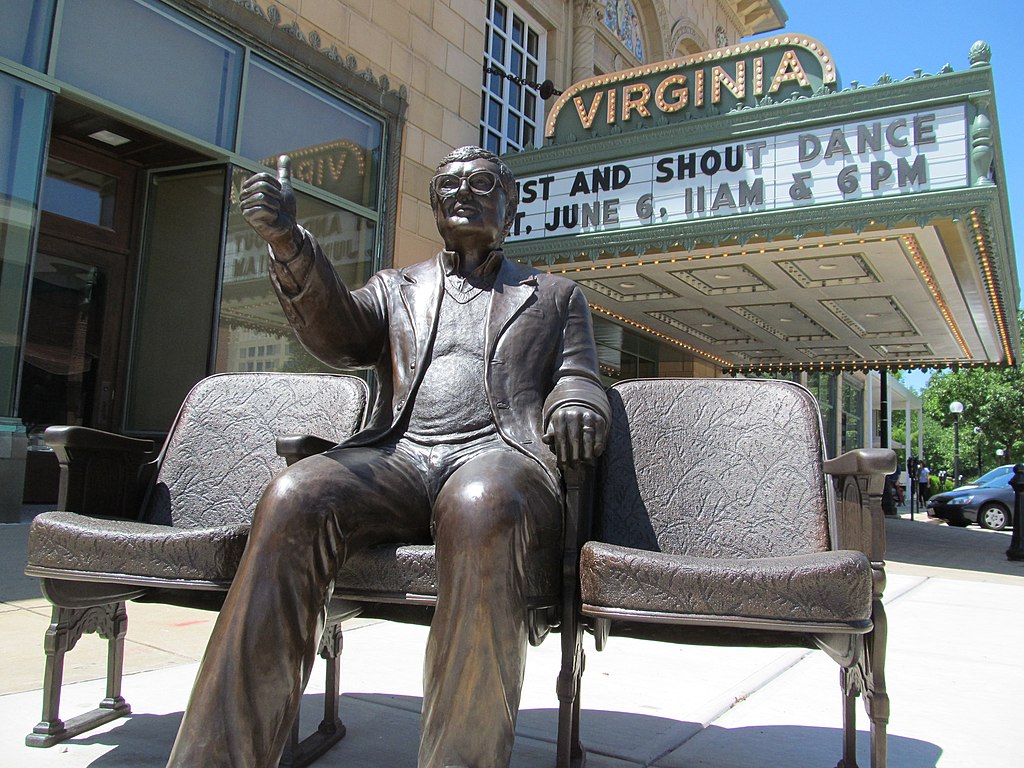





 Freshlyworded
