An opinionated journalist's thoughts on media, film, books, sport, politics and the occasional rant. Or as William Burroughs put it: "A writer must write"
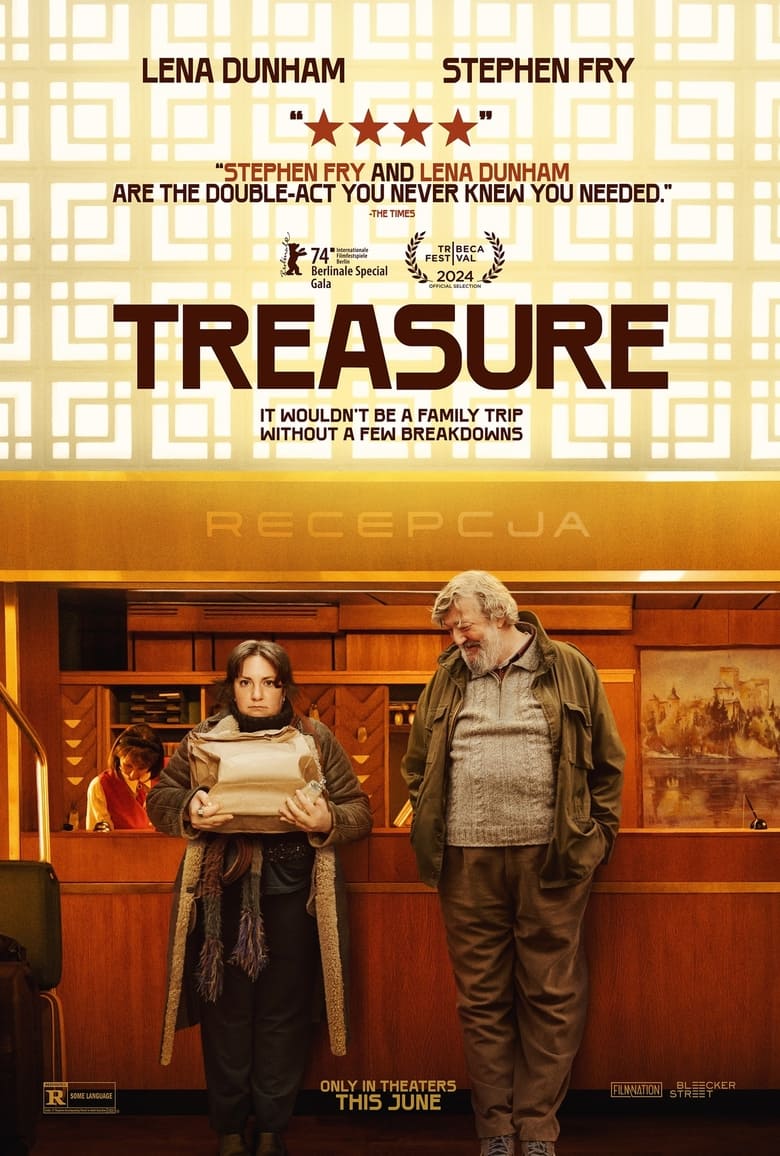
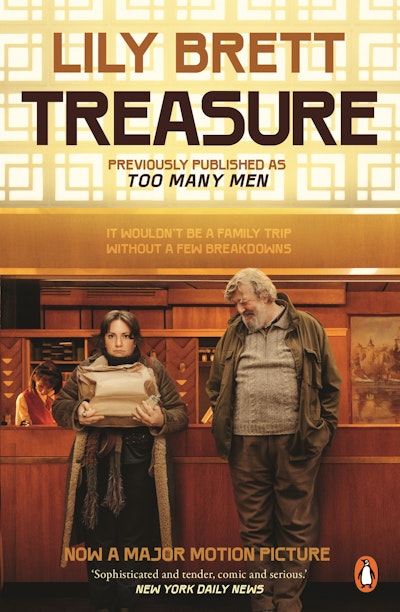
It’s incredible just how much of Lily Brett‘s wonderful novelToo Many Men director and co-screenwriter Julia von Heinz changed in her movie adaption. This included changing the title to Treasure, removing a key character and adding unnecessary elements to the story and its main protagonists.
To summarise briefly, the book and movie tell the story of fortysomething Jewess Ruth Rothwax who accompanies her elderly, but sprightly father Edek on a trip around Poland, where he grew up, to learn about his childhood and that of her late mother Rooshka before the war and the terrible events that followed, including being forced into the Lodz ghetto and then sent to Auschwitz.
The pair love each other but spend a large part of their time together in Poland annoyed at their travelling companion’s strange habits and obsessions. Edek complains that Ruth eats “like a bird” and needs to find a husband, while she worries about his unhealthy eating choices and propensity to run everywhere. While Edek has an overarching cheerfulness about his personality, despite everything he has endured, Ruther is frequently anxious and easily upset.
I watched the movie after reading the book and really wished I hadn’t.
Perversely, people who haven’t read the book will probably enjoy the movie more than those that have read it given there is less to be disappointed about.
Strangely, the author, Lily Brett, who based a large part of the novel on her own life, is a fan of the movie, unless she was just being nice or doing her bit to promote it.
While the basics of the plot have been retained – in both the movie and the book, Ruth and Edek travel around Poland visiting old landmarks and dealing with each other’s eccentricities – so many elements that seem important to me and you would think to Brett (given so much of the novel is autobiographical) have been unnecessarily changed.
The literary Ruth (like the author Brett) is an Australian expat living in New York while her father Edek lives alone in Melbourne. In the book, he travels halfway around the world to meet his daughter to accompany her on her Poland trip.
In the movie, both Ruth and Edek are Americans living in New York. Their Australianness is completely removed despite it being the place where Lily Brett’s parents moved to after the war and where they made a new life.
In the novel, Ruth is a successful businesswoman who runs a professional writing service in Manhattan. This comes up frequently in the novel as she contemplates how she should compose various letters, whilst taking calls from her assistant Max at all hours of the night. In the movie, Ruth is simply a journalist eking out a living. In the book, Ruth has endless amounts of money, in the movie she is not quite so wealthy.
In the novel, food is such an important element: Edek stacks his plate high at breakfast buffets, he eat Perogi and Polish pastries and they dine out an awful “Jewish-themed” restaurant in Krakow. In the movie virtually none of this is retained. Instead, Ruth travels around Poland with a suitcase full of muesli-like ingredients which she brings to every meal. In the book, she merely chooses the healthiest options from the buffet.
Heinz also embellishes Ruth’s character with unnecessary eccentricities: she has a penchant for privately guzzling chocolate, is a secret smoker and has an odd need to self-mutilate. None of these behaviours are in the book.
I realise novels have to be condensed into a relatively short period time, but why change important details like this? It removes a lot of authenticity from the film, which is not assisted by the leaden and plodding acting of Lena Dunham who is sadly badly miscast in the film. Stephen Fry is surprisingly good as Edek.
Another major disappointment was the omissions of a character that appears to Ruth whilst she is in Poland. It’s a brilliant piece of magical realism – Ruth hears the voice of a famous old Nazi stuck in purgatory. She then begins conversing with him (in her head) whilst walking the streets of Warsaw and Lodz. She naturally despises him, whilst he tries to justify his actions as merely following orders. Why this aspect of the novel was left out of the film leaves me gobsmacked.
There are some elements of the book the movie does well mostly visual: the grainy, grey and depressing depiction of Poland in the early 1990s is just as I imagined it in the book as are the gaudy interiors of hotels, apartments and airports.
But pivotal moments in the novel (which depict Brett’s own travels with her father) such as the visit to Auschwitz, which should have been given great prominence in the movie are reduced to a few short scenes with very little emotional power. And there is virtually no explanation given to the great climax of the novel: the dig in the backyard of Edek’s childhood apartment block to find a buried memento.
I was incredibly moved by Brett’s wonderful autobiographical novel, but deeply disappointed by the film adaption. Perhaps it should never have been made.
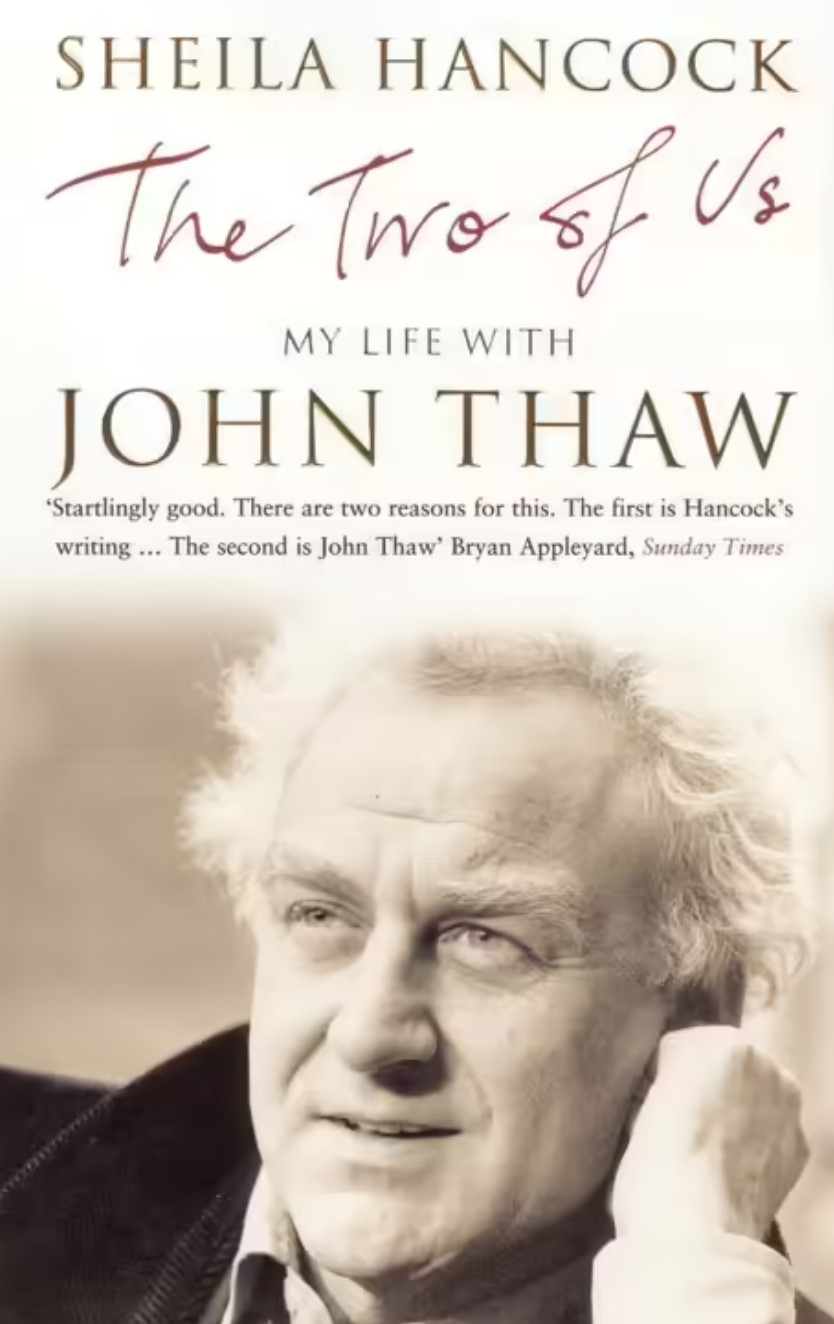
Sheila Hancock’s wonderful memoir The Two of Us gives excellent insights into the personality and demons of the brilliant late actor John Thaw, who famously played Inspector Morse in one my favourite television series of all time.
The event that had such a devastating impact on Thaw’s life, as told by Hancock, was the day his mother Dorothy (or Dolly as everyone called her) walked out on the family, leaving the seven-year-old John and his younger brother Jack deprived of a maternal figure they adored.
This profound loss was the underlying force behind the intensity of his acting (he was utterly dedicated to the craft, though never comfortable with being a celebrity). But his mother’s disappearance from his life also fuelled a great anger and rage that turned Thaw into a heavy drinker and a verbally and emotionally abusive husband.
Hancock is incredibly honest about the challenges of her marriage to Thaw, which was unbearable at times. But she also writes of the later years of their marriage when Thaw stopped drinking and their relationship found an even, and very loving and devoted keel.
However, the great tragedy of it all was that after all the years of heartache, the splits and re-unitings, Thaw should fall very ill with cancer just as they were truly happy together.
Hancock, herself a celebrated actor of the stage and screen (now 92, I last saw her in a small role in the excellent cold case series Unforgotten) was married to John Thaw for nearly 30 tumultuous years and was with him the day he died in 2002 after battling cancer.
Hancock, was left utterly devastated by John Thaw’s death, despite their very volatile marriage.
It’s quite an unusual book because it’s both an autobiography of Hancock’s life – who was made a Dame in 2011 for services to drama and charity work – and a biography of John Thaw, who shunned the celebrity life, and would probably never have written an autobiography.
It retells their family histories – Hancock was born on the Isle of Wight in 1933 and grew up living above pubs including in the rough and tumble of King’s Cross, London, while Thaw, nine years younger than her, spent his youth in the working-class suburbs of Manchester.
She writes about their first marriages, the trajectories of their acting careers (her close friends include the Carry On actor Kenneth Williams) and how intimidated she was when she first met Thaw when they began acting together on the West End play, “So What About Love?” in 1969.
John Thaw with Sheila Hancock
“The first week of rehearsal of So What about Love? was an unmitigated disaster. I always approach a new role convinced that I cannot play it and on the few occasions that John Thaw looked up from his script, his expression of contempt implied that he agreed,” Hancock writes of their first encounter.
But Thaw quickly warmed to Hancock, and she to him, as he – like his great detective character Inspector Morse – revealed his love for classical music, art and fine wine.
They married in a registry office in 1974. While initially things went well, Thaw’s drinking and depression worsened, and their marriage deteriorated. Hancock paints a quite different picture of their marriage to the one described by Thaw on an episode of the famous BBC series (now a podcast) Desert Island Discs recorded in 1990. On it, he suggests that they had sorted out their problems (mostly to do with his acting commitments), whereas the truth of the situation was a lot darker – as recounted by Hancock in her book.
“By 1990, both Morse and Home to Roost [a sitcom Thaw starred in] were in the Top 10 of the ratings. John was at the height of his popularity but off-screen he was fighting profound depression.”
It would take another five years for Thaw to seek professional help, quit drinking and reunite permanently with Hancock. From then on, they lived blissfully.
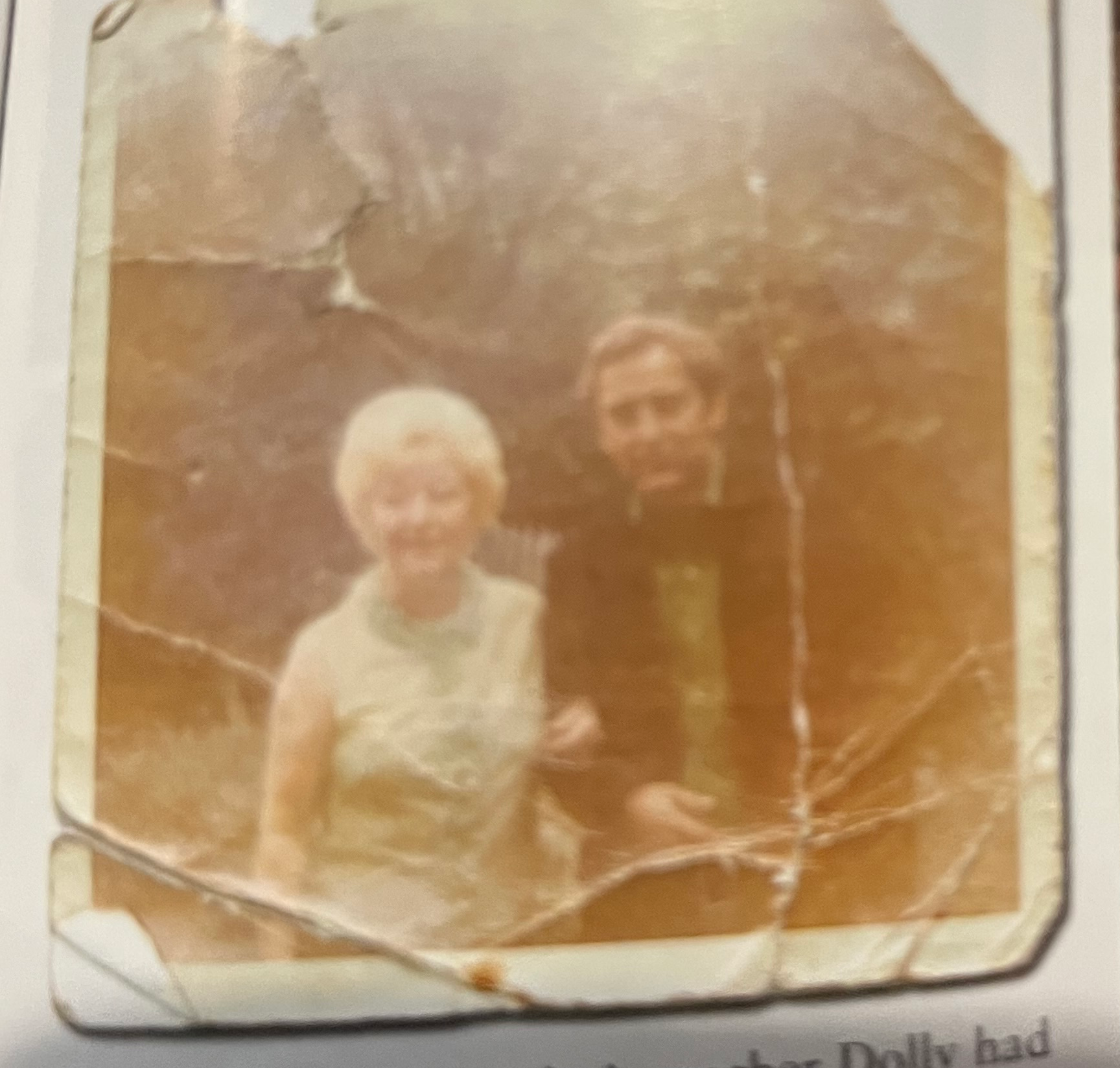
John Thaw with his mother, Dolly
After his death – her recounting of Thaw’s final days in diary entries is so very moving – she took a keen interest in learning more about her late husband’s mother, to understand why she had made such a devastating decision to leave her children.
To her great credit, Hancock does not demonise Dolly even though she caused Thaw so much pain, and in turn herself through their turbulent marriage.
“I will attempt to get inside Dolly’s skin, as if I was going to play her and try to understand what John never could or would.”
Alongside Hancock’s wonderful writing, The Two of Us is full of many great photographs, both professional and personal. Perhaps the most interesting and saddest of all is a faded and crumpled picture of Thaw taken with his mum on a rare union.
Hancock captioned it by saying: “It was found in her (Dolly’s) bag when she died.”
Her interest in the forces that moulded her husband – both good and terrible – make this a marvellous memoir. Any fan of John Thaw and Hancock (who is far too self-deprecating in her writing) will enjoy reading it, as I did.
I’m nearing the end of Lily Brett’s semi-autobiographical novel Too Many Men, or as it has been re-titled Treasure in keeping with the movie adaption starring Stephen Fry and Lena Dunham.
It’s the story of Ruth Rothwax (Lily Brett), a 43-year-old thrice-divorced owner of a letter writing business who travels from her home in Manhattan to meet her 81-year-old father Edek (Max), a holocaust survivor to accompany her on a trip around Poland visiting the ghettos of Warsaw, Lodz and Krakow and culminating in a trip to Auschwitz and the nearby death camp of Birkenau.
Edek, who survived the hells of the Lodz ghetto and Birkenau has travelled from Melbourne where he lives alone. His wife Rooshka, an Auschwitz survivor, died in her sixties from cancer. Ruth moved to New York many years ago.
The pair are close but frequently argue. Ruth is wracked with guilt and worry about her father (Is this trip too much for him?) while Edek, who has an enormous appetite, berates her for “eating like a bird” and being rude to Poles they meet on their travels.
Having visited the Lodz apartment where Edek and Rooshka lived before being march to the ghetto, they make their way to Krakow and then to Auschwitz. Here, Ruth becomes physically sick after they visit the very barracks where Edek “lived” during his barbaric imprisonment. The whole visit is a terrible ordeal for her as she struggles to comes to terms with the suffering of so many people and the fact that her own parents were subject to the degradation and humiliation within the grounds she walks. On her arrival she weeps as she sees the famous sign “Arbeit Macht Frei” (“Work makes you free”) that tricked arrivals into thinking they were being sent to a work camp. Ruth is enraged by a group of school kids eating snacks and fighting with each other, and in the taxi ride from Krakow to the Auschwitz she repeatedly corrects the cab driver for referring to their destination as the “Auschwitz Museum”.
‘It’s a death camp,” she tells the taxi driver over and over again.
Ruth is angered by the cleanliness and order of Auschwitz, the huge numbers of tourists and the lack of a visceral sense of the horrendous suffering enduring within its walls.
Ruth wished the visitors to these blocks could experience something of the atmosphere of degradation and humiliation and inhumanity that had existed. How could you feel people’s anguish and terror in centrally heated, newly painted barracks? But maybe nothing could ever replicate a fraction of the atmosphere, a fraction of the events that took place.
Nobody would come here, she thought, if this place was still covered in shit and piss and lice and rats and vomit and ash and decomposing corpses. The car park wouldn’t be full of tourists coaches. People wouldn’t be looking at the photographs and other exhibits on display in these rooms. These renovations were probably necessary. She had to stop being so judgemental, she told herself.
Ruth and Edek’s trip to Auschwitz made me think back to my own visit in May 2010, as part of a round-the-world backpacking trip I did with my wife after we got married.
I remembered the small minivan we took from Krakow to the death camp, a journey of about an hour through pretty countryside. I remember wandering the grounds of Auschwitz and seeing the rooms with the giant piles of shoes, glasses, hair and artificial limbs behind glass. I remember thinking I should feel more, or should be in shock, but perhaps like Ruth, I found it all too “neat” and “cleaned up”, too much like a museum rather than the remains of a slaughterhouse that treated people like insects to be squashed underfoot.
Then I decided to re-read the blog entry I wrote from the day of our visit, which I posted on our online travel journal.
How does one describe a visit to Auschwitz? A journey to the gates of hell perhaps? A place of unimaginable suffering and brutality? Probably all are insufficent. Yesterday we spent the day visiting Auschwitz and the nearby camp of Birkenau (Auschwitz 2). It’s a little over an hour by bus from Krakow. We travelled in this strange mini-van, posing as a municipal bus, which picked up people along the route so that by the time we reached the little town of Oswiecim (renamed Auschwitz by the Nazis. Incredibly, the town now bares the inscription, Oswiecim: city of peace) it was packed to capacity and stifling hot. It was a pretty unpleasant ride, (despite the very pretty Polish countryside we passed), but it did make me think of all these people crammed into those windowless cattle cars and though nothing at all like the horror of those cramped conditions, it felt quite appropriate to not be comfortable.
The two camps are joined by a free bus service. We first went to Birkenau. Beyond the famous main entrance and watch tower, through which the trains passed, the most overwhelming thing is the sheer size. It’s enormous. At its peak there were 100,000 people living here under the most appalling conditions. Each of the barracks housed as many as 1,000 people. We listened to a guide tell a tour group that the prisoners were only allowed to go to the toilet twice a day and because there were so many, they only had about 40 seconds to use the latrine. Just one of many awful stories.
(In the scene from the book, Ruth and Edek examine the crude toilet block comprised of concrete benches in parallel lines with holes cut out of them the size of dinner plates. Thirty-four circles, inches apart from each other so that the prisoners could not help but touch each other while they urinated and defecated. Everyone sick with diarrhea, the holes below filling up almost to the top, the stench unimaginable. Then she starts vomiting down one of these holes and cannot stop.)
My blog entry continues:
A lot of the barracks are still standing (where they are not, you can see the foundations so it is easy to get a sense of the scale). At the far end of the camp, at the end of the railway line, are the remains of the gas chambers and crematoria. They were blown up by the Nazis just before the camp was liberated. Despite the heaps of rubble, you can see the steps down which prisoners were led, the changing room where they were forced to strip before being led into the “showers”.,
Auschwitz main camp houses the museum in the brick barracks (it was formerly Polish army barracks) where prisoners were held. Unlike Dachau, where the museum assaulted you with information, here it is relatively succinct, leaving you to take in the exhibits. One of the barracks contains huge displays of what was taken from those before they were gassed: mountains of hair shaved off prisoners (the Nazis sold the hair to textile firms), spectacles, shoes, toothbrushes, and artificial limbs. There are piles and piles of these things, and this probably just a fraction of what was found.
The walls of the barracks were lined with photos of prisoners admitted to Auschwitz including their date of arrival and death. Some lived only a few days, some a few months and some more than a year or two. How to survive such a hell hole for a day let alone a year, I just cannot fathom.
(In the book, Ruth and Edek visit Auschwitz on a “dull, grey wet day” and is relieved not to visit it in the sunshine. But we were there in Spring…}
It turned out to be a very sunny day. There were purple and yellow flowers growing among the grass and shady trees that offered respite. But the overwhelming sensation for me was incomprehension, sadness and anger. Though as many of you may know I am not a practicing Jew, I did feel a strong connection with all those who were lost.
At one point I found myself humming the tunes of Jewish songs we sang at King David High School, songs that I had forgotten or buried deep in my memory. Then I remembered we had a school teacher, Dr Yageel, who was a holocaust survivor from Auschwitz and had a tattoo on his shoulder bearing his prisoner number. I remember him to be a short man, with a beard and a lined face. I think he may have taught our class on a few occasions. I never really thought about what he went through or took the time to chat to him. I recall thinking of him as a survivor as if he were an ex-football player or someone who had climbed a mountain. What I mean is, I don’t recall me or anyone else at school for that matter paying him the kind of respect he deserved. I wish now I could shake his hand.
Towards the end of his brilliant 2002 memoir Lucky Man, legendary actor Michael J. Fox recounts the testimony he gave to a Senate hearing in Washington in September 1999 as part of efforts to raise money to find a cure for Parkinson’s Disease.
“Scientists testifying after me stressed that a cure could come within 10 years, but only if there is sufficient financial commitment to the effort,” he writes. In footage you can find online, Fox talks about a “winnable war” and finishes by saying that in his 50s, “I will be dancing at my children’s weddings.”.
Twenty five years since that Senate committee appearance and whilst successfully raising tens of millions of dollars to fund research, it appears scientists aren’t any closer to finding a cure to Parkinson’s Disease.
“Parkinson’s disease can’t be cured, but medicines can help control the symptoms,” the revered Mayo Clinic says on its website.
“There’s currently no cure for Parkinson’s disease, but treatments are available to help relieve the symptoms and maintain your quality of life,” says Britain’s National Health Service, with a hint of optimism.
But while Michael J. Fox was unable to dance at any of his children’s weddings, he has remained a defiant, hopeful and inspiring figure to those suffering from Parkinson’s or any other incurable disease – as anyone who has watched his most recent Apple TV documentary ‘Still’ or seen any of his recent interviews will attest.
Indeed he has embraced his “Lucky” life, and made it a truly remarkable one.
He’s also an excellent writer and storyteller, who raises the often tedious celebrity memoir to a much higher plain.
While we often just want celebrities to “get to the bit where they were discovered” or to discuss the making of a certain movie, show or album, for Fox, remembering the key moments in his childhood is not just about nostalgia, but about piecing together the puzzle of his adult persona: how he became the talented actor, performer and later spokesperson for his cruel disease.
Re-watching home movies shot by his father – William Fox, a sergeant in the Royal Canadian Army Signal Corps – Fox at first finds confirmation of the notion that “I became a performer because I craved love and attention” but on closer inspection of him as a young boy taking a garter snake he had captured “on an involuntary bike tour of the backyard” he comes to the realisation that “all these antics were done for nobody’s benefit but my own. First and foremost I am a boy out to entertain myself, completely undisturbed by the presence of the lens”.
This level of self-analysis is not to be found in your standard Hollywood name-dropping memoir, and as reader one feels like we are joining Fox on his journey of self-discovery. It is also evident the deep affection Fox feels towards his family, especially his clairvoyant nana “someone whom I loved, whose voice, touch and laughter were as familiar as my own” and who had a “rock solid belief” in his bright future.
While a naturally gifted performer, the title of the book is a testament to the very real “luck” he enjoyed along the way to fame and fortune. As he tells it, he came very close to packing it all in after ending up flat broke in Hollywood, where he set out to find fame and fortune following some early television success in his native Canada.
His big break came with hit 1980s sitcom Family Ties about a hippy left-wing couple where he played their uptight Ronald Reagan-loving Republican son, Alex P. Keaton. This is a show I vividly remember watching as a kid growing up alongside such staples as Growing Pains and The Cosby Show.
Before landing the part that changed his life, Fox was barely surviving in a tiny, litter-strewn, filthy apartment in Hollywood, where his nutrition came courtesy of Ronald McDonald. He was broke and on the verge of heading back to Canada when the role on the sitcom came up.
He only got the role after a series very fortuitous events, but it turned him into one of the biggest stars in the world, and earned him roles in the iconic Back to the Future series and a huge personal fortune.
Having this wealth, high profile and amazing support network (including the love and devotion of wife Tracey Pollard, an actress he met on the set of Family Ties) helped enormously in his personal battle with Parkinson’s and his efforts to raise money to tackle the disease through the The Michael J. Fox Foundation.
And while getting early onset Parkinson’s Disease at just 30 years of age was a terrible bit of misfortune, he has – after a long struggle within himself – come to realise just how lucky his life has been.
His gratitude for the live he has lived – and still lives – comes shining through in this exceptionally well-written memoir. I highly recommend it.
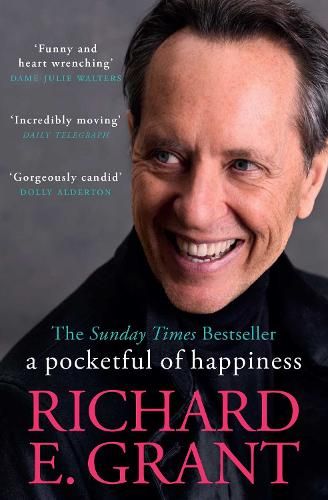
Without a doubt one of the most ludicrous episodes in Richard E. Grant’s entertaining, sometimes very moving but ultimately disappointing memoir “A Pocketful of Happiness” occurs when the author is having lunch with the legendary actress Sally Field at a brasserie in Philadelphia, in 2019.
His phone pings, and whilst at first he is reluctant to answer it – “I can’t, Sally, it’s rude to look at your phone when eating” – he eventually does on the insistence of his dining companion.
After reading the text message, Grant slaps a $100 bill on the table, tells Sally (whom he invited to lunch) that he has to go (“Will call and explain’). Then he sprints to the nearest Amtrak train station a dozen blocks away to catch a train back to New York. A phone call to Trudie Styler (Sting’s wife) and he’s soon in a helicopter on his way to Donna Karan’s estate in the Hamptons for the screening of a new Julianne Moore movie.
And why all this madness (and rudeness): “…because Barbra Streisand is the guest of honour”.
A little while later, he’s unashamedly attached himself to Streisand and her husband, the actor James Brolin, bringing food to the former diva and chatting to her for 90 minutes straight (apart from a brief interruption from Brooke Shields who declares: “This man [Richard E. Grant] is brilliant.”)
This scene in a nutshell encapsulates three of the great themes in Grant’s life and this memoir: his obsession with singer and actress Barbra Streisand (he has a bust of her in his garden), his endless fascination with celebrities (despite becoming one himself) and his incessant and unrepentant name dropping.
Incredibly, the book is not really about anything of these things. It is an ode to his wife.
It’s title, “A pocketful of happiness” refers to the instructions his wife Joan Washington, a celebrated dialects coach, gave him shortly before she passed away from cancer.
“You’re going to be all right,” Joan told her husband, “Try to find a pocketful of happiness in every single day.” (In this mission he appears to have succeeded judging by the relentless posting of his daily exploits on Instagram, in which Grant is always grinning broadly and his blue eyes twinkling madly).
While the book shift back in time to scenes from Grant’s penniless days waiting tables at Covent Garden and even further back to his childhood in Swaziland, the nine months from Joan’s diagnosis with stage 4 cancer in January 2021 to her death in September of that year is the central arch of the memoir.
In this respect, Grant does a wonderful, but sad job documenting the very sharp decline in Joan’s life as their universe shrinks to their London home and holiday cottage in the countryside, then just to their home and finally to Joan’s bedroom as she succumbs to her illness.
“Lie next to Joan as she sleeps. Listening to every breath she takes. Overwhelmed with longing. Longing that she won’t have to suffer. Longing that none of this is actually happening to us. L o n g i n g….” he writes in an entry from June 2021.
The pain he feels at the prospect of losing his lifelong companion and best friend is evoked tenderly across many of his diary entries, as he ferries Joan to her hospital appointments, has Zoom calls with Joan’s doctors, nurses and carers and keeps wishing it was all a terrible nightmare he would just wake up from.
Sunday, 14 February 2021 Valentine’s Day – could it be our final one after thirty-eight years together? Hard to compute. Impossible to imagine. Not being a unit, pair, partnership, union, marriage. None of which we discuss out loud and, on the evidence of her ebullience today, clearly not something she is dwelling on, or even thinking about.
But the name dropping in this book is on another level and suggests Grant lives in a cocoon of celebrity love and adoration from people notorious for their fickleness and fakery.
I’m not the only one whose taken issue with the appearance of a celebrity on every second page. Guardian’s Rachel Cooke felt similarly uncomfortable about it.
“Even as I admired Grant for his obvious devotion to, and care for, his wife at the end, I was uneasy: suspicious, you might say. Is it unfair to call a man with so many well-known friends a name-dropper? Isn’t he only describing his world? This is a question I’m still unable to answer,” Cooke wrote in her review in 2022.
As a reader, one is left with the strong impression that Grant is still completed intoxicated with fame and celebrity, and that he has never quite gotten over the fact that a gangly lad from Swaziland (now called Eswatini) made it onto the big stage.
During the course of the memoir Rupert Everett, Emma Thompson, Gabriel Byrne, Prince (now King) Charles and the Duchess of Cornwall (now Queen Camilla) all drop by for tea or lunch (His majestys brings mangoes). Grant’s diary entries are also peppered with anecdotes about meetings with Owen Wilson, Nigella Lawson, Tom Hiddleston, Martin Short and on and on.
“Meet Owen Wilson, who speaks in his signature wow voice, all convoluted vowels and ‘hehehe’ charm, like someone dope-dropped in from another planet…Instantly bonded.
All of these celebs – without exception – are delightful, warm, funny and charming and they invariably feel the same way about Grant. It’s all a bit much.
By stark contrast, Grant’s late wife found his obsession with famous people insufferable and avoided celebrity events with as much fervour as her husband rushed to them with open arms. This was no doubt one of the disappointing aspects – for Grant – of an otherwise happy marriage. You can almost here Grant groan aloud when Joan decided not to accompany him to award ceremonies after he received Bafta, Oscar, Golden Globe and numerous other nominations for his role as Jack Hock in the 2018 comedy-drama Can You Ever Forgive Me? alongside Melissa McCarthy (who is also given supreme name-dropping treatment in the memoir).
I have been a huge fan of Richard E. Grant since I saw him in Withnail & I at the National Arts Festival in Grahamstown, South Africa in about 1992. I also had the pleasure of seeing him live onstage at Sydney’s Orpheum Picture Palace in about 2006 where he was in conversation with the film critic Margaret Pomeranz after releasing his autobiographical directorial debut: Wah Wah (which I thought was great).
I’d dipped into a couple of chapters of much-loved British comedian Bill Bailey’s Remarkable Guide to Happiness when I get it as a present a year or so ago, but finally sat down to read it from start to finish whilst in between books a little while ago.
Bailey, who is best known for his appearance in cult comedy Black Books and for his multi-faceted stand-up shows, has long been a favourite comedian of mine. I was lucky enough to catch one of his live shows when he was on tour in Melbourne about five years ago.
Stuck at home and being unable to perform or go on tour, Bailey sat down to write a book of experiences and musings on the things that make him happy, and which he believes could make other people happy too.
“This book was written during the coronavirus pandemic, largely while we were in lockdown,” Bailey writes in the forward.
“During this unexpected quiet time at home, I finally got around to archiving my comedy shows and I was struck, firstly by how much longer my hair was back in the day, and secondly, by how much happiness has been a subject that I have explored in my sketches and gigs over many years, to the point that it appears as a constant thread running through it all.
He finishes off the forward by saying that this is book is not about telling people how to live their lives, but rather about sharing a “few accounts of fortuitous moments and remarkable times when I experienced something which felt to me like happiness”.
(I’ve since discovered his written a number of “remarkable” books (the word meaning: worthy of attention) about a range of subjects: including about British birds and the orchestra.)
Bailey’s famous self-deprecating humour and dry wit is a constant presence throughout the book, which consists of short, easy to digest chapters on a whole range of different activities he has undertaken over the years that have brought a sense of joy to his life.
These include a lot of things that anyone can do with just a little bit of money (playing a round of mini-golf, doing the “little things” like the ritual of brewing coffee), none at all (going for a walk in the woods, jogging, clearing out your wardrobe) or where you clearly need to have quite a bit of spare dosh (such as going swimming amid the glaciers of Iceland).
He combines many chapters with academic research he has found that reinforces the reason why an activity he has described might generate happiness from a scientific standpoint. And of course, there is plenty of good lashings of Bailey’s trademark acerbic humour and stories of his own adventures and failings.
On the sense of happiness created by tending for plants Bailey writes that “just being around greenery can lift our spirits…it is no surprise to me that studies show plants, and the care of plants that involves getting your hands into the soil can lower blood pressure and increase focus and alertness”.
To back up this claim, he adds: “An article published in Science World reveals that a mycobacterium found in plant soil can improve brain function, because it increases the production of serotonin in the brain, one of the ‘happy’ chemicals”.
Writing about the pleasure associated with showing “restraint” (even when there isn’t a ‘no’ option) Bailey describes a hilarious story about ordering food at the Los Angeles Zoo with his family.
The “modest purchase” of a sandwich, coffee and bottle of water entitled them to a free super-size upgrade: an enormous packet of crisps “the likes of which is not available to us in the UK”.
When he declined the chips, Corey, the young man serving them, was unable to compute this rejection telling the Bailey clan: “They’re free sir”.
Bailey replies: “Yes, I am aware of that, and it’s a kind offer, but we’re fine thank you.”
This back and forth continued between the bemused “but they’re free” Corey and Bailey until an old timer behind them in the queue grunted “Just take ’em!”
The “Billrus” by Bill Bailey
“So I took village-sized bag of crisps and gave them to an incredulous couple from Idaho.”
But in the age of “conspicuous consumption”, of that insidious phrase FOMO, Bailey concludes that saying no occasionally is not that hard, and is a “small act of self-care that might take you down a path to happiness”.
It’s these nuggets of wisdom and moments of clarity that can be found throughout the book, which is also endearingly illustrated with Bailey’s metaphorical pencil sketches and canny artworks by Joe Magee.
There are 36 chapters in the book. Each devoted to something that might make you a little happier, and most are not hard to try.
I’d add a 37th one, that Bailey is too modest to ever admit: the happiness evoked by watching one of his own comedy shows, an episode from Black Books, or the numerous clips you can find on YouTube.
When I was unexpectedly offered a job at The Australian Financial Review in July 2013 I jumped at the opportunity to write for the country’s top business newspaper.
Alongside this excitement, I also remember having this unsettling feeling that perhaps I was joining a national publication near the very end of the newspaper industry, certainly the print one.
Might I be one of the last print journalists hired by the AFR before everything went digital?
Nonetheless, I was thrilled to have an opportunity to join the workforce at Fairfax Media, one of Australia’s great publishing dynasties and to forge out a career in print media for as long as I could.
Somehow my name had made its way to the decision-makers at the AFR – I am grateful to whom ever suggested me as a replacement for departing property writer Ben Wilmot (now commercial property editor at The Australian and whom I had the pleasure to meet for the first time in September).
I had an informal interview with Matthew Dunckley (then the AFR’s Melbourne bureau chief, now deputy editor of The Age) at a café on Degraves Street, and after signing an employment contract a week or so later, and after seeing out my last few weeks at Property Observer, I flew up to Sydney for a week of training and induction, and to meet my new Sydney-based property colleagues on the newspaper.
I remember the chatter in the industry and in rival newspaper media columns at the time was all about when the Fairfax printing presses would stop rolling seven days a week while the company, helmed then by former AFR journalist and editor Greg Hywood, was in the throws of a massive and at times painful digital transformation that would result in a number of voluntary redundancy rounds in the immediate years after I joined.
(There was also talk at the time that mining billionaire Gina Rinehart – as she climbed up the share register – might buy Fairfax. But following a long battle with the Fairfax board and management, her interest in the company eventually petered out and she sold out of Fairfax in 2015).
Incredibly, on my very first day in the Sydney office (at the time Fairfax was based at Pyrmont) I sat next to veteran journalist and multi Walkley Award winner Pam Williams.
Pam’s blockbuster business book Killing Fairfax,which detailed how Fairfax Media had missed out on opportunities to invest in dotcom businesses like realestate.com.au and SEEK that would go on to be worth billions more than the 170-year-old media company had just been published complete with grinning photos of billionaires Lachlan Murdoch and James Packer on the cover.
I remember introducing myself to Pam and having a short conversation with her, whilst trying to get my head around the idea that she’d returned to the company she’d written so scathingly about in her book (which I read a few months later and reviewed on this blog). Later I would come to understand that this was part of what made Fairfax great; it’s unswerving belief in quality journalism, and Pam is certainly one of the best.
My first week in Sydney was spent learning how to use the antiquated publishing system known as Methode, meeting my boss Rob Harley, who was the paper’s long-serving and highly influential property editor, as well as many other journalists who would become friends and colleagues. I also wrote my very first article for the paper – a story about First Home Buyers – before flying back home to Victoria to join the paper’s Melbourne bureau and meet the journalists whom I would work alongside for many years.
The AFR occupied the Eastern corner of the third floor at 664 Collins Street opposite Southern Cross Station. On the other side of the floor was The Age, while upstairs were Fairfax’s radio stations including 3AW.
My first few weeks were spent meeting people in the property industry – agents, developers, investors – as I tried to build up a contact base and generate exclusive stories for the paper. There was back then and still is today a competitive, but highly collegiate mindset at the AFR, an attitude which helped me find my feet and carve out a niche of my own.
I’m somewhat embarrassed to say that for a little while after I joined the AFR I cut out and kept a folder of all my articles that appeared in the paper. It’s a practice I abandoned many years ago though I confess that I still get a kick out of seeing my name in print.
Initially it was quite hard getting scoops – we were a big property team in the early days – and being the newest member of a crew of crack reporters meant I had to find beats and niches that I could make my own.
At the same time as I was finding my feet and trying to show my value as part of the property team, Fairfax Media was trying to write the wrongs identified so glaringly in Pam Williams’ book and find new revenue opportunities in the digital world whilst print revenue continued to fall.
In 2014, Fairfax Media returned to profit and announced its move into video streaming on demand (to take on the likes of Netflix) via a joint venture with Nine Entertainment that would result in the launch of Stan.
The old Fairfax printing press (shaped like a rolled up newspaper) near Melbourne Airport. Now the HQ of Zagame luxury cars.
That year was particularly tough one for me personally as we lost our second child Raffy to stillbirth in February, but I was heartened by the outpouring of support from my colleagues at the AFR when I returned to work after a few weeks of compassionate leave.
“Everyone from the top of the newspaper down is thinking of you,” I distinctly remember Rob Harley telling me.
I spent two nights at the new Double Six Hotel (the reason for the trip) with a gang of Aussie journos, eating out at a plethora of fancy restaurants, trying out spa treatments and being chauffeured around amid the chaos and congestion that was Seminyak.
In 2015, I was lucky enough to be accepted into a mentoring program offered at Fairfax, and was given great guidance by senior Age journalist Michelle Griffin, (now Federal Bureau chief at the Sydney Morning Herald). We’d catch up for coffee in the café downstairs and focus on feature writing, which I always found challenging. Michelle was full of great tips and encouragement. These included suggesting I reading The Wall Street Journal’s The Art & Craft of Feature Writing by William Blundell.
Michelle is one of a number of highly experienced writers and editors who have provided advice, tips and encouragement over the years.
Over the next three years I reported in dozens of articles on the rise and fall of Purplebricks, which left Australian shores in 2019.
Covering the Purplebricks roller coaster journey Down Under was one of the highlights of my AFR journalism career (rumour has it my face was on a dart board at Purplebricks HQ in Sydney)
I should point out that soon after Purplebricks landed in Australia, our editor Rob Harley surprised everyone by announcing his decision to retire from the paper after an incredible 29 years. One of the most knowledgeable people in the industry and also one of its most influential and well-respected, Rob was a mentor to everyone on the team, and a generous sharer of his time and insights. (He continues to write for the Financial Review, penning a regular property column).
Upon Rob’s departure Matt Cranston took over as property editor for a couple of years before Nick Lenaghan took on the role when Matt took up a position as first economics editor in Canberra and then as the paper’s Washington correspondent. Both have been fine people to work alongside and like Rob, have been incredibly generous with sharing their knowledge and insight. (So too has been my property colleague Michael Bleby, whom I have worked alongside for most of the last 10 years. Michael lived for many years in South Africa, so we have that in common, plus a few words in Afrikaans.).
Around this time I’d clocked up four years at the AFR, built up a solid contacts list and a half-decent reputation in the property sector for writing fair, balanced and interesting articles, occasionally with a bit of flair.
In June 2018, as traditional media companies fought back against the advertising power of Facebook and Google, Fairfax Media and Nine Entertainment revealed plans to merge their two businesses.
It turned out to be less of a merger and more of a takeover as the great Fairfax name was retired and we became, on December 7 of that year, Nine newspapers. On that same day Fairfax Media was delisted from the ASX, bringing about the end of one of the world’s great media dynasties stretching back 182 years to when John Fairfax purchased the Sydney Morning Herald in 1841.
While a lot of my colleagues were skeptical about the Nine merger/takeover and a potential loss of independence, I was excited about being part of a much larger media company that had not only newspapers, websites and radio stations, but also a clutch of commercial television channels.
In fact under the Nine banner very little has changed in how The Australian Financial Review has functioned. We remain fiercely independent, and most importantly the most-read business publication in the country. There is also (for me) a sense of security in being part of a true media giant. Indeed, those Fairfax redundancy rounds that were part of my first few years at the AFR have all disappeared replaced by expansion of our newsrooms.
In April 2019, we moved from the Collins Street end of Southern Cross Station to the Bourke Street end, occupying level 7 of the Nine building (a shiny glass-facaded Rubix cube-like structure) at 717 Bourke Street.
That I year I wrote my first “Lunch with the AFR” – a popular weekend paper feature where you sit down with an interesting subject and discuss their career. My subject was the property developer and adventurer Paul Hameister, conqueror of Everest, the Antarctic and the Amazon.
Our new office at 717 Bourke Street.
We had lunch at a trendy café in upmarket Brighton and Paul entertained me with his daring mountaineering feats, savvy business dealings and sage advice. Spending quality time with people as successful and interesting as Paul has been a part of the job I’ve enjoyed immensely.
Also in 2019, I penned a long feature article about myself that ran in the long weekend Australia Day edition. It was the entertaining story of how the least likely Aussie of all time became an Australian citizen. The article originally ran on this blog, and got a spit and polish (with a great photo below) for the version that ran in the paper.
The pandemic hit in March 2020 and as the national lockdown took hold we all vacated the office, laptops under our arms.
The great work-from-home era had begun.
It was chaotic working from home, whilst dealing with two children requiring home schooling – sometimes I wonder how I managed.
Without a closed off home office, I just had to work among the chaos. I remember on one occasion I was interviewing the CEO of a major listed company and right in the middle of the interview two of my kids started yelling and going mental. I tried to dash to a quieter spot but the noise just followed me.
“Larry, what the heck is going on at your house?” the CEO asked.
Embarrassed, I apologised profusely, hang up the phone and called him back later. As time went on though, people became more accepting of the challenges of working from home whilst also home schooling. I also just adapted, became used to the constant disruption and soon it became the norm.
When things began opening up again and we trickled back into the office, it was almost exciting heading onto to the train for the 1 hour commute from our home in Gisborne in the Macedon Ranges to Melbourne. Seeing people face to face was a thrill for a while, so was a visit to a café.
The pandemic and post pandemic years seemed to roll into each other – 2021, 2022 and finally 2023. It all seems a blur, probably because it was such a crazy, muddled time, when there seemed no clear division between work and home life.
Journalism is an industry well suited to remote working (I remember one colleague quietly relocated for a time to Noosa on the Sunshine Coast, but continued to write stories as though he were in Melbourne), and it can, in my opinion be an aid to productivity depending on the circumstances. Let’s not forget their are journalists who file in war zones and amid natural disasters.
The post pandemic years also brought a new skill to my repertoire – hosting interviews and discussions on stage at our annual property summit. This was at times nerve-wracking but also exhilarating speaking before an audience in the many hundreds, including many titans of the property industry.
Then in August this year, I suddenly found myself at the 10 year milestone. The years had flown by, and so much had happened both personally and professionally.
I’ve worked hard, but also been incredibly lucky to forge a career as a newspaper journalist amid all the seismic ructions that have reshaped how the industry functions.
Despite the minority who distrust the “mainstream media” and prefer their information from those shouting the loudest on social media, newspapers in Australia are still a very important part of the nation’s progressive democracy and a vital institution in holding those in power to account.
By strange coincidence, the day I picked up a copy of Billy Connolly’s autobiography “Windswept & Interesting” I saw on social media that the “Big Yin” had just turned 80.
It was quite a milestone for one of Britain’s most famous comics, actors and travel show hosts, and it seemed even more fitting that I should now be reading about his life.
I’ve long been a fan of his, enjoying his his hilarious storytelling stand-up comedy, entertaining travel documentaries as well as his more serious acting in movies like ‘What we did on our Holiday’.
He’s certainly a very talented individual, and from reading his book, comes across as warm-hearted and lovable person in his private life. This is in spite of many difficulties experienced in childhood including physical and sexual abuse and a later problem with drinking (no doubt caused by this trauma).
The title of his autobiography, which he wrote during lockdown, refers to the way his flamboyant appearance was described to him by a friend early on in his entertainment career.
It’s a moniker Connolly revels in and believes is an accurate description of a type of person he identifies with: someone with their own individual style and who doesn’t give a fuck (excuse my language, but I am paraphrasing Billy) what anyone else thinks.
“Being windswept and interesting is not just about what your wear,” writes Billy.
“It’s about your behaviour, speech, your environment and an attitude of mind. It’s perpetually classy – but it’s not of a particular class. It transcends class.”
Later, he says: “Once I’d realised that I was windswept and interesting, it became my new religion. It was such a delightful contrast to the dour and disapproving attitudes I’d grown up with. Instead of cowering under the yoke of ‘Thou shalt NOT!’ , I found a new mantra: ‘Fuck the begrudgers!'”
It’s an attitude of mind that runs throughout the book, fueling his success first as a musician (a career I knew nothing about) and then as often outrageous and daring stand-up comic. Without this psychic armour, Billy might never have made it out of the gloomy Glasgow tenement flat he’d grown up in and which he describes so well in the early chapters of the book.
As with many people of a certain age, the pandemic provided the opportunity for reflection and the time to sit down and think about their lives. He does so in a self-deprecating, warm way, that only sometimes veers off course into somewhat uninteresting (for me anyway) banalities and trivia, such as his favourite TV programs.
To this I am sure Connolly would say: I don’t give a fuck, it’s my story and I’ll choose what I write about. Fair enough, I would not want to be the “fucker that begrudges him”.
Billy Connolly’s story begins in a tenement flat in Anderston on the unloved south western outskirts of Glasgow, where he is raised by his aunts, one of whom is the sadistic Mona, a nasty woman who takes particular delight in physically and verbally assaulting her wee nephew.
Connolly finds himself in this unhealthy domestic situation after his mother runs off with another man, and his father is posted overseas during the war. Later, when his father returns, Connolly is forced to share a bed with him, and his horrifically and inexplicably abused.
It’s a shocking thing to be abused by our own father, but Connolly devotes only a few paragraphs to this incident (one of the surprising aspects of the book), leaving this dark chapter to be dissected by his second wife, the actress turned psychologist Pamela Stephenson, who wrote in more detail about it in her biography, Billy.
Connolly only mentions it again fleetingly, though other memories of his father surface such as family holidays. He only return to the very painful and confusing topic when his father dies.
It is of course a sign of Connolly’s strength of character, his tenacity and warm-heartedness that he does not allow such awful events to dominate his life, though those dark memories do fuel his excessive drinking.
In many respects the book is a chronicle of the people he met along his journey to self-acceptance, those individuals that impacted his life and his career in a positive and creative sense.
“The shipyards were full of patter merchants. That’s where I first really understood you could be incredibly funny without telling jokes,” recalls Billy.
Billy Connolly with Gerry Rafferty in their days as “The Humblebums”.
He discovers he has a gift for making people laugh through his storytelling, a skill he gets to practice on stage before and in between gigs as a banjo and guitar player.
Of this musical career, I was blissfully unaware and so had no idea that Connolly teemed up with famed pop star Gerry Rafferty of “Baker Street” song fame to write music and tour as the folk band the Humblebums, to a fair degree of success.
While Connolly is keen to point out Gerry Rafferty’s far superior musical talents, there is certainly no doubt that Billy became by far the more famous and successful of the duo.
I also learnt to my surprise and astonishment that Billy does not prepare material for his stand-up shows, but pretty much just gets up on stage and starts talking.
It’s quite a gift, but no doubt gave his stand-up shows a daring, unexpected quality, as well as their freshness and spontaneity.
He writes of his first time of being onstage without Gerry as giving him a “lovely sense of freedom, just talking, singing and being myself”.
It’s the pleasure and enjoyment of storytelling, of being himself, which makes his autobiography so enjoyable for the reader, and especially the fan. There are also plenty of laugh-out-loud moments such as the hilarious “murdered my wife” joke he told on an appearance on the Michael Parkinson show in the 1970s (You can find it on YouTube).
Now an octogenarian living with Parkinson’s Disease and half his hearing gone, it’s good to know that Billy Connolly has turned into less of a grumpy old bastard and more of a opinionated cuddly bear, fond of swearing at the TV, but always eager to learn and discover new things, even in his sunset years.
Throughout it all, he’s remained true to his calling: windswept and interesting.
I’ve read many of Bukowski’s brilliantly irreverent novels – written in a parsed down, forthright and highly entertaining style – and Women is by far the most graphic, indeed almost pornographic in its depiction of Chinaski’s innumerable sexual encounters.
(“I got down there and began licking…the cl*t came out but it wasn’t exactly pink, it was a purplish pink,” is how he describes one of these episodes.)
The semi-autobiographical novel (one can only assume some of his sexual exploits are exaggerated, though perhaps not the prodigious drinking) begins with Chinaski, 50, telling the reader that he has not had sex for four years.
“I had no women friends. I looked at them as I passed them on the street or wherever I saw them, but I looked without yearning, with a sense of futility.”
This drought is then broken by a period of romping that would have made Don Juan proud. It begins with half-crazed divorced mother of two Lydia Vance (the fictional version of Bukowski’s real-life girlfriend, the sculptor and playwright Linda King), whom Chinaski meets at a poetry reading:
She put both hands on the edge of the table, bent over and looked at me. She had long brown hair, quite long, a prominent nose and one eye didn’t quite match the other. But she projected vitality – you knew that she was there. I could feel vibrations running between us.
Woman, Charles Bukowski
Their relationship is full of wild sex, described in intimate detail by Chinaski – “I heard her breathing heavily, then she moaned” – and violent breakups due to his excessive drinking, visits to the racetrack, and infidelities, none of which he apologises for. Chinaski is who he is and the world can go to hell if they don’t like it.
“I walked into the bedroom with just my shorts on. I was conscious of my white belly lolling out over the shorts. But I made no effort to suck in my gut…”
At face value, Women is simply a recollection of Chinaski’s (or Bukowski’s) various relationships with women. These include Lydia, but also brief encounters with star struck fans who are seemingly served up on a platter to the horniest 50-year-old in LA.
It’s also a daily tally of his prodigious alcohol consumption of mostly cheap wine and beer. In between all the boozing and bonking – “Fucking was the best cure for hangovers. It got all the parts ticking again” – we accompany Chinaski on his often hilarious trips to college campuses around the country where he gives readings.
But as with all his writing, Bukowski manages to convey something more profound and meaningful than the sum of his adventures across bedrooms, bars and college campuses.
It is to champion the other side of Los Angeles in the words of his biographer Barry Miles: “Not the LA of ranch homes in the Hollywood Hills with the breathtaking views…” but the LA of tarnished dreams, of dead end jobs, of hookers and workers in the sex industry, of beaten down, damaged and dysfunctional people”.
Miles adds: “Bukowski loved the corner bars, the tawdry fast-food outlets, the sex shops and brothels, the graffiti on the walls…”
Sure Chinaski is the hero of the story, but he is no superman in a cape. He is very much the Bukoswki you see in those grainy black and white poetry readings on YouTube. a disheveled anti-hero with a pockmarked face who says what he thinks, never holds back and for whom nothing is ever taboo.
Chinaski in Women is very much a mirror – if perhaps a distorted and exaggerated one – of Bukowski at the height of his powers and fame: when after decades of struggle, eking out a living and working dead end jobs, he had finally established himself as a figurehead in American literature: the dirty old man of American letters.
Chinaski is not searching for some deeper meaning to life, or for the woman of his dreams. Life is simply about the experiences that happen to him – whether its winning big at the track or walking away broke, having a raging hardon or being unable to perform in the sack because he drank too much, talking to prostitutes or college professors – everything finds its way, uncensored into the book.
And while Chinaski is vulgar, and driven by his baser urges, he can also be sweet and loving. He is not a manipulator, nor does he pretend to be anyone else. And he despises pretentious, fake people.
Most importantly – and perhaps a key reason why I enjoy his books so much – is the poetic nature of his writing: short, descriptive sentences that hit their mark without ever saying too little or too much (a style that would have impressed George Orwell).
If you are a fan of Bukowski other books, or a writer like Raymond Carver who though not as vulgar, employed a similar parsed down style of storytelling, you should definitely give Women a read. (Just don’t leave the book anywhere near young children!)
I have enjoyed Alan Cumming’s acting for years, most notably the pushy campaign manager Eli Gold he played to perfection in the television drama ‘The Good Wife‘ and his small, yet memorable role in the James Bond hit Goldeneye, where he portrayed geeky Russian computer progammer Boris Grishenko.
Also a Thespian with a huge range, Cummings has appeared in major dramas and musicals including a one-man adaption of Macbeth on Broadway and as the master of ceremonies in Sam Mendes’s West End adaptation of Cabaret. His trophy cabinet includes two Tony Awards, theatre’s equivalent of the Oscars.
Against this backdrop, I decided to listen to his interview on Desert Island Discs, the legendary radio show and now podcast where guests talk about their lives and musical tastes via the selection of seven favourite recordings, a book and a luxury item that they would take with them if they were marooned on a fabled desert island.
It was only while listening to the podcast that I learnt about Cumming’s tragic childhood, where he felt the almost daily wrath of his abusive and vindictive father, Alex at their home on a 14,000 acre forestry estate near Carnoustie on the Scottish north east coast in the 1970s.
“I could tell by the clack of his boots, I could tell by the way he opened the door… often it would be to do with my appearance or my hair,” Cumming told Desert Island Discs’ host Laura Laverne of the impending humiliation or beating to come.
Cumming talked a lot about the book he had written about his childhood ‘Not my Father’s Son’ and when I saw it in the local library, felt compelled to read it.
The title refers to his father’s long-held belief that his wife and Cumming’s mother, Mary Darling, had had a brief affair whilst the couple were on holiday and that Alan was not in fact his child, but a product of this betrayal. Choosing to believe this, Alex Cumming used it to justify his abhorrent behaviour (though he was equally cruel to his older brother Tom whose fathering he did not dispute).
So it’s not that every second of my childhood was filled with doom. But every second was filled with the possibility that in an instant my father’s mood would plunge into irrationality, rage and ultimately violence.
Alan Cumming, Not My Father’s Son
Divided into short, snappy chapters, Cummings’ carefully observed memoir moves back and forth between tales of his abusive and fearful childhood in Scotland in the 1970s and a tumultuous time 40 years later when was the subject of the BBC documentary series “Who Do You Think You are?” whilst also filming a movie in Cape Town.
The documentary series sought to solve a great family mystery: what happened to Cumming’s grandfather Tommy Darling, a decorated war hero, who survived the brutal 1944 battle of Kohima in northern India against the invading Japanese, but who later died in strange and sad circumstances in a village in Malaysia aged just 35 where he was serving after the Second World War.
There’s also another personal mystery to be solved: was Cumming’s really his father’s son?
Alan Cumming’s parents on their wedding day
This waiting for the results of a DNA test is played out with great tension and emotion, as Cumming deals with the possibility that he may have entirely different father and a family he has never met.
A major celebrity figure, Cummings’ memoir is remarkable for being refreshingly devoid of ego. It is a book about survival, love (especially for his mother and brother), forgiveness and finding a way to move on.
It’s also part travel journal as Cumming and the BBC crew filming the documentary head off to different parts of England as well as Malaysia to talk to war veterans and historians in an attempt to unravel the mystery around his grandfather’s “shooting accident”.
Cumming is heartbreakingly honest throughout the book, happy to confide in his reader when making many startling discoveries about his grandfather and his family. His successful acting career helped him escape his father’s wrath, but money and fame cannot solve childhood torment.
Like the podcast interview on Desert Island Discs, the memoir exudes warmth and it is not surprising that so many people have praised it.
I finished reading it with a great deal more affection for Cumming. Despite being obscenely multi-talented (who else can act, sing, dance and write?) he remains a down-to-earth person and most importantly values his family, friends, partner and fans above all us.
(You can watch excerpts of the Who do you think you are? episode featuring Alan Cumming on YouTube, though I advice to finish the book first, to avoid “spoilers”.)








 Freshlyworded