The intriguing error in an Australia history book and the true story of an all-female convict ship sent to Tasmania

In one of the early chapters of respected historian John Molony‘s The Penguin Bicentennial History of Australia (which I reviewed here), a seemingly incredible story is reduced to just a few sentences.

It’s the early days of the colony, 1813 to be exact and Molony writes about the convicts being sent to Tasmania, or as it was then known, “Van Diemen’s Land”.

Molony writes: “The first direct consignment of 200 male convicts arrived in Hobart in 1812, but a vessel carrying female convicts was captured by an American privateer. The women were put down on an island in the Atlantic on 17 January 1813 and never heard of again.”

According to Molony, an entire ship full of female convicts had been taken prisoner and deposited on an unnamed island in the middle of the ocean, their fates an unsolved mystery.

I was utterly intrigued by this strange and disturbing story, and eager to know more.

While Molony did not have the luxury of Google when he wrote his book (published in 1987), he was a renowned historian and academic being the Emeritus Professor of History at the Australian National University. So my immediate instinct was to completely trust his version of events. But still the sentence nagged at me. How could a whole ship of female convicts completely vanish? Didn’t someone try to find out what happened to them?

While Molony may have dismissed it as just a footnote in the history of Australia, I was keen to find out as much as I could about the Emu, the convicts on board and the events that had sealed their mysterious fate.

Entirely untrue

Very quickly, I found a lot of information about what happened to the Emu, and I have to report that Molony’s simple verdict that the convicts onboard “were never heard of again” is entirely untrue.

In a fact, an entire book has been written about the ship and the convicts on board titled: “Journey to a New Life: The Story of the Ships Emu in 1812 and Broxbornebury in 1814, Including Crew, Female Convicts and Free Passengers on Board” by Elizabeth Hook.

Hook (now Elizabeth ‘Beth” Kibblewhite} is a descendent of one of the convicts aboard the Emu, Jane Jones.

Jones, like so many of those sent to Australia, was convicted of a rather petty crime at a time when Britain was a highly unequal society, where the middle and upper classes lived well and the lower classes struggled to survive.

Aged just 17, she was convicted of theft in 1812 after she and a younger accomplice broke into a public house in London and were caught in the act of stealing a large quantity of food and money. Jones was sentenced to death, but because of her young age and being “of good character” (her father was a glassmaker) her sentence was commuted to transportation to the fledgling colony of NSW for life.

(You can read the entire Old Bailey trial transcript here).

She was put on the Emu, a merchant ship built in Liverpool which set sail in October 1812. Jones was one of 49 female convicts. Rather than never being heard of again – as Molony claimed – she did reach Sydney, but only in July 1814 and on a different ship, and after a hellish experience that lasted almost two years.

Molony was correct about the initial fate of the Emu. It was indeed captured by a privateer, the 18-gun Holkar, led Captain J. Rolland. A privateer was a US-government sanctioned ship whose task it was to steal British ships and their cargo.

The taking of the Emu occurred at particularly treacherous time to be sailing the seas as Britain was at war with the United States, a conflict sparked by maritime disputes and known as the War of 1812.

Journey to Cape Verde

As to that unnamed island in the Atlantic Ocean Molony says the crew and convicts aboard the Emu were dumped on, it was St Vincent (now Sao Vicente) in the Cape Verde islands, about 840 km west of Dhaka, Senegal. According to numerous trustworthy online accounts, the 22 crew of the Emu and the 49 female convicts were put ashore on January 17,1813 at Porte Grande.

View of downtown Mindelo, Bay of Porte Grande (Photo credit: ElsondeMadrid, Wikipedia)

Porte Grande is a bay on the North Coast of Sao Vicente, and is where the island’s main city of Mindelo is situated today. Discovered by the Portuguese in the 1460s, the Cape Verdes were populated by Portugese settlers who were allowed to keep slaves.

At the time the female convicts were put down at Porte Grande, the Portuguese-owned island was recovering as settlers returned following a devastating drought.

Final journey to Sydney

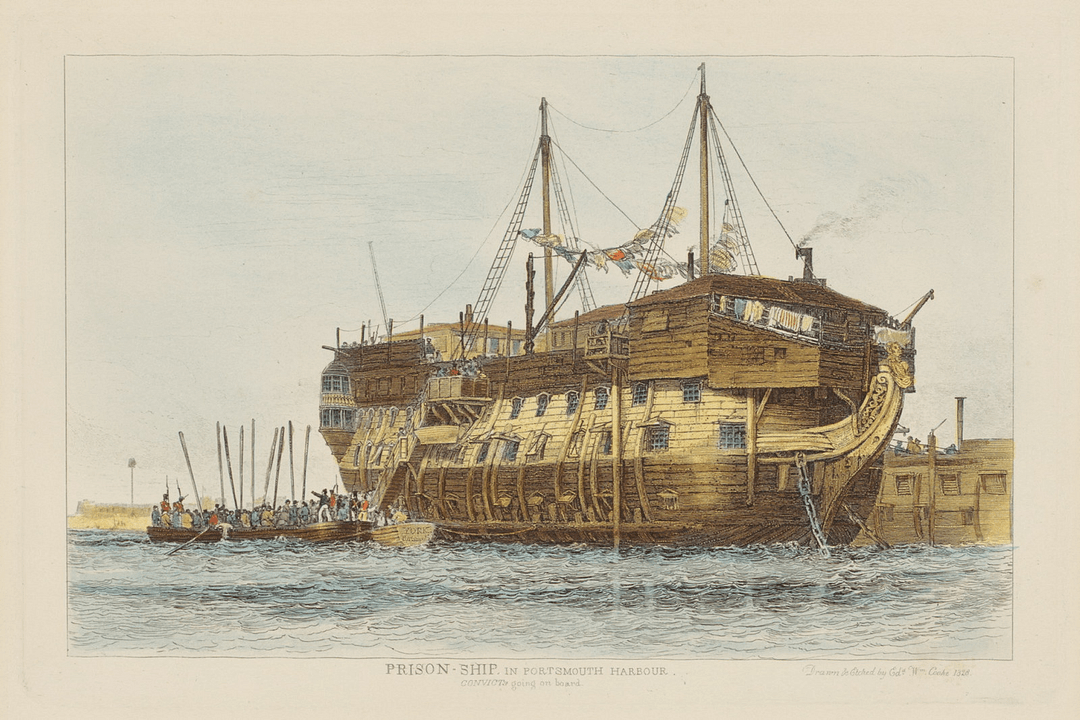
The female convicts and crew spent 12 months on St Vincent before being picked up by the Isabella and returned to Britain. Here they were put on a hulk (a floating prison) in Portsmouth Harbour for four months and then put on another ship, the Broxbornebury and transported to Port Jackson in the colony of NSW, departing in February 1814.

Elizabeth Kibblewhite, in her post on Convictrecords.com.au about her “3X great-grandmother” Jane Jones, notes that while there was no official record of what happened to the women convicts, their children and the crew during their stay on St Vincent, “an unverified report states that they were looked after by Catholic nuns. One of the women, Elizabeth King, died on the island on the 29th of January 1813”.

Illustration of a hulk or prison ship (Credit/source: The Museum of History NSW)

Kebblewhite writes: “They arrived back at Portsmouth England (via a journey to Bear Haven, Ireland), about the 12th of October 1813, only for the authorities to be told the women were “….in a state of nakedness and inadvisable of their being landed…” They were kept on board in the harbour for a total of four months until another ship was made ready for a voyage to the Colony, which was the Broxbornebury in February 1814, along with an extra eighty-five female convicts.

Kebblewhite continues: “Not all the thirty-nine remaining women from the Emu made the journey to New South Wales. Five convicts were transferred to the Captivity prison hulk ship in Portsmouth Harbour. Four of these women were granted Full Pardons and one died on the hulk ship. For the other thirty-four it had been a long voyage when they finally arrived in Sydney in July 1814, twenty months after first embarking on the Emu!”

After a long, exhausting and terrifying ordeal that lasted nearly two years. Jane Jones would have been just 19 when she arrived in the fledgling city of Sydney. She did, however, live long life in NSW, dying on the 24th of April 1868, aged 73. Her occupation is listed on convictrecords.com.au as “servant”.

The story of Jane Jones

I contacted Beth Kebblewhite to ask if she knew of Molony’s book and his error about the Emu.

She replied a few days later that she had never heard of the book I’d read “so did not know about the mistake regarding the ship Emu“.

She went on to say: “I first heard about the Emu in the mid 1980s when I started researching my family tree & found my 3X great-grandmother Jane Jones was a convict onboard. The story had been passed down many generations & about how she had met her husband-to-be, a free passenger, John Stilwell, on the ship Broxbornebury.

“At that time, I did most of my researching at the Mitchell Library [part of the NSW State Library] in Sydney, but it wasn’t until years later when I found I had many other relatives, free & convict, on the Broxbornebury, that I looked into it further & attempted to confirm the story of the Emu.

“This was confirmed in The Convict Ships 1787-1868 by Charles Bateson, page 191. Quite a long story about what happened & it was first published in 1959.”

That’s almost 30 years before Molony researched and wrote his Australian history book.

Beth added that she undertook further research online in 2000, which she incorporated into the third edition of her book, published in 2014.

After corresponding with Beth, I came across another entry about Jane Jones on a website called immigrationplace.com.au, which fills in quite a few blanks about her rather extraordinary life as does a detailed entry on People Australia (a website of the Australian National University).

It seems that Jane’s luck changed when she met John Stilwell on board the Broxbornebury. Stilwell was a steward of the surgeon Sir John Jamison who was also travelling to Sydney aboard the same ship.

It appears Stilwell used his relationship with Sir John to secure her a job as a housekeeper at one of his properties, the Westmoreland Arms Hotel, where Stilwell was installed as publican and manager. The alternative, had she not met Stilwell, was to be sent to another hellish institution, the “Female Factory at Parramatta” where unmarried female convicts lived like slaves and in solitary confinement in an imposing sandstone building on the banks of the Parramatta River.

Jane Jones married Stilwell, had five children with him and received a full pardon from Governor Macquarie in 1820. Rather than leave the colony as she could have done, Jones stayed in NSW, had another six children with another ex-convict John Webster (Stilwell ran into financial problems, abandoned Jane and their children and returned to Britain in 1825) and later moved to Goulburn, where Webster became a butcher.

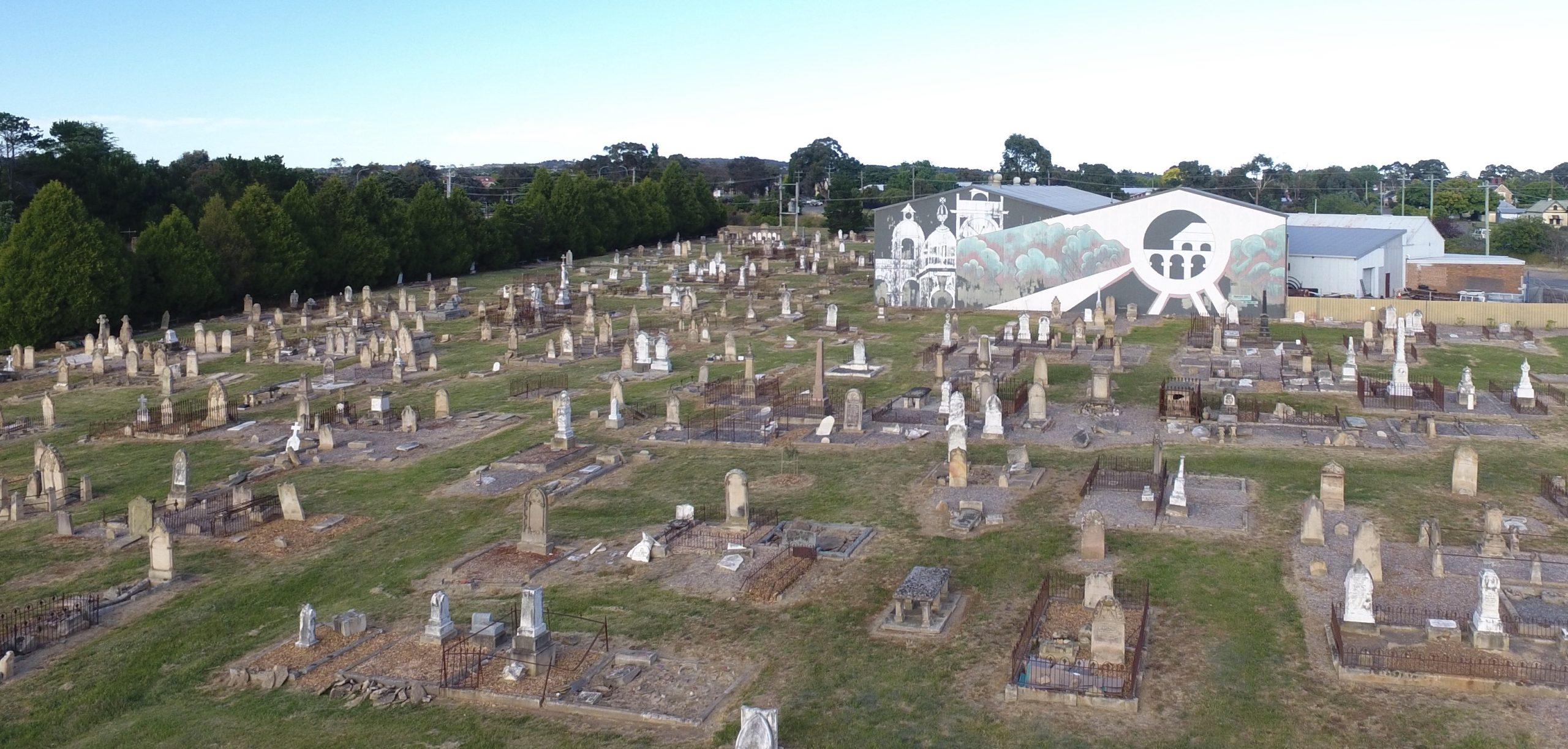
“John died on 28th February 1842 aged 44 years. Jane died of ‘old age’ in her house in Auburn Street, Goulburn on 24th April 1868 aged 74 years. It is believed they are both buried in the Presbyterian section of the original burial ground, Mortis Road Cemetery,” according to Immigrationplace.com.au.

Mortis Road Cemetry, Goulburn, the final resting place of Jane Jones (Pic: https://www.goulburnhistoriccemeteries.org/mortis-street/)

Jones is just one of the 34 original Emu convicts who came to Sydney in 1814. There are fascinating stories of the other women who made it to Sydney aboard the Broxbournebury, some of which you can read here. Today hundreds if not thousands of the descendants of these brave women live in Australia.

Reconsidering Molony’s error

Returning to Molony’s error, I do wonder – given the fact there were texts available, and he was a very experienced historian – how he managed to get the story of the Emu so badly wrong. Charles Bateson’s book about convict ships, which Beth Kibblewhite used as a reference for her own book, was published – as I mentioned earlier in 1959 – and would presumably been available to Molony.

It remains a mystery as to what source material he relied on to come to the conclusion that the Emu and its crew were put down on an island somewhere and never heard from again.

He might be a bit embarrassed about that error were he aware of it, but I am certain he would have been utterly intrigued, as I was, by the story of what actually happened.

I’m currently reading a second, more comprehensive Australian history book, titled Great Southern Land by Frank Welsh (published in 2004) and am intrigued to see if the story of the Emu is given more prominence, and whether Welsh got the facts correct! Stay tuned!

Delving into the history of modern Australia

There have been dozens of books written about the history of modern Australia since the arrival of the first fleet of English convicts to Sydney Cove in 1788.

The latest book hot off the shelves is Australia A History by former Prime Minister Tony Abbott.

I haven’t read it yet but have been delving into the story of European settlement via a much older book, which I bought for $2 at a book sale at the Athenaeum Library on Collins Street in the Melbourne CBD.

Seeped in history (the Athenaeum Library is one of Melbourne oldest cultural institutions), it seemed an appropriate place to pick up a copy of The Penguin Bicentennial History of Australia by the late historian John Molony.

Published in 1987, it traces the 200 years (199 to be exact) since the arrival of the first fleet and finishes with the prime ministership of Bob Hawke and the success of Paul Hogan‘s Crocodile Dundee.

While it obviously misses out on everything that happened in Australia from 1988 onwards, I found it to be a really good summary – in less than 400 pages – of the key events that shaped the fledgling nation since those first majestic-looking e ships, laden with convicts, sailed through the Sydney Heads towards what is now Circular Quay.

Molony, who wrote many history books, was Emeritus Professor of History at the Australian National University. He died in 2018 at the ripe old age of 91, meaning he was alive for 61 of the 200 years encapsulated in the book.

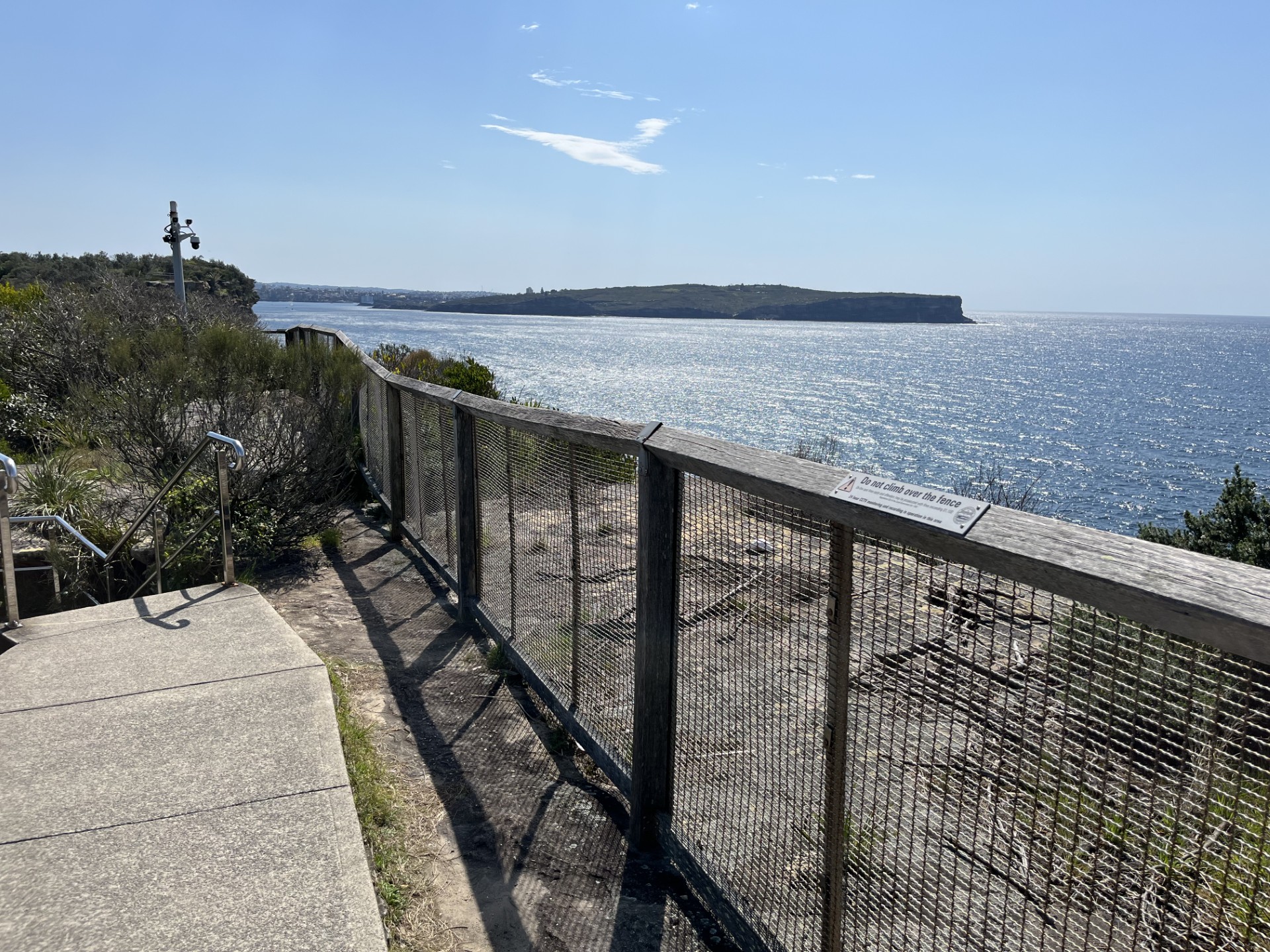
Interestingly, I was midway through the book, when I happened to be in Sydney and visiting Gap Park in Watson’s Bay. Here you can stand at the edge of a cliff face that plunges into the turbulent Tasman Sea below (an infamous Sydney suicide spot) and look out over the Sydney Heads, the series of headlands that market the entrance to Sydney Harbour.

It is through this 2km wide entrance that the 11 ships carrying 732 convicts sailed through and made anchor at Sydney Cove, now known as Circular Quay.

As Molony describes it rather movingly in the opening chapter of his book:

High summer saw a fleet of eleven ships take up moorings at a small cove in a noble and extensive harbour on the eastern coastline of the southern continent. A few dark-skinned people of the Cadigal band, whose ancestral home that place had been for age upon age, watched closely from nearby scrub. The date was 26 January 1788 and the newcomers called the cove after an English public servant named Sydney…The modern history of the world’s oldest continent had commenced with the coming of a new people.

(In fact, as Molony’s book explains, the fleet first made shore first at what is now Botany Bay (where Sydney Airport is) but due to the “infertility of the soil” and a lack of fresh water, it was quickly discarded, and the weary travellers travelled a few miles to the north to the “finest harbour in the world”

237 years later, as I looked out over the Heads towards the sparkling Sydney skyline, I was filled with a sense of awe imagining these wooden ships, laden with their weary human cargo, making their way into a vast and primitive land, with not a single structure in sight.

And what did the weary English convicts, after a gruelling eight-month voyage from the docks of Portsmouth, make of what would be for most their permanent home?

No doubt they were filled with dread and fear (as were their aboriginal onlookers) and a longing to return the urban environment of England; the busy streets filled with people and buildings.

Gap Park, with a spectacular view over the Sydney Heads

Over the next 406 pages, Molony tells the story of the birth of modern, mostly white Australia. There’s a lot to get through, but he does a good job describing in an entertaining, easy-to-read manner the key events and colonial personalities that shaped what became the Australia we are familiar with today.

Looking out over the ocean towards a city of some 5.5 million people, with the Manhattan skyline of its Central Business District, the modern wonders of the Harbour Bridge and Opera House and the densely populated suburbs around the harbour, it is a stunning visual reminder of the pace of development that occurred over a relatively short period of time.

And to think that nothing was here, not a single building was standing 237 years ago, whilst Europe and the colonial parent (the British empire) were full of teeming metropolises.

In many respects it’s a miracle that Australia thrived at all. As Molony describes it, the early years of the colony of New South Wales was full of great hardship and suffering: starvation loomed as crops failed and desperate convicts dreamt of escape. In one instance, a group of convicts headed off into the bush, believing they could walk to China. For nearly all Australia would be a life sentence.

At first it was a primitive existence, with public hangings becoming a common occurrence. The first person hanged in the colony was a 17-year-old boy named Thomas Barrett, for stealing.

But slowly, as Molony describes it, an agricultural-based economy is established, centred around the production of fine wool and wheat (a sector which still thrives to this day). Amid the search for arable farmland, the colony expanded into Parramatta and then other regions of the country. Tasmania developed a whaling industry, Melbourne, Brisbane and Adelaide were founded and settlers travelled west to establish Perth.

Then came a momentous event: the Victorian Gold rush, which turned Melbourne into “Marvelous Melbourne” and brought settlers from all over the colony, and abroad to make their fortune. This included the Chinese, who were the subject of a well-entrenched colonial racism. At its height- as I learnt – Victoria accounted for 40% of the world’s gold production.

Another defining moment, and one where Australia lost its innocence, was the Great War in which thousands of young Australian men lost their lives or came back injured and shell shock. The horrific, but courageous battle of Gallipoli that left nearly 9,000 diggers dead.

Molony writes of the end of the war:

It was Anzac Day, 25 April, the day of the landing at Gallipoli, that overshadowed memory and made all new and vital in significance for it was seen as the day on which the nation had shaken off the bonds of subservience and Australians had come to know themselves. [Prime minister] Billy Hughes saw it a little differently. To him victory in the war meant national safety, liberty and the safeguarding of the White Australia policy. Despite some signs to the contrary, Hughes was still convinced that Australians were ‘more British than the people of Great Britain’.

This long adherence to the White Australia policy, one borne out of British racism and fear of invasion from the East, is remarkable given how Australia changed into a successful, and vibrant multi-cultural society (notwithstanding the recent re-emergence of a wave of anti-immigrant feeling fuelled by a cost of living and housing crisis).

For so long Australia had been a land only for Europeans, and it took visionaries like Gough Whitlam to dismantle its final elements and welcome Asian and people of colour to our shores. Even so, by the 1980s, after nearly 200 years of European settlement, “the new nation [of about 16 million] was still predominantly white, spoke mainly English of the Australian variety, owed allegiance to the English Queen and observed laws derived from British sources”.

What I wanted to get out of the book, was a well-rounded understanding of the making of Australia, and Molony’s did a good job of that.

While it impossible to include in detail everything that happened over 200 years, I felt the story he told captured all the important elements without too much politicising, and with some sympathy for the plight of the aboriginal people, whose suffering was immense.

Most striking is his portrayal of the pace of development, how Australia so quickly build up its cities and towns, established a civil and well-functioning society that very early on and to this day, is among the greatest places to live in a troubled world.

It may be an old book, but the Penguin Bicentennial History of Australia is a great place to start for anyone wanting to learn the history of the country of their birth or – as in my case – of their adopted homeland.

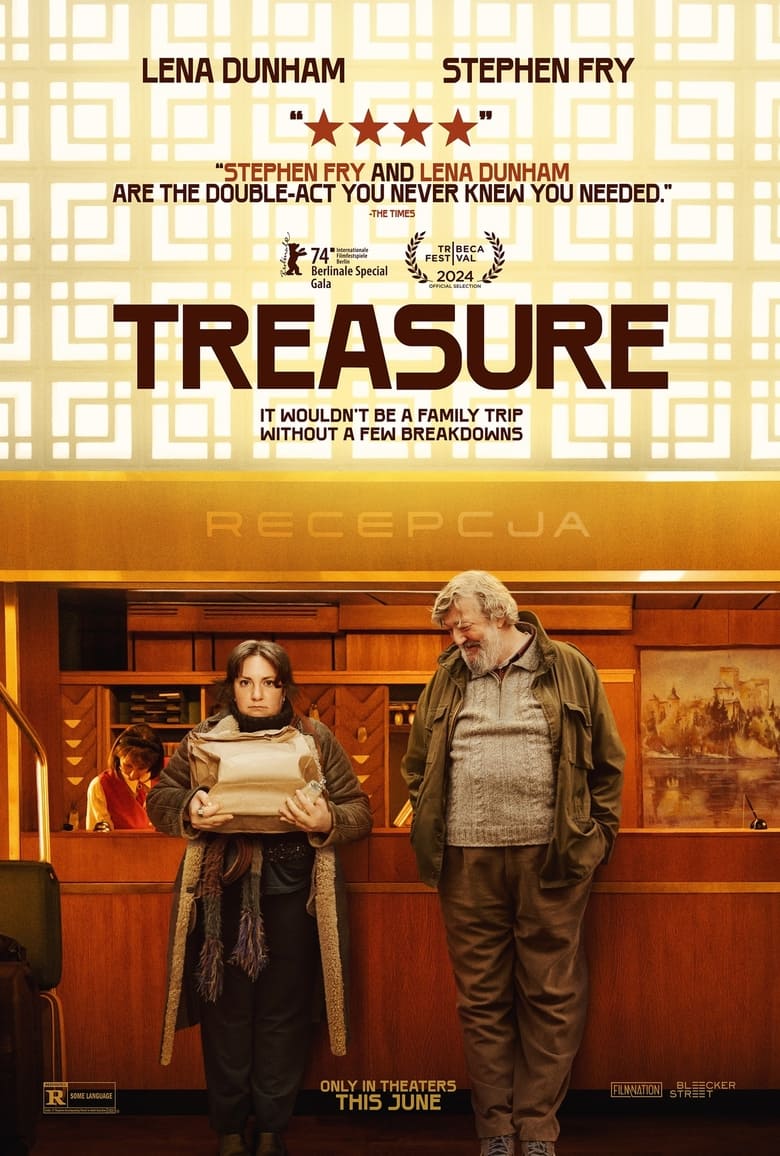
‘Treasure’ vs ‘Too Many Men’: how a mediocre movie butchered Lily Brett’s great novel

It’s incredible just how much of Lily Brett‘s wonderful novel Too Many Men director and co-screenwriter Julia von Heinz changed in her movie adaption. This included changing the title to Treasure, removing a key character and adding unnecessary elements to the story and its main protagonists.

To summarise briefly, the book and movie tell the story of fortysomething Jewess Ruth Rothwax who accompanies her elderly, but sprightly father Edek on a trip around Poland, where he grew up, to learn about his childhood and that of her late mother Rooshka before the war and the terrible events that followed, including being forced into the Lodz ghetto and then sent to Auschwitz.

The pair love each other but spend a large part of their time together in Poland annoyed at their travelling companion’s strange habits and obsessions. Edek complains that Ruth eats “like a bird” and needs to find a husband, while she worries about his unhealthy eating choices and propensity to run everywhere. While Edek has an overarching cheerfulness about his personality, despite everything he has endured, Ruther is frequently anxious and easily upset.

I watched the movie after reading the book and really wished I hadn’t.

Perversely, people who haven’t read the book will probably enjoy the movie more than those that have read it given there is less to be disappointed about.

Strangely, the author, Lily Brett, who based a large part of the novel on her own life, is a fan of the movie, unless she was just being nice or doing her bit to promote it.

“I do feel happy with it. I think it’s a beautiful movie,” she told The Australian Jewish News in July 2024

While the basics of the plot have been retained – in both the movie and the book, Ruth and Edek travel around Poland visiting old landmarks and dealing with each other’s eccentricities – so many elements that seem important to me and you would think to Brett (given so much of the novel is autobiographical) have been unnecessarily changed.

The literary Ruth (like the author Brett) is an Australian expat living in New York while her father Edek lives alone in Melbourne. In the book, he travels halfway around the world to meet his daughter to accompany her on her Poland trip.

In the movie, both Ruth and Edek are Americans living in New York. Their Australianness is completely removed despite it being the place where Lily Brett’s parents moved to after the war and where they made a new life.

In the novel, Ruth is a successful businesswoman who runs a professional writing service in Manhattan. This comes up frequently in the novel as she contemplates how she should compose various letters, whilst taking calls from her assistant Max at all hours of the night. In the movie, Ruth is simply a journalist eking out a living. In the book, Ruth has endless amounts of money, in the movie she is not quite so wealthy.

In the novel, food is such an important element: Edek stacks his plate high at breakfast buffets, he eat Perogi and Polish pastries and they dine out an awful “Jewish-themed” restaurant in Krakow. In the movie virtually none of this is retained. Instead, Ruth travels around Poland with a suitcase full of muesli-like ingredients which she brings to every meal. In the book, she merely chooses the healthiest options from the buffet.

Heinz also embellishes Ruth’s character with unnecessary eccentricities: she has a penchant for privately guzzling chocolate, is a secret smoker and has an odd need to self-mutilate. None of these behaviours are in the book.

I realise novels have to be condensed into a relatively short period time, but why change important details like this? It removes a lot of authenticity from the film, which is not assisted by the leaden and plodding acting of Lena Dunham who is sadly badly miscast in the film. Stephen Fry is surprisingly good as Edek.

Another major disappointment was the omissions of a character that appears to Ruth whilst she is in Poland. It’s a brilliant piece of magical realism – Ruth hears the voice of a famous old Nazi stuck in purgatory. She then begins conversing with him (in her head) whilst walking the streets of Warsaw and Lodz. She naturally despises him, whilst he tries to justify his actions as merely following orders. Why this aspect of the novel was left out of the film leaves me gobsmacked.

There are some elements of the book the movie does well mostly visual: the grainy, grey and depressing depiction of Poland in the early 1990s is just as I imagined it in the book as are the gaudy interiors of hotels, apartments and airports.

But pivotal moments in the novel (which depict Brett’s own travels with her father) such as the visit to Auschwitz, which should have been given great prominence in the movie are reduced to a few short scenes with very little emotional power. And there is virtually no explanation given to the great climax of the novel: the dig in the backyard of Edek’s childhood apartment block to find a buried memento.

I was incredibly moved by Brett’s wonderful autobiographical novel, but deeply disappointed by the film adaption. Perhaps it should never have been made.

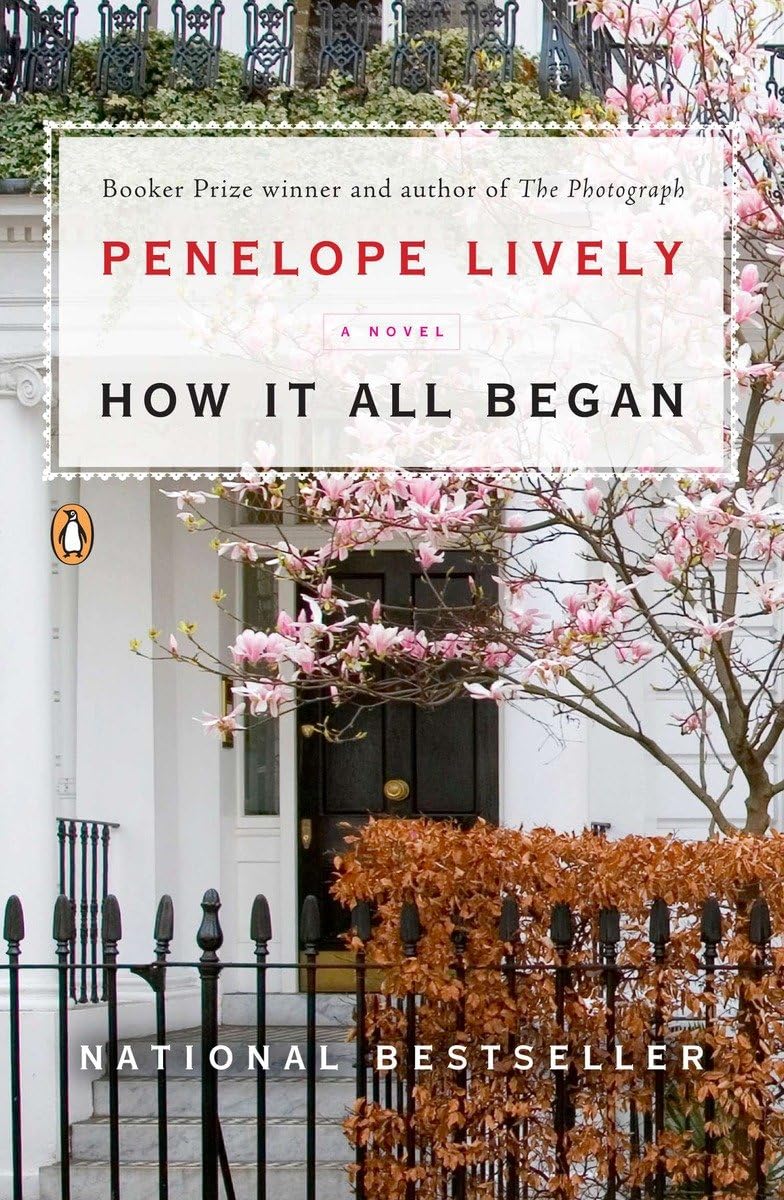
The butterfly effect: Reading Penelope Lively’s ‘How it all Began’

How it All Began by Penelope Lively begins violently with the mugging of retired and widowed schoolteacher Charlotte Rainford on a London street and then follows the lives of the people impacted by this random event: those both close to Charlotte like her adult daughter Rose and people she has never met like Marion, an interior designer and Jeremy, an antiques dealer.

Forced to recuperate at her daughter’s house, Charlotte introduces Anton, an Eastern European migrant into Rose’s life when she agrees to tutor him at her temporary home. Caught in a loveless marriage to dull Gerry, Rose develops strong feelings for Anton, who is funny, charming and sincere.

Meanwhile, in another part of London, the lives of retired diplomat and historian Lord Peters and his niece, Marion, are set on different courses by the mugging of Charlotte.

Rose works as the personal secretary to Lord Henry Peters. When she is unable to accompany him to give a lecture in Manchester because she has to take her mother to a doctor’s appoint, he asks his niece Marion to accompany him instead.

Without Rose by his side, Lord Peters forgets his lecture notes, and he gives an embarrassing performance that has him questioning his own relevance and embarking on a bizarre television project. Marion finds herself seated next to a charming, wealthy businessman, who at first seems to be the saviour of her struggling interior design business, but who turns out to be a conman.

Charlotte’s mugging also exposes an affair Marion is having with Jeremy, a self-centred married man who runs his own failing antiques business. Marion sends Jeremy at text message to say she cannot make a rendezvous, but it ends up being read by Jeremy’s wife, Stella. Stella engages a lawyer and files for divorce.

While this may sound like the makings of a rather gimmicky work of fiction, Lively, who is now well into her nineties and is a Booker Prize winner (1987 for Moon Tiger), does a great job of elegantly orchestrating events and drawing the reader into the heads of the characters as they navigate the unexpected challenges they must now navigate. The novel moves almost cinematically from one storyline to the next added by Lively’s beautiful prose and well-rounded characters.

Reading the book made me think of my own life and how random events that seemed inconsequential at the time, have had a profound impact on the trajectory of my life. An unexpected conversation, a chance encounter, a phone call missed or answered, an opportunity taken or not taken. All these things have set our lives on unplanned pathways. But more so, they have impacted the lives of others, people we know and those we will never know.

While I have not read any of her other books, I have read that the role of chance and “haphazard what-might-have-beens” (to quote a New York Times review) is a theme explored in other novels by Penelope Lively.

“Thus have various lives collided,” Lively writes in How it all Began, “the human version of a motorway shunt, and the rogue white van that slammed on the brakes is miles away now, impervious, offstage, enjoying a fry-up at the next service station. Just as our mugger does not come into this story, not now, anyway — job done, damage complete, he (or she) is now superfluous.”

The butterfly effect, the notion that seemingly trivial events can set off chain reactions and generate unexpected consequences is a powerful concept and explored to great effect in How it All Began.

(It would also make a rather excellent television series, if well adapted.)

The Joy of ‘reading’ Inspector Morse

What an absolute joy and pleasure it is to read the Inspector Morse novels written by the late, great Colin Dexter.

I absolutely adored the television series and the wonderful portrayal of the curmudgeonly chief inspector by the imperial John Thaw, but the novels are marvelous in their own right.

I read three in quick succession starting with The Daughters of Cain (1994) followed by The Jewel That Was Ours (first published in 1989) and Last Bus to Woodstock, the very first of the Inspector Morse novels, published in 1975.

(In 2016, I read my first Inspector Morse novel The Wench is Dead (the eighth book in the series), a rather unusual book as Morse is recovering in hospital and spends his time solving a Victorian murder mystery dating back to 1859. You can read my review here).

Having first watched the TV series and then delved into the books (it really should have been the other way round), it’s impossible not to imagine John Thaw as Morse and Kevin Whateley as his lanky, Geordie crime-solving sidekick Seargeant Robbie Lewis.

In the Daughters of Cain, Morse and Lewis investigate the murder of Oxford academic Dr Felix McClure, found stabbed to death in his North Oxford flat, the murder weapon nowhere to be found. Suspicion falls on three woman – his wife, his stepdaughter and his wife’s friend (all with motive) – and it’s up to Morse and Lewis to correctly identify the killer.

In the Jewel that Was Ours, American tourist Lauran Stratton is found dead of an apparent heart attack in her unlocked room at the Randolph Hotel. Later a precious jewel that she was to donate to an Oxford museum is found missing from her handbag. Stratton is part of a tour group of American retirees visiting historic cities of England. It falls to Morse and Lewis to unearth who among the group of unmerry travellers committed the robbery and why.

Interestingly, The Jewel that Was Ours is the only one of 13 Morse novels, which was first a Colin Dexter screenplay (filmed with the title The Wolvercote Tongue) and then later novelised.

In Last Bus to Woodstock a young woman is found murdered in the parking lot of the Black Prince, a pub on the outskirts of Oxford, after accepting a ride from a stranger. Suspicion falls on the young, devious man who discovered the body and a philandering Oxford don. Amid his investigations, Morse falls in love with a young nurse and gets to know, admire and berate Seargeant Lewis.

I loved the slowly unravelling pace of the feature length TV episodes – a much more realistic depiction of how crimes are solved in real life I suspect – and this kind of meticulous unravelling of characters and motives occurs in a similar fashion in the books.

Of course, Dexter throws in plenty of red herrings – and even the great Inspector Morse comes to the wrong conclusions from time to time. In The Jewel that was Ours, Morse is convinced he has identified the killer, who he arrests at a train station and drags into an interrogation room, only to realise that he has made a blunder.

I love the fact that he is both a brilliant man, but also far from perfect. He is easily seduced by a beautiful woman, frequently drinks too much, can fly into a rage with little provocation, but is also compassionate, kind and empathetic. He is also very funny, in a mostly cynical way:

In this comic scene from The Daughters of Cain, Morse is talking to Ellie, a young woman he has become infatuated with).

“Don’t you ever eat?” demanded Ellie, wiping her mouth on the sleeve of her blouse, and draining her third glass of red wine.
“Not very often, at meal-times no.”
“A fella needs his calories, though. Got to keep his strength up – if you know what I mean.”
“I usually take my calories in liquid form at lunchtime.”
“Funny, isn’t it? You bein’ a copper and all that – and then drinking all the beer you do.”
“Don’t worry I am the only person in Oxford who gets more sober the more he drinks.”
“How do you manage that?”
“Years of practice. I don’t recommend it though.”

All three novels were adapted into episodes for the television series, but I could only vaguely remember the plot twists, and so the identity murderer came as a complete surprise in each book.

But even if I had remembered the plots, the great thing about the Morse novels is the wonderful writing of Dexter. He really is a joy to read.

Dexter is master of delving into the personalities of his main suspects and of taking us into the mind of the brilliant Morse and the not-to-be-underestimated Lewis. He is also brilliant at his meticulous descriptions of crime scenes, painting vivid pictures in the mind of the reader.

“The body had been found in a hunched-up, foetal posture, with both hands clutching the lower abdomen and the eyes screwed tightly closed as if McClure had died in the throes of some excruciating pain,” is how Dexter describes the deceased murder victim in The Daughters of Cain.

Interestingly, there is very little physical description of Morse in the first novel. Instead, he comes to light through his personality and mannerisms.

Morse makes his first ever appearance on page 15 of Last Bus to Woodstock after he arrives at the crime scene in the courtyard of the pub.

“Five minutes later, a second police car arrived, and eyes turned to the lightly built, dark-haired man who alighted.”

The hard-working Lewis is already there, having arrived with “commendable promptitude”,

“[Morse] knew Sergeant Lewis only slightly but soon found himself pleasurably impressed by the man’s level-headed competence.”

“‘Lewis, I want you to work with me on this case,’ the Seargeant looked straight at Morse and into the hard, grey eyes. He heard himself say he would be delighted.”

And so, begins one of the great fictional crime-solving partnerships, one that would spawn another 12 novels (published from 1975 to 1999), a television series of 33 feature length episodes (from 1987 to 2000) and two TV spin-offs, Lewis (42 feature-length episodes from 2006 to 2015) and Endeavour, featuring the young Inspector Morse (36 feature-length episodes from 2012 to 2023).

(I have watched every episode of Lewis and thought it an excellent sequel to Inspector Morse, but I have not watched any Endeavour, though I hear it is possibly the best of the three.)

That’s an incredible amount of television viewing created out of a rather old-fashioned, curmudgeonly, middle-aged detective,

Colin Dexter, who makes a Hitchcockian cameo in almost every episode of Morse (he died in 2017) began writing mystery novels during a family holiday in 1972 after a career as a classics teacher was cut short by the onset of deafness

He claims that when he first started writing the crime novels, he had little idea of what Morse was actually like. “I’ve never had a very good visual imagination. I never had anyone in mind,” he said in an interview with The Strand Magazine in 2013.

“The only thing that was really important to me about Morse was that he was very sensitive and rather vulnerable,”

Dexter also revealed that much of the things that bring pleasure to his otherwise grumpy detective hero, are things that Dexter himself enjoyed: classic English literature, classical music, cryptic crossword puzzles and real ale.

“People don’t realise this. The greatest things in [Morse’s] life were [A.E] Houseman and Wagner. These were the things he would go home and listen to and talk about and that was me I suppose, but that’s about as far as it went. I never even wrote plots for my books. I always made sure that before I started writing a story I knew exactly how it was going to end. I never had any idea about what was going to happen in the middle but I knew where it was heading,” Dexter said.

While each of the four novels I have read so far are classics of British crime fiction, with meticulously clever plots and sub-plots and wonderfully engaging characters, it is Morse himself who is central to everything. Brilliant, sad, hilarious and tragic, he is a marvel.

Now to find and read the remaining Morse novels (they are devilishly hard to find!)

The sad hope, but lucky life of Michael J. Fox

Towards the end of his brilliant 2002 memoir Lucky Man, legendary actor Michael J. Fox recounts the testimony he gave to a Senate hearing in Washington in September 1999 as part of efforts to raise money to find a cure for Parkinson’s Disease.

“Scientists testifying after me stressed that a cure could come within 10 years, but only if there is sufficient financial commitment to the effort,” he writes. In footage you can find online, Fox talks about a “winnable war” and finishes by saying that in his 50s, “I will be dancing at my children’s weddings.”.

Twenty five years since that Senate committee appearance and whilst successfully raising tens of millions of dollars to fund research, it appears scientists aren’t any closer to finding a cure to Parkinson’s Disease.

“Parkinson’s disease can’t be cured, but medicines can help control the symptoms,” the revered Mayo Clinic says on its website.

“There’s currently no cure for Parkinson’s disease, but treatments are available to help relieve the symptoms and maintain your quality of life,” says Britain’s National Health Service, with a hint of optimism.

But while Michael J. Fox was unable to dance at any of his children’s weddings, he has remained a defiant, hopeful and inspiring figure to those suffering from Parkinson’s or any other incurable disease – as anyone who has watched his most recent Apple TV documentary ‘Still’ or seen any of his recent interviews will attest.

Indeed he has embraced his “Lucky” life, and made it a truly remarkable one.

He’s also an excellent writer and storyteller, who raises the often tedious celebrity memoir to a much higher plain.

While we often just want celebrities to “get to the bit where they were discovered” or to discuss the making of a certain movie, show or album, for Fox, remembering the key moments in his childhood is not just about nostalgia, but about piecing together the puzzle of his adult persona: how he became the talented actor, performer and later spokesperson for his cruel disease.

Re-watching home movies shot by his father – William Fox, a sergeant in the Royal Canadian Army Signal Corps – Fox at first finds confirmation of the notion that “I became a performer because I craved love and attention” but on closer inspection of him as a young boy taking a garter snake he had captured “on an involuntary bike tour of the backyard” he comes to the realisation that “all these antics were done for nobody’s benefit but my own. First and foremost I am a boy out to entertain myself, completely undisturbed by the presence of the lens”.

This level of self-analysis is not to be found in your standard Hollywood name-dropping memoir, and as reader one feels like we are joining Fox on his journey of self-discovery. It is also evident the deep affection Fox feels towards his family, especially his clairvoyant nana “someone whom I loved, whose voice, touch and laughter were as familiar as my own” and who had a “rock solid belief” in his bright future.

While a naturally gifted performer, the title of the book is a testament to the very real “luck” he enjoyed along the way to fame and fortune. As he tells it, he came very close to packing it all in after ending up flat broke in Hollywood, where he set out to find fame and fortune following some early television success in his native Canada.

His big break came with hit 1980s sitcom Family Ties about a hippy left-wing couple where he played their uptight Ronald Reagan-loving Republican son, Alex P. Keaton. This is a show I vividly remember watching as a kid growing up alongside such staples as Growing Pains and The Cosby Show.

Before landing the part that changed his life, Fox was barely surviving in a tiny, litter-strewn, filthy apartment in Hollywood, where his nutrition came courtesy of Ronald McDonald. He was broke and on the verge of heading back to Canada when the role on the sitcom came up.

He only got the role after a series very fortuitous events, but it turned him into one of the biggest stars in the world, and earned him roles in the iconic Back to the Future series and a huge personal fortune.

Having this wealth, high profile and amazing support network (including the love and devotion of wife Tracey Pollard, an actress he met on the set of Family Ties) helped enormously in his personal battle with Parkinson’s and his efforts to raise money to tackle the disease through the The Michael JFox Foundation.

And while getting early onset Parkinson’s Disease at just 30 years of age was a terrible bit of misfortune, he has – after a long struggle within himself – come to realise just how lucky his life has been.

His gratitude for the live he has lived – and still lives – comes shining through in this exceptionally well-written memoir. I highly recommend it.

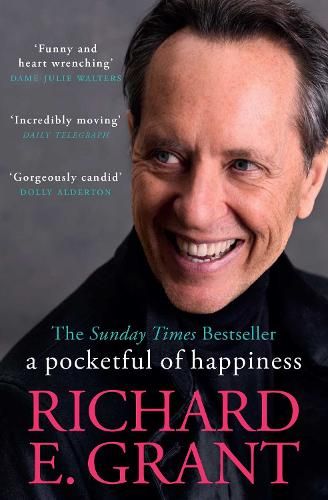
Name dropper extraordinaire: Richard E Grant’s daft obsession with celebrities

Without a doubt one of the most ludicrous episodes in Richard E. Grant’s entertaining, sometimes very moving but ultimately disappointing memoir “A Pocketful of Happiness” occurs when the author is having lunch with the legendary actress Sally Field at a brasserie in Philadelphia, in 2019.

His phone pings, and whilst at first he is reluctant to answer it – “I can’t, Sally, it’s rude to look at your phone when eating” – he eventually does on the insistence of his dining companion.

After reading the text message, Grant slaps a $100 bill on the table, tells Sally (whom he invited to lunch) that he has to go (“Will call and explain’). Then he sprints to the nearest Amtrak train station a dozen blocks away to catch a train back to New York. A phone call to Trudie Styler (Sting’s wife) and he’s soon in a helicopter on his way to Donna Karan’s estate in the Hamptons for the screening of a new Julianne Moore movie.

And why all this madness (and rudeness): “…because Barbra Streisand is the guest of honour”.

A little while later, he’s unashamedly attached himself to Streisand and her husband, the actor James Brolin, bringing food to the former diva and chatting to her for 90 minutes straight (apart from a brief interruption from Brooke Shields who declares: “This man [Richard E. Grant] is brilliant.”)

This scene in a nutshell encapsulates three of the great themes in Grant’s life and this memoir: his obsession with singer and actress Barbra Streisand (he has a bust of her in his garden), his endless fascination with celebrities (despite becoming one himself) and his incessant and unrepentant name dropping.

Incredibly, the book is not really about anything of these things. It is an ode to his wife.

It’s title, “A pocketful of happiness” refers to the instructions his wife Joan Washington, a celebrated dialects coach, gave him shortly before she passed away from cancer.

“You’re going to be all right,” Joan told her husband, “Try to find a pocketful of happiness in every single day.” (In this mission he appears to have succeeded judging by the relentless posting of his daily exploits on Instagram, in which Grant is always grinning broadly and his blue eyes twinkling madly).

While the book shift back in time to scenes from Grant’s penniless days waiting tables at Covent Garden and even further back to his childhood in Swaziland, the nine months from Joan’s diagnosis with stage 4 cancer in January 2021 to her death in September of that year is the central arch of the memoir.

In this respect, Grant does a wonderful, but sad job documenting the very sharp decline in Joan’s life as their universe shrinks to their London home and holiday cottage in the countryside, then just to their home and finally to Joan’s bedroom as she succumbs to her illness.

“Lie next to Joan as she sleeps. Listening to every breath she takes. Overwhelmed with longing. Longing that she won’t have to suffer. Longing that none of this is actually happening to us. L o n g i n g….” he writes in an entry from June 2021.

The pain he feels at the prospect of losing his lifelong companion and best friend is evoked tenderly across many of his diary entries, as he ferries Joan to her hospital appointments, has Zoom calls with Joan’s doctors, nurses and carers and keeps wishing it was all a terrible nightmare he would just wake up from.

Sunday, 14 February 2021
Valentine’s Day – could it be our final one after thirty-eight years together? Hard to compute. Impossible to imagine. Not being a unit, pair, partnership, union, marriage. None of which we discuss out loud and, on the evidence of her ebullience today, clearly not something she is dwelling on, or even thinking about.

But the name dropping in this book is on another level and suggests Grant lives in a cocoon of celebrity love and adoration from people notorious for their fickleness and fakery.

I’m not the only one whose taken issue with the appearance of a celebrity on every second page. Guardian’s Rachel Cooke felt similarly uncomfortable about it.

“Even as I admired Grant for his obvious devotion to, and care for, his wife at the end, I was uneasy: suspicious, you might say. Is it unfair to call a man with so many well-known friends a name-dropper? Isn’t he only describing his world? This is a question I’m still unable to answer,” Cooke wrote in her review in 2022.

As a reader, one is left with the strong impression that Grant is still completed intoxicated with fame and celebrity, and that he has never quite gotten over the fact that a gangly lad from Swaziland (now called Eswatini) made it onto the big stage.

During the course of the memoir Rupert Everett, Emma Thompson, Gabriel Byrne, Prince (now King) Charles and the Duchess of Cornwall (now Queen Camilla) all drop by for tea or lunch (His majestys brings mangoes). Grant’s diary entries are also peppered with anecdotes about meetings with Owen Wilson, Nigella Lawson, Tom Hiddleston, Martin Short and on and on.

“Meet Owen Wilson, who speaks in his signature wow voice, all convoluted vowels and ‘hehehe’ charm, like someone dope-dropped in from another planet…Instantly bonded.

All of these celebs – without exception – are delightful, warm, funny and charming and they invariably feel the same way about Grant. It’s all a bit much.

By stark contrast, Grant’s late wife found his obsession with famous people insufferable and avoided celebrity events with as much fervour as her husband rushed to them with open arms. This was no doubt one of the disappointing aspects – for Grant – of an otherwise happy marriage. You can almost here Grant groan aloud when Joan decided not to accompany him to award ceremonies after he received Bafta, Oscar, Golden Globe and numerous other nominations for his role as Jack Hock in the 2018 comedy-drama Can You Ever Forgive Me? alongside Melissa McCarthy (who is also given supreme name-dropping treatment in the memoir).

I have been a huge fan of Richard E. Grant since I saw him in Withnail & I at the National Arts Festival in Grahamstown, South Africa in about 1992. I also had the pleasure of seeing him live onstage at Sydney’s Orpheum Picture Palace in about 2006 where he was in conversation with the film critic Margaret Pomeranz after releasing his autobiographical directorial debut: Wah Wah (which I thought was great).

I also enjoyed his first memoir: “With Nails: the Film Diaries of Richard E. Grant” which as the title suggests is a collection of his diary entries written while making Withnail & I, the cult film that gave him his start in showbiz and subsequent films such as LA Story, The Player and Bram Stoker’s Dracula.

Yes, there is a lot of name dropping too in this book, but these are film diaries after all!

Reading Harry Potter at 50: should we cancel JK Rowling?

It’s been a couple of months since – aged 50 – I finished reading the Harry Potter series, and I have been meaning to jot down some thoughts ever since.

The reminder to put pen to paper, if you can forgive that rather useless and inappropriate cliché, came from an unlikely source: the columnist and writer, Clementine Ford.

Scrolling through my Instagram feed, I came across a three-year-old post from Ford in which she attempted to tear JK Rowling to shreds. Ford labelled her books “badly written” fiction and attacked “Joanne” for making her hero a boy wizard, where a girl (Hermione) does mostly all his homework for him, but gets no credit for it. Even more outrageous, Ford says, Hermione has no female friends, is overshadowed by all the boy characters and that all the female characters are “parodies of womanhood”.

Ford then gets stuck into her real issue with JK Rowling, the author’s controversial views on transgender people. Ford calls Rowling a “fucking scumbug” for harassing transwoman and suggests “Joanne” open up her “stupid fucking” castle and invite all her transphobic friends to live with her inside.

Ford’s disgust builds to a crescendo where she wonders how in the space of 25 years Rowling went from charming children’s worldwide to become one of her most sinister fictional character’s the cruel, toad-like Minister for Magic Dolores Umbridge who torments and tortures Harry Potter at Hogwarts.

This reference to one of JK Rowling’s most famous characters (and in my opinion one of the best written and fiendish across the series) made me wonder if Ford, who had just turned 40 at the time of the post, had not secretly enjoyed reading the books when she was younger, before finding herself disgusted by the controversy over Rowling’s views on womanhood and her alleged attacks against the transgender community.

Did JK Rowling become a bad writer and the Harry Potter story an unworthy cultural phenomenon because the author launched herself into the culture wars via posts on social media?

The answer is obviously no. JK Rowling is not a bad writer and her holding abhorrent views (to some) does not make her one.

Of course you may decide to boycott her books because of the things she says online, but it would be hard to argue that Harry Potter is not a great deal of fun to read. These are books that have entertained and delighted readers of all ages since the first in the series, Harry Potter and the Philosopher’s Stone came out in 1997.

Reading all seven books as I approached turning 50 and really enjoying them was something I had not expected.

I started reading the series because my daughter, Edie (12) was huge fan of all things Harry Potter and I thought it would be a great way for us to bond. After I finished each book, we’d watch the corresponding movie and discuss our thoughts of the big screen adaptation, the actors chosen to play the fictional characters, the bits in the books the films left out but that should have been kept in, the way the filmmakers had created the magical scenes and if the movies were any good. Mostly I enjoyed the films, but they were not a patch on the books (And there is now a HBO TV series in the works that we are told will be a more faithful rendition of the novels, with a full season devoted to each book).

For someone who reads “serious fiction’ and hardly anything in the fantasy genre, I was surprised at how much I enjoyed the novels. Whatever you think of Rowling’s views on gender, only a cynic would argue that Rowling is not a fabulous storyteller with the ability conjure up a complete magical world with a huge cast of living and breathing characters that have become cultural icons in their own right: Harry, Hermione, Ron, Hagrid, Malfoy, Professors Dumbledore, McGonagall and Snape (to name just few).

I also loved how the novels shifted between the fabulous wizarding world with its potions, ancient books and magic spells and the mundane “muggle” (human/non-magic) world inhabited by the wonderfully awful Dursleys (Harry’s relatives and tormentors).

But rather than write a lengthy review of each Harry Potter book – who needs another one of those? – my thoughts turned to the author and the culture wars she has sparked with her views on transgender issues and her strident defense of womanhood.

The controversy started back in 2020, when Rowling (rather petulantly in my view) took issue with an online article on Devex (a news organisation covering global development) about menstruation that did not in its opening pars mention woman, but instead used the gender neutral “people”. Later it refers to the 1.8 billion people who menstruate as “girls, women, and gender non-binary persons”.

Rowling responded to the controversy by saying: “If sex isn’t real, there’s no same-sex attraction. If sex isn’t real, the lived reality of women globally is erased. I know and love trans people, but erasing the concept of sex removes the ability of many to meaningfully discuss their lives. It isn’t hate to speak the truth,” she tweeted.

Rowling argues that she has been empathetic to trans people “for decades” and that feeling kinship for woman and believing that sex (or gender) is real, does not translate into hate for the transgender community.

She goes on to say: “I respect every trans person’s right to live any way that feels authentic and comfortable to them. I’d march with you if you were discriminated against on the basis of being trans. At the same time, my life has been shaped by being female. I do not believe it’s hateful to say so.”

Following the avalanche of abuse she suffered because of her social media posts, Rowling penned an article on her website explaining in great detail her position, her concerns for young people who may regret transitioning, her affection and acceptance of transgender people and her views on trans activists. whom she says are “doing demonstrable harm in seeking to erode ‘woman’ as a political and biological class”.

“I stand alongside the brave women and men, gay, straight and trans, who’re standing up for freedom of speech and thought, and for the rights and safety of some of the most vulnerable in our society: young gay kids, fragile teenagers, and women who’re reliant on and wish to retain their single sex spaces,” she writes.

As a survivor of domestic abuse and sexual assault, Rowling ask that the empathy for trans people “be extended to the many millions of women whose sole crime is wanting their concerns to be heard without receiving threats and abuse”.

However, she has received the harshest condemnation from some in the trans community for suggesting that some people, especially younger people may be “persuaded” to transition to “escape womanhood” or to find a more caring community, rather than because they suffer from gender dysphoria, a medical condition referring to the distress a person feels at one’s biological or assigned gender at birth.

“The more of their accounts of gender dysphoria I’ve read, with their insightful descriptions of anxiety, dissociation, eating disorders, self-harm and self-hatred, the more I’ve wondered whether, if I’d been born 30 years later, I too might have tried to transition,” Rowling writes. “The allure of escaping womanhood would have been huge. I struggled with severe OCD as a teenager. If I’d found community and sympathy online that I couldn’t find in my immediate environment, I believe I could have been persuaded to turn myself into the son my father had openly said he’d have preferred.”

Any position that questions the validity of a trans person’s existence will be condemned by many in that community, regardless of the reasons or concerns of those stating that opinion. It is, for many, a cardinal, unforgivable sin.

For her views, Rowling has been labelled by some a TERF’ – an acronym coined by trans activists, which stands for Trans-Exclusionary Radical Feminist, implying hostility towards transgender people, a label she vehemently rejects.

“I want to be very clear here: I know transition will be a solution for some gender dysphoric people, although I’m also aware through extensive research that studies have consistently shown that between 60-90% of gender dysphoric teens will grow out of their dysphoria.” she writes.

What triggered her speaking out she says, was the Scottish government proceeding with its “controversial gender recognition plans, which removed the medical diagnosis of gender dysphoria as a requirement to change gender legally and fast tracked the process for changing gender. For Rowling, this bill – which was passed by the Scottish Parliament in December 2022, but vetoed by the British government in January 2023 – put woman’s lives at risk (allowing in her view a man to call himself a woman and walk into a female-assigned toilet) and was a “destroyer of women’s rights”.

“I spoke up about the importance of sex and have been paying the price ever since. I was transphobic, I was a cunt, a bitch, a TERF, I deserved cancelling, punching and death. You are Voldemort said one person, clearly feeling this was the only language I’d understand,” Rowling says.

Despite, these attacks, she has refused to back down, donating money to campaigns opposed to the stalled Scottish gender recognition Bill. She’s also dared authorities in Scotland to arrest her after calling a number of transgender women “men” – in apparent defiance of a new Scottish Hate Crime law which came into effect in April this year and which creates a “new crime of stirring up hatred against someone based on their disability, race, religion, sexual orientation transgender identity. (No action was taken against Rowling).

Has Rowling been treated harshly? Or has she deserved the condemnation she has endured by many?

Weighing things up in my mind, I would argue that she is not transphobic (as she has publicly stated) but certainly opposed to some forms of trans-activism where, in Rowling’s view it erases the idea of womanhood.

I feel she is entitled to this view and don’t feel there is as any legitimate reason to cancel Rowling or to stop encouraging young and old people to read her books.

You may feel the need to analyse the characters in her novels and their motives in light of her views on gender, and come to all sorts of conclusions about the author’s motivations or alleged prejudices, but let’s be honest, Harry Potter is not high-brow fiction. I don’t actually think its worthy of deep analysis. These are not books that need to be studying at University in the way that I studied the novels of Margaret Atwood or JM Coetzee or EM Forster.

JK Rowling’s Harry Potter books are simply brilliant adventure and fantasy stories and can be enjoyed as such without the need to read the subtext.

Reflecting on the all the controversy reminded me think of another famous children’s author, who has been vilified, partially re-written but thankfully never cancelled for their controversial views.

I’m referring Roald Dahl, who sold 300 million books and wrote some of the most beloved stories of all time: Charlie and the Chocolate Factory, James and the Giant Peach, The Witches, Matilda and Fantastic Mr Fox to name just a few.

These books entertained and delighted me as a child and have been enjoyed with glee by my kids, both in the original written form and as movie and TV adaptations.

On the scale of unpalatable views, Dahl certainly trumps Rowling by some distance.

He was a well known and unapologetic anti-Semite who in an interview in 1983 said there is a “trait in the Jewish character that does provoke animosity, maybe it’s a kind of lack of generosity towards non-Jews”.

In 2020, Dahl’s own family apologised for his anti-semitism, but thankfully did not call for his books to be banned or burned.

That – in my opinion – is as it should be. And the same goes for the composer Richard Wagner (another anti-semite), or Pablo Picasso (a monstrous misogynist).

We do not have to love the artist to love and admire their art.

Rowling and Dahl inspire the imagination. They delight their readers. They celebrate bravery in the face of evil. They encourage adventure. And yes, you can take great offence in some of the characters in their books, or the motivations for creating them, but that should always be a personal choice, not a movement.

After all, you can always stop reading.

Life lessons aplenty in Bill Bailey’s guide to happiness

I’d dipped into a couple of chapters of much-loved British comedian Bill Bailey’s Remarkable Guide to Happiness when I get it as a present a year or so ago, but finally sat down to read it from start to finish whilst in between books a little while ago.

Bailey, who is best known for his appearance in cult comedy Black Books and for his multi-faceted stand-up shows, has long been a favourite comedian of mine. I was lucky enough to catch one of his live shows when he was on tour in Melbourne about five years ago.

Stuck at home and being unable to perform or go on tour, Bailey sat down to write a book of experiences and musings on the things that make him happy, and which he believes could make other people happy too.

“This book was written during the coronavirus pandemic, largely while we were in lockdown,” Bailey writes in the forward.

“During this unexpected quiet time at home, I finally got around to archiving my comedy shows and I was struck, firstly by how much longer my hair was back in the day, and secondly, by how much happiness has been a subject that I have explored in my sketches and gigs over many years, to the point that it appears as a constant thread running through it all.

He finishes off the forward by saying that this is book is not about telling people how to live their lives, but rather about sharing a “few accounts of fortuitous moments and remarkable times when I experienced something which felt to me like happiness”.

(I’ve since discovered his written a number of “remarkable” books (the word meaning: worthy of attention) about a range of subjects: including about British birds and the orchestra.)

Bailey’s famous self-deprecating humour and dry wit is a constant presence throughout the book, which consists of short, easy to digest chapters on a whole range of different activities he has undertaken over the years that have brought a sense of joy to his life.

These include a lot of things that anyone can do with just a little bit of money (playing a round of mini-golf, doing the “little things” like the ritual of brewing coffee), none at all (going for a walk in the woods, jogging, clearing out your wardrobe) or where you clearly need to have quite a bit of spare dosh (such as going swimming amid the glaciers of Iceland).

He combines many chapters with academic research he has found that reinforces the reason why an activity he has described might generate happiness from a scientific standpoint. And of course, there is plenty of good lashings of Bailey’s trademark acerbic humour and stories of his own adventures and failings.

On the sense of happiness created by tending for plants Bailey writes that “just being around greenery can lift our spirits…it is no surprise to me that studies show plants, and the care of plants that involves getting your hands into the soil can lower blood pressure and increase focus and alertness”.

To back up this claim, he adds: “An article published in Science World reveals that a mycobacterium found in plant soil can improve brain function, because it increases the production of serotonin in the brain, one of the ‘happy’ chemicals”.

Writing about the pleasure associated with showing “restraint” (even when there isn’t a ‘no’ option) Bailey describes a hilarious story about ordering food at the Los Angeles Zoo with his family.

The “modest purchase” of a sandwich, coffee and bottle of water entitled them to a free super-size upgrade: an enormous packet of crisps “the likes of which is not available to us in the UK”.

When he declined the chips, Corey, the young man serving them, was unable to compute this rejection telling the Bailey clan: “They’re free sir”.

Bailey replies: “Yes, I am aware of that, and it’s a kind offer, but we’re fine thank you.”

This back and forth continued between the bemused “but they’re free” Corey and Bailey until an old timer behind them in the queue grunted “Just take ’em!”

The “Billrus” by Bill Bailey

“So I took village-sized bag of crisps and gave them to an incredulous couple from Idaho.”

But in the age of “conspicuous consumption”, of that insidious phrase FOMO, Bailey concludes that saying no occasionally is not that hard, and is a “small act of self-care that might take you down a path to happiness”.

It’s these nuggets of wisdom and moments of clarity that can be found throughout the book, which is also endearingly illustrated with Bailey’s metaphorical pencil sketches and canny artworks by Joe Magee.

There are 36 chapters in the book. Each devoted to something that might make you a little happier, and most are not hard to try.

I’d add a 37th one, that Bailey is too modest to ever admit: the happiness evoked by watching one of his own comedy shows, an episode from Black Books, or the numerous clips you can find on YouTube.

A decade of newspaper writing: a look back over the years

When I was unexpectedly offered a job at The Australian Financial Review in July 2013 I jumped at the opportunity to write for the country’s top business newspaper.

Alongside this excitement, I also remember having this unsettling feeling that perhaps I was joining a national publication near the very end of the newspaper industry, certainly the print one.

Might I be one of the last print journalists hired by the AFR before everything went digital?

Nonetheless, I was thrilled to have an opportunity to join the workforce at Fairfax Media, one of Australia’s great publishing dynasties and to forge out a career in print media for as long as I could.

At the time I was approached by the AFR, I was working for an online publication called Property Observer (now part of urban.com.au), which had been launched two years prior by the former long serving Sydney Morning Herald property editor Jonathan Chancellor. It was part of an umbrella of brands owned by Eric Beecher’s Private Media (Others in the PM stable include well known news and opinion website Crikey).

Somehow my name had made its way to the decision-makers at the AFR – I am grateful to whom ever suggested me as a replacement for departing property writer Ben Wilmot (now commercial property editor at The Australian and whom I had the pleasure to meet for the first time in September).

I had an informal interview with Matthew Dunckley (then the AFR’s Melbourne bureau chief, now deputy editor of The Age) at a café on Degraves Street, and after signing an employment contract a week or so later, and after seeing out my last few weeks at Property Observer, I flew up to Sydney for a week of training and induction, and to meet my new Sydney-based property colleagues on the newspaper.

I remember the chatter in the industry and in rival newspaper media columns at the time was all about when the Fairfax printing presses would stop rolling seven days a week while the company, helmed then by former AFR journalist and editor Greg Hywood, was in the throws of a massive and at times painful digital transformation that would result in a number of voluntary redundancy rounds in the immediate years after I joined.

(There was also talk at the time that mining billionaire Gina Rinehart – as she climbed up the share register – might buy Fairfax. But following a long battle with the Fairfax board and management, her interest in the company eventually petered out and she sold out of Fairfax in 2015).

Incredibly, on my very first day in the Sydney office (at the time Fairfax was based at Pyrmont) I sat next to veteran journalist and multi Walkley Award winner Pam Williams.

Pam’s blockbuster business book Killing Fairfax, which detailed how Fairfax Media had missed out on opportunities to invest in dotcom businesses like realestate.com.au and SEEK that would go on to be worth billions more than the 170-year-old media company had just been published complete with grinning photos of billionaires Lachlan Murdoch and James Packer on the cover.

I remember introducing myself to Pam and having a short conversation with her, whilst trying to get my head around the idea that she’d returned to the company she’d written so scathingly about in her book (which I read a few months later and reviewed on this blog). Later I would come to understand that this was part of what made Fairfax great; it’s unswerving belief in quality journalism, and Pam is certainly one of the best.

My first week in Sydney was spent learning how to use the antiquated publishing system known as Methode, meeting my boss Rob Harley, who was the paper’s long-serving and highly influential property editor, as well as many other journalists who would become friends and colleagues. I also wrote my very first article for the paper – a story about First Home Buyers – before flying back home to Victoria to join the paper’s Melbourne bureau and meet the journalists whom I would work alongside for many years.

The AFR occupied the Eastern corner of the third floor at 664 Collins Street opposite Southern Cross Station. On the other side of the floor was The Age, while upstairs were Fairfax’s radio stations including 3AW.

My first few weeks were spent meeting people in the property industry – agents, developers, investors – as I tried to build up a contact base and generate exclusive stories for the paper. There was back then and still is today a competitive, but highly collegiate mindset at the AFR, an attitude which helped me find my feet and carve out a niche of my own.

I’m somewhat embarrassed to say that for a little while after I joined the AFR I cut out and kept a folder of all my articles that appeared in the paper. It’s a practice I abandoned many years ago though I confess that I still get a kick out of seeing my name in print.

Initially it was quite hard getting scoops – we were a big property team in the early days – and being the newest member of a crew of crack reporters meant I had to find beats and niches that I could make my own.

At the same time as I was finding my feet and trying to show my value as part of the property team, Fairfax Media was trying to write the wrongs identified so glaringly in Pam Williams’ book and find new revenue opportunities in the digital world whilst print revenue continued to fall.

In 2014, Fairfax Media returned to profit and announced its move into video streaming on demand (to take on the likes of Netflix) via a joint venture with Nine Entertainment that would result in the launch of Stan.

The old Fairfax printing press (shaped like a rolled up newspaper) near Melbourne Airport. Now the HQ of Zagame luxury cars.

That year was particularly tough one for me personally as we lost our second child Raffy to stillbirth in February, but I was heartened by the outpouring of support from my colleagues at the AFR when I returned to work after a few weeks of compassionate leave.

“Everyone from the top of the newspaper down is thinking of you,” I distinctly remember Rob Harley telling me.

Later that year I went on my first and to date only junket (or famil as they prefer to call it) to Bali, where I flew business class for the first time and sat next to The Australian‘s legendary restaurant critic John Lethlean. John was great company on the flight, but I recall was distinctly unimpressed with the food, while I thought everything was fantastic.

I spent two nights at the new Double Six Hotel (the reason for the trip) with a gang of Aussie journos, eating out at a plethora of fancy restaurants, trying out spa treatments and being chauffeured around amid the chaos and congestion that was Seminyak.

In 2015, I was lucky enough to be accepted into a mentoring program offered at Fairfax, and was given great guidance by senior Age journalist Michelle Griffin, (now Federal Bureau chief at the Sydney Morning Herald). We’d catch up for coffee in the café downstairs and focus on feature writing, which I always found challenging. Michelle was full of great tips and encouragement. These included suggesting I reading The Wall Street Journal’s The Art & Craft of Feature Writing by William Blundell.

Michelle is one of a number of highly experienced writers and editors who have provided advice, tips and encouragement over the years.

In August 2016 I interviewed the founder of British real estate disruptor Purplebricks, Michael Bruce when he came to Melbourne to launch the Australian business with a promise to revolutionise the way property is bought and sold through its fixed-fee model and online platform.

Over the next three years I reported in dozens of articles on the rise and fall of Purplebricks, which left Australian shores in 2019.

Covering the Purplebricks roller coaster journey Down Under was one of the highlights of my AFR journalism career (rumour has it my face was on a dart board at Purplebricks HQ in Sydney)

I should point out that soon after Purplebricks landed in Australia, our editor Rob Harley surprised everyone by announcing his decision to retire from the paper after an incredible 29 years. One of the most knowledgeable people in the industry and also one of its most influential and well-respected, Rob was a mentor to everyone on the team, and a generous sharer of his time and insights. (He continues to write for the Financial Review, penning a regular property column).

Upon Rob’s departure Matt Cranston took over as property editor for a couple of years before Nick Lenaghan took on the role when Matt took up a position as first economics editor in Canberra and then as the paper’s Washington correspondent. Both have been fine people to work alongside and like Rob, have been incredibly generous with sharing their knowledge and insight. (So too has been my property colleague Michael Bleby, whom I have worked alongside for most of the last 10 years. Michael lived for many years in South Africa, so we have that in common, plus a few words in Afrikaans.).

During those years of Purplebricks reporting, journalists at Fairfax and the AFR were undergoing their own rollercoaster ride as private equity firm TPG and a Canadian pension fund investor struck up talks to acquire the company.

Soon after, San Francisco-based private equity player Hellman & Friedman entered the takeover ring with a rival offer and it looked like we would all soon be working for new masters (noting with trepidation that private equity firms are notorious for cost cutting).

I remember also there was talk of the AFR being carved out of the company as a separate entity, perhaps through some sort of management buyout.

Thankfully (in my view), none of the takeover talks proceeded to binding offers and Fairfax moved on in July 2017 instead with plans to spin-off and float its online real estate listings business Domain.

Around this time I’d clocked up four years at the AFR, built up a solid contacts list and a half-decent reputation in the property sector for writing fair, balanced and interesting articles, occasionally with a bit of flair.

In June 2018, as traditional media companies fought back against the advertising power of Facebook and Google, Fairfax Media and Nine Entertainment revealed plans to merge their two businesses.

It turned out to be less of a merger and more of a takeover as the great Fairfax name was retired and we became, on December 7 of that year, Nine newspapers. On that same day Fairfax Media was delisted from the ASX, bringing about the end of one of the world’s great media dynasties stretching back 182 years to when John Fairfax purchased the Sydney Morning Herald in 1841.

While a lot of my colleagues were skeptical about the Nine merger/takeover and a potential loss of independence, I was excited about being part of a much larger media company that had not only newspapers, websites and radio stations, but also a clutch of commercial television channels.

In fact under the Nine banner very little has changed in how The Australian Financial Review has functioned. We remain fiercely independent, and most importantly the most-read business publication in the country. There is also (for me) a sense of security in being part of a true media giant. Indeed, those Fairfax redundancy rounds that were part of my first few years at the AFR have all disappeared replaced by expansion of our newsrooms.

In April 2019, we moved from the Collins Street end of Southern Cross Station to the Bourke Street end, occupying level 7 of the Nine building (a shiny glass-facaded Rubix cube-like structure) at 717 Bourke Street.

That I year I wrote my first “Lunch with the AFR” – a popular weekend paper feature where you sit down with an interesting subject and discuss their career. My subject was the property developer and adventurer Paul Hameister, conqueror of Everest, the Antarctic and the Amazon.

Our new office at 717 Bourke Street.

We had lunch at a trendy café in upmarket Brighton and Paul entertained me with his daring mountaineering feats, savvy business dealings and sage advice. Spending quality time with people as successful and interesting as Paul has been a part of the job I’ve enjoyed immensely.

(It would be another four years before I did another “Lunch with the AFR” when I sat down with another industry titan pub baron and reality TV star Stuart Laundy. We had lunch at his family’s Woolloomoo Bay Hotel at Wolloomooloo Wharf in August. It turned into a very entertaining chat with a dealmaker and storyteller extraordinaire).

Also in 2019, I penned a long feature article about myself that ran in the long weekend Australia Day edition. It was the entertaining story of how the least likely Aussie of all time became an Australian citizen. The article originally ran on this blog, and got a spit and polish (with a great photo below) for the version that ran in the paper.

The pandemic hit in March 2020 and as the national lockdown took hold we all vacated the office, laptops under our arms.

The great work-from-home era had begun.

It was chaotic working from home, whilst dealing with two children requiring home schooling – sometimes I wonder how I managed.

Without a closed off home office, I just had to work among the chaos. I remember on one occasion I was interviewing the CEO of a major listed company and right in the middle of the interview two of my kids started yelling and going mental. I tried to dash to a quieter spot but the noise just followed me.

“Larry, what the heck is going on at your house?” the CEO asked.

Embarrassed, I apologised profusely, hang up the phone and called him back later. As time went on though, people became more accepting of the challenges of working from home whilst also home schooling. I also just adapted, became used to the constant disruption and soon it became the norm.

When things began opening up again and we trickled back into the office, it was almost exciting heading onto to the train for the 1 hour commute from our home in Gisborne in the Macedon Ranges to Melbourne. Seeing people face to face was a thrill for a while, so was a visit to a café.

The pandemic and post pandemic years seemed to roll into each other – 2021, 2022 and finally 2023. It all seems a blur, probably because it was such a crazy, muddled time, when there seemed no clear division between work and home life.

Journalism is an industry well suited to remote working (I remember one colleague quietly relocated for a time to Noosa on the Sunshine Coast, but continued to write stories as though he were in Melbourne), and it can, in my opinion be an aid to productivity depending on the circumstances. Let’s not forget their are journalists who file in war zones and amid natural disasters.

The post pandemic years also brought a new skill to my repertoire – hosting interviews and discussions on stage at our annual property summit. This was at times nerve-wracking but also exhilarating speaking before an audience in the many hundreds, including many titans of the property industry.

Then in August this year, I suddenly found myself at the 10 year milestone. The years had flown by, and so much had happened both personally and professionally.

I’ve worked hard, but also been incredibly lucky to forge a career as a newspaper journalist amid all the seismic ructions that have reshaped how the industry functions.

Despite the minority who distrust the “mainstream media” and prefer their information from those shouting the loudest on social media, newspapers in Australia are still a very important part of the nation’s progressive democracy and a vital institution in holding those in power to account.

Long may the ride continue!