Yes darling, even Stephen Fry can be boring

stephen fryIf there’s a game show, a documentary, a movie or television series featuring Stephen Fry I’m likely to watch it. He’s always immensely interesting, devilishly charming and gives off the aura of an incredibly knowledgeable and worldly man.

Which is why his autobiography “The Fry Chronicles” was such a disappointment and dare I say it, thoroughly boring in large parts.

Perhaps all the very best bits were either in his first chronicle “Moab was my washpot” and covering the first 20 years of his life, which I have not yet read (but have read good things about) – or in his yet to come third volume, likely to begin with his addiction to cocaine.

“The Fry Chronicles” ostensibly covers the years from his time at Cambridge to the success of the musical “Me and my girl” on Broadway, for which he revised the story and dialogue (otherwise known as ‘the book’).

I was expecting to learn something of the inner workings of Stephen Fry’s mind (what makes him tick), his battle with manic depression and various addictions, and where he gets his ideas from – all the elements that make up a good biography – but none of them get any fair treatment. His depression is considered not worthy of his readers, while his addictions to sugar, cigarettes and gadgets are only glossed over. The very last few section of the book – just a paragraph – come under the heading “C” – for cocaine. And then it ends.

It’s not just that he leaves out the juicy bits, but that much of the book is plodding and dull, especially as he narrates the steps he took to achieve success: writing and performing sketches for various Cambridge shows and revues, getting hired to write for Granada TV (now called ITV Granada), the BBC, his friendships with Emma Thomson, Ben Elton, Rowan Atkinson and of course, Hugh Laurie. It’s all either too gushing – or worse, apologetic (he’s especially sorry for having money and spending it on frivolous, expensive gadgets).

Now to be fair, there are some brilliant anecdotes, recollections and insights thrown in amongst “I did this….then I did that…then I met him…then the money starting rolling in” narration that goes on page after page.

One of the most intriguing is Fry’s recount of a visit by Alistair Cooke, the famous journalist and broadcaster and founder of the Cambridge Mummers, the university’s first theatre group open to both sexes. Fry invited Cooke as guest of honour to the 50th anniversary celebration of the Mummers.

Cooke (as remembered by Fry) tells of being on a walking tour through Germany in the 1930s with a friend and coming to a “perfect beer garden”. Later, while they enjoy their beverages, a stage is set up, chairs are laid out and soon the garden is full. An ambulance arrives, then a procession of open top Mercedes limousines. A small man gets out to address the crowd. He speaks. Women duly faint. After he finishes speaking, the little man walks down the aisle and his elbow barges against Cooke’s shoulder, who has leant out to see the intriguing man depart.

“Entschuldigen Sie, meine Herr” (Excuse me, sir”)ย the little man says to Cooke.

Cooke says in his speech:

“For some years afterwards, whenever he came on in the cinema newsreels as his fame spread, I would say to the girl next to me: “Hitler once apologised to me and called me sir.”

There are many other gems scattered throughout the book and some very funny lines my favourite beingย  when Fry meets the actress Miriam Margoyles (now an Australian citizen) who introduced herself by saying:

“How do you do? I’m Mir…” She stopped and plucked at her tongue with her thumb and forefinger, “Miriam Margoyles. Sorry about that. I was licking my girlfriend out last night and I’ve still got some c-nt hairs in my mouth.”

Unless you’re a prude you’d have to agree that’s hilarious.

Sadly there is not enough of this in the book and too much apologising from Fry: for getting gigs when he thought he did not have the talent, when the money came rolling in and he spent, spent, spent; and for all the good fortune that came his way.

He’s either flattered by offers of work from famous people (Ben Elton, Rowan Atkinson etc) or flattering others and defending their reputations for brilliance, particularly Ben Elton for some reason.

He spends too much time gushing over the obviously incredibly talented Rowan Atkinson and Emma Thompson and not enough revealing his inner workings, his thoughts on the new wave of comedy that swept over Britain from the likes of Rick Mayall, Adrian Edmondsen and Alexei Sayle and too much timed worrying that no one will find his form of “sketch” comedy funny anymore.

Fry highlights all his privilege and wealth, continually apologizes for having it, and then goes on to describe scenes such as when he and Ben Elton visit some swanky private conservative club called “The Carlton” where the joke is on the old crusty Tory members (there’s a bust of Margaret Thatcher there) because they don’t know who they have let in. The thing is Fry appears more Tory than Labour.

Sadly, an utterly boring account of what has been a remarkable life.

Perhaps Stephen Fry should plead: General ignorance and have another go.

A homage to the humble boerewors

Image

I’m all for globalisation, the mixing of cultures, the idea of the city as ‘melting pot’. After all, who wants to eat fish and chips every day? Or meat and two veg?

But sometimes globalisation gives me the shits.

Shopping in Woolworths last weekend. Grand final weekend. I’m picking up something to take to the barbecue.

As if it’s bred into my genes, my old South African eyes lock in on a coil of sausage behind clingwrap.

Boerewors” it says. No, it proclaims proudly!

“Yes please!” (I chant to myself).

Anyone who has spent anytime in South Africa, will know that you can’t have a barbecue (or ‘braai‘) in the homeland without this humble sausage sizzling away alongside a few giant steaks, chicken kebabs, pap and Castle Lager.

For Australian natives, think this combination: football, beer and meat pie.

The word ‘boerewors’ is Afrikaans, the language spoken by Afrikaners (the descendents of the original Dutch settlers to the Cape in 1652) famous for lots of great things (rugby, Francois Pienaar, Charlize Theron, Ernie Else, the first heart transplant) and some not so “lekker” things (apartheid, Oscar Pistorius, PW Botha).

But the boerewors is certainly one of their finest inventions and one that all South Africans, black, white, expat, coloured, indian have incorporated into their cultures and exported to far flung places. It’s uniquely South African, as the Lamington is to Australia and pavlova is to New Zealand.

The word actually translates as: boere (farmer’s) wors (sausage), which now that I think about it throws up some rather silly jokes and images I’ve not thought of up until now.

But, no, no, no and no! The boerewors is sacred. It is delectable a mix of delicious fatty meats and spices. It’s heaven in a sausage.

But, back to the boerewors on the shelf at Woolies and my temporary annoyance with globalisation.

IMG_20131006_215941

Just look at the packaging! Made by the British Sausage Company. But even worse: Uniquely Australian!

WHAT???

Not a mention of South Africa or farmers or apartheid. Not a boer insight.

I shake my fists in the supermarket. I consider stealing all the boerewors packets on the shelf, justified in my mind by the lack of respect that has been shown.

But, I calm down. Gather myself. And think about boerewors.

My stomach and taste buds win in the end. I buy the damn thing, take it to the barbeque, cook it, eat it and…

It’s simply sensational. At least those boerewors-loving Brits/Aussies got the recipe right.

I eat almost the entire coil and with heaving gut, think to myself: if it wasn’t for this bloody globalisation, I’d never get to eat the damn thing in the first place.

Throw another boerewors on the barbie, Shane!

(Turns out the ‘British Sausage Company’ is a butchery in Perth, no doubt of South African heritage).

True “bargains” are only found online

trolleys

It’s hard to see how some “bricks and mortar” retailers will survive the relentless growth of online sales.

And sometimes its hard to argue against it.

A couple of weeks ago my car remote died. No amount of tinkering, application of blue tack or fidgeting with batteries and tiny metal gadgetry could get the thing to work.

So I headed off to Highpoint Shopping Centre in search of a new one – they sell them at those kiosks, where they also repair watches and cut keys.

The affable guy behind the counter quoted me about $110 for a brand new remote and said the best price he could do was about a $95 if he included a 10% discount voucher, which he placed in my hands.

It seemed quite a lot for a little gadget so I said I’d think about it and left, thinking I might get a couple of other quotes.

In the Moonee Ponds arcade, the guy behind the key cutting counter quoted meย  $130 and I thought, “Yeah right mate” and left.

Of course it always pays to look online – specifically eBay.

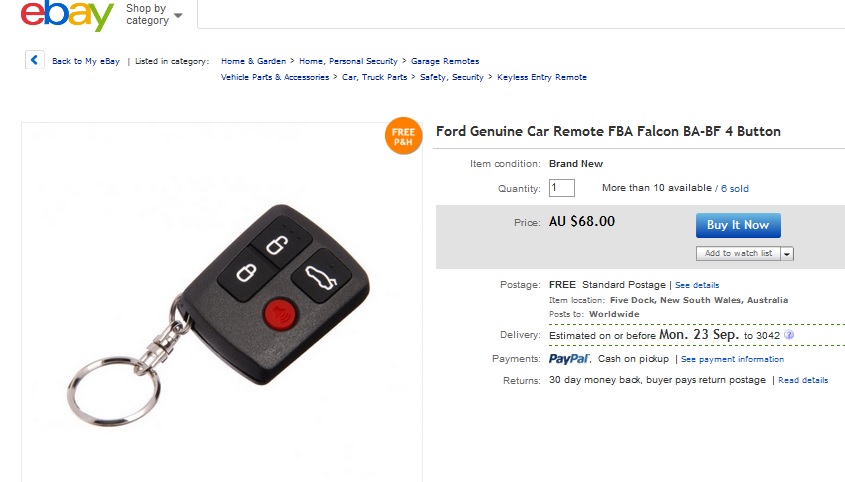
Typing in a few key words into the search bar, I came across an online store selling a brand new remote for $68 in one of those “this is not really an auction – “Buy it Now” deals, including free shipping.

car remoteSo I did some checking as you should always do when shopping online and discovered that they’re a “bricks and mortar” locksmith in Five Dock, Sydney – with an address, phone number and very high seller rating – and so I bought it.

It came in the post four days later and works like a charm.

I walked around basking in that strange warm, enveloping glow that happens when your research has paid off and there’s a couple of extra bucks in your bank account as a result.

It also got me thinking about retailing, specifically – are consumers being taken for a ride every time they buy something in a mall?

After all, I got the gadget for roughly half the price of what it would have cost me to buy it in Moonee Ponds and about 30% less what I was offered in Highpoint, even with discounts thrown in.

Of course, bricks and mortar retailers have to factor in things like rent – which can be very high – the cost of holding stock, staff wages, insurance and many other things which is partly why they charge more.

I say “partly” for good reason.

Recently I came across an article about the float of the Dick Smith electronic stores by the Australian Financial Review’s retail writer, Sue Mitchell.

She writes that Dick Smith chief executive and turnaround specialist Nick Abboud has established a “new sourcing office in Hong Kong and is now sourcing direct products for Dick Smithโ€™s growing private label range”.

“The private label products are cheaper than international brands but gross margins are around 80%,” writes Mitchell.

What this means is that a Dick Smith $396 television is only costing the company $79 before factoring all those other costs I’ve mentioned above.

Even when you tally up those costs, Dick Smith is making a healthy profit on each item they sell under their own brand and continue to do so even after offering as much as a 50% discount.

Clearly not all retailers operate on such wide margins, but still food for thought theย  next time you see the words “sale” and “discount” pasted across every shop in your favourite mall.

The not so subtle art of charity mugging

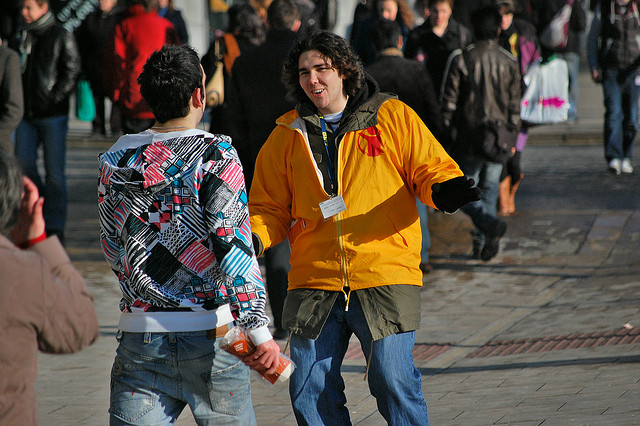
charity muggerHas a random stranger ever jumped out at you on the street like a slightly demented baboon, wanting to shake your hand and ask you how your day is going?

Did it feel nice? Did it feel genuine? Did you stop for a chat only to find out they’re actually some backpacker on a working holiday visa trying to convince you to sign up for a monthly donation to a charitable organisation?

Chances are, if you take a regular lunch break in just about any major capital city, you’ll encounter someone in a brightly coloured shirt – red, yellow or blue – with a lanyard around their neck, clipboard in their hand and a cheesy grin on their mug.

Welcome to the world of face-to-face fundraising or depending on your level of cynicism – charity mugging or “chugging” for short.

It’s hard not to be cynical when running into this mob.

For a start there’s all that silly chit-chat and superficial interest in your life which is only designed to get you to stop long enough for them to deliver their sales pitch.

If you’re foolish enough to stop, you’ll then most likely be told a little about the charity they represent, what it’s doing around the world and then there will come a line that goes something like:

“Would $10 a week mean a lot to you?”

“Could you spare it?”

And that’s the beginning of the guilt trip and coercion to get you to sign a direct debit form and ring up another sale and commission for the backpacker/fundraiser.

Perhaps you don’t feel all the guilty – after all it’s your money and yours to spend as you like.

Perhaps you’re potentially interested (after all, charity is in essence a good and noble thing), but want more information.

Is there, per chance, a brochure you can take away so you can think about it?

“No,” will come the swift reply. “We don’t have any brochures. But I’d be happy to answer any questions you have.”

“Can I find more information on the internet?” you may respond by saying.

“Yes, there is a website” the chugger will tell you. But why bother, when “I can answer all your questions” and again, you’ll be urged to sign up then and there.

Now let’s be honest. Charity mugging is certainly not the hard sell.

If you want a hard sell, try walking into a shop in the Marrakesh market or a stall on the heaving streets of Mumbai – if you’re weak-willed or easily swayed you’ll soon find yourself heading down to the post office to freight carpets, perfume bottles, trinkets and garments all the way home.

But that’s different.

Charity for me has always been a voluntary thing.

On the same day that I deliberately stopped to chat to two chuggers from Amnesty International on the corner of Elizabeth and Collins Streets in Melbourne, there was also a Salvation Army volunteer standing diagonally across on the other corner of the intersection with a red bucket and a sign, quietly and graciously accepting coins from passers-by.

No silly attempts at banal conversation. No facile compliments, no direct debit forms. Just happy to accept whatever people can spare.

The same can be said for those who sell The Big Issue. A greeting to passers-by, a polite request to possibly purchase a copy of the magazine and a smile and thanks if he answer is no.

Nevertheless, I was curious. Does the “in your face” method of chugging actually work? How much are these people being paid and who is hiring them?

So I send off some questions to Amnesty International’s media office and received responses shortly afterwards.

Their spokesperson confirmed that Amnesty International Australia engages “face to face fundraising suppliers” to raise support for its regular giving program and says it’s a “great return on ย investment”.

The people who do the chugging aren’t employed by Amnesty International but by specialist business organisations.

One such organisation is Cornucopia, who works with a number of charity such as the Red Cross, the Fred Hollows Foundation and Amnesty International.

There’s a group of cheerful people, arms raised as if they’ve just won the lottery pictured on the website, which spells out its modus operandi, that is:

“…by engaging members of the public in conversation in the street, at shopping centres, at their place of work and at home” [with the purpose to] “recruit…long-term regular givers for leading not-for-profit organisations”.

So just how much of every dollar you donate to Amnesty International via direct debit goes to the charity and how much into the pockets of Cornucopia and its sellers?

According to the Amnesty International spokesperson, its fee arrangement varies slightly from supplier to supplier and is detailed on the pledge form completed by the donor upon sign up.

“All donations are paid directly to us and we pay the supply a one-off fee from our fundraising budget for the year,” says the charity’s spokesperson.

I was directed to the following webpage on the Amnesty International website where there’s this chart:

How-your-donation-is-used

As can be seen, a hefty chunk – 42 cents of every dollar raised – does not go towards charity work at all.

Presumably the 22% dedicated to “building activist base” is the proportion of funds raised that goes to paying those annoying people who stand on the street with their smiles and one-liners.

But apparently it works, despite the negative press this selling method has attracted.

I’ve found dozens of articles critical of “chugging” including this incisive piece from The Guardian, which has as its heading a perfect encapsulation of how I feel: “Charity muggers can take the enjoyment out of giving”.

The article, written by Richard Coles, a vicar (a generally a charitable bunch by nature) makes some good points.

“I like the object of the exercise; Iย hate the method,” writes Coles, as he describes chuggers at work and how “they accosted people with arms outstretched, a friendly gesture that is actually designed to funnel you in toย their proposal; how they chastised those who wouldn’t stop; how theyย muttered insults at their retreating backs”.

I submit my objection is exactly the same.

It’s the manipulation, the guilty admonishment, the trickery that really pisses me off.

It seems to go against the whole ethos of fundraising – a carefully crafted psychological assault taught to backpackers in need of a buck, who then seek to torment the public to get to their wallets.

Apparently it works.

“We have been fundraising via face to face for 12 years. In this time we have found that this method is successful and provides a great return on investment,” says the Amnesty International spokesperson.

She says it accounts for around 72% of funds raised from regular donors, which in turn account for three-quarters of their total income.

That maybe so, but Amnesty International won’t be getting a penny from me until they drop the charade.

I might buy a copy of the Big Issue instead!

The kindness of strangers

customer complaintsThey say the retailing environment is tough at the moment.

The online world with its free shipping, discounts and gimmicks is really biting into “bricks and mortar” shops selling books, CDs, DVD and just about anything else you don’t have to eat or drink.

Even clothes.

Who would have thought that so many Australian consumers – men and women- would be buying entire wardrobes online?

But they are. Companies like UK-based fashion house ASOS are selling so much merchandise to Australians they’re having to fly in two jumbo jets a week just to fit everything in.

Anyway, I digress.

This week, amid this tough retailing environment, a complete stranger did me a favour.

I was in an ‘All Books 4 Less’, one of those discount stores that sells books for $5 and $10.

I picked out a book for my wife as a present. It was a nice book on crafts.

It cost $1o.

I walked up to the register and nice young woman scanned the book and told me it was $10.

I took out my wallet and handed her my debit card.

She pointed to the sign behind her and shook her head:

“Minimum EFTPOS transaction is $15” it read.

I shook my head and scrounged around in my wallet for a $5 note. Then I emptied out my front pockets and my back pockets and came up with a few dollars more.

She stared at me, smiling awkwardly, as I scrounged around in my bag for coins.

I laid everything out on the table and counted.

It came to $9.95.

Surely she would not begrudge me 5 cents?

“Oh I am sorry” she told me. “It is $10.”

“But surely…”

“No, sorry.”

I glared back at her. Indignant. Then I searched again in my bag and then in all the pockets of my jeans and then in my wallet.

Nothing.

“You’re being ridiculous,” I told her, the anger rising.

“I am sorry, the manager will see there is money missing.”

“But it’s five cents”

“I am sorry”

“You’re being ridiculous”

“I am sorry”

She suggested I walk to the nearest bank.

I searched through my bag, my pockets, my wallet again, refusing to move.

She watched me.

“Perhaps you can buy another book so you spend $15?” she suggested.

“I don’t want another book,” I replied.

Then a woman came up behind me to pay for some books.

I told her why I was standing at the counter with the contents of my bag spread out before me.

She frowned.

‘You wouldn’t have 5 cents would you?” I asked her.

She smiled, opened her purse and took out a 5 cent piece and gave it to me.

I thanked her.

I gave it to the woman behind the counter.

I left with my book.

I calmed down.

Reflecting back now on this, I have to ask: Has the retailing world gone mad?

Is this how you treat customers when you’re competitors are selling the same products at half the price?

But it seems it has.

There’s the story about the health food store in Brisbane charging customers $5 “to browse”ย  because the owner was apparently unhappy with giving customers advice, without the guarantee they would buy anything.

This is not an isolated innocent. In Newcastle (NSW), a shoe shop is charging customers $10 to try on shoes.

In both cases, the money is deducted if the customer makes a purchase, but who would bother putting up with this kind of attitude? Half the fun of shopping is the ability to browse.

And is this the best solution these two businesses can come up with to arrest revenue lost to online stores or cheaper competitors? Smacks of desperation. These businesses won’t last very long.

Such contempt for customers is happening at the top of the retail food chain as well.ย  Recently Myer managing director Bernie Brooks, suggested it would not be a good idea for taxpayers to fund the national disability insurance scheme (NDIS) because it would cut into the money people may spend in his department stores.

The social media backlash was brutal.

And let’s not forget another grumpy old retailer, Gerry Harvey, founder of Harvey Norman, worth close to a billion dollars, who loves to complain about online retailers stealing his business, Then he launched his own own online store.ย  Of course he is still loves running those “23 month no interest, no deposit, no repayment” dodgy offers that cost unwary customers hundreds of dollars in extra fees and other costs.

The fact is there are plenty of traditional retailers making good money because they know how to sell their products, sell the right kind of products and because they treat the customer as king.

This is just as true in the de-personalised online world, where for example the Book Depository charges no shipping fees at all even for international purchases.

So here’s a suggestion for the people at All Books 4 Less and every other retailer grumbling and looking to gouge their customers, even for a measly 5 cents.

Don’t argue with us. Don’t try and wrestle our money from us.

Treat us like old friends. Make us smile and we’ll keep coming back.

And remember that old saying: the customer is always right.

Even when he’s wrong.

The cabinet of horrors in every convenience store

It’s been six months since the government hit big tobacco companies where it really hurt them – their brands.

So here’s a little weekend tale, if anyone needed reminding:

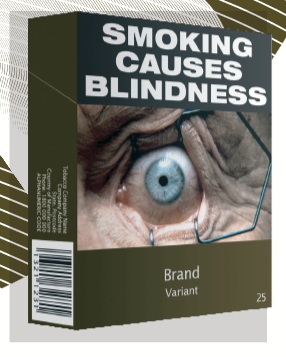
A little while ago, needing a few groceries, I drove up to the local store, parked the car, dashed in from the rain, grabbed a few items from the shelves and headed for the counter to find myself staring inside a veritable cabinet of horrors.plain packaging

It was the kind of scene that would, were it broadcast on the news, come with a warning: โ€œThe following graphic imagery may disturb sensitive viewers. Viewer discretion advisedโ€.

But what choice did I have other than to look?

Behind the head of the little Asian man serving me were images of diseased and blackened limbs, a cancerous, dissected lung, an eye socket prized open like a scene from the movie โ€˜A Clockwork Orangeโ€™, and an emaciated man dying in a bed.

All of these images were on the covers of cigarette packs stacked up in what looked like a white medicine cabinet, the doors flung open.

Instead of medicine though, itโ€™s death thatโ€™s up for sale.

plain packaging2These graphic, nausea-inducing images are to be found everywhere on billboards, in bus shelters, in print and online advertising,on the governmentโ€™s department of health and ageing website, and in discarded cigarette packs on suburban streets.

As I paid for my eggs, milk and bread, I was thinking, โ€œDo I have to see all of this?โ€

All of this is courtesy of the governmentโ€™s much trumpeted โ€˜plain packagingโ€™ requirements for all tobacco products, introduced on December 1 last year, which state that:

โ€œAll tobacco products sold, offered for sale or otherwise supplied in Australia must be in plain packaging and be labelled with the new and expanded health warningsโ€.

Just why the government has called its legislation โ€œplain packagingโ€ when itโ€™s quite the opposite is probably the reason Iโ€™m a journalist and not a politician.

The idea behind plain packaging is to prevent the misleading advertising of tobacco products with images and words aimed at discouraging new smokers from taking up the habit and convincing those who currently smoke to quit.

According to the government, an estimated 15,000 Australians die every year from smoking-related disease, costing the Australian economy and society approximately $31.5 billion a year.

Itโ€™s the governmentโ€™s key strategy in a very bitter battle against the tobacco industry alongside a raft of other measures that include a 25% tobacco excise increase in April 2010, more than $85 million spent on anti-smoking social marketing campaigns and legislation to restrict internet advertising of tobacco products.

Thatโ€™s fair enough and commendable.

But what about those of us who donโ€™t smoke?

What about our rights to enjoy a pleasant afternoon in the convenience store without being visually assaulted by images of a blackened, gangrenous foot or a spliced open, diseased pair of lungs?

Has the government gone too far?

More importantly are these graphic images really necessary and do they actually work?

The government says โ€œbranding and packaging designs on tobacco products can mislead consumersโ€ (who can forget the Marlboro Man?) but is there any evidence that these images are discouraging anyone from giving up or starting to smoke?

That answer wonโ€™t be known for a number of years since Australia is the first country to implement this policy, though according to anti-smoking campaigner Anne Jones, chief executive of Action on Smoking and Health, there are โ€œ130 published research studies showing that young people perceive tobacco in plain packs to be less appealing, less palatable and of lower qualityโ€.

And what about the advertising of two other major social ills: alcohol and gambling? Why have they gotten off so easily?

Clearly there is a difference between alcohol and gambling…and smoking.

Smoking is bad, period, but having a flutter on the horses or a glass or two of vino is not going to do any major damage.

But when either drinking or gambling are done excessively, the effects are just as damaging as smoking; indeed while smoking is usually a gradual decent into ill-health, a night of heavy drinking or one spent in front of a pokie machine can ruin a life in a very short time.

And while the proportion of people who drink excessively has hardly fallen in recent year – around one in five according to the most Australian Bureau of Statistics figures – smoking rates are going in the opposite direction, before plain packaging rules were enforced.

An article in The Age published in November last year reported that about 16.3% of adults smoked daily in 2011-12, well down from 2001 rates of 22.4%.

Indeed, smoking rates have fallen been for decades, with figures from Quit Australia showing that the smoking rate was 72% in males in 1945, 40% in 1980 and 25% in 2001.

And yet what do we get: a grotesque anti-tobacco campaign on the one hand, but on the other, ad after ad on the television, radio, print and online promoting beer, wine and spirits, while the pubs and clubs are stacked full with pokie machines and hundreds of millions of dollars are spent on new 24 hour casinos.

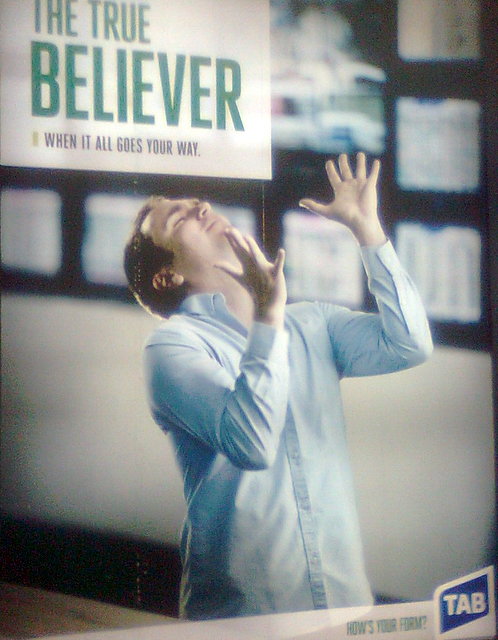
There’s even giant ads courtesy of TAB extolling the virtues of winning at gambling (the one below in Southern Cross train station) and a smug Tom Waterhouse in his suits saying its cool to have bet after bet after bet.

"The joy of gambling" - one of three giant TAB ads at Southern Cross station

“The joy of gambling” – one of three giant TAB ads at Southern Cross station

In contrast, cigarette advertising has been banned on Australian television since 1974 and in sports since 1992 (with a stay of execution granted to Formula One racing until 2006).

The government trumps its victory over big tobacco, but alcoholic beverage makers and the casino operators and bookies get a virtual free ride.

Perhaps theyโ€™re funding election campaigns, who knows?

But non-smokers like me, the vast majority of the population, not only have to put up with beer gardens and outdoor cafes packed with smokers, but the graphic images that assault the senses.

And let me ask you this question: have you ever actually heard of anyone quitting smoking because of the images and warnings on the packs?

All I see is smokers happily taking cigarettes from their “plain” packs, lighting up and puffing away while I get to ‘enjoy’ the image of a foot gone black with gangrene while I do my shopping.

But perhaps, I’ve got it all wrong.

Maybe, the real reason behind plain packaging campaign is not about smoking at all, but aimed at tackling another chronic issue in Australia: obesity.

In that regard, it will probably work a treat!

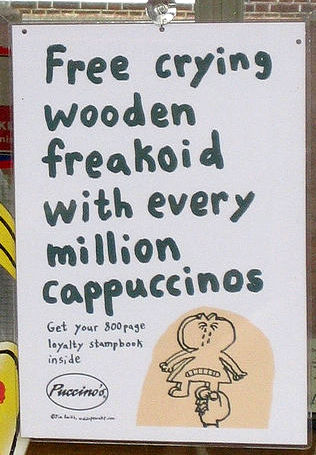
Loyalty programs: 11 years to shop my way to an ipad

loyaltyThe small lady behind the counter scowls when ever I order a coffee and give her my loyalty card to mark.

I’ve not yet seen her smile, perhaps she is incapable.

She doesn’t have a stamp, as most cafes do, but scribbles a signature in Chinese characters over one of the eight oval shapes that must be filled in before I get a free coffee at Coffee Kingdom (corner Market Street and Flinders Lane).

You’d think a smile might be a nice gesture since I choose her cafe among the myriad of alternatives to go to for my afternoon caffeine fix.

But no. She takes my money and signs my card like a teacher marking the report card of one of her least pleasing students.

I can only wonder how she is going to react when I fill in all the eight spaces and give her my card instead of money and ask for a skinny cappucino.

Will she spit in my coffee when I am not looking? Will she burn the milk? Will the coffee cup be only half full?

All this has got me thinking about loyalty programs.

A couple of years ago, I racked up enough points on my Virgin velocity card to buy an 80 GB ipod classic. It was pretty much top of the range back then – I still have it and use it often – and I was pleased with myself for having bought it for “nothing”.

But of course that’s not the case at all.

I first had to rack up a couple of year’s worth of trips to and from Sydney, a couple of overseas trips to London and back and one or two to Johannesburg and back – all on Virgin to get enough points to buy the gadget.

A while back I thought about writing a blog post about how much shopping I would have to do at Coles to qualify for say an ipad on the Flybuys loyalty program.

On Coles’ Flybuys program I need 113,800 points to buy an ipad 2 with wi-fi and 3G capabilities.rewards

Currently, after a couple of years of grocery shopping ( I don’t do all my shopping at Coles I confess) I have a whopping 5,700 points, which qualifies me for two movie tickets at Hoyts (worth about $40) with a few points to spare or just enough for a six month subscription to the ABC’s Gardening magazine.

So after years and many thousands of dollars spent on groceries, pet food and lately, nappies, I can cash it all in and go to the movies or subscribe to a magazine.

But what about that cherished ipad?

Flybuys does provide a calculator so I can estimate just how much I need to spend at Coles or Kmart or Liquorland to put in my order.

If I were to spend $100 per week on groceries at Coles, this would gives me 400 points. And lets say I spend $50 a week on average at Target (200 points) and $50 on booze at Liquorland (200 points) I’d rack up 800 points a month.

Divide that by 113,800ย  (minus the 5,700 points I already have accrued) and I get 135 months or just over 11 years.

More than a decade of loyal spending!

Of course in 11 years time, the ipad will probably be replaced by a device implanted behind the eyeballs operated by thoughts and god only knows how many points you’ll need for that.

(Ok, I’ve been watching too many sci-fi movies, but I do believe the next Samsung smartphone will have “eye-scrolling” technology)

The bottom line is that most loyaltly programs throw scraps at loyal customers in return for valuable information about spending patterns and the type of products we might like to buy.

Consider this. I got an email from Flybuys today offering me a bonus 200 points if I shop at the Coles kosher range before passover.

Now, I don’t imagine that catholic priests that do their shopping at Coles – and have never once boughtย  a kosher chicken at four times the price of a non-kosher oneย  – will have received this offer.

And I know why I got it.

I’ve only once ever shopped at Coles for kosher food. My mother came to visit last year from South Africa and we bought a kosher chicken and a few other things to prepare a traditional Friday night shabbat dinner.

Of course I duly swiped my Flybuys card and surprise, surprise – I’m on the kosher mail out along with all the regular kosher buyers from Bentleigh and Caufield.

(They must have ignored the bacon, hot cross buns and shaved ham I’ve bought in the past).

Shabbat Shalom indeed!

I should add that loyalty programs are brilliant if someone else is picking up the cheque but you score the points – such as businessmen who fly regularly on the company credit card. I think of the movie “Up in the air” and George Clooney receiving his special graphite loyalty card for racking up a 10 million air miles.

On a smaller scale, I could offer to get the coffee round at work and earn a free coffee everyday at Coffee Kingdom.

Imagine the look on her face!

Still crazy after 57 years: the KFC bucket remains on the menu

kfc bucketEvery once in a while, for reasons I cannot explain or begin to fathom, I find myself craving – against my better judgement, no, against my better nature – something from KFC.

Such an evil craving grabbed me this weekend, somewhere between Geelong and Ocean Grove. Next minute I found myself doing a u-turn at the lights and pulling into the distinctive red and white shop and standing in line.

There was a woman in front of me and it was taking ages for the pimply KFC staff snatched from pre-school to fill her order.

What was taking so long?

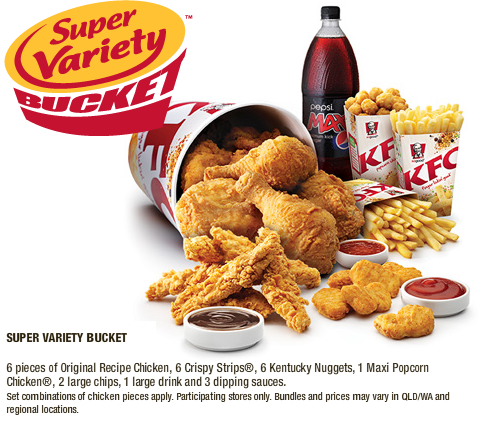
Then I saw the ‘super variety bucket‘ coming together with it six pieces of original recipe chicken along with six crispy strips, six nuggets, one maxi popcorn chicken, two large chips, one large drink and three dipping sauces.

variety bucket

And I started thinking. Yes, like every other fast food chain, KFC (formerly known as Kentucky Fried Chicken before they dropped the word “fried” to sound healthier) offers a number of healthy options.

But it’s the only fast food chain I know of that offers its meals by the bucket.

You can super size a McDonald’s meal that might squeeze into a bucket, but at least it doesn’t actually come in one.

And you could squeeze a couple of Dominosย  or Pizza Hut pizzas into a bucket too, but they’re traditionalists at heart and still prefer to serve pizza in a recycle friendly cardboard box with those cute tiny plastic tables to stop the cheese sticking to the lid.

So I stood in the queue thinking about the bucket being assembled at the counter and remarked (to myself of course not wanting to offend the large woman in front of me) that I could not believe theys still offer a bucket of fried food at KFC to purchase to anyone with $18 in their pocket.

(Also available by the bucket: 12 pieces of chicken plus sides for $24 and 16 pieces plus sides for $30)

There is, nor will there ever be, anything appealing about food served in a bucket.

A bucket is what you put offal in. A bucket is for the slops. A bucket is what you dip a dirty rag in when you’re cleaning the floor. There’s a sick bucket and a vomit bucket. And in Trainspotting there’s three buckets: one for piss, one for shite and one for puke.

But traditions die hard. Since 1957, KFC has offered customers a bucket of fried chicken and 56 years later, it’ s still on the menu.

It seems incomprehensible to me that any fast food chain – when Australia has one of the highest rates of obesity in the world – should be selling food by the bucketload.

Anyway, I ordered a Twister meal and as I ate I saw my future – I’d finish the Twister wrap and chips and mash and gravy and three crispy fried wings and I’d feel in a word “disgusted” with myself.

So in a rare moment of forward thinking, I ate one and a half chicken wings, half the Twister, half the mash and gravy, half my chips and left some of the Pepsi max in the can. Then I tipped the rest into the bin, placed my tray on top and left.

But not before I picked up KFC’s ‘Nutritional Information’ booklet.

Just what did KFC have to say about healthy eating?

I was intrigued. They actually have quite a lot of good things to say about healthy eating including the importance of eating foods from the five major food groups, balancing what you eat with how much you eat and the importance of exercise.

As pertains to their own menu they suggest the potato and gravy instead of chips, water instead of a soft drink and if you do have to have chips, try them without any salt. Plus theirs a big picture of a KFC salad (Yes, they have salad!)

Of course, no one who comes into a KFC is going to try the salad, and why would you have water when the meals all come with a soft drink? Yes, the mash and gravy is delicious, but who eats the chicken without the salty chips?

But the most telling line in the brochure is one under the somewhat sinister heading: “The Choice is Yours”

“With the right choices, KFC’s great tasting food can easily fit into a healthy lifestyle as an….

WHAT FOR IT

…occasional treat”.

There it is people, in black and white. If you’re eating KFC on a regular basis (as I just watched Charlize Theron do in one of the most insidious examples of product placement in the otherwise excellent film ‘Young Adult’) you’re doing your body a grave disservice.

The same nutrition guide also tells you that the average adult diet is 8700 kilojoules (kJ) per day.

Just how many are in the bucket I wondered?

This is the breakdown excluding the drink and dipping sauces:

Six pieces of original recipe chicken – 5355 kJ
Six crispy strips -2204 kJ
Six kentucky nuggets – 1270 kJ
One maxi popcorn chicken – 3087 kJ
Two large chips -4336 kJ

Total kilojoules in the KFC variety bucket – 16,252 kJ.

Or nearly the full daily food intake requirements of two Australian adults – in one meal.

Or put it another way,ย  if you wanted to burn those kilojoules off by exercise, KFC’s nutrition guide is extremely helpful in working this one out)

A 3 km jog burns off around 1500 kJ says KFC.

Burning off the kilojoules in one KFC bucket would require that you run 32.5 kilometres, around 8 kilometres each if four of you shared the bucket.

Of course that will just burn up the excess kilojoules (if you can actually find the energy to go running after such a meal) but what it won’t get rid are the mountains of salt you’re putting into your body.

I won’t repeat the calculation in the same detail, but consider that the recommended adult daily intake of salt is one-to-grams a day with a maximum of six (according to an article by Sydney Morning Herald health reporter Louiseย  Hall in 2009).

A KFC variety bucket contains around 7 grams of salt.

In that same article, Lousie Hall, writes: “There is a strong link between salt, high blood pressure and coronary vascular disease, including heart failure, kidney failure and stroke. Children who eat a high sodium diet are at risk of developing obesity, asthma and high blood pressure.”

And as you consume all these figures (perhaps with your bucket of delicious, salty KFC chicken plus all the accoutrements it comes with) consider this final thought.

In 2011, during the Sydney Ashes test match between Australia and England, KFC “magnanimously” donated $1 from every pink bucket of deep-fried chicken to the breast cancer charity, the McGrath Foundation.

(One more piece of KFC bucket trivia: In 1957, the KFC bucket offered what it considered the “complete” family meal of 14 pieces of chicken, five bread rolls and a pint of gravy for $3.50).

Another “magnificent” beet-up from the attention-seeking hypocrite Dick Smith

newbeetrootsizedwebshadow_0For those who missed it, Heinz is threatening to sue Dick Smith after his Magnificent Australian Grown tinned beetroot label included the following:

”When American-owned Heinz decided to move its beetroot processing facility from Australia to New Zealand causing hundreds of lost jobs, we decided enough is enough.

”So we are fighting back against poor quality imported product.”

Since the story “broke” Dick Smith has made headlines in every major newspaper and news website in Australia talking up his products and vowing not to crumble to the whims of the US food-making giant.

Let me tell you something.

Despite what it may say on the label, there’s nothing at all magnificent about any of the products Dick Smith flogs at customers in supermarket stores around Australia.

They all look like cheap imitations of the real thing and that’s exactly how they taste.

The other day on a whim I bought Dick Smith’s ‘Magnificent Australian Grown Raspberry” a spreadable fruit product that masquerades itself as jam.

dick smith

I bought it despite it being more expensive than the French-imported St Dalfour brand, which actually has bits of real fruit in it.

st dalfour

You could almost pick up the Dick Smith brand by mistake (no doubt that’s the intention, it’s surely not flattery) as it is in an almost identical jar, has similar labelling and an almost identical list of ingredients.

(This is ironic of course, given Dick Smith’s public tirade against German-owned Aldi, which makes products that mimic more famous brands)

Except of course there’s Dick Smith face trying to be to jam what Paul Newman was to salad dressing.

Dick Smith’s spread sells for $4.61 and St Dalfour’s for $4.29.

I spread both of them on a half of a bagel and munched away.

OK, I am not going to tell you the Dick Smith brand is inedible – that would be only the kind of media stunt he would pull – but it’s decidedly ordinary.

In fact perhaps he could change the name to Dick Smith’s Decidedly Ordinary Australian Grown raspberry spread? At least he’d be poking fun at himself. Hey, he might even sell more products.

But the question must be asked: why is a product made from ingredients grown in Australia and manufactured in Belrose Sydney more expensive than the better tasting French-made product that is made from imported ingredients and flown in from the other side of the world?

But these sorts of things are, I am sure, just silly details for the man who is no doubt lapping up all the media attention generated by his latest spat with Heinz.

The cold, harsh facts are that Dick Smith is a complete hypocrite.

Dick Smith made his millions flogging cheap Asian electronic products at Australian consumers for years, products most likely made by small children in overcrowded sweatshops.

He was happy to flog them and happy to get rich doing so.

Now that he’s flush, he’s conveniently turned himself into a champion of Australian-made products even if they’re more expensive than those made overseas.

Yes he gives the profits earned on these so-called magnificent products to charity (only ocker Australian charities need apply) but unfortunately, he’s used the moral high ground to spread a subtle message of xenophobia, racism and hypocrisy – disguised as being proudly Australian.

He’s a bit like one of those people who waves the Australian flag on Australia Day and talks about how proud they are to be Australian and then picks a fight with an Asian or Muslim while walking home with his mates.

Just watch his banned commercial, which turns the fate of refugees aboard a sinking boat into joke about buying his products and you’ll get the picture.

And how about this page on his website, with its covert anti-Muslim message.

Count how many times the word China pops on the pages of Dicksmithfoods.com.au in reference to foreign ownership of Australian businesses and then try find mention of how Chinese demand for Australian raw minerals has propped up the economy for the last four or five years.

And while he is happy to list all the Australian brands now in the hands ofย  foreign companies, he conveniently fails to make any mention of the Australian mining companies that own mines in Africa, South America, Eastern Europe and Asia helping to generate mega-profits.

Yes Dick is happy to lend his support to Cate Blanchett when she spoke in favour of the carbon tax (though too gutless to actually appear in an ad in support of the tax), but did he have anything to say when his friend Gina Rinehart suggested Australian miners be paid $2 per day like their African counterparts?

Not a word.

But find a story about an Australian buying an Australian business (Dick Smith was happy to lend his support to Rinehart’s failed bid for control of Fairfax, despite the obvious damage it would do the freedom of the press) and Dick Smith will be there wearing his vegemite hat and waving the Australian flag.

The truth is we don’t need Dick Smith jumping up and down from his mansion on the outskirts of Sydney (reached by helicopter no less) telling everyone what they should be buying at Coles and Woolies and not at Aldi or Costco.

We’re smart enough to make our own choices about what we buy and who we buy it from.

I have my own magnificent gesture for Dick Smith, from now on I promise that even if his product is cheaper, tastier and made from ingredients grown in someone backyard down the road, I’ll choose to buy the imported product.

And I’ll shop at Aldi, and buy a BMW (one day) and fly Emirates instead of Qantas, sipping an ice-cold Heineken while dining on Norwegian smoked salmon and perhaps potatoes grown in Idaho.

‘Gadget’ peer pressure or “what’s that piece of cr*p you’re using?”

351571200_1db3e97f22_zI’ll come right out and say it. I don’t yet own a smartphone.

Shock. Gasp. Horror.

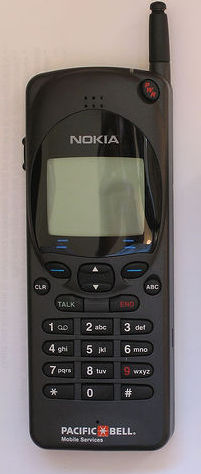
I still have one of those Nokia cheapies.

It’s not that bad.

You can search the web if you’re nostalgic and fancy recalling what dial-up internet used to be like… and it has maps that load up just as you reach your destination.

I also don’t own an ipad or any tablet, though I do have a kindle, which my wife bought me for my birthday.

Don’t get me wrong, I like gadgets and if money were no object I’d buy all of them, Stephen Fry-style, in one big splurge (I believe Fry has quite the gadget fetish and likes nothing more than to come home with a crate load of the latest techno gadgets).

I just seem to be making the transition to new technology a lot slower than most and delaying the capital outlay.

It took my wife and I an age to buy a flat screen digital television.

A year ago we were still watching movies on the equivalent of a postage stamp.

It was only when we realised that going to the moviesย  would be hard when our Edie was bornย (read my post: My eight months without cinema for more on this) that we splashed out and got a 42 inch beauty for a bit of the home cinema feel.

Funny thing is, some of the older technology is a better suited to my purposes.

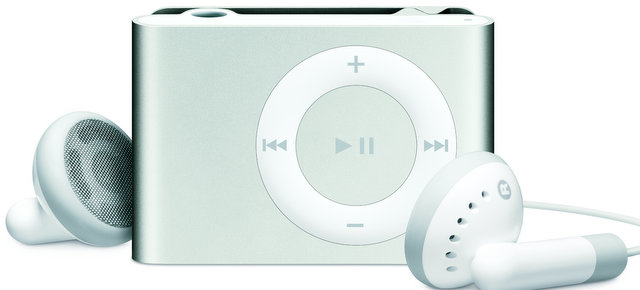
For example, going for a run, the tiny little square ipod shuffle (the one Apple brought out in 2006 and are still selling) that weighs as much as a feather and is smaller than After Eight dinner mint is perfect for the task – why bother strapping a full-size ipod to your arm and running lopsided? (Actually, I’ve seen people wearing full-sized ipods or iphones on both arms to balance themselves out I imagine – no kidding.)06shuffle_earbuds

But I have to say, the pressure is rising and I am starting to feel like I’m living in the dark ages for all my lack of technological accoutrements.

It started with a phone call to a family member, which ended with me being admonished for not having an iphone.

“What? You don’t have an iphone?

“What kind of phone do you have?

“You have what?

“Jaysus.

“Well you better getter one.”

This was followed a few weeks later with this somewhat bitter aside: “You know, if you had an iphone or a Samsung Galaxy I could send you a photo of what I am describing right away?”

“So…when are you getting one?”

Then over dinner with friends a couple of weeks ago “You know you should really get a smartphone. You’re a journalist. You’re a blogger. You really need one.”

And then in the office earlier this week, I was ambushed by my colleagues “You mean, you don’t have an ipad or an iphone?”

Snigger, snigger.

Joke about wife not letting me buy one.

Snigger, snigger.

OK, everyone just calm down. Put away your “Steve Jobs RIP” banners. I get the message.

Yes I know:

  • I’m the only one on the train who doesn’t whip out his smartphone to tap out a message, update their Facebook status or tweet a thought for the day.
  • Yes there are old grannies with perms and tissues tucked under their hand knitted jerseys that can swipe across a smartphone screen faster than flip through a magazine.
  • And yes, the rumours are true, they’ve started giving out an iphone and a book of McDonald’s baby happy meal vouchers (haven’t you heard of the McSlop?) with all new babies born in Australia?

Truth be told I do find myself paging longingly through store catalogues and admiring the phones and tablets on offer, but then when I see the prices or the contracts and the monthly fees I tell myself I can manage another month with my piddling device.

I recall the very first mobile phone my father had.

It was the size 0f a mini rocket launcher and weighed as much as a brick. It could just squeeze into his bedside draw and had a long aerial that you pulled out army style. Boy, was it cool!21581808_45a7b5da91

Flashing forward in time…I’m sitting on court number one at Wimbledon, pork pie in hand, jealously studying a bloke in sunglasses and a tan, snooty girl-friend on his arm, checking his email on a small squarish device called Blackberry.

Whatever happened to those? Apparently even child soldiers in Africa refuse to use them.

But I know it’s only a matter of time before I’m tapping away on a palm-sized gadget, making 1970s-faux images with Instagram and sending witty tweets about advertising slogans while walking around the city during my lunch break.

Hopefully I won’t end up as one of those freakish stories you read about in a little item on page 12 of Mx: man hit by bus while crossing road, laughing at silly photo of monkey wearing underpants on his head on facebook.

Tap tap.