 Like many people, I watched the Netflix teen suicide drama ‘13 Reasons Why’.
For those who have not seen it, its the story about attractive high school student Hannah Baker who decides to kill herself after series of horrendous personal events convinces her that her life is not worth living.
But before she kills herself, Hannah makes a series of audio tapes detailing all the reasons for her forthcoming suicide and, implicating all the people in her life that drove her there.
The series has garnered a huge amount of controversy and outrage – mostly from parents and teachers – because of its subject matter and graphic depiction of Hannah’s suicide, as well as two brutal and graphic rape scenes.
Among the claims made often about the show is that it is a virtual manual for how to top yourself and that it depicts suicide as some kind of triumphant payback.
Television critics though have hailed the show as groundbreaking and one of the best shows yet to come from the Netflix production stable.
But the uproar has seen the TV series banned in some schools in the US and Canada, the book upon which the movie is based also banned, while some schools have banned kids from talking about it with their classmates (as if that is ever going to work).
In Australia, there has also been criticism of the show from mostly older people, including Daily Telegraph write Louise Roberts who thought it was a missed opportunity and should have been a show called ’13 Reasons Why Not’ where Hannah Baker chooses not to die.
“The series feeds kids a one-dimensional view: kindness can fix anyone but there was no kindness for Baker so she “got her own back” from beyond the grave,” Roberts wrote.
Another critic, MammaMia’s Jessie Stephens called it at best “misguided and naive, and at worst, dangerous and irresponsible” with these types of angry responses repeated by others.
Frankly, its all a little bit ridiculous. It reminds me of those conservative people who claim listening to Rock ‘n Roll would warp young minds in the 1950s and 1960s or that violent movies inspired people to commit horrendous acts. Or that watching pornography turned you into a sexual pervert.
If anything, all the adult outrage is only going to encourage more teens to want to watch the show – and I think they should.
Why?
Well firstly, it’s a show that honestly examines life from the point of view of a modern teenager. Bullying via social media. Drug and alcohol use. Sexual promiscuity. Abusive parents. Homosexuality. And yes suicidal thoughts and depression. If anything watching 13 Reasons Why should be compulsory viewing at high schools and then used as a way to start conversations and explore these difficult, but crucial topics.
“All that drama and craziness we went through during high school seems a lot less important now, but watching 13 Reasons Why, I’m reminded of how enormous every little problem seemed at the time,” wrote Erik Kain, a contributor to Forbes.com
Secondly, 13 Reasons Why does not, in my opinion glorify suicide in any way. In fact, the graphic nature of Hannah’s demise in the final episode is so awful – and so final – it acts more as a deterrent to someone contemplating something so drastic. Personally, I cannot imagine how anyone could watch that horrible scene and be inspired to copy it.
Thirdly, the show does not resort to one-dimensional charactors that you might find in other lightweight shows that deal with teenagers (a prime example being the over the top Netflix show Riverdale, based on the Archie comics). The main characters in 13 Reasons Why are complex, emotional people, trying to fathom their identities and make sense of the adult world. Take for instance the sage-like Tony Padilla, the Latino guy in his leather jacket and red Ford Mustang who despite the faux machismo is actually gay.
“In Tony, I saw a familiar struggle to reconcile gayness, machismo, and the Catholicism that is so prevalent in our culture,” wrote writer John Paul Brammer in TeenVogue.
Tony I would suggest is a strong role model. He is insightful, intelligent, kind and nurturing. He is also comfortable with his sexuality. He offers compassion in the often cruel and callous lives of emerging adults.
A fourth good reason to watch 13 Reasons Why is its depiction of adults as flawed and fallible human beings. Adults make mistakes. They don’t understand young people or misinterpret their behaviour. They miss all the seemingly obvious signs. One of the most unfuriating characters in the show is the school counsellor Kevin Porter, a man completely out of his depth who when Hannah Baker comes to him for help, can’t seem to stop being distracted by his mobile phone.
Fifthly, it is compelling, brilliant television. Difficult to watch at times for sure but also with some sublime and beautiful moments amid all the angst. It’s also superbly acted by its young cast of future Hollywood stars. 13 Reasons Why embraces and explores big themes like friendship, trust, betrayal, and importantly, forgiveness of oneself for mistakes we make in life.
We need more shows that depict life from the point of view of the teenage mind. Growing up is complex, painful and bewildering.



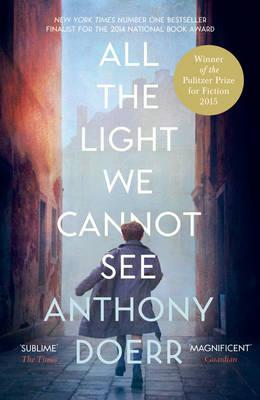 All the Light We Cannot See is a historical novel by American author Anthony Doerr that won the 2015
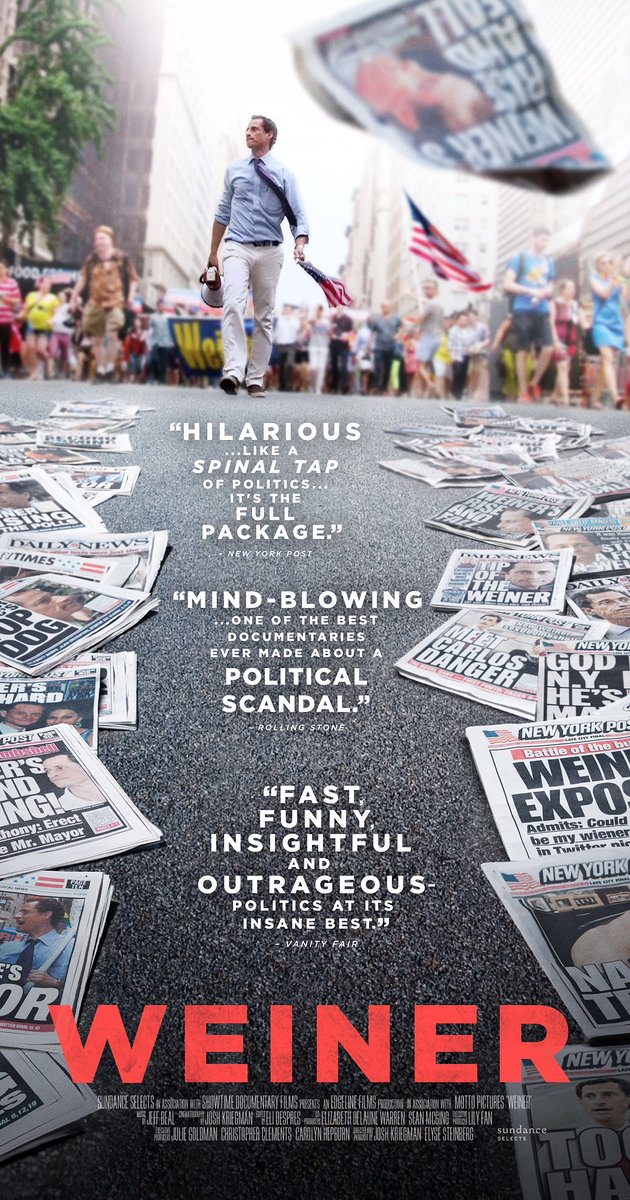
 There’s a brilliant documentary floating about called
 On the lookout for something bold and exciting to read, I browsed through my well-thumbed copy of 1001 Books You Must Read Before You Die and came across The Master and Margarita by the Russian writer Mikhail Bulgakov.
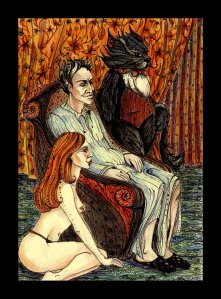 This combination of cunningness and gentlemanly charm pervades the whole novel as Woland and his companions – the grotesque valet Koroviev; an enormous talking black cat called Behemoth (one of the best creations in fiction in my view), fanged hitman Azazello and an assortment of witches and other demons wreak all manner of chaos on Moscow’s disbelieving middle-classes.
 The horror is ratcheted up a notch as Bengalsky’s head is picked up and showed to the audience. “Fetch a doctor” the head moans. After promising to stop talking “so much rubbish” the head is plopped back on its shoulders as if it had never been parted.
 I recently sat down over an informal lunch with a large real estate group in their high-rise office.
 Zoo Time is another very funny, novel by Howard Jacobson, the writer of the Booker Prize-winning The Finkler Question (
 The Bell Jar is the only novel written by the late, great American poet,
 I suppose I consider myself something of a pioneer for reading two novels – Big Little Lies and The Husband’s Secret – by the best-selling Australian writer Liane Moriarty.
 The Husband’s Secret is a modern-day take on the fable of Pandora and her box. A much darker book, it explores how the lives of three young woman are impacted by the murder a young girl that happened 30 years ago and a letter – found by accident – that reveals a terrible truth.
 The joke that sticks doggedly in my mind from stand-up comic Tom Ballard’s Saturday Night gig
 Freshlyworded