An opinionated journalist's thoughts on media, film, books, sport, politics and the occasional rant. Or as William Burroughs put it: "A writer must write"
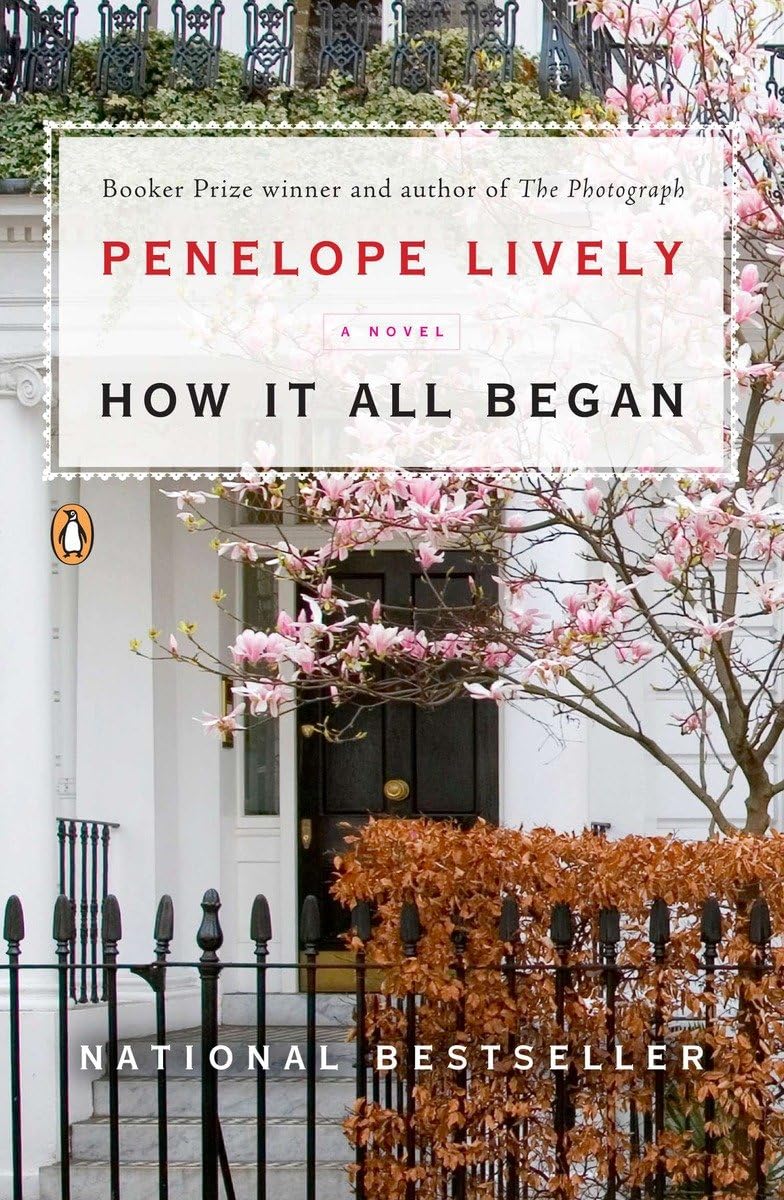
How it All Began by Penelope Lively begins violently with the mugging of retired and widowed schoolteacher Charlotte Rainford on a London street and then follows the lives of the people impacted by this random event: those both close to Charlotte like her adult daughter Rose and people she has never met like Marion, an interior designer and Jeremy, an antiques dealer.
Forced to recuperate at her daughter’s house, Charlotte introduces Anton, an Eastern European migrant into Rose’s life when she agrees to tutor him at her temporary home. Caught in a loveless marriage to dull Gerry, Rose develops strong feelings for Anton, who is funny, charming and sincere.
Meanwhile, in another part of London, the lives of retired diplomat and historian Lord Peters and his niece, Marion, are set on different courses by the mugging of Charlotte.
Rose works as the personal secretary to Lord Henry Peters. When she is unable to accompany him to give a lecture in Manchester because she has to take her mother to a doctor’s appoint, he asks his niece Marion to accompany him instead.
Without Rose by his side, Lord Peters forgets his lecture notes, and he gives an embarrassing performance that has him questioning his own relevance and embarking on a bizarre television project. Marion finds herself seated next to a charming, wealthy businessman, who at first seems to be the saviour of her struggling interior design business, but who turns out to be a conman.
Charlotte’s mugging also exposes an affair Marion is having with Jeremy, a self-centred married man who runs his own failing antiques business. Marion sends Jeremy at text message to say she cannot make a rendezvous, but it ends up being read by Jeremy’s wife, Stella. Stella engages a lawyer and files for divorce.
While this may sound like the makings of a rather gimmicky work of fiction, Lively, who is now well into her nineties and is a Booker Prize winner (1987 for Moon Tiger), does a great job of elegantly orchestrating events and drawing the reader into the heads of the characters as they navigate the unexpected challenges they must now navigate. The novel moves almost cinematically from one storyline to the next added by Lively’s beautiful prose and well-rounded characters.
Reading the book made me think of my own life and how random events that seemed inconsequential at the time, have had a profound impact on the trajectory of my life. An unexpected conversation, a chance encounter, a phone call missed or answered, an opportunity taken or not taken. All these things have set our lives on unplanned pathways. But more so, they have impacted the lives of others, people we know and those we will never know.
While I have not read any of her other books, I have read that the role of chance and “haphazard what-might-have-beens” (to quote a New York Times review) is a theme explored in other novels by Penelope Lively.
“Thus have various lives collided,” Lively writes in How it all Began, “the human version of a motorway shunt, and the rogue white van that slammed on the brakes is miles away now, impervious, offstage, enjoying a fry-up at the next service station. Just as our mugger does not come into this story, not now, anyway — job done, damage complete, he (or she) is now superfluous.”
The butterfly effect, the notion that seemingly trivial events can set off chain reactions and generate unexpected consequences is a powerful concept and explored to great effect in How it All Began.
(It would also make a rather excellent television series, if well adapted.)
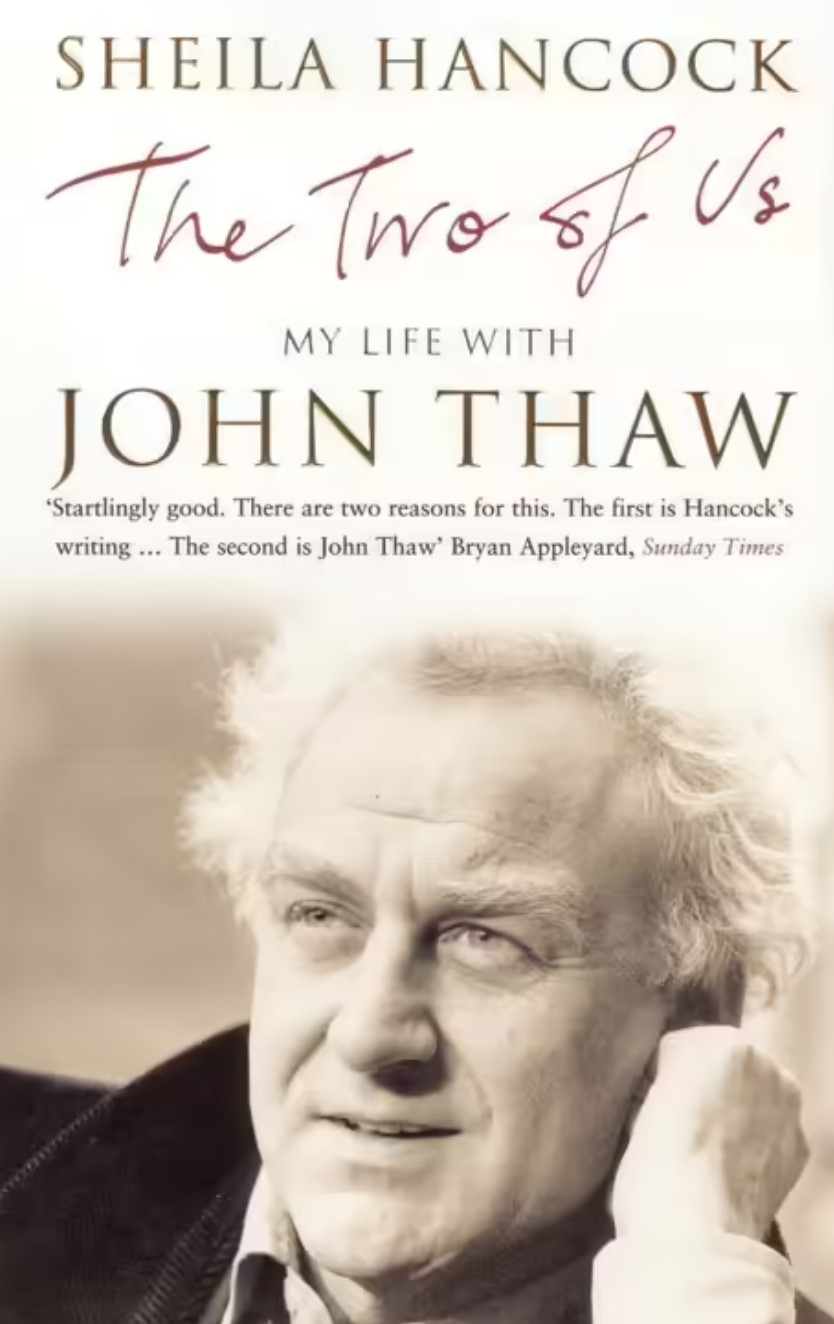
Sheila Hancock’s wonderful memoir The Two of Us gives excellent insights into the personality and demons of the brilliant late actor John Thaw, who famously played Inspector Morse in one my favourite television series of all time.
The event that had such a devastating impact on Thaw’s life, as told by Hancock, was the day his mother Dorothy (or Dolly as everyone called her) walked out on the family, leaving the seven-year-old John and his younger brother Jack deprived of a maternal figure they adored.
This profound loss was the underlying force behind the intensity of his acting (he was utterly dedicated to the craft, though never comfortable with being a celebrity). But his mother’s disappearance from his life also fuelled a great anger and rage that turned Thaw into a heavy drinker and a verbally and emotionally abusive husband.
Hancock is incredibly honest about the challenges of her marriage to Thaw, which was unbearable at times. But she also writes of the later years of their marriage when Thaw stopped drinking and their relationship found an even, and very loving and devoted keel.
However, the great tragedy of it all was that after all the years of heartache, the splits and re-unitings, Thaw should fall very ill with cancer just as they were truly happy together.
Hancock, herself a celebrated actor of the stage and screen (now 92, I last saw her in a small role in the excellent cold case series Unforgotten) was married to John Thaw for nearly 30 tumultuous years and was with him the day he died in 2002 after battling cancer.
Hancock, was left utterly devastated by John Thaw’s death, despite their very volatile marriage.
It’s quite an unusual book because it’s both an autobiography of Hancock’s life – who was made a Dame in 2011 for services to drama and charity work – and a biography of John Thaw, who shunned the celebrity life, and would probably never have written an autobiography.
It retells their family histories – Hancock was born on the Isle of Wight in 1933 and grew up living above pubs including in the rough and tumble of King’s Cross, London, while Thaw, nine years younger than her, spent his youth in the working-class suburbs of Manchester.
She writes about their first marriages, the trajectories of their acting careers (her close friends include the Carry On actor Kenneth Williams) and how intimidated she was when she first met Thaw when they began acting together on the West End play, “So What About Love?” in 1969.
John Thaw with Sheila Hancock
“The first week of rehearsal of So What about Love? was an unmitigated disaster. I always approach a new role convinced that I cannot play it and on the few occasions that John Thaw looked up from his script, his expression of contempt implied that he agreed,” Hancock writes of their first encounter.
But Thaw quickly warmed to Hancock, and she to him, as he – like his great detective character Inspector Morse – revealed his love for classical music, art and fine wine.
They married in a registry office in 1974. While initially things went well, Thaw’s drinking and depression worsened, and their marriage deteriorated. Hancock paints a quite different picture of their marriage to the one described by Thaw on an episode of the famous BBC series (now a podcast) Desert Island Discs recorded in 1990. On it, he suggests that they had sorted out their problems (mostly to do with his acting commitments), whereas the truth of the situation was a lot darker – as recounted by Hancock in her book.
“By 1990, both Morse and Home to Roost [a sitcom Thaw starred in] were in the Top 10 of the ratings. John was at the height of his popularity but off-screen he was fighting profound depression.”
It would take another five years for Thaw to seek professional help, quit drinking and reunite permanently with Hancock. From then on, they lived blissfully.
John Thaw with his mother, Dolly
After his death – her recounting of Thaw’s final days in diary entries is so very moving – she took a keen interest in learning more about her late husband’s mother, to understand why she had made such a devastating decision to leave her children.
To her great credit, Hancock does not demonise Dolly even though she caused Thaw so much pain, and in turn herself through their turbulent marriage.
“I will attempt to get inside Dolly’s skin, as if I was going to play her and try to understand what John never could or would.”
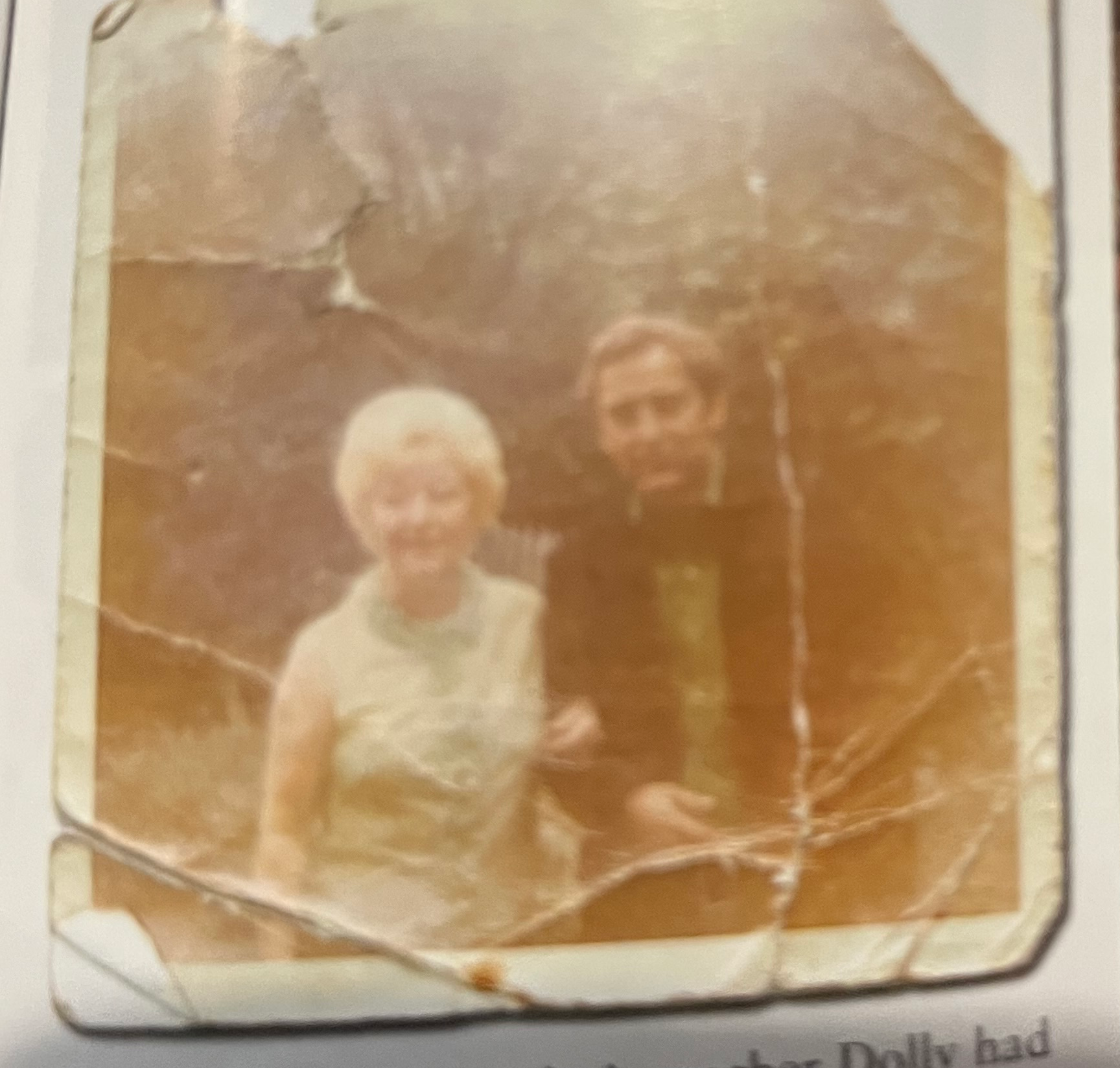
Alongside Hancock’s wonderful writing, The Two of Us is full of many great photographs, both professional and personal. Perhaps the most interesting and saddest of all is a faded and crumpled picture of Thaw taken with his mum on a rare union.
Hancock captioned it by saying: “It was found in her (Dolly’s) bag when she died.”
Her interest in the forces that moulded her husband – both good and terrible – make this a marvellous memoir. Any fan of John Thaw and Hancock (who is far too self-deprecating in her writing) will enjoy reading it, as I did.
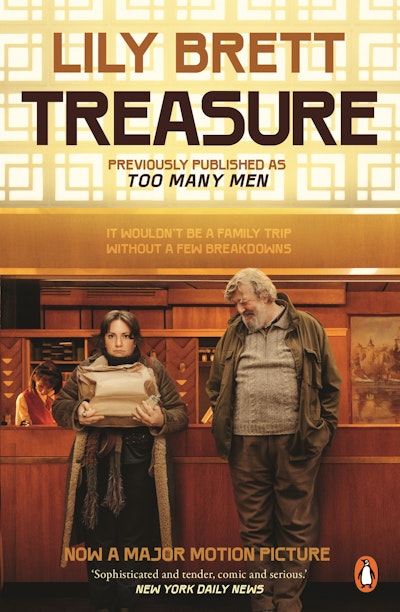
I’m nearing the end of Lily Brett’s semi-autobiographical novel Too Many Men, or as it has been re-titled Treasure in keeping with the movie adaption starring Stephen Fry and Lena Dunham.
It’s the story of Ruth Rothwax (Lily Brett), a 43-year-old thrice-divorced owner of a letter writing business who travels from her home in Manhattan to meet her 81-year-old father Edek (Max), a holocaust survivor to accompany her on a trip around Poland visiting the ghettos of Warsaw, Lodz and Krakow and culminating in a trip to Auschwitz and the nearby death camp of Birkenau.
Edek, who survived the hells of the Lodz ghetto and Birkenau has travelled from Melbourne where he lives alone. His wife Rooshka, an Auschwitz survivor, died in her sixties from cancer. Ruth moved to New York many years ago.
The pair are close but frequently argue. Ruth is wracked with guilt and worry about her father (Is this trip too much for him?) while Edek, who has an enormous appetite, berates her for “eating like a bird” and being rude to Poles they meet on their travels.
Having visited the Lodz apartment where Edek and Rooshka lived before being march to the ghetto, they make their way to Krakow and then to Auschwitz. Here, Ruth becomes physically sick after they visit the very barracks where Edek “lived” during his barbaric imprisonment. The whole visit is a terrible ordeal for her as she struggles to comes to terms with the suffering of so many people and the fact that her own parents were subject to the degradation and humiliation within the grounds she walks. On her arrival she weeps as she sees the famous sign “Arbeit Macht Frei” (“Work makes you free”) that tricked arrivals into thinking they were being sent to a work camp. Ruth is enraged by a group of school kids eating snacks and fighting with each other, and in the taxi ride from Krakow to the Auschwitz she repeatedly corrects the cab driver for referring to their destination as the “Auschwitz Museum”.
‘It’s a death camp,” she tells the taxi driver over and over again.
Ruth is angered by the cleanliness and order of Auschwitz, the huge numbers of tourists and the lack of a visceral sense of the horrendous suffering enduring within its walls.
Ruth wished the visitors to these blocks could experience something of the atmosphere of degradation and humiliation and inhumanity that had existed. How could you feel people’s anguish and terror in centrally heated, newly painted barracks? But maybe nothing could ever replicate a fraction of the atmosphere, a fraction of the events that took place.
Nobody would come here, she thought, if this place was still covered in shit and piss and lice and rats and vomit and ash and decomposing corpses. The car park wouldn’t be full of tourists coaches. People wouldn’t be looking at the photographs and other exhibits on display in these rooms. These renovations were probably necessary. She had to stop being so judgemental, she told herself.
Ruth and Edek’s trip to Auschwitz made me think back to my own visit in May 2010, as part of a round-the-world backpacking trip I did with my wife after we got married.
I remembered the small minivan we took from Krakow to the death camp, a journey of about an hour through pretty countryside. I remember wandering the grounds of Auschwitz and seeing the rooms with the giant piles of shoes, glasses, hair and artificial limbs behind glass. I remember thinking I should feel more, or should be in shock, but perhaps like Ruth, I found it all too “neat” and “cleaned up”, too much like a museum rather than the remains of a slaughterhouse that treated people like insects to be squashed underfoot.
Then I decided to re-read the blog entry I wrote from the day of our visit, which I posted on our online travel journal.
How does one describe a visit to Auschwitz? A journey to the gates of hell perhaps? A place of unimaginable suffering and brutality? Probably all are insufficent. Yesterday we spent the day visiting Auschwitz and the nearby camp of Birkenau (Auschwitz 2). It’s a little over an hour by bus from Krakow. We travelled in this strange mini-van, posing as a municipal bus, which picked up people along the route so that by the time we reached the little town of Oswiecim (renamed Auschwitz by the Nazis. Incredibly, the town now bares the inscription, Oswiecim: city of peace) it was packed to capacity and stifling hot. It was a pretty unpleasant ride, (despite the very pretty Polish countryside we passed), but it did make me think of all these people crammed into those windowless cattle cars and though nothing at all like the horror of those cramped conditions, it felt quite appropriate to not be comfortable.
The two camps are joined by a free bus service. We first went to Birkenau. Beyond the famous main entrance and watch tower, through which the trains passed, the most overwhelming thing is the sheer size. It’s enormous. At its peak there were 100,000 people living here under the most appalling conditions. Each of the barracks housed as many as 1,000 people. We listened to a guide tell a tour group that the prisoners were only allowed to go to the toilet twice a day and because there were so many, they only had about 40 seconds to use the latrine. Just one of many awful stories.
(In the scene from the book, Ruth and Edek examine the crude toilet block comprised of concrete benches in parallel lines with holes cut out of them the size of dinner plates. Thirty-four circles, inches apart from each other so that the prisoners could not help but touch each other while they urinated and defecated. Everyone sick with diarrhea, the holes below filling up almost to the top, the stench unimaginable. Then she starts vomiting down one of these holes and cannot stop.)
My blog entry continues:
A lot of the barracks are still standing (where they are not, you can see the foundations so it is easy to get a sense of the scale). At the far end of the camp, at the end of the railway line, are the remains of the gas chambers and crematoria. They were blown up by the Nazis just before the camp was liberated. Despite the heaps of rubble, you can see the steps down which prisoners were led, the changing room where they were forced to strip before being led into the “showers”.,
Auschwitz main camp houses the museum in the brick barracks (it was formerly Polish army barracks) where prisoners were held. Unlike Dachau, where the museum assaulted you with information, here it is relatively succinct, leaving you to take in the exhibits. One of the barracks contains huge displays of what was taken from those before they were gassed: mountains of hair shaved off prisoners (the Nazis sold the hair to textile firms), spectacles, shoes, toothbrushes, and artificial limbs. There are piles and piles of these things, and this probably just a fraction of what was found.
The walls of the barracks were lined with photos of prisoners admitted to Auschwitz including their date of arrival and death. Some lived only a few days, some a few months and some more than a year or two. How to survive such a hell hole for a day let alone a year, I just cannot fathom.
(In the book, Ruth and Edek visit Auschwitz on a “dull, grey wet day” and is relieved not to visit it in the sunshine. But we were there in Spring…}
It turned out to be a very sunny day. There were purple and yellow flowers growing among the grass and shady trees that offered respite. But the overwhelming sensation for me was incomprehension, sadness and anger. Though as many of you may know I am not a practicing Jew, I did feel a strong connection with all those who were lost.
At one point I found myself humming the tunes of Jewish songs we sang at King David High School, songs that I had forgotten or buried deep in my memory. Then I remembered we had a school teacher, Dr Yageel, who was a holocaust survivor from Auschwitz and had a tattoo on his shoulder bearing his prisoner number. I remember him to be a short man, with a beard and a lined face. I think he may have taught our class on a few occasions. I never really thought about what he went through or took the time to chat to him. I recall thinking of him as a survivor as if he were an ex-football player or someone who had climbed a mountain. What I mean is, I don’t recall me or anyone else at school for that matter paying him the kind of respect he deserved. I wish now I could shake his hand.



 Freshlyworded